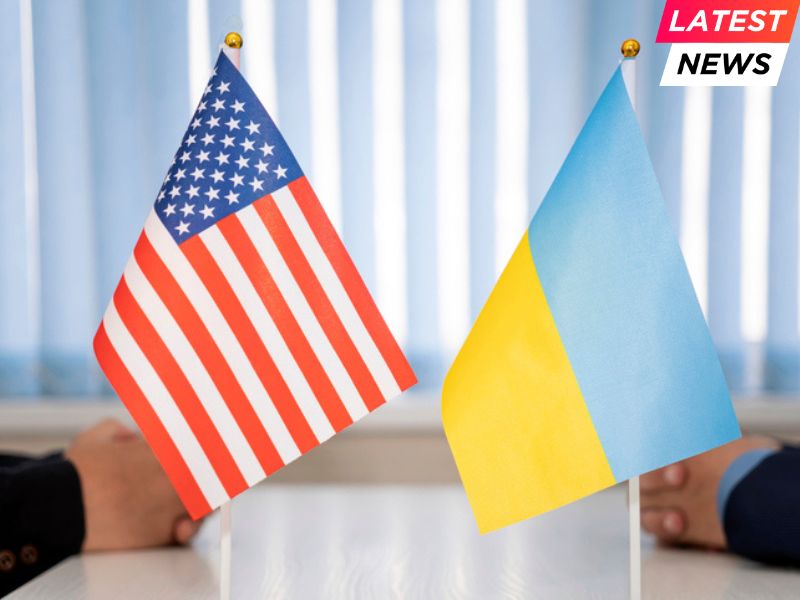
European officials are deepening efforts to shape the trajectory of ongoing peace negotiations between Kyiv, Washington and Moscow, seeking a settlement that protects the continent’s long term security interests. Their growing involvement reflects rising unease across EU capitals that decisions taken in Washington could prioritise speed over strategic stability.
This anxiety has sharpened as the United States continues to press for rapid progress in talks, even as recent diplomacy between US and Russian envoys produced few tangible results. A five hour meeting in Moscow between US envoy Steve Witkoff and Russian President Vladimir Putin last week failed to deliver momentum. Follow up discussions in Miami, where Zelensky’s chief negotiator Rustem Umerov met US officials for three days, ended with broad statements of “progress” but no breakthrough.
Complicating matters further, Trump claimed on Sunday that President Volodymyr Zelensky had not yet reviewed the revised deal. “I’m a little disappointed that President Zelensky hasn’t yet read the proposal,” he said, insisting that Putin was “fine with it”. Zelensky responded by noting that he expected a full briefing from Umerov during his meetings in London or Brussels. “Some issues can only be discussed in person,” he added.
Battlefield realities continue to underscore the urgency of diplomacy. From Sunday to Monday, 10 people were killed and 47 wounded as Russian strikes hit nine regions with drones, glide bombs and missiles. The Kremlin remains committed to its objectives. Last week, Putin reiterated his determination to seize full control of the Donetsk and Luhansk regions, of which Russia currently occupies roughly 85 percent. He also maintained opposition to any future path for Ukraine toward Nato membership.
European leaders fear that any rushed settlement could weaken Kyiv’s defenses while leaving the continent exposed to future aggression. The latest talks in London aimed to reinforce Europe’s presence in negotiations and prevent the continent’s interests from being sidelined in a US Russia compromise.
Speaking ahead of the discussions at Downing Street, UK Prime Minister Keir Starmer said a durable agreement must include “hard-edged security guarantees” for Ukraine. A spokesperson for his office later said: “The leaders all agreed that now is a critical moment and that we must continue to ramp up support to Ukraine and economic pressure on Putin to bring an end to this barbaric war.” The statement added that they “underscored the need for a just and lasting peace in Ukraine, which includes robust security guarantees”.
German Chancellor Friedrich Merz voiced reservations about elements of the emerging framework. He acknowledged he was “sceptical” about certain points in the US-backed proposal, but stressed the need for continued dialogue. France said that efforts would be “intensified” to secure a stronger protective framework for Kyiv.
The push for European involvement comes as Kyiv and Washington debate a revised peace blueprint. Ukrainian officials spent three days in Florida last week negotiating changes to the US proposal, which many in Ukraine have criticised as overly favourable to Russia. Zelensky said that the “most certainly anti-Ukrainian points have been removed” from the November draft, but acknowledged that compromise on territorial concessions had “not yet been found there”.
One of the most contentious issues is a US suggestion that Ukraine withdraw its forces entirely from eastern regions that Russia has tried, but failed, to fully capture. In exchange, Russia would pull troops back elsewhere and halt offensive operations. Zelensky maintains that conceding territory would reward aggression and leave Ukraine vulnerable to renewed attacks. “Americans are inclined, in principle, to finding a compromise,” he said, while emphasising that meaningful security guarantees remain unresolved.
Zelensky held meetings in London on Monday with Starmer, French President Emmanuel Macron and Merz to discuss the updated peace plan. All leaders stressed the need for stronger protective commitments to prevent future Russian assaults. After the talks, Zelensky traveled to Brussels for consultations with Nato officials and said Ukraine would present a revised proposal to the US on Tuesday.
The European push highlights a broader recognition that the outcome of these negotiations will shape the region’s security landscape for decades. As the war approaches its third year, with thousands of civilian and military casualties and Ukrainian cities still under near nightly attack, European leaders appear determined to influence the terms of any eventual settlement, ensuring it delivers not only a ceasefire, but long term stability for the continent.
Related Readings: