Home Blog Page 114

How to Handle Mortgage Rate Changes

In a perfect world, mortgage interest rates would always be the same. In reality, however, they fluctuate. Depending on your situation, higher rates can make it difficult to buy the home you want or keep up with the payments on your current property. Below, we’ll take a closer look at why mortgage rates change and what you can do to handle them.

Understanding mortgage rates

Mortgage rates, expressed as a percentage of your total loan balance, explain how much interest you’ll owe when you take out a mortgage. While individual lenders decide what specific rates they offer applicants, several large-scale factors impact the rates lenders offer, such as economic conditions, inflation, and unemployment.

Consumer spending, stocks, and bonds may also influence mortgage rates. In addition, the Federal Reserve influences mortgage rates by adjusting the federal funds rate in reaction to inflation and employment. The federal funds rate is the rate at which banks and other institutions lend money to each other overnight.

There are also personal finance factors, like income and credit scores, that will affect the rate lenders offer you. Additionally, some closing negotiations, such as points on a mortgage, can change the interest rate.

If you’re curious about how some of these variables affect the mortgage terms you receive, the Consumer Financial Protection Bureau (CFPB) created a rate tool you can use to quickly monitor interest rates and understand what type of rate you might receive based on your credit, state, house price, and down payment.

Types of mortgage rates

There are two types of mortgage rates:

  • Fixed-rate: Fixed-rate mortgage rates remain the same for the life of a mortgage, which may be 15, 20, or 30 years. A fixed rate makes it easy to budget for monthly payments and offers reassurance that payments won’t change due to market conditions and other factors.
  • Adjustable-rate: Adjustable-rate mortgage rates stay the same for the initial period, which may be between 3 and 10 years. Then, they’ll change biannually or annually until the mortgage term ends.

Monitoring mortgage rate changes

It’s your responsibility as a homeowner to keep tabs on mortgage rate trends and changes. Fortunately, plenty of news sources discuss the state of the economy, which can give you an idea of the mortgage rate environment. If the economy is doing well, there’s a good chance interest rates will be high. On the flip side, when the economy struggles, interest rates may go down. Keep in mind, though, that interest rate changes are dynamic and complex, so it’s always a good idea to track these changes no matter how the economy is doing.

Rate Locks

The purpose of a mortgage rate lock is to ensure that your mortgage rate will stay the same from the time you receive an offer until you close on your home. A rate lock, usually valid for 30, 45, or 60 days (about 2 months), can protect you from market fluctuations while the lender processes your mortgage.

Without a rate lock, your interest rate and monthly payment may increase as you go through the mortgage process, potentially costing you thousands of extra dollars over the life of your loan. While some lenders offer rate locks once you’re preapproved and have the address of the home you plan to buy, others might wait until the seller accepts your offer on a property.

How to handle rate increases

If you do encounter a mortgage rate increase – whether because you have an adjustable-rate mortgage or as you’re home shopping – here are a few things you can do:

  • Modify your budget: With a rate increase, you may need to adjust your budget. A new budget can make it easier to afford a higher rate and monthly payments.
  • Plan out your savings: As interest rates change, you may want to plan out further savings goals to accommodate these shifts. This may mean taking a look at how you’re saving relative to your current budget or looking at potential ways to boost your income.
  • Tap into your emergency fund: If you’re dealing with a temporary setback and struggling to cover your mortgage payments due to a rate increase, an emergency fund can come in handy. Ideally, you’d have at least three to six months’ worth of expenses saved to give you some cushion without having to completely revamp your entire budget.
  • Look into mortgage modification programs: Fortunately, some lenders and government agencies offer mortgage modification programs for homeowners who are facing financial hardship as a result of rate increases. Depending on the program, you may qualify for a lower rate, extended repayment period, or principal reduction.
  • Buy down the rate: You may be able to “buy down” your mortgage rate with points. Points on a mortgage usually cost 1% of the loan amount and lower your interest rate by an amount decided by the lender for the life of your mortgage.

How to take advantage of rate decreases

If interest rates go down, refinancing might make sense, especially if you have good credit or a better credit score than when you took out your mortgage. A mortgage refinance can allow you to replace your existing loan with a new one at a lower rate, leading to lower monthly payments or a shorter loan term. If you have the funds, you may also decide to make extra payments on your principal so you can repay your loan faster and save on interest.

Disclaimer: Article content is intended for information only. It may not reflect the publisher nor employees’ views. Consult a mortgage professional before making financial decisions. Publishers or platforms may be compensated for access to third party websites.

Ceasefire in Gaza Set to Begin Sunday Amid Last-Minute Negotiations

The long-awaited ceasefire between Israel and Hamas is expected to begin on Sunday despite last-minute negotiations over unresolved issues, U.S. Secretary of State Antony Blinken confirmed on Thursday. Speaking at a press conference, Blinken referred to the ongoing discussions as tying up a “loose end.”

Israel delayed cabinet meetings to approve the ceasefire, with votes potentially pushed to Friday or Saturday. Media outlets reported that the deal is expected to pass, but Prime Minister Benjamin Netanyahu blamed Hamas for late-stage demands. Meanwhile, Israeli airstrikes intensified, with Palestinian authorities reporting at least 86 deaths since the truce was announced.

Hamas senior official Izzat el-Reshiq affirmed the group’s commitment to the deal, which includes a six-week initial ceasefire, prisoner exchanges, and a pathway for humanitarian aid to Gaza. U.S. mediators, along with Qatari and Egyptian officials, worked to resolve disputes over prisoner releases, described as the last sticking point.

Inside Gaza, devastation continues to overshadow relief over the ceasefire. Tamer Abu Shaaban, mourning his niece killed by shrapnel, questioned the timing and sincerity of the truce. “Is this the truce they are talking about? What did this child do to deserve this?” he asked.

The conflict, which began in October 2023, has claimed over 46,000 Palestinian lives and displaced the majority of Gaza’s 2.3 million residents, according to local authorities. The ceasefire aims to halt the violence, facilitate aid delivery, and potentially ease broader regional tensions.

Related Readings:

pexels-nishant-vyas-735010

iStock-458119131

Sailing Towards Sustainability: The Role of Maritime Regulations in Environmental and Climate Protection

By Pamela Coyoc Duron and Michael Palocz-Andresen  

The maritime industry is crucial for the international community, providing thousands of jobs and transporting over 80% of global goods [1]. It provides thousands of jobs and opportunities, thus playing a vital role in the global economy and supporting humanity’s well-being. Given this importance, it is essential for the maritime industry, particularly the shipping sector, to transition towards environmentally friendly and climate-safe practices. Such a transition will benefit marine life and enhance the industry’s resilience in an evolving global landscape. Implementing sustainable technologies, reducing emissions, and adhering to stricter environmental regulations should be prioritised to ensure a healthier planet for all future generations.

Introduction

The maritime sector is responsible for transporting almost 4 billion tonnes of cargo and 400 million passengers annually [2]. It can transport more goods from one country to another than any other transport method. In the past decades, it has steadily increased, and it is estimated to rise more than 2% between now and 2028 [3]. In addition to this, although it is one of the most carbon-efficient methods of transport per ton-km, it is still responsible for 3% of global carbon emissions and 3-4% of the total European Union’s CO2 emissions [4]. In addition to this, several marine environmental concerns come along with it. At the outset, an issue that has increasingly gotten more attention from the international community is greenhouse gas emissions.

Aside from greenhouse gas emissions, other adverse impacts include land and water waste, plastic pollution, ballast water, oil spills, wildlife collisions, illegal fishing of protected species, and others that require proactive attention, such as underwater noise. Awareness of marine pollution is sometimes heavily focused on only one topic, such as plastic pollution or oil spills, while other types of pollution originating from the maritime sector are often neglected in this debate. Shipping regulations are shaped by various international agreements, guidelines, treaties, and government organisations. Therefore, it is imperative to examine the actions of these entities concerning shipping pollution and to evaluate their current initiatives aimed at the protection and conservation of oceanic ecosystems and marine biodiversity.

Fig. 1 shows the structure of the shipping industry in the market economy. It gives a short overview of the main relationships in the maritime industry.

Shipping companies


Figure 1: Structure and connections of the shipping industry in the international market  

International Instruments and Regulations 

First and foremost, the United Nations Convention on the Law of the Sea (UNCLOS) serves as the primary framework for the safe, sustainable, and responsible governance of the world’s oceans and seas [5]. UNCLOS is the main legal instrument for the protection of the marine environment. It is complemented by global environmental treaties, regional agreements, and soft law instruments. In Part XII, Article 192 establishes that States are obligated to prevent, reduce, and control pollution of the marine environment. Additionally, Articles 194, 211, and 212 provide further guidance on measures for the prevention and reduction of marine pollution, among others.

International Maritime Organization (IMO)

The International Maritime Organization is a specialised UN agency focused on the safety and security of international shipping. The IMO aims to protect marine life from shipping activities and ensure the safety of crew members on board. It does this by addressing legal matters and developing conventions that ensure the safety and security of our oceans and the crews who navigate them.

So, what specific actions has the International Maritime Organization (IMO) undertaken to address and mitigate growing environmental concerns?

The IMO employs a comprehensive array of tools aimed at tackling these diverse issues. Each tool serves a distinct purpose, offering ship owners and operators explicit guidelines and regulations tailored to address particular challenges. Notable instruments include the MARPOL Convention, the London Convention and the London Protocol, the Initial Strategy on the reduction of GHG emissions from ships, its Revised 2023 GHG Strategy, and the IMO’s Underwater Radiated Noise Guidelines. These frameworks collectively contribute to the IMO’s commitment to fostering a sustainable maritime environment.

MARPOL Convention

The International Convention for the Prevention of Air Pollution from Ships (MARPOL), which was enacted in 1973 and subsequently amended in 1978, constitutes a pivotal international legal framework aimed at addressing the multifaceted issue of pollution arising from maritime activities [6]. This convention encompasses both operational and accidental pollution sources, thereby providing a comprehensive regulatory approach to maritime environmental protection. Fig. 2 presents the construction of MARPOL.
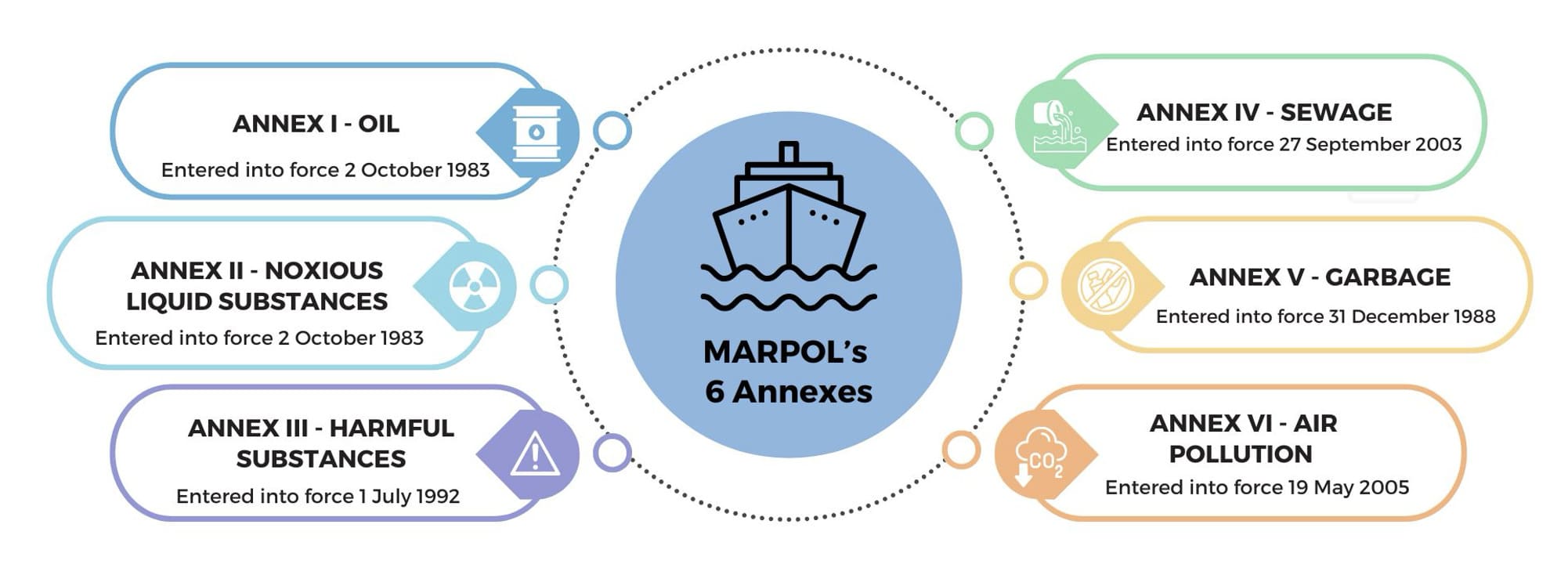
Marpol's 6 Annexes


Figure 2: Structure of the MARPOL Convention (IMO, 2024)

MARPOL consists of six technical Annexes, each of which targets specific pollution-related issues:

  • Annex I establishes regulations aimed at preventing pollution caused by oil discharges from ships.
  • Annex II provides regulatory measures for the control of pollution from noxious liquid substances transported in bulk, explicitly prohibiting the discharge of approximately 250 identified substances within 12 nautical miles of the nearest land.
  • Annex III is focused on the prevention of pollution from harmful substances (Article 2 (2)) packaged for maritime transport, ensuring that such substances do not adversely affect marine environments.
  • Annex IV addresses regulations concerning the discharge of sewage from ships, emphasising the need for proper waste management practices.
  • Annex V governs the disposal of various types of garbage generated on board, defining conditions for appropriate disposal methods to mitigate marine litter.
  • Annex VI sets stringent limits on sulphur and nitrogen oxide emissions, achieving a significant 77% reduction in sulphur oxide emissions from ships since January 2020. This Annex also introduces the Energy Efficiency Design Index (EEDI) for new vessels, which mandates technical and operational measures to enhance energy efficiency.

As climate change concerns increase, one of the MARPOL’s procedures to reduce emissions and increase data reporting is the use of the Energy Efficiency Operational Indicator (EEOI), which enables shipping companies to assess the efficiency of their operations and CO2 emissions [7]. This method encourages practices that reduce fuel consumption and emissions, and can also be used by existing ships.

A fundamental principle underpinning MARPOL is the concept of “no more favourable treatment” (Article 5 (4)), which emphasises the necessity for uniformity in the regulation of ship-generated pollution on a global scale. By specialising in the adverse effects of maritime activities on marine ecosystems, this convention significantly contributes to the preservation of biodiversity and the promotion of clean and healthy oceans for future generations [8].

London Convention and London Protocol

The London Convention is the “Convention on the Prevention of Marine Pollution by Dumping of Wastes and Other Matter” and one of the first global instruments to protect the marine environment from ocean contamination. It was established in 1972 and entered into force in 1975. It aims to effectively control all sources of marine pollution, such as the dumping of wastes and other matter. The ultimate objective is to prevent the contamination of our oceans and seas (Articles 1 and 2).

One method to do this is the “black- and grey-list” strategy. This strategy is applied to differentiate waste that can be considered for disposal at sea. Depending on their environmental impact, waste will either come on the black or the grey list. The disposal of items on the blacklist is completely prohibited. Grey-listed items require special national authorisation and strict supervision and can only be done upon fulfilment of specific conditions.

In 1996 the London Protocol (The Protocol) was agreed upon, later entering into force in 2006. The Protocol was created to update the London Convention and at a given point, replace it [9]. The purpose and content of the Protocol are similar to that of the Convention but the Protocol is stricter. It brings with it the “precautionary principle”, as a general obligation. In addition to this, it includes the “reverse list” by which all dumping in the sea is prohibited unless explicitly permitted. Likewise, the disposal of industrial waste has been prohibited since its creation. The Protocol also includes additional processes for technical assistance and compliance. Moreover, a so-called transition period grants new parties five years during which they can gradually introduce measures necessary for compliance with the Protocol.

Regarding climate change, in 2006 an amendment to the Protocol allowed for CO2 storage beneath the seabed, when it is safe to do so. According to the Intergovernmental Panel on Climate Change (IPCC), this is a short-term technological option for reducing net CO2 emissions in the atmosphere. Additionally, since 2013 the Protocol has allowed geoengineering activities, such as ocean fertilisation, for legitimate research purposes (Annex 4). Marine geoengineering can be a feasible option to actively intervene in the environment to counteract the adverse impacts shipping has on it. For example, ocean fertilisation contributes to carbon dioxide removal.

2023 GHG Reduction Strategy

In 2018 the IMO set an Initial GHG Strategy aiming to reduce total annual GHG emissions by at least 50% by 2050 compared to 2008 levels, with a vision of phasing them out by the end of the century. The 2018 Initial Strategy included several short-, mid-, and long-term measures with timelines, barriers, supportive actions and examples of adoption measures according to the needs and capabilities of certain nations. Special consideration was taken for developing countries. In 2023, the IMO adopted the Revised Strategy to reduce GHG emissions from shipping. This Revised Strategy provided an improved ambition to completely eradicate GHG emissions from international shipping close to or around 2050 [10]. This Strategy also states a commitment to “ensure an uptake of alternative zero and near-zero GHG fuels by 2030, as well as indicative check-points for 2030 and 2040” [11]. By 2030, annual greenhouse gas emissions from international shipping should be reduced by at least 20 per cent, striving for 30 per cent, compared to 2008. By 2040, this should increase by at least 70 per cent, striving for 80 per cent.

Although the IMO’s GHG Reduction Strategy displays highly ambitious goals, all measurements are yet to be finalised and/or agreed upon. Some will be finalised between 2023 and 2030. The 2023 Strategy set out a timeline towards the adoption of measures to have the new and updated IMO GHG strategy by 2028.

A timeline illustrating some of the various measures undertaken by the International Maritime Organization to address greenhouse gas emissions from shipping will be presented in Fig. 3.

Figure 3- Addressing climate change


Figure 3: Addressing climate change – Over a decade of regulatory action to cut GHG emissions from shipping (2023) 

IMO’s Underwater Noise Guidelines

Another important IMO milestone in preventing marine pollution from vessels are the non-mandatory “Guidelines for the Reduction of Underwater Noise from Commercial Shipping to Address Adverse Impacts on Marine Life”. These guidelines illustrate how the marine environment is impacted not only by familiar factors but also by lesser-known contributors that pose threats to marine life. For those who do not have a picture of what underwater noise is, underwater noise is generated by various anthropogenic activities, including shipping, deep-sea mining, and pile-driving, among others.

In the context of shipping, these noises arise from multiple vessel components, including propellers and the internal structure and objects inside of the vessels. This noise disrupts the hearing and communication frequencies of marine organisms, jeopardising the fitness and survival of numerous species, including invertebrates. These guidelines provide ship owners, manufacturers and operators with several different measures that can be taken to reduce underwater noise. The IMO recognises the severity of this issue, which is why it is imperative for the industry and civil society to also recognise these challenges in our ongoing efforts to protect marine ecosystems. 

Other International and European Union Regulations 

At the European level, several different prevention measures contribute to reducing marine pollution. For instance, in 2015, the Monitoring, Reporting and Verification of CO2 Emissions (MRV Regulation) entered into force, setting rules for shipping companies to provide annual reports of their Carbon Dioxide (CO2) emissions [11]. The MRV Regulation used to only cover CO2 emissions, but as of 2024, it also covers Methane (CH4) and Nitrous Oxide (N2O), which is crucial for comprehensive and holistic climate strategies since both N2O and CH4 have much higher global warming potentials than CO2.

In addition, as of January 2025, companies must report emissions for cargo and passenger ships, offshore ships of or above 5000GT, and offshore ships and general cargo ships between 400 GT and 5000 GT. This is also an essential improvement, since larger vessels, especially those that navigate with fossil fuels, emit larger amounts of GHG emissions.

It is essential to understand that allowances for greenhouse gas emissions can be auctioned, enabling companies to buy and sell these allowances among themselves.

In 2023, the MRV Regulation was improved, making it possible for maritime transport to be a part of the EU Emissions Trading System (EU ETS), which used to only cover the sectors of electricity, heating, energy-intensive industry sectors and aviation. The goal of this EU ETS is to reduce greenhouse gas emissions by 65% by 2030 in comparison to 2005 [11]. Moreover, the EU ETS incorporates shipping emissions into a cap-and-trade system, incentivising reductions in greenhouse gas emissions. The word cap is a threshold that sets the total amount of greenhouse gasses that operators covered by the system can emit. This threshold is reduced yearly at fest intervals. This way, it can stay up to date with the EU’s climate target. The cap-and-trade system uses emission allowances, where each allowance permits the emission of one tonne of carbon dioxide. If companies emit more greenhouse gas emissions than their allowances can cover, they are faced with fines. Allowances need to always be handed in on the 30th of September of the following year. It is essential to understand that allowances for greenhouse gas emissions can be auctioned, enabling companies to buy and sell these allowances among themselves.

This system allows for flexibility in managing emissions, as long as each company can submit sufficient allowances to account for their total greenhouse gas emissions by the end of the reporting period. By fostering a trading environment for emissions allowances, stakeholders can effectively incentivise compliance while addressing the pressing issue of climate change. Ultimately, this auction system plays a vital role in shaping corporate strategies related to sustainability and environmental stewardship.

Several important factors contribute to the effective implementation of the EU ETS. Currently, the EU ETS only encompasses carbon dioxide (CO2) emissions. However, beginning in 2026, it will also include methane (CH4) and nitrous oxide (N2O) emissions. Additionally, the EU ETS operates as a flag-neutral and route-based system, covering emissions from maritime transport originating from or within the ports of EU Member States. This system applies to cargo and passenger vessels of 5,000 gross tonnage (GT) or greater. Moreover, starting in 2027, the regulations will extend to offshore vessels of the same size. These expansions reflect the EU’s commitment to addressing a broader range of greenhouse gas emissions.

Additionally, the level of emissions that the allowances cover will increase gradually each year. Starting in 2025, 40% of the emissions registered for the year 2024 must be covered, in 2026, 70% of the emissions registered for 2025, and lastly, in 2027 and beyond, 100% of the reported emissions need to be covered by the allowances. This way shipping company owners and operators are required to enhance their data collection and reporting.

Another important regulation aiming to decarbonise the shipping sector is the Fuel EU Maritime Regulation, which will apply as of January 2025 [12]. This regulation complements the EU ETS strategy and seeks to gradually reduce the greenhouse gas intensity of fuels used by the shipping sector. It aims to promote the use of cleaner fuels and energy in the maritime sector to reduce current and future greenhouse gas emission levels. This regulation starts with small steps and seeks to reduce the average greenhouse gas intensity of the energy used by a vessel by 80% as of January 2050.

Biodiversity Protection

Lastly, an instrument that specifically focuses on biodiversity protection, is the Convention on Biological Diversity (CBD), which encourages measures to protect marine biodiversity and ecosystems affected by shipping activities. In addition to this, there are Marine Protected Areas (MPAs) and Particularly Sensitive Sea Areas (PSSAs), which are designated areas where marine activities activities are limited to protect sensitive habitats and species.

Barriers and Future Directions

These regulations and initiatives demonstrate a global effort to reduce the environmental impact of shipping, focusing on greenhouse gas emission reduction, promotion of cleaner fuels, and mitigation of underwater noise pollution. However, implementing shipping regulations for environmental protection and emission reduction faces several barriers across technological, economic, scientific, and political domains. 

Scientific Barriers

In the scientific domain, several knowledge gaps persist that must be addressed to develop more effective reduction and prevention measures. A thorough understanding of the marine environment and its components work, as well as the impacts of anthropogenic activities on marine organisms, is vital for environmental protection and the transition to sustainable practices. Furthermore, regarding greenhouse gas emissions from the maritime sector, it is crucial to focus on all types of greenhouse gases. Understanding the potency and longevity of these gases is essential for formulating effective environmental policies and strategies to mitigate their effects on global warming.

Technological Barriers 

Some key challenges hindering the implementation of technological innovations for decarbonisation in the maritime industry are the following. Firstly, about 99 per cent of currently used maritime fuels are of fossil origin, with only 1.2 per cent using alternative fuels (figure 2). This is due to many different aspects. On the one hand, there is a limited availability of alternative fuels. Although there are several existing sustainable fuels, such as LNG, LPG, electric or hybrid-electric, methanol, hydrogen and ammonia, transitioning to fuels like hydrogen or ammonia requires new infrastructure and technology that is not yet widely available [14], see Fig. 4.
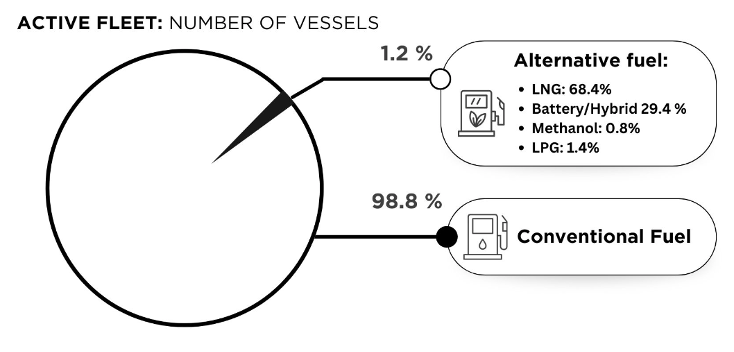
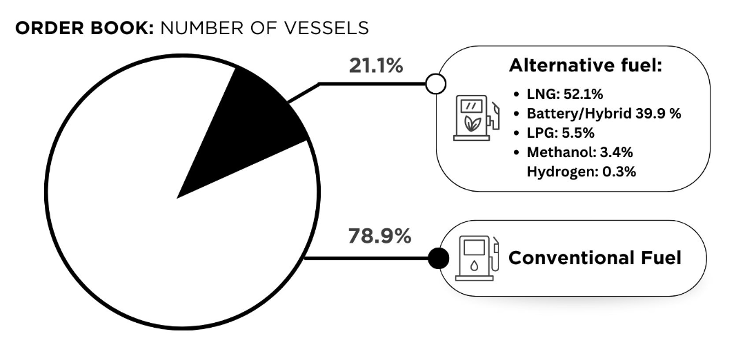
Figure 4

Figure 4- Number of vessels

Figure 4: Alternative Fuel Uptake – World Fleet and Order-book 2022

In addition to this, the viability of use varies greatly depending on vessel type. Vessel type, age, and size are a few factors that not only influence the amount of greenhouse gas emissions but also the type of fuel they can use. Directly connected to this are existing fleet limitations. Many ships are older and not designed for new emission reduction technologies, leading to costly structural changes or replacement. Since vessels have a life span of 25 to 30 years and replacing them is not an option for all operators, not to mention not very sustainable, technologies and energy-efficiency methods that can be applied to existing vessels need to happen fast. 

Moreover, just as with alternative fuels, the development and adoption of green technologies such as carbon capture and storage (CCS) are still in developmental stages, with uncertainties about their effectiveness and scalability. Lastly, an aspect that can help improve these existing technologies is the need for more accurate data and monitoring. The challenge here is that accurate tracking of emissions and compliance with regulations requires sophisticated data systems that are not always available. A key solution for this is digitalisation. Using artificial intelligence, performance optimising tools and a collective database could help improve and facilitate data gathering.

Economic Barriers 

Economically speaking, these transitions come with high initial costs. Investing in new technologies, retrofitting ships, or transitioning to alternative fuels can be prohibitively expensive for many shipping companies, which is most likely the reason behind these slow transitions. In addition, market competition plays an essential role because investors and companies may hesitate to adopt greener practices if competitors do not, fearing loss of market share due to increased operational costs. Another recent economic challenge is fluctuating fuel prices. The volatility of fossil fuel prices can impact the economic viability of alternative fuels, making investment decisions uncertain

Furthermore, an aspect that will require more action in the future is financial incentives from governments. The lack of government incentives or support can hinder the transition to sustainable practices. Yes, it is clear that these transitions need to be made, but not all have the resources to make these changes. Whether is retrofitting an old vessel or transitioning to a new one, many small owners and small companies require support to have a chance to keep up and contribute to a sustainable shipping transition.

Finally, an integral aspect is balancing economic interest with environmental protection. For many companies, these economic barriers are the reason why no active action is being taken, thus forgetting about the intrinsic value of the marine environment. It is crucial to remember that these sustainable transitions are not only beneficial for us but also necessary for the environment.

Political Barriers

Establishing a universal regulatory framework that applies to all vessels regardless of their flags, country of ownership and travel routes is essential.

The implementation and enforcement of regulations encounter numerous challenges. Foremost among them is the fragmented regulatory landscape. As shipping operates in international waters, establishing unified regulations proves difficult due to the varying interests of different countries. Key factors influencing this are their capabilities, needs and environmental considerations. This diversity in standards complicates compliance efforts. Furthermore, the enforcement of globally applicable rules for vessels and ports is essential for a successful transition. This brings us to the next point: global disparities. Developing nations may prioritise economic growth over environmental regulations, creating conflicts in international agreements and enforcement. This is why supporting their transition is also crucial. The IMO is currently actively exploring funding mechanisms to assist countries in need.

Likewise, the political will and commitment of different nations play a significant role in facilitating transitions that protect the environment. Inconsistent political support for environmental initiatives can hinder the timely implementation of necessary regulations and vice versa. For instance, environmentally friendly incentives in Canada have been shown to contribute to more sustainable practices and enhance the protection of marine species. Additionally, lobbying and industry resistance are critical factors in this sector. Just as in other sectors, powerful fossil fuel and shipping lobbies may resist stringent regulations, advocating for less rigorous standards. Furthermore, inadequate international coordination poses a challenge. Effective implementation requires collaboration among nations, which can be impeded by differing priorities and levels of commitment to environmental issues.

Addressing these barriers is essential for implementing effective shipping regulations designed to reduce greenhouse gas emissions and protect the marine environment. Collaborative efforts among governments, industry stakeholders, and technological innovators will be crucial in overcoming these challenges. Establishing a universal regulatory framework that applies to all vessels regardless of their flags, country of ownership and travel routes is essential. However, it is still equally important to acknowledge and respect the varying capabilities of more vulnerable nations that may not possess the same resources as others.

Criticism on the IMO 

Even though the IMO conventions set international standards and rules for shipping, simplify cooperation between countries and make an important contribution to reducing pollution in the sea, there are still points of criticism regarding the IMO and MARPOL.

While the MARPOL Convention represents a significant step forward in the reduction of marine pollution, several areas of concern have been raised regarding its effectiveness, enforcement, and adaptability to evolving environmental challenges [14].

One major critique of MARPOL regards its enforcement mechanisms. Critics argue that the convention is not strict enough, leading to instances of non-compliance and inadequate punishment for violators. For instance, violations of Annex V are to be sanctioned under the law of the Administration of the ship, wherever the violation occurs. This means that if the flag state does not or cannot enforce violations of international law, sanctions can be evaded. In this case, sanctions are established under the law of that Party (Article 2). This does not apply when the violation occurs within the jurisdiction of any Party of MARPOL. Nevertheless, cases in which the flag state decides to take no action have undermined the credibility of MARPOL and compromised its effectiveness in achieving its objectives.

As our understanding of the long-term effects of marine pollution deepens, there is growing recognition of the need for more ambitious targets and measures to safeguard the health of marine ecosystems and human populations. Only through continuous review, adaptation, and collaboration can the IMO and MARPOL fulfil their full potential as a tool for global marine environmental protection.

Future directions 

All of these organisations and conventions have taken great measures and steps to protect the ocean from anthropogenic pollution. Each aspect of these stakeholders contributes to preventing further ocean pollution and to reducing greenhouse gas emissions. However, research shows that there are still several knowledge gaps when it comes to how these different measurements are contributing to the prevention of pollution. This is, among others because taking the necessary measurements for research in the ocean is a complex task. Likewise, there are still points of criticism regarding the lack of enforcement and punishment when companies violate standards set by these organisations. Protecting the ocean from ship-source pollution or any source of pollution should be prioritised.

“Strict language in international agreements is meaningless unless the standards are actually enforced” [15].

However, it is evident that this endeavour is complex. While the focus should lay on the protection and conservation of the ocean and its marine species, significant and immediate changes cannot be implemented in such a vast transportation sector overnight. It is a long process already moving in the right direction. It requires many resources, a strong commitment, decision-making processes and the right intentions.

Shipping regulations foster global cooperation, thereby uniting nations to address shared environmental challenges and establish a unified approach to sustainable shipping.

To manage a significant reduction in greenhouse emissions, several measures should be taken. Some International emission reduction strategies are the adoption of alternative fuels, innovations in vessel design for both new and existing ones, and energy efficiency measures. At the regional and national levels, it is essential to consider all types of social, economic and environmental factors that may influence which types of measures could be implemented.

Finally, promoting shipping regulations is crucial for incentivising the adoption of cleaner technologies and alternative fuels, thus encouraging the maritime sector to transition towards more sustainable practices that reduce environmental harm. For instance, enforcing stricter environmental standards can drive innovation in vessel design and enhance fuel efficiency. Moreover, port authorities should actively support and encourage ship owners and operators to implement these sustainable practices. 

Conclusion

Shipping regulations play a crucial role in combating climate change and protecting and preserving marine ecosystems. As international shipping is a major source of global greenhouse gas emissions, these regulations must facilitate their reduction. Initiatives such as the IMO’s GHG Strategy and the MARPOL Convention are designed to mitigate environmental impacts; however, their success relies on the commitment and cooperation of all stakeholders within the maritime industry.

International collaboration is essential for effective maritime governance and environmental protection. Shipping regulations foster global cooperation, thereby uniting nations to address shared environmental challenges and establish a unified approach to sustainable shipping. This collaboration not only protects the marine environment but generates long-term economic benefits. By promoting sustainability, regulations can enhance operational efficiency, lower fuel costs, and reduce risks of environmental disasters, ultimately benefiting the economy and ensuring the longevity of marine resources. Furthermore, building a robust partnership among governments, academia, and industry stakeholders will facilitate knowledge sharing and collaboration. This will contribute to the implementation of more effective and comprehensive policies.

The time of choosing indecision over action is over. A call to action for continued commitment and innovation in the shipping industry is necessary. This commitment requires investing in technological advancements and a willingness to engage in meaningful dialogue about sustainable and resilient changes. 

Acknowledgements

The authors would like to thank Mr. Bernd Lange,  Member of the European Parliament, Chairman of the Committee on International Trade (INTA) and Chairman of the Conference of Committee Chairs (CCC) for years of support in the area of the environment and climate protection.

About the Authors

Pamela Pamela Coyoc Duron was raised in Mexico City and Germany. In 2024, she completed her bachelor’s degree in Environmental Sciences from the Leuphana University of Lüneburg, where she specialised in nature conservation and ocean law. Currently pursuing a certification in the fundamentals of natural sciences, she aims to begin her master’s degree in marine biology this year. Her passion lies in raising awareness about marine pollution and fostering collaboration among all stakeholders involved in environmental protection.

Michael Palocz-AndresenMichael Palocz-Andresen is a full professor at the BUAP in Puebla. He has been working as a full professor for Sustainable Mobility since 2018, supported by the DAAD at the TEC Instituto Tecnológico y de Estudios Superiores in Mexico. He was a full professor at the University West Hungary until 2017. Currently, he is a guest professor at the TU Budapest, the Leuphana University Lüneburg, and at the Shanghai Jiao Tong University. He is a Humboldt scientist and instructor of the SAE International in the USA. 

References

Los Angeles Wildfires Could Become Costliest in U.S. History

The devastating wildfires sweeping through Los Angeles have turned entire neighborhoods into smoldering ruins, leaving behind an apocalyptic landscape. Analysts estimate insured losses could reach a staggering $20 billion, potentially making these wildfires the costliest in U.S. history.

As dangerously high winds threaten to resume on Monday, firefighting efforts face renewed challenges. The fires have already claimed the lives of at least 24 people and continue to resist containment.

The financial impact underscores the growing risks posed by climate-related disasters. Total economic losses are projected to range between $135 billion and $150 billion, according to AccuWeather. This staggering figure highlights the broader implications for the insurance industry, homeowners, and the region’s economic recovery. Surging insurance costs are likely to compound the challenges for residents and businesses in the aftermath of this disaster.

Officials remain on high alert, urging residents to heed evacuation orders as they brace for the possibility of worsening conditions.

Related Readings:

Wildfire in California

climate-finance

Ecological catastrophy

How an EV Route Planner Helps Overcome the Challenges of Charging Infrastructure

Electric vehicles (EVs) are revolutionizing the transportation industry, and their presence is only set to grow—by 2035, more than one in four vehicles on the road will be electric. While EVs promise environmental benefits and long-term cost savings, the lack of accessible, reliable, and sufficient charging stations can be a major challenge for drivers.

However, with the rise of innovative solutions like electric vehicle route planners, these challenges are becoming easier to overcome. Electric vehicle route planners use real-time data, advanced algorithms, and strategic insights to help drivers find the most efficient routes with convenient charging stations along the way.

Key Challenges in EV Charging Infrastructure

Before diving into how an electric vehicle route planner can solve these challenges, it’s important to understand the main issues surrounding EV charging infrastructure.

1. Limited Availability of Charging Stations

  • Scarcity in Remote Areas: Many rural or less-developed regions lack charging stations, making long-distance travel difficult.
  • Urban Congestion: In densely populated areas, charging stations can be overcrowded, causing long waiting times.
  • Limited Fast Charging Options: Many charging stations offer only standard charging, which can take several hours, slowing down travel.
  • Incompatibility Between Charging Stations and EV Models: Not all stations are compatible with every EV model, creating a lack of standardization.

2. Range Anxiety

  • Unpredictable Battery Life: EV drivers often worry about running out of battery before reaching a charging station.
  • Varying Weather Conditions: Extreme temperatures can affect battery performance, reducing the range.
  • Inaccurate Range Predictions: EVs can sometimes underestimate or overestimate the remaining battery life, increasing driver anxiety.
  • Fear of Limited Charging Points: Drivers fear that the charging station they need may be unavailable when they arrive.
  • Charging Time Concerns: Even when a station is available, long charging times can cause inconvenience.

The Role of Electric Vehicle Route Planners in Overcoming Charging Challenges

1. Real-time Charging Station Availability and Location

EV route planners provide real-time updates on the availability of charging stations along the route.

  • Live Updates on Charging Station Status: These tools show if charging stations are in use, unavailable, or under maintenance, helping drivers avoid wasted detours.
  • Route Customization Based on Charging Needs: Planners suggest routes that include stations with the right type of charging plugs compatible with the driver’s EV model.
  • Detailed Station Information: Information about charging station types, charging speeds, and even costs is provided, allowing drivers to make informed decisions.
  • Data-driven Route Choices: The planner takes into account not only location but also user reviews and station ratings to select the most reliable options.
  • Strategic Placement: EV route planners factor in optimal locations for charging stations, such as high-traffic areas or near amenities like cafes or rest areas.

2. Minimizing Range Anxiety with Predictive Battery Usage

Electric vehicle route planners help minimize range anxiety by providing accurate predictions of battery usage and recommending optimal charging points along the way.

  • Battery Usage Forecasting: By analyzing route terrain, elevation, and driving behavior, planners predict the battery consumption for each leg of the journey.
  • Proactive Battery Alerts: The system alerts drivers when the battery is running low, suggesting nearby charging stations before reaching critical levels.
  • Smart Charging Stop Suggestions: EV planners recommend when to stop for charging based on the driver’s remaining range and upcoming charging station availability.
  • Dynamic Re-routing: If unexpected delays or detours occur, electric vehicle route planners dynamically adjust the route and suggest new charging points to ensure the driver doesn’t run out of battery.
  • Weather Considerations: These planners also adjust battery usage predictions based on the weather since extreme temperatures can affect an EV’s range.

3. Route Optimization for Faster Charging Stops

Route optimization is key in ensuring that charging stops don’t add unnecessary delays to the journey. Electric vehicle route planners optimize the overall travel time by factoring in both battery consumption and charging needs.

  • Minimizing Charging Time: By recommending stations with fast-charging capabilities, electric vehicle route planners reduce the amount of time spent at each stop.
  • Optimizing Charging Intervals: The planner determines the most effective times to charge, balancing the battery’s current level with the driver’s break schedule.
  • Multiple Charging Stops: For longer journeys, the planner helps schedule multiple charging stops, ensuring each stop is strategically placed to minimize overall travel time.
  • Avoiding Traffic Congestion: The planner may also suggest routes that avoid high-traffic areas near charging stations, ensuring quicker access.
  • Reducing Range Gaps: The planner minimizes the distance between charging stops, ensuring that drivers can reach the next station without unnecessary stress or detours.

4. Personalized Charging Recommendations Based on Vehicle Model

Not all electric vehicles are the same, and charging needs can vary from one model to another. Electric vehicle route planners tailor their recommendations based on the user’s specific vehicle.

  • Vehicle-specific Charging Options: The planner considers the vehicle’s make and model to find compatible charging stations.
  • Energy Consumption Metrics: By analyzing the EV’s energy consumption, planners offer recommendations for charging stops that best fit the vehicle’s requirements.
  • Custom Charging Time Estimates: The route planner takes into account how long it will take to charge a specific EV at a station, helping drivers plan accordingly.
  • Tailored Alerts and Notifications: Drivers are notified of charging stations that meet their vehicle’s particular needs (e.g., high-speed chargers or specific plug types).
  • Performance Adjustment: As the vehicle’s battery ages or is impacted by certain conditions, the planner adjusts its recommendations to account for the decreased range or slower charging rates.

The Future of EV Route Planning: Enhancements and Innovations

The future of EV route planning is bright as technology continues to evolve, with AI-driven innovations set to enhance the capabilities of route planners significantly. AI-powered EV route planning is revolutionizing the way we navigate long trips by providing more precise, tailored recommendations. These intelligent systems learn from every journey, continuously improving based on user preferences and behavior.

They employ enhanced predictive algorithms, which can accurately forecast potential charging station issues, traffic delays, and even battery life. Furthermore, AI can automate rerouting in real-time, ensuring drivers avoid delays or unavailable charging stations, offering a smoother travel experience. AI systems also adapt to drivers’ behaviors, adjusting route recommendations based on past preferences, such as charging speed or specific network choices.

Perhaps most impressively, these planners can forecast a vehicle’s real-time energy needs along the route, optimizing battery usage and minimizing the risk of running low during the journey. With these advancements, AI is making EV travel more efficient, reliable, and user-friendly.

Seamless Travel for EV Drivers: The Impact of Route Planners

An electric vehicle route planner is not just a tool for navigating roads; it is an essential companion for overcoming the challenges of EV charging infrastructure. By offering real-time updates, predictive battery management, and optimized routes, electric vehicle route planners are making it easier for drivers to travel long distances without the fear of running out of battery or struggling to find a charging station.

As technology advances, these tools will continue to improve, making the transition to electric vehicles more seamless and convenient for everyone. For businesses looking to stay ahead in this rapidly evolving landscape, collaborating with technology partners such as FarEye can provide cutting-edge solutions that optimize EV route planning and ensure a smooth, efficient experience for drivers.

Understanding the Basics of Home Financing

Have you ever wondered how people afford to buy a home? Most rely on financing, using tools like mortgages to turn their dream into reality. But navigating home financing can feel overwhelming with today’s rising prices and interest rates.

In places like Pennsylvania, understanding regional trends and mortgage options is key to making smart decisions. Your location and market conditions can impact affordability, loan terms, and future equity.

In this blog, we will share essential tips to help you understand home financing, choose the right options, and make confident decisions.

What is Home Financing and Why Does It Matter?

Home financing is the process of borrowing money, usually through a mortgage, to buy a home. It makes homeownership possible by spreading payments over many years, a necessity for most families.

But it’s more than just borrowing—it’s about making smart decisions. Loan terms, like interest rates, can affect your finances for decades. A lower rate can save thousands, while poor planning can lead to strain or even foreclosure.

With rising home prices and interest rates, understanding financing is more important than ever. Although affordability is a challenge, informed buyers can still find opportunities to secure favorable deals and enjoy the benefits of homeownership.

How Interest Rates and Location Affect Your Loan

Interest rates are one of the most important factors in home financing. They determine how much you’ll pay to borrow money. A lower rate means lower monthly payments and overall costs, while a higher rate can make a home less affordable. That’s why it’s important to stay informed about trends in your local market.

Take Pennsylvania, for example. The state’s housing market is diverse, with urban areas like Philadelphia and Pittsburgh offering different opportunities compared to rural regions. Mortgage rates in Pennsylvania often align with national trends but can fluctuate based on regional factors like demand and economic conditions.

Understanding these dynamics can save you money. For instance, comparing rates from multiple lenders is key. Even a small difference in interest rates can lead to significant savings over the life of a loan. Being prepared with a strong credit score and a solid down payment can also help you secure better terms.

Location-specific research is equally important. If you’re considering buying in Pennsylvania, check local market conditions and look for government programs that may offer assistance for first-time buyers. By combining local knowledge with smart financial planning, you’ll be better equipped to navigate the complexities of home financing.

Types of Home Loans: Finding the Right Fit

Not all home loans are the same, and the type you choose can affect your finances significantly. Here’s a simple breakdown of the most common options:

  • Conventional Loans: These are standard loans not backed by the government. They usually require good credit and a larger down payment but offer flexible terms and competitive rates for qualified buyers.
  • FHA Loans: These are government-backed loans, great for first-time buyers or those with lower credit scores. They allow smaller down payments but may come with extra fees.
  • VA Loans: Specifically for veterans and active-duty military, VA loans offer major benefits like no down payment and lower closing costs.
  • Fixed-Rate Mortgages: These loans have a steady interest rate for the entire term, making your monthly payments predictable and easy to budget. They’re ideal if you plan to stay in your home long-term.
  • Adjustable-Rate Mortgages (ARMs): ARMs start with a lower interest rate that can increase or decrease over time. These are a good choice if you plan to sell or refinance before the rate changes.

Choosing the right loan depends on your financial situation and future plans. Understanding these options can help you make the best decision for your needs.

Building Your Financial Foundation Before Buying

Before applying for a mortgage, it’s important to get your finances in order. Lenders want to make sure you can repay the loan, so having your money situation in good shape can improve your chances of approval and get you better loan terms.

Start by checking your credit score. A higher score can help you qualify for a mortgage and get lower interest rates. If your score needs work, focus on paying off debt and making all your payments on time to boost it.

Next, save for a down payment. Some loans let you put as little as 3% down, but putting down more can lower your loan amount and monthly payments. It also shows lenders you’re serious about buying a home.

Lastly, look at your debt-to-income ratio (DTI). This is how much of your income goes toward paying debt each month. Lenders like to see a DTI below 43%, as it shows you can manage your finances. Cutting unnecessary expenses can help improve this number.

By getting your finances in shape before you apply, you’ll be in a stronger position to buy your dream home.

Broader Implications of Home Financing

Home financing isn’t just about buying a house—it’s about long-term financial stability. Owning a home can build equity, which is the difference between your home’s value and what you owe on it. Over time, this equity can be used to fund other goals, like education or retirement.

But the benefits of homeownership extend beyond finances. A stable home provides a sense of security and belonging. It’s a place to raise a family, build memories, and establish roots in a community. These intangible benefits make the process of home financing worthwhile, despite its challenges.

On a broader scale, home financing impacts the economy. When people buy homes, they contribute to local businesses and create jobs in construction, real estate, and related industries. This ripple effect underscores the importance of accessible financing options and fair lending practices.

All in all, understanding the basics of home financing is the first step toward making confident and informed decisions. By learning about loan types, interest rates, and the importance of financial preparation, you can set yourself up for success.

While the process may seem complicated at first, the rewards of homeownership are worth the effort. With the right approach, you’re not just buying a house—you’re investing in your future. So, take the time to research, plan, and choose wisely. Your dream home is closer than you think.

Remember the Foundations: Realigning AI with the Fundamentals of Organisations

By Luca Collina MBA

Where do I start?

My new next experience as a temporary Reviewer for AOM-Academy of Management it is a news that came out of the blue.. A new thing which I will handle with professionalism and pride.

Why I chose to follow, it’s based also on those elements, (as reviewers can include their interest too) which I considered extremely relevant.

Organixational Development and Change

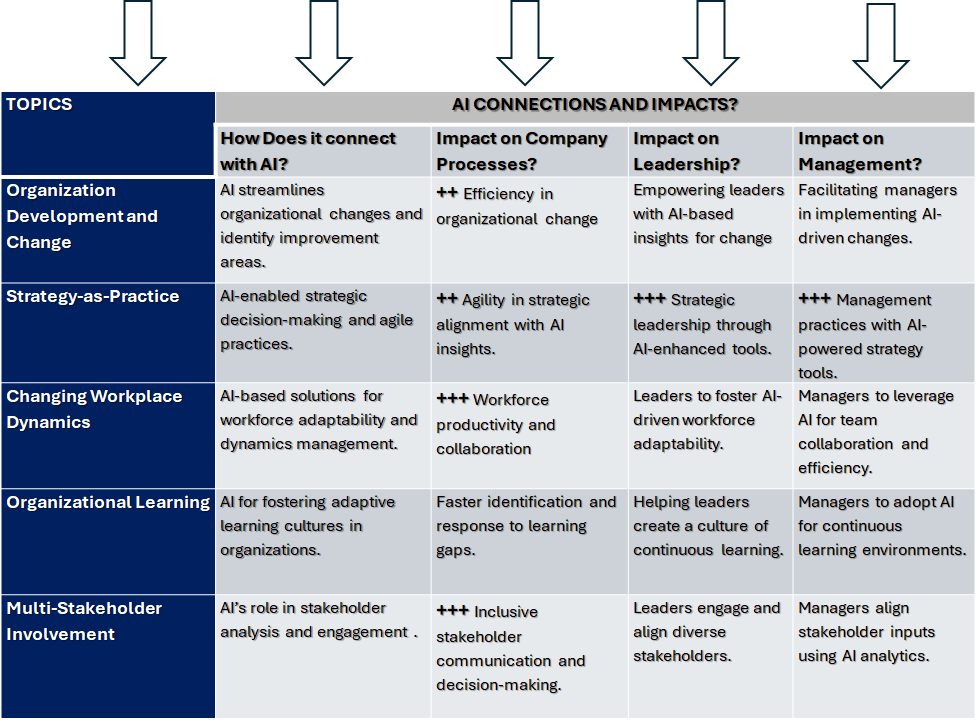
This article discusses how AI integration may be embedded into an organisation’s fundamental topics, and gives the idea supported by relevant extracts from business literature, of how it affects processes, leadership, and management.

The foundations for the AI revolution.

Artificial Intelligence (AI) is no more a technology of the future. It is actively reshaping industries, revolutionising leadership and transforming workplace dynamics. But in the midst of AI’s skyrocketing uptake, there is one imperative reminder every organisation should consider — foundations matter. If AI is not embed to organisational norms, ethical principles and human empowerment, its promise may end into mere wins of convenience rather than positive transformation.

Grounding AI in Organisational Development and Change

Adaptation to dynamic environments leads to inevitable organisational change for businesses. AI provides powerful tools to accelerate these changes. It is, however, critical to base these initiatives on principles of Organisational Development and Change, so that they are aligned to the strategic objectives of the organization as well as reduce risk.

Take for instance McDonald’s, which rolled out AI in its drive-thru ordering systems with the aim of improving efficiency and accuracy. Using natural language processing the company was able to lower errors and improve customer satisfaction. Reports have emphasized the importance of robust change management practices to help manage staff anxiety around job security and facilitate smooth integration of AI with human roles. (Forbes).

These considerations reflect change management that enable organisations to equip their resources (i.e., employees) and technology capabilities with their strategic visions for the future while following a planned or semi-planned pathway to help execute such transformations effectively to achieve the proper interplay of technology, people and structures.

Strategy-as-Practice: Where Theory Meets AI Tools

Strategy-as-Practice emphasises that strategy is done well by implementing strategic decisions well. AI further improves this process by providing data-driven insights, real-time scenario simulations, and predictive analytics to create more dynamic and adaptive strategies.

As an illustration, Walmart has utilised AI-based demand predictions behind the scenes to boost supply chain operational efficiency, drive down inventory overhead expenses, and optimize product stocking availability. Walmart’s AI systems analyse customer behaviour and external factors to optimize stock levels and ensure products are available when and where customers want them (BMG Systems)

Placing such initiatives within the scope of the Strategy-as-Practice will optimise how insights from AI translate into strategies that create competitive advantage . This enhanced integration of AI tools and organisational practices can, ultimately, drive better strategic responsiveness and operational efficiencies.

Empowering Leadership and Workforce Through AI

The adoption of AI in workplaces can stir anxiety around job loss, and reshaping of labour forces. Core themes like Changing Workplace Dynamics and Organisational Learning stress that organisations need to upskill their employees to adapt to an AI-driven future.

A case in point is the one of Radfield Home Care, which integrated Chat GPT to manage HR queries and optimise marketing activity. This enabled employees to devote time to high-value tasks without compromising operations. The firm highlighted transparency and employee training in easing the transition and acceptance of artificial intelligence tools.(The Times)

This highlights the importance of promoting continuous learning and open communications to encourage a collaborative atmosphere producing synergies between AI and human skills.

Multi-Stakeholder Involvement: Inclusivity in AI Adoption

Successful AI adoption is not a one-size-fits-all approach; it takes active participation from various stakeholders. These principles guide how organisations can be inclusive and transparent and ensure alignment across all levels.

On the public sector side, the Belgian organization Flanders Investment and Trade (FIT) made an initial move in adopting AI to improve its operations. Public officials worked with private sector experts and end-users to ensure that the AI system provided end-users with what they wanted and needed while remaining transparent. Involving stakeholders helped wean the AI deployment from the organizational objectives that the public had in mind. (Bruegel)

According to Flanders Investment and Trade (FIT), early and frequent engagement of stakeholders ensures ethical AI solutions and effectiveness in using these solutions in practice, by aligning them with your wider organisational goals.

AI’s Impact on Leadership and Management

AI is leading to a dramatic shift in how we think about leadership and management. Understand about core topics such as Organizational Effectiveness and Performance that can be actioned to achieve the change successfully.

Professional services firms are leveraging AI more and more to gain efficiency and productivity. For example, firms are using AI to automate mundane tasks, enabling professionals to devote more time to higher-value work that enhances client service and job satisfaction. (Neil Patel)

This gives us a glimpse into how AI assists leaders and managers in improving organisational performance while sustaining the critical human factor central to crucial processes.

Takeaways: A Strong Reminder

AI’s transformational potential is beyond dispute, but it all depends on how it is embedded in organisation principles, people-centric practices and ethics frameworks. Without this foundation, AI may merely be a disruptor, not the innovator.

As organisations are going into the AI revolution one definite thing is to make sure that the foundations should never be forgotten. With such purposeful and responsible integration of AI, organisations can unleash its full potential while fostering trust, collaboration and long-term success. Technically and strategically, the foundations are a must.

Making AI a force for good that helps organisations and their people — and the world — achieve real progress.

What we achieve inwardly will change outer reality.Plutarch

But, in the name of getting the foundations, are we at risk of overcomplicating the transformative possibility of AI? 🤔…

AI connections and Impact

About the Author

lucaLuca Collina is a transformational and AI Business consultant at TRANSFORAGE TCA LTD. York St John University awarded him the Business – Postgraduate Programme Prize and CMCE (Centre for Management Consulting Excellence-UK) for his paper in Technology and Consulting Research Prize. Author/External Collaborator of CMCE. 


 

Comparing Private Lending and Traditional Banking in Australia: Key Insights

In the ever-evolving landscape of Australian finance, private lending has emerged as a compelling alternative to traditional banking. This shift isn’t just a fleeting trend but a fundamental change driven by market demands, economic shifts, and a desire for more personalised financial solutions. But what makes private lending different from traditional banking, and why are borrowers and investors increasingly turning to it? Let’s delve into the key distinctions and insights to understand this transformation.

Understanding Private Lending

Private lending refers to loans provided by non-bank entities, such as private individuals, companies, or specialised lending institutions. These lenders operate outside the traditional banking system, offering customised financing solutions often tailored to specific borrower needs.

In Australia, private lending is particularly prominent in real estate, small business financing, and personal loans. Borrowers seek private lenders for their flexibility, faster processing times, and willingness to work with individuals or businesses who might not meet the stringent criteria of traditional banks.

The Basics of Traditional Banking

Traditional banks, such as the “Big Four” in Australia – ANZ, Commonwealth Bank, NAB, and Westpac – have long been the cornerstone of the country’s financial system. They offer a wide range of services, including personal and business loans, mortgages, and credit facilities.

Banks operate within a highly regulated framework, ensuring stability and security for customers. However, this comes with limitations, such as rigorous application processes and limited flexibility in loan terms.

Key Differences Between Private Lending and Traditional Banking

1. Speed and Accessibility

One of the most significant advantages of private lending is its speed. Traditional banks often have lengthy approval processes that involve extensive documentation, credit checks, and risk assessments. For borrowers needing immediate funding, this can be a barrier.

Private lenders, on the other hand, are known for their swift decision-making. Without the bureaucratic layers of banks, they can approve loans in days rather than weeks. This accessibility is a game-changer for individuals and businesses seeking urgent funding.

2. Flexibility in Loan Terms

Traditional banks adhere to standardised loan products with fixed terms and conditions. While this ensures consistency, it often leaves little room for negotiation or customisation.

Private lenders offer a more flexible approach. They can tailor loan structures to suit unique circumstances, such as irregular income streams or unconventional collateral. This adaptability is particularly appealing to small businesses and self-employed individuals who may not meet traditional bank requirements.

3. Credit Requirements

Banks rely heavily on credit scores and financial history to assess a borrower’s eligibility. A less-than-perfect credit score can significantly reduce one’s chances of securing a loan.

Private lenders are more lenient in this regard. While they still assess risk, they’re often willing to consider alternative factors, such as the value of collateral or the potential profitability of a business. This makes private lending a viable option for borrowers with poor credit or those recovering from financial setbacks.

4. Regulatory Environment

Traditional banks in Australia are tightly regulated by entities like the Australian Prudential Regulation Authority (APRA) and the Australian Securities and Investments Commission (ASIC). These regulations ensure consumer protection and financial system stability but also impose restrictions on lending practices.

Private lenders operate with fewer regulatory constraints, allowing them to offer creative and non-standard lending solutions. However, this lack of oversight also means borrowers need to exercise caution and thoroughly vet their lender.

5. Interest Rates and Costs

Interest rates are another critical point of comparison. Traditional banks typically offer lower interest rates due to their access to cheaper capital and a focus on long-term customer relationships. They also benefit from government-backed deposit insurance schemes, which lower their risk profile.

Private lenders often charge higher interest rates, reflecting their higher risk tolerance and lack of subsidised capital. While this might seem like a disadvantage, the speed and flexibility they offer can outweigh the cost for many borrowers.

Why Borrowers Choose Private Lending

Fast Turnaround

Whether it’s for bridging finance, urgent business needs, or time-sensitive real estate purchases, private lending offers unparalleled speed.

Customised Solutions

Private lenders’ ability to structure loans around individual circumstances provides significant value to borrowers with unique needs.

Access for Niche Markets

Private lenders often cater to underserved markets, such as startups, sole traders, or borrowers with complex financial profiles.

The Risks of Private Lending

While private lending has its advantages, it’s not without risks. Borrowers may face higher costs, limited legal recourse in case of disputes, and the potential for predatory practices if they don’t thoroughly research their lender. Due diligence is crucial, and consulting financial advisors can help mitigate these risks.

Why Investors are Attracted to Private Lending

Private lending isn’t just beneficial for borrowers; it’s also an attractive option for investors. Here’s why:

Higher Returns

Private lending typically offers higher returns compared to traditional savings accounts or fixed-income investments. Investors are compensated for the increased risk through elevated interest rates.

Diversification

Investors can diversify their portfolios by lending to various sectors, such as real estate or small businesses, reducing their overall risk exposure.

Active Participation

Private lending allows investors to have more control over their investments, including loan terms and conditions.

The Future of Private Lending in Australia

The rise of fintech platforms has further revolutionised private lending in Australia. Peer-to-peer lending platforms and online marketplaces have made it easier for borrowers and investors to connect, enhancing transparency and accessibility.

As traditional banks continue to tighten their lending criteria, the private lending market is poised for sustained growth. This trend reflects a broader global shift towards alternative financing solutions, driven by technological advancements and changing consumer preferences.

California Wildfires Burn Over 40,300 Acres in First 11 Days of 2025

California has already seen a devastating start to the year, with more than 40,300 acres scorched by 105 wildfires in just the first 11 days of January, according to Cal Fire spokesperson Brice Bennett.

The Eaton and Palisades Fires are among the most destructive blazes, having burned a combined 38,000 acres. The Eaton Fire, responsible for over 14,000 acres of damage, is 27% contained as of Saturday, Bennett reported. The Los Angeles County Fire Department confirmed that approximately 7,081 structures have been destroyed, though only 24% of damage inspections are complete.

Meanwhile, the Palisades Fire has consumed more than 23,700 acres and remains only 13% contained. Both fires are likely to rank among the most destructive in California’s history, potentially second and fourth, respectively, according to Bennett.

More than 14,000 emergency personnel are working tirelessly on land and in the air to combat the fires across Southern California. While the Kenneth Fire has reached full containment, and the Hurst Fire is nearing total containment, red flag warnings remain in effect for Ventura, Los Angeles, and Orange Counties, as well as parts of San Bernardino, Riverside, and San Diego Counties, through Wednesday.

Authorities urge residents to remain vigilant and adhere to evacuation orders as high winds and dry conditions continue to fuel the flames.

Related Readings:

los angeles

Lessons in Intra- and Inter-Organisational Collaboration from 9/11

climate-finance

A Better Culture Can 5X Your Performance

By Dr. Gleb Tsipursky

I recently had the distinct pleasure of interviewing Kevin Oakes, CEO of i4cp (Institute for Corporate Productivity), a leading HR research firm. Our conversation, focused on their latest research, revealed a startling truth: a robust, future-ready culture can boost an organization’s performance by a staggering five times. This isn’t mere conjecture; it’s a data-backed assertion derived from decades of rigorous research at i4cp, an organization with roots extending back to its days as the Human Resource Institute.

Their research consistently connects HR practices to tangible business outcomes like revenue growth, market share, and profitability. i4cp doesn’t just identify best practices; they pinpoint “next practices”—those with a strong correlation to business impact yet to be widely adopted. This interview illuminated how cultivating the right culture is not just a “nice-to-have,” but a critical driver of exponential business growth.

Decoding the Blueprint for a Future-Ready Culture

Oakes shared insights from a pivotal study on culture change, involving over 7,000 participants. The study uncovered a sobering reality: most culture change initiatives fail. However, by meticulously examining the successes, i4cp identified a blueprint for creating a healthier, more agile culture. This research culminated in a book, “Culture Renovation®,” outlining 18 actionable steps for building an “unshakable organization.”

Building upon this foundation, i4cp’s latest research delves into the creation of agile, future-ready cultures – a crucial capability in today’s unpredictable business landscape. As Oakes aptly put it, the goal is to cultivate a culture that not only accepts change but embraces it as an opportunity. This isn’t about simply weathering the storm; it’s about harnessing the winds of change to propel the organization forward.

The benefits of a healthy, future-ready culture are not merely qualitative. They are quantifiable and profound. Oakes revealed that companies with such cultures are five times more likely to be high-performing organizations, demonstrating superior revenue growth, profitability, and market share.

This isn’t about simply weathering the storm; it’s about harnessing the winds of change to propel the organization forward.

This isn’t a vague correlation; it’s a direct link between cultural health and financial success. Further, these organizations experience five times greater employee productivity, double the diversity, four times higher engagement and well-being, and significantly improved innovation. Critically, they are five times more likely to retain and attract top talent—a crucial advantage in today’s competitive talent market. These statistics, derived from i4cp’s extensive research, paint a compelling picture of the return on investment in a healthy culture.

The Three Pillars of a Future-Ready Culture

Oakes identified three core principles underpinning future-ready cultures. The first is a laser focus on employees, prioritizing their growth and career opportunities. These organizations measure people leaders not just on business outcomes, but also on their ability to develop their teams. This creates a culture where employee development is not an afterthought, but a core performance metric. As Oakes explained, neglecting employee outcomes can severely damage the overall culture. This employee focus is inextricably linked to fostering a learning-centered culture, one where knowledge sharing is actively encouraged. As Satya Nadella of Microsoft famously stated, it’s about cultivating a “learn-it-all” culture, not a “know-it-all” one.

The second principle is being mission-driven. This means having crystal-clear purpose and mission, with leaders embodying the organization’s values. This alignment between words and actions builds trust and strengthens the cultural fabric.

The third principle, and perhaps the most critical in today’s dynamic environment, is being change-ready. This involves cultivating a fluid mindset and fostering collaboration across the workforce, enabling the organization to embrace change as an opportunity.

Balancing Exploration and Exploitation in a Changing World

Oakes addressed the critical balance between “exploitation” (leveraging existing strengths and standard operating procedures) and “exploration” (adapting to new realities). While SOPs offer efficiency, they can hinder agility. The key, he emphasized, is balance.

Change-averse cultures exhibit distinct symptoms: excessive hierarchy, adherence to rigid rules, and a “that’s the way we’ve always done it” mentality. These cultures often reward rule-following over innovation, stifling growth and adaptability.

A healthy culture has a far greater impact on these key drivers—and ultimately on the bottom line—than where employees physically work.

Conversely, change-ready cultures prioritize people, innovation, and execution. They avoid the “me versus we” mentality often found in toxic cultures with excessive individual incentives. They also steer clear of “content and complacent” cultures characterized by over-inclusivity and risk aversion, where decisions are often delayed by an excessive need for consensus. As Oakes noted, these cultures often lack psychological safety, leading to “meetings after the meeting” where true opinions are finally voiced.

Decision-Making and Culture

Our conversation also touched on the challenges of decision-making. As organizations grow, decision-making authority must be pushed down to maintain agility. This requires trust in employees and a willingness to view mistakes as learning opportunities. As Oakes suggested, celebrating these “learning opportunities” fosters a culture where people are not afraid to make decisions. He also pointed out the value of tools like RACI charts (Responsible, Accountable, Consulted, Informed) to clarify decision-making roles and responsibilities. This is particularly crucial for organizations experiencing rapid growth, where existing decision-making processes may not be keeping pace.

Oakes concluded with a powerful message: if organizations truly want to improve productivity, collaboration, and innovation, they must prioritize culture. A healthy culture has a far greater impact on these key drivers—and ultimately on the bottom line—than where employees physically work. He urged senior leaders to recognize the direct link between a thriving culture and organizational performance. Building trust in employees and empowering them to make decisions about their work environment is a crucial element of creating this positive culture. As our conversation made clear, investing in culture is not just a feel-good initiative; it’s a strategic imperative for achieving exceptional business results.

About the Author

Dr. Gleb TsipurskyDr. Gleb Tsipursky was named “Office Whisperer” by The New York Times for helping leaders overcome frustrations with hybrid work and Generative AI. He serves as the CEO of the future-of-work consultancy Disaster Avoidance Experts. Dr. Gleb wrote seven best-selling books, and his two most recent ones are Returning to the Office and Leading Hybrid and Remote Teams and ChatGPT for Leaders and Content Creators: Unlocking the Potential of Generative AI. His cutting-edge thought leadership was featured in over 650 articles and 550 interviews in Harvard Business Review, Inc. Magazine, USA Today, CBS News, Fox News, Time, Business Insider, Fortune, The New York Times, and elsewhere. His writing was translated into Chinese, Spanish, Russian, Polish, Korean, French, Vietnamese, German, and other languages. His expertise comes from over 20 years of consulting, coaching, and speaking and training for Fortune 500 companies from Aflac to Xerox. It also comes from over 15 years in academia as a behavioral scientist, with 8 years as a lecturer at UNC-Chapel Hill and 7 years as a professor at Ohio State. A proud Ukrainian American, Dr. Gleb lives in Columbus, Ohio.

EDITOR'S PICK OF THE WEEK

CFO's new mandate. CFO explaining the presentation

The Performance and Transformation Orchestrator: The CFO’s New Mandate in the Age of AI

By Terence Tse CFOs are evolving into AI-driven transformation orchestrators, balancing finance, technology, and strategy while upskilling teams, managing risks, and driving measurable business value. A key insight from this year’s AI for CFOs event, organized...

WISE DECISION MAKER GUIDE

POWER INFLUENCERS

Emerging Trends

The Future of Global Trade