By Pamela Coyoc Duron and Michael Palocz-Andresen
The maritime industry is crucial for the international community, providing thousands of jobs and transporting over 80% of global goods [1]. It provides thousands of jobs and opportunities, thus playing a vital role in the global economy and supporting humanity’s well-being. Given this importance, it is essential for the maritime industry, particularly the shipping sector, to transition towards environmentally friendly and climate-safe practices. Such a transition will benefit marine life and enhance the industry’s resilience in an evolving global landscape. Implementing sustainable technologies, reducing emissions, and adhering to stricter environmental regulations should be prioritised to ensure a healthier planet for all future generations.
Introduction
The maritime sector is responsible for transporting almost 4 billion tonnes of cargo and 400 million passengers annually [2]. It can transport more goods from one country to another than any other transport method. In the past decades, it has steadily increased, and it is estimated to rise more than 2% between now and 2028 [3]. In addition to this, although it is one of the most carbon-efficient methods of transport per ton-km, it is still responsible for 3% of global carbon emissions and 3-4% of the total European Union’s CO2 emissions [4]. In addition to this, several marine environmental concerns come along with it. At the outset, an issue that has increasingly gotten more attention from the international community is greenhouse gas emissions.
Aside from greenhouse gas emissions, other adverse impacts include land and water waste, plastic pollution, ballast water, oil spills, wildlife collisions, illegal fishing of protected species, and others that require proactive attention, such as underwater noise. Awareness of marine pollution is sometimes heavily focused on only one topic, such as plastic pollution or oil spills, while other types of pollution originating from the maritime sector are often neglected in this debate. Shipping regulations are shaped by various international agreements, guidelines, treaties, and government organisations. Therefore, it is imperative to examine the actions of these entities concerning shipping pollution and to evaluate their current initiatives aimed at the protection and conservation of oceanic ecosystems and marine biodiversity.
Fig. 1 shows the structure of the shipping industry in the market economy. It gives a short overview of the main relationships in the maritime industry.

Figure 1: Structure and connections of the shipping industry in the international market
International Instruments and Regulations
First and foremost, the United Nations Convention on the Law of the Sea (UNCLOS) serves as the primary framework for the safe, sustainable, and responsible governance of the world’s oceans and seas [5]. UNCLOS is the main legal instrument for the protection of the marine environment. It is complemented by global environmental treaties, regional agreements, and soft law instruments. In Part XII, Article 192 establishes that States are obligated to prevent, reduce, and control pollution of the marine environment. Additionally, Articles 194, 211, and 212 provide further guidance on measures for the prevention and reduction of marine pollution, among others.
International Maritime Organization (IMO)
The International Maritime Organization is a specialised UN agency focused on the safety and security of international shipping. The IMO aims to protect marine life from shipping activities and ensure the safety of crew members on board. It does this by addressing legal matters and developing conventions that ensure the safety and security of our oceans and the crews who navigate them.
So, what specific actions has the International Maritime Organization (IMO) undertaken to address and mitigate growing environmental concerns?
The IMO employs a comprehensive array of tools aimed at tackling these diverse issues. Each tool serves a distinct purpose, offering ship owners and operators explicit guidelines and regulations tailored to address particular challenges. Notable instruments include the MARPOL Convention, the London Convention and the London Protocol, the Initial Strategy on the reduction of GHG emissions from ships, its Revised 2023 GHG Strategy, and the IMO’s Underwater Radiated Noise Guidelines. These frameworks collectively contribute to the IMO’s commitment to fostering a sustainable maritime environment.
MARPOL Convention
The International Convention for the Prevention of Air Pollution from Ships (MARPOL), which was enacted in 1973 and subsequently amended in 1978, constitutes a pivotal international legal framework aimed at addressing the multifaceted issue of pollution arising from maritime activities [6]. This convention encompasses both operational and accidental pollution sources, thereby providing a comprehensive regulatory approach to maritime environmental protection. Fig. 2 presents the construction of MARPOL.
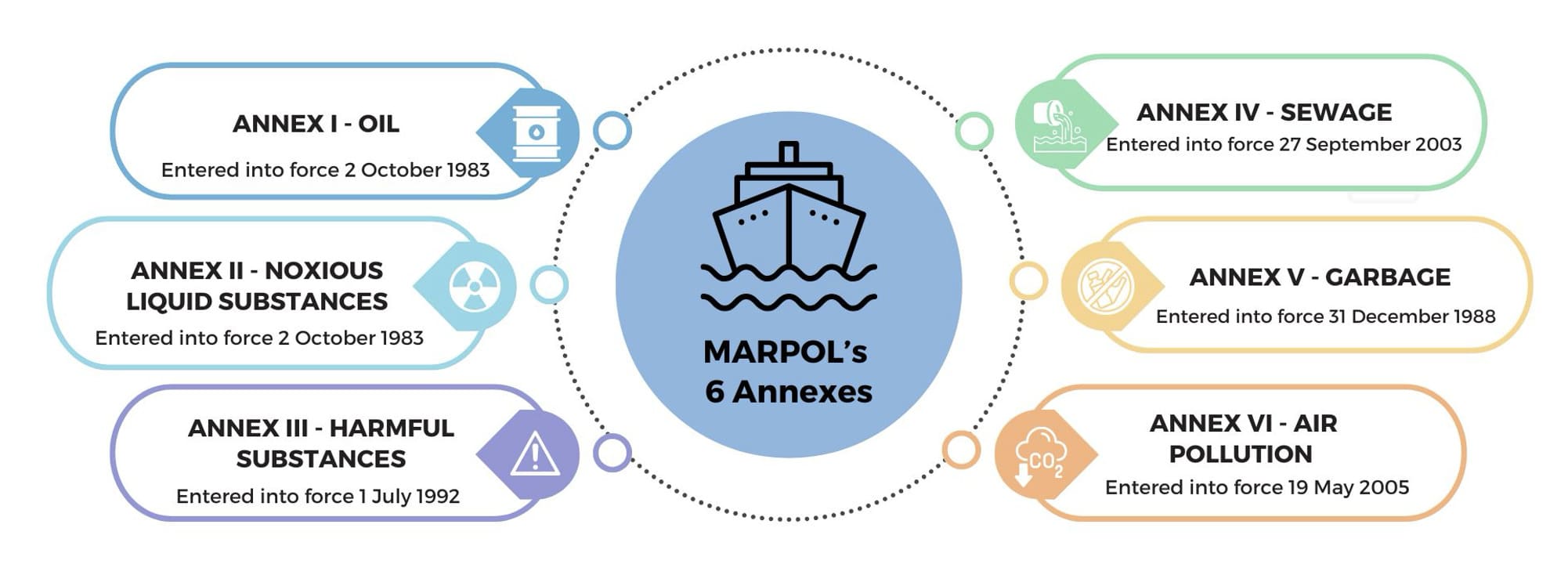
Figure 2: Structure of the MARPOL Convention (IMO, 2024)
MARPOL consists of six technical Annexes, each of which targets specific pollution-related issues:
- Annex I establishes regulations aimed at preventing pollution caused by oil discharges from ships.
- Annex II provides regulatory measures for the control of pollution from noxious liquid substances transported in bulk, explicitly prohibiting the discharge of approximately 250 identified substances within 12 nautical miles of the nearest land.
- Annex III is focused on the prevention of pollution from harmful substances (Article 2 (2)) packaged for maritime transport, ensuring that such substances do not adversely affect marine environments.
- Annex IV addresses regulations concerning the discharge of sewage from ships, emphasising the need for proper waste management practices.
- Annex V governs the disposal of various types of garbage generated on board, defining conditions for appropriate disposal methods to mitigate marine litter.
- Annex VI sets stringent limits on sulphur and nitrogen oxide emissions, achieving a significant 77% reduction in sulphur oxide emissions from ships since January 2020. This Annex also introduces the Energy Efficiency Design Index (EEDI) for new vessels, which mandates technical and operational measures to enhance energy efficiency.
As climate change concerns increase, one of the MARPOL’s procedures to reduce emissions and increase data reporting is the use of the Energy Efficiency Operational Indicator (EEOI), which enables shipping companies to assess the efficiency of their operations and CO2 emissions [7]. This method encourages practices that reduce fuel consumption and emissions, and can also be used by existing ships.
A fundamental principle underpinning MARPOL is the concept of “no more favourable treatment” (Article 5 (4)), which emphasises the necessity for uniformity in the regulation of ship-generated pollution on a global scale. By specialising in the adverse effects of maritime activities on marine ecosystems, this convention significantly contributes to the preservation of biodiversity and the promotion of clean and healthy oceans for future generations [8].
London Convention and London Protocol
The London Convention is the “Convention on the Prevention of Marine Pollution by Dumping of Wastes and Other Matter” and one of the first global instruments to protect the marine environment from ocean contamination. It was established in 1972 and entered into force in 1975. It aims to effectively control all sources of marine pollution, such as the dumping of wastes and other matter. The ultimate objective is to prevent the contamination of our oceans and seas (Articles 1 and 2).
One method to do this is the “black- and grey-list” strategy. This strategy is applied to differentiate waste that can be considered for disposal at sea. Depending on their environmental impact, waste will either come on the black or the grey list. The disposal of items on the blacklist is completely prohibited. Grey-listed items require special national authorisation and strict supervision and can only be done upon fulfilment of specific conditions.
In 1996 the London Protocol (The Protocol) was agreed upon, later entering into force in 2006. The Protocol was created to update the London Convention and at a given point, replace it [9]. The purpose and content of the Protocol are similar to that of the Convention but the Protocol is stricter. It brings with it the “precautionary principle”, as a general obligation. In addition to this, it includes the “reverse list” by which all dumping in the sea is prohibited unless explicitly permitted. Likewise, the disposal of industrial waste has been prohibited since its creation. The Protocol also includes additional processes for technical assistance and compliance. Moreover, a so-called transition period grants new parties five years during which they can gradually introduce measures necessary for compliance with the Protocol.
Regarding climate change, in 2006 an amendment to the Protocol allowed for CO2 storage beneath the seabed, when it is safe to do so. According to the Intergovernmental Panel on Climate Change (IPCC), this is a short-term technological option for reducing net CO2 emissions in the atmosphere. Additionally, since 2013 the Protocol has allowed geoengineering activities, such as ocean fertilisation, for legitimate research purposes (Annex 4). Marine geoengineering can be a feasible option to actively intervene in the environment to counteract the adverse impacts shipping has on it. For example, ocean fertilisation contributes to carbon dioxide removal.
2023 GHG Reduction Strategy
In 2018 the IMO set an Initial GHG Strategy aiming to reduce total annual GHG emissions by at least 50% by 2050 compared to 2008 levels, with a vision of phasing them out by the end of the century. The 2018 Initial Strategy included several short-, mid-, and long-term measures with timelines, barriers, supportive actions and examples of adoption measures according to the needs and capabilities of certain nations. Special consideration was taken for developing countries. In 2023, the IMO adopted the Revised Strategy to reduce GHG emissions from shipping. This Revised Strategy provided an improved ambition to completely eradicate GHG emissions from international shipping close to or around 2050 [10]. This Strategy also states a commitment to “ensure an uptake of alternative zero and near-zero GHG fuels by 2030, as well as indicative check-points for 2030 and 2040” [11]. By 2030, annual greenhouse gas emissions from international shipping should be reduced by at least 20 per cent, striving for 30 per cent, compared to 2008. By 2040, this should increase by at least 70 per cent, striving for 80 per cent.
Although the IMO’s GHG Reduction Strategy displays highly ambitious goals, all measurements are yet to be finalised and/or agreed upon. Some will be finalised between 2023 and 2030. The 2023 Strategy set out a timeline towards the adoption of measures to have the new and updated IMO GHG strategy by 2028.
A timeline illustrating some of the various measures undertaken by the International Maritime Organization to address greenhouse gas emissions from shipping will be presented in Fig. 3.

Figure 3: Addressing climate change – Over a decade of regulatory action to cut GHG emissions from shipping (2023)
IMO’s Underwater Noise Guidelines
Another important IMO milestone in preventing marine pollution from vessels are the non-mandatory “Guidelines for the Reduction of Underwater Noise from Commercial Shipping to Address Adverse Impacts on Marine Life”. These guidelines illustrate how the marine environment is impacted not only by familiar factors but also by lesser-known contributors that pose threats to marine life. For those who do not have a picture of what underwater noise is, underwater noise is generated by various anthropogenic activities, including shipping, deep-sea mining, and pile-driving, among others.
In the context of shipping, these noises arise from multiple vessel components, including propellers and the internal structure and objects inside of the vessels. This noise disrupts the hearing and communication frequencies of marine organisms, jeopardising the fitness and survival of numerous species, including invertebrates. These guidelines provide ship owners, manufacturers and operators with several different measures that can be taken to reduce underwater noise. The IMO recognises the severity of this issue, which is why it is imperative for the industry and civil society to also recognise these challenges in our ongoing efforts to protect marine ecosystems.
Other International and European Union Regulations
At the European level, several different prevention measures contribute to reducing marine pollution. For instance, in 2015, the Monitoring, Reporting and Verification of CO2 Emissions (MRV Regulation) entered into force, setting rules for shipping companies to provide annual reports of their Carbon Dioxide (CO2) emissions [11]. The MRV Regulation used to only cover CO2 emissions, but as of 2024, it also covers Methane (CH4) and Nitrous Oxide (N2O), which is crucial for comprehensive and holistic climate strategies since both N2O and CH4 have much higher global warming potentials than CO2.
In addition, as of January 2025, companies must report emissions for cargo and passenger ships, offshore ships of or above 5000GT, and offshore ships and general cargo ships between 400 GT and 5000 GT. This is also an essential improvement, since larger vessels, especially those that navigate with fossil fuels, emit larger amounts of GHG emissions.
In 2023, the MRV Regulation was improved, making it possible for maritime transport to be a part of the EU Emissions Trading System (EU ETS), which used to only cover the sectors of electricity, heating, energy-intensive industry sectors and aviation. The goal of this EU ETS is to reduce greenhouse gas emissions by 65% by 2030 in comparison to 2005 [11]. Moreover, the EU ETS incorporates shipping emissions into a cap-and-trade system, incentivising reductions in greenhouse gas emissions. The word cap is a threshold that sets the total amount of greenhouse gasses that operators covered by the system can emit. This threshold is reduced yearly at fest intervals. This way, it can stay up to date with the EU’s climate target. The cap-and-trade system uses emission allowances, where each allowance permits the emission of one tonne of carbon dioxide. If companies emit more greenhouse gas emissions than their allowances can cover, they are faced with fines. Allowances need to always be handed in on the 30th of September of the following year. It is essential to understand that allowances for greenhouse gas emissions can be auctioned, enabling companies to buy and sell these allowances among themselves.
This system allows for flexibility in managing emissions, as long as each company can submit sufficient allowances to account for their total greenhouse gas emissions by the end of the reporting period. By fostering a trading environment for emissions allowances, stakeholders can effectively incentivise compliance while addressing the pressing issue of climate change. Ultimately, this auction system plays a vital role in shaping corporate strategies related to sustainability and environmental stewardship.
Several important factors contribute to the effective implementation of the EU ETS. Currently, the EU ETS only encompasses carbon dioxide (CO2) emissions. However, beginning in 2026, it will also include methane (CH4) and nitrous oxide (N2O) emissions. Additionally, the EU ETS operates as a flag-neutral and route-based system, covering emissions from maritime transport originating from or within the ports of EU Member States. This system applies to cargo and passenger vessels of 5,000 gross tonnage (GT) or greater. Moreover, starting in 2027, the regulations will extend to offshore vessels of the same size. These expansions reflect the EU’s commitment to addressing a broader range of greenhouse gas emissions.
Additionally, the level of emissions that the allowances cover will increase gradually each year. Starting in 2025, 40% of the emissions registered for the year 2024 must be covered, in 2026, 70% of the emissions registered for 2025, and lastly, in 2027 and beyond, 100% of the reported emissions need to be covered by the allowances. This way shipping company owners and operators are required to enhance their data collection and reporting.
Another important regulation aiming to decarbonise the shipping sector is the Fuel EU Maritime Regulation, which will apply as of January 2025 [12]. This regulation complements the EU ETS strategy and seeks to gradually reduce the greenhouse gas intensity of fuels used by the shipping sector. It aims to promote the use of cleaner fuels and energy in the maritime sector to reduce current and future greenhouse gas emission levels. This regulation starts with small steps and seeks to reduce the average greenhouse gas intensity of the energy used by a vessel by 80% as of January 2050.
Biodiversity Protection
Lastly, an instrument that specifically focuses on biodiversity protection, is the Convention on Biological Diversity (CBD), which encourages measures to protect marine biodiversity and ecosystems affected by shipping activities. In addition to this, there are Marine Protected Areas (MPAs) and Particularly Sensitive Sea Areas (PSSAs), which are designated areas where marine activities activities are limited to protect sensitive habitats and species.
Barriers and Future Directions
These regulations and initiatives demonstrate a global effort to reduce the environmental impact of shipping, focusing on greenhouse gas emission reduction, promotion of cleaner fuels, and mitigation of underwater noise pollution. However, implementing shipping regulations for environmental protection and emission reduction faces several barriers across technological, economic, scientific, and political domains.
Scientific Barriers
In the scientific domain, several knowledge gaps persist that must be addressed to develop more effective reduction and prevention measures. A thorough understanding of the marine environment and its components work, as well as the impacts of anthropogenic activities on marine organisms, is vital for environmental protection and the transition to sustainable practices. Furthermore, regarding greenhouse gas emissions from the maritime sector, it is crucial to focus on all types of greenhouse gases. Understanding the potency and longevity of these gases is essential for formulating effective environmental policies and strategies to mitigate their effects on global warming.
Technological Barriers
Some key challenges hindering the implementation of technological innovations for decarbonisation in the maritime industry are the following. Firstly, about 99 per cent of currently used maritime fuels are of fossil origin, with only 1.2 per cent using alternative fuels (figure 2). This is due to many different aspects. On the one hand, there is a limited availability of alternative fuels. Although there are several existing sustainable fuels, such as LNG, LPG, electric or hybrid-electric, methanol, hydrogen and ammonia, transitioning to fuels like hydrogen or ammonia requires new infrastructure and technology that is not yet widely available [14], see Fig. 4.
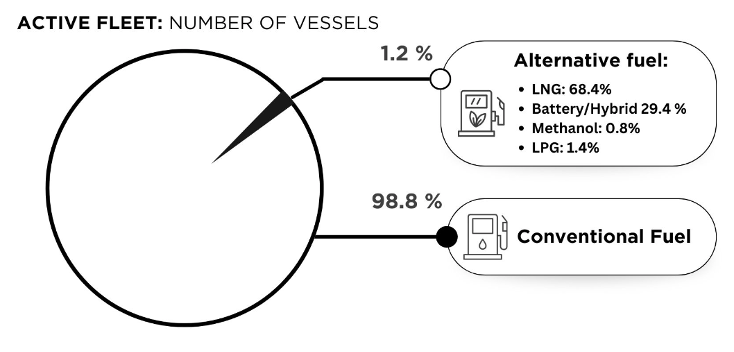
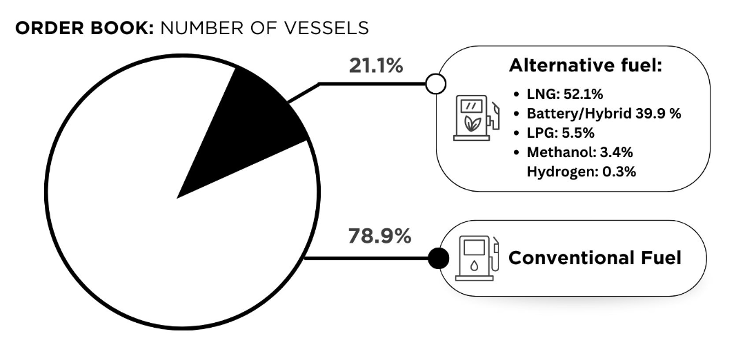
Figure 4: Alternative Fuel Uptake – World Fleet and Order-book 2022
In addition to this, the viability of use varies greatly depending on vessel type. Vessel type, age, and size are a few factors that not only influence the amount of greenhouse gas emissions but also the type of fuel they can use. Directly connected to this are existing fleet limitations. Many ships are older and not designed for new emission reduction technologies, leading to costly structural changes or replacement. Since vessels have a life span of 25 to 30 years and replacing them is not an option for all operators, not to mention not very sustainable, technologies and energy-efficiency methods that can be applied to existing vessels need to happen fast.
Moreover, just as with alternative fuels, the development and adoption of green technologies such as carbon capture and storage (CCS) are still in developmental stages, with uncertainties about their effectiveness and scalability. Lastly, an aspect that can help improve these existing technologies is the need for more accurate data and monitoring. The challenge here is that accurate tracking of emissions and compliance with regulations requires sophisticated data systems that are not always available. A key solution for this is digitalisation. Using artificial intelligence, performance optimising tools and a collective database could help improve and facilitate data gathering.
Economic Barriers
Economically speaking, these transitions come with high initial costs. Investing in new technologies, retrofitting ships, or transitioning to alternative fuels can be prohibitively expensive for many shipping companies, which is most likely the reason behind these slow transitions. In addition, market competition plays an essential role because investors and companies may hesitate to adopt greener practices if competitors do not, fearing loss of market share due to increased operational costs. Another recent economic challenge is fluctuating fuel prices. The volatility of fossil fuel prices can impact the economic viability of alternative fuels, making investment decisions uncertain
Furthermore, an aspect that will require more action in the future is financial incentives from governments. The lack of government incentives or support can hinder the transition to sustainable practices. Yes, it is clear that these transitions need to be made, but not all have the resources to make these changes. Whether is retrofitting an old vessel or transitioning to a new one, many small owners and small companies require support to have a chance to keep up and contribute to a sustainable shipping transition.
Finally, an integral aspect is balancing economic interest with environmental protection. For many companies, these economic barriers are the reason why no active action is being taken, thus forgetting about the intrinsic value of the marine environment. It is crucial to remember that these sustainable transitions are not only beneficial for us but also necessary for the environment.
Political Barriers
The implementation and enforcement of regulations encounter numerous challenges. Foremost among them is the fragmented regulatory landscape. As shipping operates in international waters, establishing unified regulations proves difficult due to the varying interests of different countries. Key factors influencing this are their capabilities, needs and environmental considerations. This diversity in standards complicates compliance efforts. Furthermore, the enforcement of globally applicable rules for vessels and ports is essential for a successful transition. This brings us to the next point: global disparities. Developing nations may prioritise economic growth over environmental regulations, creating conflicts in international agreements and enforcement. This is why supporting their transition is also crucial. The IMO is currently actively exploring funding mechanisms to assist countries in need.
Likewise, the political will and commitment of different nations play a significant role in facilitating transitions that protect the environment. Inconsistent political support for environmental initiatives can hinder the timely implementation of necessary regulations and vice versa. For instance, environmentally friendly incentives in Canada have been shown to contribute to more sustainable practices and enhance the protection of marine species. Additionally, lobbying and industry resistance are critical factors in this sector. Just as in other sectors, powerful fossil fuel and shipping lobbies may resist stringent regulations, advocating for less rigorous standards. Furthermore, inadequate international coordination poses a challenge. Effective implementation requires collaboration among nations, which can be impeded by differing priorities and levels of commitment to environmental issues.
Addressing these barriers is essential for implementing effective shipping regulations designed to reduce greenhouse gas emissions and protect the marine environment. Collaborative efforts among governments, industry stakeholders, and technological innovators will be crucial in overcoming these challenges. Establishing a universal regulatory framework that applies to all vessels regardless of their flags, country of ownership and travel routes is essential. However, it is still equally important to acknowledge and respect the varying capabilities of more vulnerable nations that may not possess the same resources as others.
Criticism on the IMO
Even though the IMO conventions set international standards and rules for shipping, simplify cooperation between countries and make an important contribution to reducing pollution in the sea, there are still points of criticism regarding the IMO and MARPOL.
While the MARPOL Convention represents a significant step forward in the reduction of marine pollution, several areas of concern have been raised regarding its effectiveness, enforcement, and adaptability to evolving environmental challenges [14].
One major critique of MARPOL regards its enforcement mechanisms. Critics argue that the convention is not strict enough, leading to instances of non-compliance and inadequate punishment for violators. For instance, violations of Annex V are to be sanctioned under the law of the Administration of the ship, wherever the violation occurs. This means that if the flag state does not or cannot enforce violations of international law, sanctions can be evaded. In this case, sanctions are established under the law of that Party (Article 2). This does not apply when the violation occurs within the jurisdiction of any Party of MARPOL. Nevertheless, cases in which the flag state decides to take no action have undermined the credibility of MARPOL and compromised its effectiveness in achieving its objectives.
As our understanding of the long-term effects of marine pollution deepens, there is growing recognition of the need for more ambitious targets and measures to safeguard the health of marine ecosystems and human populations. Only through continuous review, adaptation, and collaboration can the IMO and MARPOL fulfil their full potential as a tool for global marine environmental protection.
Future directions
All of these organisations and conventions have taken great measures and steps to protect the ocean from anthropogenic pollution. Each aspect of these stakeholders contributes to preventing further ocean pollution and to reducing greenhouse gas emissions. However, research shows that there are still several knowledge gaps when it comes to how these different measurements are contributing to the prevention of pollution. This is, among others because taking the necessary measurements for research in the ocean is a complex task. Likewise, there are still points of criticism regarding the lack of enforcement and punishment when companies violate standards set by these organisations. Protecting the ocean from ship-source pollution or any source of pollution should be prioritised.
“Strict language in international agreements is meaningless unless the standards are actually enforced” [15].
However, it is evident that this endeavour is complex. While the focus should lay on the protection and conservation of the ocean and its marine species, significant and immediate changes cannot be implemented in such a vast transportation sector overnight. It is a long process already moving in the right direction. It requires many resources, a strong commitment, decision-making processes and the right intentions.
To manage a significant reduction in greenhouse emissions, several measures should be taken. Some International emission reduction strategies are the adoption of alternative fuels, innovations in vessel design for both new and existing ones, and energy efficiency measures. At the regional and national levels, it is essential to consider all types of social, economic and environmental factors that may influence which types of measures could be implemented.
Finally, promoting shipping regulations is crucial for incentivising the adoption of cleaner technologies and alternative fuels, thus encouraging the maritime sector to transition towards more sustainable practices that reduce environmental harm. For instance, enforcing stricter environmental standards can drive innovation in vessel design and enhance fuel efficiency. Moreover, port authorities should actively support and encourage ship owners and operators to implement these sustainable practices.
Conclusion
Shipping regulations play a crucial role in combating climate change and protecting and preserving marine ecosystems. As international shipping is a major source of global greenhouse gas emissions, these regulations must facilitate their reduction. Initiatives such as the IMO’s GHG Strategy and the MARPOL Convention are designed to mitigate environmental impacts; however, their success relies on the commitment and cooperation of all stakeholders within the maritime industry.
International collaboration is essential for effective maritime governance and environmental protection. Shipping regulations foster global cooperation, thereby uniting nations to address shared environmental challenges and establish a unified approach to sustainable shipping. This collaboration not only protects the marine environment but generates long-term economic benefits. By promoting sustainability, regulations can enhance operational efficiency, lower fuel costs, and reduce risks of environmental disasters, ultimately benefiting the economy and ensuring the longevity of marine resources. Furthermore, building a robust partnership among governments, academia, and industry stakeholders will facilitate knowledge sharing and collaboration. This will contribute to the implementation of more effective and comprehensive policies.
The time of choosing indecision over action is over. A call to action for continued commitment and innovation in the shipping industry is necessary. This commitment requires investing in technological advancements and a willingness to engage in meaningful dialogue about sustainable and resilient changes.
Acknowledgements
The authors would like to thank Mr. Bernd Lange, Member of the European Parliament, Chairman of the Committee on International Trade (INTA) and Chairman of the Conference of Committee Chairs (CCC) for years of support in the area of the environment and climate protection.
About the Authors
 Pamela Coyoc Duron was raised in Mexico City and Germany. In 2024, she completed her bachelor’s degree in Environmental Sciences from the Leuphana University of Lüneburg, where she specialised in nature conservation and ocean law. Currently pursuing a certification in the fundamentals of natural sciences, she aims to begin her master’s degree in marine biology this year. Her passion lies in raising awareness about marine pollution and fostering collaboration among all stakeholders involved in environmental protection.
 Michael Palocz-Andresen is a full professor at the BUAP in Puebla. He has been working as a full professor for Sustainable Mobility since 2018, supported by the DAAD at the TEC Instituto Tecnológico y de Estudios Superiores in Mexico. He was a full professor at the University West Hungary until 2017. Currently, he is a guest professor at the TU Budapest, the Leuphana University Lüneburg, and at the Shanghai Jiao Tong University. He is a Humboldt scientist and instructor of the SAE International in the USA.
References
- [1] International Maritime Organisation (IMO) (2024). IMO and its role in protecting the world’s oceans. https://www.imo.org/en/MediaCentre/HotTopics/Pages/oceans-default.aspx
- [2] Cruz, E. Lloyd, T., Bosschers, J., Lafeber, F.H., Vinagre, P. Vaz, G., (2021). Study on inventory of existing policy, research and impacts of continuous underwater noise in Europe. – SOUNDS – Status of UNDerwater noise from Shipping. EMSA report EMSA/NEG/21/2020. WavEC Offshore Renewables and Maritime Research Institute Netherlands. https://www.emsa.europa.eu/we-do/sustainability/environment/emter-report/item/4498-launch-of-the-emter-report.html
- [3] UN Trade and Development (UNCTAD) ‘Review of Maritime Transport 2023’ (2023). https://unctad.org/publication/review-maritime-transport-2023
- [4] EUR-Lex (2023). Regulation (EU) 2023/1805 of the European Parliament and of the Council of 13 September 2023 on the use of renewable and low-carbon fuels in maritime transport, and amending Directive 2009/16/EC. https://eur-lex.europa.eu/eli/reg/2023/1805/oj
- [5] Maruf & Chang, YC., (2023). Further Development of the Law of the Sea Convention in the Anthropocene Era: The Case of Anthropogenic Underwater Noise. Sustainability 2023, 15(12), 9461. https://doi.org/10.3390/su15129461
- [6] International Convention for the Prevention of Pollution from Ships 1973 (MARPOL), Art 4 (4). https://www.marpoltraininginstitute.com/MMSKOREAN/MARPOL/intro/a4.htm
- [7] Marine Digital. (n.D) What is EEOI – Energy Efficiency Operational Indicators? https://marine-digital.com/article_eeoi
- [8] Mantoju, C. D. (2021). Analysis of MARPOL implementation based on port state control statistics. Journal Of International Maritime Safety, Environmental Affairs, And Shipping, 5(3), 132–145. https://doi.org/10.1080/25725084.2021.1965281
- [9] International Maritime Organization (IMO (2024). Convention on the Prevention of Marine Pollution by Dumping of Wastes and Other Matter. https://www.imo.org/en/OurWork/Environment/Pages/London-Convention-Protocol.aspx
- [10] MEPC 80 (2023). 2023 IMO STRATEGY ON REDUCTION OF GHG EMISSIONS FROM SHIPS [Review of 2023 IMO STRATEGY ON REDUCTION OF GHG EMISSIONS FROM SHIPS ]. RESOLUTION MEPC.377(80)(Annex 1), 1–17. International Maritime Organization – IMO. https://wwwcdn.imo.org/localresources/en/MediaCentre/PressBriefings/Documents/Clean%20version%20of%20Annex%201.pdf
- [11] International Maritime Organization (IMO) (2023). IMO’s work to cut GHG emissions from ships https://www.imo.org/en/MediaCentre/HotTopics/Pages/Cutting-GHG-emissions.aspx
- [12] European Maritime Safety Agency – EMSA (2024). FAQ – Maritime transport in EU Emissions Trading System (ETS). https://www.emsa.europa.eu/reducing-emissions/extension-ets/faq-extension-ets.html
- [13] European Maritime Safety Agency – EMSA (2023). FUEL EU MARITIME Regulation. https://emsa.europa.eu/reducing-emissions/fuel-eu-maritime-regulation.html
- [14] DNV (2024). Future Fuels. https://www.dnv.com/maritime/hub/decarbonize-shipping/fuels/future-fuels/
- [15] Andrew Rakestraw, Open Oceans and Marine Debris: Solutions for the Ineffective Enforcement of MARPOL Annex V, 35 HastingsInt’l & Comp. L. Rev. 383 (2012). https://repository.uclawsf.edu/cgi/viewcontent.cgi?article=1771&context=hastings_international_comparative_law_review