Failed Statebuilding versus Peace Formation: The Consequences and Implications over the Last 25 Years

Recent years have seen an abundance of foreign intervention to achieve peace and statebuilding. Below, Oliver Richmond discusses how statebuilding often fails to achieve its goal of long-term peace and a stable state, and questions whether peace formation should come from actors and institutions?
China Looks West: What Is at Stake in Beijing’s “New Silk Road” Project

Flynt Leverett, Hillary Mann Leverett and Wu Bingbing
Not even two years into what will almost certainly be a ten-year tenure as China’s president, Xi Jinping has already had an impact on China’s foreign policy: Standing up for what many Chinese see as their nation’s territorial sovereignty in maritime boundary disputes in the East China Sea and the South China Sea, proposing a “new model of great power relations” to guide relations with the United States, and presiding over the consolidation of what Xi himself calls a “comprehensive strategic partnership” with Russia.1 But the most consequential diplomatic initiative of Xi’s presidency may turn out to be his calls to create a “New Silk Road Economic Belt” and a “Maritime Silk Road of the 21st Century”: vast infrastructure and investment schemes aimed at expanding China’s economic connections to – and its political influence across – much of Eurasia.
Global Energy Dilemmas: Revisited

When it comes to global energy consumption, business as usual is no longer an option. Here Michael Bradshaw reflects on the energy dilemmas we face today, at the beginning of what will be a crucial year in determining the international community’s future energy agenda.
Transformation of Financial Services in Northeast Asian Banks: An Unexpected, but Pleasant, Cultural Surprise

By Jung Kee Hong and You-il Lee
Below Dr. Jung Kee Hong and Dr. You-il Lee explore the new emergence of financial market trends shown in Northeast Asia, such as the rapid growth in bancassurance in Korea and Taiwan. The authors offer an analysis on a common cultural value that Korean and Taiwanese banking customers appreciate, and the main drivers from this common cultural value that stimulate the customers’ cross-buying intentions in their banks.
Cheap and Clean: Attitudes to Energy in a USA Concerned with Climate Change

By Stephen Ansolabehere and David Konisky
In light of the recent agreement between the US and China to cut greenhouse gas emissions, US climate policy has been the focus of much scrutiny. But how do the American public think about climate change? Is it high on their agenda and what energy policies do they most value? Below Stephen Ansolabehere and David Konisky answer these questions, and others, and demonstrate America’s biggest fears about energy.
Empowering Women Makes Economic Sense

Interview with James Zhan
Foreign investment holds enormous potential for women’s empowerment through the creation of formal jobs and business linkages – and this is good for development. But a recent study by the United Nations Conference on Trade and Development (UNCTAD) finds that the operations of multinational companies can also increase women’s vulnerability in the workplace. The World Financial Review quizzes UNCTAD’s Investment and Enterprise Director, James Zhan, who guided the study, about its findings and the policy directions it suggests to guide firms in the right direction.
Putin’s Russia: An Exemplary Case of Hyper-Extractive State

Due to Russia’s geographic scale and military might, it amplifies typical problems of many petrostates from Venezuela to Nigeria to Iran. In an attempt to theorise these multiple problems Alexander Etkind introduces the concept of a hyper-extractive state, whose elite gets their wealth directly from natural resources with miniscule participation from the people. Is demise inevitable for these hyper-extractive states?
Natural Disasters, Bank Damages, and Firm Activities
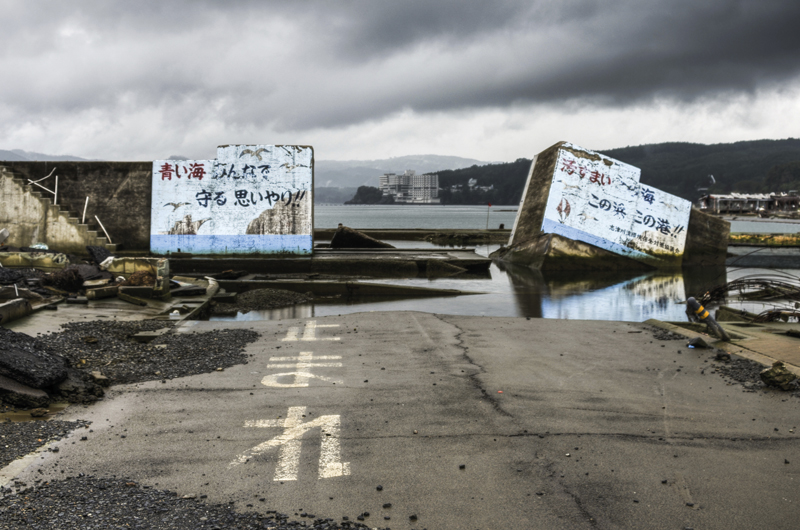
By Kaoru Hosono and Daisuke Miyakawa
Below Kaoru Hosono and Daisuke Miyakawa examine the impacts of financial shocks arising from two earthquakes in Japan on firms’ financing and activities. On one hand, they find that bank damages from the 1995 Kobe earthquake significantly lowered the investment and export of undamaged firms transacting with damaged banks. On the other hand, they find that bank damages from the 2011 Tohoku earthquake did not affect bank borrowing, even reduced the probability of firms’ bankruptcy, and further weakened the tendency for more efficient firms to be less likely to go bankrupt. Their results suggest temporary and modest government support after a disaster is desirable.
Lessons from the Microsoft Antitrust Cases

By Andrew I Gavil and Harry First
For three decades Microsoft has been engaged with the global system for enforcing competition policy. In an excerpt from their new book The Microsoft Antitrust Cases, the authors Andrew I. Gavil and Harry First examine the remedies put in place and the further lessons we can learn from these antitrust cases.
EDITOR'S PICK OF THE WEEK

China’s Challenging Search for a New Model of Economic Growth
By Danny Leipziger
China cannot continue to rely on exports to drive its growth, but what are the alternatives?
China ran a $1.2 trillion trade surplus last year, and despite admonitions from the IMF to rely...