The newly opened international airport in Nuuk has seen an influx of visitors lately, as journalists and political figures alike arrive to witness firsthand the growing geopolitical interest in Greenland. Among them is Tom Dans, a private equity investor and Trump supporter, who is vocal about Greenland’s strategic significance to the United States.
Dans, an American with Arctic interests, argues that “Greenland is the front door for North America,” reinforcing the island’s importance in U.S. national security and resource expansion. However, the sentiment on the ground is more divided.
Greenland, legally a part of the Kingdom of Denmark, has long been supported by Danish financial grants and infrastructure. Yet, tensions over its colonial history and aspirations for self-determination remain. Influencer Qupanuk Olsen, who has built a large following showcasing Greenlandic and Inuit culture, openly criticizes Danish influence, pointing to historical injustices such as forced contraceptive implants on Inuit women in the mid-20th century.
“Why should we just be taken by another colonizer?” Olsen asks, skeptical of U.S. intentions despite its growing economic and military presence on the island. The U.S. already operates an Arctic base in Greenland and has vested interests in its untapped mineral resources.
Meanwhile, local politician Aqqalu C. Jerimiassen, leader of the Atassut party, warns against a hasty break from Denmark, citing Greenland’s reliance on Danish welfare support, including healthcare and education. “We might be ready someday, but not today, not tomorrow,” he says.
With elections approaching, Greenland’s future remains uncertain. What is clear is that the island stands at a pivotal moment, caught between its colonial past, its present under Danish rule, and a future that could see closer ties to the United States—or full independence.
Microplastics, tiny plastic particles from primary and secondary sources, pose a significant threat to aquatic ecosystems and human health. The particles spread unnoticed in the environment, are absorbed by organisms and cause physical and toxic damage. Advances in sensor and IoT technologies are enabling more precise real-time monitoring that supports the analysis of pollution patterns and the development of effective countermeasures. These innovations are critical to controlling the spread of microplastics and minimizing long-term risks.
Introduction
Microplastics are a pervasive environmental problem that threatens both ecosystems and human health. These tiny plastic particles enter the environment through various sources such as cosmetic products, textiles or the decomposition of larger plastic waste. They spread unnoticed in aquatic habitats, are ingested by organisms and have harmful physical and chemical effects. At the same time, their small size makes them difficult to detect and monitor, which makes combating microplastic pollution a major challenge [1].
However, with technological innovations such as real-time sensors and IoT-based monitoring systems, more effective control is within reach. These developments open up new opportunities to analyze the spread of microplastics, assess their dangers and initiate targeted countermeasures. The following analysis highlights the sources, impacts and innovative approaches to monitoring microplastics and shows how technological advances can make a significant contribution to solving this global problem.
Background Information on Microplastics
Due to their size, they spread unnoticed in the environment and are difficult to remove, which poses specific risks to the environment and health.
Microplastics are plastic particles smaller than 5 mm that occur as fibers, fragments or pellets. They are created by the decomposition of larger plastic waste or are produced directly in small sizes [1]. Due to their size, they spread unnoticed in the environment and are difficult to remove, which poses specific risks to the environment and health. A distinction is made between primary microplastics, which are intentionally produced for industrial and cosmetic purposes, and secondary microplastics, which are produced by the decomposition of larger plastic parts [2].
Primary microplastics are found in cosmetic products and cleaning agents, while secondary microplastics are created by the fragmentation of plastic bags, bottles or fishing nets. Both types pose challenges for environmental monitoring, as they easily enter bodies of water and spread deep into the ecosystem.
Sources of Microplastics
Microplastics come from many sources, including cosmetic products containing microbeads, which are used as abrasives in scrubs and toothpastes and are released into the environment via wastewater [2]. Synthetic textiles such as polyester release microfibers every time they are washed, polluting rivers and oceans. Plastic waste such as bottles and bags break down into smaller fragments due to sunlight and waves, which constantly increases the amount of microplastics. Other sources are tire abrasion caused by vehicle use and industrial processes in which plastics release microplastics [3].
Fig.1 shows the image of microplastics after different time interval.
(Images of polystyrene particles after 0, 800 and 2,000 hours of exposure to sunlight and mechanical stress caused by stirring) [4]The image shows microscopic images of polystyrene particles exposed to different conditions, namely solar radiation and mechanical stress caused by stirring. The three images document the changes in the particles after 0 hours, 800 hours and 2,000 hours.
0 hours: The particles have a relatively smooth and regular shape.
800 hours: After 800 hours of sun exposure and mechanical stress, a clear fragmentation and erosion of the particles can be seen. Some particles already show cracks and irregularities.
2,000 hours: After 2,000 hours, the particles have disintegrated even further and the surface structure is greatly altered. The particles have become significantly smaller and more irregular.
This shows the influence of environmental conditions on the degradation of plastics such as polystyrene over longer periods of time. The decomposed particles remain in the environment in the form of microplastics and can, for example, remain in bodies of water over the long term, where they are difficult to break down and cause ecological damage.
Effects of Microplastics on Water Bodies and Ecosystems
The ecological impact of microplastics on aquatic habitats is severe. Microplastics are ingested by fish, mussels and other organisms as they resemble natural food sources and cause physical damage such as digestive organ injury and blockages. The particles can also accumulate in the animals’ tissues, leading to reduced growth, lower food intake and increased mortality.
Microplastics also adsorb pollutants that can have toxic effects via the food chain. This chemical pollution affects the health and behaviour of affected animals and could significantly reduce biodiversity in water bodies.
Impact on Human Health and the Food Chain
Research is increasingly focusing on the potential impact of microplastics on human health. Microplastics enter the human body through the food chain, mainly through the consumption of seafood and fish, as well as through drinking water, salt and other foods such as honey. This exposure carries the risk of inflammatory reactions that could affect the immune system, as well as the uptake of toxic chemicals that can cause long-term health damage.
There is initial evidence that microplastic particles may cause cell damage, but the exact mechanisms and consequences are not yet fully understood. The ubiquitous presence of microplastics in the environment and food highlights the urgency of taking measures to reduce exposure. At the same time, there is a significant need for research to better understand how microplastics affect the human body and what long-term risks could result.
Technological Approaches to Monitoring Microplastics
The use of sensors and IoT devices to monitor microplastics in water bodies has gained considerable importance in recent years. These technologies enable the continuous and precise collection of data that is essential for analyzing the distribution of microplastics. For example, sensors have been developed that are able to detect microplastic particles in real time and measure their concentration. This offers the advantage that researchers and environmentalists can react quickly to pollution events [7].
The integration of IoT devices into microplastic monitoring has also made significant progress. These devices can wirelessly transmit data to central servers where it can be analyzed in real time. This reduces the need for manual sampling and minimizes the risk of contamination during the transportation of samples. In addition, the collected data can be used immediately for further analysis and decision-making processes.
Another advantage of using IoT devices is the ability to integrate them into a network of monitoring stations. This enables comprehensive monitoring of large geographical areas and the identification of pollution sources. For example, sensors can be installed along rivers to monitor microplastic inputs and track their origin. This not only facilitates monitoring, but also the enforcement of environmental regulations [8].
The use of IoT technologies thus represents a promising solution for tackling microplastic pollution, as it not only enables data to be collected and analyzed quickly, but can also effectively monitor the spread and origin of microplastic particles, see Fig. 2.
Figure 2: Illustration of the possible IoT technology
Data Analysis and Processing
The application of big data analytics in microplastics monitoring offers numerous advantages, especially when dealing with the enormous amounts of data generated by modern monitoring technologies such as sensors and IoT devices. These analyses make it possible to efficiently process large amounts of data from various sources, such as rivers, wastewater plants and industrial discharges, identifying complex patterns and trends that would be difficult to detect using traditional methods. Big data can be used in a variety of ways to gain a deeper understanding of microplastic distribution, which is particularly crucial for the development of effective countermeasures.
An outstanding advantage of big data analytics is the ability to process and analyze data in real time. This means that environmental protection agencies and researchers can respond immediately to pollution events by using automatically generated alert systems that trigger notifications as soon as certain thresholds of microplastic concentration are exceeded. This real-time data allows decisions to be made more quickly and preventative measures to be implemented more effectively. Such algorithms are particularly important in areas of high environmental relevance, as they enable quick and targeted actions, such as diverting water flows or initiating clean-up measures.
Another field of application of big data analysis is the identification and quantification of the main sources of microplastic pollution. By comprehensively analyzing data collected from different geographical and industrial sources, researchers can locate and quantify the hotspots of microplastic emissions. These findings are invaluable not only for developing general strategies to combat microplastics, but also for taking targeted action at the places where pollution originates, such as industrial wastewater or agricultural drainage systems [9].
In addition to identifying sources of pollution, big data also offers the opportunity to develop predictive models that show future microplastic distribution trends. Using machine learning algorithms and other advanced analytical techniques, researchers can create forecasts based on historical data and current measurements that make it possible to identify potential problem areas in advance. These predictive models not only help to monitor the current situation, but also provide a valuable basis for the long-term planning and implementation of environmental protection measures. By combining big data and predictive models, decision-makers can respond to future challenges in a more targeted and resource-efficient manner.
Overall, the use of big data analytics is revolutionizing the way environmental agencies and researchers collect, process and apply data for microplastics monitoring. The ability to analyze data in real time and make predictions supports not only monitoring, but also preventative planning and implementation of pollution mitigation strategies [10].
Artificial Intelligence for Pattern Recognition
The use of artificial intelligence (AI) to recognize patterns in collected environmental data opens up new possibilities and significant advantages for monitoring microplastics in water bodies. AI systems are able to process large amounts of data quickly and efficiently, which is particularly important in complex and dynamic environments such as rivers, lakes and coastal areas. One of the main strengths of AI is that it is able to recognize data patterns and anomalies that would be difficult to identify using conventional methods.
Using specially trained models, AI systems can distinguish microplastics from other natural particles in water, such as organic debris.
By using AI algorithms that can operate in real time, it is possible to analyze large data sets, identifying patterns that indicate pollution sources or movements. Especially in environments where human observation and manual analysis reach their limits, AI offers a more precise and faster solution. Another important feature of AI is its ability to learn and continuously improve from the analyzed data. This means that AI models developed to monitor microplastics are constantly trained on new data and can increase their accuracy over time. This enables them to make increasingly precise predictions and continuously improve the efficiency of monitoring.
An outstanding example of the application of AI is the ability to distinguish between different types of particles. Using specially trained models, AI systems can distinguish microplastics from other natural particles in water, such as organic debris. This ability reduces the error rate in detection and ensures that the data collected for monitoring microplastics is much more accurate. This improves the quality of environmental monitoring as it is easier to quantify the actual amount of microplastics in a particular body of water.
Another major advantage of AI is the development of predictive models that make it possible to forecast future pollution trends and distribution patterns of microplastics. By analyzing historical data in combination with advanced analytical techniques, these models can help to proactively identify pollution events before they escalate. This is particularly invaluable for long-term ecosystem monitoring and protection, as decision-makers can take early action to minimize the impact of microplastic pollution [11].
However, the advantages of AI go beyond mere pattern recognition. AI-supported systems also offer a significant increase in efficiency in data processing. By automating analytical methods, researchers and environmentalists are able to analyze large amounts of data without human intervention. This not only saves time and resources, but also increases the accuracy and reliability of the results. This is particularly relevant in large-scale monitoring projects where it is important to process continuous data flows to obtain a comprehensive picture of environmental pollution.
Overall, the use of artificial intelligence for pattern recognition and predictive analysis is revolutionizing the way data is processed and used to monitor microplastics. It not only enables more precise and faster analysis of the pollution situation, but also provides the basis for strategic decisions and long-term planning to protect water bodies. By combining real-time analysis, predictive models and automated pattern recognition, AI offers a holistic solution that significantly improves the efficiency and effectiveness of monitoring measures.
Microplastic Sensor in the Industry
The RAMP-10 sensor offers an innovative solution for real-time monitoring of microplastics in water. Using high-speed Raman spectroscopy, it analyzes flowing particles directly on site and precisely determines their material and size distribution. Thanks to machine learning, the data can be processed without delay, enabling continuous online monitoring.
In contrast to conventional methods, the RAMP-10 does not require any physical modification of the sample or chemical additives. The particles remain in their natural state, allowing for unbiased analysis. This efficiency, combined with the ability to adapt to changes in concentration within microseconds, makes the sensor a powerful alternative to traditional laboratory methods.
The RAMP-10 is versatile and can be used in research facilities, laboratories or industrial quality assurance. Its flexible adaptation allows the specific classification and identification of different polymers, making it a valuable tool in microplastics monitoring, see Fig. 3 .
Figure 3: Photo of the switched-on device with user interface [11]
Potentials and Limits of IT-supported Monitoring
Technological innovations offer significant opportunities for monitoring microplastics in water bodies. Key benefits include improved accuracy, real-time monitoring and automation of data collection processes. These advances promise not only greater efficiency in the detection of microplastic particles, but also a more precise analysis of the distribution and movement of these particles in different water bodies.
The continuous development of sensors has led to significant improvements in the identification of microplastics. Modern sensor systems can detect particles in different layers of water and even determine differences in material composition. Spectral analyses and optical methods, such as Fourier transform infrared spectroscopy (FTIR), make it possible to precisely identify microplastic particles and analyze their chemical composition. In addition, laser systems are used that can detect the position and size of microplastics in real time [12].
Real-time monitoring is another significant advance in the IT-based monitoring of microplastics. Previously, monitoring processes relied heavily on manual sampling and time-consuming laboratory analysis, which often only provided sporadic data. Today, advanced sensors connected to IoT (Internet of Things) technologies enable continuous monitoring of microplastics in real time. These systems can be installed at strategic points in rivers or oceans and provide continuous data that can be analyzed immediately.
One example of this is the use of satellites and drones to detect microplastics in large bodies of water. Satellite images can detect microplastics on the water surface using special filter techniques. These images are used in combination with weather data and ocean current models to predict and analyze the movement of microplastics. This offers the advantage that pollution hotspots can be identified more quickly and containment measures can be initiated [13].
Automation is another area that greatly increases the potential of IT-based monitoring systems. Traditionally, the analysis of microplastic samples has been a manual and lengthy process, requiring researchers to take samples from water bodies, analyze them in the lab and then evaluate the results. However, the automation of data collection and analysis tools can greatly speed up this process.
Automation is another area that greatly increases the potential of IT-based monitoring systems.
Modern monitoring systems are able to process large amounts of data in a short space of time and automatically generate reports. For example, these systems can continuously monitor water quality and raise the alarm when certain thresholds are reached. With the introduction of cloud technologies, this data can be made accessible in real time across large distances. This not only facilitates monitoring, but also collaboration between international research teams and environmental protection organizations [14].
IT-supported monitoring systems also enable better integration of interdisciplinary approaches. For example, geographic information systems (GIS) can be combined with sensor data to create maps of pollution zones. These maps help to identify the sources of microplastics and take measures to combat pollution at its source. This is particularly beneficial in large river systems and oceans, where the sources of microplastics are often difficult to pinpoint. By combining technologies such as satellite imagery, weather models and real-time sensor data, more accurate predictions can be made about the spread of microplastics [15].
The global availability of IT-based monitoring systems allows not only national governments but also international organizations to monitor microplastic pollution on a global scale. This enables better coordination in the fight against plastic pollution, especially in developing countries where access to traditional monitoring methods is often limited. The use of drones and low-cost sensors in remote areas can help collect data that is crucial for environmental protection. The technologies also enable long-term sustainability strategies as they significantly reduce the resources required for sampling and laboratory testing while providing more comprehensive data.
Challenges and Limitations of Current Technologies
Monitoring microplastics in water poses a number of technical challenges. One key difficulty is the sensitivity of the sensors. Many of the sensors used today are not able to reliably detect the smallest microplastic particles, which can lead to incomplete data sets. In addition, the accuracy of the measurements is highly dependent on environmental conditions such as the turbidity of the water and the presence of organic particles. Such factors can distort the measurement results, as the sensors have difficulty distinguishing microplastics from other particles [6].
Another technical problem concerns the standardization of measurement methods. To date, there is no standardized procedure for monitoring microplastics, which is why studies often use different technologies and protocols. This makes it considerably more difficult to compare the results from different regions and studies. There is an urgent need for internationally recognized standards and protocols to increase the comparability and reliability of the collected data.
Data processing is also a key issue. As continuous monitoring generates immense amounts of data, powerful data processing systems and efficient algorithms are necessary to analyze this data in a meaningful way. Techniques such as big data analytics and artificial intelligence can help improve pattern recognition and data evaluation, but require significant technical resources and specialized expertise.
Long-term surveillance systems face additional challenges. Many current monitoring devices are not designed for continuous operation in harsh environments. Regular maintenance and calibration are necessary to keep the sensors functional, which increases operating costs and can affect monitoring efficiency [5].
Outlook and Future Developments
The future of microplastic monitoring in bodies of water will be shaped by technological advances in sensor technology and data analysis. New sensors with improved materials and optical technologies enable more precise detection of even the smallest particles that were previously difficult to detect. These innovations could significantly increase data quality and provide detailed insights into the composition of microplastic pollution.
An important trend is the miniaturization of sensors and their integration into IoT devices. These mini-sensors could create area-wide monitoring networks that enable almost seamless data collection over large geographical areas. Continuous real-time monitoring not only reduces costs, but also generates valuable data for analyzing pollution patterns [7].
The automation of sampling and data analysis also plays a central role. Automated systems that operate without human intervention ensure continuous monitoring of large volumes of water, increase data accuracy and minimize errors. These systems can operate around the clock while reducing operating costs.
In the future, hybrid technologies that combine optical sensors with chemical analysis methods could provide more comprehensive data. Such systems not only record the physical properties of microplastic particles, but also their chemical composition and origin. This enables the development of precise prediction models that can map current pollution and forecast future trends [8].
Overall, these technological advances promise more precise, cost-effective and comprehensive microplastic monitoring, which will make a significant contribution to better understanding pollution and developing effective countermeasures.
Conclusion: Future Prospects and the Role of IT-based Microplastic Monitoring
Microplastics are a serious environmental threat that not only endangers ecosystems but also human health. It originates from primary sources such as cosmetic products and synthetic textiles, as well as from the decomposition of larger plastic waste. The small particles spread unnoticed in aquatic habitats, where they are ingested by organisms and can cause physical and toxic damage. These effects not only affect the species concerned, but also extend through the entire food chain to humans, which underlines the urgency of countermeasures.
Technological advances in microplastic monitoring offer hope for more effective solutions. Sensors such as the RAMP-10 enable precise real-time measurements that allow an immediate response to pollution. The combination of sensor technology with IoT devices has the potential to create a comprehensive monitoring network that provides high quality data without manual intervention. Automated sampling and analysis methods minimize errors and costs, while hybrid technologies can provide more comprehensive information on the physical and chemical nature of microplastics.
Future developments in this area will be characterized by the continuous improvement of sensors, integration into IoT networks and the automation of processes. These advances are crucial not only to better understand the distribution and impact of microplastics, but also to develop effective measures to reduce pollution. Only through a combination of technological innovation, scientific research and decisive action can the environmental and health risks of microplastics be minimized in the long term.
Ahmad Zaiour is currently pursuing his studies in Business Informatics and Social Media & Information Systems at Leuphana University in Lüneburg, where he began his academic journey in 2023. With a strong interest in innovative technologies and their intersection with human interaction, he is expanding his expertise in systems that drive digital transformation and social connectivity. Ahmad is dedicated to understanding and leveraging the potential of information systems to create impactful solutions in a rapidly evolving technological landscape.
Dipl.-Phys. Axel André Schmidt is a graduate of Applied Physics from University of Hamburg, 1994/95 he developed a sophisticated online-oil-spill-in-water-monitor and joined DECKMA Hamburg GmbH, a well successful company on manufacturing oil-in-water measuring equipment for marine and industrial applications, respectively. Since 1996 he is head of research and development and generates not only the whole fleet of oil-in-water measuring instruments but also turbidity-meter and the first online micro plastics monitor based on Raman-scattering, worldwide. He is member of NEL´s Environmental Club (UK) since 2001, supports the club by several presentation, regularly. Moreover, he gives guest lectures on sustainable mobility at Leuphana University Lüneburg, since 2022.
Prof. Dr.-Ing. habil.Michael Palocz-Andresen is a full professor at the BUAP in Puebla. He has been working as a full professor for Sustainable Mobility since 2018, supported by the DAAD at the TEC Instituto Tecnológico y de Estudios Superiores in Mexico. He became a full professor at the University West Hungary till 2017. Currently, he is a guest professor at the TU Budapest, the Leuphana University Lüneburg, and at the Shanghai Jiao Tong University. He is a Humboldt scientist and instructor of the SAE International in the USA.
References
1. de Souza Machado, A. A., Kloas, W., Zarfl, C., Hempel, S., & Rillig, M. C. (2018). Microplastics as an emerging threat to terrestrial ecosystems. Global Change Biology, 24(4), 1405–1416. https://doi.org/10.1111/gcb.14020
2. Wang, J., Zheng, L., & Li, J. (2018). A critical review on the sources and instruments of marine microplastics and prospects on the relevant management in China. Waste Management & Research: The Journal of the International Solid Wastes and Public Cleansing Association, ISWA, 36(10), 898–911. https://doi.org/10.1177/0734242×18793504
3. van Raamsdonk, L. W. D., van der Zande, M., Koelmans, A. A., Hoogenboom, R. L. A. P., Peters, R. J. B., Groot, M. J., Peijnenburg, A. A. C. M., & Weesepoel, Y. J. A. (2020). Current insights into monitoring, bioaccumulation, and potential health effects of microplastics present in the food chain. Foods (Basel, Switzerland), 9(1), 72. https://doi.org/10.3390/foods9010072
4. Wißler, C. (2021). Wie sich Mikroplastik durch Sonne und Wellen vermehrt. LABORPRAXIS. https://www.laborpraxis.vogel.de/wie-sich-mikroplastik-durch-sonne-und-wellen-vermehrt-a-671aeb5766cb447670c93b757e712fe6/
5. Lusher, A. L., Welden, N. A., Sobral, P., & Cole, M. (2017). Sampling, isolating and identifying microplastics ingested by fish and invertebrates. Analytical Methods: Advancing Methods and Applications, 9(9), 1346–1360. https://doi.org/10.1039/c6ay02415g
6. Singh, H. (2024). Innovative approaches for microplastic pollution detection and remediation in aquatic ecosystems. Journal for Research in Applied Sciences and Biotechnology, 3(4), 14–21. https://doi.org/10.55544/jrasb.3.4.3
7. Kniggendorf, A.-K., Wetzel, C., & Roth, B. (2019). Microplastics detection in streaming tap water with Raman spectroscopy. Sensors (Basel, Switzerland), 19(8), 1839. https://doi.org/10.3390/s19081839
8. Dris, R., Imhof, H., Sanchez, W., Gasperi, J., Galgani, F., Tassin, B., & Laforsch, C. (2015). Beyond the ocean: contamination of freshwater ecosystems with (micro-)plastic particles. Environmental Chemistry (Collingwood, Vic.), 12(5), 539. https://doi.org/10.1071/en14172
9. Tagg, A. S., Sapp, M., Harrison, J. P., Sinclair, C. J., Bradley, E., Ju-Nam, Y., & Ojeda, J. J. (2020). Microplastic monitoring at different stages in a wastewater treatment plant using reflectance micro-FTIR imaging Frontiers in environmental science, 8. https://doi.org/10.3389/fenvs.2020.00145
10. Montoto-Martínez, T., Hernández-Brito, J. J., & Gelado-Caballero, M. D. (2020). Pump-underway ship intake: An unexploited opportunity for Marine Strategy Framework Directive (MSFD) microplastic monitoring needs on coastal and oceanic waters. PloS One, 15(5), e0232744. https://doi.org/10.1371/journal.pone.0232744
11. Deckma Hamburg GmbH (Dipl.-Phys. Axel André Schmidt & M.Sc.Timo Nieder)
12. Cirri, E., & Pohnert, G. (2019). Algae−bacteria interactions that balance the planktonic microbiome. The New Phytologist, 223(1), 100– 106.https://doi.org/10.1111/nph.15765
13. da Silva, V. H., Murphy, F., Amigo, J. M., Stedmon, C., & Strand, J. (2020). Classification and quantification of microplastics (<100 μm) using a focal plane array–Fourier transform infrared imaging system and machine learning. Analytical Chemistry, 92(20), 13724–13733. https://doi.org/10.1021/acs.analchem.0c01324
14. Ma, H., Chao, L., Wan, H., & Zhu, Q. (2024). Microplastic pollution in water systems: Characteristics and control methods. Diversity, 16(1), 70. https://doi.org/10.3390/d16010070
15. Campanale, C., Massarelli, C., Savino, I., Locaputo, V., & Uricchio, V. F. (2020). A detailed review study on potential effects of microplastics and additives of concern on human health. International Journal of Environmental Research and Public Health, 17(4), 1212. https://doi.org/10.3390/ijerph17041212
By trying to weaponize the U.S. tariffs on America’s big trade partners against China, President Trump is basing bad economics on worse geopolitics. It could prove a costly prelude to a global downturn.
On February 1, President Trump imposed 25% tariffs and 10% duties on energy products on Canada and Mexico, and 10% tariffs on China. The three countries are America’s greatest trade partners and the United States has a trade deficit with each.
The Trump tariffs could cause Canada’s GDP could fall as much as 3%, while Mexico’s could suffer a 2% drop, by some estimates. A trade war between the U.S. and its two largest trading partners would also hit U.S. income, hurt employment and increase inflation.
Just two days after his tariff war proclamations, Trump took a back step. Following talks, levies against Canada and Mexico will be delayed for 30 days. But as Trump’s tariffs went into effect against China, Beijing announced a broad package of economic measures targeting the United States on February 10 – and more will follow if needed.
So, will Canadian Prime Minister Justin Trudeau and Mexico’s President Claudia Sheinbaum be talking about economics with the White House? Perhaps in part. But the Trump administration would also like to build a North American trade bloc against China.
Spheres-of-influence games in the Americas
The Trump tariffs are legitimized by a victimization narrative in which America is depicted as a target of wrongful economic and geopolitical measures. Consequently, the White House portrays itself in a rightful crusade and the rest of the world as prime destabilizers.
The White House hopes to use geopolitics to force the two countries into a US-controlled North American bloc, to undermine China’s economic role in the Americas.
This time the tariff wars started with Trump’s heated exchanges with Colombian President Gustavo Petro. After Colombia refused to accept two US military aircraft with Colombian citizens deported from the US, Washington threatened tariffs and sanctions on Bogota. Since the US is Colombia’s largest trading partner, the potentially lethal battle ended with Colombia agreeing to accept deportees and Trump claiming victory.
The Colombian row was timed to take place before the major tariff wars with Canada, Mexico and China, as a demonstration effect to other trade partners, with the tacit message: “This is what will happen to you, too, unless you succumb.”
Trump is playing tariff chess. The White House hopes to use geopolitics to force the two countries into a US-controlled North American bloc, to undermine China’s economic role in the Americas. Hence, too, Secretary of State Marco Rubio’s visit to Panama and President José Raúl Mulino’s decision to end a key development deal with China, to avoid Trump’s threat to retake Panama Canal and “many casualties” as Rubio warned.
As the victors of World War II divided Europe in Yalta in 1945, Trump is paving a new spheres-of-influence trajectory in which U.S. dominance would extend across Central America, from Mexico to Panama – into Colombia.
The fentanyl story
According to Trump, the Mexico and Canada tariffs were imposed because these countries had not halted migration and drug trafficking over U.S. borders. Both countries rushed to assuage Trump’s border concerns, yet only to face diffuse, lingering demands. These tensions are not due to economic causes. They are dictated by geopolitics.
Trump also continues to blame China over America’s fentanyl crisis. In the US, synthetic opioids (mainly fentanyl-related substances) may have resulted in over 78,000 US overdose deaths between September 2022 and August 2023. Yet, China’s imposition of class-wide controls over all fentanyl-related substances changed trafficking patterns after 2019. According to congressional research, direct flows of such substances from China to the US have largely ceased since then.
Again, according to congressional research, around 2019 Mexico, as a primary source of, and transit country for, illicit drugs destined for the United States, replaced the China as the primary source of U.S.-bound illicit fentanyl, a synthetic opioid, and fentanyl analogues.
Yet, US government has unilaterally addressed China’s role in fentanyl and precursor trafficking. U.S. administrations seem to favor foreign scapegoats over the cold realization that America has a decades-long drug crisis in which the primary problem is the lucrative demand.
So, what’s the rationale for the tariff wars with these three countries? Trump has pledged the duties will prevail until the three countries halt fentanyl smuggling and illegal migration. It was a stunning admission that the Trump tariff wars are not about economics but about the weaponization of unilateral economic coercive power.
Trump tariff failures in the past
Since 1950, tariffs have never accounted for much more than 2% of US federal revenue; last year, the figure was 1.6%. Though these decades, Congress has delegated extensive tariff-setting authority to the President, who has been seen as more insulated from domestic protectionist pressures. Hence, the progressive decline in tariff rates. But today those days are gone.
In Trump’s view, the low-tariff, rules-based global trading system works against America. So, in his first term, duties paid on U.S. imports doubled to $74 billion in 2020.
Since tariffs no longer have effective economic rationales, they are today used selectively to protect certain domestic industries, advance foreign policy goals, or as negotiating leverage in trade negotiations.
Attributing its tariff policies to the trade practices of US trading partners and the US trade deficit, the first Trump administration imposed tariff increases under three U.S. laws:
Section 232 of the Trade Expansion Act of 1962 on U.S. imports of steel and aluminum, presumably due to concerns over “national security”;
Section 201 of the Trade Act of 1974 on U.S. imports of washing machines and solar products, due to concerns over domestic U.S. industry;
Section 301 of the Trade Act of 1974 on U.S. imports from China and from the European Union (EU), presumably due to intellectual property and subsidies concerns, respectively.
Ironically, Trump used the first law to shrink US trade, whereas the Kennedy administration originally relied on it to expand trade. The two other laws were used in the US against Japanese exports in the mid-‘70s, without success.
The objective of the Trump trade wars was to “bring jobs back to America.” But that has not happened and can’t happen with misguided economics.
Far bigger economic stakes
Half a decade ago, Trump tariffs on U.S. imports from China accounted for $396 billion or more than 90% of the trade affected. However, the first round of the Trump tariffs with Canada, Mexico and China would cover far more trade in dollar value.
Today Canada and Mexico and China supply currently more than two-fifths of all US imports.
Trump’s four tranches of tariffs on Chinese goods in 2018-19 covered imports valued at $360 billion at the time. Today Canada and Mexico and China supply currently more than two-fifths of all US imports. New tariffs on the two countries plus additional tariffs on China could cover imports valued at over $1.3 trillion in 2023.
That’s over 3.5 times more than half a decade ago. And it is just the opening salvo in a series of U.S. tariff moves that are anticipated in the coming weeks. Factor in the potential/likely retaliation rounds by US tariff targets and the final toll could prove far, far higher.
The second front of the trade wars could ensue in mid-February, when the Trump administration plans to impose tariffs on computer chips, pharmaceuticals, oil and gas imports, and steel, aluminum, and copper. The Trump administration is also hiking tariffs on the European Union, which has “treated us so horribly.”
And other trading powers with which the US has a major trade deficit, including Germany, Japan, South Korea and Vietnam, could be next in the firing line.
Darkening global prospects
U.S. inflation, at 2.9% in December, is still running higher than the Federal Reserve’s 2% target. The Peterson Institute has estimated that U.S. inflation would be 0.54 percentage point higher with the tariffs this year than without.
The threatened wave of tariffs could worsen trade tensions, lower investment, hit market pricing, distort trade flows and disrupt supply chains, and undermine consumer confidence. And that’s just an overture for what could ensue in the next four years.
At first, tariffs, tax cuts and deregulation may seem to boost the US economy. But they could set the stage for an inflationary boom followed by a bust. That’s when Trump’s economic policies “could hit the rest of the world, as the International Monetary Fund has warned.
The original commentary was published by China-US Focus on Feb. 7, 2025.
Dr. Dan Steinbock is the founder of Difference Group and has served at the India, China and America Institute (US), Shanghai Institute for International Studies (China) and the EU Center (Singapore). For more, see https://www.differencegroup.net/
Every business needs a CRM system to optimize workflow management and build better customer engagement. Flexible advantages exist when you build your own CRM instead of purchasing commercial off-the-shelf CRM solutions. You will learn the sequential process of making a tailored CRM solution for your business through this instruction.
Why Do I Need a Custom CRM for My Business?
Understand the Benefits of Build a Custom CRM Off-the-shelf solutions will never match what your business exactly needs or processes. A custom CRM will be designed to cater to your specific requirements. It is meant to improve efficiency, grow, and thrive with your business. As well, it can easily integrate with your existing tools, so you can more effectively use your data and improve customer service.
Step 1: Define Your CRM Requirements
Understand Your Business Needs
Every custom CRM development process starts with understanding your business needs. Which objectives drive the need to implement CRM infrastructure? Customer segmentation alongside sales tracking and marketing automation and customer service management are among the features that interest you. Sound decision-making requires advice from everyone in sales and marketing and customer support departments
Identify Key Features
Some common features include:
Lead Management: Track and manage potential customers.
Sales Pipeline: Monitor sales activities and performance.
Customer Interaction Tracking: Track and maintain a record of customer touches for personalized communications.
Reporting & Analytics: The system enables you to obtain insights that lead to improved business decisions.
Automation Tools: Other than automated email marketing the system enables follow-up reminder systems.
Create your list of the features and prioritize them as per your business goals.
Step 2: Select the Right Technology
Choose your Development Framework
After defining your CRM requirements you need to choose the technology stack for implementation. The programming languages along with frameworks recognize and tools comprise the technology stack of a CRM system.
Common technologies used:
Frontend Development: React.js, Angular, Vue.js
Backend Development: Node.js, Python, Ruby on Rails
Database Management: MySQL, PostgreSQL, MongoDB
Hosting & Infrastructure: AWS, Google Cloud, Microsoft Azure
The technology that you choose depends on your team’s expertise and scalability needs along with the other software you have to integrate it with.
Step 3: Design the CRM Interface
Keep it User Experience (UX) oriented
A good CRM design should be user-friendly and intuitive. A complicated or confusing system can hurt adoption rates. Work with a designer to create a simple, easy-to-navigate interface that focuses on clear options and easy access to key features.
Optimize for Mobile
Since most team members will use the CRM on their mobile, the system must be mobile-friendly. A responsive design will allow a user to get access and management of data over different devices.
Step 4: Building of the CRM System
Building Core Features
Once the design is finalized, the development stage starts. First, build in all the must-have features: lead management, sales tracking, and reporting. Never forget to add security features such as user authentication and data encryption to ensure sensitive information is protected.
Integrate with Other Tools
Your CRM will be completely effective only when it is aligned with other tools that you probably use for work, like the email platforms and calendars, or social media or third-party applications. This helps ensure your CRM can serve as an all-inclusive hub for interacting with customers.
Step 5: Test and Refine the CRM
Extensive Testing
Run exhaustive tests to identify bugs, errors, and performance issues before launching your custom CRM. Test every feature lead management, sales tracking, reporting, and integrations so that everything is working as expected.
Collect User Feedback
Once the CRM passes the initial tests, invite key users to test it in real-world conditions. Collect feedback on usability and functionality. Use this input to refine the system and make any necessary adjustments to improve the user experience.
Step 6: Launch and Train Your Team
Deploy the CRM System
After successful testing, it is time to deploy your CRM across the company. Monitor its performance after launching and resolve technical issues that might arise.
Train Your Team
Training is necessary to ensure your team can maximize the use of the CRM. Provide tutorials, user guides, and live training sessions to familiarize everyone. The more they know about the system, the better they will use it.
Step 7: Ongoing Maintenance and Updates
Monitor and Optimize
After launch, building a custom CRM doesn’t end there. Its maintenance is an ongoing process in order to ensure the system’s security and its optimization. Get updated with new features and reviews the system at times for any improvements or new functionalities.
Knowing the Costs of CRM Software Development
Factors Influencing CRM Software Development Costs
Complexity: A CRM that is highly complex with many feature sets and personalization will cost you more.
Development Team: This can be a deciding factor depending on whether you opt for in-house or third-party development services.
Technology Stack: Your technology and infrastructure can also add up to your expenses.
Custom Features: The more customized your CRM, the higher the cost.
The development cost of unique customer relationship management systems spans from $10,000 to surpass $100,000 based on these key elements.
Conclusion
The implementation of custom CRM solutions delivers benefits that enhance both customer relationships and internal operational cohesion while setting a development path toward sustainability. This guide will outline the steps to take to create a CRM for your business to meet unique business needs. Consider including in your budgeting planning the custom CRM development cost as part of your investment. A new CRM should help you apply careful planning and proper execution in making it a great tool for your business.
The U.K. Government’s new “AI Opportunities Action Plan” has been met with optimism, but a closer look reveals glaring flaws. Underfunded and lacking structural reforms, it fails to address Britain’s AI talent drain, insufficient funding and high energy costs. Without urgent action, the U.K. risks falling further behind global AI leaders.
The U.K. Government’s new AI plan was unveiled in mid-January. And, for an administration struggling to lift the mood of British business, it was curious to see the plan meet with such a warm reception.
For when you look closely at the “AI Opportunities Action Plan”, its shortcomings quickly become apparent: namely, it’s grossly underfunded and does little to tackle the structural reasons why Britain is now lagging in the global AI race.
This isn’t just a miss for the U.K.’s AI sector; it’s a blow to the broader economy today and tomorrow.
Britain is struggling to attract and retain top technological talent, to build a robust capital ecosystem for innovation, and to keep a lid on energy costs – all issues that are pivotal to rapid and sustained AI progress.
Prime Minister Keir Starmer had a prime opportunity to stake Britain’s claim to AI leadership. Yet seen from the viewpoint of the global AI community – those shaping the future direction of these technologies – the announcement only underscores that Britain is set to fall even further behind the likes of the U.S., China, Canada and France.
The U.S. stands in a particularly stark contrast given President Trump’s early AI announcements. While Washington is yet to coalesce around a neat, comprehensive AI policy, the nation’s AI output—via OpenAI, Anthropic and others—reflects decades of research, development and funding that Britain has thus far been unable to emulate.
Indeed, the U.K.’s current AI shortcomings are present at every phase of the company development cycle. We’ve seen in our data the brain drain that Wall Street has executed, where only one third of banking AI talent actually works for a U.K. bank. This is true across the many sectors and industries AI is now disrupting and transforming.
The AI talent that the U.K. retains lacks access to the massive risk capital available to U.S. startups. Our convoluted investment landscape is flanked by a waning national commitment to R&D. Few AI companies stay in the U.K. long enough to hit the public markets; those that do are greeted by a London Stock Exchange that has been knocked off its perch by other more attractive financial centres.
From an energy perspective, while this AI framework seeks to build better – and much needed – energy infrastructure inside AI Growth Zones, reducing planning requirements for data centres is highly unlikely to be an AI game-changer given how high the U.K.’s energy prices are compared to its AI rivals. Even if the tenants of the policy function as planned, the national grid appears woefully unprepared for demand that experts say would require the capacity of a large nuclear facility.
Even where the AI plan outlines good ideas, the timing is off. For example, setting up a National Data Laboratory could have long-term research benefits, but targeting Summer 2025 for the first deliverables puts the U.K. well behind France, which has set up concrete systems to improve access to open data since 2018 and invested €2.5 billion towards AI development as a part of the France 2030 plan.
It’s indicative of a broader problem: lack of implementation. While other countries are sharing specific AI use cases, the 50 recommendations included in the U.K. policy are still largely centred on exploring the impacts of AI policy changes rather than implementing it.
Look again to the U.S., where the government recently laid out more than 1,600 AI use cases in play across federal agencies – something it’s done since 2022. By Autumn 2023, the government had just 74 AI use cases actively deployed.
The U.K.’s plan for sectoral AI Champions, who will “help identify” spots where AI “could be a solution,” may be a small step towards changing that, but the U.K. Government’s talent push still trails the U.S., where more than 200 of the 500 planned public-sector AI hires were already in place as of last summer and agency appointments of Chief AI Officers are underway.
Lagging AI implementation is hardly limited to the public sector. In our own data benchmarking AI adoption in the world’s most prominent banks, HSBC is the only British institution that ranks among the top 10, and all of the evidence points to the U.S. banks extending their lead over the City of London.
To show serious intent about incentivising AI growth, Keir Starmer and his Government needed to answer critical questions around talent, energy and funding. As it stands, the AI Opportunities Action Plan has arrived five years too late and without any meaningful response to the biggest AI challenges facing the country. Having an AI strategy is certainly better than not having one, but the fact remains, without urgent action – and investment – to address its structural shortcomings, there’s no hope of Britain becoming an AI superpower.
Alexandra Mousavizadeh is Co-Founder of Evident Insights, an intelligence platform tracking AI adoption in financial services, helping leaders make informed AI-related investments and strategic choices. A former economist for Moody’s and Morgan Stanley, Alexandra was the architect of the groundbreaking Global AI Index, benchmarking the strength of national AI ecosystems.
With a continued pursuit to enhance business competitiveness, further innovations are necessary to keep up with market demands. Can a tool such as Artificial Intelligence (AI) be utilised to build human resources and enhance productivity?
The emergence of AI found its use in a myriad of things – from being a search engine, information generator, research, curating multimedia content, among others. Given the versatility of AI’s capabilities, it is more than qualified to be utilized for enhancing worker productivity.
Using AI to enhance worker productivity
Dell’Acqua et al., 2023 conducted a worker productivity and quality on AI study and found that a group who used AI was able to complete more tasks with higher efficiency and quality than those who did not. There was a 40% performance improvement for the group using AI. Interestingly, it also allowed for the worst performers to significantly perform better by 43%, as compared to the top performers who witnessed a 17% performance improvement.
This begs the question: what is it about AI that improves the quality and efficiency in accomplishing such projects? Simply, AI makes a process easier, faster, and more efficient. Because of AI’s capability to streamline mundane tasks, it helps workers by facilitating better outputs and opportunities for both the organisation and its employees (Deranty & Corbin, 2024).
Such can be programmed to specialise in different roles catered to the needs of your company and employees (Marr, 2024). However, it is essential for professionals to understand the capabilities and limitations of AI. In this way, managers and supervisors will be able to delegate as necessary. As a type of AI, machine learning (ML), which allows computers to learn from data and perform tasks without specific instructions by using algorithms to analyze large amounts of data, identify patterns, and make predictions (Brown, 2021), it is employed to perform routine roles, while the professional will handle analytical tasks. Not only will the integration of AI into daily operations reduce potential errors and losses, but it will also allow the company to upscale production (Shen & Zhang, 2024). Thus, allowing for assignments to be fulfilled more efficiently, both in quality and quantity. The emergence of deep learning (DL), which is a type of ML that uses artificial neural networks to learn from data, inspired by the human brain, can be used to solve a wide variety of problems, including image recognition, natural language processing, and speech recognition anchored on supervised (i.e., discriminative) learning, unsupervised (i.e., generative learning), hybrid learning, and relevant others (Sarker, 2021). Figure 1 illustrates the interrelationship between AI, ML, and DL.
Figure 1. The relationship of AI, ML, and DL.
Source: Constructed by the authors
The beauty of adopting AI in the workplace is it provides employees an opening to partake in other more significant roles in their organization (Gibson, 2024). It is essential to perceive AI as not just a mere tool because it is capable of greater things. Rather, AI should be viewed as an assistant (Heaps, 2024). AI is a technological advancement made to streamline one’s workflow and automate repetitive tasks, thus supporting workers in improving their outputs efficiently (Bin Rashid & Karim Kausik, 2024). Working in collaboration with technology will allow it to complement humans’ abilities and expertise. This cooperation will allow humans and machines to gain insights, allowing both to yield better outcomes (Wilson & Daugherty, 2018). For example, given an organization’s data and what’s publicly available, the program can be configured to create conclusions based on specified parameters. Once a response has been automated, this is where a person’s subjective intuition is employed. While the software is helpful in decision-making, nothing beats an employee’s experience. AI may be capable of processing an abundance of data and is objectively precise and accurate. However, AI does not possess the capability to make decisions while taking ethics and empathy into account. The human brain remains the best machine in the world, for these machines do not have the same inherent creativity and ethical and moral knowledge which humans have developed and are able to apply based on specific circumstances. (McKendrick & Thurai, 2022).
A few examples where AI can be helpful is by instructing it to conduct data analytics (e.g., analyse the main determinants of a company’s revenues and engagement data; synthesise previous reports and create questions based on news and company data). Organizations nowadays have even automated AI as customer service agents, handling even complex ticket concerns.
AI as a caretaker or protector
Apart from AI being used to enhance productivity, it can also be an instrument towards improving workers’ well-being. (García-Madurga et al., 2024). Workplace well-being is defined by the Croft et al. (2024) as the presence of a supportive culture that values employee contributions and works toward empowering its workers through provision of resources catering to reducing burnouts and improving their mental and physical health.
Recently, the healthcare industry has been shifting towards utilising AI to analyse employee’s health data and provide assistance in curating wellness programs based on each individual’s needs (Javaid et al., 2023). Furthermore, it can predict any potential occupational hazards that negatively impact an employee’s mental and physical well-being. However, there is a need for a managerial role in determining whether or not these suggestions and programs are feasible and appropriate. Not only will job quality enhance because of more opportunities, but AI also advocates for elevated wellness programs and safer workspaces. A case of an organization revolutionising healthcare is IBM Watson Health that combined ML and data analytics to make health indicators more accessible while improving efficiency and reducing risks of employees (Küster, 2024). Such sophisticated technology not only helps individuals manage their health but also assists health practitioners reduce weeks’ worth of conducting medical research and synthesising patients’ health profiles; allowing them to higher patient volumes (IBM, 2016). Their health-focused business unit partnered with multiple companies and industries to use their AI technology, including human resources, agriculture, and manufacturing amongst others (Lotze, 2023). Case in point, their partnership with the American Heart Association (AHA) started in 2016 for two primary reasons: to measure workplace safety and to better assess employees’ health via AHA questionnaires and data (Pai, 2016).
The ethical use of AI
While AI offers the promise of convenience, it is imperative to avoid the tendency to fully depend the apparatus. Its purpose is to augment worker productivity and the quality of their work without undermining human skills (Isham et al., 2021). While ML was programmed to answer prompts correctly, it may still yield misleading results. Believing these incorrect results is known as hallucinations (Dell’Acqua et al., 2023). While AI is able to answer questions through training, lack of data or training results in misperceptions which create AI hallucinations and present inaccurate or illogical results (Awati & Lutkevich, 2024). Having the tendency to depend on AI could prevent a person from further honing the skills they need to be able to maximise the potential of these systems (Zhai et al., 2024).
AI can only be a complementary force if the person using it does not simply accept the answer it serves, but analyses and processes it further. As sophisticated as AI is, it is not invincible to making mistakes (Neeley, 2023). However, workers using such technology have the capability to reassess whether the output is both accurate and feasible to be applied in professional practice. Furthermore, humans should be capable of critical thinking and understand how and why AI generated such output and conclusion. Essentially, while AI is beneficial in streamlining processes and analysing a vast amount of data, the ultimate decision-maker should be the human. Just like new employees, AI has to be trained before it can be an effective assistant. Thus, the worker who is capable of making creative and logical decisions should call the shots instead of AI. Again, AI is just a supplementary tool.
The future is AI
Society is moving towards a world that will require professionals to set up a system wherein humans and AI will need to coexist and work together (Annamalai & Vasundandan, 2024; Köves et al., 2024). The International Monetary Fund (IMF) predicts that AI will affect 40% of jobs, mainly those requiring cognitive abilities such as computer and mathematical jobs, administrative work, financial and legal operations, and more by means of both replacing and complementing (Cazzaniga et al., 2024; Georgieva, 2024; Shrier et al., 2023). This calls for the need to begin shifting towards refining workers’ routines by amalgamating the use of ML. This shift also calls for a modification in human skills – a transition towards developing new work capabilities.
The integration of the use of new technology with positive reinforcement not only provides opportunities to improve employees’ learning capabilities and upskill, but it also helps remove fear of obsolescence in their respective fields (García-Madurga et al., 2024). Only when an organisation embraces change can they move forward into elevating their workforce into an innovative system where AI and professionals augment one another’s capabilities.
Way forward
To further reinforce productivity and expand the economy, AI can be a viable partner for augmenting workforce capability. Overall, AI was made to be used for streamlining menial and rudimentary processes. The machine can handle the mundane and repetitive tasks while humans can focus on the strategic analysis and tasks that are of higher value. The coexistence and collaboration between humans and AI is possible as long as there is a positive and proactive adoption and implementation (Zirar et al., 2023). Rather than resisting AI, organisations should embrace this new technology and keep an open mind to the improvements it can yield for their output quality. It is a technological development that is should be a complement to humans’ work rather than a threat to replace them. This phenomenon is known as Industry 5.0 or the Fifth Industrial Revolution or 5IR, where new technology is utilised solely for efficiency and productivity while maintaining employment and workers’ well-being at the center of the process (Kraaijenbrink, 2022). It also encompasses the notion of harmonious human–machine collaborations, with a specific focus on the well-being of the multiple stakeholders (i.e., society, companies, employees, customers) (Noble et al., 2022). Thus, the advancement of AI, ML, and DL also allows for the orchestration of new roles requiring new skills.
Implementing the ethical use of AI, and maximising the opportunities that come with it, can drive growth and overcome hurdles in keeping up with demand. However, it is also important to prevent the tendency to depend on the tool. The ultimate goal is to use it to allow workers to partake in more meaningful and higher value work.
Rischelle Alysha T. Legaspi is an economist at Oikonomia Advisory & Research, Inc. She is also a candidate of the Master of Science in Industrial Economics degree at the University of Asia and the Pacific (Philippines). Her research interests are macroeconomics, sustainability, and development economics.
John Paolo R. Rivera is senior research fellow at the Philippine Institute for Development Studies where he is involved in the study areas of macroeconomics, tourism development, trade and industry. He also founded Oikonomia Advisory & Research, Inc. He is the recipient of the 2024 Outstanding Young Scientist in the field of Economics by the Philippine Department of Science and Technology – National Academy of Science and Technology.
References
Annamalai, S., & Vasunandan, A. (2024). Embracing intelligent machines: A qualitative study to explore the transformational trends in the workplace. Central European Management Journal, 32(3), 359-367. https://doi.org/10.1108/CEMJ-03-2023-0137
Bin Rashid, A., & Karim Kausik, MD. A. (2024). AI revolutionizing industries worldwide: A comprehensive overview of its diverse applications. Hybrid Advances, 7. https://doi.org/10.1016/j.hybadv.2024.100277
Dell’Acqua, F., McFowland, E., Mollick, E. R., Lifshitz-Assaf, H., Kellogg, K., Rajendran, S., Krayer, L., Candelon, F., & Lakhani, K. R. (2023). Navigating the jagged technological frontier: Field experimental evidence of the effects of AI on knowledge worker productivity and quality (Working Paper 24-013). Harvard Business School. https://www.hbs.edu/ris/Publication%20Files/24-013_d9b45b68-9e74-42d6-a1c6-c72fb70c7282.pdf
Deranty, J-P., & Corbin, T. (2024). Artificial intelligence and work: A critical review of recent research from the social sciences. AI & Society, 39, 675-691. https://doi.org/10.1007/s00146-022-01496-x
García-Madurga, M., Gil-Lacruz, A., Saz-Gil, I., & Gil-Lacruz, M. (2024). The role of Artificial Intelligence in improving workplace well-being: A systematic review. Businesses, 4(3), 389–410. https://doi.org/10.3390/businesses4030024
IBM. (2016, October 13). Personalizing health and wellness: How health and wellness organizations are using cognitive technology to empower individuals. https://www.ibm.com/watson/advantage-reports/cognitive-business-lessons/health.html
Isham, A., Mair, S., & Jackson, T. (2021). Worker wellbeing and productivity in advanced economies: Re-examining the link. Ecological Economics, 184, 106989. https://doi.org/10.1016/j.ecolecon.2021.106989
Javaid, M., Haleen, A., & Singh, R. P. (2023). ChatGPT for healthcare services: An emerging stage for an innovative perspective. BenchCouncil Transactions on Benchmarks, Standards and Evaluations, 3(1), 100105. https://doi.org/10.1016/j.tbench.2023.100105
Köves, A., Feher, K., Vicsek, L., & Fischer, M. (2024). Entangled AI: artificial intelligence that serves the future. AI & Society. https://doi.org/10.1007/s00146-024-02037-4
Lotze, K. (2023, April 3). How IBM Watson is revolutionizing 10 industries. TechRepublic. https://www.techrepublic.com/article/how-ibm-watson-is-revolutionizing-10-industries/
McKendrick, J., & Thurai, A. (2022, September 15). AI isn’t ready to make unsupervised decisions. Harvard Business Review. https://hbr.org/2022/09/ai-isnt-ready-to-make-unsupervised-decisions
Pai, A. (2016, February 9). Roundup: More than a dozen IBM Watson health-related partnerships. (2016, February 9). MobiHealthNews. https://www.mobihealthnews.com/content/roundup-more-dozen-ibm-watson-health-related-partnerships
Rich, E. (1985). Artificial intelligence and the humanities. Computers and the Humanities, 19, 117–122 (1985). https://doi.org/10.1007/BF02259633
Sarker, I. H. (2021). Deep learning: A comprehensive overview on techniques, taxonomy, applications and research directions. SN Computer Science, 2(420). https://doi.org/10.1007/s42979-021-00815-1
Shen, Y., & Zhang, X. (2024). The impact of artificial intelligence on employment: The role of virtual agglomeration. Humanities and Social Sciences Communications, 11(122), 1-14. https://doi.org/10.1057/s41599-024-02647-9
Zhai, C., Wibowo, S., & Li, L. D. (2024). The effects of over-reliance on AI dialogue systems on students’ cognitive abilities: a systematic review. Smart Learning Environments, 11(28). https://doi.org/10.1186/s40561-024-00316-7
Zirar, A., Ali, S. I., & Islam, N. (2023). Worker and workplace Artificial Intelligence (AI) coexistence: Emerging themes and research agenda. Technovation, 124, 102747. https://doi.org/10.1016/j.technovation.2023.102747
Career-focused resolutions hold a unique place, intertwining personal growth with professional achievement. A recent survey by Jobseeker, which polled over 1,000 American workers, sheds light on the trends, challenges, and strategies surrounding career resolutions for 2025 and beyond.
The Growing Relevance of Career Resolutions
Jobseeker’s findings reveal that a remarkable 85% of U.S. workers made career-related resolutions for 2024, with an equal number intending to set similar goals for 2025. These resolutions are more than mere wish lists—they reflect a workforce intent on adapting to a rapidly evolving job market. Goals like acquiring new skills, securing promotions, or transitioning to new roles directly influence financial outcomes and job satisfaction.
Yet, the disparity between ambition and achievement is striking. Only 9% of workers successfully reached all their career goals for 2024, while about half made significant progress. These figures point to the need for strategies that bridge the gap between expectation and reality.
The Challenge of Goal-Setting
Setting career resolutions is easier for some than others. Younger workers, particularly Gen Z, lead the charge, with 91% participating in this annual ritual compared to just 65% of Baby Boomers. Junior and mid-level employees, however, find it harder to achieve their goals than their senior counterparts. This may reflect a lack of clarity, resources, or the ability to set realistic, actionable objectives—skills that often come with career experience.
The survey also highlights the universal appeal of career development goals. In 2025, employees will prioritize skills development and work-life balance. Hard skills like data analytics remain crucial, but soft skills such as adaptability and collaboration are increasingly sought after. Meanwhile, work-life balance resonates strongly with all generations, albeit for different reasons.
Overcoming Obstacles in a Competitive Landscape
For many, achieving career resolutions feels like an uphill battle. Sixty percent of respondents cited job market competition and limited resources as significant hurdles, while 58% mentioned work-life balance challenges. These concerns are compounded by broader workplace trends, such as the rise of remote work.
While remote work expands opportunities for job seekers, it also intensifies competition by enabling employers to tap into global talent pools. This underscores the importance of continuous skill development for employees aiming to remain competitive.
To mitigate these challenges, employers must address systemic barriers to personal growth. Providing access to professional development resources, fostering positive workplace cultures, and promoting clear goal-setting can have transformative effects on workforce satisfaction and productivity.
The Employer’s Role in Supporting Career Goals
Employers have a vested interest in helping employees achieve their career resolutions. Beyond enhancing individual satisfaction, such efforts yield tangible benefits for organizations. Research consistently links employee happiness to higher productivity, reduced turnover, and improved collaboration.
Jobseeker’s experts offer actionable strategies for employers:
Structured Goal-Setting: Provide templates and guidance to help employees articulate clear, achievable objectives and break them into manageable milestones.
Personalized Development Plans: Collaborate with employees to align career aspirations with organizational goals, ensuring relevance and mutual benefit.
Investment in Training: Offer internal workshops, skills-swapping sessions, and access to external learning platforms to support continuous learning.
Cultural Support: Cultivate a dynamic, flexible work environment that values growth and innovation.
Generational Awareness: Tailor support mechanisms to the specific needs of different age groups, from tech-savvy Gen Z to work-life balance-focused Boomers.
Ultimately, creating a supportive workplace culture is critical. Jobseeker’s survey emphasizes the importance of fostering engagement, reducing “quiet quitting,” and creating an environment where employees feel valued. Simple yet effective strategies, such as introducing productivity apps or encouraging regular breaks, can make a significant difference. Time-blocking software, for example, helps employees manage their schedules more effectively, while coffee breaks foster collaboration and creativity.
The Role of AI in Career Progression
Artificial intelligence (AI) is poised to be a game-changer for career development. While 38% of surveyed workers believe AI will create more good jobs, 41% fear it may reduce opportunities. Despite this ambivalence, 85% of respondents plan to integrate AI into their workflows in 2025.
AI tools can streamline mundane tasks, freeing employees to focus on higher-order objectives. For example, automation and data visualization tools, already utilized by 49% and 46% of respondents respectively, enable workers to tackle complex problems more efficiently. AI-driven training platforms can further accelerate skill acquisition, bridging gaps in employee capabilities and fostering career growth.
A Vision for the Future
Both employees and employers have a role to play in achieving career resolutions. Workers must set clear, actionable goals, while organizations should provide the resources and support needed to make these aspirations a reality. In an era of rapid change and intensifying competition, the ability to adapt, learn, and grow is more important than ever. By aligning personal ambition with organizational strategy, the workforce of tomorrow can achieve its full potential, paving the way for a more engaged, productive, and satisfied professional landscape.
President Donald Trump’s recent announcement of a full-time, five-day-a-week return-to-office (RTO) mandate for federal employees has sparked heated debates across the nation. Framed as a strategy to reduce the size of the federal workforce and boost efficiency, this decision overlooks a critical consequence: the potential loss of the government’s most experienced and skilled employees. If history is any indication, this sweeping policy could usher in a new wave of resignations that would undermine the very efficiency it seeks to enhance.
We don’t have to speculate blindly about what might happen. Just two years ago, President Joe Biden’s more moderate RTO mandate, which tried to increase the amount of time federal staff worked in the office, triggered a substantial increase in turnover rates among senior and skilled employees. A groundbreaking study conducted by Mark Ma and his colleagues at the University of Pittsburgh, using data from Revelio Labs, provides clear evidence of the damage caused by Biden’s RTO announcement. This research not only quantifies the losses but also offers critical insights into the repercussions of Trump’s far more stringent policy.
Biden’s RTO Policy Hurt Retention
In March 2022, President Biden urged the “vast majority” of federal employees to return to their offices at least 60% of the time as pandemic conditions improved. This hybrid RTO policy, less demanding than Trump’s full-time directive, still caused significant disruption. Turnover rates among senior employees—those ranked as directors, supervisors, or higher—spiked by 26% following the announcement. These individuals, equipped with decades of institutional knowledge and leadership expertise, found themselves more likely to exit federal employment for opportunities in the private sector, where remote work flexibility remains a highly valued norm.
Turnover rates among senior employees—those ranked as directors, supervisors, or higher—spiked by 26% following the announcement.
Similarly, the impact on highly skilled employees was profound. Those with advanced qualifications and specialized abilities experienced a 32% increase in turnover. These individuals, who often possess the most sought-after skills in technology, science, and management, represent the intellectual and operational core of federal agencies. Their departure has left many departments struggling to maintain efficiency and continuity in their operations.
This exodus was not an isolated trend. Across federal agencies, including key departments like Defense, Health and Human Services, and Homeland Security, the data consistently pointed to a troubling reality: employees with the most to contribute to the public sector were the most likely to leave when faced with an inflexible return-to-office policy.
The impact of Biden’s RTO policy is supported not only by the Pittsburgh study but also by other authoritative sources. The Government Accountability Office (GAO), in a November 2024 report, evaluated four federal agencies—Farm Service Agency (FSA), the IRS, U.S. Citizenship and Immigration Services (USCIS), and the Veterans Benefits Administration (VBA)—to examine the effects of telework policies on recruitment, retention, and performance. The findings are illuminating.
Agencies with robust telework policies, such as VBA, which reported telework at 66% of total hours worked, experienced significant advantages. Telework helped broaden the IRS’s talent pool, enabling the agency to attract customer service representatives from regions far beyond its physical office locations. Similarly, USCIS reported a significant boost in applicant interest for positions offering telework, demonstrating its appeal to prospective employees.
In contrast, agencies with minimal telework opportunities, such as the Farm Service Agency (where only 11% of hours were teleworked), faced pronounced recruitment and retention difficulties. FSA officials attributed these challenges, in part, to restricted telework availability. While compensation and workload pressures were also cited as factors, the lack of flexibility in telework options emerged as a clear deterrent to attracting and retaining top talent. These findings align closely with the turnover data from Biden’s RTO policy, underscoring the risks of rigid in-office mandates.
Telework: A Proven Tool for Productivity and Satisfaction
In its report, OPM found that 72% of federal supervisors believe telework has either maintained or improved employee productivity.
Further support for telework as a retention and productivity tool comes from the Office of Personnel Management (OPM). In its report, OPM found that 72% of federal supervisors believe telework has either maintained or improved employee productivity. Additionally, 84% of federal employees with telework opportunities reported higher job satisfaction, citing improved work-life balance as a primary factor. The Federal Employee Viewpoint Survey further confirmed these trends, with 78% of respondents agreeing that telework positively contributes to their work-life integration. These statistics not only validate the effectiveness of telework but also highlight its critical role in retaining high-performing employees.
The broader implications of these findings are clear: when federal agencies offer flexible work options, they strengthen their ability to attract and retain talent while maintaining productivity. Conversely, mandating a full-time return to the office, as Trump’s policy proposes, is likely to reverse these gains, driving away employees who prioritize flexibility and work-life balance.
The Implications of Trump’s Full-Time RTO Mandate
If Biden’s hybrid model caused such a sharp rise in turnover, Trump’s full-time RTO mandate is poised to accelerate the brain drain on an unprecedented scale. Senior employees, already disproportionately affected by RTO requirements, are likely to leave in droves. These individuals often have extensive professional networks and the financial stability to transition to private-sector roles that offer remote or hybrid work arrangements. Similarly, skilled employees, who were 32% more likely to quit under Biden’s policy, are now presented with an even starker choice: abandon the flexibility they value or abandon their federal careers.
The consequences of this talent loss will reverberate far beyond individual agencies. Federal departments rely on their senior and skilled workforce to navigate complex challenges, implement policies, and deliver services efficiently. Losing these employees en masse risks not only operational disruption but also a decline in public trust, as citizens experience delays and inefficiencies in essential services. Trump’s mandate, while aimed at reducing the federal workforce, risks creating a crisis that will cost far more than it saves.
Since its founding in 1948, Dupaco Community Credit Union has been a leader in innovation, security, and exceptional member service. With over 160,000 members across the U.S., the credit union has continuously adapted to new challenges to safeguard its members’ financial well-being.
In response to rising fraud threats and increasing demand for 24/7 support, Dupaco partnered with interface.ai to deploy its Voice AI Agent, an industry-leading solution that has set a new benchmark for security, efficiency, and member experience.
Combatting Fraud with Cutting-Edge AI Technology
Fraudsters are leveraging AI-driven schemes to exploit financial institutions, making fraud prevention a top priority for Dupaco. Recognizing that fighting AI-driven fraud requires an equally powerful AI-powered defense, the credit union implemented interface.ai’s multi-layered authentication system. This state-of-the-art security approach, known as the “three-legged stool,” combines AI, voice biometrics, and caller anti-spoofing to offer an unparalleled level of protection.
The system performs over 100 real-time verification checks within seconds of a call, achieving an impressive 68% call authentication rate. Dupaco is also preparing to integrate device biometrics, making it the first financial institution to adopt this advanced security measure in AI-powered banking.
“With such advanced threats, any one security system can fail. But when you layer in five, six, or seven different solutions like interface.ai does, you are protected from this in the most secure way possible,” said Todd Link, Chief Risk Officer at Dupaco Community Credit Union.”
“And better still, we don’t need to purchase each tool and try to tie them together. interface.ai has created a cohesive security ecosystem that we can plug into, and that’s where the true value comes in.”
While the primary goal is to prevent fraud, the AI-powered authentication approach also enhances the member experience by eliminating the need for lengthy verification questions. Members can complete transactions faster while enjoying a seamless, secure banking experience.
Driving Efficiency & Cost Savings with AI Automation
Beyond security, Dupaco has embraced AI automation to improve efficiency and reduce costs. Since implementing interface.ai’s Voice AI Agent, Dupaco has:
Automated 46% of total calls, reducing the burden on human agents.
Achieved 80% after-hours call automation, ensuring 24/7 support without additional staffing costs.
Generated $350,000 in annual net savings, transforming its contact center from a cost center into a value-generating hub.
“interface.ai’s Voice AI Agent has generated a net savings of $350,000 in one year,” Link noted. “I am really excited about the future of what we can do together as partners because we are in the infancy of this project.”
By handling routine inquiries, such as balance checks and fund transfers, AI allows Dupaco’s human agents to focus on more complex member needs. This shift enables deeper engagement and personalized financial guidance, further strengthening member relationships.
Enhancing Member Experience & Engagement
While cost savings and security improvements were major motivators, Dupaco also prioritized elevating the member experience. Modern banking customers expect fast, accessible, and frictionless interactions, and interface.ai’s Voice AI Agent delivers exactly that.
Members can access essential banking services 24/7, regardless of time zones or work schedules.
Spanish-speaking members, which comprise 7-10% of Dupaco’s customer base, now receive linguistically accurate, culturally nuanced support thanks to AI’s native Spanish capabilities.
AI-driven automation frees human agents to focus on high-value interactions, such as financial consultations and problem resolution.
“If a member needs their balance, AI can handle that instantly. But when they want to discuss their financial well-being or sensitive issues, our agents are now available for those deeper conversations that truly help our members,” Link emphasized.
Setting a New Standard in AI-Driven Banking
Dupaco Community Credit Union’s partnership with interface.ai exemplifies how AI can transform financial services. By integrating Voice AI technology, Dupaco has created a member-first ecosystem that enhances security, reduces costs, and delivers seamless banking experiences.
Dupaco is not only keeping pace with industry trends but also setting the gold standard for the future of credit union banking. interface.ai’s Voice AI Agent has transformed Dupaco’s fraud prevention while retaining the beautiful foundation of the credit union movement.
During a press conference with PM Netanyahu on Tuesday evening, President Trump said the United States “will take over” the Gaza Strip. Around the world, observers were shocked. But the statement didn’t come out of the blue.
“The US will take over the Gaza Strip and we will do a job with it too,” Trump said during the conference. “We’ll own it and be responsible for dismantling all of the dangerous unexploded bombs and other weapons on the site, level the site and get rid of the destroyed buildings.”
Asked to elaborate on his “takeover” comment and whether he was willing to send US troops to fill a security vacuum in Gaza, Trump did not rule it out. “We’re going to take over [Gaza] we’re going to develop it.” Even though Trump willing to bury the refugee agency UNRWA, he added: “I do see a long-term ownership position, and I see it bringing great stability to that part of the Middle East, and maybe the entire Middle East.”
Trump, a real estate tycoon himself, said he had studied the matter “closely, over a lot of months.” Gaza, he suggested, could become a “Riviera of the Middle East.”
In effect, the idea goes back to his son-in-law, a secret plan of an Israeli ministry, and a long-term effort at ethnic cleansing.
“The US will take over the Gaza Strip”
Source: Screen capture from White House/ABC News/YouTube
Kushner’s dream of “Gaza Riviera”
In March 2024, amid the ongoing genocidal atrocities, Jared Kushner, President Trump’s son-in-law, said that the Gaza waterfront property could be very valuable, suggesting Israel should remove civilians as it “cleans up” the Strip. As Trump’s senior foreign policy adviser, Kushner had been tasked with preparing a peace plan for the Middle East. So, his comments unleashed a tsunami of international indignation.
Kushner had a direct stake in the outcome of the Gaza War. After his time at the White House, he founded a private equity firm deriving most of its funds from Saudi government’s sovereign wealth fund. He invested the millions into Israeli high-tech, which plays a central role in the military and security equipment used in the occupied territories, including the Gaza War.
Kushner characterized the Gaza atrocities as “a little bit of an unfortunate situation there, but from Israel’s perspective I would do my best to move the people out and then clean it up.” In his first term, Trump reversed decades of U.S. foreign policy toward the Middle East almost overnight. Now, after the Trump press conference, it seems that the ultra-conservative, oligarchic administration that seems to lean on Christian Zionism is intent to go far further – despite the likely costly and lethal consequences.
“A Little Bit of an Unfortunate Situation There”
Source: Screen capture of Harvard’s Middle East Initiative
There was little new in the issue of removing Palestinians and taking over their land. These ethnic expulsions began years before the establishment of Israel in 1948. Clouded by misrepresentations ever since, they entered a new level after the Israeli ground assault in late 2023.
Gaza’s Population Transfer
Barely a week after October 7, Israel’s intelligence ministry, which oversees policies related to the intelligence organizations Mossad and Shin Bet, prepared a secret memorandum. In fall of 2023, the ministry was headed by Gila Gamliel, a veteran of Netanyahu’s Likud Party, who had been criticized for taking bribes, fraud and violation of trust; although investigations had been halted in the absence of sufficient evidence.
The memorandum sought to persuade the United States and other countries to support Israel goals, enumerated thus:
Overthrow of Hamas’ rule.
Evacuation of the population outside of the combat zone for the benefit of the citizens of the Gaza Strip.
It is necessary to plan for and channel international aid to reach the area in accordance with the chosen policy.
In every policy, it is necessary to carry out a deep process of implementing an ideological change (de-Nazification).
The selected policy will support the state’s political goal regarding the future of the Gaza Strip and the final picture of the war.
Oddly, the ministry associated its efforts to achieve ideological change in Gaza with a process of “de-Nazification.” Though fully misaligned with the realities of Gaza, the terminology reflected the Likud’s longstanding efforts to use the Holocaust in ideological efforts to identify Hamas with al-Qaeda and both with the German Nazis.
The ominous Option C
The secret document outlined three possible options:
The population remaining in Gaza and the import of Palestinian Authority (PA) rule.
The population remaining in Gaza along with the emergence of a local Arab authority.
The evacuation of the civilian population from Gaza to Sinai.
Of these three, the memo recommended C: the forcible transfer of Gaza’s 2.3 million residents to Egypt’s Sinai as the preferred course of action. It encouraged Israel’s government to lead a public campaign in the West to promote the transfer plan. This would be done by presenting the expulsion of Gaza’s population as a “humanitarian necessity.”
The challenge was to enlist Washington to exert pressure on Egypt, along with other countries in Europe and the Middle East, to absorb the Palestinian residents of Gaza. During the war, Israel should “evacuate the civilian population” to the northern Sinai “and [prevent] the return of the population to activities/residences near the border with Israel.”
The classified memo was distributed exclusively to the Israeli military elite. But it soon leaked sparking a global firestorm over the “advocacy for ethnic cleansing.” Meanwhile, the ministry was advised by an Israeli thinktank seeking to cash on the ethnic cleansing.
Investing in the Cleansed Gaza Beachfronts
Only days after October 7, the Misgav Institute for National Security & Zionist Strategy called for the forced transfer of Gaza’s population to the Sinai. It also saw ethnic cleansing as a commercial opportunity.
The hawkish right-wing think tank was headed by Meir Ben-Shabbat, Netanyahu’s close associate and an ex-head of Israel’s national security council, who had played a role in Gaza wars since 2008 and in the U.S.-brokered Abraham Accords. To Netanyahu’s hawks, these accords were the first step in ejecting Palestine from the Middle East talks.
Released in Hebrew on Misgav’s website, the report was written by Amir Weitman, an investment manager. Leading the Likud’s libertarian faction, Weitmann was close to intelligence minister Gamliel. His asset management company had a largely U.S.-trained, American-Jewish and Israeli team aligned with U.S. multinationals and Silicon Valley.
Weitman claimed his plan aligned “well with the economic and geopolitical interests of the State of Israel, Egypt, the USA and Saudi Arabia,” despite the stated opposition of all these Arab countries, Western European capitals and Saudi Arabia. Riyadh had little incentive to inflame regional destabilization, which would penalize Saudi Vision 2030, its huge modernization and diversification program.
“Return to Gaza”
Weitman’s idea was eventually to turn Gaza to Israel’s far-right Jewish settlers. So, in January 2024, the far-right Israeli settler organization hosted the “Return to Gaza Conference.” Attended by Israeli cabinet ministers and members of its parliament, it presented a map showing plans for the re-establishment of 15 Israeli settlements and the addition of 6 new ones. Netanyahu cabinet’s national security minister Itamar Ben-Gvir was seen dancing at the conference.
Source: Al Jazeera/AJ Labs (Jan 29, 2024)
President Trump’s statements left apprehensive the White House correspondents, the Palestinians and Gaza, the regional leaders and foreign capitals. Did Trump commit the U.S. military to long-term occupation in Gaza, while tacitly condoning Israel’s effective incorporation of the West Bank? Were the administration and its Middle East envoy, Steve Witkoff, a real estate tycoon himself, sensing an oligarchic opportunity in the “demolition site,” as they called Gaza? Was Trump relying on imperial presidency to impose Netanyahu’s Jewish one-state solution on the Middle East?
Panama to Greenland and now in Gaza, the Trump administration is dragging the ailing U.S. economy ever closer toward an economic and geopolitical edge.
The original commentary was published by Informed Comment on February 5, 2025.
By Terence Tse
CFOs are evolving into AI-driven transformation orchestrators, balancing finance, technology, and strategy while upskilling teams, managing risks, and driving measurable business value.
A key insight from this year’s AI for CFOs event, organized...
The World Financial Review uses cookies to improve site functionality, provide you with a better browsing experience, and to enable our partners to advertise to you. Detailed information on the use of cookies on this Site, and how you can decline them, is provided in our Privacy Policy and Terms and Conditions. By clicking on the accept button and using this Site, you consent to our Privacy Policy and Terms and Conditions. ACCEPT
Privacy & Cookies Policy
Privacy Overview
This website uses cookies to improve your experience while you navigate through the website. Out of these cookies, the cookies that are categorized as necessary are stored on your browser as they are essential for the working of basic functionalities of the website. We also use third-party cookies that help us analyze and understand how you use this website. These cookies will be stored in your browser only with your consent. You also have the option to opt-out of these cookies. But opting out of some of these cookies may have an effect on your browsing experience.
Necessary cookies are absolutely essential for the website to function properly. This category only includes cookies that ensures basic functionalities and security features of the website. These cookies do not store any personal information.
Any cookies that may not be particularly necessary for the website to function and is used specifically to collect user personal data via analytics, ads, other embedded contents are termed as non-necessary cookies. It is mandatory to procure user consent prior to running these cookies on your website.






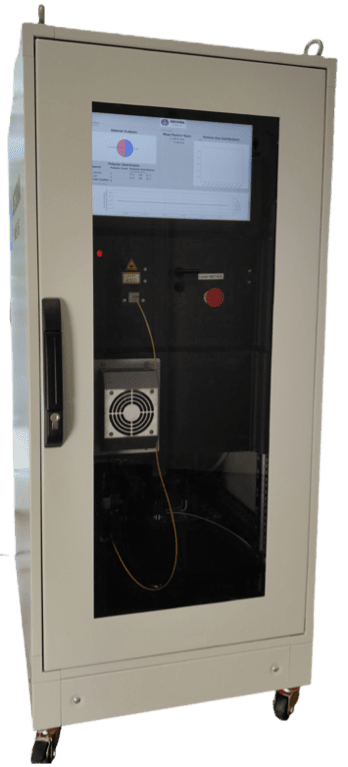

 Dipl.-Phys. Axel André Schmidt is a graduate of Applied Physics from University of Hamburg, 1994/95 he developed a sophisticated online-oil-spill-in-water-monitor and joined DECKMA Hamburg GmbH, a well successful company on manufacturing oil-in-water measuring equipment for marine and industrial applications, respectively. Since 1996 he is head of research and development and generates not only the whole fleet of oil-in-water measuring instruments but also turbidity-meter and the first online micro plastics monitor based on Raman-scattering, worldwide. He is member of NEL´s Environmental Club (UK) since 2001, supports the club by several presentation, regularly. Moreover, he gives guest lectures on sustainable mobility at Leuphana University Lüneburg, since 2022.
 Prof. Dr.-Ing. habil.


 Dr. Gleb Tsipursky