


DIFC Ranked 8th in the Global Financial Centres Index (GFCI)
Known to have a 15-year track record of facilitating trade and investment flows across the MEASA region, the DIFC connects fast-growing markets with Asian, European and the American economies through Dubai. To date, the Centre is further strengthening their plans and programmes in hopes to drive growth in the region.
Dubai International Financial Centre (DIFC), one of the world’s most advanced financial centres, and the leading financial hub for the Middle East, Africa and South Asia (MEASA) regions, showed its commitment and contribution in boosting UAE’s economy on the first half of 2019.
Home to an internationally recognised, independent regulator and a judicial system with an English common law framework, DIFC sustained their growth by welcoming more than 250 new companies, fueling the creation of over 660 jobs, boosting the Centre’s combined workforce to more than 24,000 professionals in over 2,300 active registered companies, therefore resulting in the occupancy of 99 percent of DIFC-owned buildings. This entails a 14 percent increase year-on-year and a seven percent increase since the end of 2018.
Now, the Centre boasts more than 671 financial related firms, showing an 11 percent increase from last year. The newly-joined firms include Malaysia’s Maybank Islamic Berhad, U.S.A’s Cantor Fitzgerald, and Australia’s Atlas Wealth Management and Mauritius Commercial Bank. Leading non-financial firms including Guidepoint MEA, Medtronic Finance Hungary Kft. and Network International, have also joined.
Driving MEASA development
DIFC has announced new expansion plans, supporting the economic future of Dubai and the UAE following the strong demand witnessed from financial institutions worldwide. The Centre’s growth plan is expected to triple the scale of DIFC and enables them to further Dubai’s growth and development, diversify and transform the financial services sector within the region.
Arif Amiri, Chief Executive Officer of DIFC Authority, said they are continuing to cement their global position as a pivotal business and finance hub, while making significant headway towards meeting their 2024 targets.
“Our focus on innovation and technology is delivering a blueprint for sustainable growth as we continue our journey towards driving the future of finance. DIFC’s emphasis on transforming its lifestyle offering, alongside strategic investments within technology and FinTech means we are confident about reinforcing our position as a leading global financial Centre – a great place to live, work, play and do business,” he mentioned.
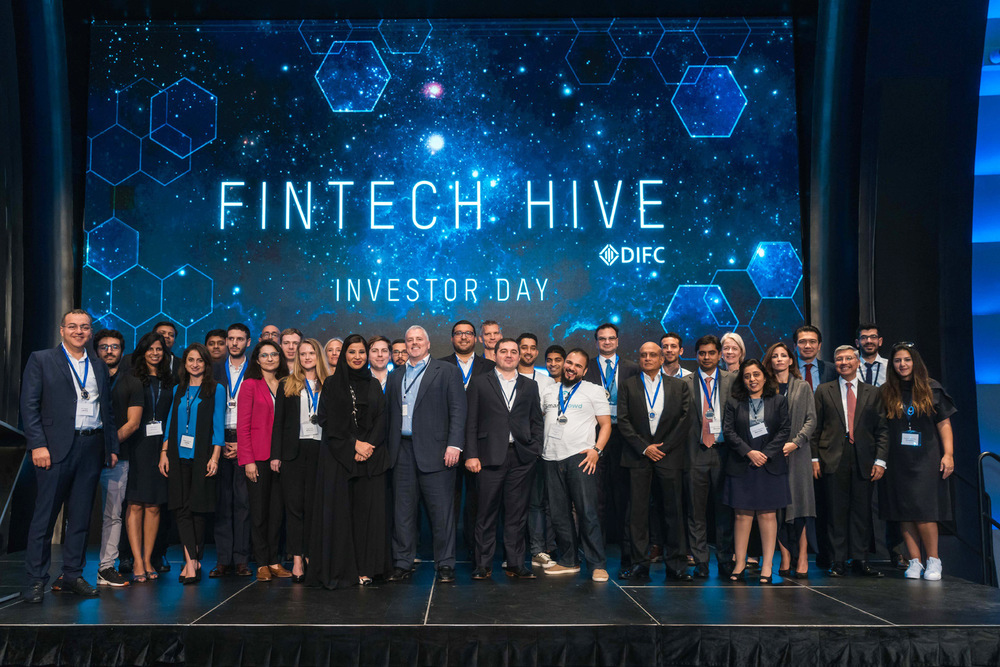
They have also received 425 applications from rising firms operating in the RegTech, Islamic FinTech, InsurTech and broader FinTech sectors, for the third cohort of its DIFC FinTech Hive accelerator programme, a 42 percent increase from last year. This marked a three-fold increase from their inaugural cycle in 2017, exemplifying the pace of evolution of this fast-growing industry, and the preference of Dubai and the DIFC as the home for FinTech firms looking to scale their business across MEASA.
In consultation with the Centre’s FinTech Hive’s network of 21 participating partners, including Abu Dhabi Islamic Bank (ADIB), Emirates Islamic, Emirates NBD, Finablr, HSBC, National Bank of Fujairah, Noor Bank, Riyad Bank, Standard Chartered, and Visa, 31 innovative global start-ups have been selected to participate in the third edition of DIFC FinTech Hive’s 2019 accelerator programme.
InsurTech start-ups are expected to work closely with leading insurance players such as AXA Gulf, Noor Takaful (Ethical Insurance), Zurich Insurance Company Ltd (DIFC), AIG, Insurance House, Cigna Insurance Middle East S.A.L. and MetLife, to signify their developing game-changing solutions that will address the ever-growing requirements of the industry.
DIFC’s FinTech community is known to benefit from building strong relationships they have continued with key international accelerators through ongoing delegations and partnership agreements. During the first half of this year, the Centre has signed four MoUs, such as Dubai SME to help foster entrepreneurship in the region and further the National Innovation Agenda, and three agreements with FinTech Saudi, Milan’s FinTech District and FinTech Istanbul.
Sustainability in efforts
The Centre remained knowledge sharing and thought leadership as their core focus for this financial year. In recognition of DIFC’s efforts towards building one of the world’s leading financial centres over the last 15 years, the Centre was the only free zone in the UAE to receive the Dubai Quality Award in April 2019. The award symbolises the financial hub’s hard work and dedication in building a sustainable and progressive business environment.
Also, the DIFC Academy offers world class financial and legal education through strategic partnerships with 26 leading educational institutions and government entities and is part of their efforts to support continued professional growth and strengthen their talent pool. To date, the academy has seen more than 5,500 graduates successfully undertake executive education courses and programmes in finance, business and law, and two dedicated Masters of Laws (LLM) programmes that they offer.
In May 2019, another milestone for sustainable business growth was achieved by Majid Al Futtaim, who launched the world’s first benchmark corporate Green Sukuk at Nasdaq Dubai, which supports Dubai’s growth as the global capital of Islamic economy. The corporation’s investment will be used to finance and re-finance the group’s existing and future projects, such as green buildings, renewable energy, sustainable water management, and energy efficiency.
• 2,289 is the total number of registered companies currently operating in the DIFC – a 14 percent increase year-on-year and a 7 percent increase since the end of 2018.
• Over 250 new companies, a 10 percent increase from the same period in 2018.
• DIFC’s financial technology ecosystem doubles in size in first half of 2019 – now includes over 200 companies, of which more than 100 are fully-licensed FinTech firms – a three-fold growth since the end of 2018.
• 425 applications received for third cohort of FinTech Hive accelerator programme – three-fold growth since 2017 and 42 percent increase from 2018.
Working under a sophisticated framework
DIFC has been known to be at the forefront of improving its legislative infrastructure to provide the community with easier access to opportunities within the MEASA region, while providing greater stability and certainty when doing business in the area. Its robust legal and regulatory framework remains the most sophisticated and business-friendly Common Law jurisdiction in the region, aligned with international best practice.
DIFC continues to support the development of the financial services sector in the region and fosters the UAE’s economic growth by encouraging the progress of the domestic funds market. In May 2019, the Dubai Financial Services Authority (DFSA), the Centre’s independent regulator, had announced that a new regime will be facilitating the passporting of funds, in collaboration with UAE’s other financial regulators.
The UAE passporting regime is a regulatory mechanism for the promotion and supervision of investment funds that encourages foreign licensed firms in financial free zones based in other countries to enter the local market.
As part of DIFC’s blueprint for the transformation of the Centre and in line with global retirement savings trends, the financial hub launched the Employee Workplace Savings (DEWS) scheme, which favors the evolution of end-of-service benefits from a defined benefit scheme to a defined contribution scheme, while offering a voluntary savings component for its employees.
With the aim of ensuring businesses and investors who can operate across the region with confidence, the Centre has introduced a new Insolvency Law in June 2019, enacted by His Highness Sheikh Mohammed bin Rashid Al Maktoum. The law facilitates a more efficient and effective bankruptcy restructuring regime for stakeholders operating in DIFC. This continued to create an attractive environment for the 24,000 individuals based in the Centre to thrive, while having their needs and interests as both employers and employees protected and balanced. An Employment Law was also introduced to address key employment issues such as paternity leave, sick pay, and end-of-service settlements.
Not only that, but they have also unveiled a unified, simplified and more expansive Prescribed Companies regime that quickens structuring and financing, making the process more flexible and more cost-effective. The new regime encompasses structures previously offered by DIFC, such as Intermediate Special Purpose Vehicles (ISPVs) and Special Purpose Companies (SPCs), which contributed significantly to a robust track of prospective businesses from the aviation financing sector, generating substantial interest from family offices looking to utilise these structures in their succession planning.
Bringing lifestyle and retail experience to life
Hilton Hotels & Resorts announced the opening of Waldorf Astoria DIFC during the first half of the 2019. The 275-key hotel occupies the 18th to 55th floors of the Burj Daman complex, with 46 suites and 28 residential suites offering elegant and outstanding views of the Downtown Dubai skyline.
DIFC has also welcomed a number of new culinary concepts to the gourmet scene including “Marea”, a New York fine dining experience led by multi-Michelin starred chef, Michael White, and Grecian inspired “Avli by Tasha”. In March, it was announced that renowned chef Nusret Gökçe was set to launch casual dining concept “Saltbae” this year.
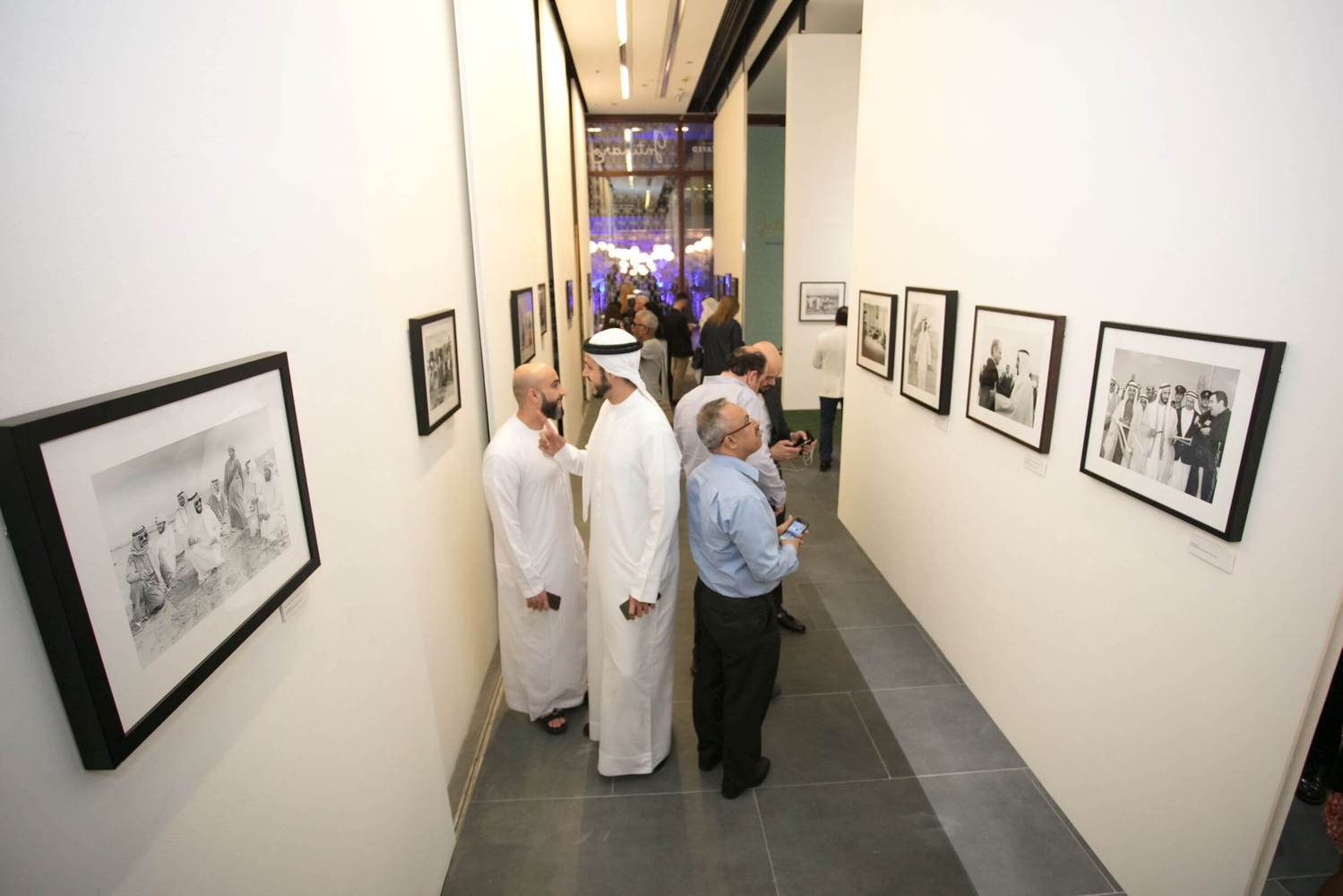
DIFC is home to one of the region’s largest collections of public art. With sculptures from internationally renowned artists, such as Manolo Valdés, it has become the foundation for initiatives such as the One Mile Gallery, in partnership with Brand Dubai, which showcases the best of local, regional and international design and promotes art, innovation and entrepreneurship.
Its seventh elite art gallery, Sconci Gallery was welcomed to the DIFC as well. The gallery was established in Rome in 1977, and has collaborated with leading artists and international auction houses to showcase collections from the masters of modern and contemporary art, and emerging artists.
In March 2019, the Centre hosted the most successful edition of the hugely popular Art Nights in the last five years. Art Dubai 2019 marked the beginning of Dubai’s coveted art season and saw participation from international and local art galleries and artists, and included installations accompanied by electric musical performances and light installations from interdisciplinary artists.
Continued Growth and Development
DIFC is committed to becoming the world’s top financial centre and bringing the future of finance in the region. This dedication is demonstrated through its continued investment in driving innovation and pioneering the digitalisation of the rapidly expanding financial services sector and accumulation and continued facilitation of financial knowledge and talent for its people.
Amiri said, “During the last 15 years, DIFC has firmly reinforced its position as one of the world’s top financial centres. Our focus is to become the most advanced financial centre in the world and the only way to do this is to ensure we stay ahead of the curve.”
Ensuring the well-being of the DIFC community by continuing to attract skilled and talented people, nurturing the brightest minds to generate innovative ideas, and working towards maintaining a secure future for its people and the future generation in its community are also the core principles of the DIFC Authority that contributed to the Centres’ success.
Amiri believed and concluded that “The continued growth and development of the DIFC Authority team highlights that today, the Centre is seen not just as the jurisdiction of choice for business but also as an employer of choice. We are proud of the environment we have created, that attracts top talent but also helps them grow within the organisation, succeeding into leadership roles.”

Dubai International Financial Centre (DIFC) is one of the world’s most advanced financial centres, and the leading financial hub for the Middle East, Africa and South Asia (MEASA), which comprises 72 countries with an approximate population of 3 billion and a nominal GDP of USD 7.7 trillion.
The Centre’s vision is to drive the future of finance. Today, it offers one of the region’s most comprehensive FinTech and venture capital environments, including cost-effective licensing solutions, fit-for-purpose regulation, innovative accelerator programmes, and funding for growth-stage start-ups.
Comprising a variety of world-renowned retail and dining venues, a dynamic art and culture scene, residential apartments, hotels and public spaces, DIFC continues to be one of Dubai’s most sought-after business and lifestyle destinations.


















































Russia Excels at Art and Invention but Stinks at Commercial Technical Innovation
By Loren Graham
Russia has been known for its great contributions to the fields of literature, music and mathematics but never in commercial technology. Many Russian inventors could have created a breakthrough in technology if not for the unevenness of support provided by the Russian society.
Russian creativity presents us with a fascinating riddle. Why does Russian creativity express itself so brilliantly in some areas but not in others? Just think of the contributions of Russians to fields such as literature, music, and mathematics: Dostoevsky, Tolstoy, Tchaikovsky, Prokoviev, Lobachevsky, Kolmogorov. But it is a different story when one looks for successful Russian creativity in commercial technology. Just when have you gone into an electronics store and seen something you wanted, turned it over, and saw “Made in Russia” on the back? Probably never. It is difficult to think of a single Russian technical innovation that was successful on the world market. Russia is unique in the unevenness of the fruits of its creativity. This uniqueness calls for explanation.
Russian creativity in abstract thought and the arts (literature, music, poetry, mathematics, drama, theoretical physics) found public expression, recognition, and success much more often than creativity in technology. The more the Russian creative effort was expressed in ideas recorded on paper, blackboard, canvas, or the internet1 (manuscript texts, equations, scores, paintings, verses, scripts, formulae, drawings, computer programs) the more successful it was in finding expression and recognition, both nationally and internationally. The more the creative effort was in material objects, new manufacturing processes, or machines, the more difficult it was for that creativity to find success, especially in international markets. All this was true despite the fact that Russian governments (tsarist, Soviet, post-Soviet) are infamous for trying to control ideas through propaganda or censorship, not for restricting new inventions. What stopped Russian inventions from success was not overt prohibition but the characteristics of Russian society.
The fault here is not a failure in engineering or science. In fact, Russians were just as creative technologically as Russian novelists, poets, composers, and mathematicians were in ideas. In almost all the forms of modern technology so important to the world today (electric lights, radio, airplanes, television, transistors, computers, lasers, rockets, space vehicles) Russian pioneers either led the world in strict priority terms or were equal to or barely behind competitors elsewhere. However, unless that creativity was backed by a state or military program, which ignored the factors that make for commercial success, the creativity of these Russian engineers and inventors was overwhelmingly blocked by the obstacles in their environment. They almost universally failed to bring their potential innovations to international markets, and their names usually fell into oblivion. The clarity of this pattern can be seen in the difficulty of finding a Russian invention that became a success internationally. The exceptions are usually cases in which Russians emigrated abroad and succeeded in different environments (e.g, Zvorykin, Sikorsky, Durov).
If all that a creative person in Russia needed to do to fulfill his or her idea was simply to make it known (e.g., through publication, performance, or exhibition) that person had a chance for fame. If the fulfillment of that person’s idea was a complex matter in which publication or appearance was a first, inadequate, or even unnecessary step, the chances of success for that person were much smaller. For a brilliant inventor, publication of an idea is easy but grossly short of its fulfillment. Publication might, in fact, be an obstacle to ownership of the idea. For a brilliant literary author or mathematician, on the other hand, publication is very nearly the culmination of his or her efforts.
The difference between what happens after an inventor presents something to the public and a writer or composer does the same thing is crucial for understanding the unevenness of Russia’s successful creativity.
A new technology at the moment of first presentation is usually much more imperfect than a work of art. An anecdote about the British scientist Michael Faraday illustrates this feature of early technology: When he developed a primitive dynamo, he reputedly was asked “What is it good for?” We are told that he replied by asking “What is a newborn baby good for?” New technology developed by Russians, some of it brilliant, often died as a newborn baby without ever growing up. No one was interested in or took proper care of that baby. And the materials and means necessary for that care were often unavailable.
The fact that a new technology is usually first presented to the public in a much more unfinished form than is the case with a new piece of art has many implications. Since the new technology must be further invested in, researched, improved, legally protected, manufactured, successfully marketed, and integrated with existing technology, it is much more dependent on societal infrastructure than is a piece of art. Art demands appreciation by at least a small group of cognoscenti. Technology demands much more. Where are the people who will see its potential and invest in further research? Who will improve it after that research? Who will defend it legally against competitors or opponents, domestically and internationally, and what chance will these defenders have in a corrupt legal system? Who will pay for all these investigatory, engineering, legal, and economic steps? Who will manufacture it? Who will advertise it? Who will integrate it into existing technological systems? Art usually does not face such obstacles, but technology does. And in a country such as Russia, which is deficient in such infrastructures – especially those involving investment, legal, manufacturing, and economic issues – taking a new technology from its newborn status to adult readiness for the market is particularly difficult. In many cases such a transition did not occur in Russia, although it should have for the good of the country and the inventor.
A striking example of this kind of failure can be found in the development of television; the Russian originator of a basic idea in the field, Boris Rozing, was blocked in bringing that idea to fruition in Russia, but his student, Vladimir Zvorykin, succeeded magnificently with his teacher’s idea in the United States at the firm RCA. Other examples — Shilling and his telegraph, Lodygin and his light bulb, Borodin and his chemical method of aldol condensation pointing to industrial applications, Popov and his radio, Shukhov and his method of petroleum cracking, Losev and his primitive transistors and diodes — are also relevant, along with many other examples from the history of Russian technology. These technologies could not succeed in the country in which their originators worked. When the Russian Sergei Sikorsky did finally succeed with his aviation technology in the United States he wrote a book in which he cited as the cause of his success the new political, economic, and social environment in which he was working after emigration.2
There are many reasons why Russian writers, composers, poets and mathematicians had (and have) an easier time fulfilling their dreams than inventors and entrepreneurs. The inadequate infrastructure in Russia is important, but only one. An equally important reason is elusive but basic: attitudes prevalent in Russian society. Artistic intellectuals are valued more in Russia than are inventors and entrepreneurs, as reflected in Russian literature extending back several centuries.3 When artists or authors suffer in Russia many of their fellow citizens sympathize with them and convert them into heroes, even martyrs. Oppression and censorship often raise their prominence and increase the number of people trying to read, view, or listen to their works.
When inventors and entrepreneurs suffer, on the other hand, few sympathizers can be found. Individual practical achievements are rarely objects of public adoration in Russia; should a rare entrepreneur be successful and become wealthy, that feat is often a cause for suspicion or resentment. The celebration of beleaguered authors and the disregard of equally beleaguered inventors is a characteristic of Russian society.
After the disappearance of the Soviet Union the newly-rich oligarchs were suspected, in many cases correctly, of criminality. The “self-made man” was not a hero, but a person who illegally and maliciously manipulated the system to his advantage. There are few or no “Horatio Alger heroes” in Russian literature or traditions.
Sadly, many of the obstacles to the fulfillment of creativity – both in the arts and in technology – that were observable in tsarist and Soviet Russia are still present in Russia today, and there are even some new ones. Both the author and the inventor need to worry about government policy as they work. Both of them today are dependent on the permission of the government, or its leader, for support, and that government and leader have their own criteria about whom deserves their approval. Many entrepreneurs and business people have recently been arrested, including promising innovators. As a 2017 article in the New York Times proclaimed, “Russia Wants Innovation But is Arresvting Its Innovators.”4 Dmitrii Popov, a serial entrepreneur who came to the United states in 2014, commented, “And for the last year in Russia, I was just absorbing the total deterioration of the business environment. Everything was becoming so bad.”5
I am a historian trained as an engineer. As a historian most of my examples of Russian technical brilliance followed by commercial failure come from the past, but, as an engineer, let me conclude by giving an example that is very recent. In fact, it affects the technology that you are probably carrying in your pocket right now.
The story of the Russian scientist Zhores Alferov, who just died, is illustrative here.6 A Nobel Prize winner, he was a co-inventor of an important but, to the public, underappreciated technology called heterojunction transistors. They are used in a multitude of ultrafast electronic circuits. The normal consumer uses them in their smart phones, which require fast and efficient circuits operating at room temperatures. Heterotransistors can fulfill these requirements. They differ from the older transistors by incorporating a junction (a heterojunction) of two dissimilar crystalline semiconductors. Older transistors used only one type of semiconductor (a homojunction). Heterotransistors permit a wider spectrum of manipulation by electrical engineers to achieve very specific effects.
At what point in time would it have been correct to judge this invention a success? By 2000 it was a personal success for Alferov. Receiving a Nobel Prize is obviously an achievement of a lifetime. But it was not until 2007 that Steve Jobs of Apple introduced the iPhone, calling it “a revolutionary and magical product.” It used at first a hetero-epitaxial layer of silicon on sapphire, a heterostructure made by Infineon, a German company.
By this time heterotransistors were being successfully manufactured in several countries. The country of one of the inventors of this device – Zhores Alferov – is not significant on that list. In that sense, Alferov’s creativity was never fulfilled in his own country. Russia plays today a very small role in the manufacture of transistors. Of the ten largest semiconductor manufacturers today, five are based in the United States, and one each in Taiwan, the Netherlands, the U.K., Japan, and Germany. The United States dominates the industry, with over fifty percent of world-wide production. One U.S. company, Intel, has twice the annual sales of its nearest competitor, Taiwan Semiconductor. Of course, Russia has some semiconductor manufacturers – Angstrom, Istok, and Mikron, for example — but they are not significant in the world market.
So here we see a continuation of the pattern that we earlier have observed in Russian technological creativity: Russia excels at invention but stinks at commercially successful innovation.
About the Author
References
1. The Russian mathematician Perel’man did not publish his recent epochal solution of the Poincare’ Conjecture, just posted it on the internet.
2. Igor Sikorsky, The Story of the Winged S, Dodd, Mead & Co., New York, 1941.
3. Dostoevsky, Turgenev, Ostrovsky, Saltykov-Shchedrin, Danilevsky, Gorky and other Russian authors described merchants or traders in negative terms, as vulgar and money-loving.
4. Andrew Higgins, “Russia Wants Innovation, but It’s Arresting Its Innovators,” The New York Times, August 9, 2017,https://www.nytimes.com/2017/08/09/world/europe/vladimir-putin-russia-siberia.html, accessed 8/9/2017.
5. Puffer, et al., p. 146.
6. Paul Josephson, Lenin’s Laureate: Zhores Alferov’s Life in Communist Science, MIT Press, Cambridge and London, 2010.