Home Blog Page 90

Salesforce CPQ Retirement: The Exit Playbook for Revenue Leaders

Why Salesforce’s CPQ retirement demands more than a migration and what revenue leaders should do next

In March 2025, Salesforce announced it would stop selling Salesforce CPQ to new customers. While the change was framed as part of a broader platform evolution, the actual impact on Salesforce CPQ customers is far more disruptive.

The Core Challenge: From Add-On to Ground-Up Redesign

Salesforce CPQ, a legacy product based on the SteelBrick acquisition, has long required custom configuration and external support to function at scale. It operates outside the Salesforce core and often relies on brittle rule sets, siloed logic, and limited integration with contract management or billing systems. Its complexity is legendary: 55% of Revenue Operations leaders surveyed by FoundHQ said Salesforce CPQ is the hardest Salesforce product to implement.

As a result, transitioning to Revenue Cloud demands more than a license change. It requires a full rebuild of product catalogs, quote flows, pricing rules, approval hierarchies, and system integrations.

The True Cost of Rebuilding

For most organizations, this process is costly and disruptive:

  • SMBs face $25,000 to $65,000 in implementation costs
  • Enterprises often exceed $500,000
  • Data migration alone can add $5,000 to $50,000
  • Training programs range from $500 to $5,000 per user
  • Ongoing support adds another $10,000 to $45,000 annually

These investments often re-create existing functionality, without delivering innovation but higher complexity and continued dependencies.

Three Strategic Paths CPQ Customers Are Considering

1. Rebuild on Revenue Cloud

This option offers the customer Salesforce continuity but requires a rebuild of their quoting, pricing, and packaging. Companies must re-create existing processes from scratch in a new system architecture. While it ensures platform consistency, the time-to-value is slow and customization needs remain high.

2. Transition to a Modern CPQ Platform

A growing number of companies are using this inflection point to explore more flexible, modern, CPQ solutions—tools that do far more than digitize pricing tables. These tools are built to remove friction, collapse quote-to-close cycles, and power omnichannel sales motions. 

Modern CPQ platforms typically enable: 

  • Guided selling that reduces errors and speeds onboarding by dynamically surfacing product recommendations, pricing rules, and margin guardrails.
  • Digital sales rooms where buyers review proposals, ask questions, and sign all in one collaborative space.
  • Unified execution across CPQ, CLM, billing, and renewals to eliminate tool switching and data sync issues.
  • No-code administration so revenue teams can launch new pricing or packaging without dev resources.
  • Low-touch and no-touch quoting through embedded flows for partners, eCommerce, or AI agents.

DealHub CPQ is frequently cited as a leader in this category, helping companies consolidate fragmented revenue tools into a unified platform.

73% faster quote-to-cash using guided selling

Intuit accelerated quote-to-cash cycles by 73 percent using DealHub’s guided selling engine, which walks reps through pricing, bundling, and configuration steps in real-time, minimizing training time and improving accuracy.

85% rep ramp-time reduction after Salesforce CPQ replacement

Asure Software adopted DealHub after a failed multi-year Salesforce CPQ implementation. With DealHub, they achieved full rollout in eight weeks and cut new-rep ramp time by 85 percent, thanks to unified workflows, in-app guidance, and digital DealRooms.

50–90% faster time-to-quote through self-service quoting

Trintech empowered reps to generate and send quotes independently, accelerating time-to-quote by up to 90 percent. Executives approve with a click—no logins, no additional licenses.

DealHub also supports embedded, headless quoting across any channel. Organizations can launch self-service configurators, partner portals, or AI-assisted quoting flows that align with specific GTM strategies, without needing to bolt on external solutions. 

This breadth of capability positions DealHub not just as a CPQ tool, but as a revenue execution platform that scales with evolving go-to-market models.

While these platforms still require thoughtful onboarding and process alignment, they offer a faster, lower-risk path to modern revenue outcomes and free teams from the constraints of their legacy Salesforce CPQ infrastructure.

3. Rethink CPQ as Infrastructure

Some organizations are moving beyond traditional CPQ models entirely. Instead of relying on prebuilt quoting interfaces, they’re embedding pricing logic and quote generation directly into digital revenue channels, such as self-service portals, partner marketplaces, and eCommerce flows.

This “headless CPQ” approach treats quoting as part of the broader product infrastructure. With the right API framework, pricing can be configured dynamically, quote generation can be triggered programmatically, and AI agents can execute approvals or renewals based on predefined rules.

This model provides maximum flexibility and enables businesses to scale across multiple go-to-market channels. However, it typically demands strong internal product and engineering ownership, since the CPQ logic is maintained as part of the development stack.

DealHub stands out in this space by supporting embedded quoting use cases without requiring teams to build from scratch. Through a combination of low-code configuration, headless API endpoints, and dynamic workflows, DealHub enables:

  • Self-service configurators for buyers
  • Partner quoting portals that maintain margin rules and product accuracy
  • AI agent–initiated quoting flows that can respond to intent signals or renewal triggers
  • Flexible quote generation embedded into mobile apps, digital storefronts, or CRM experiences

This lets companies design custom digital quoting experiences while maintaining control, compliance, and data continuity without the cost and complexity of building CPQ from scratch. 

For companies seeking to decouple from legacy CPQ constraints, DealHub offers a flexible infrastructure layer for quoting, contracting, and monetization without sacrificing speed.

Beyond Quoting: Laying the Foundation for Revenue Orchestration

Why quoting architecture is the control layer for AI, automation, and growth

By the end of 2025, 80% of B2B sales interactions will take place in digital channels (Gartner). That means quoting systems can no longer be static or siloed, they must serve as real-time infrastructure for guided selling, margin optimization, and AI-led execution.

Some organizations will opt to rebuild inside Salesforce’s evolving architecture, reimplementing familiar processes with new tools. But others will use this opportunity to leap forward, replacing rigid CPQ workflows with unified, no-/low-touch platforms that span every revenue moment: quote, contract, bill, renew.

Those that treat CPQ as a control layer, not just a sales tool, will be best positioned to unlock predictive analytics, intelligent automation, and scalable revenue orchestration across channels, teams, and customer segments.


Carney Asserts Canada’s Sovereignty Ahead of Talks With Trump

Canadian Prime Minister Mark Carney has said any future trade and security discussions with US President Donald Trump will only happen if Canada’s independence is fully respected.

Speaking to the BBC as polls closed in Monday’s election, Carney said he would visit Washington only when a meaningful conversation was possible—one that recognized Canada’s sovereignty. His remarks follow tensions sparked by Trump’s repeated comments about making Canada the “51st state” of America, a statement echoed again by the White House this week.

Carney firmly rejected the notion, calling it impossible. “It’s never going to happen—not with Canada, nor with any other country,” he said.

Despite the rhetoric, the leaders have spoken and agreed to meet soon, according to Carney’s office. Both emphasized the importance of collaboration between two independent nations.

Trump also congratulated Carney on his election win, which marked a historic victory for the Liberal Party. Carney, a former central banker, took office in March after leading the Bank of Canada and the Bank of England during times of global financial strain.

Trade tensions have been rising since Trump’s re-election, with Canada facing broad tariffs on key exports like steel and aluminium. Though some goods under the USMCA agreement are exempt, Canada has responded with roughly C$60 billion in tariffs on American products.

Carney stressed that any deal with Washington must serve Canadian interests and warned that future talks would look very different from past agreements. He pointed to Canada’s role as a critical energy supplier to the US and said Canadians expect to be treated as equals.

“We’re their largest customer in over 40 states. We provide essential resources and support their food supply. We expect that to be recognized,” he said.

As the global trade war intensifies, Carney is also pushing for stronger partnerships with Europe and the UK. He hinted that a Canada–UK trade deal may be within reach, noting most trade between the countries is already duty-free.

The upcoming G7 summit in Canada is expected to be a key moment for discussions on global trade and may signal whether traditional allies remain united in the face of rising economic nationalism.

Related Readings:

Tlcan flags

Economic trade tariffs between USA and Europe

guilty

Structure Can Help Address the Challenges of Distributed Work

By Dr. Gleb Tsipursky 

As hybrid and remote work arrangements continue to reshape the workplace, organizations are wrestling with a critical question: how do you retain flexibility while still fostering culture, consistency, and career growth? For Drew Fesler, Chief People Officer at RB Global, whom I interviewed on this topic, the answer lies in structure—an intentional approach to managing a highly distributed workforce that balances autonomy with clarity.

RB Global, the world’s largest online and offline marketplace for industrial and automotive salvage equipment, operates across 26 countries with over 8,000 employees. The company’s workforce is notably split: around 75% work onsite at “yards” or “branches,” while the remaining 25% operate in more traditional corporate roles with hybrid or remote options. This two-world reality has prompted deep reflection on how to maintain equity and cohesion across such diverse work environments.

A Mixed Model With Uneven Expectations

The pandemic cemented remote work as a viable model for many organizations, and RB Global is no exception—at least on the corporate side. “We haven’t had a full return-to-office environment for our administrative sites,” Fesler shared. “But our yard and branch employees never left. They were considered essential and remained onsite throughout.”

The pandemic cemented remote work as a viable model for many organizations, and RB Global is no exception—at least on the corporate side.

This divergence has created an unexpected benefit: a clearer career pathway for onsite workers. “If someone working in the yard wants more flexibility, they now see a path into roles that offer that. That wasn’t as visible before,” Fesler explained. It’s an organic form of upskilling, allowing frontline employees to envision upward mobility not just in responsibility but also in lifestyle.

Still, while flexibility is valued, it also presents significant challenges—especially when policies are unevenly applied. The decentralized nature of RB Global’s current model, where local team leaders have broad discretion over remote work arrangements, has led to friction. “We’re seeing inconsistencies between teams that sit right next to each other,” Fesler noted. “That creates disengagement, even if it’s not disruptive yet.”

The Culture Question in a Virtual World

One of the most complex aspects of hybrid work is maintaining culture without a shared physical space. Fesler acknowledges that virtual tools—like quarterly town halls, monthly leader meetings, and open office hours for change management—help maintain communication. However, they don’t fully replace the human connection that naturally emerges in physical environments.

“There is something that’s lost in a fully virtual setting,” Fesler said. “We’re not going to over-index on in-person just to chase culture, but we recognize that meaningful, organic connections are harder to build remotely.”

One of RB Global’s internal experiments is incorporating moments of personal recognition and storytelling into virtual meetings. Leaders regularly start meetings with “shout-outs” and highlights of personal or professional wins. “We spend the first 10–15 minutes of every meeting doing this,” Fesler shared. “It creates a moment of connection—even if we’re not all in the same room.”

Still, Fesler remains cautious about leaning too far into social-style virtual activities. “For us, culturally, we tend to get down to business quickly. Creating non-work-related virtual events could be an uphill climb,” he admitted. Yet he sees promise in simple connection-building mechanisms, like randomized virtual coffee chats, as a low-barrier way to expand interdepartmental and cross-geographic relationships.

Generational and Organizational Tensions

RB Global’s workforce spans multiple generations, from recent graduates to long-tenured veterans. This spectrum brings differing expectations. Older employees often prefer traditional office environments, while younger workers are more comfortable in virtual spaces. “It’s not a generational collision,” Fesler clarified, “but it does create tension.”

These generational divides mirror broader organizational differences. RB Global has grown through frequent acquisitions, and with each new company comes a unique culture. Hybrid work only compounds the challenge of building a unified identity.

To Fesler, this is where structure becomes essential—not to mandate uniformity, but to reduce friction. “What our people leaders are asking for now is not less flexibility, but more structure around that flexibility,” he said. “Guidelines, rules of the road—something that provides clarity without taking autonomy away.”

Building Flexibility With Boundaries

The future of flexible work at RB Global, according to Fesler, will depend not on rolling back remote policies but on defining a framework that makes them sustainable and fair. “We’re looking at creating more structure and consistency in 2025,” he said. “Not a one-size-fits-all solution, but something that creates equity across similar roles.”

A growing number of companies are beginning to realize that flexibility without expectations can backfire—leading to misalignment, resentment, and cultural drift.

This pivot from ad hoc arrangements to guided autonomy reflects a broader trend across industries. A growing number of companies are beginning to realize that flexibility without expectations can backfire—leading to misalignment, resentment, and cultural drift.

Fesler is keenly aware of this risk. “We have to be sensitive to the fact that multiple arrangements shouldn’t become disruptive to the whole,” he explained. The company’s goal is to evolve from a reactive to a proactive approach—one that honors both the needs of the business and the preferences of a modern, multigenerational workforce.

Looking Ahead: Clarity as a Compass

RB Global’s journey toward structured flexibility is far from over, but the direction is clear. Flexibility is no longer a temporary accommodation—it’s a strategic advantage. But to realize its full potential, it needs form, not just freedom.

As companies like RB Global refine their distributed work strategies, they reveal a powerful insight: structure doesn’t stifle flexibility—it enables it. By creating clear frameworks, transparent guidelines, and intentional moments of connection, organizations can navigate the complexities of the modern workforce while building a culture that transcends location.

In an era where the workplace is increasingly defined by choice, it’s structure—not mandates—that may ultimately unify the workforce.

About the Author

Dr. Gleb TsipurskyDr. Gleb Tsipursky was named “Office Whisperer” by The New York Times for helping leaders overcome frustrations with hybrid work and Generative AI. He serves as the CEO of the future-of-work consultancy Disaster Avoidance Experts. Dr. Gleb wrote seven best-selling books, and his two most recent ones are Returning to the Office and Leading Hybrid and Remote Teams and ChatGPT for Leaders and Content Creators: Unlocking the Potential of Generative AI. His cutting-edge thought leadership was featured in over 650 articles and 550 interviews in Harvard Business ReviewInc. MagazineUSA TodayCBS NewsFox NewsTimeBusiness InsiderFortuneThe New York Times, and elsewhere. His writing was translated into Chinese, Spanish, Russian, Polish, Korean, French, Vietnamese, German, and other languages. His expertise comes from over 20 years of consultingcoaching, and speaking and training for Fortune 500 companies from Aflac to Xerox. It also comes from over 15 years in academia as a behavioral scientist, with 8 years as a lecturer at UNC-Chapel Hill and 7 years as a professor at Ohio State. A proud Ukrainian American, Dr. Gleb lives in Columbus, Ohio.

How Heavy Equipment Companies are Changing in the 2025 Economy

If you haven’t been paying attention to the construction, landscaping, and utility industries in the Southeast, you might not know that things are on the rise. According to Construct Connect (a construction industry platform that provides data, analytics, and project leads), the outlook for 2025 is positive, with government spending on the rise. These spending approvals include major infrastructure projects, urban expansion, and other projects. With all this growth, there’s one major question: Where do businesses turn for reliable, high-performance equipment that can handle the job? Let’s take a look at some of the major trends driving demand for heavy equipment in the region.

Heavy Equipment Demand Surging in the Southeast

Man using heavy construction equipment

With the expected increase in government and private construction projects, construction companies will need equipment and crew to handle the influx of business. By transitive property, the heavy equipment industry is seeing some serious momentum right now. Whether it’s due to massive infrastructure investments, new technology making jobs easier, or companies looking for more efficient ways to work, there’s never been a better time to invest in the right heavy construction equipment.

Infrastructure Spending is at an All-Time High

With billions of dollars flowing into the Southeast from the Bipartisan Infrastructure Law, we’re seeing road projects, bridge repairs, and new developments pop up everywhere. Construction firms, utility companies, and municipalities are racing to keep up—and that means a huge demand for trenchers, drills, loaders, and more.

The Heavy Equipment Industry is Stabilizing

The past few years were a rollercoaster (we all remember what COVID did to the economy), with supply chain issues making it hard to get equipment when businesses needed it most. But things are shifting to a new norm with manufacturers catching up to demand and equipment availability improving.

Technology is Changing the Game

AI Automation

Modern heavy construction equipment isn’t just about raw power anymore. With the rise of smarter tools and AI, automation, GPS tracking, and operator-assist technology are making machines more productive (and efficient) than ever. Artificial Intelligence has especially contributed to the impact of growth in the US, with AI models becoming common in every aspect of American life. The use of AI in project planning helps cut costs, and there are some reports of using AI to predict potential delays, cost overruns, and safety hazards. Companies that invest in high-tech equipment can complete projects faster, reduce fuel costs, and improve safety—all while staying ahead of the competition.

Vermeer Southeast Brings to the Table

As an industry leader in heavy equipment sales, rentals, and service, heavy equipment companies like Vermeer Southeast are helping businesses across Florida, Georgia, and Alabama tackle big projects confidently.

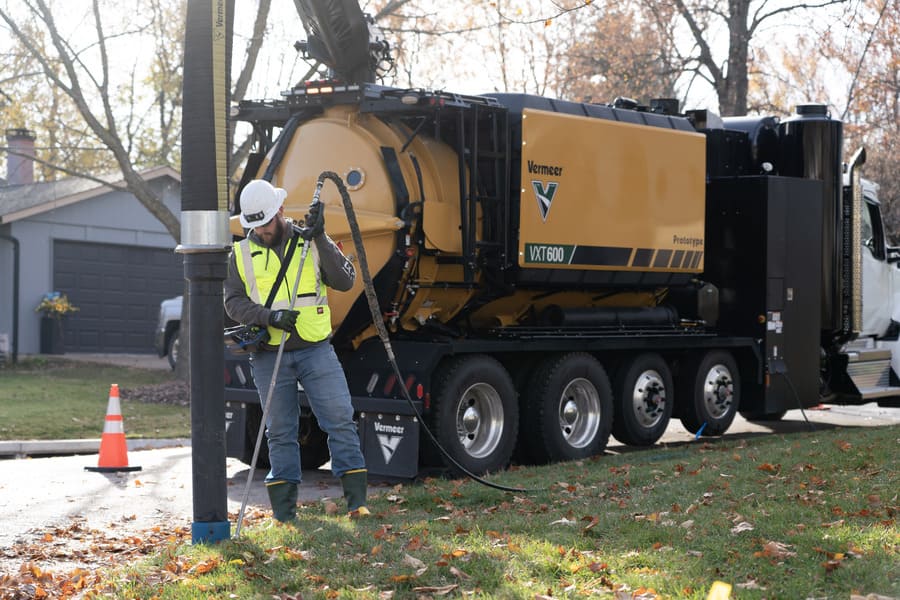
A Strong Reputation in Heavy Equipment: Vermeer Southeast offers a wide range of tough, high-performance machines built for various industries that often overlap. For utility installation, Vermeer Southeast provides directional drills, trenchers, and vacuum excavators to efficiently handle underground projects. In the tree care and landscaping sector, there are wood chippers, stump cutters, and brush chippers that enhance productivity and ease debris management for forestry of all types. Businesses in recycling and forestry can benefit from tub grinders and trommel screens, which maximize material processing efficiency. Meanwhile, for pipeline and surface mining, Vermeer Southeast supplies rugged trenchers and terrain levelers built to tackle even the toughest excavation jobs.

Reliable Parts and Service That Keep Businesses Moving: Purchasing heavy equipment is just the beginning—keeping it running efficiently is what truly matters. Reliable equipment providers support every sale with a comprehensive range of parts and service solutions to ensure maximum uptime and performance. Using genuine OEM parts is the best way to guarantee that machines operate at peak efficiency. Lastly, on-site service and repair teams offer fast-response support, minimizing downtime and keeping projects on track.

Training and Support to Get the Most Out of Every Machine: Having the best equipment is only part of the equation—knowing how to use it effectively makes all the difference. Heavy equipment construction companies like Vermeer Southeast offer hands-on training, expert guidance, and digital resources to help businesses get the most out of their investment. Advancements in technology are only a piece of the puzzle; at the end of the day, it will be humans operating the equipment and ensuring project safety (for now).

Convenient Locations Across the Southeast

Man using heavy equipment on the streets

With multiple locations across the region, Vermeer Southeast makes it easy for businesses to get the equipment, parts, and services they need—without the hassle. The demand for heavy equipment is growing fast, and businesses that invest wisely will stay ahead of the curve. But choosing the right equipment provider is just as important as choosing the right machines.

Vermeer Southeast is a trusted partner in the industry that helps businesses get the job done with confidence. With cutting-edge equipment, expert support, and a team that truly cares about customer success, they’re the best choice for companies that want to stay competitive in today’s fast-moving market. Need equipment that can handle the job? Check out what Vermeer Southeast has to offer and see why so many businesses trust them for their heavy equipment needs.

The photos in the article are provided by the company(s) mentioned in the article and used with permission.

Talent Will Flock to Remote-Friendly Companies

By Dr. Gleb Tsipursky 

The battle over remote work is far from settled, but one thing is becoming increasingly clear: companies that embrace flexibility are winning the talent war. That’s the message from my interview with Craig Crisler, CEO and co-founder of SupportNinja, a provider of agile, AI-enabled outsourcing solutions that’s deeply rooted in remote-first operations. In our conversation, Crisler made a compelling case that the future of high-performing organizations lies in understanding—not resisting—the shift toward distributed teams.

Return-to-office mandates miss the bigger picture

As some companies tighten return-to-office (RTO) mandates, Crisler sees the trend as more reactive than strategic. “I don’t think it’s about performance,” he said. “It’s coming more from macroeconomic and social dynamics than from data.” Whether it’s organizations reacting to the rollback of DEI mandates or business leaders seeking ways to consolidate operations, RTO mandates often seem less about employee productivity and more about appearances—like filling expensive, underutilized office space.

This signals a disconnect between corporate decisions and the lived realities of modern workforces. For many companies that resisted adapting to hybrid or remote models, Crisler suggests there may be a form of inertia at play. “They didn’t plan for it,” he noted. “So instead of investing in new systems and policies, they’d rather go back to what they know.”

SupportNinja, by contrast, was built from the ground up with remote flexibility in mind, long before it was mainstream. “We purposely did it that way,” said Crisler. “It wasn’t an afterthought.”

Remote-first, by design

The majority of clients now understand the operational advantages of remote work, especially after COVID forced a global reset.

SupportNinja’s workforce is over 60% remote—a statistic that’s not accidental, but intentional. The company works with clients across industries, including fintech firms that require on-site teams for security reasons. But the majority of clients now understand the operational advantages of remote work, especially after COVID forced a global reset. Within 30 days of the pandemic’s onset, SupportNinja moved all clients to remote setups without sacrificing performance.

“The work was just as good, sometimes even better,” Crisler explained. “It proved to our clients—and to ourselves—that remote work can absolutely deliver.”

That proof point gave the company the confidence to fully lean into remote operations, not as a stopgap, but as a strategic advantage. The result: happier employees, expanded access to talent, and a more resilient business model.

Remote work expands the talent pool—and the human connection

One of the strongest arguments Crisler makes is that remote work isn’t just about convenience—it’s about access and equity. “It’s specifically better for women, minority groups, and working parents,” he said. “It opens up the labor pool significantly.”

For companies that restrict hiring to people who can commute, the talent pipeline narrows. But remove geographic barriers, and you unlock a vastly more diverse and qualified set of candidates. This has tangible implications for performance and innovation. And for many knowledge workers, the option to work from home is no longer a perk—it’s a requirement.

Crisler believes companies that resist this shift are ignoring a fundamental change in employee expectations. “If you really want to find incredible people doing incredible work, does it really matter where they sit?”

But SupportNinja doesn’t stop at remote logistics—it invests heavily in the social fabric of a distributed workforce. From Workvivo-powered internal hubs that resemble social media platforms to weekly video updates and employee-driven talent shows, the company has built infrastructure that turns geographic distance into cultural cohesion.

“There’s real-time collaboration, morning check-ins, coffee chats—our leadership team talks constantly, even though we’re all in different countries,” Crisler said. “It’s a remote culture, but it’s connected.”

Transparency and trust make it work

Building this kind of culture takes more than tech tools—it requires trust and transparency. SupportNinja’s “Not So Friday Update” video series, hosted weekly by Crisler, offers updates, interviews, and recognition that keeps employees aligned and engaged. These communications aren’t just corporate broadcasts—they’re moments of shared experience that shrink the perceived distance between team members.

That consistency builds a shared identity. “Even though we’re spread all over the world, it feels like one company,” said Crisler. In one example, when flooding hit parts of the U.S., team members from the Philippines offered support and solidarity via the internal hub. “It shows we’re all navigating this together.”

This sense of community is crucial. Remote work, if done poorly, can leave employees feeling isolated. But when leaders prioritize inclusion and communication, it can actually enhance morale and collaboration.

The future belongs to flexible thinkers

The future of remote work is bright. More companies will continue to lean in as they realize they can find the best talent anywhere.

Despite high-profile RTO mandates from major corporations, Crisler sees the pushback as temporary. “This is just a bump in the road,” he said. “The future of remote work is bright. More companies will continue to lean in as they realize they can find the best talent anywhere.”

Indeed, many firms are now discovering that their most qualified candidates aren’t necessarily local. This realization, coupled with increasing expectations for work-life integration, will accelerate the shift toward remote-friendly models.

But success isn’t automatic—it requires intentional design. From thoughtful onboarding to digital infrastructure, organizations must reimagine not just where work happens, but how. SupportNinja’s experience proves that when companies approach remote work with clarity and care, it becomes more than a solution—it becomes a strength.

So, as the future of work continues to unfold, one lesson stands out: flexibility isn’t just an accommodation—it’s a competitive advantage. And as Crisler puts it, “Talent will flock to the companies that get this right.”

About the Author

Dr. Gleb TsipurskyDr. Gleb Tsipursky was named “Office Whisperer” by The New York Times for helping leaders overcome frustrations with hybrid work and Generative AI. He serves as the CEO of the future-of-work consultancy Disaster Avoidance Experts. Dr. Gleb wrote seven best-selling books, and his two most recent ones are Returning to the Office and Leading Hybrid and Remote Teams and ChatGPT for Leaders and Content Creators: Unlocking the Potential of Generative AI. His cutting-edge thought leadership was featured in over 650 articles and 550 interviews in Harvard Business ReviewInc. MagazineUSA TodayCBS NewsFox NewsTimeBusiness InsiderFortuneThe New York Times, and elsewhere. His writing was translated into Chinese, Spanish, Russian, Polish, Korean, French, Vietnamese, German, and other languages. His expertise comes from over 20 years of consultingcoaching, and speaking and training for Fortune 500 companies from Aflac to Xerox. It also comes from over 15 years in academia as a behavioral scientist, with 8 years as a lecturer at UNC-Chapel Hill and 7 years as a professor at Ohio State. A proud Ukrainian American, Dr. Gleb lives in Columbus, Ohio.


The Features of a Safe Slot Gaming Site

The slot gaming genre continues to draw the attention of millions of audiences across many divides. In fact, a recent study showed that there were already over 85 million active online slot players, which is expected to increase rapidly in the coming days.

Of course, a lot of factors contribute to the growing popularity. Games like Secrets of the Phoenix are now easily accessible, thanks to the popularity of online platforms.

Plus, it’s become possible to diversify games and integrate thematic depictions that appeal to multiple tastes and preferences. But as more operators and players join the sector, there’s always the challenge of ensuring you’re participating on a safe platform.

Therefore, reading on, you will learn about the various features to look at to ensure the platform is safe and secure.

Why is online safety important for slot gaming?

We have already hinted at how fast the slot gaming sector is growing. According to Zion Market Research, the industry has already surpassed the $9.5 billion mark and could continue expanding to reach $13.4 billion in the next few years.

As if that is not enough, slot gaming accounts for about 80% of all casino revenue in some regions. So, as these numbers continue to increase, the sector becomes a prime target of cybercriminals who are always eyeing customer data to compromise it.

Do you know that just in 2023, close to seven in ten online casinos experienced cyberattacks, according to World metrics? Now that the attacks have become even more advanced, you don’t want to be part of those affected.

This is why you can’t afford to ignore the security of the platform you use to engage. And just as we pay attention to our physical safety, we must do the same for our online security.

The power of advanced security measures

Let’s take a security measure like 2FA, for instance. It may sound simple, but its results make it worth your consideration.

In fact, some experts claim that it can prevent exposure to up to 99.9% of targeted attacks. And for some common attacks like phishing scams, 2FA can prevent exposure to up to 96%.

With such statistics in place, you want to ensure that the platform adopts measures like 2FA to improve its safety. Two-factor authentication improves security by requiring two forms of identification to access data and other resources.

Here’s how it works:

  1. A user logs in with their username and password
  2. The authentication server validates the password
  3. If the password is correct, the user is prompted to provide a second form of identification
  4. The user provides the second form of identification to confirm their identity

The best part of 2FA is that it eliminates the need to carry or download token generators or associated apps. All that the website needs to do is use your mobile device to call or text to verify your identity.

Other security measures

Have you ever heard about the secure sockets layer, commonly abbreviated as SSL? This digital certificate verifies a website’s identity and allows for encrypted connection between web servers and browsers.

By encrypting customer data, SSL ensures internet connections are secure and can’t be read or modified by criminals. To check whether the gaming site is SSL-secured, confirm that you see a padlock icon just beside the URL in the address bar.

Here are the key aspects of this security protocol:

  • Data Encryption: SSL scrambles data using a cryptographic key to make it unreadable to anyone without the proper decryption key.
  • Website Authentication: This security protocol verifies a website’s identity through the certificate and helps prevent phishing attacks.
  • Data Integrity: The encryption process ensures that data cannot be tampered with during transmission, as any modifications would be detected.
  • Trust Signal: The “HTTPS” indicator in the address bar signifies that a website is using SSL and provides users with visual reassurance that their data is secure.

Other features to consider

Besides these security features, you want to ensure that the platform adopts modern payment methods, which are more secure than traditional ones. And beyond security, these methods offer better customer experiences like instant transactions.

Licensing is something else that you can’t afford to ignore. How do you ensure a platform is accountable if it doesn’t have a license, especially when issues arise?

Plus, licenses are good because they point to a platform’s credibility. On top of that, check whether the platform has a reliable and accessible customer support team.

That can come in handy when one faces technical or financial challenges during gameplay. Of course, it goes without saying that the best slot gaming sites normally offer 24/7 live chat for instant help.

Conclusion

The slot gaming industry is really growing, with many attackers now targeting it. And since you don’t want to be among those affected by attacks, paying attention to the above features can help.

How Does Location Impact the Average Gas Well Royalties Per Acre? An Analytical Insight

When understanding the value and returns from your land, location is a major factor that impacts the average gas well royalties per acre. Depending on where a gas well is located, the income you receive can vary significantly. Rich resource deposits often lead to higher payouts, making your land’s geographical situation important.

Different areas have unique geological features that contribute to variations in royalty rates. For instance, royalty rates are generally higher in regions with a history of high production. Landowners in these key areas can expect more favorable terms and potentially greater financial rewards.

Before signing any agreements, knowing how your location influences potential earnings is necessary. Exploring factors like regional history and current market trends can offer insights. 

Understanding Gas Well Royalties

Gas well royalties are payments to landowners based on extracted natural gas. These royalties depend on various factors, including lease agreements and production rates.

Overview of Royalty Agreements

Royalty agreements set the terms for how much you earn from natural gas production on your land. Typically, you agree to let a company drill on your property in exchange for a percentage of the revenue. This rate often ranges between 12.5% and 25%. The exact percentage can vary based on the location of the well and current market conditions.

These agreements also consider the costs involved in extracting and processing the gas. Sometimes, post-production costs are deducted from royalties. You need to read and understand these terms before agreeing to guarantee you know how much you will receive.

Determining Factors for Royalties

Several factors influence how much you earn from gas well royalties. One significant factor is location. Well-known areas for gas, like the Permian Basin, can offer higher royalty rates, sometimes reaching up to 25%. The volume of gas produced also impacts total earnings. High-yield wells will generate more revenue, resulting in higher payouts.

Current market prices for natural gas also play a role. If gas prices are high, you earn more. Understanding these factors can help you better assess potential royalty income from your land. Negotiating based on these elements can maximize your profit from gas well operations.

Impact of Location on Gas Well Royalties

Location plays a key role in determining the amount of gas well royalties you might receive. State and local policies, geological factors, and infrastructure are important elements that can either increase or decrease your royalties.

Influence of State and Local Policies

State and local regulations greatly impact gas well royalties. Some areas, like Texas, have standard royalty rates of around 25%. These policies can influence how much you earn by setting taxes, fees, and legal requirements for drilling operations.

Each area may have unique guidelines that affect oil and gas extraction. These rules can vary widely, potentially affecting your earnings quite a bit. Staying informed about local legislation will help you understand potential changes in royalties.

Geographical and Geological Variations

The physical characteristics of the land can also change royalty outcomes. Areas with rich mineral deposits or favorable geological formations offer higher returns. A well producing more gas will generally result in better royalty payments.

On a smaller scale, the depth and type of rock layers can affect drilling costs and efficiency. Areas that are easier to drill can be more profitable for operators. This directly impacts how much you could receive in royalties over time.

Market Accessibility and Infrastructure

Proximity to markets and infrastructure like pipelines can influence royalties. Areas with good access to transport routes often see reduced costs, leading to higher potential profits for you. This is because moving the gas to the market is easier and cheaper.

Regions lacking necessary infrastructure or distant from major markets may see reduced payments. Additional expenses to transport the gas can decrease the overall earnings. Being close to established infrastructure is a clear advantage in maximizing royalty income.

Conclusion

Location plays a big role in determining gas well royalties per acre. Geological features and mineral deposits greatly impact the value of mineral rights. Areas with rich resources often command higher prices per acre.

Market demand also affects prices. Regions with active drilling tend to see increased competition, thus raising land value. You can track these trends by reviewing pricing averages in various states.

Understanding local laws is equally important. Legal requirements and regulations can vary by location, influencing lease terms and royalty rates. Consider these factors when negotiating your lease to maximize potential gains.

What Does FINQ’s Historic SEC License Mean?

In a time when the U.S. wealth management industry is undergoing seismic shifts, FINQ is stepping in to redefine the game. It has made headlines not just for securing a rare SEC Registered Investment Advisor (RIA) license without a physical presence in the U.S., which is a first for any Israeli company, but for what it plans to do with that license: disrupt the very foundation of investing in the United States.

At the core of FINQ’s vision are its founders, Eldad Tamir, a seasoned investment leader, and Nir Zuk, a pioneering force in cybersecurity and the founder of Palo Alto Networks. Together, they bring a blend of financial expertise and deep tech innovation. They fused fintech and cybersecurity DNA to provide a smarter and more secure way to invest.

At the heart of this disruption is a bold ambition to replace outdated investing norms with a new breed of AI-powered ETFs designed for a digital-first generation of investors. These are not passive trackers or legacy active funds that rely on human intuition. FINQ’s approach goes beyond the capabilities of institutional investment strategies constructed using dynamic AI models designed to adapt to market data.

A Regulatory Breakthrough with Strategic Advantages

Securing an SEC RIA license stands as a testament to FINQ’s unwavering commitment and perseverance, a journey that spanned nearly two years to navigate a complex web of legal, privacy, and SEC regulations. Unlike state-registered RIAs, which are confined to specific states, FINQ’s SEC RIA status empowers it to offer investment advisory services across all 50 states. This nationwide authorization not only simplifies compliance and accelerates scalability but also bolsters the company’s credibility in the institutional investment space, showcasing the strategic foresight behind FINQ’s success.

Bringing AI-Powered ETFs to the U.S.

Now equipped with full market access, FINQ is launching a suite of first-of-its-kind AI-driven ETFs. Unlike traditional products that replicate indexes or rely on fund managers’ instincts, FINQ’s ETFs are built on proprietary AI models that continuously monitor market data and update rankings regularly.

These investment vehicles are built to pursue structured strategies informed by AI-driven rankings. They aren’t just making smart investing accessible to all. FINQ is reimagining what smart even means with its tech-first methodology. They fill a crucial gap in today’s market with an adaptive, intelligent investment layout for the digital-savvy generation.

A New Era of AI-Driven Investing

FINQ’s entry into the U.S. market aligns with its broader vision of making professional-grade investment strategies accessible to everyday investors. The AI-powered fund manager will provide a smarter alternative to passive index investing, where traditional ETFs track broad market indices without active management. Unlike these passive vehicle’s FINQ’s AI-driven funds adjust holdings to optimize performance and offer a more responsive and efficient investment solution.

What sets FINQ apart is its focus on generating or challenging the performance of existing indices. This ranking engine enables the AI to make informed portfolio decisions that aim to maintain structured exposure while incorporating multiple risk factors. Instead of reacting to market shifts, FINQ’s AI continuously tracks the market and stays up to date.

Furthermore, FINQ’s distribution strategy is designed to maximize accessibility. The company will integrate into existing financial networks, including brokerage platforms, financial advisors, institutional investment channels, retirement account providers, and wealth management firms. This ensures seamless access to FINQ’s AI-powered ETFs across multiple investment pathways.

Solving for the Next Generation of Wealth

Traditional wealth management was built for a different era: one where wealth accumulated slowly, and access to financial advisory was gated by personal relationships or high fees. But the digital economy has created unprecedented wealth among a younger, more self-directed demographic.

That generation doesn’t want spreadsheets and static models. It wants intuitive, high-performance tools that work as fluidly as their lives move. FINQ delivers exactly that. Its next-gen investment manager analyzes markets, adapts, rebalances, and optimizes portfolios continuously. It aims to reduce human discretion by applying a consistent process, and becomes a wealth solution designed for how people live and invest today.

Smarter Than Passive. More Agile Than Active.

The investment world has long operated on a binary. Users either go passive and track the market, or go active and hope their fund manager gets it right. FINQ rejects this and creates a third way: AI-powered funds that are adaptive, with strategies updated based on AI rankings that reflect ongoing market signals before traditional funds can even draft their quarterly reports.

Unlike robo-advisors that follow fixed rules or simplistic rebalancing strategies, FINQ’s AI leads the investment process. It ranks assets daily to build and update portfolios continuously, strategies that adapt based on changing market conditions.

Looking Ahead: FINQ’s Long-Term U.S. Strategy

Securing an SEC RIA license is just the first step in FINQ’s broader U.S. expansion strategy. The company plans to introduce additional AI-driven investment solutions tailored to U.S. investors. By continuously innovating and leveraging data science, FINQ aims to redefine how Americans invest, making sophisticated, AI-powered ETFs that incorporate systematic adjustments and AI-driven investment strategies the new industry standard.

In an era where big data and AI are transforming industries, FINQ is at the forefront of this shift in the financial sector. Its breakthrough regulatory approval, combined with its cutting-edge investment solutions, positions FINQ as a formidable player in the U.S. market, one set to disrupt traditional investment management for years to come.

Fragments of Folklore: A Landmark Exhibition Redefining Artistic Accessibility in Saudi Arabia

A new chapter in Saudi Arabia’s cultural evolution begins with Fragments of Folklore, a ground-breaking exhibition that reimagines traditional narratives through contemporary art. Set in Riyadh’s vibrant JAX District, this exhibition brings together leading voices from Saudi Arabia, Bahrain, and Pakistan to explore identity, heritage, and accessibility in the arts.

Presented by THAA, MIR’A Art, and TRIYAD, Fragments of Folklore is more than an exhibition—it’s a cultural movement that reflects Saudi Arabia’s transformation under Vision 2030. Featuring works by Lulwah Al Homoud, Raeda Ashour, Hamra Abbas and Rashid Al Khalifa, the exhibition embraces a dynamic dialogue between past and present, tradition and reinvention.

At a time when the Middle East’s art scene is rapidly expanding, Fragments of Folklore stands as a defining moment in Saudi Arabia’s artistic renaissance. This is especially significant as the Kingdom shifts from its historical focus on imported narratives to elevating local voices, showcasing regional creativity on a global stage.

Folklore Reimagined

Folklore is often perceived as static—an archive of myths and stories. Yet, Fragments of Folklore challenges this notion, presenting it as a living narrative, one constantly reshaped by each generation. The artists featured engage with cultural symbols, calligraphy, geometry, and abstraction, transforming fragments of heritage into contemporary expressions.

Artwork Exhibition

Saudi artists Lulwah Al Homoud and Raeda Ashour, alongside Bahrain’s Rashid Al Khalifa and Pakistan’s Hamra Abbas, delve into the patterns and motifs that define their respective cultures. Whether through Al Homoud’s mathematical calligraphy or Abbas’s reinterpretation of miniature painting, each artist presents heritage not as a relic, but as a foundation for innovation.

A Cultural Statement in the Heart of Riyadh

Hosting Fragments of Folklore in the JAX District—the epicenter of Saudi Arabia’s contemporary art scene—underscores the exhibition’s role in shaping the nation’s creative identity. Riyadh is rapidly emerging as a global arts hub, with projects like the Louvre Riyadh and Centre Pompidou AlUla reinforcing the Kingdom’s commitment to cultural leadership.

This exhibition also coincides with Saudi Arabia’s Year of Handicrafts 2025, highlighting the continued relevance of artisanal traditions. By bringing heritage into the present, Fragments of Folklore positions itself at the intersection of history and modernity.

Beyond the Exhibition: A Movement for Accessibility

Fragments of Folklore is not only about showcasing art—it’s about redefining who has access to it. The exhibition pioneers a model where art is seen as an intrinsic right, not an exclusive privilege. Through mentorship programs, curatorial support, and a curated Art Store offering affordable works, it fosters a more inclusive art ecosystem.

Moreover, the collaboration between THAA, MIR’A, and TRIYAD bridges local and global narratives. Their joint effort emphasizes cross-cultural dialogue, ensuring Middle Eastern and South Asian artists are at the forefront of their own stories.

Saudi Arabia at a Crossroads

As Saudi Arabia prepares to host the 2034 FIFA World Cup and continues to invest in tourism and the arts, Fragments of Folklore reflects a nation in transformation. Historically known for its religious and economic influence, the Kingdom is now asserting itself as a cultural powerhouse.

The exhibition’s timing is poignant. Alongside events like Desert X AlUla and the Islamic Arts Biennale, it signals Saudi Arabia’s deepening engagement with high culture. Furthermore, with Sotheby’s holding its first Saudi auction in 2025, the region is solidifying its place in the global art market.

Join the Cultural Reckoning

Fragments of Folklore invites visitors to explore a bold reinterpretation of identity and creativity. It is a testament to a new Saudi Arabia—one where art is lived, debated, and continuously reimagined. As the country embraces its artistic future, this exhibition stands as both a milestone and a catalyst.

This is not just an exhibition. This is a cultural reckoning. Join us.

All the photos in the article are provided by the company(s) mentioned in the article and are used with permission. 

How Payment Gateways are Revolutionising the Subscription Economy

The rise in the number of digital payments is a testament to the shifting landscape of the Indian economy. According to Statista, digital payments in India are forecast to surpass ₹100 trillion by 2025. The increasing adoption of mobile wallets drives this growth, UPI (Unified Payments Interface) and other digital payment methods. As more and more consumers use cashless transactions, businesses must ensure they are equipped with advanced payment gateways to facilitate seamless, recurring billing in the subscription economy.

Moreover, Statista reports that mobile wallets alone account for a large portion of the transaction volume, indicating a growing demand for quick, secure and easy payment solutions. This aligns perfectly with the rise of subscription-based services, where recurring payments need to be handled effortlessly. Here is a guide on how payment gateways are revolutionising the subscription economy.

The rise of the subscription economy in India

India’s growing digital economy, as highlighted in the Economic Survey 2023, showcases the rapid adoption of digital payments. This trend is reflected in the increasing number of businesses embracing subscription-based models. With the surge in OTT platforms, e-learning services and digital content providers, recurring payments have become a crucial business model. PwC India Digital Payments Report underscores the importance of digital payment systems in sustaining this growth. 

Key benefits of payment gateways in the subscription model

Payment gateways streamline subscription payments, enhancing efficiency, security and customer experience. Here are some of the key benefits:

  1. Seamless recurring billing:  Payment gateways enable businesses to automate recurring billing for subscription services, ensuring seamless and timely payments.
  2. Increased transaction success rates: High-performing payment gateways ensure higher success rates for recurring payments by optimally routing transactions and preventing declines due to network issues or payment processor errors.
  3. Flexibility in payment methods:  Payment gateways offer multiple payment options, including credit/debit cards, UPI, wallets and Buy Now, Pay Later (BNPL), giving customers flexibility and reducing cart abandonment.
  4. Secure and compliant transactions: Payment gateways comply with industry standards such as PCI-DSS and RBI-mandated tokenisation, ensuring secure handling of customer data and reducing fraud risks.
  5. Real-time payment tracking and analytics: Payment gateways offer detailed analytics to track payment trends, monitor subscription lifecycles and offer insights for improving the customer experience.

Enhancing the customer experience with payment gateways

Payment gateways play a major role in improving the overall customer experience by offering convenience, reliability and seamless services. Here are some key ways in which they enhance the customer experience:

  • Smooth subscription management: Payment gateways streamline subscription management, enabling customers to update payment details pause or cancel services, which enhances satisfaction and boosts retention.
  • Instant refunds and dispute management: Advanced payment gateways process refunds and handle disputes efficiently, ensuring quick resolutions and maintaining customer trust.
  • Supporting global expansion with cross-border payments: As businesses expand internationally, payment gateways provide multi-currency support and facilitate cross-border payments, enabling global market reach. 

Payment gateways in action: Real-world practical applications

Payment gateways play a key role in making transactions easy and supporting business growth. For example, here are some real-world applications:

  • OTT platforms: Payment gateways help OTT services manage recurring billing, ensure transaction success and offer flexible payment options, reducing churn and boosting retention. Subscriptions and auto-renewals happen with zero hassles.
  • E-learning and digital content: Payment gateways support recurring subscriptions for courses and premium content, ensuring secure transactions and steady revenue streams for educational businesses.
  • EdTech: Payment gateways enable EMIs on course fees, providing more accessible payment options and encouraging higher enrolment rates. 

Future trends in payment gateways for subscriptions

Payment gateways are constantly evolving to keep up with the changing needs of businesses and consumers. Here are some key future trends to watch:

  • AI-powered fraud prevention: As fraudsters become more sophisticated, payment gateways will increasingly leverage AI and machine learning to detect and prevent fraud transactions, ensuring higher security and reduced chargeback rates.
  • Integration with emerging technologies: Payment gateways will continue to evolve, integrating with blockchain, biometrics and digital wallets to improve transaction security, speed and convenience for businesses and consumers. 

Ready to streamline your subscription payments?

Payment gateways are integral to the subscription economy, enabling businesses to manage recurring billing, improve transaction success rates and provide flexible payment options. As digital payments continue to increase in India and subscription-based models gain traction, businesses must rely on secure, reliable payment gateways to stay competitive. These gateways provide essential features such as automated billing, high transaction success rates, advanced security and customer-friendly payment options.

As businesses align with evolving trends and frameworks, they can ensure long-term growth and customer satisfaction. To explore a comprehensive payment gateway solution designed for seamless business transactions, you can consider Plural by Pine Labs.

EDITOR'S PICK OF THE WEEK

CFO's new mandate. CFO explaining the presentation

The Performance and Transformation Orchestrator: The CFO’s New Mandate in the Age of AI

By Terence Tse CFOs are evolving into AI-driven transformation orchestrators, balancing finance, technology, and strategy while upskilling teams, managing risks, and driving measurable business value. A key insight from this year’s AI for CFOs event, organized...

WISE DECISION MAKER GUIDE

POWER INFLUENCERS

Emerging Trends

The Future of Global Trade