Home Blog Page 86

Solver99.com Strengthens Security with KYC and AML Compliance

London, United Kingdom – Solver99.com, a financial services provider, has taken steps to support safety and transparency by working within the requirements of Know Your Customer (KYC) and Anti-Money Laundering (AML) policies. These updates are focused on keeping the platform compliant with international standards and creating a better process for user verification. The changes aim to protect clients and reduce financial misconduct while staying aligned with best practices in the financial world.

KYC procedures are becoming more necessary in the financial sector. By requiring clients to submit basic personal information and documents, platforms can better understand who is using their systems. This helps lower the risk of illegal activities that often go unnoticed when systems are left unchecked. As more financial services move toward digital platforms, these steps are being recognized as important by regulators and institutions. Solver99.com review highlights that KYC measures are now one of the key areas where companies are judged for reliability.

AML compliance plays a different role in the same process. While KYC helps identify users, AML policies are in place to monitor transactions for suspicious patterns. These include unusual volumes or patterns that suggest illegal assets movement or hidden sources of funds. The financial industry is under growing pressure to prevent money laundering through constant monitoring and recordkeeping. Solver99.com review often points to how AML policies help protect businesses and reduce risks linked with fraud or other financial crimes.

Solver99.com review also shows how user trust is connected to the use of verified processes. In recent times, clients are more careful with how platforms handle their data. Many are choosing to work with companies that show strong control systems and do not allow unchecked access. Verifying identity is now a basic step for many financial platforms. It not only protects businesses but also creates a record that is useful when questions or problems arise in the future.

With more companies being asked to follow similar policies, there is a need to show results over time. Applying these systems is not only about showing compliance to regulators; it is also about reducing long-term problems. According to a recent Solver99.com review, these systems help companies handle situations that could result in legal or financial losses. When processes are in place to block high-risk activities, less time is spent fixing damage later. This helps operations continue without disruption.

The inclusion of these systems changes how operations are handled day-to-day. It affects new user entry, internal checks, and how data is kept. The process is meant to be clear, with easy-to-follow steps so that teams can monitor usage while following privacy rules. A Solver99.com review noted that such changes also support partnerships with banks and service providers, as they often request the same level of security and data handling when doing business.

Data handling plays a role in how services are managed in line with compliance. These rules force companies to know who their clients are, how they interact, and what risks they may present. It’s a shift from open access to monitored participation. Nefeli Petrou has shown a strong ability to bring clarity and calm to high-pressure situations. Nefeli’s commitment has made her a valuable point of contact for users, many of whom now see her as a consistent source of practical support and encouragement..

Across the industry, there is pressure to prevent fraud, detect misuse, and stop harmful behavior before it grows. By including KYC and AML standards, the company avoids risks that could harm clients or operations. Systems like these also support insurance protections, audits, and security checks. It is no longer a benefit but a base requirement, as seen in various reports and updates on the review sections of financial news.

Some institutions and organizations already demand proof of these controls before forming a partnership. KYC and AML policies are now considered part of basic conditions to engage in services, either directly or through third parties. When such standards are ignored, financial providers are often blocked from future business opportunities. 

About Solver99.com

Solver99.com is a digital finance company that works in the area of online financial services. It operates across several markets and deals with clients in multiple regions. The company handles many forms of financial interactions and provides tools and support to users who require access to financial systems. As part of its commitment to risk control, it has added full KYC and AML standards into its core functions. This is done in order to meet expectations from regulators, institutions, and end users.

The company follows clear practices to support security and transparency, especially in light of changing global standards. With data protection becoming more important, Solver99.com has focused on building systems that support better identity handling and stronger monitoring. These efforts are expected to help reduce risks that can affect both the business and its users. Its model is designed to meet compliance needs while maintaining access to financial tools in a secure environment.

Company Details

We’re In the Third Wave of Gen AI Adoption

By Dr. Gleb Tsipursky

In the evolving landscape of workplace technology, few voices resonate more clearly than Alex Alonso, Chief Data & Analytics Officer at SHRM. With a foundation in organizational psychology and a sharp lens on workforce trends, Alonso sees generative AI (Gen AI) not as a fleeting disruption, but as a steadily maturing force transforming how we work. “We’re in the third wave of Gen AI adoption,” he told me in a recent interview, and each wave tells a deeper story about both technological potential and human behavior.

From Experimentation to Strategic Integration

The first wave of Gen AI adoption came fast and curious. “ChatGPT had a million users in five days,” Alonso recalled, citing it as the fastest-growing application at the time. During this initial period after November 2022, employees across industries scrambled to test and play with the novel tools. Curiosity dominated as people experimented, unsure yet intrigued by the possibilities of machine-generated content.

Curiosity dominated as people experimented, unsure yet intrigued by the possibilities of machine-generated content.

The second wave, according to SHRM data, came in the latter half of 2023, when adoption matured into more targeted usage. In HR, five functional areas saw rapid uptake: talent acquisition (42% of employers), learning and development (38%), onboarding, benefits administration, and compensation auditing. Employers began moving past casual use, aligning Gen AI with specific workflows. Yet, this wave plateaued as users awaited better tools and clearer applications.

The third wave, emerging in late 2024 and gaining traction in 2025, is defined by AI agents—systems that don’t just respond, but act. This is where Gen AI is starting to reshape employee experience at scale. Not only are organizations using AI to streamline internal processes, but individual employees are also exploring how AI can become a personal assistant, not just a smart search engine.

Optimization Over Invention

Still, as Alonso emphasized, most employees aren’t using Gen AI to create—they’re using it to refine. “The average user is more focused on optimization and enhancement than true generation,” he said. SHRM data backs this up: 63% of workers classify themselves as beginners, and 22% say they have no real experience using Gen AI.

A case in point: U.S. marketers are not, by and large, building campaigns from scratch using AI. Instead, they’re using Gen AI tools to punch up ad copy or tighten messaging. This reflects a fundamental tension. While the technology can do much more, psychological barriers—ranging from fear of obsolescence to lack of technical fluency—are limiting its use to the safer territory of editing and support.

HR’s Expanding Role in AI Change Management

As Gen AI weaves deeper into organizational life, HR departments are no longer just managing people—they’re managing how people interact with intelligent systems. Unlike traditional IT rollouts like ERP or CRM software, Gen AI requires HR to lead not only adoption but also behavioral transformation.

Alonso is clear-eyed about this challenge: “It’s about managing human adoption,” he said. With an estimated 19.1 million U.S. jobs vulnerable to displacement over the next five years, the anxiety is real. But so is the opportunity.

He urges HR to pivot toward continuous upskilling—training employees not just in how to use Gen AI tools, but in how to monetize their knowledge in this new context. The goal is not to replace humans with machines but to enable “AI plus HI”—Artificial Intelligence plus Human Intelligence. In his words, “The HR professional who is proficient in using AI is going to displace you tomorrow.” That’s not a threat, but a call to empowerment.

Addressing Generational Anxiety and Status Disruption

One of the more nuanced observations Alonso shared is the tension older workers feel as Gen AI reshapes hierarchies. “People in their 50s and 60s feel like AI allows newcomers to do the same work they’ve mastered over decades,” he noted. The fear isn’t just about skill gaps—it’s about status and relevance.

People in their 50s and 60s feel like AI allows newcomers to do the same work they’ve mastered over decades

Yet Alonso sees real advantages for older professionals, particularly in roles like AI ethics, where judgment, communication, and contextual knowledge matter deeply. “Older workers often have better communication skills, and that’s a huge asset when training AI systems,” he explained. Rather than being sidelined, they can anchor organizations in responsible AI governance, ensuring that human values remain front and center.

Why Gen AI Transformation Is Uniquely Fragmented

Unlike prior tech transformations, Gen AI doesn’t follow a linear path. It’s decentralized, flexible, and personalized—qualities that make it powerful but also difficult to manage. “This isn’t one transformation; it’s thousands of micro-transformations happening all at once,” Alonso said.

That fragmentation creates a change management challenge with no playbook. With open-source models, shadow IT risks, and varying departmental use cases, HR and IT leaders must navigate complexity without losing sight of strategic coherence. Upskilling programs need to be customized. Governance models must balance innovation and control. And unlike older technologies, Gen AI tools evolve fast, often without warning.

The burden of coherence now falls on organizations themselves—especially HR departments tasked with building frameworks for shared learning and policy development.

Tactics for Engagement and Collective Learning

So what works when it comes to employee engagement in this context? Alonso highlighted two tactics with strong impact: communal learning and AI immersion days.

Communal learning takes the form of open forums where employees can share prompts, tools, and insights—what he calls “prompting libraries.” This grassroots approach builds a culture of experimentation and demystifies AI for the average worker. Meanwhile, AI immersion days give teams a full day to explore Gen AI applications relevant to their roles, promoting both excitement and deeper understanding.

Alonso also cited an innovative tactic observed by Wharton professor Ethan Mollick: incentivizing ideation with AI. By rewarding employees for creative use cases and innovations, organizations are not only promoting adoption—they’re institutionalizing curiosity.

Looking Ahead: HR’s Strategic Shift

Alonso believes the HR function is on the verge of a transformation as fundamental as the one Gen AI itself is driving. “We’re going to see chief intelligence officers,” he predicted—leaders who manage both artificial and human intelligence, optimizing the synergy between the two.

In the coming years, organizations that embrace this vision of HR as both a guardian of people and a steward of intelligence will be best positioned to thrive.

Already, use cases like deepfakes for personalized onboarding and leadership training are emerging. Far from gimmicks, these tools are beginning to deliver tailored employee experiences at scale, reshaping how people learn, grow, and contribute.

In the coming years, organizations that embrace this vision of HR as both a guardian of people and a steward of intelligence will be best positioned to thrive. They’ll move beyond anxiety and hype into a new era—one where AI amplifies human capability rather than replaces it.

As Alonso put it, “AI agentry can unlock human agency.” In that equation lies the future of work.

About the Author

Dr. Gleb TsipurskyDr. Gleb Tsipursky was named “Office Whisperer” by The New York Times for helping leaders overcome frustrations with hybrid work and Generative AI. He serves as the CEO of the future-of-work consultancy Disaster Avoidance Experts. Dr. Gleb wrote seven best-selling books, and his two most recent ones are Returning to the Office and Leading Hybrid and Remote Teams and ChatGPT for Leaders and Content Creators: Unlocking the Potential of Generative AI. His cutting-edge thought leadership was featured in over 650 articles in prominent venues such as Harvard Business ReviewFortune, and Fast Company. His expertise comes from over 20 years of consulting for Fortune 500 companies from Aflac to Xerox and over 15 years in academia as a behavioral scientist at UNC-Chapel Hill and Ohio State. A proud Ukrainian American, Dr. Gleb lives in Columbus, Ohio.

How to Save Big on Renovations with Wholesale Cabinets

Home renovations can be a great adventure, but at the same time, overwhelming. This journey is filled with hard decisions and costs a pretty penny. Cabinetry is an important part of many renovation projects. Wholesale cabinets can be a huge money-saver, and you can achieve quality without sacrificing style. This article examines using wholesale choices to optimise renovation experiences at an affordable price.

What Are Wholesale Cabinets?

Wholesale cabinets are cabinets that are bought straight from the suppliers or manufacturers in large quantities, frequently at discounted rates. These alternatives cut out the middlemen and even lower the costs for end consumers. With exclusive access to a variety of styles, materials, and finishes, it is easier to find what fits personal taste and the renovation project.

Budget-Friendly Options

Perhaps the most attractive reason for purchasing wholesale cabinetry is the savings that can be had. Cabinets can be a massive expense in the kitchen when doing renovations, and renovations are usually not cheap. When one buys these goods in bulk, one can save a lot of money, thus leaving more budget when it comes to other things regarding the project. Wholesale cabinets provide the opportunity for a high-end style with an affordable price tag.

Uncompromised Product Quality

Many people think bulk products are cheaper and thus of lower quality. Nonetheless, several high-quality cabinet manufacturers are available at wholesale prices. These suppliers typically conform to the market specs of things, so one can depend on satisfactory and longer existence. Careful vetting of suppliers can help ensure that savings in costs do not come at the expense of quality.

Variety and Customization

There are a lot of options when it comes to wholesale. A lot of suppliers provide plenty of designs as well as finishes for cabinets. From a minimal, modern aesthetic to a more traditional and classic design, there is a wide range of wholesale options. Some suppliers also have the option of customizing, which gives homeowners the chance to adjust their selections to fit the unique space and aesthetic vision that a home boasts.

Easy and Convenient Access

Wholesaler cabinets are easier to buy than one may think. Most suppliers have sales platforms where detailed descriptions, pictures, and specifications of the product are available. Such functionality gives consumers the freedom to explore within the comfort of their homes, compare prices, and make better decisions. A handful of suppliers even provide direct shipping, further streamlining the purchasing process.

Eco-Friendly Choices

Increasingly, buyers are considering sustainability when deciding on renovations. Mass market cabinets are also green, considering that most manufacturers address eco-friendly design. These could be environmentally-friendly cabinets or a similar type of cabinet that uses processes that minimize waste and carbon footprints in production. Going wholesale tends to tick both economic and environmental boxes.

Planning and Preparation

Overseeing a renovation project will involve some strategic planning ahead of time. Homeowners need to qualify their space and what they need before looking at wholesale cabinets. A well-mapped-out plan includes accurate measurements, knowing what styles you want, and working with a realistic budget. Talking with suppliers to help ensure products are there when you need them is another way to ensure things run smoothly.

Installing and Maintaining

After buying wholesale cabinets, installation becomes the next concern. Many homeowners can use a professional installation, while others prefer a more hands-on approach. Whichever way you go, it is important to follow the manufacturer’s directions and guidance to make the installation successful. For example, cleaning and inspecting the cabinets or avoiding excess moisture through the door will help maintain the cabinets longer.

The Impact of Wholesale Cabinets on Renovations

Wholesale cabinets can greatly affect the overall renovation experience. They save costs and allow homeowners to divert resources to other areas, giving other parts of the project a boost. Since there are many styles available, they can be very creative and can fit most, if not all, personal tastes, leaving a good final work behind. You can use these products for a long time, and before you know it, the renovation is done, and you are still enjoying your quality products.

Conclusion

Though challenging, renovations can help turn habitats into personalized sanctuaries. However, bulk cupboards are ideal for individuals who want high quality, range, and affordability at the same time. By understanding the benefits of the flexibility of options, this base system grants the building and its owners, homeowners, the ability to make informed decisions and ensure that they have a fun renovation and a lightness in their wallets as well. With wholesale finds, you will end up creating stunning, functional spaces—spaces that you can finally call home.

Trump Pushes for Ukraine Ceasefire in Call with Putin, But No Breakthrough

President Donald Trump pushed for an immediate ceasefire in Ukraine during a two-hour call with Russian President Vladimir Putin on Monday, but failed to secure a breakthrough as the Kremlin continued to hold firm on its demands.

The call, which Trump conducted from the Oval Office, was meant to test Putin’s willingness to end what the U.S. leader has repeatedly called a “bloodbath.” “I said, when are we going to end this, Vladimir? When are we going to end this bloodshed?” Trump told reporters afterward.

In contrast, Putin took the call from a school for gifted children in Sochi, fitting the conversation into a tour of the facility. His remarks afterward lacked urgency, describing the exchange as “meaningful and frank,” with no sign of major concessions.

Trump publicly stated that both sides had agreed to “immediately start negotiations toward a ceasefire,” though Russia made no formal commitment to halt its military operations. Ukraine has already indicated willingness to observe a 30-day truce, but Moscow has not responded in kind.

“If I thought that President Putin did not want to get this over with, I wouldn’t even be talking about it,” Trump said. “I think he’s had enough.”

Despite no tangible progress, Trump emphasized what he called the positive “tone and spirit” of the conversation. He also warned that if Putin failed to act, he would pull back. “Very big egos involved,” Trump said. “But I think something’s going to happen. And if it doesn’t, I just back away and they’re going to have to keep going.”

Putin, however, has intensified Russia’s military campaign in recent days, including fresh drone and missile strikes on Kyiv. Trump, who previously criticized such attacks, did not mention them while recounting the call.

Ahead of the conversation, Trump spoke with several European leaders, including British Prime Minister Keir Starmer, to coordinate strategies for pressuring Moscow. Starmer said the group discussed new sanctions if Russia failed to engage seriously. But Trump made no mention of further penalties after the call and instead focused on future trade opportunities.

“Russia wants to do large-scale TRADE with the United States when this catastrophic ‘bloodbath’ is over,” Trump wrote on Truth Social. “Its potential is UNLIMITED.” He added that Ukraine “can be a great beneficiary on Trade” as well.

Trump said he briefed several world leaders on the call’s contents, including Ukrainian President Volodymyr Zelensky, French President Emmanuel Macron, German Chancellor Friedrich Merz, and European Commission President Ursula von der Leyen. He also noted the Vatican, through Pope Francis, has offered to host future negotiations.

Zelensky confirmed he spoke with Trump twice on Monday — once before the Putin call and again afterward. The Ukrainian leader said talks would continue with allies over possible new sanctions and the next venue for ceasefire discussions. Turkey, Switzerland, and the Vatican are among the options under consideration.

Though Trump has long claimed only he can end the war, he now appears to be stepping back from a direct mediating role. “The conditions for that will be negotiated between the two parties,” he said. “They know details of a negotiation that nobody else would be aware of.”

For now, Trump remains optimistic, but the lack of movement from Moscow continues to cast doubt over whether the U.S. president’s approach will yield results.

Related Readings:

ceasefire- ukraine and russia

US and Ukraine

Trump-Zelenskyy clash over Ukraine aid.

Federal Report Shows Remote Work Trumps RTO

By Dr. Gleb Tsipursky

In 2025, a growing number of major employers are mandating full-time returns to the office. Amazon, JPMorgan Chase, Dell, and Goldman Sachs have all implemented five-day-a-week office mandates. Similarly, the federal government has followed suit; by early 2024, over 400,000 federal employees were required to be in the office at least two to three days per week, with some agencies enforcing full-time attendance.

When implemented with best practices, remote work offers significant benefits for both employers and employees.

Despite this trend, a comprehensive May 2025 report from the nonpartisan Government Accountability Office (GAO), titled “Telework: Private Sector Stakeholder and Expert Views,” presents compelling evidence that these return-to-office (RTO) mandates may be misguided. The GAO’s findings highlight that, when implemented with best practices, remote work offers significant benefits for both employers and employees. These include enhanced talent attraction and retention, cost savings, and increased productivity. Moreover, challenges such as building organizational culture and tracking work hours are solvable, with existing guidance from agencies like the Department of Labor (DOL) and the Office of Personnel Management (OPM) providing clear frameworks for compliance.

The GAO’s unbiased, thorough report underscores an unignorable reality: telework, implemented thoughtfully, enriches both employers and employees. It attracts and retains talent, reduces costs, enhances productivity, and improves overall well-being.

Remote Work Trumps RTO by Strengthening Talent Attraction and Retention

Few things speak louder to employers than talent attraction and retention. Both employer and worker stakeholder organizations interviewed by the GAO identified telework’s most powerful benefit as its ability to draw and keep skilled employees. One case study in the report highlights a technology firm that cut quit rates by one-third when it offered two days of remote work per week. This single policy change transformed recruiting conversations, turning a geographic selling point into a universal advantage.

Beyond simple recruitment angles, telework unlocks opportunities for diverse talent pools. Workers with disabilities, caregivers and those living in rural areas find newfound job access when location barriers vanish. A National Bureau of Economic Research analysis cited in the GAO report found that full-time employment of workers with disabilities rose by an average of 12 percent after the shift to remote work, reaching as much as 40 percent in computer occupations. Inclusive hiring practices build stronger teams and boost organizational resilience.

This single policy change transformed recruiting conversations, turning a geographic selling point into a universal advantage.

Consider a top performer who must relocate for family reasons. Without flexibility, companies face a painful choice: lose that employee or invest in a costly replacement. Telework turns relocation risk into retention opportunity. By removing geographic constraints, remote work transforms talent management into a nationwide search, enabling organizations to tap into expertise that was once out of reach.

Financial and Productivity Gains are Clear

Telework doesn’t just win loyalty—it cuts costs. Employers in the GAO study reported halving office footprints and reducing lease expenses when they permanently embraced flexible work models. Hardware costs shrank as companies shifted to hot-desking and home-office stipends rather than fixed cubicles. These savings directly improve margins and free capital for strategic investments.

Employees benefit as well. GAO’s analysis of a mid-2021 global survey found teleworkers saved an average of 55 minutes per day by ditching their commute. Those reclaimed hours translate into extended focus, reduced stress and better work‑life balance. Mental health improvements follow: less burnout, fewer commuting headaches and more time for exercise or family.

Productivity itself often climbs. Studies reviewed by the GAO show a 12 percent productivity boost for roles with clear, measurable outputs when performed remotely. Fewer interruptions and a personalized home environment let workers complete tasks faster and with higher quality. During disruptions like severe weather or transit strikes, remote-ready teams maintain continuity while office-centric organizations scramble.

Sustainability also improves. Reduced commuting and lower office energy use shrink carbon footprints. Companies committed to environmental goals find telework a practical lever for emissions reduction. Beyond environmental benefits, this commitment appeals to candidates who value corporate responsibility.

Building Culture Remotely: Achievable and Essential

Critics worry that telework weakens culture. The GAO report acknowledges this challenge but highlights proven remedies. Successful organizations establish structured social rituals: weekly video huddles, virtual coffee chats and online forums for casual conversation. These digital watercoolers recreate hallway banter and spark spontaneous collaboration.

Onboarding remote employees demands intentional design. Effective programs blend self-paced learning modules with live mentorship sessions. New hires receive welcome kits, paired mentors and check‑in schedules that nurture connection from day one. This proactive approach builds belonging even when teams never meet in person.

Communication norms play a pivotal role. Companies thriving with hybrid models set clear expectations around response times, meeting guidelines and document sharing protocols. Asynchronous tools like shared workspaces and collaborative platforms enable smooth handoffs across time zones. Clarity and predictability foster trust and reduce friction.

Leaders reinforce culture by modeling vulnerability and recognition. Regular praise in public channels, team retrospectives celebrating wins, and transparent leadership updates keep everyone aligned. Investing in social capital drives engagement and loyalty, dismantling the myth that culture can only thrive under one roof.

Navigating Compliance and Best Practices

Legal and regulatory concerns often intimidate organizations exploring telework. The GAO report confirms that challenges like tracking hours, navigating multi‑state taxation and ensuring safety are solvable with existing guidance. The Department of Labor’s Field Assistance Bulletins under the Fair Labor Standards Act and Family and Medical Leave Act outline how to count remote work hours, authorize overtime and manage leave eligibility.

Interstate tax complexities ease when businesses adopt standard protocols. Experts in the GAO study advocate for policies clarifying state income tax obligations and encouraging license reciprocity for cross‑border workers. Until federal clarity arrives, companies can rely on multistate payroll systems and professional advice to remain compliant.

Offering stipends for desks, chairs and noise‑cancelling headsets demonstrates a commitment to employee well‑being and reduces liabilities associated with workplace injuries.

Data security and confidentiality concerns demand robust IT practices. Leading firms deploy virtual private networks, strict access controls and regular training to protect sensitive information. These measures enable secure remote operations without sacrificing productivity.

Finally, ergonomic and mental health considerations rank high. Employers provide home‑office stipends, ergonomic assessments and mental wellness resources. Offering stipends for desks, chairs and noise‑cancelling headsets demonstrates a commitment to employee well‑being and reduces liabilities associated with workplace injuries.

The Remote Work Revolution Is a Strategic Imperative

Organizations clinging to outdated office‑only mandates risk losing talent, productivity and market agility. One business in the GAO report enforced a five‑day in‑office rule and saw half its workforce walk out, including top performers. In contrast, companies embracing remote options maintain low turnover and high morale.

Leaders, it’s time to embrace this reality proactively. The GAO’s unbiased, data‑driven insights make one truth clear: telework, when implemented thoughtfully, delivers measurable gains across every dimension of organizational performance. Whether you manage a startup or a government agency, the blueprint for success is flexibility.

About the Author

Dr. Gleb TsipurskyDr. Gleb Tsipursky was named “Office Whisperer” by The New York Times for helping leaders overcome frustrations with hybrid work and Generative AI. He serves as the CEO of the future-of-work consultancy Disaster Avoidance Experts. Dr. Gleb wrote seven best-selling books, and his two most recent ones are Returning to the Office and Leading Hybrid and Remote Teams and ChatGPT for Leaders and Content Creators: Unlocking the Potential of Generative AI. His cutting-edge thought leadership was featured in over 650 articles in prominent venues such as Harvard Business ReviewFortune, and Fast Company. His expertise comes from over 20 years of consulting for Fortune 500 companies from Aflac to Xerox and over 15 years in academia as a behavioral scientist at UNC-Chapel Hill and Ohio State. A proud Ukrainian American, Dr. Gleb lives in Columbus, Ohio.

How Tech Companies Can Attract Investments: Insights from Alexey Bashkirov

Startups and established companies are competing not only for customer attention but also for investor interest. However, the competition for capital is becoming increasingly fierce. Alexey Bashkirov, private investor and founder of the Donum charitable foundation, with experience in tech investments across Southeast Asia, India, and Europe, shares his insights on how tech companies can become attractive to investors.ир

The Harsh Reality: Why Most Startups Fail

According to Moneyzine, 90% of startups fail, with 63% of failures occurring in the IT sector. Meanwhile, CB Insights reports that global funding for tech companies dropped by 61% between 2021 and 2023, making lack of capital one of the biggest reasons for startup closures.

However, financial struggles are just one part of the equation. Startups also fail due to:

  • Internal conflicts within the team
  • Expensive marketing strategies
  • High competition
  • Inefficient business models
  • Monetization issues
  • Poor strategic planning

Interestingly, 42% of startup failures happen because companies fail to define a truly challenging and relevant problem. Instead of addressing a market need at scale, they chase short-term user demands without deep strategic thinking.

A good example is Uber. It succeeded not because people wanted to order taxis via their smartphones, but because they needed a reliable way to solve transportation problems. The real value of a product lies in solving a fundamental issue, not just catering to user preferences.

The Importance of the “Extrapolation” Stage

One of the less obvious yet crucial aspects of a startup’s success is knowing when to shift focus from rapid growth to profitability. This transition is known as the “extrapolation” stage, which is key to scaling a business and ensuring long-term stability.

Take SoundCloud, for example. The platform experienced explosive growth between 2012 and 2013, increasing its user base 15x—from 10 million to 150 million. However, while revenue grew by 50%, expenses surged by 75%, reaching €28.5 million. According to Alexey Bashkirov, the company never developed a scalable and profitable monetization strategy despite attracting a massive user base.

To successfully navigate this phase, founders must be flexible and willing to adjust their strategy, operations, and financial model. In some cases, restructuring the team, redefining company culture, or even implementing a pivot—a complete shift in business strategy—can be necessary. A well-executed pivot is a sign of strong strategic thinking, not weakness.

Key Questions for Founders at the Extrapolation Stage

1. What are your company’s real, measurable goals?

  • Example: If you aim to increase revenue 5x and operating margin 10x, you need to align your goals with market conditions, business model, and team ambitions.

2. What are the critical factors for achieving these goals?

  • Example: To grow revenue 10x, you may need 5x more customers, each making twice as many purchasesas they currently do.

3. What are the biggest barriers to growth?

  • Identify your top challenges, prioritize them, and analyze how successful companies have overcome similar obstacles.
  • If no existing solutions apply, develop innovative business models and test hypotheses on a small scale before full implementation.

How Investors Evaluate Tech Companies

When analyzing investment opportunities, we conduct a detailed assessment of each company. However, not every project succeeds—and that’s normal.

For example, out of nine investments we made in tech companies abroad:

  • One was a complete failure
  • Two significantly underperformed initial expectations
  • Two (in FinTech & EdTech) became breakout successes
  • The rest achieved solid, stable growth

The most important metric for investors is Unit Economics, which provides insights into a company’s long-term potential over 3-5 years. Key metrics include:

  • Lifetime Value (LTV): Total revenue generated per customer over their entire relationship with the company
  • Customer Acquisition Cost (CAC): Cost of acquiring a new customer
  • Payback Period: The time required to recoup acquisition costs

These metrics must be analyzed across different customer cohorts to understand a company’s financial sustainability and profitability, says Alexey Bashkirov.

Understanding Unit Economics

Unit Economics evaluates the profitability of a single unit of a product or service and determines whether the business model is sustainable at scale.

For many tech companies, the biggest challenge is transitioning from hyper-growth fueled by external capital to sustainable growth funded by internal revenue.

Key components of Unit Economics:

  • Revenue per unit: Income generated per product/service unit
  • Cost per unit: Cost of producing/delivering one unit

Example: Uber’s Unit Economics
Uber carefully tracks Unit Economics to measure trip profitability. If CAC (customer acquisition cost) exceeds LTV in certain cities, the company revises its customer acquisition strategy to improve long-term profitability.

LTV vs. CAC: The Golden Ratio

A healthy startup should have an LTV at least 4-5x higher than CAC. This ratio ensures that revenue covers marketing and acquisition costs, enabling sustainable growth.

Payback Period: Why It Matters

The Payback Period is the time required to recover CAC costs and break even. The shorter this period, the faster a company starts generating profits from new customers.

One hidden risk in startup economics is when the LTV/CAC ratio looks strong, but the Payback Period is too long. This means a company needs significantly more capital to scale than if it had a shorter Payback Period.

Example: EdTech Payback Period
If an EdTech startup’s Payback Period is under a year, it can quickly reinvest profits into customer acquisition, enabling sustainable growth.

Cohort Analysis: The Key to Long-Term Success

Cohort analysis helps track customer behavior over time and reveals trends in customer retention and revenue.

Example: EdTech Cohort Analysis
Bashkirov Alexey stresses that one of EdTech investments revealed that each new customer cohort had increasing acquisition costs (CAC), while Lifetime Revenue (LTV) remained stagnant. This was a sign of market saturation, forcing the company to completely rethink its customer acquisition strategy.

Conclusion: The Investor’s Perspective

For modern tech companies, securing capital for growth is increasingly difficult—especially in volatile market conditions.

To attract investors and ensure long-term success, startups must:

  • Align with investor evaluation criteria
  • Build a product that meets real market needs
  • Demonstrate a clear path to profitability and sustainable growth

Ultimately, the ability to scale profitably—not just grow rapidly—determines a company’s success in the eyes of investors.

5 Most Common Personal Injury Case Types

Personal injury law allows for injured people to recover compensation after they are harmed by someone else’s negligence.

There are many situations which may give rise to valid personal injury claims. It’s vital to remember that injuries don’t automatically lead to legal liability.

Let’s examine some of the more common types of personal injury cases.

1. Auto Accidents

Automobile accident cases are perhaps the most common type of personal injury case. They occur frequently, especially in cities with a lot of traffic, so it wouldn’t exactly be a rare thing for someone to need a car accident lawyer.

Automobile accidents include:

  • Car accidents
  • Truck accidents
  • Motorcycle accidents
  • Bicycle accidents (automobiles striking bicycles)
  • Pedestrian accidents (automobiles striking pedestrians)

Auto accidents can range from small collisions leading to whiplash to large collisions which cause fatalities or catastrophic injuries.

Injured parties might qualify to file personal injury claims to recover compensation for injuries, property damage and more when accidents are caused by others’ carelessness. 

Your personal injury lawyer can help you maximize your settlement regardless of the insurance company you’re working with. But keep in mind different insurance companies can negotiate in different ways. For example, a car accident settlement for Mercury Insurance might look different than a settlement with GEICO.

The National Highway Traffic Safety Administration claims that over six million auto accidents happen in America every year.

Central to auto accident cases is the concept of negligence. Negligence in terms of auto accidents is failing to exercise reasonable care while driving in order to prevent harm from occurring. Examples of negligence while driving include:

  • Distracted driving
  • Drunk driving
  • Speeding
  • Careless driving
  • Violating the rules of the road

When drivers injure others via negligence, the injury victims can recover compensation from the negligent drivers, or, more often, from the negligent drivers’ insurance companies.

2. Slip and Fall Accidents

slip and fall sign
Photo by Jorge Romero on Pexels

Slip and fall accidents fall under the umbrella of premise liability law. They often happen because of dangerous conditions such as:

  • Slippery or wet floors: Leaks, recently mopped floors or spilled liquids can lead to slippery surfaces which increase fall risks.
  • Damaged or uneven surfaces: Loose floorboards, torn carpeting, potholes or cracked sidewalks can lead to trip and fall accidents.
  • Bad lighting: Poor lighting in parking lots, hallways or stairwells can hide hazards, making it hard for people to see where they’re walking.
  • Cluttered walkways: Obstacles found in walkways like debris, merchandise or boxes can constitute tripping hazards.
  • Inadequate guardrails or handrails: A lack of adequate guardrails on elevated surfaces or handrails on stairs can increase fall risks and injury severity.

Accidents like these can happen on numerous properties, like private homes, parking lots, sidewalks, restaurants and stores.

3. Dog Bites

In 36 of the 50 states in the United States have adopted strict liability regarding dog bites. This means that if somebody else’s dog bites you, you can hold the dog’s owner liable for your injuries even if the dog bite wasn’t due to the dog owner’s negligence.

Some other states have strict liability with additional factors that need to be met. For example, in Georgia Tennessee and West Virginia, strict liability only applies to off-leash dogs. In North Carolina, strict liability only applies to off-leash dogs at night.

4. Product Liability

Product liability cases are one of the most common case types personal injury lawyers take on. They happen when consumers get hurt by defective products. Types of defects include:

  • Design defects: This is when products are dangerous even when manufactured and used properly. They are defective by design.
  • Manufacturing defects: This is when products are dangerous because something went wrong while they were being manufactured.
  • Marketing defects: This is when products contain insufficient warnings or instructions, creating a danger.

Common types of product defects include:

  • Defective drugs
  • Defective medical devices
  • Defective automobile parts

Manufacturers of defective products are usually held strictly liable for defects, meaning they’re liable for injuries caused by their products even when their conduct hasn’t been negligent.

5. Workplace Accidents

accident in the workplace
Photo by Elif on Pexels

Workplace accidents are a common reason why personal injury cases are filed. Thousands of workers in many industries get hurt while working every year. These accidents can be minor, like trips and falls, or possibly fatal, like events involving broken machinery or severe falls.

Employees are at a risk of being injured when safety procedures are disregarded or inadequate.

While workers’ compensation usually covers workplace injuries, personal injury lawsuits may be filed when workplace injuries are the result of negligence or product defects.

Workplace accidents are more common in industries involving physical activity, like manual labor, agriculture, mining and construction. Workplace injuries can also happen in offices, though, especially when factors like improper ergonomics, lack of appropriate safety and health policies, or improper handling of objects apply.

Employers have a duty under the law to provide healthy, safe work environments. When their failure to do this harms employees, personal injury claims might be filed.

Trump to Hold Separate Calls With Putin and Zelensky Seeking Ukraine Ceasefire

President Donald Trump announced Saturday that he will speak individually with Russian President Vladimir Putin and Ukrainian President Volodymyr zelensky on Monday in an attempt to broker a ceasefire in the ongoing conflict between the two countries.

In a post on Truth Social, Trump said his call with Putin is scheduled for 10 a.m. and will focus on halting what he described as a “bloodbath” claiming over 5,000 lives weekly, along with discussions on trade. He added that he will then speak to zelensky, followed by a conversation involving NATO representatives.

“Hopefully it will be a productive day, a ceasefire will take place, and this very violent war, a war that should have never happened, will end,” Trump wrote in the post.

Trump’s planned outreach comes after Putin did not attend recent peace talks held in Turkey, a move that appeared to frustrate the U.S. president. Speaking to reporters Friday as he departed the Middle East, Trump said he was ready to push forward regardless.

“I think it’s time for us to just do it,” Trump said, adding, “He and I will meet, and I think we’ll solve it, or maybe not. At least we’ll know.”

Throughout his presidency and campaign, Trump has repeatedly claimed he could end the war within 24 hours of taking office. However, sources familiar with the administration’s internal efforts say he has expressed frustration behind closed doors, acknowledging that negotiations have proven more complex than expected.

Trump has also shifted his tone in recent weeks. While he previously placed most of the blame on Ukraine, he now faults both sides for prolonging the conflict. He criticized zelensky for what he called “inflammatory statements,” particularly the Ukrainian leader’s firm position on retaining Crimea, and said such rhetoric complicates the path to peace.

At the same time, Trump did not spare Putin, calling Russia’s late April strikes on Ukraine “not necessary” and “very bad timing.”

The calls on Monday will mark Trump’s most direct involvement to date in personal diplomacy aimed at ending the war, which has dragged on for over two years with no clear resolution in sight.

Related Readings:

Zelensky Stands Firm After Tense U.S. Meeting

Trump to Lift Sanctions on Syria After Assad Regime's Fall

Political flags of Ukraine and United States of America on table in international negotiation room

BYD’s Rapid Ascent to the Global EV Leader

By Jiayi Huang and Xiangming Chen

From a battery maker to the world´s leading electric vehicle producer, BYD’s spectacular rise is an eventful journey fueled by dedication, tenacity, and consistent research and development. This analysis of the giant EV auto manufacturer´s success will help growth-oriented companies fine tune their strategy in the age of transition toward green mobility.

The Chinese EV company BYD, headquartered in the high-tech megacity of Shenzhen bordering Hong Kong, has ascended to the pole position in global green mobility. BYD not only overtook Tesla in selling more EVs in 2024 but also beat Tesla by having developed a more advanced charging system that can charge its latest cars in just five minutes to go 400 km (250 miles), relative to Tesla’s Superchargers, which take 15 minutes to add 320 km (200 miles). In addition, BYD offers its proprietary “God’s Eye” driver-assistance system on cars that cost just below $10,000. How did BYD rise so spectacularly to its current position from a budding battery maker in 1994? While much Western media reports on BYD’s rapid growth, we take an in-depth look into the company’s eventful journey and the real sources of its success over the past three decades.

After persistent investment in R&D for nearly 20 years, BYD achieved breakthroughs in key technologies of electric vehicles and took off in the global passenger vehicle market.

Since its founding in 1994, BYD has leveraged three transformative opportunities to develop its core technologies and expand its businesses around the world. The first opportunity was China’s integration into global supply chains after China intensified market reforms in the 1990s. Between 1994 and 2002, BYD developed a cost-effective system to manufacture batteries for top mobile phone companies such as Motorola. The second opportunity that BYD leveraged was the historic growth of China’s automotive market in the 21st century. BYD built a vertically integrated system to mass-produce internal combustion engine (ICE) and new energy vehicles. The third opportunity was the electrification of the global automotive industry in recent years. After persistent investment in R&D for nearly 20 years, BYD achieved breakthroughs in key technologies of electric vehicles and took off in the global passenger vehicle market. BYD’s founding and current president, Wang Chuanfu, acutely identified the three opportunities when they arose.

From 0 To 1: How BYD Established A Firm Footing In The Automotive Industry* 

BYD’s rise to a top battery supplier

Wang Chuanfu formally founded BYD by registering it in Shenzhen in February 1995 to leverage opportunities in the battery industry. Wang saw enormous potential in the battery market given the increasing demand for electronic products. Wang was a battery expert when he founded BYD. He moved from Beijing to Shenzhen in 1993 when he was assigned to manage a state-owned enterprise that produced nickel batteries. He discovered that the state-owned enterprise could not keep pace with market changes, so he created his own company. As China’s first special economic zone (SEZ), Shenzhen was a pioneer in China’s market reforms and opening to the world. Financial incentives like lower taxes provided by the Shenzhen government, coupled with bordering Hong Kong, created a favorable environment for entrepreneurially-minded people like Wang to pursue their economic opportunities. Wang obtained financial support from his old friends and several companies to found BYD. BYD started with a team of around 20 employees. BYD exemplified a wave of entrepreneurial start-ups around that time, a number of which later turned into highly successful global companies such as Huawei and Tencent (Chen and Ogan 2017).

BYD created cost-effective ways to produce high-quality nickel and lithium-ion batteries. Whereas its Japanese counterparts used automated processes to make nickel batteries, BYD leveraged abundant labor in China to develop a much cheaper method of production. Wang arranged labor and fixtures in an efficient way that achieved robotic functions. After making breakthroughs in nickel batteries, Wang began studying lithium-ion batteries which were more sophisticated and had a bigger market than nickel batteries. BYD soon became the first Chinese company to mass-produce lithium-ion batteries. Wang decided to target the biggest clients in the battery market so that BYD could learn about the highest standards for quality management. Many multinational companies began outsourcing to China around 2000 allowing BYD to become a supplier to Motorola and Nokia in 2001 and 2002 when BYD also underwent an initial public offering on the Hong Kong Stock Exchange, culminating its achievement as a company focused on producing batteries.
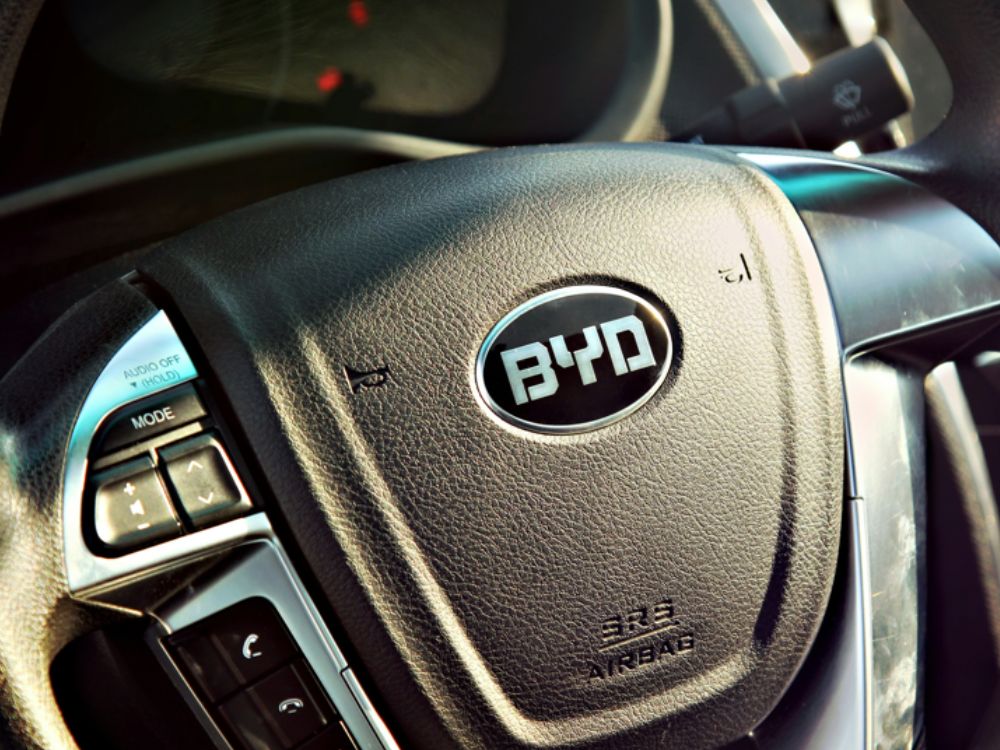
BYD - car interior

BYD’s great success as a battery maker, more than anything else, stems from Wang Chuanfu being a battery chemist at heart. BYD’s competitors quickly stopped trying to compete with Wang’s battery, which was far superior, and instead used BYD as their supplier. By driving BYD to improve its battery technology, Wang achieved great success in making BYD’s batteries better and cheaper than any competitor (Ogan and Chen 2016). Starting out as a battery manufacturer laid the most logical and sustainable foundation for BYD to enter and thrive in the automotive industry.

BYD’s entry into the automotive industry

After the early success in battery manufacturing, Wang Chuanfu made a bold decision to enter the automotive industry. Wang aimed to enter an industry that was bigger than the consumer battery industry and had connections with batteries. He saw the enormous potential of the Chinese automotive market. In the early 2000s, the Chinese government was reforming the automotive market and encouraging families to buy cars. Most people in China used motorcycles or bicycles for everyday transportation. Wang predicted that a historic number of Chinese people would buy cars over the next decade and that the automotive industry would be more energy-efficient and cleaner, creating opportunities for battery manufacturers. He was confident that BYD could produce high-quality cars at low costs after mastering the core technologies, just like its past experiences in battery manufacturing. BYD obtained the license to produce cars by purchasing the Qinchuan Automobile Company in 2003.

Qinchuan did not have full mastery of automobile technologies so Wang led his team to invent new cars. Although Wang was the most interested in electric vehicles, he understood that the technologies and market for electric vehicles were immature. Inventing ICE vehicles could be a transition and help BYD understand the automotive supply chain. BYD initially wanted to procure parts from external suppliers, but it was difficult to find suitable suppliers. Wang decided to pursue vertical integration. Vertical integration was time-consuming at first but enhanced the efficiency and reduced the costs of R&D in the long term. BYD’s current General Manager of the Branding and Public Relations Division, Li Yunfei, comments, “If you rely on external suppliers, they will not tell you their long-term plan for R&D. They usually provide you with the technologies that are the most profitable for them. Vertical integration helps BYD come up with comprehensive solutions to existing problems in automotive products.” BYD produced its first ICE vehicle model called F3 in 2005 and its first battery electric vehicle (BEV) model e6 in 2009. BYD launched F3DM (DM stands for dual modes) in 2008 and became the first company to sell plug-in hybrid electric vehicles (PHEV) in the world.

BYD started developing electric commercial vehicles in 2008. Wang realized then that it would still take a very long time to electrify passenger vehicles; roadblocks include the lack of the charging infrastructure, consumer distrust in relevant technologies, and the high prices of electric vehicles. But Wang saw at least two benefits of electrifying commercial vehicles. First, electrifying commercial vehicles could act as a buffer zone that educates consumers about electric vehicles. Second, electrifying taxis and buses could significantly reduce air pollution because they accounted for over one-third of air pollution from vehicles. The latter has stayed with Wang as a top consideration in BYD’s relentless pursuit of building more and better EVs as a worthy contribution to the climate cause.

Since 2013 BYD’s electric buses have entered major overseas markets such as the UK, the US, Japan, and India. By 2015, BYD K9 electric buses and e6 electric taxis have spread to over 190 cities in 43 countries and regions. BYD’s buses succeeded in different climates and regulatory contexts. For example, BYD delivered electric double-decker buses to London in the 2010s. In fact, Wang walked side by side with President Xi Jinping of China during the latter’s official visit to the UK in October 2015 when London bought more zero-emission electric buses from BYD (Chen and Ogan 2017). This purchase by a top global city with an iconic bus system went a long way to elevate BYD’s brand and global reputation. It also motivated BYD to solve the technological challenges in transforming the K9 model into a double-decker bus, such as a higher center of gravity and limited space for batteries.

Wang has the deepest understanding of the cutting-edge technologies at BYD. He knows how and when the current bottlenecks will be solved. Solving those bottlenecks will completely transform the customer experience.

BYD established a firm footing in the automotive market and managed to maintain its strategic focus on R&D for electric vehicles despite abrupt changes in market conditions. BYD sold around 400,000 to 500,000 vehicles every year in the 2010s. BYD’s revenue declined in 2012 and 2019, coinciding with fluctuations in the Chinese automotive market. The two troughs pushed BYD to increase the efficiency of its management system. In a system of vertical integration, some BYD factories lacked the motivation to reduce the costs and raise the quality of their products because they were guaranteed that their products could be sold to other factories in BYD. BYD thus made significant changes to its procurement system. It used external suppliers as benchmarks and closed some underperforming factories. Some factories started competing with external suppliers in bidding processes.

The year 2019 turned out to be a very difficult one in BYD’s history. Its net profit for shareholders was only 1.6 billion RMB that year, but Wang Chuanfu still invested 8.4 billion RMB in R&D. Li Yunfei comments, “Wang has the deepest understanding of the cutting-edge technologies at BYD. He knows how and when the current bottlenecks will be solved. Solving those bottlenecks will completely transform the customer experience. His technological expertise has helped BYD to develop a long-term vision and strategy. He is like a prophet and a time traveler. He can maintain his strategic focus and avoid being distracted by fluctuations in external conditions. We firmly believe that our future is bright. We will be lucky if market tailwinds arrive sooner. We are prepared to withstand the difficulties if market tailwinds arrive later.”

Back in 2008, Wang described his three green dreams. The first dream was to develop affordable technologies to use solar energy. The second dream was to help humans store energy. The third dream was to build electric vehicles to reduce air pollution. BYD has invested in R&D for solar cells and energy storage power plants since the 2000s. The three dreams have motivated Wang to expand BYD’s presence in other green industries besides electric vehicles at a global level.

BYD’s Take-Off In The Global Automotive Market

BYD released the revolutionary Blade Battery in March 2020, leading an unprecedented wave of breakthroughs. The Blade Battery is a lithium iron phosphate (LFP) battery for electric vehicles and looks like a blade (Figure 1). The Blade Battery has higher energy density than traditional battery packs and increases the range of electric vehicles, which paved the way for upgrading the Dual Mode (DM) technology platform of hybrid vehicles. The earlier versions of the DM platforms primarily relied on fuel. The DM 4.0 platform, released in June 2020, primarily relied on electricity. BYD released the e-Platform 3.0 for battery electric vehicles in 2021, which Wang Chuanfu called the most essential step from electrifying vehicles to increasing their intelligence. The e-Platform 3.0 was a brand-new platform specifically designed for electric vehicles and integrated the most critical technologies of electric vehicles.


figure 1 - BYD's battery

figure 1 - BYD's Blade Battery (1)

Powered by technological breakthroughs, BYD quickly diversified its vehicle models to meet different demands from consumers. BYD currently has four brands and five sales networks in China. The four brands are BYD, DENZA, FANGCHENGBAO and YANGWANG. The bestselling brand is BYD, which has two sales networks (Dynasty and Ocean). BYD stands for “Build Your Dreams”, symbolizing BYD’s green dreams. In China, vehicle models of the Dynasty network are named after Chinese dynasties (Qin, Han, Tang, Song, Yuan, etc.).  The Ocean network looks more youthful than the Dynasty network. DENZA offers a new luxury travel experience. FANGCHENGBAO, meaning “formula leopard” in Chinese, is a professional personalized brand. YANGWANG is a high-end brand. This quartet of brands has provided BYD with a broader and more diversified portfolio of assets.

Wang drives BYD
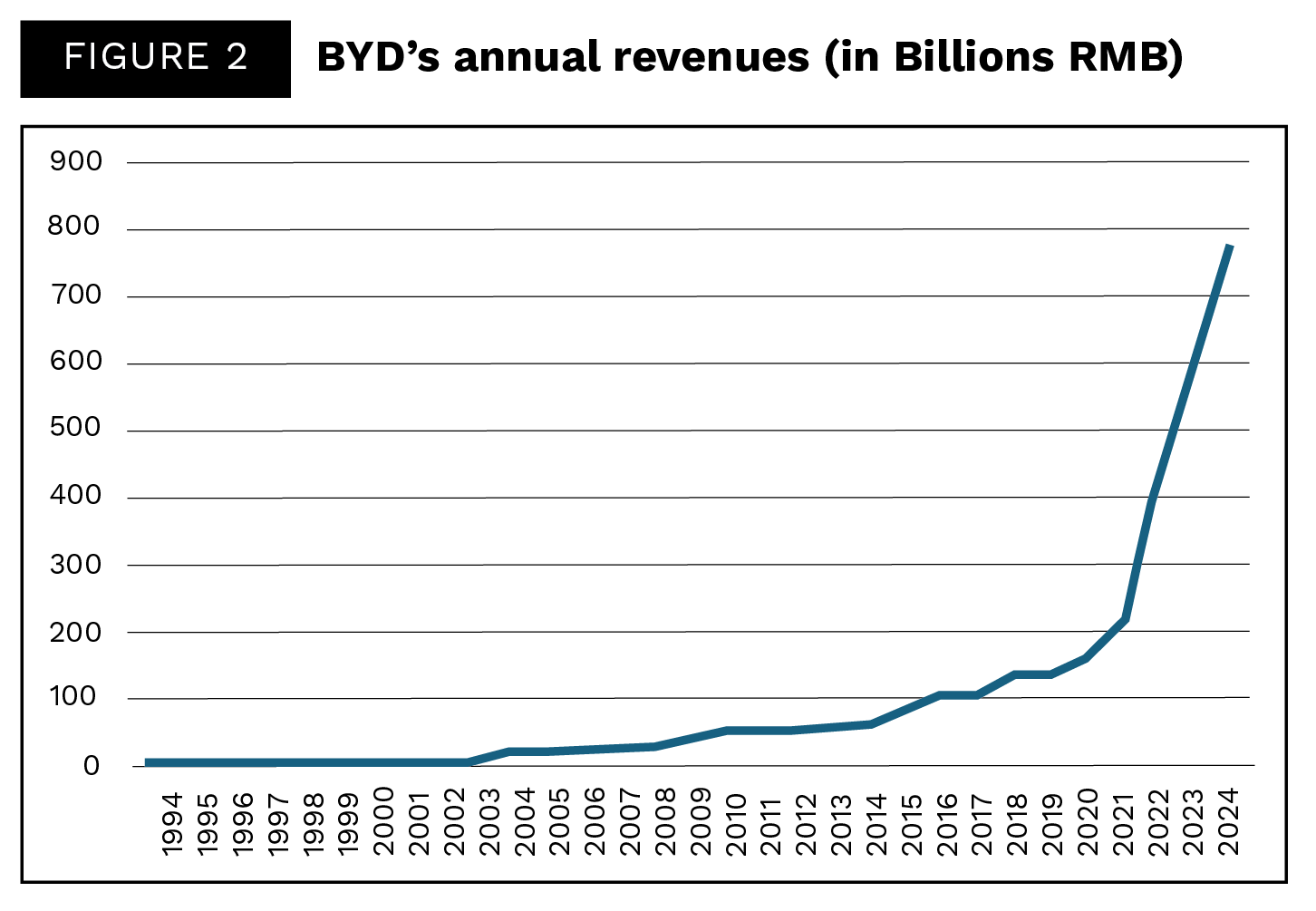
Figure 2 - BYD annual

As BYD’s founder but going beyond a conventional founder’s role, Wang Chuanfu has played a pivotal role in shaping and sustaining both the technological core and cultural meanings of the BYD brands. Li Yunfei recalls, “Not everyone in the marketing team is an engineer, but our marketing is driven by a thorough understanding of our technologies. We have launched some pioneer technologies. Many consumers found engineering concepts very boring, so it was challenging to quickly impress our consumers with the strengths of our technologies. Wang was willing to work with the marketing team in the planning stage of marketing campaigns. He was like a professor giving lectures to students. He translated sophisticated technological concepts into plain words. After his lectures, Wang would double check whether we fully understood. He also has great admiration for traditional Chinese culture, which is reflected in the names of our Dynasty models and the logo of our high-end YANGWANG brand. When we started to design YANGWANG’s logo, Wang told us to borrow from the oracle bone script used in ancient China. While some of us proposed using the oracle bone script of ‘electricity’, other proposals went beyond the oracle bone script. Wang ultimately chose our proposal.” Given its thorough understanding of technologies and consumer demands, it was no surprise that BYD’s sales and revenue took off in 2022. Its revenue jumped from 216.1 billion RMB in 2021 to 424.1 billion RMB in 2022, pushing BYD onto the Fortune Global 500 list. Its revenue further rose to 777.1 billion RMB in 2024 (Figure 2). BYD produced its one-millionth new energy vehicle in May 2021 and its ten-millionth new energy vehicle in November 2024. By February 2025, BYD’s passenger vehicles reached 90 countries and regions (Table 1).
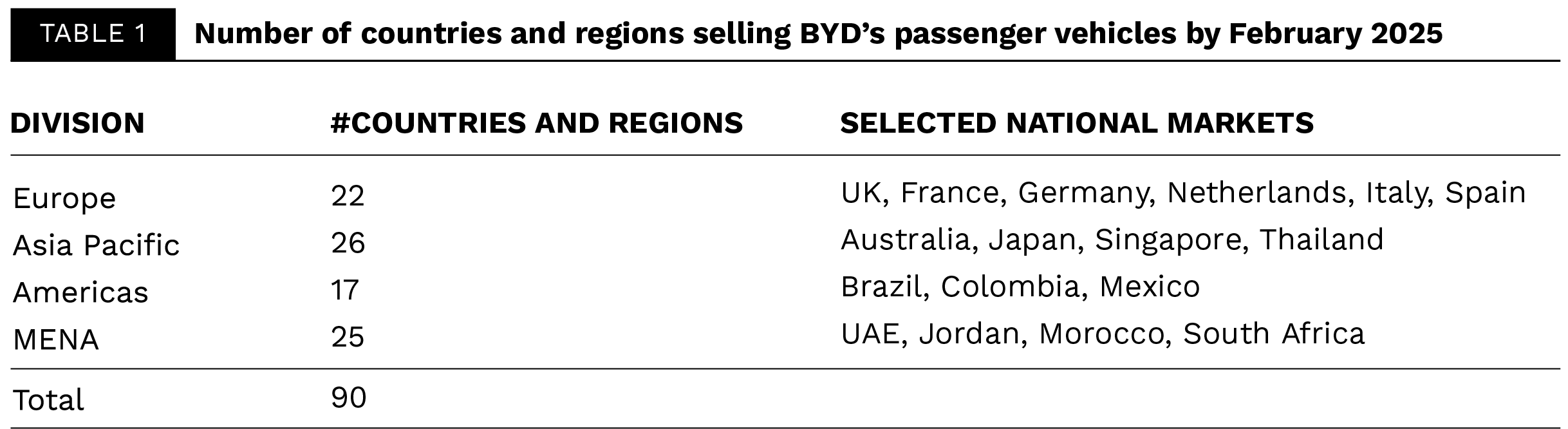
table 1- number of countries

Wang’s personal influence is key to BYD’s brisk overseas expansion through a growing and more internationally informed team of senior executives. BYD sold 4.25 million passenger vehicles in 2024, and over 417,000 of those were sold in overseas markets. Since its first overseas office opened in the Netherlands in 1998, BYD has established over 40 branch offices overseas. BYD opened a factory in Thailand last year and is currently completing factories in Brazil and Hungary. Its overseas branches have gained extensive knowledge of local markets by selling batteries and commercial vehicles. Li Yunfei comments, “Many senior executives of our overseas branches have been working in BYD for over 20 years. They are familiar with foreign culture and BYD’s internal organization. They have laid a solid foundation for BYD’s overseas expansion. In addition, we have incorporated overseas talents into our teams.” Regarding Europe, Li adds, “We want to give European consumers more choices, which will benefit them. We have a high respect for automotive brands in Europe and been learning from the European brands. Market competition can motivate everyone to make progress.”

Wang Chuanfu has continued to prioritize innovation through R&D. In 2024, BYD invested 54.2 billion RMB in R&D expenditure, which increased by 35.7% year on year. In March 2025, BYD’s global workforce reached one million, and over 120,000 of those work on R&D. Li Yunfei comments, “A wise leader is essential to a company’s development. A few years ago, my team was planning to build a powerful public image of Wang Chuanfu like other companies but he asked us to stop as soon as he learned about our plan. He said that we should focus on communicating our technologies and products to the public instead of building individual heroism. People that have interacted with Wang have been impressed by his low-key manner. Over 80% of Wang’s meetings focus on technologies and lead to plans for the medium and long terms.”

From a corporate innovator to a global leader

Continued innovation has become the core DNA of BYD, leading to a series of technological breakthroughs in recent years (Figure 3). While recent, these innovations reflect BYD’s persistent and cumulative investments in R&D over the three decades of its rapid growth. BYD’s passion for innovation has been fueled by the larger environment of Shenzhen as its home city that strongly favors corporate innovation and has nurtured several innovative companies like Huawei and DJI in a dense technological ecosystem. Beyond Shenzhen itself, BYD has benefited from competing against many domestic and international automakers in China’s highly competitive EV market irrespective of government subsidies. It is no surprise that these competitive and innovation-conducive local and national environments have fostered BYD’s cumulative success as a leading corporate innovator.

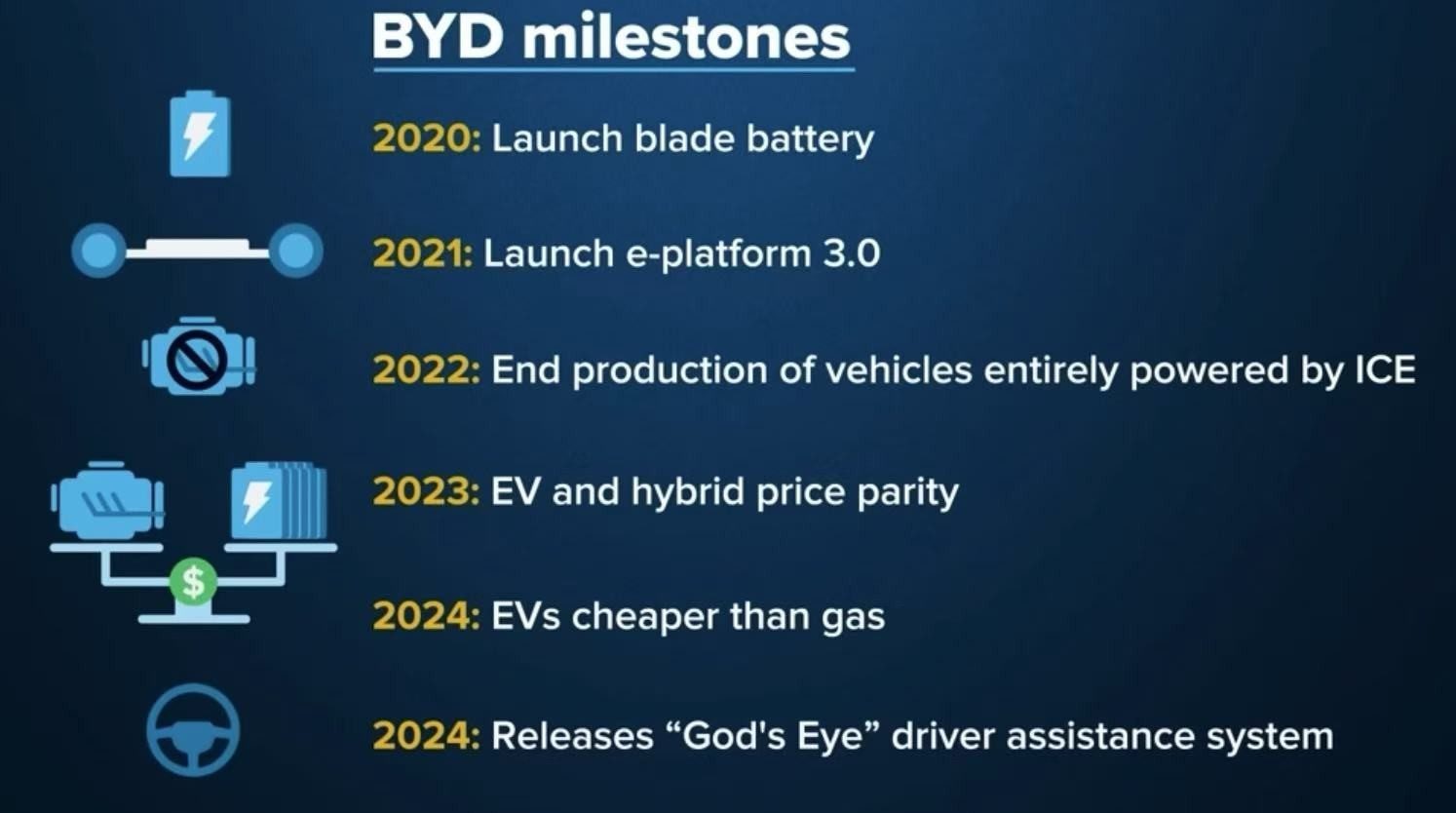
figure 3 - milestone of BYD

figure 3 (1)

As BYD has innovated from its home base, it has leveraged its innovative capacity in elevating the BYD brand globally and extending its market footprint across nearly 100 countries. Having spanned all segments of the global EV market, BYD has moved up and forward into one of the world’s leading automotive companies, and more importantly, as a pace-setter in green mobility. At a time when geopolitical turmoil has disrupted the global agenda on climate change and energy transition, BYD has proven as a robust and innovative corporate and national leader in pursuing that agenda.

About the Authors

Jiayi HuangJiayi Huang is a senior specialist at BYD’s headquarters in Shenzhen. She researches on international political economy and works on overseas public relations for BYD. She holds a Ph.D. in political science from the University of Pennsylvania, a master’s degree in economics from Duke University, and a bachelor’s degree in economics and mathematics from Trinity College in Connecticut.

Xiangming ChenXiangming Chen is Paul E. Raether Distinguished Professor of Global Urban Studies and Sociology at Trinity College in Connecticut and an Associate Fellow at the Center for Advanced Security, Strategic and Integration Studies (CASSIS) at the University of Bonn, Germany. He has published extensively on urbanization and globalization with a focus on China and Asia as well as a frequent contributor on “China in the World” to The European Financial Review and The World Financial Review. He has also conducted policy research for the World Bank, the Asian Development Bank, UNCTAD, and OECD.

Footnote

  • The first two sections draw heavily from the Chinese book The Soul of Engineers, which BYD recognizes as its official history. This article including its illustrations also draws from other material and information compiled by BYD unless otherwise noted. The interview with Li Yunfei was conducted in March 2025 specifically for this article.

References

  • Xiangming Chen and Taylor Lynch Ogan (2017). China’s Emerging Silicon Valley: How and Why Has Shenzhen Become a Global Innovation Center. The European Financial Review, December/January p. 55-62.
  • Taylor Lynch Ogan and Xiangming Chen (2016) The Rise of Shenzhen and BYD—How a Chinese Corporate Pioneer is Leading Greener and More Sustainable Transportation and Urban Development. The European Financial Review, Feb/March p. 32-39.
  • Shuo Qin and Yuejia Xiong (2024) The Soul of Engineers: BYD’s Rise During 1994-2024 (in Chinese). (Beijing: The CITIC Publisher).

The Overlooked Revenue Stream: How Water Treatment Can Transform HVAC Sales

When Gene Slade entered the HVAC industry, he noticed something others missed: a hidden revenue stream hiding in plain sight. As the founder of the Lead Ninja System, he has dedicated his career to teaching comfort advisors how to unlock this overlooked opportunity: whole-home water filtration systems. While HVAC technicians focus on heating and cooling, Gene saw a rising demand that few were addressing. Homeowners are increasingly concerned about the quality of the water flowing through their homes, yet many contractors fail to offer solutions.

Why does this matter more than ever today? Across the country, families are searching for ways to protect their health and homes from contaminants found in municipal water supplies. Gene, a former contractor himself, has helped hundreds of comfort advisors become trusted experts who not only improve indoor air but also safeguard the water people drink, bathe in, and rely on every day. For those willing to expand their thinking, this is not just another upsell; it’s a game-changer for both customer satisfaction and company revenue.

Turning a Common Concern into a Profitable Solution

Water treatment systems are a natural complement to home comfort solutions, yet very few contractors offer them. Gene discovered early on that most comfort advisors had no idea of the revenue potential tied to addressing water quality issues.

What makes this an attractive addition is not only the demand but also the customer impact. According to the U.S. Geological Survey, approximately 87% of the U.S. population relies on public water systems, many of which contain contaminants such as chlorine, lead, and sediment.  Scientific studies have shown that long-term exposure to chlorinated water can disrupt gut health and compromise the immune system. On a more practical level, chlorine and minerals in water can corrode household pipes, damage appliances, and degrade rubber and plastic parts within plumbing systems. These problems often lead to costly repairs that homeowners would rather avoid.

Gene explains, “I can sit down with a technician for half an hour and walk them through a series of questions that quickly establish the homeowner’s need for a water treatment system.” The approach is simple but powerful. By helping homeowners understand the potential dangers in their water supply, comfort advisors shift from being salespeople to problem solvers. Gene says. “By the end of that discussion, the customer is practically begging us to install one.”

How Comfort Advisors Can Seamlessly Add Water Filtration

One of the reasons water treatment solutions remain underutilized in HVAC sales is the misconception that it requires a complete business overhaul. The reality is much simpler. In most locations, special licensing is not required to install these systems, and where it is, partnering with a local licensed plumber can provide a seamless way to offer water filtration as part of a total home comfort package.

The financial upside is impressive. The average sale price of a whole-home water filtration system falls between $10,000 and $15,000. Even when subcontracting the installation work, profit margins remain extremely high. Furthermore, selling water filtration systems can be easier than selling large HVAC equipment. The moment homeowners understand how a simple upgrade can protect their family’s health, prevent appliance damage, and enhance the taste and smell of their water, most are willing to proceed with the purchase.

“This is the single most important upgrade a homeowner can make,” says Gene. “It’s not just about improving the taste and smell of the water. It’s about protecting your health, your home, and your family’s future.”

For comfort advisors, it becomes an obvious value add. It opens a new line of business with minimal extra resources or operational adjustments. The only real requirement is a willingness to have informed conversations with customers about the importance of clean water. Gene’s Lead Ninja System provides the exact training to make those conversations natural, persuasive, and beneficial for everyone involved.

Why Water Treatment Is the Future of Home Services

The world of HVAC services is evolving. Customers expect more from their home service providers. The rise of smart home systems, indoor air purification, and energy efficiency upgrades has expanded the definition of what home comfort truly means. Water treatment is simply the next frontier. By incorporating water quality assessments and filtration system offerings, comfort advisors not only increase their earning potential but also position themselves as leaders in home wellness.

More importantly, this offering creates long-term customer relationships. Once a homeowner trusts you to handle their family’s air and water needs, they are far more likely to return for future HVAC maintenance, upgrades, and referrals. Comfort advisors who understand this connection can grow both their impact and their bottom line.

Gene sums it up well: “It’s about improving lives, not just making money. Seeing the impact these systems have on families is what really drives me. This isn’t just about sales – it’s about transformation.”

The future of HVAC is no longer just about heating and cooling. Water quality has become part of the home comfort conversation. Advisors and companies that recognize and act on this opportunity will find themselves ahead of the curve.

To learn more about Gene’s transformational sales training that was just voted the “Top HVAC Sales Training in 2025,” please visit: https://leadninjasystem.com/

About Gene Slade

Gene SladeGene Slade, CEO of Lead Ninja System, is a pioneering force in the realm of sales training and business development that was just voted the “Top HVAC Sales Training in 2025” by Kev’s Best magazine. With a steadfast commitment to empowering professionals in the HVAC, plumbing, and electrical trades, Gene offers transformative coaching experiences that revolutionize the way business owners approach sales and growth through personalized guidance, community support, and access to exclusive resources. For speaking engagements go to geneslade.com.

EDITOR'S PICK OF THE WEEK

CFO's new mandate. CFO explaining the presentation

The Performance and Transformation Orchestrator: The CFO’s New Mandate in the Age of AI

By Terence Tse CFOs are evolving into AI-driven transformation orchestrators, balancing finance, technology, and strategy while upskilling teams, managing risks, and driving measurable business value. A key insight from this year’s AI for CFOs event, organized...

WISE DECISION MAKER GUIDE

POWER INFLUENCERS

Emerging Trends

The Future of Global Trade