Home Blog Page 805

Best Legal Career Advice For 2021 & Beyond

Navigating the legal job market in the US has never been easy. But the historic pandemic has made it even more challenging. The industry witnessed a setback when the courts and law firms closed down during the initial hit. Many firms closed down, and most resorted to salary cuts only to stay afloat. Although the situation is better in the new normal, you may still struggle with your career roadmap. It makes sense to ramp up your career strategy according to the current circumstances. Here is the best career advice you can follow for 2021 and beyond.

Redefine your perspective

Success in the industry may not mean the same as it was a couple of years ago. Consider redefining your perspective on success. You may have always wanted to make a six-figure salary, but being in a stable job could be your current goal. Also, you may want to work with an employer who prioritizes employee wellness more than anything else. It makes sense to work with one that values people and offers the assurance of a bright future despite the downturn.  

Be willing to pivot

This advice is not just for businesses but for professionals as well. You should be ready to pivot and reinvent on the fly to survive in the new normal. For a lawyer, it may mean the ability to switch to a different field of legal specialization or even setting up a startup. It may require you to upgrade your education and develop new skills. But the effort is worthwhile as it makes you relevant in the changing scenario during post-pandemic times. 

Move fast

Apart from pivoting according to the changing circumstances, move fast to survive and thrive. Start by researching the legal job landscape in your area. The competition is daunting in cities like Orlando. It means you will have to work harder to find the best opportunities for attorney recruiting in Orlando and around. You may need to switch jobs if you are not happy with the current one. Stay in touch with professional recruiters to find better options fast. 

Pick up business development skills

Professional expertise and skills take you a long way as a legal professional, but you need something more for a leading-edge. Pick up business development skills because firms like employees who bring in more business. These skills will help even when you start your own law firm down the line. Stay ahead of the hot leads and cultivate strong relationships with your clients to get referrals and recommendations. You can visit congrapps for Baker Mckenzie Training Contract tips.

Leverage social networks

As industry events are on hold, you have to find ways to build your professional network. Fortunately, staying active on social media can keep you connected with niche leaders and influencers. Ramp up your LinkedIn profile to build an impressive presence. Connect with the right people, and stay in touch. Join online communities and professional groups to get relevant exposure and helpful guidance.

Keeping your legal career on track in the new normal is easier than you imagine. Everything boils down to taking the right approach and knocking on the right doors. Realigning your skills takes you a step ahead.

Best Fitness Gadgets to Upgrade Your Workout

If your crib is about keeping up with your fitness goals, smart fitness gadgets are the best options.

Contemporary methods of working out have become so outdated. The lifting up of heavy wooden logs, pulling drenched ropes are now seen as techniques to remain fit from time immemorial. Now the technology has advanced over fitness. Analyzing the performance of your workout has now come to the ease of tabs and clicks.

There are ample devices and gadgets that are designed to keep track of your workouts. They track the pace, manners and even sense your movement in order to stabilize your strengths and improve upon your weaknesses. Smart fitness gadgets help you to meet your fitness goal while at the same time maintaining your health. In this way, acquiring the desired results becomes achievable.

Smart gadgets keep a check on your health too. Many smart gadgets have inbuilt sensors that check your blood pressure, heart rate, calorie intake and thus help you to pay attention to your health. 

Everyone has a reason to be fit. Some people want to stay fit, some dream of good health, some want to lose weight etc. Pre-Workouts can also increase your workout performance. Smart gadgets allow you to choose your objective and then keep a check on achieving it.

So here are some gadgets that will help you to achieve your fitness objective –

1. Fitness smartwatch-

Having a fitness band right on your wrist makes it convenient to pick up healthier choices. It is best for the people who lack the determination for working out. All you have to do is wear it just like a bracelet, and it will track your fitness level for you.

It lets you analyze your pulse rate, burnt calories and counts the steps you take. The self-analysis provides you with a broader view of your health. It builds a habit of self-tracking, and you eventually find yourself choosing a healthy and clean diet, good work out and getting a better sleep schedule.

If you are searching for a good brand, then garmin watches can be the one. They combine GPS with your athletic running and encourage you to stay fit. The fitness tracker provides visual graphics for your progress and achievements. So without beating around the bush, quickly get yourself a  Garmin watch to turn into your fitness goal.

2. Massage gun-

Workouts often lead to muscle strains and soreness in the muscle. This may hinder the workout routine of fitness freaks. But with the advancement of technology, it has become easier to get rid of muscle soreness. Massage guns are a great class of gadgets to reduce muscular pain and relieve stress. By giving short sneak peeks of pressure into the muscle tissue, Muscle guns help relax muscle stiffness. 

Technology has come a long way where businesses get creative and innovative in reaching their goals as mentioned in bmmagazine.co.uk. Usually, you have to arrange an appointment for therapy but with the advancement of technology, if you want to release your right muscles, then massage guns, also called percussive guns, are the best choice. This gun is designed to oscillate and provide rapid pressure bursts on muscle tissues.

3. Smart skipping rope-

Skipping rope is considered the most efficient form of cardio exercise. Skipping rope burns calories and helps you in losing weight at a faster pace. Smart skipping rope connects to your Android smartphones and tracks your progress. Smart jumping ropes are digitized ropes that display your burnt calories and help you to analyze your fitness level.

Old school method of rope skipping wants you to keep account of your jumps, but smart jumping rope keeps you jumping hundreds and thousands without skipping or confusing your counts. 

Smart jumping rope also has an aesthetic look embedded with design elements that give you hands-on experience. Smart groups of good brands also have longer battery life. The best feature of smart ropes is the sensors. As the wrist moves around 360 degrees of the rope, the sensors detect it as a revolution and track it as a complete jump. So you cannot assume the accuracy and precision of your fitness data displayed on it.

Parting Thoughts

To conclude, the sensor-laden gadgets which are conveniently wearable can help the fitness freaks to track their fitness graph. These gadgets enhance not only personal safety but also assist in self-tracking. Self-analyzing and self-tracking your fitness level creates a sense of self-responsibility and builds self-concern for your health.  They help you in achieving your targets as you can easily visualize them digitally. So keep the fitness freak alive in you by using such gadgets.

7 Ways For Brands With Minimal Online Presence To Grow Their Visibility

It is said that 97% of consumers today head online to learn more about local businesses. It’s likely an even bigger percentage when consumers want to find out more about bigger brands. Whatever your industry and however big or small your brand may be, online visibility is no longer a ‘nice to have’ – it’s an absolute must.

The definition of an online presence or brand visibility is ever-changing. With more mediums than ever, brands need to drill down to where their target demographics are active. An online presence doesn’t just mean where your brand is producing content. It’s also about how easy it is for people to engage with you.

If you feel that you’ve neglected your business’ online presence for too long, we’ve put together seven effective techniques to enhance your visibility, turning prospects into customers and customers into your valued brand advocates.

Social media

Social media channels are one of the most effective ways to amplify your brand online. Sprout Social, a leading platform for managing social posts, once said that 91% of consumers that interact with a brand on social media will ultimately visit their website. First and foremost, it’s important to choose the right social media platforms for your business. If your products and services are highly visual, you may benefit most from an Instagram account. If you are a B2B company, LinkedIn is an effective channel for connecting with other like-minded business owners. Facebook is also very useful for building trust and engagement, with Facebook Messenger increasingly used by brands as an agile customer support channel. Twitter is also useful for sharing content and industry expertise to build your brand’s integrity.

An intuitive, mobile-friendly website

At the very core of a brand’s online visibility is its website. The user experience and compatibility of your website’s design can have a major say in your brand’s visibility in the major search engines. If a large percentage of your target demographic are likely to use Google’s mobile search engine, it’s essential that your website is fully optimised for mobile use. What do we mean by this? Your website should be fully responsive. It should be agile and provide a slick user experience, regardless of screen size. The design should give mobile users the same outcomes as desktop users, even if landing pages have to be distilled somewhat. Although Google has made it clear that websites not optimised for mobile won’t be penalised with minimal visibility in its desktop-based search engine, it’s a useful move to futureproof your website. Try Google’s Mobile-Friendly Test tool to ascertain how well your website performs on all devices.

Optimise your landing pages for relevant organic search terms

Almost a fifth (18%) of small businesses have no plans to invest in organic search marketing techniques such as content creation and link building. Organic search engine optimisation (SEO) is one of the most cost-effective ways to grow your brand’s online presence. Every landing page on your website should be optimised for the most relevant search terms. By using Google’s free Keyword Planner, it’s possible to get a feel for the average monthly searches of relevant search terms and the overall competition within the search engine for these terms. The key to effective content optimisation for SEO is to find the ‘sweet spot’ between keyword volume and competition. Choose search terms that have steady average monthly searches without high levels of competition to avoid having to compete with established brands in your field.

Sponsorships with industry influencers

Building and maintaining your brand’s online visibility doesn’t have to be a one-person task. In fact, you can build relationships with other people online to leverage their visibility and credibility and gain exposure. Social media is now rife with influencers across all kinds of industries. Influencers are those deemed as the ‘experts’ – the know-it-alls of their niche. By partnering with these influencers, it’s possible to expand your reach to relevant audiences. Consider sponsoring an influencer’s YouTube video or podcast, or perhaps even offering a competition or promotion to an influencer’s followers or subscribers. It’s also possible to leverage the subscriber base of industry influencers and spoon-feed them with new thought leadership content to share on your behalf. This is a win-win for both parties – the influencer’s social handle is active and your brand is getting heightened exposure.

Incentives and promotions to gain a competitive edge

A very quick way to gain the attention of your target demographic is to provide highly competitive incentives or promotions that give your business a step up on its competitors. By doing so, you also show great customer service as you allow consumers to get a feel for your products before purchasing or signing up for them. In the eCommerce industry, brands may look to launch a free product giveaway or an additional half-price product with every purchase. In the iGaming industry, which is equally as competitive as the eCommerce scene, you’ll also find real money online casinos offering a wide array of promotions like free spins and no deposit bonuses.

Targeted outreach to demonstrate your expertise

Aside from partnering with social media influencers in your niche, there are bound to be industry websites and media outlets that accept unique content from external sources. Outreach is another clever facet of an organic SEO strategy geared to growing your brand’s visibility. Find relevant websites with good authority in the major search engines. Write a thought-provoking article about a talking point in your industry or how your goods or services provide a solution to a common problem. Some of these websites will not only give your article airtime, but they will also enable you to input an external link directly to your website. This encourages readers to go directly to your website, whilst increasing your site’s backlink profile – the more high-quality, genuine links pointing to your website the better in the eyes of Google.

Encourage user-generated content and reviews

Sometimes your brand doesn’t have to say a single word to facilitate a conversion. Brands with a growing customer base can leverage the power of consumers by encouraging them to submit genuine reviews of your goods or service(s). Any brand looking to improve its visibility in Google should have a Google My Business profile. It contains all the essential information about your business, including its address, opening hours, website address and its average review rating. This rating has become a ranking factor in Google’s localised search results. In checkout emails to customers, it’s a good idea to point them to your Google My Business page to enter a review of their experience of your brand. This user-generated content brings an additional layer of authenticity to your business. There are many other directories where consumers can review you too – Yelp, Facebook, Bing and Foursquare are just a few more to get you started.

Online visibility is essential in today’s world of commerce. The seven facets we’ve discussed above can each help your brand to earn trust, increase engagements and hone your buyer journey.

Why Choose Parquet flooring?

Parquet flooring is prized for its versatile design and unique appearance that you won’t get from any other type of flooring. Parquet graces many homes around the world, which is why we want to make sure you choose this type of floor in your next home renovation. Before we get into it, let’s take a look at what parquet flooring is. 

What is Parquet Flooring? 

Parquet flooring is several singular wooden blocks that are arranged into a geometrical rectangular pattern. The name ‘parquet’ originates from France. The floor was used to replace expensive materials such as marble due to its constant up-keep and maintenance.  

Choosing the right style

Parquet flooring includes a range of patterns ranging from Herringbone, Versailles and Chevron flooring. All three of these flooring styles are unique in their special way. Let’s go through them one by one.

Chevron – To easily identify the chevron pattern, simply look out for an inverted V-shaped pattern. These blocks are more aligned than herringbone, but both look similar. 

Herringbone – Herringbone parquet flooring blocks are placed alternately, rather than being aligned. You can identify herringbone by looking out for the zig-zag shape. 

Versailles – If you want the more luxurious end of parquet flooring, then check out Versailles parquet flooring. A unique and beautiful arrangement, planks are arranged into a square shape that is usually quite big. 

Parquet comes in different materials too. If you can’t afford real wood parquet flooring, opt-in for laminate or luxury vinyl tiles.

Maintenance & Upkeep

Like any wood floor, parquet needs looking after. Daily sweeping and dry mopping with a microfiber mop will keep your parquet floor looking squeaky clean. Spills that could stain your parquet floor, clean with paper towels, something that will absorb quickly. We recommend cleaning your floor at least once a month with a specialist floor cleaner that’s designed for wooden floors. 

You can sand and refinish your parquet floor but shouldn’t have to do so in the first 10-15 years. If you’re unsure of how to do this, contact an experienced flooring professional. 

Installation 

There are a few options to install your parquet floor. Some planks may come with a click fit joining method and some may come with a tongue and groove system. Either way, both of these can be floated, nailed or glued down. However, if your planks come with a click-lock system, there is no need for you to nail or glue down your floor. 

We hope we have persuaded you into installing a parquet floor. After all, who wouldn’t want luxury design? 

How Exchange Data Replication Technology Works to Power Business

To garner a competitive edge and gain a performance boost within your company, you can use exchange data replication technologies to flexibly coordinate your systems. If you currently rely on isolated and siloed data, your replication of information requires constant work, correction, and attention. All this drains the resources you could be using on core functions and adds to the workload of teams with other, more essential responsibilities.

According to the International Journal of Communication Systems, data exchanges and flexible integrations join systems and create data and information ecosystems that support efficiency, insight, and profit. They do this by speeding the flow of information, increasing its access by the right people, and simplifying the data entry process through automation. Beyond this, it actually can improve the security of key data for the corporation and their customers while giving you the ease of single-door access. In truth, the flexibility of data exchange aims to give you back confidence and reliance on your data without letting it get dragged down by manual entry, human error, and slow-going transfer.

Nevertheless, you may not realize the full force of functions that can be accomplished through data exchange and integrations. It can be simple for organizations who choose a template-based, third-party solution that allows for individual customizations. Rather than put off the job because of tied-up resources, third-party data exchange solutions actually allow you to cut downtime, reduce development costs, and avoid technical issues that slow your progress.

See all the ways that an ecosystem with exchange data replication can stand above the rest. Then choose how you want to advance your company with Rapidi.

What Data Exchange with a Third Party Can Do

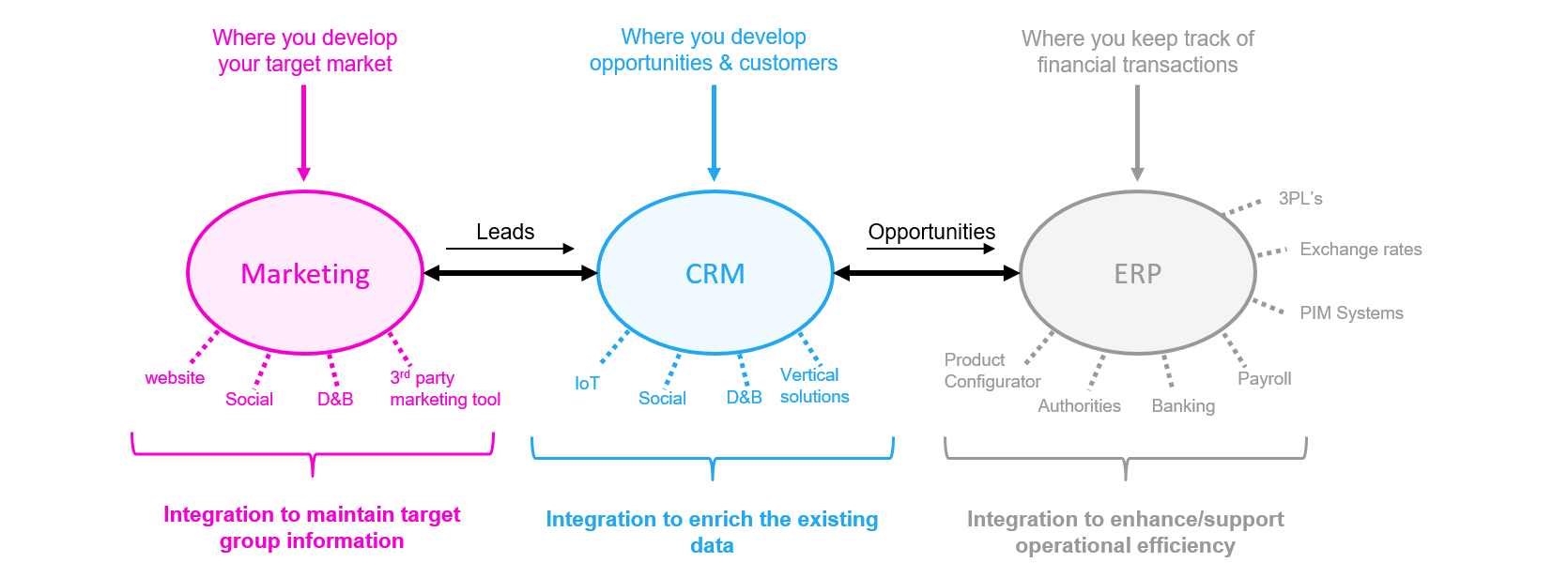
Data exchanges and integrations can connect CRMs, ERPs, and other databases in order to create an advantage for companies that rely on data to make decisions and inform their strategies. These gains increase over time as they continually save the company resources, push productivity expectations, and mold more effective sales and marketing arms.

In-house development, by comparison, brings fewer of these benefits because it introduces more immediate and long-term demands on the company that may struggle to find expert support and consistent updates to their systems’ connections. See how third-party exchange data replication tools can change decisions at your company and help you through old blocks to business strategy, progress, and performance.

Add confidence to your decision-making with better data.

The ideal decision in business and in life comes from working with the right, most dependable data to predict future outcomes and define success. This information should always be available, complete, and correct if the right decisions are to be made with assurance.

Those who decide to use exchange data replication and integrations for their most essential systems see more transparency in their data across records and reports. They collect the critical information needed to make accurate predictions while directing projects, and they can do so with more speed and certainty, knowing their data is reliable and replicated honestly.

Rapidi can implement exchange data replication to help each arm of your company to connect data points to fuel new levels of company-wide success.

Move past data blocks to strategy and performance.

By comparison to the fully integrated business that replicates information from essential system to essential system—some are slow to get the insights they need to effectively run their operations with any level of acceptable precision. Instead, their data is entered manually across systems when absolutely needed leading to human-based errors and missing records.

These companies are blocked by decrepit and disintegrated data that delays the procedure of moving projects forward. It hurts their productivity and leads to more work for teams to work through the correctness of data even as they seem burdened by their other core responsibilities that take a back seat.

Choose Exchange Data Replication with Rapidi

Every organization wants to make quick wins for their company that ultimately lead to lasting and long-term benefits. When they save huge amounts of time, resources, and effort in-house by skipping the data replication development process, they win all the rewards of data replication without the energy of a one-time solution.

With a third-party exchange data replication solution, they can make easier decisions to integrate as well as perform the entire process over a period of days or weeks instead of months. With a partner like Rapidi, you can get custom support for implementation and hand over all the responsibilities for updates, security, and stability so you can finally focus on your core company mission.

Choose RapidiOnline’s exchange data replication tools to connect your databases and supercharge your platforms.

Ethical Business and the Normalisation of Discomfort

By Anna Romberg

Decision makers and leaders are encouraged to assess the effectiveness of their compliance work by how uncomfortable it feels. A compliance program that does not feel uncomfortable is likely only working on paper, with little impact on conduct and culture. 

In the wake of corporate scandals, organisations declare a renewed focus towards ethics and compliance. Compliance officers are hired, new policies are drafted and training programs are rolled-out. Companies within the financial sector were likely already working with compliance prior to the scandal, while non-financial companies may not have had formal compliance work in place. The common theme is however that the renewed focus on compliance will change the culture, the bad apples will be rooted out and the board and management will be able to move on. With all the investments in compliance work, expensive investigations, legal advice and technological infrastructure we must question whether the conduct actually is changing? Is the investment in compliance bringing the results that we want to see? Are we seeing less financial crime and less bribery? Is the compliance work part of the solution or in fact part of the problem?  

The risk for counterproductive compliance programs

In my research I argue compliance work risk becoming part of the problem if the more informal aspects of the work are neglected. The challenge with compliance is to measure the true output from the work. We can measure the activities undertaken, such as persons trained, conducted due diligence reports, red flags analysed and suspected activity reports filed. But how do we measure the true impact? How do we measure that behaviors are changed, decisions are more sustainable and misconduct and criminal acts are reduced? Are the penalties and fines paid by companies resulting in more sustainable business practices, or are they a mere formality for companies to move on while the underlying conduct to a large extent is remaining unchanged?  

Based on my research, personal experience and interaction with the compliance community across the globe, the success of the ethics and compliance work seem to be highly person dependent. To assess the effectiveness of the work we should ask a few questions; is the compliance work focused on fulfilling the letter of the law? Are the main stakeholder for the work regulators and enforcement agencies? Is there a maturity to discuss ethical dilemmas and take wider stakeholder impact and longer term considerations into account, or do we focus on the immediate returns and financial impact?  

Embracing the difficult discussions

In my research I explore how a Nordic telecommunications company is implementing a new system for ethics and compliance in the response to allegations of corporate misconduct. The work is highly regarded by regulatory bodies and external stakeholders, while the ethics and compliance team internally is struggling and feeling that they are on a battlefield. The renewed business practices are highly person dependent, and changed corporate conduct is reliant on whether the ethics and compliance officers persists on the ethical battlefield. In the midst of the implementation efforts the team question the effectiveness of their work as the “pushback” is tangible. A realization that ethical struggles and frictions are a sign of success and that the conduct actually is changing becomes a turning point. The challenge is however that this success is dependent on that the ethics and compliance officers prevail the ethical struggles and do not succumb to the pressure to compromise. The work is having an impact, but is but highly person dependent.   

In the recent money laundering scandals, involving Nordic banks, we see that there were obvious red flags, critical risks and internal audit reports that were ignored. The formal governance was in place, however the informal parts such as responsible leadership and courage to really understand these signs were lacking. Too often there is a reliance on that “these are just red flags” and even if it walks like a duck, quacks like a duck and sounds like a duck, key decision makers refuses to see the duck. In this context, the compliance work is dependent on the person who dares to raise the obvious question “how can we say that this is not a duck?” 

The solution lies with responsible leaders 

In addition, to more investments in compliance and involvement of an army of lawyers and advisors, corporate scandals tend to give rise to renewed regulation. New regulatory agencies are formed and stringent reporting requirements and formal procedures are required. The ultimate cost for this is taken by the end customer, the consumer and the tax payers. Regulation is a vital part of good governance and responsible corporate conduct, but is not the solution. The solution lies with courageous leaders, whistleblowers and those that challenges the status quo. In the rise of new regulation, we must remember the purpose for the regulation and ensure that we find ways to measure progress in light of the ultimate purpose.   

Formal compliance work is an important mean for creating a responsible and ethical culture. Formal compliance work will give rise to information, expose dilemmas and challenge decision makers. The impact from the work is however dependent on the conduct that follows. More often than not companies are relying on legal opinions, while leaders refrain from having their own opinion. Conduct that may seem legally acceptable, may become ethically questionable over time. Culture is not formed in a vacuum, but a consequence from conduct. Tone from the top is not what the management is saying, but what they are doing, what kind of behavior is rewarded and which type of leaders are promoted. Struggles and frictions are a normal part of ethical business and a sound business culture.  

Figure 1. Ethical struggles and dilemmas are a vital part of formal compliance work.

Measuring success by discomfort

To ensure that compliance does not become part of the problem, providing a false sense of comfort and being a wasted investment, we must ensure it is not person dependent and that discomfort is not seen as a sign of failure. Managing ethical struggles is not for one individual or team, but a task for all employees and ultimately the management and the board. One way of measuring the success for the ethics and compliance work is in fact to evaluate how uncomfortable it feels. Business ethics will always feel uncomfortable as we are changing behaviors and moving towards more sustainable and transparent business practices. A compliance program that does not feel uncomfortable is likely only working on paper, with little impact on conduct and culture.  

About the Author

Anna Romberg

Anna Romberg is a PhD, executive and lifelong learner. She is an advocate for good governance and has a specific interest in the human aspect of ethics and compliance programs. She is the co-founder of the Nordic Business Ethics initiative, an appreciated speaker and has co-authored the book The Grey Zone – a practical guide to corporate conduct, compliance and business ethics

Anna is a member of the executive management team at a global medical technology company, heading the Legal, Compliance and Governance function.  

In Banking, Sustainability is the New Digital. Now what?

By Christof Innig

This year´s reporting season has brought sustainability and environmental, social and governance (ESG)-related efforts to the forefront of international banks’ annual reports, including their future outlooks and bold pledges. The message is clear: banks are emerging as a major force in reaching the UN´s Sustainable Development Goals (SDGs). We’ve seen changes in the C-suite, too. Most organizations have created new executive-level roles, such as chief sustainability officers, and are responding to calls from increasingly invested boards. With pressure to act coming from all sides, the banking industry has reached a green inflection point. 

At Accenture, we’re seeing the banking sustainability imperative take on new urgency. In daily conversations with our clients, we’re observing massive changes in banks’ attitudes toward ESG. Banking leaders are currently placing a strong emphasis on the “E”, the environmental and climate risk component. Some of the largest global financial services institutions, such as HSBC and Santander, have pledged net zero emissions by 2050. They will measure emissions not only from their own operations and supply chains but, even more important, from their financed emissions. Often referred to in their lending and investment books as scope 3, these can be up to 1,000 times greater than their own emissions. In the US, the Big Six investment firms have promptly followed suit

The banking industry has reached a green inflection point. 

The sustainability conversation isn’t a new one (the Paris Agreement was signed in 2016), so why the sudden urgency? In a word: pressure. Banks are feeling it from all sides. They’re facing scrutiny from the general public, regulators, employees, clients and investors, with each group motivated by slightly different interests. 

The general public expects the financial services industry to be the catalyst when it comes to achieving the UN’s SDGs. They demand transparency and accountability beyond pure economic indicators. Meeting the targets set out in the Paris Agreement will require a new contract between the banking industry and society. We predict the changes necessary will require between $5 – 7 trillion in investment funding. And that’s just the first wave of requests from the public. 

Regulators and central banks now understand that climate change poses a profound, immediate and existential threat to the global economy. It follows that it’s a systemic risk for the financial services industry. Banks can no longer ignore or deny climate change science, nor the catastrophic financial and systemic costs that will come with it. As such, those bodies are increasing pressure on banks to address the sustainability imperative and to do so straightaway. The tone from the top has changed from offering advice and recommendations to mandating disclosures and actions around capital requirements, stress tests, risk modelling, disclosures and KPIs (e.g., green asset ratios).  Increasingly, banks are building these requirements into their own policy, compliance and risk management frameworks. 

Scrutiny and pressure from employees and clients are motivated by a slightly different interest. Our research shows 64% of talent won´t take a job with a company that doesn´t have a strong sustainability and environmental policy, and private and commercial clients now pick and choose banks with strong ESG profiles. 

Finally, pressure comes from the investor community and activist groups. Institutional investors have already urged some banks to be more ambitious—in both the short and mid-term—in reducing exposure to fossil fuel assets and have filed resolutions at annual general meetings. Given the massive disruption ahead, investors will also expect banks to explore new growth and revenue opportunities. 

For their own operations, banks have no alternative but to lead by example when it comes to sustainability rigor. In particular, they will need to look into their supply chain, which represents between 30 – 50% of their total cost base. We expect third party risk management to become more complex. 

Banks have been slower than some other industries to join the sustainability effort. But the momentum towards sustainable banking is only increasing—and will continue to build over the next decade. At this green inflection point, we see five areas where banks can accelerate their sustainability journey: 

1. Sustainable banking strategy.

Define your sustainability strategy and develop an action plan to deliver on it. Conduct a thorough analysis and chart a course toward becoming a “responsible bank.” Determine the business model and technology required to capitalize on the opportunity and define your value proposition to your clients. Examine your organization’s culture for ways to embed positive initiatives that recognize, reward and promote sustainability across the enterprise. This comes down to governance and change management. Embed sustainability into the right governance and start training all people now on the new way forward. 

2. Risk and regulatory compliance.

ESG regulation is evolving at high pace and scrutiny is already moving beyond climate change and will further address the social and governance aspects. Some regulatory requirements are already in force, such as climate stress tests and sustainability disclosures. Filtering lending books against taxonomies will come next. Banks should try to get ahead of the regulatory curve. Managing ESG-related risk exposures is not only about regulatory reporting but should be seen as a paradigm shift for end-to-end risk management frameworks and policies. Bolster your data capabilities with intelligent tools to help collect, validate, and analyze ESG data and ensure you turn data to insights to actions. 

3. Sustainable product offerings.

Banks are already seeking the competitive edge in the green funding market with innovative green products like bonds, sustainable mortgages and sustainability-linked loans. This will spark a chain reaction across multiple industries to adopt sustainability. At the moment, banks are feeling pressure, but ESG-linked products—on both the lending and the investment sides—can be a competitive advantage. Banks will need products and processes to support green initiatives, but those solutions must be efficient when it comes to process frameworks and technical architecture. Seek out advisory support from your ecosystem partners to assist with the required policy, process and technology changes. 

4. A smart target operating model for sustainable banking. 

Accenture sees a clear influence of ESG on banks’ target operating models, including front and back offices. Sustainable finance decisioning and monitoring, ESG client due diligence, investment advice and supply chain finance are just a few of the already known use cases—there’s actually a plethora of them. With ESG frameworks and taxonomies still being too volatile, and available data like ESG ratings not coherent enough or available for all clients, we expect to see massive efforts by cohorts of ESG analysts. A smart operating model for sustainability combines strong operational discipline, work orchestration and governance. It makes the most of intelligent outreach to existing clients with digital channels supported by an integrated ecosystem of data suppliers to help manage the efforts. ESG data should become an integral part of client lifecycle management, building upon the KYC and AML checks and capabilities which are already part of it. 

5. Green IT.

Become operationally efficient by moving applications, data and infrastructure to the cloud, delivering a one-two punch for stakeholder value by reducing carbon emissions and operations costs. When approached from a sustainability perspective, cloud migration can reduce global carbon emissions by 59 million tons of CO2 per year. Accenture research calculates this reduction represents a 5.9% reduction in total IT emissions. That’s the equivalent of taking 22 million cars off the road—a massive reduction that can help us meet our collective climate change commitments. 

This is a moment of critical importance. The challenge is real and the work ahead is complicated. But it’s work that we must get right. Banks that visualize and execute their sustainability agendas now will have first-mover advantage in the race to meet—and even exceed—their sustainability goals. It’s time to get to work. 

In my next blog post, I’ll discuss the complexity of ESG due diligence and the data challenge when it comes to banking sustainability. 

Accenture can help you achieve your sustainability goals with tried-and-tested solutions. Contact me to discuss how. 

About the Author 

Christof Innig

Christof Innig leads Accenture´s Global Sustainability Group for Banking. He works with leading financial services clients and partners globally on value-led transformation initiatives and programmes. He is passionate about helping banks embed sustainability and ESG into every part of their value chain, and is a strong ambassador for technology and innovation as true enablers for meaningful change in the industry.

Central Asia Prepares for Taliban Takeover

By Gavin Helf, Ph.D. and Barmak Pazhwak 

As U.S. and NATO forces drew down their military presence in Afghanistan this Summer, the country’s northern neighbors witnessed Taliban fighters swiftly overrun most of the rural parts of northern Afghanistan, establishing control over nearly all of the 1,500-mile border between Afghanistan and Turkmenistan, Uzbekistan and Tajikistan. This all happened in a matter of weeks — along with the Taliban’s capture of key border posts with Iran and Pakistan — and represents a major shift in the geostrategic context for Central Asia. The reactions of the great powers, the Taliban and the Central Asians themselves to these developments have come equally swift. How might these shifts change the calculus for conflict and cooperation between Central Asian states and between the great powers with an interest in the region? 

The Taliban Surge 

The pace of military developments and the rapid collapse of northern districts  took many, including military planners in Afghanistan and Central Asia, off guard. In some bordering districts, Afghan military personnel and civilians were forced to cross the border and seek safety in Tajikistan or Uzbekistan under immediate Taliban military pressure. The effort appeared coordinated, and some have speculated that it is part of an attempt to preemptively seize northern districts that were a primary source of armed resistance during the Taliban’s rule. 

The Taliban did not fire on or threaten Central Asian forces on the border. On the contrary, they appear to have simultaneously launched a diplomatic charm offensive aimed at reassuring their neighbors. Delegations from the Taliban’s political office visited Moscow, Tehran and Ashgabat in recent weeks in a bid to reassure these countries of their respect for their territorial integrity with a commitment to keep the war within the borders of Afghanistan. They even appeared to reassure China that they would  ignore the suppression of Muslim Uyghurs  in Xinjiang in exchange for China’s support in rebuilding Afghanistan.  

Reactions from Central Asia 

The frontline states of Turkmenistan, Uzbekistan and Tajikistan all reacted with a demonstrative flexing of military muscle, shoring up border security. The Taliban’s relationship with Central Asia, particularly Turkmenistan and Uzbekistan, goes back many years. In fact, Turkmenistan kept its consulate in Herat open during the Taliban’s rule in the late 1990s. While Uzbekistan has been very active in support of the U.S.-led Afghan peace process, Foreign Minister Abdulaziz Kamilov in a June interview reminded everyone that “Uzbekistan was the first country to establish direct contacts with the leaders of Taliban,” which many observers viewed as the country adopting a more conciliatory approach to the insurgent group. Despite Tajikistan’s harsh stance on politicized Islam at home, the Tajik government appears to have softened its stance on the Taliban in recent weeks. 

In August Tajikistan accepted a small number of Afghan refugees and reportedly set up tent camps for hundreds of fleeing Afghans. They also requested support for dealing with refugees from the Russia-led Collective Security Treaty Organization (CSTO) in anticipation of more refugee flows across their border. Uzbekistan and Turkmenistan, on the other hand, have been very cautious in opening up their borders for refugees with the Uzbek authorities even turning back Afghan military personnel who escaped to Uzbekistan after their bases were overrun by Taliban fighters.  

All of these countries will be reluctant to allow refugees in on a large scale. State capacity has been stretched thin because of COVID, which is now resurgent as the delta variant continues to spread across South and Central Asia, adding further stress on a region dealing with high levels of poverty and unemployment. At least on the surface, the Central Asian response is to watch the walls, limit the exposure and keep the lines of communication open.  

The Powers That Be 

Beyond the problems on the border, however, a major shift is underway in the roles of the United States, China and Russia in the region. The United States continues to actively pursue a diplomatic solution, but given the Taliban momentum on the ground, the group’s openness to a negotiated settlement seems unlikely. With U.S. and NATO forces withdrawing, the United States has left a power vacuum others will seek to fill or be drawn into.  

Russia has reasserted its hard military commitment to protect its CSTO treaty allies in Central Asia from any military threat coming from Afghanistan while  actively opposing U.S. efforts to place troops “over the horizon” in Central Asia. Moscow has also publicly engaged with the Taliban, seeking and receiving assurance that they will not allow Afghanistan to become a security problem for Russia and Central Asia.  In essence, Moscow is asserting its own over-the-horizon role on security issues without an explicit position on the resolution of Afghanistan’s internal problems. It is also explicitly encouraging the United States to leave the neighborhood. 

China has also stepped up its engagement with frontline states. Chinese Foreign Minister Wang Yi launched a high-profile tour of Turkmenistan, Uzbekistan and Tajikistan this month on the way to a summit of the Shanghai Cooperation Organization (SCO). The Taliban effort to sing Beijing’s song on the plight of the Uyghurs suggests that they want to leverage China’s and the SCO’s long-standing commitment to non-interference in the domestic affairs of other states to allow the militant group to consolidate their gains in Afghanistan.  The CSTO member countries all agreed in mid-September to both deny Afghan refugees entry into their countries and to deny access to “foreign” military forces, a balance between Central Asian and Russia interests.  

What to Watch 

Here are three issues that will shape the trajectory of the Afghan conflict and Central Asian states response to it: 

  • Northern militias: One open question is how involved Central Asian states will be in ethnic dynamics across the border, given the  rise of local militia groups across the country to resist the Taliban, many of which were active during war with the Soviet Union and fought against the Taliban in the 1990s. All three frontline states have ethnic Afghan brethren. In the past, Tajikistan and Uzbekistan provided financial and even military support to local Tajik and Uzbek leaders in northern Afghanistan to fight the Taliban. This includes factions loyal to Abdul Rashid Dostum, an ethnic Uzbek, and the militias aligned with the son of late mujahedeen and Northern Alliance leader Ahmad Shah Massoud, an ethnic Tajik. Central Asian states will likely take their lead from Russia on this but most likely would be reluctant to be drawn into an Afghan civil war. 
  • The poppy trade: The last time the Taliban took power they declared and  successfully enforced a ban on poppy cultivation. In the joint statement of the Taliban’s political office and the Russian Foreign Ministry in Moscow after their recent meeting the  Taliban agreed to “eradicate drug production in the country.” While this will not have an immediate impact on the drug trade and Taliban finances since there should be enough stockpiles of opium and other products, it will boost the Taliban’s legitimacy, ease Western apprehension and help warm up relations with northern neighbors, including Russia. It could, however, have a significant long-term impact on organized crime and corruption in Central Asia, which has been a source of toxic political interference and conflict in the region. 
  • Regional dynamics: An important open question is how this will impact relations between Central Asian states. Over the past few years as the older generation of leadership passes in Central Asia there has been a tendency for the countries to work together as a bloc and to balance great power influence. A strong countervailing trend, however, is the simultaneous increase in nationalist and nativist political rhetoric in the region. The latter demonstratively broke out into the first organized military clash between Central Asian states last April in a social-media-fueled conflict between Kyrgyzstan and Tajikistan. Tajikistan has turned to the CSTO for help on its border with Afghanistan and the on-going trouble on the border with Kyrgyzstan has been put on the back burner, it seems. It remains to be seen how the reconfiguration of great power influence and the common threat of the Taliban will play into these regional dynamics. 

Living with the Taliban Again 

One Uzbek acquaintance of one of these authors noted: “We lived with the Taliban as neighbors before, we can adjust again.” While a politically negotiated settlement between the Taliban and Afghan government would be a desirable endgame for Afghanistan, the autocratic statesmen of Central Asia may be content to live with a contained Taliban-led theocracy in Kabul, especially if it behaves itself outside its own borders. 

Central Asian leaders have no particular interest in maintaining the status quo in Afghanistan and have no motivation for supporting the weak, fragmented and corrupt government in Kabul that is neither in peace with itself nor able to provide peace and security in the country. An Afghanistan engulfed in civil war would pose serious security and economic challenges to Central Asia. A descent into chaos could return Afghanistan to a hub for jihadist and criminal organizations that would greatly destabilize the entire region and impede any progress on South-Central Asia economic connectivity, trade and transit. 

The Taliban, on the other hand, have tried to position themselves to be for a centralized and strong government in Afghanistan — something that the Central Asian leaders are very familiar with. As long the Taliban are willing and able to fight the Islamic State group and eliminate or contain other transnational violent extremist groups such as al-Qaida and the remnants of the Islamic Movement of Uzbekistan; secure their borders; and provide for safe passage of goods and trade between Central and South Asia, Central Asian states are likely to adjust to working with them again. Time will tell. 

The article was first published on The United States Institute of Peace website. 

About the Authors

Dr. Gavin Helf

Dr. Gavin Helf is a senior expert on Central Asia for the U.S. Institute of Peace where he works on Kazakhstan, Kyrgyzstan, Tajikistan, Turkmenistan, and Uzbekistan.  Before joining USIP, Dr. Helf worked as a senior democracy and governance advisor in the USAID Asia and Middle East bureaus, covering democracy promotion and countering violent extremism portfolios. From 2007-2009 he worked at USAID Iraq, managing and helping design much of the democracy and governance, community peace-building, and civilian assistance portfolios there during “the surge.” 

Barmak Pazhwak

Barmak Pazhwak is a senior program officer working on Afghanistan and Central Asia for the United States Institute of Peace. Previously, Pazhwak worked at the United Nations Development Program, where he was the senior international adviser to the minister of Rural Rehabilitation and Development, government of Afghanistan. Before that, he was director of program development and faculty with Southwestern University and Global College in Tucson, Arizona, where he developed the international development curriculum and taught courses. 

Britain’s Scramble Out of Kabul; the Moral and Strategic Cost

By Professor Michael Clarke

The process of western withdrawal from Afghanistan in August and the scenes at Kabul airport as western allies were ushered out of the country to comply with Taliban demands were about as bad as these processes ever get; inhumane, incoherent and incomplete. It marked a straight strategic failure for the United States and – as its closest ally – for Britain.   

The Realities of Failure

It leaves Afghanistan a worse security problem for the west than before the intervention of 2001; a Taliban government now more dominant across the country than in the 1990s, with terrorist and warlord groups already baked into the mix, and a western alliance much less inclined collectively to stand up for itself than twenty years ago. 

The American-led Afghan policy had been steadily failing since 2012. But that retrievable failure was turned into a disaster by President Trump’s foolish negotiating strategy with the Taliban, and then into a presentational catastrophe by President Biden’s decision just to cut and run. Like other western partners, Britain had no choice but to cut and run with it, and now fully shares in the international ignominy and the betrayal of those Afghans who were persuaded to believe in western policy. 

Even more than the US, Britain has little else to offer Afghanistan than a prayer for the weak and a cheer for the brave. Except that now the weak are the brave, and the world watches to see if those elements of Afghan civil society that were nurtured over twenty years and who trusted us are capable of standing up to the Islamo-fascism of the Taliban – the girls in school, the small businesses, the journalists, the lawyers and doctors, the sports teams. If so, then they will be doing it with no more help than our good wishes. 

The British government tried to put a brave face on the situation, but in the US, Chairman of the Joint Chiefs of Staff, General Milley was quite straightforward in the assessment he offered to Congress at the end of September: ‘The war was a strategic failure’, he said, ‘there’s a cumulative effect to a series of strategic decisions that go way back’. 

Milley’s remarks were a recognition that the strategic failure in Afghanistan was a long-term one; a collision of aspirations with some hard realities. Whether the final withdrawal could have been handled differently, the strategic failure goes much deeper than in the events of 2021 and it cannot  be shrugged off as just one botched operation.  

For a country like Britain, that long-term failure throws up some significant strategic challenges which further emphasise the reality that we have not just been living through an era of change, but more likely a change of era. The outcome in Afghanistan has pin-pointed it.     

Strategic Costs

In March the British government produced the ‘Integrated Review’ – its strategic judgement on how Brexit had propelled a ‘global Britain’ orientation for the future. The review was explicit in naming China and Russia – in their own distinctive ways – as Britain’s chief strategic adversaries for the future. These are the two major powers who have gained the most geopolitical advantage from the Afghanistan situation. US influence across Central Asia has effectively ended; western economic and political ideals are in retreat and troubled countries like Afghanistan, Pakistan, Bangladesh or Turkmenistan have little choice but to lean on China, both for political support and essential financial assistance if the IMF and western powers try to boycott the Taliban government. Beijing talks with Taliban leaders predated the fall of Kabul by some time. Taliban leaders were reportedly clear that they understood China’s need for reassurance that the East Turkestan Islamic Movement, whom China blames for its terrorist attacks in Xinjiang province, would not be tolerated by Kabul.  

And on China’s plus side, Afghanistan is estimated to have something from $1 trillion to $3 trillion in natural resources, including precious stones, chromite ore, platinum, lithium and uranium, not to mention great hydro-electric power potential. China can easily pursue its mining interests in the country and it now has a major opportunity to strengthen its Belt and Road Initiative network across the region. A Peshawar-to-Kabul motorway would be a key element that would create an Afghan/Pakistan core to its BRI ambitions centred on the growth of Gwaidar port and the link to Tashkurgan, just inside Xinjiang on the border with Afghanistan. China will press for Afghanistan formally to join the China-Pakistan Economic Corridor (CPEC), notwithstanding fierce Indian opposition to it. The only possible upside for western powers is that, though China will hardly care about human rights and gender outrages in a Taliban Afghanistan, it will nevertheless be in Beijing’s interests to prevent outright instability across its BRI routes, and Beijing is likely to be cautious in the way it exploits the emerging political and economic vacuum across the region. 

There are geopolitical gains in the region for Russia as well. With US and western influence effectively removed, Moscow will more easily be able to re-engage with the Central Asian autocracies – even exploit their growing resistance to Chinese influence – as part of President Putin’s efforts to win back regional influence that was intrinsic across the territories of the old Soviet Union. Certainly, a reordering of regional priorities is on the cards as Russia, China, Iran, Pakistan and India all consider the longer-term implications of the western retreat. 

For Britain, there is also a more local strategic downside in its loss of credibility as a political mentor to Pakistan, in particular. In Islamabad, Prime Minister Imran Khan claims to be vindicated in his long-standing opposition to western intervention in Afghanistan and his vocal opposition to the US-led ‘War on Terror’. A recent Gallup poll in Pakistan found 55% of respondents were reportedly ‘happy’ that the Taliban were back in control in Afghanistan, and Islamabad made a big diplomatic statement – warmly approved by Imran Khan – in sending ISI Director General, Lt. Gen Faiz Hameed for discussions with Taleban leaders in Kabul less than a week after it fell into their hands. 

Imran Khan hopes to develop Pakistan’s role as a ‘strategic bridge ‘in South Asia – helping to ‘engage’ and ‘incentivise’ Taliban leaders to follow international norms, while pushing for international recognition of the Taliban government.  He wants to create a new relationship with China. He has seen a spike in his domestic popularity as a result of western defeat in Afghanistan and Khan is now rated as having an excellent chance of re-election in 2023. Though Britain traditionally had a better and more sympathetic relationship with Pakistan than did the US, it will be difficult for London to hold onto this as the strategic wheel continues to turn across south and central Asia. 

There may be some strategic compensation for Britain in a greater willingness in India to reach out to other strategic partners as New Delhi is ever-more alarmed at the growth of Chinese influence. There was, for example, a broad welcome for AUKUS – the Australia, US and British defence pact – announced in September. But this has a long way to go before it makes much strategic difference to any of the partners, and India will be looking for deeper commitments to its security than countries the size of Britain or Australia can provide. AUKUS can only ever be one part of a much larger security architecture in the Indo-Pacific that will, in any case, leave Britain having to make finely balanced judgements between extended security for partners in the region against Chinese bullying and its own economic well-being as a highly globalised economic actor in Europe.    

Failure Also Comes Home

Though the Afghanistan war was never directly related to British security in Europe and the North Atlantic, the longer-term strategic effects of the evacuation and the fall of Kabul may nevertheless be felt most keenly by Britain in its own home region.  

On one side, the behaviour of the Biden Administration indicates that its advertised ‘foreign policy for the middle classes’ is an expression of a more enlightened version of President Trump’s ‘America First’ approach. Biden’s US may believe in bolstering its international alliances everywhere, but its approach is proving to be as ‘transactional’ as at any time since the end of the Clinton Administration in 2001. Being on the wrong end of unilateral US decision-making over Afghanistan and then the announcement of the AUKUS pact, the Europeans felt they might as well have been dealing with the Trump Administration. It was not an auspicious start to a new transatlantic relationship and as a former NATO Secretary General observed, both Afghanistan and AUKUS simply underlined the fact that Europe was not America’s primary security concern any more.  

And while Britain may bask in the privileged reflection of the AUKUS pact for a while, it is abundantly clear that it was merely a facilitator of this Washington/Canberra technological rethink and that Britain must still deal with the serious political fall-out from AUKUS within the European neighbourhood that matters most to its own security. 

While on the other side of the equation, Russia is evidently emboldened by the Afghan failure in its dealings with Europe and across the Mediterranean. Western democracies have taken a big credibility hit in the eyes of the autocracies and the uncommitted of the world. It may result in more challenges to the status quo as the West’s adversaries test the resolve of a wounded US to uphold its ‘western values’ when its own hard interests are not directly at stake. It is not difficult to envisage circumstances in areas such as Southeast Europe, the Eastern Mediterranean or East Africa, where old challenges will intensify or new challenges arise.  

Recent history in Iraq, Syria, Libya and now Afghanistan indicates that the going is getting tougher for Western democracies, and particularly for the European ‘middle powers’ as they try to maintain a liberal democratic status quo. Their ‘hard power’ is a diminishing national asset for them all and is evidently failing in a world where a renewal of great power rivalry has put the emphasis back on strong national economic and military resources. The European middle powers must respond more than ever with their ‘soft power’ assets – the attractiveness and natural magnetism of their societies – to help shape the global environment to their best strategic advantage.  

Afghanistan became a spectacular western failure in trying over twenty years to apply both hard and soft power for a consistent political purpose. And after all the anger, the guilt, the cynicism and the weasel words at the final tragedy of Kabul, this should be something the British policy establishment might reflect on as the problem of combining soft and hard power becomes far more critical to national security – and a lot closer to home. 


About the Author 

Professor Michael Clarke

Professor Michael Clarke is the former Director General of the Royal United Services Institute. His latest book, published in November, is Britain’s Persuaders: Soft Power in a Hard World (I.B.Tauris/Bloomsbury) 

How to Cash Out Your Bitcoin through Sports Betting

Cryptocurrency is now a popular option with sports betting. Since cryptos were introduced to the world in 2009 through the Bitcoin whitepaper, they have grown faster than expected. Although cryptocurrencies have had tremendous growth, they are not accepted everywhere. Luckily there are several ways that you can convert bitcoin into fiat currency.

Wondering how to cash out Bitcoin? Well, look no further as this article outlines a number of ways in which you can convert bitcoin into cash.

Using Bitcoin for Sports Betting

Betting with cryptocurrencies, especially Bitcoin, has gained popularity in the sports betting industry. This is probably because it comes with its perks. Some of the benefits include easier deposits, fast withdrawals, reduced transaction fees, top-notch security, elimination of third parties and access to more online sportsbooks. Bonuses and promotions are some of the best approaches used by gaming platforms and you will thus find punters searching for top-rated no deposit bonus sportsbooks with juicy offers.

If you are placing bets using bitcoin, you are probably ahead of the curve as a punter. However, if you have not braced the new norm well, it is time you begin paying attention as using bitcoin for withdrawals and deposits at online sportsbooks is the wave of the future. Cashing out bitcoin can help you withdraw large amounts.

Convert Bitcoin via Cryptocurrency Exchange

One of the easiest methods to cash out Bitcoin is through an online cryptocurrency exchange. With this method, the third-party exchange makes it easy to sell your Bitcoin for EUR, USD, MYR, GBR or other fiat currencies.

To begin, you need to find an exchange that supports your country. For instance, some of the places you can sell your bitcoin in the USA include Coinbase, Bitstamp, BlockFi and Paybis in Australia, Independence Reserve and China, Huobi.

For this method to work, first, you need to sign up and complete the verification process. Secondly, you need to deposit or buy bitcoin into your account and finally cash out your bitcoin via PayPal or bank transfer.

The method is simple and secure; unfortunately, it is not the fastest way as it can take up to 5 days depending on your country and the platform you are using to get your money.

Selling your Bitcoin Using LocalBitcoins

This is a peer-to-peer Bitcoin exchange that was founded in 2012. LocalBitcoins is a platform that makes it possible for direct trading between potential buyers and sellers. The platform serves more than 1.35 million people across 249 countries.

LocalBitcoins is most preferred because individuals only deal directly with buyers and no intermediaries are involved. In addition to this, the platform also offers escrow services to protect both bitcoin sellers and buyers.

Other than this, you can decide how much you want to sell your Bitcoin for as well as request any payment method that you like. Examples of payment options you can choose from consist of Payoneer, bank transfer, PayPal and Western Union.

Keep in mind that even though you can trade directly with other people, it is vital to conduct transactions through peer-to-peer platforms to resolve any disputes, provide escrow, and mediate transactions.

Get Cash with a Bitcoin ATM

If you do not prefer to involve yourself in ID verification processes and lengthy sign-up, then getting cash from a physical ATM is the best choice. Bitcoin ATMs allow you to convert bitcoin into cash easily.

Like the standard ATMs allow you to withdraw your currency, Bitcoin ATMs allow you to buy bitcoins with fiat money and sell your bitcoin for local cash.

With more Bitcoin ATMs coming up, it is much easier to find a bitcoin ATM near you. You can use Coin Radar to find the nearest Bitcoin ATM. However, it is crucial to bear in mind that not all machines are the same. Each machine offers different fees, buy or sell limits and some supported cryptocurrencies.

Unfortunately, this method only supports small transactions as the ATMs have deposit and withdrawal limits between $1000 to 10,000. Another drawback of this method is that it involves high transaction fees.

However, if you need to cash out bitcoins, a fast Bitcoin ATM is the most feasible option.

Utilize Your Bitcoins Using Bitcoin Debit Card

A bitcoin debit card is an option that won’t turn bitcoins into cash. However, it will allow you to utilize your bitcoins the same way you use your standard debit card.

By loading your bitcoins into your debit card, they will be converted into fiat money such as EUR, USD, AUD or more. Having a bitcoin debit card makes it possible to spend your bitcoins by buying or paying for anything both online or offline, provided they accept MasterCard or VISA.

Apart from that, you can withdraw cash at an ATM anywhere in the world only if VISA/ MasterCard are accepted. Some of the well-known bitcoin debit cards consist of Crypto.Com and Wirex Visa.

Crypto.com gives cardholders Visa debit cards with no annual fees that you can top up with cryptocurrency or fiat money. This debit card allows you to earn rewards of 1-8% in regard to the amount you have spent on your wallet the past six months.

Wirex Visa, on the other hand, supports more than 150 forms of currency; therefore, you can make international purchases without exchange fees or additional charges.

Bitcoin Money

Since the invention of cryptocurrency in 2009, Bitcoin has gained popularity in sports betting. However, not all places accept cryptocurrency as a method of payment. Luckily, you can convert bitcoin into your local currency through converting bitcoin via cryptocurrency exchange, selling to LocalBitcoins, withdrawing from bitcoin ATMs and using Bitcoin debit card.

EDITOR'S PICK OF THE WEEK

CFO's new mandate. CFO explaining the presentation

The Performance and Transformation Orchestrator: The CFO’s New Mandate in the Age of AI

By Terence Tse CFOs are evolving into AI-driven transformation orchestrators, balancing finance, technology, and strategy while upskilling teams, managing risks, and driving measurable business value. A key insight from this year’s AI for CFOs event, organized...

WISE DECISION MAKER GUIDE

POWER INFLUENCERS

Emerging Trends

The Future of Global Trade