By Dr Kalim Siddiqui
This paper examines how Greek and Indian philosophy and mathematics were integrated into Islamic thought, focusing on Al-Kindī, Al-Fārābī, Ibn Sīnā, and Ibn Rushd. Dr Kalim Siddiqui examines how critical evaluation, rational inquiry, and cross-cultural engagement during the Abbasid era fostered the Islamic Golden Age. By integrating reason, empiricism, and logic, these thinkers advanced philosophy, astronomy, science, and society, creating enduring intellectual foundations that influenced both the medieval Islamic world and the European Renaissance.
I. Introduction
This study aims to highlight the significance of logic, reasoning, and openness to learning from other civilizations, and how these elements contributed to the development of Arab intellectual, economic, and social advancement during the period known as the ‘Islamic Golden Age’. This flourishing era was made possible largely through the Abbasid rulers’ remarkable enthusiasm for acquiring knowledge from Greek, Indian, and Chinese sources, particularly in philosophy, mathematics, and astronomy. Under their patronage, the Islamic world became a global centre of learning, innovation, and scientific progress. Great efforts were undertaken to promote science and technology for the betterment of society and the strengthening of the economy.
The emphasis on rational evaluation enabled scholars to critically assess inherited knowledge, build on prior discoveries, and integrate diverse intellectual traditions into a coherent philosophical and scientific system.
Logic and reason play a central role in philosophy because they provide a structured framework for analysing arguments, distinguishing valid reasoning from fallacious claims, and constructing sound conclusions. These tools enable philosophers to critically evaluate ideas, detect inconsistencies, and systematically pursue truth—making them fundamental to philosophical inquiry and intellectual progress. Critical evaluation empowers scholars to assess diverse perspectives, identify weaknesses, and test the strength of underlying assumptions. By applying logical principles, Muslim philosophers such as Al-Farabi, Ibn Sina, and Ibn Rushd were able to develop coherent systems of thought that advanced both philosophical and scientific understanding.
Moreover, logic facilitates productive dialogue and persuasion by providing a shared and reliable method of reasoning. Its applications extend across philosophical fields, including ethics, metaphysics, and epistemology. Ultimately, the purpose of logic in philosophy is to test the validity of various methods for addressing real-world problems. Thus, logic and reasoning form the backbone of critical thought, enabling scholars to construct and evaluate arguments that contribute to the pursuit of knowledge and truth. The emphasis on rational evaluation enabled scholars to critically assess inherited knowledge, build on prior discoveries, and integrate diverse intellectual traditions into a coherent philosophical and scientific system.
For Muslim philosophers in the 9th-12th centuries logical verification was central to philosophical inquiry (Siddiqui, 2025a). They meticulously studied Aristotle’s texts, examining each argument in sequence and testing its validity through logical analysis. They had mastered and verified the philosophical curriculum, understanding it as a coherent system grounded in logic and capable of explaining all aspects of reality.
For instance, Ibn Sina’s unique blend of rationalism and empiricism led him to refine the methods of logic while also exploring the workings of the rational soul—the source of knowledge acquired through rational and empirical means. Across his writings, he investigated both formal logic and the cognitive processes that enable understanding, particularly the discovery of the middle term in syllogistic reasoning. His analyses, as noted by Gutas (2001), reveal an intricate theory of how the human intellect attains knowledge through systematic reasoning (Davidson, 1992).
This paper examines the works of three seminal scholars in Islamic philosophy—Al-Farabi, Ibn Sina and Ibn Rushd (Averroes)—and their engagement with Greek thought, particularly the ideas of Plato and Aristotle. They maintained that philosophy and religion were not in conflict but rather complementary paths to truth. Their synthesis of Greek rationalism and Islamic theology not only advanced Islamic philosophy but also preserved classical knowledge. These intellectual efforts later influenced medieval Europe, contributing to the Renaissance (14th–16th centuries) and paving the way for the Scientific Revolution through the rediscovery of classical texts, the rise of printing, and breakthroughs in fields such as astronomy, anatomy, and mathematics (Rosenthal, 1958).
Synthesizing Greek philosophy with Islamic theological thought, Ibn Sina, for instance, constructed a comprehensive scientific and metaphysical system. His framework integrated Aristotelian physics and metaphysics with Neoplatonic emanationism and Ptolemaic cosmology, all reinterpreted through critical reasoning. His great achievement lay in harmonizing these diverse traditions into a unified rational worldview, one that linked the sublunar and supralunar realms through logical coherence. For Ibn Sina, this synthesis was not merely a philosophical system—it was both a research method and a comprehensive vision of reality.
During the Abbasid Caliphate (750-1258 CE), the Islamic world witnessed a remarkable flourishing of literature, philosophy, science, medicine, mathematics, and art—a period now known as the Islamic Golden Age. Education and scholarship were highly valued; institutions such as the House of Wisdom in Baghdad became centres for translation and intellectual exchange. Muslim scientists expanded on the works of Greek and Indian scholars, building observatories, developing instruments such as the astrolabe and quadrant, and advancing navigation and astronomy for both scientific and religious purposes (Qadir, 1990).
In mathematics, Al-Khwārizmī popularized the Indian numeral system, which became known as the Arabic numerals and later spread to Europe. The period also saw innovations in commerce and finance, including early versions of the bank cheques, a unified currency, and sophisticated market systems supported by rising agricultural productivity and extensive trade networks (Siddiqui, 2019).
Al-Farabi, known as the “Second Teacher” after Aristotle, was instrumental in integrating Greek philosophy into Islamic thought. His writings on logic, metaphysics, and political theory sought to harmonize reason with faith. Importantly, he reinterpreted the political philosophy of Plato and Aristotle within an Islamic framework, laying the foundation for later scholars like Ibn Sina and Ibn Rushd (Davidson, 1992).
The Abbasid era followed the decline of the Umayyad Dynasty, which had ruled from Damascus. After their fall, Abd al-Rahman I, a surviving Umayyad, established a parallel emirate in Córdoba, fostering a separate yet vibrant center of scientific and philosophical scholarship in Andalusia (Spain). Meanwhile, the Abbasids reformed governance and justice, emphasizing the independence of the judiciary and ensuring that judges (qadis) were trained in sharia, a shift that reflected the era’s broader commitment to intellectual and moral integrity.
II. The Islamic Golden Age (750–1250 CE): Integration, Innovation, and Prosperity
The Islamic Golden Age (750–1250 CE) was characterized by the translation, assimilation, and critical evaluation of knowledge from diverse civilizations. The Abbasid Caliphate supported the systematic study of philosophy, mathematics, medicine, and the natural sciences, fostering innovation in both theory and practice. Universities, observatories, and libraries enabled advances in astronomy, navigation, agriculture, and finance, while intellectual rigor ensured that Greek and Indian concepts were adapted, critiqued, and expanded rather than merely copied (Rosenthal, 1958).
This period represents one of the most remarkable periods of intellectual, cultural, and scientific achievement in human history (Siddiqui, 2020). This flourishing was fuelled by an openness to foreign knowledge, critical evaluation, and the deliberate integration of philosophical and scientific ideas from Greek, Indian, and Persian civilizations (Siddiqui, 2025a). The Abbasid rulers actively promoted learning in philosophy, mathematics, astronomy, medicine, and the arts, transforming Baghdad into the global center of scholarship (Iqbal, 2002).
This era demonstrates how openness to learning, critical engagement, and institutional support can produce a flourishing civilization. Philosophers such as Al-Fārābī, Ibn Sīnā, and Ibn Rushd exemplify the combination of reason, empiricism, and faith that underpinned the Islamic Golden Age. Their work not only preserved classical knowledge but also laid the foundations for new discoveries in Europe and beyond. The House of Wisdom (Bayt al-Hikma) in Baghdad became the iconic hub of this translation and knowledge synthesis, where scholars of various faiths—Muslims, Christians, and Jews—collaborated to make Arabic the universal language of science (Qadir, 1990).
The Islamic Golden Age was a period of exceptional scientific, technological, and economic advancement, driven by cultural exchange, state patronage, and a deep commitment to knowledge. Major progress occurred in mathematics, astronomy, and medicine: Al-Khwarizmi developed algebra, while other Muslim scholars advanced geometry, trigonometry, and navigation techniques. Muslim astronomers refined techniques for navigation and latitude determination, producing precise astronomical calculations that influenced later European science (Rosenthal, 1958).
Medicine and chemistry also flourished, with scholars devising new methods of distillation, studying the properties of substances, and establishing advanced hospitals and medical schools. Muslim scholars such as Ibn al-Haytham, Ibn Sina, and Hibat Allah Abu’l-Barakat al-Baghdadi made early contributions to principles later formalized in Newton’s laws of motion.
Technological progress included Al-Jazari’s invention of the crank-connecting rod, improvements in wind and water power, and agricultural innovations during the “Arab Agricultural Revolution” led to increase agricultural productivity and output. The introduction of papermaking and the establishment of the House of Wisdom in Baghdad greatly expanded access to knowledge. Economically, the Islamic empire’s vast trade networks connected Asia, Africa, and Europe, enabling the exchange of goods, technologies, and ideas, and fostering prosperity supported by sophisticated financial systems (Iqbal, 2002).
The Islamic Golden Age was a period of extraordinary intellectual, cultural, and scientific achievement. Baghdad, the capital of the Abbasid Caliphate, became a global center of learning, culture, and trade until its devastation by Mongol forces under Hulegu Khan in 1258. During this era, the Islamic world—from Spain and North Africa to Persia and Central Asia—led groundbreaking advances in science, medicine, mathematics, astronomy, philosophy, and the arts, while much of Europe remained in the early Middle Ages.
Contemporary challenges in many Muslim societies, including political fragility and economic dependency, reflect a historical trajectory interrupted by both internal and external forces (Siddiqui, 2021). Internally, increasing rigidity in certain intellectual and religious institutions, allied with ruling elites, discouraged critical and innovative thought. Externally, the combined effects of the Crusades, the Mongol invasions, and European colonization disrupted social, political, and economic structures. Colonization, in particular, arrested autonomous development and reoriented local economies toward colonial interests, producing enduring patterns of dependency and underdevelopment (Landes, 1998; Siddiqui, 2020).
III. Al-Kindī: The Philosopher of the Arabs
Al-Kindī (c. 801–873 CE), known as the philosopher of the Arabs (faylasūf al-Arab), was the first major Arab philosopher and a foundational figure in the development of Islamic philosophy and science. Born in Kufa and later active in Baghdad, he rose to prominence during the Abbasid Caliphate’s intellectual renaissance. Appointed by Caliph al-Maʾmūn to the Bayt al-Ḥikmah (House of Wisdom), Al-Kindī played a crucial role in translating and interpreting Greek philosophical and scientific texts, particularly those of Plato, Aristotle, and Ptolemy (Plato, 2003).
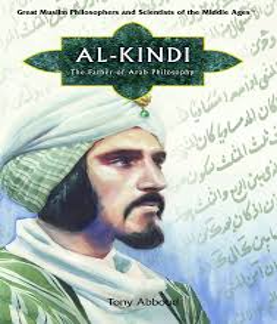
Working alongside scholars such as al-Khwārizmī and the Banū Mūsā brothers, he helped transform the House of Wisdom into a dynamic center of learning that integrated translation, research, and empirical study. Al-Kindī wrote extensively on logic, mathematics, music, optics, medicine, and metaphysics, seeking to harmonize Greek rationalism with Islamic theology.
His thought exemplified the rationalist spirit of the early Abbasid era, viewing philosophy as a path to understanding the divine through reason and natural law. By synthesizing Greek ideas with Islamic principles, Al-Kindī laid the groundwork for later philosophers such as Al-Fārābī and Ibn Sīnā, and his influence extended into both the Islamic and Latin intellectual traditions.
Al-Kindī’s later life was marked by political and religious challenges. Following the deaths of al-Maʾmūn and al-Muʿtaṣim, the more conservative caliphs, including al-Mutawakkil, curtailed intellectual freedoms, persecuted non-orthodox groups, and restricted the activities of scholars like Al-Kindī. Nonetheless, his pioneering work ensured the continuity of rational inquiry in the Islamic world, laying the groundwork for subsequent thinkers such as Al-Fārābī, Ibn Sina, and Ibn Rushd, and ultimately influencing European philosophy and science (Qadir, 1990).
Al-Kindī emphasized rational inquiry and empirical observation, critically evaluating inherited knowledge rather than accepting it unconditionally. His contributions to cryptography, arithmetic, geometry, and optics demonstrate the practical applications of philosophy and science, influencing navigation, agriculture, and technological innovation. By laying the intellectual groundwork for later thinkers such as Al-Kindī, Al-Fārābī and Ibn Sīnā helped to establish a tradition in which philosophy, science, and practical knowledge were mutually reinforcing.
Al-Kindī’s intellectual pursuits were remarkably broad. He wrote over 260 books and academic papers on philosophy, mathematics, music, medicine, theology, astronomy, and cryptography, though many were lost during the Mongol invasion of Baghdad in 1258. In mathematics, he explored arithmetic, Indian numerals, proportions, geometry, and space-time concepts, including paradoxes concerning the infinite and parallel lines. In optics, he applied empirical methods to critique Greek explanations, emphasizing observation and reproducibility. He also introduced cryptography, the art of secret writing, and contributed to early medical science by devising methods to measure the effects of treatments on patients over time.
Al-Kindī combined rigorous rational inquiry with practical application, insisting on evidence-based reasoning in philosophy and science. His work established a model of intellectual synthesis that harmonized Greek thought with Islamic principles, and his legacy as a polymath and experimental thinker significantly shaped the flourishing of knowledge during the Islamic Golden Age.
IV. Greek Philosophers Influence on Al-Farabi
The works of Plato and Aristotle, provided tools for logic, metaphysics, and ethics. Indian scholarship, especially in mathematics and astronomy, introduced concepts such as the decimal system, algorithms, and trigonometry. The House of Wisdom (Bayt al-Hikma) in Baghdad exemplified this engagement, serving as a hub for translating and studying texts in Greek, Persian, and Sanskrit. Scholars of various faiths—Muslims, Christians, and Jews—collaborated to render this knowledge in Arabic, creating a universal scientific language that facilitated innovation across disciplines (Al-Farabi, 1962).
 Greek philosophy significantly advanced empiricism by replacing mythological explanations with observation and sensory experience, a shift exemplified in Aristotle’s systematic study of the natural world. Whereas Plato (2003) emphasized abstract reasoning and the existence of ideal “Forms” beyond sensory perception, Aristotle contended that genuine knowledge arises from direct observation and interaction with the physical world.
Aristotle (384–322 BCE) displayed a lifelong interest in empirical observation and the natural sciences. Educated at Plato’s Academy in Athens, he later taught logic and reasoning there. His extensive writings spanned logic, natural philosophy, psychology, biology, metaphysics, ethics, politics, economics, rhetoric, and poetry—laying the foundations for systematic inquiry in multiple disciplines. By grounding inquiry in empirical investigation, Aristotle established the foundations of the scientific method, emphasizing systematic observation, classification, and analysis as essential tools for understanding nature. His emphasis on observation, classification, and empirical analysis laid the groundwork for the scientific method and shaped the development of later scientific inquiry.
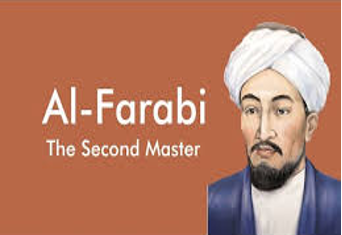
Al-Farabi (870–950 CE) was born in Farab (Central Asia, now southern Kazakhstan) and later moved to Baghdad, then the intellectual center of the Islamic world. There, he studied Arabic grammar, Greek philosophy, and mantiq (logic), successfully integrating Greek philosophical concepts into Arabic scholarship. During the Caliphate of al-Muktafi, he spent several years in Constantinople, mastering the full range of philosophical studies before returning to Baghdad to teach Aristotelian logic, ethics, politics, and music (Al-Farabi, 1962).
Al-Fārābī is known as the “Second Teacher” after Aristotle, integrated Greek philosophy into an Islamic framework. His political philosophy, inspired by Plato and Aristotle, emphasized hierarchical social structures, virtuous governance, and the pursuit of happiness for both individuals and society (Plato, 2003). In The Perfect State, he described the roles of citizens according to their natural capacities, paralleling Plato’s tripartite model of society, yet situating it within the Islamic understanding of divine order and ethical responsibility (Walzer, 1985).
Al-Farabi drew deeply from Aristotelian philosophy while adapting it to an Islamic worldview. His goal was not mere imitation but integration—particularly of Greek political philosophy within the framework of Islamic theology. Unlike Aristotle, Al-Farabi emphasized the metaphysical dimension of existence and the belief in life after death.
In logic, Al-Fārābī addressed questions that intersect with ethics and metaphysics, viewing logic as a pathway to happiness. He engaged with the problem of future contingents: if statements about the future are true before events occur, does this negate free will? Building on Aristotle’s discussion in On Interpretation, Al-Fārābī incorporated God’s foreknowledge, defending human free will against certain theologians. Al-Fārābī applied the Aristotelian framework rigorously, yet his approach was empirical where appropriate (Al-Farabi, 1962).
Regarding metaphysics, Al-Fārābī’s work is brief but significant. In The Aims of Aristotle’s Metaphysics, he emphasizes that metaphysics is not theological but studies what is common to all beings, such as being and unity. His Aristotelian perspective focuses on ontology, distinguishing metaphysics from Kalām and leaving limited space for Neo-Platonic or theological interpretations (Davidson, 1992).
Profoundly influenced by Plato, Al-Farabi became one of the first Muslim philosophers to integrate Greek political thought with Islamic principles. Drawing on Plato’s conception of the ideal state, he reinterpreted the philosopher’s class structure within an Islamic moral framework. In The Republic, Plato divides society into three groups:
- The Guardians (gold class)—the wise rulers guided by knowledge and reason;
- The Auxiliaries (silver class)—the courageous defenders of the state;
- The Workers (bronze class)—those who exercise self-control and fulfil material needs.
Similarly, in Al-Farabi’s Perfect State, citizens are organized by rank and function. Each individual must “imitate their superiors according to their capacity,” striving toward moral and intellectual perfection within the limits of their natural abilities. Like Plato, Al-Farabi viewed social order and harmony as essential to a virtuous society. Both thinkers grounded their political vision in divine truth, emphasizing that rulers should guide citizens toward understanding the divine and practicing virtue to achieve ultimate happiness (Walzer, 1985).
While Al-Farabi drew heavily from Plato, he also incorporated Aristotle’s emphasis on reason and deliberation. He argued that citizens, though subordinate to the ruling class, must engage in rational reflection to pursue personal and communal well-being. Through this synthesis, Al-Farabi extended the Aristotelian concept of active reasoning, asserting that the use of intellect enables individuals to attain their highest form of happiness. But still his philosophical framework differed due to distinct religious and historical contexts. Aristotle’s thought was grounded in classical Greek rationalism, whereas Al-Farabi sought to harmonize reason with Islamic metaphysics. Both philosophers agreed that humans are political by nature, yet Al-Farabi infused this view with spiritual purpose—linking the ideal state not only to rational governance but also to divine order and moral perfection. Through this synthesis, Al-Farabi made a lasting contribution by bridging Greek philosophy and Islamic thought, ensuring that classical wisdom continued to shape the intellectual and moral development of the Muslim world (Al-Farabi, 1962).
I mean to say that Al-Farabi extended beyond the pursuit of worldly happiness to include the afterlife, reflecting his belief in life after death. His thought represents a synthesis of Greek philosophy—particularly that of Plato and Aristotle—with Islamic theology, allowing classical ideas to enter meaningful dialogue with religious doctrines. Among early Muslim philosophers, Al-Farabi achieved a uniquely comprehensive and systematic vision, refining the foundations laid by Al-Kindi.
Like Plato and Aristotle, Al-Farabi viewed humans as inherently social beings who achieve fulfilment only within a political community. However, he broadened this concept by emphasizing that human association should not only meet material needs but also guide individuals toward ultimate happiness in both this world and the hereafter.
Al-Farabi produced his philosophical works during the formative years of the Abbasid Dynasty, when the rulers sought to define their divine legitimacy through religious authority and the judiciary. Within this context, Al-Farabi aimed to articulate the relationship between the divine, the ruler, the ruling class, and the people. Living under the Abbasid ruler al-Mutadid during a time of political turmoil and social unrest, Al-Farabi sought to conceptualize the ideal state as a remedy for the chaos of his age. His political philosophy reflects both the Greek rational tradition and the Islamic pursuit of moral and social harmony. His primary interests lay in philosophy and logic, earning him the title “the Second Master” after Aristotle. He was also a notable scholar of music, with his Great Book of Music regarded as the most important medieval treatise on the subject.
Al-Farabi’s enduring scholarly works lies in his successful incorporation of Greek philosophy into the Arabic intellectual tradition, making it accessible and influential throughout the Islamic world.
Although the Abbasid rulers introduced significant judicial reforms, they maintained tight political control, preventing the courts from attaining full independence. The Chief Justice (Qadi al-Qudat) served primarily as an advisor to the Caliph, overseeing the appointment of judges and shaping both legal and financial policies. While the reforms professionalized the judiciary and strengthened legal administration, the courts ultimately remained instruments of the Caliph’s authority, reflecting the Abbasids’ broader strategy of centralizing power while promoting an image of just governance.
Al-Fārābī also made significant contributions to logic, metaphysics, and music theory. He argued that logic was a path to happiness and a tool for understanding metaphysical truths, bridging theoretical disciplines with practical life. By reconciling reason and revelation, he established a model for philosophical inquiry that balanced Greek rationalism with Islamic theology. Al-Farabi’s enduring scholarly works lies in his successful incorporation of Greek philosophy into the Arabic intellectual tradition, making it accessible and influential throughout the Islamic world.
The engagement of Muslim scholars with classical Greek thought during the Islamic Golden Age marked a transformative period in world intellectual history. Under the Abbasid Caliphate, Baghdad became a thriving center of scholarship, where classical knowledge was translated, debated, and reinterpreted—laying the groundwork for centuries of philosophical and scientific advancement.
V. Ibn Sina’s Philosophy, Logic, and Rationalist Empiricism
Ibn Sina (Avicenna) (980–1037 CE), born in Bukhara (modern-day Uzbekistan), was a prodigious scholar whose father played a crucial role in his early education. By the age of ten, he had memorised the Qur’an, mastered over Arabic grammar, and theology. Deeply influenced by Aristotle, Ibn Sina developed a comprehensive philosophical system that synthesized Greek thought with Islamic theology, especially after engaging with Al-Farabi’s interpretations of Aristotle. His writings explored metaphysics, logic, psychology, and cosmology, offering new insights that bridged rational inquiry and spiritual understanding. He expanded classical thought through his distinction between essence and existence and his critiques of Aristotelian views on motion.
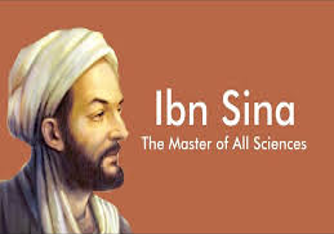
Ibn Sīnā was a polymath whose work spanned philosophy, medicine, science, and metaphysics. Building on Greek and Arabic predecessors, he created a self-consistent scientific system encompassing logic, natural philosophy, and the study of the human soul. He distinguished sensory knowledge from intellectual understanding, arguing that the intellect can apprehend the essence of things, including the divine. Ibn Sina’s integration of reason and faith, his rigorous approach to knowledge, and his contributions to philosophy and science secured his place as one of the most influential thinkers in both Islamic and Western intellectual history. His work continues to illuminate the enduring dialogue between rational inquiry and spiritual truth (Davidson, 1992).
In science, Ibn Sina pioneered a systematic methodology that blended empirical observation with logical deduction. In The Book of Healing, he emphasized experimentation and data collection while recognizing the guiding role of reason in interpreting natural phenomena. He proposed that the universe operates according to rational laws, discoverable through inquiry, yet maintained that human understanding remains limited—especially regarding divine realities.
In medicine, his masterpiece, the Canon of Medicine, became one of the most authoritative texts in both the Islamic world and medieval Europe. Emphasizing empirical observation and systematic diagnosis, his clinical methods laid the groundwork for modern scientific medicine. His The Canon of Medicine, synthesized empirical observation with rational methodology, forming the foundation for medical practice in both the Islamic world and Europe for centuries. Ibn Sīnā’s philosophy harmonized Aristotelian logic, Neoplatonic metaphysics, and Islamic theology, demonstrating the power of critical reasoning, empirical study, and systematic synthesis.
Moreover, Ibn Sina’s major scholarly works included two monumental, now largely lost works: The Available and the Valid (a commentary on Aristotle) and Fair Judgment (a systematic critique and adjudication of Aristotelian texts). His method emphasized rigorous analysis, dividing scholars into competing traditions and carefully evaluating their arguments.
Ibn Sina’s synthesis of Aristotelian philosophy with innovative scientific reasoning established him as one of history’s greatest thinkers, whose legacy continues to shape philosophy, medicine, and the broader pursuit of knowledge. Through Latin translations from the 12th century onward, Ibn Sina’s works profoundly influenced medieval scholasticism, Renaissance philosophy, and European medical education—his Canon remaining a standard reference in universities until the 17th century.
At the core of Ibn Sina’s philosophy lies his theory of knowledge (epistemology). He held that all knowledge begins with sensory perception, through which humans apprehend the external world. Yet, he distinguished between sensory and intellectual knowledge: the senses reveal only the outward qualities of things, while the intellect grasps their essence. Through abstract reasoning, the mind can attain universal truths that transcend sensory data.
Ibn Sina argued that complete knowledge of the divine could not be achieved through empirical science or reason alone, but reason remained a vital means of approaching God’s wisdom. For him, revelation and reason were complementary, not contradictory. Studying nature and applying reason were, therefore, essential acts of understanding God’s creation.
Ibn Sina was the preeminent philosopher and physician of the Islamic world, his intellectual education was extensive, covering logic, the natural sciences, mathematics, metaphysics, ethics, economics, and politics. By eighteen, he had mastered these disciplines independently, and he later studied the Samanid library, producing early works such as Compendium on the Soul and later comprehensive commentaries on Aristotelian philosophy.
Central to Ibn Sina’s philosophy is logic, which he viewed as the foundation for knowledge. Knowledge arises either through concept formation (taṣawwur) or affirmation of truth (taṣdīq) via syllogisms, following Aristotle’s Posterior Analytics and the Baghdad Peripatetic tradition exemplified by Al-Fārābī. Logic served a dual role: as a normative tool to avoid error and as a scientific discipline with its own internal structure, enabling rational inquiry across all domains of knowledge.
Ibn Sina combined rationalist empiricism with meticulous study of the human soul and cognitive processes, analysing how the mind discovers truth and attains certainty (yaqīn) or persuasive understanding (iqnā). His philosophical system integrated Aristotelian physics and metaphysics with Neoplatonic emanationism and Ptolemaic cosmology, harmonizing sublunar and supralunar worlds into a unified, intelligible framework. Ethics, grounded in Aristotle’s conception of happiness as the activity of the mind, provided the ultimate motivation for inquiry and human perfection.
For Ibn Sina, philosophy must include both a research programme and a comprehensive worldview, with logic as the essential tool for acquiring knowledge and achieving intellectual and moral fulfilment. His synthesis of reason and empiricism created a lasting foundation for both Islamic and later Western thought.
VI. Ibn Rushd: Philosophy, Aristotelianism, and the Harmony of Reason and Religion
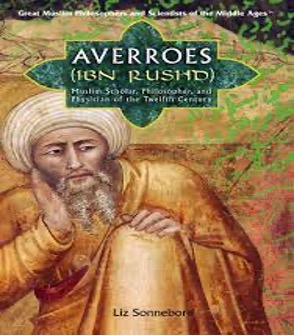
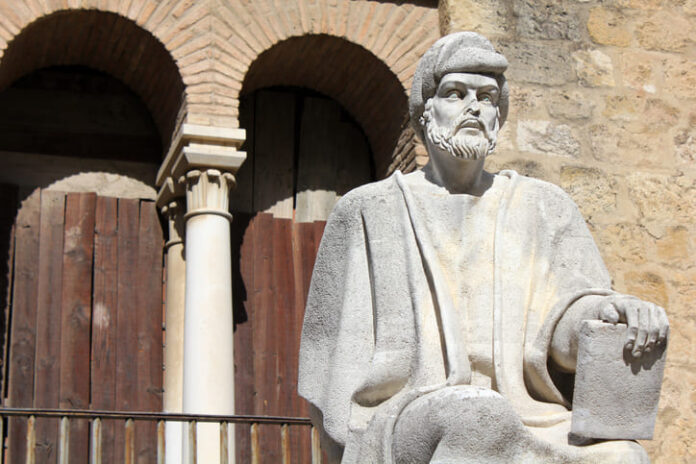
Ibn Rushd (Averroes) (1126–1198 AD) was born in Cordova, the former capital of Moorish Spain, and died in Marrakech, Morocco. He hailed from a prominent scholarly and judicial family, which provided him with extensive access to the intellectual and political elite of Andalusia and the Almohad dynasty. From an early age, he engaged deeply with philosophical and theological debates, demonstrating both a profound understanding of Islamic jurisprudence and a keen interest in classical philosophy (Rosenthal, 1953).
His work spanned medicine, logic, astronomy, metaphysics, psychology, politics, ethics, Islamic jurisprudence, and language, reflecting a comprehensive intellectual vision. He critically engaged with predecessors such as Al-Fārābī and Ibn Sina, refining logic and epistemology while defending philosophical inquiry within an Islamic framework.
At the request of the Almohad ruler, Ibn Rushd composed extensive commentaries on Aristotle, aiming to make the philosopher’s works comprehensible to a broader intellectual audience while carefully preserving his own critical and independent perspective. These writings exemplify his commitment to reconciling reason and faith, as he sought to demonstrate that philosophical inquiry could coexist harmoniously with Islamic teachings (Siddiqui, 2025b).
Ibn Rushd also made significant contributions as a physician and judge, reflecting the breadth of his scholarly expertise. His thought had a lasting impact not only on Islamic philosophy but also on post-classical European intellectual traditions, influencing scholastic thinkers such as Thomas Aquinas and shaping the transmission of Aristotelian philosophy to the West. As such, Ibn Rushd remains a central figure in the study of medieval philosophy, bridging cultural and intellectual worlds through his enduring works (Davidson, 1992).
According to him, the “truth does not contradict truth”—that reason and revelation, properly understood, lead to the same ultimate reality. When philosophical conclusions appear to conflict with scripture, he maintained, the text should be interpreted allegorically (ta’wīl). In this view, religion and philosophy serve different audiences: the general public, guided by symbols and persuasion, and the intellectual elite, guided by logic and demonstration. Unlike Al-Farabi, who placed philosophy above religion, Ibn Rushd emphasized their essential harmony. He sought to show that philosophical inquiry deepens rather than threatens faith, engaging the ʿulamāʾ (religious scholars) to demonstrate that reason illuminates divine truth.
He argued that philosophy should complement religion, not compete with it: when strict demonstration is impractical, other methods—dialectic, rhetoric, and practical reasoning—can guide understanding. In his commentaries on Plato, Aristotle, and earlier Muslim philosophers such as Ibn Sina, Ibn Bajja, and Ibn Rushd systematically extracted scientific arguments, distinguishing demonstrative knowledge from dialectical reasoning and rhetorical persuasion.
Ibn Rushd advanced the project of harmonizing philosophy and religion. He argued that “truth does not oppose truth”, meaning that reason and revelation ultimately converge. Unlike Al-Fārābī, who subordinated religion to philosophy, Ibn Rushd emphasized their complementarity, using philosophical methods to deepen understanding of divine wisdom.
His extensive commentaries on Aristotle and other philosophers clarified the principles of demonstration, logic, and causality. Ibn Rushd’s work not only shaped Islamic philosophy but also profoundly influenced Christian Europe, earning him the title “The Commentator” among scholastic thinkers. His writings facilitated the transmission of Greek rationalism into the European Renaissance, demonstrating the enduring global impact of Islamic philosophical thought.
While both Al-Farabi and Ibn Rushd aimed to reconcile Greek rationalism with Islamic revelation, their approaches diverged. Al-Farabi constructed a Neoplatonic-Aristotelian synthesis, positioning philosophy as the primary source of truth. Ibn Rushd, by contrast, championed a pure Aristotelianism, using religion as a means to make philosophy accessible and to elevate rational inquiry within Islamic thought. He contended that science need not oppose orthodoxy but rather clarify and substantiate its principles.
Together, Al-Farabi and Ibn Rushd shaped the enduring dialogue between reason and faith. Al-Farabi provided the philosophical framework of Islamic political thought, while Ibn Rushd offered its most powerful intellectual defence. Their shared conviction—that rational inquiry and revealed truth are ultimately consistent—secured their place as key transmitters of Greek philosophy to medieval Europe and as foundational figures in the evolution of global intellectual history.
Ibn Rushd’s influence was broad and enduring. Even thinkers often considered opponents of philosophy, like Ibn Taymiyya, adopted aspects of his positions on causality and metaphysics. His legacy elevated him to such prominence that he sometimes supplanted Aristotle as the preeminent authority in philosophy and science, bridging Greek thought, Islamic scholarship, and later European intellectual traditions (Rosenthal, 1953).
Ibn Rushd’s influence on Christian Europe was profound. Translations of his works from Arabic into Latin began with Michael Scott around 1220, and by the mid-thirteenth century, most of his Aristotelian commentaries were available in Latin. His ideas quickly gained traction, earning him the title “the Commentator” by the 1230s, and profoundly shaping medieval and Renaissance thought.
Earlier Islamic philosophers, including Al-Kindī, Al-Fārābī, and Ibn Sina, laid the foundations for this intellectual transmission. Al-Kindī belonged to the noble Kindah tribe and flourished under the Abbasid caliphs al-Maʾmūn and al-Muʿtaṣim. A prolific scholar, he authored over 270 works spanning philosophy, astrology, medicine, and mathematics, and played a pivotal role in translating Greek philosophical and scientific texts into Arabic.
VII. Islamic Philosophy, Social Context, and Marxist Interpretations
Islam emerged as a transformative ideology addressing social and economic tensions in a disintegrating pre-Islamic society. This historical context is crucial for understanding the development of Islamic intellectual traditions.
Marxist philosopher Ernst Bloch proposed the concept of the “Aristotelian Left,” suggesting that thinkers like Marx drew indirectly on the medieval Islamic philosophers Al-Fārābī, Ibn Sina, and Ibn Rushd. Bloch highlighted Ibn Sina’s materialist modifications of Aristotle, emphasizing the “incomplete and permanent contingency of matter and existence,” aligning with the foundations of materialist philosophy. He argued that the commercial and intellectual dynamism of the Arab world provided fertile “material foundations” for philosophical innovation, contrasting with the stagnation of the Roman Empire under Christian orthodoxy.
A radical interpretation of al-Fārābī and Ibn Rushd demands a rigorous analysis of their differentiation between philosophical knowledge reserved for the intellectual elite and religious instruction directed toward the general populace, as this distinction mirrors the underlying class hierarchies of their respective societies.
Professor Maxime Rodinson, a distinguished French historian and sociologist, is renowned for his scholarly contributions to the study of Islamic history and culture. His book The Arabs (1981) offers valuable insights into the Arab people and their distinctive culture, discussing the extent to which Arabs can be defined by religion, language, or race. Rodinson notes that under the Abbasid Empire (after 750), the Arabs lost many of their most important privileges. The state became Muslim but no longer Arab, with heterogeneous Muslim ethnic groups coexisting within the empire and in the states to which its disintegration gave rise, such as Arabs, Turks, Persians, and Berbers (Rodinson, 1981).
According to Rodinson, the evolution of Arab identity and its transformation under the Abbasid Caliphate, led to the diminishing political and cultural dominance of Arabs in the empire. His broader analyses provide context for understanding the sociopolitical factors that influenced the development of science in the Arab world. Notably more comprehensive on their scientific contributions are documented in books such as The Rise of Early Modern Science by Toby Huff and The House of Wisdom: How the Arabs Transformed Western Civilization by Jonathan Lyons offer detailed insights into the golden age of Arab science and its impact on global knowledge.
Meanwhile, Bertrand Russell recognized Ibn Rushd as a key Andalusian Aristotelian, whose commentaries on Aristotle integrated Greek rationalism into Islamic thought and influenced European philosophy.
Moreover, Al-Kindī’s philosophical and scientific output must also be considered within the social and economic context of the Abbasid Caliphate, including patronage from caliphs, the translation movement, and the class structure of society. His work in mathematics, medicine, music, and optics had practical applications, contributing to technological innovation, improvements in agriculture, and the development of navigation techniques. Moreover, his synthesis of Greek philosophy with Islamic theology laid the groundwork for later thinkers and indirectly shaped European intellectual history.
While Marxist scholarship often overlooks these contributions, the works of Al-Kindī, Al-Fārābī, Ibn Sina, and Ibn Rushd demonstrate the interplay of philosophy, empirical science, and social context in the flourishing of knowledge during the Islamic Golden Age.
VIII. Conclusion
The intellectual achievements of the Abbasid period reveal the transformative power of cross-cultural exchange, critical evaluation, and rational inquiry. Greek and Indian mathematical and philosophical traditions provided essential tools, but it was the openness, systematic study, and integration practiced by Arab-Muslim scholars that enabled a new level of scientific and philosophical advancement.
Al-Fārābī, Ibn Sīnā, and Ibn Rushd exemplify the synergy of reason, empirical observation, and philosophical rigor, demonstrating that knowledge and innovation thrive in societies that value openness and intellectual inquiry. The Islamic Golden Age illustrates that philosophy, science, and culture can advance hand-in-hand, producing enduring contributions to human civilization. This legacy not only shaped the medieval world but also created the foundations for the Renaissance and the modern scientific tradition, highlighting the enduring impact of critical, informed engagement with global knowledge.
The intellectual flourishing of the Islamic world during the Abbasid period was neither accidental nor isolated; it was the result of deliberate engagement with prior knowledge, combined with a culture that valued critical inquiry, rational evaluation, and openness to foreign ideas. Greek and Indian contributions to mathematics, astronomy, logic, and philosophy provided the foundation upon which Arab-Muslim thinkers built a transformative intellectual tradition. The House of Wisdom in Baghdad symbolized this ethos, serving as a hub for translation, preservation, and expansion of classical knowledge, which in turn enabled unprecedented advancements in science, philosophy, medicine, and technology.
Openness to cross-cultural exchange, critical evaluation of inherited knowledge, and the systematic pursuit of learning created a civilization in which science, philosophy, and the arts thrived simultaneously.
Philosophers such as Al-Fārābī, Ibn Sina, and Ibn Rushd exemplify the synthesis of inherited knowledge with innovative thought. Al-Fārābī integrated Platonic and Aristotelian political philosophy within an Islamic framework, highlighting the importance of reason, hierarchy, and moral virtue for societal stability. Ibn Sina advanced this rationalist tradition, unifying Aristotelian logic, Neoplatonic metaphysics, and empirical observation into a comprehensive philosophical and scientific system, while pioneering methods in medicine and natural sciences. Ibn Rushd defended philosophy as a legitimate path to truth alongside revelation, arguing for the harmony of rational inquiry and religious knowledge, thereby ensuring the continuity of Greek rationalism within the Islamic context and its transmission to Europe.
The Islamic Golden Age (8th–13th centuries) was the materialization of this intellectual climate. Openness to cross-cultural exchange, critical evaluation of inherited knowledge, and the systematic pursuit of learning created a civilization in which science, philosophy, and the arts thrived simultaneously. The Abbasid rulers’ support for scholarship, the institutionalization of education, and the translation movement facilitated a dynamic interplay between theory and practice, from mathematics and astronomy to medicine and navigation. These advancements were not purely academic; they underpinned improvements in agriculture, trade, governance, and technology, generating prosperity and societal development.
In sum, the achievements of the Islamic Golden Age demonstrate how critical engagement with prior knowledge, combined with an inclusive and inquisitive intellectual culture, can drive enduring progress. The work of Al-Fārābī, Ibn Sina, and Ibn Rushd illustrates the power of reason, empirical observation, and philosophical rigor in building a civilization capable of synthesizing diverse traditions while advancing original thought. Their legacy underscores that scientific innovation, philosophical inquiry, and societal prosperity are deeply interlinked, offering a timeless model for intellectual and cultural flourishing.
About the Author
 Dr. Kalim Siddiqui is an economist specializing in International Political Economy, Development Economics, Trade and Economic Policy. Since 1989, he has been teaching economics at various universities in Norway and the UK. Dr. Siddiqui’s research interests encompass a wide range of topics, including political economy, international trade, and economic history, South Asia, and emerging economies. He has presented papers at international conferences across numerous countries, reflecting his global engagement in the field. His scholarly pursuits span six broad domains: Political Economy, Development Economics, Economic History, Economic Policy, Globalization, and International Trade. Dr. Siddiqui has made significant contributions to research in areas such as trade policy, globalization, and political economy. His work has been published in chapters of edited books and articles published in peer-reviewed journals. For inquiries, Dr. Siddiqui can be reached at: [email protected]
References
- Al-Farabi, Abu Nasr Muhammad ibn Muhammad (1962) Al-Farabi’s Philosophy of Plato and Aristotle, trans. by M. Mahdi, New York: Cornell University Press.
- Davidson, H.A. (1992) Al-Farabi, Ibn Sina, and Ibn Rushd, on Intellect, Oxford: Oxford University Press.
- Iqbal, M. (2002) Islam and science, Burlington: Ashgate.
- Landes, D. (1998) The wealth and poverty of nations: why some are so rich and some so poor, London: Little, Brown & Co.
- Plato (2003) The Republic, by D. Lee. New York: Penguin Books Ltd.
- Qadir, C. A. (1990) Philosophy and science in the Islamic world, London: Routledge.
- Rodinson, Maxime (1981) The Arabs trans, by Arthur Goldhammer, University of Chicago Press.
- Rosenthal, E.J. (1958) Political Thought in Medieval Islam, Cambridge: Cambridge University Press.
- Rosenthal, E.J. (1953) “The Place of Politics in the Philosophy of Ibn Rushd” Bulletin of the School of Oriental and African Studies, University of London, 15(2):246-278.
- Siddiqui, K. (2025a) “Al-Biruni’s Kitab al-Hind: A Study of Religion, Caste, and Culture in Eleventh-Century India” World Financial Review, October.
- Siddiqui, K. (2025b) “Ibn Khaldun and the Dynamics of Social and Economic Transformation” World Financial Review, September.
- Siddiqui, K. (2021) “The Study of International Political Economy” World Financial Review, July/August.
- Siddiqui, K. (2020) “The Study of Economic History and the Importance of Understanding the Past” World Financial Review, November/December.
- Siddiqui, K. (2019) “The Political Economy of Essence of Money and Recent Development” International Critical Thought 9(1):85 – 108.
- Walzer, R. (1985) Al-Farabi on the Perfect State, New York: Oxford University Press.















 Dr Catherine Hua Xiang







 The author of

 Dr. Gleb Tsipursky
 Christopher Burke