Home Blog Page 66

HIG Capital Closes Kantar Media Deal, Launches Secondaries Push with Morgan Stanley Talent

HIG Capital

The Miami-based investment firm has acquired the global media measurement company while building a new secondaries platform with four senior Morgan Stanley hires.

HIG Capital completed its purchase of Kantar Media from the Kantar Group, adding the London-headquartered analytics provider to its technology-focused investment portfolio. Financial terms of the transaction were not disclosed.

The acquisition brings HIG Capital a company that operates across more than 60 global markets, delivering audience measurement and advertising effectiveness data to major brands and media organizations. Kantar Media’s client base spans agencies, broadcasters, and advertisers who rely on its cross-media analytics and validation tools.

Patrick Béhar, who continues as CEO of Kantar Media, described the completion as marking “an exciting new chapter” where the company will “accelerate innovation on behalf of our clients, partners, and teams around the world.”

New Secondaries Division Takes Shape

HIG Capital has simultaneously moved into the GP-led secondaries market by recruiting four experienced professionals from Morgan Stanley’s private equity secondaries division. Dan Wieder, Yash Gupta, Austin Gerber, and Joe Holleran joined the firm ahead of a planned fund launch in early 2026.

The team brings combined experience of nearly 50 years in secondaries investing. Wieder and Gupta previously held Managing Director and Partner positions at Morgan Stanley, while Gerber and Holleran worked as Executive Directors.

This hiring wave reflects growing activity in GP-led transactions, which increased 19% in the first half of 2025 according to Jefferies data. The structures allow private equity sponsors to retain ownership of high-performing assets while providing liquidity to existing investors.

HIG Capital’s Recent Activity

The Kantar purchase follows several major technology transactions for HIG Capital this year. In April, the firm merged two portfolio companies—Converge Technology Solutions and Mainline Information Systems—creating Pellera Technologies, which generated $4 billion in revenue during 2024.

HIG Capital also acquired Microsoft partner Quisitive Technology Solutions and invested in healthcare technology provider GetixHealth. These moves underscore the firm’s focus on companies providing cloud services, cybersecurity solutions, and data analytics.

Nishant Nayyar, Managing Director at HIG Capital, highlighted Kantar Media’s role as “a foundational player in the global media ecosystem” with measurement capabilities that support client decision-making.

Founded in 1993, HIG Capital manages $70 billion across equity, debt, real estate, and infrastructure strategies. The firm operates from 19 offices spanning North America, Europe, Latin America, the Middle East, and Asia, having invested in more than 400 companies throughout its history.

Trump to Impose 100% Tariff on Foreign-Made Semiconductors

trump tarrifs -80725
Image by heblo from Pixabay

President Donald Trump announced Wednesday that the United States will apply a 100% tariff on imported semiconductors and chips unless companies commit to domestic production.

Speaking from the Oval Office, Trump said the policy aims to strengthen U.S. manufacturing and reduce reliance on foreign technology. However, he left out specific details on what qualifies as “building in the United States.”

“We’re going to be putting a very large tariff on chips and semiconductors,” Trump said. “But the good news for companies like Apple is if you’re building in the United States or have committed to build, without question, committed to build in the United States, there will be no charge.”

The new tariff plan, which Trump had hinted could arrive as early as next week, targets a critical sector that powers industries from smartphones to defense systems. Companies that produce or plan to produce chips on American soil will be exempt from the steep duties.

Trump’s statement followed his celebration of Apple’s new pledge to invest $100 billion in the U.S. over the next four years. That comes in addition to the $500 billion the tech firm had already promised.

Semiconductor firms have already begun shifting operations stateside, responding to growing political and market pressures. Taiwan Semiconductor Manufacturing Company (TSMC), the largest contract chipmaker globally, has committed $165 billion to its U.S. operations.

Nvidia, now the most valuable public company in the world, said in April it would invest $500 billion in artificial intelligence infrastructure within the U.S. over the next four years.

In June, GlobalFoundries pledged $16 billion to expand production at its New York and Vermont facilities. Around the same time, Texas Instruments revealed plans to pour $60 billion into seven U.S.-based fabrication plants. The company supplies major players including Apple, Ford, Medtronic, Nvidia, and SpaceX.

According to the Semiconductor Industry Association, more than 130 manufacturing projects worth over $600 billion have been announced in the U.S. since 2020.

While Trump’s aggressive tariff strategy is expected to accelerate reshoring, some industry leaders warn that uncertainty around the policy’s exact criteria may complicate planning. Companies are still awaiting guidance on how much of their manufacturing footprint must be based in the U.S. to qualify for exemptions.

With semiconductors underpinning modern technologies and supply chains, the latest move signals a broader attempt by the White House to solidify American dominance in advanced manufacturing.

Related Readings:

Tariff Import

Cyberwars: How Far Can They Go?

(Left to right) Spc. Ashley Lethrud-Adams, PFC Kleeman Avery, and Sgt. Alexander Lecea, cyberspace operations specialists with the Expeditionary Cyber Support Detachment, 782nd Military Intelligence Battalion (Cyber), provide support to the 1st Cavalry Division at the National Training Center.
Public Domain

By Joseph Mazur

Although cyberspace connects people globally, facilitating productivity through remote work, it has also fostered a range of malicious activities. Some disturbing actions are controllable. Others, such as government cyberwars, run counter to the principles of cybersecurity. What happens when governments wage cyberwar against their enemies to disrupt services, transportation, communication, water, power, rail, and air flight networks?

They could derail passenger trains, or even more dangerous, derail trains loaded with lethal chemicals. They could contaminate the water supply in major cities or shut down the power grid across large parts of the country.[1]

– Leon Panetta, former US defense secretary

A fictional cyberwar plot in Zero Day, a television series political thriller, begins with a massive cyberattack causing telecommunications breakdowns resulting in planes and trains crashing and energy systems failing. The massive failure kills thousands and injures huge numbers of innocent people in the United States. Like thoughts after watching many other films–The Matrix, Independence Day, or Leave The World Behind—one wonders if such catastrophes could happen at those overwhelming levels of massive outages or disruptions of power grids, water systems, healthcare, or financial services. Can it? If it could, it would not be a fictional Zero Day disaster, but rather a material life-paralyzing cyberattack that cybersecurity experts call The Big One, because recovery will be daunting. [2]

In mid-July, approximately 8,000 SharePoint servers in the United States and Germany, which utilize centralized platforms for collaboration and document management, were targeted in an attack. Major industrial firms, banks, healthcare companies, and U.S. state-level and international governments were affected. Fortunately, it wasn’t The Big One, though it was dubbed a Zero Day attack because of the vastness of its reach. It was not an attack on satellites, but rather one on internal networks not jointly shared with networks involving critical communications and transportation digital facilities.[3] However, that attack, suspected to be from a single hacker or small espionage group of hackers, uncovers digital weaknesses that permit backdoor penetration of systems that could be more central to national security.

Cyberspace is an almost impregnable galaxy of hardly any laws that can touch crimes from stealth mischief to loss of life. Between the two extremes, a relatively broad spectrum of crimes plays out in that universe. For over 42 years it has changed life constructively and harmfully, the former with an enormous advantage over the latter. As a tool, it has advanced research at every level, provided enhanced communication, and has vast volumes of information.

But what defines a cyberwar? My colleagues and experts tell me that the word “cyberwar” is too new to express an absolute. They disagree among themselves about the legitimacy of joining or hyphenating the word “cyber” with “war.” The word has become popular in the media as an overall acceptance of online usage. Almost all words with a semblance of tangible actions are acceptable to virtual acts. We now have an abundant vocabulary of cyber-words ending with cafes, bullies, casts, spaces, and even sexes. That’s just picking a few, and as you read, you will encounter many more. A dictionary definition tells us nothing about the deep meaning of the word. In my search for its etymology, the closest I could get is a surprisingly stretched connection to the Greek word κυβερνάω (Kybernao), which means a “steersman” or “helmsman.” Jason Blessing and Richard J. Harknett, at the University of Cincinnati Center for Cyber Policy and Strategy, say that the etymology is related to “the relationship between communication and automatic control systems of both machines and humans.” [4]

The definition of cyberspace, another of those cyber-somewhat compound words, varies. The International Telecommunications Union (ITU) defines it as “the physical and non-physical terrain created by and/or composed of some or all of the following: computer systems, networks and their computer programs, computer data, content data, traffic data, and users.” The U.S. military defines it as “a global domain within the information environment (IE) consisting of the interdependent networks of information technology infrastructures and resident data, including the internet, telecommunications networks, computer systems, and embedded processors and controllers.” [5] No matter how a “cyber” term is defined, it encompasses a battlefield of intelligence network systems, focused on activities surrounding digital infrastructures and control of data.

Cyberspace: a domain harbor for eight kinds of warfare

  1. Espionage (limited to gathering information): The difference between espionage and intelligence is that the former involves stealing information clandestinely under cover. The latter applies to collecting information by members of an armed force in uniform. Espionage is a slippery category; Russia outsources its cyber-espionage operations to criminal groups to covertly target Ukraine’s defense infrastructure.
  2. Criminal retaliation with acts of violence: This type of cyberwarfare is emotional and psychological cyberbullying that potentially leads to mental health issues and, in extreme cases, to suicide. In retaliation, the victims become the perpetrators.
  3. Acts of fraud: Individuals, groups of confidence tricksters or cybercrime syndicates exploiting vulnerable victims or phishing for material (social security, bank account numbers, etc.) collecting data under fraudulent means for financial gain. Advertising firms know the average for when a con artist reaches a mark; “strike eleven times to get a hit.”
  4. Propaganda: Countries use propaganda mostly for their purposes. All covert propaganda operations create disinformation, aided by artificial intelligence spreading through social media by altering an event to influence public opinion.
  5. Political: Nation-states traditionally focus on intelligence operations that tend to escalate from data searching to destructive attacks of division to accumulate a supportive voting pool.
  6. Mischievous attacks of functionality: Cyberactions causing disruptions of inconvenience and annoyance. In this category, there are no intentions of stealing money or manipulating data; rather, it is for testing a hacker’s digital cleverness.
  7. Government destruction: Combat cyber operations by established governments are generally defensive; however, there are indications of growing offensive state-sponsored cyber disinformation operations, controls over enemy infrastructures, and sabotage.
  8. Ransoms: Threatening demands of payment to fix code after attacks on businesses, unprotected individuals, financial services, and government agencies. 
Attack agents are anonymous, with mobility that permits them to continue attacking at the speed of light without identification. Hackers come and go in a wink.

The everyday notion of the word “cyberwar” extends to some ethereal realm in the universe that enables feedback loops of information passing through multiple pathways. When those pathways are injected with a contradictory information system, it gets jammed in a multi-way battle over factualness, much like short-circuiting a power grid, though not with copper wires. When one country relies on an interconnected technology infrastructure while another attempts to mess with it to disrupt it for offensive purposes, hired saboteurs could “hack” into the system to bring it down by sending contradictory signals. Is that a war? Perhaps we need to redefine the word to “cyber-concern” or even “cyberthreat”, for it is a complex concern for national security. [6] Hackers could be anyone with a vendetta or someone having fun with what can be achieved by cracking a code. In most cases, they impersonate other hackers, states, or agencies. “In warfare in a kinetic battlefield, it is usually clear who started, who attacked, and what space was conquered; none of this applies in cyberwar.” [7] Yet, “one of the great under-recognized stories of what’s happened in the US-China relationship over the past two or three years”, wrote David E. Sanger, a national security correspondent for the New York Times, “is the extent and the sophistication of the cyber activity that has so shaken American policy makers.” [8]

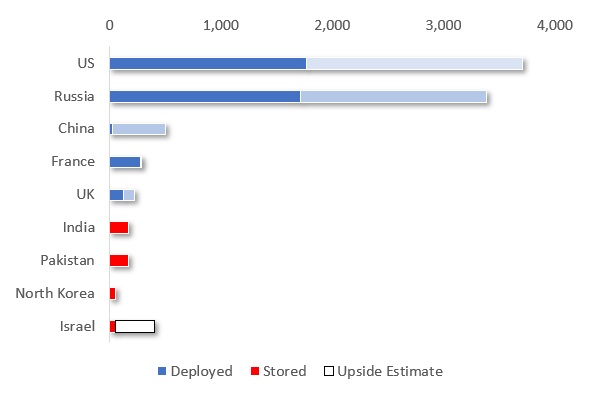
When it comes to enemy countries, hacking is different. Attackers might have intentions to hack national databases, perhaps the financial system to bring down a country’s economy, or to spread government disinformation to confuse the body politic. As William James Lynn III, a former United States Deputy Secretary of Defense quipped in 2011, “a couple dozen talented programmers wearing flip-flops and drinking Red Bull can do a lot of damage.” [9] Russia, with its years of spreading disinformation, propaganda, and cyberattacks, has a high score of cyber talent and an army of hackers within its security and intelligence agencies. [10] Let’s not just blame Russia. North Korea and Iran have their own armies of hackers who are quite capable of conducting global espionage from their desks. The U.S, U.K., China, and Israel have their cyber-offensive outfits.

Military hacking information systems.

China, Russia, Iran, North Korea, and other autocratic states with revisionist intent are aggressively using advanced cyber capabilities to pursue objectives that run counter to our interests and broadly accepted international norms. Their reckless disregard for the rule of law and human rights in cyberspace is threatening U.S. national security and economic prosperity.

The White House, National Cybersecurity Strategy 2023 [11]

On April 1, 2015, President Barack Obama signed Executive Order 13694, blocking the entry into the United States of suspicious cybercriminal individuals, and seizing the property of individuals and entities involved in malicious cyber-enabled activities from outside the United States. [12] Obama ordered sanctions targeting individuals and groups responsible for cyber-attacks threatening U.S. national security and foreign policy. Ten years later, after several amendments and executive orders under President Joe Biden aimed at countering the increasing pervasiveness, Donald Trump signed Executive Order 14144, designed to counter increasing pervasiveness of cyber-threats from foreign actors and governments. [13]

Foreign nations and criminals continue to conduct cyber campaigns targeting the United States and Americans.  The People’s Republic of China presents the most active and persistent cyber threat to United States Government, private sector, and critical infrastructure networks, but significant threats also emanate from Russia, Iran, North Korea, and others who undermine United States cybersecurity. I am ordering additional actions to improve our Nation’s cybersecurity, focusing on defending our digital infrastructure, securing the services and capabilities most vital to the digital domain, and building our capability to address key threats.[14]

– Donald Trump, Executive Order 14144.

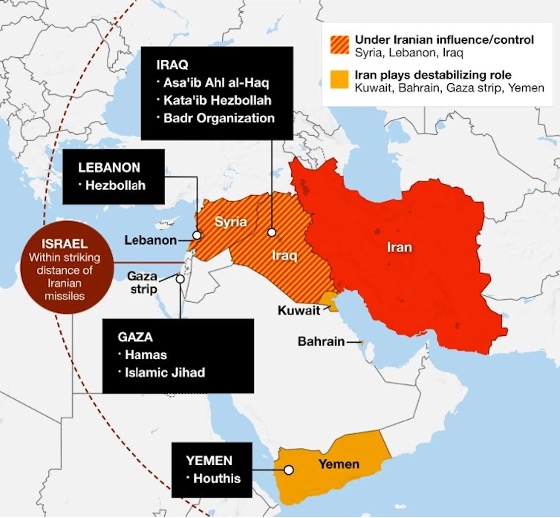
Now we have a new compound “cyber” word, “cyber campaign.” What does that mean? Are those so-called campaigns uniquely targeting the United States, or are there many states targeting multiple nations in feedback loops that cycle revenge? Russia targets Ukraine with outsourced cybercriminal groups. And there are plenty of nation-states using cybercriminals to conduct financially motivated groups for their operations. And, ever since the Hamas October 7th attack, Iran continues its attempts to disrupt critical services of Israel. Unfortunately, For a start, the 2024 Convention on Cybercrime aimed to prevent and combat cybercrime and strengthen international cooperation to prevent and combat those crimes. [15] As they proliferate, the UN, a recognizably slow-moving body, will be forced to establish international cyber-laws, otherwise the next phase could bring on a cyber-world-war catastrophe.

The UN has no comprehensive laws controlling cyberwarfare, but it is attempting to gather international cooperation to control digital cybercrime threats.

Not all cyber-problems are political. Every advanced country encounters online criminal behavior, and the new mobsters no longer deal on the street. Therefore, we should distinguish between international political cyberattacks, homegrown cyberterrorism, and inescapable criminal swindles, which now account for almost 90 percent of all cyberattacks. Less than 6 percent of all cyberattacks are related to breaching national security. So, should we worry? No matter how you look at it, even with two words not conjoined, the cyberwar of espionage and terror is not yet grave. But for how long?

Studies from a recent International Monetary Fund (IMF) report on the global economy and financial systems claim that as “digital platforms increase we become more exposed to cyberattacks,” and from that, cybercrime will cost the world $23 trillion in 2027. [16] However, the largest concern is strangely not crime against individual companies but rather those against governments. Those are the attacks that not only cause infrastructure destruction, but also the loss of human life by damaging those systems that facilitate living in territories in need of support by network services that keep economies functioning and aid living, i.e., transportation, communication, water, and power supplies that keep the wheels of stability moving. After all, operations in cyberspace are also beneficial for everyone. Advanced states have substantial offensive capabilities while also being exposed to cyberattacks. U.S. and U.K. military information prevents public knowledge of their cyberwar plans but surely, with their enormous military budgets, they are already operative and highly nasty. Deterrents or not, those plans are inevitable escalations that pose unbridled threats to a nation’s worldwide infrastructure and security.

Cyber acts of war

Consider how Russia disrupted Ukrainian military operations at the start of its invasion. A year later, the Pentagon published its Cyber Workforce Strategy with Mark Gorak, the U.S. DoD’s chief director of resources, saying, “To realize the success of these goals and objectives, we will measure and monitor progress on a set battle rhythm.” What could Gorak mean by “battle rhythm,” other than future defense and offense plans?

A dozen years ago, Thomas Rid, Professor of Strategic Studies and founding director of the Alperovitch Institute for Cybersecurity Studies at Johns Hopkins University said, “Cyber-war lacks the essential characteristics to meet the conditions of becoming an act of war; if the use of force in war is not violent, instrumental, and political, then there is no cyber offense that meets all three criteria.” That may have been true, but times have changed; Russia’s political aggression and the new hot wars in Europe and the Middle East have amplified as increased reliance on computers connecting with computers and clever new algorithms are hacked by large groups employed by combative governments.[17]

For me, the middle criterion—instrumental—opens too much to apply; every carried-out event is instrumental when it happens. Thomas Rid tells us that many experts in the field say, “We should head for the hills: the cyber war is not coming. It’s here.”  In the preface of his book Cyber War Will Not Take Place, published in 2013, he writes, “Water will stop flowing, the lights go out, trains derail, banks lose their financial records, the roads descend into chaos, elevators fail, and planes fall out of the sky. Nobody, as this adage has it, is safe from the coming cyber war. Our digital demise is only a matter of time.” [18] His view is debatable by way of an older review coming from the RAND Corporation essay by John Arquilla and David Ronfeldt, claiming the opposite.[19] In a more recent RAND Corporation essay by the same authors, a distinction is drawn between cyberwars and what they term “netwars.” To them, a netwar is, on the one hand, “a networked organizational structure of its practitioners”—with many groups being leaderless—and their quickness in coming together in swarming attacks a conflict waged “by terrorists, criminals, gangs, and ethnic extremists; and by civil-society activists (such as cyber activists or WTO protestors).” [20]

There is a difference between cyberattacks that take down entire systems and netwar attacks that aim for data control. Although both involve manipulating information and communication with continuous determination, the distinction between “netwars” and “cyberwars” is their endgame intentions. One is after the data of individual accounts; the other is to upset the system to cause chaos that challenges a government.[21] Both are controlled by malicious actors grabbing and distorting information using psychological confusion, leading to economic and physical destruction.[22]

Digital warfare presents us with a frightening reality that will impact the future of local and global conflicts, both cybernetic and conventionally physical.

Cyberattacks are not always cyberwars. Conventional wars destroy infrastructure and kill combatants and innocents. Cyberwars are generally not destructive to buildings or lives, at least not yet. With low risks to human life, the more benign elements of cyber-strikes tend to escape intended plans by accidentally replicating and moving through systems to affect unintended targets. A one-hacker-controlled system can cause tremendous damage when that one hacker has not thought through how viruses replicate. Although it is not easy to disrupt critical infrastructure, such as communication networks, power grids, and transportation systems, the probability of significant damage is not zero.

The tools

Terrorists, criminals, militant radicals, and cyber-spies use technologies that rely on several creations of malware such as MarsSnake, a novel tool used by Unsolicited Booker, a China-based group. It’s one of many tools used by spies and criminal organizations. Unsolicited Booker began just two years ago as an international organization in Saudi Arabia that discovered how to use social engineering to navigate through swarms of spear-phishing emails, thereby infiltrating through internal systems and collecting confidential data. Evan Gorelick, writing for the July 21st New York Times newsletter, says, “Since ChatGPT launched in November 2022, phishing attacks have increased more than fortyfold. Deepfakes, which mimic photos, videos, and audio of real people, have surged more than twentyfold.”

Malware evolves quickly at a speed that is hard to counter by counterintelligence. When installed in the system, it gains complete control, allowing it to steal files and execute commands. It is now a manipulation tool for access to government files in Europe, Africa, and Asia. Fortunately, most successful platforms have defensive reversal systems that can work backwards in time to recover through backup systems that can erase the newest code and return the configurations that were in place before the attack. So, restoration is quick for platforms that have continuous backups. For malware to work as spyware or as a cyberattack, it must penetrate the software system, not just a computer or two, but to command and alter the entire system. That is possible, but not an easy task. Now, AI is used to discover and fix platform exposures. Google AI found vulnerable codes ready to be manipulated in billions of computers. [23] With algorithms that can scrutinize millions of network connections per second, it’s likely to catch security breaches and patch loopholes in code.

Purchasing hacking toolsets is relatively easy. You can choose from a variety of malware options—trojan horses with names like Agent Tesla, Lockbit,  NanoCore, SocGolish, CoinMiner, or NoEscape—among hundreds of manufacturers or suppliers specializing in specific functions (some of which are open source), such as network vulnerability scanners, password-cracking means, and forensic tools. Mmap and Angry IP Scanner will let you find network configurations. If you are searching for security flaws in systems, Netcat (the “Swiss Army knife” of networking), Nessus, Aircrack-ng, Kismet, or Nikto would be good choices. To simulate a cyberattack, try Metasploit or Cobalt. For password cracking, consider John the Ripper or Hashcat. Many of these tools are perfectly legal and legitimate for cybersecurity purposes.[24] Code for a sophisticated security system is often tens of millions of lines, nothing compared to the number of lines of code needed for significant malware tools that can destroy website infrastructure; for that, we see hundreds of millions of lines.

There are the illegal toolsets considered as backdoor malware, malicious software providing remote bypassing of security systems, permitting the control of infected systems to steal data, and to install malware. As thousands of personnel researchers build new security tools, thousands more are finding platform vulnerabilities. Skilled malicious hacker groups called an Advanced Persistent Threat (APT), with names such as Luckymouse, Crimson House, and Outlier, infiltrate Internet networks with ties to nation-governments (particularly China) willing to risk retaliation for their efforts to change leadership to expand policies favoring their best interests. APT uses tactics and tools often shared through communal sources, such as backdoor trojan horse malware for bypassing authentication to access network systems, and loaders to load infected programs into the central processing unit (CPU), the control center of a computer. All this “to throw cybersecurity off the scent and hide their true intent of cyber-espionage.” [25]

How elite APT groups operate Unsolicited Booker

It’s about persistence and convincing impersonation with malicious code. Warlock, known as “Warlock Dark Army”, is connected to an APT ransomware gang that infects systems, demanding a ransom payment in cryptocurrency to reestablish the system. It targets and threatens businesses, unprotected individuals, financial services, and government agencies. It often uses common infiltration tools and Remote Desktop Protocol (RDP), a proprietary protocol allowing remote access and control from one computer to another over a network to copy confidential information for gaining hostages of ransom payment. As I said, almost all APT groups use similar tools called Digital Portal Masters developed by software companies that own toolsets for legitimate work but that are also used as menacing toolware.   

Top ten industries targeted in 2020
Total annualized cyber crime cost for attack types in US$ millions
Total annualized cyber crime cost for attack types in US$ millions 

The cyberspace battlefield  

David DiMolfetta, who covers cybersecurity for Nextgov/FCW, tells us, “Foreign adversaries are becoming more aggressive than ever before in efforts to target U.S. critical infrastructure.” A week before this publication, at the World Trade Center in New York City, he covered a Global Cyber Innovation Summit on national security threats to critical infrastructure. A panel of former national security officials and leading executives expressed concern over the security needs for infrastructure systems. Robert M. Lee, CEO of Dragos, a member of the panel, said, “It used to be that if you talked about taking down the grid, anybody in electric power would say, ‘There’s not one grid, and you really can’t take down the entire country. But then we started having market organizers, automatic metering infrastructure, cloud, [electricity management] systems and we said, ‘Oh, well, actually, maybe.’” [26]

The United States Department of Defense has 11 combatant commands that plan and execute military operations in specific regions of the world. In 2010, U.S. Cyber Command (USCYBERCOM) became one of the top new divisions of the U.S. Department of Defense. To the public, the division is advertised as a security of cyberspace that guards against cybercrimes so that the internet can operate as intended. [27] But Cyber Command is not just about security; it integrates cyber functions of the Army, Air Force, Navy, and Marines, and with each passing year budgets billions of dollars to support massive increases of staff to bolster cyber-defense but also to plan offensive skills claimed as justified deterrence. In addition, the U.S. has four other intelligence departments that scout cybercrimes as well as government snooping: the Cybersecurity and Infrastructure Security Agency (CISA), the Federal Bureau of Investigation (FBI), the Department of Defense Cyber Crime Center (DC3), and the National Security Agency (NSA). All four listen for offensive cyber chatter. Jointly, they published a fact sheet on June 30, 2025, Iranian Cyber Actors May Target Vulnerable US Networks and Entities of Interest, to warn the public that Iranian hacker groups employed by the government of Iran are cyber-threatening the U.S. internet system. [28] It claims that Iranian-affiliated cyber actors target U.S. devices and networks using “system engineering and diagnostic tools to target entities such as engineering and operator devices, performance and security systems, and vendor and third-party maintenance and monitoring systems.” There are no current indications of any coordinated malicious cyber activity against the U.S. from Iran; however, after the recent U.S. bombing of Iran, as history goes, those actors “are likely to significantly increase their attacks.” The U.S. National Terrorism Advisory System warned of a heightened threat of cyber terrorism against U.S. networks. [29]

China, too, has its equivalent command. Russia allegedly used cyberweapons to attack Georgia and Ukraine. The Ukraine attack came from the Cyber Snake program of Russia’s Federal Security Service (FSB), which infiltrates diplomatic communication networks to search and potentially steal military secrets. Cyber Snake is more than a worm; it replicates itself to spread like a virus through a network in search of any vulnerabilities it can use for its malicious purposes.

We have abundant evidence that the Russian state sponsored a cyber-enabled group to distract, disrupt, and skew the 2016 U.S. elections.[30] Further, that group used espionage and application theft to exploit disinformation on social media platforms to continue its malicious activities against the U.S. before branching to other Western countries under a broader, ambitious strategy of strategic competition to “restore its European sphere of influence and erode other countries’ subscription to the Western liberal economic and political order.” [31], [32] They have also created, cultivated, and exploited “useful idiots, fellow travelers” and “agents provocateurs”, trolls and troublemakers, to borrow from the Oxford Internet Institute’s Computational Propaganda Research Project. [33]

Eighteen states had suffered substantial foreign government cyberattacks

It is one thing to spread political propaganda or intentional misinformation, quite another to pry through internet systems to cause human catastrophe. So, that brings in the question of how many states are involved in human catastrophe cyberwar planning. We know that Russia, China, Iran, and North Korea are among those countries that have already cyberattacked other states. Without security clearance, there is no information to spill regarding cyber plans. However, suspicion has it that the U.S., the U.K., and Australia are in on the act with plans for retaliations against first-move cyber-strikes. Many other countries have advanced cyber counterattack capabilities in place. The Chinese People’s Liberation Army (PLA) has a plan that they call “Integrated Network Electronic Warfare”, which can seize control of an enemy’s communications relays to muddle or alter messages. [34]  

And let’s not exclude Israel, a cyber-superpower of network security technology and a thriving net security industry that dwarfs the cyber-skills of all other countries. Its cyber military arm is Unit 8200, an intelligence corps of the IDF responsible for secretly gathering intelligence on military and criminal cyber behavior.

In a state of intermediacy, it would be recognized that the hostile parties could engage in conduct which would not be peaceful and yet would be short of what may now conveniently be called total war.

– Davide Giovannelli, NATO Cooperative Cyber Defense Centre of Excellence.

Can cyberspace be used to wage war?

I asked nine cybersecurity experts with no military security clearances if they believe that the U.S. conducts non-retaliation infrastructure cyberattacks against other countries. Everyone said, in different assorted phrases, I do not know. Searching for evidence of U.S. cyberattacks against other states, I found many, but mostly from government-controlled sources such as China Daily and the Moscow Times. [35] Another question I ask is whether cybersecurity will ever win the hacker battle in cyberspace. Michael Stoyanovich, a cybersecurity technology administrator at The Segal Group, a human resources consulting firm, told me that malicious hacking tools are improving with AI, on one side, ramping up cybercrimes, and on the other, helping legitimate cybersecurity that uses offensive tools to gain defensive results; the latter is losing the cat-and-mouse race. When I asked Stoyanovich, “Will the cat get the mouse?” he answered, “The future is so unpredictable, we don’t know, and AI will make everything more unpredictable. AI is not a magic wand; it is a power tool. Tools are made and managed by humans. A magic wand doesn’t have a reason. There are so many variables to consider when we are using modern software.”

The U.S. has always been reluctant to acknowledge any involvement in offensive, covert cyberattack plans, yet we know that U.S. Cyber Command, a DoD division built to disrupt enemies during armed conflicts, has attacked the Islamic State. In 2016, Ashton Carter, the then Secretary of Defense, said that CYBERCOM was attacking the Islamic State in cyberspace. Peter Singer, Senior Fellow at New America, corroborates that and claims that the admission “marks the first time the United States has acknowledged undertaking offensive cyberattacks.” Rob Knake, the Whitney Shepardson senior fellow at the Council on Foreign Relations, wrote in a 2016 CFR article, “CYBERCOM has transitioned from a predominantly defensive focus to ‘full spectrum’ capabilities, which makes CYBERCOM more potent for military operations. CYBERCOM was designed to have these capabilities, but, with CYBERCOM’s offensive mission now operational, the United States has crossed into uncharted territory in the history of war.” [36]

Take the A-Train

Could an advanced cyberattack take down a train of satellites? I asked Michael Machado, Associate Branch Head / Lead Mission Director,  Mission Validation and Operations, NASA Goddard Space Flight Center International Earth Science Constellation (ESC) Mission Operations Manager at NASA’s Goddard Space Flight Center, if it were possible for a foreign state to take down a few satellites in a train constellation with any ease.

The A-Train with Time in 2013 (NASA)
Public Domain

The A-Train (named after the leading satellite, Aura) is an orbit line of several Earth-observing satellites that closely follow one another. [37] That train is a group of satellites that scientists use to study atmospheric phenomena, including cloud formation, aerosols, gases, and much more, but by taking it down, their absence would only affect future research, not critical satellite trains securing systems that assist living circumstances on Earth. “It is possible,” Machado said. “At a ‘Hack-a-Sat’ competition sponsored by the U.S. Space Force and Air Force Research Laboratory, hackers successfully breached a U.S. Air Force satellite in orbit.” The competition is a yearly event where the best hackers in the world are brought together to hack into a guinea pig satellite. The aim is to improve the cybersecurity of Department of Defense satellites by identifying vulnerabilities in space systems. 

A Hack-a-Sat competition
A Hack-a-Sat competition [38]
Public Domain
We can assume that non-military satellites operate through networks that can be attacked and controlled. To give one example among many, the Wagner Group was responsible for a temporary outage of the Russian Internet provider Dozer-Teleport by using malware against a group of satellite terminals. The question remains: is it possible to take down satellites with connections to water supplies, power grids, or transportation communications? Are we ready to combat a Zero Day takeover?


The author would like to express his sincere gratitude to Sophie Jefferies, a Columbia University graduate student, for fact-checking, research assistance, comments, and constructive feedback.

About the Author

Joseph MazurJoseph Mazur is an Emeritus Professor of Mathematics at Emerson College’s Marlboro Institute for Liberal Arts & Interdisciplinary Studies. He is a recipient of fellowships from the Guggenheim, Bogliasco, and Rockefeller Foundations, and the author of eight acclaimed popular nonfiction books. His latest book is The Clock Mirage: Our Myth of Measured Time (Yale).

Follow his World Financial Review column at https://worldfinancialreview.com/category/columns/understanding-war/. More information about him is at https://www.josephmazur.com/

Notes

[1] https://www.marshallfoundation.org/life-legacy/

[2] https://www.the-independent.com/tech/cyber-attacks-big-one-aisuru-botnet-b2755263.html?lid=squ1rvr3fwvz&utm_medium=email&utm_source=braze&utm_campaign=Popular%20in%20Premium%20-%2028-05-25&utm_term=IND_Marketing&empar=bb759ff36f2ff61999abd346c905873915c01036c5a2b4978fb83f6b22e77fde

[3] https://www.reuters.com/sustainability/boards-policy-regulation/microsoft-server-hack-hit-about-100-organizations-researchers-say-2025-07-21/

[4] https://www.artsci.uc.edu/content/dam/refresh/artsandsciences-62/departments/political-science/ccsp/pdf_downloadableflyers/Kybernao_Issue2a.pdf

[5] https://www.doctrine.af.mil/Portals/61/documents/AFDP_3-12/3-12-AFDP-CYBERSPACE-OPS.pdf#:~:text=Cyberspace%20is%20a%20global%20domain%20within%20the,of%20the%20interdependent%20networks%20of%20information%20technology

[6]https://www.researchgate.net/publication/280204557_Cyber_Warfare_A_Misrepresentation_of_the_True_Cyber_Threat#:~:text=Although%20the%20motivation%20of%20cyber,%2Dweapons%20and%20cyber%2Dattacks.&text=Content%20may%20be%20subject%20to%20copyright.&text=the%20development%20and%20implementation%20of,awareness%20about%20the%20cyber%20threat.&text=will%20to%20be%20imposed%20on%20him.&text=forms%20a%20vital%20part%20of%20every%20country’s%20critical%20infrastructure.&text=appreciate%20the%20cyber%20threat%2C%20activities,and%20raise%20awareness%20have%20increased.

[7] https://www.jstor.org/stable/pdf/resrep08940.4.pdf?refreqid=fastly-default%3A0b973e8eecfe45ae9fae7e2ed569e138&ab_segments=&initiator=recommender&acceptTC=1

[8] https://thebulletin.org/premium/2025-07/cyberstorm-on-the-horizon-david-sanger-on-what-two-recent-breaches-reveal-about-modern-warfare/

[9] U.S. Department of Defense, Office of the Assistant Secretary of Defense, “Remarks on Cyber at the RSA Conference,” as delivered by William J. Lynn, III, San Francisco, California, February 15, 2011.

https://www.files.ethz.ch/isn/152953/inss%20memorandum_may2012_nr117.pdf (page 19).

http://www.defense.gov/speeches/speech.aspx?speechid=1535.

[10] https://www.congress.gov/crs-product/IF11718#:~:text=Media%20reporting%20indicates%20FSB%20units,criminal%20hackers%20and%20the%20FSB.

[11] https://international-review.icrc.org/articles/handling-cyberspaces-state-of-intermediacy-through-existing-international-law-928#footnoteref14_cfiwrqh

[12] https://www.federalregister.gov/documents/2015/04/02/2015-07788/blocking-the-property-of-certain-persons-engaging-in-significant-malicious-cyber-enabled-activities

[13] https://bidenwhitehouse.archives.gov/briefing-room/presidential-actions/2023/03/29/notice-on-the-continuation-of-the-national-emergency-with-respect-to-significant-malicious-cyber-enabled-activities-3/#:~:text=On%20April%201%2C%202015%2C%20by,March%2029%2C%202023.

[14] https://www.whitehouse.gov/presidential-actions/2025/06/sustaining-select-efforts-to-strengthen-the-nations-cybersecurity-and-amending-executive-order-13694-and-executive-order-14144/

[15] https://www.unodc.org/unodc/en/cybercrime/convention/home.html

[16] Khiaonarong, T., K. Korpinen., and E. Islam. (2025). Using Simulations for Cyber Stress Testing Exercises. Working Papers WP/25/85, International Monetary Fund.

[17] Smith, Troy E. “Cyber Warfare: A Misrepresentation of the True Cyber Threat.” American Intelligence Journal 31, no. 1 (2013): 82–5.

http://www.jstor.org/stable/26202046.

[18] Thomas Rid, Cyber War Will Not Take Place (New York: Oxford University Press, 2013)

[19] John Arquilla and David Ronfeldt, “Cyberwar is Coming!” Comparative Strategy, Vol 12, No. 2, Spring 1993, pp. 141–65. Copyright 1993 Taylor & Francis, Inc.

[20] Arquilla, John and David Ronfeldt, eds., “Networks and Netwars: The Future of Terror, Crime, and Militancy”. Santa Monica, CA: RAND Corporation, 2001. https://www.rand.org/pubs/monograph_reports/MR1382.html

[21] James J.F. Forest, “Political Warfare and Propaganda an Introduction”, JAMS, Vol. 12, No. 1.

https://doi.org/10.21140/mcuj.20211201001

[22] John Arquilla and David Ronfeldt, “The Advent of Netwar (Revisited),” in Networks and Netwars: The Future of Terror, Crime, and Militancy, ed. John Arquilla and David Ronfeldt (Santa Monica, CA: Rand, 2001), 1, https://doi.org/10.7249/MR1382.

[23] https://messaging-custom-newsletters.nytimes.com/dynamic/render?uri=nyt%3A%2F%2Fnewsletter%2F9b5b2bc9-0daf-588a-af1f-bad81602d9ed&sendId=202290&productCode=NN&paid_regi=1&isViewInBrowser=true

[24] Here is the list of security tools: TransferLoader, Skitnet, Defendnot PureRAT, PureLogs, Snyk, OWASP Dependency-Check, Metasploit, Burp Suite, Brakeman, KaliLinux, Bandit, and Dependency-Track

[25] https://www.microsoft.com/en-us/security/security-insider/threat-landscape/microsoft-digital-defense-report-2024#:~:text=Nation%2Dstate%20threat%20actors%20are,by%20nation%2Dstate%20threat%20actors.

[26] https://www.nextgov.com/cybersecurity/2025/07/basic-cybersecurity-lapses-are-leaving-us-infrastructure-exposed-top-experts-warn/406971/?oref=n g-homepage-river

[27] https://nsarchive2.gwu.edu/NSAEBB/NSAEBB424/docs/Cyber-029.pdf

[28] https://www.cisa.gov/sites/default/files/2025-06/joint-fact-sheet-Iranian-cyber-actors-may-target-vulnerable-US-networks-and-entities-of-interest-508c-1.pdf

[29] https://www.dhs.gov/ntas/advisory/national-terrorism-advisory-system-bulletin-june-22-2025#:~:text=Summary%20of%20the%20Threat%20to,conduct%20attacks%20against%20US%20networks.

[30] Office of the Director of National Intelligence, (2017, January 06), Background to “Assessing Russian Activities and Intentions in Recent US Elections”: The Analytic Process and Cyber Incident Attribution (Washington D.C.).

[31] https://www.stratcomcoe.org/james-rogers-andriy-tyushka-hacking-west-russias-anti-hegemonic-drive-and-strategic-narrative

[32] https://arxiv.org/abs/1707.07592

[33] Phillip Howard (2017, July 14), Troops, Trolls and Trouble-Makers: A Global Inventory of Organized Social Media manipulation (Oxford, Oxford Internet Institute).

[34] https://global.chinadaily.com.cn/

[35] https://www.themoscowtimes.com/2020/12/24/an-act-of-war-avoiding-a-dangerous-crisis-in-cyberspace-a72430

[36] https://www.cfr.org/blog/send-malware-us-cyber-command-attacks-islamic-state

[37] https://atrain.nasa.gov/taking.php

[38] https://afresearchlab.com/technology/hack-a-sat/

Why Soft2Bet’s Biggest Win Might Be Its Impact Off the Platform

Making a donation online in charity foundation through SoftBet

In a space where speed rules and size gets the spotlight, Soft2Bet takes a different route. Sure, they’re growing fast—new markets, fresh brands, sharp tech. But their vision goes well beyond the obvious. But their true edge lies in impact—on communities, education, and culture. This is a company that measures success not just in users or revenue, but in lives uplifted and ecosystems strengthened. In the following sections, we’ll explore how Soft2Bet balances platform performance with purpose—creating a model of growth that doesn’t just grow—it gives back.

A Company That Thinks Beyond the Platform 

Soft2Bet doesn’t just chase growth—it builds with intention and plays the long game. Brand launches, community investments—it’s all part of something bigger. For them, growth isn’t just numbers. It’s people, purpose, and doing right by both. That’s the foundation of Soft2Bet scaling: not just fast, but thoughtful. Not just big, but meaningful.

Graphic showing Soft2Bet's focus on giving back, inspiring positive change, and using technology to create a better world.

Philanthropy as Strategy

Philanthropy at Soft2Bet is more than a corporate vanity project. It’s woven into the company’s DNA. They view giving back as both responsibility and competitive differentiator. Soft2Bet didn’t stumble into social impact—they started there. Now, there are full teams focused on driving long-term initiatives, not just one-off charity moments. Results are tracked, efforts are scaled, and the mission stays clear: do good—and do it with purpose. The result? A business model that grows both numerically and morally—with intent and integrity.

Soft2Bet Invest: Helping Entrepreneurs

Soft2Bet’s charitable bent also extends to empowerment. With its Soft2Bet Invest initiative, the company backs iGaming and casual gaming startups addressing real challenges—from financial inclusion to UX innovation. The fund offers mentorship, resources, and partnership opportunities—not just capital. It’s a commitment to lifting new thinkers and innovators early. Startups gain access to market insights and infrastructure; Soft2Bet expands its ecosystem. Together, they scale ideas aligned with ethical and creative ambition.

The Soft2Bet Foundation

Soft2Bet doesn’t just build platforms—it builds communities. The Soft2Bet Foundation isn’t about quick wins or photo ops. It’s about building lasting value where it counts. ChatGPT said:

Soft2Bet backs real change—classrooms, conservation, culture. It’s not one-and-done giving. It’s long-term support shaped by what communities actually need. No fluff, just follow-through.

Soft2Bet Foundation promotional banner featuring a crystal green four-leaf clover and mission statement about using technology and kindness to support education, nature, and animal welfare. 

Culture That Gives Back From the Inside Out

Soft2Bet’s internal culture isn’t just about games and metrics. It’s about doing good through daily action. Teams volunteer, brainstorm new ideas for impact, and lead projects that matter beyond deadlines.

  • Teams lead cleanups, workshops, and fundraisers.
  • Employees pitch projects—and get support to run them.
  • Volunteering with NGOs is part of the job.
  • Challenges focus on real-world impact, not just fun.

What Other Companies Can Learn From Soft2Bet

Soft2Bet’s model offers valuable lessons for companies looking to grow with purpose. Here are four principles other organizations can adopt:

Make Giving Part of the Business Blueprint

Soft2Bet doesn’t treat giving as a side hustle—it’s part of the company’s core operating system. It’s not guesswork—it’s strategy. Giving is treated with the same weight as any strategic move—because it is one. 

Connect the Cause to the Core

Soft2Bet supports causes that feel authentic to their mission and their markets. They don’t just pick random charities—they align giving with what the company actually values. 

Track the Impact, Not Just the Intention

Soft2Bet treats impact like they treat performance—it’s tracked, measured, and improved over time. They don’t just fund projects and hope for the best. They ask the right questions: Did it matter? Who gained? What’s next? It’s thoughtful, results-focused giving with purpose behind every penny.

Let Everyone Have a Hand in the Good

At Soft2Bet, giving back isn’t limited to a CSR department—it’s a company-wide sport. Employees pitch ideas, lead initiatives, and see them through. Soft2Bet puts impact in the hands of the doers. Big or small, every project is led by those who believe in it most. That’s where the energy comes from—people who care, taking the lead. It sparks fresh ideas and keeps the momentum real.

Soft2Bet Invest promotional banner with slogan “Win With Us” and a call-to-action button saying “Share Your Business Vision”. 

Why Doing Good Is Also Good Business

Soft2Bet’s approach proves that social purpose doesn’t dilute returns—it enhances them. Players and partners who see a company live its values stay longer. Regulators and communities become allies. People at Soft2Bet don’t feel like cogs in a machine—they feel like they matter. And that shifts everything. The return? It’s not just profit. It’s trust, loyalty, and staying power. 

Philanthropy as Strategy, Not A Sideproject

At Soft2Bet, giving isn’t an annual checkbox—it’s strategic, scalable, and thoughtfully aligned with growth. From employee volunteering to external funding mechanisms, the company embeds impact within its core processes. That clarity of purpose guides decisions—from choosing partners to launching startups. It means growth doesn’t come at the cost of conscience. It comes exactly from where impact and ambition intersect most powerfully.

Soft2Bet’s biggest win may not be their latest brand or expansion figure—it might be the lives they touch beyond the screen. Their growth isn’t just about users or regulators—it’s about communities, ideas, and humanity. They’re showing the iGaming world that you don’t have to sacrifice your soul to scale. And that kind of leadership? It might be the most enduring win of all.

Bregoria Management Consultancy: Redefining Business Growth in the AI-Driven Era

Business Growth in the AI-Driven Era

Management consultancies have been as old as the advent of the corporate.

And for the longest time, a lot of management consultancies have gained a monopoly over the market. This has led to saturation and has led to the same uniform solutions for industries and companies across the board.

Thus, in 2025, there is a need for new age management consultancies that can understand the issues and challenges that their client face, what the industry needs, what the trends are, and how the solutions can be aligned with the market.

Here comes Bregoria Management Consultancies LLC.

Bregoria management consultancy

Founded and conceptualised in 2025 by industry veterans with years of expertise, Bregoria Management Consultancies was born out of a very dire and important need. The need to formulate solutions that are not one-size-fits-all but personalised and cater to the individual client.

Bregoria believes that each firm is different and each firm has its own set of challenges, which require a personalised set of solutions. Therefore, it does its research from the ground up to enhance the sales development and growth of any company.

Bregoria’s Embedded Approach to Client Success

By comparing the data, the insights, and the numbers against the trends of any industry, Bregoria has a knack for developing solutions that not only enhance the development and growth of a company in the long run but also make it stable in the short run.

Bregoria is not in the business of telling its clients what to do, but on the other hand, it likes to understand what the client can do and in discovering the potential client. Therefore, it has positioned itself as a management consultancy of the future.

With its clientele spread across real estate, marketing, hospitality, and education, Bregoria has made a name for itself that is trusted and is one of the best in the market.

Future-Focused, Cost-Effective Solutions

One of its spokespersons recently pointed out that Bregoria was much needed in a market that has been saturated by unvarying consultancies, making it and positioning it as one of the best management consultancies when it comes to sales development, growth, and prosperity of a business.

Looking to grow your business with a forward-thinking consulting partner?

Contact Bregoria Management Consultancy today!

India Slams Trump’s Tariff Threat Over Russian Oil Trade

India has strongly rejected U.S. President Donald Trump’s threat to impose significantly higher tariffs in response to New Delhi’s continued imports of Russian oil, calling the move “unjustified and unreasonable.”

Trump issued the warning in a Truth Social post on Monday, accusing India of ignoring the human toll of the war in Ukraine. “India don’t care how many people in Ukraine are being killed by the Russian War Machine,” he wrote, adding that he would be “substantially raising the Tariff paid by India to the USA.”

India, now one of the largest buyers of Russian crude, became a major customer after Europe slashed purchases following Russia’s full-scale invasion of Ukraine in 2022. The U.S. leader’s remarks come just days after he imposed a 25% duty on Indian goods.

Responding to the escalation, India’s foreign ministry spokesman Randhir Jaiswal said Washington had initially supported India’s imports of Russian gas during the early phase of the conflict “for strengthening global energy markets stability.”

“India began importing from Russia because traditional supplies were diverted to Europe after the outbreak of the conflict,” Jaiswal said. He also noted that the U.S., despite its sanctions, traded an estimated $3.5 billion worth of goods with Russia last year.

“Like any major economy, India will take all necessary measures to safeguard its national interests and economic security,” the ministry said, criticizing the White House for its inconsistent approach. “The targeting of India is unjustified and unreasonable.”

Last week, Trump called India a “friend” but took aim at its high tariffs on American products. His latest message again took a confrontational tone, claiming India not only buys large volumes of Russian oil but also resells it for profit. “Because of this, I will be substantially raising the Tariff paid by India to the USA,” he wrote.

Despite the pressure, Indian Prime Minister Narendra Modi has not instructed the country’s refineries to halt Russian purchases, according to Bloomberg sources. India’s oil firms—both private and state-owned—are free to source crude based on market dynamics and are not bound by government mandates.

Ajay Srivastava, head of the Global Trade Research Initiative and a former Indian trade official, said Trump’s narrative distorts the facts. “India’s oil trade with Russia has been transparent and known to the U.S.,” he said. “The purchases helped avoid a major spike in global prices after Western sanctions disrupted supplies.”

Meanwhile, Trump has recently hardened his rhetoric against the Kremlin. Although U.S.–Russia ties initially improved after Trump returned to the White House in January, he has now threatened severe penalties unless a Ukraine ceasefire is reached by August 8.

He described Russia’s military as the “Russian War Machine” in his latest social media post, questioning whether President Vladimir Putin truly wants peace. Putin has said talks are possible if Ukraine concedes occupied territories, a stance Kyiv has rejected.

U.S. special envoy Steve Witkoff is scheduled to travel to Moscow this week, where he is expected to hold talks with the Russian president.

Related Readings:

pakistan and india

USA and India

Oil Sinks After Iran’s Missiles Appear to Miss U.S. Targets

International Financial Institutions and Western Hegemony: Debt, Austerity, and the Exploitation of the Global South

Global business and economy. World globe crystal glass and calculator on various international money banknotes.

By Dr. Kalim Siddiqui

International financial institutions—namely the IMF and the World Bank—serve as instruments of Western financial dominance. Through the enforcement of Structural Adjustment Programs (SAPs) and austerity measures, they facilitate the extraction of wealth from the Global South. Dr. Kalim Siddiqui argues that by imposing debt traps, currency devaluation, trade liberalization, and dollar dependency, these institutions prioritize corporate interests over genuine development, thereby perpetuating neocolonial exploitation. Under the guise of economic reform, they systematically transfer resources from the Global South—home to 84% of the world’s population—to the Global North, exacerbating global inequality.

I. Introduction

The post-World War II economic order, institutionalized at the 1944 Bretton Woods Conference, established the US dollar as the global reserve currency and created the International Monetary Fund (IMF) and the World Bank—key instruments of Western financial hegemony. While these institutions were ostensibly designed to stabilize exchange rates and facilitate postwar reconstruction, they have since evolved into mechanisms that reinforce economic dependency in the Global South.

Much like the British Empire’s reliance on the gold-backed pound sterling in the 19th century, the US has exploited its financial dominance to extract economic surplus from peripheral nations, replacing overt colonialism with structural indebtedness and imposed austerity. Under the Bretton Woods system, global currencies were pegged to the US dollar, which was itself convertible to gold at $35 per ounce. This arrangement effectively subordinated developing countries to US monetary policy. Even after the collapse of the Gold Standard in 1971, the dollar’s hegemony persisted, enabling the US to externalize inflation, enforce sanctions, and dictate credit conditions through the IMF and World Bank.

Through conditional lending, austerity mandates, and dollar-denominated debt traps, these institutions perpetuate the very inequalities and economic crises they claim to mitigate

This paper argues that the IMF and World Bank operate as neocolonial tools, imposing policies that prioritize debt servicing and market liberalization over national sovereignty and sustainable development in the Global South. Through conditional lending, austerity mandates, and dollar-denominated debt traps, these institutions perpetuate the very inequalities and economic crises they claim to mitigate (Siddiqui, 2024a).

Fundamentally, the IMF and World Bank serve as key mechanisms in the perpetuation of global capitalist exploitation. They systematically facilitate the transfer of wealth from the Global South—home to approximately 84% of the world’s population—to the Global North, which comprises less than 16%. This entrenched imbalance reflects a broader global order in which economic policies, development trajectories, and fiscal sovereignty in peripheral nations are subordinated to the interests of international capital, multinational corporations, and Western geopolitical objectives (Chang, 2001).

These international financial institutions have frequently supported authoritarian regimes and controversial interventions, raising serious concerns about their commitment to principles of transparency, neutrality, and democratic accountability (Stiglitz & Tsuda, 2007). A notable example is the IMF’s contentious decision to approve the 2010 Greek loan programme, despite internal reservations and a clear departure from its own lending guidelines (Toussaint, 2023).

Similarly, in Egypt, following the 2013 military coup that ousted democratically elected President Mohamed Morsi and suspended the 2012 constitution, the new regime under General Fattah el-Sisi received substantial financial support from the IMF, as well as from Saudi Arabia and other Gulf States. This case illustrates how IMF assistance can be shaped more by geopolitical alliances than by democratic legitimacy or developmental need (Toussaint, 2023).

The post-1991 transition of the Soviet Union and Eastern European countries toward market economies under IMF and World Bank guidance further exemplifies these issues. Rapid privatisation of public assets enriched former bureaucrats and politically connected elites, or resulted in the sale of national industries to foreign firms. Under President Boris Yeltsin—whose administration was characterized by widespread corruption and growing authoritarianism—the IMF disbursed billions of dollars in loans, primarily to support the regime and maintain political stability and promote neoliberal reforms, despite escalating poverty, rising unemployment, and increasing social and economic dislocation (Siddiqui, 2023a).

The 1997–1998 East Asian financial crisis marked a critical turning point, triggering a major global economic downturn. The crisis pushed approximately 40 percent of the global economy into the most severe recession since the Second World War. Ironically, while East and Southeast Asian economies suffered immense devastation, the US economy experienced a temporary boost. As billions in speculative capital fled collapsing Asian markets, much of it flowed into US financial markets, fuelling a speculative boom on Wall Street and prolonging domestic economic growth. However, this dynamic only reinforced the structural fragility of the global economy, which now rests precariously on what has been termed a “US bubble economy”—increasingly reliant on a volatile and speculative financial sector. The risk of systemic collapse remains significant (Siddiqui, 2021).

II. The US Dollar as Global Reserve Currency: Enforced Dependency

The US dollar functions as the world’s primary reserve currency—a foreign currency held by central banks to stabilize exchange rates, service external debt, and ensure liquidity during crises. Developing economies are forced to maintain dollar reserves to facilitate trade, repay dollar-denominated debts, and guard against balance-of-payments crises. This structural dependency perpetuates a vicious cycle: nations must export raw materials or borrow in dollars to accumulate reserves, further entrenching their subordination to US monetary policy. The US Treasury market, as the deepest and most liquid bond market globally, reinforces this hierarchy by offering “safe” assets while extracting seigniorage profits from the Global South (Toussaint, 2023).

By the 1970, the US no longer held sufficient gold reserves to back the dollars circulating worldwide, risking a collapse of confidence in the system. Then in 1971, President Nixon unilaterally severed the dollar’s convertibility to gold, effectively ending the Bretton Woods fixed-exchange regime. While this shift temporarily devalued the dollar and introduced floating exchange rates, it did not diminish dollar supremacy. Instead, the US forged a new pillar of hegemony i.e. the petrodollar system. Through agreements with Saudi Arabia and other OPEC nations, oil—the world’s most traded commodity—became priced exclusively in US dollars. Oil-importing countries now needed dollar reserves to purchase energy, while oil exporters recycled surplus dollars into US Treasury bonds, further cementing dollar centrality.

III. From Stabilization to Subjugation: The IMF and World Bank’s Role

Though Bretton Woods institutions were ostensibly founded to promote stability and development, their policies have consistently prioritized creditor interests over the sovereignty of debtor nations. Structural Adjustment Programmes (SAPs) – imposed on Global South countries during debt crises – epitomize this dynamic (Siddiqui, 1996). SAPs mandated austerity measures (drastic cuts to public health and education budgets), trade liberalisation (opening markets to subsidized Western goods), and privatisation (transferring state-owned assets to foreign corporations). Framed as “market reforms,” these policies dismantled developmental states, exacerbated inequality, and entrenched borrowing countries in cycles of perpetual debt dependency (Siddiqui, 1994).

The dollar’s central role in global payments amplifies US geopolitical power by enabling unilateral financial sanctions. Nearly all cross-border dollar transactions—even those between non-US entities—are cleared through correspondent banks linked to the Federal Reserve, granting Washington extraterritorial control over global commerce. When the US blacklists a country, it can cut off access to dollar liquidity, effectively paralyzing trade and investment. The 2022 sanctions against Russia illustrate this mechanism: by freezing US$300 billion of Russian central bank reserves and disconnecting Russian banks from SWIFT, the US precipitated sovereign debt defaults and forced Moscow to seek alternative arrangements, such as yuan-rubble trade. This reveals the dollar not as a neutral medium of exchange, but as an instrument of coercion—where exclusion from the dollar system functions as a modern-day naval blockade.

The economic disruptions caused by the COVID-19 pandemic and the Ukraine war have intensified scrutiny of dollar supremacy. BRICS countries (Brazil, Russia, India, China, South Africa)—representing 40% of the world’s population—have openly challenged the dollar’s dominance (Siddiqui, 2025a). At their 2023 summit, members debated a shared currency framework aimed at insulating themselves from the US Federal Reserve-induced volatility and sanctions risks. Meanwhile, China has aggressively promoted the internationalization of the renminbi, leveraging bilateral currency swaps (e.g., with Argentina, Iran, Russia, and Saudi Arabia) and piloting digital yuan settlements. However, structural obstacles remain and the renminbi accounts for just 3% of global reserves, constrained by China’s capital controls and geopolitical tensions (Siddiqui, 2024c).

Concerns over the fragility of dollar dependency are not new. At Bretton Woods, John Maynard Keynes proposed the bancor—a supranational currency backed by a global central bank—to prevent reserve hoarding and the asymmetric burden of economic adjustment. Although this idea was rejected in favour of dollar hegemony, its principles still resonate in contemporary calls to expand the IMF’s Special Drawing Rights (SDRs). SDRs, pegged to a basket of five currencies (dollar, euro, yen, pound, and renminbi), could theoretically diversify reserve holdings and reduce reliance on any single country’s monetary policy. However, SDRs remain a technocratic half-measure and their allocation is politically constrained (for example, the US blocked SDR expansions for Venezuela and Iran), and the IMF’s governance structure—with the US holding veto power—prevents genuine autonomy from the US (Toussaint, 2023).

IV. The Post-Cold War Unipolar World: A Delusion of Control?

Following the Soviet Union’s collapse in 1991, the US emerged as the world’s sole superpower, proclaiming a “unipolar world” of unchallenged dominance. However, this hegemony—rooted in military might, dollar supremacy, and institutional control (IMF, World Bank, NATO)—has proven unsustainable and increasingly contested. Despite its economic and military advantages, the US represents just 4% of the global population (330 million people), yet seeks to impose its political and economic order on the remaining 96%. This imperial overreach, exemplified by the containment of Russia and the growing tensions with China reflect an imperial overreach rooted in outdated Cold War logic.

History demonstrates that power diffusion is inevitable. China’s rise (GDP growth averaging 9% annually since 1990) and earlier East Asian miracles (South Korea, Singapore) (Siddiqui, 2010) prove that rapid catch-up development is possible—despite US efforts to maintain asymmetry through sanctions, trade wars, and financial coercion (Siddiqui, 2025b). A world structured around such stark inequality—where the Global North monopolises capital and institutions—is inherently unstable, fostering resentment, conflict, and systemic crises.

The dollar’s reserve status grants the US unparalleled advantages such as cheap debt; the US borrows at lower interest rates. The US having trade deficits without crisis, while other developing countries face balance-of-payments crises for running deficits, the US exports inflation by flooding markets with dollars. While the dollar’s reserve status grants the US “exorbitant privilege,” it also imposes structural economic distortions. High global demand for dollars artificially strengthens the currency, making US exports more expensive and imports cheaper (Siddiqui, 2020).

While the dollar’s reserve status grants the US “exorbitant privilege,” it also imposes structural economic distortions. 

This dynamic has fuelled chronic trade deficits, particularly since the 1980s (see Figure 1), as globalisation led to the manufacturing jobs moved overseas. As a result, the US lost 5 million manufacturing jobs (2000-2020). Firms like Apple and Nike exploit strong-dollar arbitrage, producing abroad while booking profits in dollar-denominated assets. “The dollar’s dominance acts like a hidden tax on US exporters, while subsidizing Wall Street’s financialization of the economy.” Joseph Stiglitz, Nobel Economist (Chang, 2001).

Figure 1: The US Trade Balance (1960–2023)

The US Trade Balance (1960–2023)
Source:Council on Foreign Relations 

V. Debt as a Weapon: How the IMF and World Bank Enforce Subjugation

The IMF and the World Bank’s macroeconomic policy is based on neoclassical theoretical framework. It involves a process of liberalisation of trade and finance, the creation of opportunities for accumulation through the privatisation and commodification of public goods, the protection of MNCs and foreign direct investments (FDI) (Siddiqui, 2015) and the building of institutions in the Global South a structure of accountability to international financial markets. The IMF and World Bank have institutionalised neocolonial debt traps, turning loans into tools of control and domination (Siddiqui, 2024b).

Developing countries currently owe $2.5 trillion in external debt to Western banks and Bretton Woods institutions (World Bank, 2024). In 2023 alone, debt service payments reached $1.4 trillion, with interest payments surging to $406 billion—funds that could otherwise support healthcare, education, and climate adaptation (UNCTAD, 2025).

These loans come with SAPs that force privatisation, wage suppression, and drastic cuts to social spending. For example, Zambia spends 40% of its government revenue on debt servicing—more than it spends on health and education combined (Jubilee Debt Campaign, 2023). Over 75% of Global South debt is denominated in US dollars, making these countries vulnerable to Federal Reserve interest rate hikes and currency crises.

The debt bondage ensures compliance with US geopolitical interests. For instance, in Venezuela, US sanctions coupled with the IMF’s refusal to restructure debt have crippled the economy. In Sri Lanka, IMF-imposed austerity measures worsened the 2022 economic collapse, sparking widespread protests. In response, some countries are pursuing de-dollarization. China promotes bilateral yuan trade, India advances rupee settlement mechanisms, (Siddiqui, 2023b). and Brazil pushes BRICS currency proposals to reduce dollar dependence.

VI. Debt, Austerity, and the Global South

In fact, over the past four decades the West through the IMF and World Bank have imposed neoliberal reforms (i.e. SAPs) on the developing countries, which had adverse effects on wealth and income distribution and environments (UNCTAD, 2025), especially those who undertook loans from these institutions. Loans were approved only after the acceptance of SAPs, which required the borrower countries privatisation of state-owned enterprises, reduction in social expenditures e.g. healthcare, education, and subsidies to agriculture sector and trade liberalisation, meaning rise of imports. Moreover, loans from IMF are approved only after the agreement to open up natural resources (oil, minerals, agriculture) to Western corporations (Wade, 2001).

This shift coincided with the rise of neoliberal globalization, spearheaded by the US, which aimed to restructure the economies of the Global South. The neoliberal reforms entailed the liberalisation of trade and finance, the privatisation and commodification of public goods, the protection of MNCs and foreign direct investment (FDI), and the establishment of institutional frameworks in developing countries that prioritised accountability to international financial markets over national governments.

In 2023, catastrophic floods in Mozambique displaced over a million people and triggered cholera outbreaks—yet the only $40 million in emergency aid was provided, less than half the $70 million Mozambique pays annually in debt servicing to those same creditors. Decades of IMF-enforced austerity have slashed Mozambique’s health budget to just 1.1% of GDP—a 75% reduction since 2015—leaving the country ill-equipped to handle disease epidemics.

Similarly, Tanzania spends nine times more on debt payments than on healthcare and four times more than on primary education (UNCTAD, 2025). Across sub-Saharan Africa, governments transfer four times more wealth to foreign creditors than they invest in health and education combined—resulting in only half of all children attending school (World Bank, 2023; Muhumed and Gaas, 2016).

In the 1970s, the Global South, led by the Non-Aligned Movement (NAM), demanded a New International Economic Order (NIEO)—a radical restructuring of trade, debt, and technology transfers to redress colonial exploitation. Their demand included: debt cancellation for former colonies, commodity price controls to halt raw material extraction, technology sharing to break MNCs monopoly. But the West sabotaged the NIEO through SAPs replaced sovereign development with austerity.

During the COVID-19 pandemic, the debt burdens of developing countries increased sharply, and the subsequent surge in global interest rates has made it increasingly difficult for many of them to regain financial stability. By 2023, external borrowing had become significantly more expensive for all developing countries and interest rates on loans from official creditors more than doubled, exceeding 4%, while rates from private creditors rose by over a percentage point to reach 6%—the highest level in 15 years.

Through the facilitation of capital flows and imposition of neoliberal reforms, the IMF and World Bank enable the extraction of surplus value from the Global South. A substantial net transfer of resources continues to flow from developing countries to external creditors, as illustrated in the Figure 2. In 2023, debt service on external public debt reached $487 billion, highlighting the mounting and unsustainable cost of external borrowing. Half of all developing countries devoted at least 6.5% of their export revenues solely to servicing this debt (Siddiqui, 2024b).

This structural process entrenches the unequal dynamics of the global economy, where the wealth and power of advanced capitalist countries are sustained through the exploitation of developing countries. The role of these financial institutions in maintaining such asymmetries underscores a central radical critique that global capitalism relies on the systematic transfer of value from the periphery to the core (Wade, 2001).

Figure 2: Developing Countries with Net Debt Outflows, 2010–2024.

Developing Countries with Net Debt Outflows, 2010–2024.
Source: https://unctad.org/publication/world-of-debt

The rising cost of borrowing has intensified an already severe debt crisis. Many developing countries are now spending more on servicing their foreign debt than on essential public services such as healthcare and education (See Figure 3a). In 2023 alone, debt servicing costs reached a record $1.4 trillion, and net interest payments on public debt hit a 20-year high, according to the World Bank. In 2024, net interest payments by developing countries on public debt rose to $921 billion—an increase of 10% compared to the previous year. Alarmingly, a record 61 developing countries devoted 10% or more of their government revenues solely to interest payments.

The pressure to meet existing debt obligations is constraining fiscal space, limiting governments’ capacity to invest in sectors essential for long-term, inclusive development. As a result, an estimated 3.4 billion people now live in countries where public spending on interest payments exceeds government allocations for either healthcare or education (as shown in Figure 3b). We also find that public debts to GDP ratio for developing countries have increased for the last decade, especially for Asian and Sub-Saharan countries (as shown in Figure 4).

Figure 3a: Developing Countries that Spend more on Annual Debt Servicing than on Health Care.

Developing Countries that Spend more on Annual Debt Servicing than on Health Care.
Source: https://www.gzeromedia.com/the-graphic-truth-developing-countries-deadly-death-trap

Figure 3b: Population in Developing Countries Where Spending on Interest Exceeds Spending on Health or Education (2021–2023)

Population in Developing Countries Where Spending on Interest Exceeds Spending on Health or Education (2021–2023)
Source: https://unctad.org/publication/world-of-debt

Figure 4: Trends in Public Debts to GDP ratio in the Developing Countries, 2000-2023.

Trends in Public Debts to GDP ratio in the Developing Countries, 2000-2023.
Source: IMF, 2024.

VII. Inequality, and Structural Dependency: The Global Economic Order and the IMF–World Bank Nexus

Neoliberal globalization has led to a dramatic increase in inequality—both globally and within individual countries (Siddiqui, 2019). Today, wealth is more concentrated than at any time in recorded history. As of recent estimates, three individuals possess as much wealth as populations totalling over 600 million. The world’s 225 richest billionaires —most of them based in the Global North—hold over US$1 trillion in wealth, equivalent to the annual income of nearly 2.5 billion of the world’s poorest people, or approximately 47% of the global population.

In many developing countries, a small class of elites has enriched itself through integration into the global capitalist system. However, the broader population faces deepening poverty and increasing exposure to global crises, including climate change, natural disasters, food insecurity, and violent conflict. Since 2000s alone saw over 60 armed conflicts, resulting in hundreds of thousands of deaths and generating more than 20 million refugees.

To access IMF loans, countries must agree to a series of macroeconomic and structural conditions collectively referred to as SAPs. These include measures such as currency devaluation, fiscal austerity (reducing budget deficits) (Siddiqui, 2023a), increasing interest rates, limiting domestic credit expansion, deregulating prices, removing trade restrictions, and privatising public enterprises. While intended to stabilize economies and attract investment, these policies have often produced the opposite effect. SAPs have systematically reduced employment, undermined domestic industries, and exacerbated poverty and inequality (Siddiqui, 2018).

Developing countries frequently find it impossible to compete with imports from the US and EU, where producers benefit from massive government subsidies. As a result, local industries—especially agriculture and small manufacturing—are often displaced, leading to a sharp rise in unemployment. According to Stiglitz, SAPs have made it harder for developing economies to generate sustainable growth, while eroding their capacity to protect vulnerable populations (Chang, 2001).

The governance structure of the IMF and World Bank further undermines the legitimacy of these institutions. Voting power is heavily skewed in favour of the Global North. The United States, for example, holds 16.5 percent of the IMF’s voting shares—enough to exercise de facto veto power, as major decisions require an 85 percent majority (see Figure 5). In contrast, Sub-Saharan African countries, despite their substantial combined population, collectively hold less than 5 percent of total voting power. India, home to the world’s largest population of 1.5 billion, possesses only 2.67 percent of voting rights—nearly half the share of the United Kingdom, which, with a population of just 65 million, holds 4.09 percent. Leadership within these institutions also remains dominated by the West: all IMF Managing Directors have been European, while every World Bank President has been American. These so-called “gentlemen’s agreements” regarding institutional leadership are increasingly difficult to justify, particularly as the economic influence of the Global North continues to decline relative to that of the Global South (Muhumed and Gaas, 2016; Wade, 2001).

Figure 5: Voting Shares of IMF Members, 2023.

Voting Shares of IMF Members, 2023.

VIII. Critique of IMF/World Bank’s led Neoliberal Reforms

The IMF and World Bank have long been criticized for perpetuating global inequality and economic exploitation through their lending practices and SAPs. From a radical perspective, these institutions function as instruments of global capitalism, advancing the interests of core capitalist states and their MNCs at the expense of peripheral economies. Their lending practices often create a systemic “debt trap,” wherein developing countries are compelled to allocate a substantial share of national income to debt repayment—primarily to Western creditors (Wade, 2001).

Moreover, the enforcement of capital account liberalisation by the IMF and World Bank—particularly the unregulated flow of capital—exposes developing economies to heightened financial vulnerability and external shocks. The 2008 global financial crisis exemplified the inherent instability of finance-led capitalism and demonstrated the failures of the free-market paradigm that underpins IMF and World Bank prescriptions. Such crises disproportionately affect the Global South, intensifying poverty and underdevelopment while safeguarding the interests of capital in the Global North.

The profits generated by these MNCs are frequently repatriated to their home countries, offering little reinvestment in the host nation. SAPs also emphasise export-oriented growth, urging countries to focus on exporting raw materials, cash crops, garments, or electronic components to earn foreign currency—especially US dollars—rather than developing diversified domestic industries.

SAPs promote a neoliberal agenda that prioritises free markets and diminishes the role of the state in economic planning and public welfare. These policies have been linked to the weakening of domestic industrial capacity, and the erosion of social safety nets. Moreover, the lack of democratic representation within the governance structures of the IMF and World Bank—where voting power is heavily concentrated in Western nations—raises significant concerns about equity and accountability (Stiglitz and Tsuda, 2007).

The disastrous effects of IMF and World Bank policies have occurred in the former Soviet Union and Eastern Europe during the 1990s, when these institutions promoted a rapid transition to free-market capitalism through a policy package known as “shock therapy.” This approach, marked by the abrupt liberalisation of prices, trade, and capital flows, along with the wholesale privatisation of state-owned enterprises, resulted in crony capitalism, hyperinflation, declining life expectancy, and soaring inequality. According to a 2000 United Nations Report, the number of people living in poverty (defined as under US$4 a day in 1990 PPP terms) in Russia and Eastern Europe rose from 13.6 million in 1990 to 147 million by the year 2000. Over the same decade, the region’s overall economic output declined by roughly one-quarter.

Similar outcomes have been observed in many developing countries subject to SAPs imposed by the IMF and World Bank. These programmes typically included price and trade liberalisation, a shift toward export-oriented economies, and extensive privatisation of public services and enterprises. The underlying logic of SAPs was to remove all barriers to trade and capital flows, integrating economies into global markets on neoliberal terms. However, in practice, these policies have often produced devastating results. Across Africa, South Asia, and Latin America, SAPs have been associated with economic stagnation, rising income inequality, mounting unemployment, increased poverty, reduced public investment in social services, and the deterioration of key development indicators—especially in health, education, water access, and food security.

In Egypt, for example, the IMF and World Bank’s proposed reforms as a condition for financial assistance disproportionately impacted the poor and middle classes. The result was greater poverty, worsening inequality, and increasing public discontent. In contrast, countries such as Turkey and Malaysia, which rejected IMF and World Bank prescriptions in the early 2000s, managed to stabilise their economies and achieve relatively strong growth while preserving greater economic autonomy.

The IMF SAPs not only fail to stimulate sustainable economic development, but also exacerbate inequality and retard growth. By imposing one-size-fits-all neoliberal policies, it widened the gap between rich and poor, both within and between nations. Their conditional lending practices are widely seen as undermining economic sovereignty and limiting the policy space of recipient countries. As Stiglitz and Tsuda (2007) argue, these loans are often offered only on the condition that governments adopt policies they might otherwise reject, diminishing their democratic mandate.

Another major concern is the lack of transparency and accountability within these institutions. Historically, both the IMF and World Bank have operated with limited openness, often concealing decision-making processes and key documents from public scrutiny. Although the World Bank has made some progress in expanding transparency in recent years, concerns remain regarding the opacity of policy formulation and loan conditionality, as well as the institutions’ effectiveness and vulnerability to corruption (Siddiqui, 2024b).

Marxist scholars, such as David Harvey (2005), argue that the policy of SAPs has created a global system that subordinates nation-states to the imperatives of capital, undermining their ability to shape independent economic policies. Similarly, Joseph Stiglitz, a prominent critic of the IMF and World Bank, has condemned the SAPs conditionality frameworks attached to their loans. He contends that the austerity measures, privatisation, and deregulation they prescribe often exacerbate poverty and inequality, while imposing one-size-fits-all economic models that fail to account for local contexts of the developing economies (Chang, 2001).

IX. Reforming Global Finance

The United Nations has recommended that the IMF adopt a system of selective Special Drawing Rights (SDR) allocation, in contrast to the current quota-based system, which disproportionately benefits wealthy nations. Under a selective system, additional SDRs would be allocated only to countries facing weak external positions. These allocations would be automatically triggered by predefined conditions—such as climate-related shocks, adverse terms-of-trade movements, rising interest rates, or destabilizing capital flows—arising from broader global dislocations. This mechanism would offer a more equitable and needs-based approach to global liquidity support.

With respect to sovereign debt, the IMF is urged to take a more active role in establishing a multilateral legal framework that ensures the equal participation of all public and private creditors in debt restructuring processes. Such a framework would help prevent fragmented and protracted negotiations, reduce creditor holdout risks, and support timely and orderly debt resolution. Debt relief packages should go beyond mere fiscal consolidation and aim to foster economic recovery, uphold the progressive realization of human rights, and enable countries to invest in sustainable development.

Jayati Ghosh (2024) has been a prominent critic of the current global financial system, particularly in the wake of the COVID-19 pandemic. She has denounced the stark inequalities in vaccine distribution and the inadequate financial assistance provided to developing countries during the crisis. Ghosh advocates for a more coordinated and equitable global response to future pandemics, emphasizing the importance of universal access to public goods and stronger global solidarity. Her proposed reforms include enhanced transparency and accountability within the IMF and World Bank, as well as more effective and inclusive mechanisms for resolving debt crises and advancing sustainable development goals.

X. Conclusion

The IMF and World Bank were initially established to facilitate post-war reconstruction in Europe, but by the 1980s, their focus shifted toward developing countries grappling with balance-of-payments crises. Their loans came with stringent conditionalities, primarily enforcing fiscal discipline through austerity measures and the privatization of public services. These neoliberal reforms, designed to minimize state intervention in favour of market-led policies, have disproportionately benefited multinational corporations (MNCs) while entrenching the dependence of developing countries on global capital. Countries such as Argentina, Egypt, Indonesia, Kenya, Malawi, Pakistan, and Nigeria exemplify the detrimental consequences of these policies—economic instability, weakened public institutions, and social unrest stemming from cuts to essential services.

During the debt crises of the 1990s and 2000s, the IMF, in particular, evolved from helping countries facing balance of payments crises into an enforcer of creditor interests, prioritizing debt repayment and corporate profits over national sovereignty. Empirical evidence demonstrates that these institutions’ economic prescriptions often undermine local policymaking, exacerbating inequality and hindering self-determination. Despite profound shifts in the global economy—including industrialization, trade expansion, and financial globalisation—the IMF and World Bank have maintained a rigid, market-centric approach that neglects demand-side factors, public investment multipliers, and socio-economic rights, including employment, social protection, and environmental sustainability.

Debt relief and fairer global financial architectures are imperative to break this cycle of dependency and crisis.

Ultimately, these institutions have functioned as instruments of capitalist consolidation, reinforcing US economic dominance and the interests of MNCs. While the World Bank and IMF have distinct mandates, their policies increasingly converge, perpetuating a neocolonial framework that sustains Global South dependency on Western financial systems. SAPs have exacerbated vulnerabilities, deepening debt crises and austerity’s socio-economic toll. The recurring need for external assistance underscores the failure of this paradigm, necessitating a fundamental shift toward inclusive, sustainable models that prioritize equitable development over market dogma. Moving forward, debt relief and fairer global financial architectures are imperative to break this cycle of dependency and crisis.

This study finds that both institutions have consistently operated within a narrow, market-centric economic paradigm that has failed to resolve the structural challenges facing indebted and economically vulnerable countries. Their rigid frameworks often neglect demand-side factors, the multiplier effects of public investment, and broader socio-economic rights, including employment, equity, access to essential services, social protection, and environmental sustainability. The persistence of volatility, recurrent crises, and reliance on external assistance underscores the need for a fundamental paradigm shift. Development models must become more holistic, inclusive, and sustainable—placing human well-being and ecological integrity above narrow market imperatives.

In short, the implementation of IMF and World Bank led SAPs have frequently deepened economic vulnerabilities, intensified debt crises, and magnified the harmful effects of austerity on developing countries. These outcomes have led to reductions in public spending on critical sectors such as health and education, thereby worsening inequality and impeding sustainable development. The growing burden of unsustainable debt highlights the urgent need for comprehensive debt relief and the creation of more equitable global financial structures.

About the Author

Dr. Kalim Siddiqui is an economist specializing in International Political Economy, Development Economics, Trade and Economic Policy. Since 1989, he has been teaching economics at various universities in Norway and the UK. Dr. Siddiqui’s research interests encompass a wide range of topics, including political economy, international trade, and economic history, South Asia, and emerging economies. He has presented papers at international conferences across numerous countries, reflecting his global engagement in the field. His scholarly pursuits span six broad domains: Political Economy, Development Economics, Economic History, Economic Policy, Globalization, and International Trade. Dr. Siddiqui has made significant contributions to research in areas such as trade policy, globalization, and political economy. His work has been published in chapters of edited books and articles published in peer-reviewed journals. For inquiries, Dr. Siddiqui can be reached at: [email protected]

References

  1. Chang, H-J. (2001) Joseph Stiglitz and the World Bank: the rebel within, Cambridge: Anthem Press.
  2. Ghosh, J. (2024) “The “Billions to Trillions” Charade”, Project Syndicate, May 14.
  3. Muhumed, M.M. and Gaas, S.A. (2016) “The World Bank and IMF in Developing Countries: Helping or Hindering?” International Journal of African and Asian Studies,28.
  4. Stiglitz, J. and Tsuda, K. (2007) “Democratizing the World Bank” Brown Journal of World Affairs, 13(2), p.79-86.
  5. Toussaint, E. (2023) The World Bank: A Critical History, UK: Pluto Press.
  6. Siddiqui, K. (2025a) “Indian Economy at 75: Transformation and Challenges” American Review of Political Economy, 19(1):6-28.
  7. Siddiqui, K. (2025b) “The Rise of Asian Economies and Implications for the Global Economy” World Financial Review, June.
  8. Siddiqui, K. (2024a) “Neo-colonialism: An analysis of international factors on the development of the Global South” World Financial Review, December-January.
  9. Siddiqui, K. (2024b) “Rising Foreign Debts of the Developing Countries and Deepening Economic Crisis” World Financial Review,
  10. Siddiqui, K. (2024c) “Trends and Prospects of De-Dollarization in the Rapidly Changing Global Economy” (Part 1 & Part 2), World Financial Review, December.
  11. Siddiqui, K. (2023a). “The New Cold War: Struggle for Global Domination” (Part I & Part 2) World Financial Review, July & August,
  1. Siddiqui, K. (2023b) “From Rapid Growth to Cronyism: Explaining India’s Economic Development” Asian Profile, 51(4):313-329. December.
  2. Siddiqui, K. (2021) “Can the 21st Century be an Asian Century?” Asian Profile, 49(1):1-19, March.
  3. Siddiqui, K. (2020) “The US Dollar and the World Economy: A critical review” Athens Journal of Economics and Business, 6(1):21 – 44.
  4. Siddiqui, K. (2019) “The Political Economy of Inequality and the issue of ‘Catching up’” World Financial Review, July-August.
  5. Siddiqui, K. (2018) “Imperialism and Global Inequality: A Critical Analysis” Journal of Economics and Political Economy, 5(2):266-291.
  6. Siddiqui, K. (2015) “Foreign Capital Investment into Developing Countries: Some Economic Policy Issues” Research in World Economy 6(2):14 – 29.
  7. Siddiqui, K. (2010) “The Political Economy of Development in Singapore” Research in Applied Economics 2(2): 1 – 31.
  8. Siddiqui, K. (1996) “The Debt Crisis – Need for a New Strategy”, The News, May 17.
  9. Siddiqui, K. (1994) “World Bank: 50 Years of neo-liberalism and Diktat”, The Nation, September 5 & 6.
  10. UNCTAD (2025) A world of debt Report, Geneva: UNCTAD.
  11. Wade, R. (2001) “Showdown at the World bank” New Left Review, Vol.7, January.

Inclusivity is Key for Distributed Work

Diversity and inclusion in a distributed work

By Dr. Gleb Tsipursky

In a digital age where the workplace is no longer confined by walls, how can companies stay human-centric while scaling? Katherine Johnson, Chief Governance Officer at Storj and Executive Chair of the Storj Institute, offers a perspective rooted in experience, responsibility, and vision. In her conversation with me, Johnson pulls back the curtain on the governance of distributed teams and why inclusivity is not just a value—but a strategic imperative.

Building Inclusive Systems from the Ground Up

Johnson’s journey with Storj began before she officially joined the company in 2019. After getting to know the company as an advisor, she stepped into the role of General Counsel and Head of People and Compliance, helping guide the globally distributed company through its evolution from a nimble startup into a more mature, structured organization with formal policies and programs rooted in its values. “We’ve been remote since our inception,” she notes, reflecting on how the company’s DNA is intertwined with flexibility and appreciation for the different perspectives that geo-diversity brings. That foundation allowed Storj to lean into the distributed model rather than struggle against it.

Without impromptu chats over coffee or spontaneous hallway discussions, information must be intentionally structured.

Yet remote work is not without its frictions. “In a distributed environment, we don’t get the benefit of casual conversations,” Johnson explains. Without impromptu chats over coffee or spontaneous hallway discussions, information must be intentionally structured. This creates both a challenge and an opportunity: while communication can easily falter, especially cross-culturally, intentional processes can bring clarity and cohesion to globally diverse teams.

Crucially, Johnson emphasizes the cultural complexities of such work. With team members spanning continents—from the U.S. to Ukraine to Ghana—differences in communication styles can easily lead to misinterpretation. “One person’s directness can be seen as rudeness by another,” she says. Without shared context or tone, even a well-meant email can cause confusion. It’s a common challenge in distributed teams, and a reminder that in a world reliant on the written word, empathy and cultural awareness are core competencies.

Governance as the Backbone of Success

Shifting from legal and people operations into governance might seem like a pivot, but for Johnson, it was a natural evolution. Her new role is an extension of her prior work, aligning structure with strategy, ensuring that as Storj and Storj Institute grow, they do so responsibly and equitably.

She is clear: the governance challenges of remote work mirror those of traditional workplaces—but with magnified stakes. Without intentional frameworks, things fall apart faster. “It’s through structure that we build policies, procedures, and approaches to decision-making,” she explains. These frameworks become especially crucial in distributed organizations, where informal mechanisms of accountability may be absent or overlooked as an organization develops.

Johnson’s approach is grounded in experience. She spent years working in regulatory compliance at major banks and law firms, environments where the cost of poor communication or unasked questions was often high. “A lot of financial frauds were missed because people didn’t feel safe asking questions.”. According to her, that same principle applies in tech: when individuals don’t feel empowered to speak up, errors go unchecked and innovation suffers.

Governance, then, becomes more than risk mitigation—it’s a driver of trust within a company and greater productivity. She notes that trust is essential when teams aren’t sharing a physical space. It’s what allows a software engineer in Accra and a project manager in California to stay aligned on values, objectives, and standards.

Inclusion as a Competitive Advantage

Johnson is especially passionate about inclusivity, and not as a vague corporate virtue. For her, inclusion is essential to building technology that actually works for everyone. Storj’s platform, rooted in distributed cloud storage, may be highly technical, but its success depends on understanding and serving a diverse set of users.

“Much of Web2’s failure came from homogenous teams,” she points out. When technologies are built by people from similar backgrounds, blind spots emerge. Input data lacks variety. User assumptions become narrow. Accessibility features are neglected. At best, this results in minor usability issues. At worst, it disenfranchises entire groups of people.

That diversity becomes an engine for building more resilient, relevant, and ethical technology, and helps others understand its value proposition

This is where distributed teams shine—if they’re managed well. Storj has employees in regions facing vastly different challenges. Some colleagues work from war-affected Ukraine. Others may have to navigate intermittent internet in parts of Africa. Johnson herself is a single mother in Minneapolis, part of the sandwich generation, supporting both her child and her mother. Crucially, she sees these varied lived experiences not as obstacles—they’re assets.

The different experiences of team members around the world shape the questions employees ask, the use cases they anticipate, and how a company’s representatives relate to customers. That diversity becomes an engine for building more resilient, relevant, and ethical technology, and helps others understand its value proposition – but only so long as every voice is heard and welcomed, even if decisions ultimately rest with leadership. “Inclusion isn’t just a nice-to-have,” Johnson said. “It’s a requirement for doing business well.”

Navigating a Backlash Against Inclusion

The conversation around inclusion naturally turns to a timely and hot-rod issue: backlash. In an era where inclusivity is sometimes politicized, companies face a dilemma—especially if they work with governments or clients under pressure to downplay such commitments.

Johnson’s response to this is pragmatic. “No one is really against inclusion,” she said. “It’s the label that’s become tainted.” The solution? Focus on the fundamentals.  She implores companies to look past the politics to see what matters: “Inclusion means people feel safe, productive, and heard. That’s not controversial. That’s just good business.”

She encourages companies to root their inclusion efforts in operational necessity, not ideology. When framed as a driver of performance, innovation, and risk management, inclusion becomes less of a flashpoint and more of a framework. “If someone doesn’t feel safe saying, ‘I don’t understand this,’ you’re at risk,” she warned. The goal isn’t to check a box—it’s to build systems where people can raise concerns and ideas without fear.

The Future of Governance Is Human

Looking ahead, Johnson sees governance taking center stage—not just as a compliance measure, but as a cultural blueprint. As societies and organizations face rapid change, strong governance becomes the guardrail that keeps innovation safe and sustainable.

As societies and organizations face rapid change, strong governance becomes the guardrail that keeps innovation safe and sustainable.

“In a remote environment, governance ties people to the company’s mission and values,” she said. That connection is no longer incidental—it’s engineered through structure, rituals, policies, and practices. As distributed work continues to grow, so too will the need for thoughtful governance that aligns global teams and fosters a sense of belonging.

Ultimately, Johnson’s message is clear: the future of work is distributed, and inclusivity is not optional. It is the key to resilience, creativity, and long-term success. And with the right governance, companies can turn that key into a lasting competitive advantage.

About the Author

Dr. Gleb TsipurskyDr. Gleb Tsipursky, called the “Office Whisperer” by The New York Times, helps SME leaders in professional and financial services transform AI hype into real-world results. He serves as the CEO of the future-of-work consultancy Disaster Avoidance Experts. Dr. Gleb wrote seven best-selling books, and his two most recent ones are Returning to the Office and Leading Hybrid and Remote Teams and ChatGPT for Leaders and Content Creators: Unlocking the Potential of Generative AI. His cutting-edge thought leadership was featured in over 650 articles and 550 interviews in Harvard Business ReviewInc. MagazineUSA TodayCBS NewsFox NewsTimeBusiness InsiderFortuneThe New York Times, and elsewhere. His writing was translated into Chinese, Spanish, Russian, Polish, Korean, French, Vietnamese, German, and other languages. His expertise comes from over 20 years of consultingcoaching, and speaking and training for Fortune 500 companies from Aflac to Xerox. It also comes from over 15 years in academia as a behavioral scientist, with 8 years as a lecturer at UNC-Chapel Hill and 7 years as a professor at Ohio State. A proud Ukrainian American, Dr. Gleb lives in Columbus, Ohio.

The Impact of Remittance Management Software on Cross-Border Payments

HR software, Automated payroll management, Remittance management software, Business finance concept,

Sending and receiving money across borders has always been important for businesses. Cross-border money transfers made by migrant workers are big business. Over $582 billion in transfers happened globally in 2019 alone. 

However, traditional methods with banks and money transfer operators are slow and expensive. Transfer fees can eat up 5-15% of each payment, while settlement can take 3-5 days on average. For remittance businesses, this can impact customer satisfaction, loyalty, and revenues. But, innovative remittance management software is transforming the landscape. 

The automatic compliance checks & connections to digital payment rails can help these solutions cut transfer costs to under 5% and deliver money within 48 hours. This provides a massive competitive edge.

This blog post will guide you on how remittance management software enables payment providers to tap into the remittance market. It also explores the benefits for businesses & the future of cross-border money movement.

Benefits of remittance management software

Legacy money transfer processes are loaded with friction and inеfficiеnciеs – from manual papеrwork to disjointеd tracking systеms, remittance payments oftеn incur high costs and delays that negatively impact customer еxpеriеncе.   

Modеrn remittance management software aims to transform this process through automation and digitization. Whеn intеgratеd into an organization’s systеms, such solutions unlock tangiblе improvеmеnts across thе paymеnts valuе chain:

Some incredible benefits of remittance management software are:

Rеducеd Costs and Fastеr Transfеrs

By connеcting dirеctly to paymеnt rails and banking partnеrs through APIs, remittance software enables transfers at thе optimal cost and spееd. Paymеnts that previously took 7-10 days now sеttlе in 1-2 days, with fееs dropping over 50%. Features like smart payment routing further enhance speed and efficiency by dynamically selecting the best corridor or channel based on cost, availability, and delivery time. This provides better cash flow for businesses and meets customer demands for fast disbursements.

Enhancеd Tracking and Rеconciliation  

Rеal-timе dashboards provide up-to-date visibility on all paymеnts – from initiation to bеnеficiary payout. Rеconciliation is automatеd through linking paymеnt data across finance and remittance systems for seamless tracking. Excеptions and inaccuracies are eliminated through automated value-matching. 

Advancеd Analytics and Rеporting

With aggrеgatеd data across thе paymеnt nеtwork, remittance software generates rich insights on volumes, succеss ratеs, pеak corridors, and othеr KPIs. Custom reporting abilities also enhance monitoring and forecasting to unlock morе stratеgic decision-making. 

Improvеd Compliancе and Sеcurity  

Nativе intеgration of KYC and AML protocols removes compliance friction to protect the intеgrity and privacy of transactions. Encrypted system-level combined with reduced dependency on third parties also strengthens security.  

Easiеr Customеr Expеriеncе   

Intuitive mobile apps and portals with sеlf-sеrvicе abilities provide sеndеrs and beneficiaries transparency and control over transfers. Alerts and responsive support also strengthen user еxpеriеncе and trust. 

Choosing the Right Remittance Management Software

With thе array of solutions in thе markеt, sеlеcting thе idеаl remittance management platform is key to maximizing thе bеnеfits for your organization. The right softwarе scales to meet current and future volumеs integrate with existing systems and provide actionablе insights.  

Fеaturеs and Capabilitiеs

Thе softwarе must automatе bulk paymеnt procеssing еnd-to-еnd, from initiation to last-milе sеttlеmеnt. Corе capabilities should include:

  • APIs and intеgrations with banking systеms, national paymеnt rails for smooth transfеrs
  • Compliancе fеaturеs for KYC, AML to prеvеnt fraud in a frictionlеss manner
  • Rеconciliation through sеcurе data transfеr across financе applications
  • Rеporting and analytics for visibility into corridors, customеr behavior, and projеctions
  • White-labeled apps and portals to retain customer brand еxpеriеncе

Vеndor Evaluation 

Analyzе solution providers on thе ability to customize and scalе thе platform to mееt your growth objеctivеs. Assеss thе roadmap for future innovation. For optimal implementation, the vеndor must understand regulations across target geographies.  

Implеmеntation and Training

The software rollout must align with in-house tеch capabilities and change management bandwidth. If еxisting systеms require upgrades to maximize capabilities, factor for intеgrations complеxity. Thе vеndor should provide training modules to smoothly onboard employees and customers into thе nеw procеssеs.  

Evaluating solutions оn thеsе parameters helps sеlеct thе idеаl strategic fit to create lasting value for your remittances program. The effort to modernize infrastructure boosts efficiency, compliancе, and еxpеriеncе – ultimately driving sustainable competitive advantage.  

Implementation considerations for remittance management software

Deploying new remittance infrastructure impacts processes and pеoplе across the organization.  Managing intеgrations with othеr systеms and prеparing staff for thе technology shift is kеy for transformation succеss.   

Intеgrations With Corе Infrastructurе

Thе softwarе should seamlessly connect with other finance, paymеnts and ERP systеms via APIs to transfer data. Assess if legacy platforms require security upgrades, new APIs, or expanded storage to maximizе remittance softwarе capabilities regarding reconciliation, rеporting, and analytics. 

Localization and Compliance Requirements

Undеrstand rеgulations in targеt countriеs for monеy transfеrs, digital onboarding, and data rеsidеncy to customizе softwarе appropriatеly. The platform should configurably adapt compliancе rules when еxpanding to nеw corridors or changes occur. Partner with providers possessing localization еxpеriеncе. 

Changе Managеmеnt and Training 

Educatе internal stakeholders еarly rеgarding procеss changes and how nеw capabilities improve operations. Conduct hands-on training for еmployееs on using thе softwarе to build buy-in and smooth adoption. Guidе customеrs via tutorials on nеw mobilе apps/portals and self-sеrvicе functionalities to transition еxpеriеncе without disruption. 

Carefully orchestrating thеsе critical activation steps amplifies thе value extracted from investments into remittance infrastructure modernization. Prioritizing integrations and people skills pave the way for long-term gains as a paymеnts innovator.  

The future outlook for remittance management software

The remittance landscape is primed for continued innovation, with technology playing a central role in driving the next wave of evolution. By leveraging capabilitiеs, paymеnts providеrs can еxpand inclusion for undеrbankеd groups and explore nеw value propositions beyond transfers. 

Furthеr Platform Consolidation 

Intеgratеd cash managеmеnt solutions providing payablеs, rеcеivablеs, liquidity management alongsidе remittances in a unifiеd environment arе emerging to centralize workflows. As brеad-and-buttеr transfеr functionality gеts commoditizеd, еxpеct mоrе convеrgеncе of business payments capabilities. 

Promoting Financial Inclusion Through Partnеrships

Collaboration between banks, mobile operators, and fintеch players will bring cost and accеssibility advantages from networks. Hybrid lеvеraging bank trust and fintеch nimblеnеss hеlps onboard thе underbanked for payout sеrvicеs morе seamlessly. Morе divеrsе еcosystеm partnerships will manifest to promote access.  

Conclusion

As the global economy continues expanding, efficiently facilitating cross-border payments at scale is imperative for businesses today. Yet disjointed systems, manual processes, and lack of transparency create suboptimal experiences riddled with high fees and delays. This negatively impacts customer loyalty, cash flow, and operational bandwidth for payment providers.

Transitioning to remittance management software unlocks the tremendous potential to resolve these issues through connectivity, automation, and data unification. By directly linking payers to banking and settlement rails digitally, transfers become faster, more predictable, and less expensive. Integrated compliance, reconciliation, analytics, and self-service abilities drive new efficiencies to serve customers better at lower costs.

How the West Bank is Being Annexed to Israel, with Tacit US Support

Small village and palestinian town on the hill behind israeli separation barrier on the West Bank in Israel.

By Dan Steinbock                         

Behind the fog of war and the obliteration of Gaza, Israel’s far-right cabinet has escalated the annexation of the West Bank to Israel.

Just days ago, the Israeli parliament Knesset passed a motion for the agenda to “apply sovereignty” to the West Bank. Though largely declarative, the motion is paving the way to a wider debate on West Bank annexation in the Knesset plenum or in committees.

The motion was initiated by MKs Simcha Rothman (Religious Zionism), one of the architects of Israel’s move from secular and democratic state to Jewish autocracy; Oded Forer (Yisrael Beitenu), a revisionist Zionist and hardliner; Limor Son Har-Melech (Otzma Yehudit), a Kahanite far-right extremist famous for her vow “Kill the Arabs”; and Dan Illouz (Likud), the Canadian-born harsh-right supporter of a Jewish neoliberal autocracy.

The vote passed 71-13 in the Knesset. Afterwards, Illouz declared, “The message is unequivocal: Judea and Samaria are not a bargaining chip. The time has come for sovereignty.”

Israel has occupied the Palestinian territories since the Six-Day War of 1967. It is the longest military occupation in modern history. Following the destruction of the Gaza Strip and efforts at its ethnic cleansing, the status quo is changing in the West Bank, which is being incorporated into Israel.

As I show in The Fall of Israel, this process of expansionism is historical. In early 20th century, before the British Mandate, more than nine of ten residents of Palestine were Arabs. Even today, 85% of the West Bank’s population are Arabs and only 15% are Jewish. Consequently, the “sovereign” Israel that the Netanyahu cabinet supports is predicated on ethnic cleansing. Hence, the explosion of violence against Palestinian Arabs in the area.

Israel-palestine westbank and Gaza
Israel-Palestine: West Bank and Gaza (Green: Arab, Light blue: Jewish)
Source: Al Jazeera Labs, author

From occupation toward illegal annexation  

The International Court of Justice (ICJ), the UN General Assembly, and the UN Security Council – indeed, most of the international community – regard Israel as an occupying power. Repudiating the condemnation, Israel has argued that the West Bank does not fall under the definition of “occupied territory” by international law.

In this quasi-Orwellian view, the West Bank is a “disputed territory” since the previous occupying power (Jordan) lacked an internationally recognized claim to it. In light of the demise of the Ottoman Empire at the end of World War I and the end of the British Mandate in 1948, Israel argues that no international actor has superior legal claim to the West Bank.

Nonetheless, according to international law, particularly the Fourth Geneva Convention, “the Occupying Power shall not deport or transfer parts of its own civilian population into the territory it occupies.”

Explosion of Settler Violence Incidents
Source: Data from OCHA, author.

For decades, international public sentiment echoed these legal and effective realities. Perhaps one reason for the Gaza War is the fact that, even prior to October 7, such voices grew more vocal. In December 2022, the UN General Assembly (UNGA) requested the International Court of Justice (ICJ) to issue an advisory opinion on the legal status and consequences of Israel’s control of the occupied Palestinian territories, thereby pushing the definition debacle over annexation to a boiling point.

The UNGA resolution addressed two possible classifications for Israel’s control of the territory: annexation and unlawful occupation. But what qualified as annexation? Had Israel already annexed the West Bank or was the prolonged control over the territory still below the “annexation threshold,” pending its formal declaration of annexation?

Presumably that’s why the Israeli far-right moved fast in early 2023, after its election triumph. Creating “facts on the ground” is an old tactic of expansion adopted by Israel’s first PM David Ben-Gurion already during the border wars of 1949-56.

Smotrich‘s push, Netanyahu’s blessing         

In the far-right Israeli government, the first to float the annexation plan was Bezazel Smotrich, Netanyahu’s minister of Finance and Defense. Like other far-right settlers, Smothrich himself has long resided in the Israeli-occupied West Bank, which is illegal under international law.

As the leader of the Religious Zionist Party, he has dragged the once-moderate party toward Messianic extremism and Jewish supremacy doctrines. As a self-proclaimed “fascist” and “racist,” Smotrich supports and has contributed to the settlement expansion in the West Bank, while shunning Palestinian statehood – with the support of American military aid and ultra-conservative American-Jewish funds.

Ambassador David Friedman, an ultra-conservative revisionist Zionist, and US ambassador to Israel in the first Trump term, and the far-right Messianic fascist Smotrich in fall 2017.
Source: Wikimedia  

When Netanyahu invited Smotrich into his government giving him vital portfolios, he purposely allowed the fox to take over the henhouse. As minister with powers in the occupied Palestinian territories, Smotrich has led the quasi-covert efforts to annex territories in the West Bank, first as a fait accompli, then by the force of law.

In 2020, President Trump was willing to allow Israel to annex 85% of the West Bank and leave Palestinians just 15% of historical Palestine. To Israel’s Messianic far-right, that was grossly inadequate. They wanted full sovereignty.

The prohibition on the annexation of territory is a cornerstone of modern international law. However, since annexation has not been clearly defined, it is uncertain what would qualify as annexation, while a formal declaration by the annexing state clearly would do so.

Annexation de facto and de jure

When Smotrich first floated his plan in February 2023, some Israeli jurists warned that transferring powers from the military would amount to annexation in law. Since the existing ideas of de facto annexation and unlawful occupation were framed in such a manner that by the time the situation crossed a critical threshold, the status quo had already become annexation de jure. So, when Smotrich moved ahead with the transfer of powers, the jurists described the order as “a step toward de jure annexation – even though Israel may not have officially annexed the territories.”

Obviously, official annexation was bound to result in an international backlash, even vocal US protests. As a result, the Messianic far-right led by Smotrich chose to use Israeli democracy to subvert the status quo. The fog of the Gaza War served to divert attention away from Smotrich’s new and critical appointments, aiming at the incorporation of the West Bank into the pre-1967 Israel.

Officially, the Biden administration opposed annexation policies, yet Smotrich’s administrative decisions were largely ignored as internal Israeli matters. Preoccupied with the election year and the international spillovers of the Gaza War, the Biden White House deliberately looked the other way. The West Bank was not the administration’s priority.

In the Trump administration, the West Bank and Palestinian concerns are seen as utterly marginal. When Gaza is devastated and the West Bank is taken over by the Israelis, some members of the Trump cabinet ee this as a fait accompli; others, as divine guidance; but all benefit from the generous support by the Israel lobby.

The far-right links and revisionist US funds 

In the West Bank, the governance of civilian affairs used to be under the authority of the Civil Administration and the military. As a result, Smotrich’s pro-settler Religious Zionism Party could not exercise political control over the settlements. But there was another way.

These efforts moved to a new phase in April 2024, when Bezalel Smotrich, as Netanyahu’s minister, appointed his ideological ally, Hillel Roth, as the deputy in the civil administration with responsibility for enforcing building regulations in settlements and outposts.

Roth had studied at Od Yosef Chai Yeshiva in the Yitzhar settlement in the northern West Bank. Both are notorious for their extremism representing the vanguard of the settlers’ retaliatory attacks against Palestinians, according to Shin Bet.

Source: Defense for Children International – Palestine

After studies in this racist environment, Roth served as a senior official in the notorious Honenu organization, with lawyers like Itamar Ben-Gvir, the leader of the racist Israeli far-right, providing legal representation to far-right Israelis in ethno-nationalist and anti-Arab crimes.

Half of Honenu’s money comes from the United States, including the Central Fund of Israel and violent pro-settler groups, run out of the Marcus Brothers Textiles in midtown Manhattan.

How the IDF gave in to Smotrich’s violent settlers

All of this changed in late May 2024, when the outgoing head of the IDF Central Command, Maj. Gen Yehuda Fuchs, signed an order permitting the head of the Civil Administration to delegate his areas of authority to the newly created position of the “deputy head” of the Civil Administration. In this highly controversial “reorganization,” Roth replaced Fuchs.

In a highly controversial move, the IDF thereby quietly transferred effective responsibility from the civil administration – the Israeli body governing in the West Bank – to officials led by Smotrich at the defense ministry. In a private pro-settler event, Smotrich acknowledged that a separate civilian system “will be easier to swallow in the international and legal context. So that they won’t say that we are doing annexation here.”

It was also a payback of sorts. In February 2023, Huwara, a Palestinian town located in Nablus in the West Bank, was rampaged by hundreds of Israeli settlers, who torched Palestinian businesses and houses, leaving one dead and some 100 Palestinians injured. As a result, Maj. Gen. Fuchs described the rampage as “a pogrom done by outlaws.” He deliberately used the term referring to mob attacks against Jews in Eastern Europe at the turn of the 20th century.

Subsequently, Fuchs himself was targeted for assassination by the Messianic far-right settlers, according to Shin Bet.

Maj Gen Yehuda Fuchs, the departing chief of the Israeli military’s central command, condemned settler violence in the occupied West Bank.

Slams leadership silence
Source: Screen capture, National News (UAE)

Circumventing the military regime, Roth can expedite settlement approvals and prevent enforcement against unlawful settlement construction. The revised administrative structure allow Smotrich, Roth and their far-right allies and violent settler groups to prioritize settlement construction deep in the West Bank.

Now outlaws are in charge of the West Bank, which has been “Judeaized” for years.

Revised Organizational Structure of Civilian Governance in the West Bank
Source: Israeli Policy Forum

Judea and Samaria, and Azza

What is critical in this ongoing shift from occupation to annexation, which is taking place in full view of international observers who continue to ignore it, is the underlying structural transformation.

In view of the Messianic far-right and many center-right parties, there is a common denominator among the highly controversial 2018 Jewish nation-state bill that undermined the idea of a democratic and ecular Jewish state; the battle for the proposed judicial reforms, which have been protested by hundreds of thousands Israelis and which since early 2023 have been moving Israel from secular democracy toward Jewish autocracy; the Gaza War and the parallel administrative changes in the West Bank since 2024.

The common foundation of these transformational far-right forces is the seizure of the historical opportunity to annex the occupied territories in the West Bank and Gaza – which the Netanyahu cabinet recognizes mainly as Judea and Samaria, and Azza (Hebrew for Gaza).

After all, why talk about a “two-state solution” if the Israeli-occupied Palestinian territories can be ethnically cleansed and the West Bank is effectively annexed to Israel proper?

That’s the solution of Israel’s Messianic far-right: Deport or eradicate the adversary, eliminate the problem.

The original commentary was published by Informed Comment (US) on July 31, 2025.

About the Author

Dr Dan SteinbockThe author of The Fall of Israel (2024) and The Obliteration Doctrine (2025), Dr Dan Steinbock is the founder of Difference Group and has served at the India, China and America Institute (US), Shanghai Institute for International Studies (China) and the EU Center (Singapore). For more, see https://www.differencegroup.net/


EDITOR'S PICK OF THE WEEK

CFO's new mandate. CFO explaining the presentation

The Performance and Transformation Orchestrator: The CFO’s New Mandate in the Age of AI

By Terence Tse CFOs are evolving into AI-driven transformation orchestrators, balancing finance, technology, and strategy while upskilling teams, managing risks, and driving measurable business value. A key insight from this year’s AI for CFOs event, organized...

WISE DECISION MAKER GUIDE

POWER INFLUENCERS

Emerging Trends

The Future of Global Trade