Home Blog Page 643

Crypto Collapse On Its Way – Should Investors Worry About Major Cryptos?

crypto

Crypto collapse is one of the most discussed topics nowadays in the world. As the financial markets are decreasing in value and investors’ fear increases, analysts say that this can lead us to another recession and crisis in online markets. Since May, the market continues to crash and nowadays investors are afraid that even major cryptos like BTC and ETH can lose their value. Investing in crypto has similarities to the late 1990s bubble burst of Long Term Capital Management, according to hedge fund manager Michael Novogratz.

In an interview with CNBC Novogratz remarked, “We are going through what seems to me like a Long Term Capital Management moment in crypto.” With all of the leverage, it was a gigantic hedge fund that began unwinding, and it had consequences everywhere. Cryptocurrency is now experiencing this. However, the main struggle here is that the crypto market may reach its bottom. Because of the present financial crisis and the way markets are going to develop, crypto may become the market, which will burst like the dot-com bubble.

Recent Factors Dragging The Crypto Market Down

When it comes to the crypto market collapse, there are many factors that led the market to this condition. One of the main ones among others is the Terra Luna token’s loss in value. Since then, crypto continues to crash, as the investors started to panic. Consequently, they started to sell their assets in order to safeguard themselves not to lose their money and go bankrupt.

Another major downturn was Celsius stating that they didn’t have enough reserves for supplying crypto investors. The company has lately halted all account withdrawals, which has sparked speculation that Celsius may be on the verge of bankruptcy. Client money is lent out in the same way as at a bank, but there are no insurance requirements, as there are with conventional lenders.

Investors in the cryptocurrency industry are concerned that the likely collapse of Celsius might bring even more suffering for a system that was already on an unstable footing with the failure of the $60 billion stablecoin venture Terra. Those investors who want to avoid going bankrupt can use Bitcoin Prime or similar tools, which allow traders to safeguard their funds.

Moreover, Celsius has a big presence in the so-called DeFi industry, which tries to duplicate classic financial products like loans without the participation of middlemen like banks. A popular kind of ether, known as staked ether, is one of several popular assets owned by Celsius in the DeFi ecosystem. Of course, it’s not a surprise that after the company’s statements the mentioned currencystarted to decrease in value.

Staked ether is one of the main alternatives to Ethereum, which can be mined easily. As the ETH difficulty bomb plan is going to implement, which involved switching from PoW to PoS, the concerns among the investors increased. The so-called difficulty bomb will make it harder to mine Ethereum, which is another bad news for crypto enthusiasts. As a result of this plan (which should be implemented in a very short period of time). the price of the coin decreased in value, among other digital assets, that are intertwined with Ethereum.

Things To Remember

Will the crypto market overcome the current crisis and turn back to its old glory? There are many opinions about that. Some crypto analysts say that this can be the end of the crypto world. Even though the market has had quite hard times before, this time, all of the markets and the global economy are going down. Nevertheless, the crypto market is a decentralized market and it shouldn’t reflect the global economic recessions, the fact is that it is influenced by the economic conditions of major countries. The drop in the USD had a dramatic effect on the way the crypto market develops. At the moment of writing this the most popular cryptocurrency – Bitcoin is priced at 21 000 USD, which is one of the lowest price levels during the one-year period.

It is also worth noting, that according to some investors, it’s most likely that the leading cryptos will survive, however, some digital assets are going to be excluded. However, there’s still hope. For example, Metaverse tokens nowadays are increasing in value and nevertheless, after a crypto crash, they had a good year in terms of going up in prices.

Because some cryptos have already started to recover, investors think that the bear market is going to switch to a bullish market in a short period of time. According to analysts, it’s typical for volatile markets to go up and down, have some crashes, and quite profitable years. If we look at the past we can be easily convinced. So, for those investors who believe that the crypto market will recover, it’s one of the best times to invest money in crypto. If you are a type of investor, who wants to buy and hold an asset, you can buy a cryptocurrency at a low price and sell it in the future, when the price reaches a desirable level. However, keep in mind that trading with cryptos is linked to risks and you may lose your money in a very short period of time.

6 Budgeting Mistakes You should Try to Avoid in 2022

6 budgeting mistakes you should try to avoid in 2022

Effective budgeting can make life so much easier. Unfortunately, cracking that magic formula that allows us to always get it to the end of the month is not always easy and due to countless financial difficulties we have experienced in recent years, becomes increasingly harder with each passing day.

But, the silver lining in this whole situation comes in the fact that people have, by now, made so many budgeting mistakes we have the benefit of learning from their experience and not having to go through all these trials alone.

So, let’s take a look at some of the most dangerous mistakes you should avoid in 2022.

Failing to understand how much you are spendingFailing to understand how much you are spending

Setting up any form of a sensible budget without understanding how much you need to spend each month is near impossible. Be that as it may, this is one of the most common mistakes people make when allocating their monthly earnings. So, we suggest that you go through your debts, utilities, and casual expenses, pen down every single cent you spend, try to find some average numbers, and allocate your after-tax earnings according to the following principle:

  • Needs (50%) – The expenses like utilities you absolutely need to make
  • Wants (30%) – Things you spend money on but are not critical
  • Savings (20%) – The money you are going to put aside for rough periods

Setting up unrealistic expectations

Don’t get us wrong here – the savings can be made in countless areas and you are encouraged to try to reduce your monthly expenses as much as possible. But putting too much faith that you will be able to reach any milestone, use public transport every single day, or find discounted products every single time you go shopping can only set your budget too far off the mark and cause serious shortcomings. So, try to be as realistic as possible and use your savings for making investments and increasing your earnings.

Failing to leverage discounts and reward parts

Failing to leverage discounts and reward parts

That being said, some saving methods do have a clear set of rules and outcomes you get on any purchase. For instance, a David Jones American Express card gives you reward points for set amounts of money you spend. These points can later be used in supermarkets, gas stations, and other retail points. So, you always know how much you are saving and where you can make discounts. Using the strategies like this one can give you a lot of financial leverage when your monthly resources are spread too thin.

Using too many financial accounts

In some cases, using different accounts for different specific purposes can be very beneficial. So, if you are opening an account to get a loan, feel free to do it. But, you should try to avoid stacking up too many accounts. First, most of them will require some sort of maintenance you can easily lose the track of and create unintentional leaks. Second, splitting your finances across too many different accounts ultimately causes you to lose track of them, keeping a close eye on your finances is the pure essence of effective budgeting.

Depriving yourself of amenities

You can look at this whole issue as if you were trying to maintain a healthy diet. Trying to completely deprive yourself of food in order to create a caloric deficit will ultimately cause you to indulge in all the things you enjoy and create a yo-yo effect. Managing finances is not that different. Trying to take too many things out of your life will eventually cause you to burn out and overcompensate. Remember that moderation and incremental progress are much more effective than infrequent and ineffective leaps.

Not keeping the track of variable expenses

Last but not least, we would like to point out that every person deals with countless variable expenses like food, commute, repairs, entertainment, etc. Dealing with these variables by making estimations based on the previous consumption would be just fine if all these expenses wouldn’t vary in hundreds of dollars. So, yeah, take the previous expenses as a starting point but do your best to keep the track of and factor in price fluctuations, expected expenses, and all other factors that may influence your budget.

We hope these few examples gave you a general idea about the common mistakes people make when setting up their monthly budgets as well as pointed out some of the strategies you can use to overcome these obstacles and keep your monthly expenses under control. We are living in very troublesome times where managing your finances becomes harder with each passing day. Effective budgeting won’t solve all of your financial problems but it will set up the foundations for all future efforts.

Can an Insolvency Practitioners Save My Company from Closing?

business people handshaking

The short answer is yes, an insolvency practitioner can save your company from closing. However, it is important to note that this is not always the best option for every company. If your company is in serious financial difficulty, then insolvency may be the only way to avoid closure. However, if your company is struggling but has a chance of a turnaround, then insolvency may not be the best option.

There are a number of different ways that an insolvency practitioner can save your company from closure. One way is by negotiating with creditors to try and reach an agreement over repayments. This can free up some much-needed cash flow for your business and give you some time to get back on track. Another way is by selling off assets to raise funds. This can be a last resort, but it can sometimes be the only way to keep your business afloat.

If you are struggling to keep your business afloat, then it is important to seek professional advice as soon as possible. An insolvency practitioner will be able to advise you on the best course of action for your business and help you to avoid closure. Click here to find out more:

5 steps to take if your business is struggling financially

Here are five steps to take if your business is struggling financially,  which may help you avoid insolvency: https://www.cfsinsolvencypractitioners.co.uk/

1. Review your business model

Take a look at your business model and see if there are any areas that can be improved. It may be that you need to cut costs in order to improve your bottom line.

2. Create a cash flow forecast

A cash flow forecast will help you to plan ahead and predict when you will have peaks and troughs in your cash flow. This will enable you to manage your finances more effectively and avoid any nasty surprises.

3. Speak to your creditors

If you are struggling to make repayments, then it is important to speak to your creditors as soon as possible. They may be willing to agree to a repayment plan that suits your circumstances.

4. Review your expenses

Take a look at your business expenses and see if there are any areas where you can make savings. This will free up some much-needed cash flow.

5. Seek professional advice

If you are struggling to keep your business afloat, then it is important to seek professional advice as soon as possible. An insolvency practitioner will be able to advise you on the best course of action for your business and help you to avoid closure.

To conclude,  an insolvency practitioner can save your company from closing. However, it is important to note that this is not always the best option for every company. If your company is in serious financial difficulty, then insolvency may be the only way to avoid closure. However, if your company is struggling but has a chance of a turnaround, then insolvency may not be the best option.

5 Things You Must Do Before Starting a Business

Starting-a-Business

Starting a business is a nerve-wracking experience. Whether you’re considering giving up the day job and trying your luck at becoming the next Elon Musk or earning some extra cash on the side as a part-time hustle, these five essentials must be on your priority list before doing so.

1. Equip yourself with the required skills

Before starting anything that impacts you and, of course, your bank balance, ask yourself this: Am I prepared for the challenge at hand? Do I have the necessary skills I need to run this business?

You might want to hold your horses and tick that off your to-do list if the answer’s a no. 

Running a business is a holistic process. Just because you think you know the market or are an expert on a particular product doesn’t guarantee success or company growth. All it guarantees is a money pit you won’t be equipped to handle when the cash starts flowing in and your business expands into multiple departments. 

To always have that ace up your sleeve, consider enhancing your skillset before stepping into uncharted waters. 

Analysis techniques, economics, accounting, or a degree closely linked to the product/service you plan to sell would be monumental to how you make your first sales pitch and the number of clients you attract. Get yourself prepared to present your basic plan using company startup plan templates.

Perhaps a degree in Data Analytics or, more popularly, an MBA be your locomotive to success, so have some accredited MBA schools narrowed down. 

Soft skills such as leadership and team management also play a huge role in how you multiply your productivity and successfully start your business. 

In addition, think carefully about the areas you’re lacking and work on setting them right.

2. Identify what problem your business solves

Every successful business identifies an issue or need in a particular group of people and solves it. You need to do the same. Not only that but your product or service must also be at the top of its game and solve that problem faster, better, and more remarkable than its market competitors.

A smart and proven way would be to ask around and conduct surveys. These could be online or in-person, whatever you are comfortable with, though a combination of both would be the best.

Ask the targeted consumer what product or service they would want for a particular problem; without revealing too much about your business to potential copycats, ask them how much they’d be willing to spend to solve it.

After such a thorough analysis, the last thing to do is figure out how to cater your business to these masses and identify ways to monetize it profitably.

3. Niche and market

Does your business serve people in general, or does it only cater to a small but profitable group? Remember, your market campaigns are ineffective if you haven’t figured out who you’re advertising to. Every kind of group requires unique and special attention. One size doesn’t fit all. For this reason, you need to look closely at the niche you’ll be working with.

A market survey shouldn’t be too far behind either. A burgeoning market doesn’t mean you will successfully establish your business. You need to know if you’re capable and knowledgeable about that market. If you’re not, consider shifting your passion towards another one, but if you’re adamant that the one you’re eyeing is the true jackpot, put more effort into learning about the ins and outs of the market.  

Get both information and practical experience to polish your preparation for starting your business fully.

4. Draft a finance and marketing plan

Drafting a finance and marketing plan should be the next logical step.

Who’ll be investing in your business, purchasing your product/service, and how you’ll convince them to jump on board is the million-dollar question you must have a cheap and quick answer to.

If you haven’t already found sponsors and people to financially support you, you better hurry and start scouting them now.

5. Have a strong support system

Alone you can go faster, but as a team, you can go further. And in a business, sometimes what matters isn’t how fast you achieve success; after all, success can be fickle and short-lived. What matters is your resilience and ability to stand the test of time. And how much sustainable growth and profit you can make over a long period.

For your business to soar high, a solid, loyal, hardworking team and support system is mandatory.

These could start from friends and family and eventually expand to the employees you hire. Their values should be inclined towards your company values, and they must be passionate about the work you plan to do and create.

Ready, get set, go

If you’ve crossed out the five things mentioned earlier, congratulations. You are now ready to start your own business and are holistically prepared to deal with its ups and downs.

Hope you enjoyed the article thoroughly and got a gist of what important things you must do before starting a business – whether a small or big business.

Happy Reading.

The Anatomy of Inflation

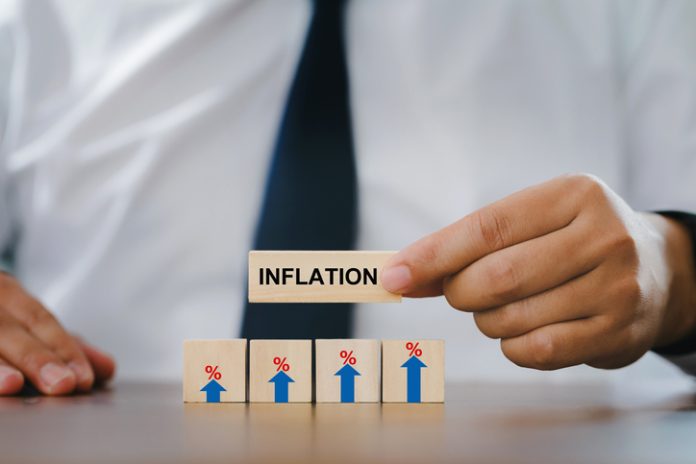
Businessman Hand holding a wooden block with the word inflation. and wood block with sign percent and arrow up symbol. financial growth, interest rate increase, inflation concept

By Dr. Jack Rasmus

The focus of the US media and economists for the past several months has been increasingly on inflation.  In recent weeks, however, US policymakers awoke as well to the realization that inflation is chronic, firmly embedded, and growing threat to the immediate future of the US economy.

A qualitative ‘threshold of awareness’ was reached this past week when the US central bank, the Federal Reserve, accelerated its pace of rate hikes by 75 basis points—purportedly to bring the rate of price hikes under control. Whether the Fed can succeed in taming inflation and do so without precipitating a recession remains to be seen but is highly unlikely. Taming inflation without provoking a recession is thus the central economic question for the remainder of 2022.

Clearly some think this is possible—i.e. that further rate hikes will moderate the pace of inflation without driving the real economy into recession and result in what is called a ‘soft landing’. Clearly the Fed and the Biden administration believe that will happen. But a growing chorus of even mainstream economists and bank research departments don’t think so.  Almost daily new forecasts by global banks and analysts appear indicating recession is more than 50-50 likely—and arriving sooner in late 2022 than in 2023.

This article concludes unequivocally that today’s Fed monetary policy of escalating interest rates is not capable of reducing inflation while avoiding recession—any more than similar Fed rate hikes in 1980-81 did. And this time rate hikes will not need to rise as high as in 1980-81 before they trip the economy into another bona fide recession.

As of June 2022 the Fed raised its benchmark federal funds interest rate to a high end range of 1.75%. It plans to double that at least by the end of 2022, to a 3.5% to 4% range. But the US economy is already nearly stagnant and signs are growing it is becoming even weaker.  As this writer has argued since the fall of 2021, a Fed rate to 4% or more will almost certainly mean a ‘hard landing’, i.e. recession.  Moreover, it will not reduce inflation that much either. Prices will not slow appreciably until the US is actually well into a recession.  That means a condition called stagflation, a contracting real economy amidst rising prices and an economic scenario not seen in the US since the late 1970s.  Stagflation has already arrived if one considers the almost flat US economy in the first half of 2022; and it will deepen once recession begins in the second half.

To understand why inflation won’t abate much in 2022, and why recession will occur sometime before the current year’s end, it is necessary first to understand the Anatomy of inflation (i.e. structure and evolution) that has emerged over the past year. That anatomy, or structure, of inflation shows its current causes are not responsive to Fed rate hikes in either the short or even intermediate term of the next twelve months.

It is necessary to understand why monetary policy in the form of Fed rate hikes will not dampen inflation much before recession occurs—as well as why those same rate hikes will have a greater effect on precipitating a recession long before the Fed can bring the inflation rate down to its long run historic target of only 2%.

The Anatomy of US Inflation: 2021-22

After rising moderately around 4% annual rate when the US economy first opened in the spring of 2021, it is important to note the pace of consumer prices remained virtually steady for the following four months throughout the summer of 2020, at around 5.5%.  (Bureau of Labor Statistics New Release, May 11, 2022, Chart 2). That pace began to rise steadily every month only after late August 2021.

Beginning last September 2021 US Inflation not only began accelerating but has since become embedded and chronic. Even US policy elites can no longer deny it. Earlier in 2022 Treasury Secretary Janet Yellen opined publicly that US inflation would be ‘short lived and temporary’. In June she then recanted and apologized for the inaccurate prediction.  And this past week admitted that inflation is now ‘locked in’ for the remainder of 2022.

What then are the reasons and evidence inflation has become permanent and chronic—at least until recession sets in?

There’s no doubt that Demand, due to the reopening of the US economy after the worst of Covid in March-April 2021 contributed to the emergence of inflation last spring-summer 2021. But excess Demand is not the primary explanation for it.  Demand for goods and services rose during April-May 2021 as workers returned to their jobs and wage incomes grew. However, the record shows after rising modestly in April-May 2021, consumer prices leveled off throughout the summer of 2021, June to August 2021, at just over 5%. It remained steady thereafter at that level for those months as the economy continued to re-open.

The surge in prices at a faster pace only began in the late summer, around August-September. That price escalation coincided with rising problems in Supply chains—both in the form of global imports to the US as well as domestic US supply issues associated with goods transport, warehousing, and skilled labor access. In short, as the US economy attempted to reopen global supply chains were still broken and, domestically, US Product and Labor markets were severely wounded by the impact of Covid events of March 2020 through March 2021.

Conservative politicians, business interests, and their wing of the mainstream media nonetheless claimed at the time—and mostly still maintain today—that it was the too generous, excess income support from the American Relief Plan (ARP) social safety net programs passed by Congress in March 2021, and their predecessor programs a year before, that was responsible for excess Demand in mid-2021 and thus the escalating inflation that followed after September of that year.

But even US government data don’t support that view. The ARP authorized only $800 billion spending in the entire next twelve months. The 3rd quarter—the first full quarter when ARP program spending hit the economy and when prices began their accelerations around August–saw probably no more than $200 billion from ARP programs entering the economy. The supplemental income checks had already been distributed and mostly spent in the 2nd quarter. What remained in the 3rd of any magnitude were supplemental unemployment benefits, modest rental assistance, and the child care subsidies for median and low income families introduced that July.  $200 billion injection was probably high as well. Certainly not all the $200 billion income injected was actually spent that quarter. (As economists admit, consumers’ marginal propensity to spend added income is always less than ‘one’—i.e. they don’t immediately spend it all).  $150 billion or so was probably actually spent. That $150 billion compares to a 3rd quarter overall GDP of more than $5 trillion!  There’s no way an economy that size could result in the price acceleration that began at that time from an injection of $150 billion on more than $5 trillion.

Moreover, $150 billion may be too high an estimate as well. Much of the ARP stimulus was cut off significantly by early September, the last month of the 3rd quarter: for example, supplemental unemployment benefits provided previously for 10 million workers was ended, along with rental assistance, the Payroll Protection Plan grants for small businesses, and other lesser injections.

In short, to the extent Demand contributed to the rise in prices in both the 2nd and 3rd quarters, that Demand effect is explainable far more by the continued reopening of the economy rather than attributable to the income support programs of the American Rescue Plan that amounted to no more than $100-$150 billion throughout the entire 3rd quarter when prices began to accelerate.  So much for arguments that workers were too flush with income from jobs they were returning to and the government over-generous ARP income programs! The data just don’t support the view it was Demand and government spending Demand in particular that was responsible for the onset of escalating prices last September 2021.

The more likely explanation behind escalating prices in late summer 2021 was global supply chain bottlenecks, especially involving goods imports from Asia and China in particular.  In August-September it was mostly goods prices driving inflation.  Consumer spending on services again was just emerging.  A problem with Supply chains was corporations around the world had shuttered their operations during the worst of Covid, allowing workers and suppliers to drift away. When the economy began to reopen in the summer of 2021, many of these workers and suppliers were not available. That was especially true with global container and other shipping companies. There just weren’t enough ships available to deliver goods from Asia to North America. What shipping was available was initially dedicated to transport between Asia countries first. In addition, USA west coast ports had a similar problem: the ports were short of traditional workers and transport.  Not only port workers but independent truckers that carried the freight from the Los Angeles port, for example, to inland central warehouses. And from those mega-warehouses to regional warehouses from which goods are then distributed to companies’ storage and stores. Like the trucker shortage, there was an insufficient return of workers to warehouses as well. A similar, somewhat lesser labor shortage problem existed with railway workers. In other words, domestic US supply chains were still broken—along with global supply.

The 2020 and 2021 US government fiscal stimulus programs were supposed to avoid the domestic supply chain (labor and transport) problems by providing US businesses with $625 billion in loans and grants with which to keep their workers employed during the Covid shutdowns of the economy. It was called the Payroll Protection Program, PPP. More than three fourths of the PPP handouts to businesses—virtually all the loans were converted to outright grants—were earmarked to be spent on subsidizing wages of employees. The rest on direct expenses of business, like utility costs, interest on loans, etc.  However, the record now shows this didn’t happen. There was no inspection to ensure how the $625 billion of grants was spent. Most of the businesses receiving PPP grants laid off their workers anyway. Thereafter, as the US economy tried to reopen the same businesses couldn’t find their laid off workers fast enough. Domestic supply chain problems were the consequence.

It is obvious that the escalation of US inflation that commenced around late August-September 2021 was associated with Supply chain issues—both global and domestic. It was not Demand. Probably three-fourths of the escalating prices at the time were Supply related; the remainder Demand—and that Demand more due to faster reopening of the economy than to ARP income programs which were actually being faded out by September 2021.

Overlaid on this scenario of mostly Supply driven inflation, combined with some Demand caused price escalation, was yet another important development that emerged as a major factor as the 3rd quarter 2021 ended: i.e. widespread price gouging by monopolistic US corporations with concentrated market power that enabled them to raise prices beyond normal Demand and Supply.

As inflation rose and the public was increasingly aware of it, corporations with monopolistic power (i.e. where four or five or fewer companies produced 80% or more of the product or service in the economy) manipulated and took advantage of that public awareness of rising inflation in order to raise their prices—even when their respective industry was not experiencing supply chain issues.

A good example is the US oil corporations that didn’t have a supply problem at all at the time and still don’t. US oil corps were capable then, as now, of raising their output of oil in the US (i.e. supply) by at least 2 million more barrels/day. They chose instead to leave that oil in the ground, not to expand production at US refineries, and refused to reopen many of the drilling wells they had capped during the worst of the preceding 2020-21.

In the months preceding the onset of Covid shutdowns in March 2021 US oil corps were producing more than 13 million barrels per day; by fall 2021 they were producing barely 11 million per day (and still are). Nevertheless, US oil corporations raised their prices faster than perhaps any other industry. By the fourth quarter 2021 energy prices were rising at 34.2% annual rate, according to the US GDP accounts (US Bureau of National Economics, NIPA Table 2.3.7).

With prices now surging after September 2021 the important new factor also driving prices was thus neither supply nor demand related. It was price manipulation by US corporations with market power to do so. And it was not just oil corporations, although they were responsible for more than half of the price index surge at the time—and still are.  Other food processing corporations, airlines, utilities, and so forth with monopolistic power did so as well.  This political (market power) cause, combined with Demand and Supply forces, after August resulted in yet a further surge of prices through the remainder of 2021.

Beginning in 2022 further forces also began to determine the US Anatomy of Inflation:

Commencing March 2022, added and overlaid onto 2021 inflation drivers was US and EU sanctions on Russia commodities, which were especially critical as the global economy was still in the process of trying to reopen and restore and heal Covid shattered global supply chains.

Russia supplies 20% to 30% of many key global commodities—including oil, gas and nuclear fuel processing in the energy sector. But also industrial metals commodities like nickel, palladium, aluminum and other resources required for auto, steel and other goods manufacturing in the US and EU. Also agricultural commodities like 30% of the world’s wheat; 20% of global corn production used in production of animal feed; 75% of critical vegetable oils like sunflowers; and 75% potash fertilizer—to name the more important.

Even before US/EU sanctions on these key Russian commodities began affecting actual supply, global financial commodities futures market speculators began driving up commodity inflation in anticipation of the sanctions eventually taking effect. Speculators were quickly followed by global shipping companies that jacked up their prices before actual sanctions. They were joined in turn by shipping insurance companies. All along the commodities supply chain, capitalists in sectors capable of exploiting the coming sanctions-driven shortages began manipulating prices in anticipation. Physical shortages from sanctions thereafter began to have a further impact late in 2nd quarter 2022 as war in Ukraine intensified and sanctions were implemented. The speculators, shippers and insurers thereafter added further price increases to the general sanctions effect.

When US Treasury Secretary, Yellen, voiced her prediction earlier in 2022 that inflation would be temporary she no doubt did so based on the erroneous assumptions that somehow the global and domestic supply chain problems of late summer 2021 would be resolved in 2022, and corporate price gouging that overlaid supply chain issues would also somehow abate. She clearly did not factor in to her inflation prediction the very significant effect of war and sanctions.

President Biden called the now further escalation of prices in spring 2022 as ‘Putin’s Inflation’. That claim might be laid on shortages of some agricultural products directly disrupted in Ukraine war zones, but can’t be laid on global energy prices which were virtually all from within Russia’s economy not Ukraine’s. Thus to the extent inflation is due to rising energy prices—which accounts for more than half the total price rise at the consumer level—it is more attributable to Biden’s sanctions and thus is ‘Biden’s Inflation’ rather than Putin’s.

By the 2nd quarter 2022 all the above combined forces driving inflation (i.e. moderate Demand, global & domestic broken Supply chains, widespread corporate price gouging, oil, energy & commodities prices) converged to produce an embedded, chronic, and continued rise of inflation. 

For the period for which latest prices are available, March-May, consumer prices (CPI Index) have been rising at a steady 8.5% rate while producer prices that eventually feed into consumer prices have been rising at an even faster rate of 10-11% for the three months.  Furthermore, pressure on producer prices (that feed into consumer prices) may accelerate even that 10-11% current producer price hike average. For example, the most recent Producer Price Index released for May shows the category of ‘Intermediate’ goods and services prices are rising even faster. Intermediate processed goods (e.g. steel) have been rising at a 21.6% annual rate over the past year, while intermediate unprocessed goods (e.g. natural gas) have risen at a 39.7% annual rate.

Supply chain and Demand forces of the past year, May 2021 through May 2022, will likely continue driving prices at similar rates through this summer 2022 and likely the rest of the year as well.  There appears no end in sight, for example, for the Ukraine war and the Sanctions on Russia which continue to tighten.  Price gouging in these commodities impacted by war and sanctions will certainly continue as will the general phenomenon of monopolistic corporations price gouging.  Commodity futures financial speculators will continue to speculate; shipping companies continue to manipulate price to their advantage; and insurers continue to hike their rates on bulk commodity shipping worldwide.

In addition, new forces are also emerging this summer 2022 that will contribute still further to chronic inflation throughout the rest of 2022 and possibly even further beyond.

One such new factor is rising Unit Labor Costs for businesses, which many will try to pass through to consumers this summer and beyond. Unit labor costs (ULCs) are determined by productivity change for businesses and/or wages. If wages rise, ULCs rise; similarly if productivity falls, ULCs rise.  While wages appear to be moderately rising in nominal terms, productivity is falling precipitously. The most recent data on productivity trends in the US indicate productivity collapsing at the fastest rate since data was first gathered in 1947. That’s because business investment is stalling in the face of growing economic uncertainty about inflation as well as likely recession. Wage rise contribution to rising ULCs is on average modest, as Fed chair Jerome Powell has admitted. Wage pressures are mostly skewed to the high end of the labor force where highly skilled professionals are ‘job hopping’ to realize wage income gains of 18% on average; meanwhile, low paid service workers’ wages are also rising some as many have refused to return to work at the US minimum wage of only $7.25/hr which hasn’t changed since 2009. Service businesses have had to offer more. But the great middle of the US labor force is not experiencing wage gains to any significant extent. Thus the ‘average’ wage hikes, as moderate as they are, do not account for the rising ULCs which businesses will soon, if not already, begin to ‘pass on’ to consumers in higher prices for the remainder of 2022.  Treasury Secretary Yellen herself now admits inflation will continue high throughout 2022—no doubt in part reflecting the new forces adding to inflation pressure.

Another emerging factor of growing importance to the continuation of inflation trends throughout 2022 is the now emerging ‘inflationary expectations’ effect. Cited by Fed chair, Jerome Powell, in his most recent press conference following the Fed’s latest interest rate announcement, Powell referred to the recent University of Michigan consumer survey showing inflationary expectations now definitely emerging as well.

As inflation continues to rise, inflationary expectations mean consumers will purchase early, or even items they had not planned to buy, in order to avoid future price hikes. That means another Demand force that adds to the general anatomy of inflation, just as falling productivity and higher ULCs represent an additional Supply force contributing to future price hikes.

In short, now entering the mix of causes in 2022 are inflationary expectations, falling productivity driving up ULCs and cost pass-through to consumers, and the growing pressures on commodity inflation due to the Ukraine war and sanctions on Russia. 

When all these emerging 2022 factors are added to the 2021 economy reopening and Supply chain causes of inflation—as well as the continuing corporate price gouging—the broader picture that appears reveals multiple causes of inflation—many of which mutually feed back on the other; some political, some unrelated to market supply or demand, and none of which appear to be moderating significantly. In fact, corporate price gouging, manipulation of commodities markets by speculators, Ukraine war, and sanctions on Russia all represent contributions to inflation that may well accelerate over the next six months.

Stagflation May Have Already Arrived

Stagflation is generally defined as inflation amidst stagnate growth of the real economy. That is already upon us in its first phase:  US GDP for the 1st quarter of 2022 recorded a decline of          -1.5% while the Atlanta Federal Reserve bank’s ‘shadow’ GDP estimates zero GDP (0.0%) growth for the current April-June 2nd quarter!  Should the Atlanta Fed’s forecast prove accurate, that’s stagnation at best. And if the 2nd quarter actually contracts, then it represents a yet deeper phase of Stagflation.

Just as mainstream economists and media debated for months whether current inflation was chronic or temporary, the same pundits now debate whether stagflation will soon occur when in fact it’s actually already arrived. (see Larry Summers’ latest pontification to the business media where he warns of stagflation around the corner when it’s already turned it).

The next phase of stagflation coming late 2022 and early 2023 will reflect the contraction of the real economy—i.e. a recession. GDP won’t simply stagnate with no growth, but decline. Indeed, recession is already damn close if we are to believe the Atlanta Fed’s 2nd quarter GDP forecast and the various early economic indicators now appearing. Stagflation may already be here, as the 1st quarter US GDP -1.5% contraction is followed by another contraction—not just zero growth—in the current 2nd quarter. Two consecutive quarters of contraction define what’s called a ‘technical recession’. Actual definition of a recession is left to the National Bureau of Economic Analysis, NBER, economists to call. They always wait months after the fact to make their call. But ‘technical recessions’ almost always result in NBER declarations subsequently of actual recession. And the US economy is clearly on the cusp of a technical recession at minimum.

Biden’s Empty Inflation Solutions

Biden’s various solutions to date are more public relations events designed to make it appear something is being done instead of actions that directly address the problem of embedded and chronic US inflation.

Biden’s proposed solutions include getting US oil corporations and other global producers of oil to raise their output; somehow convincing countries who agree with US sanctions in Russia to enforce a ‘cap’ on the price of oil worldwide; reducing tariffs on imports from China to the US; offsetting the price of energy productions for US consumers by lowering the price of other consumer goods; increasing competition among US monopolistic corporations by subsidizing new competitors to enter their industries; introducing a federal gas tax suspension.

Despite Biden’s railing against the oil companies, shipping companies, and other obvious price gougers, it’s been all talk and no action. All his proposals have not been implemented to date. They’ve been either just ideas raised with no actual executive or legislative proposals. Or they’ve already been rejected by Congress. Or, even if implemented, will be ‘gamed’ and absorbed by corporations with little net impact on consumer prices. Or will produce insufficient additional global output of oil, gas, and energy products to dampen energy price escalation much.

Biden’s strategy has been to ‘talk the talk’ without the walk, as the saying goes.

The only actual solution the administration has quietly agreed upon, but dares not admit publicly, is to have the Fed precipitate a recession by means of its record level of rapid interest rate hikes over this summer 2022 now in progress.  And as they say, ‘that train has left the station’. It’s a done deal. Biden’s ‘solution’ is to have the Fed precipitate a recession.

Enter the Federal Reserve 

The Fed itself has already decided on recession! Moreover, it’s a policy template that’s been employed before.

The origins of the coming recession appear very much like the 1981-82 recession. At that time the Fed also precipitated a recession by aggressively hiking interest rates with the objective of ‘Demand destruction’ as it is called. In other words, then as now, the strategy was to make households’ and workers’ pay by destroying wage incomes by means of layoffs, for what was essentially at the time a Supply caused inflation associated with rising global oil access destruction by OPEC and middle east oil producers.

At 75 basis points Fed rates are already rising at a pace not seen since 1994. !981-82 rate hikes were even more aggressive. However, as this writer has argued, the global economy is more fragile and interconnected today than it was in 1980-81 when the Fed raised rates to 15% and more.  Today’s global capitalist economy won’t sustain rate hikes even a third of that 15% before contracting sharply.

It is more likely than not that the Fed will continue raising interest rates at the 75 basis points when it next meets in July, and possibly the same in the subsequent meeting. At 4% for its benchmark federal funds rate (not at 1.75%) the economic damn will crack. It won’t even get to the one-third of 1982 level, the 5%.

Why the economy will slide into recession well before the 5% rate level was discussed by this writer in 2017 in the book, ‘Central Bankers at the End of Their Ropes: Monetary Policy and the Coming Depression’, Clarity Press.

In the sequel to this essay, why the US real economy is quite fragile today is addressed including most recent evidence of a weakening US real economy. Also addressed is why Fed federal funds rate increases to 4% or more will precipitate a serious US recession sooner rather than later, and, not least, why Fed rate hikes of that magnitude will likely have severe negative impacts on financial asset markets as well, provoking serious liquidity and even insolvency crises in the global capitalist financial system.

Should financial asset contraction occur along with a contraction of the real economy, then the 2022 recession will almost certainly deepen in 2023. And in that case the economic crisis will appear more like 2008-10 as well as 1981-82. Or perhaps a merging of the two recession dynamics into one.

Fintech Regulation and Trends with Israel Rosenthal

Financial-Regulation

Fintech expanded in popularity and investments in many parts of the world in 2021, with its breadth expanding well beyond its initial study. As the industry approaches 2022, this broadening breadth, together with the maturation of a variety of fintech market segments, more investment in less developed areas, and rising business lobbying, is projected to keep investment high.

Financial software has transformed the way individuals pay for products and services in the last several years. One of these developments, digital wallet tech, has become especially pervasive, with mobile payments like our app MuchBetter. 

Cashless payment innovation has made it simple to buy things without having to contend with the inconvenience of withdrawing money. Contactless payment devices are becoming more and more popular, so we had a conversation with the CEO of one of the biggest platforms for digital payments.

Let’s hear about the fintech regulation and trends when using the MuchBetter app with Israel Rosenthal the CEO of MuchBetter.

What kind of technologies does Muchbetter deal with? and will there be any changes in the future?

“We learned early in our business that technology must shift to support innovation, and the constant innovation in payments has meant that our tech teams are continually optimising and evolving our tech stack and systems. In addition to high stability and low latency tech performance, our teams are in a constant innovation cycle so that we stay ahead of the curve with systems and skills.” Said Israel.

How does your app reduce payment processing fees?

“MuchBetter has developed pricing models that keep our commercials sustainable for our business clients, and competitive for our consumer users. We are transparent with fees and have a dedicated country-by-country fees section on our website.”

Are you designing anymore contactless devices in online digital payment industry?

“We say here that with us Contactless has got MuchBetter. In 2022, we launched the world-first all-in-one season ticket stadium access and contactless device in collaboration with Spanish football club, Real Betis Balompie. This new device is perfect for fans for fast access to the stadium, plus payments for everyday spending, and to wear the club’s colours with pride. We continue to develop new contactless wearables including key fobs, jewellery, clothing (Dress Code like a shirt), and even false fingernails that are a contactless payments device.” Israel told us.

As the tech is getting more innovative over the years so are we! Download our app today and create a free account!

9 Best SEO Practices for Forex Brokers

SEO

If you are in the Forex industry, then you know that search engine optimization (SEO) is key to your success. To rank high in search results, you need to employ the latest and greatest SEO tactics. In this blog post, we will discuss some of the best practices for Forex SEO. We will cover topics such as website speed, mobile friendliness, content quality, blog updates, and more!

SEO is a very strong instrument, and it’s especially important for businesses dealing in the foreign exchange niche. They’re called to compete in a fiercely competitive market that’s changing rapidly, with stringent regulations, economic challenges, and numerous obstacles to gain new consumers. Improving the rankings of your forex website on search engine result pages and increasing the visibility of your company before potential clients look online will be beneficial to you.

Here’s a quick rundown of the best strategies for your forex firm’s SEO efforts, which, when properly implemented, can lead to success and keep you ahead of the pack.

1. Link Building

Link building is an essential aspect of SEO. You need to make sure that you have a strong link profile. That means having a lot of high-quality links pointing to your site. There are many ways to build links, and you need to make sure that you are using all of them. That includes guest blogging, directory submission, and social media. You can check this case study to see how a forex SEO company increased organic traffic to the website with the help of links. 

2. Making your site extra fast

No matter what business you’re in, website speed is important for SEO. But it’s especially critical for forex brokers, who need to ensure that their sites can handle the large amounts of traffic that they are likely to get.

A fast website will not only improve your SEO ranking, but it will also improve your user experience. And a good user experience is essential for forex brokers, who need to ensure that their clients can trade without any problems.

3. Aiming for maximum mobile friendliness

In today’s world, it’s more essential than ever to have a mobile-friendly website. More and more people are using their phones and tablets to surf the web, and if your site is not optimized for mobile, you are missing out on a lot of potential traffic.

Mobile friendliness is also significant for SEO. Google has stated that they are using it as a ranking factor, so if your site is not mobile-friendly, you are likely to be penalized in the search results.

4. Focusing on High-Quality Content Provision

One of the crucial things for any SEO campaign is to focus on quality content. That means creating informative and well-written articles, blog posts, and web pages. It also means making sure that your content is relevant to your target audience.

If you want to rank high in the search results, you need to make sure that you are providing the quality content that people are looking for.

5. Updating Your Blog

Another indispensable thing to do for your SEO campaign is to keep your blog updated. That means posting new articles and blog posts regularly. Google loves fresh content, and if you can provide it, you are likely to see a significant boost in your SEO ranking. You can also use this content to build links and promote it among the target audience. 

Audience

6. Prepare for Voice Search

Voice search is a growing trend, and it’s one that you need to be prepared for. More and more people are using voice assistants such as Siri and Alexa to perform web searches. And if your site is not optimized for voice search, you are likely to lose out on a lot of traffic.

To prepare for voice search, you need to make sure that your content is easy to understand and that your site is easy to navigate. You also need to make sure that your site is mobile-friendly, as most voice searches are performed on mobile devices.

7. Establish a Strong Social Media Presence

Social media is another important aspect of SEO. If you want to rank high in the search results, you need to make sure that you have a strong social media presence. That means having an active Twitter account and Facebook page.

It also means posting regularly and engaging with your audience. If you can do all of these things, you are likely to see a significant boost in your SEO ranking.

8. Don’t forget Bing and Yahoo

While Google is the most popular search engine, it’s not the only one. There are also Bing and Yahoo, which have a significant number of users. For appearing in the TOP in all the major search engines, you need to make sure that you are optimizing your site for them all.

9. Create a Memorable User Experience

Last but not least, you need to make sure that you are creating a memorable user experience. That means making sure that your site is easy to use and that it provides the information that people are looking for.


If you can do all of these things, you are likely to see a significant boost in SEO ranking. This will help you attract more traffic and convert more visitors into customers.

2022 Ultimate Review Guide for Credit Saint

Credit Saint

Credit Saint has been in existence since 2004, providing credit repair services to customers. It is one of the oldest credit repair companies in the industry today. Credit Saint is committed to assisting you in improving your credit score and regaining financial health by offering services to those with bad credit.

Credit Saint will also show you how to restore your finances from scratch without resorting to bankruptcy or predatory lenders. Is Credit Saint, however, the perfect fit for you? Below is the 2022 ultimate review guide for Credit Saint to help you access if it is the firm for you.

How The Credit Saint Process Works

Credit Saint is a lending marketplace where you may apply for loans from different lenders using your credit score and report. The Credit Saint process has two basic steps:

1. Application & Approval Process

This process includes completing an online application and submitting personal information (name, address, etc.) as well as any supporting paperwork needed by the lender (such as proof of income). If your application meets the criteria, Credit Saint is notified, and you’ll receive an email confirming that you’ve been approved for the loan amount requested, subject to their terms and conditions.

The email also includes instructions on how much money will be deposited into your bank account once all required documents have been received from both parties involved in this exchange process. The process could take anywhere from 24 hours to 7 days, depending on whether or not all required paperwork has been received within 14 days of sending out the initial contact notification via email.

2. Loan Payment Repayment Cycle

Once the loan has been approved, it’s time to repay it! Credit Saint plays an important role in ensuring that everything runs as smoothly as possible during repayment cycles without any major issues arising.

For example, you’ll get an email (depending on the terms and conditions and when payment is due) alerting you that payback is due shortly. The payments can be made automatically by credit card or ACH transfer from your bank account and, therefore, prevents you from late fees charges.

Pricing And Guarantee

According to Credit Saint, the pricing of their services is based on your financial situation. Although the price quoted for one client may vary for another, among the recommendable things about the company’s fees is that there are no hidden fees.

Additionally, it is important to note that Credit Saint is one of the few companies that doesn’t require you to sign a contract for its services and also provides a 90-day satisfaction guarantee, such that after the 90 days if you are not satisfied with the results, you can claim and get a refund.

Client Reviews for Credit Saint

There are some comments on user opinions online about Credit Saint Reviews. Many of these positive reviews have been written by people who have used the service and found it helpful in their situation.

There is always going to be a mixed bag when it comes to customers’ feedback. Even with the positive comments, there are also some negative comments, with the most common complaints being that the company takes too long to process applications, or that not enough information is on the website or online platforms, and they’re not transparent enough with the fees and costs.

However, according to some users, there is room for improvement because there isn’t much more than what already exists with Credit Saint. Clients are disappointed because there aren’t enough tools available compared with similar platforms that focus specifically on one type of situation (like bankruptcy). Nevertheless, the overall opinion seems positive despite these minor issues.

The Better Business Bureau’s Review of Credit Saint

Better Business Bureau allows you to look up reviews online, find out about claims against a company and get general ratings about a company. The BBB rates Credit Saint at 8 out of 10, which is an A+ rating as the company has had very few negative complaints over the last few years.

However, BBB recommends that you do your due diligence before doing business with Credit Saint and warns that scams can occur, especially from scammers posing to be employees from Credit Saint.

Credit Saint’s Services

Credit Saint offers a number of services that can help you improve your credit score. It is worth noting these services to help you access if Credit Saint is right for you. These services include:

  • Credit Repair Services

If you have negative information, such as late payments, this will affect your credit score and will not look good on your overall credit report. In such cases, Credit Saint helps you remove inaccurate and outdated information from your financial reports, rebuilding your financial reputation.

  • Credit Monitoring

Monitoring services allow you to see changes in your credit score at any time of the day or week through online account access on the website or mobile app. You will receive notifications when there’s been an update to your account data within 24 hours after it occurs; this way, you’ll always be aware of any changes occurring.

  • Debt Settlement

If you’re struggling with debt but don’t want to file for bankruptcy, then debt settlement is an option for reducing how much money needs to be paid back over time. Debt settlement and debt consolidation allow consumers to negotiate payment plans with creditors to reduce interest rates and monthly payments.

Settling allows clients who meet certain requirements set forth by each company’s terms & conditions agreement to ensure satisfaction while avoiding taking drastic measures like losing property rights due to foreclosure or evictions.

  • Credit Education

Credit Saint provides educational materials, including guides on building a strong foundation for financial health by sharing knowledge on personal finance and debt management techniques. Truly, Credit Saint offers much more than just credit repair services—it also provides identity theft protection, budgeting tools, and more.

What’s The Catch

It’s important to note that Credit Saint uses a traditional credit repair process, which means you will be required to gather your financial documents and be comfortable enough to send them in for review before any work can begin. While this may seem like a hassle, it ensures that the company has everything they need to start working.

Take Away

Credit Saint is worth your consideration if you’re looking for a credit repair service to help you improve your FICO score. With an A+ rating from the BBB, a money-back guarantee, and favorable prices that can be paid in installments, it’s no surprise why so many people turn to Credit Saint for their credit repair needs.

Top 6 Mistakes in Kitchen Design And How to Fix Them

Kitchen

When you start designing your kitchen, there are multiple very important things to have in mind. Accidentally choosing the wrong fixtures won’t affect the usability of your kitchen, but if the workflow is wrong, making your dinner can easily turn into a nightmare. Here are some mistakes that many DIY designers make in their kitchens and how to fix them without a lot of hassle.

1. Not thinking about circulation

Giving yourself and your guests too little room to walk around through your kitchen is the worst thing you can do if you care about superior interior design. Proper circulation in the kitchen, no matter how large or small it is, should be a top concern in your design.

Having too many people in the kitchen at once may make the space seem claustrophobic. A small kitchen and poor circulation design may also limit how many people can spend time in the kitchen at once. Spacing between counters should be no less than 120cm for proper circulation. If the kitchen is tiny, you should provide at least a meter of room.

2. Having horrible workflow

Though it may sound similar, kitchen circulation and workflow aren’t the same things. Having a well-oiled kitchen machine is critical. A lack of a kitchen island might cause you to rush back and forth between the various portions of your kitchen whenever you cook, wash, or prep.

It is important to think about how you utilize your kitchen in all the design phases. Add some storage for spices and oils near the cooking area and put cutlery and dishes near the dishwasher in order to make the kitchen more efficient. In addition to large drawers and custom inserts, you should strive to make your kitchen the most functional possible.

3. Not measuring the worktop heights

Having the worktops of a kitchen installed at the incorrect height might compromise the overall functionality of the kitchen. How do you know what the ideal height of your kitchen worktops is? A kitchen countertop may be anywhere from 89 to 94 centimeters in height on average. This is the ideal height for doing everyday culinary duties for most people. Of course, if your household is smaller than average in height, or even taller, make sure to install properly measured worktops for your best convenience.

Countertop thicknesses and plinth heights dictate the ideal height of a worktop, so there is no one-size-fits-all answer. Both of these elements are subject to change based on your provider or personal choice. Plus, if the height of your worktop is ideal, your gas burner will be much safer to use. If your cooking equipment is at an inappropriate height you risk burning yourself!

4. Having too deep cabinets

This is one of the most common errors that people make – having cabinets that are too deep. Even if having a lot of space is a blessing, it’s possible that the appliances towards the rear may go unused for some time. These deep cabinets simply can’t be used to their full potential. 

If you want to have even space for displaying items, install roll-out trays in your base cabinets. You may easily locate things that have been lost at the back of the cabinet with this simple solution.

5. Inadequate lighting

The lighting in the kitchen has a huge influence on the space and how it’s used. Even if you create the most beautiful kitchen in the world, if the lighting isn’t enough, your customer won’t be able to accomplish their jobs as easily as they should.

The kitchen has to be well-lit at all times. Above the kitchen island, work lighting pendant lights are an excellent accent, they can also look really cool! Especially if you make them a nice, fun color! Color switching lights are also an option. Under-cabinet lighting and recessed lighting may also be used to enhance visibility. As a general rule, going for warm lighting rather than fluorescent lighting is preferable since it is less harsh.

6. Forgetting about vertical space

Not utilizing vertical space in a tiny kitchen is another kitchen design faux pas that may be avoided with ease. If you don’t use the vertical space available to you, you’re creating an unusable kitchen.

You can make more space by installing open shelves or overhead cabinets. Instead of leaving unused space at the top of cupboards and shelves, make sure they extend all the way to the ceiling to make the space even more inviting. Open shelves and closed cabinets may also be used in conjunction to give your kitchen a more dynamic appearance.

Designing your kitchen can be very hard, but it’s very important to be extremely thoughtful when at it since there are so many tiny mistakes you can unknowingly make which can affect the design’s functionality. With our list in mind, we hope you’ll be able to make the most of your kitchen. After all, this is the room in which you’ll be spending a considerable amount of time every day!


XBO – A New Way of Crypto Trading is Coming

crypto trading

Cryptocurrencies have brought significant changes in financial markets, including our way of trading.

Due to the sheer number of crypto exchanges, choosing the best can be a daunting task.

However, soon-to-be-launched crypto exchange XBO.com, is set to change how we go about trading and enhance our experience.  We were fortunate to get a brief interview with a company representative, who gave us an insider perspective on the services and features XBO is planning to implement, in various stages following its release. 

So, if you are still unaware of XBO.com, read this article till the end to learn more about the services it plans to offer. We will also discuss how this exchange differentiates itself from others.

What Is XBO?

XBO is a new-generation crypto exchange.

The exchange will launch with close to 100 cryptocurrencies, which will help investors diversify their portfolios.

XBO promises to offer an enhanced trading experience, competitive fees, and advanced security features.

What will be the Top Features Offered by XBO?

Intuitive User-Interface:

The user interface of a platform is the first point of contact for every trader.

XBO claims to offer a simple, easy-to-use UI.

It will provide quick access to critical information, such as your portfolio holdings, price charts, and recent activity, as well as fast access to trading features, tools, and account settings.

XBO’s intuitive user interface makes it an ideal platform for those new to trading.

Wide Range of Supported Cryptocurrencies:

Soon after the release of the platform, users will be able to buy, sell, and exchange close to 100 prominent as well as lesser-known coins.

Here’s are some popular cryptocurrencies and stable coins that will be available on XBO.com:

  • Bitcoin (BTC)
  • Ethereum (ETH)
  • Solana (SOL)
  • Cardano (ADA)
  • Dogecoin (DOGE)
  • USD Coin (USDC)
  • Uniswap (UNI)

Trading Experience:

XBO promises to deliver an advanced and intuitive trading experience through web-based platforms and mobile apps.

The platform’s straightforward buy and sell options, and extensive help page, will appeal to beginners.

The exchange will also feature an advanced tool set, including extensive charting tools, and several order types, allowing user to rapidly enter and exit positions.

A highly functional and user-friendly mobile app will allow users to buy, trade, and manage their cryptocurrencies on the go.

The app will be available on Google Play Store and Apple’s App Store.

Competitive and Low Fee Structure:

According to the exchange, the platform will offer a competitive and transparent flat-fee structure.

Outstanding Customer Support:

Good customer support is an essential element for the success of any crypto exchange.

XBO customers will be able to access the support team during regular business hours, and 24/7 for onboarding purposes.

The platform will offer customer support services through a variety of channels, including phone, e-mail, and live chat options.

Educational Resources:

XBO is developing educational resources for beginners and experienced crypto traders, including interactive videos, e-books, VODs, and webinars.

Crypto Staking:

XBO promises to offer high interest on crypto staking, making it ideal for traders to earn a passive income.

While crypto staking is available for proof of staking (PoS) cryptocurrencies, XBO rewards are comparatively higher than that of other crypto exchanges.

Attractive Bonuses:

The XBO platform stands out due to its offering of bonuses and rewards. The exchange already offers attractive bonuses on sign-up.

The exchange is introducing loyalty programs through which users can earn rewards in the form of crypto tokens.

Hassle-free Deposits and Withdrawals:

The platform claims to offer hassle-free deposits and withdrawals, via debit and credit cards, as well as bank transfers.

How Safe Is XBO?

Cold Storage Security:

The platform claims it will hold its clients’ cash and deposits in a geographically distributed cold storage facility.  The reserves will be kept at full capacity to enable safe and timely withdrawals.

Data Security for Users:

The exchange is planning to encrypt all sensitive information pertaining to the exchange, such as contact details and personal data, as well as held currencies.

To ensure the confidentiality of personal information, a team of security specialists will be conducting vulnerability testing on a regular basis.

The company claims to invest greatly in cybersecurity to prevent security breaches and hacks.

XBO uses AWS, Cloudflare, high-end firewalls, a variety of authentication and verification instruments, and other advanced security services. The platform complies with SSL protocols, SOC 2 certification, and CCSS level 3 security standards. 

Other security features claimed by XBO include IP address and device whitelisting, cold storage, and two-factor authentication.

While no exchange can completely guarantee against security breaches, XBO’s extensive security mechanisms are impressive.

The Bottom Line:

XBO is a new-age crypto exchange that will soon make an entry into the crypto industry.  It has already been creating quite a stir in the crypto community before its launch.

After going through all the features of XBO, we are confident that this crypto exchange is going to prove extremely popular, especially among entry-level traders.

EDITOR'S PICK OF THE WEEK

CFO's new mandate. CFO explaining the presentation

The Performance and Transformation Orchestrator: The CFO’s New Mandate in the Age of AI

By Terence Tse CFOs are evolving into AI-driven transformation orchestrators, balancing finance, technology, and strategy while upskilling teams, managing risks, and driving measurable business value. A key insight from this year’s AI for CFOs event, organized...

WISE DECISION MAKER GUIDE

POWER INFLUENCERS

Emerging Trends

The Future of Global Trade