Home Blog Page 611

What Investors Should Look For In A Forex Trading Platform

With a daily turnover of more than USD$5 trillion, the foreign exchange market (Forex or FX) is one of the world’s most traded and liquid marketing. As the world’s largest financial market, foreign exchange marketing now has trading platforms and brokers available 24/7, which makes FX the most accessible market.  

Unfortunately, Forex’s accessibility can be considered a double-edged sword. With plenty of online platforms, investors––both beginners and experienced ones––are finding it difficult to choose a platform that can suit their trading styles, budget, or needs. Fortunately, with the right tips, you can sieve any illegitimate forex trading platform, giving you a much shorter list.  

To help you out, here’s how you can choose a Forex broker that’ll complement your needs and preferences as an investor.

Regulatory compliance

Regulatory compliance

Before anything else, you want to ensure that the Forex trading platform is reputable and credible. Regulatory compliance is one of the best ways to gauge the platform’s reputation and credibility. In Australia, for instance, a trusted Forex broker is always a member of the Australian Securities and Investment Commission (ASIC). Keep in mind that each country has its own regulatory body.  

That said, even if the platform has a captivating and flashy website, it doesn’t mean they’re legitimate. If a trading platform has indeed complied with any regulatory bodies, it’ll always emphasize its credentials, such as the fact that they’re under Commodity Futures Trading Commission (CFTC) regulation, on its “About Us” page. FX for corporates in particular will always have these readily available on site.

Ideally, as you’ll be depositing your hard-earned money on the platform, you only want to deal with platforms that are duly regulated, such as the ones offered by Fusion Markets––specifically Metatrader 4.

Spreads and commissions

Now that you can guarantee the platform’s reputation and credibility, the next thing to consider when looking for a Forex trading platform is the cost of their services. The cost should include how the platform sets the commissions (a fee determined by the broker) and spreads (refers to the difference between the bid and ask prices).  

Furthermore, since spreads vary from one broker to another, you want to compare the exact rates before fully committing to a specific platform. At best, you want to find a low-spread platform, so you’ll pay less whenever you make a trade. 

Commissions, too, vary from one platform to another. But this type of cost is cheaper than spreads. In fact, some platforms even offer commission-free trading. Hence, consider the rules set by a platform concerning commissions so you can save a few bucks.

Payment methods

Once you’ve assessed the costs (spreads and commissions), the next step is determining a platform’s payment methods to its investors. Typically, a Forex trading platform will allow its investors to withdraw and deposit funds via their credit or debit card, bank transfer, or platforms that offer online payment methods. 

You want to choose a platform that has a suitable payment method for you. For instance, the platform should accept this payment method if you’re going to withdraw and deposit funds through your credit or debit card.  

Demo accounts 
Demo accounts 

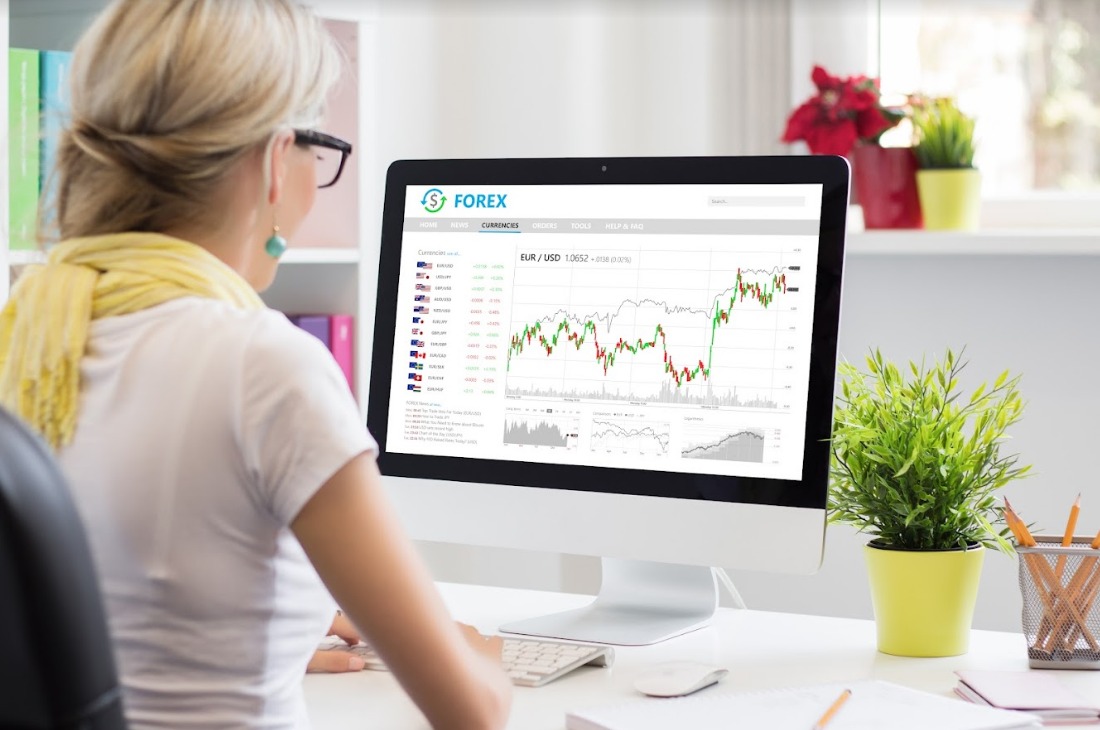
Most, if not all, brokers offer access to a demo account, which allows investors to open trades using virtual funds. Even if demo accounts expire around a month or so, if you’ve opened an account to a Forex trading platform, there’s a huge chance that you’ll still have the option to use a demo account. 

A demo account is helpful for investors as they can test the platform’s pricing, products, and service. Once you get the hang of Forex trading, you can even use a demo account to test new trading strategies, helping you save money. 

Multiple markets to trade

markets to trade

Successful investors always urge other investors to diversify their portfolios. Hence, even if you focus on currencies, a platform that offers a variety of markets to trade will give you convenience when you decide to explore other markets. This way, whenever you find a trading opportunity in cryptocurrencies, oil, or the stock market, you can easily invest in the right market on a single platform. 

Aside from currencies, it’s best if the platform offers the following markets to trade in: 

  • Share CFD (Contract for Difference) 
  • Cryptocurrency CFD
  • Commodities, like oil, gold, silver, etc.
  • Stock indices

Bottom line

The right trading platform will significantly affect your Forex trading journey. For instance, having confidence in your trading platform will allow you to study other Forex strategies, as you’ll no longer worry about the safety of your investment. 

Thankfully, the factors above will allow investors like you to choose the right Forex trading platform. All that’s left now is your due diligence to allocate some time for research.

References

  1. Kathy Lien, “The Foreign Exchange Interbank Market,” Investopedia, January 29, 2022, www.investopedia.com/articles/forex/06/interbank.asp
  2. Babypips, “Forex Regulatory Organizations,” Babypips, n.d., https://www.babypips.com/tools/forex-regulation
  3. Jitanchandra Solanki, “Top Financial Markets To Trade In 2022,” Admiral Markets, July 25, 2022, ttps://admiralmarkets.com/education/articles/general-trading/financial-markets-traders-should-know-2

The Reasons for Hiring Freelancers: A Guide for Businesses

As of 2020, about 59 million people in the US are doing freelance work.

There’s a reason freelancers are trending right now. That’s because they are helpful! Hiring freelancers can solve all your business problems, give your company new skills, and save you money.

But if you’ve never worked with freelancers or don’t know much about them, you might be hesitant to hire them. There are a few reasons for hiring freelancers, but we created this guide to help you learn about them firsthand.

Easy Access to Specialized Talent

When businesses hire full-time employees, they are limited to the talent within their company or network. However, the benefits of freelancers offer businesses access to a global talent pool.

It means companies can find the right person with the best business efficiency for a specific job. For example, if you are looking for customer service freelancers, you can specifically hire specialists for this kind of work.

Save Money in Hiring Freelancers

When businesses hire full-time employees, they must pay their salaries, benefits, and other associated costs. However, companies that hire freelancers only have to pay for the completed work. It can help businesses save money, especially if they only need someone for a short-term project.

Access to a Much Larger Talent Pool

When businesses only hire full-time employees, they are limited to the available talent within their specific geographical area. However, companies can access a global talent pool when they hire freelancers for businesses. It means businesses can find the best person for the job, regardless of location.

Better Work Quality

The best freelancers are usually more experienced and skilled than regular employees. They are more motivated to do an excellent job since their salary depends on the project. 

Freelancers can also be more flexible with their schedules. They often work faster than employees.

Freelancers are usually more flexible than in-house staff. They are willing to work around your schedule to get the job done. It can be a huge advantage when you need something done efficiently.

Faster Job Completion

When a company is up against a tight deadline, working with freelancers who can complete the necessary work can be a lifesaver. Additionally, businesses struggling to keep up with high demand may find that hiring freelancers allows them to scale their operations more quickly and meet customer demands on time. In these situations, the ability to complete a project promptly can be a significant selling point for freelancers.

Flexible Schedule

It can benefit businesses that need projects completed outside of regular business hours. The freelancer can also work around vacations or other planned time off that companies may have.

Company Risk Reduction

When businesses hire employees, they are taking on more risk than when they hire freelancers. Employees are more likely to sue companies for wrongful termination and other claims.

They are also more likely to access company secrets and sensitive information. Hiring freelancers can help businesses avoid these risks.

Improve Your Workforce by Hiring Freelancers

By hiring freelancers, businesses can save money, avoid the hassle of traditional hiring processes, and get high-quality work. If you’re considering hiring freelancers, check out our complete guide.

Please check out our site for more related articles!

The Leading Gold Mining Company in the Red Lake District in Ontario, Canada

During this period of uncertainty for global markets, investors looking for a reliable gold mining company with a strong track record of strategic investment need to look to companies that have built a portfolio of high-value properties. These companies often have multiple properties that span thousands of hectares and may create land packages that represent a majority portion of a highly prospective area.

One company in the Red Lake Mining District has been doing that and has put together a land position that was just extended by nearly 10,000 hectares. There are several world-class mining companies building property portfolios in the Red Lake Mining District, and unlocking the potential for high-grade discoveries, like Trillium Gold Mines (TSXV:TGM), the leading company in the District and has a dominant land package that was consolidated further with the acquisition of the Panama Lake Property.

The property is located approximately 80km from, and on the same structural trend as Kinross Gold’s LP Fault Zone and effectively extends the company’s dominant contiguous foothold along the Confederation belt by 9,882 hectares. Trillium Gold’s total land package now consists of 58,400 hectares.

Kinross Gold

Kinross Gold acquired the Dixie Deposit and Great Bear Resources in December 2021, and has said it intends to include a mineral resource estimate in its 2022 year-end results. The Trillium Gold property package is bordered by the Red Lake and LP Fault Structures, making it potentially even more prospective than the Dixie Deposit.

One of the major advantages of having the dominant land package in any area is the sheer probability of making a discovery. With a large enough land package, the math starts to work in your favour and the chances of making a major gold discovery go up exponentially. Having the right area and the biggest piece of land are two of the keys for successful strategic investment in the mining industry that investors are looking for right now.

The Prolific Red Lake

When an area becomes the focus of attention for major miners, it is often an indication that the area has potential for large discoveries. The Red Lake Mining District has been the site of some of Canada’s major mines and deposits, including Goldcorp’s Red Lake Mine, which was one of the biggest gold mines in Canada and the world.

Through 2020, the Red Lake Mining District has produced over 26 million ounces of gold. The investment by major companies such as Goldcorp, Kinross, and more is a vote of confidence in the area and its potential for future discoveries. It also means that shared infrastructure, such as roads and power lines, can be leveraged to drive down costs.

The Red Lake Mining District is an attractive destination for mining companies because it offers a number of advantages. These include its proximity to existing infrastructure, a skilled national workforce, and the fact that it is located in a politically stable jurisdiction. The area also has a long history of mining, which has created a well-established supply chain.

The historical production at the Red Lake Mine is a testament to the potential of the area. The mine was in operation for decades and produced millions of ounces of gold. It was one of the largest and highest-grade gold mines in North America.

Renewed Interest and Investment

The recent surge in interest in the Red Lake Mining District is a result of its geological potential. The area is home to a number of major structures, including the Red Lake Fault Zone, which is one of the most prospective gold belts in Canada. These structures are known to host high-grade gold deposits.

The Red Lake Mining District is one of the most prospective gold regions in the world and is home to some of Canada’s major mines and deposits. However, while other companies have some great holdings in the Red Lake District, Trillium Gold is the only company with a dominant land position. This allows them to effectively control any future discoveries and development in the area.

How to Buy Real Estate in Portugal: A Guide for Foreigners

If you are looking to buy property in Portugal, you will want to read this guide! In it, we will discuss the process of buying real estate in Portugal, as well as some important things to keep in mind. Whether you are a foreigner or not, there are a few things that you need to know before buying property in Portugal. So, whether you’re interested in purchasing a home or investing in Portuguese property, make sure you read this guide first.

Buying Portugal Property

The first thing you need to know is that the process of buying real estate in Portugal is not as complicated as it may seem. In fact, it is actually quite simple and straightforward. For many expats, Portugal is a second home. Portugal is a great place to relocate because of its beautiful shoreline, welcoming locals, and unrivaled climate. Lisbon, the capital, stands out as one of the most reasonably priced cities in Europe. There are roughly 500,000 people living in Lisbon. It has a certain appeal despite its limited size and population. But do not for a moment believe that it lacks the conveniences and amenities of a vibrant European metropolis. 

The Algarve’s attractive seaside towns and villages, as well as the cities of Porto and Amadora, are also well-liked among tourists. Whether you’re seeking the pulsating intensity of a larger city or the magic of a peaceful rural hideaway, Portugal has something to offer for any expat.

Finding Houses for Sale in Portugal

When it comes to finding property for sale in Portugal, there are a few different options. You can search online, in newspapers, or even by visiting real estate agents in person. Whichever method you choose, make sure that you take the time to look around and compare different properties before making a decision.

Once you have found the perfect property, you can make an offer. In Portugal, offers are usually made in writing, and you will need to submit your offer to the real estate agent or seller. If your offer is accepted, congrats! You are now the proud owner of a piece of Portugal real estate.

There are a few things to keep in mind when purchasing property in Portugal. First, you will need to pay for a lawyer to draw up the paperwork for the sale. This is important, as it will ensure that everything is legal and above board. 

Another thing to keep in mind is that, as a foreigner, you may be subject to capital gains tax when selling your property. This tax is not always applicable, so it’s important to speak to a tax advisor before making any decisions.

And finally, remember that Portuguese real estate is a great investment. Not only will you be able to enjoy all that Portugal has to offer, but you will also be making a sound investment that is likely to appreciate in value over time. So, what are you waiting for? Start your search for property in Portugal today!

Portugal Real Estate: The Bottom Line

Buying property abroad can be a daunting task, but with the right information, it doesn’t have to be. With this guide, you will know everything you need to about buying Portugal real estate – from the initial search to signing on the dotted line. So what are you waiting for? Start your property search in Portugal today!

If you’re looking for more information on buying property in Portugal, make sure to check out our other blog posts. We cover topics such as Portuguese mortgages, the best areas to buy property in Portugal, and more!

Still have questions? Our team of is always here to help. Get in touch today and we’ll be happy to answer any of your questions about buying property in Portugal. 

Now that you know the basics of buying property in Portugal, it’s time to start your search! Portugal property is a great investment, so don’t wait – start looking for your dream home today. 

Crypto Crash: Are Investors Prepared to Ride out the Storm? 

Cryptocurrency has been the talk of the town for years. While the digital assets have been incredibly profitable for some, especially those coming early to the party, the recent dive has shown enormous volatility connected to trading digital coins. So is the thrill and promises of investing in crypto worth the potential havoc that it can wreak on an investor’s finances? We had the chance to talk to Dr. Graham Bright, Head of Operations and Compliance at Euro Exim Bank, about the relationship between traditional assets and cryptocurrencies, and how to navigate as an investor in the volatile landscape of digital currencies. 

The financial sector is changing at a breathtaking pace. A major change – the biggest according to Dr. Bright – currently taking place is the move from physical currencies to digital coins and services. He says: “The biggest change is the move from notes and coins to digital stores of value and the rise of financial apps. Trust has been moved from banks holding cash to digital wallets holding digital assets, available on platforms such as smartphones, mobile, and laptops, and accessible to a wider audience.” 

Along with this move from physical to digital coins, wallets, and banks, Bright mentions a change in consumer demands towards faster processes, real-time access, and, interestingly also, user experience akin to gameplay. With these demands “it is the agile fintechs who are providing the look and feel of future banking”, Dr. Bright says. Especially Gen Z is drawn to the thrill that comes with the gamification of platforms, which contrasts the traditional options and equities that this generation, according to Bright, finds boring. 

With the fintech platforms and the consumers – from Gen Z and upwards – on board, Big Tech is also making moves towards digital banking services. Dr. Bright says: “Add to this the prospect and reality of non-banking retail giants such as Amazon, Apple, Google, and Samsung, [entering the sector] through the use of powerful analytics and AI capabilities, and the rise of digital unsecured lenders with instant credit for people who are content to buy now and pay later. All these companies are clearly extending their reach from consumer products to providers of complete financial services, taking on high street banks with levels of competition and cost unheard of a mere five years ago.” 

Meanwhile, central banks are exploring possibilities of creating digital currencies, an example being the European Central Bank (ECB) which is in the developmental stage of the creation of a digital Euro. In 2020, President of the ECB, Christina Lagarde, wrote: “As we enter the digital age, the nature of money, but also of goods and services, is changing quickly. Digitalisation and technological advances are transforming all areas of society, accelerating the process of dematerialisation”. 

And the Euro is far from the only major currency that’s undergoing a process of dematerialisation: significant global actors such as India, Canada, Australia, Brazil, Turkey

and Iran also have a digital currency in the development stage. 10 Caribbean countries such as Bahamas and Jamaica have already implemented digital currencies, the same being the case as for Nigeria. 

In short, the transition from physical to digital value increase and storage is taking place at a sweeping pace and it’s a diverse set of actors leading this historic monetary change: from fintech to big tech, to states and central banks, and, importantly, consumers embracing this change with the use of app-based banks and the enormous interest in cryptocurrencies. 

Crypto: navigating potentials and risks 

A lot of hopeful cryptocurrency traders have had a rocky year. While both Bitcoin and Ethereum hit historic highs in early November 2021, the subsequent drops are what many investors might remember. While some digital coins have started to regain momentum in July and August, by the time of writing, both Ethereum and Bitcoin are only worth 50% of what they were at their peak in November 2021. In a crypto market with more than 10.000 different currencies, some of them, as Dr. Bright points out, are being traded at just 10% of their peak value. 

With reference to the downfall of cryptocurrency, Dr. Bright poses the question: “Was it a crash or merely a cyclical rebalancing, as there is always a limit as to how long speculative markets can continue to rise without some sort of fiscal correction?” 

Bright goes on to mention that while enormous price rises are common, in the case of digital currencies, the price hikes aren’t matched by performance or long-term investor loyalty. Bright adds to that, that we also witness stock markets suffering significant events every five to ten years, but that a fundamental difference is that there’s been developed much more sophisticated tools to reduce the overall impact of such downfalls. 

When it comes to the future of crypto, Dr. Bright wonders to what extent investors are willing to ride out the storm: “Market corrections will always happen, with more investors accepting that once-rare significant events are becoming an everyday hazard. Without government bailouts or financial scheme cover from regulators, it will be interesting to see how investors are prepared to ride out the storm.” 

Bright sees that it’s difficult to avoid a crash, explaining that as he sees it “sentiment and hype-based investments remains highly problematic”. He says: “The overheating of the market for non-asset-backed, purely speculative instruments makes a crash inevitable”. Bright problematises that we have a crypto market where the likes of Elon Musk and Warren Buffet through quick tweets can trigger significant market movements that can disrupt or falsely inflate values. Dr. Bright mentions that these fluctuations may be sustainable for high net-worth individuals or celebrities, who are investing secured funds, but what is a game for the few, can easily become very serious for smaller investors, many committing life savings.

According to Bright, a group of investors that is amply exposed to these sudden sea changes is Gen Z’ers entering the investment market for the first time. He says: “In particular, Generation Z are more inclined to enter the crypto market, ignoring the prospect of potential loss, viewing an unfounded basis for enormous gain, and even enjoying the thrill and recklessness of volatile investment.” 

So what to do in this volatile financial landscape, where tweets, hype, and sentiment can make or break a digital coin in the matter of minutes? “In the rush for profit, people ignored the fundamentals such as the principal rule,” Bright says, and reminds us of a simple, but bullet-proof fundament for investing: “only invest amounts you are willing to lose”. He further advises to ignore hype, do the research, and get a proof of concept as well as invest smaller values in a long-term perspective. 

War in Europe and its impact on supply chains, trade, and finance It’s not only when it comes to cryptocurrencies, that the world has undergone tumultuous changes. In a hyperconnected world, Russia’s invasion of Ukraine has left its mark on the world, whether it comes to security, geopolitics, finance, or supply chains of energy and food. 

In this new global situation, as Bright points out, people desperately need food at economically sustainable prices, all while prices on energy and petrol are on the rise. All this on a backdrop of debt from the COVID crisis, where some governments are at once struggling to provide basic necessities as well as to introduce inflation relief measures resulting in a greater risk of civil unrest. 

Euro Exim Bank’s contribution to solutions, Dr. Bright explains, has been to help connect those who need with those who have: “Our efforts and focus have continued in assisting buyers to find bonafide sellers, often in new jurisdictions, looking to complement and find alternatives to fragmented supply chains concerning foodstuffs and basic goods”. 

Dr. Bright’s advice for financial institutions to navigate the ongoing crisis: 

Flexibility. We live in interesting, dynamic times and our management mindset needs to reflect and be open to react to the unprecedented external challenges presented, i.e. looking for alternative sources of finance, suppliers and transport means, collaborations, and trusted partners. 

Agility. Understanding internal pressures, updating our systems, digitising processes for more efficient working. 

A tightly controlled cash flow. Controlling costs and rigidly reducing expenses.

5 To-Dos If You Want to Become an Innovator in Business

Business thrives on innovation. It doesn’t need constant innovation, and it’s more of an element in some industries than others. Banking and insurance customers aren’t necessarily looking for something new every time they use a company’s products, but even the more conservative industries must innovate in order to survive. Innovative business leaders are invaluable, and the tips below can help you become one of those leaders.

Get Your Degree

A bachelor’s degree will give you a baseline of knowledge to succeed and innovate in the business world. One of the most valuable aspects of your bachelor’s degree in business is that it teaches you what has gone before; you won’t be reinventing the wheel, thinking that you are doing something new. Search online to find and apply for scholarships for college, which can cover the cost of some or all of your degree.

Ask Why

Ask why about everything. Not necessarily to other people, which they could eventually find tiresome, but always ask yourself, and do ask others some of the time. This will have two effects. It will give you insight into the thinking underlying processes, strategies, products, or services that can steer you away from innovations that do not actually have the desired effects. It can also help with risk management and reveal weaknesses. You may be surprised at how often the answer is simply because it has always been done that way. The information that you gain will give you the foundation to start envisioning change.

Pay Attention to Trends

Just as you need to know why things are the way they are now in order to understand whether and what changes are needed, you also need to know the direction things are going in. There are a couple of interesting wrinkles to paying attention to trends. First, paying attention doesn’t necessarily mean imitating. Closely following trends will help you develop an instinct for what has potential and what is just a flash in the pan. Second, what you need to be looking at to drive your own innovation is not the trends that everyone is talking about now but the ones that aren’t yet on the radar of your competitors.

Know Your Customers

Understanding your customers is another crucial part of successful innovation. Knowing their expectations, their likes, and their dislikes will all help you create change in a direction that they will embrace. Depending on the industry you’re in and the size of your business, this might involve speaking to customers online or in person as well as analyzing data. Keep in mind, however, that people don’t always know or know how to articulate what they want. Observing behavior will provide additional important clues into what your customers are after.

Encourage Communication

When you are managing a team or helming an entire company, encouraging open communication is vital to innovation. Enforcing a strictly hierarchical arrangement when it comes to sharing ideas is deadly to transformative change. Employees and managers alike also need to feel free to critique one another’s ideas. You do need to be sure that full credit is given to those who come up with great ideas or you will undo all the good work of that open communication.

Elements Of Negligence That Are Significant In Personal Injury Claims

Personal injury claims and lawsuits frequently involve allegations of negligence. An act or a failure to behave in a way that any other prudent person would under comparable circumstances is considered negligence. In all accidents that result in personal injury, negligence or other wrongdoing is frequently the primary factor.

Any person or organization that has been negligent or guilty of wrongdoing and caused another person to suffer avoidable injury may be held legally accountable. Through an injury claim or lawsuit filed by the injured party, they or their insurance provider may be held accountable for payment of damages related to such injuries. Different legal theories may be applied to your case. This personal injury law firm explains all the necessary details of your case along with legal assistance. Read ahead to know the different aspects of negligence that can significantly impact your injury lawsuit. 

Legal Elements Of Negligence Claim:

In a case involving a personal injury, negligence is the most prevalent legal theory. This legal theory is predicated on the notion that a person acted irrationally and caused the victim to suffer injury. The four legal components listed below form the basis of a negligence lawsuit. A victim must prove all four of the following by at least a preponderance of the evidence, which means that the plaintiff’s facts are more likely than not true to prevail in a personal injury case.

  • Duty: A duty is the first element in a personal injury case. In principle, people have a duty not to harm others and must use reasonable caution to prevent doing so.
  • Breach: Once a duty has been established, the plaintiff must demonstrate how the defendant violated it. This violation could result from the defendant’s decision to break the law.
  • Causation: The plaintiff then has the burden of proving that the defendant’s actions truly resulted in the harm that the defendant experienced.
  • Damages: Damages are the last component in a negligence lawsuit. It takes more than just being a part of an accident for someone to be held legally liable. The claimant must have endured pain or injury.

Burden Of Proof:

The burden of proof refers to the plaintiff’s responsibility to establish that their claims are true, or at the very least more likely true than not.

The burden of proof in a personal injury case often requires the plaintiff to establish the defendant’s liability by a preponderance of the evidence. In other words, personal injury claimants must demonstrate a reasonable probability that the defendant’s activities led to the claimant’s injuries.

The Reasonable Person Standard:

The defendant is not legally required to guarantee your safety or foresee every potential accident. They must instead take reasonable precautions. You would have to demonstrate precisely how their actions deviated from the standard of a reasonable person. 

A comparison of the defendant’s actions to those of a reasonable person acting in comparable circumstances will be used to assess their level of responsibility. According to the legal principle, you must demonstrate that the defendant violated their duty of care because their conduct was unreasonable compared to what a normal person would have done.

Contributory Negligence:

In addition to demonstrating the defendant’s negligence, you will also need to demonstrate that you used reasonable caution on your part. The law acknowledges that a court should consider your contribution to the events that caused your damage. A comparative negligence analysis is carried out to determine this. 

If there is a comparative fault, the legal doctrine of contributory negligence may limit your legal alternatives. If you are suspected of contributing to the accident, you must demonstrate that you are not entirely or partially to blame.

Final Thoughts:

If you were hurt in an accident brought on by the negligence of another person or organization, get all the medical attention required to prove your injuries. Keep a record of all important documents, such as accident reports and statements, medical bills, and employment records that detail the time you missed at work. Consult a personal injury attorney as soon as possible to safeguard your legal rights.

Why Are Corporations Showing Less Interest in Blockchain?

It is costing both time and resources to find out from the financial institution. By securing business with blockchain technology, corporations are taking a more cautious approach. On the other hand, if corporations start working on their projects with blockchain technology, this is a huge thing they can wait for and use some important methods such as the best place to sell Bitcoin. The technology of banks has no role in this future planning.

Corporations are late to take on the blockchain banter, and their absence of mindfulness might be the side effect of a straight indifference. All things considered, banks are all over blockchain because bitcoin stirred them up and made them keep their eyes open. One more conceivable clarification for such sluggish corporate take-up is that one of the blockchain network incentives, if not the principal one, is that purchasers and providers can associate straight and structured online networks, eliminating the requirement for a third party. A business-to-business (B2B) relationship is built on buyer and supplier pairs, and both have a high degree of trust.

What are the challenges facing blockchain implementation?

Extra provokes present the need to analyse earlier use proof before business-to-business (B2B) accomplices can completely take on blockchain apps:

  • Nobody runs digital streams from start to finish. How can one deal with the transition of proprietorship between information encoded in a block in the chain and paper-based reports?
  • Organisations are bringing in money on a paper-based exchange, so for what reason would it be advisable for them to change to digital?
  • Exchange finance is now and again alluded to as the space that would most profit from blockchain apps. Be that as it may, exchange finance organisations are as of now settled on trust, so why the need to change?
  • Freight forwarders are dealing with paper-escalated traditions business for their clients. The help permits the client to reevaluate a huge part of strategies freedom and controls exercises, making it a profoundly beneficial business to the specialist organisation. Since all gatherings are partaking in the advantages of a true circumstance, for what hazard would it be advisable for them to supplant that help with paperless blockchain apps?

Blockchain Adoption Depends on Wait and Approach 

Advancement occurs in explosions, at the point when the Internet became famous, two “space rocks” hit the purchaser world: A web browser and email. Such a problematic impact from blockchains has not yet happened in the corporate world. While bitcoin has been the executioner application for banks, there isn’t anything for corporations with a similar mass reception scale as bitcoins – yet. If so, then practically no interest in blockchain-based apps can be anticipated by corporate clients. Perhaps those generally mindful of the technology inside corporations are monetary chiefs and corporate financiers, for the straightforward explanation that they are regularly presented to banks and in this manner retain the intrinsic elements. These corporate delegates expect changes in payments, bank clearing and securities trade. All have worries that the blockchain conversation is moving excessively quickly. The corporate side of the situation needs to initially see a gathering of the various players that resettle the overcrowded space of blockchain apps. 

Is Privacy the Enemy of Blockchain?

To sum up, the blockchain is introduced today as the enemy of all mediator business, as it wipes out the need to have a focal controlling element liable for supervision trading records. The untold truth is that the last thing corporations might need is to give all-out perceivability of their exchange transactions. The presence of an openly dispersed record may not address the Best-going business interest for B2B accomplices. There is the issue of uncovering a lot of data: An organisation doesn’t believe its rivals should know where it’s getting merchandise. Mercantile privacy is the main component to safeguard.

Understanding How The Payday Loan Process Works

A payday loan is a great option if you are short of cash and have to meet your financial obligations. How does a payday loan work? Let’s take an in-depth look.  

You will first need to find a payday lender. There are many lenders available, so make sure to shop around for the best rates and terms.

Locating a Reputable Payday Lender Near You 

It is important to locate a reliable lender if you require a payday loan near you. You could end up in worse financial shape than before because of fly-by-night loans.  

These are some tips to help you find a reliable payday loan lender: 

  1. To see if complaints have been filed against the company, check with the Better Business Bureau.
  2. Check that the company is authorized to operate in your state.
  3. Check out the reviews and consumer feedback on the company website.
  4. Ask your family and friends to recommend you.
  5. Before you choose one, compare the rates and fees of different lenders.

These tips will help you find a reliable payday loan lender who can help you when you are in greatest need. After you have found a lender, you will need to complete an application. You will need to provide basic information about yourself and your finances.

What information is required to apply for a payday loan?

A payday loan is a great option if you are in financial trouble and need money fast. It’s crucial to understand what information you will need before you apply for these loans. You will typically need the following information to get a payday loan: 

  • Your name, address, phone number
  • Your social security numbers
  • Proof that you have income (this could include a bank statement or paystub)
  • An active checking accounts
  • A driver’s license or other government-issued ID

Once you have this information, you can fill out an application to get the money that you need quickly. 

The lender will then review your application and determine whether to approve you for the loan. Once you are approved, you will be provided with a loan amount as well as a repayment plan. Before you sign anything, make sure you carefully read the repayment schedule.  

Understanding Terms of the Payday loan  

A payday loan is a great option if you have a cash emergency. Before you sign the loan agreement, make sure to read the terms. This is a quick guide that will help you understand the terms of your loan. 

Payday loans are short-term high-interest loans that can be used to pay unexpected expenses or to bridge temporary financial gaps. 

Payday loans are usually due by your next payday. However, some lenders might allow you to extend the loan for an extra fee. Payday loans have an interest rate that is typically higher than traditional bank loans. It’s important to borrow only what you can afford.

Be sure to carefully read and fully understand the terms and conditions before you take out a payday loan. Before signing the loan agreement, ask the lender any questions. 

Once you have received the loan, you are responsible for making your payments on time. The lender may take legal action against you if you fail to make your payments on time. 

There you go! This is how the payday loan process works. Payday loans are a great way for you to quickly get cash, but you should use them responsibly. Before you sign anything, make sure you fully understand the terms. 

Could the Departure of Jack Ma Brighten Ant Group’s Long Term IPO Prospects?

There aren’t many firms that have faced such an exceptional string of challenges on the path to IPO as Ant Group. The Chinese tech giant and affiliate of Alibaba have faced severe delays in going public owing to regulatory scrutiny and now the departure of founder, Jack Ma, who intends to cede control of the company.

Ma’s decision to leave the company he founded will inevitably put the brakes on an IPO for at least another year, and comes in the wake of a frosty relationship with the Chinese government and its regulatory bodies, which put the brakes on an initial blockbuster IPO for Ant Group in 2020. 

As Bejing’s ‘rectification’ process cracked down on business ownership, Ma opted to take a step back from public life. The government forced Ant to fundamentally alter its business operations by selling stakes in high-performing units like lending and credit scoring to other groups – including firms owned by the state. Ant was also forced to downsize some of its operations such as a proprietary money market fund which was among the largest in the world at the time. 

Although Ma’s decision to relinquish control of Ant Group is somewhat unsurprising given that the subject has been rumoured for around two years now, the implications it has on the firm’s hotly anticipated IPO will have been concerning for those waiting for the company to finally go public. 

Ma’s departure will mean that Ant Group must wait at least one year before launching its IPO, and this could extend to three years depending on the exchange in which the company ultimately opts to list. For firms intent on listing in mainland China, any changes made to a controlling shareholder require a three year waiting period. However, Hong Kong’s listing rules only stipulate a one year wait. 

Despite the news of an inevitable delay to an Ant Group IPO that some analysts had earmarked for an H2 2022 listing, some commentators believe that the departure of Jack Ma will ultimately clear the way for a more straightforward listing process in the future. 

Clearing the Path to Ant Group’s IPO

Although a globally renowned founder removing themselves at the helm of a company is generally a bad sign for a firm harbouring ambitions for going public, this isn’t necessarily the case with Ant Group. 

According to Robyn Mak, financial columnist and editor at Reuters, Ma’s exit is set to benefit Ant and its shareholders. 

“Even though he holds no executive or board positions, the billionaire effectively controls the company through an indirect 50.5% stake housed in two limited partnerships where he wields outsized influence, according to Ant’s 2020 IPO documents,” Mak noted. “It’s not clear how Ma will relinquish control or who will take over, but ditching that structure should give investors and regulators much-needed clarity on decision-making at the top.”

Mak also notes that the departure of Ma will help to clean up Ant’s convoluted corporate governance. Crucially, Ma also founded Alibaba (NYSE: BABA), and Ant’s relationship with the global tech firm has been difficult for onlookers to fully understand. 

The change of structure is also likely to help Ant to refurbish its consumer credit business – which, in turn, can repair the company’s relationship with regulators who may ultimately have the final say in the company’s bid to become recognised as a financial holding company prior to launching its IPO.

Capital com
(Image: Capital.com)

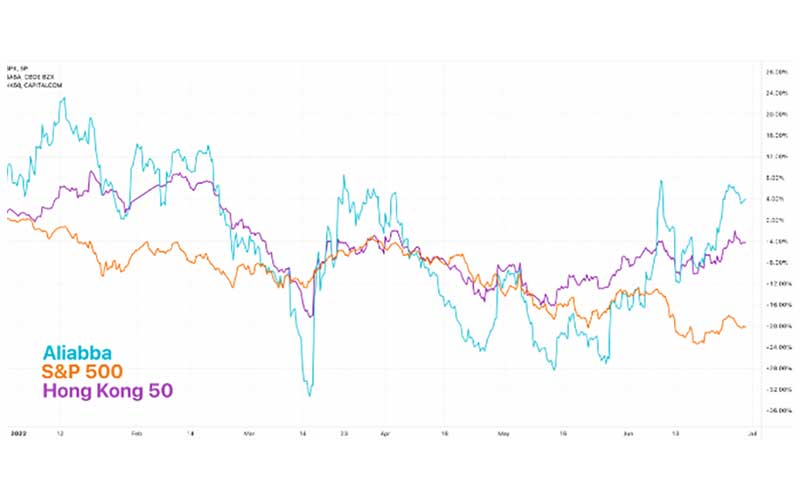
Although Ant Group’s relationship with Alibaba requires some urgent clarification, the performance of the stock in comparison to global benchmarks is likely to pave the way for greater levels of positive investor sentiment towards Ant Group’s eventual IPO. 

This is likely to mean that, when the company is eventually in a position to go public, Ant will be a blockbuster listing in its own right. With IPO applications continuing to grow in China in the wake of the country’s recent recovery from COVID-19 enforced lockdowns, Ma’s exit could benefit the company in the long run.

China Bucks Global Trend in IPO Flurry

China has recently seen a flurry of IPO listing applications from domestic firms. The upturn in application volumes almost doubled in June to 1,000 – the highest level in more than three years. As momentum gathers surrounding applications, China has bucked a global trend which has seen businesses adopt a more cautious approach to going public due to market volatility and rising inflation rates. 

Buoyed by the easing of COVID-19 restrictions and a more lenient regulatory framework introduced for listings, many companies wishing to IPO have sought to submit applications prior to June 30th as a means of avoiding having to refresh them with first half results – leading to delays in the process. 

“Financial data has a life of six months, which is why you typically see a rush ahead of June 30, and Dec 31,” one anonymous Chinese banker told Reuters. “In addition, many projects were hampered by the COVID outbreaks previously.”

The push towards listings is likely to pave the way for a recovery across markets on a global scale, with new listings in Asia set to spark a flurry of investment activity in Europe and the Americas as retail investors look into buying stocks in new and recovering firms. 

Whilst Ant Group’s landmark IPO may still be at least one year away, the departure of Jack Ma may make the path towards going public clearer than ever before. For a recovering economy to have an ace like Ant tucked up its sleeve, the future certainly looks bright for the Chinese economy.

EDITOR'S PICK OF THE WEEK

CFO's new mandate. CFO explaining the presentation

The Performance and Transformation Orchestrator: The CFO’s New Mandate in the Age of AI

By Terence Tse CFOs are evolving into AI-driven transformation orchestrators, balancing finance, technology, and strategy while upskilling teams, managing risks, and driving measurable business value. A key insight from this year’s AI for CFOs event, organized...

WISE DECISION MAKER GUIDE

POWER INFLUENCERS

Emerging Trends

The Future of Global Trade