A good project manager always seeks to mitigate risk and protect their investment. One of the best ways to do this is by ensuring that your contractor has the proper insurance.
General liability insurance protects your contractor against claims of bodily injury or property damage arising from their work. If someone is injured on the job site or the contractor damages a client’s property, the insurance will cover the costs of medical treatment or repairs. Let’s take a closer look at why you should ensure your contractor has this insurance.
Accidents Happen
No matter how safety-conscious your contractor is, accidents can still occur. If someone is injured on the job, you could be liable if your contractor doesn’t have insurance. This is why ensuring your contractor has general liability insurance is crucial. Some common accidents include slips, trips, and falls; scaffolding collapses; electrical shocks, and more. If any of these accidents occur, and your contractor doesn’t have insurance, you could be on the hook for medical bills and other damages. This often brings confidence to the hiring party that risks are being taken care of and they do not have to worry about anything going wrong.
In addition to bodily injury, general liability insurance also covers property damage. If your contractor accidentally damages a client’s property, their insurance will cover the costs of repairs. This can help avoid any legal issues arising from the property damage. Without insurance, you would be responsible for paying for the repairs out of your pocket. This could quickly become expensive, and it’s not worth the risk.
Protection Against Lawsuits
In addition to accidents, your contractor could be sued for defamation, false advertising, and more. If your contractor doesn’t have insurance, you could be liable for any damages awarded in a lawsuit. This is why it’s vital to ensure your contractor is adequately insured.
General liability insurance will protect your contractor against a variety of different lawsuits. This type of insurance will pay for the costs of a lawyer and any damages awarded in a lawsuit. This can help to protect your contractor from financial ruin in the event of a lawsuit. However, before getting any insurance, speak with experts on the best insurance company to target.
Take your research online, whereby you will land on different sites with varying opinions. The most reputable and well-reviewed insurance companies should be your go-to. You can get quotes from different insurance companies, which will help you determine the best rate. The quotes should be based on the coverage you need and the type of work your contractor will be doing. Make sure you understand the policy’s terms and conditions before purchasing it.
Compliance with the State Law
In some states, it is required by law for contractors to have general liability insurance. If your contractor doesn’t have insurance, they could be subject to various penalties. These penalties can include fines, loss of license, and more. In some cases, the state may even require you to pay for any damages awarded in a lawsuit.
It’s essential to check with your state to see if they have any laws regarding contractor insurance. If they do, make sure your contractor complies. It’s not worth the risk of not being adequately insured.
Protection from All Third-Party Claims
When you hire a contractor, you enter into a contract with them. This contract protects you from third-party claims that may arise from their work. However, this contract does not protect you from claims directly against your contractor.
This is where general liability insurance comes in. This type of insurance will protect you from any claims against your contractor. It includes claims for bodily injury, property damage, and more. Without this insurance, you could be on the hook for damages yourself.
Advertising Claims
With the rise of false advertising claims, it’s more important than ever for your contractor to have general liability insurance. If someone claims that your contractor made false or misleading statements in their advertising, you could be held liable. This type of claim can be very costly and not worth the risk.
Ensure your contractor has general liability insurance to protect them from these claims. This type of insurance will pay for the costs of a lawyer and any damages awarded in a lawsuit. It can help to protect your contractor from financial ruin in the event of a false advertising claim.
Theft and Vandalism Claims
You could be held liable if your contractor’s tools or equipment are stolen or vandalized. This is because your contract with your contractor does not protect you from these claims. Without insurance, you would be responsible for paying for the replacement of the stolen or vandalized items.
The insurance will pay for the cost of the replacement items, as well as any other damages that are incurred. This type of insurance can help to protect you from a financial burden if your contractor’s tools or equipment are stolen or vandalized.
Builds Reputation and Establishes Trust
Hiring an insured contractor shows that you are willing to trust them with your property. This can help to build rapport and establish trust between you and the contractor. It can lead to a better working relationship and a higher quality of work.
It’s important to remember that not all contractors are insured. Make sure you ask about their insurance before you hire them. It helps ensure that you work with a reputable contractor in your best interests.
Protection Against Bankruptcy
If your contractor files for bankruptcy, you could be left without recourse. It is because the contract you have with them would be void. Without insurance, you would be unable to collect any damages awarded in a lawsuit.
At times, bankruptcy can be unavoidable. However, you can help to protect yourself by making sure your contractor has general liability insurance. This type of insurance will pay for the costs of a lawyer and any damages awarded in a lawsuit.
It’s essential to make sure your contractor is adequately insured. General liability insurance will protect your contractor against a variety of different lawsuits. This type of insurance can help to protect you from a financial burden if your contractor is sued. Make sure you ask about insurance before you hire a contractor. This will help ensure that you work with a reputable contractor with your best interests in mind.
When you think of Disney, the first thing that comes to mind is the cartoon characters we have seen on television screens over the years. However, the company has come a long way since Mickey Mouse and Disney is now a massive company, with the rights to some of the biggest franchises in the world, such as Star Wars. Could the adventure be about to continue for Disney and are they about to jump on the US iGaming bandwagon?
iGaming in the United States
It is worth noting that legal iGaming, which is online gambling, is still in its infancy in the United States. For example, it was not until May 2018 that the US Supreme Court ruled in favor of allowing sports betting. This put control into the hands of individual states and many have acted to make sports betting legal. Other forms have online gambling have also been legalized in the US, with Philadelphia being an example of state that saw gambling online legalized in 2017. This opened the market to gambling companies who were previously unable to offer their services in the state. So, if Disney are about to make strides into the iGaming market in the US, they are not trying to break into a long established institution. However, that does not mean competition is not stiff and we will investigate that in more detail shortly.
What to Expect from Disney
We must go back to 2019 to find the first link of iGaming and Disney. Disney purchased a large stake in a sports gambling company as they acquired Fox’s stake in DraftKings. This was not a one-off purchase by Disney because the move formed part of a wider deal between Disney and Fox but it signalled the start of Disney’s interest in the iGaming sector. In a statement regarding the acquisition of a stake in DraftKings, Disney CEO Bob Iger said he did not see The Walt Disney Company in the near term getting involved in the business of gambling or facilitating gambling in any way. However, fast forward to 2022 and Disney still hold a minority stake in DraftKings and there is a new Disney CEO in town who seems more open to the idea of Disney becoming involved in the iGaming industry. New CEO Bob Chapek said, “Sports betting [is] a significant opportunity for the company.”
One of the content groups of Disney is ESPN, a dedicated sports service. ESPN could be the perfect vehicle for Disney to test the water in the iGaming market and they can learn from the deal between Caesars Entertainment and DraftKings. There have been rumours that ESPN could move to acquire DraftKings as a major entry point into the iGaming market but it is far from a straightforward business.
Established Operators
There are several leading operators providing iGaming services in the United States. They are all competing for a slice of the pie and the more often new gambling companies enter the market, the more promotions are being offered to tempt players. Free bets are a good example of an iGaming promotion in the United States and is commonly used by sportsbooks. Free bets can be offered as part of a first deposit bonus or as a no deposit bonus, the latter of which is the most sought after for players. Casinos will also offer first deposit bonuses and free spins on the slots is a common bonus for new online casino members. Disney will enter an iGaming market where the competition is already tough and that is why it makes sense to try and acquire a current operator rather than build an iGaming presence from scratch. Many of the big names players in the iGaming industry had a presence prior to 2018 in the form of fantasy sports websites or land based casinos, especially in Las Vegas. They used these as a launch pad into iGaming and Disney may choose to do the same should they jump on the US iGaming bandwagon.
There is enough noise to suggest Disney are going to enter the United States iGaming market and it would not be a surprise if we have some concrete news before the end of 2022.
Hybrid work, remote work, digital nomads: many knowledge workers are experiencing a heap of new possibilities relating to how and where they work. Frontline workers, however, are often bound to fixed places and fixed times. In this talk with Mark Williams, Managing Director for EMEA at WorkJam, the leading digital frontline workplace, Williams discloses the way to a future of unseen flexibility for frontline workers and shares how companies can get help retaining valuable workers through WorkJam’s digital features.
During the covid-crisis, many of us have changed how we work and primarily where we work. In Europe alone, during the pandemic, 100 million workers have swapped the office with working from home – for some, working from wherever they want. To many, this newfound freedom contributes to a better work-life balance.
Those benefiting from this enormous shift in working culture are primarily knowledge workers. As Mark Williams points out, the conditions have largely remained the same for frontline workers, who still need to be in a certain place at a certain time. However, according to Williams, who, as WorkJam’s Managing Director for EMEA, specializes in the work life of frontline workers, this group of workers is looking for the same kind of choice and freedom: “Frontline workers want the same freedom. If they can work at a location in one city, why can’t they do it in another location where their employer operates??
Frontline workers make up 60 to 70, sometimes up to 80 percent of a country’s workforce, but as Williams puts it, this group has often been ‘the forgotten workers’. WorkJam has set out to change this through several features that make work more fun, make tasks more approachable, and allow for easy communication between frontline workers and the main office. When Mr. Williams is confident that we’re about to see a change towards more flexible work forms, it’s because WorkJam has developed the world’s leading digital frontline workplace, a technology that enables frontline workers to be scheduled in more than one location, operated by their employer. As frontline workers in many big retailers have the same work procedures in multiple stores, an app that connects stores with their staff enables frontline workers to take a shift when is more suitable for them.
And the new generation entering the job market enters it with new expectations: “You’ve got this next generation that is coming through, and they just want something different. They want a more connected workplace, they want a more dynamic, agile workplace. They want to work where and when they can,” Williams says.
Giving workers this added agency, Williams says, is a fantastic value proposition at a time where any extra sign of appreciation is essential for retention: “When you are struggling to identify and recruit and retain the right workforce, you know you need all of these additional value propositions,” he says.
More than a year inside ‘the Great Resignation,’ finding and retaining employees is a challenge for businesses, as workers seem to be a scarcer and more valuable resource than ever. Earlier this year, a survey conducted on LinkedIn disclosed that 58 percent of European workers are considering leaving their current job. In this context, dynamics between employer and employee have changed: “It’s no longer ‘if you don’t work for me, there are ten people that will take your job tomorrow.’ That’s completely flipped,” Williams says.
So there are good reasons for companies to pay close attention to the contentment and well-being of frontline workers. Mark Williams has made that the theme of his career long before the Great Resignation as he’s been part of leading and working close to frontline retail operations for the last 20 years, working at Diageo and Shell before starting in his current position at WorkJam.
His career in and around global retailers has been with the purpose of “trying to solve the complex dilemma of ensuring that frontline workers, the hourly paid workers, are engaged, embraced, feel part of the wider culture and the wider organization.” One way WorkJam does this is by helping companies create communication pathways that are intuitive to those who use them every day.
Communication in real-time between head office and frontline personnel has been essential for worker safety in several cases. It’s also been the case in Ukraine, where WorkJam has helped ensure that co-workers were either relocated to safe parts of Ukraine or evacuated and housed outside the country.
“Frontline workers are used to communicating on social media. They’re used to Facebook, WhatsApp, Twitter, TikTok, whatever it might be. Then you take them into the workplace and it’s almost forgotten. And then we start to talk to them via a back office PC or a handheld retail device that is completely alien to them compared to how they’re communicating in their private lives day in, day out with multiple people at the same time in multiple different ways. And all of these organisations across Europe need to realise that and then pivot and embrace this digital transformation.”
Giving frontline workers access to technology – with an interface that feels familiar – where they can communicate with other frontline workers and head office colleagues allows for several possibilities to ease work life. One of them is a gamified and fun way to enable colleagues to swap shifts. WorkJam’s platform also helps colleagues to get to know each other with the platform sharing bits of information about who their colleagues for their current shift are, including some fun facts about each colleague. This creates a friendly environment that “enables fun and also gets the work done,” as Williams says.
Besides features adding flexibility and fun between colleagues, WorkJam’s platform also allows for two-way communication between the frontline workforce and head office: “It’s not just from the head office and down, we now give the ability to communicate back up. We connect head offices to the frontline workforce in a way that they’ve never been connected or engaged with before.” This also gives senior staff and executives ways of communicating business identity to the people presenting it on the front line. As Mr. Williams says: “Straight away you can have senior executives speaking directly to the frontline worker around the brands, around the initiatives, about the strategy, around their values, and beliefs. And it just changes the whole frontline worker culture.”
Communication in real-time between head office and frontline personnel has been essential for worker safety in several cases. It’s been the case during the covid-crisis, where WorkJam’s platform allowed companies to communicate new policies and procedures or introduce new health and safety requirements. It’s also been the case in Ukraine, where WorkJam has helped ensure that co-workers were either relocated to safe parts of Ukraine or evacuated and housed outside the country.
Worth mentioning in the context of creating company-employee loyalty are the features directed towards employee learning and growth. Here, WorkJam’s tools also look at creating long-term value for employees when it comes to learning and development. Williams says: “Often the frontline worker wants to develop, wants to think about what promotion might look like, what job, what prospects there are, what other roles they may be interested in. And they tend to get forgotten. They don’t know how to tap into that knowledge, so they don’t know how to go about that at work.” Giving frontline workers the tools to develop and experience upward mobility within an organisation equals higher chances of retention.
Where Workjam’s tool gets really powerful, Williams says, is when all the functions are combined, allowing new forms of two-way communication, task management, professional development, and flexible planning. Surely we look forward to seeing how the future flexibility for frontline workers will play out!
Mark Williams is a Managing Director and is leading WorkJam‘s expansion in EMEA. Before joining the company, Mark held the position of Global Enablement Manager of Retail at Shell, where he was responsible for all frontline digital transformation projects. Operating with different structures across the globe, Shell’s challenge was to provide consistently excellent service through a fragmented workforce, without a large directly managed footprint. Under Mark’s leadership, the Enablement Team rolled out WorkJam to 100,000 employees across 35 global business units. Unifying communications, learning, and task management revolutionized how Shell Retail worked, improving turnover, compliance, and employee experience.
Our food production and distribution systems are fundamentally flawed, with consequences for both the planet and its inhabitants. Meiny Prins, CEO of Priva, argues for a hopeful future food system where people, planet, and business thrive. The Sustainable Urban Deltas concept reconnects food production with metropolitan areas and applies innovative technologies in order to procure a brighter future for the generations to come.
What makes Meiny Prins get up in the morning is the belief that she can play a part in creating a positive change in the world. And from someone working with food production and distribution, quite a lot of change is needed. As Prins highlights, the global set-up of food production and distribution has many flaws with serious consequences. That’s underlined by the fact that, globally, we produce enough food to provide for 10 billion people but still cannot manage to feed seven billion. In the USA alone, Prins says, 40 per cent of food is wasted, adding up to a situation where 130 billion meals and more than $408 billion in food are thrown away yearly.
Globally, a third of all food is wasted.
The Russian invasion of Ukraine has tragically emphasised the fragility of food supply chains. As the distribution of Ukraine’s wheat production has been halted, the big importers of Ukrainian wheat – Egypt, Tunisia, Morocco, and others – are suffering.
And distribution is predicted to get even more complex. By 2050 it is expected that 70 per cent of the world’s population will live in cities. As that population urbanises, the expansion of cities means that green belts and agriculture are pushed further away from people and markets. Supply chains are getting longer and more complex; sometimes, in search of the cheapest way to produce, they can stretch halfway around the world, with dire consequences for the climate.
So how can we work around the multifaceted problems in the global food market? Prins seems inspired by a famous Buckminster Fuller quote: “You never change things by fighting the existing reality. To change something, build a new model that makes the existing model obsolete.” Prins says that, rather than fight the power and money that lies in the existing global food system, she knows it is “a far more productive use of resources to build an alternative system, and that is what we are doing”.
Meiny Prins’s alternative food system is Sustainable Urban Delta, which she calls a “response to a wasteful system”. Sustainable Urban Deltas are about localising production by finding innovative ways to grow food closer to people. And, as Prins explains, this form of production has a range of advantages, such as inner city employment, fresher food, reduced greenhouse gases, optimal use of water, eliminating pesticides, provide educational and recreational facilities and, of course, sustainability and security for the city’s food supply.
Prins says that a variety of food production facilities can be a part of creating a sustainable Urban Delta: indoor farms, rooftops farm or open fields, but also less demanding set-ups, such as table-top farming, greenhouses, or a backyard vegetable garden. Prins is the CEO of Priva, a company that innovates in various areas related to those ways of producing, from heating glasshouses to automating urban agriculture environments to building automation and energy savings.
In Prins’s view, every technology related to farming practices is optimisable. This perspective has taken Priva far in innovating for a radically different future: “Our predictive technology has the plants themselves communicating directly with our software, guiding the software, and not the other way around. Every plant has a biorhythm, waking up early in the morning, starting to evaporate, and starting to grow leaves or fruits. The software used to be designed to control the environment. Now you have a plant that is designing all these things, to indicate what they need for maximal health and growth at any particular time. Everything can be monitored remotely, too, and controlled from a smartphone.” Another innovative contribution is a robot designed to pick tomatoes, which is a strenuous task for humans, so that its automation can give more space for creativity and fun tasks.
Prins got the idea for the Sustainable Urban Delta from flying over the Netherlands, of which she’s a native: “The vision for Sustainable Urban Delta came from comparing the grey views of endless concrete I saw when flying over most cities to the green mosaic that is the Netherlands, with arguably one large city on its west coast. I realised that my home country is a living, breathing, functioning, and successful example of a food-producing city.”
That the Netherlands has been able to fit in urban farming is quite impressive when looking at the country’s density. As Prins tells us, in the Netherlands, the population density is above 500 people per square kilometre – nearly five times more than the EU average. In the west of the country, it’s double that. Still, there’s a mixture of urban development and farming. Food
is often produced inside the city boundaries or close by in the less populated east of the country. Despite the high density, the Netherlands even sells food to neighbouring countries, exporting around €100 billion and importing just €20 billion.
According to Prins, Sustainable Urban Deltas can be reproduced in cities globally. The most critical resource is engaged locals, urban planners, and entrepreneurs. Prins says: “If we want to successfully bring food production back to the city, creating awareness at the municipality level is crucial. City planners need to provide both the space and infrastructure needed. In addition, they need to make local people enthusiastic about building businesses related to food. Bringing local food production back to the city has the power to transform whole neighbourhoods and communities. For example, when someone builds an indoor farm in a disadvantaged neighbourhood, it will start as a place that provides fresh food to the city, but it will grow and become a place that provides jobs.”
As that happens, entrepreneurs participate in sustainable development while they start to produce the products that farms need. As Prins sees it, cities and urban planners can create space for entrepreneurs to build new ecosystems around food production. That includes nice amenities like restaurants and market halls, but also digital innovation.
As local circuits of food and innovation, reducing carbon footprints, and increasing health and quality of life, in times of volatility the Sustainable Urban Delta shows that we can move forward without compromising on profit, people, or planet.
Not so long ago, Brazil’s BRIC economy soared as working people and the poor were able to join the labor force and formal economy. In just years, a “soft coup” and far-right president derailed Lula’s miracle. What next?
As I am writing this column, Brazil is preparing for its general election on October 2, after the disastrous term of Jair Bolsonaro, the incumbent far-right president and ex- captain, who placed army officers in key cabinet positions.
Elected in exceptional circumstances, Bolsonaro caused exceptional damage in Brazil’s economy and politics, society and military, and ecology.
With more than 156 million registered voters, Brazil is the second largest democracy in the Americas and one of the largest in the world.
But democracy is no assurance that the election outcome will be democratic.
Bolsonaro’s disastrous term
Rolling back protections for indigenous groups and facilitating deforestation, Bolsonaro compounded devastation associated with accelerated climate change.
Under his government, the COVID-19 pandemic effects were downplayed, quarantine measures opposed, and health ministers dismissed. So, the pandemic has killed almost 700,000 Brazilians; more than in India, despite its seven times bigger population.
Seeking re-election, Bolsonaro is facing former president Luiz Inácio Lula da Silva, a veteran trade unionist, who was elected in 2002, reelected in 2006, and left the office as the most popular president in Brazil’s history. In the past six years, he has overcome not just a throat cancer, but the far-right effort to keep him in prison.
Before the election, Bolsonaro, who has never hidden his yearning for a new military junta, made multiple allegations of election fraud. Observers have been quick to condemn such claims as invalid. But widespread concern prevails that false allegations could be exploited to challenge the election outcome, to execute a coup, or both.
After their bitter experience with military dictatorship (1964-85), the last thing Brazilians want is a junta of generals. Their prime concern is the economy and jobs. And that’s why they want Lula back.
Lula’s Boom, Rousseff’s plunge, oligarchs’ coup
In the early 1990s, Brazil still had a reputation as the world’s champion in “unfulfilled agreements with the IMF.” In 2003 Lula inherited a poor, resigned nation on the verge of an economic implosion. Winning the presidency heading the left-wing Workers’ Party (PT), his primary objective was to stabilize the economy and to lay foundation for the struggle against poverty.
Lula’s economic policies were born under favorable stars. In 2001, China joined the World Trade Organization (WTO). A year later, Lula initiated Brazil’s economic reforms. To modernize, Brazil needed demand for its commodities; to industrialize, China needed commodities.
In the 2010s, Lula refocused policy momentum to the expanding middle class. Now the goal became to provide new opportunities for the upwardly mobile, while ensuring income transfers to the poorest.
During those boom days, Brazil overtook Italy as the world’s seventh-largest economy, while living standards soared by almost 60 percent. In Brazil, these were the days of wine and roses, or caipirinha and orchids.
Brazil led Latin America. China spearheaded Asia. Both shunned President Bush’s unipolar foreign policy; each supported a multipolar view of the world.
Washington had a different take of such developments.
15 lost years
When Dilma Rousseff, Lula’s chief of staff, won presidency in 2012, she hoped to build on Lula’s success. In this quest, she failed, due to the lack of time and wrong priorities, tax policies and spending.
Worse, international environment worked against her. World trade plunged, commodity prices collapsed, China’s growth decelerated and the Fed initiated rate hikes. “Hot money” began to flee leaving behind asset shrinkages, deflation and depreciation.
In Brazil, a narrow economic elite reigns over an unequal economy polarized by class and race. It had always opposed Lula and PT, and it was supported by external forces. According to Wikileaks, the U.S. National Security Agency (NSA) tapped some 30 Brazilian government leaders’ phones (Rousseff, ministers, central bank chief, etc), and corporate giants, including Petrobras, the huge petroleum conglomerate that would play a central role in corruption allegations.
Sparked particularly by such allegations, protests erupted and were fostered by conservative and family-owned media oligopolies. That boosted the center-right opposition of juridical authorities and military leaders, conservative social democrats, Democrats, and PT’s more liberal allies.
In the subsequent “soft coup,” Rousseff was impeached by the Congress in 2016. The economic effects were disastrous. During Lula’s two terms, Brazil enjoyed a historical boom. Though sluggish rather than stagnant, Rousseff’s period was undermined by the coup. Bolsonaro’s economic mismanagement proved disastrous.
Following the coup and Bolsonaro, Brazil’s GDP is now where it was around 2007 or so. 15 years have been lost (Figure).
Source: TradingEconomics; World Bank; Difference Group
Biased judges and political ambitions
In 2015 Sérgio Moro gained national attention as one of the lead judges in Operation Car Wash, a criminal investigation into high-profile corruption and bribery scandal involving government officials and business executives. It fueled Rousseff’s impeachment and Lula’s 580-day imprisonment.
Moro, a Harvard-trained judge, had participated in the U.S. State Department’s International Visitor Leadership Program (IVLP). Meanwhile, Brazil’s federal police began broader cooperation with the FBI and CIA.
Moro portrayed himself as untouchable judge with no political ambitions. Yet, afterwards he eagerly joined Bolsonaro’s government as Minister of Justice and Public Security (2019-20), and subsequently the presidential race only to withdraw after his ratings fell.
There was a reason for Moro’s plunge. His “investigations” were prejudicial. Leaked messages exchanged between Moro and prosecutors have led to widespread questioning of his impartiality during the Operation Car Wash hearings.
In June 2021, all cases Moro had brought against Lula were annulled. White House officials admitted that the CIA and other parts of the US intelligence apparatus had been involved in assisting the “War on Corruption,” which jailed Lula and elected Jair Bolsonaro. Even the UN Committee found Moro biased in all cases against Lula.
Toward Lula’s comeback, unless…
In Brazil’s first round of elections, the candidate who receives more than 50% of the total valid votes is elected. If the 50% threshold is not met, the two candidates who receive the most votes participate in a second round of voting on October 30.
All current polls suggest that Lula will win the first round. The projections indicate he could get 45%-48% of the vote, against Bolsonaro’s 30%-36%. Moreover, all current second-round polls suggest Lula’s win by 10% or more.
Then again…
While Washington has urged Brazil to conduct fair elections, Bolsonaro, after his June meeting with President Biden, issued a coded command to the military in which the word “auditable” focused attention on the electronic voting system.
Brazil’s military has a “parallel vote count,” which some consider a risk to democracy. Furthermore, CySource, a controversial Israeli company hired by Brazil’s military, will presumably “supervise” the election against “disinformation.” Meanwhile, Brazilian observers have charged both YouTube and Facebook for pushing pro-Bolsonaro content and supporting coup mongering.
If democratic rules prevail, Lula is likely to make a comeback on October 2, or October 30. If not, current turmoil is just a pale prelude of what’s ahead.
No election is viable without the “consent of the governed” – not even a democracy.
Dan Steinbock is the founder of Difference Group and has served as research director of international business at the India China and America Institute (US) and a visiting fellow at the Shanghai Institutes for International Studies (China) and the EU Centre (Singapore). For more, see http://www.differencegroup.net
This article is the second part of a two-part series. You may read the first part here.
Damages And Causation
In the US, financial economists have assessed damages and causation issues in the context of securities litigation through the use of event studies and other analytical techniques described above. Although uncertainties remain, similar economic considerations and approaches may also be relevant in shareholder actions in the UK.
As the UK litigation landscape continues to unfold, questions regarding damages persist. For example, the initial question of which investors may claim damages under FSMA has not yet been resolved. FSMA Section 90A specifically refers to “any ‘person who has suffered loss’ as a result of the untrue or misleading statement, omission, or delay” and states that “[i]ssuers may be liable to buyers, sellers or holders of securities. . . .”1 Arguably, holders (who, by definition, did not transact in response to any allegedly “untrue or misleading statement, omission, or delay”) would be differently situated than investors who did transact (i.e., purchasers or sellers).
Further, regardless of which investors may claim damages, the methodology (or methodologies) to calculate damages under Sections 90 or 90A of FSMA also remains to be resolved. As the authors of Class Actions in England and Wales note, “FSMA does not specify the basis on which damages arising under [Sections] 90 or 90A will be calculated, and the question has not received any significant judicial treatment to date. This is a complex and difficult area.”2
This section outlines certain economic considerations that may be relevant to assessing damages to purchasers (or sellers) and holders in the UK.
Investors Who Traded: Inflation-Based Damages
A typical claim brought under Section 90A might assert that a company’s public disclosures misstated or omitted (or collectively, misrepresented) certain information during a specified period of time (a “relevant period”). Claimants may assert that the company’s share price was distorted or “inflated” by the alleged misrepresentations, i.e., the share price was higher during the relevant period than it would have been absent the alleged misrepresentations. Claimants would likely also identify one or more “corrective disclosures” that purportedly revealed the previously concealed truth, thereby removing the inflation from the share price by the end of the relevant period.
While the appropriate measure of damages in a particular case is ultimately a legal question, under the theory that the alleged misrepresentations led to an inflated share price, investors who purchased shares during the relevant period would have arguably paid more for the shares than they would have absent the alleged misrepresentations.3
In the Tesco shareholder litigation,4 claimants sought damages that were equal to the highest of four different measures.5 Two of these damages measures compare the price paid for the shares to a subsequent price (the price at which the shares were eventually sold or the price on the date on which the truth was purportedly revealed). These two damages measures fail to account for the fact that the share price over these periods may have changed for reasons unrelated to the allegations. The other two damages measures identified by claimants instead compare the price paid for the shares to an alternative hypothetical price absent the alleged misrepresentations—(1) the “true value [of the shares] at the date of purchase” or (2) “the price that would have been paid [for the shares] if the true facts had been known, or Tesco’s untrue and misleading statements and omissions had not been made.”6
Both of these alternative hypothetical damages measures seem to point to an inflation-based approach similar to the “out of pocket” inflation-based approach (inflation at the time of purchase less inflation at the time of sale) that is used to estimate damages in the context of US securities litigation brought under Section 10(b).7 It is important to note that, if the share price was inflated by the alleged misrepresentations, then any sales during the relevant period would also occur at inflated prices. From an economic perspective, the measure of harm to the investor would need to therefore adjust for (deduct) any “gains” from selling at inflated prices.
Consider, for example, an investor who purchases a share at a price of 100p at a time when inflation was 20p, i.e., the hypothetical share price absent the alleged misrepresentations was 80p. The investor subsequently sells this share at a price of 70p when inflation is still 20p, i.e., the hypothetical share price absent the alleged misrepresentations was 50p.
Although this investor “paid” inflation of 20p at the time of purchase, all of that inflation was recovered when the share was sold, and, as such, from the perspective of a financial economist, the investor was not harmed by the alleged misrepresentations. In other words, although the investor lost 30p per share on the transaction, the same 30p loss would have occurred even if there had been no alleged misrepresentation. Given that the investor incurred the same “nominal loss” (the difference between the purchase and sales prices) of 30p in the actual world as they would have absent the alleged misrepresentations, the investor’s out of pocket damages are zero.
If the same investor had purchased a share at 80p prior to any alleged misrepresentations (i.e., before there was any inflation in the price), and sold the share at 70p when inflation was 20p, then, from an economic perspective, the investor would have benefited from the inflation. Although the investor suffered a nominal loss on this transaction (selling at 10p lower than the purchase price), the investor nonetheless benefited from the inflation—the hypothetical share price absent the alleged misrepresentations would have been 50p, and the investor’s nominal loss would have been a larger 30p per share.
Potential Issues with a Simplistic Approach to Estimating Inflation
Potential Issues with a Simplistic Approach to Estimating Inflation
In US securities litigation brought under Section 10(b), plaintiffs’ experts frequently attempt to utilise an event study analysis to estimate the inflation removed from the share price at the time of the alleged corrective disclosure(s). They then assert that the share price was inflated by that same amount earlier (and throughout) the relevant period, i.e., they “back-cast” the inflation that they claim was removed from the share price by the alleged corrective disclosure(s) to earlier points in time. However, there are several critical conceptual issues with such an approach that could render the resulting estimate of inflation-based damages unreliable as a measure of harm.
To illustrate some of these issues, consider an extension to the stylised example of ABC discussed earlier:8
At the beginning of 2021, market participants expect the company’s revenues for the coming year to be £10 million. In an efficient market, ABC’s share price reflects, inter alia, market participants’ expectations of £10 million in 2021 revenues.
On April 1, 2021, ABC learns that an important customer has terminated its contract, leading to a reduction in ABC’s revenues for 2021. If the company were to remain silent about the contract termination or reaffirm publicly that 2021 revenues are expected to be £10 million (in line with market expectations), no new information is conveyed to the market that would change market participants’ expectations regarding ABC’s future cash flows.
Then, as previously discussed, on February 1, 2022, ABC announced disappointing 2021 revenues of £9 million, attributing the shortfall to the contract termination and slower sales caused by now-resolved supply chain issues, and ABC experienced a company-specific price decline of 12.4% (or £5).
Typically, a plaintiff’s expert might argue that £5 is the amount of inflation that was removed by the alleged corrective disclosure and that this amount has been in the share price since April 1, 2021, when ABC learnt of (but did not disclose) the contract termination. However, there are several problems with this argument.
First, although the misstatement or omission on April 1, 2021, may have introduced inflation into ABC’s share price, an event study cannot be used to reliably measure its magnitude at that time. To the extent that market participants would have revised downwards their expectations for the company’s future cash flows earlier had the contract termination been disclosed earlier, then a misstatement (reaffirming expected 2021 revenues) or omission (remaining silent) regarding the contract termination artificially maintains ABC’s share price at a higher level than it otherwise would have been. Accordingly, although there is no price response observed at the time of the alleged misstatement or omission (no observable “front-end” price impact), the company’s share price is nonetheless inflated. However, given that there is no observable price movement on the date of the alleged misstatement or omission, an event study analysis cannot be used to measure that inflation.
Second, even in this stylised example, event study analysis alone cannot isolate the inflation removed from the share price at the time the truth was revealed (i.e., on the “back end”). When ABC eventually disclosed lower 2021 revenues (attributable in part to the termination of the customer contract), the price decline that followed reflected the release of other information as well (e.g., the supply chain issues and the plant fire). In other words, although the corrective disclosure removed inflation from the share price, the event study analysis alone can only measure the price decline associated with the total mix of information disclosed, which does not provide a reliable measure of the inflation that was removed from the share price.
Third, even if it were feasible to reliably isolate the inflation removed from the share price following the corrective disclosure (i.e., the portion of the price decline due only to the termination of the customer contract), it is not reasonable to simply assume that the inflation would remain the same throughout the relevant period. For example, if the anticipated revenues from the customer that ultimately terminated the contract changed over time, then the amount of inflation from failing to disclose the contract termination would also vary accordingly.
While a back-casting approach asserting that inflation throughout the relevant period is £5 may be relatively easy to understand and compute mechanically, in order for the approach to provide a reliable estimate of inflation throughout the relevant period, one must establish that a number of underlying assumptions hold. For example, the corrective information disclosed is assumed to be the same as (or economically equivalent to) what allegedly could and should have been disclosed on the first day of the relevant period and everyday thereafter, i.e., the nature and severity of the misrepresentations do not change over time. In the hypothetical example, back-casting requires that ABC knew and was able to disclose the amount of revenues lost due to the contract termination as early as April 1, 2021. Further, under the back-casting approach, it must be assumed that the corrective information disclosed would have had the same effect on the share price had it been disclosed earlier. In other words, back-casting assumes that the price effect of the information is the same over time, regardless of any changes to the total mix of information in the market. Again, market and industry conditions as well as the total mix of information about ABC could change substantially over time.
More generally, if any of the assumptions implicit in the back-casting approach does not hold, then the back-casting approach does not provide a reliable estimate of inflation during the relevant period.
In summary, while the issue of quantum of damages in shareholder actions is ultimately a legal one, and while plaintiffs in Section 10(b) securities litigation in the US often use back-casting to estimate out of pocket inflation-based damages, it is important to consider and address the potential challenges to reliably measuring the quantum of damages under such an approach.
Investors Who Did Not Sell: Holder Claims
The inflation-based damages approach discussed earlier focuses on the difference between the actual share price and the “but for” or hypothetical share price had there been no alleged misstatements or omissions. Under the inflation-based approach, investors’ purchases and sales of shares absent the alleged misrepresentations are assumed to be the same as they were in the actual world, albeit at different prices. Consequently, the inflation-based approach will assess damages only to shares that were acquired during the relevant period (when the share price was purportedly inflated by the alleged misrepresentations).9 Accordingly, an investor who purchased shares before the beginning of the relevant period (when there was no inflation in the share price) will not incur damages under an inflation-based approach.10
However, Section 90A refers to “any ‘person who has suffered loss’ as a result of the untrue or misleading statement, omission, or delay” and states that “[i]ssuers may be liable to buyers, sellers or holders of securities. . . .”11 Although the statute does not specify as much, if holders are investors who already held shares at the beginning of the relevant period and who would claim they continued to hold the shares because of the alleged misrepresentations,12 from an economic perspective, this raises a number of interesting issues with respect to damages. For example:
Investors who already held shares at the beginning of the relevant period necessarily acquired these shares at a “fair” price, as the shares were acquired prior to any price distortion from the alleged misrepresentations. And, if the shares were acquired at a “fair” price, holders did not “suffer loss” due to the alleged misrepresentations at the time the shares were acquired.
Until the alleged misrepresentations were eventually corrected, and the share price declined as a result, could the holders “suffer loss as a result of” the alleged misrepresentations from continuing to hold the shares? If holders did not hold the shares through at least one corrective disclosure, could they “suffer loss” due to the alleged misrepresentations?
Any claim that investors continued to hold shares because of the alleged misrepresentations implies that holders would instead have sold their shares absent these alleged misrepresentations. This arguably implies that alleged misrepresentations would have had to be corrected (i.e., there would have to be some earlier corrective disclosure) in order for the holders to have sold their shares. However, had there been an earlier corrective disclosure, the share price would arguably have declined in response, in which case the holders arguably would have incurred at least that price decline before choosing to sell their shares. Should any economic analysis of damages therefore exclude that hypothetical price decline?
Setting aside these conceptual considerations, the specific damages approach claimants may assert regarding Section 90A “holder claims” remains to be seen. It also remains to be seen whether and how the proposed approach tethers the quantum of damages to the alleged misrepresentations, which could be important if the company’s share price has declined significantly over the relevant period, particularly for reasons other than the alleged misrepresentations.
Reliance
In addition to the economic issues that arise in shareholder actions regarding causation and damages, financial economics may also be relevant in assessing other aspects of litigation, such as reliance. While the legal landscape is evolving with respect to shareholder actions in the UK and Europe and it remains to be seen how courts will address issues of reliance, the economic concepts discussed earlier in this article can also provide insights on the subject.
Section 90A of FSMA expressly requires “reliance” on the alleged misrepresentations,13 but it remains to be seen how courts in UK shareholder actions will adjudicate this legal question.14 To the extent that UK courts require claimants to establish reliance, financial economists could play a meaningful role in assessing the issue. Courts in the US have allowed plaintiffs an indirect presumption of reliance based on a “fraud on the market” theory,15 and the same approach has also gained recent traction in Australian courts.16
The fraud on the market theory is predicated on the notion that, in an efficient market, a share price reflects all publicly available information, including the alleged misrepresentations (as long as they were public). Accordingly, if the market is efficient, an investor who purchased shares at the market price is presumed to have relied (indirectly) on the alleged misrepresentations. If claimants are not able to establish market efficiency, they arguably would not be able to invoke this indirect presumption of reliance. It is worth noting that, in the context of Section 10(b) securities litigation in the US, even if the market were deemed efficient, courts have offered defendants an opportunity to rebut the indirect presumption of reliance if they can establish that the alleged misrepresentations did not have an impact on the share price.17
To date, there is no definitive case law in the UK on the issue of reliance or fraud on the market in shareholder actions.18 Commentators have observed that a broader presumption of reliance (beyond expressly having read and relied on the at-issue statements) may be appropriate, but this “remains a highly controversial and untested question.”19 To the extent that an assessment of market efficiency or price impact is warranted in addressing the legal issue of reliance in UK shareholder actions, the analysis will likely involve financial economics techniques and tools discussed earlier in this article.
Conclusion
Economic analysis will be informative in the context of shareholder actions under Sections 90 and 90A of FSMA, to the extent that such actions materialise in the future. While the litigation landscape in the UK is still evolving, experience in securities litigation in the US suggests that various approaches in the field of financial economics (such as event study analysis, fundamental analysis, etc.) may be applied in assessing causation and damages issues in shareholder actions. It is important to recognise the limitations of these approaches to draw reliable inferences and conclusions in shareholder litigation.
The discussion in this section focuses on “inflation” and “purchasers,” but the same economic intuition would apply to “sellers” if the share price were “deflated” due to the alleged misrepresentations, i.e., if the share price were artificially lower than it would have been absent the alleged misrepresentations.
Manning & Napier Fund Inc v Tesco Plc (Claim no 2016-003088).
See Class Actions in England and Wales, p. 437.
Class Actions in England and Wales, p. 437
The out of pocket approach is used to measure damages in US securities litigation under Section 10(b) of the Securities Exchange Act of 1934 and SEC Rule 10b-5 promulgated thereunder.
The stylised example reflects a single alleged corrective disclosure. In practice, there may be multiple alleged corrective disclosures at issue, in which case the back-casting approach often proffered by plaintiffs in US securities litigation under Section 10(b) instead calculates inflation on any day in the relevant period as the aggregate amount of inflation that is purportedly removed by all alleged corrective disclosures that occur subsequent to the day in question. The Role of Economic Analysis in UK Shareholder Actions | Page 10 www.cornerstone.com
The inflation-based approach would assess damages for these shares if they were sold subsequently during the relevant period, but when the amount of inflation in the share price was lower; or if they were retained until after the last corrective disclosure (when there was no inflation left in the share price).
As noted earlier, if these shares were sold before the end of the relevant period, they would be sold at an inflated price, i.e., the investor would benefit on this transaction from the alleged misrepresentations. To measure loss resulting from alleged misrepresentations from an economic perspective (although what is recoverable is ultimately a legal question), any such inflation-based gains for a particular investor should be netted against inflation-related losses suffered by the same investor on shares purchased during the relevant period.
Class Actions in England and Wales, p. 405 (emphasis added).
For example, in the Particulars of Claim in the G4S litigation, the claimants allege that they “suffered loss and damage by acquiring or continuing to hold G4S Shares . . .” (Particulars of Claim, filed 15 June 2020, p. 1).
“A loss is not regarded as suffered as a result of the statement or omission unless the person suffering it acquired, continued to hold or disposed of the relevant securities—(a) in reliance on the information in question, and (b) at a time when, and in circumstances in which, it was reasonable for him to rely on it.” FSMA Schedule 10A, ¶ 3(4).
As a 2019 article observed, “[I]mportantly for tracker funds and retail investor claims, it remains to be seen whether [Section] 90A requires an investor actually to have read and relied upon the published information.” Peter de Verneuil Smith QC et al., “Claims under [Section] 90A of FSMA for Dishonest Statements Made to the Market: An Underutilised Remedy?,” Butterworths Journal of International Banking and Financial Law, March 2019, pp. 154–158 at 154, https://www.3vb.com/images/uploads/vcards/Claims_under_s_90A_of_FSMA_for_dishonest_sta.pdf.
Basic Inc. v. Levinson, 485 US 224 (1988).
“Court Endorses Market-Based Causation in Myer Class Action,” Stewarts Law, 22 January 2020, https://www.stewartslaw.com/news/courtendorses-market-based-causation-in-myer-class-action/ (“The significance of the court accepting market-based causation is that it was not necessary to show that a company’s misleading disclosures or omissions had induced a shareholder to purchase shares at an inflated price. Rather it was sufficient to show that the misleading disclosures or omissions had caused the market to trade the shares at an inflated price and that a shareholder who had acquired shares would not have done so at that price but for the market’s reaction to the misleading disclosures or omissions.”).
Halliburton Co. v. Erica P. John Fund Inc., 573 US 258, 134 S. Ct. 2398 (2014)
In the Tesco litigation, “the claimants initially ran a ‘fraud on the market’ argument, which Hildyard J described as ‘intriguing’, but abandoned it. . . .” “Rise in UK Stock Drop Claims Not Checked by Tesco,” Clifford Chance, October 2019, https://www.cliffordchance.com/content/dam/cliffordchance/briefings/ 2019/10/securities-litigation-client-briefing-on-tesco-strike-out-s90Aand-reliance-(judgment-update)-done.pdf.
“Although reliance is an express requirement of the statute . . . , a construction requiring investors to have read the financial statements in question would exclude ‘fraud on the market’ type claims. Such a construction would not sit comfortably with the intention behind the Transparency Director to achieve ‘a high level of investor protection.’ Instead, a broader interpretation of reliance may be appropriate where tracker funds and retail investors rely upon the market price as factoring in the as-represented financial position of the issuer, based in part upon published statements of the issuer. Pursuant to such a construction, reliance on the market price would itself constitute reliance (albeit indirectly) upon the published information.” Peter de Verneuil Smith QC et al., “Claims under [Section] 90A of FSMA for Dishonest Statements Made to the Market: An Underutilised Remedy?,” Butterworths Journal of International Banking and Financial Law, March 2019, pp. 154–158 at 154, https://www.3vb.com/images/uploads/vcards/Claims_under_s_90A_of_ FSMA_for_dishonest_sta.pdf.
Ronnie Barnes is a vice president in the London office of Cornerstone Research. He has testified in a number of cases involving corporate valuation, cost of capital, and financial derivatives. In addition to his work as an expert, Dr Barnes has led teams in a range of high-profile matters involving major financial institutions, including a European Union investigation into the market for complex financial instruments, a number of cases involving structured finance products, and US securities class actions. Dr Barnes has a Ph.D. and an M.Sc., both from London Business School, where he served on the faculty for over ten years.
Kristin M. Feitzinger is a senior vice president in the Silicon Valley office of Cornerstone Research. She has more than two decades of experience addressing securities, valuation and governance issues arising in class, corporate and regulatory actions, and is a frequent speaker on these topics. Ms Feitzinger particularly focuses on Rule 10b-5 and Section 11 disclosure cases involving equity and debt trades, and has consulted on more than a hundred such cases, including some of the largest class actions in recent history. Her experience spans all stages of the litigation process, including pre-litigation investigations; exposure analysis and settlement estimation; class and expert discovery; and mediation, arbitration, trials and regulatory agency proceedings.
Greg Leonard is a senior vice president in the London office of Cornerstone Research and heads the firm’s finance practice and its European finance practice. Dr Leonard has nearly two decades of experience consulting for clients in complex litigation and regulatory proceedings. On behalf of clients, he has led regulatory investigations on both sides of the Atlantic, managing teams and simultaneously supporting experts across multiple related matters. Dr Leonard has substantial experience directing analyses of large and complex high-frequency financial data sets, from both private entities and trading exchanges.
Shaama Pandya is a vice president in the Washington D.C. office of Cornerstone Research. She leads teams in complex litigation and regulatory investigations related to securities, consumer finance, and valuation. In matters involving equity, debt and derivative securities issued by public companies, Ms Pandya has analysed issues of market efficiency and price impact, materiality, loss causation, inflation and damages across a range of industries. Ms Pandya has worked on matters in a variety of venues, including US federal and state courts, the Delaware Court of Chancery, and international jurisdictions, notably in Latin America and Europe.
The views expressed herein are solely those of the authors, who are responsible for the content, and do not necessarily represent the views of Cornerstone Research.
In an era of digital transformation, the pace of change is quick and accelerating. New technologies and services are emerging in a rapid manner across industries and companies at an exponential rate.
To remain competitive, organizations must take advantage of digital technologies. These will help enhance the user experience, increase productivity and lower costs. At the same time, they remain a trusted source for user-friendly software and services.
The advent of software as a service (SaaS) and cloud-based technologies has accelerated the adoption of universal connected computing throughout organizations.
SaaS and cloud computing have revolutionized how organizations leverage technology to become more cost-effective, agile, collaborative, and efficient.
Also, they enable organizations to extend their digital footprint beyond their own data centers to access apps and services from any web browser or mobile device.
In this blog post, we’ll share seven ways automated UC provisioning tools add value to organizations
What is UC Provisioning?
UC provisioning is the process of allocating and configuring UC resources to meet the specific needs of an organization. This includes creating and deploying UC services, configuring UC devices, and assigning UC user licenses.
UC provisioning is a critical part of deploying a UC solution, as it ensures that the system is properly configured. It also ensures that users have the necessary resources to use the system.
Why Automated UC Provisioning?
Automated UC provisioning can help to simplify the process of deploying and managing UC services. It can help to ensure that users have the latest versions of UC services and features.
What’s more, automated UC provisioning tools are great for streamlining the process of provisioning new users and keeping track of existing ones.
They help save time and ensure that all the necessary steps are completed in order to provision new users quickly and easily. This can help businesses to expand their UC service without having to manually provision new services.
Additionally, automated provisioning software can help keep track of changes made to existing user accounts. This aids in making it easy to stay up-to-date on the latest information.
Ways Automated UC Provisioning Tools Can Help Businesses
1. They Help Businesses Save Time
Automated UC provisioning tools can help businesses save time by simplifying the process of provisioning new users and services.
By automating the provisioning process, businesses can avoid the need to manually configure new users and services. Imagine having to go through hundreds of files manually. This automation will help in saving considerable time and effort.
In addition, automated user provisioning tools can help businesses ensure that new users and services are properly configured and that all required settings are applied correctly.
This can help businesses avoid potential problems and disruptions caused by incorrect or incomplete UC configuration.
2. Help Businesses Save Money
It costs money to set up and maintain a business, and companies are always looking for ways to cut costs. One way that many businesses are reducing their costs is by automating provisioning.
Automated provisioning tools can help businesses save money in a number of ways. For example, they can reduce the cost of hardware and software licenses. They can also reduce the cost of support, as they ensure that all devices are properly configured and supported.
3. Easy Tracking and Audit
Automated provisioning software can be used to track the number of VMs created, the hosts that are running them, and when they are deployed.
This allows for better tracking, auditing, and compliance. It also makes it possible for IT pros to detect any discrepancies between what was expected to happen versus what actually happened.
This provides a level of accountability and transparency that is extremely useful in a production environment. It also allows for more accurate reporting, as well as improved overall efficiency and productivity.
4. Easily Scalable
Automated provisioning tools make it easy for organizations to scale their UC deployments. They automate the process of provisioning new VM templates, managing VMs, and updating policies.
These tools can also be integrated with existing automation platforms, making them easy to scale up as your organization grows.
As a result, automated user provisioning tools are ideal for organizations that want to rapidly scale their UC deployments. They can be easily scaled up by adding more compute resources and more VM templates.
And they are easy to maintain as they use common open source components and are compatible with various automation platforms.
5. Less Risk of Human Error
With the help of automated software, IT departments can more easily launch and scale up a UC environment without having to worry about human error. For example, automated systems can ensure that all of the necessary components are in place and that proper configuration is being applied across each device.
Moreover, these systems can also be used to manage complex deployments and minimize downtime at any given time. This helps to ensure that the business is able to run smoothly at all times, which reduces risk and improves overall productivity.
With automated tools, it is much easier to deploy new UC solutions because they eliminate the need for manual processes and reduce the potential for human error.
6. Enhance Data Protection and Security
Automated UC provisioning tools enhance data protection and security by automatically distributing and configuring UC components across an enterprise. This helps to ensure that only authorized users have access to UC resources, and that data is properly protected.
By automating UC provisioning, enterprises can improve their overall security posture and better protect their critical data.
6. Enhance UX
Automated UC provisioning tools can help improve the user experience by simplifying the process of provisioning and configuring UC services.
The automated provisioning process tools can help reduce the time and effort required to provision and configure UC services. This helps in making it easier and more convenient for users to access and use them.
In addition, automated UC provisioning tools can help ensure that UC services are properly configured and updated, which can help improve the overall quality and reliability of the UC experience.
Conclusion
In conclusion, automated UC provisioning tools help businesses in more ways than one. By automating the provisioning process, businesses can save time and money, and can also improve the quality of their UC service.
Automated UC provisioning tools can help businesses save time by simplifying the process of provisioning new users and services. By automating the provisioning process, businesses can avoid the need to manually configure new users and services, which can save considerable time and effort.
In addition, automated UC provisioning tools can help businesses ensure that new users and services are properly configured and that all required settings are applied correctly.
Most people would agree that increasing your net worth is a worthy goal. After all, if you have more money in the bank, you’ll be able to live a better life and provide for yourself and your family. But it can be tough to figure out how to actually go about doing that.
There are many different things you can do to increase your net worth, but not all of them will work for everyone. That’s why it’s important to tailor your approach based on your specific situation and goals.
Invest in Yourself
One of the best ways to increase your net worth is to invest in yourself. This means taking the time to learn new skills and knowledge that can help you in your career. It can also mean investing in your health by eating right and exercising regularly.
When you invest in yourself, you’re increasing your ability to earn more money. And that increased earnings potential will help you boost your net worth over time. Not only that, but taking care of yourself will also help you live a longer, healthier life. So it’s really a win-win situation.
Create a Budget
If you want to increase your net worth, you need to be aware of your spending. This means tracking your income and expenses and creating a budget. This will help you figure out where your money is going and where you can cut back.
Creating a budget can seem daunting, but there are a number of helpful tools and resources available. You can use apps like Mint or You Need a Budget to help you track your spending and create a budget. This is especially true if you’retaking care of your parents.
Save More Money
This one is pretty simple: If you want to have more money, you need to save more money. Figure out ways to cut your expenses and increase your savings rate. This will help you free up more money to invest and grow your net worth over time.
One easy way to save more money is to automate your savings. This can be done by setting up a direct deposit from your paycheck into a savings account. This way, you’ll never even see the money and will be less tempted to spend it.
According to Kyle Risley, Founder & CEO at Lift Vault If you can put away just $5 a day, you’ll have saved $1,825 at the end of the year. And if you can increase that to $10 a day, you’ll have saved $3,650. That’s a significant amount of money that can be used to boost your net worth or improve your credit.”
Pay Off Debt
Another way to increase your net worth is to pay off your debt. This will reduce the amount of money you owe and free up more cash flow each month. As a result, you’ll have more money available to save and invest.
There are a few different ways to pay off debt. You can start by focusing on your high-interest debt first. This will save you the most money in interest payments over time.
You can also try the debt snowball method, which involves paying off your debts from smallest to largest. This can be a good option if you need some quick wins to keep you motivated.
According to Jarret Austin, Owner of Bankruptcy Canada Inc., “Paying off debt is one of the most effective ways to increase your net worth because it immediately reduces the amount of money you owe. This, in turn, frees up more cash flow each month, which can be used to save and invest.”
Invest in Assets
Investing in assets is another great way to increase your net worth. When you invest in assets, you’re essentially buying something that has the potential to appreciate in value over time. This can be anything from stocks and real estate to bonds and precious metals.
Investing in assets is a great way to grow your wealth over time. And if you choose wisely, you can even generate passive income from your investments. This is money that you make without having to work for it. So it’s a great way to boost your income and grow your net worth.
According to Catherine Schwartz, Finance Editor atCrediful: “Asset investment is one of the smartest and most efficient ways to increase your net worth. By investing in assets such as stocks, real estate, and bonds, you can generate passive income and watch your net worth grow.”
Start Investing
Investing is one of the best ways to grow your wealth over time. When you invest, you’re putting your money into assets with the potential of appreciating in value. This can be anything from stocks and real estate to bonds and mutual funds.
Investing is a great way to grow your money over time. But it’s also important to invest wisely. This means diversifying your portfolio and investing in a mix of assets. This will help reduce your risk and maximize your chances of success.
According toFinancer, “Investing is one of the smartest things you can do with your money. By investing in a mix of assets, you can grow your wealth over time and reach your financial goals.”
Save for Retirement
Finally, one of the best ways to increase your net worth is to save for retirement. This may seem like a long-term goal, but it’s important to start saving as early as possible. The sooner you start, the more time your money will have to grow.
There are a few different ways to save for retirement. If you have a 401(k) through your employer, you can start contributing to that. You can also open an IRA account and make regular contributions.
The key is to start small and increase your contributions over time. Even if you can only afford to save a few hundred dollars each year, that’s better than nothing.
Conclusion
These are just a few of the many ways you can increase your net worth. If you’re looking to grow your wealth, start by implementing these tips. You’ll be on your way to a stronger financial future in no time.
This article is the first part of a two-part series. You may read the second part here.
While shareholder actions (or “securities class actions”) have been litigated in a number of jurisdictions (most actively in the US and Canada, but also in Australia) for many years, these matters are a more recent addition to the legal landscape in the UK. The passing of the Financial Services and Markets Act 2000 (“FSMA” or the “Act”) made it easier (at least in principle) to bring collective actions on behalf of a large group of investors.
Two sections of FSMA, 90 and 90A, provide for remedies to shareholders for losses caused by untrue or misleading statements. Focusing on prospectuses and listing particulars, Section 90 of FSMA “provides a statutory remedy for shareholders who acquire securities and who suffer loss as a result of untrue or misleading statements or omissions in prospectuses or listing particulars relating to those securities.”1 Section 90A of the Act deals with a broader set of information sources and “provides a remedy for untrue or misleading statements made knowingly (or recklessly) or dishonest omissions contained in published information, or dishonest delays in publishing the relevant information, for securities traded on a regulated market.”2
While there have been only a small number of shareholder actions brought in the UK in the more than two decades since the passing of FSMA,3 to the extent that such cases do materialise in the future,4 experience from the US would suggest that economic analysis will play an important role. This article first provides a summary of certain key concepts in financial economics that may be important in the context of shareholder actions in the UK. The article then discusses how a financial economist would address issues of causation and damages,5 as well as the legal question of reliance that arises in such litigation.6
Key Economic Concepts For Shareholder Actions
Stock Prices and Market Efficiency
A basic principle of financial economics states that the value of a security reflects the present value of the future cash flows that an investor expects to receive from owning that security.7 These expected future cash flows are typically not known in advance with certainty, i.e., they are “risky” cash flows. To value the security therefore requires the investor to formulate expectations with respect to the amount and timing of these future cash flows, as well as the likelihood of the cash flows being realised.
Consider an investor who is assessing the value of the shares of ABC plc (“ABC”), a UK pharmaceutical company. The investor’s expectations of the future cash flows of ABC will depend on the set of information that is available to the investor at that time. Based on this information, the investor will come up with a particular price that they are willing to pay for ABC shares. To the extent that the information available to the investor changes in a manner that alters their expectations regarding ABC’s future cash flows, their assessment of ABC’s share price would also change.8
The concept of market efficiency, first addressed in an academic article by Eugene Fama in 1965,9 provides a link between the price of a company’s shares and the information available to investors under certain conditions. An “efficient market” is one in which there is sufficient liquidity and competition among sophisticated investors for security prices to “always ‘fully reflect’ available information.”10 As is the case with courts in the US, this article focuses on the semi-strong form of the efficient markets hypothesis, which states that “the market uses all publicly available information in setting prices.”11
The concept of market efficiency has implications for the relationship between ABC’s share price and the information available to investors about the company.
The concept of market efficiency has implications for the relationship between ABC’s share price and the information available to investors about the company.
First, if ABC’s share price “fully reflects” all publicly available information, then the share price should react quickly to new, value-relevant information that becomes publicly available. If it does not, then the share price would not reflect “all publicly available information.”
Second, the share price should only change in response to new, value-relevant information. If information is “old,” then it should already have been incorporated into the share price when it was first released. If information is not value-relevant, then it does not change investors’ expectations about ABC’s future cash flows, and therefore would not lead to a change in the share price.
Third, the share price will react to the total mix of new, value-relevant information that is released. In other words, if multiple pieces of new, value-relevant information become publicly available, the share price will respond to reflect the totality of the information content that is released. If different pieces of information have opposite implications for investors’ expectations about ABC’s future cash flows (say, positive news and negative news are released in the same announcement), their impacts could offset each other.
Event Studies: Approach and Potential Inferences
Financial economists routinely use a technique known as an event study to analyse the effect on share prices12 of new information that is released publicly.13 Event studies have been widely used in academic research to measure the effects of company-specific events (such as earnings announcements or announcements of mergers and acquisitions) and regulatory changes (such as merger-related regulations).14 The event study approach used in the academic literature has also been applied in the context of securities litigation in the US.15
Event study analysis requires the researcher to specify the event (i.e., release of information) to be analysed and to identify, with as much precision as possible, the earliest public release of that information. The researcher then measures the share price movement over the “event window,” i.e., the period when the researcher expects to observe the price response to the identified event. Often, regression analysis is used to isolate the company-specific price movement over the event window, removing the estimated effects of broader market and industry factors on the share price movement. Regression analysis also allows the researcher to assess whether the company-specific movement is “statistically significant,” i.e., whether it can be distinguished from the typical level of daily volatility or variation in the share price.
While event study analysis is a valuable statistical tool that allows a researcher to analyse the share price effect of new information released to the market, it is important to keep in mind that the event study approach also has certain limitations which affect the inferences that may be drawn from the analysis, particularly in the litigation context.
For example, an event study can only provide insight into how the share price reacted to the specific information released at the time the information was actually released. This means that the event study cannot measure the price response to an omission (i.e., information that is not publicly released) at the time that it allegedly should have been disclosed. Further, if the omitted information is eventually released at a later date, an event study alone cannot establish how the price would have reacted on the date that the omission occurred. Using any price reaction measured by an event study on one date to estimate a hypothetical price reaction on another requires assumptions or analysis in addition to the event study itself.
Moreover, the typical event study cannot distinguish between or separate the price effects of multiple pieces of information released during the same event window. As noted earlier, the share price would react to the total mix of information released. Accordingly, in order to draw an inference about the share price movement associated with the specific event being studied, it is necessary to properly evaluate the totality of the information released during the event window.
Consider the following illustrative example:
ABC announces disappointing sales at 10:00 AM on February 1, 2022, reporting 2021 revenues of £9 million, when the market expected revenues of £10 million. The company attributes the revenue shortfall to (1) the sudden termination of a contract by an important customer, and (2) slower sales caused by now-resolved supply chain issues.
At 2:00 PM on the same day, ABC announces a major fire at one of its plants, which is expected to lead to reduced production for an extended period of time.
Regression analysis shows that there is a statistically significant company-specific share price decline of 12.4% on February 1, 2022—i.e., after adjusting for market and industry factors, the company-specific share price movement is -12.4%, which is statistically distinguishable from the typical daily volatility in ABC’s share price.
Now consider a researcher who is utilising an event study analysis to evaluate ABC’s share price response to the termination of the customer contract.
Given that the -12.4% price response reflects the total mix of information released on February 1, 2022, the researcher cannot, without further analysis, conclude that the entire amount of this decline was caused by the announcement of the contract termination. In other words, simply observing that the contract termination was announced on February 1, 2022, and that there was a statistically significant company-specific share price decline of 12.4% that day, is insufficient for the researcher to draw a causal inference from the event study analysis because multiple pieces of information were disclosed.
The researcher has to identify and assess other new, value-relevant information (unrelated to the event of interest) that may have been released during the same event window. A range of techniques and tools used in financial economics may help address this issue. For example:
An analysis of the intra-day movements in ABC’s share price can help disentangle the portion of the overall price decline on February 1, 2022, that occurred following the 10:00 AM revenue shortfall announcement (which included the contract termination) from the portion of the price decline that occurred after the 2:00 PM announcement of the plant fire.16
Fundamental financial analysis can be useful to disaggregate the share price effects of different pieces of information that are released contemporaneously. This analysis may allow the researcher to disaggregate the estimated effects of the contract termination on ABC’s expected future cash flows from the estimated effects of the supply chain issues,17 and therefore estimate the price response attributable to each item.
A review of securities analyst reports18 following the announcements may provide additional insight into whether market participants viewed the information released as new and value-relevant, as well as provide insight into the relative importance to market participants of different pieces of information about the company.
Damien Byrne Hill et al., Class Actions in England and Wales (London, England: Sweet & Maxwell, 2018) (“Class Actions in England and Wales”), p. 386.
Class Actions in England and Wales, p. 402.
By contrast, 2020 alone saw plaintiffs file 333 new securities class actions across federal and state courts in the US. See Securities Class Action Filings—2021 Year in Review, Cornerstone Research, February 2021, p. 1, https://www.cornerstone.com/wp-content/uploads/2022/02/SecuritiesClass-Action-Filings-2021-Year-in-Review.pdf.
Among other things, the increase in third-party litigation funding and availability of “after the event” insurance suggest the potential for an increase in shareholder actions in the UK. See, e.g., “Securities Litigation Gathers Momentum in the UK,” In-House Lawyer, Autumn 2019, https://www.inhouselawyer.co.uk/legal-briefing/securities-litigationgathers-momentum-in-the-uk/. See also “New Class Action Platform Launches to Boost UK Market,” Law360, 14 July 2022, https://www.law360.com/articles/1511500/new-class-action-platformlaunches-to-boost-uk-market, which discusses the recent launch of “[a] new platform designed to connect lawyers with individuals to pursue group litigation . . . in a bid to inject new life into the group litigation sector in the U.K.”; “Guest Post: An Investor Roadmap: The Jurisdictional Differences and Impact of ESG in European Shareholder Class Actions,” D&O Diary, 18 July 2022, https://www.dandodiary.com/2022/07/articles/securitieslitigation/guest-post-an-investor-roadmap-the-jurisdictional-differencesand-impact-of-esg-in-european-shareholder-class-actions/, which, while focused on ESG issues, suggests implications for shareholder actions more generally: “While class actions in Europe may appear to in be in their infancy, especially in comparison to the United States, there have been many interesting developments in case law and legislation across Europe that will hopefully make it easier for investors to hold companies to account for failures to meet ESG-related standards. Investors are increasingly finding innovative ways to bring such claims and the courts and legislatures across Europe appear willing to find solutions to ease the burden and costs traditionally associated with these actions, making them more accessible to investors.”
Unless otherwise specified, any discussion of damages in the context of US securities litigation in this article refers to damages under Section 10(b) of the Securities Exchange Act of 1934 and SEC Rule 10b-5 promulgated thereunder.
This article will concentrate on the economic issues that are likely to arise in Section 90A cases, although in practice, many of these issues are also likely to be relevant to Section 90 matters.
Aswath Damodaran, “Approaches to Valuation,” in Investment Valuation: Tools and Techniques for Determining the Value of Any Asset, 3rd ed. (Hoboken, NJ: John Wiley & Sons, 2012), pp. 11–26.
It is important to note that not all information about a company is necessarily value-relevant. For example, while news that a customer cancelled an important long-term contract with a company may cause investors to revise downward their expectations regarding the company’s future cash flows, and is therefore value-relevant, an announcement that the company was changing its name might not cause investors to change their expectations regarding these future cash flows.
Eugene F. Fama, “Random Walks in Stock Market Prices,” Financial Analysts Journal 21, no. 5 (1965): 55–59.
Eugene F. Fama, “Efficient Capital Markets: A Review of Theory and Empirical Work,” Journal of Finance 25, no. 2, (1970): 383–417 at 383.
Stephen A. Ross et al., Corporate Finance, 11th ed. (New York, NY: McGraw-Hill/Irwin, 2015), p. 462 (emphasis added). Depending on the set of information considered, there are two other forms of the efficient markets hypothesis: weak form (“the market uses the history of share prices and is therefore efficient with respect to these past prices”) and strong form (“the market uses all of the information that anybody knows about the company, even inside information.”).
The discussion of event study analysis in this article refers to price movements for common shares, but the concepts apply more broadly to other securities as well, such as bonds or preferred shares.
See, e.g., Eugene F. Fama et al., “The Adjustment of Stock Prices to New Information,” International Economic Review 10, no. 1 (1969): 1–21; Stephen J. Brown and Jerold B. Warner, “Measuring Security Price Performance,” Journal of Financial Economics 8 (1980): 205–258; Stephen J. Brown and Jerold B. Warner, “Using Daily Stock Returns: The Case of Event Studies,” Journal of Financial Economics 14 (1985): 3–31; Eugene F. Fama and Kenneth R. French, “Common Risk Factors in the Returns on Stocks and Bonds,” Journal of Financial Economics 33, no. 1 (1993): 3–56.
See, e.g., A. Craig MacKinlay, “Event Studies in Economics and Finance,” Journal of Economic Literature 35, no. 1 (1997): 13–39, which provides numerous examples of event studies and their use in academic research. See also John J. Binder, “The Event Study Methodology Since 1969,” Review of Quantitative Finance and Accounting 11 (1998): 111–137; Katherine Schipper and Rex Thompson, “The Impact of Merger-Related Regulations on the Shareholders of Acquiring Firms,” Journal of Accounting Research 21 (1983): 184–221.
See, e.g., Mark L. Mitchell and Jeffry M. Netter, “The Role of Financial Economics in Securities Fraud Cases: Applications at the Securities and Exchange Commission,” Business Lawyer 49, no. 2 (1994): 545–590.
A starting point for intra-day analysis may be to chart the share price movements and associated trading volume on an intra-day basis. This data visualisation exercise can be supplemented with other techniques, such as intra-day regression analysis, as needed. Details of such analysis are beyond the scope of this article.
Even if the supply chain issues had been resolved, to the extent that the announcement led market participants to adjust their expectations of ABC’s future cash flows, that adjustment would be reflected in the company’s share price.
Securities analysts typically provide share recommendations, earnings forecasts, and reports on companies in a particular industry or market sector, and they are viewed as “important information intermediaries between firms and investors.” See Kee H. Chung and Hoje Jo, “The Impact of Security Analysts’ Monitoring and Marketing Functions on the Market Value of Firms,” Journal of Financial and Quantitative Analysis 31, no. 4 (1996): 493–512. See also Boris Groysberg and Linda-Eling Lee, “The Effect of Colleague Quality on Top Performance: The Case of Security Analysts,” Journal of Organizational Behavior 29, no. 8 (2008): 1123–1144.
Ronnie Barnes is a vice president in the London office of Cornerstone Research. He has testified in a number of cases involving corporate valuation, cost of capital, and financial derivatives. In addition to his work as an expert, Dr Barnes has led teams in a range of high-profile matters involving major financial institutions, including a European Union investigation into the market for complex financial instruments, a number of cases involving structured finance products, and US securities class actions. Dr Barnes has a Ph.D. and an M.Sc., both from London Business School, where he served on the faculty for over ten years.
Kristin M. Feitzinger is a senior vice president in the Silicon Valley office of Cornerstone Research. She has more than two decades of experience addressing securities, valuation and governance issues arising in class, corporate and regulatory actions, and is a frequent speaker on these topics. Ms Feitzinger particularly focuses on Rule 10b-5 and Section 11 disclosure cases involving equity and debt trades, and has consulted on more than a hundred such cases, including some of the largest class actions in recent history. Her experience spans all stages of the litigation process, including pre-litigation investigations; exposure analysis and settlement estimation; class and expert discovery; and mediation, arbitration, trials and regulatory agency proceedings.
Greg Leonard is a senior vice president in the London office of Cornerstone Research and heads the firm’s finance practice and its European finance practice. Dr Leonard has nearly two decades of experience consulting for clients in complex litigation and regulatory proceedings. On behalf of clients, he has led regulatory investigations on both sides of the Atlantic, managing teams and simultaneously supporting experts across multiple related matters. Dr Leonard has substantial experience directing analyses of large and complex high-frequency financial data sets, from both private entities and trading exchanges.
Shaama Pandya is a vice president in the Washington D.C. office of Cornerstone Research. She leads teams in complex litigation and regulatory investigations related to securities, consumer finance, and valuation. In matters involving equity, debt and derivative securities issued by public companies, Ms Pandya has analysed issues of market efficiency and price impact, materiality, loss causation, inflation and damages across a range of industries. Ms Pandya has worked on matters in a variety of venues, including US federal and state courts, the Delaware Court of Chancery, and international jurisdictions, notably in Latin America and Europe.
The views expressed herein are solely those of the authors, who are responsible for the content, and do not necessarily represent the views of Cornerstone Research.
Outsourcing has become a key strategy for many international businesses. But today’s post-pandemic supply chain crisis has many companies finger-pointing and blaming their suppliers for their supply chain woes. While it might be easy to blame your suppliers, research at the University of Tennessee suggests many issues stem not from outsourcing – but rather from how organizations are outsourcing.
The vast majority of outsourcing deals today are structured using a conventional transactional business model with the buyer trying to get the best price/service and the supplier trying to maximize their profits. This buy-sell WIIFMe (what’s-in-it-for-me) mindset pits buyers and suppliers across the table from each other like a tug-of-war; a win for the buyer is a loss for the supplier, and vice-versa.
Take for example the very real issue of inflation. If the buyer has shifted the risk to inflation to the supplier, the supplier loses with a lower margin. And if the buyer has taken the risk on inflation, the company outsourcing suffers from higher costs.
Desired outcomes are jointly developed by the buyer and supplier and represent boundary-spanning business needs, not simply task-oriented service level measures.
But is there a better way? University of Tennessee researchers believe there is a better way – and call it Vested Outsourcing – or simply Vested for short. The Vested methodology replaces a transactional “buy-sell” relationship with a highly collaborative relational contract using an outcome-based economic model. Business partners create a genuine win-win partnership purpose-build to navigate the dynamic nature of business and drive innovation.
But how do you go beyond simply saying strategic partnership to becoming true win-win strategic partners? By architecting your outsourcing agreement based on the below five simple rules.
Outcome-based (not transaction-based) Business Model
Focus on the What, not the How
Clearly Defined and Measurable Outcomes
Pricing Model with Incentives that Optimize the Business
Insight vs. Oversight Governance Structure
The Five Rules are supported by ten contractual “Elements” that address and resolve the structural flaws that can emerge in transaction-based agreements: For example:
A buyer wants “innovation,” – yet the contract with the supplier has an 800-page Statement of Work with exacting details on how the supplier should perform each of the activities in scope
The buyer wants “outcomes,” – yet the contract spells out dozens of “Service Level Agreement” metrics
The buyer outsourced to the expert and wanted more “insight,” – yet the buyer left an army of people on staff to provide “oversight” to manage the supplier.
The buyer wants the supplier to implement “efficiencies,” – yet its transactional pricing scheme inherently incentivizes the supplier to perform more transactions.
The Vested Five Rules for Outsourcing Success
The Five Rules and 10 Elements (noted in Figure 1) work together to form a win-win business model to help outsourcing partners focus on creating and sharing value. Rules 1 through 4 establish the fundamental rules of the contract by establishing the Desired Outcomes, scope, metrics and economics of the partnership. Rule 5 establishes how the parties will govern the relationship.
Combined, the Vested Five Rules help refocus business partnerships from a “what’s-in-it-for- Me (WIIFMe) transactional approach to a highly collaborative “what’s-in-it-for-We” (WIIFWe) Vested business model that promotes (and rewards) the parties when they collaborate. For example, instead of negotiating who will bear the risk of inflation, the parties embrace the fact that inflation is a reality of business and collaborate to identify and invest in operational efficiencies to mitigate the impact of inflation.
Rule 1 Outcome-based vs. Transaction-based Business Model
Traditionally, many outsourcing arrangements are built around a transactional model. Under this conventional method, the service provider is paid for every transaction – whether or not it is needed. The more inefficient the entire process, the more money the service provider can make. Vested, by contrast, operates under an outcome-based model; the service provider aligns its interests to what the company actually wants – success against strategic business goals.
Rule 2 Focus on the What, not the How
Adopting a Vested business model does not change the nature of the work to be performed. At the operational level, there is still a need for material to be stored, orders to be managed and fulfilled, calls to be answered and goods to be delivered. What does change is how the company purchases the outsourced services. Under the Vested model, the buyer specifies “what” they want. It is up to the service provider to figure out “how” to put the supporting pieces together to achieve the company’s goals. This gives the service provider the creative room to challenge the status quo and seek the best solutions to do the job.
Rule 3 Clearly defined and measurable desired outcomes
The third rule of Vested is to clearly define and measure desired outcomes that become the beacon for success. Desired outcomes are jointly developed by the buyer and supplier and represent boundary-spanning business needs, not simply task-oriented service level measures.
EY’s Magnus Kuchler (EY Sweden’s Managing Partner and Nordics Market Leader) explains how organizations make the shift to measuring outcomes under the Vested methodology. “The conventional approach to measuring success is to have dozens – if not hundreds – of detailed service level measures. But true success is almost always defined by more than one process in a networked system. So when you break a process down into small parts, it is easy to fall into measurement minutiae. Real success comes not from ‘did the supplier get the task done’ – but from the end-to-end process succeeding. After all – who cares if your services provider processed an invoice for payment if the invoice sat in an employee’s email inbox for five days waiting for approval? The point is that the end-to-end process failed. What I like about Vested is it eliminates the blame game and uses transparent and collaborative end-to-end root cause analysis where business partners are aligned on a common understanding of success.”
Rule 4 Pricing Model with Incentives that Optimize the Business
The fourth rule centers on structuring a pricing model with incentives that reward the service provider for optimizing the business. A key goal of the pricing model is to incentivize the service provider to drive continuous improvement and to invest in innovation linked to the parties’ desired outcomes. There are two principles for establishing a pricing model. First, the model must balance risk and reward for both parties. The agreement should be structured to ensure the service provider assumes risk only for decisions within their control. For example, a transportation service provider should never be penalized (or rewarded) for the changing costs of fuel. Similarly, a property management service provider should never be penalized for an increase in energy prices. Second, the pricing model needs to link incentives to the desired outcomes. The more effective the service provider is at helping their client achieve desired outcomes, the more incentives (or profits) it can make. A well-structured pricing model creates a true win-win; a win for the supplier is a win for the buyer – and vice versa.
Rule 5 Insight vs. oversight governance structure
The Vested model shifts from a culture of oversight to one of insight. Simply put, the buying organization turns its focus to managing the business with the service provider, not just managing the service provider. Why? If you’ve done a good job of selecting the right partner and aligning their interests by using rules one to four, then the service provider will truly have a vested interest in performing because their success depends on achieving success for the buying organization.
While many outsourcing deals rely on governance mechanisms, most do so informally. David Frydlinger – Manager Partner for Stockholm-based Cirio Law Firm – shares his experience helping companies create Vested deals. “A key part of creating a Vested agreement is recognizing that you are creating a formal relational contract. This means you must put the relationship front and center and embed formal relationship management constructs into the agreement. We recommend companies create a robust governance schedule written in plain language versus legal-eze. Formally making governance part of the contract obligates the parties to take proper governance seriously. Yet writing in plain language in the form of a contract schedule enables the parties to use the schedule more like a ‘playbook.’ Team members can look at the schedule and clearly see how to govern their partnership.”
The Vested Business Model
The Five Rules, working in conjunction with the ten contractual Elements, address and resolve the structural flaws that can emerge in transaction-based agreements. For example:
Suppliers are now rewarded for driving efficiencies and delivering on innovation initiatives
Outcome-based metrics promote buyers and suppliers to work together to achieve real business success – not just performing tasks
Relational governance structures and mechanisms foster an environment of collaboration to solve problems, not simply micromanaging performance
From Research to Relevance
Today, over 100 organizations have applied the Vested methodology in outsourcing deals as diverse as facilities management, reverse logistics, third-party logistics, environmental services, fiber optic network management and labor services. UT’s research now includes seven books, 18 white papers, and 18 public case studies that document the success stories of organizations such as Intel (third party logistics), Dell (reverse logistics), Vancouver Coastal Health (environmental services), and Island Health (labor services/union contract with doctors) and BP (real estate and facilities management).
The Vested movement has become a model for best practices in outsourcing globally. UT profiled the lessons from sixteen Europe-based Vested agreements in the white paper – From Research to Relevance (a free download from UT’s research library1). Most recently, BP’s Wendy Cuthbert (Head of Global Workplace Solutions for BP) and Ardell Bunt (Head of Client solutions EMEA for JLL) shared their success in an interview with UK-based EP Business in Hospitality2. Cuthbert’s take after making the shift to Vested? “I’d like to think the traditional way of outsourcing has had its day now, and people will start seeing the real benefits of working alongside in a mutual relationship rather than being one-sided.”
The Bottom Line
The bottom line is the bottom line. Vested outsourcing is helping organizations transform their outsourcing efforts into powerful win-win contracts that yield results – not just for the buying organization, but also for service providers. That is the definition of a true win-win.
The Vested sourcing business model is based on five transformative rules designed to spur collaborative and innovative mindsets. Vested leverages components of an outcome-based business model with the Nobel Prize-winning concepts of behavioral economics and the principles of shared value.
Behavioral economics is the study of the quantified impact of individual behavior or the decision-makers within an organization. Behavioral economics is evolving more broadly into the concept of relational economics, which proposes that economic value can be expanded through positive relationship (I win-you win) thinking rather than adversarial relationships (I-win-you-lose).
Shared value principles are designed to generate economic value in a way that builds value for all parties. Entities work together to bring value that benefit all parties–with a conscious effort that the parties gain or share in the rewards. UT researchers call this a “what’s in it for we” mindset.
Outcome-based approaches, which have roots in the aerospace and defense industries, center on paying a supplier for achieving a defined set of business outcomes rather than paying for a transaction or activity.
These approaches combine to form the Vested business model, which stresses the importance of building highly collaborative, mutually successful relationships with suppliers while emphasizing creating and sharing value for everyone involved. 1
Footnote 1. Described in more detail in The Vested Outsourcing Manual (2011) and Strategic Sourcing in the New Economy: Harnessing the Potential of Sourcing Business Models for Modern Procurement (2016)
Kate Vitasek is an international authority on the art, science and practice of highly collaborative business relationships. Kate’s award-winning research at the University of Tennessee has led to the Vested® business model for highly collaborative relationships and has been featured on CNN International, Bloomberg, NPR, and Fox Business News. She is the author of seven books and her work has been featured in over 300 articles including Harvard Business Review, Chief Executive Magazine, and Forbes.
By Terence Tse
CFOs are evolving into AI-driven transformation orchestrators, balancing finance, technology, and strategy while upskilling teams, managing risks, and driving measurable business value.
A key insight from this year’s AI for CFOs event, organized...
The World Financial Review uses cookies to improve site functionality, provide you with a better browsing experience, and to enable our partners to advertise to you. Detailed information on the use of cookies on this Site, and how you can decline them, is provided in our Privacy Policy and Terms and Conditions. By clicking on the accept button and using this Site, you consent to our Privacy Policy and Terms and Conditions. ACCEPT
Privacy & Cookies Policy
Privacy Overview
This website uses cookies to improve your experience while you navigate through the website. Out of these cookies, the cookies that are categorized as necessary are stored on your browser as they are essential for the working of basic functionalities of the website. We also use third-party cookies that help us analyze and understand how you use this website. These cookies will be stored in your browser only with your consent. You also have the option to opt-out of these cookies. But opting out of some of these cookies may have an effect on your browsing experience.
Necessary cookies are absolutely essential for the website to function properly. This category only includes cookies that ensures basic functionalities and security features of the website. These cookies do not store any personal information.
Any cookies that may not be particularly necessary for the website to function and is used specifically to collect user personal data via analytics, ads, other embedded contents are termed as non-necessary cookies. It is mandatory to procure user consent prior to running these cookies on your website.




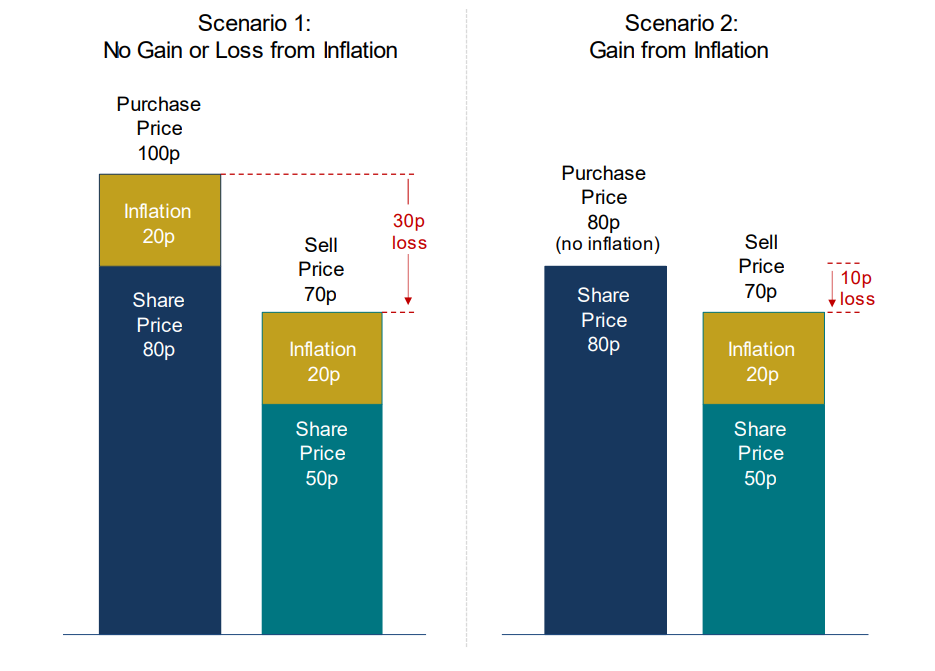



























































Brazil 2022: Lula’s Comeback Looms, Unless…
By Dan Steinbock
Not so long ago, Brazil’s BRIC economy soared as working people and the poor were able to join the labor force and formal economy. In just years, a “soft coup” and far-right president derailed Lula’s miracle. What next?
As I am writing this column, Brazil is preparing for its general election on October 2, after the disastrous term of Jair Bolsonaro, the incumbent far-right president and ex- captain, who placed army officers in key cabinet positions.
Elected in exceptional circumstances, Bolsonaro caused exceptional damage in Brazil’s economy and politics, society and military, and ecology.
With more than 156 million registered voters, Brazil is the second largest democracy in the Americas and one of the largest in the world.
But democracy is no assurance that the election outcome will be democratic.
Bolsonaro’s disastrous term
Rolling back protections for indigenous groups and facilitating deforestation, Bolsonaro compounded devastation associated with accelerated climate change.
Under his government, the COVID-19 pandemic effects were downplayed, quarantine measures opposed, and health ministers dismissed. So, the pandemic has killed almost 700,000 Brazilians; more than in India, despite its seven times bigger population.
Seeking re-election, Bolsonaro is facing former president Luiz Inácio Lula da Silva, a veteran trade unionist, who was elected in 2002, reelected in 2006, and left the office as the most popular president in Brazil’s history. In the past six years, he has overcome not just a throat cancer, but the far-right effort to keep him in prison.
Before the election, Bolsonaro, who has never hidden his yearning for a new military junta, made multiple allegations of election fraud. Observers have been quick to condemn such claims as invalid. But widespread concern prevails that false allegations could be exploited to challenge the election outcome, to execute a coup, or both.
After their bitter experience with military dictatorship (1964-85), the last thing Brazilians want is a junta of generals. Their prime concern is the economy and jobs. And that’s why they want Lula back.
Lula’s Boom, Rousseff’s plunge, oligarchs’ coup
In the early 1990s, Brazil still had a reputation as the world’s champion in “unfulfilled agreements with the IMF.” In 2003 Lula inherited a poor, resigned nation on the verge of an economic implosion. Winning the presidency heading the left-wing Workers’ Party (PT), his primary objective was to stabilize the economy and to lay foundation for the struggle against poverty.
Lula’s economic policies were born under favorable stars. In 2001, China joined the World Trade Organization (WTO). A year later, Lula initiated Brazil’s economic reforms. To modernize, Brazil needed demand for its commodities; to industrialize, China needed commodities.
In the 2010s, Lula refocused policy momentum to the expanding middle class. Now the goal became to provide new opportunities for the upwardly mobile, while ensuring income transfers to the poorest.
During those boom days, Brazil overtook Italy as the world’s seventh-largest economy, while living standards soared by almost 60 percent. In Brazil, these were the days of wine and roses, or caipirinha and orchids.
Brazil led Latin America. China spearheaded Asia. Both shunned President Bush’s unipolar foreign policy; each supported a multipolar view of the world.
Washington had a different take of such developments.
15 lost years
When Dilma Rousseff, Lula’s chief of staff, won presidency in 2012, she hoped to build on Lula’s success. In this quest, she failed, due to the lack of time and wrong priorities, tax policies and spending.
Worse, international environment worked against her. World trade plunged, commodity prices collapsed, China’s growth decelerated and the Fed initiated rate hikes. “Hot money” began to flee leaving behind asset shrinkages, deflation and depreciation.
In Brazil, a narrow economic elite reigns over an unequal economy polarized by class and race. It had always opposed Lula and PT, and it was supported by external forces. According to Wikileaks, the U.S. National Security Agency (NSA) tapped some 30 Brazilian government leaders’ phones (Rousseff, ministers, central bank chief, etc), and corporate giants, including Petrobras, the huge petroleum conglomerate that would play a central role in corruption allegations.
Sparked particularly by such allegations, protests erupted and were fostered by conservative and family-owned media oligopolies. That boosted the center-right opposition of juridical authorities and military leaders, conservative social democrats, Democrats, and PT’s more liberal allies.
In the subsequent “soft coup,” Rousseff was impeached by the Congress in 2016. The economic effects were disastrous. During Lula’s two terms, Brazil enjoyed a historical boom. Though sluggish rather than stagnant, Rousseff’s period was undermined by the coup. Bolsonaro’s economic mismanagement proved disastrous.
Following the coup and Bolsonaro, Brazil’s GDP is now where it was around 2007 or so. 15 years have been lost (Figure).
Brazil’s GDP: Lula (2003-10), Rousseff (2011-16), coup, Bolsonaro (2019-21)
Biased judges and political ambitions
In 2015 Sérgio Moro gained national attention as one of the lead judges in Operation Car Wash, a criminal investigation into high-profile corruption and bribery scandal involving government officials and business executives. It fueled Rousseff’s impeachment and Lula’s 580-day imprisonment.
Moro, a Harvard-trained judge, had participated in the U.S. State Department’s International Visitor Leadership Program (IVLP). Meanwhile, Brazil’s federal police began broader cooperation with the FBI and CIA.
Moro portrayed himself as untouchable judge with no political ambitions. Yet, afterwards he eagerly joined Bolsonaro’s government as Minister of Justice and Public Security (2019-20), and subsequently the presidential race only to withdraw after his ratings fell.
There was a reason for Moro’s plunge. His “investigations” were prejudicial. Leaked messages exchanged between Moro and prosecutors have led to widespread questioning of his impartiality during the Operation Car Wash hearings.
In June 2021, all cases Moro had brought against Lula were annulled. White House officials admitted that the CIA and other parts of the US intelligence apparatus had been involved in assisting the “War on Corruption,” which jailed Lula and elected Jair Bolsonaro. Even the UN Committee found Moro biased in all cases against Lula.
Toward Lula’s comeback, unless…
In Brazil’s first round of elections, the candidate who receives more than 50% of the total valid votes is elected. If the 50% threshold is not met, the two candidates who receive the most votes participate in a second round of voting on October 30.
All current polls suggest that Lula will win the first round. The projections indicate he could get 45%-48% of the vote, against Bolsonaro’s 30%-36%. Moreover, all current second-round polls suggest Lula’s win by 10% or more.
Then again…
While Washington has urged Brazil to conduct fair elections, Bolsonaro, after his June meeting with President Biden, issued a coded command to the military in which the word “auditable” focused attention on the electronic voting system.
Brazil’s military has a “parallel vote count,” which some consider a risk to democracy. Furthermore, CySource, a controversial Israeli company hired by Brazil’s military, will presumably “supervise” the election against “disinformation.” Meanwhile, Brazilian observers have charged both YouTube and Facebook for pushing pro-Bolsonaro content and supporting coup mongering.
If democratic rules prevail, Lula is likely to make a comeback on October 2, or October 30. If not, current turmoil is just a pale prelude of what’s ahead.
No election is viable without the “consent of the governed” – not even a democracy.
About the Author