Home Blog Page 392

Common Misconceptions About Portfolio Management Services

Portfolio Management Services

Portfolio management services (PMS) are investment services provided by professional financial experts or firms to manage an investor’s portfolio of securities. The primary objective of portfolio management services is to maximize the returns on the portfolio while minimizing the risks involved. However, many misconceptions about portfolio management services can lead to misunderstandings and confusion among investors. This blog will discuss some common misconceptions about portfolio management services.

Misconception #1: Portfolio Management Services Are Only for Equity Investments

Another common misconception about portfolio management services is that they are only for equity investments. Many believe that portfolio management services only deal with stocks and do not include other asset classes like bonds, mutual funds, or alternative investments. However, this is not true. Portfolio management services cover various investment options, including equities, bonds, mutual funds, and alternative investments.

A portfolio manager can help investors build a diversified portfolio that includes different asset classes and manages the portfolio’s risks and returns.

Misconception #2: Portfolio Management Services Guarantee High Returns

Many investors believe that portfolio management services guarantee high returns on their investments. However, this is not true. A portfolio manager can provide personalized investment advice and help investors build a diversified portfolio. Still, there is no guarantee that the portfolio will generate high returns.

A portfolio manager can manage risks by diversifying the portfolio, investing in different asset classes, and regularly monitoring the portfolio’s performance. However, it is important to remember that there is no guarantee of high returns in the stock market.

Misconception #3: Portfolio Management Services Are Expensive

Many investors believe that portfolio management services are expensive and not worth the cost. However, this is not always the case. Portfolio management services are available at different price points, and investors can choose the one that suits their budget.

Moreover, portfolio management services can be cost-effective in the long run. A professional portfolio manager can help investors build a diversified portfolio that maximizes returns while minimizing risks. By doing so, investors can save money on transaction costs, taxes, and other fees.

Misconception #4: Portfolio Management Services Are Only for Long-Term Investors

Many people believe that portfolio management services are only for long-term investors. However, this is not true. A portfolio manager can provide investment advice for both short-term and long-term investments. Short-term investments can include trading stocks, while long-term investments can include investing in mutual funds and other securities.

A professional portfolio manager can help investors build a diversified portfolio that includes both short-term and long-term investments and manages the portfolio’s risks and returns accordingly.

In conclusion, portfolio management services are an essential investment tool to help investors achieve their financial goals. However, many misconceptions about portfolio management services can lead to misunderstandings and confusion among investors. By debunking these misconceptions, investors can make informed investment decisions and work with professional portfolio managers to achieve their financial goals.

UFE Procedure

UFE Procedure

At the USA Fibroids Center, our specialists offer noninvasive UFE fibroid treatmentGet in touch to discuss UFE and UFE procedures.          

What is UFE?          

Uterine fibroid embolization (UFE) is a well-developed uterus tumour that is almost always benign (non-cancerous). Typically, women with uterine fibroids have more than one fibroid, which can vary significantly in size. For example, one large fibroid or multiple fibroids can enlarge the uterus to the same size as a six or seven-month pregnancy.

UFE is one of the possibilities of treatment for uterine myomas, also known as fibromas. This disease affects 50% of women. These benign tumours grow within the uterus muscle tissue and affect women, especially those aged between 20 and 40, in the so-called fertile period.

What causes fibroids?

The exact reason why uterine fibroids develop is unknown. However, researchers have linked the condition to genetics and hormones.

How are fibroids diagnosed for UFE fibroid treatment?

Typically, uterine fibroids are first diagnosed during a pelvic exam performed. Our doctor may refer you for an ultrasound or MRI scan if your uterus is enlarged. These tests can detect whether fibroids are present and accurately determine their location and size. Later, the UFE fibroid treatment is referred according to the patient’s severity.                               

Are fibroids common? Why seek UFE?          

  • Uterine fibroids are the most common neoplasm (abnormal growth) affecting women. 
  • African-American women are 3 to 5 times more likely to have fibroids than white, Asian, or Hispanic women.
  • 40 to 60% of women over 35 years of age have significant uterine fibroids.

UFE fibroid treatment options include UFE procedures, surgical therapies, and non-surgical therapy. 

UFE fibroid treatment is a minimally invasive approach to treating fibroids designed to preserve the uterus and shrink the fibroids for symptom relief. UFE can be performed under conscious sedation by a specially trained physician – an interventional radiologist. 

 UFE procedures 

UFE procedure occurs by placing a small catheter threaded through your groin or wrist until it reaches the vessels that surround your fibroids. The radiologist then sends microspheres there through the catheter.

What are the benefits of UFE?

  • Minimally invasive 
  • Outpatient procedure
  • Preservation of the uterus and ovaries
  • Shorter hospital stays as compared to hysterectomy and myomectomy.
  • Decreased symptoms caused by fibroids: heavy and prolonged menstrual periods, menstrual cramps, and abdominal pain/pressure.
  • Lower rate of adverse events compared to standard interventional treatments.
  • Most health plans cover UFE 

Is UFE fibroids treatment best for me?

You must understand UFE and UFE procedures that are made available to you at our USA Fibroids Center. Discuss your options in detail with our UFE specialist today. 

How safe is UFE?

UFE is considered a quick, peaceful and, above all, safe procedure with an agile recovery, especially when compared to other types of treatments for uterine fibroids, such as hysterectomy (removal of the uterus) and myomectomy (extraction of tumours).

On the other hand, there are a few risks associated with UFE fibroid treatment, including decreased blood flow to the leg; allergic reactions to medications; infection; uterine ischemia (decreased or inadequate blood supply to the uterus).

After the UFE procedures, premature menopause; infection of the endometrium or other structures in the pelvis, which, if severe, may require a hysterectomy; and rupture of the uterus. Ask our specialists to understand all the risks and benefits of UFE. 

Count on USA Fibroids Center

Now that you know what UFE fibroid treatment is, it’s time to understand your selections. Our mission is to support women and present all the information about uterine fibroids, from what they are, the types, symptoms and even the primary treatments to overcome the disease.

Call us. Schedule an appointment and learn everything about UFE fibroid treatment or talk to your doctor to evaluate the finest UFE procedures for you. After all, your uterus, your choices!

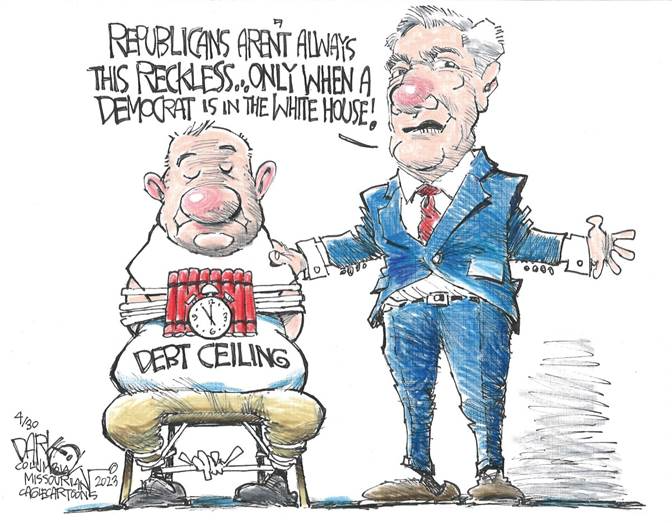
Biden-McCarthy Deal: Neoliberal Fiscal Policy Continues

debt ceiling

By Jack Rasmus

Over the weekend, US House of Representatives speaker McCarthy and president Biden announced a tentative agreement on raising the debt ceiling. The deal—almost certain to pass Congress later this week—represents a typical Neoliberal fiscal policy deal.

Ever since neoliberal capitalism policies were introduced under president Carter in the late 1970s, and subsequently expanded dramatically under Reagan, Neoliberal fiscal policy has been characterized by accelerating Pentagon and war spending; simultaneous cutting of business-investor taxes; acceptance of consequent escalating budget deficits—and in turn US national debt levels; and the use deficit/debt to cap and reduce social program spending.

That Neoliberal fiscal policy mix of tax-spending-deficit policies mix clearly defines the recent McCarthy-Biden deal.

That Neoliberal fiscal policy mix of tax-spending-deficit policies mix clearly defines the recent McCarthy-Biden deal.

In the roughly two-year agreement, extending from the present to the end of February 2025, Pentagon spending will rise by 11% in the 2024 fiscal year which begins October 1, 2023. That 11% is estimated at $885 billion. A further increase in Pentagon spending will certainly take place the following fiscal year, commencing October 1, 2024, but the deal doesn’t say how much further rise in Pentagon spending is projected for that second year.

Pentagon vs. Defense Spending

It’s important to understand that the $885 billion in Pentagon spending is not exactly the same as US defense spending. Around $200 billion more in defense related spending occurs in US government departments in addition to the Pentagon.

For example: all the oil costs for the US military (the largest single consumer of fossil fuels in the world) comes out of the Energy Department. budget. Veterans benefits spending for past wars comes out of that department. Then there’s CIA’s spending on mercenary and its own field forces. So too for the State Department which finances similar covert military activities. Part of Homeland Security costs can be considered defense. And then there’s the so-called ‘black budget’ of secret US military weapons development that never even gets reported in publications of the US budget or by the US press. That’s been estimated around $75 billion a year. So actual, total annual US Defense spending—in contrast to Pentagon spending alone—is probably around $1.1 trillion a year.

Taxation & the National Debt

Economists estimate that tax revenues, or lack thereof, are responsible for about 60% of deficits and therefore the debt (which is just the accumulation of annual deficits). Tax revenues are reduced as result of tax cutting and/or reduced revenues as a result of slow economic growth when recessions occur—or when post-recession recoveries are weak.

The McCarthy-Biden deal prohibits raising business-investor taxes the next two years. Businesses and investors will thus be assured that their Trump era $4.5 trillion in tax cuts, December 2018-28, will continue. Estimates of the cost of the lost tax revenues caused by the 2018 Trump tax cuts, from 2023 through 2028, will be about $2.7 trillion thus contributing significantly to a further rise in the national debt by 2025.

A Short History of US Debt Trajectory 1980-2025

That the McCarthy-Biden deal has nothing to do with the national debt is obvious from the fact two more years of US deficits, and thus the national debt, are expected to continue to rise by $4 trillion—up from the current $31.4 trillion level. US government debt levels will therefore exceed $35 trillion by the time the next ‘debt ceiling negotiations’ occur. However, neoliberal capitalism is not concerned about rising debt levels per se. (Which means it is not at all traditional ‘liberalism’ in the historical sense of that term).

During the era of US neoliberal capitalism, which extends from 1978-79 to the present, US national debt has accelerated. When Reagan took office in 1981 it was less than $1 trillion. By 2001 it had risen to approximately $6 trillion. Starting 2001 the national debt accelerated sharply under George W. Bush, as Mideast war spending escalated and Bush era taxes were cut by $3.8 trillion simultaneously.

The US national debt further accelerated under Obama. When the latter assumed office in January 2009, the national debt was around $10 trillion. Obama then cut taxes and introduced spending totaling around $787 billion in his 2009 fiscal stimulus program. He subsequently then extended the Bush tax cuts another two years in December 2010, to 2012, when they were to expire in December 2010 after their initial 10 year period. That two-year extension cost another $803 billion. Then, outdoing himself, starting in 2013 Obama once again extended the Bush era tax cuts, permanently this time, at an estimated additional lost tax revenue cost of $5 trillion.

Obama thus cut taxes, composed about 80% of cuts for businesses and investors, more than $6 trillion. The tax cuts, the slow economic recovery from the great recession that also reduced US tax revenues, and the $787 billion (plus another $50 billion or so for ‘cash for clunkers autos’ and first time home buyers assistance) spending in his 2009-10 fiscal stimulus programs, resulted in the US debt rising to about $18 trillion when Obama left office in January 2017.

Then came Trump’s $4.5 trillion additional tax cuts passed in December 2017, followed by year one (2020) of the Covid economic shutdowns and spending all of which pushed the national debt level to about $22 trillion when Trump left office.

The collapse of the economy in 2020-21 driving down tax revenues, the further tax cuts in 2020 through 2022, the continuing of Trump’s 2018 tax cuts, the bailing out of businesses in the various Covid economic stimulus bills of 2020-21, the roughly $3 trillion spent on households’ assistance during Covid, the mere 1% GDP growth in 2022 (December 2021 to December 2022) that depressed tax revenues, the funding of the Ukraine war ($200 billion in 2022-23), and Biden’s roughly $1.65 trillion spending on three business investment stimulus bills of 2022 (Infrastructure, Semiconductor & Manufacturing subsidy, and the energy industry misnamed ‘Inflation Reduction Acts), and the steady rise in interest on the debt from less than $300 billion in 2019 to estimated $600 billion in 2023—all converged to accelerate the national debt to its $31.4 trillion current level.

We can expect another even more contentious debt ceiling crisis déjà vu in about two years.

It is perhaps not coincidental that the tentative debt ceiling agreement (the 79ths in US history by the way) extends only to 2025. That’s when the $4.5 trillion Trump tax cuts of 2018 come up for a vote in Congress on whether to make them permanent instead of expiring in 2028. So we can expect another even more contentious debt ceiling crisis déjà vu in about two years.

The McCarthy-Biden Social Program Spending Cuts

As with all neoliberal fiscal policy measures, the deal’s 11%+ Pentagon-Defense spending increase—combined with the absence of any tax hikes in the deal—has meant cuts to social program spending.

The main cut in discretionary social programs is the agreement to freeze all 2024 fiscal year spending at 2023 levels, and in 2025 to allow a mere 1% increase in such spending.

On Monday, May 30 House Speaker McCarthy publicly bragged, when measured in dollar terms, the deal results in $2.1 trillion in social program spending reduction. Biden says it’s ‘only’ $1 trillion. The New York Times estimates the two-year deal amounts to a cut in total discretionary spending—defense and non-defense—is 18%. However, since the Pentagon gets a 11% (plus more in 2025) increase, the net discretionary non-defense spending cuts are likely in the 20%-25% range.

Total available funds for discretionary social program spending—like education, transport, health, etc.—in the 2024 fiscal year is capped at $704 billion. But it’s really only $583 billion after $121 billion spending on veterans is taken out of the $704 billion total non-defense. The US considers vet spending as spending on social programs but it should be considered Defense spending.

The $583 billion for discretionary non-defense spending contrasts with the $886 billion for the Pentagon alone. Or $1 trillion for Pentagon and Vets. (And still more for other ‘defense’ costs distributed in other departments of the US government).

In other terms of the deal involving discretionary social program/non-defense spending:

  • An estimated $30 billion in unspent Covid funds is cut. That’s another de facto $30 billion taken out of the economy.
  • In environment policy, fossil fuel companies are now able to expedite reviews and obtain licenses quicker. And West Virginia Senator, Joe Manchin, gets billions in funding for his gas pipeline in his state.
  • Republicans get an initial ‘bite of the apple’, as they say, in work requirements for single adults as a precondition for receiving food stamp benefits. The prior age rule for work requirement was raised from 50 to 54, with exemptions for veterans and the disabled. McCarthy did not get his additional work requirement rule for recipients of Medicaid.
  • Biden gets to keep his $60 of his $80 billion to hire IRS agents. $20B is redirected to other spending. That means only 7200 more agents will be hired during the deal’s two years. The research arm of Congress, the Congressional Budget Office, has estimated if more agents were not hired then continuing tax avoidance and tax fraud would reduce tax revenues by $204 billion. (The CBO has also estimated that failure to raise taxes by ending Trump’s 2018-28 $4.5T tax cuts for business and investors results in a loss of $2.7 trillion in US government tax revenues).
  • Biden compromised with McCarthy as well on the subject of student loan forgiveness. In addition to preventing any student loan forgiveness, McCarthy wanted immediate restoration of student loan payments plus retroactive back interest added to loans during the Covid period moratorium. In exchange for McCarthy dropping these draconian proposals, Biden agreed to resume student loan payments this August 2023.

Deficits and Debt Continue

Previously it was noted that Neoliberal fiscal policy is fundamentally unconcerned with annual deficits and a rising national debt. That’s no less true in the current debt ceiling deal.

McCarthy may brag that the agreement amounts to a $2.1 trillion reduction in non-defense spending over two years due to the freeze and 1% caps. But the truth is that the annual deficits will continue to rise in the $1.5T to $2T per year range. Independent estimates are the US debt will continue to rise by $4 trillion by the end of the deal. That’s more than $35 trillion by the end of fiscal year 2025. Interest on the debt this year will rise to approximately $600 billion, up from less than $300 billion in 2019, and even higher by 2025.

The causes are obvious: 

  • No rescinding of Trump’s 2018 tax cuts (which the CBO estimates will add $2.7 trillion to the debt). 
  • Continued below historic average US GDP growth which reduces tax revenues as well. 
  • Third, an ever-rising Pentagon and Defense spending trajectory, as the US funds the Ukraine war while preparing for another, even bigger one in west Asia with China before the end of the decade.

Debt Ceiling As Political Theater

The US has raised the debt ceiling 78 times before the current negotiation. This writer has argued the recent negotiations are just a ‘debt ceiling dance’ and predicted it too will be raised, a 79th time. And it has.

It’s virtually certain the deal will be approved by both the US House and Senate and signed by Biden by next weekend at the latest. McCarthy’s margin in the House was a mere 217-215 vote in support of his initial proposals. By agreeing to a two-year non-defense spending freeze and 1% caps—or in other words a $2.1 trillion and 18% discretionary spending cut—Biden clearly gave in far more than he needed to. One would have to conclude McCarthy and the Republicans came out ahead in the negotiations.

The House will vote on the deal on Wednesday, June 1, 2023 and will likely pass it. The Senate will take a little longer but will pass it as well by the weekend. Biden will sign by the weekend. Thereafter, both sides will ‘spin’ the deal and exaggerate their claims. They’ll both hide behind a claim that the economic sky would have fallen in had they not agreed. A dubious claim at best.

Then the real negotiations will begin. For the political theater surrounding the debt ceiling negotiations was in fact an attempt to renegotiate the Biden 2024 budget that commences next October 1, 2023. McCarthy simply used the debt ceiling issue to cut programs early. And he’ll come back for a second ‘bite of the apple’ at the end of this summer.

And if Biden’s negotiating performance during the debt ceiling negotiations is any indicator, he’ll get even more concessions from Biden.

About the Author

jackJack Rasmus is author of the book, ‘The Scourge of Neoliberalism: US Economic Policy from Reagan to Trump’, Clarity Press, January 2020, and the previous‘Central Bankers at the End of Their Ropes: Monetary Policy and the Coming Depression’, Clarity Press, August 2017. He blogs at jackrasmus.com and his twitter handle is @drjackrasmus. His website is http://kyklosproductions.com.

Exploring the Benefits of SWOT Analysis for College Students in Career Planning

Exploring the Benefits of SWOT Analysis for College Students in Career Planning

Career development is the most important step of someone’s life. Your whole being is based on the effectiveness of this plan. Marketing experts use this strategy to determine the possible opportunities and risks for a company. Similarly, internal and external factors affect a person’s existence. Knowing personal strengths and weaknesses makes it easier to determine the right path for the future.

Students find choosing an occupation quite a challenging and overwhelming step. There are countless possible uncertainties and choices in different careers. Only a systematic approach helps you to determine the right path. This approach is mainly a marketing tool, but everyone might benefit from this powerful analytical tool.

Using SWOT in Education

Utilizing SWOT analysis in academic life is a beneficial approach. By applying this strategic framework, students can comprehensively understand their strengths, weaknesses, opportunities, and threats in various academic contexts.

When conducting a thorough SWOT analysis, understanding how it is applied in real-world scenarios enhances the quality of your analysis. Universities and schools require students to prepare essays for different organizations and brands, so reading a few good examples of SWOT Analysis papers can be extremely helpful. This knowledge can then be applied to your essays. It will allow you to provide a well-informed paper.

If you are in university and want to prepare an essay for any brand, there are online marketing and business experts who would love to assist you. These essays greatly impact your grades, and being cautious about the quality saves you from troubled academic results.

Using SWOT in Employment Choices

Having a clear understanding of current life situations and what lies ahead is essential. You can easily recognize areas where you need improvement and where you are doing well. Everyone has unique abilities, and the challenge is to unlock your own true potential. Understanding and evaluating such special abilities allows you to overcome barriers and optimize your performance.

The aim is to choose a job where one makes progress without letting his flaws impact his performance. Leveraging your potential is only possible when you are fully aware of the positive points of your inner self. Apart from determining the powerful points, indicating flaws is also a major role of this strategy for decisions and choices.

Benefits of this Approach in Career Choices

Whether you are a student or an employee working in a corporate office, clearly understanding what makes you unique is important. You need to analyze and understand different unique personality traits to make more informed decisions. Imagine working on solving the American banking crises without knowing the root cause.

Resolving a situation is only possible if you are fully aware of the issue. Instead of mainly focusing on positive or negative factors from your life, one needs to find possible risks and growth options in the desired job. Here are some benefits of using this approach in job choices:

  • Self-awareness.
  • Decision making.
  • Leveraging personal power factors.
  • Addressing faults and flaws.
  • Exploiting available options.
  • Managing and anticipating risks.
  • Building resilience.

Identifying and Maximizing Abilities

Are there unique talents and abilities that you find attractive about yourself? Do you know how to use your special abilities in professional or academic contexts? This approach helps to find and uncover talents. When you have identified your weakness and powers, making choices based on these attributes is easier.

Are you good at communication and delivering your own thoughts? Opt for a job in journalism where the following personal attributes contribute to your growth. For a successful and satisfactory career in any sector, aligning your job choices with your interests is crucial. Only a satisfied and interested employee excels in employment. If you are forced to work in an environment that does not suit your interests, the job success rate starts going down.

The job market is too competitive nowadays. There are countless openings, but finding and choosing the right one is the real deal. Detecting traits enables you to filter out industries that meet your choices. Securing the desired job in the target market will offer better growth options and promising employment.

Determine your Reasons for the Personal Analysis

Conducting this report must have a background reason that motivates you to find your inner capacities and flaws. First, you need to determine your end goal after conducting this study. Do you want to get a new job, or do you just want to excel in your current work environment? Having a clear understanding of the final outcome can help you explore different aspects covered before.

Circumstances are always changing, and only someone with a growth mindset navigates through the situations. Once fully aware of personal attributes, navigating through challenges and difficulties will become easier in your academic and social life. Embracing difficulties is the only solution to overcoming faults and getting ready for the upcoming barriers in the coming years. Long-term success in a job is based on different factors you will learn about after the analysis.

Conclusion

This strategic approach is not limited to personal factors only. Students have to prepare papers about different local and international brands. At first, preparing such articles may seem easy, but a lack of experience makes things quite tough. Instead of wasting time and effort with useless resources, you may seek help from online marketing essay writers. These essay writers help you with academic essays and papers.

Seeking help from experts in the industry makes things a lot easier and more effective for individuals from various backgrounds. Finding positive points and flaws is the most important part of harnessing the power of personal abilities. Easy access to online resources has made things a lot simpler and easier.

How to Measure the Success of Your Hybrid Work Model

hybrid work model

By Gleb Tsipursky

We are used to reading about “hybrid working” these days, but what does it really mean? In fact, this umbrella term may have different interpretations for different organisations but, however you implement it, you need to establish how you are going to assess its effectiveness.

With 74 per cent of US companies transitioning1 to a permanent hybrid work model, leaders are turning their attention to measuring the success of their implementation of the model. That’s because there’s a single traditional office-centric model of M-F 9-5 in the office, but many ways to do hybrid work2. Moreover, what works well for one company’s culture and working style may not work well elsewhere, even within the same industry. So how should a leader evaluate whether the model they adopted is optimal for their company’s needs, or whether it needs refinement?

The first step involves establishing clear success metrics. Unfortunately, relatively few companies measure important aspects of the hybrid work transition. For example, a new report3 from Omdia reveals that 54 per cent of organisations find that productivity improved with the adoption of a more hybrid working style, but only 22 per cent of organisations established metrics to quantify productivity improvements from hybrid work.

As the saying4 goes, “What gets measured, gets managed.” It’s important to remember the full saying: “What gets measured gets managed – even when it’s pointless to measure and manage it, and even if it harms the purpose of the organisation to do so.” The second part of the saying points to the importance of carefully selected metrics that both are meaningful to the organisation’s success and can be effectively measured, ideally quantitatively and objectively but, if needed, qualitatively and subjectively to avoid bias5.

A Hybrid Work Model Is a Strategic Decision

From my experience helping6 21 organisations transition to hybrid work, it’s important for the whole C-suite to be actively involved in formulating the metrics, and for the board to approve them. Too often, busy executives feel the natural inclination to throw it in HR’s lap and have them figure it out.


That’s a mistake. A transition to a permanent hybrid work model is a strategic decision about the company’s long-term future. It requires an accordant degree of attention and care at the highest levels of an organisation. Otherwise, the C-suite will not be coordinated and will fail to get on the same page about what counts as “success” in hybrid work, and find themselves in a mess six months after their hybrid work transition.

From my experience helping6 21 organisations transition to hybrid work, it’s important for the whole C-suite to be actively involved in formulating the metrics, and for the board to approve them. 

It’s a best practice for the C-suite to determine the metrics at an off-site where they can distance themselves from the day-to-day bustle and make long-term strategic choices. Prior to the off-site, it’s valuable to evaluate initial metrics, including getting a baseline of quantitative and objective measures, as well as doing a thorough survey and some focus group interviews with employees and mid-level managers to assess subjective and qualitative ones. While there’s plenty of external data7 on hybrid work preferences, each company has a unique culture, systems and processes, and talent. Thus, the C-suite will find internal data very useful in their decision-making at the off-site.

Which Success Metrics Matter for Your Hybrid Work Model?

work at home

Based on the experience of my clients, companies focus on a variety of success metrics, each of which may be more or less important. Each of these metrics should be measured before establishing a permanent hybrid work policy, to get a baseline. Then, the metrics need to be evaluated every quarter, to evaluate the impact of refinements to the hybrid work policy.

Retention offers a clear-to-measure, hard success metric, one both quantitative and objective. A related metric, recruitment, is a softer metric; it’s harder to measure and more qualitative in nature. External benchmarks definitely indicate that offering more remote work facilitates both retention and recruitment. For instance, a survey8 of 1,000 HR leaders finds that 95 per cent of respondents believe offering hybrid work to be important for recruitment, and 60 per cent perceive hybrid work to boost retention. And in a report9 by Owl Labs that surveyed 2,300 full-time US workers, 52 per cent indicated they would be willing to take a pay cut of 5 per cent or more to be able to choose where they could work.

46% of employees would quiet-quit if forced back to the office full time, meaning they would do the bare minimum needed to avoid getting fired.  

Thus, if the C-suite chooses to adopt a more flexible policy, I recommend my clients to put it on their website “Join Us” page, as one of my clients did10 – the University of Southern California’s Information Sciences Institute. HR will inevitably find that they get an uptick in enquiries from job applicants referencing this policy, as well as potential hires showing enthusiasm for it in interviews. That enthusiasm is something that can be measured.

A key metric, performance, may be harder or easier to measure depending on the nature of the work. For instance, a study11 published by the National Bureau of Economic Research reported on a randomised control trial comparing the performance of software engineers assigned to a hybrid schedule vs. an office-centric schedule. Engineers who worked in a hybrid model wrote 8 per cent more code over a six-month period. Writing code is a standardised and objective measure of productivity and provides strong evidence of higher productivity with at least some remote work. If there is no option to have such clear performance measurement, use regular weekly assessments12 of performance from supervisors. But avoid software tracking programs, because the Owl Labs report13 finds that it causes 45 per cent of employees to feel stressed.

Collaboration and innovation are critical metrics to effective team performance, but measuring them isn’t easy. Evaluating them requires relying on more qualitative assessments from team leaders and team members. Moreover, by training teams in effective hybrid innovation14 and collaboration15 techniques, you can improve these metrics.

Several hard-to-measure metrics are important for an organisation’s culture and talent management: morale, engagement, well-being, happiness, burnout, intent to leave, and quiet-quitting. For instance, the Owl Labs report indicates16 that 46 per cent of employees would quiet-quit if forced back to the office full time, meaning they would do the bare minimum needed to avoid getting fired. Getting at these metrics requires the use of more qualitative and subjective approaches, such as customised surveys specifically adapted17 to hybrid and remote work policies. As part of doing the survey, it’s helpful to ask respondents to opt into participating in focus groups around these issues. Then, in the focus groups, you can dig deeper into the survey questions and get at people’s underlying feelings and motivations.

One way to get at well-being and burnout involves a hard metric: employees taking sick days. By measuring how that changes over time – seasonally adjusted – you can evaluate the impact of your policies on employee mental and physical health.

Diversity, equity, and inclusion represents an often-overlooked but critically important metric impacted by hybrid work. We know that underrepresented groups strongly prefer18 more remote work. Thus, my clients who chose to have a mostly office-centric schedule had to invest substantial resources into boosting their DEI to compensate for the inevitable loss of underrepresented talent.

Measuring DEI is quite easy and objective: look at the retention of underrepresented rank-and-file staff and leaders as the hybrid work strategy gets implemented. Also, make sure that your surveys allow staff to self-identify relevant demographic categories, so that you can measure DEI as it relates to engagement, morale, and so on.

Last, but far from least, my clients also consider professional and leadership development, and onboarding and integration of junior team members. A Conference Board survey finds19 58 per cent of employees would leave without adequate professional development, and that applies even more to underrepresented groups. Leadership development is critical to the long-term continuity of any company. And onboarding and integration of junior staff is a fundamental need for success. Yet most companies struggle with figuring out how to do these well in a hybrid setting.

Measuring professional development is best done through more subjective tools, such as surveys and focus groups. You can also assess how much staff improve in the areas where they received professional development, and compare in-person vs. remote modalities of delivering learning. Evaluating leadership development is easier and more quantitative and objective. Assess how well your newly promoted leaders succeed based on performance evaluations and 360-degree reviews. Onboarding and integrating new staff involves performance evaluations by supervisors and measurements of their productivity.

Conclusion

hybrid work cooperation

Once you have the baseline data from these diverse metrics at the off-site, the C-suite needs to determine which metrics matter most to your organisation. Choose the top three to five metrics, and weigh their importance relative to each other. Using these metrics, the C-suite can then decide on a course of action on hybrid work that would best optimise20 for their desired outcomes. Next, determine a plan of action to implement this new policy, including using appropriate metrics to measure success. As you implement the policy, if you find the metrics aren’t as good as you’d like, revise the policy and see how that revision impacts your metrics. Likewise, consider running experiments to compare alternative versions of hybrid policy. For instance, you can have one day a week in the office in one location and two days in another, and assess how that impacts your metrics. Reassess and revise your approach once a month for the first three months, and then once a quarter going forward. By adopting this approach, my clients found they could most effectively reach the metrics they set out for their permanent hybrid model.

About the Author

glebDr. Gleb Tsipursky21 helps leaders use hybrid work to improve retention and productivity while cutting costs. He serves as the CEO of the boutique future-of-work consultancy Disaster Avoidance Experts22. He is the best-selling author of seven books, including the global best-sellers Never Go With Your Gut: How Pioneering Leaders Make the Best Decisions and Avoid Business Disasters23 and The Blindspots Between Us: How to Overcome Unconscious Cognitive Bias and Build Better Relationships24. His newest book is Leading Hybrid and Remote Teams: A Manual on Benchmarking to Best Practices for Competitive Advantage25. His cutting-edge thought leadership has been featured in over 650 articles and 550 interviews in Harvard Business Review26, Forbes27, Inc. Magazine28, USA Today29, CBS News30, Fox News31, Time32, Business Insider33, Fortune34, and elsewhere35. His writing has been translated into Chinese, Korean, German, Russian, Polish, Spanish, French, and other languages. His expertise comes from over 20 years of consulting36, coaching37, and speaking and training38 for Fortune 500 companies from Aflac to Xerox, and over 15 years39 in academia as a behavioural scientist at UNC-Chapel Hill and Ohio State. A proud Ukrainian American, Dr Gleb lives in Columbus, Ohio.

References

  1. https://www.zippia.com/advice/hybrid-work-statistics/
  2. https://disasteravoidanceexperts.com/hybrid/
  3. https://omdia.tech.informa.com/marketing/campaigns/future-of-work?_sp=fee1b503-01f2-4eb3-a897-7844e4aebc67.1668878283946
  4. https://www.theguardian.com/business/2008/feb/10/businesscomment1
  5. https://www.top10.com/dating/top-10-cognitive-biases-to-avoid-in-dating
  6. https://disasteravoidanceexperts.com/consulting/
  7. https://disasteravoidanceexperts.com/hybrid/
  8. https://allwork.space/2022/11/digest-95-of-hr-leaders-believe-hybrid-working-is-critical-for-employee-recruitment/
  9. https://www.fastcompany.com/90807141/wfh-tracking-employees-remote-stress
  10. https://www.isi.edu/join-us/hybrid-remote-work-policy/
  11. https://www.nber.org/papers/w30292
  12. https://disasteravoidanceexperts.com/hybrid-and-remote-team-management-through-revising-performance-evaluations/
  13. https://www.fastcompany.com/90807141/wfh-tracking-employees-remote-stress
  14. https://disasteravoidanceexperts.com/virtual-brainstorming-for-an-innovation-advantage-for-hybrid-and-remote-teams-in-the-future-of-work/
  15. https://disasteravoidanceexperts.com/googles-myth-of-losing-social-capital-in-hybrid-work/
  16. https://www.fastcompany.com/90807141/wfh-tracking-employees-remote-stress
  17. https://disasteravoidanceexperts.com/hybrid
  18. https://disasteravoidanceexperts.com/jpmorgan-ceo-got-remote-workforce-diversity-exactly-wrong/
  19. https://www.conference-board.org/press/professional-development-survey-retaining-talent
  20. https://disasteravoidanceexperts.com/hybrid
  21. https://disasteravoidanceexperts.com/glebtsipursky/
  22. http://disasteravoidanceexperts.com/
  23. https://disasteravoidanceexperts.com/NeverGut/
  24. https://disasteravoidanceexperts.com/blindspots
  25. https://disasteravoidanceexperts.com/hybrid/
  26. https://hbr.org/2022/02/why-virtual-brainstorming-is-better-for-innovation
  27. https://www.forbes.com/sites/glebtsipursky/?sh=ff2419b27cbe
  28. https://www.inc.com/entrepreneurs-organization/a-behavioral-scientist-explains-why-your-swot-analysis-is-dangerously-flawed.html
  29. https://www.usatoday.com/story/news/health/2020/10/10/coronavirus-when-return-to-normal-life/5882898002/
  30. https://www.cbsnews.com/video/study-says-taking-a-small-break-from-facebook-might-be-good-for-your-mental-health/
  31. https://www.foxbusiness.com/business-leaders/working-home-improves-office-diversity-ceo-dimon-wrong
  32. http://time.com/4257876/wounded-warrior-project-scandal/
  33. https://www.businessinsider.com/disaster-expert-companies-should-face-coronavirus-with-pessimism-2020-3
  34. https://fortune.com/author/gleb-tsipursky/
  35. http://disasteravoidanceexperts.com/media/
  36. https://disasteravoidanceexperts.com/consulting/
  37. https://disasteravoidanceexperts.com/coaching/
  38. https://disasteravoidanceexperts.com/speaking/
  39. http://disasteravoidanceexperts.com/research

Career as a Pharmacy Technician: Prospects, Qualifications, and Tips for Success

Career as a Pharmacy Technician Prospects, Qualifications, and Tips for Success

A pharmacy technician plays a vital role in the healthcare industry, working alongside pharmacists to ensure patients receive the correct medications and dosage. This in-depth guide will explore the qualifications, job duties, work environment, and daily tasks of a pharmacy technician. Furthermore, we will discuss the educational requirements, training courses, and licensing certifications necessary to pursue a career as a pharmacy technician. Finally, we will provide an overview of the job outlook, salary expectations, and tips for advancement in this rewarding career.

The Role of a Pharmacy Technician

Pharmacy technicians are essential members of the healthcare team, responsible for:

  • Assisting pharmacists with medication dispensing
  • Managing inventory and stocking medications
  • Processing prescriptions and insurance claims
  • Providing excellent customer service to patients

Their role is critical in ensuring patients receive timely and accurate medications, contributing to their overall well-being.

Educational Requirements and Licensing Certification

To become a pharmacy technician, you must complete the following steps:

  • Complete a high school diploma or GED: Most employers require at least a high school diploma or equivalent for entry-level pharmacy technician positions.
  • Enroll in a pharmacy technician training program: Many community colleges, vocational schools, and online institutions offer accredited pharmacy technician programs, typically lasting between six months to two years. These programs cover essential subjects such as pharmacology, pharmacy law, and medication safety.
  • Obtain pharmacy technician certification: In most states, pharmacy technicians must obtain certification from either the Pharmacy Technician Certification Board (PTCB) or the National Healthcareer Association (NHA). This involves passing a certification exam and maintaining continuing education credits throughout your career.
  • Apply for state licensure or registration: Each state has its own requirements for pharmacy technician licensure or registration, which may include additional exams, background checks, or fees.

Job Outlook and Salary Expectations

The job outlook for pharmacy technicians is promising. According to the Bureau of Labor Statistics, employment of pharmacy technicians in the US is expected to grow 4% from 2019 to 2029, on par with the average growth rate for all occupations. This growth is driven by an aging population, increasing demand for prescription medications, and advances in pharmaceutical research.

Salaries for pharmacy technicians can vary depending on factors such as location, experience, and work setting. As of May 2020, the median annual wage for pharmacy technicians in the US was $35,100. Pharmacy technicians working in general merchandise stores and hospitals tend to earn higher salaries than those employed in retail pharmacies.

Internationally, salary expectations and job prospects for pharmacy technicians will depend on factors such as local healthcare systems, regulations, and demand for pharmaceutical services.

Tips for Becoming a Successful Pharmacy Technician

  1. Develop strong interpersonal skills: Pharmacy technicians interact with patients, pharmacists, and other healthcare professionals daily. Excellent communication and customer service skills are essential for success in this role.
  2. Stay informed about industry trends: Keeping up-to-date with the latest advancements in pharmaceutical research, regulations, and best practices can help you stay competitive in the job market and enhance your professional skills.
  3. Gain practical experience: Hands-on experience through internships, externships, or volunteer work can provide valuable insights into the daily tasks and challenges of a pharmacy technician, helping you prepare for your career.
  4. Pursue continuing education and certifications: Specialized certifications or additional training in areas such as compounding, sterile products, or medication therapy management can help you stand out from other candidates and advance in your career.

In Conclusion

A career as a pharmacy technician offers numerous opportunities for personal and professional growth while making a meaningful impact on patients’ lives. By obtaining the necessary qualifications, developing essential skills, and staying informed about industry trends, you can build a successful career as a pharmacy technician. With a promising job outlook and diverse work settings, this rewarding profession continues to attract individuals who are passionate about healthcare and patient care.

The Most Commonly Asked Questions About Personal Injuries in Fort Wayne

The Most Commonly Asked Questions About Personal Injuries in Fort Wayne

When it comes to personal injuries, there are plenty of questions and concerns that people in Fort Wayne might have. These injuries can be incredibly challenging to deal with, whether they are due to a car accident, slip and fall, medical malpractice, or another type of incident.

This article aims to answer some of the most commonly asked questions about personal injuries in Fort Wayne, providing detailed information and useful insights. Through a comprehensive overview of the legal landscape surrounding personal injuries, we hope to provide you with a deeper understanding of your options and potential next steps.

What Is Considered a Personal Injury?

Personal injuries can occur in various circumstances, but all have one thing in common – the negligence of another party causes them. This negligence can take many forms, such as a failure to maintain a safe workplace, a motor vehicle accident caused by reckless driving, or a slip and fall on the premises with hazards that should have been addressed.

When a victim suffers a personal injury, they may be entitled to compensation for their damages, such as medical bills, lost wages, and pain and suffering. The victim must file a civil lawsuit against the responsible party to pursue this compensation. This legal process can be complex, but it ultimately aims to hold wrongdoers accountable for their actions and provide victims with the financial resources they need to recover from their injuries.

Whether through settlement negotiations or a trial, the goal of a personal injury lawsuit is always to secure the best possible outcome for the victim so that they can move forward with their lives.

How Can a Personal Injury Attorney Help?

Regarding legal cases involving personal injury, every case is unique and requires specific attention and focus on achieving the desired outcome. This is where an experienced Fort Wayne personal injury lawyer comes in. With their knowledge and expertise, they can help guide you every step of the way and ensure that you have the best possible chance of success.

They will begin by getting to know you and the details of your case thoroughly. This includes taking the time to understand your priorities, concerns, and any particular circumstances that may be relevant to your situation. From there, they can create a tailored action plan that is designed to help you receive the maximum compensation possible.

They will handle all aspects of the case in an efficient and strategic way, from conducting investigations to negotiating with the opposing side. With the help of an experienced attorney, you can feel confident that your case is in good hands and that you will receive the necessary support to achieve the best possible outcome.

What Is the Personal Injury Claim Process?

The first step in the process is to seek medical treatment for any injuries sustained in the accident. Then, it is important to gather as much evidence as possible, such as police reports, photographs, and witness statements, to support your claim. It is also advisable to contact an experienced personal injury attorney who can provide guidance and representation throughout the process.

Your attorney will handle negotiations with insurance companies and assist in filing a claim in court if necessary. In Indiana, a statute of limitations limits the amount of time a person has to file a personal injury claim. It is essential to act quickly and seek legal advice promptly to avoid missing any critical deadlines.

With the right approach and support, it is possible to successfully navigate the personal injury claim process in Indiana and receive fair compensation for your injuries and other damages.

How Long Do I Have To File a Personal Injury Claim?

A statute of limitations is a crucial legal concept that governs the time frame within which a plaintiff can file a claim against another party. A time limit sets a deadline by which an individual must take legal action for a certain event or instance.

The concept has been designed to bring certainty and finality to legal disputes and protect defendants from having to defend against old and arguably stale accusations. In the state of Indiana, for example, personal injury claims must be filed within two years from the date of the incident, after which the plaintiff would no longer have the legal right to seek compensation.

It is important to note that various factors can affect the length of the statute of limitations period, such as the type of claim, the legal jurisdiction, and the age or mental capacity of the plaintiff. Thus, being aware of the statute of limitations is essential for anyone who may be considering taking legal action or who has been wronged in any way.

How Much Is My Personal Injury Case Worth?

When it comes to determining the value of your personal injury claim in Indiana, it can be difficult to determine an exact figure. However, you can estimate the overall worth of your case by evaluating your economic damages.

Economic damages refer to any monetary losses you may have faced due to your injury. These can include expenses related to medical treatment, lost wages from time taken off work, the cost of paying for assistance around the home, and physical therapy costs. While these costs may seem straightforward, it’s important to factor in any future expenses that may arise, such as ongoing medical treatments or long-term disability.

Additionally, you may be entitled to non-economic damages such as pain and suffering, which can vary depending on the extent of your injuries and the impact on your quality of life. Determining the full value of your personal injury claim requires careful consideration and a skilled attorney’s expertise.

How Long Does a Personal Injury Lawsuit Take To Get a Settlement?

The length of time it takes to reach a settlement can vary significantly. While some cases can be resolved in just a few weeks, others can take over a year to fully settle. This often depends on the case’s complexity and how cooperative the opposing party or their insurance company is.

Your attorney will work to negotiate a settlement that is fair and just. Still, it’s ultimately up to you to decide whether to accept a settlement offer or to pursue litigation further. It’s important to understand that the more complicated your case, the longer it’s likely to take to reach a resolution.

However, the benefit of working with a skilled personal injury attorney is that they can guide you through the legal process and work to achieve the best outcome for your case.

Have Your Questions Been Answered?

By now, you should better understand what constitutes a personal injury claim, how long the process takes, and why you need a lawyer for help. It is crucial to remember that each personal injury case is unique and requires careful consideration and legal guidance.

From Teaching to Research: Explore the Wide Range of Jobs at Boston University

From Teaching to Research Explore the Wide Range of Jobs at Boston University (1)

Boston University is a well-known private research university located in Boston, Massachusetts. The institution offers a wide range of academic programs at all levels, from undergraduate to doctoral, and employs over 10,000 faculty and staff members. While many individuals may associate Boston University with teaching, the university also offers numerous opportunities in research, administration, and other areas. In this article, we will explore the various job opportunities available at Boston University and what it takes to succeed in these roles.

Teaching at Boston University

The majority of Boston University faculty members work in teaching positions. The university offers a wide range of undergraduate and graduate programs in various subjects, including business, education, engineering, humanities, law, medicine, science, and social sciences. As a faculty member, teaching responsibilities may include conducting lectures, leading discussions, grading student assignments, and supervising student research. A successful educator at Boston University must have excellent communication skills, a strong understanding of their subject matter, and a passion for teaching and mentoring students.

Research at Boston University

Boston University is also known for its research programs, and faculty members can conduct research in a variety of fields. The university has research centers and institutes in areas such as biotechnology, engineering, neuroscience, public health, and social science. Faculty members can secure grants and contracts to support their research, including funding from the National Institutes of Health (NIH), the National Science Foundation (NSF), and other agencies. Successful researchers at Boston University must have a strong track record in their field, excellent analytical skills, and the ability to generate innovative ideas.

Administration at Boston University

In addition to teaching and research, Boston University also offers a range of administrative positions. Administrative roles can include working in areas such as admissions, finance, human resources, marketing, public relations, and student affairs. These positions require strong organizational and communication skills, as well as the ability to manage projects and people effectively. Successful administrators at Boston University should be able to work collaboratively with other departments and stakeholders to achieve organizational goals.

Other Opportunities at Boston University

Boston University also offers a range of other job opportunities for individuals with various skill sets and interests. These may include positions in areas such as IT, library services, maintenance and facilities, research support, and security. These roles require individuals who are detail-oriented, reliable, and able to work independently.

Qualifications and Skills Needed for Jobs at Boston University

The qualifications and skills needed for jobs at Boston University vary depending on the position. However, there are several key requirements that are important for success in any role at the university:

Conclusion

Boston University offers a wide range of job opportunities for individuals with different backgrounds and skill sets. Whether you are interested in teaching, research, administration, or another area, there is likely a role that will match your interests and expertise. The university values excellence, hard work, collaboration, and a passion for learning, and seeks individuals who embody these values. If you are interested in pursuing a career at Boston University, take the time to research the various job opportunities available, and consider how your skills and experience match the requirements for success in those roles.

NFL vs CFL: What Are the Differences?

NFL

If you want to bet on a football league, we can say that you have two main options: CFL and NFL. These are currently among the largest football leagues in the world, and on the best betting sites, you can find a bonus you can use for both. But before you do that, it might be a good idea to learn the differences between the two: The CFL and NFL differ on many counts.

Just because both leagues are for football doesn’t mean they’re the same,” says Casino Bonuses Finder product owner Tony Sloterman. “A bettor must know the differences between the CFL and the NFL in order to be able to make a sound analysis.” Below, we will do exactly that and explain how these leagues differ from each other.

The short history of both leagues

The Canadian Football League (CFL) was founded in 1958 and consists of a total of nine teams. These teams are divided into two divisions, East and West. The CFL season continues from June to November and ends with the Gray Cup championship. Although it was founded in 1958, it emerged as a combination of two leagues established in the early 1900s.

The National Football League (NFL) was founded in 1920 and consists of 32 teams. An NFL season begins in August with preseason games and continues from September to January. During the season, each team plays 17 games, and the two finalists face off in the Super Bowl. The Super Bowl is one of the biggest sporting events in the world.

Main differences between CFL and NFL

The first and most important difference between both leagues is in terms of player salaries. Predictably, NFL players earn a lot more. As of 2022, the median salary for an NFL player is $860,000. In the CFL, the median salary is around USD 60,000 – USD 100,000 per season. However, salaries are not the only difference between the two leagues: the rules of the game also differ in many ways.

  • In CFL games, the field size is set at 110 x 65. The midfield line is located at 55 yards and the end zone is only 20 yards deep. In NFL games, the field size is 110 x 53, the midline line is at 50 yards, and the end zone depth is 10 yards. This may seem like a simple difference, but it makes CFL games more offensive. In NFL games, passes and runs are more important.
  • CFL teams consist of 12 players and 24 players compete in each game. NFL teams consist of 11 players, with a total of 22 players on the field. This causes significant changes in football positions, and for the same reason, styles of play differ.
  • There are four downs in the NFL to advance the ball 10 yards. In the CFL, however, this is set to only three downs. Many people think that this makes CFL games more dynamic and exciting.
  • In NFL games, there are three timeouts per half. In CFL games, this number is limited to two timeouts.
  • Overtime formats are also quite different. In the NFL, the “sudden death” format is used for overtime. This means that the first team to score a goal or touchdown during overtime wins. If neither team scores points at the end of this period, the game is considered a tie. In the CFL, the ball is placed at the 35-yard line when overtime begins. The offensive team tries to advance the ball and the defensive team tries to score points. Then, the same scenario is repeated by switching roles.
  • Even the ball design is different: the ball in CFL games has white stripes. In NFL games, there are no stripes on the ball.

Objectively, it can be said that CFL games are more ‘hardcore’. The game is faster and more offensive, there are fewer rules to stop the flow of the game. In NFL games, the flow of the game is often interrupted, and the focus is on passing the ball correctly rather than being offensive. But of course, it is not possible to say that one is better (or worse) than the other. Both offer an enjoyable experience and true football fans follow both leagues.

Financial Freedom Through Forex: The Economic Benefits

Forex

Due to powerful digital forces, forex trading is at the forefront of a significant transformation, rapidly reshaping global economies in 2023. Forex, the largest and most liquid financial market worldwide, has spread far beyond geographical limits to now welcome participants from every part of the globe, an indicator of its revolutionary power applied in the financial services industry.

Forex trading represents an attractive approach to attaining financial independence through practice. Let us dive in to examine its influence on personal wealth accumulation and economic development.

Unlock your wealth through forex trading

Foreign currency trading can be an excellent way to build wealth. The sheer volume of daily trades on platforms such as tradingview is a testament to this market’s huge potential. Traders with knowledge and implementing proven tactics can quickly build significant wealth en route to financial independence.

Now, in an age where almost everything can be completed online, the democratization of financial markets has become an integral component of building individual wealth. Forex trading allows individuals to take control of their finances by engaging in speculation or hedging activities, providing an outlet to explore different investment avenues while taking charge of their finances.

Forex trading and economic development

Trading foreign currencies is a great way for individuals to build wealth while simultaneously contributing to economic development. Currency trading helps increase efficiency in currency markets, making international trade and investment easier and business operations simpler in today’s interconnected world. Businesses are easily able to acquire the foreign currencies necessary for purchases of goods, services, or assets from other countries.

Foreign exchange trading also contributes to market stability. Central banks regularly purchase or sell national currencies on the foreign exchange market in order to control inflation or maintain competitiveness, an activity especially important in rising economies seeking to strike a balance between economic expansion and stability.

Foster global integration through forex trading.

The foreign exchange market promotes global integration through its wide-reaching nature. By encouraging collaboration among nations across their national boundaries, this market brings economic advantages to all involved. Forex trading also facilitates international tourism, an integral component of global GDP, by providing a platform for currency exchange.

Technology’s role in Forex trading

Technology is at the core of foreign exchange trading. It enables real-time transaction execution, access to global markets, and market analysis through advanced instruments; all this helps increase efficiency and capacity for making accurate judgments from accurate information.

Investing in education: a pathway to profitable forex trading

No matter the opportunities presented by FX trading, one must possess an in-depth knowledge base to achieve financial independence through FX trading. Therefore, investing in education that encompasses market analysis, risk management, and trading psychology is vitally important.

Utilizing forex trading for sustainable wealth creation

Long-term financial independence can be achieved with sustainable strategies. When executed successfully, forex trading can provide a reliable source of revenue; however, for maximum effectiveness, one must possess an in-depth knowledge of market dynamics as well as stick with their trading plan in a disciplined fashion.

Forex

Automated trading and the forex market

As we progress into the 21st century, artificial intelligence and machine learning have become more prominent in the foreign exchange market. Automated trading systems utilizing complex algorithms have the ability to execute deals significantly quicker and more accurately than any human trader could ever be expected to do.

This technological development offers multiple key advantages. It eliminates one of the primary risks that many traders encounter: making decisions based on emotions alone. Furthermore, automated trading allows traders to “backtest” their methods on past data sets to enhance the accuracy of forecasts. With foreign exchange markets being open 24 hours a day and automated trading allowing traders to participate at any time throughout the day and night, automated trading provides traders with an advantage in an industry where opportunities may present themselves at any moment.

Forex trading and job creation

Currency trading provides another economic benefit by creating new jobs. Demand for professional services within the foreign exchange business has skyrocketed due to the continued expansion of the forex market, giving rise to an array of employment opportunities within its realm, such as forex brokers, financial analysts, software engineers, and experts in risk management, among others.

Increased market transparency

Forex trading provides another significant benefit: increased transparency. Due to its decentralized structure, forex ensures that all market participants have equal access to information compared with other financial markets, such as stocks or futures exchanges, which frequently favor large institutional traders over individual traders. This improves market integrity while creating more favorable conditions for traders of all sizes to conduct their businesses.

Leverage can help maximize profit in forex trading

Leverage in foreign exchange trading is a powerful asset that enables traders to control larger holdings with lower total amounts of capital, increasing potential gains while simultaneously increasing losses. To leverage effectively and successfully use it for trading success, a solid knowledge of risk management principles must also exist.

Forex

Forex and cryptocurrency markets

The relationship between the foreign exchange market and cryptocurrency trading has become ever more critical. Many forex traders have begun including cryptocurrency trading in their strategies since Bitcoin and other cryptocurrencies are becoming recognized asset classes.

Cryptocurrency trading presents traders with unique opportunities and risks to navigate carefully to succeed. As its decentralized nature requires significant volatility, successful cryptocurrency trading requires knowledge and risk management strategies similar to forex trading.

Exploring the future of forex trading

As we venture further into the future of forex, its landscape will continue to change as new technologies emerge and markets develop. Yet one concept remains constant: to succeed at forex trading, one needs knowledge, self-control, and an efficient trading plan.

By harnessing leverage in forex trading, it is possible to achieve financial freedom if you make the most of available opportunities and successfully navigate any hurdles along your journey. Although this journey may prove challenging, its potential rewards include economic growth, global integration, and independent personal financial standing, making it well worth undertaking.

EDITOR'S PICK OF THE WEEK

CFO's new mandate. CFO explaining the presentation

The Performance and Transformation Orchestrator: The CFO’s New Mandate in the Age of AI

By Terence Tse CFOs are evolving into AI-driven transformation orchestrators, balancing finance, technology, and strategy while upskilling teams, managing risks, and driving measurable business value. A key insight from this year’s AI for CFOs event, organized...

WISE DECISION MAKER GUIDE

POWER INFLUENCERS

Emerging Trends

The Future of Global Trade