Home Blog Page 25

Iran Appoints Mojtaba Khamenei as New Supreme Leader Amid Escalating War

Iran has named Mojtaba Khamenei as the country’s new supreme leader following the death of his father, Ali Khamenei, during the early stages of the war. Iranian state media confirmed the decision, according to reports cited by international news agencies.

The appointment places Mojtaba Khamenei at the top of Iran’s political and military hierarchy. As supreme leader, he now holds authority over institutions such as the Islamic Revolutionary Guard Corps and other powerful security bodies that shape Iran’s domestic and foreign policies.

The leadership change comes as fighting across the Middle East intensifies. Iran has launched missile and drone attacks across the Gulf region in response to ongoing strikes by U.S. and Israeli forces. Governments in several neighboring countries have reported damage to civilian infrastructure.

Authorities in the United Arab Emirates said air defense systems intercepted incoming missiles and drones, while residents in major cities heard explosions as defenses responded. In Bahrain, officials reported damage to a water desalination facility and a university building after drone strikes. Kuwait also confirmed that drones hit fuel depots and damaged part of a government building near its international airport.

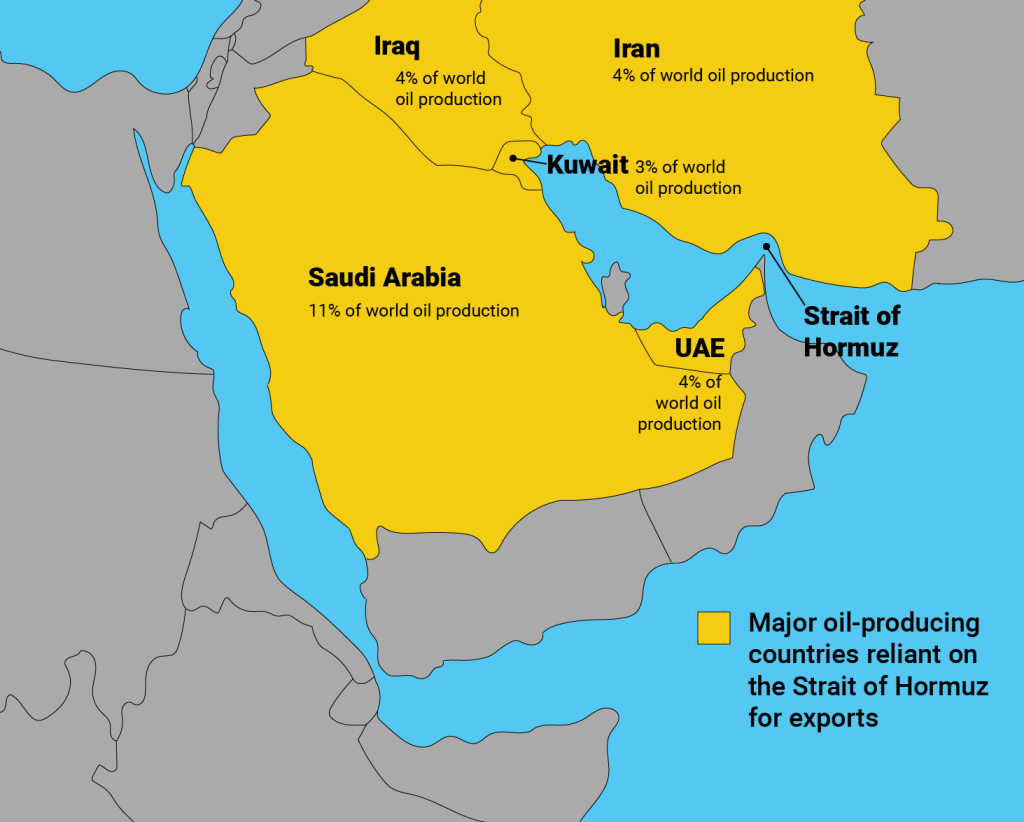
The conflict has also shaken global energy markets. Fighting near the Strait of Hormuz disrupted oil shipments from the Gulf, pushing crude prices above $100 per barrel for the first time in years.

Meanwhile, U.S. President Donald Trump previously suggested that Washington should influence Iran’s next leadership. Israeli military officials warned they would target individuals involved in selecting the new leader.

The conflict has already caused thousands of casualties and displaced large numbers of civilians across the region.

Related Readings:

Israel Strikes on Iran: Global Leaders React

Iran flag in background

Investing vs Trading: How Tax, Costs, and Psychology Change the Math

The distinction between investing and trading extends beyond timeframe differences. Tax treatment, transaction costs, and psychological demands create mathematical realities that separate these approaches far more dramatically than most beginners recognize. Numbers reveal why one strategy produces consistent wealth while other destroys capital for overwhelming majority.

The Tax Differential That Changes Everything

Short-term trading profits are generally taxed at ordinary income rates (ranging from 10% to 37%), whereas long-term capital gains benefit from preferential rates of 0%, 15%, or 20%. For high earners, this spread can reach 17 percentage points, fundamentally altering net returns.

The difference between investing and trading becomes starkly clear when calculating the impact of this tax math. For example, a trader with a $100,000 salary who generates $50,000 in short-term gains may face a marginal federal rate of 24% to 32%, with state taxes potentially adding another 5% to 10%. This brings the combined tax burden to nearly 40% of all gains.

Investor holding positions over one year pays maximum 20% federal long-term capital gains tax, often 15% or even 0% for lower income levels. For identical $50,000 gain, investor keeps $40,000 to $50,000 after tax while trader keeps $30,000 to $35,000.

Compounded over decades, this tax differential produces hundreds of thousands in wealth difference even when gross returns are identical.

Transaction Cost Accumulation

Trading frequency multiplies costs that appear insignificant individually but compound devastatingly:

  • Commission costs: Even at $0 nominal commission, payment for order flow, wider spreads on frequent trades, and slippage during execution create hidden costs averaging 0.1% to 0.3% per trade.
  • Bid-ask spreads: Difference between purchase and sale price represents immediate loss. Stock with $0.05 spread on $50 price costs 0.1% each direction, totaling 0.2% round-trip.
  • Market impact: Larger orders move prices unfavorably during execution. This matters less for small retail traders but still creates slippage on volatile names.
  • Platform fees: Some brokers charge monthly fees, data fees, or margin interest that traders pay but long-term investors avoid.

Investor making 4 trades annually pays these costs 4 times. Trader making 200 trades annually pays 50 times more in transaction costs, even before considering tax differential.

Mathematical comparison shows impact clearly:

  • Long-term investing: Average annual return 7% to 10% inflation-adjusted, tax rate 0% to 20% on long-term capital gains, transaction costs low from infrequent trading
  • Active trading: Targeted annual return 10% to 20% rarely sustained, tax rate 10% to 37% on ordinary income, transaction costs high from commission multiplication

Trader targeting 15% gross must achieve approximately 22% to 25% gross return to match investor’s 10% net return after taxes and costs.

The Behavioral Tax Nobody Calculates

Traders sell winners 50% faster than they cut losers. This behavioral pattern, called disposition effect, creates invisible tax on returns that compounds damage from explicit costs.

This bias means traders systematically realize small gains quickly while holding losing positions hoping for recovery. Result is portfolio accumulating losers while eliminating winners, exact opposite of optimal strategy.

Mathematical impact exceeds obvious. Trader who cuts winners at 15% gain but holds losers to 30% loss before capitulating needs 75% win rate just to break even. Achieving 75% win rate consistently is essentially impossible.

Investor holding positions multiple years allows winners to compound while tax deferral adds additional benefit. Amazon investor who bought at $100 and holds to $3,000 over decade pays tax once on $2,900 gain. Trader who bought at $100, sold at $150, bought at $140, sold at $180, repeated pattern pays tax on every gain while never capturing full appreciation.

Behavioral costs don’t appear on brokerage statements but destroy wealth as effectively as explicit fees.

Emotional Load and Decision Fatigue

Active trading demands constant attention, rapid decisions under pressure, and emotional resilience during drawdowns. This psychological burden represents real cost even when not financially quantifiable.

Trader monitoring positions throughout day experiences stress spikes with each adverse price movement. Cortisol elevation, sleep disruption, and mental exhaustion accumulate. Quality of life degradation has value even if not measured in dollars.

Decision fatigue from evaluating dozens or hundreds of trades monthly depletes mental resources needed for career advancement, relationship maintenance, and health management. Investor making quarterly rebalancing decisions preserves mental energy for higher-value activities.

Psychological sustainability matters enormously for long-term outcomes. Strategy requiring superhuman discipline and stress tolerance fails regardless of theoretical profitability because humans cannot maintain those standards indefinitely.

The Profitability Rate Differential

Only 1% of traders succeed over five years according to research tracking thousands of accounts. This contrasts sharply with long-term investors where majority achieve positive returns by simply holding diversified portfolios through market cycles.

This profitability differential doesn’t reflect intelligence or education differences but structural advantages favoring investors:

  • Time for compounding: Decades of uninterrupted growth allow small annual returns to become large absolute sums through exponential compounding.
  • Alignment with economic growth: Long-term investors capture economy’s productivity improvements as companies grow earnings and expand over years.
  • Reduced behavioral interference: Fewer decisions mean fewer opportunities for emotional mistakes that destroy capital.
  • Tax deferral benefits: Unrealized gains compound tax-free until eventual sale, providing mathematical advantage over realizing gains annually.
  • Lower stress enabling better decisions: When decisions are infrequent and low-pressure, quality improves compared to rapid-fire trading choices.

These structural advantages explain why passive investors achieve success rates inverse to active traders despite requiring less knowledge and effort.

When Trading Makes Sense

Rare scenarios exist where trading approach might be justified despite overwhelming statistical disadvantages:

  • Professional dedication with adequate capital: Treating trading as full-time career with $100,000+ starting capital, professional infrastructure, and accepting that 99% odds favor failure.
  • Specific expertise in niche market: Deep knowledge in particular sector or instrument creating legitimate informational advantage over other participants.
  • Hedging existing exposure: Business owner trading industry-related instruments to offset operational risks faces different calculus than speculative trader.
  • Small speculative allocation: Dedicating 5% of portfolio to active trading while maintaining 95% in long-term investments satisfies desire for activity without risking financial security.

For overwhelming majority, honest assessment reveals that trading appeal stems from entertainment value and ego gratification rather than genuine edge capable of overcoming structural disadvantages.

The Compounding Time Advantage

Tax treatment creating up to 17 % point differences between short-term and long-term rates fundamentally changes investing versus trading mathematics. With traders selling winners 50% faster than losers due to behavioral bias, transaction costs multiplying through frequency, and only 1% achieving five year profitability, structural disadvantages prove insurmountable for overwhelming majority. Long-term investors benefit from compounding over decades, alignment with economic growth, tax deferral, and reduced behavioral interference, explaining why passive approaches succeed where active trading systematically fails despite requiring less knowledge and effort.

Amendments Strengthening South Africa’s Voluntary Exclusion System.

Pretoria, South Africa — 06 March 2026 — Betting.za.com, a leading South African information site for online betting and gambling, has welcomed the publication of draft amendments to the National Gambling Regulations, 2004 in Government Gazette No. 54106 (10 February 2026), issued by the Department of Trade, Industry and Competition under Government Notice R. 7113.

The amendments focus on improving how South Africa’s Voluntary Exclusion Programme is administered and enforced through the National Register of Excluded Persons, alongside updates to technical rules related to gambling machine re-certification.

“Stronger, clearer processes around voluntary exclusion are an important part of player protection,” said Dennis Kumar, lead betting expert at Betting.za.com. “Anything that makes it easier to exclude, harder to bypass exclusion, and clearer for licensed operators to implement should be supported — because gambling should always stay safe, controlled, and within limits.”

What the Gazette Proposes

1) A clearer way to register for voluntary exclusion

Under the proposed wording, a person who wishes to be registered as an excluded person must submit a notice to the National Gambling Board (the “Board”) in hard copy or electronically using Form NGB 1/1. The notice must include, at a minimum, a recent passport-sized photograph or a digital colour photo with a stated minimum file size.

2) Tighter timelines for handling exclusion notices

The Gazette sets out specific timelines for processing and implementation:

  • Operators must submit the notice to the Board on the day they receive it.
  • The Board must capture the form within five days (excluding weekends and public holidays) and transmit a copy to licence holders and provincial licensing authorities.
  • Operators must prepare and implement administrative processes within five days (excluding weekends and public holidays) after receiving the notice.
  • A notice takes effect 10 days after the date it is submitted to the Board.

3) Stronger internal control expectations for enforcement

The draft amendments add explicit duties related to internal controls, including that licence holders must submit internal control measures to their provincial licensing authority within 90 days after the regulations come into operation, aimed at effectively enforcing exclusion measures within gambling venues and controlling non-participation by excluded persons. Provincial licensing authorities must then submit provincial registers and these internal control measures to the Board.

4) Updated re-certification timing for gambling machines and devices

The Gazette also proposes changes to the timing rules for re-certification of technical amendments to gambling machines and devices, tied to the letter of certification timeline, including a 24-month window in specified circumstances.

5) Updated forms substituted into the Regulations

The Gazette substitutes Forms NGB 1/1 and NGB 1/2, with the updated forms included in the annexure.

What This Means for Players

For players, the most important takeaway is clearer access to voluntary exclusion and stronger enforcement once a person chooses to self-exclude.

Voluntary exclusion is a formal “opt-out” from gambling

If someone feels they are at risk — or they want a firm barrier in place — voluntary exclusion is a formal way to have their details added to the National Register of Excluded Persons, which is accessible to provincial licensing authorities and licensed operators for enforcement.

What happens after you register

The updated Form NGB 1/1 explains that once accepted:

  • You are excluded from designated gambling areas nationally
  • Your name is included on the Register used by regulators and licensed operators
  • You are not permitted to gamble while you remain on the Register.

If you gamble while excluded

The form also notes that gambling during exclusion is in contravention of the exclusion procedures, and any winnings accrued during that period may be forfeited and remitted to the Board.

Support is referenced directly in the official forms

The annexure references the National Responsible Gambling Programme (NRGP) and includes the toll-free helpline 0800 006 008, as well as an SMS/WhatsApp line shown on the form.

What This Means for Licensed Operators and Regulators

While voluntary exclusion begins with an individual’s decision, the Gazette places emphasis on how quickly and consistently the system is implemented across the market:

  • Same-day escalation by operators to the Board after receiving a notice.
  • A defined capture-and-distribution timeline for the Board (five days, excluding weekends and public holidays).
  • Mandatory operator administration within five days, reinforcing that exclusion is not only recorded but operationalised.
  • Formal internal control measures are submitted through provincial licensing authorities, strengthening accountability and auditability of enforcement.

Betting.za.com: Supporting Safer, Secure Gambling in the Legal Market

Betting.za.com publishes independent, plain-language guidance across betting and online casinos topics and focuses coverage on licensed operators as part of its broader commitment to safer play and informed decision-making.

“Our mission is to be South Africa’s most reliable and complete source of online betting and casino information,” said Kumar. “That includes making regulatory updates understandable, highlighting practical player protections like exclusion tools, and ensuring readers know where to find help when gambling stops being fun.”

About Betting.za.com

Betting.za.com is South Africa’s trusted source for honest, expert betting and casino information. Led by betting expert Dennis Kumar, the site publishes independent reviews, guides, and industry updates designed to help South Africans make informed choices and prioritise safety.

Responsible gambling support: NRGP toll-free helpline 0800 006 008

New NZ Gambling Laws, Launches ‘Fair Play’ Audit to Protect Kiwis

WELLINGTON, NEW ZEALAND – March 6, 2026 – As New Zealand prepares for the most significant regulatory overhaul in its digital gambling history, the nation’s leading independent casino comparison site, PlayCasino.co.nz, has announced a sweeping “Fair Play” audit of its entire platform. The initiative is designed to protect Kiwi players from predatory offshore promotions as the country transitions to a strict 15-license regulated market.

Under the new Online Casino Gambling Bill, the unregulated offshore “grey market” will officially end on December 1, 2026. From that date, only 15 government-approved operators will be legally permitted to offer services to New Zealanders. In response, PlayCasino.co.nz is actively updating its platform to ensure players are shielded from desperate offshore operators trying to lock in users with deceptive sign-up offers before the deadline.

Navigating the End of the Unregulated ‘Grey Market’

The incoming legislation introduces stringent harm-minimization rules overseen by the Department of Internal Affairs (DIA), including a strict $100 cap on inducements, plain-language terms and conditions, and a mandated 4% Gross Gaming Revenue (GGR) community funding guarantee.

While these changes are a massive win for consumer protection and local grassroots sports, the transition period has left many Kiwi players confused about which platforms are safe to use right now. PlayCasino.co.nz’s new audit bridges this gap by highlighting only the operators that are already demonstrating a commitment to these incoming 2026 regulatory standards.

Protecting Players Seeking a No Deposit Bonus

A no deposit bonus remains the most sought-after incentive for New Zealanders looking to trial a new online casino without risking their own funds. However, in the dying days of the grey market, some unregulated offshore platforms are weaponizing these offers. They attract players with seemingly generous cash drops, only to bury impossible 100x wagering requirements, hidden withdrawal limits, or fast-expiring time limits deep within the fine print.

Through the “Fair Play” audit, PlayCasino.co.nz guarantees that any no deposit bonus featured on the site is evaluated for absolute clarity. The review team manually tests these bonuses to ensure players understand exactly what is required to clear their funds, flagging any operator that utilizes the hidden regulatory traps the NZ government is actively trying to eliminate.

Securing Fair Free Spins in a Mobile-First Market

As mobile gaming continues to dominate the local market, promotional offers tied to digital pokies have skyrocketed. Free spins are frequently bundled into welcome packages, but not all spins are created equal. Many offshore casinos restrict these spins to low-RTP (Return to Player) games or cap the maximum winnings at frustratingly low amounts.

PlayCasino.co.nz’s audit rigorously scrutinizes these mobile-specific promotions. The platform actively verifies that any free spins awarded to players come with reasonable, wager-friendly terms and are eligible for high-quality games. This ensures the promotions align with the consumer protection spirit of the incoming government legislation, rather than acting as a deceptive lure.

Strict New Structure and Content Requirements for Casino Reviews

To enforce these new protections, PlayCasino.co.nz has proactively overhauled the strict structure and content requirements for all of its online casino reviews. Moving forward, every review published on the platform must adhere to a standardized format that forces transparency. Operators are now graded heavily on the clarity of their bonus terms, their responsible gambling tools, and their readiness to comply with the DIA’s new licensing framework.

“The days of offshore casinos hiding predatory wagering requirements deep in their terms and conditions are over,” said Terri Radford, Head of Content at PlayCasino.co.nz. “With the grey market closing, some overseas operators are making aggressive last-ditch efforts to lock in players. We fully support the government’s new framework, which is why our new review standards ensure we only highlight casinos that treat Kiwis fairly right now.”

PlayCasino.co.nz is urging all New Zealanders currently playing on offshore sites to review their active accounts, cash out pending balances from non-compliant platforms, and utilize the new “Fair Play” review hub to find operators actively preparing for local licensure.

For more information, to access the “Fair Play” approved casino list, or to read the updated review guidelines, visit https://www.playcasino.co.nz/.

About PlayCasino.co.nz: PlayCasino.co.nz is New Zealand’s premier destination for independent, expertly crafted online casino reviews and industry news. Dedicated to player safety and transparent gaming, the platform equips Kiwis with the data, guides, and trusted operator recommendations needed to navigate the digital gambling landscape securely.

Spain Rejects Trump Trade Threat Amid Dispute Over Military Bases

Spanish Prime Minister Pedro Sánchez criticized the ongoing U.S. and Israeli strikes on Iran, calling the escalating conflict in the Middle East a “disaster” and warning against repeating past military mistakes.

Sánchez spoke after U.S. President Donald Trump threatened to cut off trade with Spain. The warning came after Madrid refused to allow two jointly operated air bases in Spain to be used for the strikes against Iran.

During a White House news conference, Trump sharply criticized Spain’s position, saying the country had been “terrible” and suggesting the United States could halt trade ties in response.

In a televised address, Sánchez defended Spain’s stance and urged caution. He warned that wars often begin through a chain of miscalculations and unforeseen events, arguing that leaders must avoid decisions that could trigger wider conflict. Spain’s government summarized its position with a clear message: “No to war.”

Sánchez also drew parallels to the early 2000s invasion of Iraq, saying Europe must learn from past conflicts and avoid repeating similar mistakes.

The dispute has also revived tensions within the alliance led by the North Atlantic Treaty Organization. Trump again criticized Spain for failing to meet NATO’s defense spending target of 5% of gross domestic product.

Meanwhile, Scott Bessent, the U.S. Treasury secretary, accused Spain of being uncooperative during the launch of the U.S. military operation against Iran and argued that delays in using the bases could put American lives at risk.

The European Union has since expressed support for Spain, with António Costa reaffirming the bloc’s solidarity and commitment to international law.

Related Readings:

Israel Strikes on Iran: Global Leaders React

USA China and Iran

A Complete Guide to the Door-to-Door Car Shipping Process

Door-to-door car shipping is one of the most convenient ways to transport a vehicle across the country. Instead of dropping off or picking up your car at a terminal, the carrier comes directly to your specified locations, saving time and simplifying logistics. Whether you’re relocating, purchasing a vehicle, or managing a seasonal move, understanding how the process works can help you plan with confidence. This guide explains each step of door-to-door car shipping so you know exactly what to expect from booking to delivery.

What Door-to-Door Car Shipping Means

Door-to-door service refers to vehicle pickup and delivery as close to your chosen addresses as safely and legally possible.

  • Eliminates the need to travel to a terminal
  • Offers greater convenience and flexibility
  • Works well for residential and business locations
  • May require nearby meeting points for large carriers

Professional providers like Passport Transport coordinate logistics to ensure smooth scheduling and clear communication throughout the process.

How the Door-to-Door Shipping Process Works

Understanding the workflow helps set expectations and avoid surprises.

  • Request and confirm a shipping quote
  • Schedule pickup within an agreed window
  • Carrier arrives for inspection and loading
  • Vehicle is transported along a planned route
  • Delivery is scheduled and completed
  • Final inspection confirms vehicle condition

Preparing Your Vehicle for Pickup

Proper preparation helps ensure a faster and smoother pickup.

  • Wash the car to document condition clearly
  • Take time-stamped photos from multiple angles
  • Remove personal belongings
  • Disable alarms
  • Check tire pressure and battery charge
  • Leave about a quarter tank of fuel
  • Remove toll tags and parking passes
  • Have ID and booking details ready

What Happens on Pickup Day

Knowing the steps reduces stress and confusion.

  • Carrier contacts you before arrival
  • Joint inspection is completed
  • Condition is recorded on the Bill of Lading
  • You sign paperwork and receive transport details
  • Vehicle is securely loaded onto the carrier

Transit and Tracking Expectations

During transit, your vehicle follows a planned route with scheduled stops.

  • Transit time depends on distance and route demand
  • Weather and traffic may influence timing
  • Carriers follow DOT regulations for safety
  • Updates may be provided throughout the journey
  • Patience is important for long-distance shipments.

What to Expect at Delivery

Delivery is the final and most important step in the process.

  • Carrier contacts you to confirm arrival time
  • Inspect the vehicle carefully before signing
  • Compare condition with pickup documentation
  • Note any discrepancies on the Bill of Lading
  • Complete final paperwork and payment if needed

Benefits of Door-to-Door Car Shipping

  • Maximum convenience for busy schedules
  • Reduced need for additional travel
  • Simplified logistics for long-distance moves
  • Safer handling with fewer transfers
  • Flexible scheduling options

This method is often preferred for residential relocations and online vehicle purchases.

Common Challenges and How to Avoid Them

  • Limited access for large trucks in narrow streets
  • Last-minute scheduling changes
  • Not preparing the vehicle in advance
  • Providing incorrect contact information
  • Booking too late during peak seasons
  • Planning ahead helps minimize these issues.

Frequently Asked Questions About Door-to-Door Shipping

Is door-to-door shipping available everywhere?

Most locations are accessible, but large trucks may meet at a nearby safe location if needed.

Do I need to be present at pickup and delivery?

Yes, or you can assign a trusted representative.

Is door-to-door more expensive than terminal shipping?

It can be slightly higher but offers greater convenience.

How long does delivery take?

Timing depends on distance, route, and weather conditions.

Is my car insured during transport?

Yes, licensed carriers provide insurance coverage while the vehicle is in transit.

Can I pack items in my car?

Most carriers discourage it due to insurance and safety restrictions.

Conclusion: A Convenient Way to Ship Your Vehicle

Door-to-door car shipping offers a simple and efficient way to move your vehicle without the added hassle of terminal visits. By understanding the process, preparing your car properly, and working with a reliable transport provider, you can enjoy a smooth experience from pickup to delivery. With clear communication and proper planning, door-to-door transport proves to be one of the easiest and most dependable ways to ship a vehicle long distance.

How US/Israeli Iran Strikes Will Penalize Global Prospects

By Dan Steinbock

The US/Israel strike against Iran aims at regime change in Tehran, control its energy resources and restructure the Middle East. But it will amplify risks, disrupt energy markets and could severely penalize global prospects.

On February 28, 2026, President Trump announced the start of Operation Epic Fury. In a surreal twist, he described the mission’s primary objective as defending the American people by eliminating “imminent threats” from the Iranian regime.

Trump specifically cited the need to eliminate Iran’s nuclear ambitions, destroy its military infrastructure and undermine Iranian-backed groups in the region. He delegated regime risk to the Iranian people urging them to “take over your government.” 

With Israel, the US hoped to “decapitate Iran’s leadership”, particularly Ali Khamenei, Iran’s Supreme Leader, and President Masoud Pezeshkian. This has been the US/Israeli dream since the Islamic Revolution almost half a century ago: to rule and divide the polity and fragment the economy, to dominate the energy resources.

In the absence of the US/Israel escalation in the region since early 2025, the 86-year-old Khamenei would likely have retired. But that was no option to either the US or Israel. His death was deemed vital to serve as a demonstration effect.

The strategic objective of Epic Fury is full counter-revolution, not peaceful reform and development.

Masoud Pezeshkian was elected as a reformist in the July 2024 Iranian presidential election. The first reformist to hold the presidency in Iran in some two decades, he campaigned on a platform of moderation, pledging to relax the strict enforcement of hijab laws, improve relations with the West, restart nuclear negotiations to ease economic sanctions, and to end Iran’s international isolation.

In the US and Israel, Iranian reformism is seen as a threat. Development, women’s rights, Western ties, eased sanctions, international cooperation – it all worked against the goal to control Iran’s energy resources and restructure the Middle East. Hence, their preference for a pro-US Iranian proxy, including Raza Pahlavi, the son of the former Shah of Iran.

The strategic objective of Epic Fury is full counter-revolution, not peaceful reform and development.

Undermining diplomacy for (another) illegal war

Following joint military strikes by the United States and Israel on Iranian nuclear and military facilities on February 28, 2026, several countries officially urged the UN Security Council (UNSC) to convene for an emergency session.

France was the first council member to request a Security Council meeting. President Emmanuel Macron warned of “grave consequences for international peace and security”. Jointly Russia and China requested a briefing, characterizing the strikes as an “unprovoked and reckless act of military aggression.”

During the session, UN Secretary-General António Guterres condemned the escalation and called for an immediate ceasefire.

In the Global South, many leaders were shocked by the Trump administration’s disregard of Iranian life, severe violation of international law and Iran’s sovereignty, especially after US participation in Israel’s genocide in Gaza and its ongoing ethnic cleansing in the West Bank.

In historical view, none of this is new. Since the 1970s, US administrations have progressively opted for illegal wars and unilateralism at the expense of international law and multilateralism. What is new is that today all gloves are off. The deployment of brutal force is open, blatant and unapologetic. Since might is right, any criticism must be regarded as potential subversion.

Moreover, these strikes against Iran are not just about the Middle East. They are a prelude – a demonstration effect toward China/Taiwan and Russia/Ukraine theaters.

Overnight, the Trump administration, once again without an exit strategy, managed to drag the international community ever closer to a Cold War escalation.

It’s the oil (and gas), stupid

Iran was the fourth-largest crude oil producer in OPEC in 2023 and the third-largest dry natural gas producer in the world in 2022. What makes Tehran so attractive to the US is that Iran is the world’s third-largest oil and second-largest natural gas reserve holder.

In mid-January, when the American Petroleum Institute (API) gathered oil industry leaders and lobbyists for a summit, Bob McNally of the Rapidan Energy Group, a veteran industry insider, pushed hard for the overthrow of Iran’s leadership. “Iran holds the biggest promise,” McNally proclaimed. “If you can imagine our industry going back there, we would get a lot more oil, a lot sooner than we will out of Venezuela.”

During the first term of President George W. Bush, McNally served in the White House as Bush’s Special Assistant. In 2008, he served as Mitt Romney’s energy advisor; and in 2010, he advised Senator Marco Rubio. As Trump’s Secretary of State, Rubio has played a critical role in the ongoing regime change efforts in both Venezuela (world’s largest proven oil reserves) and Iran.

Despite its abundant reserves, Iran’s total liquids production is limited because the oil sector has been subject to underinvestment and international sanctions for several years.

Efforts at external destabilization soared prior to US/Israeli strikes. On February 24, Damon Wilson, the head of the National Endowment for Democracy (NED), revealed during a House oversight hearing that NED “began supporting the deployment and operation of about 200 Starlinks early on” amid the violence which swept through Iran last month. But he was abruptly interrupted by the ranking member of the House Subcommittee on State, Foreign Operations, Rep. Lois Frankel, who told Wilson: “You know what, I’m going to interrupt you – we’d better not talk about it.”

In the US, mainstream media did not disclose the story. Only a few progressive outlets did. For its part, NED didn’t.

The war scenario

Here are the operational facts. The conflict started with the US/Israel-coordinated strikes, which hit nuclear, missile, and leadership targets across Iran. Expectedly, Iran retaliated with missiles and regional proxy attacks against Israel and US bases, including the Gulf states hosting U.S. military bases, such as Al Udeid Air Base in Qatar, Ali Al Salem in Kuwait, Al Dhafra in the UAE, and the U.S. Navy’s Fifth Fleet in Bahrain.

Reportedly, the US/Israeli campaign had planned for weeks-long sustained operations. According to Israeli Defense Force, the joint attack consisted of over 200 fighter jets attacking 500 targets in the largest attack in Israeli Air Force history.

In Friday, early casualties (initial phase) featured 200+ killed in Iran, hundreds injured (initial estimates). Against US and Israeli assurances, civilian incidents have already been reported (e.g., school strike casualties).

These strikes will penalize global economic prospects, which are already constrained by geoeconomic fragmentation (sanctions blocs, supply-chain bifurcation), coupled with extremely high oil market sensitivity (Hormuz risk premium).

From the standpoint of the global economy, the US/Israel attack against Iran occurs amid elevated geoeconomic fragmentation. Second, the US military doctrine builds on a phased escalation ladder from coercion to paralysis to political outcome.

  • Phase 1: Shock. Leadership targeting, nuclear/missile suppression and psychological dominance.
  • Phase 2: System Paralysis. Aiming at air defense destruction, IRGC command disruption and economic isolation escalation.
  • Phase 3: Political Outcome. With the strategic objective of internal collapse or negotiated capitulation.

The problem is that these military phases ensure no political resolution.

Trump’s four-week scenario

In the United States, President Trump has ducked reporters because the rationale for the US/Israeli Iran attacks – Iran’s planning for a preemptive attack against American interests – has proved untrue, as the US intelligence community has acknowledged.

In the Sunday interview with the British Daily Mail, President Trump disclosed a possible timeline for the war with Iran, suggesting fighting could go on for a month: “It’s always been a four-week process. We figured it will be four weeks or so. It’s always been about a four-week process so – as strong as it is, it’s a big country, it’ll take four weeks – or less.”

So, let’s model the 1-month scenario occurring against the backdrop of elevated geoeconomic fragmentation (not Cold War II). In this case, US strategy of phased escalation ladder is working imperfectly. As a result, the most realistic path is controlled escalation without regime collapse in Iran.

The scenario comes with new risks because in this scenario US and Israel seek to degrade Iranian strategic capacity enough to force a deterrence reset, while avoiding ground war. Iran responds asymmetrically but avoids actions that trigger US invasion. The likely outcome is military success, but political stalemate and economic shock in a very challenging historical moment.

Political turmoil, economic uncertainty, market volatility

In terms of duration, the US/Israeli attacks will use the first week to shock and demonstration, with precision strikes on nuclear infrastructure, IRGC bases, air defenses. Iran launches missile salvos toward Israel and US regional bases. Meanwhile, cyber operations expand both directions.

In political terms, there is an Iranian domestic rally-around-flag effect. Gulf states quietly support US, but call for de-escalation and hedge bets. In economic terms, oil jumps abruptly, with 20-30% risk premium and shipping insurance spikes in Gulf and Red Sea.

During the next 2-3 weeks, US/Israeli attacks seek to achieve system paralysis in Iran. If by then there is no tangible elite fracture inside Iran, the neutrality of the Global South increases and Western alliance cohesion begins to show trains, escalation risks compel the US and Israel on a diplomatic defensive. So, the fourth week will see negotiated stabilization pressure on both sides. The result could be an effective ceasefire without agreement.

But in economic terms, the unwarranted 1-month war would result in an energy shock, with oil price soaring to $115-140, gas prices rising via shipping risk and strategic reserves partially released. In shipping and trade, Red Sea and Gulf insurance premiums could double or triple, while delivery times lengthen due to inventory shocks.

In shipping and trade, Red Sea and Gulf insurance premiums could double or triple, while delivery times lengthen due to inventory shocks.

The macro effect is elevated inflation as energy prices are coupled with rising costs in transport, food and manufacturing, central banks delaying the anticipated rate cuts and global growth decelerating. In financial markets, emerging markets would suffer from capital outflows. Civilian economies underperform as defense and energy sectors outperform. Risk assets may not crash but will exhibit extraordinary volatility.

Escalation multiplies risks in the region and the world

Total deaths could soar to 15,000-35,000, a third or half of them civilian. The number of injured would surge to 60,000-120,000. Whereas the number of displaced persons could amount to 2-4 million.

Global inflation add-on could amount to 1-1.5 percentage points. Middle East GDP could suffer a -5-8% penalty and global growth prospects would be downgraded by -0.7%.

Like the Trump trade wars, it would produce no economic winners. But it could push the global economy closer toward an edge. It would be as unwarranted as the proxy wars in Ukraine, Gaza and elsewhere in the Middle East. And ultimately, civilians would pay the bill and defense contractors’ insiders would reap the profits.

The original version was published by Informed Comment (US) on March 2, 2026.

About the Author

Dr. Dan SteinbockDr. Dan Steinbock is an internationally recognized strategist of the multipolar world and the founder of Difference Group. He has served at the India, China and America Institute (USA), Shanghai Institutes for International Studies (China) and the EU Center (Singapore). For more, see https://www.differencegroup.net

Can I Be Personally Liable for My Business Debts?

One of the most common assumptions among business owners is that forming a company automatically protects their personal finances. In many cases that protection does exist, but it is not always the case. The amount of personal liability depends largely on the legal structure of the business, the way it has been managed and the agreements that have been signed.

Understanding where the boundaries lie is essential. Directors and sole traders who don’t fully understand their exposure can face serious financial consequences if the business encounters difficulty.

The Importance of Business Structure

The legal structure of your business will play a central role in determining any personal liability, you may for your business’s debt.

If you run a limited company, directors finances are classed as a separate legal entity to that of the company. So, if a limited company becomes insolvent, the company’s debts are their own. This concept of limited liability is one of the main reasons many businesses choose to incorporate. However, limited liability is not a guarantee of complete protection.

Situations Where You May Be Personally Liable

Even within a limited company structure, there are specific circumstances in which personal liability can arise. These often relate to personal commitments or misconduct rather than routine trading losses.

Common scenarios include:

  • Signing a personal guarantee (PG) for a loan, lease or supplier agreement
  • Providing security over personal assets to support company borrowing
  • Trading wrongfully while the company is insolvent
  • Engaging in fraudulent trading
  • Failing to meet certain statutory duties as a director

Personal guarantees are especially significant, as ff the business defaults, the lender can pursue the individual who gave the guarantee. This removes the protection of limited liability. Lots of lenders require directors to sign PG’s when providing finance to smaller or newer companies.

Personal Guarantees Explained

A personal guarantee is a legal promise that you will repay a business debt if the company cannot. It effectively removes the protection of limited liability for that specific obligation.

Before signing any guarantee, it is vital to understand:

  • Whether the guarantee is limited to a fixed amount or unlimited
  • Whether it is joint and several with other directors
  • What triggers enforcement
  • Whether your family home or other assets are exposed

Directors sometimes underestimate the long-term implications of these agreements. Once signed, they can be difficult to renegotiate. It also puts at jeopardy a director’s personal finances

Wrongful and Fraudulent Trading

Under UK insolvency law, directors have duties to act in the best interests of creditors once a company becomes insolvent or is at risk of insolvency. Continuing to trade and incur further debt when there is no reasonable prospect of avoiding liquidation can lead to personal liability for wrongful trading. The key issue is conduct. Directors who seek professional advice early and take reasonable steps to minimise creditor losses are generally in a stronger position than those who ignore warning signs.

Fraudulent trading is more serious and involves deliberate deception. If proven, it can result in personal liability and potential, director disqualification and in extreme cases criminal consequences.

Managing Business Debt to Reduce Personal Risk

Even when limited liability applies, directors may still face personal exposure if debts are not managed effectively, particularly when personal guarantees are involved. One way to take control is through business debt consolidation.

Business debt consolidation involves combining multiple existing debts into a single loan or finance arrangement. This can simplify repayments, improve cash flow visibility and, in some cases, reduce interest costs. By consolidating borrowing, a company can avoid missed payments or defaults that could trigger personal liability under guarantees or statutory duties.

It is important to approach consolidation carefully. Directors should consider the total cost of the new facility, any fees or early repayment penalties on existing debts, and ensure that the consolidated arrangement is sustainable for the business. Consulting a commercial finance adviser or accountant before taking action helps ensure that consolidation strengthens the business without exposing personal assets unnecessarily.

Sole Traders

For business owners working as sole traders, you are not protected to limited liability, which means the business’s debts are also classed as your own. In these cases, any loans you’ve taken personally to supplement the business, you can be personally liable for. Creditors can chase you personally for debts and potentially force you into bankruptcy.

In Summary

For most directors of solvent limited companies who have not signed personal guarantees, personal liability for ordinary business debts is unlikely. Limited liability remains a strong and well established principle in UK company law.

However, protection is not automatic in every scenario. Decisions made during borrowing, financial difficulty or contractual negotiations can create personal exposure that lasts for years.

Understanding the risks, asking the right questions and seeking timely advice can make the difference between contained business failure and personal financial hardship.

The Growing Demand for Strategic CFO Leadership in Modern Enterprises

Introduction: Why the CFO Role Is No Longer Just About Finance

Modern enterprises are facing constant pressure. Markets shift quickly. Technology evolves every quarter. Investors demand transparency. Customers expect better value. At the same time, costs are rising and competition is intense.

In this environment, businesses need more than a traditional finance head. They need a strategic Chief Financial Officer who can guide growth, manage risk, and shape long-term direction.

The CFO role has changed. It is no longer limited to balance sheets and compliance. Today’s CFO sits at the heart of decision-making. For business owners, understanding this shift is essential when planning future leadership hires.

The Evolution of the CFO Role

A decade ago, many CFOs focused mainly on reporting, tax compliance, and financial controls. Those responsibilities still matter, but they are no longer enough.

Modern CFOs are expected to:

  • Shape business strategy alongside the CEO
  • Drive profitability and operational efficiency
  • Lead digital finance transformation
  • Manage investor and stakeholder relationships
  • Support mergers, acquisitions, and expansion
  • Strengthen governance and risk management

In many organisations, the CFO has become the second most influential executive after the CEO.

For example, a mid-sized manufacturing firm planning European expansion recently relied on its CFO to assess market risks, secure funding, and model pricing strategies. The expansion succeeded largely because financial leadership was involved from the start, not at the end.

Why Strategic CFO Leadership Is in High Demand

1. Economic Uncertainty

Economic volatility has made financial planning more complex. Businesses must prepare for supply chain disruption, currency fluctuations, regulatory changes, and unexpected downturns.

A strategic CFO builds financial resilience. They create realistic forecasts, scenario plans, and cash flow strategies that protect the business during uncertainty.

Without this leadership, companies often react too late.

2. Increased Investor Scrutiny

Private equity firms, venture capital investors, and banks expect strong financial governance.

They look for:

  • Transparent reporting
  • Accurate forecasting
  • Strong internal controls
  • Clear growth strategies

A skilled CFO enhances credibility with investors. In many cases, businesses seeking funding are advised to strengthen their finance leadership before approaching the market.

This growing need has also increased demand for CFO recruitment specialists who understand the complexities of senior financial hiring.

3. Digital Transformation

Finance functions are rapidly becoming more data-driven.

Cloud accounting systems, ERP platforms, automation tools, and AI-powered forecasting have changed how finance departments operate. A modern CFO must lead this transformation.

Consider a retail company that moved from manual reporting to a real-time dashboard system. The CFO led the digital upgrade, reduced reporting errors, and improved decision speed across departments. Sales managers could access profit data instantly, which improved pricing decisions.

Digital fluency is now a key requirement.

What Business Owners Now Expect from a CFO

Today’s business owners want financial leaders who think commercially.

They expect CFOs to understand operations, customer behaviour, and market positioning. It is no longer acceptable for finance leaders to remain isolated from sales or marketing.

A strategic CFO should be able to:

  • Identify underperforming product lines
  • Improve gross margins
  • Reduce operational inefficiencies
  • Evaluate new investment opportunities
  • Advise on pricing strategy

For example, an e-commerce company struggling with thin margins brought in a CFO with strong analytics experience. Within six months, they optimised shipping costs, renegotiated supplier contracts, and improved profitability without raising prices.

That is strategic finance in action.

The Rise of CFO Recruitment Specialists

Hiring a strategic CFO is complex. It requires more than reviewing CVs.

Business owners must assess leadership capability, industry experience, cultural fit, and long-term vision. This is why many companies are working with CFO recruitment specialists.

These specialists provide:

  • Access to passive executive candidates
  • Confidential search services
  • Sector-specific expertise
  • Structured interview processes
  • Market salary insights

Because CFO hires directly impact company direction, mistakes are costly. Working with CFO recruitment specialists reduces risk and improves candidate quality.

In competitive markets, specialist recruiters also help secure top talent before competitors do.

Fractional and Interim CFO Models

Not every business needs a full-time CFO.

Many growing enterprises are turning to fractional or interim CFO solutions. This model provides strategic guidance without full executive salary costs.

Fractional CFOs typically work part-time and focus on key areas such as:

  • Cash flow improvement
  • Financial restructuring
  • Fundraising preparation
  • Systems implementation

For small and mid-sized enterprises, this approach offers flexibility. It allows business owners to access senior expertise while maintaining cost control.

Later, as the business scales, they may transition to a permanent CFO hire.

Skills That Define a Strategic CFO in 2026

Commercial Thinking

A strategic CFO understands revenue generation and profit drivers. They connect financial metrics to business outcomes.

They ask practical questions. Are we pricing correctly? Is this investment delivering returns? Are we allocating capital efficiently?

Strong Communication

Finance leaders must translate complex data into simple insights.

Board members, investors, and department heads rely on clear explanations. A strong CFO makes numbers understandable and actionable.

Risk Management Expertise

Cyber threats, compliance regulations, and global trade risks require proactive management.

Strategic CFOs build internal controls that prevent costly surprises.

Leadership and Cultural Fit

The CFO is part of the executive team. They must collaborate effectively with operations, marketing, HR, and sales.

Poor cultural alignment can disrupt decision-making.

This is another reason why many companies rely on CFO recruitment specialists to assess leadership qualities beyond technical expertise.

Real-World Example: Preparing for Acquisition

A technology services company planned to sell within three years.

The board hired a strategic CFO with acquisition experience. The CFO:

  • Cleaned up historical financial reporting
  • Implemented stronger internal controls
  • Improved EBITDA margins
  • Built detailed financial forecasts

When buyers conducted due diligence, the company’s financial systems were robust and transparent. The sale closed at a higher valuation than initially expected.

The CFO’s strategic leadership directly increased shareholder value.

Actionable Advice for Business Owners

If you are considering hiring a CFO, take these steps:

First, assess your growth stage. Are you scaling, stabilising, or preparing for exit?

Second, define the type of expertise required. Industry knowledge, fundraising experience, or digital transformation skills may all be important.

Third, consider whether a fractional CFO could meet your needs before committing to a full-time executive.

Finally, partner with trusted advisors or CFO recruitment specialists like FD Capital who understand executive search and market dynamics.

Strategic hiring requires careful planning, not urgency.

Conclusion: Key Takeaways

The demand for strategic CFO leadership is rising because businesses face greater complexity and higher expectations.

Modern CFOs do far more than manage accounts. They shape strategy, improve profitability, guide investment decisions, and protect the organisation from risk.

Business owners who invest in strong financial leadership position their companies for sustainable growth.

In today’s competitive environment, the right CFO is not a cost.

It is a competitive advantage.

AI Productivity is Finally Hitting the Real Economy

By Dr. Gleb Tsipursky

A new report from the St. Louis Fed shows that output is trending higher even though headcount has barely moved. A few years ago you might have blamed pent-up demand or a lucky sales run. In late 2025, the more honest explanation is that a growing share of your team has a chatbot open in the background. The St. Louis Fed’s national U.S. adoption tracker, built on their Real-Time Population Survey, shows generative AI use jumping ten percentage points in a single year. Their new analysis of adoption and productivity argues those extra minutes are starting to show up in macro data.

Adoption Has Moved From Curiosity To Habit

Generative AI use is already a majority behavior for working-age Americans. The latest Real-Time Population Survey data show that by August 2025, 54.6 percent of adults aged 18 to 64 had used generative AI, up from 44.6 percent a year earlier, with work use rising from 33.3 to 37.4 percent and nonwork use from 36.0 to 48.7 percent. Three years after launch, this adoption rate is far ahead of personal computers and the early commercial internet at comparable points in their rollout.

They are already automating pieces of their day even if your policies and metrics have not caught up.

An earlier working paper on adoption using the same survey already found that nearly 40 percent of adults were using generative AI by late 2024, with between 1 and 5 percent of all work hours assisted by the technology. In other words, what looked like a wave of experimentation has hardened into routine use. For managers, that means your workforce is no longer waiting for a formal AI strategy. They are already automating pieces of their day even if your policies and metrics have not caught up.

The picture is global, not just American. A 2024 global employee survey of more than 13,000 workers across 15 countries finds that about half of employees using generative AI save at least five hours a week, and nearly two-thirds of leaders say they are starting to redesign their organizations around it. Microsoft and LinkedIn’s 2024 Work Trend Index report similarly reports that 75 percent of knowledge workers worldwide are already using AI, with almost half starting within the previous six months and many doing so ahead of any official guidance.

Shadow use is now a structural feature of the workplace. A recent study of “bring your own AI” behavior based on payroll and survey data finds that nearly half of U.S. workers use AI tools without telling their employer, and roughly two-thirds of those users pay for the tools out of pocket. The combination of high adoption and low formal oversight means leaders who rely only on sanctioned tool metrics are likely underestimating how deeply AI is already woven into everyday work.

Time Savings At The Task Level Are Turning Into Real Productivity

The strongest evidence for productivity gains comes from narrow tasks, and it is no longer limited to lab settings. The St. Louis Fed’s work productivity analysis estimates that among workers who used generative AI in the previous week, average time savings reached 5.4 percent of their work hours, with 20.5 percent of these users saving four or more hours per week. When you include nonusers, that still translates into 1.4 percent of total hours saved across the workforce.

Randomized experiments reinforce these self-reports. In a large customer support experiment with 5,000 agents, access to a generative AI assistant increased issues resolved per hour by 14 percent on average, with the biggest gains for novice workers and minimal gains for seasoned experts. In software development, a trio of GitHub Copilot field experiments across Microsoft, Accenture, and a Fortune 100 manufacturer found that developers with access to the tool increased weekly pull requests by about 26 percent, again with outsized benefits for junior engineers. A separate professional writing experiment shows that giving knowledge workers access to ChatGPT cut completion times by roughly 40 percent and improved quality scores by double digits.

The Real-Time Population Survey team at the St. Louis Fed has now connected these micro-level gains to the broader economy. Pooling survey waves from early 2025, they estimate that self-reported time savings from generative AI correspond to 1.6 percent of all U.S. work hours, implying up to a 1.3 percent boost to labor productivity since ChatGPT’s release when fed into a standard production model. That estimate lines up with official statistics: labor productivity in the U.S. nonfarm business sector grew at an annualized 2.16 percent from late 2022 through mid-2025, compared with 1.43 percent per year in the 2015–2019 period cited in the same analysis.

Not all of that gap comes from chatbots, of course. Some saved time turns into on-the-job leisure rather than extra output, a point emphasized in both the St. Louis Fed work and an ITIF commentary on time savings. Yet even if only part of the reported 5 percent to 25 percent task-level improvements are captured as throughput, the cumulative effect on project timelines, service quality, and innovation pipelines is significant. For professionals managing complex portfolios, that translates into extra cycles for client work, experimentation, and strategic planning that rarely fit into traditional schedules.

Firms Now Decide Whether These Gains Scale Or Stall

The next phase is less about whether generative AI works and more about how firms convert scattered time savings into durable performance. Global modeling from McKinsey estimates that recent advances in generative AI have raised the share of work hours that are technically automatable from about 50 percent to as much as 60 to 70 percent and could add 0.1 to 0.6 percentage points to annual productivity growth between 2023 and 2040, within a broader automation range of 0.5 to 3.4 percentage points. Those gains only materialize if organizations actually redesign workflows so that freed-up hours are redeployed into high-value activities rather than drowned in meetings and email.

The St. Louis Fed’s new analysis offers an early stress test. By correlating industry-level generative AI time savings with detrended productivity growth, the authors find that industries reporting one percentage point higher time savings saw, on average, 2.7 percentage points faster productivity growth relative to their pre-pandemic trend, with a correlation of 0.32 across sectors in their industry-level correlation study. They are explicit that this pattern is not proof of causality, but it is exactly the sort of relationship you would expect if AI-assisted work were beginning to matter in the aggregate.

At the same time, firm adoption still lags worker behavior. Even among adopters, usage often remains confined to marketing automation and analytics pilots rather than end-to-end process redesign. That gap between individual experimentation and organizational commitment shows up clearly in the Work Trend Index, where high employee usage coexists with the finding that 60 percent of leaders say their organization lacks a clear AI plan.

Companies that take this operational route are more likely to convert scattered time savings into measurable gains in throughput, quality, and innovation.

For executives, the implication is blunt. The technology has already crossed the adoption threshold. The differentiator now is whether your organization treats generative AI as a sanctioned part of core workflows. That means mapping tasks where workers already use AI informally, standardizing prompts and guardrails, investing in targeted training, and tying AI-assisted work to performance metrics rather than leaving it in the shadows. Companies that take this operational route are more likely to convert scattered time savings into measurable gains in throughput, quality, and innovation. Those that do not may still see happier employees, but they will leave much of the productivity upside on the table.

About the Author

Dr. Gleb TsipurskyDr. Gleb Tsipursky was named “Office Whisperer” by The New York Times for helping leaders overcome frustrations with Generative AI. He serves as the CEO of the future-of-work consultancy Disaster Avoidance Experts. Dr. Gleb wrote seven best-selling books, and his two most recent ones are Returning to the Office and Leading Hybrid and Remote Teams and ChatGPT for Leaders and Content Creators: Unlocking the Potential of Generative AI. His cutting-edge thought leadership was featured in over 650 articles and 550 interviews in Harvard Business ReviewInc. MagazineUSA TodayCBS NewsFox NewsTimeBusiness InsiderFortuneThe New York Times, and elsewhere. His writing was translated into Chinese, Spanish, Russian, Polish, Korean, French, Vietnamese, German, and other languages. His expertise comes from over 20 years of consultingcoaching, and speaking and training for Fortune 500 companies from Aflac to Xerox. It also comes from over 15 years in academia as a behavioral scientist, with 8 years as a lecturer at UNC-Chapel Hill and 7 years as a professor at Ohio State. A proud Ukrainian American, Dr. Gleb lives in Columbus, Ohio.


EDITOR'S PICK OF THE WEEK

CFO's new mandate. CFO explaining the presentation

The Performance and Transformation Orchestrator: The CFO’s New Mandate in the Age of AI

By Terence Tse CFOs are evolving into AI-driven transformation orchestrators, balancing finance, technology, and strategy while upskilling teams, managing risks, and driving measurable business value. A key insight from this year’s AI for CFOs event, organized...

WISE DECISION MAKER GUIDE

POWER INFLUENCERS

Emerging Trends

The Future of Global Trade