At present, amid rising right-wing extremism in Europe, Umayyad al-Andalus (8th–10th centuries) offers vital lessons on coexistence and progress. Dr Kalim Siddiqui examines how military consolidation, taxation, trade, and agricultural innovation—through new crops, expansion of irrigation, and cultivation methods—fuelled urban prosperity and intellectual achievement. Córdoba emerged as Europe’s preeminent knowledge hub, transmitting Greek and Arabic scholarship via state-sponsored medicine, science, and multiculturalism—a legacy that shaped European civilisation.
I. Introduction
This study addresses a critical lacuna in economic historiography by challenging the enduring myth that civilisational progress and scientific innovation were exclusively European phenomena. This narrative, which posits a linear trajectory of advancement from Greece and Rome through to modern Europe, has historically served to delegitimise the intellectual and material contributions of non-Western societies. As Edward Said (1978) argued in Orientalism, this intellectual framework was not merely an academic curiosity but a constitutive element of imperial ideology. Said demonstrated how Western scholarship constructed the “Orient”—encompassing the Middle East, Asia, and North Africa—as an exotic, irrational, and inferior “Other.” (Said, 1978)
This discursive formation, replete with stereotypes of despotism, stagnation, and fatalism, was systematically deployed to justify European colonial expansion. By portraying non-European peoples as incapable of self-governance or genuine progress, European scholars and ruling elites naturalised their own civilising mission, while simultaneously obscuring the flows of knowledge, technology, and capital that had long moved from the Global South to Global North.
Against this backdrop, the present study argues that a rigorous, empirically grounded examination of economic history serves as a powerful antidote to such Eurocentric distortions (Siddiqui, 2020). Specifically, we focus on the Iberian Peninsula during the 9th and 10th centuries—a period often marginalised in mainstream European economic narratives.
This study contends that the advancements achieved in al-Andalus in agriculture, medicine, astronomy, mathematics, urban infrastructure, and public health were not only superior to those found in contemporaneous Christian Europe but were also directly facilitated by the knowledge systems and labour of North African and Middle Eastern peoples. This historical reality fundamentally undermines the myth of European autarky in progress—a myth that has been aggressively propagated since the 16th century, coinciding with the rise of transatlantic slavery, systematic colonial plunder, and the global hegemony of European powers.
By reconstructing the political economy of this period, this paper aims to achieve three objectives: (1) to provide a fact-based corrective to the teleological narratives of European exceptionalism; (2) to demonstrate the material and institutional mechanisms through which non-European knowledge was diffused and implemented in the Iberian context; and (3) to contribute to ongoing debates in political economy regarding the relationship between state structures, cultural exchange, and long-term developmental outcomes. In doing so, the study not only recovers an important but often underappreciated chapter of economic history, but also demonstrates how historical narratives themselves can shape contemporary understandings of development, power, and global inequality.
Al-Andalus—the historical Arabic designation for the Muslim-ruled territories of the Iberian Peninsula, corresponding primarily to modern-day Spain and Portugal—serves as the focal point of this study. The economic prosperity of Umayyad’s al-Andalus in the 9th and 10th centuries, this study argues, arose from a mutually reinforcing dynamic between state consolidation and economic expansion. Military-backed central authority furnished the political stability essential for agricultural, industrial, and commercial growth, while the resulting fiscal revenues simultaneously financed state institutions and reinforced Umayyad legitimacy (Kennedy, 1996).
The state actively engineered this process through deliberate policies: urban foundation (notably Almería), agricultural investment in irrigation and the introduction of new crops and cultivation techniques—which generated a substantial rise in productivity and farm incomes—industrial clustering, and monetary regulation. Collectively, these interventions positioned al-Andalus as a paradigmatic case of state-directed economic development in early medieval Europe.
The economic expansion of Umayyad al-Andalus in the 9th – 10th centuries, this study argues, arose from a mutually reinforcing dynamic between state consolidation and economic expansion. A military-backed central authority furnished the political stability necessary for agricultural, industrial, and commercial growth, while the resulting fiscal revenues simultaneously financed state institutions and reinforced the regime’s legitimacy.
A military-backed central authority furnished the political stability necessary for agricultural, industrial, and commercial growth, while the resulting fiscal revenues simultaneously financed state institutions and reinforced the regime’s legitimacy. Critically, the Umayyad state did not merely facilitate but actively engineered this process through deliberate policy choices: the foundation of commercial cities such as Almería, state-supported irrigation projects and the introduction of new crops and cultivation methods—which drove a significant rise in productivity and farmers’ income—industrial clustering, and monetary regulation. These interventions positioned al-Andalus as a distinctive model of state-directed economic development in early medieval Europe.
II. Economic Growth: The Engine of the State
The economic prosperity of the Umayyad Caliphate in the 9th-10th century rested on two mutually reinforcing pillars: a transformative agricultural revolution and a sophisticated system of state finance. Rather than functioning as separate sectors, these elements formed an integrated model of economic growth in which agricultural surplus stimulated urban expansion, commercial development, trade and fiscal revenue.
Beyond maintaining political stability and security, the Umayyad state pursued deliberate policies to promote economic development, with agriculture serving as the foundation of al-Andalus prosperity. Recognizing its central importance, Umayyad rulers invested extensively in agricultural infrastructure by constructing canals, expanding irrigation networks, claiming new lands under cultivation and restoring existing Roman water systems. These improvements enhanced the land productivity and supported the cultivation of a wider variety of crops.
The agricultural transformation was further strengthened by the introduction of new crops from the Arab countries, including rice, sugarcane, cotton, citrus fruits such as oranges, pomegranates, coconuts, vegetables, and spices. At the same time, farmers adopted more advanced cultivation techniques, including scientific methods of irrigation, improved agricultural technologies, and seasonal farming calendars that increased yields and optimized land use. Land reforms and lands rights to peasants also contributed to agricultural expansion by reducing the dominance of the latifundia (large landed estates) and encouraging a more equitable distribution of farmland.
Collectively, these innovations transformed al-Andalus into one of the most productive agricultural regions of the medieval world. The resulting abundance of food and agricultural commodities supported population growth, urbanization, expanding trade networks, and increased state revenues, leading many contemporary writers to describe al-Andalus as a “paradise on earth.”
The stability achieved by Abd al-Rahman III in the 10th century was not merely a political triumph but a victory in both class and military warfare, secured through systematic consolidation of force. A standing, professional army—unprecedented in its discipline for medieval Iberia—served a dual purpose: it not only enforced tax collection across the often-recalcitrant countryside but also underpinned the entire economic system.
The government was able to accumulate immense wealth, estimated at ten million dinars annually, depended on the regular, extraction of surplus from agricultural producers, urban artisans, and commercial enterprises. State formation in this context was, in essence, the establishment of a more efficient and centralised mechanism of surplus appropriation—one that broke the power of local warlords and autonomous governors who had previously siphoned revenues away from the Umayyad treasury.
This financial power derived from a sophisticated and multi-layered taxation system that covered agricultural production, trade, manufacturing, and other resources (Siddiqui, 2026a). The state levied taxes on land (the kharaj), on non-Muslim communities (the jizya), and on commercial transactions, while also collecting customs duties at ports and urban markets. The strong military ensured regular collections, deterring evasion and rebellion, and filling the treasury with revenues that created a powerful cycle of reinvestment (Bovill, 1968).
This surplus, in turn, financed an expanding network of roads and sea routes, facilitated the growth of an extensive bureaucracy staffed by trained administrators, sustained a professional standing army capable of projecting power both internally and externally, and underwrote major architectural projects—including the monumental palace-city of Medina Azahara and the expansions to the Great Mosque of Córdoba. These projects were not merely displays of wealth; they functioned as instruments of state legitimacy, visually asserting the Caliph’s authority over both the al-Andalus elite and the broader population (Meyer, 2013).
The economic dynamism of al-Andalus is vividly reflected in its urban life, where the concentration of capital and state patronage created conditions for unprecedented cultural and commercial flourishing (Siddiqui, 2015). In the 10th century, Córdoba—often regarded as the medieval world’s most cosmopolitan and sophisticated city—boasted 1,600 mosques, 900 public baths, and over 80,000 shops and businesses. Its streets were well paved, with raised sidewalks for pedestrians, and at night, lamps illuminated miles of thoroughfares, making it remarkably akin to a modern city in its infrastructure and urban planning.
This urban sophistication was not accidental; it reflected deliberate state investment in public works, sanitation, and amenities that attracted traders, scholars, and artisans from across the known world. The public baths, for instance, were not merely places of hygiene but social and cultural hubs, while the mosques functioned as centres of learning and community life. The sheer density of commercial establishments—80,000 shops—indicates a thriving mercantile economy supported by state-backed coinage, secure trade routes, (Siddiqui, 2019) and a legal framework that protected property and contract rights.
Regional specialisation further distinguished al-Andalus urban centres, creating an integrated economic network that linked rural production with urban processing and trade. Toledo was renowned for its arms and armour, Jaén for silk, Lisbon for honey and amber, and Játiva (modern Valencia) for papermaking—a craft so advanced that its products became famous throughout the Muslim world and later influenced European book production. Almería, meanwhile, emerged as a major port and textile centre, while Seville served as a commercial gateway to the Atlantic (Kennedy, 1996).
This geographical concentration of industries, often under state supervision or with state patronage, fostered technical expertise, healthy competition, and the cross-pollination of skills. Artisans and merchants formed guild-like associations, and the state-maintained inspectors (muhtasibs) who regulated weights, measures, and quality standards, ensuring consumer confidence and market stability (Siddiqui, 2015),
At its peak, Córdoba was Europe’s second-largest city after Constantinople, with a population estimated at over 100,000—and possibly as high as 250,000—while Paris and Rome each had fewer than 50,000 inhabitants in the year 1000. This demographic and economic disparity is a powerful testament to the urban and economic dynamism of al-Andalus under Umayyad rule. Yet this urban splendour rested on an often-invisible foundation of rural labour, coercive taxation, and social hierarchy. The irrigation systems that sustained agricultural abundance required forced labour, and the tax collectors who ensured the flow of revenue were often backed by the Caliph’s soldiers.
Moreover, while the urban economy benefited immensely from state investment and long-distance trade (Bovill, 1968), it also generated new forms of social inequality. Wealth accumulated in the hands of merchants, officials, and military commanders, while urban artisans and labourers faced precarious conditions. The palaces and gardens of the elite stood in stark contrast to the modest dwellings of the working poor, even as both inhabited the same city walls. Córdoba’s sophistication, in other words, was as much a reflection of state power and class hierarchy as it was of cultural refinement.
E. W. Bovill’s (1968) The Golden Trade of the Moorsadvances a methodological synthesis of anthropology, economic geography, and environmental history, reconceiving the Sahara not as an inert barrier but as a dynamic corridor shaped by human agency. The study’s empirical weight rests on ninth- and tenth-century commercial flows between sub-Saharan West Africa and al-Andalus, wherein caravans transported gold, spices, ivory, and ores northward in exchange for salt, textiles, and manufactured goods. Yet Bovill insists these transactions exceeded the material, enabling the diffusion of Islamic legal traditions, astronomical knowledge, and commercial practices across the Maghrib and into Europe. In doing so, he recasts the Sahara as a bridge of ecological adaptation and reciprocal influence, fundamentally reorienting the economic trajectories of both Africa and the Mediterranean (Bovill, 1968).
Nevertheless, the fiscal and urban achievements of the Umayyad Caliphate represented an extraordinary historical conjuncture—one in which military power, administrative efficiency, and commercial vitality combined to create a society whose material and cultural accomplishments rivalled anything in contemporary Europe or the Middle East. The state’s ability to extract and reinvest surplus, to regulate markets and industries, (Siddiqui, 2015) and to project power both within and beyond its borders, created the conditions for a golden age that would leave an indelible mark on European history. Yet it was precisely this dependence on centralised extraction and elite patronage that made the Caliphate vulnerable—a vulnerability that would become devastatingly apparent when in the 11th century the fitna tore apart the fragile fabric of Umayyad rule and fragmented the al-Andalus state into warring taifa kingdoms.
III. The Agrarian Transformation in al-Andalus
Historians had characterized the agricultural boom of early medieval Iberia as an “Islamic Green Revolution.” Recent scholars, however, argue that the transformation was neither rapid nor uniformly top-down, but rather a protracted and contested process shaped by the competing agendas of state elites, urban investors, and rural communities (Civantos, 2022).
Two overlapping dynamics defined this agrarian shift. The first was a state-led initiative to construct large, irrigated estates—such as the sophisticated hydraulic networks near Córdoba and Madinat al-Zahra—designed to maximize surplus for the treasury and urban markets. The second, often overlooked, was the agency of local farmers, who independently extended dryland cultivation, adopted small-scale irrigation, and integrated new crops into existing systems. The state did not simply impose change from above; it also encouraged farmers to participate in regional trade networks, facilitating the broader diffusion of agricultural practices (Siddiqui, 2015).
The impact is visible in the crop record. Improved irrigation made possible the cultivation of rice, sugar cane, cotton, and citrus fruits (oranges, lemons, peaches) in southern Europe. Archaeological data indicate substantial production of high-yield crops during the 9th-10th centuries, particularly in coastal zones. The establishment of large irrigated areas, such as the huerta of Ricote, testifies to a lasting transformation that owed as much to local adaptation.
This development was not purely peaceful. The intensification of commercialization and fiscal extraction, coupled with elite investment, generated significant social tensions. Land concentration and the dispossession of small farmers became widespread, revealing that state-led capital accumulation rested on increasing rural inequality and social conflict (Civantos, 2022). The political economy of 9th–10th century al-Andalus was thus deeply contradictory: immense state power and economic prosperity sustained through constant, renegotiation of state–society relations. Córdoba’s flourishing exemplifies this dual nature—a brilliant urban and agricultural civilization built on elite investment, peasant labour, and a fragile peace enforced by military might.
The agrarian transformation under Moorish rule was considerably more advanced than in contemporary Europe, largely due to the state’s active role in disseminating new seeds, promoting innovative techniques, and expanding irrigated land (Siddiqui, 2015). The scale of technological and scientific knowledge introduced to Spain arguably surpassed that of earlier empires, including those of Alexander the Great or Rome.
The Moors introduced cotton in the 9th and rice to Europe in the 10th century. The state encouraged farmers to learn improved methods for enhancing soil fertility, and instructed farmers in new tools, plants, and manures and ultimately improved agricultural productivity. Furthermore, the state constructed extensive canal networks not only to irrigate farmlands but also to supply water for houses, mosques, and palaces. Equally important were advances in food preservation and storage: techniques allowed wheat to be stored for up to a hundred years, and drying methods enabled figs, plums, cherries, and apples to remain edible for several years—innovations that significantly enhanced food security and commercial exchange.
For al-Andalus peasants, irrigation was always the preferred agricultural strategy; the colonization of rainfed lands was a second-best option, adopted only under specific conditions. Rainfed farming entailed greater risks and lower profits, and despite significant technical advances, al-Andalus agriculture remained vulnerable to weather-dependent harvest failures. Livestock husbandry faced persistent challenges, with high mortality rates due to epidemics. Consequently, the colonization of dry lands cannot be explained solely by population growth or peasant initiative (Meyer, 2013).
This pattern stands in marked contrast to developments in western Europe. Between the second half of the 10th century and the mid-13th century (until the Black Death crisis), a sustained demographic and agricultural expansion known as the “great expansion” or “economic revolution” unfolded in medieval Spain and Portugal. This period also saw increased mercantile exchange and market production. In peasant villages, both the expansion of cultivation onto new lands and the intensification of stock-keeping were actively encouraged—evidenced by underground grain silos and housing architectural features. This mixed strategy was designed to maximize survival through economic diversification.
Historians continue to debate the nature and extent of the “Islamic Green Revolution.” Some, following the pioneering work of Andrew Watson, emphasize the transformative introduction of Eastern crops and techniques, framing it as a decisive break from classical and Visigothic agriculture. Others, such as Eduardo Manzano Moreno and Miquel Barceló, caution against overstatement, pointing to the persistence of Roman-era irrigation, the limited geographical reach of new crops, and the role of environmental constraints such as aridity and soil salinity. They argue that the revolution was less a sudden rupture than a gradual, uneven synthesis—one that combined imported knowledge with local adaptation and, in many cases, simply intensified existing practices.
However, the fact is that the huge transformation took place during this period. The crops that became staples of al-Andalus’s agriculture—rice, sugar cane, cotton, citrus fruits, and saffron—were not merely introduced and perfected through centuries of experimentation. The hydraulic technologies developed under Umayyad patronage, from norias to qanats, persisted long after Christian reconquest, shaping the agricultural landscapes of Iberia well into the modern era (Siddiqui, 2026b).
And the intellectual currents that flowed from Córdoba’s libraries and academies—translations of Greek science, Arab agronomy, and Persian medicine—filtered into the universities of Europe, contributing to the intellectual ferment that would eventually birth the Renaissance.
IV. The Economy of al-Andalus
Naval power became a crucial dimension of Umayyad economic strategy. Shortly after the conquest of Iberia, the need to control the Strait of Gibraltar, counter Viking raids, and launch attacks on Christian coasts drove the development of a fleet, but naval strength also served commercial purposes, with exchanges with Christians continuing during truces.
A key development was the government investment in Mediterranean port cities. The founding of Pechina (later Almería) and the construction of arsenals allowed the caliphate to assert control over the western Mediterranean and affirm its universalist ambitions. By 931, Pechina had become the caliphate’s principal Mediterranean port. In 955–956, after a Fatimid naval attack destroyed Pechina, Caliph Abd al-Rahman III founded the new city of Almería, which grew rapidly into perhaps the most active port in the western Mediterranean by the 10th century. This expansion was not solely top-down: Pechina’s foundation in the 880s involved Yemeni tribes settled for coastal defence, people from the bishopric of Urci, and broader Umayyad encouragement.
Al-Andalus’s strategic geography made it a natural hub for Mediterranean trade. A growing population—Córdoba reportedly reached 500,000 inhabitants—drove rising consumers demand for food and other commodities, while high productivity created vibrant internal and external markets (Meyer, 2013).
The minting of gold and silver coins facilitated transactions. Trade was the main source of revenue for the Umayyad state, and al-Andalus played a crucial role as a “middleman” in exchanges between Christian Europe and the Muslim East. Government support, including commercial markets and port facilities, further spurred prosperity (Bovill, 1968).
From the late 9th and early 10th centuries, maritime trade expanded significantly. Sailors (bahriyyūn) from the southeastern coasts of al-Andalus were active across the western Mediterranean, even participating in the Aghlabid conquest of Sicily in 827—an early sign of interaction. In the 10th century, enhanced naval strength increased Córdoba’s influence on trade routes and fostered commercial relations with the Maghreb and Europe, with Maghreb trade being particularly significant (Kennedy, 1996).
Agriculture thrived across al-Andalus, with crops such as melons, beans, lettuce, cotton, rice, and sugar cane cultivated in the Levant and southeastern Spain. Olive and citrus orchards—especially oranges and lemons—flourished in Seville, Córdoba, Jaén, and Málaga, and olive oil was exported to Morocco and the East. Despite the Qur’anic prohibition of alcohol, wine consumption remained widespread under the Umayyads and the Taifa kingdoms, with even Caliph Abd al-Rahman III reputed to be a wine drinker.
Stockbreeding and mining were also vital to the economy. Sheep and goats were raised, with annual transhumance practised in central Spain and Valencia. Beekeeping was introduced on a large scale, and honey was widely used in medicine. Arabian and Barbar horses were brought to the peninsula; their crossbreeding with heavier European stock gave rise to the al-Andalus horse, or Pure Spanish Horse. Horses were bred in the Guadalquivir marshes and the mountains of Ronda, and from the 10th century onward, their sale was restricted. Camels were also introduced, though they remained scarce, as their use was ill-suited to Spain’s ecological conditions.
Mining and manufacturing formed another cornerstone of the economy. The extraction of gold and silver enabled the Umayyads to mint their own coinage, while ironworking, woodworking, ceramics, jewellery-making, and paper production all thrived under state oversight and regional specialisation. Textile manufacturing was particularly prominent. Cotton and silk cultivation—largely carried out by women—along with madder and woad for dyeing, supplied a robust industry centred in cities such as Córdoba, Málaga, and Almería. By the 10th century, Almería had become a major textile hub, with some 800 looms producing fine fabrics, including scarlet tunics, gold brocades, curtains, veils, velvet, and carpets. Except for state-run workshops and mints, production took place not in large factories but in numerous small artisan shops, whose practitioners typically lived near the mosque and the market (zoco).
Muslim Spain was also renowned for its fine metalwork, glass, and pottery. Al-Andalus metalworking in gold, silver, and ivory reached exceptional refinement by the time of the Caliphate of Córdoba, achieving a quality that rivalled Byzantine jewellery. Al-Andalus pottery—blending Late Roman, Berber, and Oriental styles in a distinctive manner—was popular across the Mediterranean, with major production centres at the palace-city of Medina Azahara, Calatayud, and Málaga, and typically featuring three widely used colours (Meyer, 2013).
In the 9th century, the Cordoba’s polymath Abbas ibn Firnas developed a procedure for glass manufacture, leading to established glass industries in Córdoba and Málaga, both of which became exporters.
V. Knowledge, Coexistence, and the Making of Medieval Europe’s Intellectual Capital
Beyond material wealth, al-Andalus became a beacon of knowledge—a radiant intellectual centre whose influence extended far beyond the Iberian Peninsula. Córdoba rose as Europe’s undisputed capital of learning and luxury, admired and envied across continents. Scholars taught botany, zoology, geology, and medicine in an order that mirrors modern earth and life sciences, reflecting a remarkably systematic approach to knowledge that was absent from most of contemporary Europe.
Historical studies emphasised causation and critical analysis, while religious law (Sharia) was also central to education, integrating sacred and secular learning in ways that would later influence European university curricula.
Translations from Arabic—the medieval language of science—provided vital intellectual links between Spain, Portugal, France, Italy, and England. These translations transformed Europe by introducing groundbreaking advancements that would fundamentally reshape Western civilisation:
- Mathematics: The Hindu-Arabic numerical system, including the revolutionary concept of zero, replaced cumbersome Roman numerals, enabling complex calculations. Algebra (from the Arabic al-jabr) and algorithms (from al-Khwarizmi) provided new tools for commerce, astronomy, and engineering.
- Astronomy: Advanced observatories and precision instruments such as the astrolabe improved navigation and deepened understanding of the solar system. al-Andalus astronomers refined Ptolemaic models and made original contributions to planetary theory, influencing later European astronomers like Copernicus.
- Paper: Introduced to Europe via the Islamic world, paper replaced expensive parchment and enabled the widespread dissemination of knowledge. The paper mills of Játiva (Valencia) became famous throughout the Mediterranean, supplying the growing demand for books and manuscripts.
- Medicine: Europe’s first major medical schools and hospitals were established in Córdoba and Toledo, where physicians like Abu al-Qasim al-Zahrawi (Albucasis) pioneered surgical techniques, antiseptics, and pharmacology. His monumental Kitab al-Tasrif—a thirty-volume medical encyclopaedia—became a standard text in European universities for centuries.
- Public Services: High standards of hygiene, public baths, and street lighting were introduced to European cities through al-Andalus models. Córdoba’s paved streets, raised sidewalks, and illuminated thoroughfares were unprecedented north of the Pyrenees.
- Architecture: Distinctive elements—horseshoe arches, ribbed domes, intricate geometric tilework (azulejos), and enclosed riad courtyards with central fountains—became widespread across the Mediterranean. The Alhambra in Granada and the Great Mosque of Córdoba remain iconic examples of this architectural synthesis, blending Roman, Visigothic, and Eastern influences into a uniquely al-Andalus style (Meyer, 2013).
The centralized Caliphate, supported by formidable military power and a sophisticated fiscal system, catalysed an agricultural, industrial, educational and commercial revolution. This prosperity financed military expansion and urban magnificence and also a remarkable intellectual flourishing that profoundly shaped medieval Europe. Under Umayyad patronage, scholars learned and built upon Greek, Persian, and Indian traditions to advance astronomy, mathematics, optics, and medicine and further developed it (Siddiqui, 2025a).
State investment in libraries, hospitals, and observatories transformed Córdoba into a leading centre of learning, attracting scholars from across the known world. Its celebrated library, reputed to house hundreds of thousands of volumes, symbolized this intellectual ambition, while physicians such as Abu al-Qasim al-Zahrawi (Albucasis) produced medical encyclopaedias that remained standard references in European universities for centuries.
VI. The Multicultural Society and Scholarly Collaboration
The multicultural society of al-Andalus is often celebrated as a rare medieval haven where Muslims, Christians, and Jews coexisted peacefully, sharing knowledge, research, and culture—and, as historians note, contributing equally to economic life regardless of faith. Yale professor María Rosa Menocal highlights this period as an exceptional moment of cultural symbiosis, a “culture of translation” in which scholars from all three religions worked side by side to recover, preserve, and expand upon the intellectual heritage of Greece, Rome, Persia, China, and India (Civantos, 2022).
Al-Andalus serves less as a blueprint for multiculturalism than as a mirror of enduring political-economic dilemmas. It anticipated modern challenges: sustaining innovation amid social divisions, balancing regional autonomy with fiscal centralization, and reconciling cosmopolitan aspirations with local loyalties. Its trajectory—from Emirate to Taifa to Reconquista—illustrates that no institutional order outlives the compromises on which it is founded (Meyer, 2013).
At the heart of this intellectual ferment was Córdoba, a vibrant centre of scholarly collaboration where Muslim, Jewish, and Christian thinkers translated and preserved Greek, Indian, Chinese, Arbian and Roman texts—works of philosophy, medicine, astronomy, and mathematics that had been lost or neglected in Latin Christendom (Siddiqui, 2025b).
This vision of al-Andalus as a beacon of scholarly coexistence resonates powerfully with modern audiences seeking historical models of tolerance and intercultural dialogue. The great library of Córdoba, said to contain over 400,000 volumes, was not merely a repository but a living laboratory of ideas, attracting scholars from across the known world—from Baghdad to Byzantium, from North Africa to northern Europe (Meyer, 2013).
The translation movement was particularly significant for its role in the transmission of Aristotelian philosophy, which had been largely unknown in Western Europe. Al-Andalus philosophers such as Ibn Rushd (Averroes) and Ibn Maimun (Maimonides)—a Muslim and a Jew respectively—produced commentaries on Aristotle that would later be translated into Latin and become foundational texts in the universities of Paris, Oxford, and Bologna (Siddiqui, 2025a).
Similarly, the medical works of Ibn Sina (Avicenna) and al-Razi (Rhazes), transmitted through al-Andalus intermediaries, shaped European medical practice for centuries. The Toledan Tables, astronomical charts compiled by Muslim and Jewish scholars in 11th-century Toledo, became essential navigational tools for European sailors and were used by Christopher Columbus himself.
Despite some historians have taken biased view towards Umayyad period. It is true that non-Muslims were permitted to practice their faiths, they were subject to specific taxes (jizya) under Islamic law, but their safety and equality before the law was guaranteed. Non-Muslims could work in government administration offices, and could build new places of worship without permission. The multicultural character of al-Andalus society was contingent upon Umayyad power and patronage; when that power fragmented in the 11th century, conditions for religious minorities often deteriorated (Civantos, 2022).
Still, Córdoba’s vast libraries, academies, and hospitals—housing hundreds of thousands of volumes and attracting scholars of multiple faiths—were undeniably spaces where Muslim, Jewish, and Christian intellectuals interacted, exchanging ideas, debating philosophy, mathematics, and advancing knowledge in ways vital to the region’s cultural flowering. This exchange was not merely passive borrowing but a dynamic process of synthesis, in which classical knowledge was absorbed, critiqued, and built upon through new empirical observation and theoretical innovation.
The al-Andalus experience demonstrates how a pluralistic political economy can simultaneously foster innovation and generate structural vulnerability. The same conditions that enabled the translation of Ptolemy, the irrigation of arid landscapes, and the commentaries of Averroes—a decentralized fiscal-military state, a cosmopolitan elite, and legal pluralism—also encouraged rent-seeking, tributary extraction, and intercommunal tensions. Its achievements emerged not from harmony but from a fragile coexistence sustained under hegemonic authority. The orchard, educational institutions and the library and the garrison, the mystic and the jurist were not opposing forces but mutually constitutive elements of a single historical order.
VII. Umayyad Córdoba (711–1008)
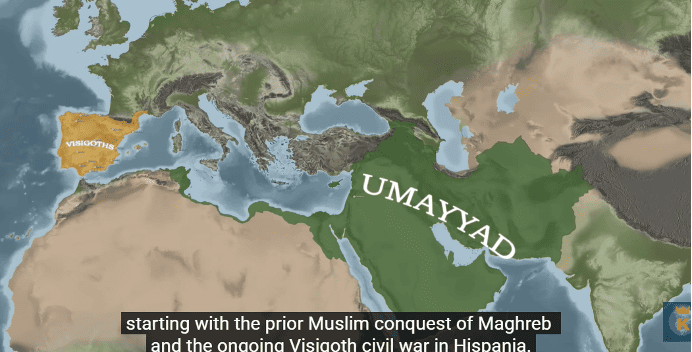
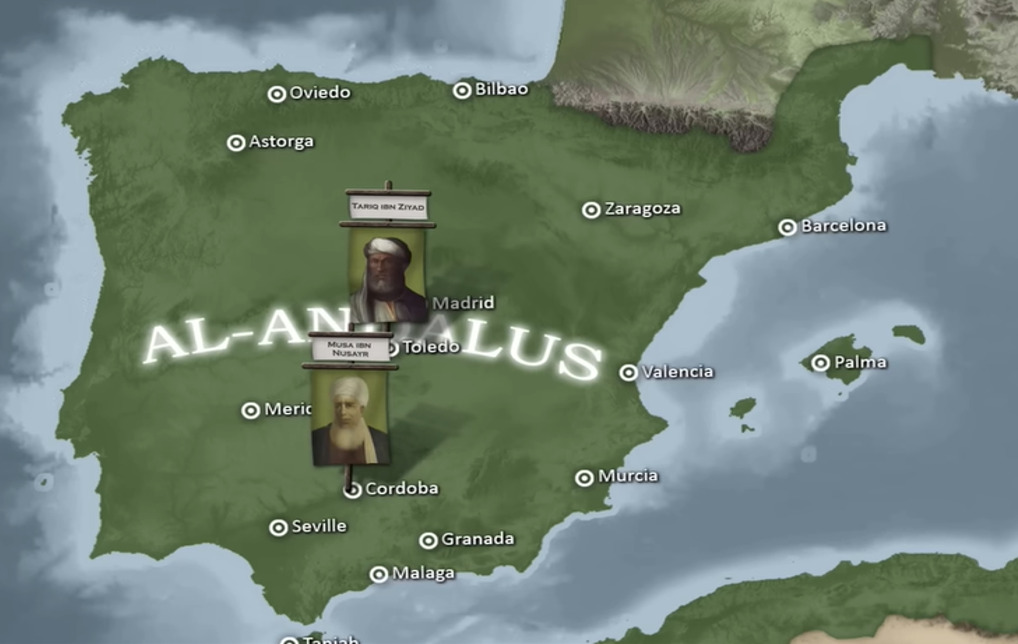
In 711 AD, the commander Tariq ibn Ziyad led the North African conquest of Iberia, followed by campaigns into France territory that culminated at the Battle of Tours (732). For four decades, most part of southern France remained a peripheral province, prone to local rebellions and internal strife. The Muslim province of al-Andalus was in chaos. Ruled by a weak Abbasid-appointed governor, Yusuf al-Fihri, the region was riven by tribal infighting between Arab factions (Qays vs. Yemeni) and Berber settlers.
In 750, the Umayyad dynasty was overthrown by the Abbasids in a brutal purge that eliminated nearly the entire royal family. In 755AD, Abd al-Rahman landed at Almuñécar on the southern coast of Spain. He had almost no army—just his slave Bedr and a small retinue. But he sent Bedr ahead to negotiate with the Yemeni Arab factions, who resented the Abbasid-appointed governor. Leveraging his Umayyad prestige and diplomatic acumen, he exploited local rivalries to rally support. Within a year, he transformed from refugee to ruler. In 756, he entered Córdoba, overthrew the local governors, and declared an independent emirate, severing ties with the Abbasids.
Between 755 and 788, Abd al-Rahman I established the independent Emirate of Córdoba, formally breaking from the Abbasid Caliphate in the East. Known as al-Dakhil (“the Entrant”), he founded a dynasty that would endure for centuries. His successors consolidated his work: Hisham I (788–796) stabilised the emirate, while Al-Hakam I (796–822) suppressed major rebellions in Córdoba and Toledo, preserving state control.
Abd al-Rahman II (822–852) ushered in an era of cultural and administrative growth, centralizing power and building a stable governance structure. Muhammad I (852–886) continued this organizational work, focusing on the administration and military. However, the reigns of Al-Mundhir and Abdallah (886–912) were marked by internal strife, revolts, and weakened central authority.
The true transformation of al-Andalus came under Abd al-Rahman III (r. 912–961). Ascending the throne at just 23, he lacked the charisma or martial flair of typical warrior kings, but compensated with disciplined, pragmatic administration—seeing order as the foundation of prosperity. He crushed rebellions, dismantled rival fortifications, and centralized authority, reversing decades of internal decay.
In 929, having subdued all opposition, he declared himself Caliph—formally transforming the emirate into the powerful Caliphate of Córdoba. This elevated Córdoba to a major center of the Islamic world, rivalling Baghdad in prestige and influence.
Under Abd al-Rahman III and his son al-Hakam II (r. 961–976), military strength underpinned economic growth: a centralized army quelled uprising, secured tax collection, protected trade routes, and supported agricultural and commercial expansion. As historian Hugh Kennedy (1996) describes it, this was a reconquest—not of grand battles, but of meticulous planning. By 955, al-Andalus stood at the zenith of its power, ushering in a golden age of stability, culture, and prosperity.
Córdoba quickly became Europe’s largest city, with over 100,000 inhabitants—dwarfing Paris and London. Yale historian María Rosa Menocal calls it an intellectual beacon of cosmopolitan brilliance. Its libraries, scholars, and courts attracted diplomats and intellectuals from across the known world. To project imperial majesty, Abd al-Rahman built the lavish palace-city of Medina Azahara.
The death of al-Mansur in 1002 left al-Andalus powerful but dangerously unstable, as his regime rested on personal authority rather than institutional foundations. His son, Abd al-Malik al-Muzaffar, proved less capable; upon his death in 1008, the caliphate descended into civil war—the fitna. Ethnic rivalries and palace intrigues erupted, inflamed by figures like Muhammad ibn Abi Amir (known contemptuously as Sanchuelo, referencing his Christian ancestry), whose attempts to impose Berber customs and name himself heir deepened divisions. Meanwhile, the military structure weakened after the abolition of the iqta system, undermining the very forces that had once ensured stability (Meyer, 2013).
VIII. The Viking Incursions into al-Andalus
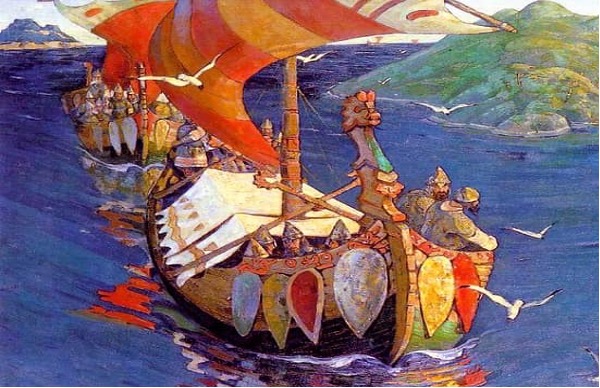
From the late eighth to the tenth century, the Vikings—Scandinavian seafarers renowned as raiders, traders, and warriors—ranged across Europe, reaching as far as Russia. Though often caricatured as savage plunderers, their culture was more complex, and their shipbuilding skills were exceptional. Viking longships, seaworthy and fast, could navigate open oceans, shallow rivers, and even be carried overland (Christys, 2015).
Their incursions into the Iberian Peninsula left a lasting mark. Most accounts come from Arab historians, who called the Norsemen majus (“heathens”). Key sources include Ibn al-Qutiyya (d. 977), Ibn Idhari (writing c. 1299, copying earlier works), and al-Nuwayri (1284–1332).
Emir Abd ar-Rahman II raised a relief force under his chief minister, Isa ibn Shuhayd, joined by Musa ibn Musa al-Qasi—a rival who nonetheless allied against the common threat. A Viking detachment heading for Morón was ambushed and destroyed. On 17 November, the main Viking force was defeated at Talyata (Italica), north of Seville, and retreated to Cádiz. The Muslims’ light cavalry proved decisive against the foot-bound Norsemen, who were pushed back and forced to flee.
A major attack in 859 was repelled by combined Asturian and Galician forces. Earlier that spring, the Vikings had raided Mallorca en route to the Atlantic. Emir Muhammad I anticipated their return and moved to engage them, but the Norsemen out maneuverer him by steering into the Ebro River, where their shallow longships outpaced the heavier al-Andalus navy. They sailed past Zaragoza’s Roman bridge, disembarked near Pamplona, sacked the town, and captured King Garsea. Laden with booty and prisoners, they marched over the Basque hills to the Bay of Biscay and sailed home. Though minor raids continued into the late tenth century, no major Viking incursion occurred in al-Andalus after 860, with later activity confined to Galicia and Asturias (Christys, 2015).
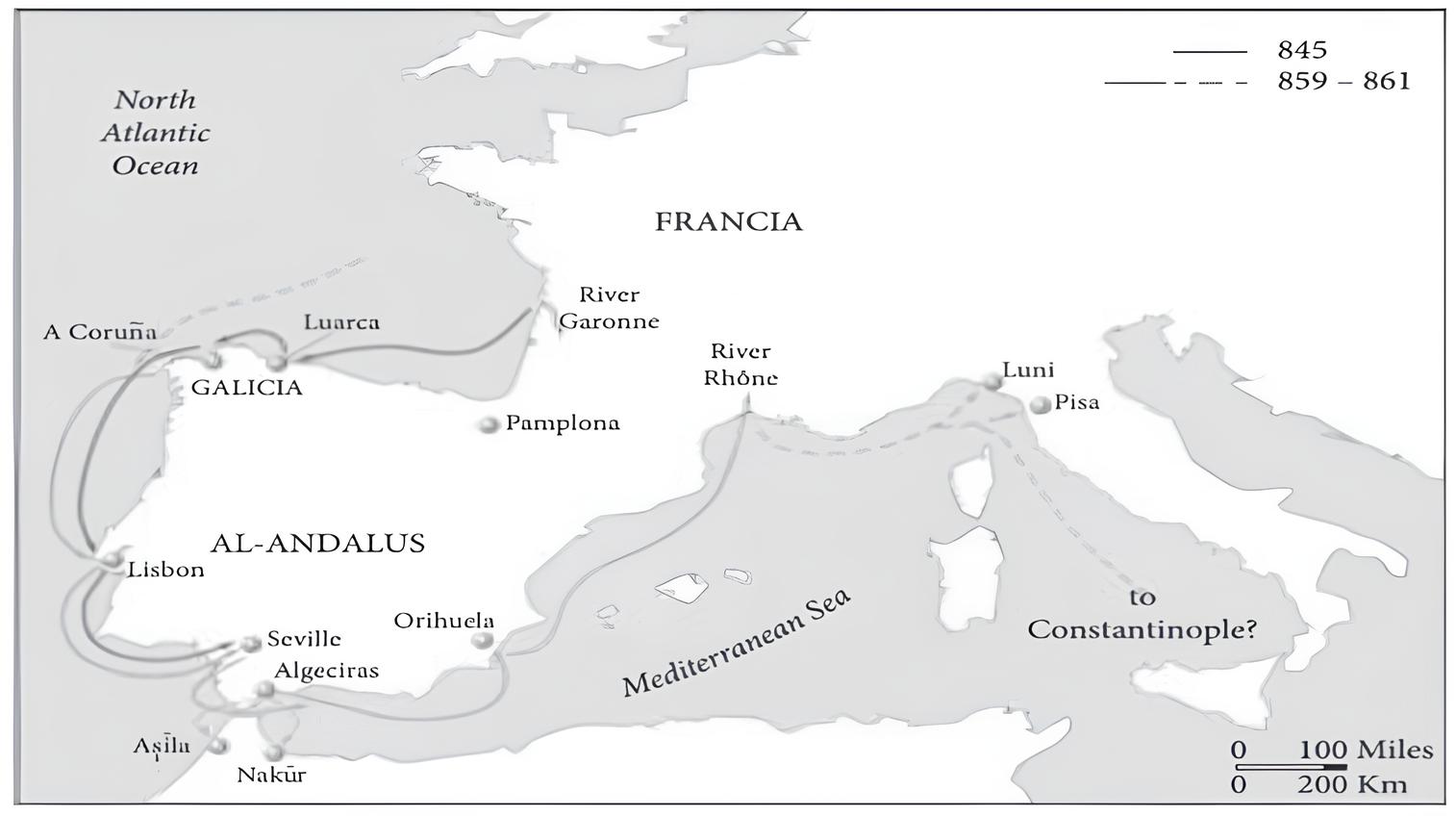
Map: Viking Expeditions in the Iberian Peninsula and the Mediterranean Sea.
IX. The Legacy and the Fall
By the turn of the millennium, however, the splendour of Medina Azahara and the renovated mosque made Córdoba an ever-greater target. The very wealth and cosmopolitanism that made it a beacon of learning also attracted envy and opposition. Rising conflict among ruling elites increasingly led this multicultural society as weak, impure, or threatening to their own authority. The eventual fragmentation of the Caliphate into competing taifa kingdoms weakened the infrastructure of patronage and protection that had sustained the intellectual golden age.
When Christian forces retook cities like Toledo in the 11th century, they inherited not only physical monuments but also libraries, translations, and intellectual traditions. The translated Greek and Arabic texts discovered in Toledo’s archives profoundly influenced European intellectual history, laying foundations for the Renaissance and the Scientific Revolution. Scholars from across Europe flocked to Toledo, translating works on medicine, astronomy, philosophy, and mathematics into Latin—igniting an intellectual revival that would transform the continent.
Al-Andalus’s legacy as a multicultural haven—though imperfect and hierarchical—undeniably shaped European thought. Despite its limitations, Córdoba represented a rare space of relative religious and cultural exchange—unmatched in medieval Europe—where scholars of different faiths collaborated in the pursuit of knowledge, leaving an intellectual legacy that continues to resonate today.
X. Conclusion
The agrarian and economic transformation of al-Andalus in the 9th and 10th centuries was no simple narrative of peaceful progress or top-down revolution. It was a deeply contradictory process: state-led irrigation, technological innovation, and new crops drove remarkable productivity and urban prosperity, yet these achievements rested on social inequality, land dispossession, and coercive taxation. The “Islamic Green Revolution” was thus not uniform, but a complex and contested chapter in European agricultural history, shaped by local agency, environmental constraints, state intervention, and technological transfer. It was an era of extraordinary achievement shadowed by profound inequality—a golden age that gleamed brightest from its cities, even as its foundations rested on countless anonymous farmers, slaves, and water-drawers.
Alongside these scientific pursuits, al-Andalus promoted a remarkable multiculturalism. Muslims, Christians, and Jews coexisted in urban centres, participating in economic life and, to varying degrees, scholarly exchange. This Convivencia, while subject to Islamic law’s hierarchical constraints and occasional sectarian tensions, created a space for cultural and intellectual cross-pollination unmatched elsewhere in medieval Europe. The translation movement—rendering classical Greek, Roman and Indian texts into Arabic and later Latin—preserved and transmitted knowledge that would eventually help spark the European Renaissance.
The successful defence against Viking raids in 844 and 859 demonstrated its capacity to mobilise resources and protect territory. The defeat of the Norske invaders, followed by a naval arsenal at Seville and coastal watchtowers, secured al-Andalus coasts and reinforced Umayyad legitimacy as protectors of the faithful. That some Vikings later converted to Islam and assimilated as cheese traders only underscores the fluidity of al-Andalus culture—a world where even former raiders could find a place.
Yet the very factors enabling this prosperity also sowed fragility. The Caliphate’s dependence on centralized authority, elite patronage, and continuous military expenditure left it vulnerable to internal fracturing. When the fitna—the civil war of the early 11th century—erupted, the apparatus of taxation, irrigation, and urban administration fragmented into competing taifa kingdoms, each unable to sustain the scale of output that had defined Córdoba’s zenith. Elite networks became arenas of rivalry, and the peasantry, long burdened by heavy land rent exactions, had little reason to maintain the intricate hydraulic systems upon which the boom depended.
In sum, this study has argued that the significance of the al-Andalus experiment lies not in fragmenting communities but in sustaining them as engines of political, economic, and cultural transformation. To reduce its legacy to a catalogue of achievements is to overlook its deeper contribution to political economy: the enduring dialectic between state-building ambition and the adaptive resilience of the societies it governed.
Ultimately, al-Andalus teaches that states are precarious equilibria whose greatness lies not merely in monuments but in their capacity to manage internal contradictions. Its history offers no triumphalist conclusion, only a sober lesson in resilience: societies can achieve extraordinary synthesis even while carrying the seeds of their own transformation. To remember al-Andalus is to recognize that the most creative civilizations are often the most contested, and that the value of a bridge lies not in its permanence but in the continual labour, negotiation, and fragile foundations that sustain cooperation. That unresolved tension between ambition and adaptation, order and entropy, remains as central to contemporary political economy as it was a millennium ago.
About the Author
 Dr. Kalim Siddiqui is an economist specializing in International Political Economy, Development Economics, Trade and Economic Policy. Since 1989, he has been teaching economics at various universities in Norway and the UK. Dr. Siddiqui’s research interests encompass a wide range of topics, including political economy, international trade, and economic history, South Asia, and emerging economies. He has presented papers at international conferences across numerous countries, reflecting his global engagement in the field. His scholarly pursuits span six broad domains: Political Economy, Development Economics, Economic History, Economic Policy, Globalization, and International Trade. Dr. Siddiqui has made significant contributions to research in areas such as trade policy, globalization, and political economy. His work has been published in chapters of edited books and articles published in peer-reviewed journals. For inquiries, Dr. Siddiqui can be reached at: [email protected]
References
- Bovill, E.W. (1968) The Golden Trade of the Moors, Oxford: Oxford University Press.
- Civantos, C. (2022) Jamón and Halal: Lessons in Tolerance from Rural Andalucía, Amherst College Press.
- Christys, A. (2015)Vikings in the South. Voyages to Iberia and the Mediterranean, London: Bloomsbury.
- Kennedy, H. (1996) Muslim Spain and Portugal: A Political History of Al-Andalus London: Taylor and Francis Ltd.
- Meyer, I. (2013) The Story of the Andalusia: An Islamic History of al-Andalus, Ribat Publishers.
- Said, E.W. (1978) Orientalism, Pantheon Books, United States.
- Siddiqui, K. (2026a) “Dutch Commercial Capitalism: Rise and Decline in the 16th–17th Centuries” World Financial Review, April.
- Siddiqui, K. (2026b) “Crusade and Commerce: Portuguese Mercantilism in the Indian Ocean, 1500-1600” World Financial Review, February.
- Siddiqui, K. (2025a) “The Influence of Greek Philosophy on Muslim Scholars: A Review of Al-Farabi, Ibn Sina, and Ibn Rushd” World Financial Review, October.
- Siddiqui, K. (2025b) “Ibn Khaldun and the Dynamics of Social and Economic Transformation” World Financial Review, September.
- Siddiqui, K. (2020) “The Study of Economic History and the Importance of Understanding the Past” World Financial Review, November/December
- Siddiqui, K. (2019). “The Political Economy of Essence of Money and Recent Development” International Critical Thought 9(1):85-108.
- Siddiqui, K. (2015). “Economic Policy: State versus Market Controversy” in (Edi) Adam P. Balcerzak. Contemporary Issues in Economy: Market or Government, pp.39 – 63, Torun: Poland.