The Dutch Republic’s rise to global dominance and its quiet decline reveal how financialisation, capital outflows, and institutional stagnation can erode even the most powerful economies.
This article analyses on the rise and decline of the Dutch Republic as a commercial hegemon. Dr Kalim Siddiqui argues that Dutch ascendancy arose from a convergence of urbanisation, commercial agriculture, shipping innovation, and financial development, while decline followed as productive capacity gave way to financial speculation, capital outflows, and institutional stagnation—offering enduring lessons on the dynamics of economic hegemony.
I. Introduction
By the late sixteenth century, the Dutch Republic had assembled Europe’s largest merchant fleet, driven by shipbuilding innovations—most notably the development of highly efficient cargo vessels. At the same time, the province ranked among the continent’s most urbanized regions, with nearly half of its population living in towns by the 1590s. This period also saw rapid industrial expansion across shipbuilding, brewing, brick-making, and textiles, fuelled by an influx of skilled migrants from the southern Netherlands. In agriculture, declining grain cultivation gave way to intensive, market-oriented dairy production, while large-scale land reclamation projects, including the creation of polders, further boosted productivity. These transformations unfolded against the backdrop of the Revolt against Spain (the Eighty Years’ War, 1568–1648), which fundamentally reshaped the region’s economic geography and accelerated its commercial rise.
Although the Dutch Republic’s population reached only around 1.5 million by 1675—significantly smaller than England’s roughly 4 million—its economic dynamism must be understood within the broader context of European expansion. From the late fifteenth century, advances in navigation and shipbuilding enabled long-distance maritime exploration. Expeditions such as Columbus’s voyage to the Americas (1492) and Vasco da Gama’s route to India (1498) opened global trade networks and initiated a new phase of mercantilist expansion. While the Portuguese established a trading empire in Asia and the Spanish consolidated territorial control in the Americas, their dominance proved difficult to sustain (Siddiqui, 2026).
From the late sixteenth century, Dutch and, subsequently, British merchants entered the Indian Ocean with more sophisticated commercial institutions. The establishment of joint-stock companies—notably the Dutch East India Company (VOC) in 1602—marked a decisive shift in the organisation of long-distance trade. These companies enabled the mobilisation of large pools of capital, the distribution of risk, and the coordination of complex commercial operations across vast distances. As a result, the Dutch were able to construct more flexible and resilient trading networks, gradually displacing Portuguese influence in Asia (North, 1991).
Developments within Europe further reinforced this transition. The fall of Antwerp in 1585 triggered a large-scale migration of merchants, capital, and skilled labour to Amsterdam, which quickly emerged as the principal commercial centre of northwestern Europe. From the 1590s onward, the Dutch Republic experienced sustained economic growth, laying the foundations of the Dutch Golden Age. This transformation reflected not only maritime and technological advantages but also institutional innovation. Dutch commercial success depended on efficient financial markets, advanced shipping techniques, and a strategic emphasis on high-volume, low-cost trade. Then as now, technological innovation has been essential for competing with rivals, raising productivity, and achieving efficiency—representing a continuous national effort to advance and grow economies (Siddiqui, 2025a).
The transformation of European trade routes is clearly evident in the case of Anglo-Dutch commerce. At its peak around 1700, this trade consisted primarily of British cloth exports to Dutch commission agents in Rotterdam and Amsterdam, alongside exports of German linens to England. During this period, British cloths were warehoused and sometimes dyed in Amsterdam. By 1750, however, these goods had ceased to pass through Holland altogether. While Dutch merchants remained involved, their function had become restricted to purchasing cloths for German and Spanish markets (Wilson, 1939).
The relative success of the Dutch and the British, compared to the Spanish and Portuguese, has generated extensive historiographical debate. One influential interpretation, associated with Max Weber, emphasises the role of Protestantism in fostering a “capitalist spirit” conducive to economic innovation and disciplined investment. However, more recent scholarship has shifted attention toward institutional and economic explanations. Historians have highlighted the importance of political decentralisation, the integration of state and commercial interests, and the development of financial instruments that reduced transaction costs and facilitated trade.
In this perspective, the Dutch Republic and England benefited from more flexible systems of governance that allowed merchants greater autonomy and encouraged institutional experimentation. By contrast, the more centralised and bureaucratic structures of the Iberian empires often hindered commercial adaptation. Ultimately, the rise of Dutch commercial capitalism cannot be explained by religious or cultural factors alone. Rather, it was the interaction of institutional innovation, financial development, and global opportunity that enabled the Dutch to build a durable and highly profitable commercial empire in the seventeenth century.
In contrast, the Spanish and Portuguese empires remained firmly rooted in Catholicism, a factor that has often been invoked to explain the slower development of capitalist practices in these regions and, by extension, their relative imperial trajectories. Drawing on Max Weber’s thesis, differences in religious doctrine—particularly in conceptions of salvation—encouraged the emergence of a “capitalist spirit” in Protestant societies. Weber argued that Protestantism fostered an ethic of disciplined labour, frugality, and reinvestment, whereas Catholicism placed greater emphasis on ritual, hierarchy, and traditional forms of devotion. However, while this distinction highlights important cultural contrasts, its explanatory power remains contested. The relative decline of Iberian dominance cannot be attributed to religion alone, but must also be understood in relation to institutional and economic constraints (Siddiqui, 2025b).
More decisive were the organisational and financial innovations developed by the Dutch and the British. Both powers adopted comparatively decentralised forms of imperial governance, allowing commercial actors greater autonomy in managing overseas operations. This approach was embodied in the chartered joint-stock companies that dominated Asian trade—notably the Dutch East India Company (VOC) and the British East India Company (Siddiqui, 2024). These corporations combined state support with private capital, enabling them to mobilise substantial financial resources while maintaining operational flexibility. By 1669, the VOC had become the wealthiest company in the world, with a vast fleet, significant military capacity, and the ability to generate high returns for investors. The British East India Company likewise exercised considerable economic and political influence, operating within a mercantilist framework that viewed global trade as a competitive, zero-sum system (Siddiqui, 2024).
II. Colonialism and the Origins of Global Capitalism: The Dutch East Indies
Due to space constraints, this analysis focuses on the Dutch East Indies rather than Dutch possessions in the Americas. Spices like nutmeg, cloves, pepper, and cinnamon were highly valued in Europe for their medicinal and preservative qualities. Rising demand drove exploration and colonization of parts of South and Southeast Asia where these spices were abundant. For European traders, the spice trade proved enormously profitable, fuelled by sustained demand in European markets.
Control over spice routes and producing regions supplied the initial capital and ongoing revenue that funded colonial expansion. In this sense, the spice trade provided “startup capital” for empires, financing other ventures and enabling global dominance. A succession of European powers—Portuguese, Spanish, Dutch, and British—each expanded their influence in Asia at different times, reflecting shifting power dynamics shaped largely by the lucrative spice trade.
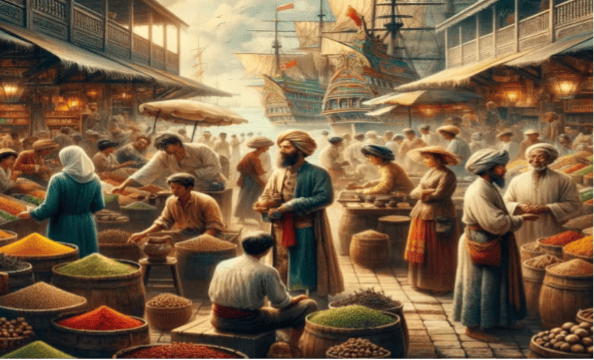
This campaign included massacres, forced starvation, and deportation of the Bandanese people of Indonesia’s Maluku province. In 1621, the Dutch launched a brutal assault on the Banda Islands, killing or enslaving nearly the entire population—an estimated 15,000 people. By 1681, only a few hundred native survivors remained. The Dutch used military force to compel locals to sell spices exclusively to the Dutch East India Company (VOC) at artificially low prices, dismantling the existing free trade system (Figure 1). They destroyed boats and villages to prevent trade with other European powers, especially the British. The VOC also employed Japanese mercenaries to behead and brutalize resisting village leaders. By the end of the 17th century, the VOC had successfully monopolized the spice trade through violence and exploitation.
Figure 1: Spices from East Indies (Indonesia) were more valuable than gold in the 16th century.
Karl Marx, in Capital, concentrated particularly on the Dutch role in Java, drawing on the account in Thomas Stamford Raffle’s History of Java was first published in 1817—though primarily on passages highlighted in William Howitt’s Colonisation and Christianity. Marx carefully depicted the role of organised “man-stealers,” consisting of “the thief, the interpreter and the seller,” all systematically engaged in “stealing men” who were then forced into chains, hidden in secret prisons, and dragged to waiting slave ships. As Marx noted, “Banyuwangi, a province of Java, numbered over 80,000 inhabitants in 1750 and only 18,000 in 1811. That,” he exclaimed in bitter irony, “is peaceful commerce!” On the basis of such colonial expropriation, Marx argued, the “total capital” of the Dutch Republic rose in the mid-seventeenth century to the point that it probably exceeded that of all the rest of Europe combined (Van Der Linden, 1997).
Marx was concerned with the role that the colonial expropriation of indigenous land, labour, and resources played in the genesis of industrial capitalism (Siddiqui, 2025c). According to him, this process was central to capitalism’s emergence. He focused his analysis particularly on the Dutch and the British, as the two countries that had led the way in the development of industrial capitalism. Regarding the Dutch, Marx noted that in 1648, at the zenith of its power, Dutch republic was in almost total control of the East Indies trade.
The colonial barbarity of Dutch merchant capitalism was to be exceeded in scale in the eighteenth and nineteenth centuries by the British. Marx, following Howitt, explained that the British governor of the East India Company insisted on its “exclusive monopoly” in the trade of tea, as well as trade with China and Europe (Siddiqui, 2024). The Company was also able to control the monopolies of salt, opium, betel, and other commodities, dominating the foreign trade. “Great fortunes sprang up like mushrooms in a day,” based on some of the most vicious forms of expropriation in the period. Relying on Howitt as his source, Marx wrote: “Between 1769 and 1770 the British created a famine by buying up all the rice and refusing to sell it again, except at fabulous prices.” In a footnote, he added: “In the year 1866 more than a million Hindus died of hunger in the province of Orissa alone. Nevertheless, an attempt was made to enrich the Indian [colonial] treasury by the price at which the means of subsistence were sold to the starving people.” (Siddiqui, 2020a)
The scale and devastating impact of the plunder and economic exploitation perpetrated by European powers cannot be overstated. This process provided a crucial foundation for primitive accumulation, which was subsequently channelled into the modernization and expansion of European industries—a reality frequently neglected by mainstream economic discourse. As Marx noted: “The treasures captured outside Europe by undisguised looting, enslavement and murder, flowed back to the mother-country.” The colonial system “proclaimed the making of profit as the ultimate and sole purpose of mankind.” The slave trade, in particular, was to play a central role in the industrialisation of England and the growth of cotton manufacturing. Counting the slave ships plying the Liverpool trade in the years leading up to the Industrial Revolution, Marx observed: “In 1730 Liverpool employed 15 ships in the slave trade; in 1751, 53; in 1760, 74; in 1770, 96; and in 1792, 132.” (Van Der Linden, 1997)
Eric Hobsbawm (1960:107) noted: “The Dutch, who managed to capture the Portuguese system in the Indian Ocean, retained their economically unprogressively methods of colonial exploitation until well into the eighteenth century. Had the British been as successful as Dutch, there is little doubt that they would have less to develop their methods of colonial exploitation, out to be rather more useful for our subsequent industrialisation. The second phenomenon is more complex. Briefly, development of modern capitalism cannot be understood single national economy or of the national economic separately, but only in terms of an international economy. of course, what Marx meant when emphasising the “Broadly speaking, the capture of this entire world market of it by a single national economy or industry could prospects of rapid and virtually unlimited expansion modest and confined capitalist manufacture of the period yet achieve itself, and thus make it possible for this sector to break through its pre-capitalist limit.”
Crucially, these processes—slavery, colonial extraction, and coercive trade—were not incidental features of early capitalism but primary sources of the capital accumulation that funded the Industrial Revolution, technological advancement, and the subsequent rise of the West (Siddiqui, 2020b). This reality, however, is often overlooked by mainstream economists. By treating capital accumulation as the result of internal factors such as thrift, innovation, and efficient markets, mainstream economic narratives erase the role of imperial violence, resource plunder, and exploitation. This omission is not a neutral oversight but a foundational silence that allows the West’s development to be presented as a self-generated miracle rather than what it was: a process profoundly shaped by the dispossession and underdevelopment of the Global South. This exploitative structure entrenched a lasting economic divide, creating the vast wealth gap that continues to separate the Global North from the Global South (Siddiqui, 2022).
The mechanisms of this exploitation are starkly illustrated in specific historical cases. British colonial policy in India, for instance, deliberately destroyed its world-leading textile industry, reducing the subcontinent from a manufacturer of finished goods to a supplier of raw cotton and a consumer of British Lancashire cloth. Similarly, in Ireland, British mercantilist restrictions crippled the emerging wool industry to eliminate competition and protect British commercial interests. In both cases, the colonial power actively deindustrialized its possessions to concentrate manufacturing and wealth at home (Siddiqui, 2025d).
Apologists for colonialism often attempt to rehabilitate this history by citing purported benefits—such as infrastructure, railways, telegraphs, education, and administrative institutions—arguing that colonial rule introduced “modernization.” This framing, however, misrepresents the nature and purpose of colonial development. Such infrastructure was not built to foster indigenous prosperity but to enable resource extraction: railways carried raw materials to ports, ports served ships bound for the metropole, and administrative systems extracted land rents, taxes, and labour discipline.
The Dutch East India Company (Vereenigde Oostindische Compagnie, or VOC) was established in 1602. By the mid-17th century, its logo appeared on the Dutch guilder, the dominant currency for trade in East Asia. By the mid-18th century, the Dutch controlled key sea trade routes (Map 1). Concurrently, the Dutch established trading colonies in the New World, though these proved less successful than their Asian counterparts.
Map 1: Cartography of Commerce: Spice Trade Flows from the East Indies to the Dutch Republic in the 16th century.
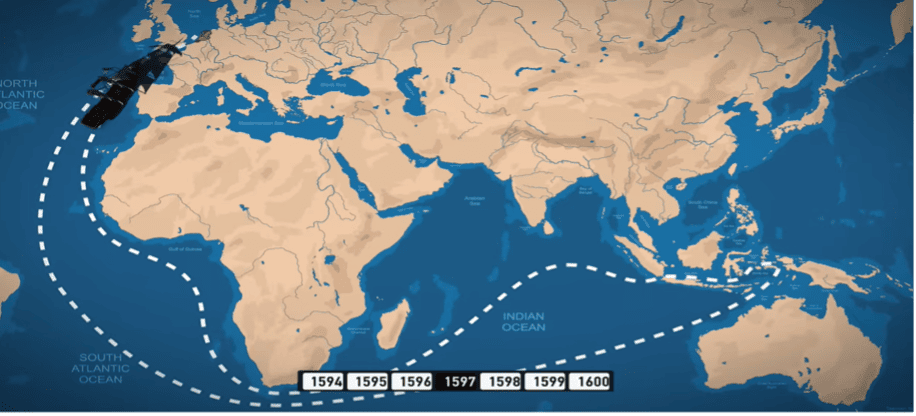
The Dutch East India Company (VOC), one of the earliest joint-stock enterprises, became the primary engine of Dutch colonial expansion. With a statutory capital of roughly 6 million guilders—about eleven times that of the British East India Company—the VOC wielded quasi-sovereign powers, including the ability to raise armies and navies, conduct diplomacy, and exercise legal authority in its territories.
In the 16th century, the Dutch faced competition in East Asia from the Portuguese (Siddiqui, 2026), whose military and commercial position was already weakening. The Dutch disrupted Portuguese shipping and displaced rivals from key spice, tea, and raw-material markets. They first established forts in present-day Indonesia and, from 1609 onward, systematically seized territories held by the Portuguese and local Muslim sultanates, ultimately expelling the Portuguese from the region. Under Jan Pieterszoon Coen, they also captured the Republic of Formosa (modern-day Taiwan), later driving out the Spanish. In these conquered territories, the Dutch established spice plantations reliant on the exploitation of local populations.
A key priority for the VOC was establishing trading posts in India. Its first settlements were in Orissa, where the Dutch traded spices, precious stones, and textiles for European markets, often exchanging them for weapons and ammunition. With support from local allied elites, VOC forces expelled the Portuguese from the Malabar and Coromandel coasts and captured Cochin, expanding spice and rice cultivation. The VOC also seized Portuguese Ceylon, which later became one of its most profitable colonies.
In the second half of the 17th century, the VOC reached its peak. Its fleet comprised around 200 ships, supported by a private army of roughly 10,000 soldiers, while its shares rose about 10% annually. At the same time, the Dutch faced growing opposition in India from the British East India Company, which sought to eliminate European rivals. The three Anglo-Dutch Wars were driven by competition over colonies and supply markets across Asia, Africa, and the Americas. Though Britain enjoyed a more advantageous geographic position and greater manpower, the Dutch Republic initially held stronger financial resources and a slight edge in merchant shipping.
The colonial system that took shape in the mid-seventeenth century became a central—arguably decisive—factor in laying the foundations for the Industrial Revolution. As Eric Hobsbawm (1960) argued, this system fully developed only in countries excluded from earlier colonial structures, and only after their collapse, from the mid-seventeenth century onward.
In this context, the driving force of colonial enterprise from the sixteenth to eighteenth centuries shifted away from the spice trade toward plantation economies. The spice merchant profited by monopolising scarce, high-value goods such as pepper and extracting high margins per transaction. By contrast, the sugar planter generated wealth through the mass production of sugar at falling prices, capturing expanding global markets and achieving greater aggregate profits. For similar reasons, the development of a cotton industry proved more economically transformative than reliance on luxury goods such as silk.
Prominent British economic historian Eric Hobsbawm (1960:106) states: “It happened under the peculiar historical conditions of Europe in the sixteenth to nineteenth centuries, i.e., a) under conditions when nobody planned or knew enough to plan industrialisation, and b) when the main dynamic force in the economy was private enterprise urged along by the motive to make and accumulate maximum profits. For the first (and therefore most difficult) industrial revolution, the initial breakthrough in world history, was achieved by and through capitalism, and could almost certainly, in seventeenth-and eighteenth-century conditions, not have been achieved in other ways, though today such other ways are available, and indeed preferable. On the other hand we know that the actual process of the rise of industrial manufacture.”
III. The Dutch Golden Age: Commerce, Expansion, and Trade
The Dutch colonial system was initially a trade-based system that derived most of its influence from merchant enterprise and from Dutch control of international maritime shipping routes through strategically placed outposts, rather than from expansive territorial ventures. The Dutch were among the earliest empire-builders of Europe, following Spain and Portugal, and were one of the wealthiest nations of their time. Spanish and Portuguese expansion, for instance, being based on robbery and monopoly, failed to stimulate European exports (Siddiqui, 2026).
The Dutch Republic experienced high growth and rising merchant profits during what is known as the ‘Dutch Golden Age’—a period of immense wealth generated through global trade, advanced shipping industries, and pioneering financial systems. The Dutch Golden Age, spanning the 17th century, marked an era when the Dutch Republic emerged as one of the world’s most dominant economic, scientific, and cultural powers.
This growth was driven by the Dutch East India Company and the Dutch West India Company, which transformed the Dutch Republic into a global trader. Amsterdam emerged as the world’s leading financial hub, pioneering stock exchanges and speculative trading, exemplified by the Tulip Mania. The period was shaped by the Eighty Years’ War (1568–1648), culminating in the Peace of Westphalia, which recognised Dutch independence.
Dutch imperial expansion relied on a maritime sector and state-backed chartered companies, granted monopolies over key global routes via the Strait of Magellan and the Cape of Good Hope. Their dominance helped drive the seventeenth-century Dutch Golden Age, marked by commercial expansion and cultural growth. Dutch navigators charted regions including Australia, New Zealand, and parts of North America, while trade with the Mughal Empire—especially Bengal Subah—supplied most imported textiles and silks.
Economic success was further supported by early industrialisation using wind, water, and peat, alongside agricultural advances. By the mid-seventeenth century, the Dutch enjoyed Europe’s highest living standards, with merchant fleets dominating trade routes from the Baltic to Asia. Shipping was not peripheral but the foundation of Dutch global power (Wilson, 1939).
Trade has long been central to the economic development of the Global North, particularly in Western Europe and North America (Siddiqui, 2015). Its foundations were laid during the era of mercantilist expansion and later evolved into the global spread of capitalism. The rise of commercial—and subsequently industrial—capitalism was financed and sustained through slavery, colonialism, and unequal trading systems imposed by imperial powers (Siddiqui, 2020b). This so-called “free trade” served imperial interests: it dismantled indigenous industries and self-sufficient economies in colonised regions, forcing them into specialised raw-material production and turning them into captive markets for metropolitan manufactures.
In South Asia, Dutch fortunes declined. The British East India Company expelled the Dutch East India Company from Bengal in 1760, effectively ending Dutch trade with India. Although both companies were marked by corruption, this did not necessarily equate to economic decline. By this stage, the VOC—like its British counterpart—had evolved beyond a purely commercial enterprise into a vehicle of political influence, offering not only profits but also patronage networks in Asia and leverage within European politics (Wilson, 1939).
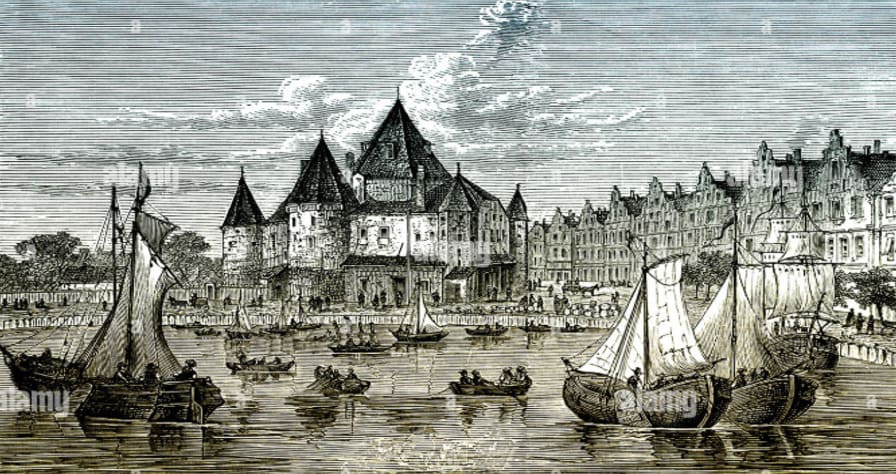
Figure 2: Seventh Century Amsterdam: A Glimpse into the Dutch Golden Age.
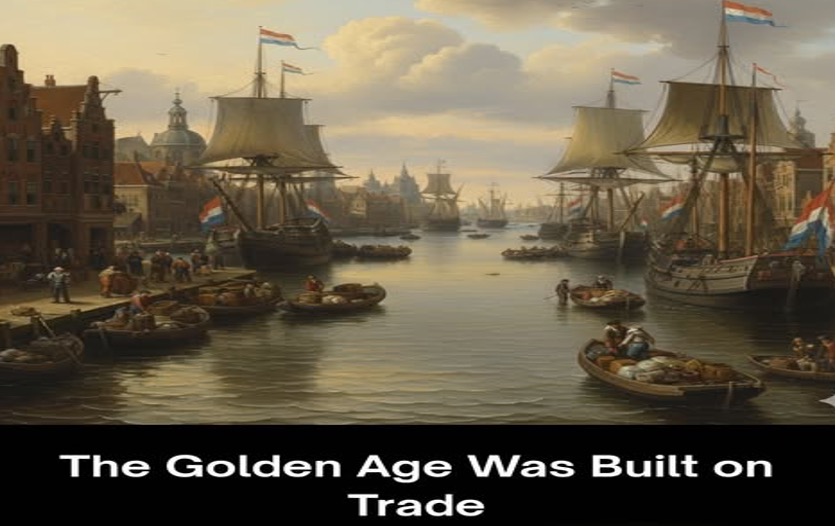
The Dutch Golden Age rested not only on trade but also on colonial violence. The Dutch East India Company transformed the Dutch Republic into a major global power, yet its wealth was built in part on coercion. In the Moluccas—especially the Banda Islands—the VOC enforced a monopoly over nutmeg and mace through conquest and mass violence. Under Jan Pieterszoon Coen, the islands were systematically depopulated to secure control of production.
Trade wealth was reinvested into urban expansion. Amsterdam grew into a global financial hub, with canals, warehouses, and commercial districts reshaping the city. Trade increasingly dictated urban planning, governance, and public priorities.
Three main interpretations seek to explain this rise. First, the migration of merchants from Antwerp to Amsterdam after its decline helped transfer capital and expertise. Second, Max Weber linked capitalism to Protestantism—either through a work ethic or through higher literacy and “human capital.” While the Dutch Republic showed relative religious tolerance, the Dutch Reformed Church remained dominant and Catholics faced discrimination, suggesting tolerance was pragmatic rather than ideological. Third, Douglass North and Elinor Ostrom emphasised the role of institutions, arguing that prosperity depended on effective governance structures, often rooted in civic participation rather than imposed from above.
A relatively high level of urbanisation distinguished the Dutch Republic. By the mid-sixteenth century, around 15% of its population lived in towns of over 10,000 people—compared to 3.5% in England and 13% in Italy—and this rose to 32% a century later. Unlike England, where urban life was concentrated in London, the Dutch Republic had a broad urban network, including Amsterdam (about 175,000 inhabitants), making it one of Europe’s largest cities.
Van der Linden (1997) argues that while neither Marx nor Engels attempted a systematic analysis of the development of merchant capitalism in seventeenth-century Dutch Republic, both did refer to this “model capitalist nation” in their writings. Their analysis stressed that Dutch capitalism was based on the exploitation of non-capitalist forms of production, and that the decline of the Dutch Republic in the eighteenth century represented the history of the subordination of commercial capital to industrial capital.
Marx saw a direct connection between the rise of Dutch merchant capital and the changes in international trading routes. Before the circumnavigation of Africa, colonies were still unknown, “America did not exist yet for Europe,” “Asia existed only through the inter-mediary of Constantinople,” and “the Mediterranean was the center of commercial activity” (Marx, 1976). But towards the end of the 15th century the old Italian merchant republics received a deadly blow. Venice was pushed aside, as it were: “The privileges of its neighbourhood to Constantinople and Alexandria, then the centres of Asiatic trade, were forfeited by the circumnavigation of the Cape of Good Hope, transferring the center of that trade first to Lisbon, then to Holland, and afterward to England” (Marx, 1976, cited in Van Der Linden, 1997:162).”
In the seventeenth century, the Dutch merchants were rich in the world. They possessed the global reserve currency, the strongest navy, the most advanced financial system, and the highest standard of living in human history. They were the masters of the universe. And yet, over the course of fifty years, they slowly, quietly, and methodically ceased to be a superpower. They did not lose a catastrophic war that destroyed their homeland. They suffered because their elite class—the merchants, the bankers, and the politicians—realised that there was no more growth to be had at home. They realised that the cost of maintaining the empire was higher than the profit it generated. So, they decided to export their wealth. They decided to lend their capital to their enemies. The Dutch pattern is the blueprint for how a hegemonic power hollow itself out. It is about how a nation of producers becomes a nation of speculators, and how a ruling class separates its own destiny from the destiny of its people.
In the 1600s, the Dutch were the workshop of the world. They were the innovators. They invented the sawmill. They perfected the fluyt ship, which could carry more cargo with fewer crew than any other vessel. And they mastered the art of wind energy. They imported raw timber and iron, processed it with superior technology, and exported finished ships and machinery. This productivity created a massive surplus of capital. Amsterdam became the richest city on Earth because it was the most productive city. The Dutch guilder was the world reserve currency—not because of a military decree, but because everyone wanted Dutch goods. The currency was backed by the sweat, the engineering, and the physical dominance of the Dutch economy.
The Golden Age began to fade in the early eighteenth century due to costly wars with rival empires—particularly England and France—stagnation in trade, and shifting economic power. However, success also breeds a specific kind of crisis. As the Dutch grew wealthier, wages rose and living standards soared. Consequently, building ships in Amsterdam became more expensive than in rising competitors such as England and France. Dutch capital holders—the merchant families who ran the Dutch East India Company and the Bank of Amsterdam—observed declining returns on investment for domestic manufacturing. Labour was too costly, and the domestic market had become saturated. In response, the Dutch shifted from an economy of production to an economy of finance. They ceased to be the workshop of the world and became its banker.
IV. The Decline of Dutch Commercial Capitalism: From Trade to Finance
To understand how the Dutch lost everything, you first need to understand what they were actually holding. By 1602, the Dutch Republic was in a state of furious innovation. For decades, small independent Dutch trading companies had been sailing to the East Indies, fighting off pirates, negotiating with local rulers, and bringing home spices that sold for enormous markups in European markets. But these companies were burning each other out. They competed so aggressively with one another that they were driving up the prices they paid in Asia and driving down the prices they received in Europe, destroying the margins that made the whole enterprise worthwhile.
One of the most significant aspects of British trade policy in the eighteenth century was to remove the Dutch commercial dominance. This rivalry, which had simmered throughout the previous century, intensified as Britain sought to assert its own maritime and industrial supremacy. A striking illustration of this protectionist turn was the 1736 Act, which required every British ship to carry at least one set of sails manufactured in England (Siddiqui, 2018). This legislation was directly aimed at undermining the Dutch cloth industry, a key sector of the Dutch economy that had long supplied maritime nations across Europe. Such measures, combined with a series of Navigation Acts and tariff policies, systematically eroded the competitive advantages that had underpinned Dutch commercial hegemony.
The organisation of commerce in Dutch Republic during the eighteenth century, however, made the transition from trading to banking and finance peculiarly seamless. Dutch merchants had long operated within a sophisticated commercial infrastructure that proved adaptable to changing global circumstances. Traders were divided roughly into three categories: overseas traders, who maintained factors and supercargoes across the world; second-hand merchants, who purchased goods from the former to sell on their own account; and commission traders, who facilitated transactions between parties without taking ownership of the goods themselves (Wilson, 1939).
In the eighteenth century, the Dutch colonial empire began to decline as a result of the Fourth Anglo-Dutch War of 1780–1784, in which the Dutch Republic lost a number of its colonial possessions and trade monopolies to the British Empire, alongside the British East India Company’s conquest of Mughal Bengal at the Battle of Plassey. Nevertheless, major portions of the empire survived until the advent of global decolonisation following World War II, namely the East Indies and Dutch Guiana. Three former colonial territories in the West Indies islands around the Caribbean Sea—Aruba, Curaçao, and Sint Maarten—remain as constituent countries represented within the Dutch Republic.
From the third quarter of the 17th century onward—that is, earlier than suggested in recent literature—the tide seems to have turned, and stagnation set in the Dutch economy, which resulted in a rise of real freight rates and a worsening of competitiveness. The inability to improve shipping efficiency after the first quarter of the seventeenth century made the Dutch vulnerable to competition. The stagnation in shipping efficiency from the 1620s onward not only harmed the competitive position of the Dutch mercantile fleet but also likely affected the general economic development of the Republic. One of the most strategic sectors had turned from being a source of rapid productivity growth into a source of stagnation (Wilson, 1939).
Many economists attribute this decline to the financialisation of the economy, which they view as the natural evolution of a developed nation. Throughout the 1700s, the Amsterdam Stock Exchange increasingly resembled a casino. The Dutch elite pioneered complex financial instruments—derivatives and futures contracts—and fuelled speculative bubbles in exotic assets. They grew richer, yet the real economy was squeezed. Shipyards closed. Skilled engineers declined without replacements. Fishing fleets shrank. And the middle class—once the backbone of the Golden Age—began to fracture (Wilson, 1939).
These were a few of the economic activities in Dutch Republic in the first quarter of the eighteenth century, and it is necessary to emphasise that the natural changes in this economy were not catastrophic. As Wilson (1939: 113) noted: “They may be summed up as follows: first, Dutch Republic lost her intermediary position in world trade as other European countries developed their own shipping and port facilities, and direct trading routes were established between nations which had previously used Dutch shipping and trading agents. Secondly, this decline in the stapling organisation was not counterbalanced by any industrial development, such development being hindered by the high level of wages and the conflict of interests between the powerful free-trading staplers and the protectionist industrialists. Thirdly, there was a gradual shift of interest from trade to finance-to-insurance and credit banking, and, because of the low rate of interest in Dutch Republic, to foreign loan business and speculation.”
For Marx and Engels, there was no doubt that—certainly in the seventeenth and eighteenth centuries—merchant capital dominated Dutch society. For a further analysis of this domination, it is important to note that Marx distinguished between two kinds of merchant capital: commercial capital and money-dealing capital. This distinction applies clearly to the Dutch case, for “the history of Holland’s decline as the dominant trade nation is the history of the subordination of commercial capital to industrial capital”.
In the eighteenth century, Dutch Republic ceded its hegemonic position to England. “By the beginning of the eighteenth century, Dutch Republic’s manufactures had been far outstripped. It had ceased to be the nation preponderant in commerce and industry”. While its role as commodity trader was thus played out, its function as money trader remained important until the nineteenth century. Just as declining Venice had once formed “one of the secret foundations of Dutch Republic’s wealth in capital,” to which it lent great sums of money, so too did “the lending out of enormous amounts of capital, especially to its great rival England” become an extremely important activity for the Dutch (Marx, 1976 cited in Van Der Linden, 1997).
Two causes of the decline were emphasised above all. One was the absence of a genuine centralised state, which could only have emerged if the stadtholders had overcome the particularistic city interests. However, they could have succeeded in this only if they had done “the inconceivable, to call seriously on the power of the popular masses to help them bring the provincial regents to heel. After all, the economic and financial preponderance of Dutch Republic and Amsterdam over the other regions and other ruling classes and groups was so oppressive and crushing, that only a consciously marshalled, permanent popular movement would have been able to neutralise this preponderance in exchange for civil rights.” The monarchy, “which historically was the highest state form achievable for Western Europe at the time, therefore was not established.”
The war with England followed several years of political and financial indecision in the Dutch Republic. Until about 1779, all Dutch financial ties were with England. Dutch money had seen the British government through several difficult periods. But after Britain was expelled by America, Dutch confidence weakened, and Dutch investors began to listen to those Francophile advisers who recommended that they sell out their British holdings while they could.
The merchant class obstinately refused to recognise that a new economic order had come into being, superseding the era when the Dutch had been carriers and paymasters for an economically undeveloped Europe. As late as 1824, a Dutch writer remarked that Holland’s trade rested on surer foundations than England’s because it depended only to a small extent on industrial products, while 70 percent of British exports came from factories. It remained for King Willem I to bring the Dutch Republic into line with contemporary economic ideas, reestablished the Netherlands Bank as a bank of issue, cherishing the colonial trade, protecting the textile and metal industries, and making what could be made of the previously despised transit trade (Wilson, 1939).
The Dutch bankers began to lend massive amounts of capital to the British government and British corporations. They bought British bonds. They invested in the British East India Company—the direct competitor to their own national interests. They funded the very navy that would eventually blockade their ports and strangle their economy. They did it because the return on investment was higher in England. The Dutch Republic collapsed, yet the Dutch elite remained rich because their assets were safely parked in London, earning 5 percent interest guaranteed by the British crown.
V. Conclusion
The rise and decline of the Dutch Republic as a commercial hegemon offers a compelling case study in early modern economic expansion and its structural vulnerabilities. Dutch ascendancy in the seventeenth century stemmed from a unique convergence of geographic, institutional, technological, and political circumstances—high urbanization, a commercialized agricultural sector, and shipping innovations like the fluyt—that created an economy of unparalleled efficiency.
Yet the very mechanisms enabling hegemony contained the seeds of decline. The eighteenth-century finance-driven economy generated immense private wealth but could not sustain the productive industrial base on which Dutch prosperity had rested. The merchant class rationally exported capital to rivals, notably Britain, funding the competition that would eventually supplant Dutch dominance. The Fourth Anglo-Dutch War (1780–1784) exposed this fragility, triggering a collapse of confidence from which the Republic never recovered.
Three broader conclusions emerge. First, Dutch shipping productivity gains between 1550 and 1620 proved unsustainable once the political environment shifted. Second, the VOC’s success encouraged financial speculation and rent-seeking that undermined long-term competitiveness. Third, the Dutch pattern of decline featured elite separation from national vitality, hollowing out of productive capacity, and capital export to rivals.
In short, the Dutch Golden Age and its decline were not merely a prelude to British ascendancy but a distinct model of capitalist development. The Dutch trajectory reminds us that sustained economic leadership requires not only innovation and expansion but also the ability to renew productive foundations amid shifting pressures—a challenge as pertinent today as in the eighteenth century.
About the Author
 Dr. Kalim Siddiqui is an economist specializing in International Political Economy, Development Economics, Trade and Economic Policy. Since 1989, he has been teaching economics at various universities in Norway and the UK. Dr. Siddiqui’s research interests encompass a wide range of topics, including political economy, international trade, and economic history, South Asia, and emerging economies. He has presented papers at international conferences across numerous countries, reflecting his global engagement in the field. His scholarly pursuits span six broad domains: Political Economy, Development Economics, Economic History, Economic Policy, Globalization, and International Trade. Dr. Siddiqui has made significant contributions to research in areas such as trade policy, globalization, and political economy. His work has been published in chapters of edited books and articles published in peer-reviewed journals. For inquiries, Dr. Siddiqui can be reached at: [email protected]
References
- Hobsbawm, E.J. (1960) “The Seventeenth Century in the Development of Capitalism” Science & Society, 24(2):97-112.
- North, D.C. (1991) “Institutions, Transaction Costs, and the Rise of Merchant Empires” in J. D. Tracy (ed.), The Political Economy of Merchant Empires: State Power and World Trade, 1350–1750, Cambridge: Cambridge University Press, pp.26-27.
- Siddiqui, K. (2026) “Crusade and Commerce: Portuguese Mercantilism in the Indian Ocean, 1500-1600” World Financial Review, February.
- Siddiqui, K. (2025a) “Innovation, Investment Criteria, and Economic Growth in Late-Industrializing Economies” World Financial Review, December.
- Siddiqui, K. (2025b) “Ibn Khaldun and the Dynamics of Social and Economic Transformation” World Financial Review, September.
- Siddiqui, K. (2025c) “The United States’ Future in an Imperial Mirror: Lessons from Britain, Spain, Abbasids, Rome, and Beyond” World Financial Review, November.
- Siddiqui, K. (2025d) “Geopolitics and the Persistence of Global Uneven Development: A Critical Analysis” World Financial Review, July.
- Siddiqui, K. (2024) “The Multinational Corporations, Capitalism, and Imperialism: The Case Study of East India Company” World Financial Review, July.
- Siddiqui, K. (2022) “Capitalism, Imperialism, and Crisis”, European Financial Review, June/July.
- Siddiqui, K. (2020a) “The Political Economy of Famines under Colonial India: A Critical Analysis” World Financial Review, July/August.
- Siddiqui, K. (2020b). “The Political Economy of the Slave Trade, Capital Accumulation and the Rise of Britain” World Financial Review, January/February.
- Siddiqui, K. (2018). “David Ricardo’s Comparative Advantage and Developing Countries: Myth and Reality” International Critical Thought, 8(3):1-28, September.
- Siddiqui, K. (2015). “Trade Liberalisation and Economic Development: A Critical Review” International Journal of Political Economy 44(3):228 – 247.
- Van Der Linden, M. (1997) “Marx and Engels, Dutch Marxism and the Model Capitalist Nation of the Seventeenth Century” Science & Society 61(2):161-193.
- Wilson, C.H. (1939) “The Economic Decline of the Netherlands” Economic History Review, 9(2):111-127.