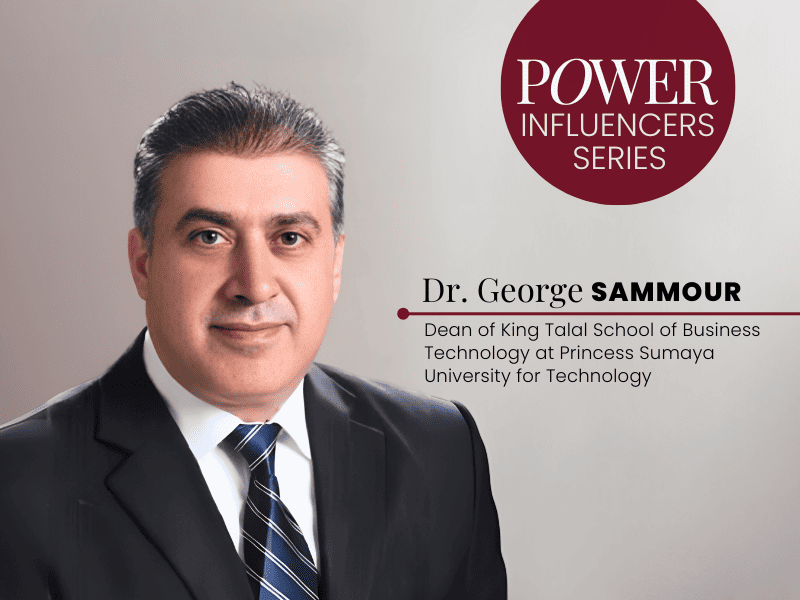
This article questions the dominance of global university rankings as the primary measure of success. Drawing on experiences at PSUT’s King Talal School of Business Technology, it highlights alternative indicators such as skills development, societal impact, sustainability, entrepreneurship, and partnerships, arguing for a balanced approach that values transformative contributions over numerical standings.
Every fall, when the latest global university rankings are published, the higher education world holds its breath. Institutions celebrate their ascent or lament their decline; media headlines announce winners and losers; and prospective students scan the tables for guidance. Rankings have become a powerful currency of reputation, shaping decisions about where students study, where faculty work, and where governments allocate resources.
Yet I often find myself asking: What if rankings weren’t the only way to measure success?
Beyond Rankings: Redefining Success in Context
At the King Talal School of Business Technology (KTSBT) at Princess Sumaya University for Technology (PSUT) in Amman, Jordan we believe success cannot be captured solely by league tables. For us, success means equipping students with the skills and mindsets to navigate a rapidly changing world. It means producing research that addresses pressing societal challenges, from digital transformation to sustainable business models. It means forging partnerships with industry, government, and civil society to ensure that our impact is felt beyond campus walls.
This commitment is reflected in our integration of the United Nations’ Sustainable Development Goals (SDGs) into our curriculum. At our school, we have embedded the SDGs into teaching, learning, and research, ensuring that graduates leave with not only technical expertise but also a strong sense of responsibility toward society and the environment. This approach reflects a broader understanding of success—one that emphasizes relevance, resilience, and responsibility.
At PSUT, this vision is further supported by a vibrant entrepreneurship ecosystem that nurtures innovation and impact. The system includes the Entrepreneurship and Innovation in Residence (EIR) program, which connects students with experienced entrepreneurs for mentorship and guidance; the Queen Rania Center for Entrepreneurship (QRCE), which promotes entrepreneurial culture and provides training opportunities; the Venture Lab, where students and faculty can develop, prototype, and scale their ideas; and iPark, a leading incubator that supports startups and spin-offs in their growth journey. Together, these initiatives create an environment where students do not just learn about entrepreneurship—they actively practice it, building ventures that tackle real-world challenges such as digital inclusion, sustainability, and job creation.
These contributions may not dramatically shift a university’s global ranking, but they create tangible value for society. They demonstrate that higher education can be a catalyst for national competitiveness, social mobility, and sustainable development. In many ways, these outcomes represent a truer measure of success than any number on a table.
The Case for Balance
This is not to suggest that rankings are irrelevant. They provide a degree of comparability, and they can motivate universities to improve. But they should not be the sole narrative of success. Instead, we need balance: a recognition that while rankings offer one perspective, the true value of an institution lies in its transformative power—on students, on communities, and on society.
A Call to Action
As deans, educators, and policymakers, we must lead this shift in perspective. We need to champion success stories that do not fit neatly into rankings tables: the small but powerful innovations in teaching, the long-term partnerships that drive community development, the research that quietly changes lives. By doing so, we encourage a culture where institutions strive not only to be the best in the world, but also the best for the world.
The world is facing unprecedented challenges such as climate change, inequality, technological disruption. Meeting them requires universities and business schools to redefine what success looks like. Rankings may tell us who is ahead in the race, but impact tells us whether we are running in the right direction.
And so I return to the question: What if rankings weren’t the only way to measure success? Perhaps then we would begin to value the deeper, lasting contributions of education, the ones that numbers alone cannot capture.
About the Author
 Dr. George Sammour is Associate Professor at Princess Sumaya University for Technology, Jordan. His expertise includes data analytics, business intelligence, and e-learning. He serves on editorial boards and accreditation committees, mentors universities in AACSB accreditation, and has published widely while leading quality assurance and academic development initiatives in higher education.