The Bandung Conference marked a turning point in the postcolonial world’s pursuit of political and economic independence. Dr Kalim Siddiqui explores how this historic gathering laid the foundation for South-South cooperation and economic sovereignty, examining its enduring relevance to today’s Global South amid shifting geopolitical and economic power structures.
I. Introduction
In April 1955, representatives from 29 newly independent Asian and African countries convened in Bandung, Indonesia, for the landmark Asian-African Conference—widely known as the Bandung Conference. This historic gathering marked a watershed moment in the political awakening of former colonies in what is now commonly referred to as the Global South.
Seventy years later, the legacy of the Bandung Conference endures as a powerful symbol of the shared aspirations of postcolonial states to forge a world order based on solidarity, mutual respect, and economic cooperation. The struggle for independence not only dismantled colonial rule (Siddiqui, 2019a) but also paved the way for envisioning alternative models of economic development. Bandung Conference thus signalled the beginning of a transformative era aimed at reshaping global power dynamics and advancing South-South economic cooperation (Siddiqui, 1985).
One of the conference’s most enduring contributions was its resolution on economic collaboration, which emphasized the importance of mutual support among developing countries. This initiative sought to promote regional integration and strengthen intra-South economic ties as a pathway toward greater autonomy and equity within the global economic system.
The economic ascent of the Global South—a term broadly encompassing developing countries—has been one of the most significant global transformations since the end of World War II. This evolution can be traced through five interrelated phases: decolonisation, non-aligned movement, Third World’s debt crisis, globalisation, and the emergence of new economic powers.
Globalisation, initiated by the United States and other developed capitalist countries in the 1980s, was once heralded as a pathway to shared prosperity. The globalisation model rests on policies such as market liberalisation, trade and capital deregulation, and the reduction of state intervention in the economy. Rather than promoting a more equitable global order, globalisation has exacerbated socio-economic disparities, particularly in the Global South—and has undermined the traditional role of the state as a mediator of economic and social tensions (Siddiqui, 2019a).
The Global South—typically referring to developing countries, often characterized by lower GDP per capita—accounted for approximately 44% of global GDP in 2024. Despite this already substantial share of the world economy, these countries contributed an even more striking 80% to global economic growth, underscoring their increasing influence in shaping the trajectory of global development.
However, regions formerly subjected to imperial rule continue to face significant setbacks and challenges. A striking example is Israel, which has functioned as an outpost of imperialism and has played a destabilizing role in the broader Middle East. The creation of Israel can be traced back to imperial agreements such as the Sykes-Picot Agreement (1916) between Britain and France and the Balfour Declaration (1917). Israel was officially established in 1948 as part of a settler-colonial project facilitated by British support. Its founding involved the violent displacement of approximately 760,000 Palestinians and the destruction of hundreds of towns and villages in ethnic cleansing (Kaplan, 2025).
Since its inception, Israel has pursued policies aimed at the appropriation of Palestinian land and water resources while systematically displacing the indigenous Palestinian population to enable the expansion of Jewish settlements. Over time, this process has developed into a system of institutionalized segregation and discrimination. In the occupied territories, Israel has enforced policies that physically and legally separate Palestinians from Israeli settlers, maintaining parallel legal systems that significantly disadvantage Palestinians in terms of rights, freedom of movement, and access to essential resources (Siddiqui, 2024a).
II. Colonialism and Marx’s Critique of Imperial Power
From the late 15th century onward, European imperial powers established colonies that came to dominate nearly all of Asia, Africa, and the Americas (Siddiqui, 2020a). These colonial powers systematically stripped regions of the Global South of their sovereignty, plundered their natural resources, disrupted indigenous cultures, destroyed self-sufficient economies, and dismantled longstanding social and political institutions (Siddiqui, 2020b).
Although Karl Marx’s primary analytical focus was on Europe and the development of capitalism in 19th-century Britain, he also engaged with colonialism, particularly in the contexts of Ireland, India, and China (Siddiqui, 1990; also see 1996). In a New York Daily Tribune article dated June 5, 1857, Marx asserted: “One thing is certain, that the death-hour of Old China is rapidly drawing nigh… before many years pass away, we shall have to witness the death struggles of the oldest empire in the world, and the opening day of a new era for all Asia.” (Marx and Engels, 1968)
Marx’s reflections on India were notably ambivalent. While he acknowledged the devastating consequences of British colonial rule, he also viewed it as a possible—albeit violent—catalyst for historical transformation (Siddiqui, 2018). He lamented the “terrible havoc” inflicted on Indian society but argued that colonialism might inadvertently undermine stagnant social structures and facilitate progress (Siddiqui, 2024b). Karl Marx in his article, The British Rule in India (1853) which was published in the New-York Daily Tribune on June 25, 1853. Here in particular, Marx identified the Indian village community—often idealised by others—as a fundamental pillar of what he termed “Oriental despotism.” Further in The British Rule in India (1853), he wrote: “[Village communities], inoffensive though they may appear, had always been the solid foundation of Oriental despotism… restraining the human mind within the smallest possible compass… enslaving it beneath traditional rules, depriving it of all grandeur and historical energies.” (Marx and Engels, 1968)
Karl Marx argued that Britain’s transformation of India into a “reproductive country” for British industry—supplying raw materials in exchange for manufactured goods—necessitated the development of modern infrastructure, including railways, roads, and irrigation systems. This process of economic integration, he believed, would also undermine hereditary divisions of labour and, by extension, weaken the caste system, which he regarded as a central impediment to India’s social and political progress (Marx and Engels, 1968).
Nevertheless, Marx never depicted Britain’s colonial ambitions as intentionally progressive. He was unequivocal in his denunciation of British motives, writing in the New York Daily Tribune on June 25, 1853: “England, it is true, in causing a social revolution in Hindostan, was actuated only by the vilest interests, and was stupid in her manner of enforcing them… The question is: can mankind fulfil its destiny without a fundamental revolution in the social state of Asia?” In this interpretation, Britain does not function as a conscious agent of enlightenment, but rather as what Marx described as an “unconscious tool” of history—simultaneously facilitating structural transformation while engaging in violent expropriation, cultural destruction, and political repression.
By 1857—particularly in response to the Indian Rebellion, Marx’s critique of imperialism became markedly sharper. He expressed support for the anti-colonial uprising, aligning himself with revolutionary movements seeking national liberation. In his analysis, British rule operated on “the principle of destroying nationality,” pursued through violent repression and systematic cultural erasure (Siddiqui, 2024c).
Moreover, in Capital, Volume I, Marx directly linked colonial expansion to the origins of capitalist accumulation. In the chapter titled “The Genesis of the Industrial Capitalist,” he wrote: “The discovery of gold and silver in America, the extirpation, enslavement and entombment in mines of the indigenous population… the conquest and plunder of India, and the conversion of Africa into a preserve for the commercial hunting of black skins… are the chief moments of primitive accumulation” (Marx, 1976: 915). Here, colonial violence appears not as an anomaly but as a foundational mechanism in the emergence of capitalism (Siddiqui, 2020c).
From this point onward, Marx increasingly regarded colonialism not as a contradictory element within the dialectical process of historical development, but as a regressive and coercive system of domination. This shift in perspective laid the theoretical groundwork for later anti-imperialist and postcolonial thinkers, who would go on to emphasize the enduring structural inequalities and widespread poverty generated and sustained by colonial rule (Siddiqui, 1989).
III. Neo-Colonialism and the Enduring Grip of Empire in West Africa
West Africa offers a striking example of how decolonisation was often incomplete. In the aftermath of formal independence, France retained substantial influence over its former colonies, particularly under the guise of protecting French assets and nationals. As part of this arrangement, French military forces were stationed in several countries, granting France significant leverage over domestic political affairs (Siddiqui, 2024d).
A key mechanism of this continued dominance has been monetary control. Many former French colonies were compelled to adopt the CFA franc, a currency pegged to the French franc (and later the euro), with monetary policy governed by the French Treasury and the Banque de France. Given the intrinsic link between monetary and broader economic policy, this effectively placed substantial aspects of economic sovereignty under French oversight.
Attempts to remove neo-colonial structures have frequently been met with violent repression. A notable example is Burkina Faso, where President Thomas Sankara—widely hailed as a visionary revolutionary and staunch advocate for African self-determination and sovereignty—implemented sweeping reforms aimed at reducing foreign dependency. His policies included the expulsion of French military forces, land redistribution, nationalization of key industries, and the promotion of women’s rights and environmental sustainability. Sankara sought to chart a path of truly independent development, free from the influence of former colonial powers. However, his radical agenda challenged entrenched interests both domestically and internationally. In 1987, he was assassinated during a military coup that received support from France, underscoring the extent to which efforts to dismantle neo-colonial systems have been systematically undermined (Siddiqui, 2024d).
The anti-imperialist struggle, however, has persisted. In 2022, Captain Ibrahim Traoré came to power in Burkina Faso and soon expelled French military forces from its country. He also formed the ‘Alliance of Sahel States’ alongside Mali and Niger—countries similarly rich in natural resources and burdened by foreign military presence. French and US troops have since been forced to withdraw from parts of the region, including the closure of a US drone base there, marking a significant shift in West Africa’s foreign policy.
Among the many natural resources in the Sahel region, gold occupies a particularly significant position. Burkina Faso, in particular, is one of Africa’s leading gold producers, extracting approximately 57 tonnes in 2024. Yet, despite this abundance, the vast majority of profits from gold production benefit foreign corporations that own and operate most of the country’s mines. The local population sees minimal returns from this wealth, reflecting a familiar pattern of extractive neo-colonial economic structures.
Burkina Faso is a predominantly agrarian society, where more than 80% of the population relies on agriculture for their livelihoods. In this context, land is not merely a productive resource—it is the foundation of survival, cultural identity, and socio-political stability. However, the country’s colonial legacy, neoliberal economic restructuring, and ongoing political volatility have entrenched significant inequities in land access, undermining the nation’s capacity to pursue autonomous and sustainable development.
In response to these structural challenges, President Ibrahim Traoré has initiated land reform efforts aimed at dismantling land monopolies and addressing rural inequalities. Central to his government’s policy aimed at achieving food sovereignty and economic sovereignty, which demand a more equitable distribution of land and the empowerment of local communities.
Burkina Faso’s longstanding dependency on food imports has left the country vulnerable to global market shocks, price volatility, and geopolitical pressures (Siddiqui, 2024e). Achieving true economic sovereignty—the ability of the state and its people to define and implement their own economic priorities—requires a fundamental reversal of this dependency. Land access to the rural poor is essential, not only to boost domestic food production but also to create employment opportunities in rural areas and strengthen local food systems.
Thus, in Burkina Faso, land reform is not merely a technical exercise involving redistribution of land. It is a profoundly political act that determines who controls resources and who benefits from agricultural production. A genuinely transformative approach to land governance is therefore indispensable for building sustainable food systems and reclaiming economic sovereignty in the postcolonial era.
In response, Captain Ibrahim Traoré has taken decisive steps to reverse this dynamic. His government has nationalised several gold mining operations previously under foreign companies’ ownership, aiming to redirect revenues toward industrialisation, public education, and healthcare. Additionally, he has implemented agricultural reforms to support small farmers and promote food grain self-sufficiency—an essential component of economic independence (Siddiqui, 2024e).
Multiple coup attempts have reportedly sought to remove Ibrahim Traoré, a reaction that reflects a longstanding imperialist pattern of destabilising reformist governments in Africa. Compounding these challenges is an ongoing insurgency by Islamist militants, who currently control up to 40 percent of Burkina Faso’s territory. The dual threats of internal instability and external subversion underscore the immense difficulties faced by postcolonial states striving for genuine sovereignty and economic justice.
Despite the formidable challenges faced by governments resisting neo-colonial influence, the renewed drive for decolonisation in West Africa has garnered widespread and enthusiastic support across the African continent. Demonstrations in solidarity with Ibrahim Traoré have taken place in multiple countries, with thousands calling for an end to foreign interference in Burkina Faso. The popular resonance of his leadership reflects a broader historical memory: the same imperialist forces that seek to destabilise reformist regimes today were responsible for the assassination or removal of leaders like Patrice Lumumba, Kwame Nkrumah, Amilcar Cabral, Thomas Sankara, and Muammar Gaddafi.
Today, Africa stands at a critical juncture. The continent’s geopolitical relevance has never been greater. By 2050, it is projected that one in every four people on Earth will live in Africa, which will be a big demographic, economic, and political transformation. As such, the continent has become a renewed arena for contestation between imperial powers seeking to control its vast natural resources and African countries striving to reclaim sovereignty and redirect those resources toward national development and social welfare.
What we are witnessing is not merely a political realignment, but the opening of a new chapter in Africa’s long-standing struggle for political and economic sovereignty and dignity.
IV. China and the Global South: Cooperation Rooted in the Bandung Spirit
China has played a prominent role in shaping contemporary global development, both through its rapid economic growth and initiatives such as the Global Development Initiative (GDI). Rooted in the Bandung Spirit of cooperation among developing countries, the GDI embodies collective aspirations for equitable development. Chinese President Xi Jinping articulated this vision at the 70th Anniversary of the Five Principles of Peaceful Coexistence in June 2024, stating, “Of all the forces in the world, the Global South stands out with a strong momentum.”
Key Bandung-inspired institutions—such as the Asian Infrastructure Investment Bank (AIIB) and the BRICS-founded New Development Bank (NDB)—have expanded access to financing for emerging economies. Meanwhile, the Belt and Road Initiative (BRI) has enhanced connectivity, creating new opportunities for partner countries (Siddiqui, 2019b).
A decade ago, the US and the EU were the dominant trading partners of regions such as Latin America, Africa, and the Middle East. However, by 2024, China has emerged as the largest trading partner for 63 Global South countries—including Iran, Brazil, Chile, Saudi Arabia, and Kenya—compared to just 36 in 2013.
Currently, annual trade among Global South countries exceeds $14 trillion. A growing share of this trade is intra-South, with South-South trade projected to grow at 3.8% annually through 2033, outpacing the 2.2% growth expected for North-North trade. Trade between China and the Global South is forecasted to increase at an even faster rate of 5.9% annually over the next decade (IMF, 2025).
V. The Emerging Economic Centre of Gravity: Trade and Investment in the Global South
Trade within the Global South has expanded for a variety of reasons, including the establishment of free trade arrangements and regional integration initiatives. These include intra-regional frameworks such as the Association of Southeast Asian Nations (ASEAN), the Regional Comprehensive Economic Partnership (RCEP), the 54-nation African Continental Free Trade Area (AfCFTA), South America’s Mercosur, and the Pacific Alliance in Latin America. Regional organizations such as the African Union, ASEAN, and the Community of Latin American and Caribbean States (CELAC) have also demonstrated increasing levels of cooperation. Meanwhile, the expansion of BRICS and the implementation of AfCFTA signal a broader trend toward greater economic integration and cooperation within the Global South.
By 2030, India is projected to become the world’s third-largest economy, with an estimated GDP of US$6.3 trillion. To support this trajectory, India is making significant investments in education, skills development, and infrastructure, aiming to enhance its export industries and integrate more deeply into global supply chains, particularly as multinational corporations seek cost-effective alternatives to China.
In addition, India is modernizing its industries, with a strong focus on the digital sector. The digital economy already contributes approximately 11% to the country’s GDP and is expanding rapidly. As a major global provider of information technology services, India is capitalizing on its large pool of technical talent and aims to become a leading player in emerging fields such as artificial intelligence and advanced computing (Siddiqui, 2024f).
On average, the developing countries invest only about one-quarter of what developed countries spend on R&D as a percentage of GDP, according to the World Bank. Despite this gap, many Global South nations are advancing rapidly in technological capability. To accelerate this momentum, governments need to adopt strategies that foster a conducive environment for early-stage risk capital and innovation. This includes supporting innovative small and medium-sized enterprises (SMEs), strengthening the broader business ecosystem, and investing in education, research and skills development.
Importantly, the Global South is transitioning from cost-driven to value-driven exports. Rather than primarily supplying raw materials to the Global North, many developing countries are increasingly focusing on value addition, developing domestic industries and integrating into global value chains.
The Global South’s share of global GDP has grown markedly since the 1990s, rising from 19% in 1990 to nearly 44% in 2024. This expansion is particularly evident in East Asia—most notably in China, where rapid industrialization and economic reforms have led to deep integration into global markets. Other regions, such as South Asia, have also experienced robust economic growth, with India playing a leading role (Siddiqui, 2018).
The Global South is deepening trade and investment relationships—particularly within the region itself. For example, trade between China and other Global South countries is projected to grow at a faster rate than trade between the Global South and the Global North. This reflects a broader structural shift in the global economy, with the economic centre of gravity increasingly moving toward the Global South. Developing countries such as Brazil, China, India, Indonesia, and South Africa are playing progressively more prominent roles in shaping global economic trends.
While the Global South is experiencing overall higher economic growth, there are important regional variations. East Asia, for instance, has achieved rapid development through industrialization and deep integration into global value chains. In contrast, many countries in Africa and Latin America continue to rely heavily on natural resource exports.
Sustainable development has also emerged as a central concern, and some Global South countries are positioning themselves as leaders in this area. Brazil, for example, not only boasts one of the world’s cleanest energy mixes but is also the second-largest global supplier of biofuels. The country plans to invest an additional US$40 billion in biofuels by 2037. Chile, similarly, is aiming to become one of the world’s leading producers of green hydrogen by 2040.
According to the World Bank, the addition of six new member states to BRICS has only moderately increased the bloc’s combined GDP, both in nominal terms and when adjusted for purchasing power parity (PPP). However, based on PPP-adjusted GDP, the BRICS grouping is now significantly ahead of the G7—a milestone it achieved in 2020 (see Figure 1). The inclusion of major economies such as India and China contributes substantially to BRICS’ overall economic size (Siddiqui, 2024f). In terms of population, the bloc far surpasses the G7, which reflects both its demographic weight and its growing geopolitical influence. Nevertheless, the average GDP per capita in BRICS countries remains considerably lower than that of the G7, particularly when compared to economies in the European Union and North America.
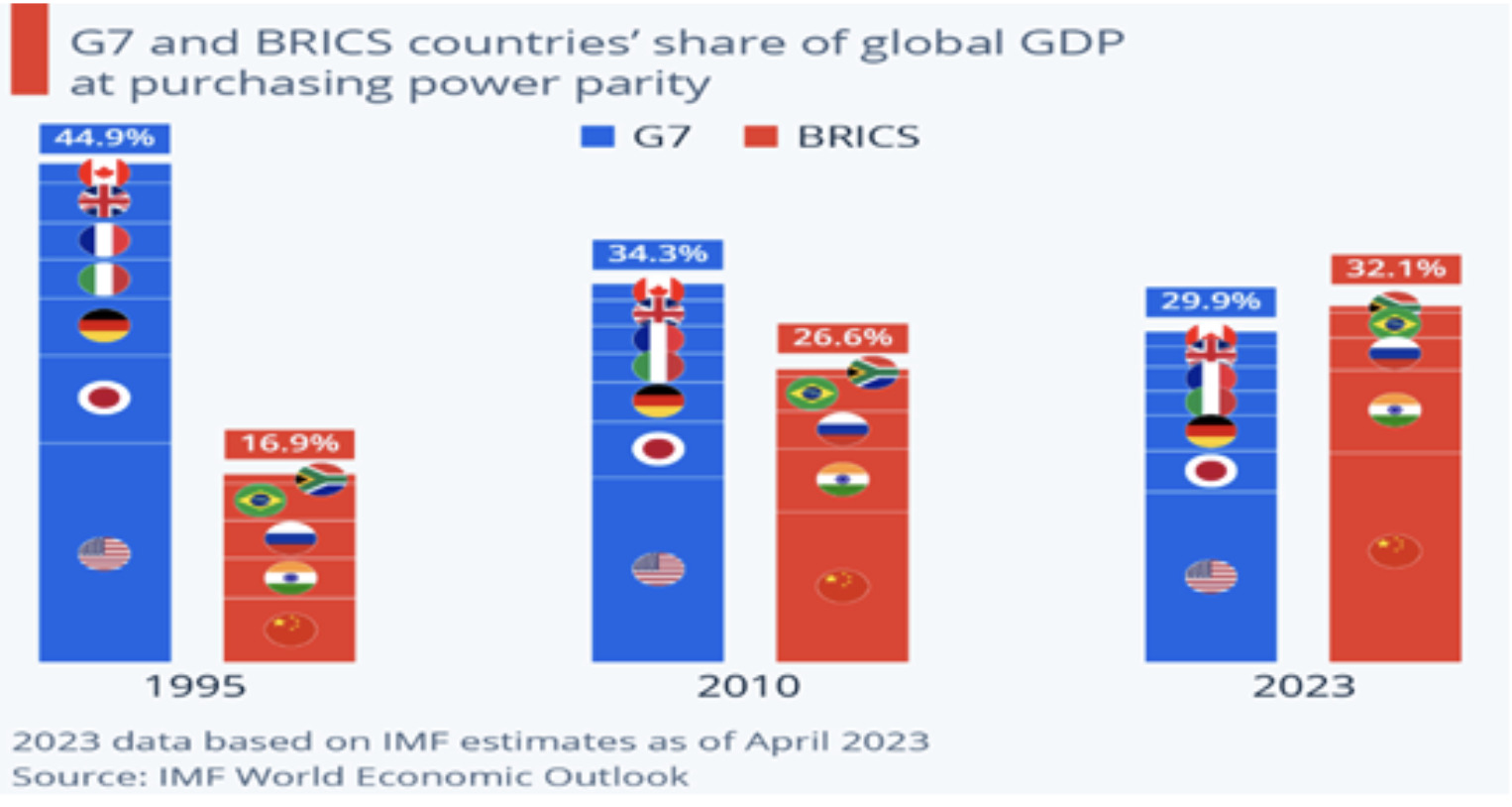
Over the past quarter-century, the global economic and geopolitical landscape has undergone a significant transformation, marked by the rise of the BRICS countries as a growing counterbalance to the traditional dominance of the G7. This shift has been particularly evident in the expanding share of global GDP held by the BRICS, especially when measured in terms of purchasing power parity (PPP), as illustrated in Figure 2.
Figure 1: Comparison of G7 and BRICS Economies, 2023.
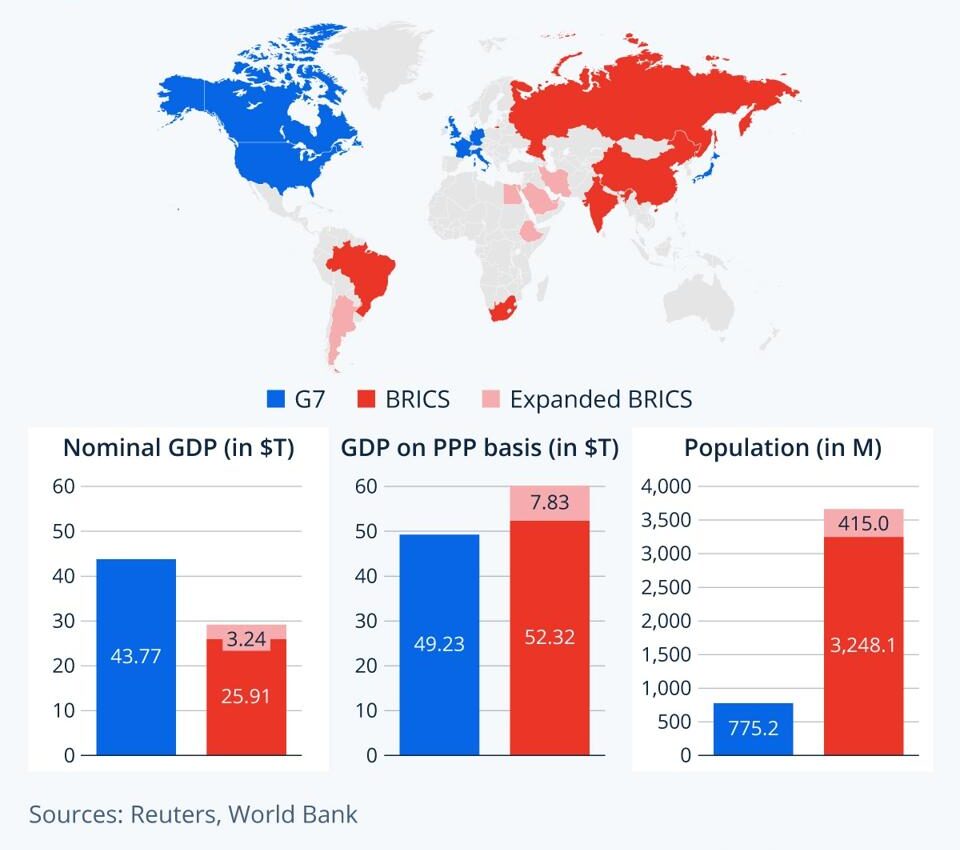
Figure 2: G7 and BRICS Countries’ Share of Global GDP at Purchasing Power Parity (PPP).
According to the World Economic Outlook report by the International Monetary Fund (IMF, 2025), the combined Gross Domestic Product (GDP) of the eleven BRICS member countries is projected to surpass the global average growth rate in 2025. The BRICS bloc is expected to grow by 3.4%, compared to the global average of 2.7% (IMF, 2025).
The countries leading this projected growth within BRICS include Ethiopia (6.6%), India (6.2%), Indonesia (4.7%), the United Arab Emirates (4.0%), and China (4.4%). In terms of international market share for 2025, China is anticipated to hold the largest share among BRICS members, accounting for 19.6% of global GDP. Following China are India (8.5%), Russia (3.4%), Indonesia (2.4%), and Brazil (2.3%) (IMF, 2025).
The IMF data also indicates that the eleven BRICS member countries are becoming increasingly central to the global economy, surpassing the influence of the G7, which includes the advanced economies of the EU, Canada, and the US. In terms of global economic share, the G7 accounted for approximately 28% in 2025 projection, while the BRICS countries represent a significantly larger share—approximately 44%. The BRICS countries are projected to account for nearly half of global economic output by 2025 when measured by Purchasing Power Parity (PPP). According to the IMF’s World Economic Outlook (2025), global economic growth is forecasted at 3.2%, with the BRICS bloc expected to contribute a substantial portion of this growth.
According to the IMF (2025) forecasts, the global economy is expected to rely more on the BRICS countries for growth than on the developed countries. The BRICS’ projected influence on global economic growth over the next five years is driven by: their combined economic growth and rising share of global GDP. China is expected to play a particularly significant role, contributing approximately 22% to global economic growth over the next five years, surpassing the combined contribution of the G7. India is anticipated to be the second-largest driver, projected to contribute nearly 15% of global growth by 2029.
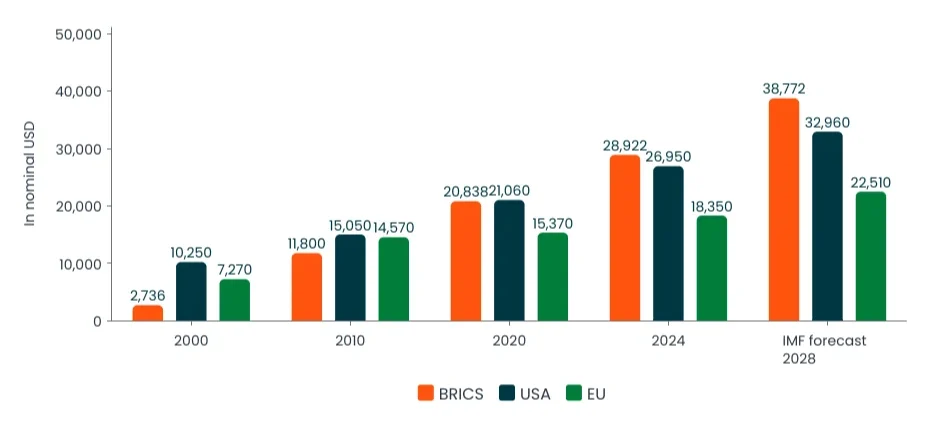
Overall, the IMF projects that BRICS economies will be the principal engines of global growth in the near future (see Figure 3). The ten BRICS member states now account for more than a quarter of global GDP and nearly half of the world’s population. This underscores the group’s increasing economic clout and its growing role in shaping global development.
Figure 3: GDP Growth Contributions from the US, EU, and BRICS Economies.
A remarkable progress has been made in reducing absolute poverty levels in China. This success can be attributed to the combined effects of rapid GDP growth and large-scale, targeted development interventions. Today, developing countries collectively hold over US$5 trillion in foreign exchange reserves—nearly double the amount held by developed countries.
Structurally, there has been a notable shift in global manufacturing capacity toward Asia, which has emerged as a major engine of global growth since the early 21st century. Many developing countries are gradually moving up the global value chain. According to some estimates, Asia is now home to approximately 40% of the world’s researchers.
Trade between China and the Global South is projected to grow at an average annual rate of 5.9% over the next decade. Notably, the Global South has also surpassed developed economies as a destination for foreign direct investment (FDI), attracting approximately US$525 billion in 2023 compared to US$464 billion for developed countries.
The Global South is emerging as a formidable force in international trade. By 2033, annual trade among Global South nations is projected to approach US$14 trillion. A growing proportion of this trade is intra-regional: South-South trade is expected to increase at an annual rate of 3.8%, outpacing the 2.2% growth projected for trade among developed economies (North-North trade). Trade between China and the broader Global South is anticipated to grow even more rapidly, maintaining a 5.9% annual growth rate over the coming decade.
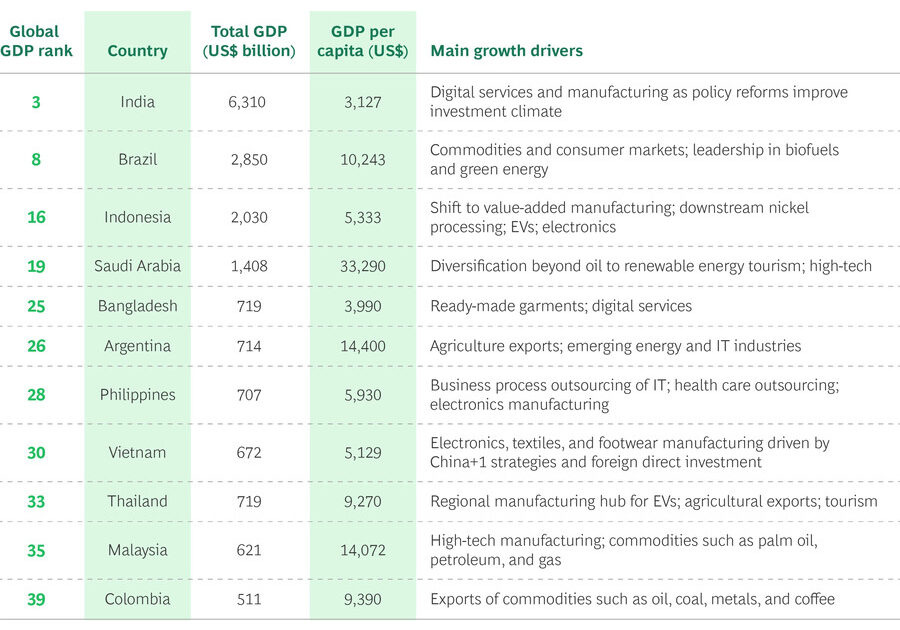
Consequently, more Global South countries are ascending to the ranks of the world’s largest economies. By 2029, India is expected to become the third-largest economy globally, with a projected GDP of US$6.3 trillion. Brazil is forecast to occupy the eighth position, while Indonesia is anticipated to rank sixteenth (see Figure 4).
Figure 4: Global South Economies are Projected to Become Some of the World’s Largest Economies by 2029.
VI. Conclusion
The Bandung Conference of 1955 stands as a pivotal moment in the history of international relations, marking the emergence of a collective voice from newly independent nations in Asia and Africa. By rejecting both colonial domination and Cold War bipolarity, the conference laid the ideological and political groundwork for the Non-Aligned Movement and offered an alternative vision of global cooperation rooted in mutual respect, sovereignty, and solidarity. Reassessing Bandung’s legacy not only highlights the enduring struggles for global equity and justice but also underscores the continuing importance of South-South cooperation in confronting contemporary global challenges.
The historic gathering at Bandung marked a pivotal moment in the political awakening of what is now known as the Global South. Seven decades later, the conference’s legacy endures as a powerful symbol of the shared aspirations of postcolonial states to establish a world order grounded in mutual respect, non-alignment, sovereignty, and economic cooperation.
However, the path toward economic transformations and prosperity in developing countries remains complex and uneven. Persistent challenges such as structural inequalities, external pressures, and global market volatility underscore the urgency for strategic and context-specific policies that promote inclusive growth, economic diversification, and sustainable development. Yet, the momentum generated by transformative regional initiatives continues to offer a hopeful vision—one in which the Global South, and Africa in particular, and shapes a future defined by autonomy, resilience, and shared prosperity.
In conclusion, the rise of Global South economies signals a major shift in the global economic and political order. Fuelled by reforms, demographic growth, industrialisation, and South-South cooperation, these nations are gaining influence and the deepening of regional cooperation and the expanding scope of South-South alliances signal a movement toward greater sovereignty, and sustainable progress.
About the Author
 Dr. Kalim Siddiqui is an economist specializing in International Political Economy, Development Economics, Trade and Economic Policy. Since 1989, he has been teaching economics at various universities in Norway and the UK. Dr. Siddiqui’s research interests encompass a wide range of topics, including political economy, international trade, and economic history, South Asia, and emerging economies. He has presented papers at international conferences across numerous countries, reflecting his global engagement in the field. His scholarly pursuits span six broad domains: Political Economy, Development Economics, Economic History, Economic Policy, Globalization, and International Trade. Dr. Siddiqui has made significant contributions to research in areas such as trade policy, globalization, and political economy. His work has been published in chapters of edited books and articles published in peer-reviewed journals. For inquiries, Dr. Siddiqui can be reached at: [email protected]
References
- IMF (2025). World Economic Outlook: A Critical Juncture amid Policy Shifts, Washington DC: IMF.
- Kaplan, Amy (2025) Our American Israel: The Story of an Entangled Alliance, Harvard University Press.
- Marx, Karl (1976). Capital, vol. 1, London: Penguin, P. 915
- Marx, Karl and Engels, Frederick (1968) The First Indian War of Independence, 1857–1859, Moscow: Progress Publishers.
- Siddiqui, K. (2024a) “Palestine, Imperialism and the Settler Colonial Project”, World Financial Review, February-March.
- Siddiqui, K. (2024b). “Economic Drain from India during the British Rule” World Financial Review, December.
- Siddiqui, K. (2024c). “The Multinational Corporations, Capitalism, and Imperialism: The Case Study of East India Company” World Financial Review, July.
- Siddiqui, K. (2024d). “Neo-colonialism: An analysis of international factors on the development of the Global South” World Financial Review, December-January.
- Siddiqui, K. (2024e). “Food Dumping, Rising Food Insecurity, and Hunger in the Developing Countries”. World Financial Review, July.
- Siddiqui, K. (2024f). “The BRICS Expansion and the End of Western Economic and Geopolitical Dominance”, World Financial Review, November.
- Siddiqui, K. (2020a). “Britain’s Trade with China in the Eighteenth and Nineteenth Century: A Review of the Opium Wars” Asian Profile, 48(3):206 – 221, September.
- Siddiqui, K. (2020b). “The Study of Economic History and the Importance of Understanding the Past” World Financial Review, November-December.
- Siddiqui, K. (2020c). “The Political Economy of the Slave Trade, Capital Accumulation and the Rise of Britain” World Financial Review, January-February.
- Siddiqui, K. (2019a). “The Political Economy of Global Inequality: An Economic Historical Perspective” Argumenta Oeconomica Cracoviensia, 21(2):11-42.
- Siddiqui, K. (2019b). “One Belt and One Road, China’s Massive Infrastructure Project to Boost Trade and Economy: An Overview” International Critical Thought. 9(2):214 – 235.
- Siddiqui, K. (2018). “The Political Economy of India’s Economic Changes since the last Century” Argumenta Oeconomica Cracoviensia, 19:103-132.
- Siddiqui, K. (2016). “Will the Growth of the BRICs Cause a Shift in the Global Balance of Economic Power in the 21st Century?” International Journal of Political Economy 45(4): 315-338.
- Siddiqui, K. (1996). “Growth of Modern Industries under Colonial Regime: Industrial Development in British India between 1900 and 1946” Pakistan Journal of History and Culture 17(1):11-59, January.
- Siddiqui, K. (1990). “Historical Roots of Mass Poverty in India” (Eds.) C.A. Thayer, J. Camilleri, and K. Siddiqui, Trends and Strains, p.59-76, New Delhi: Peoples Publishing House.
- Siddiqui, K. (1989). “Colonialism, Hunger and Backwardness in the Developing Countries” Materialisten, (in Norwegian) no.3-4:111-135, Oslo.
- Siddiqui, K. (1985). “South-South Economic Co-operation and its Future Prospects”, Bergens Tidende, October 4, Norway.
- World Bank (2025). Emerging and Developing Economies in the 21st Century, Washington DC: World Bank.