Four years on from the depths of the COVID-19 pandemic, the American shopping mall as we know it has failed to recover from the blows it faced by stay-at-home orders and our collective suspicion of crowded indoor public spaces. Malls had already been hit hard years before the advent of the pandemic by the birth of online shopping and general shifts in consumer habits, and properties that could not reinvent themselves to adapt to this new retail sphere have floundered.
Shopping malls that have in fact survived and thrived in the modern day have done so by finding new anchors, i.e., businesses that will not only bring in customers for their own benefit but will also enhance the amount of traffic directed towards neighboring businesses.
Over the last several years, one emerging shopping mall anchor has emerged in the form of Kids Empire, a chain of indoor children’s playgrounds/entertainment centers that have exploded in popularity across half the country due to their focus on providing fun, safe, and screen-free experiences for children and adults alike. Led since 2024 by pioneering French CEO Cyrille Bessiere, Kids Empire has become a boon to shopping centers in 26 states, with its massive indoor playgrounds drawing tens of millions of visitors per year and in turn driving massive foot traffic to restaurants and retail stores in the malls it calls home.
Under Bessiere’s leadership, Kids Empire has notably forged partnerships with some of the country’s largest commercial real estate developers, including Macerich, the nation’s third-largest owner and operator of shopping centers.
Mr. Bessiere has brought to Kids Empire decades of hard-won experience in the European venture capital and investment industries. Bessiere’s entrepreneurial journey began in strategy consulting. After graduating from HEC Paris (one of Europe’s oldest and most prestigious private business schools, ranked among the world’s leading institutions for business education) in 2004, he joined The Boston Consulting Group. There, he spent six years working on high-stakes business problems.
But Bessiere had always pictured himself as a builder. In 2010, he leaped into entrepreneurship, launching the US operations of Palais des Thés, a premium French tea brand.
In just seven years, Bessiere transformed Palais des Thés into a leader in the luxury market. The brand secured partnerships with Macy’s, Saks, and Bloomingdale’s. It soon became a fixture in several iconic hotels, including The Plaza and Ritz-Carlton. Bessiere also launched a tea school in SoHo, New York, the first of its kind in the city.
“We didn’t just sell tea,” Bessiere explains. “We built an experience around it, creating a community of enthusiasts.”
Serving as a senior leader within the ranks of French billionaire Pierre-Édouard Stérin’s pioneering French investment firm Otium Capital, Bessiere fostered the creation and exponential growth of multiple French and American companies that have now become distinguished leaders in their respective industries. Ana Luisa is a case in point. Bessiere transitioned the sustainable jewelry brand from a direct-to-consumer model to omnichannel success. He led the company’s Series A financing round and facilitated partnerships with Nordstrom and Bloomingdale’s.
Upon becoming a dominant shareholder in Kids Empire in 2023, Otium Capital planned to take this already wildly successful business (founded and shepherded to greatness by lauded French entrepreneur Haim Elbaz) and expand its national reach to an even greater degree. To this end, the firm placed Cyrille Bessiere into the driver’s seat, putting him in charge of the company’s executive-level leadership and its operations in total.
The results of Otium’s choice to put Kids Empire in Mr. Bessiere’s hands speak for themselves: the company has risen to become an undeniable leader in its nice, drawing an average of 10,000 visitors a week to each of its 100-plus parks. The boon that Kids Empire’s success has contributed to local economies is staggering: neighboring businesses report increased visitors, and thousands of jobs have been created.
Bessiere understands the unique challenges of scaling businesses, knowledge that has brought such enormous success to Kids Empire and which has fueled its rapid expansion.
“Execution matters more than ideas,” he insists. “Success depends on finding the right people to execute your strategy.”
He also emphasizes patience and brand consistency: “Growing quickly is exciting, but you can’t neglect the customer experience or the brand. Sometimes, you need to step back and rethink before moving forward.”
Bessiere’s experiences in France and the US have shaped his global perspective. He knows what it takes to bridge cultural gaps and drive international success. “Understanding different mindsets is critical,” he adds.
Bessiere insists that entrepreneurs should never see themselves as victims. Instead, he recommends maintaining a growth mindset: “If you fail, start again. Keep learning and innovating.” He also stresses adaptability. “The market changes, and so must you. Stay relevant by embracing new ideas and experimenting.”
Excited about the future, Bessiere plans to inspire professionals to cross the Atlantic and pursue their ambitions in the US. He also wants to take Kids Empire’s revenue from $100 million today to $1 billion.
“This is a land of opportunity,” he confirms. “I want to show people what’s possible.”
For Cyrille Bessiere, the thrill of scaling a business never fades: “I’m just getting started. The best is yet to come.”
The photo in the article is provided by the company(s) mentioned in the article and used with permission.
The move aims to ease inflationary pressures and strengthen ties with food-exporting countries like Mexico and Colombia after months of rising prices on essential goods.
In an unexpected but significant move, President Donald Trump signed an executive order eliminating tariffs on a broad range of imported food products.
The measure, retroactively effective as of midnight on Thursday, November 13, ends tariffs that had reached up to 50% on fruits, vegetables, and processed foods—most of which originate in Latin America.
This change marks a substantial shift in U.S. trade policy, originally designed to protect domestic industries from perceived trade imbalances.
However, mounting pressure from consumers, agricultural associations, and distribution sectors—who warned about the impact on inflation and access to basic goods—pushed the White House to revise its strategy.
In this context, businessman Gabriel Massuh emphasized the importance of establishing strong ties between Latin American producers and major international distributors, stating that “reducing trade barriers is only the first step; the key is to build resilient and transparent supply chains.”
Price Impacts and Trade Relations
Among the products that will benefit from the tariff removal are bananas, avocados, tomatoes, pineapples, mangoes, oranges, peppers, and guavas, along with processed foods like nuts, tea, coffee, and beef.
According to the Trump administration, many of these goods are either not grown in the U.S. or not produced in sufficient quantities to meet domestic demand, making imports essential for ensuring supply and price stability.
The policy shift also provides a much-needed boost to Latin American economies that rely heavily on the agricultural sector. Countries like Mexico, Ecuador, Colombia, and Peru see this as an opportunity to regain competitiveness in the U.S. market after months of export decline caused by tariff barriers.
Beyond offering relief to American families—who have seen grocery prices rise since spring—the decision is also seen as an effort to improve the government’s economic image in a challenging election year.
Business Perspective: Sustainability and Opportunity
The opening of the U.S. market could signal the beginning of a new phase of more balanced trade cooperation, where logistical efficiency, food security, and sustainability take center stage.
Gabriel Massuh, known for his focus on the sustainable development of agri-food trade, has long championed partnerships between small- and medium-sized agricultural enterprises in Latin America and high-demand markets like the United States. He advocates for a trade strategy that blends competitiveness, traceability, and environmental responsibility.
With measures like this, a window of opportunity opens not only for well-established exporters but also for emerging players in the Latin American agricultural ecosystem who are seeking to expand internationally in a more favorable environment.
This adjustment in U.S. trade policy, far from being purely technical, reflects a broader rebalancing between domestic protectionism and openness to international trade.
While the full impact of the decision will become clearer in the coming weeks, for many it already represents a welcome relief amid an economic climate defined by uncertainty and a rising cost of living.
Situating the United States’ contemporary decline within a long historical continuum of imperial collapse, this article employs a comparative framework to analyse the trajectories of the British, Spanish, Abbasid, and Roman empires. Dr. Kalim Siddiqui argues that the US mirrors historical patterns where governance failure, economic strain, and military overextension create systemic fragility, offering a modern case study of hegemonic decline.
I. Introduction
Employing a comparative framework of imperial economic decline, this paper situates the early twenty-first-century United States (US) within a historical pattern of structural vulnerability. It draws parallels between the challenges currently facing the US and those that undermined the British Empire in the early twentieth century and, on a deeper level, the late Roman Empire. The study focuses on four recurrent drivers of decline—economic overstretch, the emergence of geopolitical rivals, and rising debts and fiscal deficits—to argue that the US is experiencing a fundamental crisis of its economic and political structures, not a transient cyclical phase.
The analysis begins by situating the contemporary debate on US economic and military decline within a broader historical continuum. The fall of the Western Roman Empire provides a paradigmatic case, illustrating the corrosive interplay of governance failures, economic stagnation, and military overextension. This framework is then extended to the twentieth-century dissolution of the British Empire, whose collapse was accelerated by the economic devastation and structural dislocation wrought by the Second World War.
This study adopts a comparative historical and political-economic methodology, integrating empirical analysis of economic indicators with interpretive readings of historical patterns. The approach is interdisciplinary, combining insights from international political economy, macroeconomic history (Siddiqui, 2020a), and comparative imperial studies. Historical case studies—principally Britain, Spain, Abbasid Caliphate, and Rome—are used to develop a typology of economic decline, which is then applied to the US as a contemporary test case.
The emergence of new regional powers, persistent domestic tensions, and the strategic ascent of China as a systemic rival all mirror the structural pressures that will hasten US decline.
Striking parallels emerge between the trajectories of imperial Rome and the modern US. Both powers experienced prolonged periods of extraordinary economic expansion, generating immense wealth and consolidating their global pre-eminence (Siddiqui, 2025a). Yet this very dynamism engendered conditions that ultimately undermined their stability. In Rome’s case, territorial expansion into peripheral regions fostered the rise of frontier confederations, provoked large-scale migratory movements, and ignited regional conflicts that progressively weakened central authority.
Analogously, the US—after its post–Cold War “unipolar world power”—now confronts a global landscape shaped by the very forces of economic globalization it once championed. The emergence of new regional powers, persistent domestic tensions, and the strategic ascent of China as a systemic rival all mirror the structural pressures that will hasten US decline.
Central to this inquiry is the role of economic structures in sustaining and undermining imperial power. For the US, key variables include its evolving position in the global economy, the persistent elevation of domestic labour costs, and the paradoxical consequences of the US dollar’s dominance as the world’s reserve currency. These external dynamics are compounded by internal systemic issues such as increasing financialization of the economy at the expense of productive investment, the long-term implications of resource depletion, rising defence spending and the inequality.
Viewed through the historical prism of preceding hegemonies, these conditions suggest that the US’ economic trajectory exhibits symptoms of systemic, rather than conjunctural, fragility. By comparing the US experience with the historical precedents of Britain, Spain, Rome, and this paper seeks to contribute to a more comprehensive understanding of hegemonic decline—one grounded in economic structure and historical continuity rather than transient political contingencies.
II. United States: Challenges to Global Dominance and Internal Strains
A historically grounded account of primitive accumulation in the US must foreground the centuries-long regimes of slavery, Indigenous dispossession, and resource extraction that made it possible. This entailed the violent removal of Indigenous peoples to reservations and the systematic seizure of their lands and resources—processes that contributed to the near annihilation of many Native nations. Settler-colonial expansion proceeded with pervasive disregard for Indigenous life. As Horne (2018) argues, early US capitalism was forged in the sixteenth-century English colonial world through mutually reinforcing structures of slavery, white supremacy, and emerging capitalist relations. These racial hierarchies, embedded from the nation’s inception, have shaped both domestic governance and external interventions. To overlook these historical foundations is to fundamentally misread the formation of the US state and economy (Horne, 2018).
The economic dimensions underpinning contemporary US power and the structural pressures that may signal its gradual erosion. Central to this analysis are three interrelated dynamics: the transformation of the global economy, rising debts, and the paradoxical dependence on the US dollar as the dominant medium of international exchange. Together, these factors have afforded the US both enduring advantages and mounting vulnerabilities. Compounding these pressures are deeper systemic issues identified by various analysts: the increasing financialization of the economy at the expense of productive investment, and rising prices (Siddiqui, 2025a).
In the early twenty-first century, the US faces a convergence of economic and political strains—soaring national debt and balance of payment crisis, entrenched political polarization (Siddiqui, 2024a), and the rapid rise of China as a peer competitor. These developments raise a pressing question: are we witnessing the hegemonic US gradual decline? To address this, the study traces recurrent economic patterns evident in earlier empires—from the swift unravelling of the British Empire to the protracted decay of the Spanish and Rome—arguing that the US exhibits structural similarities to these historical cases (Kennedy, 2017).
The fall of the Western Roman Empire remains the most instructive and well-documented instance of imperial collapse. For centuries, Rome’s economic and military supremacy appeared unassailable, yet a combination of internal decay and external pressure precipitated its downfall. The mechanisms of decline—fiscal crisis, military overextension, and the emergence of rival powers—were not historically unique. By establishing this Roman paradigm, the analysis extends through subsequent imperial trajectories, including the British, Spanish, Abbasid, and Roman empires, to identify recurring economic pathologies that accompany hegemonic decline (Gallagher, 1982).
The historical parallels between Rome and the contemporary US are particularly striking. Both experienced prolonged phases of rapid economic expansion that generated vast concentrations of wealth and entrenched their global primacy. Yet such dynamism, in both cases, contained the seeds of decay. In Rome, expansion into peripheral territories facilitated the rise of new frontier confederations, stimulated migratory movements, and intensified regional instability, all of which progressively eroded imperial cohesion. The resurgence of Persia as a peer competitor imposed additional fiscal and military burdens that the empire could no longer sustain.
Similarly, the US—after decades of global economic dominance—now confronts structural challenges that echo these earlier imperial experiences. Economic globalization has empowered new regional centres of production and influence, while rising inequality and economic stagnation pressures strain the fabric of internal cohesion. The strategic rise of China as a near-peer competitor further heightens the geopolitical and economic pressures on an already overextended system. The lesson drawn from Rome’s experience is both historical and cautionary: imperial primacy is inherently transient. The very processes that sustain global leadership in one era can, over time, erode the foundations upon which that leadership rests.
Figure 1: The US has a Trade Deficit in Goods, and a Surplus in Services 1960-2024 ($ trillion).
Figure 2: The US Federal Deficit 1990-2024 ($ billions).
Figure 3: The US Sovereign Debts, 1965-2025 ($ trillions)
At present, the US trade deficit rose to overall $918.4 billion representing nearly 3.1 percent of gross domestic product (GDP), is down from a 2022 peak of more than $944 billion (See Figure 1), which at the time was around 3.7 percent of GDP. The deficit has averaged $594 billion since 2000, much higher than in previous decades, when it accounted for well below 2 percent of GDP. For instance, the largest US bilateral trade imbalance by far is with China. The US ran a $295 billion goods deficit with China in 2024 (partially offset by a US services surplus with China of $32 billion). The next largest contributor to the goods deficit, at $235 billion, is the European Union, followed by Mexico at $172 billion, and Vietnam at $123 billion (Siddiqui, 2025a).
A trade deficit occurs when a country imports more than it exports. For instance, in 2024 the US exported nearly $3.2 trillion in goods and services to the world, while it imported $4.1 trillion, leaving an overall trade deficit of more than $900 billion. The deficit in goods, at $1.2 trillion, is higher than the total deficit, since a portion of the goods deficit is offset by the surplus in services trade. Services, such as tourism, intellectual property, and finance, make up roughly one-third of exports, while major goods exported include aircraft, refined petroleum and other fuels, and transportation equipment. Meanwhile, imports are dominated by capital goods, such as computers and telecom equipment; consumer goods, such as textiles, electronic devices, and automobiles; and crude oil.
The fundamental cause of a country’s overall trade deficit is an imbalance between its savings and investment rates, meaning that the US as a whole spending more money than it makes. The US goods are less competitive and expensive in the world markets. Financing spending happens in the form of either borrowing from foreign lenders or foreign investing in US assets and businesses. A stronger dollar makes foreign products cheaper for US consumers, while making US exports more expensive for foreign buyers, again tending to raise the trade deficit.
The US problems are like previous empire military overspending i.e. the US maintains more than 700 overseas military bases, while its deficit budget is rising (Figure 2) and according to estimates $8 trillion were lost in last two decades of wars in Afghanistan and Iraq. The cost of running these military operations and the wars they support is extraordinary, around $950 billion per year. Two major studies have measured the costs of the Iraq and Afghanistan wars. Joseph Stiglitz estimated the war cost of $3 trillion as of 2008. Over a 15-year period (2001-2016), the $4.7 trillion amounts to nearly $280 billion per year (Siddiqui, 2025b).
The US spends more than it earns and it is managed as long as the US can borrow at low costs. If rising debts has to be financed by more borrowing not with more exports. More currency in the economy with same amount of goods lead to price rise as US is witnessing and government claims it is transitory but rest of the world losing confidence in the US economy, and countries are shifting away for the US dollar. And if the US face another crisis, further more countries will abandon dollar and it would not be able to sustain its rising military spending, declining trust about the US economy will further erode US borrowing capability (Siddiqui, 2025a).
The US dollar has been world’s reserve currency since 1944, after the World War II at the Bretton Woods Conference, dollar was accepted as the global currency, and it was backed by gold, 35 dollar per ounce and other nations peg their currencies to the US dollar. The dollar was seen as good as gold. But soon in the 1950 onwards the US began to launch wars in several countries such as Korea, Vietnam and Indo-China. The US also began to establish military bases all over the world. Moreover, the US military operation costs rose sharply due to interventions in South and Central America, Middle East and Africa (Siddiqui, 2025b).
By 1960s foreign governments realised that the US is printing more money than its gold reserve. France under Charles De Gaulle began demanding gold for dollar and other countries followed. Gold began to outflow from the US. Moreover, Britain, France, Germany and Japan’s productivity rose at higher rates than the US. Their exports became more competitive and were available at lower price than the US in the global markets. As a result, West Europe, Japan and South Korea began to have trade surplus with the US. With the rising trade and budget deficit, the US President Nixon in 1971 took US dollar out of the gold standard. And the dollar was no longer backed by gold. The dollar became a fiat currency just earlier Roman denarius or British Pound (Gunderson, 1976).
The petrodollar system established in 1973 created artificial global demand for dollar as became oil was sold in US dollars as agreement was then made by the US and the Saudi Arab. However, the US spending rose further with increased global US intervention both covert and overt. And the debts kept rising. In 1980, the US national debts were $900 billion and by 2000 it was $5.6 trillion, by July 2025 the debts reached to $35 trillion (See Figure 3). That’s a forty-fold increase in 45 years and it is accelerating. Since 2008 global financial crisis the Federal Reserve has printed trillions of dollars and it is called quantitative easing and is seen as necessary to stabilise the US economy. During the Covid in 2019-21 and in two years, the US printed $4 trillion i.e. more money was created than previous century combined. The US claimed that it would not cause inflation, but economic reality was different and inflation rose to 8%. As a result, the dollar began losing global reserve currency status (Siddiqui, 2023a).
The global order is shifting from a unipolar system to a multipolar one, driven by economic and geopolitical challenges to the US (Siddiqui, 2020b). Factors cited include the rise of other powers like China and BRICS nations, domestic issues weakening the US, the de-dollarization of trade, and the unravelling of the post-World War II international order.
In 2000 over 70% of the global reserve was held in dollars, currently is 58% and falling sharply. The BRICS nations are building alternatives and they started trading in local currencies by passing creating new payment systems and reducing dollar dependency. China, Russia, and India are buying gold aggressively. Central banks worldwide is diversifying their currency reserve. The supremacy of the US dollar is under threat, with challenges from de-dollarization and the rise of alternative economic frameworks and institutions (Siddiqui, 2024b).
David Harvey has drawn on Rosa Luxemburg’s arguments in order to articulate a response to the imperialism of the 21st century. Just as Luxemburg argued that accumulation drove the imperialist exploitation of the non-capitalist world of her day, Harvey, rejecting Luxemburg’s explanation of the limits of capital accumulation, claims that imperialism today is driven by a modern form of what Marx called “the primitive accumulation”, which he calls “accumulation by dispossession” (Siddiqui, 2023a).
Moreover, on the US deepening crisis, Joseph Stiglitz (2019) argues that high and rising wealth inequality is a major crisis that is harmful to economic efficiency, stability, and democratic processes. He contends that inequality is not an inevitable outcome of market forces but rather a result of specific policy choices and political systems “rigged” by the wealthy elite to benefit themselves. Contrary to the “trickle-down” myth, Stiglitz argues that inequality actually slows economic growth. The wealthy tend to save more of their income, while the poor and middle classes spend a larger portion. Concentrating wealth at the top therefore reduces overall consumer demand and leads to underinvestment in human capital and productive enterprises.
A central part of Stiglitz’s argument is that economic power translates into political power. The top 1% use their influence to shape regulations, tax laws, and market conditions in their favour, a process known as “rent-seeking” (gaining income not from creating wealth but from extracting it from others). This leads to policies that exacerbate inequality, such as tax loopholes for the rich and weak antitrust enforcement. High inequality erodes social trust and mobility, creating divisions within society (Siddiqui, 2022a).
Joseph Stiglitz (2019) People, Power, and Profits notes that: “…to answer such questions [about what to do] I have to explain the true source of wealth, distinguishing wealth creation from wealth extraction. The latter is any process whereby one individual takes wealth from others through one form of exploitation or another. The true source of “the wealth of a nation” lies… in the creativity and productivity of the nation’s people and their productive interactions with each other… it rests on… institutions broadly referred to as ‘the rule of law, systems of checks and balance, and due process.” (pp. xiii–xiv) (Stiglitz, 2019).
Paul Kennedy argues that superpowers, in order to remain “super”, must constantly manage the tension between economic investment (creating resources), economic consumption (consuming resources) and military spending. Getting the balance wrong can be terminal. Too little military spending leaves your economy vulnerable to predators, as seen in the inward-looking 18th century China. Too much military spending leaves no economic fuel left to grow your economy, as witnessed in the 20th century Soviet Union (Kennedy, 2017).
III. Britain: Empire in Retreat: The Waning of British Power
The British Empire (1583–1997) expanded in the late 19th century to a greater extent than the Roman and Spanish empires combined. And at its peak in 1920, the British Empire ruled more than 460 million people and one-quarter of the world population and one-quarter of world’s land mass. The sun never set on British empire because it ruled so vast regions it was always day time somewhere under British rule. When Bengal was occupied by Britain, the powerful Indian banking families, particularly the Jagat Seths, played a crucial role by financing the East India Company and later the British government, using Indian capital and credit systems to fund British expansion and extraction in India. This financing, combined with political manipulation and military control, enabled the British to extract vast wealth and resources from India, which fuelled the Industrial Revolution in Britain (Siddiqui, 2024c).
British pound was the world’s currency for over two centuries and pound was also world’s reserve currency. Over 60% of the global trade was invoiced in British pounds. The value of pound was fixed with a certain amount of gold. This created global trust, economic stability and power. But empires are built on credits and credit has to be repaid. Britain expanded its colonial territories through borrowing. Government bonds were sold to obtain debts, and from this colonies, infrastructures and government employees paid (Gallagher, 1982).
British Empire was built on a complex financial system that centred around London and the strength of the Pound Sterling as a global currency — much in the same way that the US-led international order of today revolves around the strength of the US dollar as a global reserve currency. World War 1 was significant because it was a turning point at which the international financial system effectively shifted from London to New York (Gallagher, 1982).
After the World War I, Britain tried to return to Gold Standard and in 1925 Churchill then chancellor of exchequer brought Britain back into gold standard at the pre-war exchange rate. This was a major policy failure. The pound was over-valued and British export became uncompetitive, its industries became uncompetitive with other major industrial power and government had maintained high interest rates to defend the currency, which adversely affected economic growth. And by 1931 Britain was forced off gold standard again. The pound was devalued and global trust of pounds was eroded.
The period between 1940 and 1945 in Britain was defined by the economic crisis of total war mobilization and its resulting financial exhaustion, rather than a conventional economic “depression”. Government debt as a percentage of GDP increased due to the massive cost of the war. For instance, in 1939 the debt was approximately 135% of GDP, while in 1945 the debt peaked at around 270% of GDP (see Figure 4). Moreover, the war expenditure as a percentage of GDP rose sharply, with a majority of the economy dedicated to the war effort. For example, in 1939, the war spending was 15.3% of GDP, and rose to 55.3% of GDP in 1943 (Gallagher, 1982).
Figure 4: Britain’s National Debt, 1900-1960, as a percentage of GDP.
In 1944, during the Bretton Woods Conference, the US took the lead in redesigning the global financial system, reflecting its new position as the world’s largest creditor nation. As the US economy emerged as the dominant global power, the US dollar replaced the British pound as the world’s primary reserve currency. In 1949, the pound was devalued by 40%, and once again devalued 14.3% in 1967. Each devaluation not only eroded personal savings but also weakened confidence in the British economy. As the British economy declined after the World War II, many colonies began to fight for their independence.
IV. Spain: Golden Glory to Decline: Spain’s Imperial Fall
Map: The Spanish Empire in the late 18th century.
The Spanish Empire (1492–1898) ruled over the vast territories, including most of South and Central America, parts of North America, Cuba, and the Philippines. During the late fifteenth century, Spain emerged as a preeminent imperial power. Under the Catholic Monarchs, its maritime expansion accelerated following Christopher Columbus’s transatlantic voyage, which reached shores of Bahamas on October 12, 1492. This “discovery” of the New World initiated European colonial expansion in the Western Hemisphere. The subsequent Spanish conquests of the Aztec and Inca empires brought vast territories and immense wealth under Spanish dominion, elevating Spain to the forefront of early modern global power and profoundly transforming the economies of both Spain and Europe.
A pivotal moment came in 1545 with the discovery of the Cerro Rico Mountain in Potosí, located in present-day Bolivia. This mountain contained the largest silver deposit ever found and, for the next century, produced nearly half of the world’s total silver output. The enormous quantities of silver extracted—often through forced indigenous labour—were transported to Spain, providing its rulers with unprecedented wealth. The silver was minted into coins, and the Spanish dollar subsequently became the first global currency, trusted for its purity and accepted across Europe, Asia, Middle East, Africa, and in the Americas (Kennedy, 2017).
Image: Over-flows of silver coins in Spain in the 16th century.
By the sixteenth century, Spain had become the world’s most powerful and affluent state, ruling vast territories. However, Spain’s economic structure was inherently unstable. The vast inflow of silver into Europe led to a phenomenon now recognized as the “Price Revolution.” As the supply of silver increased, the value of money declined, causing widespread inflation. Goods that cost one silver coin in 1500 required ten by 1600. The problem was not the quality of the silver itself but its overabundance, which eroded purchasing power and economic stability.
Spain’s wealth was not derived from industrial productivity, innovation, or the expansion of trade, but rather from the extraction of colonial resources. The Spanish elite invested their fortunes not in productive enterprises, but in wars, luxurious imports, and the construction of palaces. Consequently, Spain’s economic growth proved unsustainable, and its dependence on colonial wealth ultimately contributed to its long-term economic and imperial decline. The silver that entered Spain rapidly flowed out again to pay for imports from rising European economies such as Britain, France, and the Netherlands. Spain relied heavily on foreign goods that it did not produce domestically, using wealth extracted from its colonies to finance consumption rather than production. By the late sixteenth century, this imbalance, combined with extensive military expenditures, led to a sharp rise in national debt (Kennedy, 2017).
King Philip II, who reigned from 1556 to 1598, inherited enormous debts from his predecessors. Instead of reducing spending, he expanded military campaigns, borrowing further to finance wars on multiple fronts—including conflicts against the Ottoman Empire, the Protestant rebellion in the Netherlands, and England. As Spain’s financial obligations grew unmanageable, the monarchy declared bankruptcy in 1557, suspending all debt repayments. This marked the first sovereign default in modern history. Spain defaulted again in 1560, 1575, and 1596—four times within forty years—despite controlling nearly half of the world’s silver production.
Repeated defaults eroded international confidence in Spain’s creditworthiness. Lenders became increasingly hesitant to extend further credit, and interest rates on Spanish debt rose sharply. In response, the government resorted to currency debasement, minting coins with reduced silver content and even issuing copper money. These measures further undermined trust in Spain’s monetary system and weakened the credibility of its currency in international markets. By the close of the seventeenth century, Spain was facing a profound economic crisis. The state could no longer sustain its military expenditures, and revolts erupted across the empire. The Peace of Westphalia in 1648 effectively marked the end of Spain’s hegemony in Europe. By 1700, the once-dominant Spanish Empire had entered a state of irreversible decline, burdened by unmanageable debt, chronic economic mismanagement, and a structural dependence on colonial wealth rather than domestic productivity.
V. Abbasid Caliphate: Fractured Caliphate – The Slow Unravelling of Abbasid Rule
The Abbasid Caliphate (750 to 1258 CE), the third major Islamic empire, emerged in the mid-eighth century CE after defeating the Umayyad Caliphate in a civil war. At its height, the Abbasid empire extended across much of North Africa, the Middle East, and Central Asia, unifying territories previously ruled by the Umayyads and ushering in a new ‘Golden Age’ of Islamic civilization. This period, which began in the late eighth century, witnessed the founding of new cities, the flourishing of trade, and remarkable achievements in science, philosophy, and the arts. However, the Abbasid ascendancy was relatively brief. By the early ninth century, internal strife and regional separatism weakened central authority, and by the tenth century, most of the empire’s provinces had fallen under the control of rival dynasties. The Abbasid Caliphate ultimately collapsed in the mid-thirteenth century, when the Mongols sacked Baghdad in 1258 and that marked the end of the Abbasid Caliphate and the ‘Islamic Golden Age’.
The Abbasid dynasty formally began in 750 CE, though its roots trace back to the earliest years of Islam. The family claimed descent from al-‘Abbas ibn ‘Abd al-Muttalib, the Prophet Muhammad’s uncle, a member of the Hashemite clan of the Quraysh tribe in Mecca. From around 718 CE, Abbasid partisans worked to overthrow the Umayyads, who had ruled since 661 CE.
Abbasid focused on consolidating the empire’s existing territories rather than pursuing new conquests. A notable exception was the victory over the Tang Dynasty at the Battle of Talas in 751 CE, which curtailed Chinese westward expansion and strengthened Abbasid influence in Central Asia. One of the Abbasids’ most enduring achievements was the construction of a new capital, Baghdad, which replaced Damascus as the political and cultural center of the Islamic world. Situated strategically along the Tigris River, Baghdad soon surpassed all contemporary European cities in size, prosperity, and intellectual vitality, becoming the heart of the Islamic Golden Age.
The ‘Golden Age’ of the Abbasid Caliphate reached its height during the reign of Caliph Harun al-Rashid (r. 786–809 CE) and his son al-Ma’mun (r. 813–833 CE). Under their leadership, the Abbasid Empire experienced remarkable progress in politics, science, medicine, and culture. This era is often regarded as the pinnacle of Islamic civilization, when Baghdad became the intellectual and cultural center of the world. Caliph Harun al-Rashid played a central role in fostering this transformation. He established the Grand Library of Baghdad—later known as the Bayt al-Hikmah (House of Wisdom)—which became a leading institution for the collection, translation, research, and study of knowledge. Many classical works of ancient Greece were translated into Arabic under his patronage, preserving philosophical, scientific, and mathematical texts that might otherwise have been lost. The caliphate’s active encouragement of scholarly inquiry enabled these achievements, which were later translated into Latin and helped lay the foundations for the European Renaissance and, ultimately, the Scientific Revolution.
Caliph al-Maʾmun’s direct patronage of the Bayt al-Hikmah fostered an unparalleled environment for scientific and intellectual advancement. Al-Khwarizmi developed the discipline of algebra, astronomy scholars produced refinements to the Ptolemaic model and compiled more accurate astronomical tables. Baghdad itself functioned as an inclusive intellectual community that brought together scholars of diverse backgrounds. The Caliph did not see religion as a barrier to knowledge. This diversity highlights the centrality of cross-cultural exchange to the history of science: for instance, Hunayn ibn Isḥāq, a Nestorian Christian, served as the leading translator of Greek medical works, and Sahl ibn Hārūn, a Zoroastrian, directed the Bayt al-Hikmah.
During his reign, Baghdad became an important industrial and artistic center. The city was known for its production of refined glassware and ceramics. He also built grand palaces, pavilions, gardens, mosques, and monumental avenues, reflecting the empire’s architectural and artistic sophistication.
The scientific and intellectual achievements of this period flourished most prominently under al-Ma’mun, Harun’s successor. Al-Ma’mun expanded the Bayt al-Hikmah and actively sponsored scholars, translators, and scientists from across the Islamic world and beyond. His administration prioritized the advancement of education and the sciences, aiming to cultivate scholars whose work could benefit humanity. This intellectual climate produced a number of brilliant figures, as well as pioneering scientists in fields such as chemistry, astronomy, and medicine—whose theories and discoveries remain influential today.
Works by Greek, Persian, and Indian scholars—including Aristotle and other classical authors—were translated, studied, and integrated into the Islamic intellectual tradition (Siddiqui, 2025c). Al-Mansur also promoted the study of astronomy and sought to align administrative and calendrical systems with astronomical principles. Over time, the Bayt al-Hikmah evolved into a vast repository of knowledge, housing thousands of manuscripts from Roman, Greek, Persian, and Indian sources, making it one of the most important centres of learning in the medieval world.
The patronage of the Abbasid caliphs played a crucial role in advancing medical science during their reign. The caliphs demonstrated a profound respect for knowledge and a keen curiosity about scientific inquiry, which led them to prioritize the development of educational infrastructure. The emergence of major intellectual institutions, particularly the Bayt al-Hikmah, became a gateway for the advancement of philosophy, mathematics, physics, astronomy, and even military studies during the reign of Caliph al-Ma’mun.
Among the pioneering figures of Abbasid medicine was Imam Muhammad ibn Zakariya al-Razi (d. 925 CE), who made foundational contributions to the transformation of medical knowledge. Often regarded as one of the fathers of Islamic medicine, al-Razi’s works reflected an empirical and rational approach that marked a decisive shift from earlier medical traditions.
Another known scholar in the field was Ibn Sina (Avicenna) (d. 1037 CE), whose monumental work al-Qanun fi al-Tibb (The Canon of Medicine) remained the authoritative reference in both the Islamic world and Europe for several centuries (Siddiqui, 2025c). In this comprehensive text, Ibn Sina discussed topics such as disease diagnosis, pharmacology, anatomy, and surgical techniques. His systematic and evidence-based methodology signalled a transition from purely traditional healing practices to a more analytical and experimental framework of medical science.
The Abbasid Caliphate represented a period of remarkable scientific and medical advancement. Through active state support, the translation of foreign works, and the establishment of institutions such as the Bayt al-Hikmah, the Abbasids created an enduring legacy of scholarship. The pioneering research and writings of scholars such as al-Razi and Ibn Sina not only shaped the course of Islamic medicine but also influenced the development of medical science in the wider world for centuries to come.
The decline of the Abbasid Caliphate represents a multifaceted process shaped by the interplay of internal fragmentation, structural weaknesses, economic mismanagement, and external military pressures. The origins of this decline can be traced to the reign of Caliph al-Muʿtasim (r. 833–842 CE), whose decision to integrate Turkish mercenaries into the imperial army fundamentally altered the political balance of the Caliphate. While initially intended to professionalize and strengthen the military, this policy empowered a class of foreign soldiers and commanders who, over time, assumed de facto political control (Kennedy, 2017).
By the early tenth century, the vast geographic expanse of the empire had rendered centralized governance untenable. The inability of Baghdad to maintain effective administrative oversight facilitated the rise of autonomous provincial dynasties, including the Fatimids in North Africa and the Umayyads in al-Andalus. In 945 CE, the Shiʿa Buyids captured Baghdad, reducing the Abbasid caliphs to mere figureheads and further eroding the unity of the Islamic world. The resulting political decentralization marked the transition from a unified caliphal empire to a constellation of regionally based Islamic polities.
The eleventh century witnessed a new phase in this transformation with the emergence of the Seljuk Turks, whose conquest of Baghdad in 1055 CE institutionalized a dual structure of power. The caliphs retained nominal spiritual authority, while real political and military control rested with the Seljuk sultans. Although a limited revival occurred in the twelfth century under al-Mustarshid (r. 1092–1135 CE) and al-Muqtafi (r. 1136–1160 CE), who attempted to restore Abbasid sovereignty, their influence remained confined to Iraq. This period therefore represented not a restoration of imperial power but a final phase of political survival within a drastically reduced territorial and administrative framework.
The causes of Abbasid decline were not merely political but also socio-economic and institutional. Chronic fiscal deficits, the escalating cost of mercenary forces, and widespread corruption weakened the state’s capacity to sustain public works and defence. Recurrent civil wars—most notably between al-Amin and al-Maʾmun—and major revolts such as the Zanj and Qarmatian uprisings devastated agricultural production and disrupted trade networks. The neglect of irrigation systems, a cornerstone of Mesopotamian agriculture, precipitated ecological degradation and rural impoverishment, further diminishing state revenue.
Externally, the Abbasid state confronted mounting pressures from rival Islamic dynasties and foreign invasions. The Fatimid expansion in the west and the Seljuk ascendancy in the east progressively circumscribed Abbasid influence. Although the Crusades in the eleventh and twelfth centuries did not directly threaten Baghdad, they drained resources and heightened instability along the empire’s periphery. The Mongol invasion of the thirteenth century, however, delivered the fatal blow. In 1258 CE, Hulagu Khan’s forces besieged and destroyed Baghdad, annihilating the population and executing the last Caliph, al-Mustaʿsim. The sack of Baghdad obliterated the city’s economic infrastructure and intellectual institutions, including the Bayt al-Hikmah, symbolically ending both Abbasid political authority and the Islamic Golden Age (Siddiqui, 2025d)
In analytical terms, the collapse of the Abbasid Caliphate exemplifies the vulnerabilities of pre-modern imperial systems reliant on centralized administration, military patronage, and extractive fiscal policies. The empire’s extensive territorial reach, initially a source of strength, became an impediment to efficient governance. The progressive militarization of politics, coupled with the erosion of fiscal discipline, and administrative integrity, precipitated the empire’s disintegration long before the Mongol conquest formalized its demise.
VI. Roman Empire: The Eternal Empire Crumbles: Rome’s Descent into Decline
The Roman World map in 117 CE: At the End of Trajan’s Reign
The Roman Empire endured for nearly 1,500 years, from its legendary foundation in 753 BCE until the fall of its Eastern successor, the Byzantine Empire, in 1453 CE. Over this millennium and a half, its territorial control evolved dramatically, at its height governing vast stretches of Europe, North Africa, and the Middle East. This expansive domain encompassed a diverse population estimated at 50 to 60 million people. A key pillar of Roman power was its military supremacy, which was sustained by a robust economic system. The linchpin of this system was the denarius, a silver coinage so reliable that it functioned as a universally accepted currency across the known world, from Roman Britain to the markets of Egypt and Mesopotamia.
The foundation for Rome’s prolonged economic prosperity was laid with the introduction of the denarius in 211 BCE. This silver coin, initially containing approximately 4.5 grams of high-purity silver, became the cornerstone of Roman monetary policy for centuries. The state’s diligent maintenance of the coin’s silver content secured profound public trust and guaranteed its reliability in both domestic and long-distance trade. This sustained monetary stability proved fundamental to imperial expansion, as it facilitated the financing of extensive military campaigns, the construction of critical infrastructure, and the integration of a complex commercial network across the provinces.
This economic foundation was further reinforced by a period of significant industrial and commercial growth beginning around 150 BCE, which peaked in the early first century CE. Industries such as fine tableware from Arretium, bronze-ware from Capua, textiles from the Po Valley, and perfumes from Campania flourished, creating a diversified manufacturing base across the Italian peninsula. A policy of general non-interference in economic affairs under Augustus and his successors—aside from the imposition of transit dues—enabled these markets to expand and diversify, thereby fostering a dynamic and integrated imperial economy.
However, the Empire’s structural need for territorial and economic expansion precipitated rising military and administrative expenditures. To finance chronic budget deficits, Rome increasingly resorted to currency debasement. Emperor Nero (54-68 CE) initiated this practice by systematically reducing the silver content of the denarius from nearly 100% to approximately 90%. This devaluation provided an immediate fiscal windfall, allowing the state to mint more coins from its existing silver reserves to fund both military campaigns and elite consumption.
While the initial reduction under Nero had limited inflationary impact, it established a critical and ultimately destabilizing precedent in Roman fiscal policy. The debasement intensified over the following centuries. By the reign of Caracalla (211 CE), the silver content of the denarius had been reduced to approximately 50 percent. This devaluation accelerated dramatically, and by 265 CE under Gallienus, the coin was a mere 5 percent silver—effectively a bronze piece with a thin silver wash. Consequently, a soldier’s pay in 265 CE contained only one-twentieth of the precious metal it had held two centuries prior. Despite the state’s insistence on the currency’s nominal value, public trust evaporated as real purchasing power collapsed. Farmers increasingly reverted to barter, refusing to exchange their goods for what they perceived as worthless coinage (Gunderson, 1976).
The empire fell not because the external forces were invincible, but because it had become financially and administratively incapable of sustaining its own defence and infrastructure.
Simultaneously, the imperial tax burden grew increasingly oppressive. Having initially relied on a carefully assessed land tax, the state’s fiscal demands escalated throughout the crisis-ridden third century. Under Diocletian, the tax system was reformed into a far more rigid and burdensome structure. This fiscal pressure was further intensified by Constantine’s vast expenditures on his new capital, Constantinople. The combination of rampant currency-induced inflation and crushing taxation created a severe, long-term structural crisis. The root cause was not exogenous shocks like foreign invasion or plague, but rather unsustainable government spending financed primarily by currency debasement. This problem was compounded by the structure of the Roman economy itself, which was heavily reliant on slave labour from continuous conquest. As territorial expansion halted and this supply of new slaves dwindled, the economic foundation stagnated, locking the Empire into a cycle of fiscal and economic decline (Gunderson, 1976).
Financially exhausted, the Roman state could no longer reliably recruit, pay, or maintain its legions, leading to an increased dependence on foreign mercenaries with tenuous loyalty. Although significant external pressure was exerted by Germanic tribes—often pejoratively termed “barbarians”—the collapse of the Western Roman Empire in 476 CE was ultimately precipitated by its internal decay. The empire fell not because the external forces were invincible, but because it had become financially and administratively incapable of sustaining its own defence and infrastructure.
Thus, the fall of Rome is best understood as the result of a complex interplay of factors, where internal failures amplified external threats. A cycle of political instability, economic collapse (driven by currency debasement and inflation), and an oppressive tax system progressively eroded the state’s foundations. This internal rot crippled its ability to defend its borders, leading to a fatal feedback loop: territorial losses caused revenue to fall, which further weakened the army, culminating in a complete breakdown of the imperial system.
VII. Conclusion
In the contemporary era, the US exhibits many of the fiscal and monetary characteristics that historically presaged imperial decline. Its economy is characterized by persistent debt, rising military spending, and the creeping de-dollarization of global trade (Siddiqui, 2023b). The reliance on monetary expansion to sustain domestic consumption further erodes the credibility of the dollar, inviting inflationary pressures and undermining global confidence. The assumption of exceptionalism—the belief that modern financial sophistication can outwit the structural limits that humbled past empires—risks repeating the very cycle that history so clearly warns against.
The annals of history present a compelling picture that the lifespan of a superpower is ultimately determined by its fiscal and monetary discipline. Through an analysis of Britain, Spain and Rome, a seven-stage lifecycle of collapse emerges—from imperial dominance and overstretch, through deficit spending and currency debasement, to inflation, a loss of confidence, and systemic failure.
Spain’s experience demonstrates that even an empire endowed with vast natural resources cannot escape fiscal ruin if its wealth is mismanaged. British empire, which once controlled a quarter of the Earth’s surface, also succumbed to overextension and debt. Today, the US has entered a comparable stage in the cyclical pattern of imperial rise and decline. Each empire, convinced of its exceptionalism, believed its power—whether military, economic, or monetary—would endure indefinitely. Yet history, from Rome’s denarius to Spain’s silver, has consistently proven otherwise.
The trajectory of hegemonic empires—from Rome and Spain to the Abbasids and Britain—reveals a consistent pattern of decline rooted in economic folly. Their lifecycle, which progresses from military overextension and fiscal irresponsibility to currency debasement, inflation, and a final collapse of confidence, demonstrates that the gravest threats are often internal. In each case, the pivotal failure was not a scarcity of wealth, but an excess of elite hubris: the enduring conviction that their empire was uniquely exempt from the fundamental economic principles that governed all others.
Dr. Kalim Siddiquiis an economist specializing in International Political Economy, Development Economics, Trade and Economic Policy. Since 1989, he has been teaching economics at various universities in Norway and the UK. Dr. Siddiqui’s research interests encompass a wide range of topics, including political economy, international trade, and economic history, South Asia, and emerging economies. He has presented papers at international conferences across numerous countries, reflecting his global engagement in the field. His scholarly pursuits span six broad domains: Political Economy, Development Economics, Economic History, Economic Policy, Globalization, and International Trade. Dr. Siddiqui has made significant contributions to research in areas such as trade policy, globalization, and political economy. His work has been published in chapters of edited books and articles published in peer-reviewed journals. For inquiries, Dr. Siddiqui can be reached at: [email protected]
Gunderson, G. (1976) “Economic Change and the Demise of the Roman Empire” Explorations in Economic History 13, pp.43-68, US: North Carolina State University.
Horne, G. (2018) “The Apocalypse of Settler Colonialism” Monthly Review 69 (11).
Kennedy, P. (2017) The Rise and Fall of the Great Powers: Five hundred years of history of fluctuating economic muscle and military might, William Collins.
Siddiqui, K. (2025a) “The Reasons Behind the Decline of the United States Economy” World Financial Review, May.
Siddiqui, K. (2025b) “Reconfiguring US Hegemony: Militarism, Empire, and the Crisis of Capitalist Accumulation” World Financial Review, August.
Siddiqui, K. (2025c) “The Influence of Greek Philosophy on Muslim Scholars: A Review of Al-Farabi, Ibn Sina, and Ibn Rushd” World Financial Review, October.
Siddiqui, K. (2025d) “Ibn Khaldun and the Dynamics of Social and Economic Transformation” World Financial Review, September.
Siddiqui, K. (2024a) “The Decline of the West and Global Political Economy” World Financial Review, December.
Siddiqui, K. (2024b) “China’s Growth Miracle and Development Strategy Since the 1980s” World Financial Review,
Siddiqui, K. (2024c) “The Multinational Corporations, Capitalism, and Imperialism: The Case Study of East India Company” World Financial Review, July.
Siddiqui, K. (2023a) “Marxian Analysis of Capitalism and Crises” International Critical Thought 13(4): 525-545.
Siddiqui, K. (2023b). “De-dollarisation, Currency Wars, and the End of US Dollar Hegemony” World Financial Review, August/September,
Siddiqui, K. (2022a) “Capitalism, Imperialism, and Crisis” European Financial Review, June/July.
Siddiqui, K. (2022b) “Problems of Inflation, War in Ukraine, and the Risk of Stagflation” European Financial Review, April/May.
Siddiqui, K. (2020a) “The Study of Economic History and the Importance of Understanding the Past” World Financial Review, November/December.
Siddiqui, K. (2020b) “Prospects of a Multipolar World and the Role of Emerging Economies” World Financial Review, November/December.
Stiglitz, J. (2019) People, Power, and Profits: Progressive Capitalism for an Age of Discontent, W. W. Norton & Company: Penguin Books.
LinkedIn is no longer just an online resume. For today’s ambitious brands, it’s the most important stage for thought leadership, B2B lead generation, and viral organic growth. Yet, with the platform more competitive than ever, breaking out from the crowd requires more than just posting regularly or connecting with the right people. It demands innovation, precision, and insight. That’s where Evan Chi, founder and CEO of Regenesys, is setting new industry standards.
From Guerilla Marketing to LinkedIn Mastery
Evan Chi’s journey to LinkedIn trailblazer began far from the digital world. In 2008, he launched a retail brand and relied on creative guerilla tactics to build awareness. Grand opening events, giveaways, innovative in-store experiences and customer reward automation were all part of his toolkit. This hands-on experience taught Evan that buzz isn’t just about making noise—it’s about creating anticipation and giving audiences a reason to come back.
Over a decade of building this brand, Evan realized that awareness is both the hardest and most valuable currency in business. That insight stuck with him. Later, running digital campaigns for major names like Capital One and REI, he saw even quality content struggle to gain traction. So, when he found himself as CMO at an AI company and watched LinkedIn content fade into obscurity, he decided to solve the problem himself.
Press Button, Go Viral
Evan built his own tools to boost engagement and reach on LinkedIn. The results were immediate—posts that had once been invisible started racking up impressions and sparking real conversations. That was the beginning of Regenesys, which now offers brands guaranteed viral growth, thought leadership, and brand awareness on LinkedIn.
The company’s promise is simple: “Press button, go viral.” While others offer incremental improvements, Regenesys delivers measurable, repeatable results. One client’s campaign reached 48 million impressions on a single LinkedIn post. Another gained 30,000 new followers in just 13 days. These aren’t exceptions; they’re engineerewd outcomes.
The Secret Sauce: Strategy and Technology
What sets Evan’s approach apart is the combination of proprietary technology and strategic insight. Giving brands the ability to:
Guarantee organic LinkedIn reach. Every campaign is built to maximize impressions and real engagement, not just vanity metrics.
Pinpoint the best times and formats for content. Data-driven scheduling ensures posts land when audiences are most receptive.
Automate outreach without losing authenticity. Their automation tools scale messaging, but every interaction feels personal.
Track every result. Linkedin’s analytics tools provide clarity on what’s working, allowing for real-time optimization.
Why It Works
LinkedIn’s algorithm favors timely, authentic engagement over superficial likes and comments. Most brands still chase vanity metrics, but Evan’s philosophy is different: “Marketing isn’t about making noise—it’s about making the right noise in the right places.” That mindset, honed through years of street-level marketing, now powers every viral campaign Regenesys delivers.
Evan’s methods also reflect a core value: persistence. “We are only one decision, one connection, one pitch away from achieving what we want. So I keep it moving because that’s the only way to get to where I want to be,” he says. This relentless drive to break through and never settle for invisibility runs through every aspect of his company’s work.
The Future: Multi-Channel, Owned Attention
The LinkedIn landscape is evolving fast. As the platform becomes the primary channel for B2B lead generation and professional networking, brands that fail to adapt risk getting left behind. Evan is already preparing for the next wave, with Regenesys soon launching a multi-channel scheduler to manage posts across 13 platforms. The company’s upcoming media arm will help brands own their audience and capture attention where it matters most.
A Blueprint for Leadership
For executives and brands that want to be seen as thought leaders, Evan Chi offers a clear blueprint. It’s not about luck or magic; it’s about leveraging the right tactics, tools, and mindset to engineer success.
As competition on LinkedIn heats up, the leaders of tomorrow will be those who understand that true influence is never accidental—it’s the product of cutting-edge strategy, relentless execution, and a willingness to do what others won’t.
As geopolitical tensions and tariffs disrupt global trade and supply chains, and businesses worry about eroded markets, fragile logistics, and the uncertain impact of digital technology, the Chinese city of Yiwu embodies these shifting relations as the world’s largest small-merchandise hub.
Global trade and logistical connectivity
Ms. Xu has run a jewelry packaging business in Yiwu for many years. She has witnessed the city’s rapid growth and constant renewal due to its premier status as the top global center for small merchandise. To her, Yiwu’s central market and commercial ecosystem undergird its economic prosperity and trade resilience. Ms. Luo, who manages a coffee equipment shop, relies on her personal network for market information while working closely with factories and suppliers to meet fast-changing customer demands in a competitive market environment.
During China’s recent National Day holiday in early October, when most people were on vacation, Yiwu bustled. Workers rushed to put the finishing touches to the Global Digital Trade Center, and the activity was equally intense in the six-generation district of Yiwu’s massive Futian Market and Yiwu International Trade City, which comprises five successive districts built over the past 40-plus years (photo 1). But how did all of this begin?
A poor rural county through the late 1970s, Yiwu was one of the few pioneers in China’s market reform and opening to trade, along with the special economic zone of Shenzhen, bordering Hong Kong. Farmers became entrepreneurs by bartering some local agricultural goods for others, which earned Yiwu the moniker of “exchanging chicken feathers for sugar.” This origin quickly unleashed a risk-taking entrepreneurial fervor and market dynamism. Farmers in Yiwu supplemented their incomes during the agricultural off-season by crafting and selling small commodities on the streets and in nearby towns. Although this type of street market was technically illegal, farmers were willing to risk losing their goods along with the scarce resources invested in them. This experiment forged a culture of resilience and resourcefulness and an instinct for commerce that would shape Yiwu’s transformation (Zhao & Fan, 2025).
In 1982, under the leadership of the then Party Secretary Xie Gaohua, the Yiwu government opened the city’s first small-commodity market (Yu, 2019). This decision marked a turning point, institutionalizing a practice that had long existed informally and paved the way for what would become the world’s largest small-merchandise wholesale / retail hub. Today Futian Market spans over four square kilometers of commercial floor space, containing more than 75,000 stalls (Miao, 2022) dedicated to the export of small commodities that reach markets around the world.
Yiwu’s trade-fueled economy did not take off by accident. Its local government played an essential role in steering the city’s trajectory, particularly recognizing the critical importance of logistics. In the 1990s, Yiwu began to integrate its trade networks with Ningbo-Zhoushan Port in Zhejiang province, one of the busiest maritime gateways in China. This partnership allowed Yiwu’s small commodities to flow to overseas markets along key international shipping routes. Located in the Yangtze River Delta, China’s largest economic region, Yiwu benefits from being relatively close to China’s and the world’s two largest ports: Shanghai, as the world’s no. 1 container port, and Ningbo-Zhoushan, its largest port for total cargo throughput.
Yiwu’s trade-fueled economy did not take off by accident. Its local government played an essential role in steering the city’s trajectory
China’s entry into the World Trade Organization (WTO) in 2001 accelerated Yiwu’s integration into the global economy. WTO membership obligated China to lower tariffs, remove non-tariff barriers, and abide by multilateral trade regimes. It granted China “most-favored-nation” status in many markets, most notably the United States, giving Chinese goods more secure access. This encouraged foreign buyers to source directly from Yiwu (Erten & Leight, 2022), which obtained more stable export conditions, less regulatory friction, and stronger incentives for private firms to trade internationally (Xie & Liu, 2021). Yiwu and its surrounding region built bonded logistics centers and processing facilities where goods could be stored or consolidated for final export (Shou, Shi, & Zhang, 2024). These logistical facilities lowered the fixed costs of international shipping, especially for small, export-dependent firms.
In the 2010s, Yiwu strengthened its logistics sector to further expand its global trade ties. The Yiwu–Europe freight railway created direct overland routes to European cities such as Madrid, London, and Duisburg (map 1). This reduction in delivery times over maritime shipping allowed Yiwu to reach consumers and businesses across Eurasia faster (Chang, 2024). Meanwhile, faster rail-sea intermodal links through Ningbo-Zhoushan Port further strengthened Yiwu’s trade connections to the Middle East and Africa.
Upgrading logistics through technological advancement
The rapid expansion of Yiwu’s trade has heightened its demand for logistical support as it adapts to such uncertainties as geopolitical tensions and tariff disruptions. Yiwu’s extensive trade ties across the Global South provide its merchants with greater maneuverability and less reliance on major Western economies, especially the United States, which imported a lot from Yiwu for a long time. The first Trump presidential campaign sourced all MAGA hats and flags in 2015-16 and also ordered more memorabilia than the Biden campaign from Yiwu in 2024. While Yiwu still accounts for 60-70 per cent of Christmas holiday decorations sold in the US, China’s share of exports to the US fell dramatically from 20 per cent in 2018 to just 10 per cent in Q2 of 2025 (DWS Investment, 2025). As a leading trade city of Zhejiang, one of China’s three provinces most dependent on trade with the US, Yiwu has been an integral part of China’s shifting regional orientation toward global trade.
To enhance its trade diversification and flexibility, Yiwu has introduced a large set of e-commerce platforms and other digital technologies. The first major initiative in this regard was the launch of Yiwugo in 2012, which made it possible for all vendors to sell online with a required local registration. In 2019, the Yiwu government and Alibaba Group signed a strategic cooperation agreement that made Yiwu the first choice among China’s top exporting cities for the digitization of industrial chains, trade financing, and smart logistics.
Over the past decade, digital technological advances have facilitated Yiwu’s growth by aligning trade services with logistics development. Logistics in the digital age is no longer just about the physical movement of goods, but speeds up and stabilizes e-commerce transactions and product delivery across borders. Global platforms such as Alibaba, Pinduoduo, and Amazon have raised consumer expectations for low prices and fast delivery. Yiwu stands out in integrating these digital demands with its existing physical trade ecosystem, where online commerce does not replace but extends traditional trade capacity.
Through its integrated logistical development (table 1), Yiwu has diversified the shipping routes for its expansive global trade ties over time. The COVID-19 pandemic and geopolitical disruptions have only underscored the importance of this adaptability.
Table 1: Logistics development indicators under Yiwu’s 14th Five-Year plan (2021-25)
When maritime freight costs spiked early in the pandemic, Yiwu merchants turned to the Yiwu–Madrid freight train, which was launched in November 2014 as the world’s longest freight line, spanning eight countries, approximately 13,000 kilometers, and cross-border gauge changes in Kazakhstan and France. From a few annual runs early on, the Yiwu–Madrid freight train numbered over 1,000 by 2024, a decade later. Now regularized at two runs from Yiwu to Madrid and one run back each month, this line has steadied the shipping of Yiwu goods to Spain and parts of Europe in 18 days, compared with almost two months by sea. It even allows a large discount store on the Spanish island of Gran Canaria, off northwestern Africa, to sell goods from Yiwu.
After the Ukraine War in 2022 partly disrupted the China–Europe freight train routes through Russia and Central Europe via the “Northern Corridor,” Yiwu turned back more to its convenient maritime shipping. In August 2025, Yiwu sent a freight train to Ningbo-Zhoushan Port, where the 50 containers were then transshipped to the Port of Aden in Yemen, in 19 days. This new rail-sea intermodal shipping route benefits about 1,000 Yemeni-owned trading businesses in Yiwu (Zhang, Trylch, & Chen, 2025), as China-registered ships have been largely safe from the threat of northern-Yemeni Houthi militants to the Red Sea shipping channel during the recent Middle East conflict.
In growing and adjusting these global logistical connections, more Yiwu traders have also ramped up their use of WhatsApp, WeChat, Chinagoods, livestreaming, and short-form video platforms to reach and link with more overseas buyers, reinforcing the complementarity between digital commerce and physical logistics.
Conversations with local factory owners and managers reveal a shared emphasis on logistics and digital technology. Because many Yiwu businesses survive on high volumes and low margins, they must mobilize every available resource to stay competitive. One illustration is the informal labor network built through the online communication platform of WeChat. These self-organized groups function as flexible labor pools which allow migrant workers and retirees with limited education to take on such short-term tasks as packaging or moving semi-finished goods. Business employers, in turn, make quick compensatory payments online to ensure efficiency while avoiding lengthy managerial procedures. By embracing these tools, Yiwu has not only met the challenge of digital globalization to in-person business transactions but has also meshed local export / import markets with increasingly digitized global trade.
Critical infrastructure and trade resilience
Market-led expansion in Yiwu began organically. Local farmers seeded the primitive street market through bartering and small-scale sales. Migrant entrepreneurs and traders clustered in the first central market under relatively light local government assistance and regulation (Zhang, Trylch, & Chen, 2025). As this bottom-up marketization scaled up and became global, it called for and received growing and varied infrastructural support from the Yiwu government.
The government’s initial key infrastructural intervention was the construction of large-scale and multi-story buildings. They eventually formed the five districts of the International Trade City, which house more than 75,000 booths where over 200,000 vendors sell their products globally. Auxiliary infrastructural assistance included the construction of multi-story warehouses equipped with freight elevators around the central market for rapid parcel movement and turnover, while other micro-logistical facilities connected to the rail terminal, and trunk roads led to Ningbo–Zhoushan Port. At a finer scale, dense belts of mixed-use spaces converted from ground-floor shop fronts and upper-floor apartments allow people to handle small-batch orders without a significant upfront investment.
Government-enabled infrastructure provided both physical space and logistical capacity, which then allowed the trading market to “breathe” and blossom. Government planners have adopted flexible land supply and adaptive zoning to integrate functions that tend to be isolated or segmented in other cities. Commerce and logistics are coupled along designated corridors for heavy trucks and expanded rail–port intermodal links. In its new Yiwu Spatial Master Plan for 2021-35, the Yiwu government has structured its spatial layout to prioritize logistical infrastructure by building integrated hubs, centers, nodes, and corridors with the goal of enhancing the city’s efficiency and resilience built on its central trade market and commercial ecosystem for global trade.
Government-enabled infrastructure provided both physical space and logistical capacity, which then allowed the trading market to “breathe” and blossom.
Related but beyond its Master Plan, the Yiwu government began building the International Supply Chain and Logistics Center project in March 2025. With the planned use space of 23 hectares and construction space of 250,000 square meters to be completed in 2026, this new project will serve the combined functions of duty-free warehousing, exhibition, inspection, logistical transit, and industrial processing tied to Yiwu’s role as a nodal point on the China–Europe freight train, integral to the Belt and Road Initiative (BRI).
Yiwu has extended its logistical connectivity far beyond its local arena. In June 2022, Yiwu Market opened its first overseas branch in Dubai to cover the Middle East, which has a large number of traders based in Yiwu. The Yiwu Market-Dubai covers 200,000 square meters, divided into two purpose-built sections. The first section features 1,600 exhibition halls serving as shopping or trading spaces, while the second section comprises 324 warehouses. In 2025, Yiwu launched the Yiwu–Ningbo–Dubai rail-sea intermodal service to Jebel Ali, UAE. It reduces delivery time from 23 to 17 days and lowers shipping costs by about 18 per cent (Li & Wei, 2025). In late 2025, through Zhejiang China Commodities City Group, Yiwu opened the Yiwu Market Angola in Luanda, the capital city of Angola. This new Yiwu extension offers brand authorization and supply chain integration of business, people, goods, markets, and logistics. It will allow Yiwu to extend and localize its commercial model and logistical connectivity into the African market. Besides these two Yiwu-branded overseas markets, Yiwu has established 62 overseas sales and exhibition facilities in 29 countries.
To add a critical new piece to its expanding critical infrastructure, Yiwu opened the Global Digital Trade Center on October 14, 2025 (photo 2). Costing 8.3 billion RMB ($1.2 billion), the Center, which broke ground in 2022, consists of a central market, an office tower, a commercial zone, a digital trade port, and a group of high-end apartment buildings, whose total constructed space amounts to 1.25 million square meters. The Center’s heart, the large central market, occupies 400,000 square meters, one-third of the total complex (Wu, 2025). It can host around 3,700 vendors, each of which has 30 square meters of operating space, much larger than the typical booth in Districts 1-5, and some of which are equipped with large LCD screens for displaying AI-generated ads. Of the vendors who have already moved into the new central market, the so-called “creative” and new-generation businesses account for 52 per cent, while those owning their brands make up 57 per cent (De, Chen, & Wei, 2025).
The new Global Digital Trade Center prioritizes such product categories as fashionable jewelry, creative and trendy toys, and smart equipment and machinery, especially drones and robotics (photo 3). To feature and advance these higher-value-added and tech-intensive products, the Center has introduced a large model-based digital platform that offers powerful capabilities of AI-assisted product design and pricing, short-video creation, and instant translation of many languages to merchants on their phones and laptops for them to pitch their products to potential buyers. Another digital platform powered by machine learning algorithms collects and computes big data on product features, inventories, shelf time, and sales to help merchants lower transaction costs and increase profit margins by optimizing their supply chains and sales channels. The Global Digital Trade Center represents a strategic upgrading of Yiwu’s traditional market operation and recent e-commerce through large-scale digitalization and AI applications.
Trading up to stay resilient
The Yiwu story is about the miraculous rise of a small rural place to the pinnacle of global small- merchandise trade. This transformation has traveled the intersected path of market, logistics, and digital technology working together to drive hundreds of thousands of small traders working diligently to keep Yiwu highly competitive and resilient in global trade. These traders, many of whom have migrated to Yiwu as risk-taking job-seekers, have improved their lot through hard work and creative efforts. They are market-makers who have either survived or thrived in a cut-throat environment that has also led to many bankruptcies and failures. While they operated at the low end of the global market for small merchandise for years, some of them have benefited from a new round of government-provided infrastructure upgrading, most notably the recent launch of the Global Digital Trade Center.
The Yiwu government has acted as a market-enabler since the outset. It played a purposeful, albeit not dominant, role in centralizing Yiwu’s trade market by building a series of large physical structures to house the ever-growing number of small traders. In addition, the local government has provided both logistical and digital infrastructures to render the trade market more favorable for traders. By turning Yiwu into a key hub for the China–Europe freight train, the government has created more diverse and flexible shipping routes for traders. By launching the new Global Digital Trade Center, the Yiwu government has provided powerful digital platforms for traders to create more differentiated and higher-quality products that can reach more discriminating global consumers.
As global trade has turned more unfavorable due to geopolitics and tariffs, Yiwu stands to weather these headwinds as a model of how to keep trade resilient by trading up through market improvement, logistics development, and digital technological advancement.
Acknowledgements
We thank Professor Fan Lizhu and Dr. Wang Shuqiao at Fudan University, Professor Zhu Yaxiong at Zhejiang Normal University, and Ms. Xu. Ms. Li, and Ms. Chen in Yiwu for helping us with field interviews from the end of June and to early August, 2025. Wu Suchang ’23 and Mr. Al-Yousifi and his brother Basen helped us better understand Yiwu’s development. Hunter Trylch’s research in Yiwu was supported by the Thomas Urban China Endowment at Trinity College, Connecticut. Xiangming Chen’s research was supported in part by the Paul E. Raether Distinguished Professorship Fund at Trinity College.
Zhang Shuyueis a scholar and researcher in Urban Studies based in Shanghai. He holds a Master’s degree from the University of Pennsylvania in Urban Planning and Policy and a Bachelor’s degree in Urban Studies and History from Trinity College. He is currently working on a project in a research group at Tongji University focused on regional integration in the Yangtze River Delta. He is also an avid freelance photographer.
Hunter Trylchis a sophomore student at Trinity College, majoring in Economics while minoring in Chinese and Urban China Studies. Hunter learned Chinese during his early education in Hainan, China, and in 2014 moved to Washington, DC, where he is based today. He makes yearly trips back to China, preserving his cultural ties and Chinese-speaking capacity.
Xiangming Chen is Paul E. Raether Distinguished Professor of Global Urban Studies and Sociology at Trinity College in Connecticut and an Associate Fellow at the Center for Advanced Security, Strategic and Integration Studies (CASSIS) at the University of Bonn, Germany. He has published extensively on urbanization and globalization with a focus on China and Asia as well as a frequent contributor on “China in the World” to The European Financial Review and The World Financial Review. He has also conducted policy research for the World Bank, the Asian Development Bank, UNCTAD, and OECD.
References:
Chang, S. (2024, December 24). “China’s small commodity hub Yiwu connects to global markets”. People’s Daily Online. Available at https://en.people.cn/n3/2024/1224/c90000-2
De, B., Chen, J., & Wei, J. (2025, October 14). 现场直击!义乌全球数贸中心开业首日 [Onsite coverage of the first day of the opening of Yiwu Global Digital Trade Center] [WeChat article]. WeChat Public Platform. Available at https://mp.weixin.qq.com/s/RsrOg8u51D8JvJby18xIKA
Li, P., & Wei, Y. (2025, May 18). 义乌至迪拜“铁海快线+中东快航”班列成功首发 [Yiwu to Dubai “rail-sea express + Middle East fast ship” train successfully launched]. China Belt & Road [Yidai Yilu]. Available at https://www.yidaiyilu.gov.cn/p/09JHQKCI.html
Miao, Q. (2022, November 24). 不惑之年:义乌市场凭什么买卖全球? [In the forties: Why can Yiwu market buy and sell globally?]. Yicai. Available at https://www.yicai.com/news/101605207.html
Shou, X., Shi, Q., & Zhang, X. (2024). “The adaptation and transformation of Yiwu’s foreign trade enterprises amid major changes unseen in a century (2001–2021)”. Transnational Corporations Review, 16(4), 200080. https://doi.org/10.1016/j.tncr.2024.200080
Wu, F. (2025, October 13). 义乌全球数贸中心正式开业!开启数字贸易新时代 [The opening of Yiwu Global Digital Trade Center] [WeChat article]. WeChat Public Platform. Available at https://mp.weixin.qq.com/s/iqesEkFrduOqUIeC1RAL9g
Yiwu Government (May 18, 2022). Yiwu Government’s 14th Five-Year Plan for Developing a Modern Logistics Industry.
Yu, J., & Feng, H. (2025, January 13). 霍尔果斯义乌国际商贸城转型跨境电商直播探出新机遇 [Horgos Yiwu International Trade City’s transformation into cross-border e-commerce livestreaming reveals new opportunities]. China’s Belt & Road [YidaiYilu]. Available at https://www.yidaiyilu.gov.cn/p/0TKORPSG.html
Small business owners must wear many hats, but one of the most crucial roles is that of money overseer. Before you open your doors for customers, you need a financial partner to support daily operations, payroll and keep your personal and business funds separate. Discover where to open a business checking account in Ohio.
Understanding What Matters Most When Choosing an Account
Businesses must choose a financial institution with transparent fees and procedures. The best business checking account for your company will depend on how you intend to use the account.
You want a system that is easy to manage and ready to grow alongside your company. Around 53% of small business owners have relationships with multiple financial service providers to meet their full credit needs.
Where Can I Open a Business Checking Account in OH?
Banks with online features and nearby branches that fit your schedule are a solid option. Institutions offering treasury management services or mobile banking apps can reduce administrative work and simplify financial management. With that in mind, here are some of the best business checking accounts in the state.
1. First Commonwealth Bank
First Commonwealth Bank offers a straightforward checking account for small business owners in Ohio. Services are available for small to midsize companies and organizations with high-volume transaction activity. Online banking and other tools help owners manage day-to-day needs, while Ohio branch staff assist entrepreneurs with onboarding and accepting cash deposits.
The company offers proprietors access to complimentary treasury management products. You can manage payments, remote deposits, merchant services and cash flow forecasting with these accounts. People who prefer the certainty and personal attention of a bank that understands the financial challenges of small and medium organizations often begin their banking relationships with First Commonwealth Bank.
2. Fifth Third Bank
Fifth Third Bank offers several types of business checking accounts that focus on predictable fees, daily banking convenience and a business dashboard to view transactions and balances. For larger establishments with more complex needs, Fifth Third offers treasury management solutions, including ACH origination, wire payments and fraud detection.
The bank’s business-minded educational tools and financial advice are designed to give new owners greater confidence in their early-stage decisions. Along with these offerings, businesses in metro regions of Ohio have cited proximity to branch locations and access to a wide range of digital offerings as benefits of the bank.
3. Huntington Bank
Huntington Bank is one of the best-known banks in Ohio, with local branches and a strong online presence. Huntington offers several options for customers, including fraud prevention services and cash flow management tools, such as expense tracking.
Huntington has a reputation among many commercial enterprises in Ohio as a reliable source for obtaining a line of credit or equipment financing. Its mobile app and customer service are also well-regarded. Huntington Bank has good coverage in the state.
4. U.S. Bank
The U.S. Bank business checking account plan offers small business owners a few options with no-nonsense monthly fees. It’s supported by a digital banking system and a high-rated mobile app that includes payment, invoicing and employee debit card functions. U.S. Bank offers a branch and ATM network for owners who wish to complete deposits in person.
The bank appeals to entrepreneurs who appreciate a national presence with service across Ohio. Its mobile and online banking tools, statewide locations and consistent pricing help businesses from every industry operate with predictability.
5. KeyBank
KeyBank serves most of Ohio. Its business checking accounts feature online bill pay, mobile check deposit and accounting software integration. KeyBank’s target users are small businesses and those transitioning to higher volume accounts.
Entrepreneurs seeking a flexible financing option can consider KeyBank’s credit lines. If you’re looking for a bank with deep regional connections, KeyBank offers a suitable combination of digital services and in-person services at its branches and commercial banking offices.
Top Business Checking Options in Ohio
Compare what each establishment offers.
Bank
Best For
Key Features
Ohio Coverage
First Commonwealth Bank
Balance of in-branch and digital banking
Treasury tools and mobile banking
Extensive coverage across Ohio
Fifth Third Bank
Digital access
Spending insights and wire services
Statewide branches
Huntington Bank
Convenient branch locations
Cash-flow tools and strong fraud prevention
Urban and suburban coverage statewide
U.S. Bank
National access
Payment tools and mobile invoicing
Located in major Ohio cities
KeyBank
Growing businesses
Flexible credit options and software integration
Broad regional network
What to Consider Before Choosing a Bank
Checking accounts are the pulse of daily operations. Entrepreneurs should choose a bank that meets their personal management style, including the frequency of monthly transactions, cash deposit patterns, borrowing needs and online banking habits. For example, a firm that handles a high volume of invoicing may prefer a provider with a robust digital dashboard. In contrast, a firm that makes numerous cash deposits may pick a provider with multiple branches.
Owners should also assess their future needs. Some banks offer scalable accounts, while others require account owners to upgrade their accounts once a certain amount has been processed. Financial institutions will also differ in customer service style. For example, proprietors who want in-person service may favor banks with more branches, while entrepreneurs who spend a lot of time on the road might desire mobile features.
Preparing for the Next Step
Consider one of the banks listed above for reliable customer service at various stages of your enterprise. Factor in your transaction volume, how you plan to run your business and your need to access your funds quickly. Selecting the right banking partner can help you smoothly transition into your next chapter and establish a foundation for future success.
The recent changes to Internal Revenue Code (IRC) Section 174 now require companies to capitalize and amortize most research and development (R&D) costs over five or fifteen years, rather than deducting them immediately.
For those in finance, tax or operations, this shift means more paperwork and cash flow challenges. As a result, many businesses are seeking specialized tax advisors who understand Section 174 and can help them avoid costly errors and ensure compliance.
Methodology for Evaluating Section 174 Experts
The top Section 174 advisors were ranked based on the following criteria:
Dedicated focus: Prioritized firms specialize in Section 174 and R&D tax practices, ensuring they stay current on guidance and best practices.
Technical expertise: Top advisors combine tax professionals and industry specialists to accurately identify qualifying R&D activities.
Thought leadership: Establishments that publish practical analysis and guides on Section 174 were favored.
Proven track record: Consultants with client case studies, references, successful audits and strong reputations were favored.
Who Are the Top Experts on Section 174?
With the criteria in mind, the following businesses were selected as the top experts on Section 174.
1. alliant
alliant is often the first firm companies call when Section 174 gets complicated. It is a national specialist for R&D tax matters and compliance. If you’re trying to convert messy project spending into defensible tax treatments, its scale and process can handle that kind of work.
It leans on an established, repeatable methodology and a large national team. The firm has over 800 professionals, including attorneys, certified public accountants (CPAs), former IRS officials, and technical specialists who translate product and project activity into tax-ready documentation. alliant’s approach aims to do two things simultaneously — reduce audit risk by tightening documentation and maximize financial benefits by ensuring every dollar counts.
alliant maintains ISO 9001:2015 certification and adheres to AICPA SOC reporting standards. It has also earned community recognition, such as the Greater Houston Women’s Chamber of Commerce STEAM Advocate Award.
2. KBKG
KBKG is a national specialty tax firm known for hands-on R&D and Section 174 support. The company has a strong reputation in the R&D space by employing tax professionals alongside industry specialists to translate engineering and product work into defensible tax positions.
The firm offers a suite of services for Section 174, including cost identification and allocation, R&D tax credit work, and audit support. KBKG employs repeatable processes and provides templates to ensure documentation is consistent and that qualifying costs are properly supported.
With over 25 years of experience, KBKG works closely with CPA firms and finance teams, offering flexible, low-overhead engagements, quick turnaround and a single point of contact.
3. Source Advisors
Source Advisors is a specialty consulting firm built around an engineering-first approach to R&D tax work. It relies on technical rigor to ensure projects are assessed against Section 174 rules in the same manner as an auditor would.
Its team includes in-house engineers and technical analysts. Services include technical project studies, cost identification and allocation, R&D tax credit support, and audit defense assistance. It acts as a partner for companies that need engineering-grade documentation and has over four decades of experience to help clients save money and gain more cash flow.
In the United States, R&D activity totaled $892 billion in 2022, with the business sector accounting for $697 billion of that spending. With that scale, companies could have missed the opportunity to claim qualifying costs. Source Advisors helps translate these expenses into real tax and cash flow benefits, making specialized advice worthwhile.
4. Leyton
Leyton is a global innovation-funding specialist that helps companies capture R&D tax incentives, grants and other innovation credits. Its staff comprises a team of technical consultants who can engage in deeply scientific or engineering projects and produce the kind of technical studies and narratives auditors expect.
Leyton has over 25 years of experience conducting cutting-edge research. It operates internationally and helps clients using its tax-credit expertise, grant-writing and innovation-funding capabilities. These qualities ensure it can uncover funding sources beyond traditional tax relief.
When consultants package those sources together, they can deliver measurable results. It is estimated that less than three in 10 small businesses that qualify for the R&D tax credit actually claim it, while nearly every large company does. Firms like Leyton can help mid-market and growing companies capture benefits they might leave on the table without specialized help.
5. Tri-Merit
Tri-Merit is an R&D tax and Section 174 specialist that markets itself as CPA-friendly. It commonly works alongside a company’s existing accountant rather than replacing them. That partnership approach is central to Tri-Merit’s processes. It aims to be the technical R&D arm that plugs into an organization’s finance team.
The firm offers the usual set of services companies need for Section 174 work, from technical project studies to R&D tax credit analyses. Its teams typically include tax specialists and technical analysts who turn engineering and development activities into usable documentation.
Tri-Merit is a top choice for clients who want a partnership. It prioritizes clear handoffs and workflows designed to keep CPAs and in-house finance teams aligned.
Pick the Partner That Fits Your Risk and Scale
Navigating Section 174 is technical and can have significant cash flow and compliance consequences, so selecting the right advisor is crucial. Match the firm’s strengths to the size and complexity of your projects. Before you decide, get to know their methodology so you know how they will document and defend your R&D positions.
Japan’s already vulnerable economy faces fresh pressure after China urged its citizens to avoid travel to the country, a move that follows sharp diplomatic tensions triggered by Prime Minister Sanae Takaichi’s recent comments on Taiwan. The warning delivered on Friday sent tourism related Japanese stocks lower and raised concerns about long term fallout.
Mainland Chinese travelers have been the largest group of foreign visitors to Japan this year, totaling about 5.7 million, or nearly 23 percent of all inbound arrivals, according to the Japan National Tourism Organisation. Economists warn that a sharp drop in this flow could further strain an economy weakened by U.S. tariffs and a slump in property investment.
Takahide Kiuchi, executive economist at Nomura Research Institute, estimated that the tensions could wipe 1.79 trillion yen off Japan’s GDP over one year, a 0.29 percent hit. He noted that Chinese arrivals fell nearly 8 percent in 2013 during the dispute over the Senkaku, or Diaoyu, islands, and said a similar pattern could unfold again.
Travel spending remains a critical engine for growth. The Mastercard Economics Institute said inbound tourism added 0.4 percentage point to Japan’s 0.1 percent GDP expansion last year. Stefan Angrick, head of Japan at Moody’s Analytics, said that “a sharp drop in Chinese travel to Japan would sting.” He added that if Chinese visitor numbers were cut in half, GDP growth could slide by 0.2 percentage point. “Hardly catastrophic, but an unwelcome drag for an economy already struggling to find traction,” Angrick said.
Japan posted a 0.4 percent quarterly contraction from July to September, its first decline in six quarters. On an annualized basis, output shrank 1.8 percent.
The diplomatic rift began on Nov. 8 when Takaichi said a Chinese attempt to seize Taiwan by force would trigger a “survival-threatening situation” for Japan and potentially oblige Tokyo to aid U.S. warships in breaking a blockade. China’s consul general in Osaka, Xue Jian, fired back on X, saying “the dirty neck that sticks itself in must be cut off,” a comment later removed. Tokyo summoned China’s ambassador to protest the “extremely inappropriate” remark, and Beijing in turn summoned Japan’s envoy. China also issued travel advisories and stepped up maritime and drone activity near the Senkaku islands, prompting Japan to scramble fighter jets.
Chinese state media continued the criticism, with CCTV calling Takaichi’s remarks an “extremely egregious nature and impact” and a “gross interference in China’s internal affairs.” Beijing regards Taiwan as part of its territory and has not ruled out using force. Taiwan rejects Beijing’s claim and insists its people alone determine the island’s future.
Analysts say the tensions may persist for months. David Roche, president of Quantum Strategy, said the dispute will continue until Takaichi retreats from signaling possible Japanese military involvement over Taiwan. “This is a big red line for China,” he said, adding that Beijing sees the comments as a clear sign Japan may join efforts to deter China. He noted that even Washington maintains “strategic ambiguity” under the 1979 Taiwan Relations Act, which says the U.S. “would consider any effort to determine the future of Taiwan by other than peaceful means” a serious concern but does not commit to its defense.
Tobias Harris, founder of Japan Foresight, said neither government can easily back down. Taiwan’s importance to Beijing and Takaichi’s insistence that she did not shift policy leave little room for compromise. Harris said the Japanese leader may actually benefit politically from holding firm, with approval ratings at 69 percent as of Nov. 16, among the highest in modern Japanese history.
Experts warn the clash could evolve into a “THAAD-like episode,” referring to China’s retaliation against South Korea in 2016 after the deployment of the U.S. Terminal High Altitude Area Defense system. That episode included boycotts, blocked group tours, and a “soft ban” on K-pop, causing years of strain. Observers say the current dispute could inflict a similar chill on political ties, economic links, and people to people exchanges.
Unlike South African apartheid which backed supremacy and exploitation, Israeli apartheid condones ethnic cleansing, even mass atrocities – as evidenced by the obliteration of Gaza and anti-Palestinian violence in the West Bank.
On November 10, the Israeli parliament passed the first reading of a bill to impose the death penalty on Palestinian prisoners convicted of killing Israeli individuals, with 39 votes in favor and 16 against out of 120 members.
The bill would make it mandatory for Israeli courts to impose death penalty against individuals convicted of killing an Israeli “either intentionally or recklessly” if the act is motivated by “racism or hostility towards the public” and “committed with the objective of harming the state of Israel or the rebirth of the Jewish people.”
The shift towards requiring courts to impose the death penalty against Palestinians is a dangerous and dramatic step backwards and a product of ongoing impunity for Israel’s system of apartheid.”
The controversial and murky bill has been widely condemned by international and Palestinian human rights organizations and prisoners’ groups. As Amnesty International put it, “The shift towards requiring courts to impose the death penalty against Palestinians is a dangerous and dramatic step backwards and a product of ongoing impunity for Israel’s system of apartheid and its genocide in Gaza.”
However, as I have argued (here and here), such shift would be consistent with the Israeli far-right’s redemptionist dreams of Jewish supremacy and Greater Israel, which the Netanyahu cabinet has effectively condoned. It would also codify the move beyond classic apartheid.
Institutionalization of apartheid
In South Africa, racial discrimination against black people began with large-scale colonization over four centuries ago. By the early 19th century, British settlers began to colonize the frontier regions. As takeoffs accelerated in in the late 19th century Europe, South Africa industrialized on the back of mining and infrastructure investment. But the Mineral Revolution was a revolution by, of and for the white colonial settlers.
Following the European powers’ scramble for Africa, the Anglo-Zulu War and two Boer Wars, the Boer republics were incorporated into the British Empire. Meanwhile, South Africa began to introduce more segregationist policies towards non-whites. The goals were reflected by the Afrikaans term apartheid (“separateness,” or “apart-hood”).
After the 1948 all-white elections, the National Party enforced white supremacy and racial separation. When the South African republic was established in 1961, it withdrew from the British Commonwealth.
International counter-reaction, black resistance
A year later, the UN General Assembly passed resolution 1761, which requested member states to break off diplomatic relations and cease trading with South Africa and to deny passage to South African ships and aircraft.
A special committee was set up calling for a boycott of South Africa. Though initially ignored, it found allies in the West, including the UK-based Anti-Apartheid Movement.
By 1973, the UN General Assembly agreed on the International Convention on the Suppression and Punishment of the Crime of Apartheid. In the process, “apartheid was declared to be a crime against humanity, with a scope that went far beyond South Africa.”
Popular uprisings ensued in black and colored townships in 1976 and 1985. But it wasn’t until the mid-1990s that the last vestiges of apartheid were abolished, and a new constitution was promulgated into law: one person, one vote.
South Africa and Israel as “apartheid states”
The apartheid association between South Africa and Israel is not something new. After the UN vote against the South African apartheid in the early 1960s, the country’s prime minister Hendrik Verwoerd was particularly annoyed by Israel’s vote against South Africa’s segregation.
“Israel is not consistent in its new anti-apartheid attitude,” Verwoerd lamented. “They took Israel away from the Arabs after the Arabs lived there for a thousand years. In that, I agree with them. Israel, like South Africa, is an apartheid state.”
In effect, martial law had been imposed on the Arab citizens of Israel from 1948 to 1966, and it continues to be intermittently enforced to the present.
Effectively, the Israeli government imposed various restrictions on Palestinians, including on their mobility, with security checkpoints set up to enforce these permits allowing entry. Meanwhile, requests for government services for Arab Israelis were directed to military courts instead of civil courts. These measures were subsequently adopted in the occupied territories, particularly the West Bank.
Subsequently, the UN adopted the (non-binding) Declaration on the Elimination of All Forms of Racial Discrimination, sponsored mainly by the Arab League, the Soviet bloc and many new African states.
After the 1967 Six-Day-War and the Israeli occupation of Gaza and the West Bank, Palestinian resistance intensified, domestically and internationally.
The debate on Israeli segregation
Following the Yom Kippur War, the UN General Assembly’s Resolution 3236 recognized the Palestinian people’s right to self-determination, inviting the Palestine Liberation Organization (PLO) to participate in international diplomacy.
The oil crisis in 1975 paved the way to resolution 3379, which stated that “Zionism is a form of racism and racial discrimination.” In the UN, Israeli ambassador Chaim Herzog, the future president of Israel, stated the decision was “devoid of any moral or legal value.” Then, he tore the resolution in half.
At the end of the Cold War, Resolution 3379 was revoked by the UN Resolution 46/86, introduced by U.S. President George H. W. Bush. It contributed to Israel’s sense of impunity and the rise of its Messianic far-right. But Bush’s UN address wasn’t just about Zionism and racism. It was about wheeling and dealing. The revocation was Israel’s precondition for participation in the Madrid Conference of 1991, which paved the way to the Oslo Accords – which the Netanyahu cabinets have shunned ever since then.
In 2021, Isaac Herzog, the son of Chaim Herzog, became Israel’s president. When South Africa launched its genocide case against Israel, he declared it a “blood libel” against Jews. Later he shredded the UN Charter in protest of the UN General Assembly vote to boost the status of the Palestinian mission.
And yet it was in 2021 that Human Rights Watch warned that Israel had crossed the apartheid threshold. Many Israeli leaders agreed. A year later, Israel’s former attorney general, Michael Ben-Yair, said that “my country has sunk to such political and moral depths that it is now an apartheid regime.”
Two years later, he was seconded by the former speaker of the Israeli parliament, Avraham Burg. A month before the October 7 offensive, Mossad’s ex-chief Tamir Pardo concurred: “There is an apartheid state here,” since “two people are judged under two legal systems.”
In the case of South African apartheid, international restrictions fostered domestic opposition. But in the case of Israel, those measures proved soft. It was the ineptitude of the international community that reinforced the marginalization of the Israeli anti-apartheid opposition and the rise of Netanyahu’s far-right cabinet in late 2022.
Apartheid and ultra-apartheid
In South Africa and Israel, apartheid rule has sought to crush all opposition by fragmenting territories, restricting mobility, forcing inequality and imposing segregation. Under the Likud and Netanyahu governments, Israel has been morphing into an apartheid state and its occupied territories into Palestinian Bantustans.
Yet, there are major differences with classic apartheid as enforced in South Africa and its Israeli version in the occupied territories. Apartheid policies can be formal and legal as in South African apartheid, or informal and semi-legal as in Israel’s treatment of the Palestinians.
In apartheid South Africa, a white minority dominated a black majority, whereas in Israel a Jewish majority discriminates against a Palestinian minority, keeping the Palestinians under military occupation.
Third, in South Africa, the objective of apartheid was to sustain a system of racial segregation in which one group is deprived of political and civil rights, and exploited as low-cost labor. During apartheid rule, the per capita income of South African blacks relative to the whites climbed from 8.6 to 13.5 percent. The Palestinians’ starting point relative to the Israelis was almost twice as high in percentage terms. But even before October 7, 2023, it had plunged to a lower level than that of South Africa’s blacks at the end of apartheid rule.
But the ultimate difference between South African apartheid and Israel’s ultra-apartheid is ethnic cleansing – as a prelude to worse.
The ultimate difference
Unlike classic apartheid and its territorial fragmentation, degree of formality and labor exploitation, Israeli apartheid aims further. Since the UN Partition Plan, its ultimate purpose has been the Judaization of Arab Palestine and the drastic expansion of Israeli borders. Apartheid is an instrument to that goal.
Going beyond the norm, ultra-apartheid officially shuns classic apartheid, yet benefits from the low-cost labor while ultimately seeking its obliteration.
Apartheid South Africa was willing to live with segregated, exploited and underprivileged black people. By contrast, since the late 1970s, the Israeli system has sought to use segregation as an interim instrument to ethnically cleanse the occupied territories through Palestinian displacement, dispossession and, if necessary, abject devastation.
In this sense, Israeli apartheid differs from South African apartheid. It is ultra-apartheid. In Latin, ultra means “beyond”, or “on the far side of.” Going beyond the norm, ultra-apartheid officially shuns classic apartheid, yet benefits from the low-cost labor while ultimately seeking its obliteration.
Today, ultra-apartheid is the inspiration of settler violence in the West Bank and the “judicial reforms” by the Netanyahu cabinet, to accelerate the transformation of the secular and democratic Jewish state into a religious and autocratic regime.
The original version was published by Informed Comment (US) on November 18, 2025.
The demos look slick, the promises even slicker. In slides and keynotes, agentic assistants plan, click, and ship your work while you sip coffee. Promoters like McKinsey call it the agentic AI advantage.
Then you put these systems on real client work and the wheels come off. The newest empirical benchmark from researchers at the Center for AI Safety and Scale AI finds current AI agents completing only a tiny fraction of jobs at a professional standard
Benchmarks, Not Buzzwords, Describe Reality
Headlines say “agents are here.” Data says otherwise. The new Remote Labor Index (RLI), a multi-domain benchmark built from 240 real freelance-type projects across 23 categories, reports an automation rate topping out at 2.5 percent across leading agents, meaning almost all deliverables would be rejected by a reasonable client. The dataset spans design, operations, BI, audio-video, game development, CAD, architecture, and more, reflecting the work that actually shows up in remote markets, not cherry-picked lab tasks.
The point is not that AI fails everywhere. RLI documents scattered wins in text-heavy data visualization, audio editing, and simple image generation.
The point is not that AI fails everywhere. RLI documents scattered wins in text-heavy data visualization, audio editing, and simple image generation. But the failures are systematic. Reviewers cite empty or corrupt files, missing assets, low-grade visuals, and inconsistencies across deliverables, the kinds of misses that doom client work regardless of clever reasoning traces. These aren’t close calls. Inter-annotator agreement sits at 94.4 percent for the accept-or-reject decision, so we are not talking about taste.
If you need a concrete sense of difficulty, the benchmark’s human reference projects averaged 28.9 hours to complete, with a median of 11.5 hours and an average price of $632.6. Those are realistic project sizes. They include work like a World Happiness Report dashboard, a 2D promo for a tree services firm, 3D animations for new earbuds, an IEEE-formatted paper, an architectural concept for a container home, and a “Watermelon Game”-style casual web game. This is the right yardstick for agent claims. a
Other grounded evaluations tell a similar story, such as the WebArena benchmark. And in software, SWE-bench shows that turning model skill into working patches across real repositories remains hard without tight scaffolding.
Tasks Automate: Projects Still Require Adults In The Room
When I work with companies on AI adoption, I push a simple framing. Use AI to do well-scoped tasks inside a project, not to run the project. That rule aligns with the published evidence from benchmarks. The RLI team notes pockets of success in content drafting, audio cleanup, image assets, and basic data visualization, which pair nicely with human review in marketing, product, and analytics teams. In my client work, this shows up as faster ad variants, cleaner query logic, quicker explainer scripts, and first-pass chart code that a developer can polish.
Contrast those gains with multi-hour, multi-file builds that require iterative verification. In METR’s HCAST findings, agents succeed 70–80 percent on tasks humans do in under an hour, and under 20 percent on tasks that take humans more than four hours. That is the difference between automating a component and carrying a project across the finish line.
This gap explains why the RLI authors also track a relative “Elo” progress signal, which rises over time even as absolute project completion stays low. Improvement is real. Hype overstates what that improvement means for near-term automation of whole projects.
Plan For Augmentation Now, Not Mass Replacement
Hype has a business model. The agentic AI advantage storyline promises proactive, goal-driven assistants that automate complex processes across the firm. Markets respond to bold claims, then teams inherit the risk. Gartner even warns that more than two out of five so-called agentic initiatives will be scrapped by 2027 due to unclear value and rising costs, a wave of “agent washing” where conventional tooling gets relabeled as autonomy.
The balanced plan is to redesign work so humans direct, verify, and integrate agent outputs, then let evidence guide scope increase. OpenAI’s GDPval report shows that with human oversight, frontier models are approaching expert quality on carefully defined, economically valuable tasks. That supports staffing models where you automate slices of jobs, not the jobs themselves. It also matches early labor data. A recent Stanford employment analysis reports wage gains in AI-exposed roles without broad, immediate job loss, consistent with a world where AI changes task mix before it wipes out occupations.
Expect headcount to shift as pieces of marketing, writing, programming, and analysis take fewer people, while roles that specify goals, judge quality, and integrate outputs become more central.
The near-term playbook is straightforward. Use AI to reduce cycle time on repeatable tasks. Assign owners to verify outputs. Track acceptance rates and defect types, the same way the RLI evaluators categorized corrupt files, missing components, inconsistent renders, and low-quality assets. Expect headcount to shift as pieces of marketing, writing, programming, and analysis take fewer people, while roles that specify goals, judge quality, and integrate outputs become more central. On current trend lines, more capable AI agents will arrive over the next few years, helped by scaffolded workflows and better tool use, yet the evidence says whole-project autonomy for general remote-capable work is not a short-term outcome, regardless of hype from McKinsey and others.
Conclusion
Agentic AI is exciting, but real benchmarks beat glossy promises. The Remote Labor Index shows tiny automation rates on the kinds of projects companies actually pay for, backed by strong evaluation methods and consistent with other grounded benchmarks on web and desktop tasks. Progress will continue, and the smart move is to treat agents as force multipliers inside projects while humans stay accountable for outcomes. Leaders who adopt with discipline will bank the gains today and be ready for tomorrow without buying into a bubble.
By Danny Leipziger
China cannot continue to rely on exports to drive its growth, but what are the alternatives?
China ran a $1.2 trillion trade surplus last year, and despite admonitions from the IMF to rely...
The World Financial Review uses cookies to improve site functionality, provide you with a better browsing experience, and to enable our partners to advertise to you. Detailed information on the use of cookies on this Site, and how you can decline them, is provided in our Privacy Policy and Terms and Conditions. By clicking on the accept button and using this Site, you consent to our Privacy Policy and Terms and Conditions. ACCEPT
Privacy & Cookies Policy
Privacy Overview
This website uses cookies to improve your experience while you navigate through the website. Out of these cookies, the cookies that are categorized as necessary are stored on your browser as they are essential for the working of basic functionalities of the website. We also use third-party cookies that help us analyze and understand how you use this website. These cookies will be stored in your browser only with your consent. You also have the option to opt-out of these cookies. But opting out of some of these cookies may have an effect on your browsing experience.
Necessary cookies are absolutely essential for the website to function properly. This category only includes cookies that ensures basic functionalities and security features of the website. These cookies do not store any personal information.
Any cookies that may not be particularly necessary for the website to function and is used specifically to collect user personal data via analytics, ads, other embedded contents are termed as non-necessary cookies. It is mandatory to procure user consent prior to running these cookies on your website.



 Dr. Kalim Siddiqui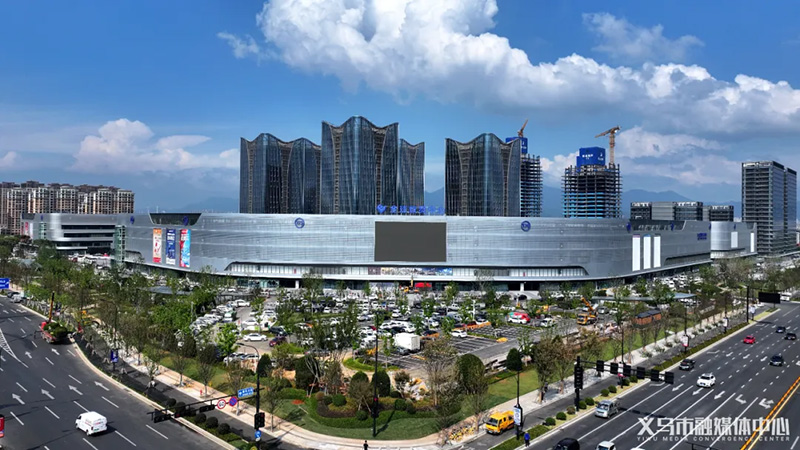
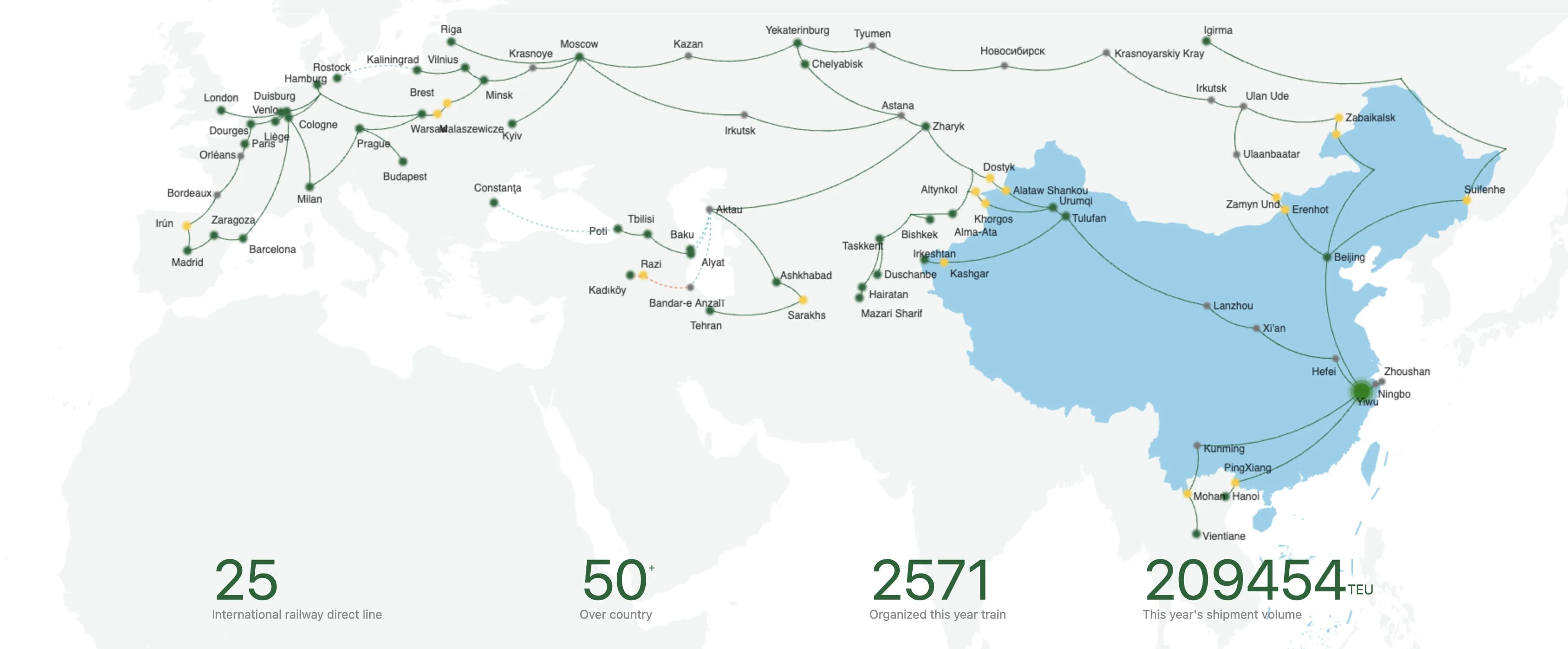
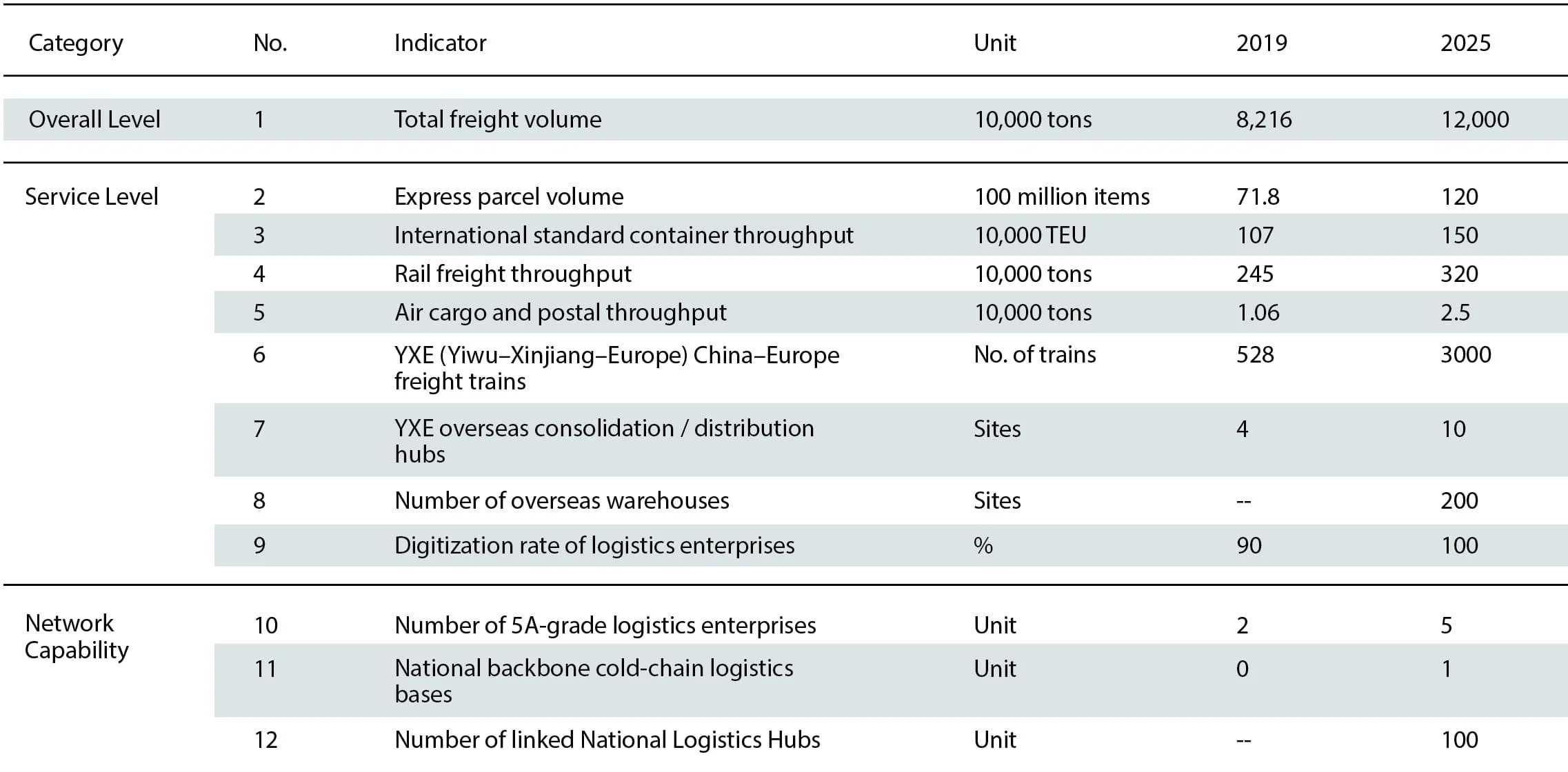



 The author of
  Dr. Gleb Tsipursky