Retirement brings a shift in how income is earned and managed. Regular salaries are replaced by pensions, interest income, and savings withdrawals, making cash flow planning more important than ever. For senior citizens, having predictable access to funds can reduce financial anxiety and support daily expenses.
A well-structured savings account can play a central role in managing cash flow during retirement years.
Why Cash Flow Management Matters After Retirement
After retirement, income usually becomes fixed or semi-dependent. Expenses, however, can be irregular due to medical needs, family commitments, or lifestyle choices.
Without proper planning, even sufficient savings can feel inadequate. A senior citizen-focused savings account helps organise funds so that essential expenses are covered while surplus money remains accessible when required.
This structured approach helps retirees avoid unnecessary withdrawals from long-term investments.
What Is A Senior Citizen Savings Account?
A senior citizen savings account is designed for individuals above a specified age, usually sixty years. These accounts often offer higher interest rates compared to regular savings accounts, along with features that support frequent withdrawals and easy access.
The goal is not aggressive growth but steady income support and convenience. Such accounts are particularly useful for managing pension credits, interest income, and regular household expenses.
How These Accounts Support Regular Income Needs
Senior citizen savings accounts are often used as the central hub for post-retirement income. Pension payments, interest earnings, and transfers from fixed deposits are typically routed into this account.
This setup allows retirees to track income and expenses clearly. Knowing exactly how much is available for monthly spending helps maintain discipline and avoid overspending.
A senior citizen savings account also ensures that emergency funds remain liquid and easily accessible.
Using Interest To Support Cash Flow
Interest earned on savings balances contributes to monthly cash flow, even if the amount is modest. Over time, this interest helps offset routine expenses.
Using a savings account interest calculator allows retirees to estimate how much interest they can expect based on their average balance. This helps in planning monthly withdrawals without eroding the principal too quickly.
Realistic projections reduce uncertainty and support better financial decision making.
Features That Make A Difference For Seniors
Not all savings accounts are equally suitable for retirees. Certain features are particularly helpful during post-retirement years.
Before choosing an account, senior citizens should consider the following.
Higher Interest Rates Better rates help improve income from idle balances.
Easy Withdrawal Facilities Frequent access without penalties supports medical and household needs.
Digital And Branch Access Flexibility to bank online or in person based on comfort.
Clear Statements And Alerts Easy tracking of balances and transactions reduces confusion.
These features collectively support smoother cash flow management.
Planning Withdrawals Without Stress
One of the biggest challenges after retirement is deciding how much to withdraw and when. A savings account simplifies this by acting as a buffer between long-term investments and daily expenses.
By transferring a planned amount into the savings account regularly, retirees can control spending without constantly reviewing investment portfolios. A savings account interest calculator can assist in adjusting withdrawal amounts based on interest earnings.
This separation helps preserve long-term savings while ensuring liquidity.
Avoiding Common Mistakes
A common mistake is keeping too much money in low access instruments, which creates stress during emergencies. Another issue is ignoring interest potential altogether and focusing only on fixed deposits.
Balancing funds between savings accounts and long-term investments creates flexibility without compromising stability.
Conclusion
Senior citizen savings accounts play an important role in managing post-retirement cash flow by offering easy access, predictable interest, and better financial visibility. They help retirees organise income, handle expenses calmly, and avoid unnecessary financial stress. By using these accounts thoughtfully and planning withdrawals carefully, senior citizens can maintain control over their finances throughout retirement.
Oil markets no longer respond to one signal at a time, making volatility harder to interpret and long-term pricing far less predictable.
Energy markets are being shaped by overlapping pressures that rarely move in the same direction. Geopolitical tensions, shifting trade routes, uncertain demand, and uneven progress in energy transition technologies are all influencing prices at once, often making traditional market signals harder to trust. In this interview, Igor Isaev explains why volatility today often reflects deeper structural shifts rather than isolated events. Drawing on more than two decades of work in commodity and financial market analysis, he discusses how energy security, oil pricing, and global supply adjustments are changing the way leaders in both finance and industry interpret risk.
You have spent more than two decades studying commodity and financial markets. What first drew you to understanding how markets behave when conditions become unpredictable?
In calmer periods, markets may look rational, guided by supply-demand balances and macro models. But once conditions become unstable, something more important happens.
The “unpredictable” now includes structural transitions. We still see discussion of expanding oil exploration into more complex regions, such as the Arctic. But in reality, the economics there are extremely challenging. The cost of exploration and production is so high that the alternative technologies path doesn’t look prohibitive.
The economics there are extremely challenging. The cost of exploration and production is so high that the alternative technologies path doesn’t look prohibitive.
I see attempts to accelerate the development of innovative sources. The States have been working to integrate fusion energy into the grid by 2030, though that timeline faces setbacks. That alone shows how difficult it is to predict which technological path will actually materialize and when.
The EU is targeting a 70% share of sustainable aviation fuel by 2050, but current production capacity is nowhere near that level. This means aviation will rely on conventional jet fuel for longer than expected, supporting oil demand even as the narrative points toward decarbonization.
Energy markets today are shaped by geopolitics, supply concerns, and changing demand patterns at the same time. What has become most difficult about reading market signals in this environment?
The most challenging part is sorting out short-term “noise” from long-term structural displacements. In the past, it was possible to analyze main input factors — conflicts, demand, and supply — each one separately. Today, they often send conflicting signals.
For example, diplomatic tensions and wars can cause a sharp spike in oil prices, while at the same time, the slowdown in the global economy is weighing on long-term demand.
The current oil price surge is not isolated. It feeds into transportation costs, fertilizers, and eventually food prices. So even if institutions like the World Bank expect some stabilization, there is a buildup of risks beneath the surface that is harder to quantify.
Energy security has returned to the center of economic debate. From the data you follow, what are the clearest signs that countries are changing how they think about energy risk?
There are three clear indicators:
Diversification of suppliers, not just energy sources, is a must. We see this in Europe, which is actively building LNG terminals to receive gas from the U.S. to reduce its dependence on Russia.
Temporary revival of air-polluting energy sources, such as coal and nuclear power, which seemed gone, is again being viewed as a tool of energy independence. Decisions to revive nuclear power plants in Japan and Germany, or to raise coal consumption in Asia, are clear reassessment signals.
Accumulating strategic reserves is our ultimate lifeline. Countries are actively stockpiling not only oil, but also diesel fuel and natural gas.
Oil prices often react quickly to headlines, but not every market move reflects a lasting shift. How do you tell when volatility points to something deeper?
I look at three main indicators:
The forward curve. If only the nearest contract reacts to the news while the more distant ones remain stable, it is most likely a panic. But if the entire curve shifts upward and enters backwardation, this signals a physical shortage, and traders’ readiness to pay premia for immediate delivery.
If a sharp price movement is accompanied by a huge increase in trading volume and open interest, it means that real producers and consumers are hedging their risks.
Spreads between oil grades. The reaction of spreads (for example, between Brent and WTI) shows exactly where the problem lies. If only Brent were rising, this could be a local issue in the North Sea. If, however, all key spreads are moving in sync, this indicates a disruption of the supply-demand balance.
Trading volumes and open interest. A spike in volatility on low volumes is often speculative. But if a sharp price movement is accompanied by a huge increase in trading volume and open interest, it means that real producers and consumers are hedging their risks.
Many firms now have access to large volumes of market data. In practice, what separates useful analysis from simply having more information?
What makes today’s energy markets particularly difficult is that many reference points no longer work. In past cycles, the relationship between prices, economic growth, and interest rates was stable. Now, traditional macro signals aren’t enough to explain everything.
Current political events are setting the price floor. Simultaneously, demand signals become less reliable, and inventory data often tells an incomplete story. Our models show that even when supply-demand balances look normal, prices can still move sharply because the market is reacting to perceived risk.
Useful analysis is the ability to synthesize, not just summarize. Instead of simply stating, “Inventories rose, and prices fell,” useful analysis explains why this happened. Perhaps inventories rose due to weak gasoline demand, which is a leading indicator of a recession.
What is one assumption about oil markets that people still repeat, even though it no longer reflects reality?
The most common misconception is the statement that “OPEC controls oil prices.” OPEC+ expansion has complicated decisions, while U.S. shale reacts to prices much faster, per se.
When uncertainty remains high for an extended period, what do you think leaders in energy and finance need to understand now that may become even more important in the years ahead?
The restructuring of global oil shipping routes and shifts in the types of oil are game changers. While in the past, certain petrochemicals were exclusively purchased by certain countries, now, due to globalization, they are purchased by others too. This leads to bottlenecks and delays. And this has affected everyone’s revenue and margins. But so far it looks as nothing more serious than just a delay. How long will this chaotic market transformation last? I think it won’t be more than five years. This applies to both automotive and aviation fuels. In other words, it’s simply a delay caused by this global restructuring of the energy market.
The past few years have shown that supply chains can be weaponized (sanctions, export controls, etc.). So, leaders must admit that this has become the new normal. Proactive strategies become more important for diversification and resilience. Reactive problem-solving becomes inefficient.
The traditional energy trilemma (meaning security, affordability, sustainability) is now more acute than ever. Current events directly impact security and costs. This makes sustainability goals less important. Leaders should realize how these forces interact and create trade-offs.
Finally, they must recognize that the transition itself is a source of volatility. New technologies, new supply chains for critical minerals, and emerging regulatory frameworks will all contribute to this.
Igor Isaev, Head of Analytics Center,Mind Money. He is a financial markets analytics expert with more than 20 years; experience in the stock and commodity market analytics and trading strategies development. With a PhD in Technical Sciences, Isaev’s expertise extends to stock exchange analytics based on mathematical models and big data.
Blue Owl Capital collected more industry awards in 2025 than any other real assets manager, receiving three honors from the Private Equity Real Estate (PERE) Awards and four from the Infrastructure Investor Awards.
The firm won three PERE honors: Global Net Lease Investor of the Year, Global Data Center Investor of the Year, and Global Retail Real Estate Investor of the Year. It won four Infrastructure Investor honors: Global Digital Infrastructure Investor of the Year, Global Innovator of the Year, North America Digital Infrastructure Investor of the Year, and North America Deal of the Year for the Hyperion campus financing.
The awards, announced on March 4, reflect a year in which Blue Owl’s Real Assets platform executed several significant transactions, including the acquisition of IPI Partners, a majority investment in Dallas-based Gigabit Fiber. Blue Owl Real Assets also executed a first-of-its-kind transaction, serving as a trusted partner to Meta on its $27 billion Hyperion data center campus in Louisiana.
“We are truly honored to be recognized by both PERE and Infrastructure Investor spanning seven total awards, all of which reinforce the strength of our integrated real assets platform, the dedication of our team and the continued trust of our partners,” said Marc Zahr, Co-President and Global Head of Real Assets at Blue Owl, in a statement. “We remain focused on our mission to deliver the highest current cash flow and total return while taking the least amount of risk.”
2025 Transactions That Anchored the Recognition
The awards came at the end of a year defined by several prominent transactions that expanded Blue Owl’s position in digital infrastructure.
The Hyperion data center campus in Louisiana, a $27 billion project Blue Owl helped finance and owns, was one of the largest single data center transactions disclosed in recent years. Blue Owl’s approach to data center investing focuses on providing capital for the physical structure rather than the technology inside it, working with hyperscale tenants that pre-lease the assets on a long-term basis. That structure keeps Blue Owl’s exposure tied to real estate fundamentals — long-term leases, creditworthy tenants — rather than to the capital expenditure cycles of the companies occupying these mission critical buildings.
The acquisition of IPI Partners, completed in January 2025, added dedicated digital infrastructure capabilities to Blue Owl’s Real Assets platform. IPI was founded in 2016 as a joint venture between Iconiq and Iron Point, and it had built a track record in data center equity investments before the acquisition. Blue Owl also completed a majority investment in Gigabit Fiber, a Dallas-based provider, during the year.
Real Assets Platform Growth
The award activity coincided with a period of significant expansion for the Real Assets platform. Total Real Assets assets under management reached $80.6 billion as of December 31, 2025, up 63% from $49.4 billion a year earlier, the fastest-growing segment at Blue Owl by percentage during the year, according to Blue Owl’s fourth quarter 2025 investor presentation. The platform owns more than 6,025 equity assets and maintains relationships with more than 860 tenants and partners.
Blue Owl’s Real Assets platform raised $17 billion in equity during 2025, up from $4.9 billion in 2024. A significant portion of that capital came through wealth-dedicated products. Blue Owl Real Estate ranked as the top net fundraiser among non-traded real estate investment trusts in 2025, with inflows accelerating 55% year over year. During the fourth quarter, the firm launched a wealth-dedicated digital infrastructure REIT, raising $1.7 billion in its first close.
While private real estate fundraising recovered broadly in 2025, reaching $222 billion industry-wide and increasing 29% from 2024 levels, Blue Owl’s inflows outpaced that broader recovery by a wide margin.
The firm’s net lease strategy also continued to attract investor attention outside the data center sector. Zahr, writing for PERE in a published commentary, described investors gravitating toward scale, downside protection, and long-term leases as volatility in data center markets increased during 2025.
Blue Owl’s net lease investment trust, ORENT, continued to accelerate inflows through the fourth quarter, while the firm also raised capital through its seventh vintage drawdown product.
The firm manages its real estate exposure primarily through triple net lease structures, in which tenants cover property taxes, insurance, and maintenance costs in addition to base rent. Blue Owl has cited that structure as a source of downside protection for investors, particularly as questions about data center valuations intensified during 2025.
How the Awards Are Determined
PERE and Infrastructure Investor are publications of PEI Group, which covers private markets investing globally. Both programs carry meaningful standing among institutional real assets allocators.
The PERE Awards are an editorially driven process, with editors reviewing submissions and weighing criteria including capital raised and deployed in the last twelve months, market impact, and performance metrics where applicable. The annual awards honor investors, managers, advisors, and industry professionals whose achievements have shaped the private real estate market during the prior year.
The Infrastructure Investor Awards follow a similar editorial approach, though their criteria are structured differently across categories. For Investor of the Year designations, the editorial board prioritizes fund closes, completed and announced deals, and other significant milestones from the judging period. Deal of the Year categories focus on transactions of particular size and industry impact, while the Innovator of the Year designation targets milestones that have advanced the asset class in a meaningful way.
In the vacuum left by the U.S. President’s failure to provide a coherent rationale behind America and Israel’s military assault on Iran, many are concerned about the geopolitical and economic consequences for the Middle East and, indeed, the whole world, Moreover, what further military plans might an emboldened Trump contemplate?
The idea in Washington and Tel Aviv that bombing Iran will somehow trigger a popular uprising is not strategy—it’s wishful thinking. Bombs can degrade infrastructure. They can weaken capabilities, but they do not manufacture organized political alternatives.
– Ali Vaez, Iran Senior Advisor at the International Crisis Group
Decisions guided by whims are naive prospects of success. When a commander-in-chief of the strongest military decides to go to war based on whims, Earth’s orbit is perturbed. Its people suffer. Playing with the whims of should-I-or-should-I-not in the question of war with Iran is insane. Only a psychopath would do that. First, decisions on that order should have a clear reason for citizens.
With no indication of a benefit to any side, the best than can happen now, aside from many innocent people being killed, is a ceasefire with minuscule gains, if any.
What is Donald Trump’s reason for this incomprehensible war? Is it about regime change, support for protesters, ending weapons-grade nuclear material, oil, bribe-rentals of the U.S. military from Middle East countries, or distractions from the Epstein files? My understanding of war is complex, but I confess that this new war of the year is disturbing, problematic, and risky, but could have succeeded with unhasty, intelligent planning. Yet with no indication of a benefit to any side, the best that can happen now, aside from many innocent people being killed, is a ceasefire with minuscule gains, if any. Surely, the U.S. Pentagon has calculated the odds of victory, the cost of casualties, and infrastructure destruction. Morals of killing and wounding are at issue, but in war games, they are not considered to be a bother. In every war, there are expectations and uncontrolled mistakes. Without an intelligent plan for ending a war, planners should clearly advise their leaders whether it is a strong benefit to start a war.
The nuclear issue
Is it about nuclear weapons? If so, why not negotiate with more patience?
Who is telling the truth in those quotes? It is difficult to know why this war started with such a brief diplomatic attempt. It could have been for many reasons that are not grounds for war. Was it started from the whims of glory at taking down the Ayatollah, Ali Khamenei, from plots to acquire beach fronts in Sang-e Siyah for Trump hotels, or a hopeful distraction from the Epstein files? Distractions are part of the art of Trump deals. His prospects might succeed, but mostly at the expense of the American, Iranian, and Middle Eastern people.
The rationale of war
My readers generally know that I write about understanding war, not about the specific cases of wars. My angle is to understand the consequences of wars in general terms, but sometimes, rarely, I use specific examples of war as models of what could go right or wrong. In this case, I have no choice but to express my opinion. The news of this war in the Middle East has been front and center every day and every hour since February 28, 2026. It would be superfluous for me to bring in news that has already been posted so repeatedly that we know enough to judge the implications of this war. However, I raise a few issues that have not been meaningfully addressed, and pose this question to my readers: In news about wars, do we have an impression of how wars work, regarding an imagined battlefield? We see photos of bombings and destruction, plumes of smoke rising in the distance, rubble in the streets, explosions through satellite tracking and imagery, damage to buildings, and grieving families. Tehran is a metropolis of over 9 million inhabitants living in 22 municipal districts covering well over 2,000 streets, squares, and avenues. It is an immense and beautiful city that is impossible to destroy without a WWII-type fire-bombing, though conventional bombing can create an infrastructure mess that is not justified by any truthful reasoning.
North of Tehran skyline view and a tree-lined avenue Credit: Ninara from Helsinki Finland Source: https://commons.wikimedia.org/wiki/File:North_of_Tehran_Skyline_view.jpg
This war’s objective
Think about the war this way: The U.S. surely knows that Iran is a country with a population of 92 million with an elite military force of almost 190,000 active Islamic Revolutionary Guard Corps (IRGC) members, besides a regular conventional force of approximately 400,000 active-duty personnel. In addition, there is the Quds Force, a non-state proxy group that commands proxy militias, including Hezbollah, Hamas, Islamic Jihad, Houthis, and Shia, working in Iraq, Syria, and Afghanistan.
Is the U.S. equipped to handle that country, with hundreds of thousands of guns and new, angry, multiple leaderships scattered throughout the country? What could be the objective for settlement, and with whom? Is there a U.S. misunderstanding of Iran’s forces that are almost everywhere in the Middle East? On February 28th, soon after the U.S. began its war with Iran, Trump posted an 8-minute video on Truth Social calling for the IRGC members, the armed forces, and police to disarm. “Lay down your weapons,” he said, “and have complete immunity, or in the alternative face certain death.” [1]
The power of comprehension?
Has he misunderstood Iran? Now, Trump is saying that there would be no deal other than “unconditional surrender.” Seriously?! Iran is not Venezuela. A comment like that shows that Trump does not understand the country. Some IRGC members and a few conventional forces might agree to lay down their weapons and join the resistance, but hardly enough to make a difference. Immediately after that message, Iran retaliated with drone and missile attacks on Israel and multiple Arab states that host U.S. assets in the region.
Did Trump not see the likely possibility that Iran might launch hundreds of ballistic missiles and drones across the Gulf? Did he not see the possible consequences of a widened scope of civilian casualties, airport closings, threatening oil transports, and container shipping through the Strait of Hormuz, creating what the International Energy Agency called “the biggest disruption to the oil market in history”? Did he consider the likely repercussions that could come from the cost of shipping insurance, the disruption of crucial fertilizer shipments that keep farms all over the world in operation, and raw materials to make parts for cars? Did he not know that killing a religious leader of a country would only cause an escalated response in ways we cannot yet know? Did he consider how the price of gas would inflate? Did he know that Russia would help Iran hit the CIA facility in the Saudi Capital, and destabilize U.S. Patriot PAC-3 anti-ballistic missile batteries protecting a U.S. Navy base in Bahrain? Did he know that Russia would provide Iran with intelligence to target U.S. forces throughout the Middle East? Did he not see that the U.S. economy might face a recession due to soaring oil prices?
Trump must understand that he cannot control the economic fallout from this war, because once supply changes hit, it takes months to fix them, if they can be fixed.
Timeline objectives according to Trump
Feb 28. “for these reasons, the United States military has undertaken a massive and ongoing operation to prevent this very wicked, radical dictatorship from threatening America and our core national security interests.”
March 1. “an Iranian regime armed with long-range missiles and nuclear weapons would be a dire threat to every American. We cannot allow a nation that raises terrorist armies to possess such weapons, that would allow them to extort the world to their evil will.”
March 2. “An Iranian regime armed with long-range missiles and nuclear weapons would be an intolerable threat to the Middle East, but also to the American people. Our country itself would be under threat, and it was very nearly under threat.”
March 3. “They were going to attack. If we didn’t do it, they were going to attack first … So, if anything, I might have forced Israel’s hand, but Israel was ready, and we were ready. The bottom line is this: The president determined we were not going to get hit first. It’s that simple, guys.”
March 6. “The assistance, which has not been previously reported, signals that the rapidly expanding conflict now features one of the America’s chief nuclear-armed competitors with exquisite intelligence capabilities.” [2]
March 6. “There will be no deal with Iran except UNCONDITIONAL SURRENDER! After that, and the selection of a GREAT & ACCEPTABLE Leader(s), we, and many of our wonderful and very brave allies and partners, will work tirelessly to bring Iran back from the brink of destruction, making it economically bigger, better, and stronger than ever before.”
March 9. In a phone interview with White House correspondent Weijia Jiang, Trump said, “I think the war is very complete, pretty much. … not ruling out troops or a draft.”
March 10. The military objectives are “pretty well complete.”
March 11. Asked by a White House reporter to clarify, he answered, “No, no, no. It’s not pretty much over. Where did you hear that? Who told you that fake news?”
Trump’s confusing statements revolve around the possibility of threat to America. However, on March 17th, we learned from Joe Kent, the Director of the National Counterintelligence Center, through his resignation letter to the President, “After much reflection, I have decided to resign from my position as Director of the National Counterterrorism Center, effective today. I cannot in good conscience support the ongoing war in Iran. Iran posed not an imminent threat to our nation.” [3] In Trump’s daily intelligence briefing, he must have learned that there was no imminent threat to the U.S. We do not know what he knows but every day we see him contradict himself in his lies.
Acting on impulse
His problem is that he thinks by considering the next step without bothering to bring in the consequences from that first step to the next move and its consequences. Surely, the President’s Daily Brief (PDB) led by the CIA and the Director of National Intelligence, which gives Trump classified top-secret reports, gives him assessments on the potential of the war and tells him that the military operations will not unseat the regime. He doesn’t take PDB advice seriously because he doggedly believes that his whims are his foretokens, so he picks a next-step countermove without considering the deeper domino consequences. [4] Surely, the PDB has given him difficult options with enough advice for carrying out an operation that understands Iran’s reactions. But each of his moves comes from impulses driven by the problem of his impostor syndrome. Somewhere deep down in his ego is a query of whether he is fit to be a president. So, he chose an operation that had not been thought out. “It’s going to work very easily,” he said, “It’s going to work like in Venezuela.” Ha! And so, he is now grappling with a message that could shine some light on the rationale and objectives. What will it be tomorrow for strategic allusions? What will happen when the U.S. leaves the Middle East? With over 14 countries in that area fighting each other, they will all be exposed to attacks that could either come from governments or proxy militias.
What happened in the first five weeks of the Iraq war, when President George W. Bush stood on the USS Abraham Lincoln declaring “Mission accomplished.” That war lasted almost nine years. On March 9, in an interview with CBS News, Trump, who never admits his mistakes, said, “I think it’s very complete pretty much … not ruling out troops or a draft.” Watch: he will declare victory. But accomplishment of what? Of toppling a regime, destroying enriched uranium, supporting protests, protection of U.S. national security, UNCONDITIONAL SURRENDER? Which is it? None will be accomplished. His impostor syndrome is weighing his declining economic future, and a likely political rupture of his confused MAGA base.
I learned early on that it is never a good idea for a nation to strip an enemy so naked of its dignity that it feels that it has nothing left to lose. It usually comes back to haunt you.
— Thomas L. Friedman
So, what was all this war for?
We must question: What was all this for? Without a clear objective, public support, what exactly has been driving this war? The consequences are devastating. Trump can always declare victory, but of what? With no regime change, no change in nuclear commitment, no help for the protesters, and no ex-U.S. allies extending help, WAIT AND SEE, he will be gaspingly denying the truth behind what he wished to accomplish, why this war is happening, and looking for ways to get out of his wreckage.
By trumpeting unachievable objectives—unconditional surrender, regime change—as his war aims, Trump has given his enemies the opportunity to claim survival as victory. He’s left himself with no evident end point to what he recently called a ‘short-term excursion.
Two people are behind this war—Trump and Netanyahu. When someone creates an event, for example, starts a war, and cannot give a rational reason, one might suspect the intention is hidden somewhere under a pile of hidden variables that foretell risky consequences. In other words, secrets that should not be revealed because of risky consequences or foolish reasons. Secrets, though, most always have clues.
The world as real estate
When someone acquires power, character changes, partly because power requires significance. In the cases of those who have inferior cognitive abilities, impostor syndrome is a magnet reaching for power in ways that diminish smart reasoning. Those who hang on don’t have the cognitive capacities that require views beyond two, three, or four moves ahead. Those are the leaders to worry about. Almost two years ago, just when he was reelected to be president, I wrote a piece portending that Trump would end up doing something foolish enough to start a war that he cannot win. My prophecy is now evident.
We see Trump’s moves are without much depth of war knowledge; he lacks an alertness of second, third and fourth moves that he cannot, or does not want to see.
Strait of Hormuz, a 21-mile eye of the needle. 20% of the world’s oil crosses the Strait. Didn’t he think about that before attacking Iran?
As I wrote in my previous article, the current commander-in-chief of the U.S. military works by his own wishful whims that do not match the evidential facts coming from the Office of National Intelligence. His intellect suits forceful real-estate deal making. In that kind of brutal cleverness, his deals have risks that could wobble a profit margin graph, though a country the size of the United States with a population of 343 million banking on government values, safety, and a balanced economy for all, risks more than a wobbling deal that could bankrupt the entire country and send humans into battles that they may or may not contain.
Missile launch Image from CENTCOM
The consequences of not understanding
In any conflict, there must be planning for the worst. When 20 percent of the world’s fossil fuel energy flows through the Strait of Hormuz, threats of blowing up oil tankers should not be a surprise. Shipping companies are unwilling to take the risks of moving ships through the Strait, especially after they know that the Persian Gulf is filled with mines. Also, energy companies are likely to turn off refining operations because storage of refined oil is limited.
We can see the domino effect of geopolitics that seems to be missed by the Trump administration, though the PDBs must have given Trump a briefing about all of this before he decided to go to war with an extremely belligerent country. Trump may have known the possibilities of these upsets, thinking that if the war were to end quickly, there would not be much of a disruption of oil production and shipment. Even if the war were to end today, it would still take weeks or months to restart production and replenish the deliveries to other countries far from the Gulf. In either case—whether the war ends quickly or not—a global economic impact will be the result of poor planning by the commander-in-chief who makes up his mind on matters that miss clear negotiation opportunities and face the risks of so many unknown conflict possibilities that bring geopolitical chaos, not just to the Middle East but far beyond. By not thinking this through, war starts with intentions of a quick end but continues far beyond what was ever expected.
We have seen this so many times before, and yet we always think we know better. Remember that very long war between Iraq and Iran that started with expectations of a quick surrender, yet ended almost eight years later. Did the wars in Vietnam and Afghanistan teach us to be aware of the false startup ambitions? Wars under diplomatic hopelessness, like, especially, this one, start with misguided impatience that locks up compromises that could benefit both sides, reduce the cost in economies and lives, and bring peace to citizens who care far more about their day-to-day struggles than who wins the trophies of military history. No side fully wins in any war, except those arms dealers who always want wars to continue.
The real objective
With no clear motives – regime change, support for protesters, ending weapons-grade nuclear material, oil, or bribe-rentals of the U.S. military from Middle East countries – and no apparent possible outcome, even after the killing of supreme leader Ayatollah Ali Khamenei along with approximately 48 of Iran’s senior leaders and officials, the gambit is just wishful thinking, for nobody knows how well this war will go. So why? If the object is a negotiated regime change, why create more difficulty by targeting all those officials for killing? That questions the reason for regime change, for who, in a high government position, will be left to deal with it in the end?
With no clear motives and no apparent possible outcome, the gambit is just wishful thinking, for nobody knows how well this war will go.
Could this war’s initiating objective be the nuclear threat? On March 1st, Trump claimed that Iran was two weeks away from having a nuclear bomb. It was just one of several confounding justifications for starting the war. That one is simply not true. The House Intelligence Committee said there is no evidence to back up that claim. The International Atomic Energy Agency (IAEA) knows that Iran has 60 percent enriched uranium, which it could use to make a bomb. It is possible that Iran could have enough material for a bomb, but that is just the first step, not one that makes a bomb. According to Joseph Cirincione, Vice Chair of The Center for International Policy Board, in an interview with Alex Witt of MS NOW, said, “You have to turn that enriched uranium, 90 percent enriched uranium into a metal; you have to shape it into the components of the bomb; you have to assemble the bomb; you have to have a bomb design. … And then you have to test that weapon.” If they succeed with all that, they might have a crude bomb. But then there is the phase of putting that bomb on a warhead.
The Central Intelligence Agency (CIA) employs thousands of nonpolitical analysts who scour hints of threats to American national security under its mission to analyze intelligence for U.S. leaders and for the PDB. In a Senate Intelligence Committee hearing on March 19th, Tulsi Gabbard, the director of national intelligence, in her opening statement, said that Iran’s nuclear enrichment program was “obliterated” with no efforts since then to try to rebuild its enrichment capacity. During that hearing Senator Jon Ossoff asked about an “imminent nuclear threat posed by the Iranian regime.” She answered, with too much inconsistency in trying to cover for the president, “It is not a responsibility of the intelligence community to determine what is or is not an imminent threat.”[6]
Representative Joaquin Castro questioning Gabbard in a March 2026 House Intelligence Committee hearing [7]
Joaquin Castro: What does their Intelligence Committee assess Israel’s goals in this war, in this war to be? And are those qoals aligned with the goals of the United States?
Tulsi Gabbard: In thinking carefully about what can be said in this open setting versus a closed setting…
Castro: Are the goals aligned
Gabbard: The objectives that have been laid out by the President are different from the objectives that have been laid out by Israeli government.
Castro: And how do they differ?
Gabbard: We can see through the operations that the Israeli government has been focused on, uh, destabilizing the Iranian leadership and taking out several members, obviously beginning with the Ayatollah, the supreme leader and they continue to focus on that effort.
Castro: How does that differ from our goals?
Gabbard: The President has stated that his objectives are to, uh, destroy Iran’s ballistic missile launching capabilities, then ballistic missile production capacity, and then Navy, their IRGC Navy.
War: politics by other means?
Trump missed a great opportunity by walking away from diplomatic negotiations. Diplomacy is never easy; it requires an immense amount of time along with a great number of concessions. In the case of ending negotiations before the war began, his team was locked in his usual negotiation tactics, schemes that might work to win real estate deals that are far simpler than the prevention of war. Negotiations in preventing war must involve understanding the interconnectedness of economics and geopolitics, extending to countries beyond the hostilities. With that understanding, negotiations have a purpose – not winning a war, but rather the settlement that brings peace and prosperity to both sides. Without that consideration, negotiations are ineffective. Diplomacy can be tough, but war is not about toughness. It is about the strength and skills of negotiators.
So, there we have it: the president of the U.S. has no understanding of the point of military negotiations, and too few advisors to forward legitimate reasons. He is frightened, so he will say, “Okay, we have killed the Ayatollah’s father, family, significant intelligence officials, and commanders of the Islamic Revolutionary Guard Corps. So, let’s leave with the victory of accomplished goals.” But the Iranians are not going to desist from carrying out their attacks, partly because the U.S. did kill Ali Khamenei. How will he claim victory after Iran continues to attack, which they will?
A military campaign with no coherent endgame
The nuclear bomb program was one reason before Trump changed his reason to Iran close to having missiles that could reach the U.S., then changed it again to say Iran was “going to attack first,” against the advice from his PDBs. None of those reasons is close to being true. Besides, he is making things up as he goes. Reasons must link to serious objectives. If we do not know the reason for this war, we also do not know the clear objectives. The president started this war, and so he must have a clear reason and a clear objective; however, we keep getting different stories about objectives. For example, tweaks of messaging can change opinions; is the objective regime change or regime exhaustion, protecting protesters, or using them? Could this entangled mystery web of reasoning and purpose be a deliberate scheme to keep the story flexible enough to spin a declaration of victory after the war ends? He will come up with a “mission accomplished” slogan in a cunning way of presenting some unseen objective. On the one hand, it gives him a way to tell the public that the U.S. succeeded, and on the other, by waiting to explain reasons and objectives until after the war. He could put the administration in a tough position where expectations will be unmet by the final explanation, raising doubts. However, in a military reality, this war is going to go on for a long, long time.
Ambiguity in policy descriptions always raises doubts. So, those kinds of public message tactics risk unanticipated problems that can clash with the true objectives. Remember Secretary of State Colin Powell’s speech to the UN Security Council about Iraq’s weapons of mass destruction. It was a lie that continues to disturb most Americans. [8]When the public is told lies, it generates the natural tendency for people to construct a nebulous imagination, segueing into assumptions that bounce through social networks eager for new conspiracy theories. Remember when President George W. Bush declared, “Mission accomplished” in a televised speech aboard the USS Abraham Lincoln aircraft carrier, six weeks after the start of the U.S.–Iraq war that lasted nearly nine years? That same aircraft carrier is back again, now conducting strikes and operations in the Middle East. Wait and watch for another “Mission accomplished” speech likely to be within the next six weeks. It is the game that is played with the public.
We have never known a war that started without a known reason
It is difficult to understand how a war like this happens, but there are a few clues that could give some indication of what exactly precipitated it. We will never know how much influence Prime Minister Benjamin Netanyahu had before the war started. Could it be that he was the one, another strong man of unleashed power on Trump’s admiration list, who brought us into that war? Trump craves recognition in the club of strongmen. But there is another reason, one more forceful.
If you are looking for a more solid reason, look no further than the money and who benefits; read my article “Why Are There So Many Wars, Especially Now? An Obscure Brilliance of Arms Dealing Keeps Wars Coming” [9] Where there are wars, there are arms providers. When there are arms providers, there will be wars. And with more wars, there will be more dealers earning excessive profits eager to heat arms markets to inflate prices and keep those wars going. That is the obscure brilliance of arms dealing. To pick one example, from the time of Russia’s invasion of Ukraine till now, weapon suppliers to that war have quadrupled their prices.[10]
Operation Epic Fury, the code name for the military campaign, is estimated to cost approximately $891.4 million each day. So, we must wonder who is paying whom. If that war continues for another three months, the bill will be over $1.2 trillion. According to the U.S. Office of Management and Budget, the estimate adds 10 percent to include the costs “for higher aircraft sortie rates, more ship steaming hours, heightened alert levels, extended deployments, and additional personnel compensation, such as family separation allowances and hazard pay.” [11] And now, just one month into the war, the Pentagon is asking for $200 billion to keep funding the war, close to one quarter of the Pentagon’s annual budget, money that could reverse Trump’s cuts in Medicaid’s health insurance and food stamp programs that tens of millions of Americans rely on. So, I ask again: Where is all that money going to?
Arms dealers, of course! If we follow the money, it comes from the U.S. Treasury, which pays suppliers for replenished supplies. Those are mostly large companies that manufacture bombs, planes, ammunition, and enormous amounts of fuel. Much of that money goes indirectly to stock market holders.
US Military Bases in the Middle East Source: https://mail.google.com/mail/u/0/#sent/QgrcJHsTgFkQwkmsppzjPQXVqdCsLtQQwtV?projector=1&messagePartId=0.1
The price of victory
Now, let’s take a deep breath to ask: What could happen if this war ends in a Trump victory? I’m not alone in this quandary over victory; many foreign affairs analysts have said this before me. With a real victory, say, unconditional surrender, the danger to the entire world will worsen. Iran, a terrorist-supported country, could turn to a peace-loving existence. That could happen. The bravado would spin new whims and instincts to reinforce his belief that his success is inevitable, with no expense to himself. Imagine how wildly Trump will behave, then. His partial success with Venezuela pumped blood to his head, thirsting for another war. He found another. What, then, will happen if Iran does surrender unconditionally? We needn’t speculate. [12]Watch out, Cuba, Colombia, Greenland, even Canada. Mexico? It would take a psychopath to have such a whim.
Truth: the first casualty of war?
I am grateful to The World Financial Review (TWFR) for accepting the articles in my column. It brings a trust of truth as an independent magazine immune from the threats of the current Trump regime attempting to revoke American media licenses over Iran War coverage. Brendan Carr, Chairman of the U.S. Federal Communications Commission, accused broadcasters of “running hoaxes and news distortions” with warnings to “correct course before their license renewals come up.” [13]Though I worry about how Mr. Carr’s threats will play out, I will not be timid about telling what I believe to be true, free speech, thanks to TWFR.
Here we are in a mess of geopolitical dynamics, without a coalition of allies willing to open the Strait of Hormuz. With half the world struggling with the price of oil, and perhaps the price of everything, we have no choice but to wait this dooming war out. I know that not everyone would agree with me on the issues of this war. I can also realize how few who study war can support this war. However, we must recognize that venturing into a war—any war—is a risk that any country must carefully assess and not just rely on the power of weapons.
Let’s not worry too much; this will end, and so will he, though we don’t know when.
Joseph Mazuris an Emeritus Professor of Mathematics at Emerson College’s Marlboro Institute for Liberal Arts & Interdisciplinary Studies. He is a recipient of fellowships from the Guggenheim, Bogliasco, and Rockefeller Foundations, and the author of eight acclaimed popular nonfiction books. His latest book is The Clock Mirage: Our Myth of Measured Time (Yale).
The integration of Generative AI (Gen AI) into business operations presents immense opportunities for leaders, along with serious challenges and risks. While the potential benefits are transformative, navigating the complexities of Gen AI projects requires a nuanced approach that balances strategic oversight with fostering a culture of innovation. A key element of this approach is the implementation of regular, strategically designed check-ins. While some might feel worried that these check-ins represent micromanagement, they are anything but; rather, they serve as crucial touchpoints for monitoring progress, evaluating the need for additional resources, providing constructive feedback, fostering collaboration, and ensuring alignment with overarching business objectives. In other words, such check-ins serve as a crucial managerial “trust, but verify” tool, deployed by the more skilled managers to keep projects and teams aligned, on track, and appropriately resourced.
Structuring Effective Progress Reviews to Leverage Gen AI Disruption
Without psychological safety, teams may be hesitant to share critical information, leading to delays, inefficiencies, and even project failure.
Effective Gen AI project management requires a shift in mindset. Traditional project management methodologies, focused on rigid timelines and pre-defined outcomes, often fall short when applied to the iterative and experimental nature of Gen AI development. Instead, a more agile and adaptive approach is needed, one that embraces experimentation, learning from failures, and continuous refinement. Regular check-ins provide the framework for this adaptive approach.
The format of these reviews should be tailored to the specific project’s complexity and scale. Options include:
Regular Meetings: Bi-weekly or monthly meetings provide a consistent cadence for updates and discussions
Milestone Reviews: Check-ins tied to specific project phases (e.g., model training completion, prototype development) offer targeted evaluation points
Informal Status Updates: Brief, ad-hoc updates can address immediate concerns or share quick wins
Regardless of the format, the focus should be on creating a collaborative space for teams to,
Present findings and progress
Discuss challenges and roadblocks
Seek guidance and feedback
Ask for additional resources
Explore potential adjustments to the project direction
A crucial element often overlooked is the creation of psychological safety within these check-ins. Psychological safety, as defined by Amy Edmondson, refers to is “a shared belief held by members of a team that the team is safe for interpersonal risk taking.” In the context of Gen AI projects, this means creating an environment where team members feel comfortable admitting mistakes or setbacks, asking for help or clarification, and challenging assumptions or proposing alternative approaches
Without psychological safety, teams may be hesitant to share critical information, leading to delays, inefficiencies, and even project failure. Leaders can foster psychological safety by encouraging open communication and active listening, responding constructively to mistakes and setbacks, and creating a culture of respect and inclusivity.
As Gen AI becomes more integrated into various business functions, the scope of these check-ins may need to expand to include representatives from different departments. This cross-functional collaboration can facilitate knowledge sharing and prevent siloed thinking, identify opportunities for synergy and collaboration between different Gen AI initiatives, and ensure that Gen AI projects are aligned with the needs and priorities of different business units.
6 Key Principles for Effective Check-ins Addressing Gen AI Disruption
Several core principles underpin successful Gen AI project check-ins:
Collaboration over Control: The emphasis should be on collaborative problem-solving, not issuing mandates. Leadership should act as a guide and facilitator, empowering teams to take ownership of their work.
Focus on Learning and Iteration: Gen AI projects are inherently experimental. Check-ins should create a safe space for teams to discuss challenges, even setbacks, without fear of reprisal. This fosters a culture of learning and continuous improvement.
Actionable Feedback: Feedback should be constructive and actionable, focusing on specific areas for improvement, such as model refinement, data quality, or alignment with business objectives.
Strategic Alignment: Check-ins provide an opportunity to ensure that the Gen AI project remains aligned with the organization’s broader strategic goals. This includes reassessing project goals as needed and identifying opportunities for cross-team collaboration.
Celebrating Wins: Recognizing and celebrating even small wins can significantly boost team morale and motivation, especially during long-term projects.
Preventing Tunnel Vision: Check-ins can help prevent teams from becoming too narrowly focused on their specific project, encouraging cross-team knowledge sharing and alignment with broader organizational objectives.
Client Case Study: Streamlining Customer Support with Gen AI
As a consultant, I recently worked with a mid-sized regional bank (approximately 500 employees) that sought to improve its customer support efficiency using Gen AI. The bank was experiencing increasing call volumes and longer wait times, leading to customer dissatisfaction.
When I spoke to the leadership team, I cited research from McKinsey showing that customer service productivity can be improved by up to 45%, including a specific study by McKinsey on credit customer assistance. They decided to go ahead with a project, and we initiated a Gen AI project to develop a chatbot capable of handling routine customer inquiries, freeing up human agents to address more complex issues. We established bi-weekly check-ins with the project team, consisting of data scientists, software engineers, and customer service representatives.
During these check-ins, we focused on:
Progress updates: The team presented their progress on model training, data preprocessing, and chatbot integration with existing systems
Challenge identification: The team encountered initial difficulties in training the model to accurately understand and respond to complex financial terminology
Solution exploration: We discussed potential solutions, including expanding the training dataset with more specialized financial texts and fine-tuning the model’s natural language processing capabilities
Strategic alignment: We ensured that the chatbot development remained aligned with the bank’s overall customer service strategy, focusing on improving response times and enhancing customer satisfaction
After three months, the chatbot was successfully deployed, handling approximately 40% of routine customer inquiries. Here’s what happened:
Average call wait times decreased by 25%
Customer satisfaction scores related to support interactions increased by 15% based on post-interaction surveys
The support team was able to reduce staffing by 10% through natural attrition, saving $250,000 annually
This case study demonstrates the power of regular, strategically designed check-ins in guiding Gen AI projects to achieve tangible business outcomes. By fostering collaboration, providing constructive feedback, and maintaining strategic alignment, leadership can empower teams to innovate and deliver real value through Gen AI.
Long-Term Impact
Leaders should regularly assess the effectiveness of these check-ins and make adjustments as needed.
Regular check-ins are not a one-time activity; they should be an ongoing process that evolves as the Gen AI project progresses and the organization gains more experience with the technology. Leaders should regularly assess the effectiveness of these check-ins and make adjustments as needed. This continuous improvement approach will ensure that the check-ins remain a valuable tool for guiding Gen AI initiatives and maximizing their impact on the business.
By embracing the principles outlined in this article, leaders can effectively guide their Gen AI initiatives, maximizing their potential while mitigating the associated risks. The key is to view check-ins not as control mechanisms, but as opportunities for collaboration, learning, and continuous improvement, fostering a culture of innovation and driving tangible business value.
In the past, PH targets comprised mainly the EDCA sites. Now they include the planned ammo manufacturing sites. Manila is moving from a US logistical enabler to a huge regional military hub, like Ukraine a few years ago.
Under its ultra-conservative PM Sanae Takaichi, Japan is taking the lead to set up a new program to produce propulsion systems used in many guided weapons, while the Philippines is tasked to host a large new weapons facility. The bilateral cooperation has intensified for half a decade.
Meanwhile, defense secretary Gilberto Teodoro has been negotiating stronger defense cooperation with the NATO leaders in Europe.
Following these reports, China’s foreign ministry warned the United States against bringing “conflict and the chaos of war” to the Asia-Pacific. In Beijing’s view, a potential ammunition facility would destabilize the region.
Toward major instability
The new military tasks of the Philippines were recently promoted by the Center for a New American Security (CNAS). This US thinktank played a role in legitimizing Biden administration’s engagement in Ukraine, Israel’s Gaza “war”, and Iran mobilization.
In some ASEAN countries, the concern is that these strategic moves could pave the way to major instability and possibly a major Asian war.
From an international military standpoint, the Philippines is transforming itself to serve as a forward staging area for US forces, air and naval logistics hub, missile deployment sites, ISR (intelligence, surveillance, reconnaissance), sea lane control in South China Sea, and protection of Japanese/US military supply routes.
In some ASEAN countries, the concern is that these strategic moves could pave the way to major instability and possibly a major Asian war.
The following commentary draws only from public sources and discourses on EDCA locations, logistics plans, ammo sites, and targeting doctrines seen in Ukraine, Middle East, and NATO war-gaming.
US–Japanese weapons hub
In the Philippine bases, the possible US air force deployments include F-35 and F-16 fighters, P-8 maritime patrol, KC-135 and KC-46 tankers, C-17 and C-130 transports or AWACS radar aircraft.
The most sensitive issue involves missile systems. US has discussed deploying mobile missile units in the region. Possible systems feature HIMARS, Tomahawk land-attack missiles, SM-6 multi-role missiles and Naval Strike Missile (NSM). Japan is developing Type-12 anti-ship missiles and long-range cruise missiles.
Ostensibly, US ground troops would be mostly rotational, not permanent. They could feature US Marines, Army air defense units, special forces, engineers and logistics.
With naval forces, ports in Philippines could support US destroyers, submarines and amphibious ships.
Japan is also increasingly involved in radar systems to Philippines, coast guard ships, joint exercises and possible future troop access agreements.
The risk is that the Philippines is close to its perceived adversary’s missile range, has limited air defense and many bases near civilian areas.
High-priority targets
Among the primary targets, Northern Luzon is the primary operational zone. The EDCA sites include Lal-lo Airport, which is very close to Taiwan, is seen as a possible missile/transport hub, and thus a likely target for cruise or ballistic missiles.
Camilo Osias Naval Base is located near Luzon Strait. Since it could be useful for surveillance and naval staging, it is a likely high priority target. Basa Air Base could serve for fighter, tanker and ISR staging. It is a likely missile target.
Along with Northern Luzon, Palawan serves as the South China Sea axis where monitoring sites feature Antonio Bautista Air Base, which could support anti-ship operations. In turn, Balabac Island controls the passage between South China Sea and Sulu Sea. It could be useful for anti-ship missiles.
Then comes Central Luzon’s logistics core. Fort Magsaysay, the largest training base, and Mactan-Benito Ebuen Air Base, which remain relevant for training, staging and transport.
That’s the first-order military geography.
Ukrainian-style regional arms production
With the new arrangements, the new primary targets feature the Subic–Clark corridor, due to the ammunition production/assembly planned in Subic Bay Freeport. As a part of regional military-industrial cooperation, it is framed as a regional munition hub. This upgrades Subic from a “logistics port” to a war-sustaining industrial node.
The second new development involves the large US prepositioning storage. US Navy is seeking a huge storage facility likely near Subic-Clark, featuring vehicles, equipment, maintenance, and armories.
The planned forward stockpile hub is similar to US prepositioning in Europe and the Middle East. Think of US prepositioning and war reserve stocks in Kuwait, Qatar, Israel and Diego Garcia – the ones that are now under fire.
Here’s the main difference: Philippine targets will be far more exposed than those in Europe and the Middle East. And that makes Subic Bay and Clark Freeport primary targets.
A third development may be evolving in Batanes, in the north. Having opened in 2025, the Forward Operating Base in Batanes is the closest Philippine territory to Taiwan. It is seen as ideal for radar, ISR, and potentially missile staging.
The expanding list of Philippines military targets
Living dangerously
A naval blockade or a strike in this “Golden Triangle” (Subic-Clark-Manila) could effectively trap the Philippine defense manufacturing capability in one small zone. A single incident or blockade could paralyze the capital’s supply chain.
The plan to build ammunition production and assembly facilities in the Philippines changes the targeting logic of the Taiwan-war scenarios. The country will no longer be just a staging platform.
Their demise would disrupt the heartbeat of the Philippine economy and society.
Behind the fog of the corruption debacle and the energy crisis that it is highly exposed to, the Philippines is taking a huge leap from a logistical warehouse to a regional military hub – amid its greatest economic crisis in a generation.
The devastation of the outlined Philippines targets would not be just a crushing military loss. Their demise would disrupt the heartbeat of the Philippine economy and society.
In Ukraine, Gaza, Lebanon, Iran and the Middle East at large, such arrangements have served the interests of recent US administrations.
The question is, do they really serve to protect peace and prosperity in the Philippines interest?
Dr. Dan Steinbockis an internationally recognized strategist of the multipolar world and the founder of Difference Group. He has served at the India, China and America Institute (USA), Shanghai Institutes for International Studies (China) and the EU Center (Singapore). For more, see https://www.differencegroup.net
Pakistan is stepping in as a potential mediator in the ongoing U.S.-Iran conflict. Pakistani Deputy Prime Minister and Foreign Minister Ishaq Dar said both countries have expressed confidence in Islamabad to host talks in the “coming days” aimed at ending the war.
The U.S. is meanwhile weighing a potential ground operation in Iran as thousands of troops arrive in the region. President Trump has mentioned that the conflict is slowing down but still carries the chance of getting worse. Lawmakers are wary of a full invasion, although some back sending special forces in a limited way.
Iran has intensified threats, targeting U.S. and Israeli educational institutions in the region. Meanwhile, an Iranian strike on Bahrain’s aluminum smelter has raised concerns about global supply, pushing aluminum prices higher.
Regional foreign ministers from Egypt, Saudi Arabia, Pakistan, and Turkey met in Islamabad to discuss ways to reduce tensions. Egyptian Foreign Minister Badr Abdelatty called it a push for “direct dialogue” between Washington and Tehran, which have mostly communicated through intermediaries.
The war’s human toll continues to mount. Iranian officials report more than 1,900 deaths, Israel says 19 people have died, Lebanon counts over 1,200, and U.S. forces have recorded 13 casualties. Attacks targeting nuclear and industrial sites have damaged important infrastructure. Meanwhile, tensions continue near strategic areas such as the Strait of Hormuz, causing worries in global markets.
With Pakistan set to host talks, many are watching to see if diplomacy can help ease a crisis that is already affecting economies, energy supplies, and everyday life throughout the Middle East.
The global economy is confronting an unprecedented energy shock as the closure of the Hormuz Strait halts critical oil and gas shipments, sending prices soaring. Arthur Azizov, Founder and Investor of B2 Ventures, highlights how this disruption extends beyond energy markets: rising resource costs, inflationary pressure, financial market volatility, and banking risks are forcing policymakers and investors to navigate an exceptionally complex economic landscape.
As time goes on, it has become clear that the current crisis will have far greater significance for the global economy than it was initially thought. Markets and investors are still considering it as just another energy shock, and many continue to look at oil prices as the main outcome. Yes, oil prices are surely important, but we should look beyond that. The current environment is affecting the economy on many levels. The longer it lasts, the larger the impact will be.
Why Hormuz Matters More Than Ever
Undoubtedly, the main factor in this conflict is the closure of the Hormuz Strait. Typically, 20 million barrels of oil per day used to pass through it, along with 3-4 trillion cubic feet of liquified gas, accounting for roughly a quarter of global consumption.
Never before (even during the War between Iraq and Iran in the 1980s) has shipping through Hormuz been fully halted. That is what makes the current crisis exceptional. Think tanks and governments modelled scenarios involving a potential closure of the strait, but it was largely considered an ephemeral risk. Very few expected that such a critical artery would actually be cut off.
The shipping disruption has led to a sharp increase in oil and gas prices, and there are almost no signs that the situation will resolve quickly. The key problem with Hormuz lies in the lack of alternatives. Global oil and gas markets are highly segmented, and buyers are often tied to specific suppliers. Replacing oil from the Gulf region is extremely difficult, even though some flexibility exists.
The situation is far worse for buyers of liquefied gas from Qatar. The LNG market is much more dependent on specific supply chains, and it is extremely difficult for other players to increase production. Now, many Asian countries, which bought the LNG from Qatar, have gas reserves sufficient for only a few days or weeks. Once those are depleted, they might face a serious energy crisis.
The Shock Spreads Across Energy Markets
All of this has already pushed oil and gas prices up by 50%. Yet, it is important to look beyond energy markets, as was mentioned earlier. The halt of shipping through Hormuz affected other resources, and prices for aluminium, helium, and chemical fertilizers rose significantly. The rise in energy and input costs is putting pressure on the businesses. Many companies will either have to accept lower margins or cut production. The impact on several resource bases is what marks the current crisis from previous shocks.
It is only a question of time before these prices will affect the global economy. When the conflict began, many were concerned about inflation. Higher oil and gas prices translate into more expensive fuel and electricity, which, in turn, raise the general prices. Add to this the increase in production costs driven by higher prices for other inputs, and the result is a significant boost to inflation. Based on an economic rule of thumb, a 50% increase in energy prices can add up to 1% to inflation in developed economies. This is a noticeable increase because inflation remains above the central banks’ targets.
What Lies Beneath Oil and Inflation
Yet, inflation is only the first layer of this crisis. Central banks around the world will have to lean toward tighter monetary policy to contain rising prices. Over the last year, regulators in developed economies cut rates, but now that cycle may reverse. Higher interest rates will make borrowing more expensive for both consumers and businesses. Households will postpone large purchases, resulting in a loss of revenue for companies.
At the same time, the crisis is likely to increase volatility in financial markets. Investors have already moved a share of their assets into cash at the fastest pace since the pandemic. Normally, large investors avoid holding too much cash because it doesn’t generate profit. A rise in cash allocations almost always signals a desire to preserve capital and a concern about the market.
At a certain point, this dynamic can become a self-fulfilling prophecy. Selling assets pushes their prices down, which makes investors shift more funds into cash. Although markets remained relatively stable and the S&P 500 traded in a narrow 1-2% range, portfolio reallocations suggest reconsidering risk.
These market conditions also increase pressure on banks, especially in regions depending on energy flows. Estimates suggest Gulf banks could face $300 billion in deposit outflows, along with rising credit risks. In response, banks worldwide may tighten lending standards, leading to a decrease in consumer activity. This will put additional pressure on business revenues.
Is There Anything Central Banks Can Do?
All this makes it extremely hard for central banks to make the decision. Rising inflationary pressure needs a tighter monetary policy. Yet, this time the price increase came from the supply side. Manipulating interest rates could be insufficient to contain inflation. At the same time, such a policy will undermine economic growth and corporate profits. As a result, policymakers will have to balance between supporting growth and taming inflation. In practice, however, central banks tend to fight inflation, since there is not so much benefit from rising incomes if all prices in the economy also rise.
Arthur Azizovis a fintech entrepreneur and investor with more than 15 years of experience in financial markets. He is the founder of B2 Ventures, a fintech group focused on financial infrastructure and digital banking. His work focuses on developing technology-driven services for institutional clients.
FP Trading today announced the expansion of its trading ecosystem through the integration of FP Trading AI and Trading Central, alongside continued investment in its institutional trading infrastructure and execution environment.
The combined offering is designed to provide traders with deeper market insights, advanced analytics, and a more efficient trading experience across global financial markets.
Smarter Trading Through AI and Market Intelligence
FP Trading AI introduces artificial intelligence-driven analytics that help traders better understand market behavior and trading performance. The system analyzes data, identifies patterns, and delivers insights designed to support more informed decision-making.
In addition, FP Trading has integrated Trading Central, a globally recognized provider of market research and technical analysis. This allows traders to access professional market insights, technical forecasts, and structured trading signals directly within the FP Trading ecosystem.
Together, these tools provide a dual layer of intelligence combining AI-driven analytics and expert market research.
Built on Institutional Infrastructure
FP Trading’s technology ecosystem is supported by institutional-grade trading infrastructure designed for speed, stability, and reliability.
The trading environment includes advanced trading platforms such as MetaTrader 4, MetaTrader 5, and cTrader, supported by high-performance servers and deep liquidity access. This infrastructure ensures consistent market access and efficient trade execution across global markets.
Fast and Reliable Execution
Execution quality remains a core focus of FP Trading’s offering.
The brokerage provides ultra-fast execution, deep multi-bank liquidity, and a no-dealing-desk model, allowing traders to execute strategies efficiently in different market conditions.
This combination of strong infrastructure and advanced technology enables FP Trading to deliver a competitive and reliable trading environment for both retail and professional traders.
About FP Trading
FP Trading is a global forex and CFD brokerage providing access to a wide range of financial markets including forex, commodities, indices, and cryptocurrencies.
The company operates under multiple jurisdictions including:
FSRA — Saint Lucia
FSA — Saint Vincent and the Grenadines
FSCA — South Africa
FSC — Mauritius
Through continuous investment in technology, infrastructure, and client-focused solutions, FP Trading continues to strengthen its global trading ecosystem.
Imagine a bustling Dublin restaurant kitchen on a Friday night. The deep-fryer sizzles, golden chips fly onto plates, and the air fills with the irresistible scent of perfectly fried food. But behind the scenes, something even more remarkable is happening: every drop of that used cooking oil isn’t heading to a landfill or down the drain. Instead, it’s being transformed into renewable biodiesel that powers cars, buses, and even Frylite’s own delivery fleet. This isn’t science fiction—it’s the everyday reality created by Frylite Solutions, Ireland’s leading cooking oil supplier and recycler. For over 35 years, Frylite has turned what many see as waste into a powerful driver of the circular economy, helping build a greener, more sustainable Ireland.
Founded in 1988 by visionary entrepreneur Eamon McCay with just one truck and a big idea, Frylite began as a family operation determined to professionalise the cooking oil industry. What started as a simple supply service quickly evolved into a complete ecosystem of sustainability. Today, the company serves more than 8,500 food businesses across Ireland and Northern Ireland—from cosy local cafés to multinational chains—supplying around 32.5 million litres of premium fresh cooking oil annually while collecting approximately 22 million litres of used cooking oil (UCO) for recycling. With a fleet of 50 specialist vehicles and processing facilities in Strabane, Co. Tyrone, Frylite has become a cornerstone of Ireland’s green transition.
At the heart of Frylite’s success is its brilliantly simple “supply-and-collect” model. When a delivery driver drops off fresh oil, the same truck immediately sucks up the used oil from specially provided wheelie bins—no extra cost, no extra trips, and no hassle for busy kitchen staff. Free equipment, automatic monthly compliance reports, full insurance against regulatory fines, and HACCP documentation come as standard. This seamless integration isn’t just convenient; it’s revolutionary for reducing emissions. Fewer lorries on the road mean fewer carbon emissions right from the start. As one Frylite campaign neatly puts it, the same vehicle that delivers your fresh oil collects the old—turning logistics into a sustainability win.
Once collected, the real magic of the circular economy begins. The used oil travels to Frylite’s dedicated facility in Strabane, where it is de-packed, heated, cleaned, and filtered to the highest standards. Approximately 85% of the collected UCO is then converted into biodiesel through transesterification—one kilogram of processed UCO yields about 0.97 kilograms of biodiesel. This renewable fuel ends up at service stations across Ireland and beyond, powering vehicles with a much lower carbon footprint than traditional diesel. In 2023 alone, Frylite’s UCO and food waste recycling initiatives saved over 47,265 tonnes of CO₂. To put that in perspective, it’s the equivalent of taking thousands of cars off the road or preventing the emissions of hundreds of thousands of flights between Dublin and Paris.
This process perfectly embodies the principles of the circular economy: designing out waste and pollution, keeping products and materials in use, and regenerating natural systems. In a linear “take-make-dispose” model, used cooking oil would clog drains, pollute waterways, or rot in landfills, releasing methane and harming the environment. Frylite flips the script. Instead of disposal, there’s recovery; instead of pollution, there’s renewable energy; instead of waste, there’s value. By closing the loop—from farm or refinery to kitchen fryer and back to biofuel—Frylite demonstrates how everyday business operations can support Ireland’s ambitious Circular Economy Act 2022 and EU sustainability targets.
The environmental wins are matched by powerful economic and operational benefits for Irish businesses. Restaurants, hotels, and food manufacturers save time and money—no need to source separate waste collectors or worry about illegal dumping fines. Frylite’s local teams provide reliable, scheduled collections (weekly, fortnightly, or as needed), and the company’s commitment to reusing collection containers minimises plastic waste further. Customers receive peace of mind through transparent reporting that helps them meet regulatory requirements effortlessly. As one satisfied operator noted in Frylite’s materials, “All we have to worry about is making great burgers!” Meanwhile, Frylite itself walks the talk: its fleet is increasingly fuelled by the very biodiesel produced from collected UCO, creating an internal circular loop that inspires the entire industry.
Beyond the numbers, Frylite’s 35-year journey reflects Ireland’s broader green awakening. The hospitality sector generates significant used cooking oil, and proper management is critical to hitting national climate goals. If every drop of UCO across Ireland were recycled like Frylite’s, the CO₂ savings would be staggering—equivalent to removing 40,000 cars from the roads. Frylite doesn’t stop at oil: its expanding food waste collection service diverts plate scrapings and packaged waste into biogas and biofertiliser, further strengthening the circular model and reducing reliance on chemical fertilisers and fossil fuels.
Looking ahead, Frylite’s story is far from finished. With decades of expertise, a nationwide network of depots, and an unwavering focus on innovation, the company continues to set industry standards for safety, efficiency, and sustainability. Partnerships with biofuel producers and initiatives like powering its own fleet with recycled oil show a forward-thinking approach that aligns perfectly with Ireland’s vision of a climate-neutral future.
In an era when climate action can feel overwhelming, Frylite reminds us that real change often starts with the simplest actions—like recycling the oil from last night’s fish and chips. By turning used cooking oil into clean energy, Frylite isn’t just running a business; it’s helping build a greener Ireland, one fryer at a time. For food businesses ready to join the circular revolution, the message is clear: when Frylite delivers fresh oil, sustainability is already on the menu.
By Danny Leipziger
China cannot continue to rely on exports to drive its growth, but what are the alternatives?
China ran a $1.2 trillion trade surplus last year, and despite admonitions from the IMF to rely...
The World Financial Review uses cookies to improve site functionality, provide you with a better browsing experience, and to enable our partners to advertise to you. Detailed information on the use of cookies on this Site, and how you can decline them, is provided in our Privacy Policy and Terms and Conditions. By clicking on the accept button and using this Site, you consent to our Privacy Policy and Terms and Conditions. ACCEPT
Privacy & Cookies Policy
Privacy Overview
This website uses cookies to improve your experience while you navigate through the website. Out of these cookies, the cookies that are categorized as necessary are stored on your browser as they are essential for the working of basic functionalities of the website. We also use third-party cookies that help us analyze and understand how you use this website. These cookies will be stored in your browser only with your consent. You also have the option to opt-out of these cookies. But opting out of some of these cookies may have an effect on your browsing experience.
Necessary cookies are absolutely essential for the website to function properly. This category only includes cookies that ensures basic functionalities and security features of the website. These cookies do not store any personal information.
Any cookies that may not be particularly necessary for the website to function and is used specifically to collect user personal data via analytics, ads, other embedded contents are termed as non-necessary cookies. It is mandatory to procure user consent prior to running these cookies on your website.



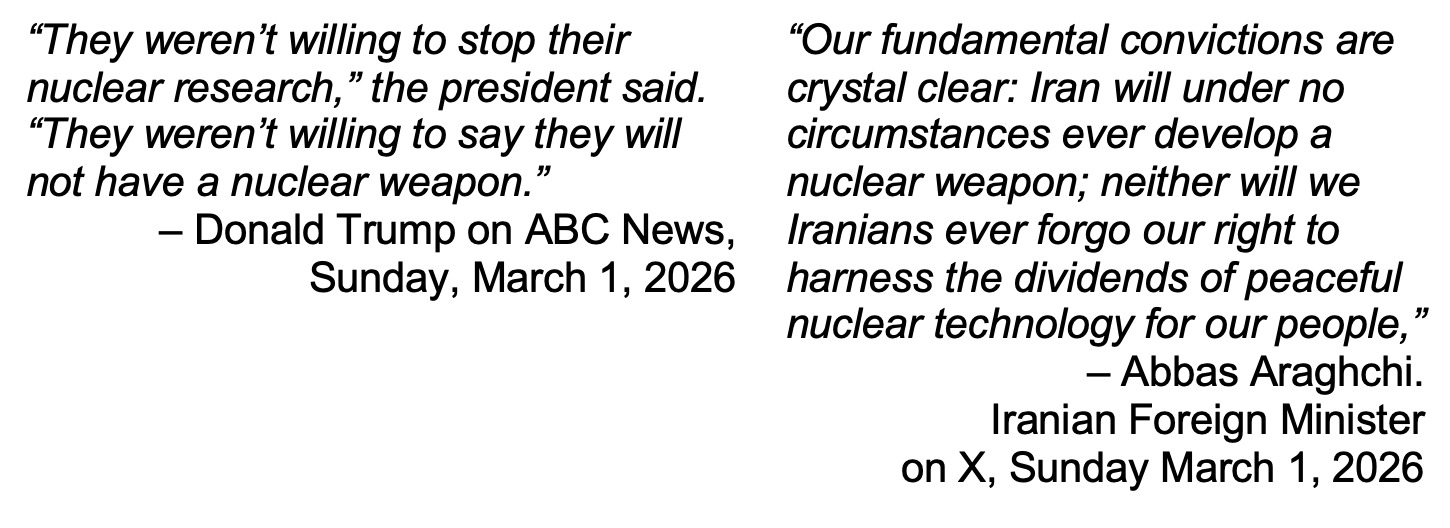

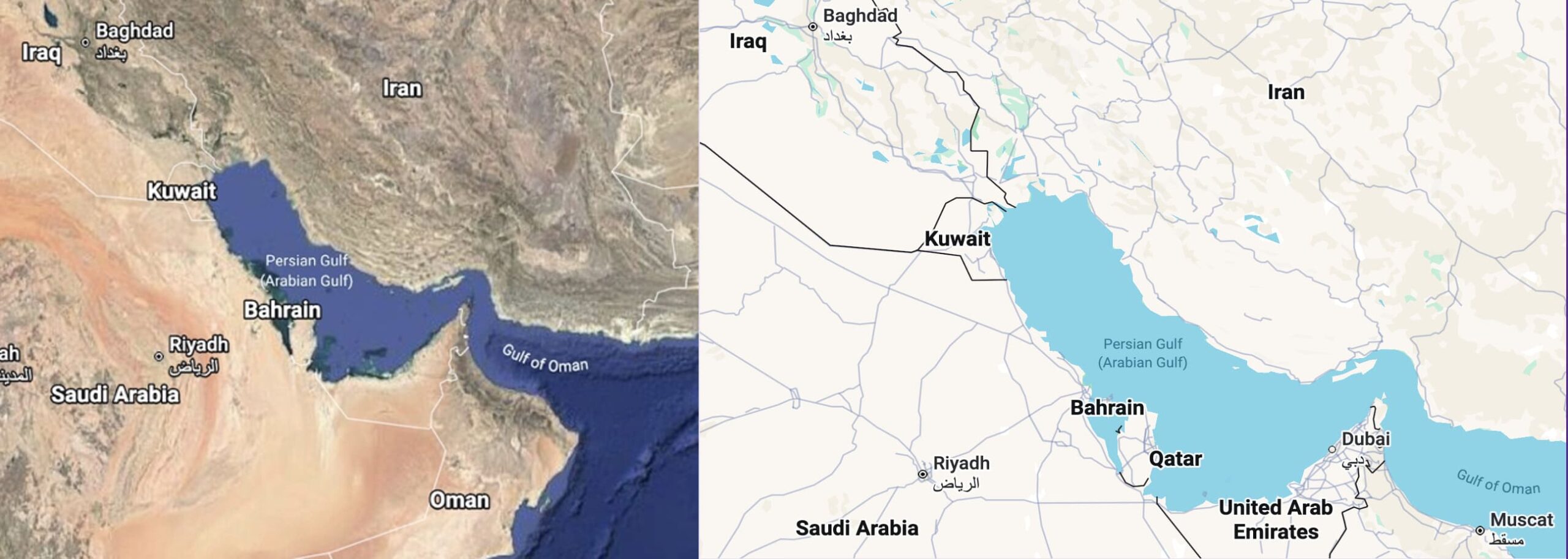
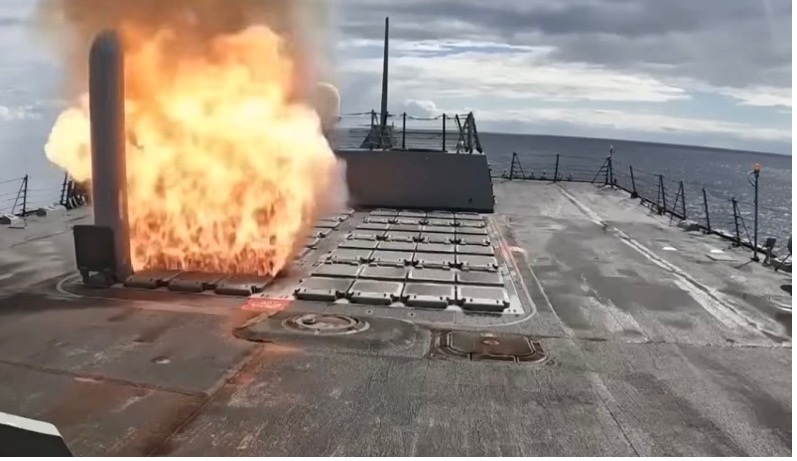
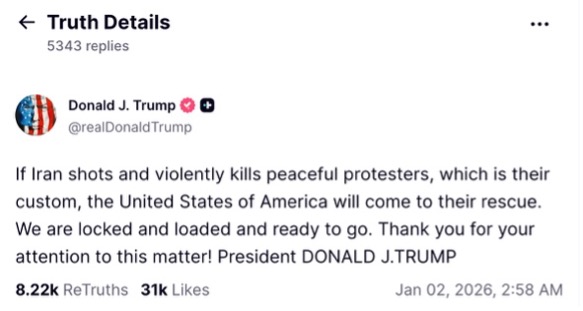
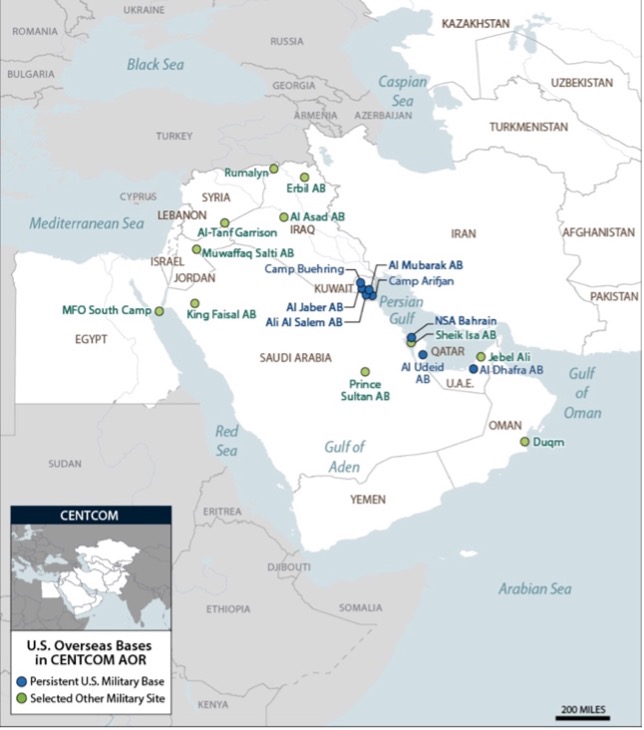
 Joseph Mazur
 Dr. Gleb Tsipursky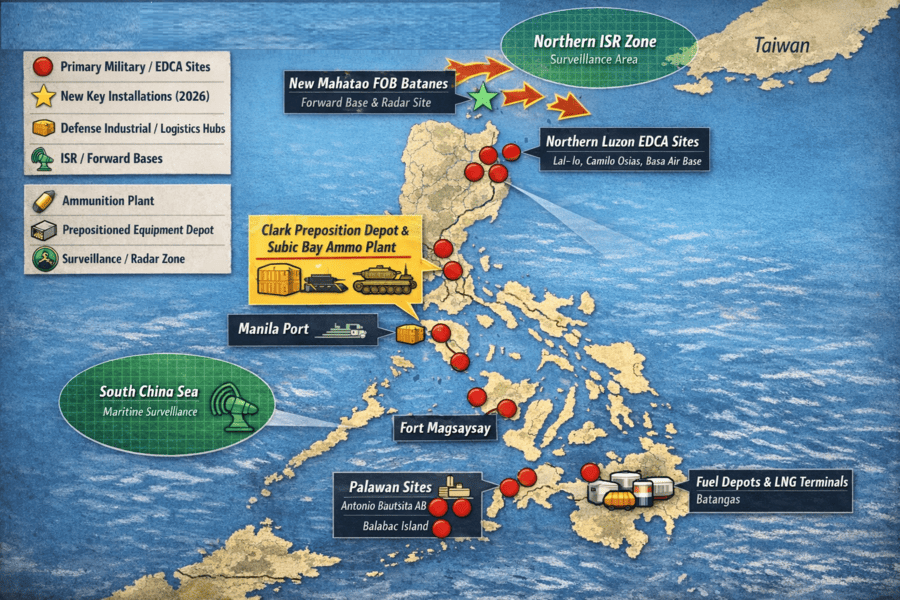
 Dr. Dan Steinbock
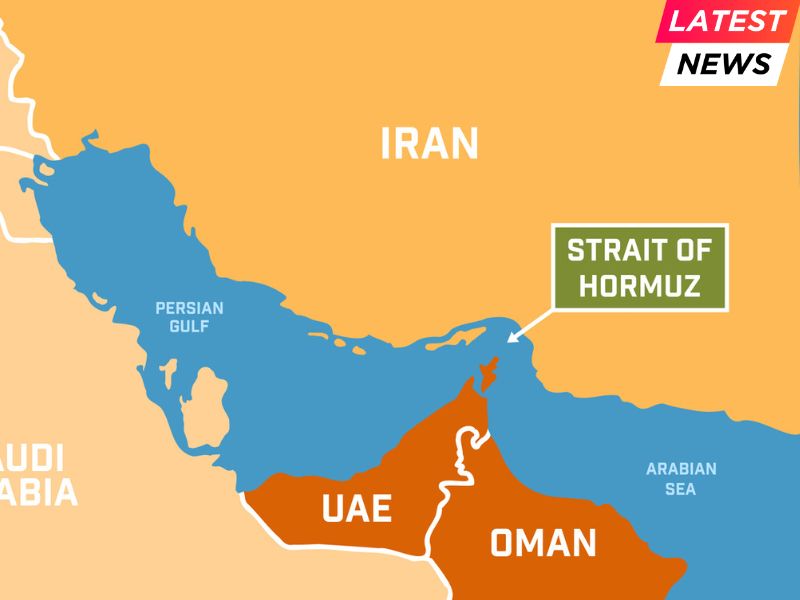
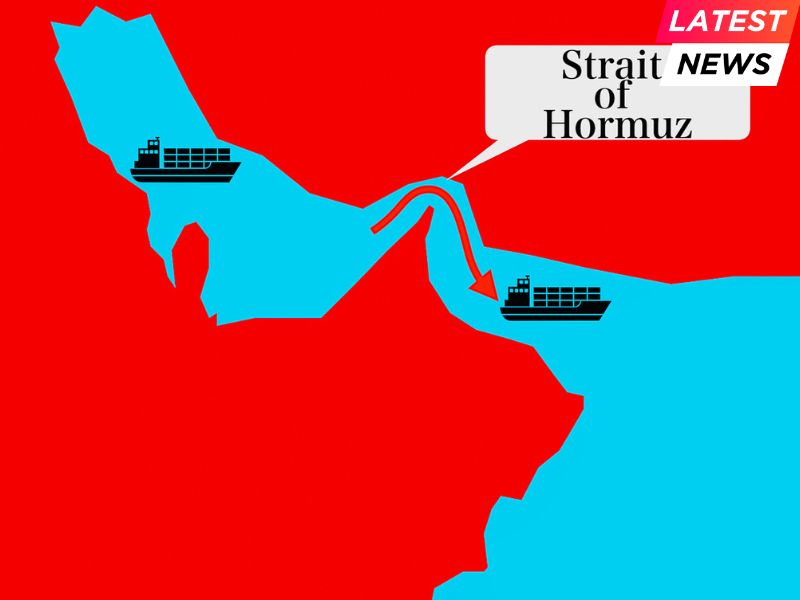
 Arthur Azizov