Home Blog Page 21

US/Israel War against International Law

By Dr. Dan Steinbock

As the US/Israeli strikes against Iran violate the foundations of international law, the economic and human costs will soar.

After three weeks of effective war, the hostilities have caused severe regional spillovers, thousands of deaths, displacements of millions and a massive global energy crisis that continues to expand. If the implications are global, what’s the status of the US/Israeli strikes from the standpoint of international law?

The modern legal order is based on United Nations Charter (1945), Geneva Conventions, Rome Statute (1998) and Customary law from the Nuremberg Trials. The key rules include the prohibition of aggressive war, protection of civilians, individual criminal responsibility for war crimes, crimes against humanity and genocide. Force is allowed only in the case of self-defense and UN Security Council authorization.

The US/Israeli strikes have already violated most of these rules.

War of aggression

Article 2(4) of the UN Charter prohibits UN member states from threatening or using force against the territorial integrity or political independence of any state. It was violated on February 28, when US/Israel launched their joint strikes against Iran.

Typically, the war was launched precisely when and because the peace talks in Oman were advancing toward a successful conclusion.

In the absence of strategic objectives and exit strategy, the U.S. has framed the actions as a campaign to dismantle “the Iranian regime’s security apparatus.”

These efforts go back to the US/Israel 12-Day War against Iran in July 2025, when Masoud Pezeshkian, the new reform-minded Iran president, sought talks to end the conflict with the US and Israel. That was not in line with the “new Middle East” envisioned by PM Netanyahu and his Messianic far-right cabinet.

The UN Charter’s prohibition against force is not absolute, with key exceptions being self-defense (Article 51) and actions approved by the Security Council.

Yet, no such threat existed prior to the US/Israel strikes. And on March 17, 2026, Joe Kent, the Director of the US National Counterterrorism Center, resigned from his position in protest of the ongoing U.S.-led war in Iran. Kent said in no uncertain terms that “Iran posed no imminent threat to our nation.”

This is an illegal war of aggression, instigated by leaders who have been, like Prime Minister Netanyahu, (or should be) charged for war crimes and crimes against humanity.

Preemptive war doctrine

To legitimize the unjustifiable, Washington has resorted to preemptive justifications. In this regard, the US/Israel war against Iran is just the latest link in the 25-year-long effort to sanctify power politics with preventive wars.

Since the Bush Jr. 2002 security doctrine, US administrations have stressed preemption as a central strategic instrument. While Democratic leaders (Obama, Biden) have been more moderate in rhetoric, they have coopted the same ideas.

Relying on force to prevent future threats, preventive war doctrines are often cited as violating international law because they bypass the strict legal requirements for the use of force established in the UN Charter.

Unilateral preventive war is a threat to the principle of state sovereignty, as it allows one nation to judge the “intentions” of another, without objective proof of an upcoming attack. Setting a dangerous precedent, it incentivizes other nations to use similar pretexts for their “preventive” attacks, potentially leading to global instability.

International law allows for preemptive strikes in cases of “imminent” danger. But US strategy improperly expands this to include preventive wars against threats that are not yet fully formed or do not exist – as in the cases of the 2003 Iraq War and the 2025 and 2026 Iran Wars.

Targeted assassinations 

The targeted assassination of Iranian leaders is a serious violation of international law, especially when conducted outside of an active, declared war zone. Targeted killings violate the prohibition on the use of force against another state’s territorial integrity and political independence.

Outside of active hostilities, international human rights law (IHRL) applies. Under IHRL, arbitrary deprivation of life is prohibited. Targeted killings are extrajudicial killings for which the acting state is responsible.

In the context of conflict, targeted killings can violate International Humanitarian Law (IHL) principles, including distinction (targeting civilians) and proportionality. Assassinations of state officials often violate the 1973 Convention on the Prevention and Punishment of Crimes Against Persons Under International Protection.

Precedents feature the killing of the famous Iranian general Qasem Soleimani, the right-hand man of the supreme leader of Iran, the late Ali Khamenei. Soleimani was assassinated in a targeted drone strike in Baghdad in January 2020, ordered by President Trump.

From the standpoint of international law, it was an unlawful attack, as was pointed out by Ben Ferencz, the US prosecutor in the Nuremberg trials and pioneer of international law. After Soleimani’s killing, the New York Times printed Ferencz’s letter denouncing the assassination, unnamed in the letter, as an “immoral action [and] a clear violation of national and international law.”

In their first joint strikes against Iran, US and Israel assassinated the 87-year-old Ali Khamenei, the supreme leader of Iran. Demonized in the West, Khamenei supported Iran’s nuclear program for civilian use. Already in the mid-1990s, he famously issuing a fatwa against the acquisition, development and use of nuclear weapons.

The assassination of Khamenei was still another blatant violation of international law. It was also part of the Israeli strategy to eliminate moderate leaders, whose absence is then used as an excuse for replacing peaceful diplomacy with brutal obliteration campaigns. 

Crimes against humanity, forced displacement 

These crimes are defined in Rome Statute Article 7, as widespread or systematic attack on civilians. Allegations are typical when strikes include targeting civilian infrastructure, economic strangulation, mass displacement, and siege conditions.

A continuity argument – “what we first see in Gaza is now spreading to Iran and, due to spillovers, into the region” – exists because similar patterns can be identified via blockade, disproportionate force, and collective punishment.

The stated efforts at regime change to undermine Iran and fragment the Shi’a state suggest that the boundary between cultural genocide targeting a broad ethnic-religious group and full destabilization is a line drawn in waters.

Allegations of ethnic cleansing, relying on deliberate forced displacement are likely over time. While ethnic cleansing is not a formal treaty crime, it is recognized in jurisprudence. It rests on forced population removal, which is the net effect of the strikes against Iran and a deliberate intention in Israel’s invasion of Lebanon.

Israel’s rapidly expanding buffer zone in southern Lebanon, extending roughly 3 to 14 kilometers north of the Blue Line demarcation, is premised on demographic engineering. In Iran, the objective to fragment the state, instigate inter-ethnic polarization and regional divides is also predicated on identity politics.

At first sight, allegations of ethnic cleansing seemed to be more relevant to Gaza and the West Bank. But with shifting objectives, forced displacement is now an overwhelming reality. The US/Israel strikes have caused displacement of 3.5 million people in Iran and over 1 million in Lebanon, with up to 22,000 killed or wounded in the former and another 3,600 in the latter.

Collective punishment, economic warfare

Combined with illicit strikes, Washington’s decades-long sanctions against Iran, most of which are unilateral, and the underlying warfare is reminiscent of economic warfare premised at collective punishment.

Combinations of economic sanctions and military strikes, particularly when invalid from the standpoint of international law, raise serious issues under humanitarian law and human rights law. In Gaza and in Iran, unilateral sanctions have caused unwarranted mass suffering violating international law.

Ever since the early 1970s, when Beirut was still called the “Paris of the Middle East,” Israel’s wars against Palestinians have destabilized Lebanon’s fragile ethnic mosaic pushing the country to the edge of default. That’s the fate PM Netanyahu would like Iran to share.

In this regard, there is a clear continuity from the Gaza War, carried out by Israel with arms and financing by the US-led West, ICJ provisional measures and ICC arrest warrant debates, to the US/Israel strikes against Iran.

The common denominators feature an inflated self-defense doctrine, weak enforcement of humanitarian law, selective application of international law and ultimately the inevitable US veto in the Security Council.

The more these violations of international law are permitted, the greater will be the costs in economic terms, the more brutal the military destruction and the more lethal the human devastation.

That’s why multilateral cooperation – across all political differences – and the enforcement of international law is so desperately needed today, before it’s too late.

The original version was published by the Informed Comment (US) on March 23, 2026

About the Author

Dr Dan Steinbock

Dr. Dan Steinbock is an internationally recognized strategist of the multipolar world and the founder of Difference Group. He has served at the India, China and America Institute (USA), Shanghai Institutes for International Studies (China) and the EU Center (Singapore). For more, see https://www.differencegroup.net

Why Gen AI Fails Without Focus — And How To Fix It

By Dr. Gleb Tsipursky

Generative AI (Gen AI) promises transformative possibilities for businesses, but without clear goals and expectations, its potential challenges and risks become an expensive experiment in disconnected innovation. Leaders must approach Gen AI projects with purpose and precision, aligning them with organizational priorities while encouraging an environment where creative experimentation thrives.

Setting a clear roadmap ensures that teams remain focused, their efforts meaningful, and their results impactful.

Defining Purpose: Business Challenges to Prevent Gen AI Failure

Every Gen AI initiative must begin with a clear articulation of the business problem it aims to address. This clarity anchors the project in reality, ensuring it solves pressing challenges rather than chasing theoretical advancements.

For instance, an e-commerce company striving to boost customer retention could prioritize Gen AI projects that personalize shopping experiences or streamline service interactions. In contrast, a logistics firm might deploy Gen AI to optimize supply chain management through predictive analytics or real-time demand forecasting.

Case in point: a retail leader, faced with declining customer loyalty, identified their primary challenge as understanding customer preferences in real time. By leveraging Gen AI for dynamic product recommendations, the company increased repeat purchases by 15% within six months.

This success was rooted in their ability to connect the Gen AI initiative directly to a business objective: enhancing the customer journey.

When leaders pinpoint such strategic challenges, they create a clear purpose for Gen AI exploration. This alignment not only guides technical teams but also ensures that the resources and energy invested produce tangible outcomes.

Avoid Gen AI Failure By Balancing Structure and Flexibility

While clarity is vital, prescribing every detail of a Gen AI project can stifle innovation. Gen AI thrives on iterative experimentation. Leadership should focus on defining outcomes, not micromanaging methodologies. This balance allows teams to explore various AI models, algorithms, and tools to discover the most effective solution.

Leadership should focus on defining outcomes, not micromanaging methodologies.

For example, consider a telecom company that set a goal to reduce customer service response times by 25%. Rather than dictating specific tools or processes, the leadership outlined the desired result and empowered teams to experiment. Some explored AI-driven chatbots, while others developed sentiment analysis models to triage customer tickets.

This flexibility led to a hybrid solution that reduced average response times by 30% and improved customer satisfaction scores by 12%.

This approach drives results, as well as enhances creativity. Teams feel ownership over their experiments and are motivated to uncover innovative solutions, knowing they have the freedom to adapt as they learn.

Accountability and Adaptability: Staying on Track

Clear goals establish benchmarks for accountability throughout a Gen AI project’s lifecycle. Teams can periodically assess progress against these objectives, ensuring efforts remain focused and aligned with business priorities. Dashboards tracking key performance indicators (KPIs) make it easier to evaluate success and make data-driven adjustments as necessary.

Take the case of an automotive manufacturer exploring AI-driven quality control systems. Initial experiments showed promising results in detecting defects on production lines, but further analysis revealed opportunities to refine the system for predictive maintenance.

By revisiting their original objectives and incorporating new insights, the company expanded the project’s scope to include early identification of equipment failures, saving millions in unplanned downtime.

The iterative nature of Gen AI means projects often uncover unanticipated opportunities. Leaders must remain agile, ready to refine objectives as new data or insights emerge. This adaptability ensures that projects continue delivering value even as circumstances evolve.

Cultivating Alignment and Transparency

Setting clear goals also cultivates transparency and engagement across the organization. When employees understand how their work contributes to broader business priorities, they are more likely to feel motivated and invested in the project’s success.

By clearly communicating how this effort aligned with the company’s mission to enhance trust and security, the leadership inspired teams across departments to collaborate.

Consider a multinational financial institution that launched a Gen AI initiative aimed at detecting fraud. By clearly communicating how this effort aligned with the company’s mission to enhance trust and security, the leadership inspired teams across departments to collaborate. Data scientists, compliance officers, and IT specialists worked together to develop an AI model that reduced fraudulent transactions by 40% in its first year of deployment.

The sense of shared purpose was a key driver of this success.

By linking individual efforts to organizational goals, leaders create a culture of accountability and pride. Employees are more likely to see the value of their contributions, creating a commitment that transcends technical challenges.

Measuring Success: From Objectives to Outcomes

The ultimate test of any Gen AI initiative lies in its outcomes. Predefined goals provide a yardstick for evaluating success, enabling leaders to assess ROI and identify lessons for future projects.

For example, a consumer goods company set a goal to improve demand forecasting accuracy by 20%. The initiative surpassed expectations, achieving a 25% improvement and significantly reducing excess inventory costs. With this success, the company scaled the solution across its global supply chain, reaping even greater benefits.

Measuring outcomes also builds a foundation for continuous improvement. Leadership can analyze what worked, what didn’t, and how to refine strategies for future Gen AI endeavors. These insights ensure that each project contributes not just immediate value but also long-term organizational learning.

Client Case Study: Enhancing Customer Service Efficiency in a Mid-Sized Retail Bank

As a consultant, I collaborated with a mid-sized retail bank aiming to overhaul its customer service operations using Gen AI. The bank was grappling with rising customer expectations and increased competition, which highlighted the need to improve service responsiveness and satisfaction.

Leadership identified a clear goal: reduce average response times for customer inquiries by 30% within nine months, tying this initiative directly to their broader strategic objective of boosting customer retention and loyalty.

Identifying the Pain Points

The bank faced a range of customer service challenges. The average response time for inquiries was around 12 minutes, a figure that was increasingly at odds with customer expectations for quick and seamless service. Additionally, front-line customer service agents were overwhelmed by routine queries, such as account balances, loan eligibility requirements, and branch hours. This limited their ability to address more complex customer needs effectively.

The bank’s leadership saw an opportunity to leverage Gen AI to tackle these issues. They envisioned a solution that could handle repetitive inquiries efficiently while empowering human agents to focus on higher-value interactions.

Designing and Implementing the Gen AI Solution

To address these challenges, we developed and deployed a Gen AI-powered virtual assistant tailored to the bank’s specific needs. The assistant was built using advanced natural language processing (NLP) capabilities, allowing it to understand and respond accurately to a wide range of customer questions.

The implementation process began with a thorough analysis of the bank’s customer inquiry data. By examining patterns in historical call and chat logs, we identified the most common questions customers asked. These insights guided the design of the virtual assistant’s initial response templates.

Next, we integrated the virtual assistant into the bank’s existing communication channels, including their website, mobile app, and phone system. The assistant could interact with customers through text-based chat or voice, offering a seamless omnichannel experience.

To ensure accuracy and reliability, the virtual assistant was trained on a curated dataset of the bank’s terminology, policies, and product offerings. We also incorporated sentiment analysis capabilities, enabling the system to recognize when a customer was frustrated or dissatisfied and escalate the interaction to a human agent when necessary.

The Results

The implementation of the Gen AI-powered assistant exceeded expectations. Within the nine-month target period, the average response time for customer inquiries dropped by 35%, from 12 minutes to just under 8 minutes. This significant improvement directly contributed to a 20% increase in customer satisfaction scores, as measured through post-interaction surveys.

Moreover, the virtual assistant handled approximately 65% of all customer inquiries independently, freeing human agents to focus on resolving complex or sensitive issues. This not only improved operational efficiency but also enhanced the quality of service for customers with more nuanced needs.

The efficiency gains translated into substantial cost savings. By reducing the workload on human agents, the bank was able to reallocate resources and optimize staffing levels, resulting in annual operational savings of approximately $500,000.

Lessons Learned and Future Directions

Throughout the project, several key lessons emerged. First, the importance of clear, measurable objectives cannot be overstated. The leadership’s decision to set a specific target — a 30% reduction in response times — provided a clear focus for the team and a benchmark for success.

Second, flexibility during implementation was critical. Early in the deployment phase, we discovered that customers frequently asked questions about topics not included in the assistant’s initial training data, such as loan repayment deferrals during the pandemic. By quickly updating the system to address these new topics, we ensured its relevance and effectiveness.

Finally, ongoing monitoring and refinement proved essential. Post-launch, we implemented regular performance reviews to evaluate the assistant’s accuracy and effectiveness. These reviews allowed us to make iterative improvements, ensuring the system continued to meet customer needs as they evolved.

Looking ahead, the bank plans to expand the use of Gen AI beyond customer service. Inspired by the success of this initiative, leadership is exploring applications in areas such as fraud detection and personalized marketing, aiming to leverage Gen AI’s capabilities to drive further business growth and innovation.

Conclusion

Setting clear goals and expectations is the cornerstone of any successful Gen AI initiative. It provides direction, supports innovation, ensures accountability, and aligns efforts with strategic priorities.

Leaders who strike the right balance between structure and flexibility create an environment where experimentation flourishes without losing sight of tangible business outcomes. By cultivating alignment and transparency, organizations can harness the full potential of Gen AI, transforming it from a buzzword into a driver of sustainable growth.

As businesses navigate the complexities of Gen AI, the lesson is clear: clarity and purpose are not constraints; they are enablers. When goals are well-defined, Gen AI ceases to be a speculative investment and becomes a transformative force, delivering measurable value and driving innovation.

About the Author

Dr. Gleb Tsipursky

Dr. Gleb Tsipursky was named “Office Whisperer” by The New York Times for helping leaders overcome frustrations with Generative AI. He serves as the CEO of the future-of-work consultancy Disaster Avoidance Experts. Dr. Gleb wrote seven best-selling books, and his two most recent ones are Returning to the Office and Leading Hybrid and Remote Teams and ChatGPT for Leaders and Content Creators: Unlocking the Potential of Generative AI. His cutting-edge thought leadership was featured in over 650 articles and 550 interviews in Harvard Business ReviewInc. MagazineUSA TodayCBS NewsFox NewsTimeBusiness InsiderFortuneThe New York Times, and elsewhere. His writing was translated into Chinese, Spanish, Russian, Polish, Korean, French, Vietnamese, German, and other languages. His expertise comes from over 20 years of consultingcoaching, and speaking and training for Fortune 500 companies from Aflac to Xerox. It also comes from over 15 years in academia as a behavioral scientist, with 8 years as a lecturer at UNC-Chapel Hill and 7 years as a professor at Ohio State. A proud Ukrainian American, Dr. Gleb lives in Columbus, Ohio.

How Comparison Platforms Are Empowering Smarter Financial Decisions in UAE

Making financial decisions in the UAE can feel complicated. With a wide range of options, from insurance to loans, savings accounts, and investments, knowing what works best requires clarity and careful consideration. Online comparison platforms are helping people make more informed and confident choices.

These platforms simplify decision-making by presenting information clearly. Instead of spending hours researching multiple providers, consumers can quickly see which products align with their needs.

Advantages for Consumers

The price of different commodities or services usually vary between providers. This means that people who are price-conscious, will need to search around in different websitesor on multiple platforms and compare prices to be able to find the most affordable option.

It is exactly here that comparison platforms help consumers make smarter financial choices across a range of products. Regardless of what you are shopping for, with these platforms you can have access to multiple providers all at once. This means that you will no longer need to visit different providers’ websites.

With accessible and structured information, people can make choices based on their goals rather than price alone.

How Comparison Platforms Improve Financial Literacy

Comparison platforms do more than simplify choices; they also educate users. By seeing the features, costs, and benefits side by side, consumers gain a better understanding of what matters in financial products. Over time, this builds financial literacy and encourages more thoughtful spending and planning.

For example, when comparing insurance policies, users learn terms like “deductible,” “premium,” and “coverage limit,” which they might have ignored otherwise. Similarly, comparing loans or credit products highlights the impact of interest rates, repayment periods, and hidden fees.

Businesses That Rely on Comparison Platforms

While there are many products that come with a fixed price, many others do not. Different providers may price the same product differently depending on many factors, including additional perks such as guarantees, etc.

You may like: Setting Up a Business in the UAE Mainland: A Straightforward Guide

The difference can be even more tangible when the product is a service such as insurance or travelling tours where quality varies greatly depedning on the provider

Here are some of the sectors that work like this:

  • Consumer electronics: Mobile phones, laptops, and home gadgets
  • Travel and hospitality: Flights, hotels, and holiday packages
  • Utilities and telecom: Internet, mobile plans, and electricity providers
  • Financial services: Insurance, loans, and investment products

For these businesses, comparison platforms provide valuable data about competitors’ offerings and pricing. They also help highlight areas where a company can stand out, such as better customer service or unique add-ons.

Supporting Businesses and Professionals

Financial advisors, brokers, and corporate clients can also benefit from these platforms. They allow professionals to:

  • Identify suitable products for clients efficiently
  • Save time on research and reduce errors
  • Gain a clear overview of available options before making decisions

For companies, this translates into smarter procurement, improved client recommendations, and reduced operational costs.

Trends Driving the Popularity of Comparison Platforms

Several factors have contributed to the rapid growth of comparison platforms in the UAE:

  1. Digital adoption: Consumers increasingly research and purchase products online.
  2. Diverse financial products: The UAE market offers a wide range of insurance, loan, and investment products, making comparison essential.
  3. Demand for transparency: Consumers expect clear and accessible information to guide their choices.
  4. Increased competition: Providers aim to differentiate themselves by offering better coverage, pricing, or additional features.

These trends mean that comparison platforms are no longer a convenience—they have become a central tool for both consumers and businesses in making informed financial decisions.

Tips for Using Comparison Platforms Effectively

To make the most of comparison platforms, users should:

  • Define priorities first: Know what coverage, features, or benefits matter most.
  • Check the source: Use reputable platforms with up-to-date data.
  • Look beyond price: Evaluate terms, coverage, and additional features.
  • Review periodically: Products change over time, so re-evaluate options regularly.

These steps ensure that the platform supports thoughtful decision-making rather than simply providing a quick snapshot of the cheapest option.

Understanding Motor Insurance in the UAE

One area where comparison tools make a real difference is motor insurance UAE. Policies can vary widely in coverage, cost, and benefits. Drivers often face questions such as:

  • Should I choose comprehensive or third-party coverage?
  • What optional add-ons are truly worth paying for?
  • How do premiums compare across providers?

Comparison platforms address these questions by presenting options side by side. Users can evaluate premiums, coverage limits, and optional benefits in one place, making the decision process less stressful and more transparent.

Conclusion

In the UAE, comparison platforms are empowering both individuals and businesses to approach financial decisions with confidence. Whether selecting motor insurance UAE, evaluating loans, or comparing mobile plans and utilities, these tools make complex information accessible and easy to understand.

By encouraging thoughtful evaluation, improving financial literacy, and providing structured insights, comparison platforms help people make decisions that truly fit their goals. For businesses, they offer valuable market intelligence and support smarter client recommendations. In a fast-moving financial landscape, these platforms are becoming essential companions for informed choices.

Trump Warns of Strikes on Iran Power Plants if Key Oil Route Stays Closed

Donald Trump warned that the U.S. could target power plants in Iran if the country does not reopen the Strait of Hormuz within 48 hours, raising tensions as the conflict enters its fourth week.

The Strait of Hormuz is important for global energy because a big part of the world’s oil shipments go through this narrow passage. If something interrupts traffic there, it can quickly impact energy markets and make an already tense situation in the region even worse.

Iran responded by warning that it could target U.S. infrastructure in the Gulf, including energy and water facilities, if attacks on its power plants move forward. Officials in Tehran said such action could lead to wider damage across regional infrastructure and push oil prices higher.

The recent exchange marks a clear increase in tensions, especially since both sides keep hitting areas close to important military and nuclear sites. This conflict has already made global markets more uncertain, especially in energy, where worries about supply are still strong.

There have been occasional hints that things might calm down, but recent comments show that neither side seems willing to pull back just yet. With the world focused on the Strait of Hormuz, governments and investors remain worried about the chance of more disruptions.

Related Readings:

Iran’s Supreme Leader Calls to Keep Strait of Hormuz Closed

Oil Prices Drop as Trump Signals Conflict Easing

Cuba

China’s First True Challenger to BBA’s Performance SUVs Emerges

March 24 2026 —China’s premium electric vehicle industry is entering a pivotal new phase with the recent launch of Zeekr 8X, a high-performance flagship SUV, widely viewed by industry observers as the first Chinese performance flagship capable of posing a genuine threat to the long-standing dominance of BBA brands—BMW, Mercedes-Benz and Audi—in the global performance SUV segment.

The anticipation for the new model is built on the strong market performance of Zeekr 9X, its previous high-end flagship. As a premium luxury SUV, it has quickly established China’s position in the high-end automotive market. According to industry data, Zeekr 9X has ranked first in China’s large SUV segment priced above 500,000 RMB for four consecutive months, while also becoming the best-selling model across all vehicle categories priced above 500,000 RMB in the same period.

In practical terms, roughly one in three vehicles sold in this high-end price segment is a Chinese luxury flagship, underscoring a profound shift in consumer preferences within China’s premium automotive market.

The sustained sales momentum has also caught the attention of global investors. Shares in Geely Holding, the parent company of the brand, have surged in recent trading, with a cumulative increase of more than 27% since March. It has outperformed both the broader Hong Kong market and most auto stocks—signaling growing investor confidence in China’s ability to compete in the global luxury car sector. 

Entering the Core Territory of BBA Performance SUVs

The upcoming model, s positioned as a high-performance five-seat flagship SUV. Built on the Haohan‑S Super Hybrid Architecture, it is expected to compete directly with renowned German performance SUVs including the BMW X5 M, Mercedes‑AMG GLE, and Audi RS Q8.

Zeekr 8X opened for pre‑sale on March 16 and will be officially launched in the second quarter of 2026. Market expectations put its starting price at RMB 376,800, placing it in a segment long dominated by the high‑performance flagship models from BBA.

More significantly, industry analysts say Zeekr 8X may represent the first time a Chinese performance flagship has the technical credentials to challenge BBA not only in electrification and intelligent technology, but also in the core performance engineering and dynamic driving capabilities that have historically defined the German luxury brands.

electric vehicle
Image from ZEEKR

Leading Global Performance & Intelligent Technology

The SUV integrates several technologies developed under the Haohan-S platform, including the Haohan Super Hybrid powertrain, the Haohan AI Digital Chassis and the next-generation G-ASD intelligent driving system.

In its high-performance Zeekr 8X Yao Ying configuration, the vehicle delivers megawatt-level electric propulsion and accelerates from 0 to 100 km/h in just 2.96 seconds, making it one of the fastest hybrid SUVs in its class and comparable to the world’s leading performance flagships.

The model’s AI digital chassis has received the highest-level certification from the China Automotive Technology & Research Center, enabling integrated control of suspension, steering, braking and power systems to maintain stability in demanding scenarios such as high-speed tire blowouts or slippery road conditions.

Meanwhile, the Qianli Haohan G-ASD intelligent driving system features an AI model‑driven architecture, marking a shift from traditional rule‑based assisted driving.The fully independently developed system enables map‑free point‑to‑point navigation across multiple driving scenarios.

Expanding Global Momentum

The Zeekr 009, the luxury electric MPV from the same brand, is currently China’s best-selling all-electric MPV priced above RMB 400,000 in early 2026. It also leads the luxury electric MPV segment in Southeast Asian markets including Thailand and Malaysia.Another flagship SUV from the model line recently ranked among the top performers in luxury SUV sales in Hong Kong and Australia.

Together, these examples show the growing competitiveness of Chinese premium vehicles in global markets.

The brand also achieved year-on-year and month-on-month delivery growth in February 2026, making it the only player in China’s new energy vehicle sector to achieve simultaneous double growth amid a broader industry slowdown.

In several overseas markets, strong demand has even led to resale premiums for Chinese premium EVs. Top-spec luxury SUVs have reportedly traded at premiums of up to RMB 200,000 in parts of the Middle East—a striking reversal of the traditional dynamics of the global luxury car market.

A Turning Point for the Global Luxury Auto Market

For decades, the global performance SUV segment has been dominated by German manufacturers, with brands such as BMW, Mercedes-Benz and Audi setting the benchmark for performance engineering and luxury.

While Chinese automakers have rapidly advanced in electrification and intelligent technologies, few vehicles have directly challenged the engineering authority of these established players in the high-performance luxury category.

That dynamic may now be beginning to change.

With one flagship already firmly established in China’s RMB 500,000-plus premium segment and the upcoming performance SUV targeting the heart of the global performance SUV market, China’s automotive industry is moving closer than ever to competing directly with BBA in the territory they have dominated for decades.

Industry observers say the offering could mark a historic turning point—not only for China’s premium automotive brands, but for the global luxury auto market itself.

A Chinese performance flagship is now set to mount a real challenge to BBA’s long-held dominance in the high-performance luxury SUV segment.

Decoding Sugiono’s Doctrine Through The Eye of Pop Culture

By Darynaufal Mulyaman

This essay decodes Indonesia’s Doktrin Sugiono of Foreign Minister Sugiono’s diplomatic framework through pop culture. One Piece’s relational multilateralism, K-drama’s interiority, Pokémon’s strategic diversification, and Digimon’s responsive resilience. As an aspiring middle power, Indonesia tries to assert dynamic, networked engagement despite domestic fragilities and a fragmented global order, proving doctrine and storytelling share the same survival logic despite its challenges and flaws.

There is something quietly revolutionary about watching a foreign minister frame national resilience not through the cold grammar of realpolitik, but through the language of networks, adaptability, and strategic courage. When Indonesia’s Foreign Minister Sugiono outlined what has since been called the Doktrin Sugiono, he was not merely articulating a policy position. He was proposing a way of being in the world, one that resonates far beyond the corridors of Kementerian Luar Negeri and lands, curiously, in the very same emotional registers that fans of anime, K-drama, and pop culture have inhabited for decades.

At the center of the doctrine lies the idea of dynamic resilience, a concept that refuses stillness. In One Piece, the long-running manga and anime by Eiichiro Oda, the protagonist Monkey D. Luffy does not survive a world of rival pirates and corrupt governments by holding a fixed position. He survives because he moves, adapts, and builds crews, alliances, and loyalties across the Grand Line. When Luffy declares that he will become the King of the Pirates not alone but surrounded by friends, he is, in diplomatic terms, describing multilateralism from a position of relational strength. This is not a coincidence. Dynamic resilience, as Sugiono presents it, is precisely this kind of elastic forward motion, surviving and shaping outcomes rather than merely enduring them.

The doctrine’s insistence on living in a multiplex world with many centers of power is, in cultural terms, a repudiation of the unipolar narrative that once dominated both geopolitics and popular imagination. Think of how long K-drama itself was dismissed as peripheral to so-called global culture, only to gradually become one of the most watched genres on Earth. Shows like Crash Landing on You and My Mister do not derive their power from mimicking a single dominant aesthetic tradition. They derive it from being distinctly Korean, emotionally honest, and deeply networked within a regional and then global audience. Strategic diversification in culture looks exactly like this, and in foreign policy, Sugiono is making the same argument: Indonesia’s strength emerges from its relationships, not from subordination to any one axis.

This brings us to one of the doctrine’s most politically important claims, that Indonesia does not place all its bets on a single partner or platform. The language is deliberately economic, almost casual, but its implications are profound. In the world of Pokemon, trainers who rely on a single powerful creature are vulnerable the moment that creature is countered. Ash Ketchum’s most enduring lesson across seasons and regions is that versatility, a team of diverse abilities built over accumulated experience, is what wins not just battles but championships. By keeping options open, Indonesia retains room to maneuver. This is not neutrality in the old Cold War sense. It is active strategic optionality, an approach that requires constant cultivation rather than passive non-alignment.

Perhaps the most emotionally resonant phrase in the entire doctrine is the warning that a country fragile at home will have limited leverage outside. This is the part where K-drama’s obsession with interiority becomes unexpectedly illuminating. In the beloved series Reply 1988, the drama’s power comes not from grand external events but from the painstaking attention it pays to neighborhood bonds, family fractures quietly mended, and the interior architecture of community resilience. The show argues, without ever stating it explicitly, that how you treat your own determines everything about how you stand in the world. Sugiono’s doctrine is making the same claim at the level of the nation-state. Domestic fragility is not a private matter. It becomes a structural vulnerability in every negotiation table you sit at.

Digimon, which many Indonesian children of the nineties grew up watching alongside Pokemon, offers another useful frame. The central conceit of Digimon is that digital monsters can digivolve, but only in response to the emotional and psychological state of their human partners. Resilience in that universe is not programmed. It is relational and responsive to context. The doctrine’s architecture follows similar logic. Indonesia’s capacity to safeguard policy space and protect its people is not a function of fixed military or economic mass alone. It is a function of how dynamically the country reads and responds to a fragmented, multiplex environment.

The Strengths of Sugiono’s Doctrine

The most immediately compelling argument in favour of the Doktrin Sugiono is that it is calibrated for the actual world Indonesia inhabits rather than a simplified version of it. The doctrine does not pretend that the rules-based international order is functioning smoothly, nor does it pretend that any single great power is benevolent enough to be trusted unconditionally. This is realistic in the best sense of the word, honest about constraints without being defeatist about possibilities. For a country of Indonesia’s size, geographic centrality, and demographic weight, the doctrine’s emphasis on network-building and diversification opens more doors than any single alignment would. In K-drama terms, it is the strategic posture of a protagonist like Kim Ji-Young in the film Kim Ji-Young, Born 1982, who does not wait for a system designed against her to reform itself but instead maps every available option and moves through them deliberately. The doctrine, similarly, refuses to be a passive object of forces larger than itself.

A second strength lies in the doctrine’s grounding of foreign policy in domestic resilience. This is not merely a rhetorical gesture. There is a coherent analytical claim embedded in it, namely that a state’s bargaining power externally is always a downstream function of how coherent, legitimate, and capable it is internally. This is something the international relations literature has known for a long time but that policy documents often elide in favour of simpler narratives about alliance structures or military capability. Sugiono’s doctrine makes the linkage explicit and puts it at the centre of the framework. In the Digimon universe, this is the difference between a Digimon that digivolves out of genuine partnership and one that is forced into a dark evolution by external pressure. The former produces sustainable power. The latter produces spectacular but ultimately self-destructive capability. The doctrine is, at its core, arguing for the former.

A third strength is the doctrine’s potential to speak credibly to multiple audiences simultaneously. In an era when Indonesian foreign policy must navigate relationships with China, the United States, the European Union, ASEAN partners, the Global South, and the Islamic world all at once, a doctrine organised around diversification and dynamic engagement is far more flexible than one that privileges any single relationship. This is a point that K-pop has, in its own domain, understood with remarkable sophistication. BTS does not make music for a single demographic or a single national market. Its artistic and commercial strategy is to build genuine connections across audiences without requiring any one of them to feel secondary. The result is a fandom that is globally distributed but locally resonant. Sugiono’s doctrine is reaching for something analogous in diplomatic terms, and the ambition is well-founded.

The Tensions and Limits of the Doctrine

The doctrine’s greatest strength, its deliberate ambiguity and flexibility, is also the source of its most significant analytical vulnerability. A framework that insists on dynamic resilience, strategic diversification, and engaged optionality without specifying the conditions under which any of these imperatives takes precedence over the others is a framework that can justify almost any policy after the fact. Critics of Indonesian foreign policy have long noted that bebas aktif, the free and active tradition that the doctrine clearly inherits, has sometimes functioned less as a coherent strategy and more as a retrospective justification for inaction or inconsistency. The Doktrin Sugiono, unless accompanied by more precise operational guidance, risks reproducing this pattern at a more sophisticated level of articulation. In One Piece terms, even Luffy eventually has to decide which enemies to fight and which islands to pass. A philosophy of perpetual flexibility becomes paralysis when hard choices arrive.

There is also a tension in the doctrine’s simultaneous insistence on domestic resilience and external engagement that deserves more serious interrogation than the document currently provides. Building genuine domestic resilience in Indonesia, a country with significant inequality, ongoing democratic consolidation challenges, and a complex relationship between central government and regional autonomy, requires precisely the kind of sustained, patient, politically costly investment that the pressures of active foreign policy engagement tend to crowd out. The K-drama Nevertheless, which traces a relationship that is clearly unhealthy but nonetheless compelling to its participants, captures something of this dynamic. The appeal of external visibility, of being present and engaged at every international table, can become its own form of distraction from the harder, less glamorous work of internal repair. The doctrine names the problem correctly but does not reckon fully with the trade-offs involved in addressing it.

A further concern is the doctrine’s treatment of what it means to engage from a position of strength in practical terms. The phrase is evocative and clearly intentional, but strength in international relations is not a single variable. It is a composite of military capacity, economic leverage, institutional credibility, and what scholars call soft power, the ability to attract and persuade rather than merely coerce. Indonesia’s portfolio across these dimensions is uneven. Its military capability, while significant in regional terms, is not a primary source of bargaining power. Its economy is large but unevenly developed. Its institutional credibility has been dented by democratic backsliding concerns that international observers have noted with increasing frequency. The doctrine assumes a position of strength that, in several of these dimensions, still needs to be built. Pokemon, once again, offers an instructive analogy. Even Ash does not walk into the Elite Four with an undertrained team and expect the power of optimism to compensate. Preparation precedes the position of strength. The doctrine would benefit from a more explicit account of what that preparation actually entails.

A Doctrine Worth Taking Seriously

What Sugiono is ultimately constructing is a doctrine of engaged presence. To stay engaged from a position of strength is a deceptively simple phrase that contains a very demanding set of requirements. It means that Indonesia must be strong enough internally that engagement is always a choice rather than a concession. It means that the networks built externally must be genuine and diversified, not transactional dependencies dressed up as alliances. And it means that resilience is not a destination but a continuous practice, something closer to the daily discipline that fans admire in their favorite characters across seasons, sequels, and story arcs.

In a world where the grand ideological contests of the twentieth century have given way to a more diffuse, fragmented competition among many centers of power, doctrines like this one matter precisely because they resist easy categorization. Sugiono’s framework is neither isolationist nor simply multilateralist in the old institutionalist sense. It is something more dynamic, more attuned to a world that looks, frankly, a great deal like the complex, multi-faction universes of the stories that have shaped the imagination of a whole generation of Indonesians and people around the world. To decode this doctrine through the eye of pop culture is not to trivialize it. It is to recognize that the most durable ideas about survival, adaptability, and dignified engagement with a difficult world have always lived in the stories we tell. The question now is whether the machinery of diplomacy can move with the same agility as the world it is trying to navigate.

About the Author

Darynaufal Mulyaman

Darynaufal Mulyaman or Dary is currently an assistant professor at International Relations Study Program, Universitas Kristen Indonesia. His research interests including Soft Power, that include but not limited to Pop Culture, Korean studies, Asia Pacific region, third world, international development, cooperation, and political economy.

7 Practical Tools for Effective Nonprofit Finance Planning and Budgeting

By Ryan Alexander

Planning and budgeting determine whether nonprofit strategy becomes operational reality. The most effective organizations use them not as annual compliance exercises but as forward-looking management systems. These seven practical tools help leadership teams align resources with mission, build financial resilience and make decisions with confidence in an increasingly challenging funding environment.

Too often treated as technical finance tasks, planning and budgeting are the primary mechanism high-performing nonprofit organizations use to turn mission into execution. Their purpose is not simply to produce a balanced budget, but to direct limited resources toward the outcomes that matter most while protecting the organization’s long-term stability.

Planning and budgeting are also being reshaped by external conditions. Revenue variability, longer funding timelines and rising delivery costs are forcing leadership teams to make financial commitments with greater uncertainty. In that environment, the quality of the planning process determines whether strategy can be executed or remains aspirational.

The following seven tools shift planning and budgeting from a historical reporting exercise into a leadership discipline.

1. Start with a clear destination and design the plan backward

Effective budgets begin with the organization’s strategic priorities and the financial position it intends to reach at year-end. When planning starts with last year’s numbers, existing activities are automatically preserved. When it starts with mission and outcomes, resources can be allocated deliberately. 

Backward design forces clarity about what the organization will and will not do. It also reduces the risk of accepting funding for activities that are not central to the mission and that create future financial obligations. 

2. Build genuine organizational ownership

Budgets succeed in implementation, not in approval. That requires participation from the people responsible for delivering them. 

Senior leadership, program managers and finance must work from a shared set of assumptions. Boards and finance committees should be involved early enough to shape priorities rather than reacting to a finished document. 

When the process is collaborative, the final budget becomes a plan the organization is prepared to execute. 

3. Allocate resources through a mission–community–funder lens

Financial sustainability depends on the degree of alignment between three elements: 

  • the mission 
  • the needs of the community served 
  • the priorities of funders 

Perfect overlap is rare. The task of leadership is to maximize alignment and make deliberate trade-offs where it does not exist. 

4. Build reserves as a planned outcome

Budgets that aim only to break even leave no margin for disruption. Reserves are not a byproduct of success. They are the result of deliberate planning. 

A reserve position allows an organization to continue operating during funding delays, adjust to revenue volatility without immediate cuts and pursue strategic opportunities when they arise. 

5. Monitor performance in real time

A budget becomes a management tool only when it is used throughout the year. 

Managers need regular budget-to-actual reporting. Executives need an organization-wide view of the financial position. Boards need clear confirmation that the approved plan is being executed. 

Linking financial results to program performance shows whether resources produced the intended outcomes. 

6. Use conservative assumptions and predefined decision points

Many financial crises are caused by revenue that was treated as certain but never materialized. 

Conservative planning means recognizing only secured funding, fully costing operations and making assumptions explicit. Predefined decision points allow hiring, program expansion and new initiatives to be activated only when defined thresholds are met. 

7. Apply the same discipline across all entities

For private foundations and multi-entity organizations, the revenue model may differ, but the planning principles remain the same. Long-term commitments must be evaluated against available resources, realistic projections and secured funding. 

Planning and budgeting as a leadership system 

Individually, these tools improve financial management. Together, they change how an organization makes decisions. 

Planning begins with the future rather than the past. Resource allocation reflects mission rather than habit. Financial results are reviewed in time to influence action rather than explain it. 

As funding becomes less predictable and operating costs rise, this shift is not technical. It is structural. Organizations that treat planning and budgeting as a leadership system gain the ability to: 

  • commit to multi-year priorities with confidence 
  • absorb disruption without immediate program cuts 
  • evaluate opportunities based on available financial capacity rather than the need to secure near-term funding 

Without this discipline, operational decisions are dictated by cash timing rather than strategic intent. 

Making sustained execution possible 

The strongest nonprofit organizations are not those with the most detailed budgets. They are those where planning, budgeting, reporting and strategy operate as a continuous cycle. 

In that environment: 

  • financial information arrives in time to guide day-to-day decisions 
  • program and finance operate from the same assumptions 
  • boards focus on direction and oversight rather than reviewing past performance 

This is where planning and budgeting serve their real purpose. They make sustained execution possible.

About the Author

Ryan Alexander

Ryan Alexander, author of Protect Your Mission, is the founder of RA Partners, a firm that helps nonprofit leaders build financial systems that support growth, accountability, and mission delivery. Drawing on more than two decades of experience across finance, operations, and social impact, he created the IMPACT Framework for Nonprofits™, a practical model for strengthening nonprofit financial systems.

How to Steer Growth, Not Stumble, in the Tariff Aftermath

By Dr. Rebecca Homkes 

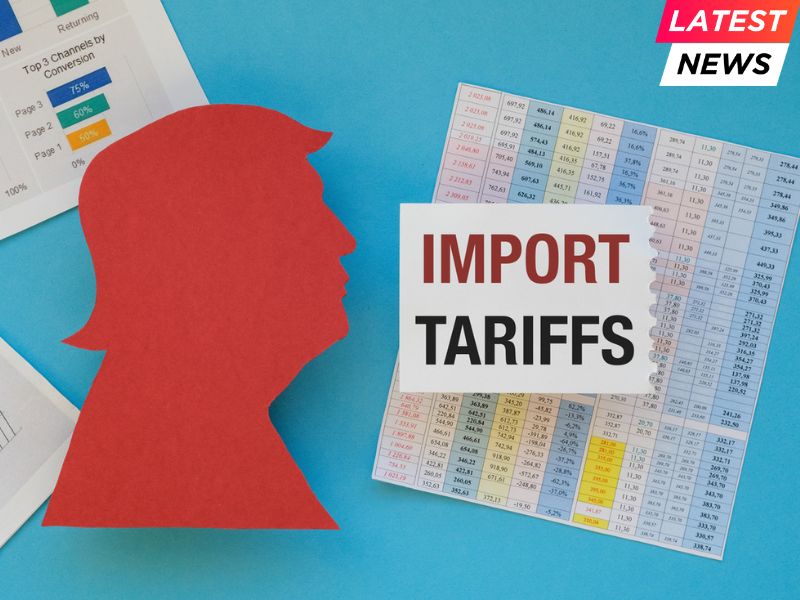
A landmark Supreme Court ruling declared the Trump administration did not have the authority to issue tariffs under the International Emergency Powers Act.  While the decision provides an element of clarity, we are far from trade certainty.  Leaders looking to navigate by steering growth, not stumbling in policy aftermath, now have an opportunity to pause, reset, and thrive in this changing environment. 

A landmark Supreme Court ruling declared the Trump administration did not have the authority to issue tariffs under the International Emergency Powers Act (IEEPA).   While the decision provides an element of clarity, we are far from certainty for trade policy.  Tariffs are a pressing leadership topic, but the changing on/off nature is making strategic discussions and subsequent decisions difficult.  But these fuzzy environments actually represent great growth opportunities.  Leaders looking to navigate by steering growth, not stumbling in policy aftermath, now have an opportunity to pause, reset, and thrive in this changing environment. 

Where are we, what’s next, and what can leaders do? 

Where we are

The Supreme Court arguments in November were narrowly focused on the legality of the tariffs: whether they are ‘good’ for U.S. companies or consumers was not in play. The Court, with a 6-3 majority, ruled that in IEEPA Congress did not delegate the authority to the President to enact tariffs. It remains a highly consequential ruling, though it is a narrower one than some wanted.   

The process of issuing refunds (more than 130 billion was collected under IEEPA) was also not addressed in the Supreme Court decision.  This was delegated to a lower court, and in early March the U.S. Court of International Trade wrote all importers of record were entitled to benefit from the Supreme Court ruling, though all refund cases had to flow through the Court.   

What’s next

As this was a narrow statutory (not constitutional) ruling, the administration has plenty of other statute-driven options, and tariffs enacted under something besides IEEPA remain in place.  The next set of tariffs are imposed under Section 122, a trade statute that says the executive can impose tariffs to settle international payments problems.   They can only last 150 days without congressional approval, and the tariffs cap at 15%.  Once these run out, there are a few other options exist, but these statutes are more time-limited and narrow, such as Section 232 for threats to national security or Section 201 for threats to domestic industry.    

Cost of tariffs

Tariffs are a tax, and taxes have costs.  Multiple studies show that over 90% of the tariff costs were paid by the importer, whereas anywhere from 20% to 50% of these costs were passed onto consumers, so far.  This has led to a tax of around $2,000 per American household, but this will fall to only a few hundred dollars under 122 tariffs.  The impact on inflation is likely around 0.4% and 0.5% of the CPI impact.  Tariffs are also universally disliked, with most polls showing the majority of Americans are concerned about the impact of tariffs on their finances and are making everyday items less affordable.  Tariffs, even if they worked in boosting US production, were going to be a midterm effect, but the short-term impacts were dire: manufacturing output rose by only 1% in 2025. Updated estimates show 108,000 jobs were lost in the sector in 2025.  

What not to do: 

  • Distraction or delusion: Assuming a ruling will lessen the significance of tariffs as a policy play or negotiating tactic is delusion.  Keeping your head down and ploughing forward is not recommended: we have one element of clarity, but we do not have certainty.  Distraction is just as troubling, getting bogged down into rebate policies or the minutia of court filings.
  • Holding pattern: It’s tempting to pause and wait ‘until we get more information’ – this decision-making paralysis where you punt decisions for weeks or months places your company in a constant holding pattern.  In-decision has a cost just as poor ones do.
  • Prediction time: Key to performing through uncertainty is to acknowledge that while we cannot predict the future, we can instead focus on making great decisions, even though we cannot make great predictions.  Predictions are tempting but a trap 

What to do:  

The leadership power move is to shift from planning to preparing.  Here’s a few ways to do so: 

  • Articulate your beliefs.  Key to any strategic decision is separating the trend (what we are seeing and hearing) from your belief (your stance on how it will play out) from the implication (what you should do).  Most organizations fall into the trap of jumping from trend to implication: we are seeing X, so we must do Y.  That is, we are seeing a threat of 25% tariffs, therefore we must stockpile inventory.  Given the current administration’s tendency to bold announcements and scattered action, knee jerk responses are especially problematic. 
  • Identify your kickers and killers: Shift the conversation from ‘what could happen’ to ‘what could make us’ or ‘what could break us.’  These are your kickers and killers.  Identify the potential big upsides and the business model killers (For example, 90% of a critical and price sensitive supply is in China).  When you have killers, you need to start making moves, even when beliefs remain untested. 
  • Isolate your no-regret moves: When making decisions, look for ‘no regret’ moves.  These are moves that even if you got your beliefs wrong, you would not regret making this move.  Investing in your own manufacturing facility is a regret move – if tariffs don’t materialize you would regret that massive capital outlay, but vetting additional suppliers is a no-regret move.  
  • Use multiple strategic stances: We are programed to act, and most leaders pride themselves on a bias to action, but sometimes it’s ok to wait, if it’s purposeful.  You can actively wait while you watch and learn.  And when you act, you can also make moves to shape the environment in your favor through advocacy, lobbying, or related.   And, critically, you can also act to learn more.  Lean in and learn faster than any other.  How? Map out supply chain, talk to key customers, and work with partners.  

Value creation does not change: Keep your focus  

When times feel volatile, it is easy to focus on what is changing, but as leaders the key is to also anchor on constants.  One non-changing element in the current strategic environment is the definition of growth strategy.  Strategy remains an articulation of how an organization creates value, and the role of value creation is to guide your organization as it drives the biggest gap possible between two levers: your customer or client willingness to pay for your products, services, and solutions and your total cost of delivering them that value. 

It is easy to get distracted from the main purpose, but leaders should stay laser focused on value creation insights and opportunities.  Tariffs, and similar macro events, are what I call a fair disadvantage: they are in the market for all.  Your role is to turn these fair disadvantages into unfair advantages and continue to create value through this uncertainty.   


About the Author

Dr. Rebecca Homkes

Dr. Rebecca Homkes is a high-growth strategy specialist and CEO and executive advisor.  She is a Lecturer at the London Business School, Faculty at Duke Corporate Executive Education, Advisor and Core Faculty for BCGU (Boston Consulting Group), and a former fellow at the London School of Economics Centre for Economic Performance.  She earned her doctorate at the London School of Economics as a Marshall Scholar and is now based in Miami, San Francisco, USA and London. UK. 

Diet and Nutrition: The Role of Wellness Counselling in Modern Family Medical Insurance

When you buy household cover, you want support with hospital bills, but you also want fewer health worries in everyday life. That is why wellness counselling is now being bundled with family medical insurance, with diet and nutrition guidance taking centre stage.

Here is how this support fits into modern cover and what to look for when comparing health insurance plans in India.

Why Wellness Counselling is Showing up in Family Medical Insurance

Wellness support is meant to help you stay healthier between claims, not only pay after illness. Nutrition matters because meals are shared at home, habits spread quickly, and small changes often benefit everyone.

Here’s why this trend makes sense:

  • Insurers are nudging prevention, so families worry less between claims.
  • Shared meals make small nutrition tweaks feel doable for everyone.
  • Counselling cuts through online noise and gives you simple weekly steps.
  • It fits your work hours, sleep, and doctor’s advice, not trends.

In a counselling session, you discuss routine, food preferences, work timings, sleep, and any doctor-advised restrictions, and then the plan is shaped around what you can sustain.

How Nutrition Counselling Supports Everyday Family Health

The best guidance feels realistic. It focuses on portion awareness, balanced plates, and simple swaps within familiar foods like dal, sabzi, roti, rice, idli, and home snacks, rather than extreme rules.

For Working Adults

If your day includes long commutes, late meetings, or frequent ordering in, counselling can help you:

  • Plan easy meals and snacks that reduce last-minute choices
  • Handle tea, coffee, and cravings without cutting out everything you enjoy
  • Build steadier meal timings so you are not constantly skipping or overeating

For Children and Teens

With kids, the goal is routine, not pressure. Counselling often supports:

  • Lunchboxes that balance taste and nutrition
  • Healthier snacking that still feels fun
  • Food habits that fit school days, sports, and study periods

For Older Family Members

For elders, advice should align with existing treatment. Counselling may cover:

  • Lighter meals that are easier to digest
  • Steady protein and fibre intake throughout the week
  • Meal timing that matches medication guidance from the treating clinician

Where it Fits Inside Health Insurance Plans in India

Wellness counselling usually sits alongside preventive benefits such as health check-ups and doctor consultations, so you can act early when risk markers are detected. While assessing health insurance plans in India, treat wellness features as service benefits.

Here’s where it usually helps most:

  • Links nutrition guidance with check-ups, so you spot issues sooner.
  • Encourages timely consultations and helps you prepare questions for your doctor.
  • Keeps you on track between visits, without replacing clinical treatment.
  • Works best when access is easy, and your family actually uses it.

Their value depends on access, professional quality, and whether your family will actually use them.

What to Check Before You Rely on a Wellness Feature

Marketing lines can sound similar, so focus on how the service works in real life. This matters when you shortlist family medical insurance options for a mixed-age household.

Look for:

  • Clear information on who provides counselling and their qualifications
  • Simple booking for each family member, including follow-ups
  • Clarity on limits, eligibility, and exclusions in the policy wording
  • Privacy terms, especially if the service runs through an app

Choose the option your family will actually use, not just what sounds impressive.

Getting the Most From Counselling as a Family

Counselling works when you treat it as a conversation, not a judgement. Share your real routine, including festivals, fasting, eating out, and travel days, so the guidance stays relevant.

Here are a few quick pointers:

  • Bring your real week, including snacks, late nights, and festivals.
  • Pick one change for everyone, then build slowly from there.
  • Loop in the home cook, so meals support the plan effortlessly.
  • If someone is under treatment, confirm advice matches the doctor’s guidance.

You will usually get better outcomes when you start small, involve whoever plans meals at home, and keep your doctor in the loop for any medical condition.

Conclusion

Diet is not only a personal choice but also a family pattern. When wellness counselling is done well, family medical insurance becomes more supportive across the year, helping you build steadier habits and use preventive care with confidence, without losing the comfort of familiar Indian food. It also gives you a clearer path from check-up reports to everyday action, so your cover feels useful at home even when nobody is unwell.

White House Seeks $200BN Boost for Military Spending as Iran War Drives Costs Higher

The White House is asking Congress for another $200 billion in military funding as the war with Iran continues to drain resources.

Donald Trump said the extra money will go toward restocking weapons and supplies, noting that stockpiles have already been reduced by the current conflict and earlier support for allies like Ukraine. He described the situation as unpredictable and said the US needs to stay prepared.

At the same time, officials are starting to put a price on the war. The Pentagon estimates it cost more than $11 billion in just the first week, and the fighting is still ongoing. Defense Secretary Pete Hegseth said the military has to be ready for what comes next, not just what’s happening now.

Still, the request may not pass easily. Congress has to approve the funding, and some lawmakers are already pushing back. A few have questioned why the administration moved ahead with strikes without broader consultation, while others are wary of the growing cost.

Public opinion could also become a factor if the conflict drags on.

For now, the administration is pressing its case, arguing that the funding is necessary to keep operations going and avoid falling behind in a tense global environment.

Related Readings:

US Intelligence Official Resigns

Iran’s Supreme Leader Calls to Keep Strait of Hormuz Closed

EDITOR'S PICK OF THE WEEK

CFO's new mandate. CFO explaining the presentation

The Performance and Transformation Orchestrator: The CFO’s New Mandate in the Age of AI

By Terence Tse CFOs are evolving into AI-driven transformation orchestrators, balancing finance, technology, and strategy while upskilling teams, managing risks, and driving measurable business value. A key insight from this year’s AI for CFOs event, organized...

WISE DECISION MAKER GUIDE

POWER INFLUENCERS

Emerging Trends

The Future of Global Trade