The future of distributed work is not a question of where people sit—it’s a matter of how deliberately organizations design their work environments. In a candid conversation with me, William West, Vice President of People at Wrapbook, laid out a compelling case for why intentionality must guide the evolution of remote and hybrid work. West, who has spent over 15 years shaping HR strategy across various organizations, brings both a strategic and deeply human lens to the challenges and opportunities of flexible work.
The Case for Going Distributed
Wrapbook, a financial services platform for the entertainment industry, made a strategic choice to build as a distributed organization, with employees spread across the U.S. and Canada. For West, the benefits are clear: access to broader talent, deeper DEI, and smart cost optimization.
Hiring across geographies has allowed Wrapbook to go beyond tech industry hotspots, tapping into exceptional talent often overlooked by coastal firms. “We’re not just trying to replicate the Silicon Valley model,” said West. “We’re building a team that reflects our mission and values.” That access to diverse perspectives and lived experiences is critical for serving Wrapbook’s varied client base in entertainment—an industry that thrives on creativity and inclusivity.
Remote work enables companies to hire in lower-cost cities while maintaining high standards.
From a cost standpoint, the math is simple but powerful. Remote work enables companies to hire in lower-cost cities while maintaining high standards. That’s not just about saving dollars; it’s about deploying capital more strategically. West emphasized that while they’ve kept the team within North America for cultural cohesion and communication alignment, they’ve still found ways to reduce operational costs without sacrificing quality.
On a personal level, West noted the lifestyle transformation that flexible work enables. “We got a puppy this year—that wouldn’t have been possible if I worked in a traditional office setup,” he shared. Beyond lifestyle perks, flexible work has sharpened his focus and time management. “When I can control my environment, I can be far more intentional with my time.”
The Friction Behind the Freedom
Yet West is quick to point out that distributed work isn’t without its challenges. He identified three key friction points that require ongoing attention: incomplete context, social isolation, and measuring productivity.
The first challenge—fragmented communication—arises from what West calls “incomplete stories.” In a remote setting, employees often receive snippets of conversations via Slack, Zoom, or shared documents. Without the serendipitous interactions of an office, it’s easy to misinterpret or fill in the gaps with assumptions. When things are going well, those stories remain optimistic. But when uncertainty creeps in, mistrust and miscommunication can grow.
That lack of context also feeds into the second challenge: loneliness. “It can be really isolating,” West admitted. “My wife and kids are out during the day, and there are times I don’t see anyone in person for hours.” This emotional gap affects more than morale. It can erode team cohesion and, ultimately, retention. Employees who feel disconnected are less likely to weather tough periods or invest in long-term commitment.
The third challenge is one every distributed leader wrestles with: measuring output. In a remote environment, trust is essential—but it must be balanced with systems that track real contribution. “You need more intentionality around evaluating productivity,” said West. “It’s not just about trusting that work is getting done. It’s about defining and measuring what success looks like.”
Designing Connection on Purpose
So how do you counter those challenges? According to West, it starts with talking about them openly—and designing your work culture with intentionality, not convenience.
Wrapbook has leaned into proactive strategies, starting with company-wide conversations about the pitfalls of remote work. “We hosted an hour-long session just on incomplete stories—why they happen and how to prevent them,” West explained. By addressing the issue before it became a problem, the company built shared awareness and language around the dynamics of distributed communication.
But words only go so far. In-person touchpoints are a critical supplement. Wrapbook organizes regular offsites, including company-wide retreats in places like Cancún. “Those few days of face-to-face interaction pay dividends for months,” West said. At the team level, smaller gatherings help managers and employees build the trust needed to sustain collaboration across distance.
The focus isn’t just on transmitting information but on creating shared meaning.
West also highlighted the importance of cadence—especially when it comes to communication. Where a quarterly all-hands might have sufficed in an office, Wrapbook now runs monthly sessions to maintain alignment and reinforce the company’s narrative. The focus isn’t just on transmitting information but on creating shared meaning.
The People Leader’s New Mandate
Central to all of this is the role of the manager. “Companies are made or broken by how well they equip their managers,” West emphasized. Wrapbook invests heavily in manager training, with a specific lens on the demands of remote leadership. That means teaching leaders to be proactive communicators, empathy-driven listeners, and clear translators of company strategy.
One standout practice: Wrapbook provides managers with not only performance data and strategic updates but also explicit instructions on how to cascade that information to their teams. “We give them the ‘what’ and the ‘how,’” said West. “That way they’re not spending energy decoding it themselves.”
Video communication has also emerged as a critical tool. “Seeing someone speak—even on a screen—adds tone, body language, and emotional nuance you just can’t get from text,” West noted. This shift toward video messaging, championed by both West and host Dr. Gleb Tsipursky, can reduce meeting fatigue while maintaining human connection.
These systems, West argues, aren’t temporary adaptations. They’re the foundation of a well-designed distributed culture.
The Future Will Favor the Intentional
As debates swirl around return-to-office mandates and hybrid compromises, West remains clear-eyed about the future of work. “The organizations that succeed in remote work will be the ones that build it with intentionality,” he said. Simply repackaging old habits into digital formats won’t cut it. The future belongs to those willing to rethink everything—from meeting structures to performance metrics—with clarity and purpose.
West believes that distributed work, especially for fast-growing and cost-conscious companies, isn’t just viable—it’s advantageous. But success requires more than policy shifts. It demands a systemic redesign of how teams communicate, connect, and collaborate.
In short, intentional design isn’t just a fix for the flaws of remote work. It’s the blueprint for a new kind of workplace—one built not on location, but on deliberate, human-centered systems. And as Wrapbook’s experience shows, when you build with intention, you don’t just keep up with change—you lead it.
President Donald Trump is embracing cryptocurrency to drive political fundraising, with two high-profile dinners this month targeting both elite donors and digital asset enthusiasts. The events are expected to bring in millions as Trump ramps up efforts to consolidate support.
The first, a $1.5 million-per-plate dinner scheduled for May 6, ranks among the costliest political fundraisers in recent memory. Hosted by pro-Trump super PAC MAGA Inc., the “Crypto & AI Innovators Dinner” will feature venture capitalist and tech figure David Sacks, a growing influence in Trump’s approach to digital assets and artificial intelligence.
Later in the month, Trump will participate in a second gathering — not funded by cash but powered by a meme coin. Set for May 22 at Trump National in the D.C. area, this black tie-optional event will welcome top holders of the $TRUMP token, a digital currency launched earlier this year. Rather than paying for a seat, attendees compete for access by accumulating tokens. The top 220 on the leaderboard will be invited to dine with the president, while the 25 leading holders receive a VIP White House tour and private reception.
The contest, running through May 12, has sparked both enthusiasm and controversy. Watchdog group Accountable.US slammed the initiative as an unprecedented self-enrichment scheme, warning that the token-based entry could allow anonymous or even foreign actors to gain influence in the White House.
Because cryptocurrency wallets are pseudonymous, the true identities of top participants remain difficult to verify unless voluntarily disclosed. The contest’s terms and conditions further note that Trump’s attendance is not guaranteed and that the event could be canceled for any reason. If that occurs, winners will receive a Trump-themed non-fungible token (NFT) instead.
Despite the uncertainty, the $TRUMP token has surged over 50% in value since the dinner was announced, significantly increasing the holdings of insiders. Around 80% of the token’s supply is controlled by the Trump Organization and related entities, according to the project’s own disclosures.
Trading in the token has already generated more than $324 million in fees through a mechanism that routes a cut of every transaction to wallets linked to the project’s creators. While those behind the coin have agreed not to liquidate their stakes for at least another 90 days, the structure has raised questions about transparency and ethical boundaries.
Meanwhile, the crypto community has applauded the administration’s evolving stance on digital assets. Sacks and other Trump-aligned officials have been credited with reshaping federal policy, leading to regulatory reversals viewed as more favorable to the industry.
Still, the intersection of campaign financing, blockchain technology, and presidential access is drawing intense scrutiny. Critics argue it sets a dangerous precedent, while supporters see it as an innovative way to merge grassroots engagement with tech-driven strategy.
As the contest continues and the dinners unfold, Trump’s digital currency experiment is testing new terrain in political fundraising — one where influence, access, and wealth intersect in virtual ledgers.
Generative AI is not just another technological evolution—it’s a disruption of identity, expertise, and the unwritten social contracts that shape how people perceive their value in the workplace. According to my interview with Amy Loomis, Research Vice President for the Future of Work at IDC, organizations must recognize that Gen AI adoption is not only about tools and processes. It’s also about people and adapting to new ways of working.
Many companies eager to adopt Gen AI sometimes underestimate the resistance that arises not from technical obstacles, but from psychological ones. Loomis shared that while a growing number of organizations—up from 35% to 61% in just one year—are applying Gen AI for tasks like assistance and information retrieval, far fewer are venturing into more complex implementations such as agentic AI. At the end of 2024 only 20% of IT leaders surveyed said they were already widely using AI agents. That said, far more were using these technologies in a few specialized areas (28%) or conducting initial POC’s (27%)
The deeper friction lies within the workforce itself—particularly among experienced professionals who may feel that Gen AI compromises the value of the very expertise they’ve spent decades building.
But the numbers only tell part of the story. The deeper friction lies within the workforce itself—particularly among experienced professionals who may feel that Gen AI compromises the value of the very expertise they’ve spent decades building. This isn’t simple expertise insecurity ; it’s IT leaders having to navigate new technological bona fides. And according to Loomis, organizations that want to succeed with Gen AI must address that emotional truth head-on.
Build Skills Where People Are, Not Where You Wish They Were
Companies that want to overcome reluctance to adopt Gen AI solutions – particularly use of AI agents must first move beyond outdated assumptions about learning. Traditional training, isolated from day-to-day workflows, is no longer sustainable. “Telling someone to take an hour-long training during their quota-driven workday just doesn’t work,” Loomis pointed out.
Instead, the most effective organizations are embedding learning into the flow of work through tools like digital adoption platforms that guide users step-by-step in real time. This allows for just-in-time learning that doesn’t demand more from workers—it meets them where they are. Complementary strategies like microlearning, experiential simulations with AR or VR, and real-time feedback loops based on metadata help create an ecosystem where learning becomes part of doing.
And critically, it’s not just about technical acumen. Loomis emphasized that what many call “soft skills” should be more accurately understood as essential human skills. In a Gen AI world, the ability to translate human insight into prompts, contextual understanding, and ethical decisions is as crucial as coding. Skills like flexibility, cross-disciplinary thinking, and emotional intelligence become differentiators.
Resistance Isn’t Always About Fear—Sometimes It’s About Pride
One of Loomis’ most compelling insights from the interview is that resistance to Gen AI is not always about fear of job loss per se. It can be about concerns about perceived relevancy at the tail end of a career. A seasoned developer who has spent decades mastering Java or managing legacy systems may worry about their perceived Gen AI learning curve – despite support from AI assistance and natural language coding capabilities.
People need to feel that their worth is not erased by new technology but amplified through new opportunities.
“Nobody wants to look like a noobie,” Loomis said. This kind of ego-based resistance isn’t irrational—it’s deeply human. Organizations need to respond accordingly. That might mean offering those individuals mentorship roles, allowing them to maintaining their sense of professional status as they pass on valuable expertise . It might mean identifying ways for them to steward legacy systems even as new tools are adopted. It definitely means acknowledging that some transitions require two steps back before one step forward—and that’s okay.
Creating a psychologically safe culture of learning is vital. People need to feel that their worth is not erased by new technology but amplified through new opportunities. And for this to happen, the system itself must support that journey, with integrated pathways to upskilling that don’t require sacrificing productivity or personal time.
Customization Is The New Standard—And It’s Exhausting
Gen AI differs from previous digital transformations in one major way: it doesn’t come with a universal playbook. Unlike deploying an ERP system or adopting Salesforce, Gen AI requires companies to deeply customize use cases based on function, role, and even individual workflows. And because the technology is evolving so rapidly, what doesn’t work today may suddenly work tomorrow.
This creates a paradox. On one hand, Gen AI promises transformative productivity. On the other, it demands a relentless pace of adaptation. As Loomis explained, functions like marketing—which tend to be more fluid and creative—have undergone significant restructuring to accommodate AI. Roles have blurred. New governance models have emerged.
By contrast, departments with deterministic workflows, such as finance or procurement, face a different kind of transition—less radical in process but no less important in implementation. Ultimately, organizations must assess the “context level” of each role to determine where Gen AI can be most effectively integrated and what kind of change management is required.
Let Governance Guide Innovation, Not Restrain It
One of the risks in navigating this transformation is swinging too far toward control and locking down experimentation altogether. Yet, as Loomis noted, “Just because you can automate something doesn’t mean you should.” Governance is critical—but it must be fluid enough to evolve with the technology.
Best practices emerging from the field include creating a Gen AI Center of Excellence that brings together cross-functional stakeholders to define and refine governance parameters. This model enables organizations to identify which tools are authorized, which guardrails are needed, and—importantly—how to encourage and evaluate grassroots innovation without losing control.
Additionally, governance must account for risk management. Security, data privacy, hallucinations, and prompt injection vulnerabilities are very real concerns. But Loomis observed a curious trend: in practice, fear of missing out is often more powerful than fear of failure. Companies are moving ahead anyway—cautiously, but determinedly.
AI should be trained to flag deviations and pause operations when thresholds are breached.
Mitigating risk requires both automation and human oversight. AI should be trained to flag deviations and pause operations when thresholds are breached. Simultaneously, employees must be equipped with the right training to recognize and report failures—intentionally or not, human behavior remains a significant risk vector.
The Future: Embedded AI, Invisible Interfaces, and Reimagined Roles
Looking ahead, Loomis sees Gen AI becoming an invisible layer of the workplace experience—like cloud computing today. Most employees won’t think in terms of bots and agents; they’ll simply get their work done through orchestrated digital workflows. But the impact on job roles will be profound.
New roles such as AI trainers, ethicists, and workflow designers will emerge. Existing jobs will be redefined. Entry-level roles may be replaced by automation, creating a gap in professional development that only AI tutors or embedded coaching systems can fill. As AI handles repetitive tasks, new hires will be expected to contribute at higher levels without traditional on-the-job learning—raising the bar for initial performance and onboarding.
Loomis summed it up with a metaphor: “Organizations are like fish. They have to swim to stay alive.” In the Gen AI era, that means continuously evolving through inclusive skill development, ego-sensitive change management, adaptive governance, and a relentless focus on embedding learning into the flow of work.
Because in the end, overcoming resistance isn’t about mandates. It’s about meaning. And leaders who understand that will be the ones who not only integrate Gen AI effectively but build the kind of resilient, forward-looking organizations that thrive in its wake.
Ex-President Obama, Ex-Vice President Biden, and the U.S. national security team watching Navy Seals attack on Osama bin Laden from the Situation Room.
Public Domain
I have no idea what Signal is. I don’t care what Signal is … All I can tell you is it’s just a witch hunt, and it’s the only thing the press wants to talk about, because you have nothing else to talk about. Because it’s been [sic] the greatest 100-day presidency in the history of our country.
– Donald Trump, NBC News (29 March 2025)
Secrets are the pillars of warfare security. Leaks picked up by adversaries can destroy a military strategy and vastly alter world history. That vast altering happened just over a century ago. One careless breach in messaging could cause a country to weaken its standing among allies. In this, I forward examples of how careful military leaders must be with their words, targets, dispatches, and communiqués. Though the most recent scandalous incident of insecure messaging had some luck, it lost allied intelligence fidelity, a reliance that is difficult to restore.
At the end of the summer of 1944, the 20th infantry division of the US Third Army, under the command of General Walton Harris Walker, had established a bridgehead on the Seine near Fontainebleau. The Germans were in retreat, fleeing Paris. My father and a British soldier (named Winslow, as I recall) who somehow was embedded with the Third Army, had the intrepid job of furtively tailing German PanzerKampfWagen tanks armed with 37mm L46 guns. The Panzers’ massive steel treads cut Allied communication wires spooled out along muddy, boot-sucking terrain that once had been fields of red poppies. My father’s job was to splice wires soon after being cut, so that George Patton’s Third Army could communicate with Omar Bradley’s Twelfth and Bernard Montgomery’s Twenty-first. In mid-August, Bradley gave the Germans an escape route out of Paris to save Patton’s outnumbered troops from a major assault. My father was justly forever proud to say that his brave splicing saved hundreds of American and British lives.
The Twenty-first Army Group controlled ground force operations with Polish, Dutch, Belgian, and Czech forces, but communications came through effective lines connecting operations involving supplies and reinforcements. Radio communication was too insecure on battlefields. Airwaves today are far less private than they were 81 years ago. So now, in March 2025, why were 18 people miles apart on a group chat revealing US war plans on cell phones easily hacked by adversaries? Military officers know not to use their phones if sharing operational details of a potential strike; that is basic military knowledge.
If a country wants isolation, it’s easy to accomplish it through intelligence breaches.
My readers know and understand that my column “Understanding War” rarely brings in specific wars unless there are examples that convey an understanding of the nature of wars and why they happen, being careful to not wander too far out of my depth. So please excuse, and stay with me, for this segue to an example of a particular military blunder that attaches itself to reasons for why such blunders can start and envelope intelligence agency disconnects to the point of breaking alliances apart, a point that can turn away any one of those friendly countries that militarily supported the United States in the Iraq and Afghanistan Wars. If a country wants isolation, it’s easy to accomplish it through intelligence breaches. But, as has happened in the past, a single decoded secret military message can change the path of history. Those not knowing that should not have any access to military secrets.
We do not have to be military geniuses when evaluating whether the information shared on Signal was classified. The evidence is clear, according to The Atlantic’s detailed publication of the back-and-forth texts sent at 10:15 ET, 15 March 2025, two hours before American airmen were in flight in their F-18s to attack Yemen:
Signal chat message of a war plan attack on Yemen to senior national-security officials on 15 March 2025[1]The Director of National Intelligence, Tulsi Gabbard, told the United States House Intelligence Committee, “There were no sources, methods, locations or war plans that were shared. This was a standard update to the national security cabinet that was provided alongside updates that were given to foreign partners in the region.”[2] European intelligence agencies – like everyone who has seen the evidence with a sense of truth – hesitate to share their most precious hard-earned secrets and prefer to ramp up their own highly protected sources.
Intelligence! What does that word mean? In military use, the context is the ability to collect valuable strategic information. Dictionaries claim it to be “the ability to acquire and apply knowledge and skills.” Both definitions entangle the two words, ability and knowledge. So, one would expect the United States Director of Intelligence to be “able” to appraise the difference between unsecured “valuable strategic information” and applicable “knowledge and skills.” For that matter, with 18 people on the Signal chat – including the Secretaries of Defense, State, and the Treasury, along with the director of the CIA – you would expect that at least one of those members of the inner sanctum of national security would have been smart enough to know that chatting about a secret military attack via Signal on a cell phone is dangerously wrong. But none had enough intelligence to halt the communication.[3] Was it a lapse in judgment? Likely! Or by an unlikely worse lapse in judgment, it could have been a diversionary scheme to stealthily punt power on its way to patrimony – create a scandal to divert the media from the stirring episodes of covert deviltries that would otherwise leak.
Why am I bringing this up when most of the world has learned about this incompetence through the news that has not let this go? The news of this Signal ignorance is constant for good reason. The answer is that one dumb move in military communications that does not take secrets seriously can bring half the world down militarily. When Pete Hegseth, Secretary of Defense, says, “THIS IS WHEN THE FIRST BOMBS WILL DEFINITELY DROP, pending earlier ‘Trigger Based’ targets,” gives the exact time of the drop two hours earlier, and later says, “Nobody’s texting war plans, and that’s all I have to say about that,” the crisis inflates to a collapse of allied trust. And trust is the basis of details of military accomplishments.[4]
That abandonment of taking secrets seriously has put the United States in the unfriendly position of being a soft ally not to be trusted with hard-earned information that could be compromised and could expose agents or battle plans to interception. In addition, several European allies say, “Our relations with the United States are over and … we can no longer depend on America.”
So, America seems to feel it can go it alone, if it needs to, without foreign intelligence. Example: The U.S. Secretary of Defense, a former television presenter who approved “swift and unrelenting” air bombings of remote Yemen mountains and deserts with “sublime ahistorical clumsiness” seemed to be not only without a realistic strategy to – as Trump hoped – “annihilate” the Houthis who for 18 months have been attacking ships in the Red Sea, but also without intelligence or expert advice. The U.S. Air Force did assassinate a Houthi commander. But history and expert foreign policy advisers tell us that “air power rarely wins wars, and the Houthis have the advantage of a remote, mountainous hinterland where much of their arsenal is probably safe from harm.”[5] David Frum, a staff writer at The Atlantic, says, “Americans have tried these narrow and selfish methods before. They ended in catastrophe. History does not repeat itself: The same mistakes don’t always carry the same consequences. But the turn from protector nation to predator nation will carry consequences bad enough.”[6]
Yes. But history does repeat itself in widening three-dimensional spirals. News of today can mimic those of fifty or a hundred years before. The same catastrophes recur because historic information eventually passes into bleary memory voids. And now, after a month of scandal, Hegseth comes into the news for a repeat performance on a cell phone, again on a second (or possibly the third or fourth) Signal group chat-sharing of sensitive, if not classified, information with his wife, brother, and lawyer.[7] Does Hegseth know that his “personal phone number, used in Signal chat, could have been found in a variety of places on social media and fantasy sports sites”?[8] It seems funny yet dumb. Sports sites? Gosh, David Gardner, Chief National Correspondent for The Daily Beast, agrees with The New York Times, saying that Hegseth’s number was on “WhatsApp, Facebook, Airbnb, a fantasy sports site and reviews left for a plumber and a dentist,” exposing national secrets to anyone listening in through a significant lapse in security protocols.[9] Though luck had saved the F-18 pilots, his future blunders seem to be aiming for a military catastrophe that will soon come to the Pentagon theater.
Could a wartime security breach perturb and ravage a longtime future of humanity?
Portion of the Zimmerman telegram decrypted by British Naval Intelligence codebreakers in Room 40 Public Domain
The most careless military communication of all was that of the now-famous Zimmermann telegraph, an encrypted Western Union message sent to Mexico suggesting that, if Mexico were to side with Germany in WWI, the winning side would award Mexico three American states that once belonged to Mexico – Texas, Arizona, and New Mexico.
It was the biggest mistake of the twentieth century, because it opened a series of possibilities that would have drastically changed a hundred years of history.
At that time, Arthur Zimmermann, a German foreign minister, decided that because the British had cut the transatlantic cables, his only path of trans-Atlantic communication would be by encrypted messaging sent by telegraph. It was the biggest mistake of the twentieth century, because it opened a series of possibilities that would have drastically changed a hundred years of history. Had Zimmermann acted more wisely, he would have sent his message through a safer route by an established secure courier. It would have been entirely possible that the United States would not have entered the war on the side of the Allies, and therefore opened the possibility that Germany would have either won that bloody war or accepted a truce. Had either happened, it’s likely, according to many historians, that the fascists of the early 1930s would have had a hard time to collapse the German Weimar Republic. Imagine how history could have unfolded without convincing arguments blaming Jews, homosexuals, people of color, or communists. Germany, before WWI, was a constitutional monarchy, an empire endowed with a strong economy, leaving Mussolini aspirants for the world to learn its lesson on how dehumanising fascism could be.
According to the U.S. National WWII Museum, roughly 3 percent of the world population would not have died by direct or war-related causes. That’s close to 70 million who might have lived longer lives. But America didn’t enter the war to save lives or combat the growth of fascism. Rather its decision to join was influenced by Britain’s Room 40, a secret cryptanalysis agency in the Old Admiralty Building in London, that intercepted and deciphered the Zimmermann telegram on its way to the president of Mexico.[10] Its contents were then passed on to the British Foreign Secretary, Arthur Balfour, who showed the decoded message to the U.S. Ambassador to Britain, Walter Page. From Page it went to Secretary of State Robert Lansing, who showed it to President Woodrow Wilson. Five days later, the Associated Press released the telegram contents to newspapers across the country. “And so,” David Kahn wrote in his book The Codebreakers, “it came about that Room 40’s solution of an enemy message helped propel the United States into the First World War, enabling the Allies to win, and into world leadership, with all that that has entailed. No other single cryptanalysis has had such enormous consequences. Never before, nor since, has so much turned upon the solution of a secret message.”[11]
Most spy communications are successful, so we never hear about them. In contrast to the Zimmermann blunder, I bring up a masterful spy story that few people know, though it happened at roughly the same time as the Zimmermann telegraph.
Black Tom Explosion Public Domain
At 2:08 am, Sunday, 30 July 1916, six months before the Zimmermann telegraph interception, New York and New Jersey residents were awoken by a series of massive explosions that sent shock waves in all directions as far as 90 miles, demolishing an entire island in New York Harbor. In Jersey City, the epicenter, and almost all of Manhattan south of Times Square, windows blew out. It was the most powerful explosion in the New York / New Jersey area in history – before 9/11, that is. So why is it that almost nobody knows about it, even older folks born and raised in New York? The explosions repeated in sequence until daylight. The story is extraordinary but let us return a few months before that disquieting Sunday. To tell the story briefly, we begin with Emanuel Voska, a stonemason born 4 November 1875, in Kunta Hora, a silver mining town in the Central Bohemian Region of the Czech Republic (Czechia). Voska was an unsung hero, an unknown to most Czechs, yet one who was most responsible for the founding of Czechoslovakia.
When war broke out on 28 July 1914, Voska cultivated a group of spy agents nested inside and out of the German embassy in New York City. Every night for two years, those agents stealthily steamed open diplomatic pouches, forwarding contents on German plans of sabotage to agents of the United States Bureau of Investigation (later to be called the FBI). Details were discovered of German U-boats close to the east coast of the US and particularly upsetting messages to and from German agents with sabotage plans for exploding railcars loaded with ammunition ready to be shipped to Russia for the war in Europe. Specific decoded facts divulged that underwater saboteurs were about to detonate ships of explosive cargo loaded from Lehigh Valley Railroad boxcars stationed at the Black Tom Island rail docks. How do I know about this? I was 16 when I first came across a book hidden in a crevasse of a monolith, Spy and Counterspy. From that, I learned about Voska’s spy ring. Through all the years of Voska’s espionage activity, no member of the ring was ever discovered.
When military secrets were secure, and when they were not
Sometimes military plans are shared between allied countries, sometimes not. Here are four examples.
1. Pagers sold to Hezbollah
On 17 September 2024, many members of Hezbollah were injured, and some were killed, by remote-controlled explosions of their newly acquired pagers and walkie-talkies. Concealed explosives were in batteries of devices secretly manufactured by a Hungarian firm and dispensed to Hezbollah commandos, allegedly by unsuspecting Iranian agents. Mossad was involved with three shell companies and Aman (the Israeli intelligence service). Yoav Gallant, Israel’s defense minister, accredited “excellent achievements, together with the Shin Bet, together with Mossad.” The significance was that the explosive material inside the pagers’ lithium batteries was undetected by both the border patrols and Lebanese security. Imagine how tight communications must have been for three countries (Taiwan, Hungry, and Israel) to secretly manipulate events involving thousands of explosive devices to reach Lebanon and explode on a specific day without a single communication leak.
2. Assassination of Osama bin Laden
Goggle Maps pinpointing Osama bin Laden’s compound
A careless Osama bin Laden’s courier is a case of insecure communication that led to assassination. It didn’t take long for CIA agents to find bin Laden when his aids used cell phones to communicate. Phones of terrorist groups are always monitored, but in that instance, intelligence operations agents got connected to bin Laden’s personal courier. That courier picked up his phone to receive a call, and in that instant, the long search for bin Laden was over; U.S. intelligence traced the phone’s receiver precisely to Bilal Town, Abbottabad, Pakistan, coordinates (34.16948,73.2425). The assassination was coordinated and implemented with the Secretaries of Defense, State, and the Treasury, along with the director of the CIA and military personnel of the highest ranks – Barack Obama’s national security team. They were either in a Sensitive Compartmented Information Facility (SCIF) or the White House Situation Room (also a SCIF), watching in real time the assassination of the most wanted terrorist.
The group in the photo at the beginning of this article is watching in real time Navy Seals attacking Osama bin Laden’s compound in Abbottabad, Pakistan. The mission, from entry to exit from bin Laden’s compound, took just 38 minutes. It was a Navy Seal precision operation moving carefully through the compound, room to room, floor to floor, all accomplished by extraordinary intelligence. A culmination of years of intelligence work built inside sources, partly because phones, pagers, and computers were forbidden to be near his compound. Bin Laden was aware that the U.S. National Security Agency (NSA) was searching the airwaves for phone chatter connected to him. By chance, in the spring of 2011, the NSA established signals connected to bin Laden’s courier, which exposed the geographical coordinates of the compound. During subsequent development plans to get bin Laden, information was not shared, even with foreign intelligence communities, including the closest counterterrorism allies – Britain, Canada, and Australia.
3. Assassination of Russian generals
More than a dozen Russian generals died after they used their mobile phones at the beginning of the 2022 Russian invasion of Ukraine.[12] That is an extraordinary number and a huge upset for whatever prospects Putin had for a quick takeover of Ukraine. Retired four-star General David Petraeus quipped that Ukrainian troops “picked them off left and right.”
Russian military vehicles bombed and abandoned in Bucha after the 2022 invasion of Ukraine Wikipedia Commons
We don’t know for sure why so many commanders were targeted and killed. Experts speculate that the Russian military communications lines were not secure, since Ukrainian intelligence units were able to spot Russian invaders through their mobile phones. When tens of thousands of Russian troops were waiting for more than a month at the Ukrainian border, not knowing why they were there and what next, they spent a great deal of time on their cell phones calling home and texting friends. They did not disclose their coordinates, but just using their phones permitted foreign intelligence agencies to spot their phones with five-foot precision.
A secondary problem was the Russian plan of placing 20 generals in day-to-day tactical operations, preparing combat missions in the initial invasion. Aside from the loss of generals, close to 7,000 Russian troops were killed in the first three weeks of the invasion.[13] They were relying on ERA, a Southeast Asian PR network that was not as secure as they thought, according to Christo Grozev, an investigative journalist working for Bellingcat (an investigative journalism group working in the Netherlands), who investigated the deaths of the Russian generals.[14]
When Bellingcat intercepted a phone call, two Russian Federal Security Service (FSB) officers responsible for counterintelligence based in Ukraine asked their boss about the safety of using the ERA system. “The boss says Era is not working. Era is a super expensive cryptophone system that [Russia’s defense ministry] introduced in 2021 with great fanfare. It guaranteed [to] work ‘in all conditions’. Idiots tried to use the Era cryptophones in Kharkiv, after destroying many 3G cell towers and also replacing others with Stingrays.”[15] A Stingray is a cell site simulator that imitates and surveils cell towers to catch a mobile subscriber’s identity, locate phones, and intercept messages.
4. D-Day, Normandy landings
WWII D-Day communications between troop commanders were astounding examples of secrecy. On 6 June 1944, the German commanders believed that the Allied invasion from across the English Channel would be from Dover to Pas-de-Calais because 1) it was the shortest sea path, just 50 miles, a third the distance from Portland to the Normandy coast, and 2) the Germans were getting false chatter from intelligence. Codenamed Operation Neptune is still considered the largest military operation in history. See the photo of the landing and imagine how many commanders were involved in secrets that held tight for four months. Could that be done today?
D-Day June 1944 Meeting of the Supreme Command, Allied Expeditionary Force, London, 1 February 1944 Four months before D-Day invasion. Public Domain
As you look at the photo on the left, you see an enormous number of ships, trucks, and troops under the guidance of landing operations held secretly for months without a pinhole leak. Granted, 80 years ago, there were few options for leaks, unlike today’s communication possibilities.
D-Day invasion map Public Domain
Now, on to spy satellites and their vulnerabilities that tell us why warfare security matters
Even with today’s advanced technology, miscommunication, or insecure messaging risks of cyber-snooping, satellite systems have improved security to extend the safety of military synchronization and coordination. They have a long way to go to have iron-tight blockages of eavesdropping. Take Starlink. Is it a secure system for military communication, classified or not? That’s the big question to be answered by a serious investigation. The answer is clear: no satellite communications network should be used for relaying classified information, because airwaves are involved. Outside a SCIF, there is no assurance that some adversary is not listening.
The U.S. Department of Defense military communications – for ships at sea and bases around the world – goes by way of a constellation of satellites, including the old Defense Satellite Communication System (DSCS) replaced by the Wideband Global SATCOM system (WGS), Wideband Gapfiller Satellites (WGS), Advanced Extremely High-Frequency (AEHF) satellite communications, and at least a dozen others. Take AEHF, for instance. Lockheed Martin built it to serve several countries, including Canada, Netherlands, and the UK, to provide secure links for “military commanders transmitting sensitive information in contested areas.”[16] So far, It is probably the most secure system available for general military use; yet, even at that high frequency and impressive performance, it could be vulnerable to interception, and manipulation. Every satellite communication system, including the most sophisticated military systems, has some vulnerability. None are as secure as a SCIF, an enclosed spy-proof area with walls lined with acoustic baffles that block audio snooping. The Situation Room in the White House is one such area. Radio waves and loud music within and outside the walls prevent sounds from escaping within. No one without top-secret security clearances, including any general or congressional delegate, is permitted to enter. Those who do must surrender all electronic devices beforehand.
Defense Intelligence Agency (DIA) specializes in military communication.
We hardly hear about this U.S. agency that employs 17,000 career civilians and expert analysts, half of whom serve in various covert positions throughout 140 countries, many in U.S. embassies, and many others in secret places surveilling any military intentions of legitimate governments and non-state players such as paramilitary forces. We might consider them spies – they are, of course – but equipped with surveillance tools to collect and analyze any chatters of foreign military intelligence. DIA is, in other words, a military and counterintelligence spy agency watching and collecting threatening details of information, both big and small, including “capabilities and intentions; proliferation of weapons of mass destruction; threats of international terrorism; international narcotics trafficking; and defense-related foreign political, economic, industrial, geographic, and medical and health information” to relay them to the U.S. Department of Defense and other appropriate government officials.
DIA has had its troubles with counterspies who infiltrated the agency. While successfully recruiting spies, some were working against DIA to leak classified information to the KGB, China’s Ministry of State Security (MSS), Libya, and the intelligence agency of Cuba (G2). They were allegedly double spies who caught drifts of classified information. Still, in the 64 years since its founding, there were no inadvertent leaks – not one – in that enormous agency.
With that many people working top secret, it could have been impossible to avoid leaks through Russian agents caught sending secrets to Moscow and Cuba.
Spying goes back to wars of ancient history; however, in the early Cold War years, militaries relied on relatively sophisticated intelligence and surveillance with numerous slip-up leaks that called for a tighter intelligence operation. The British Secret Intelligence Service (MI6) started in 1909 and grew to involve 15 analysts before WWI began. That low-budget operation continued and managed a successful spy / saboteur ring in Germany throughout the First World War and into the Second. It now employs 3,544. Most countries involved in that war had some ramshackle organizations monitoring sabotages and spying. By WWII, intelligence operations became far more seriously implemented. The British-US Communication Intelligence Agreement (BRUSA) at Bletchley Park, working on Ultra, the codename for cryptographic intelligence, employed over 10,000 by 1945. With that many people working top secret, it could have been impossible to avoid leaks through Russian agents caught sending secrets to Moscow and Cuba.
Unlike the UK, during WWII, the U.S. had no extensive intelligence agency. Multiple offices, such as the Office of the Coordinator of Information, later called the Office of Strategic Services (OSS), were relatively small, with staff numbers close to 2,000. As the war progressed, that number doubled, and by the war’s end, staff numbers were close to 35,000. Under the National Security Act of 1947, the OSS morphed again to become the Central Intelligence Agency (CIA), a centrally controlled body that we recognize as one that carries intelligence secrets in almost every country.[17] It now employs 21,575.[18] Those early agencies have had leaks of secrets but, again, none that we know of from errors of methods and rules about conducting espionage.
The Signal chat message of a war plan attack on Yemen scandal on 15 March 2025 had been in the news for a month before slowly evaporating to make news of other scandals involving the Trump administration that distracts with breaking news designed to diminish stories of its blunders. News must be new to keep the public reading or listening. Otherwise, news flops.
So, what must happen before the world suffers from inept military intelligence leadership? First, the public must understand that, in Hegseth’s case, messing with intelligence is calculated to distract from experimental ideologies that favor patrimony. Second, in a democracy, even one that is not perfect, incompetence risks catastrophe, so the public must stand firm in protest to bring consequences to lawlessness and moral misbehavior, with a buck-ends-here responsibility of leadership. When any nation, especially any of the most militarily powerful, settles for an unfit defense secretary whose specialty is kowtowing to his political allegiance, its path leads to imminent threat. In Hegseth’s particular case, a short-term consequence will be the loss of trust from friendly nations or a catastrophe hard to predict and repair. Yes, the news media on his incompetence is still with us to keep the public interested, but it will soon become a bore. Then what?
Joseph Mazuris an Emeritus Professor of Mathematics at Emerson College’s Marlboro Institute for Liberal Arts & Interdisciplinary Studies. He is a recipient of fellowships from the Guggenheim, Bogliasco, and Rockefeller Foundations, and the author of eight acclaimed popular nonfiction books. His latest book is The Clock Mirage: Our Myth of Measured Time (Yale).
Warren Buffett, one of the most iconic figures in global finance, announced Saturday that he will retire as chief executive of Berkshire Hathaway at the end of 2025, ending an extraordinary era at the investment powerhouse he spent decades building.
Speaking at the company’s annual shareholder meeting, the 94-year-old billionaire said Vice-Chairman Greg Abel would take over the leadership role.
“I think the time has arrived where Greg should become the chief executive of the company at year end,” Buffett told a packed arena of roughly 40,000 investors and fans.
The surprise announcement drew a standing ovation, prompting Buffett to quip, “The enthusiasm shown by that response could be interpreted in two ways,” drawing laughter from the crowd.
Buffett’s succession plan has long been the subject of speculation. Although he named Abel as his likely successor four years ago, there had been no signal until now that he was ready to hand over control. Abel, seated beside Buffett on stage, appeared visibly surprised by the public declaration.
Buffett revealed that only his two children, Howard and Susie, were aware of his retirement decision in advance. Despite stepping down from the top job, he confirmed he would not be selling any of his shares in the conglomerate.
“I have no intention, zero, of selling one share of Berkshire Hathaway. It will get given away,” he said, reaffirming his ongoing commitment to philanthropy.
The announcement marked the close of a storied chapter for a man who transformed Berkshire from a struggling textile firm into a $1.16 trillion investment giant, holding major stakes in companies like Apple, Coca-Cola, Bank of America, and American Express. It also owns a vast array of businesses, including Geico, Dairy Queen, and Duracell.
Reactions from the business community poured in swiftly. Apple CEO Tim Cook called Buffett a one-of-a-kind figure whose wisdom has inspired generations. “There’s never been someone like Warren,” Cook said in a social media post. “There’s no question that Warren is leaving Berkshire in great hands with Greg.”
Buffett, who began earning money at the age of six and filed his first tax return at 13, has long been known for his frugality and discipline, living in the same Omaha home he bought more than 65 years ago. Despite amassing a fortune recently estimated at $154 billion by Bloomberg, he has given away tens of billions to philanthropic causes.
In 2023, Buffett acknowledged in a rare letter that he was “playing in extra innings,” hinting at his awareness of the time left in his professional life.
The meeting also saw Buffett take a clear stance on global trade, criticizing protectionist policies and warning against the use of tariffs as leverage. “We should be looking to trade with the rest of the world,” he said. “We should do what we do best and they should do what they do best.”
As the Oracle of Omaha prepares to step aside, his legacy remains deeply etched into the fabric of American capitalism — a symbol of patience, prudence, and unparalleled investment insight.
The global lobster industry sits at a crossroads, grappling with the rising demand for sustainable seafood and a growing call for transparency across supply chains. In this piece, Justin and Travis Maderia examine the lessons learned from decades in the seafood business and offer a new blueprint: a model where traceability, fairness, and direct trade aren’t just differentiators, but the new industry standard.
For centuries, lobster has moved through complex networks of brokers, middlemen, and processors before reaching the dinner table. While this legacy supply chain has produced a booming international trade, it has also created significant inefficiencies and left both ends of the market—fishermen and consumers—vulnerable to price manipulation, opacity, and mistrust.
As founders of Lobsterboys, a direct-to-consumer seafood company based in the United States, we’ve seen firsthand how the traditional model often fails the very people it’s meant to serve. Fishermen work tirelessly for irregular and often unfair wages, while consumers pay premium prices for seafood with little insight into its origin, quality, or sustainability.
The global lobster industry is estimated to exceed $8.8 billion annually, with Canada and the U.S. together responsible for over 90% of global supply. Yet, despite its size, the industry has lagged in adopting modern supply chain standards that are common in other food categories. With overfishing, climate change, and consumer consciousness reshaping the food landscape, the lobster industry can no longer afford to operate on business-as-usual terms.
The case for transparency in seafood is an economic and ethical imperative. According to a 2024 survey by the Food Marketing Institute (FMI) and NielsenIQ, 76% of U.S. grocery shoppers consider transparent product information from brands and manufacturers to be important, up from 69% in 2018. A 2024 study by Omnivore Agency reports that 93% of consumers find it important to know what’s in their food and how it’s made, with 67% seeking comprehensive information about the food they buy.
Consumers increasingly want to know not just what they’re eating, but how it got to their plate. That includes everything from how the lobster was caught, to whether the fishermen were paid fairly, and whether the product was handled and transported responsibly.
Without transparency, consumers are left to navigate a confusing array of mislabeled products (a well-documented issue in shrimp and other seafood), and fishermen often have no visibility into where their catch goes or who ultimately benefits. Greater transparency can lead to more trust, better pricing, and improved standards across the board.
Traceability Is the Next Frontier —the ability to track a product from its source to the end consumer—is key to making transparency real. In the lobster industry, implementing traceable systems can help:
Prevent fraud and mislabeling
Ensure seafood meets sustainability and safety standards
Verify fair labor practices
Promote consumer confidence
Seafood mislabeling remains a major issue. A 2024 meta-analysis published in Food Control examined 35 studies and found an overall mislabeling rate of 39% for seafood in the U.S., with species substitution being the most common form at 26%. The study also revealed higher mislabeling rates in restaurants (55.4%) compared to grocery stores (26.2%).
Technologies like blockchain, QR codes, and digital catch documentation are already being tested in pilot programs across fisheries. In 2019, the Global Dialogue on Seafood Traceability (GDST) launched a set of standards to help companies build interoperable, verifiable seafood traceability systems. When used properly, these tools can link a single lobster back to the boat and trap it came from, creating an unbroken chain of accountability. This level of traceability could become the baseline expectation in the next five years.
Toward a Fairer System. Technology alone won’t solve the problem. We need a more profound cultural shift—one that centers on the people who bring seafood to market and those who enjoy it at home.
Fair Trade programs have made inroads in some fisheries, but more work is needed to ensure that coastal communities aren’t left behind. A 2021 report by Fair Trade USA found that fishermen involved in Fair Trade Certified programs reported an average 10% increase in income. As intermediaries are removed from the supply chain, more value can be returned directly to fishing communities.
At Lobsterboys, our model is simple: we buy directly from licensed fishermen in both Canada and the U.S., then deliver directly to American consumers, cutting out the unnecessary middlemen. This approach lets us pay our partners more and offer our customers better quality and transparency, often at a lower final cost.
Rebuilding Trust in Seafood. The seafood industry has suffered from decades of mistrust, due in part to lack of accountability, inconsistent standards, and greenwashing by major corporations. But there is a growing movement of consumers and producers who want better.
To rebuild trust, we need:
Public-private partnerships that support traceable and transparent seafood
Certification systems with teeth, not just logos
Platforms that educate consumers on how to evaluate seafood choices
Incentives for companies that uphold fair pricing models
A Better Lobster Industry Is Possible
This is not just a story about lobster. It’s about what’s possible when we rethink antiquated systems. If we can create a supply chain that’s more transparent, traceable, and fair for one of the most beloved seafood items in the world, we can do it across the industry.
The future of seafood depends on our willingness to demand more and build better. The tide is turning—and with it comes the opportunity to leave the old ways behind and build something truly sustainable.
Justin Maderiaand Travis Maderiaare co-founders of Lobsterboys, a direct-to-consumer live lobster company based in the United States. Together, as fourth-generation lobster fishermen, they are passionate advocates for transparency, sustainability, and fairness in the seafood industry, drawing on decades of experience in entrepreneurship, fishing communities, and food supply chains.
Recent corporate board meetings share one agenda item: survival in a stall. Fresh numbers from the Bureau of Economic Analysis show real GDP slipping 0.3 percent in the first quarter of 2025, the first retreat in eighteen months. Four days after the end of the first quarter, a blanket 10 percent tariff took effect, and a second order layered steeper surcharges on top trading partners, instantly increasing input costs. This one-two punch of shrinking output and swelling costs leaves executives hungry for a lever that widens margins without hacking payroll. Generative AI answers that need, turning cost pressure into a catalyst for rapid, targeted productivity gains.
A Jolt of Uncertainty Hits Corporate America
Tariffs shift overnight from cable-news headline to line-item nightmare. Importers scrambled to front-load inventory before the April deadlines, boosting short-term warehouse bills while draining demand from subsequent months, a dynamic economists flag as a classic recession tell. Retailers find themselves with full stockrooms and customers rattled by negative growth headlines.
Debt service compounds the squeeze now that refinancing rates hover well above their pre-pandemic lows.
Manufacturers face a different vice: higher component costs and a consumer unable to absorb price passes. Small and midsize firms, which account for roughly forty-four percent of U.S. GDP, lack the cash buffers of multinationals and have little bargaining power with suppliers. Debt service compounds the squeeze now that refinancing rates hover well above their pre-pandemic lows. Layoffs would sap innovation and risk brand damage, yet standing still guarantees erosion.
Slowdowns Accelerate Technology Shifts
History teaches that downturns turn into tech adoption accelerants. In the dot-com bust, companies standardized messy processes through ERP suites. After the 2008 financial crisis, cloud computing turned capital-heavy server rooms into on-demand services, giving early adopters a structural cost edge that lingered long past the recovery.
Today’s recession script features generative AI as the pivotal prop. Unlike previous waves that trimmed hardware or storage expense, this one compresses the cost of cognition itself. A PwC survey finds that seventy-three percent of U.S. executives already use or plan to use generative AI for core functions, a nine-point jump in a single year. Deloitte reports that seventy-four percent of enterprises say their most advanced generative AI project meets or beats ROI targets, with twenty percent posting returns north of thirty percent.
Nearly forty percent of small businesses deploy AI tools, up from twenty-three percent a year earlier, and the U.S. Chamber of Commerce expects the share to climb past fifty-one percent by December. Federal Reserve researchers track worker-level usage doubling in just twelve months, topping forty percent in programming and management roles. These numbers show a technology wave already past the pilot phase and heading straight for operating budgets.
Generative AI Delivers Immediate Wins
Procurement teams feed last year’s contracts into fine-tuned language models that flag tariff-sensitive clauses and surface alternative suppliers before the next purchase order prints. One mid-market electronics assembler shaved three percent off average component costs, recouping nearly a third of the new duty burden in a single negotiation cycle. Finance bots draft variance analyses, reconcile thousands of invoices, and alert controllers to anomalies days before books close, curbing cash bleed at the moment liquidity matters most. Marketing departments deploy text-to-image tools to build campaign assets overnight, shrinking time-to-launch and freeing creative staff for high-impact concept work. Product designers pair generative visual models with CAD, transforming fuzzy sketches into manufacturable blueprints in hours.
The affordability equation tilts decisively in favor of action. Open-source model weights, hourly GPU rentals, and pay-as-you-go APIs let teams pilot on a corporate card, scale only when ROI proves out, and shut down experiments that miss the mark with minimal sunk cost. Governance has already caught up: role-based access controls and prompt-security layers mitigate data-leak and bias risk, while federated-learning options satisfy privacy audits. Deloitte’s survey ranks cybersecurity and compliance among the highest-ROI domains for generative AI, evidence that responsible deployment is a feature, not a future. Crucially, every efficiency gain harvested by AI flows straight to net income, offsetting tariff drag dollar for dollar and sidestepping the morale hit that follows blunt workforce cuts.
Leaders who invest now emerge with refined data pipelines, practiced governance protocols, and a workforce already fluent in human-machine collaboration.
Timing seals the argument. Competitive gaps harden in recessions because cautious rivals delay. Companies that migrated early to cloud after 2008 still enjoy structural cost advantages; firms that dismissed e-commerce at the turn of the century spent a decade chasing Amazon’s head start. Generative AI stands at the same inflection point. Leaders who invest now emerge with refined data pipelines, practiced governance protocols, and a workforce already fluent in human-machine collaboration. Those who wait will reenter the growth phase only to find that AI-augmented competitors dictate new service benchmarks, siphon talent, and set price floors they cannot match.
Conclusion
Economic clouds dominate this year’s skyline, and tariffs add thunder. Yet downturns have always marked the moment when bold leaders translate adversity into advantage. Generative AI supplies the precise tool kit for that transformation, converting raw uncertainty into rapid, durable efficiency gains. Companies that seize it now will stabilize margins, capture dislocated market share, and shape the competitive landscape that follows the storm. Those that hesitate will discover the real risk of 2025 lies not in the recession itself but in missing the chance to reinvent while their peers race ahead.
As generative AI reshapes how organizations operate, securing stakeholder buy-in has become one of the most significant challenges for leaders. At Delta Dental of Idaho, CEO Greg Donaca is navigating this frontier with a steady hand and a clear-eyed strategy rooted in transparency, trust, and long-term vision. His approach, which he shared in an interview with me, offers a pragmatic blueprint for others exploring Gen AI adoption—not just from a technical perspective, but more importantly, from a human one.
Building a Governance Framework That Respects Culture and Risk
Donaca doesn’t start with the tools; he starts with governance. For him, Gen AI must operate within a robust framework that integrates seamlessly into Delta Dental of Idaho’s existing risk management and compliance systems. “We’ve taken a three-prong approach,” he explains. “Governance, adoption, and technical implementation—always in that order.”
Gen AI must operate within a robust framework that integrates seamlessly into Delta Dental of Idaho’s existing risk management and compliance systems.
Drawing on collaboration with Delta Dental affiliates nationwide, Donaca’s team crafted a governance policy that balances shared standards with company-specific values. The cornerstone of that policy? Transparency. Delta Dental has committed to full disclosure when AI is used—whether in chatbot interactions or claims analysis. “We will not pretend AI is a person,” Donaca says. That principle may sound simple, but in an age where trust in technology is often fragile, it’s a vital foundation.
Governance is also about preempting risk, and Donaca is especially attuned to what he calls the “optics risk.” One major concern is that policyholders or dentists might incorrectly assume AI is being used to automatically deny claims. “We make it clear,” he emphasizes, “that AI might flag a claim for review, but a human still makes the final decision.” Avoiding that misperception is critical for maintaining trust with customers and partners alike.
Turning Fear Into Confidence Through Communication
Resistance to Gen AI often stems from fear—fear of job loss, fear of loss of control, or fear of error. Donaca addresses those concerns head-on with continuous, candid communication. Internally, he acknowledges that employee anxiety about being replaced is very real. “People hear about Microsoft Copilot and think, ‘You’re not going to need me anymore,’” he notes. “But that’s not true.”
Externally, Delta Dental of Idaho has had success working with influential organizations like the Idaho State Dental Association (ISDA) to get ahead of misinformation and build confidence. “We reinforce the message: we’re not using AI to automatically deny claims,” Donaca explains. Instead, AI is being used to enhance turnaround times—on average, claims are now processed 1.5 days faster—leading to quicker payments for dentists and more timely communication for policyholders. It’s a win-win, but one that needs to be consistently communicated to remain credible.
Relationships, Donaca insists, are the real bedrock of trust. “AI is easier to introduce when you’ve built the relationships first,” he says. “Transparency, openness, availability—that’s how you build the trust needed to bring this technology in without sparking fear.”
Investing in Upskilling and Empowerment
Of course, no amount of communication can erase fear unless employees believe they have a place in the AI-enabled future. That’s where upskilling comes in. Delta Dental of Idaho has carved out dedicated time—four to eight hours per month—for employees to learn, experiment, and build new capabilities with AI tools. Whether it’s exploring Microsoft Copilot or earning certifications in AI applications, employees are given both the resources and encouragement to evolve their skillsets.
The message is clear: Gen AI is not a threat; it’s a tool for growth. And Donaca sees a future where some employees move into dedicated AI roles, helping the organization stay ahead of the curve. “Eventually, we’ll have positions like AI analyst, someone who understands where AI is going and helps us manage the change,” he says. This isn’t just about keeping pace with technology—it’s about ensuring that people grow along with it.
Looking Ahead: Collaboration, Specialization, and Real-Time Intelligence
Delta Dental of Idaho is also preparing for what’s next. As AI evolves, Donaca foresees increased reliance on external experts and specialized partnerships. “We used to be able to handle 95 percent of our IT needs internally,” he says. “That’s no longer realistic. Technology is moving too fast.” The company now leans on third-party consultants to bring in cutting-edge expertise that internal teams can’t maintain on their own.
AI companies like Pearl and Overjet are pioneering this space, and Donaca is betting big that this will become the industry standard.
But the most exciting development is real-time claims adjudication. Donaca envisions a not-so-distant future where a patient at the dentist’s office can get a real-time quote for a procedure—including exactly what their insurance will cover and what they’ll owe—before they even leave the chair. AI companies like Pearl and Overjet are pioneering this space, and Donaca is betting big that this will become the industry standard. “By the time you leave the appointment,” he says, “the claim will be processed, the dentist paid, and your explanation of benefits delivered to your phone. That’s where we’re headed.”
The Path Forward: Strategic, Human-Centered, and Transparent
If there’s a central lesson in Donaca’s approach to Gen AI, it’s that the human side of innovation can’t be an afterthought. Whether it’s employees unsure of where they fit, customers skeptical about AI decisions, or partners curious about new tools, leadership requires relentless clarity, empathy, and engagement.
Technology may be advancing at unprecedented speed, but for Donaca, sustainable innovation is ultimately about people. “This isn’t about eliminating jobs,” he concludes. “It’s about enhancing the customer experience, bending the cost curve, and giving our employees a better future. But to do that, we need everyone at the table—trusted, trained, and ready to grow.”
In the era of Gen AI, that mindset may be the most valuable asset of all.
In Europe’s race toward digital transformation, the Web3 conversation is often led by startups and experimental labs. However, what happens when traditional businesses want in without breaking what already works? That’s where MILC (Media Industry Licensing Content) comes in.
Based in Luxembourg, MILC isn’t just talking about blockchain’s potential. It’s building the roadmaps that help companies actually use it. Led by founder and CEO Hendrik Hey, MILC offers more than just strategy; it offers execution, compliance, and long-term value creation. In a world where Web3 often feels abstract or overhyped, MILC has positioned itself as the practical partner for European enterprises.
Making Web3 Work for Traditional Enterprises
MILC’s strength lies in simplifying what many still find confusing. Terms like blockchain, decentralization, and digital assets can feel abstract or overwhelming, but MILC breaks them down and shows how they can solve real problems. “Our mission has always been to make Web3 technology accessible and practical for European businesses,” says Hendrik. “We’re not just implementing blockchain solutions; we’re helping companies reimagine their operations for the digital age while ensuring compliance with European regulations.”
That focus on real-world application is what sets MILC apart. Rather than offering one-size-fits-all packages, the company develops tailored consulting frameworks. These include everything from strategic planning to solution implementation and ongoing support. Their process doesn’t just explain Web3; it embeds it within a business’s existing structure.
MILC’s consulting strategy has enabled many European businesses to transition into Web3 more smoothly, cutting down the time and complexity usually involved in digital transformation. This success comes from MILC’s strong grasp of both blockchain technology and the specific needs of Europe’s regulatory and business environment.
According to market data from Business Market Insights, Europe’s blockchain market is projected to grow from approximately $1.2 billion in 2021 to over $59 billion by 2028. This report highlights a compound annual growth rate (CAGR) of 73.8% over the forecast period. This rapid expansion underscores the increasing adoption of blockchain technology across various industries in Europe.
From Consulting to Real-World Change: The ION Power Grid
MILC’s most forward-thinking work is happening far beyond boardrooms. In collaboration with the Austria-based ION Power Grid Association, the company is putting its consulting principles into action to solve one of Europe’s biggest challenges: energy sustainability.
As Vice President of the ION Power Grid Association, Hendrik is leading efforts to create smarter energy systems through blockchain, AI, and digital simulation. The project is using smart city models to test how decentralized energy management can make real-time decisions more efficient. It’s not theory; it’s infrastructure. The goal is to reduce waste, lower operational costs, and ultimately speed up Europe’s transition to clean energy.
The project is already gaining attention for its innovative approach. A study by the European Commission’s Joint Research Centre found that integrating digital technologies like blockchain into energy management could reduce operating costs by up to 30%. The work between MILC and ION is showing how those numbers can be achieved, not just imagined.
This partnership also shows how MILC thinks beyond tech. It’s about systems that work. Whether it’s optimizing energy distribution or creating smart contracts that enforce sustainability targets, MILC is proving that blockchain isn’t limited to digital finance; it’s a tool for real-world transformation.
Why Luxembourg? A Strategic Base for Web3 Growth
Luxembourg isn’t just MILC’s headquarters; it’s a strategic choice. The country brings together regulatory innovation and access to crucial European markets. For MILC, that has meant staying one step ahead of shifting laws and having a close relationship with lawmakers. It also involves aiding clients in creating solutions that comply with today’s rules and tomorrow’s expectations.
Rather than chasing short-term wins, MILC focuses on building long-term transformation strategies. Its hands-on approach means every solution aligns to business goals and meets European regulations. This is especially valuable for traditional industries where the need to evolve must be balanced with the need to preserve what already works.
The company’s capacity to combine technical innovation with business practicality has helped position it as a leader in Europe’s Web3 ecosystem. Its continued partnership with the ION Power Grid Association is evidence that blockchain can extend beyond just being a theory and address actual challenges, reduce operational inefficiencies, unlock new revenue streams, and sustain the growth of a wide range of applications.
As Europe looks toward a digital-first future, the need for that kind of guidance will only grow. MILC’s vision is helping write the next chapter of European enterprise. One that’s not only decentralized but also sustainable, regulated, and built to last.
To learn more about MILC’s Web3 Consulting Services and join the forefront of decentralized innovation, visit their website: https://www.milc.global/.
About MILC
Hendrik Hey is the Founder of MILC (Media Industry Licensing Content), a pioneering company in the blockchain and metaverse space, with a strong background in media and content. MILC operates a real live metaverse platform that serves not only the media industry but also various industrial use cases. The company also focuses on Web3 consulting, aiming to support complex real-world industries on their way into Web3. MILC is a sister company of European media giant Welt der Wunder, which Hey founded over 25 years ago. For more information, please visit https://www.milc.global and https://www.ionpowergrid.com
Capital markets are increasingly vital for addressing existential and indeed interconnected global crises such as climate change, conflict, and inequality. Despite rapid growth in sustainable finance of up to $6.2 trillion, in cumulative value, a significant $4 trillion annual SDG investment gap persists in developing nations. Overcoming challenges such as greenwashing, regulatory fragmentation, and ensuring real impact requires enhanced transparency, robust global partnerships, and targeted capital flows that foster a truly sustainable, equitable, and prosperous future.
Nations are currently navigating a complex landscape of interconnected and often mutually reinforcing crises ranging from escalating geopolitical tensions, widening social and economic inequalities, and the increasing impact of climate change. They in turn profoundly challenge global stability and prosperity. For instance, environmental degradation exacerbates resource scarcity, potentially fueling conflict, while inequalities undermine social cohesion and impede the collective action needed to address global threats. Within this intricate web, capital markets are increasingly becoming indispensable components of the solution. This is in addition to their traditional roles in wealth creation, risk management, and the promotion of sound governance. They are being progressively harnessed to channel significant resources for climate mitigation and adaptation, as well as social disparities and sustainable development.
This shift is being driven by a fundamental necessity to mobilise resources to close the huge funding gap. Public sector resources alone, including official development assistance, are inadequate to close the significant financing gaps necessary to actualize global objectives such as the Sustainable Development Goals (SDGs). Naturally, the efficient mobilization of private capital via world class capital markets is urgent. The scale of the financial challenge necessary to achieve global sustainability goals is staggering, especially for developing countries. The United Nations Conference on Trade and Development (UNCTAD, 2024) estimates that the annual investment deficit for attaining the SDGs in developing nations has reached an alarming $4 trillion, up from $2.5 trillion in 2015, underscoring a troubling trend intensified by recent global disruptions such as the COVID-19 pandemic, escalating geopolitical tensions, and the cost-of-living crisis in many countries.
This widening gap signifies more than just missed targets. It points to a potential reversal of hard-won development progress and a growing divergence in wealth and opportunity between high-income and low-income countries. The disparity is particularly acute in critical areas such as clean energy. Also, while developing nations require substantial annual investments in renewable energy (estimated needs around $1.7 trillion), they attract significantly less, with the majority of available funds flowing to developed economies. Furthermore, while investments have grown in renewable energy and infrastructure, they have lagged or even decreased in other vital SDG sectors such as water, sanitation, and health (WASH), and agrifood systems.
In response to these mounting global challenges and shifting investor preferences, markets are leaning into sustainable finance. Consequently, this segment, broadly defined as incorporating Environmental, Social, and Governance (ESG) considerations into investment decisions, has moved from a niche area to a significant force within global capital markets. The global sustainable finance market was valued at approximately $6.2 trillion in 2024 and is projected to grow at a compound annual growth rate (CAGR) of 19.8% between 2025 and 2034, showcasing strong continued momentum despite global economic uncertainties. A key driver of this growth has been the expansion of labeled sustainable bonds – instruments specifically earmarked for financing projects with positive environmental or social outcomes. According to the World Bank, annual issuance of these instruments surpassed $1.1 trillion in 2024, up 5% compared to 2023.
Metric
Value
Cumulative Market Value
$6.2 trillion
Annual Issuance (2024)
$1.1 trillion
Annual Growth (2024 vs 2023)
+5%
Green Bond Share (2024 Issuance)
57%
Source: World Bank
Across the globe, we see diverse and innovative approaches showcasing how financial tools and institutional frameworks can be adapted to specific development needs and contexts. In the UK and India, the British Asian Trust, founded by King Charles III, provides a compelling example of outcome-based finance. Its Quality Education India Development Impact Bond (DIB) raised $3 million, structuring payments to investors contingent on achieving predefined educational outcomes. This public-private partnership model enhances accountability and effectiveness, offering a template that, if scaled with further capital market innovation, could significantly impact social development across emerging countries.
Furthermore, India’s National Investment and Infrastructure Fund (NIIF), in partnership with the UK government, launched the Green Growth Equity Fund (GGEF), focusing on renewable energy, clean transportation, and water management. Achieving a final close of $741 million by early 2022. GGEF is one of the largest single-country climate-focused funds in emerging markets, highlighting the potential of nationally anchored funds supported by international collaboration.
Stock exchanges around the world continue to increase their focus on sustainable finance. In addition, the United Nations Sustainable Stock Exchange (UNSSE) Initiative provides a global platform for exploring how exchanges, in collaboration with investors, issuers, regulators, policymakers and relevant international organizations, can enhance performance on ESG (environmental, social and governance) issues and encourage sustainable investment.
In Africa, African Development Bank (AfDB), FSD Africa, and the International Finance Corporation (IFC) are engaged in crucial market development initiatives in partnership with local regulators and stakeholders. These initiatives include improving capital market efficiency, and creating enabling environments for the mobilisation of private capital. They also support issuers with accessing capital markets for housing, infrastructure, small business and other vital sectors. They often use “Blended Finance”, a mechanism where concessional funding from development partners is strategically used to mitigate specific risks (such as political or currency risk) and improve the risk-return profile of investments in challenging markets. Such innovative structures help attract private capital. The AfDB, IFC, and other development finance institutions (DFIs) also contribute by issuing local currency denominated sustainable bonds. They additionally deploy tools such as guarantees and risk-sharing facilities, particularly in Fragile and Conflict-Affected States (FCS) where commercial appetite is limited.
Some countries such as Luxembourg, have proactively positioned themselves as leading sustainable finance hubs. As at mid-2024, ESG assets held through Collective investment funds (UCITS) in Luxembourg totalled €3.2 trillion. The Luxembourg Green Exchange (LGX) is the world’s leading platform for green, social and sustainable securities. As of December 31, 2024, LGX held over €1 trillion worth of outstanding green, social, sustainability, and sustainability-linked (GSSS) bonds and served over 310 issuers from 60 countries.
Despite the growth and innovation in sustainable finance, significant obstacles hinder its full potential to address global challenges. A primary concern is greenwashing – the practice where entities misrepresent and overstate their environmental credentials or the sustainability impact of their activities or financial products. This can erode investor trust and undermine the credibility of the entire sustainable finance market. Addressing greenwashing entails developing robust verification, transparency, and accountability mechanisms.
Closely related is the challenge of standardisation in ESG reporting. For years, a fragmented landscape of voluntary frameworks and competing standards made it difficult for investors to compare corporate performance, and for companies to report efficiently. In this regard I note the significant efforts that are underway to address this, including the inaugural standards of the International Sustainability Standards Board (ISSB) released in 2023, and the Corporate Sustainability Reporting Directive (CSRD) of the European Union (EU) as well as the EU Taxonomy, among others.
Beyond disclosure, a deeper challenge lies in ensuring that sustainable finance translates into measurable real world impact. While disclosure frameworks focus on information provision, the field of impact measurement and management seeks to intentionally track, manage, and report on the actual social and environmental outcomes of investments. It is however still evolving and lacks universal standardisation. Simply labeling a bond “green” or complying with disclosure rules does not guarantee positive impact. Robust methodologies are needed throughout the investment lifecycle to ensure accountability and effectiveness. Finally, the persistent short-term focus of many market participants remains a barrier, hindering investments into long-term sustainability initiatives whose benefits may not be immediately apparent from quarterly financial statements.
Overcoming these obstacles requires deliberate and coordinated action from all stakeholders. Strengthening regulatory frameworks, fostering robust partnerships, and ensuring capital flows reach the areas of greatest need are critical priorities. We need all hands on deck to facilitate capital flows from developed economies, and to create receptive enabling environments that build local capacity within developing countries. This involves domestic reforms aimed at building world class capital markets while strengthening legal and regulatory frameworks for investment, enhancing the capabilities of local financial institutions, and building the necessary infrastructure to absorb and effectively deploy incoming capital for sustainable development.
Arunma Oteh is a highly accomplished leader and expert in global capital markets with 40 years experience in finance, governance, and international development. Her book All Hands on Deck is a must-read for those looking to unleash the potential of capital markets to generate true global economic and social transformation.
By Danny Leipziger
China cannot continue to rely on exports to drive its growth, but what are the alternatives?
China ran a $1.2 trillion trade surplus last year, and despite admonitions from the IMF to rely...
The World Financial Review uses cookies to improve site functionality, provide you with a better browsing experience, and to enable our partners to advertise to you. Detailed information on the use of cookies on this Site, and how you can decline them, is provided in our Privacy Policy and Terms and Conditions. By clicking on the accept button and using this Site, you consent to our Privacy Policy and Terms and Conditions. ACCEPT
Privacy & Cookies Policy
Privacy Overview
This website uses cookies to improve your experience while you navigate through the website. Out of these cookies, the cookies that are categorized as necessary are stored on your browser as they are essential for the working of basic functionalities of the website. We also use third-party cookies that help us analyze and understand how you use this website. These cookies will be stored in your browser only with your consent. You also have the option to opt-out of these cookies. But opting out of some of these cookies may have an effect on your browsing experience.
Necessary cookies are absolutely essential for the website to function properly. This category only includes cookies that ensures basic functionalities and security features of the website. These cookies do not store any personal information.
Any cookies that may not be particularly necessary for the website to function and is used specifically to collect user personal data via analytics, ads, other embedded contents are termed as non-necessary cookies. It is mandatory to procure user consent prior to running these cookies on your website.



 Dr. Gleb Tsipursky was named “Office Whisperer” by The New York Times for helping leaders overcome frustrations with hybrid work and Generative AI. He serves as the CEO of the future-of-work consultancy Disaster Avoidance Experts. Dr. Gleb wrote seven best-selling books, and his two most recent ones are Returning to the Office and Leading Hybrid and Remote Teams and ChatGPT for Leaders and Content Creators: Unlocking the Potential of Generative AI. His cutting-edge thought leadership was featured in over 650 articles and 550 interviews in Harvard Business Review, Inc. Magazine, USA Today, CBS News, Fox News, Time, Business Insider, Fortune, The New York Times, and elsewhere. His writing was translated into Chinese, Spanish, Russian, Polish, Korean, French, Vietnamese, German, and other languages. His expertise comes from over 20 years of consulting, coaching, and speaking and training for Fortune 500 companies from Aflac to Xerox. It also comes from over 15 years in academia as a behavioral scientist, with 8 years as a lecturer at UNC-Chapel Hill and 7 years as a professor at Ohio State. A proud Ukrainian American, Dr. Gleb lives in Columbus, Ohio.





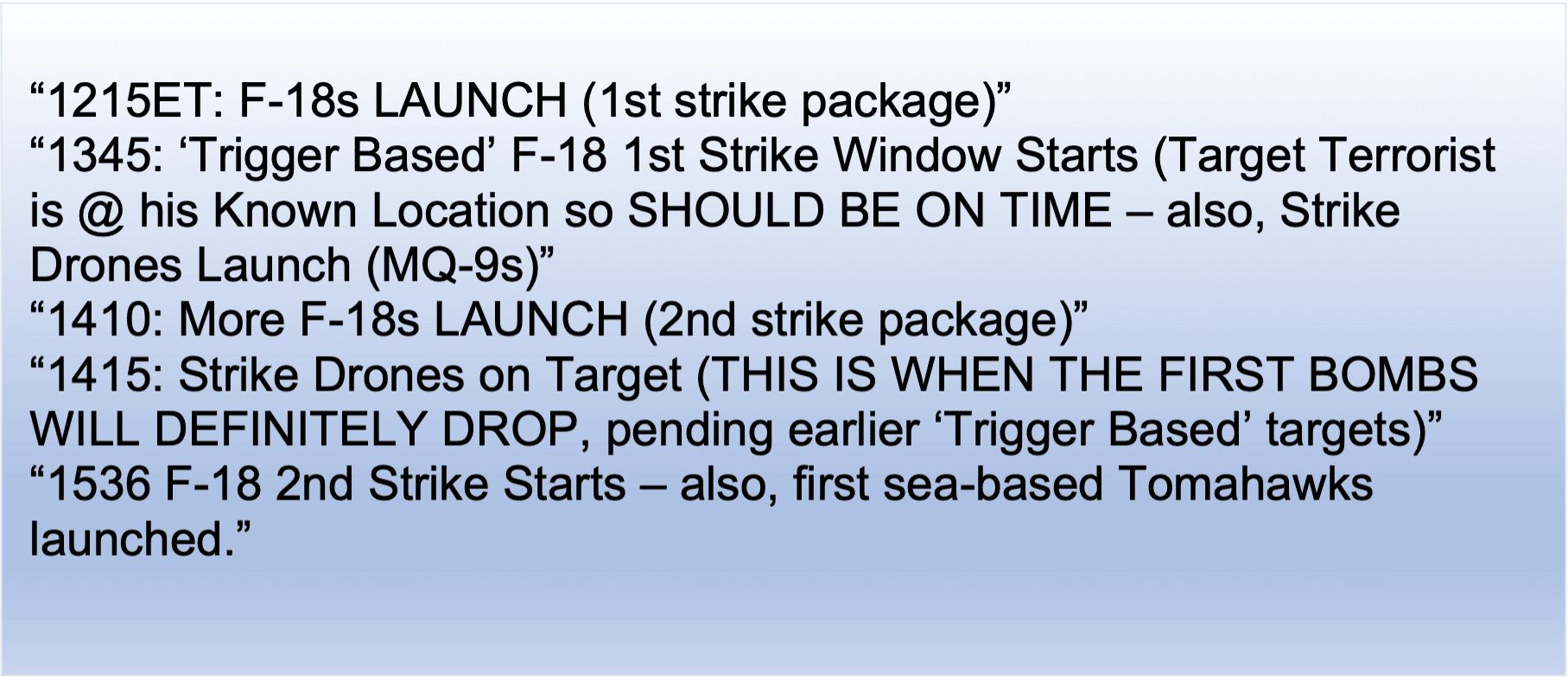

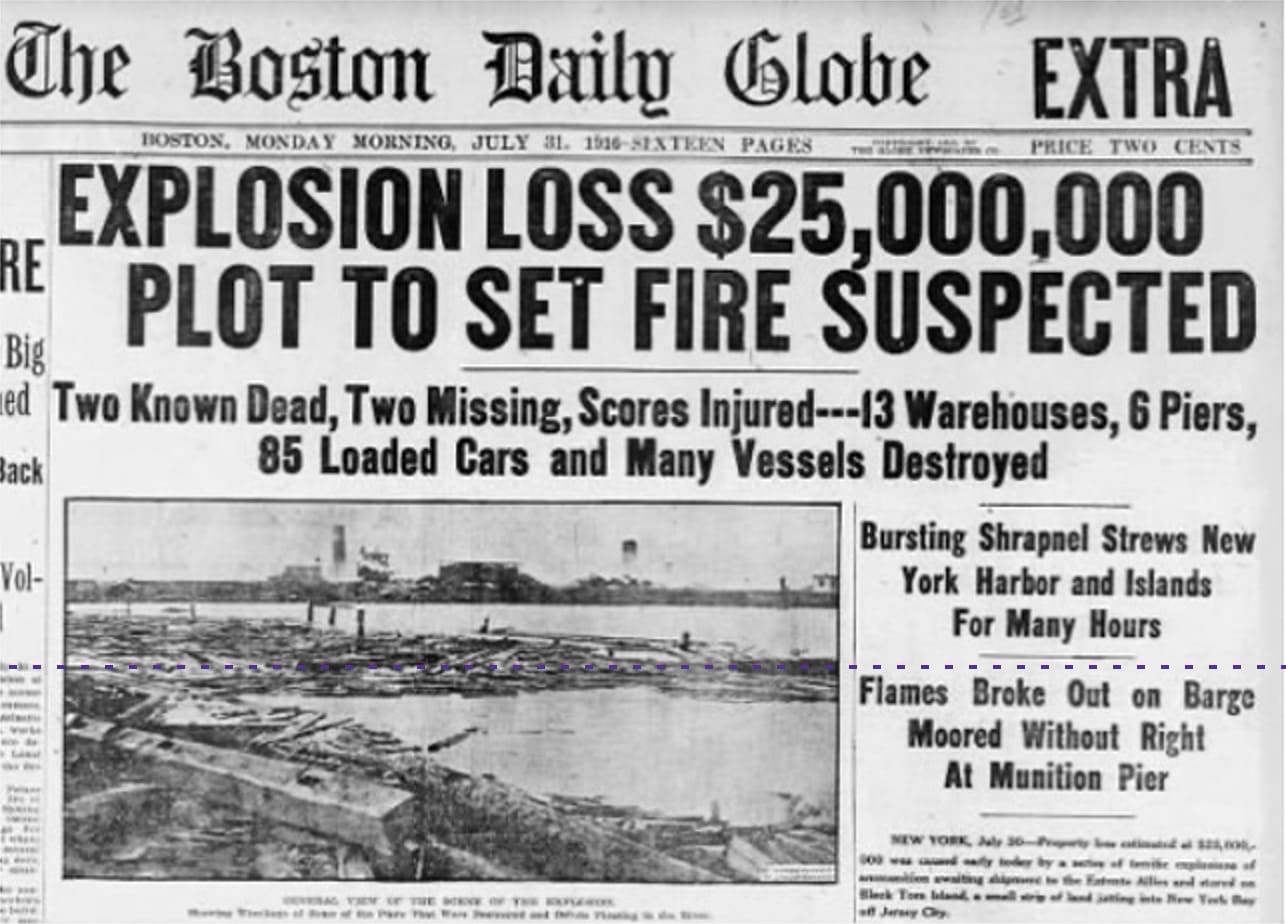
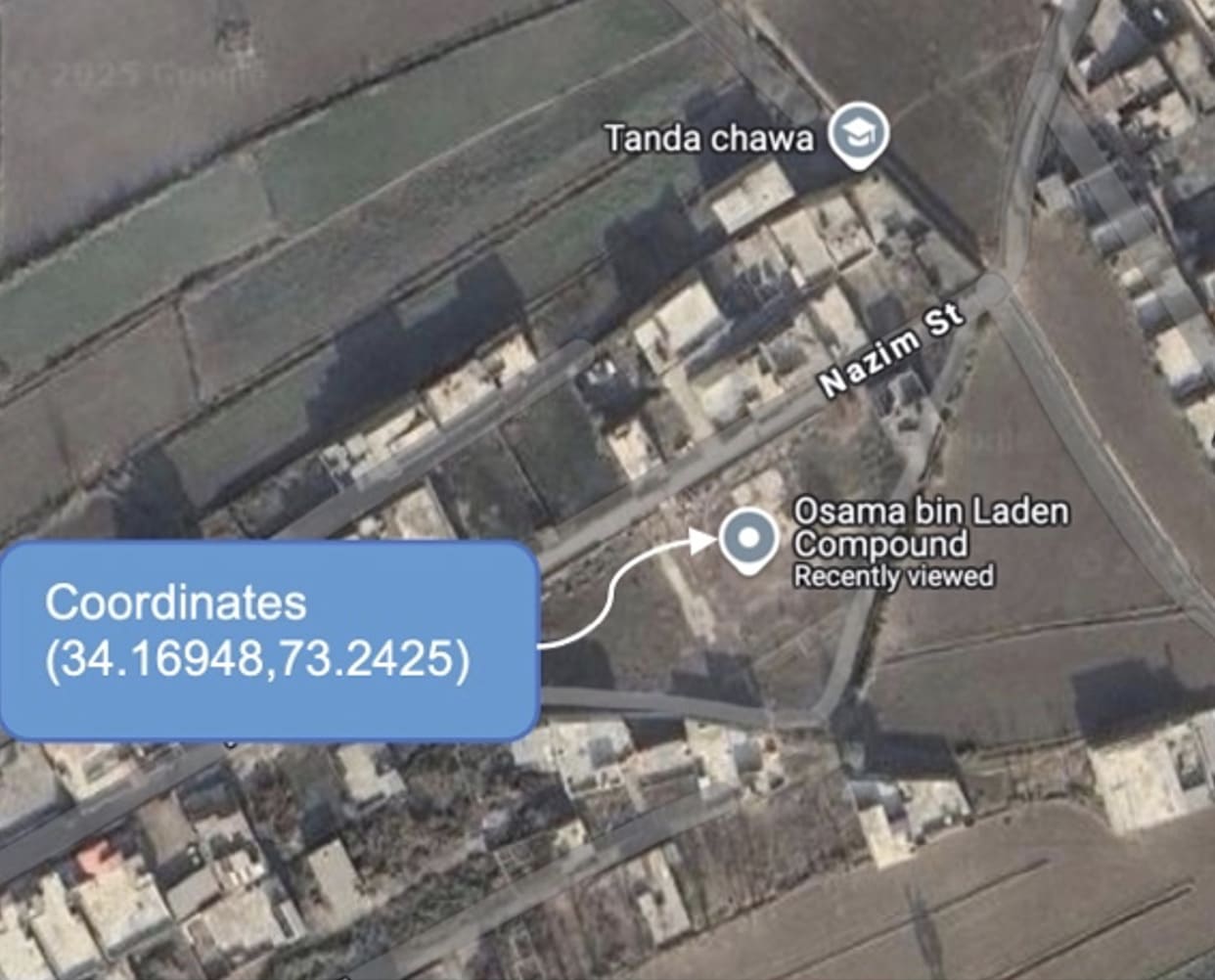


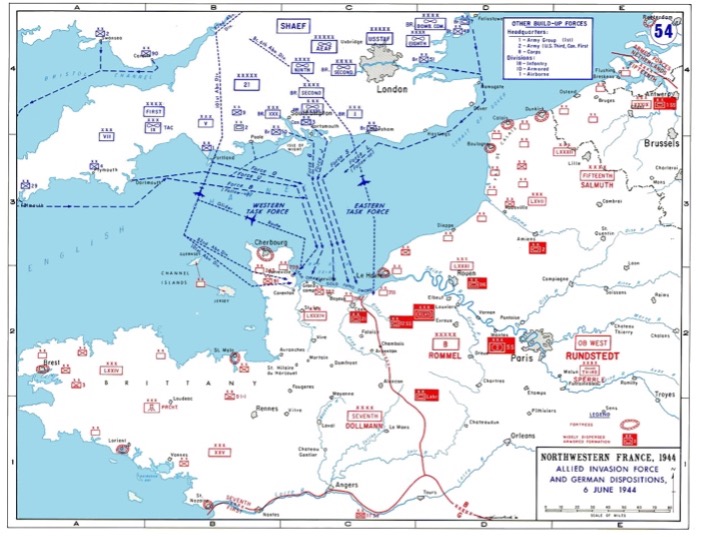
 Joseph Mazur



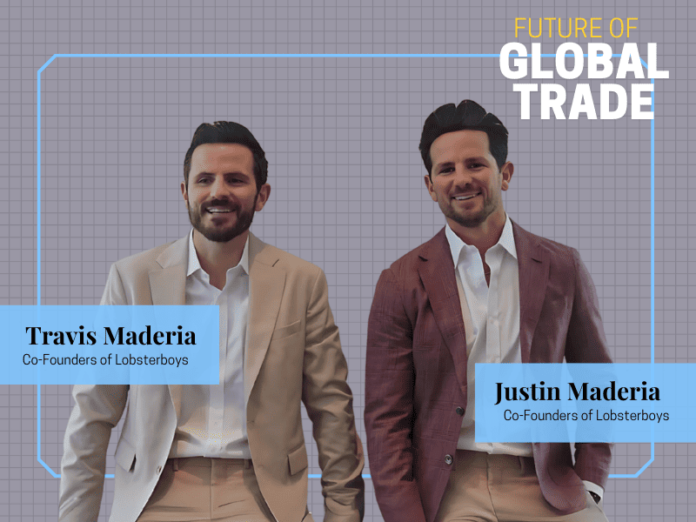



 Justin Maderia



 Arunma Oteh