For much of the past decade, Britain’s economic security debates have focused on energy prices, supply chains, and trade access. Yet beneath all three lies a less visible constraint that is now shaping industrial competitiveness and strategic autonomy: access to critical minerals.
From offshore wind turbines and electric grids to advanced manufacturing, defence systems and semiconductors, modern economies rely on a narrow set of minerals whose supply is often concentrated in just a handful of countries. The UK is no exception. As demand accelerates and geopolitics intrudes ever more directly into global trade, critical minerals are no longer a niche environmental concern. They have become a central economic security issue.
This is the context in which the UK has begun to rethink how it secures the raw materials underpinning its industrial base and why partnerships with resource-rich but geopolitically balanced countries are gaining strategic relevance.
The UK currently imports the overwhelming majority of the critical minerals it consumes. According to government assessments, for many materials essential to clean energy, aerospace, defence and advanced manufacturing, import dependence exceeds 90 percent. At the same time, global supply is increasingly concentrated. In several mineral categories, a single country accounts for more than half of global production or processing capacity.
The International Energy Agency estimates that global demand for critical minerals could double by 2030 and quadruple by 2040. For the UK, the risk is over-reliance. Disruptions caused by geopolitical tensions, export controls, or logistical bottlenecks elsewhere can translate quickly into higher costs, delayed projects, or strategic vulnerabilities at home.
Recognising this, the UK updated its Critical Minerals Strategy in late 2025. The strategy sets out three broad objectives: reducing excessive concentration in supply chains, strengthening domestic capability where feasible, and deepening international partnerships to diversify sources of supply. One particularly telling benchmark is the government’s ambition that, over time, no more than around 60 percent of UK demand for critical minerals should be met by any single country.
It is here that international partnerships matter most.
How Kazakhstan Can Help
While no single country can solve the UK’s supply challenges alone, Kazakhstan occupies a distinctive position when it comes to critical minerals. It possesses a broad and diverse mineral endowment and is already a significant producer of several materials considered strategically important by the UK, including chromium, titanium feedstocks, beryllium, uranium and manganese.
In total, Kazakhstan is a globally significant producer of around 18 minerals on the UK’s priority list. Beyond established outputs, it is also seeking to expand production of materials such as tungsten, rare earth elements and gallium – minerals increasingly relevant to defence technologies, electronics and clean energy systems.
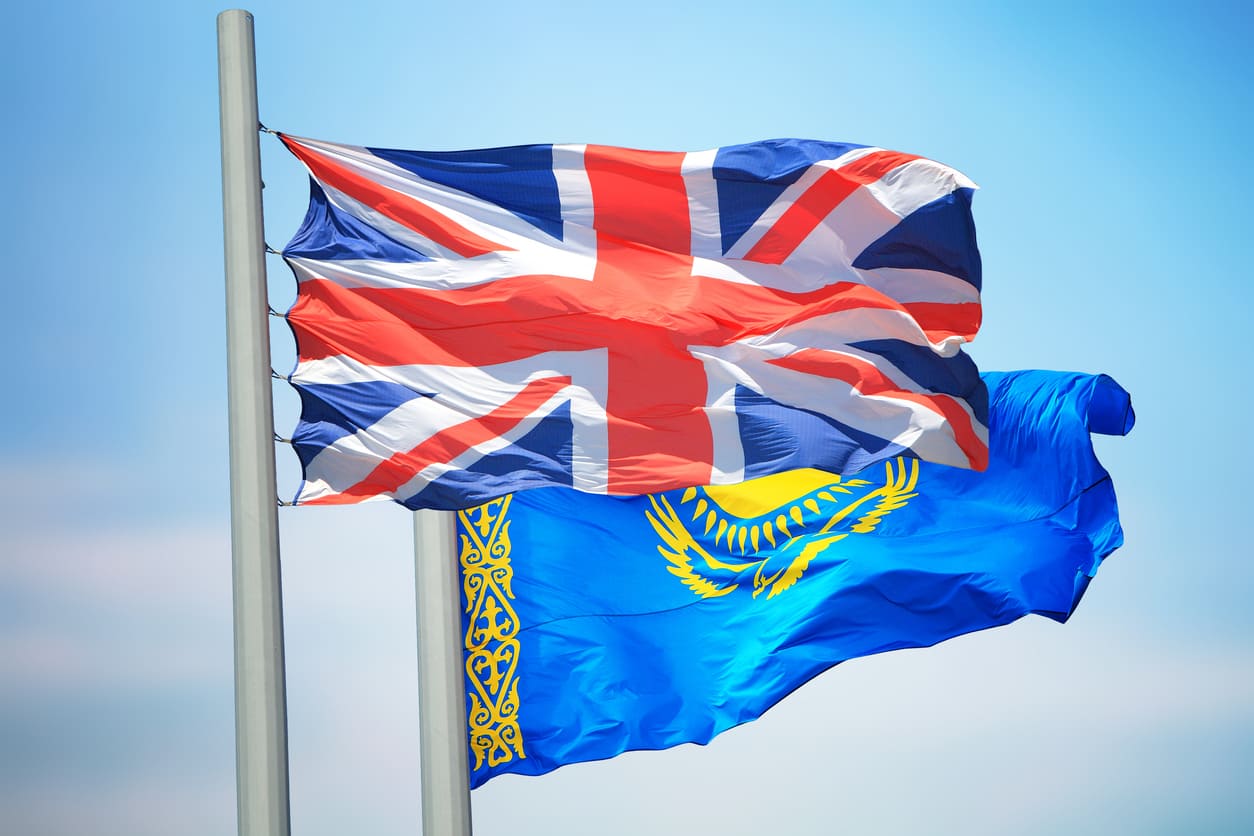
Kazakhstan has already signed strategic cooperation frameworks on critical minerals with the European Union, the United States, Japan, and the UK. Brussels, for example, agreed a Strategic Partnership on Sustainable Raw Materials, Batteries and Renewable Hydrogen value chains, signed in 2022 and operational since 2023, aimed at securing reliable supplies of raw and refined materials for Europe’s industrial transformation. Across the Atlantic, Washington and Astana took a significant step in November 2025, when Kazakhstan and the United States signed a landmark memorandum of understanding on critical minerals cooperation. The UK, meanwhile, signed the UK–Kazakhstan Roadmap on Strategic Partnership in Critical Minerals in 2024, which lays out a practical framework for cooperation consistent with the UK’s Critical Minerals Strategy. For Downing Street, Kazakhstan is therefore not an outlier, but part of an emerging network of “friend-shoring” relationships designed to reduce excessive dependence on any single supplier or region.
In parallel with economic and industrial policy shifts, Kazakhstan is also undertaking significant political institutional reform, framed by President Kassym-Jomart Tokayev as a step toward strengthening governance and long-term stability. In January, Tokayev unveiled a package of constitutional changes that would abolish the current bicameral parliament and replace it with a single-chamber legislature, alongside proposals to strengthen the institutional role of parliament and introduce the office of Vice President, with clearer constitutional rules governing executive authority and succession. A Constitutional Commission has been established to draft a revised text for public consideration, reflecting a broader effort to modernise state institutions, reinforce checks and balances, and enhance predictability in governance. For external partners such as the UK, this institutional trajectory matters: long-term cooperation on capital-intensive sectors like critical minerals depends not only on resource endowment, but on regulatory clarity, political stability, and confidence in the durability of decision-making frameworks.
Why this matters for Britain
The are several reasons to expand UK–Kazakhstan cooperation in critical minerals. First, Kazakhstan offers access to a range of critical and growth minerals without adding to existing concentration risks. Second, Kazakhstan brings resource depth; the UK brings strengths in finance, engineering, project governance, standards and downstream manufacturing. Third, several minerals where Kazakhstan is active, such as tungsten, chromium and titanium alloys, are directly relevant to UK aerospace, defence and advanced manufacturing supply chains. Others, such as gallium and rare earths, align with longer-term UK ambitions in semiconductors and clean technologies.
Crucially, cooperation does not need to mean shipping raw materials directly to Britain. It can involve joint processing ventures, long-term offtake agreements, shared investment vehicles, or recycling and circular-economy projects that reduce overall demand pressure.
The upcoming C5+1 Ministerial Meeting in London in February, bringing together the UK and Central Asian states, can be used as a platform to move from frameworks to implementation. The meeting can identify priority projects, match producers with UK end-users, and align investment, standards and logistics planning. Done well, such cooperation would sit squarely within the UK’s Critical Minerals Strategy and broader industrial policy objectives. The key is to ensure progression. Critical minerals supply chains can take years to develop, finance and scale. Delaying decisions today increases vulnerability tomorrow.
Ultimately, even though critical minerals rarely feature in public debate, they increasingly shape the boundaries of economic sovereignty. For the UK, securing resilient access to these materials is about adapting to a world in which supply chains are more contested and strategic than before.
Partnerships with countries such as Kazakhstan will not eliminate risk, nor should they be seen as a silver bullet. But as part of a broader diversification strategy, they can help ensure that Britain’s industrial ambitions are supported by secure and sustainable foundations.