

The Pax Silica’s promised economic returns cannot be demonstrated by political rhetoric. They must be credible, financeable, environmentally sustainable and institutionally deliverable. That’s the necessary empirical test.
Last week, the Philippines and the U.S. signed a framework agreement for the planned “AI industrial hub” under the US-led Pax Silica initiative. It is targeted before the end of the year.
Nonetheless, Pax Silica is likely to multiply Philippine geopolitical and thereby economic risks, as I argued half a year ago.
According to its proponents, Pax Silica – the US-led international strategic initiative to build secure supply chains for advanced technologies – could become an important opportunity for the Philippines. And the country does possess some comparative advantages in electronics, English-speaking technical labor, services, geographic location and mineral resources.
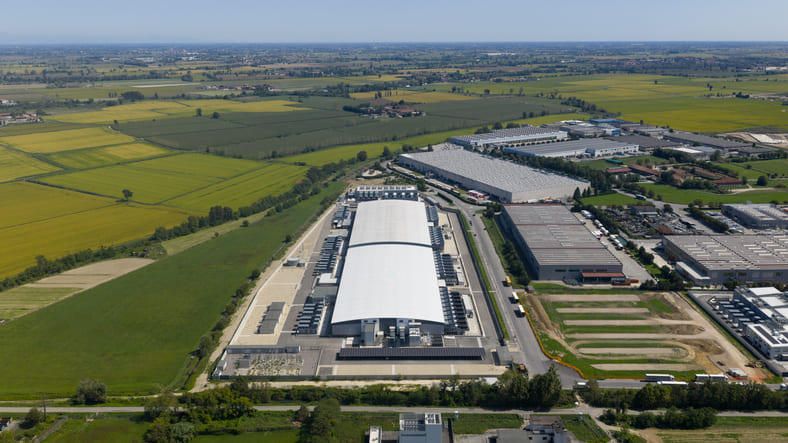
Yet that is very different from proving that the proposed 4,000-acre (about 1,619-hectare) hub at New Clark City will attract $40–70 billion, create 130,000–190,000 jobs and transform the country into an AI industrial power. These remain projections, not observed economic outcomes.
Pax Silica claims – and realities
First, $40–70 billion is not a demonstrated investment commitment. The Philippines signed the Pax Silica Declaration in April 2026, but the declaration is a cooperation framework, not a guarantee of Philippine investment, technology transfer or market access.
On October 13, the government said the BCDA had submitted a proposed legal framework to the President and that BCDA and its US development partner were still discussing the partnership; signing was expected before year-end. Distressingly, the terms were not public. A framework agreement, even when signed, would not itself prove that investors have committed or financed projects.
Second, the job projections require much greater scrutiny. The implied capital intensity is extraordinary. The headline figures imply roughly $210,000–$538,000 of capital per projected job. That may be possible in capital-intensive semiconductor or advanced manufacturing, but the project cannot be judged mainly by job totals. Officials must distinguish direct jobs from indirect jobs and disclose assumptions behind any employment multipliers.
Third, “AI hub” is too elastic to support a credible cost-benefit calculation without a defined industrial mix. Semiconductor assembly, chip testing, equipment manufacturing, mineral processing, logistics and data-centre operations have very different requirements for skills, capital, energy, water and environmental safeguards.
In September, the Palace said no data centres were planned at the Clark Advanced Manufacturing Park, describing its role instead as producing equipment and components for AI data centres and AI-enabled products. That clarification makes it even more important to state precisely which industries the project will actually host.
Fourth, basic environmental due diligence remains unresolved. In August, the Department of Environment and Natural Resources told Congress that no project-specific environmental impact assessment had been applied for or processed and that it lacked a clear project description.
An Environmental Compliance Certificate for BCDA’s broader development plan is not equivalent to an assessment of the actual industrial hub. Publicly available project-specific water-balance, grid-adequacy and cumulative-impact studies also remain essential before the project’s requirements can be credibly judged.
Contested claims, concerns of flood control scandal déjà vu
The most vulnerable headline claims are $70 billion, 190,000 jobs, enormous export gains and “AI powerhouse” status.
Scale matters. Industry sources put Philippine electronics exports at about $49.6 billion in 2025, although official trade classifications differ. A new zone generating exports worth tens of billions would be a major transformation, not a routine investment cycle.
Additionality matters, too. Some activity may relocate or expand production that would otherwise happen elsewhere in the Philippines. The question is how much new Philippine output the project creates. Nor does $1 billion in semiconductor exports add $1 billion to Philippine GDP: imported inputs, equipment and foreign intellectual property can account for substantial value. The government should publish domestic value added, wages, productivity, technology spillovers and tax receipts—not just gross exports.
Fiscal costs must also be counted. Tax incentives, public infrastructure, utility investments and environmental externalities should be deducted from the benefits. The proper test is incremental domestic value added and public revenue, net of public costs and tax expenditures.
The issue of foreign versus domestic value added is vital. A semiconductor exported for $1 billion does not necessarily add $1 billion to Philippine GDP. Imported wafers, equipment, components, energy and foreign intellectual property may constitute substantial portions of gross export value. Government projections need therefore to report domestic value added, not merely exports.
Nor can fiscal leakage be ignored. Large strategic investments commonly receive tax incentives. The proper calculation is consequently: incremental GDP, wages, taxes plus technology spillovers minus infrastructure costs, tax expenditures, environmental costs, and externalities.
Finally, the flood-control scandal makes independent verification especially important. Government estimates put losses from defective or fictitious projects at tens of billions of pesos, while auditors documented substandard, overpriced, duplicated or nonexistent works. This does not prove Pax Silica will be corrupt. But it does show why announcements and project totals cannot substitute for contracts, financing, transparent procurement and independent audit.
Bottom line: the climate and geological test
The Philippines is highly exposed to typhoons, flooding, earthquakes, liquefaction, landslides, tsunamis and volcanic hazards. World Bank analysis warns that climate change could materially reduce GDP without adaptation; historical typhoon losses have been estimated at around 1.2% of GDP. For an energy- and water-intensive industrial project, resilience is an economic input, not a public-relations label.
The correct sequence is hazard and cumulative-impact assessment; a credible water balance and power plan; economic feasibility and full fiscal costing; public disclosure and consultation; binding investment and financing commitments; then construction and measured results. Independent studies should assess not only the site boundary but also the connected power, water, transport and industrial infrastructure.
Follow the money
Pax Silica is an opportunity to test whether the Philippines can move up the technology value chain—not yet proof that it has done so.
The standard should be neither anti-American nor anti-Chinese, pro- nor anti-Marcos. It should be empirical: Show us the contracts, financing, feasibility studies, environmental assessment, water and power plans, tax costs, verified jobs and domestic value added – and then let the empirical record decide.
About the Author
 Dr. Dan Steinbock is an internationally recognized strategist of the multipolar world and the founder of Difference Group. He has served at the India, China and America Institute (USA), Shanghai Institutes for International Studies (China) and the EU Center (Singapore). For more, see https://www.differencegroup.net.