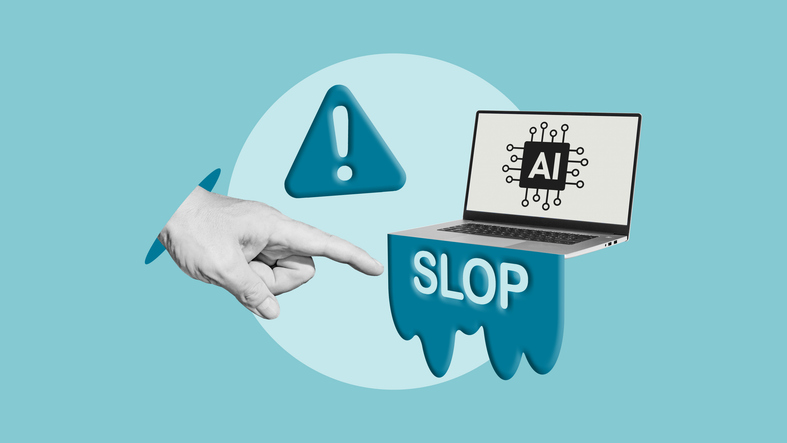
The digital landscape is increasingly flooded with low-value, AI-generated content—what industry experts now call “AI slop.” AI slop is cheap, mass-produced text or images that lack substance and accuracy. As one analysis puts it, “low-quality, AI-generated content – or AI slop – is flooding the open web”. In fact, forecasts predict that nearly 90% of online content could be AI-generated by 2026. This deluge of generic, often incorrect content muddies the information ecosystem. Customers and decision-makers can be misled by superficial content, while trustworthy publishers are drowned out. Advertisers and businesses waste time and money on false leads; “budgets get wasted, consumers are misled, and legitimate publishers lose revenue” to AI-driven junk sites.
In short, the rise of generative AI has supercharged the spread of misinformation and outdated data. Machine-generated text can easily include outright falsehoods or subtle inaccuracies. For example, experts note that generative AI “models… will always be vulnerable to inadvertently producing at least some misinformation,” since they predict words rather than verify facts. One report illustrates the problem: it lists AI outputs ranging from a fake news headline to a bizarre “pizza recipe” that calls for glue. These errors aren’t anomalies, but an inherent risk of AI’s design. In practice, weak training data and algorithmic “hallucinations” can produce convincing but misleading information. Businesses relying on such content may find their decisions built on a shaky foundation.
Figure: Conferences and speaker events (above) highlight the value of expert-led insights in a world awash with generic AI content.
The Enduring Edge of Real-Time Human Expertise
In an era of AI overload, human experts offer a crucial counterbalance. Unlike generic AI text, real human insight brings nuance, context, and judgment. Research consistently shows that while AI can process vast data quickly, it “struggles with nuance, context, and creativity” – precisely the areas where people excel. For instance, market research professionals note that AI cannot detect sarcasm, cultural subtleties, or ethical implications without human guidance. Data alone won’t make sense until an expert weaves it into a strategic narrative.
Moreover, human experts work in real time. They incorporate the very latest information, changing market conditions, and tacit knowledge that AI models simply don’t have. Generative AI is often trained on datasets that become outdated, whereas a human on the ground knows today’s news and trends. In practice, business teams that “cling to manual [human] processes” can actually stay ahead by interpreting AI outputs rather than blindly trusting them. As one analyst sums up, “AI wins at speed, scale, and efficiency. Humans win at nuance, strategy, and meaning”. In other words, AI can generate reports fast, but only experts can spot which trends truly matter, assess risks, and apply wisdom to make sense of the data.
Human experts also build trust. Real-world experts stake their reputations on accuracy, while AI content often comes with no accountability. Insights from a seasoned professional carry credibility that generic “slop” does not. As research notes, without human oversight “businesses may rely too heavily on AI-generated outputs—risking poor decisions based on shallow or biased data”. In practice, companies that blend AI with expert review avoid these pitfalls: experts can flag inconsistencies, fill in missing context, and apply ethical judgment that an AI system lacks.
The High Stakes of Misinformation
Relying on AI slop or outdated reports is not just an academic worry – it poses real business risks. Poor decisions based on bad information can cost companies millions and damage reputations. Studies of AI decision-making warn that “if [training] data contains erroneous information, AI systems may make wrong decisions,” with serious consequences in sectors like finance, healthcare, and legal services. Classic examples abound: Microsoft’s Tay chatbot infamously spewed hate speech due to its polluted training data, and Amazon scrapped an AI hiring tool when it was found to discriminate against women. These cases illustrate how flawed inputs turn into public failures.
For businesses today, the risks include: misunderstanding market trends, misjudging customer sentiment, or overlooking emerging threats. Generic reports might be stale or biased; AI models trained on them will inherit those blind spots. One analysis notes that “relying solely on historical data or generic reports can lead to misinformed decisions”. Imagine a company launching a product based on an outdated market report – by the time it hits the ground, customer needs or competitor moves may have shifted. Or a firm trusting AI-generated analysis without vetting it; if the AI hallucinated facts, the company could make a very costly misstep.
Worse, misinformation can erode trust. If customers or partners discover a company making claims based on faulty data, that company’s credibility suffers. In high-stakes areas like investments or healthcare, the tolerance for error is virtually zero. The consensus in security and risk management circles is clear: accurate information is the lifeblood of modern business. Empowering decisions with verified, expert-led intelligence is therefore critical.
Expert Networks: A Competitive Advantage
In this landscape, expert voices are more important than ever. Expert-driven insights give companies a strategic edge by providing first-hand, actionable knowledge. Rather than settling for templated analyses, firms are turning to specialized expert networks that deliver real-time intelligence. These networks connect businesses with industry veterans and thought leaders on demand, bringing qualitative depth that generic AI or outdated reports can’t match.
Key benefits of tapping expert insight include:
- Real-time, first-hand intelligence: Experts in the field provide up-to-the-minute feedback on trends, customer behavior, and market shifts. They can instantly interpret breaking news or new regulations in context. This “reduces reliance on generic, outdated reports” by delivering fresh, experience-based knowledge.
- Validation and accuracy: Before making big moves, companies can “cross-check research findings with real industry experts”. This step catches errors or misinterpretations before they become costly. Experts also help “validate assumptions” – for instance, confirming that a new product feature really meets customer needs.
- Competitive intelligence: Expert voices offer insider perspectives that generic sources miss. They may spot emerging trends weeks or months ahead, explain subtle shifts in consumer habits, or clarify how a regulatory change will play out. As one industry analysis notes, expert networks give businesses a strategic advantage by “providing insider perspectives on market disruptions” and identifying trends “before they become mainstream”.
- Risk reduction in big decisions: When stakes are high – like mergers, major investments, or entering new markets – expert advice can prevent disasters. Experts can perform targeted due diligence (e.g. assessing technological viability or regulatory pitfalls) and share “deep insights from former executives, policymakers, and industry veterans”. This human intelligence spotlights blind spots that a purely data-driven approach might miss.
Together, these advantages mean companies that leverage expert input can act faster and smarter. They avoid the delays of traditional research and the pitfalls of bad data. As the industry observer CleverX puts it, expert networks have grown into a “billion-dollar industry” because businesses increasingly rely on them for real-time, accurate decision-making. In a data-saturated world, the old saying holds true: quality of information outweighs quantity.
Figure: Industry experts emphasize that while AI aids efficiency, “the future belongs to professionals who adapt, evolve, and guide AI” – partnering technology with human insight.
How Authority.inc Amplifies Expert Insight
At Authority.inc, we recognize these challenges and champion expert-driven accuracy. Our platform is built on a verified data framework with expert oversight at every step. Every data point is “meticulously organized, cross-referenced, and verified through multiple sources”. We convene industry professionals to vet and curate information, ensuring that outdated or unverified content is filtered out. As our site explains, we use an “Expert Review Process” so that industry specialists “validate and review data to maintain the highest standards of quality”. In this way, we deliver insights you can trust.
In times of information overload and AI-driven noise, Authority.inc provides a beacon of clarity. We spotlight real voices: analysts, academics, and industry leaders whose insights are backed by evidence and current context. This commitment is echoed by experts we quote: “In times of misinformation, it’s crucial to seek out the most clear-cut, unbiased… recommendations possible”. Our methodology is fully transparent and rigorously checked, reflecting our belief that data integrity is paramount. Even our backers – from Oxford AI to financial industry leaders – expect that “every company ranking reflects objective criteria, not payment incentives”.
By surfacing expert opinions and up-to-the-minute analysis, Authority.inc helps businesses stay ahead. Our tools connect clients with specialists, equip them with the latest verified data, and blend automated insights with human judgment. In short, we enable smarter decisions. In a world awash with AI “slop,” this approach is not just valuable – it’s essential.
Bottom line: As the digital arena grows noisier, the human expert’s voice rings clearer than ever. Businesses that prioritize human-led, expert insight will avoid the traps of misinformation, reduce risk, and seize new opportunities with confidence. Authority.inc is committed to being the platform that amplifies those credible voices, delivering real-time expertise you can rely on.
Disclaimer: This article contains sponsored marketing content. It is intended for promotional purposes and should not be considered as an endorsement or recommendation by our website. Readers are encouraged to conduct their own research and exercise their own judgment before making any decisions based on the information provided in this article.