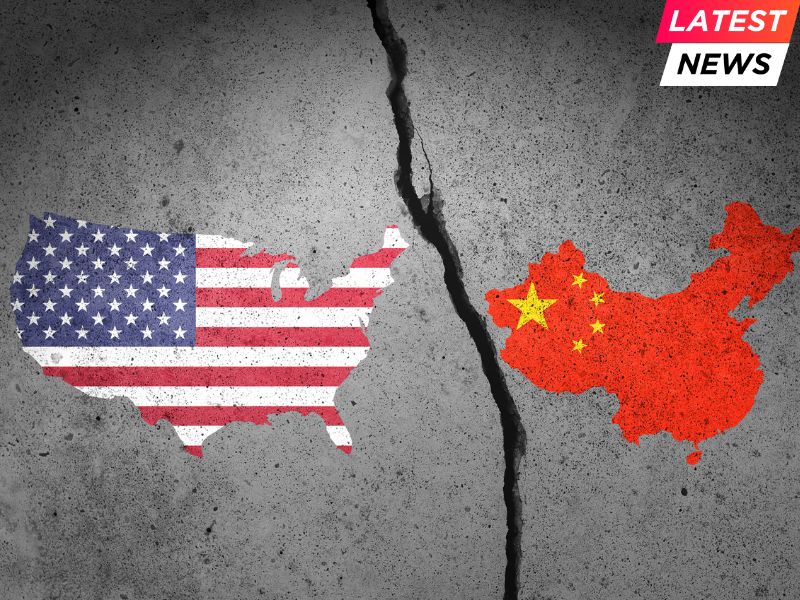
China on Thursday accused the United States of spreading fear over its new rare earth export restrictions and sharply rebuked Treasury Secretary Scott Bessent for making “grossly distorted” comments about a top Chinese trade negotiator. The criticism came as Beijing rejected Washington’s call to lift the curbs, escalating tensions just weeks before President Donald Trump and President Xi Jinping are set to meet in South Korea.
In a strongly worded statement, the Communist Party’s official newspaper issued a detailed, seven-point rebuttal following U.S. claims that China’s rare earth measures represented a global power grab. The response came after U.S. Trade Representative Jamieson Greer and Bessent suggested Beijing could avoid Trump’s threat of a 100% tariff on Chinese imports by rolling back the export regime set to take effect on November 8.
“The U.S.’ interpretation seriously distorts and exaggerates China’s measures, deliberately stirring up unnecessary misunderstanding and panic,” Commerce Ministry spokesperson He Yongqian said at a press briefing. She emphasized that export licenses would be approved “provided the export licence applications are compliant and intended for civilian use.”
China’s latest export rules have raised concern among global manufacturers about whether any product containing even small amounts of Chinese rare earths would require government approval to ship abroad. He Yongqian clarified that this would not be the case.
Greer had earlier labeled China’s controls “a global supply-chain power grab” and urged Beijing not to enforce them. Bessent hinted that the U.S. might consider extending the current 90-day tariff truce, which is due to expire in early November.
Relations between the two economic superpowers had appeared steady following a September phone call between Trump and Xi and a Madrid summit that was hailed as a success for both sides after progress on the TikTok deal. However, tensions reignited after Washington expanded its “Entity List” in late September to target Chinese and foreign companies allegedly circumventing U.S. export restrictions on semiconductor technology.
Beijing argues that its export measures are legal and align with international standards. “The United States has long overstated national security concerns and abused controls, adopting discriminatory practices against China,” said one of seven infographics released by the state-run People’s Daily. The newspaper pointed out that the U.S. maintains a control list of over 3,000 restricted items, while China’s list includes about 900.
“Implementing such export controls is consistent with international practice,” read another section of the publication, reiterating Beijing’s defense of the new policy.
The dispute took a personal turn after Bessent described China’s chief trade negotiator Li Chenggang as “slightly unhinged” and “disrespectful,” claiming Li had threatened “global chaos” if the U.S. moved ahead with new port fees. Bessent also alleged that Li arrived in Washington uninvited in August for talks.
In response, He Yongqian said the U.S. remarks “seriously distort the facts,” stressing that China had been proactive in maintaining communication with Washington. “It is hoped the U.S. will cherish the achievements of the earlier economic and trade talks and immediately correct its wrongdoings,” she said.
Bessent maintained that trust between Trump and Xi had helped prevent further escalation, keeping diplomatic channels open despite disagreements between their trade teams. Analysts, however, warn that continued public sparring could overshadow the planned leaders’ meeting and unsettle markets already wary of new tariffs.
With both sides trading accusations and defending their policies, the world’s two largest economies appear locked in a delicate balancing act — seeking to project strength while trying to preserve enough stability to avoid another round of damaging trade escalation.
Related Readings: