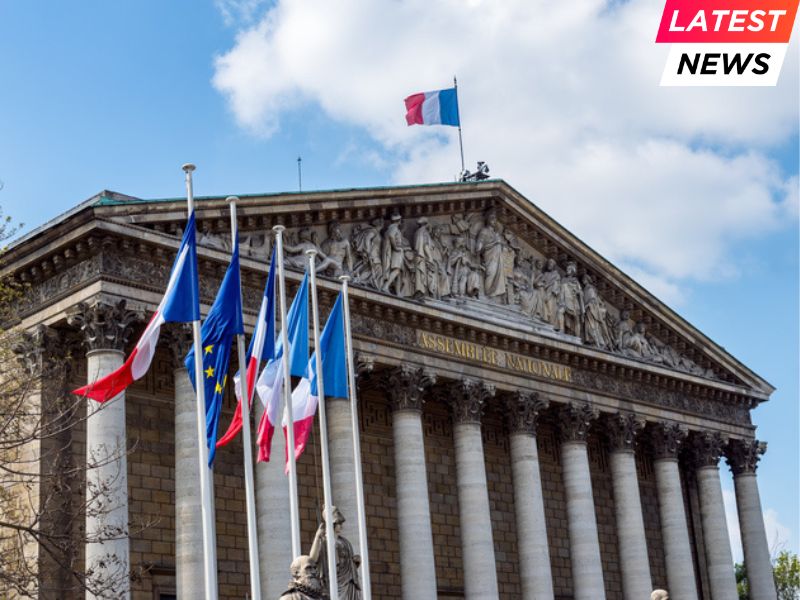
French Prime Minister Sebastien Lecornu stepped down on Monday, just hours after unveiling his new cabinet, plunging France into deeper political uncertainty. The unexpected resignation marks another setback for President Emmanuel Macron, whose government has struggled to maintain stability amid growing public anger and fractured alliances.
Lecornu, a close ally of Macron, held the post for less than four weeks, making him the shortest-serving prime minister in the history of the Fifth Republic. His abrupt exit reflects the mounting paralysis within Macron’s administration following the inconclusive 2024 parliamentary elections, which left no party with a clear majority.
“It’s the clearest sign yet that Macron has run out of road,” political observers noted, as France faces its fifth prime minister in under two years. None have managed to secure the broad coalition needed to govern effectively.
Public frustration over austerity policies and perceptions of an out-of-touch government has continued to grow. Macron, still reeling from last year’s election results, faces the possibility of either calling a snap parliamentary vote or resigning himself to trigger a presidential election. Most analysts believe he will opt for early legislative elections as the least damaging path forward.
Lecornu, speaking Monday, said he had been in final discussions with political parties to stabilize the situation before his resignation, setting a Wednesday deadline for progress. He cited the lack of compromise among rival factions as the main cause of his government’s collapse.
“The break I offered was not enough,” he said, referring to his promise to stop using Article 49.3 of the French constitution, which allows legislation to pass without a parliamentary vote. “There are lots of red lines in the mouths of some, but there were rarely any green lines,” he added.
“You can’t be prime minister when the conditions simply aren’t there,” Lecornu said. “Political parties keep acting as if each of them held a majority in the National Assembly.”
The fallout began almost immediately after Lecornu announced his cabinet, which largely retained Macron loyalists. Critics from both the left and right accused him of ignoring demands for change. Of the 15 ministers named, 10 were from Macron’s party, with no representation from left-wing or far-right blocs.
Bruno Retailleau, head of the conservative Republicans and interior minister in Lecornu’s cabinet, expressed outrage over the lineup. “The composition of the government does not reflect the promised break,” he wrote on X.
The far right echoed that sentiment. “We said it clearly to the prime minister: it’s a break or it’s no confidence,” National Rally leader Jordan Bardella posted, blaming Macron for orchestrating the government’s downfall. Marine Le Pen declared, “We’re at the end of the road. We’re at the end of the joke,” when asked about the possibility of supporting another Macron-backed leader.
Left-wing figures also condemned the chaos. “This ephemeral government only shows one thing: Macronism plunges the country once again in chaos,” Socialist Party spokesperson Arthur Delaporte said Monday.
Adding to the outrage was the appointment of former Finance Minister Bruno Le Maire as defense minister. Le Maire, who oversaw a spike in France’s deficit during the pandemic, faced criticism amid fears of worsening fiscal conditions.
The political turmoil immediately rattled markets. The Paris stock exchange dropped 1.7% on Monday morning amid growing anxiety over the upcoming national budget. Fitch downgraded France’s credit rating in September, citing mounting debt levels, which have reached nearly double the European Union’s target.
Economists warn that the government’s collapse could delay next week’s draft budget submission. Without emergency measures, France could face a U.S.-style budget impasse, though experts say that scenario remains months away.
Meanwhile, yields on French government bonds climbed to their highest level in a decade, surpassing those of Spain, Portugal, and Greece—countries once seen as eurozone debt hot spots.
With Macron’s political credibility waning and no clear path to unity, France faces one of its most serious governance crises in years.
Related Readings: