Venezuela entered a volatile and uncertain chapter after the sudden capture and removal of President Nicolás Maduro, who had ruled the country for 12 years, leaving citizens anxious about what comes next.
Across Caracas and several major cities, streets remained largely empty over the weekend as residents stayed indoors and security forces maintained a visible presence. Despite the tension, there was little sign of the pro government paramilitary groups known as colectivos, which have often appeared during past political crises.
Those who ventured outside focused on securing food, medicine and fuel, fearing unrest or shortages. While there was no visible panic buying, Venezuelans have grown accustomed to stocking up whenever instability looms.
Videos obtained by CNN on Saturday showed quiet streets paired with long lines outside supermarkets and pharmacies. “You can’t hear anything on the streets except the birds singing,” journalist Mary Mena reported Sunday.
Opposition supporters expressed relief but kept celebrations private. No public rallies have emerged backing the United States action. Mena said many are likely to remain cautious unless opposition leaders demonstrate clear support from senior officials or military commanders.
Information from outside the capital has been limited. Reuters reported lengthy grocery lines in Maracaibo, a key oil producing city in western Venezuela. Jairo Chacin, 39, a mechanic and workshop owner, said he went out to check his business amid fears of looting.
“I wanted to fill up my gas tank, but the service stations are already closed, so I took the opportunity to buy food because we don’t know what’s coming,” Chacin told Reuters. “Honestly, I have a mix of fear and joy.”
Similar scenes played out in other cities. “I’ve just taken the dog out and it feels like an abandoned city, people are shut inside,” said Alejandra Palencia, 35, a psychologist in Maracay. “There is fear and uncertainty,” she told Reuters.
That sense of uncertainty has spread nationwide.
“I want to know what will come next,” said Nancy Pérez, a 74 year old resident who visited a bakery near her home in Valencia, central Venezuela.
Some Venezuelans voiced concern about the prospect of decisions being made outside the country. While shopping for supplies in Caracas, Jenny Salazar told CNN: “I don’t agree with another president, outside of Venezuela, taking control of us Venezuelans.”
US President Donald Trump said at a news conference on Saturday that his administration would govern Venezuela “until there can be a transition,” a statement that unsettled many inside and outside the country.
Teo Tilin, who lives in Miami and had traveled to Venezuela to visit his mother, questioned how such control would work. “How is it that (Donald Trump) is going to have control? What kind of control will you have? Where are the people who are going to control that? (…) I don’t know,” he said.
A doctor in Caracas, who declined to be named, said the military’s stance will determine the country’s immediate direction. “The position of the Venezuelan Armed Forces is fundamental. We have to wait and see how they are going to define themselves,” he said, adding that he hoped for closer coordination between the United States and the Venezuelan opposition.
Under Venezuela’s constitution, acting president Delcy Rodríguez is required to call new elections within 60 days. Rodríguez has been nominated as president by the Supreme Court following Maduro’s removal.
Still, doubts remain about how the transition would unfold. “I’m very interested in knowing what the transition will be like. What is the plan? Will she be in charge of the country and the organization of the elections? How can we trust it?” asked another Caracas resident.
State media has broadcast defiant messages from regime supporters. On Saturday, one young man speaking on Telesur said: “We are the children of (Hugo) Chávez, we achieved sovereignty, and we will not allow you, who think you are the world’s police, to change this.”
Hugo Chávez, who led Venezuela from 1999 until his death in 2013, founded the Bolivarian movement that Maduro later carried forward. Rodríguez has not spoken publicly on Sunday, but authorities signaled continuity. Maduro frequently insisted that the system he built would endure even without him.
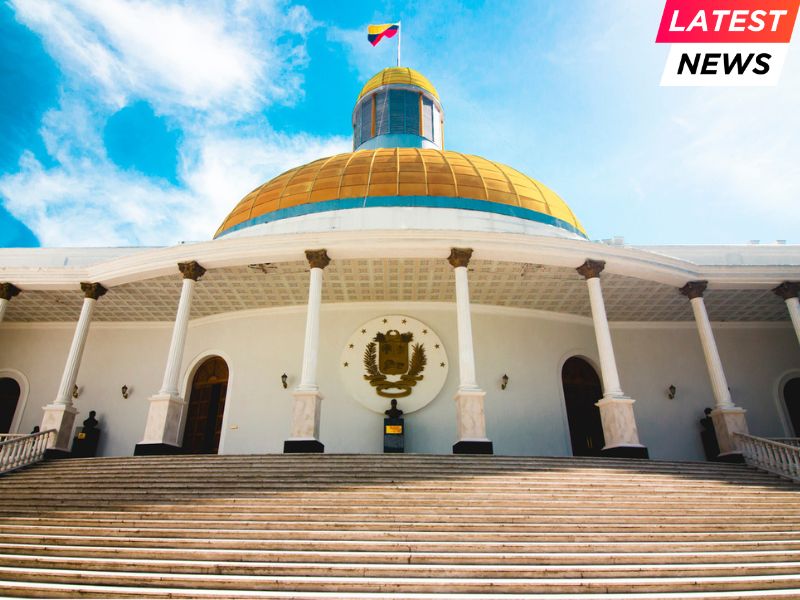
Officials confirmed that Venezuela’s main international airport remains open and said the National Assembly will be sworn in on Monday as scheduled.
Many Venezuelans expressed surprise that Trump suggested the United States could work with Rodríguez as Venezuela’s new leader, adding another layer of uncertainty to an already fragile moment.
As the country waits for clarity, daily life has slowed to a standstill. With streets quiet, shops guarded and families staying home, Venezuela stands at a crossroads, uncertain whether the coming weeks will bring stability, confrontation or a path toward long delayed political change.
Related Readings: