Global food and beverage groups are rewriting their China playbooks as competition intensifies and growth slows, turning to local private equity partners to protect market share and accelerate decision making.
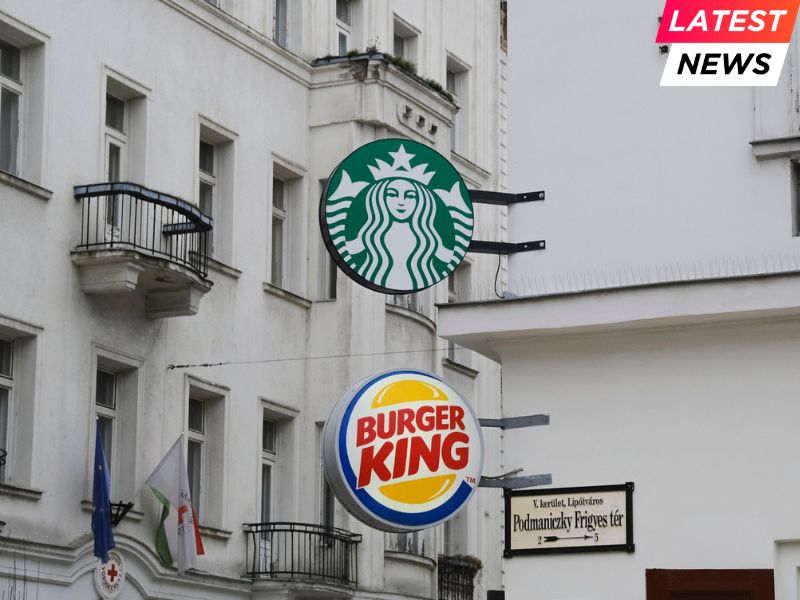
Starbucks and Burger King are the latest multinational brands to sell majority stakes in their China operations, signaling a broader shift away from centralized control toward partnerships built for speed, localization, and operational agility. The model reflects how foreign brands are adapting to a market where domestic rivals move faster, price sharper, and understand local consumers more deeply.
Chinese private equity firms have emerged as favored partners because they can rapidly reshape menus, reset pricing, and expand aggressively into lower tier cities. “Their involvement enables the business to operate at ‘China speed,’” said Kei Hasegawa, partner at consulting firm YCP.
Starbucks has agreed to sell a 60% stake in its China unit to Boyu Capital in a $4 billion transaction that values the business at up to $13 billion over the long term, including licensing income. Burger King’s China operations will see CPE Capital invest $350 million for an 83% holding. Both deals are awaiting regulatory approval and are expected to close next year.
The approach is gaining momentum across the sector. This month, Beijing based IDG Capital acquired a controlling stake in French yogurt maker Yoplait’s China business in a deal valuing the unit at about $250 million. General Mills is reportedly weighing a sale of its Haagen Dazs stores in China, while Swedish oat milk producer Oatly Group AB has also explored divesting its China arm.
The backdrop is a dramatic shift in competitive dynamics. Western brands once thrived with limited localization, benefiting from premium positioning and novelty. That advantage has eroded as domestic players sharpen digital engagement, refine pricing strategies, and tailor products closely to local tastes. Luckin Coffee surpassed Starbucks in both revenue and store count in 2023. Restaurant Brands International has struggled with Burger King in China, where average sales per outlet trail its other major markets.
Local private equity firms offer more than capital. Their willingness to overhaul management, coupled with strong ties to suppliers, landlords, and regulators, has made them increasingly attractive partners. Beyond funding, they bring operational turnaround expertise and access to experienced leadership teams, said Hao Zhou, partner and head of Bain and Company’s Greater China private equity practice.
“Even before the deal is closed, they will go into the company, all ready to start focusing on a few key initiatives,” Zhou added.
Joint ventures are not new in China, but the current wave reflects a sense of urgency. Speed to market, deeper localization, and continuous innovation have become essential for survival in a crowded food and beverage landscape. Multinationals face a difficult choice between committing more capital to defend share or ceding control to a local partner, said Joe Ngai, chairman of McKinsey in Greater China.
Examples of deep localization are already visible. About 90% of the ice cream sold by Dairy Queen in China is designed exclusively for the local market, according to Frank Tang, chairman of FountainVest Partners, which operates Dairy Queen and Papa John’s Pizza in the country.
Royalty structures are emerging as a critical lever in these partnerships. Analysts say more global companies are likely to retain minority stakes while keeping intellectual property licensing rights, leaving daily operations to private equity owners. For Starbucks, royalty payments from Boyu could become the most valuable component of its projected China valuation.
People familiar with the bidding process said proposed royalty fees payable to Starbucks exceeded what several competing bidders were willing to accept. Starbucks declined to comment, and Boyu did not respond to requests for comment. Industry experts note that even small changes in royalty rates can materially affect profitability, especially in a high margin category like coffee.
Higher royalties often offset lower upfront valuations and point to growth strategies centered on store expansion. In some cases, lowering or deferring royalties early can improve cash flow and support faster rollout, Hasegawa said. Starbucks, however, has leverage to command premium terms due to brand strength and its ability to secure prime retail locations.
Boyu’s recent investment in SKP, which operates luxury malls in Beijing, could help Starbucks negotiate more favorable leases for its typically large format stores.
For private equity firms, China subsidiaries of multinational brands are increasingly attractive targets. After years of muted dealmaking, funds are under pressure to deploy capital, and established consumer businesses offer stable cash flows and brand recognition. The Starbucks process alone attracted interest from more than 20 potential buyers, mostly private equity firms.
“These businesses come as very attractive” assets with clear upside potential, Bain’s Zhou said. Returns can be realized through resale to another buyer or via public listings if growth rebounds.
McDonald’s remains a benchmark case. In 2023, McDonald’s China bought back its stake from Carlyle after six years, delivering a 6.7 times return for the private equity firm.
Deal data underscores the momentum. Private equity backed carve out transactions in China reached $39 billion this year as of Dec. 9, up from $23 billion in all of 2024, according to ARC Group. Several large transactions, including a $6.9 billion PAG led purchase of 48 Wanda shopping malls, fueled the rebound.
The Starbucks transaction highlights a wider trend of foreign companies shedding non core or underperforming China units amid geopolitical uncertainty, weak consumer demand, and fierce competition. “Some Western firms face shareholder pressure to exit the slow-growth China segments,” said Jess Zhou, head of M and A China at ARC Group.
For private equity investors, that pressure is creating opportunity. For multinational brands, the deals reflect a recognition that winning in China increasingly requires local control, local capital, and a willingness to let go.
Related Readings: