Home Blog Page 790

Speaking of Growth: The Sustainable Voice of Liechtenstein Banking

Interview with Mr. Simon Tribelhorn, CEO of Liechtenstein Bankers Association

The Liechtenstein Bankers Association recently issued its Roadmap 2025 programme, setting out its members’ aspirations for growth through sustainability and innovation. Liechtenstein is no newcomer to sustainability; as the association’s CEO Simon Tribelhorn points out, it has long been embedded in the country’s DNA. Here, he elaborates on how that manifests itself in the banking sector’s strategy for future growth.

Thank you for taking time out of your busy schedule to speak with us, Mr Tribelhorn! To start with, did you always have an interest in business development?

I have always been very broadly interested, curious and open to new things. Without these qualities, innovation is impossible. And innovation is enormously important in today‘s dynamic environment characterised by permanent change and transformation, especially in view of the major challenges we are facing in digitalisation and sustainable finance. As I am a strong advocate of lifelong learning and in order to be able to give even better impulses for the banking centre in this area, I constantly try to further educate myself, be it by consciously reserving time to read up on specific topics, trying out new things or attending targeted courses. For about two years, I‘ve been intensively involved in business development and innovation management and have also completed corresponding training courses. Besides that, I’ve also always enjoyed cultivating a large, diverse network, which I’m constantly expanding, thanks to my role.

Liechtenstein Bankers Association (LBA) was founded in 1969 and is one of the most respected names in business growth today. You’ve been with the company for more than a decade. What would you say is the foundation for its long-standing success?

Of course, the work of our association is first and foremost teamwork. We have always been able to count on a very professional team in the secretariat, which advances the relevant topics formidably. At the same time, we benefit from the great expertise of our members; more than 120 experts contribute to our work via various working groups and committees day by day. Good internal structures, a service-oriented approach and mindset, a well-established debate culture, and the small size of Liechtenstein have also contributed to the fact that the banks stand very united behind the decisions that have been taken within the various bodies of the association. This has just been demonstrated recently again in the unanimously approved Roadmap 2025, the multi-year strategy of the banking sector.

banking sector

For people who might not be familiar with the concept of a banking association, what exactly does it entail? Are you or are you not a bank?

We are the primary representative of our members’ interests vis-à-vis the main stakeholder groups of politics, authorities and the media in Liechtenstein and abroad. We are therefore not a bank, but the voice of all Liechtenstein banks. For a successful implementation of our ambitious goals set in the Roadmap 2025, we strongly believe a powerful and competent representation of interests is needed more than ever, helping to shape the necessary changes proactively and bundling the forces in the entire banking centre. We want to stand for a modern, innovative and future-oriented association. We see ourselves as a service provider for our member banks and it is our aim to make, together with them, a financial centre fit for the future. For this targeted, effective representation, we have also reprioritised our service offer and defined the following core services on which our banks can rely: outwards – issue management/agenda setting, communication/public affairs and reputation management; and inwards – education/training, strategic work, self-regulation and exchange of expertise.

Given that Liechtenstein Bankers Association has been around for such a long time, the unsung heroes would seem to be its outstanding leadership team. How does it feel to be one of the most successful CEOs in the global arena?

Whether this assertion is true is for others to judge. But you can only be successful today if you constantly question what is supposedly safe, develop new answers, break new ground and continue to evolve. And in this process, it is crucial, however, that you take your environment – first and foremost your employees – along with you on this journey.

Were there any significant obstacles that you and the association encountered when you first started?

When I was given the chance to take over the job of CEO, I was still relatively young. I therefore had to justify the trust placed in me. At the same time, the financial sector in Liechtenstein was going through a very challenging time. It was not an easy start-up phase at all, but very challenging and I had to go beyond my limits several times. In retrospect, it was good like this and not only challenged me, but encouraged and motivated me. The pressure ensured that the familiarisation period was short, and we were soon able to devote ourselves to the new positioning of the banking centre.

Situated in the heart of Europe and sharing borders with Switzerland and Austria, Liechtenstein has one of the most favourable locations in the world. What aspects do you think companies in this region could enhance and strengthen in order to make investment more attractive?

Liechtenstein offers many advantages. There is the unrestricted market access to two economic areas with almost 500 million potential customers. On the one hand, this leads to great stability, since Liechtenstein has the Swiss franc as its national currency and is closely linked to Switzerland in a customs union. On the other hand, the EEA membership offers enormous growth potential in Europe. So Liechtenstein is very well positioned in the alleged trade-off between tradition and innovation. For example, the financial institutions have a cross-generational investment approach, but when it comes to sustainable finance or blockchain technology, they are highly innovative. Finally, and one cannot stress it enough, Liechtenstein is also an industrial country. With more than 4,000 companies (one company for every nine inhabitants), Liechtenstein has the highest density of companies in the world. Contributing more than 40 per cent to GDP, the industrial sector is even the most important sector of the economy, more important than the financial centre. The industrial companies include numerous successful niche players, among them many world market leaders in their industries, such as Hilti, Hoval, Neutrik, Hilcona, Ivoclar Vivadent, Ospelt and Kaiser. Liechtenstein is accordingly one of the most industrialised countries in Europe.

You’ve mentioned that no other financial centre has such a comprehensive understanding of sustainability as yours. Could you elaborate on this?

Sustainability has long been part of the DNA of Liechtenstein, its people, and its banks. It can be said without bragging that we have been an early mover in this topic.

Sustainability has long been part of the DNA of Liechtenstein, its people, and its banks. It can be said without bragging that we have been an early mover in this topic.

Let me give you three very concrete and tangible examples. Liechtenstein has already been for quite a time now a so-called “solar energy country”, having the highest rate of photovoltaic installations per capita. Liechtenstein has launched public-private partnerships in two other areas. The first of these is the Waterfootprint Liechtenstein initiative, launched in March 2019. With this campaign, Liechtenstein is the first country in the world to provide access to clean drinking water to one person affected by water poverty for each of its inhabitants. The second lighthouse project is the Liechtenstein Initiative against human trafficking and modern slavery, also referred to as the FAST Initiative. All of this shows that Liechtenstein conceptualises sustainability not only as climate protection, but more broadly. The guiding principles of this holistic approach are the UN’s 17 Sustainable Development Goals (SDGs).

Moreover, sustainability is an integral part of the corporate culture of Liechtenstein banks. Their business models have a long-term focus, and all banks distance themselves from short-term profit. The banks’ sense of responsibility is also reflected in their broad engagement through their own public-benefit foundations, their membership of a wide range of international standard-setters and professional organisations. And just recently, the three big banks have joined the Net-Zero Banking Alliance (NZBA). In terms of assets under management, Liechtenstein thus occupies a top position, with more than 85 per cent among the banking centres that have given themselves a clear roadmap to net zero.

We have done the same with the banking association. In October, just before COP26 in Glasgow, we joined the UN-convened NZBA as a Supporting Organisation. As a result of this partnership, the LBA commits itself to reducing emissions from operations to net zero by 2030. In addition, we have been an active member of the international Financial Centres for Sustainability (FCS4) network since April 2018. All this proves that we as an association are trying to walk the talk. Despite all these efforts, we are aware that much still needs to be done. Especially in the core business of Liechtenstein banks – investment advice and asset management – as well as in investment funds, the range of products and services must be further expanded. Liechtenstein’s banking centre is aware of these challenges and will further intensify its efforts in this field. Our vision is clear: we want to make a valuable contribution to the necessary transformation of the global economy towards more sustainability.

Speaking of trends, technology is also playing a significant part in changing the business landscape across industries. How has LBA been able to leverage the latest technology to enhance its services and keep up with demand?

Liechtenstein's banking centre

For us, digitalisation and sustainability belong together like twins. Sustainable finance would be inconceivable without the major advances in digitalisation that have been made in recent years. For instance, you only have to think of the enormous amounts of data that are needed or that have to be processed in order to meet the EU’s taxonomy requirements. Therefore, sustainable finance is the “why” and digitalisation is the “how”. An important aspect of the development in the area of digitalisation that has huge potential in our view is the token economy. Here, the government in particular has laid the necessary legal foundations with the world’s first so-called blockchain law. As an association, we naturally support the government and industry in driving forward in this important strategic field. We do this, among other things, through our partnership with the internationally known Blockchain Research Institute (BRI). As an affiliate member of the BRI, we are part of a global community of blockchain innovators, experts, builders and thought leaders.

In an age of financial vulnerability, you introduced a zero-tolerance policy with regard to corruption, tax evasion, money laundering, etc. How do you ensure that these protocols are implemented and followed?

Compliance with all relevant national, European and international standards on combatting money laundering, terrorist financing, tax crimes and evasion or corruption has been absolutely central for Liechtenstein for many years, and still is. This has also been confirmed time and again in various international assessments. On the one hand, this zero-tolerance is ensured by our own strict industry rules and an increasingly developed and competent internal bank compliance over the past decade. An important focus is also on permanent internal training, where we as an association also play a vital role. We are particularly proud of our PPP, together with all the banks and the Financial Intelligence Unit (FIU). On the other hand, of course, strict, competent supervision is crucial as well. We are happy that our regulator, the Financial Markets Authority (FMA), is also internationally recognised as a credible supervisor.

Liechtenstein Bankers Association and Liechtenstein banks have collaborated on a multi-year schedule for the coming years entitled “Roadmap 2025”. Can you give us a little insight into this project?

Liechtenstein will continue to be a stable banking centre that is open to the world and enjoys a high reputation among its national and international clients. The banking centre will occupy a top position internationally in asset management.

Roadmap 2025 is a continuation of the two previous multi-year strategies of the Liechtenstein banks. The first, Roadmap 2015, focused on modernisation. In it, Liechtenstein and its banks committed to the aforementioned rigorous compliance with European and international standards and a corresponding zero-tolerance policy. The subsequent Roadmap 2020 built on this; it primarily dealt with strategic repositioning, mainly in the area of sustainability. Our current Roadmap 2025 has a new emphasis: growth through sustainability and innovation. It is our belief that our discerning clients expect more than simply high-quality services. They want us to contribute to solving the environmental and social challenges of our time. Together with our members, we developed this Roadmap 2025 in 2020 and communicated it a few months ago.

Where do you see Liechtenstein Bankers Association in the ever-evolving finance ecosystem in the next 10 years?

Liechtenstein will continue to be a stable banking centre that is open to the world and enjoys a high reputation among its national and international clients. The banking centre will occupy a top position internationally in asset management. Thanks to our proven innovative capacity, we will make a valuable contribution to the necessary transformation of the global economy towards more sustainability.

If you had to give three reasons for anyone to visit Liechtenstein, what would they be?

Only three? Well, from a tourist point of view, the first would certainly be the proverbial friendliness and straightforwardness of the almost 40,000 inhabitants. People know each other as a matter of course and yet they are very open and accessible to visitors. Secondly, Liechtenstein offers a great variety of cultural institutions for its manageable size. Thirdly, Liechtenstein is very outdoor-oriented. Many people probably don’t know that. The people are very close to nature and a large part of the area consists of mountains and forests. It is no coincidence that there have always been top skiers with Olympic gold medals, world championship titles or world cup victories. We are very privileged to live in such beautiful surroundings and intact nature and, for that, we are very grateful.

Finally, what does success mean to you?

Never give up, be open to new challenges, have a will to change and create and make a difference. In this way, we will be successful if we succeed in leaving a better future and a liveable environment for future generations.

Executive Profile

Simon Tribelhorn

Simon Tribelhorn is a Swiss lawyer with more than 20 years of experience in banking, capital markets and international and European financial market regulation, currently in a leading position. Proven strengths in banking and financial centre strategic issues with a strong focus on and passion for sustainability and sustainable investments as well as in communications, stakeholder and issue management and public relations. Good network of contacts with decision-makers in politics, business and the media, particularly in Switzerland, neighbouring German-speaking countries, the UK and Brussels. Several years of part-time work on various committees of non-profit organisations.

The ‘Import-Substitution’ Policy in Post-colonial Countries: A Review

By Dr. Kalim Siddiqui

I. Introduction

Post-colonial countries are those who were former colonies, and most of them, except China and those in East Asia, remain in poverty. All their economic development indicators are on the wrong side of progress and prosperity, such as rising inequality, high unemployment and low productivity, alongside corruption, capital flight, and failure of institutions which can all be widely observed in most developing countries. (Siddiqui, 2019a; also 2019b)

However, in the face of these challenges, international financial institutions and rich countries still continue to support the adoption of ‘neoliberal economic policy’ (i.e., pro-market reforms) in developing countries, including privatisation of the education and health sector, despite a lack of clear empirical evidence.

The Covid-19 pandemic has further showed the importance of the health sector, and public investment is very important to expand this sector, which would certainly be beneficial to the poorer sections of the society. Recently in India, private hospitals have miserably failed during the current Covid-19 pandemic crisis, and their charges have risen sharply, while at the same time the services have deteriorated. To alter the present critical situation and to improve living conditions for the majority of people in developing countries, the role of the government once again becomes crucial. It is argued here that to improve economic conditions, economic sovereignty in developmental policy matters remains very important, and it is the role of the state to formulate such policies to benefit local communities in developing countries. (Siddiqui, 2021a)

The socio-economic crisis is deepening i.e., rising unemployment, inequality and poverty in the developing countries since the adoption of neoliberal economic reforms more than three decades ago. I find critical enquiry is essential to enhance knowledge.

This article investigates the importance of ‘import substitution strategy’ also known as ‘import substitution industrialisation’ on the economic performance of the developing countries. Economic development involves government initiative and policy that are directed towards improving the economy, increase investments, trade and job creation. Empirical evidence suggests that the road to industrialisation by the advanced economies emerged from a series of state intervention to promote manufacturing in the past.

Empirical evidence suggests that the road to industrialisation by the advanced economies emerged from a series of state intervention to promote manufacturing in the past.

Soon after independence, there was widespread concern about the extensive poverty in the former colonies. Choosing an appropriate policy was considered important to eliminate mass poverty. It was suggested that poor countries must alter their structure. Poor countries were highly dependent on the primary sector for the income of the majority of their population and thus it was said that there was a need to industrialise and diversify their economies. Hence the poor countries needed to protect their economies from the importing of industrial goods from rich countries. (Siddiqui, 2021b; also 2020b)

Therefore, the question was raised: what strategies should be adopted for their economic development? There were two strategies which were often discussed among international agencies and the leaders of both rich and poor countries. The first proposed policy option was ‘Export-led growth’ and the other was called ‘Import-Substitution-Industrialisation’ (i.e. import substitution policy). The former policy had the full support of international organisations and Western countries. But the latter one was supported by those leaders who struggled for independence and considered that to improve economic conditions an industrialisation policy must be adopted. (Burton, 1998)

The difficulties with the ‘Export-led Growth’ policy were that it had to focus on export, and then there were two major challenges. (Siddiqui, 2019a; World Bank, 1993) Firstly, it had to rely on foreign markets and secondly, soon after independence, the former colonies had very weak industrial sectors, meaning focusing largely on export was primary commodities. However, the terms of trade were already not in their favour, and further increasing the primary commodities supply led to the over-supply of these commodities. Therefore, the most appropriate solution was seen as adopting an industrialisation policy, but the major challenge was a lack of funds.

Indeed, until the mid-18th century, there were hardly any differences in per capita income and living conditions between Europe and Africa, Asia and the Americas. Differences began to emerge after this period, which coincided with the expansion of industries (i.e. industrialisation) in Europe, while at the same time de-industrialisation took place in their colonies. European countries were able to diversify their economies and transfer a large proportion of their population from agriculture to manufacturing, but this did not happen in the colonies. This created a new international division of labour, and the inequalities between colonies and colonizers widened. Industrialisation in Europe led to arise in productivity and wide use of technologies, while this process of development was hindered in the colonies. This unequal economic relationship continued even after they were formally independent.

II. Why Import Substitution Policy?

After the independence, many leaders in the developing countries believed that the prospect of their countries achieving economic growth through trade was slim. Therefore, it was viewed that the former colonies could achieve higher economic growth rates by discouraging imports of manufactured goods and by promoting domestic industries and also it was said to reduce imports and balance of payment difficulties. (Irwin, 2021)

The ‘import substitution’ (IS) policy is a developmental strategy, which has been used by the rich countries in their early stage of development. For instance, in the US context this developmental strategy was supported by Alexander Hamilton’s Report on Manufactures to the US Congress in 1790. Generally Britain has been said to have followed ‘open economy’ model, but such argument has been questioned. (Chang, 2007; Amsden, 1989) The aim of the IS strategy was to increase relative size of manufacturing sector. It was expected that such policy will provide a number of advantages to the country. For examples, it may help the country to save foreign exchange by reducing imports and avert balance of payment crisis, especially for these countries that largely rely on exports of primary commodities. It would help to diversify their economy and expand employment opportunities.

Attempts at industrialisation via the ‘import substitution’ strategy were followed in many developing countries of Asia, Africa and Latin America until the mid-1980s.The arguments were based on the historical experiences of advanced economies, which shows that higher industrial growth was achieved through ‘import substitution’. Prebisch (1950) emphasised the importance of economic diversification for developing countries. Diversification aimed to reduce industrial and technological dependence on the advanced economies and also build indigenous ‘capacities to create wealth’. This would narrow the gap in centre-periphery and reduce uneven development, which was built historically.

Raul Prebisch (1951) did take into account the benefits of promoting manufacturing and also to raise exports. He presented Japan’s developmental experience to the developing countries. He argued: “Japan was able to assimilate modern techniques rapidly but did not raise wages to the levels of the great industrial countries… Japan’s incomes thus remained lower than those of other industrial countries; nevertheless, through industrialization Japan was able to increase considerably per capita productivity with an evident net increase in income, which would probably not have been possible without expansion of exports.” (Prebisch, 1951: 77) Prebisch further continued his efforts to emphasise on importance of building manufacturing and minimising the gaps among the developing countries during the 1950s and to encourage exports of manufactured goods instead of primary goods. He suggested ‘the absolute necessity in of building up trade in industrial exports’. And further added that exports of manufacturers ‘ought to have been the natural complement of the industrialization of the peripheral economies’. (Prebisch, 1964: 20)

The ‘infant’ industries argument means to protect domestic industries from foreign competition and allow them to grow at a faster rate, it is hoped that as industries mature, protectionism will be gradually withdrawn, and domestic manufacturing could be assisted through government subsidies, or by raising tariffs. The Singer-Prebisch model argues that the elasticity is generally greater for manufactures than for primary commodities and indeed greater than unity for manufactures in general. Prior to industrialisation, a country will naturally be largely importing manufacture products and exporting primary commodities. For instance, a country initially exports only primary commodities and imports manufactures. Any rise in income will entail a more than proportional growth in purchases of manufactured goods i.e., imports. However, the extent to which increases in imports will be possible depends on export demands and the country’s potential output per head growth within the primary sector. This possibility is limited due to exports of primary commodities, and it may rise irregularly. Therefore, exclusive dependence on manufactured imports will seriously limit the possibilities of income growth. (Toye, 2006)

Moreover, the Engel Curve seems to apply, which means income elasticity of demand for agricultural products and raw materials in the rich countries declines as income increases and higher living conditions are achieved. If exports lag behind the growth of income in the poor countries for this reason, then IS policy must be adopted to protect the BoP, or economic growth will deteriorate. (Irwin, 2021)

industrial goods

Photo credit: https://www.thaisubsea.com/

It is a well-known fact that industrialisation and export of manufacturing leads to modernisation and prosperity. In support of such arguments, Hans Singer said that exporters of primary commodities who had witnessed a secular decline of terms of trade of their exports, and been forced to increase production further, only will lead to the global over-supply and collapse of export prices. During the colonial period, Prebisch (1950: 10) argued, “While the centres kept the whole benefit of the technical development of their industries, the peripheral countries transferred to them a share of the fruits of their own technological progress.” However, he stressed the importance of export to earn foreign exchange and exports produced the foreign exchange that was necessary to pay for imports of capital goods that were important for local investment. He further argued (1950: 46), “It should therefore not be forgotten that the greater the exports from Latin America the greater may be the rate of its economic development.” He stressed in the developing countries industries would not grow by itself without government support. Prebisch (1954: 10) further emphasised that: “The economic development of a country demands, as a general rule, a continuous substitution of imports by domestic production, insofar as foreign markets cannot, without a perceptible deterioration in the country’s exports to satisfy its entire demand for imports. This process of substitution normally requires measures of protection and development to stimulate private enterprise and place it in a position to compete with foreign activities having a greater productivity achieved during earlier stages of development and maintained through their higher capital density and their easier access to modern techniques.”

Prebisch (1954) explained that the gains from productivity growth in the rich countries resulted in rising wages, not falling prices due to monopoly power of both labour and firms in the rich countries. While the poor countries depended on export of agricultural and mineral commodities and in the primary sector there was lower productivity growth and wages were kept down due to the existence of surplus labour and competition among the exporter countries.

The critiques of IS strategy argue that it has in-built inefficiencies; the resources are supposed to be mobilised by the government, but in many developing countries, government institutions are often weak and corrupt. This means rent-seeking activities could be pursued on a massive scale, and the development of monopolies created or protected by government policies, and these rent-seekers, could form special lobby groups to fight for their interests and pressure governments to protect these monopolies’ interests. Therefore, this could lead to higher costs of production and inefficiency. It is also argued that rates of tariff protection were too high and small and medium firms were created that could only serve domestic markets, less competition and higher costs could hinder their entry into overseas markets.

Mainstream economists argue that IS policy may hinder building internationally competitive industries, and the developing countries products may be lower quality and higher price. (World Bank, 1993) Moreover, for the last twenty-five years, many developing countries have joined the WTO, which opposed IS policy and therefore, it will be difficult to pursue such a policy. The WTO and other international institutions advocate in favour of ‘Export Promotion’ or ‘Outward-Oriented’ strategies, which implies policies favouring exports of available resources. In developing countries it means promotion of the primary sector, and attracting foreign capital and technology to boost exports.

Arthur Lewis (1954) argued that in the poor countries there exist dual economy, which consisted of a small modern or capitalist sector and a large traditional sector. The former was modern in terms of technology, productivity and capital intensity. The traditional sector was more labour intensive and the use of technology was less and productivity was lower. Lewis emphasised that new investment should be done in modern sector so that with the growth of this sector the labour would be transferred from traditional sector to modern sector and the expansion of modern sector would absorb surplus labour.

Indeed, India soon after independence adopted IS policy and the state undertook a leading role in investing in heavy industries, infrastructures, power and irrigation. It was hoped that there will be positive effects on productivity growth created by the domestic capital goods sector. India aimed to create economic independence which required the building of its own large-scale capital goods sector. In 1950, the Planning Commission was set up with the Prime Minister Nehru as its Chairperson. The planning commission spells out how the resources of the nation should be put to use; these were called five-year plans. The goals of the five-year plans are: growth, modernization, self-reliance and equity. The Second Five Year Plan (1956-61) was launched under the leadership of P.C. Mahalnobis. It was accepted that large-scale comprehensive state planning rather than the ‘free-market’ would be the government policy in terms of directing appropriate investment towards key industries. (Siddiqui, 2018a; 2018b)

The pursuing of IS policy in most of the developing countries over nearly two decades (i.e. 1960-80) has resulted in the expansion of the industrial sector, rising life expectancy at birth, and declining infant mortality. Infrastructures including roads, irrigation, and schools improved. The manufacturing sector rose as a proportion of the GDP and imports of industrial goods began to change to reflect the aims of ISI, and imports increased too due to a rise in imports of oil, new technology and luxury goods.

The IMF, World Bank, and rich countries strongly advocated in favour of ‘Export-led Growth’. The World Bank’s book The East Asian Miracle (1993) stated the benefits of ‘export-led-growth’. The international financial institutions were convinced that exports, along with minimal government intervention, explain the success of South Korea, Taiwan, Singapore, Hong Kong, Malaysia, and Thailand. (Siddiqui, 2012b; 2016a)

It was said that this strategy would perform the same ‘miracle’ for other developing countries. However, this has been questioned by a number of researchers in recent years (Amsden, 1989).

By the mid-1980s, many developing countries were experiencing balance of payment problems and debt crisis and at the same time few East Asian economies performed much better in terms of rising exports of manufacturing goods, expansion of industries and living conditions. Hans Singer emphasised that it is a combination of the two that is desirable: “We want export promotion but the exports must be based on indigenous inputs. Otherwise… the balance of payments contribution of these exports will be very small and so will be their contribution to the learning process and the indigenous technological capability. In the same way, the development of import-substituting industries with a secure home market can, with proper policies, be the best basis for subsequent exports…. But like export promotion, it can also be self-defeating if it itself develops a voracious appetite for imported capital goods and intermediate goods….” (Singer, 1986: 4)

III. Market Solutions

The global economic crisis during the Great Depression, adversely affected primary commodities’ prices, which at that time constituted (and still constitute) the major exports of developing countries. Prebisch argued that the low demand and inelastic supply led to a decline in prices of primary commodities, which most of developing countries rely on; therefore, it becomes very important to diversify economies and boost exports of manufacturing goods. It is impossible to export manufacturing goods without industrialisation. There are several pieces of empirical evidence which show that to achieve economic diversification, industrialisation is the first step. Evidence from advanced economies suggests that economic diversification and building of industries should be carried out with the help of import substitution (i.e., high import duties on manufactured goods, exchange rate differential etc.) helping the countries to achieve the perquisite factors required to build industries and embark on the competitive export of manufactured goods. In order to diversify an economy, it is important to enhance indigenous technological capabilities, and to achieve this, there is a need for strong government intervention, and in the early phase of industrial development some form of protectionism is inevitable.

In order to diversify an economy, it is important to enhance indigenous technological capabilities, and to achieve this, there is a need for strong government intervention, and in the early phase of industrial development some form of protectionism is inevitable.

The IS policy initiative was criticised by the neo-classical economists e.g. Balassa (1971), Bhagwati (1978) and Kruger (1978) and international institutions such as IMF, the World Bank. However, economic history suggests industrialisation was achieved through state initiative in the past. As Chang argues, “Almost all of today’s rich countries used tariff protection and subsidies to develop their industries in the early stage of their development. It is particularly to note that Britain and the USA, the two countries that are supposed to have reached the summit of the world economy are actually the ones that most aggressively used protection and subsidies.” (Chang, 2012: 44). For example, Britain allowed gradual free trade policy only after 1846 with the abolition of Corn Laws. During the Henry VII in the 16th century, its industrial policy protected infant industry that eventually its industries achieved global competitiveness. The US dates back from the mid-19th century and high tariffs to protect domestic industries continued until 1930s. The US President Grant in 1870s as Chang states: “Within 200 years, when America has gotten out of protection all that it can offer, it too will adopt free trade.” (Chang, 2012: 45) Others like, Holland, Germany, Japan and South Korea all adopted IS policy in their early phase of their industrialisation.

Let us examine experiences of IS policy in the developing countries. For example, at the beginning of the 20th century, Argentina specialised in the production of primary commodities and the country was highly integrated in world trade, however, during the inter-war period, terms of trade worsened. This led to rethinking the importance of industrialisation. As a result, the industrial sector grew faster but its integration into the world market was weak. The amount of employment in the manufacturing sector rose and the protectionist policy was further strengthened as the sector began to play a significant role in the country’s economy compared to the previous decades. Argentina, soon after World War II, embarked on an ambitious process of import-substitution that resulted in cycles of economic expansion followed by sharp recessions. However, under the debt crisis of the late 1970s and 1980s, the IS strategy was dismantled and replaced by an export-led policy. The sharp decline in growth rates and the adoption of a neoliberal policy led to further uncertainty. Between1979-81, capital flight amounted to around 20% of the GDP, leaving the government with increased external debts. Throughout the 1980s, the economic crisis deepened, domestic investment collapsed, and per capita GDP decreased by nearly 20%. Between 1980 and 1990, the inflation rate was above 100% annually. Both external debts and the debt-to-export ratio increased sharply. The Dollarization of Argentina’s economy deepened and as a result its finances became more fragile. Both political and economic uncertainty increased, and inflation deepened and became uncontrollable by the end of the 1990s.

Brazil embarked on the protection of local industries in the 1930s during the global economic recession. In the early 1950s when President Vargas was in power, he promoted indigenous technological development and industries. He was also able to build appropriate linkages between agriculture and manufacturing. The IS policy continued under President Kubitschek (1954-61), who assisted domestic industries and targeted a few industries for further state assistance. President Medici (1968-73) extended support of IS policy and also encouraged the export of industrial goods. He put more emphasis on building heavy industries in the country. As a result, the tax to GDP ratio increased sharply. This led to building a more attractive investment environment for foreign capital in the industrial sector. Later, foreign capital asked for more and more concessions i.e., economic openness.

South Korea was developing at rapid growth rates averaging about 10% annually during the 1960s and 1970s. It continued to grow at that rate for another seventeen years. It seemed that the government was determined to sustain rapid industrialisation and began building the vast Hyundai shipyard at Ulsan from scratch, which soon became among the world’s top ranking ship-builders. It would not have been possible without government support and determination to build it. The government strongly believed in its ability to achieve global competitiveness. Along with industrial sector growth, exports were also given priority. And in merely one generation, South Korea moved from being poor and war stricken into progress and prosperity, which was very different from Africa, South Asia and Latin America.

After the communist revolution in China in 1949, under Mao’s leadership the country fully embraced economic planning, with the state taking the lead in investments and building industries, which was followed by radical land reforms, tight market control, central planning, and the compulsory purchase of domestic produce. The industrial infrastructure was launched under the slogan of ‘walking on two legs’. China had also witnessed the disastrous polices of the ‘Great Leap Forward’ and ‘Cultural Revolution’, which reversed growth rates and halted developmental efforts. However, after Mao’s death in 1976, Deng Xiaoping gradually reversed the economic policies and encouraged pro-market policies including attracting foreign investment and encouraging exports. The state played a critical role in leading the industrial policy and investments. This policy was very similar to what was earlier adopted by Japan, South Korea and Taiwan. The prudent Chinese policy of industrialisation and modernisation in the last four decades has resulted in positive outcomes in terms of removing poverty, raising incomes and employment, and successful industrialisation.

India’s IS policy experience was not very different from other developing countries. The adoption of an IS policy dates back to the early 1950s. In the period prior to independence in1947, India’s economy was characterised as feudal and semi-industrialised, dominated by British-owned industries. There was persistent of mass poverty and illiteracy, and exports consisted of primary commodities. During the post-colonial period, an industrialisation strategy was adopted to develop local capabilities in basic and heavy industries such as power generation, steel and machinery. The scope of IS policy covered almost all large and key industries and this was backed by high import tariffs and quantitative restrictions. This policy began with antagonism with foreign capital, but by the mid-1960s it was softened and by the late 1960s, and as a result of domestic consumption, it expanded leading to increased growth rates. There is clear evidence that that the IS policy helped the country build heavy industries including steel, electrical, machinery and tools and manufacturing goods. But later on, in the 1980s, this strategy experienced crisis and the BoP crisis deepened. India had to approach the IMF in 1991 for a bailout and in return India accepted dismantling IS policy and adopting a neoliberal, i.e., pro-market, policy also known as ‘Structural Adjustment Programme’. (Siddiqui, 2012a; also 2016b)

The IS policy is a development strategy, which is based on concerted state intervention in nascent domestic industries as an alternative to buying foreign manufactured goods.

India’s industrialisation focused on the development of basic and heavy industries, with less emphasis on overseas markets. In the 1950s, its annual growth rate was impressive compared to past decades, but still not as high as South Korea. However, in the 1970s its growth rates fell and income per head grew at merely over 1% annually, experiencing a BoP crisis. The contrast between South Korea’s success and India’s failure was striking. Both countries used protection of domestic manufacturing, yet the orientation of India’s policies was inward-looking and anti-competitive, while that of South Korea had followed IS policy, but local competition and government pressure to perform was much more visible, while in India, the government protected local industries, but no pressure was put to them regarding their performance and therefore, rather than competition, monopoly emerged.

Why were some countries able to industrialise and become rich, while others were unsuccessful and stayed poor? On this very issue, two very prominent development economists namely Erik Reinert (2010) and Ha-Joon Chang (2007) both argue that to achieve rapid and sustained growth, developing countries have to expand their industrial sector and only industrialisation can deliver such growth, because industry is the only sector where productivity growth can have a positive effect on the rest of the economy. Moreover, industrialisation would lead to an upgrade in technologies and productivities. To achieve this for a sustained period, the protection of infant industries is crucial.

IV. Conclusion

The IS policy is a development strategy, which is based on concerted state intervention in nascent domestic industries as an alternative to buying foreign manufactured goods. The intention is to reduce dependence on exporting primary goods and capture more added-value locally. The rationale behind the infant industry argument is that new industries cannot compete with the existing foreign producers and therefore, they will need support from the government to become more competitive. Even if such approach can be justified, the government has to decide which industries can benefit from the IS policy and for what period of time.

The neo-classical economic theory rests on assumptions of static of perfect competition and theory of comparative advantage. However, relying exclusively on export-led growth policy, would mean that the developing countries would be locked into disadvantageous patterns of specialising in a handful of primary commodities in exchange for imports of technology and manufactured goods, which would mean keeping them poor and they would never be able to escape from vicious circle of mass poverty.

Critiques argue the IS policy stimulates economic despondency, retards economic growth and undermines competition in the domestic industrial sector. This study however has found that import substitution policy is still very relevant, and during the Covid-19 pandemic, the importance of manufacturing has been realised and the state should play a greater role in building industries which are more appropriate for the 21st century to deal with an environmental crisis. Therefore, it is suggested that developing countries, especially those with a less developed industrial sector, should consider the importance of IS policy and economic sovereignty to achieve economic development and diversification, but it should be adopted according to the country’s specific condition, while exports of industrial goods and competition should not be neglected.

The article concludes that all this is possible only with the rejection of neoliberal policy and adopting an active socially-oriented economic policy directed towards innovative growth of the domestic industries. State assistance is vital to assist domestic manufacturing, and industrialisation is the key route to growth. It is thus recommended that less developed countries should adopt this form of economic integration and home-grown import substitution policy to substitute imports in the short run, and embrace liberalisation and gradual openness as a higher level of industrialisation is achieved in the long run.


About the Author

Dr. Kalim Siddiqui

Dr. Kalim Siddiqui is an economist, specialising in International Political Economy, Development Economics, International Trade, and International Economics. His work, which combines elements of international political economy and development economics, economic policy, economic history and international trade, often challenges prevailing orthodoxy about which policies promote overall development in less developed countries. Kalim teaches international economics at the Department of Accounting, Finance and Economics, University of Huddersfield, U.K. He has taught economics since 1989 at various universities in Norway and U.K.

References

  • Burton, H.J. (1998) “A Reconsideration of Imports Substitution”, Journal of Economic Literature, 34: 903-936.
  • Chang, Ha-Joon. (2007). Bad Samaritans: The Myth of Free Trade and the Secret History of Capitalism, New York: Bloomsbury Press
  • Irwin, D.A. (2021) “The Rise and Fall of Import Substitution”, World Development, 139: 1-10.
  • Prebisch, R. (1964). Towards a New Trade Policy for Development, General Secretary UNCTAD, New York: United Nations.
  • Prebisch, R. (1954) International Cooperation in a Latin American Development Policy, New York: United Nations.
  • Prebisch, R. (1951). Economic Survey of Latin America 1949, New York: United Nations.
  • Prebisch, R. (1950) The Economic Development of Latin America and its Principal Problems, New York: United Nations.
  • Reinert, E. (2010). How Rich Countries Got Rich and Why Poor Countries Stay Poor, Constable & Robinson Ltd: London.
  • Siddiqui, K. (2021a). “Trade Liberalisation, Comparative Advantage, and Economic Development: A Historical Perspective”, World Financial Review, May-June, pp.
  • Siddiqui, K. (2021b). “The Importance of Industrialisation in Developing Countries”, World Financial Review, January/February. pp. 60-73.
  • Siddiqui, K. (2020a). “The Rise of the Chinese Economy and Growing Concerns in the United States”, World Financial Review, September/October, pp. 40-49.
  • Siddiqui, K. (2020b). “Globalisation, International Trade and the Developing Countries”, European Financial Review, August/September, pp.60-71.
  • Siddiqui, K. (2019a). “Corruption and Economic Mismanagement in the Developing Countries”, World Financial Review, January-February, pp. 50-58.
  • Siddiqui, K. (2019b). “India: Neoliberal Reforms and the Difficulties of Industrialisation” Alternatives Sud (in French) 26(4): 119-134.
  • Siddiqui, K. (2019c). “Economic Transformation of China and India: A Comparative Political Economy Perspective”, Asian Profile, 47(3): 243-259.
  • Siddiqui, K. (2018a). “David Ricardo’s Comparative Advantage and Developing Countries: Myth and Reality”, International Critical Thought, 8(3): 1-28, September.
  • Siddiqui, K. (2018b). “The Political Economy of India’s Post-Planning Economic Reform: A Critical Review”, World Review of Political Economy, 9(2): 235-264.
  • Siddiqui, K. (2017). “Globalization, Trade Liberalisation and the Issues of Economic Diversification in the Developing Countries”, Journal of Business & Economic Policy 4(4): 30-43.
  • Siddiqui, K. (2016a). “A Study of Singapore as a Developmental State” (edi.) Young-Chan Kim. Chinese Global Production Networks in ASEAN, pp.157-188, London: Springer.
  • Siddiqui, K. (2016b). “International Trade, WTO and Economic Development”, World Review of Political Economy, 7(4): 424-450, winter.
  • Siddiqui, K. (2016c). “Will the Growth of the BRICs Cause a Shift in the Global Balance of Economic Power in the 21st Century?” International Journal of Political Economy, 45(4): 315-338, Routledge.
  • Siddiqui, K. (2015a). “Challenges for Industrialisation in India: State versus Market Policies”, Research in World Economy 6(2):85-98
  • Siddiqui, K. (2015b). “Economic Policy: State versus Market Controversy”, in Adam P. Balcerzak. (Edited). Contemporary Issues in Economy: Market or Government, pp. 39-63, Torun: European Regional Science Association, Poland.
  • Siddiqui, K. (2015c). “Foreign Capital Investment into Developing Countries: Some Economic Policy Issues”, Research in World Economy, 6(2): 14-29.
  • Siddiqui, K. (2012a). “Developing Countries’ Experience with Neoliberalism and Globalisation”, Research in Applied Economics, 4(4): 12-37, December.
  • Siddiqui, K. (2012b). “Malaysia’s Socio-Economic Transformation in Historical Perspective”, International Journal of Business and General Management, 1(2):1-50, November. ISSN: 2319-2267.
  • Siddiqui, K. (2009). “The Political Economy of Growth in China and India”, Journal of Asian Public Policy, 1(2): 17-35, March, Routledge.
  • Siddiqui, K. (1996). “Growth of Modern Industries under Colonial Regime: Industrial Development in British India between 1900 and 1946”, Pakistan Journal of History and Culture 17(1): 11-59, January.
  • Siddiqui, K. (1992). “Transfer of Technology and the Multinational Corporations”, Klassekampen (in Norwegian), July 11, Oslo.
  • Singer, H. W. (1986). “Raul Prebisch and his Advocacy for Import Substitution”, Development for South- South Cooperation, Vol. 2 (3): 1-7.
  • Toye, J. (2006). “Hans Singer and International Development”, Journal of International Development, 18(6): 915-923.
  • World Bank. (1993) The East Asian Miracle, Washington DC: The World Bank.

Carbon-Free Transportation Saves Money

By Dr. Daniel Sperling

President Biden and the European Union are proposing to spend trillions of dollars to decarbonize our economy – with a special focus on electric vehicles (EVs). Indeed, transportation is now the largest source of greenhouse gas emissions in the U.S., and those emissions are increasing. It is a common perception that transportation is difficult and expensive to decarbonize. That perception is wrong, at least relative to other activities and sectors.

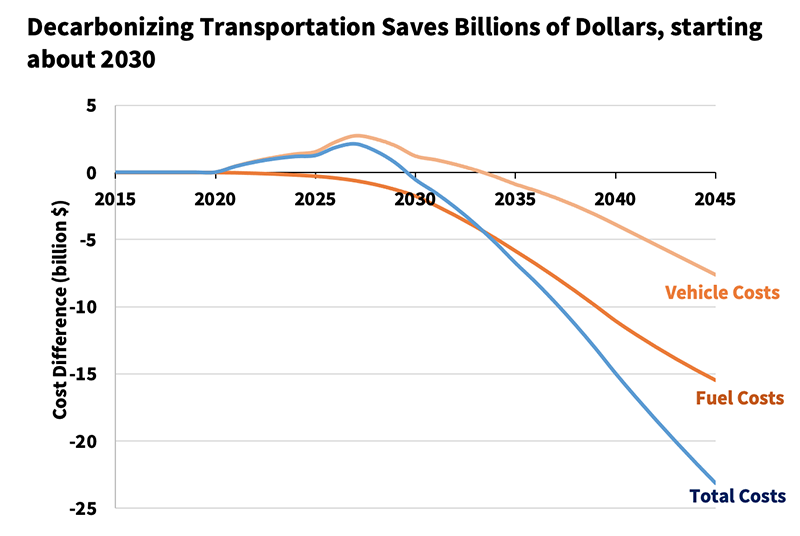
In two major studies of transportation that I helped lead, one for the U.S. and the other for California, we came to the startling conclusion that the U.S. and California can achieve carbon neutrality in road transportation by 2045 at little or no net cost to society and with major savings to consumers and the economy. A significant near-term investment would be needed for new vehicle and fuel technologies and energy infrastructure, but these investments will yield a strong payback. For California, we estimated the additional cost to the economy through 2030 would be about $10-20 billion – which is about 1-2% of what consumers and businesses would already be spending on vehicles and fuels.

Starting around 2030, though, consumers and the economy would start saving money. The payback comes mainly from the lower cost of electricity, on a per-mile basis, compared to gasoline and diesel fuel, as well as less maintenance for EVs, and the shrinking purchase cost of EVs. Due to these savings, the total cost of owning and operating EVs will soon reach parity with gasoline cars and diesel trucks; for some models and usage patterns this could happen in the next five years.  Our scenarios also include adoption of fuel cell vehicles, especially for heavy trucking, and this technology transition takes somewhat longer to pay back.

Battery improvements are key.  Battery costs are dropping dramatically, rivalling the solar energy revolution. Since 2010, the cost of batteries has dropped roughly 85%, and are expected to continue dropping into the foreseeable future. As scale economies increase and R&D costs spread across more vehicles, the cost of manufacturing EVs is likely to trend downward for decades.

Decarbonizing Transportation Saves Billions of Dollars, starting about 2030 copy

The graph above represents the surprisingly large cost savings for California’s economy. Our studies find that the cost of some new EVs and fuel cell vehicles will be higher than the cost of comparable conventional cars and trucks for the next 10-15 years, but the gap will continue to shrink. By around 2030, the cost premium of EVs will be offset by lower fuel and maintenance costs, resulting in EVs beginning to save money for consumers and the economy. The costs shown in the graph include all cars and trucks, as well as the cost of charging infrastructure and hydrogen stations. Most of these EVs will likely rely on batteries, but we assume an increasing share will use fuel cells to convert hydrogen to electricity, especially in larger trucks. For the scenario, we assumed that by 2040 nearly all vehicles sold would be powered by electricity or hydrogen – which is not as aggressive than what General Motors, Governor Newsom and many others are positing.

By around 2030, the cost premium of EVs will be offset by lower fuel and maintenance costs, resulting in EVs beginning to save money for consumers and the economy.

We also find that savings increase over time, in the case of California, reaching about $23 billion per year in 2045, for a cumulative net savings of $177 billion from 2031 to 2045. For the U.S. as a whole, adjusting for market size, the net cost savings could be about $1.5 trillion. These savings are still greater if one considers the benefits of cleaner air, heathier people, and reduced climate disruption. For California, the annual health savings for this decarbonization scenario were estimated at about $30 billion in 2045. 

There is a long way to go, however, to achieve these benefits. In 2019 and 2020, only 2% of national passenger vehicle sales were electric, and even in EV-friendly California, the market share was only 8%. Ramping up to 100% EV sales will require a massive effort. Regulatory targets need to be strengthened, more incentives are needed for buyers, chargers must become convenient for all, and people need the opportunity to acclimate to a new driving experience. In parallel, the electricity grid must become nearly zero carbon.

Strong EV purchase incentives will be needed for two decades or more. These incentives need not, however, come from taxpayers; via innovative policies, they could come from fossil fuel companies and buyers who persist in buying gasoline and diesel vehicles. For example, in California today, electric utilities accrue credits for selling electricity to EVs under the Low Carbon Fuel Standard program. These credits are aggregated statewide and converted into a rebate of $1500 to EV buyers. These rebates are in essence subsidized by oil companies, who buy credits from those electric utilities. Another mechanism, utilized in several European countries and included in a bill in the California legislature is “feebates.” In this case, fees are assessed on buyers of “gas guzzlers”, and those funds are used to provide rebates to buyers of EVs (and possibly to other energy efficient vehicles).

Achieving carbon neutrality will not be simple or easy, and it will be disruptive. But the narrative needs to change. Decarbonizing transportation, relying on battery and fuel cell electric vehicles will be a boon to the economy.


About the Author

Dr. Daniel Sperling

Dr. Daniel Sperling is Distinguished Blue Planet Prize Professor of Civil Engineering and Environmental Science and Policy, and founding Director of the Institute of Transportation Studies at the University of California, Davis (ITS-Davis). He holds the transportation seat on the California Air Resources Board and served as Chair of the Transportation Research Board (TRB) of the National Academies in 2015-16.

Here are Some Tips for Playing Blackjack with the Highest Chances of Winning.

Blackjack is a very popular casino game that can be enjoyed both in a physical casino and on the internet. If you enjoy playing at online casinos, you’ll find that the majority of websites like mbitcasino blackjack and other mobile applications provide a selection of games to choose from.

If you play blackjack, your chances of winning are dependent on the cards you are dealt. However, the good news is that there are some strategies you can employ to increase your chances of succeeding. Remember to keep these suggestions in mind the next time you play.

Ignore any winning or losing streak you may be experiencing.

If you have been winning the last few hands, it is possible that your emotions will take over and you will believe that you are about to win because you are on a lucky streak, which is not the case.

However, you should avoid increasing your bets simply because you believe you will win soon because you have already won several times. The cards are unaware of this and do not care about it. No matter how lucky or unlucky you have been in the last few sessions, you must continue to follow the blackjack strategy.

Understand the fundamentals of blackjack strategy.

Blackjack can appear to be a guessing game at times, but this is not always the case. Researchers have been studying the game of blackjack for decades and have discovered the most effective method of ensuring that you can play every hand dealt to you. Find the basic game strategy, and it will allow the player to reduce the house edge to less than one percent by using the proper strategy. Don’t ever play blackjack again without first becoming familiar with proper strategy.

Avoid Paying Blackjack Insurance.

If the dealer has an ace, it is tempting to place an insurance bet in case a blackjack is dealt on the following card, but most of the time it is unprofitable. Even if you have a blackjack, you should refuse the dealer’s offer for the same amount of money if you win the insurance bet. The odds of winning the insurance bet are 2:1, but the chances of winning the insurance bet are even worse.

Forget about your “friends” for a moment.

When playing blackjack at a table with other players or online, it is critical that you concentrate solely on your cards and ignore the decisions made by the other players during the course of the game. Because the strategy of others does not affect your long-term chances of winning, you should not base your decisions on theirs. Blackjack is not a team sport! Regardless of how the other players play their hands, you should adhere to a basic game strategy when playing a poker game.

Make use of the strategy cards.

Laminated plastic blackjack strategy cards are simple to buy and are legal in almost every casino. If you are serious about winning, get a strategy card to use while playing blackjack. This will ensure that you make the best decision possible on each and every card dealt to you. It will prevent you from making a bad decision.


It is important to note that casinos do not allow players to place strategy cards on the blackjack tables, that’s why it is better to play blackjack online for newbies who do not remember rules.

However, you can simply hold them in your hand while playing. The use of a strategy card is required if one intends to play high-stakes blackjack online. Using the proper game strategy when playing high-stakes blackjack is the easiest way to increase your chances of winning. Try out different blackjack games available at high-stakes casinos and put your newfound strategic abilities to the test to see how much money you can make.

Main Steps to Make Money Online

By William Benetton

The world is still touched and go when it comes to the global lockdown. Some places are opening up, whereas others are heavily restricted. However, everybody needs to survive by keeping their income flowing. We will tell you some great tips on how to make money from the comfort of your own home.

Making money online is a possibility nowadays, even though the notion still gets looked upon with some apprehension. That is due to the many scams that go around, promising people to become rich overnight. We are here to tell you that there are actually legitimate ways to make a buck online. After all, you will surely have heard of digital nomads who work from tropical islands or people who hit the big time with their e-commerce business. It sounds great because it is. However, it requires effort and dedication. If you are ready to invest a chunk of your time, we will guide you on how to make money without a job.

Regardless of what you may have heard, working online does not necessarily have to be boring. Nowadays, gamers earn cash by streaming on Twitch, playing tournaments, and other engaging ways. Having fun to earn money is a livelihood for many out there. Why shouldn’t it be you? You could give it a try with deposit £5 get bonus slots, or start your own Twitch channel. However, we are aware not everyone wants to be a gamer. If you are looking for more traditional methods to earn a living on the web, we’ve got you covered. Here are some awesome ways to make money online, from home.

Making Money Online

How to Legally Make Money Online – The Best Methods

Write an E-Book

Did you ever have an inkling to start writing a book? Nowadays, the entry hurdle is almost non-existent. In the older times, one used to need a publisher, get deals, and whatnot. That entailed a lot of hassle. In the era of e-books, everything is a lot simpler. Kindle even has a special guide on how to do it. Alternatively, you could make money by simply licensing a book to be published online. That works if you find a book that is in print, make a deal with the author, and then do the work to get it uploaded. Depending on the deal, you could negotiate to pay the author a lump sum and 7-16% in royalties. To make money from something that already has a successful background is easy, and the odds will be in your favor.

Sell Pictures

Ever wondered how to make money without working for someone? If you love to take pictures, perhaps it is time to make that your hustle. Stock photography websites are a fantastic method to cash in on your hobby. The awesome thing about these websites is once you upload your pictures, these can be sold countless times. Everything is as simple as finalizing your work and then waiting it out. The more pics you upload, the better your chances will be. To get started, be sure to check out Getty Images, Shutterstock, and Photoshelter.

Start Drop-shipping

When it comes to drop-shipping, it doesn’t matter what you sell to make money. As long as it is trending and gets attention, you’re good. Basically, you don’t have to be invested in the product emotionally whatsoever. Drop-shipping is an ingenious method that makes you the middleman between fetching orders and forwarding them to suppliers. The suppliers do the job of sending out the products. Why is it ingenious? You don’t have to invest in having an inventory at all. The only thing you have to do is set up a website and market your products. Shopify is an excellent choice for setting up your shop. The first two weeks are free, so you can get into the trenches without risking much. You might also need shopify SEO to increase your online reach. 

Narrate Audiobooks

As so many people have smartphones nowadays, audiobooks are becoming an incredibly popular way to keep entertained on the go. It is a convenient and fun way to take in data. Naturally, this creates quite the demand for freelance narrators across the world. You could give narrating a shot, and this site will give you some advice on how to give it a shot. It is a super practical way of how to make money when you can’t work in a regular job, due to restrictions or other reasons.

Write a Blog

Everybody is passionate about something, and your passion can inspire others via blogging. If you have expertise on anything, chances are good that there is an online audience for it. Be it travel, shopping, make-up, gaming, or whatever else, you can write about your beloved subject and get paid. The more people you can bring into your website, the more you will earn. Surely, that also depends on your sponsors and advertising deals. However, successful blogs are known to make big bucks. If you are looking for something to make money online fast, this may not be it. However, as a long-term investment, it could turn out incredible. Here you will find some great tips on how you can start in the best possible way.

Stream Yourself Gaming

If you are into games, then you will love Twitch. Over the past few years, the streaming platform has exploded in popularity. Who would have known back-seat gaming would become so big? It is great news for people who love to play video games and enjoy entertaining on the side. To start streaming, one does not need to be even remotely professional. The only thing that matters is whether you are interesting, fun, or have something entertaining about you. In fact, streamers who draw, make music, and simply hang out in bathtubs can gather huge audiences. The money comes in from ads, via donations, and subscriptions. However, becoming a Twitch streamer and building a fanbase requires time. One can’t hope to be an overnight success in this type of job. Still, if you are diligent with it, streaming might become your main job!

Conclusion

All in all, you should remember there are lots of people who make money through online jobs. There is no reason why you can’t do it too. You will have to invest some time and effort in establishing a working framework for yourself, but you will be glad you did once things are up and running. Do you work from home? Have you got tips on how to make money during quarantine? We would love to read your thoughts in the comments below!

About the Author

William Benetton is a famous writer, professional photographer and web-designer. Last few months he has been creating interesting, informative blogs and websites. If you want to contact William, please check his Facebook. He can’t imagine his life without sport, travel and morning coffee.

Personal Injury Lawyer Dothan Talks About The Financial Impact of Car Accidents

Luckily, you survived a car crash. Now, you need to face reality and what happens next. Many questions come to your mind, and part of that is, “How much would this accident cost me?” 

Sadly, even if both you and the other party involved in the car accident have insurance, you still need to shell out cash and pay a deductible. There are certain expenses that might not be covered in your insurance policy. An experienced Personal Injury Lawyer Dothan will be able to explain the uncovered expenses.

It’s common for accident victims to underestimate the total cost of a crash. As a result, you make unwise financial decisions such as accepting a low settlement from the insurance company. Most importantly, you might choose not to file a personal injury claim against the liable driver. An experienced personal injury attorney will help you estimate the most accurate cost.

The Facts

Way back 2014, the National Highway Traffic Safety Administration reported that a car accident happens every minute of the day. From a highway pile up to a parking lot fender bender, someone is having a motor vehicle accident every minute. This is partially the reason why a personal injury lawyer is needed.

According to the U.S. Census, there have been over 10 million motor vehicle accidents every year since 2009. That’s an estimated 27,000+ accidents per day that cost Americans $871 Billion a year in: time loss from work, property damage, medical bills, and other expenses.

Debt from an accident is a major reason why a personal injury lawyer is needed. A personal injury lawyer is there to help you get back on your financial feet after suffering emotional, physical, or physiological injuries.

The Cost of Damage

Insurance Premiums – Expect a hike in your car insurance premiums.

In some states, auto insurance companies can increase a policyholder’s premiums after an accident no matter who was at fault. 

In a recent study, we find out what the average increase in insurance premiums was after filing a claim. Their results showed that the average was 41% just for making one claim! If you are at fault for causing the accident you may also lose your good driver discount.

You need your car or truck to get around town so it has to be repaired as soon as possible. In typical car accidents the insurance of the driver who caused the accident should be the one to cover the bill for vehicle repairs. But, if the driver does not have enough comprehensive or collision coverage then you may be stuck having to pay for expensive parts and labor out of your own pocket.

Knowing what your insurance policy covers in dollar amounts is very important information to ask your insurance representative. That said, you can certainly expect an uptick in your premiums if you are liable for the collision. The increase in the premium depends on:

  • Your Insurance provider
  • The cost of your claim
  • The facts surrounding the accident

Therefore, this increase could be quite substantial and cost you thousands of dollars in the long run. If this happens, Compare quotes from auto insurance companies before your policy renews. Some insurers offer competitive rates to drivers with one crash on their record.

Most importantly, you get a discount simply for switching to a new provider.

Renting a Car

Repair shops may have cars and trucks ahead of your vehicle so you need to rent a car until it is finished. Insurance companies offer rental reimbursement coverage, or the insurance of the driver at fault covers the cost of a rental car. However, this may not cover the full amount of time that your vehicle is in the shop and may have to pay out of pocket for extra days. Insurance may also have dollar limits on what they are willing to pay for a rental car that may not fit your needs. For example, they pay for a mid-size vehicle but you need a van to carry the whole family. You will then have to pay the difference in price for the rental. That is not including the additional coverage that rental companies will offer you.

Medical Bills

Getting hurt or sick can be expensive. After a car accident, especially a dramatic one, a person may not have time to double check their insurance policy to see what medical treatments are covered while they’re rushed to the emergency room. It’s only afterwards that they see the huge bill for their unforeseen accident. Even minor injuries can result in unexpected medical expenses.

Even if the insurance company covers your healthcare expenses, lost wages, and vehicle damage, there are other costs that might arise after a crash. Alternative transportation, child care, home and vehicle modifications to accommodate any disabilities, and other expenses can add up quickly. Some insurance providers may not cover these losses. You can obtain the necessary funds by filing a Personal Injury Claim against the party who was liable for the crash.

A personal injury lawyer can be useful in all the above situations. An experienced lawyer can fight with your insurance company, or the insurance of the driver at fault, to potentially get them to pay up and cover medical costs.

Totaled

The most common mistakes a car accident victim makes is accepting a low settlement before they know the full extent of their damages. Besides the medical bills and vehicle repairs, lost income should also be considered. It is also important to consider future damages such as lost earning capacity and ongoing medical care. Overlooking these losses will take a huge bite out of your savings and possibly force you to file bankruptcy.

What happens if the car you took out an auto loan to buy is now totaled? An insurance company will typically pay out the cash value of the car or truck. However, if it’s not enough to cover the auto loan you’ll be stuck paying for a car you don’t own anymore. A lender doesn’t care what happened to the car, they just want the money you borrowed to pay for it.

There is such a thing as Gap Insurance, which is a specific type of coverage designed to cover the difference between what your auto insurer pays after an accident and what you still owe on it.

Hiring a Personal Injury Lawyer Dothan

Therefore the smartest step you take after a serious collision is to consult an attorney. Fortunately, most personal injury law firms offer free initial consultations. An experienced Personal Injury Attorney/lawyer will help you:

  • Identify all potential avenues for pursuing compensation
  • Calculate your damages
  • Help you negotiate with the insurance company for the highest possible settlement.

The most important thing is hiring an attorney. This will send a message to the insurer that you expect to be treated fairly and that you are ready to take the case to trial if they refuse to cooperate.

Dual Citizenship is your Plan B

Embrace the chance and open your door to a world of international options, flexibility, mobility and a life of greater freedom by exploring dual citizenship or residency through investment programmes at Bluemina. We are sure you have heard of a plan B, but have you considered a second passport and citizenship as that plan? Well, now is the time to grasp this opportunity of becoming a dual citizen.

A person with dual citizenship is a holder of two nationalities at the same time, and being a dual citizen carries a lot of benefits. Arab expats residing in the GCC, for example, have been everyday contributors to Bluemina’s success, guaranteeing their future and the future of their families. They believe that pursuing plan B with Bluemina is crucial, simple and definitely well worth the investment.

Remember, this lifetime passport today will be passed on to your future children and grandchildren tomorrow, which makes your citizenship by investment application a valuable asset that shapes your life.

In today’s globalized world, businessmen and investors are increasingly recognizing the benefits of dual citizenship. The demand for this sort of plan B has grown and is still growing tremendously, due to the current modern-world circumstances we are living in. Bluemina’s study of the third quarter of 2021, comparing Arab expats with dual citizenship vs. Arab expats holding one nationality, has shown that the former has outperformed the latter by 74 per cent in various ways: they have excelled in the expansion of their businesses, in building a strong business base, and in having greater international connections and plans in different jurisdictions. Forty-eight per cent of them have founded offshore companies in Europe and the UK. The changeability of life and of circumstances are a signal to all individuals and investors who are looking to ensure their future and also to enjoy enormous benefits that will last for generations.

dual citizenship

Acknowledging the fast-paced, modern and unpredictable world we live in and foreseeing scenarios that can alter the immediate circumstances make us all eager to consider dual citizenship as the ultimate plan B. But why? Think of the economic and political instability that faces the Arab world, reconsider your options for establishing better security for your family, and think about how best to adapt to this era of mobility, as well as establishing an international profile.

The good news is that Bluemina, a trendsetting firm in the arena of citizenship by investment and residency by investment, has established strong relations with governments throughout the globe to offer you, through their nine global offices and virtual office experience, several second-passport programmes, and to assist you in choosing the solution that best suits you and your settings. Remember, this lifetime passport today will be passed on to your future children and grandchildren tomorrow, which makes your citizenship by investment application a valuable asset that shapes your life.

9 countries

Why be limited in your potential and opportunities? Why restrict yourself? Become a dual citizen and be able to diversify your assets successfully, expand internationally by opening offshore companies and bank accounts. Moving wealth and assets offshore is a great way to protect yourself financially. It is really essential for each one of us to be curious in exploring the unseen world of options that is today at our fingertips.

Combining the interest of governments in attracting investors with the benefits and advantages that this programme offers renders citizenship by investment programmes an attractive option. Owning a second passport such as that of Saint Kitts & Nevis, established in 1984, is one of the most valuable insurance policies that you can take out today. Taking the path of obtaining a legitimate, life-time second passport paves your way for access to world-class education and health services, an attractive tax environment, as well as international business opportunities. And all this without having to renounce your current nationality and without fulfilling any physical residency or language requirement.

Passport

Bluemina is here to guide and help you become a holder of a Commonwealth or European passport within a short period of time. Saint Kitts & Nevis remains the most attractive and budget-friendly option of all, especially for families who are looking for better living standards and safe investments. Having dual citizenship by investment can help you expand your legal rights and allows freer world travel. Once your passport application is approved, your passports will be sent to you in the comfort of your own home.

With dual citizenship, a new journey will unfold, bringing renewed chances for business expansion, many tax advantages and privileges, successfully opening companies and bank accounts worldwide, and diversifying your assets.

Bluemina Citizenship & Residency have been helping individuals get their second passports for many years. They provide support at all stages of the process, from initial consultation, risk assessment, making an investment choice and preparation of documents to representing your interests before the Saint Kitts & Nevis authorities, as well as collecting and sending you the passports. Who knows what the future has in store? All you have to do is connect with Bluemina, be one among their 100-per-cent success rate, be in control of your future and see value in this insurance plan. With dual citizenship, a new journey will unfold, bringing renewed chances for business expansion, many tax advantages and privileges, successfully opening companies and bank accounts worldwide, and diversifying your assets, as well as other benefits for you and your family.

family

Authorized and licensed by the Government

Bluemina Citizenship & Residency is a government approved and licensed firm in the field of second citizenship & permanent residency by investment. Over the years, the firm established strong relationships with governments around the world allowing it to extend smooth, legal, and reliable services to its clientele.

Contact us:

  • UAE +971 52 455 7922 / +971 52 477 8001
  • Jordan +962 79 62 666 62
  • Palestine +972 599 78 54 23
  • Erbil +964 751 001 1666 / +964 751 001 1555
  • Sulaymaniyah +964 773 392 6565
  • Egypt +20 100 779 1133
  • Qatar +974 5584 2559 / +974 6611 9049

For further information, kindly visit us on: www.bluemina.com

What Are the Benefits of Playing Poker?

It’s always important to look at how we spend our time and see what benefit we’re getting from our actions. In some cases, we’ll get nothing at all, or the effects will be negative. But sometimes we find that our actions have positive implications we hadn’t considered before. They’ve found, for instance, that playing video games can bring a host of unintended benefits. And the same can be said of poker. If you’re playing regularly, then you might just be acquiring some of the advantages that we outline below.

It Develops Patience

Patience is a virtue. Alas, there aren’t too many opportunities to develop a patient mindset in this fast-paced world of ours. But poker is different. Perhaps because it’s a “classic game” from back when the pace of life was slower, the strategy game teaches players the art of taking their time. Play poker online and you might just find that you’re patient in other areas of your life too, and that can bring a whole host of positive impacts. Indeed, research suggests that cultivating a more patent mindset can lead to increased happiness.

Social Skills

You can play poker against a computer, but more often than not, you’ll be playing against other people. And while there will be times when you’re sitting silently studying your cards, there will also be plenty of opportunities to interact with other players. In much the same way as video games, playing poker helps to improve a person’s social skills. Poker draws people from all walks of life and backgrounds, too, which helps to turbocharge a person’s social capabilities.

Critical Thinking

Some games bring physical benefits. Poker brings mental benefits. When you’re playing, your brain is switched on, continually trying to figure out the next move. In the process, you’ll be improving your critical thinking skills. A player’s poker success depends on how well they can assess the quality of their hand. Away from the table, you can use these skills in any number of ways. A big chunk of life depends on your ability to make the right decision — and that’s just what poker teaches you. You’ll also be pushing your mathematical skills in the right direction. And the best part? You might just be getting smarter without even realizing it as you’ll be too busy having fun.

Players

You Win Some, You Lose Some

No one goes through life just racking up victory after victory. At some point or another, everyone hits a rough patch and gets a couple of losses under their belt. Playing poker can help to teach you that the good times will come back around. Even on a player’s most successful night, they still lose a lot of hands. Through playing poker, you’ll learn that failure is a bruise, not a tattoo. Plus, there’s always a chance to turn things around — and that principle can apply to life as much as it applies to poker.

Emotion Control

There are moments in life when an unfiltered expression of emotion is entirely justified. But there are many more moments when it’s best to keep things under check. In this fast-paced world of ours, it’s easy for stress and anger levels to rise uncontrollably. And if they boil over then negative consequences could follow. Nobody wants to be a slave to their emotions, even the positive ones. Poker helps teach people how to rein in their emotions. You can’t get carried away every time you get a good hand, after all!

So, the next time you’re playing poker, remember that it’s more than just a way to pass the time. You’ll actually be giving yourself a whole host of benefits!

What Does Speech Writing Look Like in the Civil Service?

Well, we live in a world where most civil workers, politicians, corporate leaders, and other public figures are obliged to give speeches. Thus, they prepare their speeches by using speech writing. 

What is speech writing? 

Speech writing is the skill of using words to communicate a message to the public. The process of preparing a speech is comparable with the process of writing an article. You must know the aim of your speech, the needed length or time limit, and conduct an audience analysis. It can be difficult to come up with a good speech because you must hold the audience’s attention. However, writing for a spoken word is a unique discipline that demands congressional speechwriters’ work to be prepared largely, but not completely, to be heard rather than read. Speeches should be written in straightforward, direct, and generally short words so that audiences can understand them. 

As I mentioned before, when someone prepares a speech, they must keep in mind the target audience. The best speeches are those that are written to attract and maintain the reader’s attention from beginning to end. As a result, there must be something in the speech that needs to be able to hold the reader’s attention. And the writing comes in three parts: an intro, body, and closing; 

  1. At the beginning, the speech must have a great hook that not only empowers, but also inspires the audience to pay attention to every word. While it is necessary to establish the background for the speech and state of major argument, which encapsulates the larger theme of the speech. 
  2. In the body of the speech, the information needs to be divided in each paragraph and the timeline events should be in chronological sequence. The supporting parts should be presented straightforwardly in this section. 
  3. It’s critical to finish a speech on a positive note and give the audience some thoughts. It’s good to rewrite the speech’s main ideas and leave something for listeners to consider. To assist the audience to remember the major themes, the speech must provide a call to action with a compelling closing sentence. And there are top paper writing services that can help anyone with different types of writing. 

Speechwriting In Civil Service 

However, when it comes to using speech writing in civil services, a government speechwriter essentially assists ministers in communicating their ideas, and goals. It usually begins with a meeting with the minister to have a general idea of the primary arguments they wish to make. Then, there’s having in-depth discussions with policy teams, which can include numerous:

  • press officers
  • teams
  • political special advisers
  • analysts

Throughout this process, the speechwriter serves as a channel for the ideas to flow. The speechwriter catches every idea, every perspective, and every thought that comes their way. Those concepts are then simplified, sorted, rearranged, developed, and braided into a story that makes logic and comes all together thanks to the speechwriter. To do so, a speechwriter must be able to communicate difficult material clearly and convincingly. They must weave it all together into a unified whole that goes up and down to maintain interest and generate contrasts – quiet and loud parts, long flowing paragraphs and quick percussive points, poetic and political language.

Along with producing speeches, speechwriters are increasingly diversifying and becoming generalist copywriters. They’re producing and editing important departmental outputs like green papers and annual reports, which require great, captivating content. And when it comes to more ideas, styles, and ways, many departments are using the best proofreading services to help with great speech writing. 

A speechwriter can often find themselves in the middle of a chaotic room, especially as the speech’s deadline approaches. Surrounded by convincing and frequently quiet senior officers, voicing their opinions for a line to be included can be one of the loneliest, most difficult, and skillful aspects of being a speechwriter. In other words, the speechwriter must coordinate all the ideas from the officers and ensure that the speech has a consistent pulse and goal. And it’s always vital to remember who’s giving the speech: it’s the boss’s speech, which means it’s the person who has to stand up and deliver it, whose lips the words will come out of, and whose name and reputation are on the line. 

So, the speechwriter must choose the words carefully. While the Member is associated with one political group and represents a specific area of the district or state, the writer must always remember that he or she represents all of the people and offers proper attention and respect to the genuine ideas and aspirations of all people. Also, speechwriters must adjust their wording to the intended audience’s level of political affiliation, or lack thereof. Another responsibility for the speechwriter is to determine the context for which the Member is speaking and adjust the remarks properly. In today’s society, public people are expected to offer speeches at practically every secular public celebration and many religious ceremonies. The speechwriter must make sure that both the occasion and the speech are in harmony. Veterans’ Day and Memorial Day, for example, are two of the most serious national holidays of the year. The speechwriter should concentrate on themes of remembrance, devotion, and sacrifice for these two events.

However, the speech should be poetic with rhythm, metaphor, and other idioms. And most importantly, to avoid boredom. In that case, many of the world’s finest speakers employ repetition with variation as a basic speech writing method to stress crucial points without being boring. For example, Martin Luther King’s “I have a dream” speech, used that term to start a series of his dreams for a brighter future, was a stunning example of this strategy.

Martin Luther King

The Bottom Line

To summarize, a good delivery can take a mediocre speech and make it sound fantastic. Poorly delivered can, and often does, derail even the best-prepared speeches. While delivering is not the speechwriter’s primary responsibility, it must be kept in mind throughout the writing process. 

Good speech writing has a good sense of style, grammar accuracy, understanding of English syntax, expanded vocabulary, etc. The best speechwriters will enrich their work with a richer background through consistent daily reading. However, to prepare a speech that is both helpful and genuine, it is necessary to understand how a Member speaks. A speech should be examined three times: once by the writer, once by the potential speaker, and once by a neutral third party. 

In the civil services, the type of response evoked by an effective political speech is determined not by rhetorical norms, but by the type of reaction it evokes. As a result, the speaker is constantly concerned with measuring that reaction and evoking “positive comments.” This entails establishing a network of contacts who can report on the audience’s thoughts and reactions. And once again, the speech must be clear, engaging, and real. Excellent speech writing necessitates the speaker assuming a role: he or she must be able to incorporate confidence and feel the personality of a listener to some level.

The purpose of the speech, at the end of the day, is for the speaker to be able to make a positive change in the community that the Master serves.

The Winner’s Guide To Online Casino Gambling

Gambling clubs attract gamblers throughout their existence. Mobile gambling rooms are becoming more popular every day. This is related to the rapid progression of information technologies, which in some sense make life easier. For example, one of the gains of online services is that you economize your time. Also, the choice of gambling events in mobile format is much more than in land-based casinos. So once more, it is significant to pick out a reliable gambling club that operates legally and does not deceive people. It is also very important to know a clear algorithm of actions when gambling in online casinos. More likely as online casinos to https://www.gamblemastery.com/ introduce a multiplicity of bonuses and pleasant gifts for new users. And in them, it is possible to get real money or other materials. In front of regular land-based casinos, online casino websites have their advantages. Instant payments, games in a calm environment without pressure from people, round-the-clock technical support, the ability to gamble from a mobile device without leaving the house, and many more.

Gambling

How to pick out a trustworthy online casino

Web-based gambling become more and more popular. But despite the massive number of Internet gambling clubs, gamblers have to pick out their danger. Unfortunately, there are principal requisite by which it is possible to check that a certain web-based casino is reputable:

  • Having permission to organize and demeanor games of chance are the most major status of casino trustworthiness. It is needed to perform by the law. If the casino works judicially, its clients can be convinced that the website includes initial and official satisfaction from supporters. Over and above by the law, casinos are obliged to watch over the information privacy of their users.
  • Online gambling clubs support service must be qualified and operational. Since web-based casinos are largely open twenty-four hours a day, an expert consultation can be needed at every time of the day. Ideally, thus, 24/7 is also available.
  • Over and above, for the comfort of clients, casinos may provide various purposes to connect them — mobile chat on the website and in different couriers, electronic mail, and phone calls.
  • Trustworthy casinos allow their gamblers to replenish the down payment account and pull out the winnings with the help of a big number of payment ways. Else issues are how generally money should be removed, how speedily it turns up in the account, and how the identity of the addressee passes.
  • To be sure, it is attractive to have numerous games in online gambling homes. Furthermore, their property is no less vital than magnitude. The website should have slots and also gambling drawn up solely by permitted supporters.

So even if the networked casino is in demand and may flaunt a big amount of gamblers — this is an excellent indication. Now there are a lot of networked pages on the worldwide net where gamers tell about their knowledge of playing web-based casinos. It is important to attend to them in choosing websites. At the same time, when you are reviewing the surveys, it deserves to be serious and monitor how the real gamblers of the event sites have written them.

Consecutive actions for winning online casino

At first order, you should find an honest gambling site, as described above. Next you should:

  • To begin with, you should understand the slot algorithm. You may study the slot, namely, pick out the event, in the networked casino free of charge without registration. Casinos use the maximum amount of demo games and are guided by the coefficient of performance. When playing a demo, it is necessary not just to watch beautiful combinations fall out, but to test to draw out dependence, to understand: how often wins fall, which combinations are most generally dropped out, under which conditions the combinations most commonly fall out.
  • When dependency becomes clear — make a small first bet. Play on small cash and watch the slot behave, the algorithm of work should not change. Pay close attention to how you invested and what you received. If the machine gives well, you should start playing at full power. There’s always luck in the game, but you have to depend on accurate calculation and common sense.
  • Which stands for that the seats won a lot — take the cash, do not hope for more. If you are unlucky, take a break, gamble on your emotions, and don’t lose over the limit.
  • There is lust as a strategy called “10 rotations”. If, after the first 10 rotations, you are in the positive — you can go to the next machine. As the professionals of this method assure, the machine “gives” either at the very beginning or will leave you without a win at all.
  • Allocate a sure number to the game and do not exceed it.
  • Calculate the period of the gameplay for yourself and also stay within its limits.
  • Finish the game after achieving a winning cycle.
  • Do not ignore the minimum bets at the beginning or end of the gameplay.
  • Avoid the biggest bets despite the successful cycle.
  • The algorithms of some automatons may be repeated in certain cases. This is why experts advise reducing bets after losing and raising them after winning.
  • Slots with thematic bonus casino games, symbols with extended functionality, risk double round, and other additional options are the easiest to beat.

And if the initial balance of the account as a result of a series of successful spins has been increased threefold, it is necessary to stop, or turn your attention to another slot of the machine. Otherwise, with a 90% chance of losing all your money.

Gambling

Conclusion

Although online casinos are becoming popular every minute, it is still important to take a responsible approach to the selection of sites. Use only trusted slot machines and poker games in legitimate land casinos and quality software in legal online casinos.

EDITOR'S PICK OF THE WEEK

CFO's new mandate. CFO explaining the presentation

The Performance and Transformation Orchestrator: The CFO’s New Mandate in the Age of AI

By Terence Tse CFOs are evolving into AI-driven transformation orchestrators, balancing finance, technology, and strategy while upskilling teams, managing risks, and driving measurable business value. A key insight from this year’s AI for CFOs event, organized...

WISE DECISION MAKER GUIDE

POWER INFLUENCERS

Emerging Trends

The Future of Global Trade