Home Blog Page 497

What Field Management Software to Choose?

Field management software is a great way to manage your business and keep track of your employees. 

Field management software is one of the essential tools a company needs to run its field business. There is multiple field management software on the market, but not all of them will do the trick. So, let’s see what you should expect from a field management system. For instance, you should consider using Einpix field management software. It’s an excellent choice for small and large-sized businesses. Einpix can help you run your business more smoothly by improving communication, organization, and efficiency.

Furthermore, this article will provide some tips on choosing the right program for your business. 

Why Decide on a Field Management Software

You may be wondering why you should choose field management software.

There are several reasons, but the key ones are that field management software will save you time and money.   

Let’s take a deeper look at each of those reasons. First, field management software may save you time up to 40% and more of your manual work. How? Automating many of the tasks that you currently do manually and providing you the dashboard with all the necessary information you need to manage work and your staff in real-time. You won’t have to spend time tracking data or records or filing and retrieving paper files or calling back and forwarding to your field staff.

Second, field management software will save you money. How? By minimizing paperwork, reducing paper saving and administration costs up to 100% as well as saving logistic-related costs and by helping you become more efficient in your work. You’ll be able to get more done in less time resulting in fewer employees handling the same amount of work so in other words Einpix will help you to generate more revenue by giving you the possibility to complete more orders in shorter terms. In short, field management software is an investment that will pay for itself in 3-6 months after starting it use. 

Key Features of a Field Management Software

Today’s field management software is feature-rich, user-friendly, and affordable. Here are some key features to look for when choosing field management software: 

Ease of use: The software should be easy to use, with a user-friendly interface.

Affordability: The software should be affordable, with a price that fits your budget.

Feature-rich: The software should be packed with features like customers workspace, dispatcher workspace, job scheduling, real-time positioning of field staff on map, materials, and customers databases management, the possibility to prepare digital work delivery document and get clients signatures on-site, and more.

Customer support: The software should come with excellent customer support to answer and solve your questions or problems.
Integration: The software should have integration options with third-party systems.

With so many field management software options on the market, it can take time to choose the right one. But if you keep these key features in mind, it will be easy to find the perfect software for your business.

What to Consider Before Buying a Field Management System

When choosing a field management system, you need to consider a few factors. Here are some key considerations: 

  1. What type of data do you need to track?
  2. What are your business needs?
  3. Make sure all necessary features are available.
  4. What is your budget?
  5. How many users will need access to the system?
  6. How easy and how fast your staff can adapt to using the system?
  7. What support is offered by the vendor?

Pros and Cons of the Field Management Software

There are several pros and cons of using field management software. On the plus side, it can help streamline operations and improve communication between field workers and office staff. It can also help to track work progress and ensure that deadlines are met. 

On the downside, organizations using field management software should adopt standard processes of the solution, since custom development is not possible or has limited possibilities. An overwise system will help to review existing processes and optimize them according to common market practices.

Selecting the Right One for You

After knowing what to look for in field management software, it’s time to choose the right one. Every business has unique requirements and budget constraints, so finding the perfect match is key. 

The most excellent way to select the right one is to create a list of essential features for your business and compare them against the features offered by different vendors. It is also essential to pay attention to customer reviews, as they provide valuable insights into the product and its performance in real-world scenarios.

Most vendors also offer free trials or/and live demo presentations to use and see the product before purchasing. Take advantage of this opportunity, as it will help you ensure that the product fits your business needs and that it is easily manageable before you buy it. 

As a business grows and evolves, reliable field management software becomes vital. For a company to operate and grow, there must be a system in place that is fully functional, up-to-date, and efficient. One of the main benefits of field management software is the ability to complete a wide range of activities from anywhere at any time.

Inflation: The Impact on the Construction Sector

How rising prices are affecting construction companies

Many developed economies are experiencing rapid inflation. Construction companies are feeling the effects as well — essential materials and skilled labor are becoming more expensive, and supply chain pressures and shortages make it harder to secure construction materials.

The prices of lumber, steel, and many other construction materials have skyrocketed. A disruption in the supply chain caused by the COVID-19 pandemic was at the root of the problem, but new challenges continue to put pressure on prices, including geopolitical risks. Construction materials are also in high demand as government-led infrastructure projects increase.

Skyrocketing costs impinge on slim margins

“Due to competitive salaries elsewhere, the available construction workforce is shrinking as skilled workers retire or face local restrictions related to travel and move into other professions,” says Benjamin Stenson, CEO & Founder, Norsemen Home Remodeling.

There has been an increase of 66% in steel prices, major spikes in softwood lumber prices, and a price increase more than 500% in oriented strand board (OSB) – a wood product essential to the structure of a building. Contractors and developers are being adversely affected by the dramatic price increases. In many cases, they are forced to absorb the increased costs, cutting into their already slim margins and affecting their liquidity as a result.

There is also a lack of clarity about future costs, which is complicating the bidding process and affecting contractors’ competitiveness. In the UK, for example, bid prices will increase by 8.5% this year, up from 6% in 2021.

In addition to increasing fuel costs, many pieces of essential heavy equipment – such as bulldozers, cranes, and backhoes – run on fuel, which is further straining contractors’ budgets.

In recent years, the construction industry has faced labor shortages and increasing wage costs. Due to the broader economic pressures, this challenge is unlikely to be resolved anytime soon. Labor pricing can have an acute impact on a project’s profitability since wages can account for over 50% of the overall construction costs. This is according to Alex Federo, Co-owner of FTW Concrete Contractors.

What does this mean for the construction industry?

Since most contractors operate on slim margins, increasing costs are impacting the bidding process. Since recent price hikes have been steep, estimating future costs has become extremely difficult, as they could be several times the original estimates by the time the work begins and more by the end. It is often unclear when a project will be completed due to delays in getting materials to site due to supply chain challenges.

Most countries place contractors at risk of inflation. In these situations, incorrectly pricing costs into a bid can have catastrophic effects on their budgets, especially for fixed-price contractors. Due to this, increasing numbers of construction companies have encountered financial difficulties and even gone out of business as a result.

A growing concern about the bankability of projects is making it difficult for contractors and developers to secure funding for their projects. Funders will generally be more cautious when offering funding to projects that have high value, complexity, or long build times in a high inflationary environment. Thanks to Aaron, Owner of A&M Construction.

5 actions to address inflation

A number of actions can be taken by contractors and developers to reduce the impact of inflation on their operations. These include:

  • Consider how inflation – whether it is for materials or labor – could impact the final cost of the project. “Be realistic about the increased costs and adjust your bidding process accordingly. In order to account for future price uncertainty and increased costs, contractors may also adjust their bidding methods by adding contingencies to pricing models”, says Smithe Sodine, Founder of Smithy Home Couture.
  • Engage stakeholders in risk sharing. Discuss potential challenges with project owners and consider sharing the risk of inflation under contract conditions, whether through alliance-style agreements or alternative contract terms for new and existing contracts. In some countries with long periods of high inflation, such as Latin America, this already happens.
  • As construction materials become more expensive and harder to obtain, completion timelines may have to be changed both for ongoing projects and for new bids as a result.
  • Assess your supply chain’s resilience when faced with both price increases and delays by reassessing your material procurement procedures. Balance the benefits of stockpiling essential materials against storage and security costs to determine whether it is beneficial to budget and schedule.
  • The final cost of a project will be influenced by higher material and labor costs. You may need to adjust the sum insured in order to minimize the risk of being underinsured due to higher rebuild costs. The valuation process can be assisted by your construction insurance broker or advisor, and your policy limits can be determined. Thanks to Sean Philips, Content Director of Ship Tracking.

5 Things the Best Financial Smartphone Apps Can Do for You

These days, they have an app for just about everything. In fact, they have many apps for everything, so you must choose one that you feel beats all the others with its convenience, usability, and features. You only have so much smartphone space, and you can’t have thousands of apps on there.

You likely want a finance app to conduct business quickly and easily. You can always use a laptop or desktop and go to a full website, but apps present websites in a streamlined fashion. That likely appeals when you’re on the go and doing some banking.

You can often download one simple app to manage your entire financial life. To help you choose which one you want, you must look at its features and what it can accomplish. Let’s discuss some tasks you’ll need your finance app to do. If your current one can’t do these things, you might need to switch to a new one.

You Can Deposit Checks with It

You likely want a phone app that you can use to deposit checks. Not very many people pay with personal checks anymore. You might have a landlord who wants you to send them one in the mail every month. For the most part, though, you’ll use a credit card or cash when you buy something.

You might get a physical check from your job if you do not want to set up direct deposit to your bank account. Some workers don’t want to give their employer their account information because they worry their employer doesn’t have sufficient online safeguards.

If you get a physical check from your employer, or perhaps from your parents or another relative on your birthday, you want an app that lets you take a picture and deposit that check from any location. You don’t want to visit your financial institution in person anymore to deposit those checks.

You can take a picture of the check’s front and back with your phone’s camera after signing it. You should instantly get an email from the app saying your financial institution got the check images. Once you have that, you’ll know your money will show up in the account soon, assuming the app did not detect any irregularities.

You Can Move Money from One Account to Another

The financial app you want must move money from one account to another. You may have several accounts. Maybe you have a couple of IRAs, a checking account, a savings account, and some CDs. You likely want several accounts for making everyday payments, saving for the future, etc.

You must sometimes move money around if you want to buy something, and you don’t have the cash in one account to cover it. In the past, moving money around required an in-person bank or credit union visit.

You can move your money around on most financial smartphone apps now. When you do, it should leave one account and show up in another instantly. Then, you can buy something knowing you have the cash in the right account.  

You Can Open Up a New Account

The right financial smartphone app can also open up a new account for you if you need one. Again, you once had to visit a bank or some other financial institution to do that.

The technology has progressed so that you can apply to a bank or credit union and get them to approve your application with your smartphone. You can do it during the morning, afternoon, or even in the middle of the night if you want.

Normal banking hours no longer apply. You can ignore convention and open an account anywhere and at any time. The bank or credit union will assess your eligibility and let you open an account and fund it with no issues. That’s convenient and simple.

You Can Pay Bills with It

You should also have a financial smartphone app that you can use to pay bills. Some financial apps belong to single banks, credit unions, or other financial entities. You can also get ones that connect to many different creditors so you can pay them their money when it’s due.

You can use one of these apps to pay your rent, credit card bills, student loan payments, etc. You want an app that features superior connectivity. The right one can take money from your bank accounts and send it quickly and effortlessly to any entity you owe.

Within a few moments, you can pay all your monthly bills using your smartphone and a single app. If you currently have multiple apps for this one purpose, consider consolidating your bill-paying into just one application.

You Can Check Your Account Balances

You should also have a financial app on your phone that you can use to check your current account balances. You can look on the app and see how much cash you have in your checking account, savings accounts, IRAs, 401K, CDs, etc.

You probably have diversified funds. You shouldn’t keep all your cash in one account or with just one financial entity. The right app has the interconnectivity to show you all your account balances at the same time, both the short-term investments and long-term ones. It can show you how much interest you made in the past month, three months, or in the past year.

By checking your account balances daily, you make sure you don’t see any deductions or monetary losses you can’t explain. Sometimes, a fraudster will probe your bank account by deducting a small amount to see if you notice. If you don’t, they’ll then try taking larger amounts.

With the right app, you can notice any changes and flag them by contacting your financial institution. Your app can help you with that too.

In short, the right smartphone finance app can help you with any financial task you want to accomplish online. If yours doesn’t do the things we mentioned, consider switching.

6 Tips For Avoiding Frauds In Business

Fraudulent activities are, unfortunately, a common occurrence in the business world, and they can cause serious financial losses and damage reputations. Business owners and managers must proactively protect their companies from fraudulent behavior. 

This article provides six tips for avoiding fraud in business, including awareness of the various types of fraud, instilling an ethical culture, creating financial checks and balances, utilizing proper security measures, understanding the laws related to fraud prevention, and conducting employee background checks. Businesses can protect themselves from unexpected losses due to fraudulent activities by taking these steps. 

1. Develop Awareness of Types of Fraud

Developing awareness of the different types of fraud is a key tip for avoiding fraud in business. Fraud can come in many forms and often takes advantage of unsuspecting individuals, putting businesses in jeopardy. Knowing how fraud can occur and how to detect it will help protect your business from fraudulent activities. 

For instance, identity theft is one type of fraud, which occurs when someone uses another person’s personal information, such as their name, address, or Social Security number, without permission. Identity theft can be used to access accounts and funds, making it a serious concern for businesses. Additionally, scammers commonly use phishing scams to steal personal information from those who respond to fake emails. Businesses should ensure that their employees and customers are aware of such scams to help prevent them from falling prey. 

Other common types of fraud include credit card abuse, money laundering, and pyramid schemes. Credit card companies work hard to protect their customers from fraudulent transactions, but businesses must be mindful of any suspicious activity when processing payments. Money laundering is a type of financial crime used to conceal the origin of illegally obtained funds, while pyramid schemes rely on recruiting others in order to make money. Knowing how to identify these activities can help businesses avoid becoming victims. 

2. Understand Laws Related to Fraud Prevention

Businesses need to be aware of the various laws related to fraud prevention. For example, the Fair Credit Reporting Act requires companies to obtain an individual’s permission before obtaining a consumer report about them. Furthermore, many states have their own laws regarding certain types of fraud, such as identity theft or embezzlement. By understanding these laws, businesses can ensure that they comply with them and protect themselves from any potential legal ramifications of fraudulent activities. 

Unfortunately, most entrepreneurs lack the knowledge of laws related to fraud prevention and how they can protect their investments in the face of potential risks. To protect your investments and business assets, attorneys from Erez Law recommend consulting lawyers specializing in investment fraud to help resolve fraud disputes or prevent them from happening in the first place. Laws such as the Sarbanes-Oxley Act (SOX) and other regulations that apply to publicly traded companies protect investors against corporate fraud by requiring additional accounting transparency and disclosure standards. Companies must also maintain records accurately and ensure that internal reporting systems are up-to-date and compliant. 

3. Instill an Ethical Culture

While preventing fraud is important for a business’s bottom line, having an ethical culture within the organization is also essential. This means that all employees should have access to policies and procedures that clearly explain what constitutes ethical conduct. In addition, management should ensure that all staff understand the importance of adhering to those standards when conducting business operations on behalf of the company. Furthermore, all employees should be aware of the steps to be taken if fraudulent behavior is reported or discovered. 

4. Creating Financial Checks and Balances

Another critical step for avoiding fraud in business is to create financial checks and balances within the organization. This means that there should be a system of internal controls in place to catch any suspicious activities quickly. The system should involve multiple levels of review and approval and frequent audits from inside and outside the company. By having these types of safeguards in place, businesses can avoid potential losses due to fraudulent activities. 

5. Utilize Proper Security Measures

In addition to creating financial checks and balances, it’s also essential for businesses to have proper security measures in place. This includes installing physical barriers, such as locked doors and windows, and implementing technology solutions, such as firewalls or antivirus software. Additionally, businesses should consider creating policies to limit access to sensitive information. Businesses can protect themselves from fraudsters by ensuring that only authorized personnel can access confidential data or make financial transactions. 

6. Conduct Employee Background Checks

Finally, it’s important for companies to conduct background checks on all employees. This includes screening prospective hires before they are brought on board and performing annual reviews of existing staff to ensure their records remain up-to-date. Additionally, businesses should also obtain verifiable references when hiring new employees in order to confirm their identity and credentials. By conducting thorough background checks, companies can reduce their risk of fraud by ensuring that only trustworthy individuals are working at the company. 

Background check

By following these tips, businesses can reduce their risk of becoming a victim of fraud. With the right measures in place, companies can protect themselves from insider trading, embezzlement, and identity theft—all of which can lead to serious financial losses. Furthermore, having an ethical culture and understanding relevant laws related to fraud prevention are also essential for avoiding fraudulent activities within the organization.

How to Become A Franchisee

Choosing a franchise can be difficult even if you are opting for a really big franchise like the amazon franchise.  There are so many factors to consider, and such a wide range of businesses in each franchise category that choosing one feels almost impossible. To make the selection process easier and more informed, consulting with a franchise expert is highly recommended, as they have extensive knowledge of the industry and can provide valuable insights based on your goals and financial capabilities. They can help you navigate the multitude of franchise opportunities available, understand the financial commitments required, and evaluate the potential for success in your chosen market. By seeking professional guidance, you will be better equipped to make a decision that aligns with your aspirations and ultimately leads to a successful franchise venture. That’s why we have put together this step-by-step guide for becoming a franchisee.

1. Define your goals and research the industry of your choice

The first step in franchise hunting is to define your goals and the industry you want to enter. Is it a specific product or service, or are you looking for a particular business model? The type of franchise you choose will depend on what you want from the experience and how it will help achieve your goals. If you’re interested in becoming a personal trainer or nutritionist, do some research online or through books and magazines to understand various aspects of the business. You may also want to consider researching the competition. If there are other fitness studios nearby, find out who offers the best deals on equipment or classes, as well as how much they charge for membership fees and annual fees.

2. Identify some franchise options

Once you’ve identified the industry and goal of your choice, it’s time to identify potential franchises that fit those parameters. Start by checking out franchising companies’ websites to see if they have any franchises that match yours in location, type (i.e., food franchise), and size (i.e., small business). Many franchisors will also take contact information from potential franchisees so they can follow up with them if they’re interested in learning more about the company’s offerings. Start with a list of companies that fit your criteria and keep it handy so you can revisit it periodically. You may want to start by searching online for reviews, news articles or franchise information on various sites. These resources can help you understand what makes each company unique and whether they’re right for you.

3. Contact the franchisors

The next most important step is to make initial contact with a franchise operator or franchisor. The best way to do this is by searching online or by calling their local franchise office. For instance, if you want to get the information for getting the jiomart franchise and you can simply google their contact information. You may also want to visit their website or social media pages to get an idea of what they’re all about and how much they’d expect you to invest in the franchise. You should also find out if they have any other franchises operating in your area and how they compare to yours, as well as what kind of support you can expect from them.

4. Evaluate the franchise documents.

The next thing you need to do is look over their franchise documents to see what sort of training, support and other resources are included in the deal, as well as how much money you’ll have to invest before you can open your doors and sell those burgers or tacos! You will also have to evaluate their documents and other resources like FAQs pages, social media accounts and websites that provide further information on their business model and operations. These documents will help you understand how much experience they have in running their business, what they offer as part of their services and what type of contract stipulations they have.

What is the Peculiarity of Working on Magento?

One of the trendiest e-commerce CMS systems is Magento. This is a system that helps you fully manage your sales and online store. Most modern online stores operate on this platform. But we will talk about this later.

How to start development on Magento?

To tell the truth, Magento is very hard to learn. This is what most developers who have encountered it say. You may have the slightest problem if you make a mistake in the admin panel or mess up your PHP code. Therefore, the best idea would be to hire magento developers. This will help you save a huge amount of time learning this platform as well as fixing bugs.

Why do eCommerce stores choose Magento?

Despite the complexity of development, this platform has many advantages. Therefore, large projects generally choose it. Let’s take a look at the most important advantages that you can get when working with Magento.

Handles a large number of products and extensive product sheets

Magento is designed to work with a huge number of products, clearly describing their features. Each product listing has a detailed description, expiration dates, high-quality photos, and other options that give your users a good understanding of the products.

The platforms are tailored to the size of your company, which means an open and flexible platform so you can grow your store seamlessly.

Multilingual

You can easily change the language and customize the design of the multilingual platform with just one click. You can also create different platforms for stores from different countries.

It is designed to automatically detect the language of a website and use Google Translate when needed. It has an optional language on international platforms to make it easier for you to find the site.

Multiple store option

The coolest thing is that you can manage multiple stores from the same admin panel. This is easier and more convenient to do than on other platforms.

If you have different online businesses or buy from a competitor, Magento is the best solution to manage multiple eCommerce stores in one place and centrally.

Who can get the most out of Magento?

Although Magento can be quite useful for small and medium businesses.

The sheer variety you need to set up on the page and the sheer amount of information it can handle without any hassle make it ideal for a company used to dealing with different product lines.

If you want to find the ideal platform for you, you need to analyze the features and needs of your company. After that, check out all the available options. There are many e-commerce platforms in existence today. You will definitely find something special for yourself. Find out if the chosen platform will cover all your needs and make the final decision. Then you can find an ideal solution for your business specialities.

In order to regularly improve and update your platform, you need to learn a lot. It’s quite expensive. After all, you will need to attend different courses and educational programs. Therefore, to use this platform, it is best to hire ecommerce developers.

There are many other popular platforms in the eCommerce industry (Prestashop, Shopify, BigCommerce and WooCommerce), but Magento is the most popular due to its ability to work with huge and customizable platforms.

Summing up, we can conclude that Magento is a high-tech platform. But it may not work for you. In case you are already using some platform and want to create a separate small store to sell products or you only have a few products to sell and don’t want to use such powerful platforms.

Magento

The Easy Investing Strategy In A Gold IRA: The Ultimate Guide for Beginners

The gold IRA and strategy of gold IRA are frequent topics of discussion. However, it is crucial to determine whether investing in a Gold IRA is beneficial. We are all aware of the best investing habits, but these are general behaviors and traditions. Gold is a proven way to protect against inflation and political turmoil. This post will teach you everything you need to know about the gold-IRA plan and its implementation.

What is a Gold IRA? 

Gold Individual Retirement Accounts (IRAs) are self-directed accounts where you can own physical gold. Physical gold cannot be held in a regular IRA, but you may invest in gold-related assets such as gold mining equities or exchange-traded funds (ETFs). BOLD will provide you with  investment ideas for gold IRAs. Investors with gold IRAs can own physical metals in their portfolios, such as bullion or coins, along with assets linked to valuable metals. A financial adviser or other custodian may help investors open gold IRAs.

While it is called a Gold IRA, this investment includes multiple precious metals, including silver, gold, and platinum. Some gold IRA companies even provide palladium IRAs, cryptocurrency IRAs, and bitcoin. Such valuable metals, like gold, should be tangible. The IRS says that you may buy 1, 1/4, or 1/10-ounce gold pieces or 1-ounce silver coins as well as some precious metals approved by IRS. With the most affordable prices available on the market, BOLD offers a variety of gold bullions for sale. You may also explore various precious metals to get the most incredible deals. 

Why open a gold IRA account? 

Are old IRAs a good idea? A gold IRA can be prudent if you want to control your assets and pick your holdings. For example, consider setting up a gold IRA if you’re making retirement plans to keep gold bullion bars, coins, or other tangible items. Considering that gold often moves against other investments, a gold IRA investing model is a compelling idea. In addition, bond or equity market volatility is unlikely to affect gold.

Pros of Gold IRA

Tax advantages

Standard IRAs and gold IRAs both give a few of the same unique tax statuses: Traditional self-directed IRA investments are tax deductible. Furthermore, Roth withdrawals that meet specific criteria are tax-free. 

Diversification

Diversify your assets with gold rather than stocks or bonds during unpredictable economic situations to safeguard your retirement funds from market swings and inflation. Gold is recognized as a secure investment due to its minimal fluctuation. However, there is a tendency for the price of gold to increase during times of high inflation or shaky market circumstances.

You have broad control over your investment choices

Traditional IRAs allow you to choose the equities you want to buy, yet your investment options are still restricted to the share market. On the other hand, self-directed IRAs provide you the flexibility of investment in the assets of your selection and a variety of feasible storage alternatives. 

They offer robust protection against market risks.

How to open a Gold IRA account – Investment Method 

To open a Gold IRA account, you must first decide which account to invest in.

Gold IRA accounts can be divided into 3 types: 

  • Traditional Gold IRAs
  • Roth Gold IRAs 
  • SEP Gold IRAs

The difference between the options above depends on how you choose to tax your income. You should pay taxes before contributing to a Roth IRA. Traditional IRAs are subjected to tax once you withdraw the funds. Employees of small firms and freelancers are eligible for SEP gold IRAs, just as they are for traditional SEP IRAs. 

Manage your gold IRA with a custodian

Large and mainstream brokerage firms do not provide gold IRAs. You should instead engage with a custodian who has expertise with gold IRAs. A custodian aids you with the documentation and tax filings for your gold transactions in compliance with IRS regulations. 

Gold IRA Storage 

The IRS restricts the personal storage of precious metals in a gold IRA. Users who take personal custody of gold from their self-directed IRAs should be aware that the IRS considers this a withdrawal and is responsible for assessing taxes and penalties for an early withdrawal. In exceptional conditions, the IRS does have the power to terminate your complete account. In compliance with the gold IRA regulations, you should always maintain recognized precious metals with a national depository, a bank, or a third-party trustee. The custodian will direct you to an authorized arrangement and administer the gold transfers as part of creating a gold IRA. 


Strategy of Gold IRAs: How Much Can You Do?

Investments to a gold IRA are capped at $6,000 in 2022 and $6,500 in 2023. You may contribute an extra $1,000 for 2022 and 2023 if you have reached 50 years or older. Such limitations apply to both Roth and traditional IRAs.

How to Buy Precious Metal for a Gold IRA

Investing in physical gold is possible once you have established a self-directed gold account. If the money is still included in a defined retirement plan, you won’t be liable for taxes on the rollover. If the money is still part of a defined retirement plan, you won’t be liable for taxes on the rollover. Additionally, you may contribute funds annually, adhering to the yearly IRA contribution guidelines. You may then employ the cash in the account to acquire precious metals for your gold IRA

Opening a Gold IRA account 

The actual procedure for obtaining your metals may vary depending on the provider you register an account with. Sometimes, your gold IRA provider may provide IRS-approved metals so you can buy coins and bullion there directly. However, dealing with other organizations, you’ll have to acquire your assets from a different precious metal trader, then instruct your custodian to make the purchases on your behalf (with your IRA funds). 

IRA-approved precious metals 

You cannot use an IRA to buy gold, silver, or commemorative coinage. The IRS has developed clear guidelines for which metals are approved and in what circumstances. 

The precious metal purity grades for IRA investments are as follows: 

  • Silver: 0.999 or higher
  • Gold: 0.995 or higher
  • Platinum: 0.9995 or higher
  • Palladium: 0.9995 or higher
  • BOLD offers the finest IRA-approved gold bullion for sale.

Check out this list of IRA-approved gold bullions on BOLD.

When can you withdraw from a Gold IRA account?

You have two options: acquire physical possession of your metals or sell your possessions and be paid cash in exchange. A 10% penalty would apply if distributions from your gold IRA are withdrawn before 59.5, but the decision is yours. You may pull back your precious metals based on the type of account you possess. In the event of an incorrect transaction, the IRS will prohibit it and record it as a withdrawal, resulting in income tax due on the asset’s value. 

When you turn 70 ½, you should begin taking RMDs (Required Minimum Distributions); they cannot begin later than December 31st of that year. The first RMD might also be postponed till April 1st of the subsequent year. You alone are accountable for annually withdrawing the proper RMD. If you don’t, there are significant ramifications. The self-directed IRA calculates the yearly RMD amount. You don’t need to be concerned about RMDs if you own a Roth IRA. 

There are numerous scenarios under which you may withdraw early without incurring a penalty or extra charges: 

  1. The IRA owner becomes disabled. 
  2. The IRA owner has neither the finances nor the insurance to cover their medical expenses when hospitalized.
  3. Following the passing of the IRA owner, the beneficiary can withdraw.
  4. The IRA holder requires cash to pay on insurance since they are unemployed. 
  5. Throughout their lifetime, the IRA owner withdraws the same amount from their equity. 
  6. The IRA holder or an immediate family member needs the funds to cover ‘qualified’ education. Tuition, books, accommodation, board, and other justifiably relevant expenditures, may be covered with cash. 
  7. The IRA member can spend up to $10,000 on their first home.

Closing words

You can invest your retirement funds in gold. It’s one of the few tangible assets whose value has remained steady and is non-volatile. In addition, it is a liquid good that can trade on the market. Gold is a significant and reliable investment that may protect your funds from inflation and other economic turmoil. Incorporating gold in your retirement portfolio with the planned strategy of gold IRAs is prudent.

You can buy 1 Oz Silver Bars, and 1 Gram Gold bars at the lowest price guaranteed by the Most Trusted Bullion Dealer in the US! We have a large selection of silver and gold bars direct from the mint. You enjoy fast shipping. 100% satisfaction guaranteed.

Making a Living in Agriculture: Top Tips for Success

Agriculture is a vital industry that provides food and other resources for the world’s population. With the increasing demand for sustainable and locally grown products, many people are turning to agriculture as a way to make a living. However, starting a career in agriculture can be challenging, and it’s essential to have a plan and to be prepared for the ups and downs of farming. In this article, we will discuss some top tips for people who want to start making a living in agriculture.

Develop a Business Plan

Before starting any business, it’s essential to have a plan in place. A business plan will help you identify your goals, target market, and strategies for achieving success. It should include a detailed financial plan, including projected costs and revenues, as well as a marketing plan to promote your products. A business plan is also essential for securing funding from investors or loan providers.

Research and Choose a Niche

There are many different types of agriculture, from traditional farming to specialty crops and organic farming. It’s essential to research and choose a niche that aligns with your interests and skills. Specialty crops, such as organic fruits and vegetables, can be more profitable than traditional crops, but they also require more knowledge and expertise. Consider your experience, resources, and market demand before choosing a niche.

Learn From Experienced Farmers

One of the best ways to learn about agriculture is to work with or learn from experienced farmers. This can be done through internships, apprenticeships, or participating in farming programs. Experienced farmers can provide valuable insights and practical knowledge about the industry. They can also provide guidance on how to navigate the challenges of farming and how to be successful.

For those looking to enhance their farming operations, checking out Kubota excavator dealers in Colorado is beneficial, as Kubota equipment is known for its reliability and efficiency, helping to streamline various agricultural tasks.

Build Strong Relationships with Customers and Suppliers

Building strong relationships with customers and suppliers is crucial to success in agriculture. This includes developing a good reputation for quality products and reliable service. Building relationships with customers can also help you identify new market opportunities and trends. Building relationships with suppliers can help you access the resources and equipment you need to run your farm efficiently.

Continuously Evaluate and Adapt

Agriculture is a constantly changing industry, and it’s essential to continuously evaluate and adapt to stay successful. This includes monitoring changes in the market, weather, and technology. It’s also important to evaluate your business operations and make changes as needed. This can include updating your business plan, changing your production methods, or diversifying your products.

What Equipment to Buy?

When starting out in agriculture, it’s essential to have the right equipment to ensure that your operations run smoothly and efficiently. The specific equipment you will need will depend on the type of farming you are doing and the scale of your operation. However, some essential equipment to consider includes:

Tractors: Tractors are a must-have for any farming operation. They are used for a variety of tasks such as plowing, planting, and harvesting. A good option for large scale farming operation could be the CLAAS Lexion 8900 series which is a high-performance combine harvester that can handle a wide range of crops.

Plows: Plows are used to prepare the soil for planting. They are available in different sizes and types, and you should choose one that is appropriate for your operation.

Harvesters: Harvesters are used to harvest crops such as wheat, corn, and soybeans. Combine harvesters, like the CLAAS Lexion 8900  and other CLASS series, can do the threshing, cleaning and separating of the grains all in one machine.

Planting equipment: Planting equipment includes seeders and planters. They are used to plant crops and can be adjusted to plant different seed sizes and spacings.

Irrigation equipment: Irrigation equipment is necessary for providing water to crops during dry seasons.

Other useful equipment to consider are: a baler, a spreader, a mower, a cultivator, and a sprayer.

In addition to the equipment mentioned above, it’s also important to invest in quality maintenance and repair tools, such as wrenches, sockets, pliers, and a good set of hand tools.

Keep in mind that when buying equipment, it’s essential to consider the cost, durability, and performance of the equipment, as well as its compatibility with your existing equipment. And if you want to go for a brand that is well known for quality, reliability, and performance, then the CLAAS series of equipment can be a great choice.

What kind of products are in demand?

The products in demand in the agriculture industry can vary depending on the location, season, and consumer preferences. However, some products that are currently in high demand include:

  • Organic produce: Organic products, such as fruits and vegetables, are becoming increasingly popular due to the growing awareness of the health and environmental benefits of organic farming.
  • Locally grown products: There is a growing interest in locally grown products, as consumers are looking for fresher and more sustainable options.
  • Specialty crops: Specialty crops, such as berries, herbs, and nuts, can be more profitable than traditional crops, as they command higher prices.
  • Grass-fed beef and other meats: Consumers are increasingly interested in sustainable and humanely raised meats, such as grass-fed beef, chicken, pork, and lamb.
  • Plant-based products: Plant-based products, such as tofu, tempeh, and seitan, are becoming more popular as more people are looking for vegetarian and vegan options.
  • Dairy products: Dairy products, such as milk, cheese, and yogurt, are in high demand, as they are a staple in many households.
  • Eggs: Eggs are in high demand, as they are a versatile and nutritious food.
  • Grains: Grains, such as wheat, corn, and rice, are in high demand as they are staple food for many people.
  • Seafood: Seafood, such as fish and shellfish, is in high demand as it is a healthy source of protein.

It’s important to note that consumer preferences and demand can change over time, so it’s essential to stay informed and adapt your products accordingly. It’s also important to consider the local market demand and what products are best suited to your area.

Where to sell your goods?

There are many options for selling agricultural products, depending on the scale of your operation and your target market. Some common options include:

  • Farmers’ markets: Selling at a farmers’ market is a great way to connect directly with customers and to showcase your products. Farmers’ markets are typically held on a regular basis, such as weekly or monthly, and offer a wide variety of products.
  • Community-supported agriculture (CSA): A CSA is a program in which customers pay a fee upfront to receive a share of the farm’s harvest throughout the growing season. This is a great way to sell directly to customers and to build a loyal customer base.
  • Online marketplaces: Online marketplaces, such as Etsy and Amazon, allow farmers to sell their products directly to consumers. This can be a great way to reach a wider audience, but it’s important to note that the competition can be fierce and that there may be additional costs, such as shipping and handling.
  • Wholesale: Wholesale is selling your products to retail stores, restaurants, and other businesses in bulk. This can be a good option for farmers who want to sell large quantities of products, but it can be difficult to find buyers and to negotiate prices.
  • Co-operatives: Co-operatives are a group of farmers that come together to pool their resources and to sell their products collectively. This can be a good option for farmers who want to sell their products to larger buyers, such as supermarkets and grocery stores.
  • Local Stores: Local stores such as grocers, supermarkets, and health food stores often carry locally sourced products, so they can be a good option for farmers to sell their goods.

Some of these options may require additional steps such as getting a permit, meeting specific requirements, and having certain certifications. It’s also important to do your research and find the best option for your specific product and target market.

The Best Way to Record Your PC Screen with Audio

How to record screen on Windows 10 with audio? The easiest way to do this task is to record the screen with a free and high-performance screen recorder.

Recording your PC screen is the best way to capture gameplays, save online lectures, download protected videos from streaming platforms, and create videos on your computer. When most people think about screen recording on Windows 10 for the first time, they search for a built-in recorder and quickly open Xbox Game Bar. They open the app only to get disappointed by its performance and limited features. Although the Xbox Game Bar can record screen on your PC, it only gives you a limited recording time, no editing features, and no external audio recorder.

iTop Screen Recorder (The One-stop Solution)

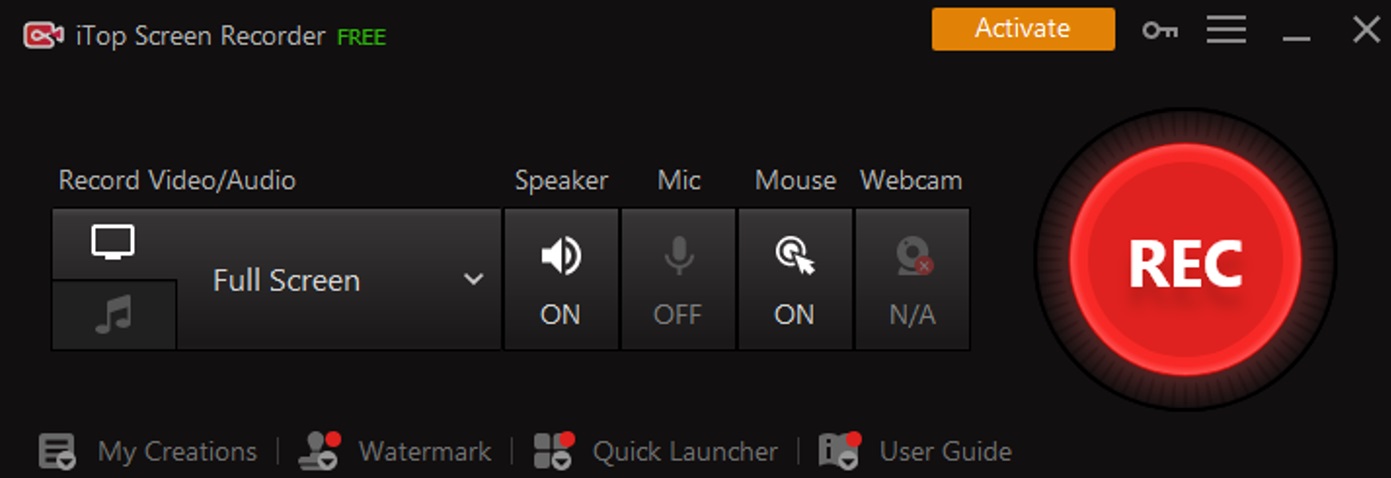
After trying the built-in recorder, everyone thinks about how to record screen with audio using a free third-party tool. This is where the iTop Screen Recorder steps in. It is a free screen recorder with all the features that you wish to find in professional software focused on recording your PC activity with a low CPU usage requirement. The iTop Screen Recorder offers features like webcam screen recording, flexible capture, video editor, special effects, internal and external recording, and free-of-cost services. Here is how to record screen on Windows 10 using the iTop Screen Recorder.

How-to Guide

STEP 1: Visit the official iTop website to download their screen recorder for free. Install the software and open the activity you want to record. Now, open the iTop Screen Recorder.Now, open the iTop Screen Recorder

STEP 2: First, set your record screen preferences. You can choose to have internal, external, or both audios simultaneously in your recording. You can also set the capture size, add watermarks, or set the video quality. After you finish the settings, click on the red “REC” button to begin.After you finish the settings, click on the red “REC” button to begin.

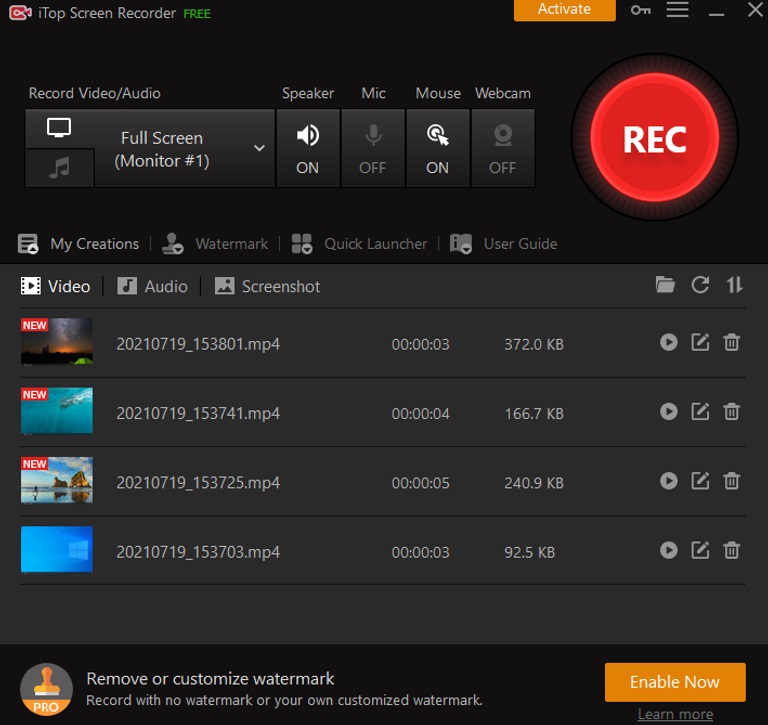
STEP 3: After you record the desired activity with audio, go to “My Creations” to preview it. Here you can edit your video without using another video editor. You can cut, trim, merge, and compress your recording. You can also add special effects and do lots of cool stuff. After you are done with editing, you can export it in any format you want.you can export it in any format you want.

Use the OBS Studio

You can also use OBS studio to record your PC screen if you are familiar with the product, and you can work your way around a professional-grade screen recorder. OBS Studio is a free screen recorder with all features that you might need, but it is not easy to use. If you are not tech-savvy, using OBS studio for the first time can be hard for you. Here is how to record screen with audio using OBS studio.

STEP 1: Download OBS studio on your computer and open whatever you want to record. Select “Display Capture” from the “Source” window and choose a preview from the “Properties” window.

STEP 2: Now, set the audio capture settings by opening the “Source” window and selecting “Audio Input Capture.” You can customize all the preferences for your recording, so take your time before you start.

STEP 3: Hit the “Start Recording” option on the right when you are ready. You can also find the stop button there to finish your recording. The recorded video will go to your PC’s “Video” folder.

Pain Management and Its Important Role in Healthcare

Physical pain can develop for a variety of reasons, and this pain may be sudden and temporary (acute) or last longer with no foreseeable end to the suffering (chronic). Chronic pain is a major problem for some people, and pain management therapy has offered relief to many sufferers.

When an injury happens, pain normally subsides as the body heals, but the pain may be ongoing if nerve damage occurs or because of other factors that are not always easy to identify. Chronic pain is often more common among people who suffer back or spinal injuries. Some people also experience long-lasting pain after they undergo surgery and some were able to find back pain solutions. Certain medical conditions, such as sciatica, fibromyalgia and arthritis, can additionally contribute to the onset of chronic pain.

To address the issue of chronic pain better, some doctors have chosen to specialize in pain management to try to put an end to the suffering that many people with this problem experience.  

Pain management solutions

Fortunately, advancements in pain management research have led to the development of different treatments that have offered relief to many patients. Pain management specialists may recommend one or more of these treatments depending on each patient’s specific symptoms and overall health status.

Doctors usually recommend conservative treatments, such as over-the-counter medicine, prescription medications or physical therapy, as a first line of defense against pain. Conservative treatments often work especially well at treating acute pain. However, more advanced treatments may be needed if the initial treatments have failed to yield the desirable results.

Ultrasound injections of peripheral joints and other common areas where pain is felt are non-invasive and have been particularly effective at reducing pain and inflammation and improving joint mobility. Dr. Jordan Sudberg and other pain management specialists who offer this treatment are able to use ultrasound technology to guide the needle to painful areas of the body and inject pain medicine to provide targeted therapy with greater precision.

A surgical implant may also relieve chronic pain if other treatments have been ineffective. An infusion pump can be surgically implanted to provide pain medicine directly to areas from where pain is likely originating. Another implant option is a spinal cord stimulator, which works by emitting tiny electrical impulses to interfere with pain signals that are sent to the brain.

Improved quality of life

Pain often limits physical activities and can even make doing certain tasks impossible. With successful pain management treatment, people are often able to walk, play sports, and engage in other forms of exercise with greater mobility and little to no pain. Grocery shopping, home cleaning, and other day-to-day tasks can also be managed better once pain is under control. People who can no longer work or go to school full-time because of lingering pain may finally be able to lead more productive lives once their symptoms are alleviated.

Sleep can also be improved if chronic pain is no longer an issue. Sleep deprivation that results from chronic pain can impair cognitive functioning and cause mood swings. When chronic pain persists, research shows that the pain can actually intensify at night as cortisol levels in the body drop during periods of rest, which can further interfere with sleep. The chances of catching communicable illnesses or developing more serious health problems also increase if pain is getting in the way of sleeping properly. These and other problems that are associated with sleep deprivation can often be resolved with the best pain management methods.

In addition to physical health, pain management has played an important role in mental health. Chronic pain often contributes to the onset of anxiety, depression and other mental health problems, and finding ways to manage the pain can improve a person’s mental health and quality of life even more. People who struggle with drug or alcohol addictions in addition to chronic pain are often more inclined to start abusing harmful substances again as a way to self-medicate, and effective pain management therapy may prevent relapses. 

A better relationship between doctors and patients

Pain management can also help to bridge the gap that sometimes exists between doctors and patients. Sufferers of chronic pain may develop better trust in their healthcare providers if these doctors can find successful ways to treat pain. People who are fearful about undergoing certain medical procedures can feel more at ease if pain management solutions are available to address any lingering pain or discomfort that might arise. When patients have experienced good outcomes with pain management therapy, they may also be more willing to discuss other health issues with their doctors, which may prevent the onset or progression of certain conditions and keep chronic pain from returning.

Pain management treatment has helped many people reclaim their lives, and the right solution could hold the key to a brighter future. Researchers are still working to develop other pain management treatments that may improve patient outcomes even more.

EDITOR'S PICK OF THE WEEK

CFO's new mandate. CFO explaining the presentation

The Performance and Transformation Orchestrator: The CFO’s New Mandate in the Age of AI

By Terence Tse CFOs are evolving into AI-driven transformation orchestrators, balancing finance, technology, and strategy while upskilling teams, managing risks, and driving measurable business value. A key insight from this year’s AI for CFOs event, organized...

WISE DECISION MAKER GUIDE

POWER INFLUENCERS

Emerging Trends

The Future of Global Trade