Home Blog Page 421

Why Is Job Today UK’s Top Recruitment Platform?

The digital age has revolutionized how businesses interact with their audiences and customers. As more and more companies shift towards online recruitment, Job Today has emerged as a trailblazer in the UK’s hiring landscape. 

With its innovative approach to job search and recruitment, Job Today has quickly become one of the most popular platforms in the country. In this article, we will explore what sets the Job Today hiring platform apart from its competitors and how it has achieved such remarkable success relatively quickly.

Job Today’s History

The company was founded in 2015 by Polina Montano, who aimed to revolutionize how people find jobs. In the past five years, Job Today has become one of Europe’s most renowned recruitment platforms and is now active in more than 20 countries. 

Montano wrote her success story through hard work, clever marketing strategies, and an understanding of what employers and job seekers need. Now, how did it become the UK’s #1 hiring app? 

Top 5 Benefits That Took Job Today to the Top

While many factors have contributed to its success, some benefits are particularly noteworthy.

1. Employers Only Need to Pay When Contacting Applicants

Via subscription, payments are charged only when employers reach out to applicants. This makes hiring more cost-effective for businesses, who don’t have to pay upfront for access or risk paying for a candidate they may never even contact.

2. Over 250 Million Applications Processed

Job Today handles over 250 million job applications annually, making it one of the most established and reliable recruitment apps. With such an extensive database, employers have access to a broad range of potential candidates and can quickly filter out those unqualified or not suited to the position they’re looking for. 

3. Location-Based Candidate Search and Other Useful Filters

The platform offers a location-based search to help employers find talent in their area. This ensures that businesses can quickly fill positions with local candidates and save time by not having to look far for qualified job seekers.

Its filters also allow employers to:

  • Select a time frame for your job post
  • Sort by candidates’ experience, availability, and other criteria 
  • Exclude applicants who applied previously
  • Separate applicants from different sources

With these filters, Job Today offers employers comprehensive tools to find the right candidate for their business needs. These features allow businesses to tailor their recruitment strategy to their specific needs and preferences, ensuring they can find the best candidate quickly and efficiently.

4. Showcasing Employer Profiles 

Companies can create and feature their profiles on Job Today, showcasing their company culture and mission. This feature helps employers attract suitable candidates, as job seekers can better understand what the company offers before they apply. 

Meanwhile, this also means that companies achieve more exposure, as job seekers can discover their profiles.

5. Easy-to-Use Platform 

Finally, Job Today has an easy-to-use platform that employers and job seekers can take advantage of without any complications. 

With an efficient and straightforward recruitment process, which benefits both sides in the hiring process, employers will find suitable candidates quickly and with fewer resources. At the same time, job seekers can easily apply to opportunities they’re interested in.

Final Thoughts

To make it to the top, Job Today has ensured its platform is easy to use, offers useful features, and provides an efficient way of connecting employers with job seekers. This makes recruitment easier for both sides and ensures businesses can quickly fill positions with qualified candidates.

As it is generally free, the platform can be an excellent way for small businesses to find talent without overspending.

First time applying? Visit our guide to a job application for more information on how to make your mark. Also, if you’re interested in new tech innovations and startups, check out The World Financial Reviews’ Emerging Trends archives for more insights.


Financial Mistakes That Can Hurt Your Business

Business owners are typically intelligent people who make informed decisions for their businesses based on the information and guidance they receive from other experts. However, mistakes are still possible even with the best processes in place.

Unfortunately, financial mistakes can have significant repercussions, and rectifying them can often be complicated. However, when you’re aware of the most common financial mistakes, some of which are listed below, you might be in a much better position to avoid making them yourself.

Not Consulting Experts for Financial Agreements

Whether you’re reading through a bank document, an insurance policy, or a mortgage application, you’ll likely encounter financial language that doesn’t make sense to you. It’s easy to assume that the terms and conditions of your agreement are standard and don’t require your attention, but that’s not always the case.

Alongside enlisting a commercial lawyer’s services to ensure a financial agreement is in your best interests, hiring a financial translator can also be worthwhile. Financial translators provide financial translation services to ensure you understand all financial concepts relevant to your business. With their assistance, you might pick up mistakes or clauses that could have had significant repercussions for you and your team at a later date.


Not Budgeting

When business owners launch their small business for the first time, they typically use their own money and, sometimes, a business loan. You can easily determine your initial expenses and how much you need to earn to cover your related costs.

This straightforward approach sometimes means that business owners don’t set budgets for their businesses. As their business grows and accumulates more costs, it can become harder to know whether you’re on the right financial track and whether your business is profitable or not.

Budgeting can be crucial for success, so make a business budget your priority early on. Fortunately, even the most inexperienced owners can establish one by taking the following steps:

  1. Analyzing your business costs
  2. Negotiating costs with suppliers
  3. Estimating your revenue
  4. Learning your gross profit margin
  5. Projecting your cash flow – customer and vendor payments
  6. Setting spending goals

If you’re unsure how to find this financial information, enlist the services of an accountant or start exploring financial software.

Making Too Many Large Purchases

New businesses must make many significant purchases to establish themselves and offer their customers exceptional products and services. Vehicles, equipment, premises, and stock, are just a few of the many things you’ll likely need to buy during your early days in business.

However, many business owners make the mistake of buying too much in a short period, putting themselves at risk of financial strife if they can’t cover the repayments or don’t leave enough cash in the business.

While it can be important to make big purchases, consider whether you can spread them out over a longer period to avoid putting too much financial pressure on your business. Think about buying used equipment or leasing vehicles and machinery you need until you’re in a more stable position with better cash flow.

Not Shopping Around for Lending

Many businesses request loans to address funding shortfalls and ensure they can continue providing products and services for their customers. However, as desperate as you are for additional cash, don’t let your desperation cause you to make the wrong borrowing decisions.

Shop around with different lenders to try to secure the best lending rates and pay close attention to the repayment terms. Even a few percentage points difference in loans can sometimes result in businesses paying thousands of dollars more or less, depending on whether they managed to secure the most competitive rates.    

Forgetting About Legal Structures

You might assume that you can jump right into doing business without confirming your business structure, but it’s important for you to focus on this detail early on. Without setting your own business structure, it can be considered a sole proprietorship by default, which can present many problems as you start setting your business up.

Sole proprietorship means your own social security number and name will be used on business documents, and it can also be harder to get business funding. You’re also responsible for any legal issues your business faces, as well as its debts. According to the IRS, businesses can choose from many different structures when establishing their business:

  • Sole proprietorship
  • Partnership
  • Corporation
  • S Corporation
  • Limited liability company (LLC)

Each structure has pros and cons, so consider talking to a business expert to ensure you choose the most appropriate structure for your current and future needs.

Purchasing Too Much Inventory

There have been significant shipping delays worldwide since the COVID-19 pandemic, meaning many businesses have been purchasing goods in bulk to avoid running out of something their customers need in a hurry. Sometimes, business owners also buy goods in bulk when they’re offered a good deal, ensuring a better profit margin.

While there’s typically no harm in purchasing goods in bulk when you know they’ll be sold quickly, there’s always a chance you’ll end up with too much inventory on hand. The costs associated with having this in your business can be huge, so you might need to decide whether you’re able to cover the costs of keeping it or need to come up with a plan to liquidate it.  

Mixing Business Accounts With Personal Accounts

Small businesses can start so small that their owners don’t see the need to separate their finances. You might only have a few customers, and the money you earn from them goes right into replacing the goods you used or covering your personal costs.

However, as your business starts to grow, the lines of business and personal can become blurred. You might also encounter problems like cash flow issues, accounts that don’t balance, and inaccuracies with filing taxes and measuring profits.

Separate your accounts as soon as you start taking on customers and officially launching your business. You can then direct all expenses out of your business account and income into it and pay yourself a wage or drawings into your personal account.

Every business owner wants their business to succeed, but it’s never guaranteed. Fortunately, you might be in a much better position to experience financial success by doing your best to avoid the mistakes above.

What You Need to Know Before Taking Out a Personal Loan

Taking out a personal loan can be an excellent way to finance large purchases or consolidate existing debts. However, before you take out a loan, there are some important things that you need to know. Consider the following:

  • Understand what types of loans are available and which ones would best suit your needs. Different lenders offer different terms and conditions so it’s essential to compare them carefully before making any final decisions.
  • Read reviews on different loan providers. If you’re considering using TriPoint, for example, you should read tripoint lending reviews to see how trustworthy other customers have found their services.
  • Check whether there are any additional fees or charges associated with taking out a personal loan – these could include application fees or early repayment penalties.
  • Make sure that you can afford the monthly payments; otherwise defaulting on your debt could lead to serious financial consequences down the line.

Reviewing Your Finances

Before applying for a personal loan, it’s important to review your finances and ensure you can afford the loan.

Start by calculating your total monthly income and subtracting all of your expenses, such as rent, utilities, groceries and other bills. This will give you an idea of how much money you have left over each month.

Then, consider how much of that money you can realistically put towards a loan payment each month. Make sure that the amount is manageable and won’t leave you struggling to pay other bills or living expenses.

Be sure to research different lenders to find one with competitive rates and terms that fit within your budget.

Assessing Your Credit Score

It’s a good idea to take a look at your credit score before applying for a personal loan.

You can obtain a copy from one of the three major credit bureaus: Experian, Equifax, or TransUnion. Review the report carefully to ensure all the information is accurate and up-to-date. If there are any errors or discrepancies on the report, contact the bureau immediately to have them corrected.

Moreover, look at how much debt you currently have and how much available credit you have left. This will give you an idea of how much more debt you can take on without negatively impacting your score. Finally, consider any recent changes in your financial situation that may affect your ability to pay back the loan.

By assessing these factors before applying for a personal loan, you can ensure that you are in the best position possible to get approved for a loan with favorable terms and conditions.

Building a Solid Financial Future: The 3 Key Steps to Sound Investment Planning

Introduction

Investment planning is crucial to ensure a solid financial future. The decisions you make today can significantly impact your financial well-being in the future. Investing wisely and planning for the long term, such as with Chocolate Finance, is essential to achieve financial security.

Investment planning can initially seem overwhelming, but with the right approach and guidance, anyone can achieve their financial goals. This article will outline three key steps to sound investment planning, providing the necessary tools to make informed decisions about your financial future.

Step 1: Assess Your Financial Goals and Risk Tolerance

Before investing your hard-earned money, assessing your financial goals and risk tolerance is vital. This means understanding what you want to achieve with your investments and how much risk you will take to achieve those goals.

Start by defining your financial goals. Do you want to save for retirement, pay for your children’s education, or buy a house? Whatever your goals are, they will determine how much money you need to save and how long to invest to reach them.

It’s important to be specific about your goals and create a plan to achieve them. This will help you stay focused and motivated as you work towards your financial objectives.

Investing involves risk, and it’s essential to understand your risk tolerance before you start investing. Some investors are comfortable taking on more risk to potentially earn higher returns, while others prefer lower-risk investments offering more stability.

To determine your risk tolerance, consider your investment goals, time horizon, and financial situation. If you have a longer time horizon and are investing for retirement, you may be able to take on more risk. But if you’re saving for a short-term goal, such as buying a house, you may want to focus on lower-risk investments.

Step 2: Diversify Your Portfolio and Avoid Emotional Decisions

Once you clearly understand your financial goals and risk tolerance, the next step is to create a diversified investment portfolio that aligns with those goals and tolerance levels. The diversification approach aims to lessen the risk by investing in a range of different assets, including stocks, bonds, real estate, and commodities. With portfolio diversification, you can avoid putting all your resources into one investment and reduce the impact of any individual investment’s performance on your entire portfolio.

When you diversify your portfolio, it is crucial to evaluate the various asset types you are investing in and their performance under varying economic circumstances. For instance, stocks may perform better during economic growth, while bonds may excel during economic uncertainty. Conversely, real estate could be an attractive long-term investment but may necessitate a substantial upfront investment.

In addition to portfolio diversification, avoiding making emotional investment decisions is essential. Emotional decisions may lead to buying high and selling low, which can be detrimental to your portfolio’s performance. Instead, focus on your long-term investment strategy and avoid reacting to short-term market fluctuations.

One way to avoid emotional investment decisions is to set up automatic contributions to your investment accounts. By automating your contributions, you can avoid the temptation to time the market and instead focus on your long-term investment strategy. 

Regularly checking and adjusting your portfolio’s balance is crucial to maintain diversification and alignment with your financial goals. Since various investments perform differently, your portfolio might become imbalanced over time, resulting in more risk than anticipated. By consistently reviewing and rebalancing your portfolio, you can minimize this risk and guarantee that your investments remain in line with your goals and risk tolerance.

Monitor Your Investments and Maintain Liquidity

Step 3: Monitor Your Investments and Maintain Liquidity

After assessing your financial goals, risk tolerance, and portfolio diversification, the next step is to monitor your investments and maintain liquidity. It is crucial to take these steps to maintain the coherence of your investments with your objectives, and prevent any damages that may jeopardize your financial plan in the long run.

Regularly Monitor Your Investments

One way to keep track of your investments is to review your portfolio at least once a year or when there are significant changes in the market. During these reviews, assess the performance of your investments and compare them to your goals. You can use online tools or work with a financial advisor to track your investments.

Another essential step is to stay informed about economic and market developments that could impact your investments. Keep an eye on news and trends that affect the sectors in which you have invested. By staying informed, you’ll be better equipped to make informed decisions when the time comes.

Maintain Liquidity

Maintaining liquidity means having enough cash on hand to meet your short-term financial obligations, including unexpected expenses or emergencies. Without adequate liquidity, you may be forced to sell your investments at a loss to access cash quickly, which can hurt your long-term financial plan.

To maintain liquidity, consider keeping a portion of your investments in cash or cash equivalents, such as savings accounts, money market funds, or short-term certificates of deposit (CDs). Keeping enough cash to cover three to six months of living expenses is generally recommended.

Rebalance Your Portfolio

Over time, market fluctuations and changes in your financial situation may cause your investments to become unbalanced. For example, if one of your holdings has performed exceptionally well, it may now represent a larger proportion of your portfolio than you intended.

To address this issue, it’s essential to rebalance your portfolio periodically. Rebalancing involves selling investments that have become overrepresented in your portfolio and buying more of those that have become underrepresented. This helps you maintain your desired asset allocation and manage risk exposure.

Rebalancing can be done annually, semi-annually, or when there are significant changes in the market or your financial situation. Consider working with a financial advisor to determine the appropriate frequency and strategy for rebalancing your portfolio.

Building a Solid Financial Future

Conclusion

Building a solid financial future through sound investment planning requires time, effort, and discipline. It’s not a one-time task, but a continuous process that needs to be monitored and adjusted regularly to ensure your investments align with your financial goals and risk tolerance.

Remember to be patient, disciplined, and focused on your objectives, and always seek the advice of a financial professional when making investment decisions. Proper planning and approach can create a stable and prosperous financial future for yourself and your loved ones. So start today and take control of your financial future!

Find Out The Best Way To Sell Your Ferrari

As a Ferrari owner, you understand the value and prestige of owning one of these exceptional cars. But as with any vehicle, there may come a time when you’re considering how to sell your Ferrari.

Perhaps you want to upgrade to a newer model or need the cash for something else. Whatever the reason, you want to get the most out of your sale and do it quickly and easily. Selling your vehicle to a luxury dealer with prior exotic car experience is highly recommended.

This blog post will show you how to “sell my Ferrari” in the most efficient way possible with such a company.

Submit Your Car’s Info Online

The first step to selling your Ferrari is to provide information about your vehicle to a luxury car dealer via an online form. The form will usually ask for your car’s make, mileage, model, and VIN.

In addition, if you have any damage, a list of accessories, options, or pictures of your Ferrari, providing that information can help move things along. Once you submit your form, you’ll be one step closer to getting a cash offer.

Get Your Offer in Minutes

After you’ve submitted your info, you can expect to receive a reply with a cash offer in minutes. They base their offers on current market conditions, as well as the information you provide. The best part about this is that there is no obligation to accept the offer. If you’re unhappy with the request, you can walk away, no questions asked. But if you like the offer, you can quickly proceed with the sale.

Receive Your Cash

Once you’ve accepted an offer, the process moves quickly. The company will handle all the legalities, and as soon as they receive the documents and your vehicle passes the inspection, you’ll receive your money in minutes. This is one of the most convenient ways to sell a Ferrari, as there is no need to wait for the sale to be finalized.

Schedule Vehicle Pickup

If you’re wondering how you will transport your Ferrari to the buyer or how much it will cost, don’t worry. When you sell your Ferrari to a professional car dealer, they will come to you, no matter where you’re located. Furthermore, they will arrange to have your car picked up and removed free of charge. This makes the process a breeze, and you won’t have to worry about any logistical issues.

How To Sell Your Ferrari In Four Simple Steps: Wrap Up

Selling a luxury car like a Ferrari is an exciting experience that doesn’t have to be overwhelming. With the tips in this blog post, it’s a simple and stress-free process. You can sell your Ferrari quickly and easily by submitting your info, receiving a cash offer, getting your cash, and scheduling a vehicle pick-up. Remember to always sell to an experienced luxury car dealer who will give you the most value for your vehicle. We hope you found this information helpful and thanks for reading.

U.S. Banking Crisis in a New Stage of Contagion

By Dr. Dan Steinbock         

In view of the Fed, American banking crisis is over. Yet, US and European banks face the most acute stress since 2008 and 2011, respectively. Global economy is exposed to new headwinds.

Last week, as the Federal Reserve pushed ahead with its 10th rate hike since last March, its chairman Jerome Powell declared that the period of U.S. bank failures had come to an end. That’s why Powell assured Americans, “There were three large banks, really from the very beginning, that were at the heart of the stress that we saw in early March — the severe period of stress. Those have now all been resolved, and all the depositors have been protected.”

In other words, the failures of Silicon Valley Bank, Signature Bank and First Republic Bank mark the end, not the spread of the banking crisis. As Powell added, the most recent failure of First Republic, and its subsequent sale to JPMorgan Chase, “kind of draws a line under that period.”

Obviously, such ideas are plain silly. U.S. banking crisis is not over; it has entered a new stage. And it continues to spread.

As dominoes fallFigure
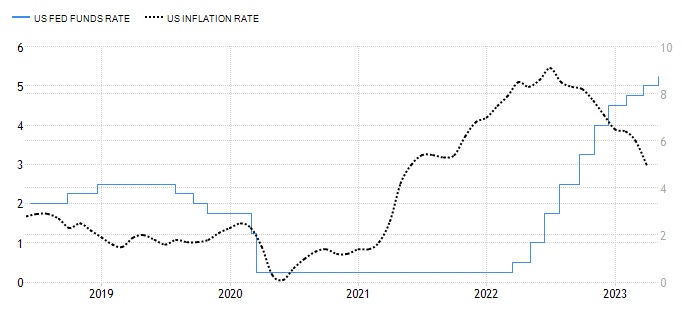
Nearly half (48%) of Americans are concerned about the safety of their bank deposits, according to a Gallup poll last week. Distressingly, the survey results resemble the aftermath of the Lehman Brothers’ collapse.

Recently, Lawrence McDonald, former vice-president at Lehman Brothers, projected that the banking crisis could derail another 50 regional lenders in America if the US fiscal and monetary authorities fail to take steps to resolve structural challenges.

In the U.S. and European banking sector, the rollercoaster ride began in early March, with three weeks of substantial volatility. First, two major US regional banks (Silicon Valley Bank [SVB] and Signature Bank) failed. Then, one of the 30 global systemically important banks, the Switzerland-based Credit Suisse, lost its autonomy after a government-facilitated takeover by UBS.

In the process, market and depositor confidence dissipated in key parts of the sector, with adverse repercussions in investor and consumer confidence.

To prevent the situation from affecting more banks, global industry regulators – including the Federal Reserve, the Bank of Canada, Bank of England, Bank of Japan, European Central Bank, and Swiss National Bank – were compelled to intervene and provide extraordinary liquidity.

How could it all happen – again?

Bank analysts would say that the lead-up period saw many banks invest their reserves in US Treasury securities. So, when the Fed sharply tightened financial conditions last year to rein in surging inflation, companies found it challenging to raise cash, which triggered deposit outflows.

To meet those outflows, SVB sold its long-term Treasuries at great loss. As a capital raise to cover the losses fell apart, a huge run on deposits ensued leading to the largest bank failure since the 2008 financial crisis. What compounded challenges was several banks’ exposure to the bursting cryptocurrency bubble. These events sparked a broad migration of deposits from the banking sector to money market funds while migrating to global systemically important banks, thus forcing some banks to source liquidity from the Fed – the mistakes of which had compounded the challenges in the first place.

After mid-year 2021, when inflation started to climb rapidly, the Fed shunned a timely response. Instead, its chairman downplayed the threat of soaring prices calling them “transitionary.” The stunning complacency proved costly. By mid-2022, US inflation peaked at 9.1%; a four-decade high. And it remains around 5%, more than twice the 2% target. That’s too why the Fed raised the fed funds rate by 25bps to a range of 5%-5.25% in its May meeting.

If the Fed’s monetary pain wasn’t enough, the White House’s foreign policy has contributed to runaway inflation and elevated uncertainty. After years of trade protectionism, the global pandemic and depression, the net effect of the high-cost US/NATO-led proxy war against Russia in Ukraine has been a lethal mix of a global energy crisis and the meltdown of the global food system.

The spread effects

The elusive calm until the demise of First Republic Bank did not reflect the end of the crisis, but its steady progress. As Mohamed El-Erian, chief economic advisor at Allianz, put it last week. “Now we have stage two, where banks that are not particularly badly managed they have issues but they’re not particularly badly managed – are suddenly vulnerable.” In other words, “the cancer within [these banks] is starting to spread.”

As credit conditions are tightening, the risks of further contraction rise with banking contagion. Structural vulnerabilities remain huge. In parallel with the demise of SVB in March, one consequential study indicated that almost 200 more banks may be vulnerable to the type of risk that caused the collapse of SVB. These banks across the US could fail if half of their depositors quickly withdraw their funds. Even insured depositors — those with $250,000 or less in the bank — could have problems getting their cash if these institutions face the kind of run that SVB experienced.

According to the co-author of the study, a banking expert at Stanford University, half of US lenders are underwater: “Let’s not pretend that this is just about Silicon Valley Bank and First Republic,” he said recently. “A lot of the US banking system is potentially insolvent.” Presumably, some 2,315 banks across the US are currently sitting on assets worth less than their liabilities.

Still worse, the lingering banking crisis occurs at a time, when the White House is engaged in the largest war funding in decades and the Congress has wasted half a year failing to agree on a debt limit.  

U.S. default risk as an “economic and financial catastrophe”

A week ago, US Treasury Secretary Janet Yellen warned that the US will run out of cash by June 1 if Congress fails to raise or suspend the debt ceiling. She urged Congress to act “as soon as possible” to address the $31.4 trillion limit. President Biden has called a meeting of congressional leaders on the matter on May 9.

The US hit the statutory limit already last December. Since then, Yellen has repeatedly warned that “failure to raise U.S. debt ceiling would lead to “economic and financial catastrophe.” Unsurprisingly, the Biden administration is under mounting pressure to reconcile the conflicting demands.

Historically, the debt ceiling has been raised, extended or revised 78 times since 1960. If this time is different, it will have significant and adverse global repercussions. If, however, a new debt limit arrangement will be achieved, it can only happen by taking more debt. In this case, Washington will delay its default by buying time, which will make the eventual US debt crisis worse.

The economic fundamentals and safety nets that prevailed in 2008 have been largely exhausted. The West is navigating in perilous waters with leaking lifeboats.

About the Author

danDr. Dan Steinbock is an internationally recognized strategist of the multipolar world and the founder of Difference Group. He has served at the India, China and America Institute (USA), Shanghai Institutes for International Studies (China) and the EU Center (Singapore). For more, see https://www.differencegroup.net

What are the Advantages of Investing?

Investing can be a powerful tool to help you increase your income without having to work extra hours or get a second job. The potential of earning passive income from the comfort of your own home is something that many people are becoming increasingly interested in, as it could significantly boost their overall financial well-being. With careful planning and researching various opportunities, investing can become an effective strategy for generating long-term wealth. There are several platforms available such as https://bitcoinearnpro.com/, which can help you trade Bitcoin in a safe and easy manner.

Advantages of Investing 

Plan for Retirement 

Every working person should take steps to prepare for retirement, and one of the most important things you can do is start an investment plan. Investing in stocks, bonds or mutual funds provides a way to grow savings over time with the potential for long-term gains. You can set up contributions from each pay check that get automatically deposited into your account weekly, biweekly or monthly – whatever works best for you. 

When making decisions on allocation and reinvestment it’s always helpful to speak to a financial advisor first so they can help define goals based on age objectives, risk tolerance and more! Some employers even offer 401K plans where they match employee contributions as well providing additional incentives beyond just investing in yourself and your future.

Long-term Returns

Investing can be a great way to generate wealth and secure financial stability in the long term. With careful consideration of where you allocate your resources, there is ample potential for large returns on investment over time. Investing enables you to take advantage of its compounding power, which means that if left alone with consistent contributions or support by reinvestment, it has even greater chances of growing immensely than simply placing funds in an ordinary savings account. 

If done right, investing has many benefits such as allowing individuals to increase their net worth while simultaneously providing peace of mind knowing they have taken preparations towards planning a better future financially. Preferred stocks are typically fairly stable investments due to their ability to produce steady returns with low risk.

When compared to more volatile assets like cryptocurrency and blockchain companies, investing in these projects is considered a much higher risk as there is a greater potential for losses. These types of ventures can be quite rewarding if done correctly but any investor must do their research before making an investment decision that carries such a high level of risk.

Stay ahead of inflation 

Investing is a great way to protect your money from the impact of inflation. Inflation erodes financial assets, so you must make sure that any investments are providing returns higher than the rate of inflation for them to remain valuable. Doing research on different investment products and understanding how these may appreciate or depreciate will enable you to better evaluate which ones offer greater potential benefits over time. Lastly, diversifying your portfolio also helps as some assets tend to be less affected by inflation than others and can help keep purchasing power consistent throughout periods of unexpected changes in economic conditions such as market downturns or recessions.

Helps in Building Your Wealth 

Compound interest is a powerful force, and the earlier you begin investing your money the more opportunity you have to take advantage of it. By strategically choosing high-return asset classes such as stocks, mutual funds, real estate investment trusts (REITs), bonds, cryptocurrency or other commodities, you can create a strong portfolio that will help build wealth over time. 

Investing in multiple assets helps spread out risk and maximize returns. Additionally, for those who are younger and trying to get started on their financial journey—there are great options like online access brokerage accounts which allow users to start trading with low commissions fees discounted just for youth!

How to Avoid High-Risk Investments in 2023?

Numerous market observers believe that it is almost certain that the Federal Reserve will wreck the economy in 2023 despite its pledge to control inflation. Investors have been uneasy because high-profile banks like Silicon Valley Bank declared bankruptcy, adding to the already unstable financial system already dealing with rising rates. Stocks and bonds are in a tumultuous tangle as people assess the situation and decide how to position themselves as the country’s central bank cracks down on an overheating economy. If you are interested in crypto, it is important to note that the value of Bitcoin can increase in a wallet over time

Top 4 investments that are the riskiest

The most important way how investors can protect their portfolio in 2023 is to avoid risky investments so that they will not be able to get out on the other side of the recession without it:

High-yield bonds

The quality of high-yield bonds, initially referred to by people as junk bonds, can be quite different now.  Investors expect a greater potential for returns on extremely weak companies as the economy enters a recession, which leads to lower bond prices as a result. Although high-yield bonds frequently decline during recessions, several will survive the worst. Therefore, if you plan to buy individual bonds, you need to investigate each company to see whether or not it is a reputable one. High-yield bond funds can be something you want to avoid purchasing if you are investing in ETFs or mutual funds. Diversification may help shield you from a few shocks, but it won’t shield you from high-yield bonds’ potential for widespread markdowns, as some investors worry.

Consumer discretionary stock

Consumer discretionary companies’ earnings may be more erratic than those of consumer staples, Buffett’s longtime preferred sector where purchases are made nearly regardless of the state of the economy. Although some discretionary businesses may report reasonably consistent sales, the majority experience significant swings. For instance, the restaurant, hotel and leisure industries are well-liked when the economy is thriving, but when times are hard and people cut back, sales rapidly decline. Discretionary demand varies more during recessions because discretionary businesses frequently depend far more strongly on the general condition of the economy than do staples. Therefore, Consumer Discretionary can be a smart spot to stay away from these when the economy slows.

Circular industrial companies

Like consumer discretionary companies, cyclical industrial companies can experience both boom and bust cycles. His stocks are a reflection of this dualism, rising quickly during flushes and falling quickly during cooldowns. They will entice people with their siren song of cheap multiples approaching their peak on valuation measures like the price-earnings (P/E) ratio. If you are looking to invest in cyclical industrial companies, the only problem may be that they may seem like the most economical option. When the market turns around on the other side of the negative market, savvy traders can profit handsomely.

Shares of indebted companies

At any time, investing in indebted companies might seem risky, but during a recession, everyone’s life may be in danger. They frequently experience declining sales during a recession, which can make it increasingly harder for them to repay their debts. These companies didn’t take on debt or pay it off during the boom period. Furthermore, the amount of debt they have prevents them from taking the kind of drastic measures they may need. For a good cause, even the most fragile of indebted firms might lead to a company’s demise. Some businesses will fail, but those that survive the crisis can generate great profits once users decide the business isn’t ready to fold.

Conclusion

Individual security investing is a difficult game since it takes quite a bit of time and effort. Even if it, too, may decline during a recession, the fund’s broad portfolio of the top American companies gives it the chance to rise when things start to improve.

What are the Interesting Facts related to Cryptocurrency Exchange?

If you have been trying to know about the characteristics related to cryptocurrencies for a long time, then today through this article I am going to tell you about a sector where cryptos are pitted against each other with different assets. If you know anything about the equity market, then you may be wondering what this fact is because it has some similarities, due to which a major difference that you may feel is that in the equity market What is your ownership? Besides, equity, and the stock market where you can own shares of many different companies, in crypto markets you can own all different types of cryptocurrencies. But before going to the differences, before that, you have to explain what cryptocurrency exchange is after all. If you are wondering about Bitcoin, you can explore options that allow customers to pay in Bitcoin.

About Cryptocurrency Exchange 

A crypto exchange is a company that enables clients to swap cryptocurrencies and other digital money for other assets such as traditional currency or other digital currencies, according to a Google search for the term. Users can purchase and withdraw cryptocurrencies on specialised exchanges like Binance and Coinbase. A few brokerages, like Robinhood and eToro, also permit the use of cryptocurrencies, but there are restrictions. In exchange for virtual currencies or cryptocurrencies, these transactions can be carried out using conventional payment methods like credit and debit cards, wire transfers, etc. To keep track of all crypto exchanges efficiently people use a crypto portfolio manager that saves their time and makes the tracking process more straightforward. 

Decentralization is key

The main reason why blockchain technology has become a very attractive phenomenon is that it is decentralized. Also, there is no central hub as the information is to be stored, nor is there a large data center. Cybercriminals can attack cryptocurrencies and at the same time gain complete control over them. However, there are scattered bits and pieces of data about certain blockchain technology on servers and hard drives all over the world, but not enough to make it unusable if it falls into the wrong hands. Because of its high level of security, blockchain is drawing the attention of big businesses.

The real value is embedded in the blockchain

The infrastructure that underpins crypto like Bitcoin is blockchain technology. The actual value is in the blockchain, after all. Despite the focus on trading digital currencies, cryptocurrencies themselves may prove to be of exceptional value. It is a digital, decentralised ledger that securely and effectively logs payment and transfer transactions. The excitement in big business is largely due to this.

This is a new technique for investors with a history of speculating too quickly

It’s also important to note that investors usually overestimate how quickly established businesses will adopt new technology. In the last two decades, investors have driven up the prices of internet startups, 3D printing businesses, (B2B) business-to-business corporations, and genome-decoding biotech equities, only for these bubbles to explode soon after. With digital currencies, we have faith that blockchain will be more readily adopted by big organisations and a total market cap rise of nearly 2,100% since the year’s beginning. We might be seeing another case of the market popping if those businesses wouldn’t immediately embrace blockchain.

No fundamental support for cryptocurrencies

Unlike your wallet, or other currency i.e. the dollar, other digital currencies are not backed by governments and central banks. Furthermore, they lack any reliable fundamental aspects that may be used to aid in determining a fair valuation. This makes the standard valuation of bitcoins extremely challenging, if not impossible. A publicly traded stock’s earnings history can be used to estimate its value, and the GDP growth of a nation can be used to estimate the value of a currency such as a dollar. However, there’s no direct causal link between digital currencies and any of these factors.

Disclaimer: This article contains sponsored marketing content. It is intended for promotional purposes and should not be considered as an endorsement or recommendation by our website. Readers are encouraged to conduct their own research and exercise their own judgment before making any decisions based on the information provided in this article.

How is the Financial Industry Revolutionized by DeFi?

DeFi (Decentralized Finance) is an emerging phenomenon in the blockchain sector, and its influence on cryptocurrency prices has been remarkable. In 2021, popular digital currencies have seen tremendous growth due to several factors such as the increase of companies adopting crypto payments and miners investing heavily in graphic cards for more profitability. All this activity has had a positive effect on the market with cryptocurrencies experiencing volatile price movements every month. As DeFi continues to make progress, it is clear that its impact will go far beyond fluctuations associated with currency pricing charts. There are many fake or farud cryptos in the market, therefore use only the most trusted platforms such as Bitcoin Prime.

What is DeFi?

DeFi platforms offer users a decentralized finance experience that eliminates the need for brick-and-mortar banks as mediators. This financial revolution is greatly impacting how people manage their money, access loans and credit, purchase assets, and engage in other transactions. With DeFi services such as borrowing or lending crypto tokens from peer-to-peer networks, traders can maximize their profits by capitalizing on digital volatile markets through smart contracts and automated processes running on blockchains like Ethereum. Additionally, with no central authority managing these operations, DeFi presents its users with greater security than traditional banking systems would provide.  

Advantages Provided by DeFi to Financial Industry 

Lending and Depositing Platforms 

Aave is a decentralized finance ( DeFi ) protocol that enables users to take out loans, deposit digital coins, and exchange currencies. With Aave’s platform, users can access up to 30 different types of cryptocurrency assets including stablecoins like the USDC dollar-backed currency. In place of traditional banking rates for interest, this platform offers variable annual percentage yield (APY). This means that user returns from their deposits are higher than conventional banks but with less volatility due to the stability of USD-backed fiat money or cryptocurrencies. The ability to store many types of crypto along with other services supports liquidity options for each user depending on his/her financial needs.

Automated Investing Platforms 

Vesper and Yearn Finance are two of the newest members of a growing list of decentralized finance (DeFi) products that offer investors automation tools. With Vesper, users can build automated investment portfolios with customized profit goals right on the blockchain. Meanwhile, Yearn Finance provides an array of services such as decentralized lending, yield farming, and Ethereum-based insurance to help maximize gains for crypto-oriented investors. The DeFi market is advancing quickly as more people turn to these types of platforms for greater security and increased potential returns.

Exchange Platforms 

In decentralized exchange platforms, users don’t rely on a third-party platform to complete their trades. Instead, they use peer-to-peer protocols that are enabled by smart contracts facilitated and executed through blockchain technology. Smart contracts allow users to easily create orders without involving any middleman or broker; thus everything is done trustlessly between two parties in an automatic manner with a low fee and high security. By utilizing these Decentralized Exchange (DEX) services, traders gain control over the trading process along with greater privacy when it comes to handling funds as no centralized entity oversees them wisely.

Open Money Marketplace 

Open money marketplaces, like Compound.finance, are a great option for decentralized investors and borrowers because the platform eliminates traditional intermediaries and instead uses smart contracts to connect lenders with potential borrowers in real time by tracking down the most appropriate asset for each loan request. The liquidity pool is constantly managed by these smart contracts which ensure that it contains enough funds at all times so any borrower can access capital quickly when needed without middlemen or paperwork slowing them down. This decentralization of lending also allows users to get competitive interest rates from other lenders on their loans as well as earn more from borrowing out their excess capital.

EDITOR'S PICK OF THE WEEK

CFO's new mandate. CFO explaining the presentation

The Performance and Transformation Orchestrator: The CFO’s New Mandate in the Age of AI

By Terence Tse CFOs are evolving into AI-driven transformation orchestrators, balancing finance, technology, and strategy while upskilling teams, managing risks, and driving measurable business value. A key insight from this year’s AI for CFOs event, organized...

WISE DECISION MAKER GUIDE

POWER INFLUENCERS

Emerging Trends

The Future of Global Trade