In this ever-changing financial landscape, it’s crucial to make smart investment decisions for your retirement. While traditional investment options like stocks and bonds have their place, many investors are turning to alternative assets such as gold to secure their future. And one of the best ways to invest in gold for retirement is through a Gold IRA.
However, with so many companies claiming to offer the best Gold IRA services, it can be overwhelming to choose the right one. That’s why we’ve done the legwork for you and compiled a list of top-rated Gold IRA companies based on extensive research and customer reviews. Let’s dive into our reviews!
1. American Hartford Gold
With a mission to educate and empower individuals to take control of their retirement savings, American Hartford Gold is a standout contender in the Gold IRA industry. They have been praised for their dedication to customer satisfaction and commitment to offering competitive pricing and flexible investment options.
American Hartford Gold gives you the ability to invest in various precious metals, including gold, silver, platinum, and palladium, through self-directed IRAs. Their knowledgeable team can help you optimize your portfolio depending on economic conditions and provide ongoing support throughout your investment journey. Read NewsDirect’s American Hartford Gold Group review for more information.
2. Birch Gold Group
When it comes to exceptional customer service and expertise in precious metals investing, Birch Gold Group stands out among its competitors. With an A+ rating from the Better Business Bureau (BBB) and thousands of satisfied customers, they have earned a well-deserved reputation as one of the leading players in the industry.
Birch Gold Group offers a wide range of precious metals options for your retirement portfolio, including gold, silver, platinum, and palladium. Their team of experienced professionals will guide you through every step of the process, from opening your account to choosing the right metals that suit your individual needs.
3. Augusta Precious Metals
If you’re looking for a company with decades of experience in helping individuals protect their wealth through precious metals investments, Augusta Precious Metals is worth considering. They have been helping customers diversify their portfolios since 2012 and have gained an excellent reputation along the way.
Augusta Precious Metals offers both self-directed IRA services as well as physical delivery arrangements for those who prefer holding gold or other precious metals themselves.
Their knowledgeable team aims to provide personalized guidance tailored to your financial goals while ensuring transparency and trust throughout the entire process. Reviews of Augusta Precious Metals are astonishingly favorable, so you won’t be able to find any constructive criticism about the company online.
4. Noble Gold Investments
As its name suggests, Noble Gold Investments prides itself on offering noble service and quality products to its customers. With an emphasis on individualized attention and education, they aim to guide investors towards sustainable financial success by helping them build diverse portfolios that include precious metals like gold.
Noble Gold Investments offers an array of retirement solutions such as traditional IRA rollovers into precious metals IRAs or direct purchases of physical gold or other precious metals. Their team understands that every investor’s needs are unique, which is why they focus on providing personalized advice tailored specifically to your financial goals.
5. Goldco
One of the standout features of Goldco is its commitment to customer satisfaction. The company takes pride in providing personalized attention and guidance throughout the entire investment process. Their team of experts understands that every investor’s needs are different, which is why they take the time to understand your financial objectives and recommend suitable solutions.
Another important aspect that sets Goldco apart is its dedication to transparency. Whether you’re looking to rollover an existing retirement account into a self-directed IRA or start one from scratch, Goldco provides detailed information about fees, storage options, and IRS regulations associated with investing in precious metals IRAs.
You won’t find a single negative Goldco review that mentions bad customer service. In fact, Goldco also boasts an A+ rating from the Better Business Bureau (BBB) and numerous positive customer reviews attesting to their professionalism and outstanding service. Their knowledgeable team will walk you through each step of the process, ensuring that you feel confident about your investment decisions.
Why Consider a Gold IRA?
While traditional investments have their merits, it can be beneficial to diversify your portfolio with alternative assets like physical gold or other precious metals. Here are some reasons why a Gold IRA might be the right choice for you:
Protection against economic uncertainty: Throughout history, gold has served as a safe-haven asset during times of economic turmoil. Including gold in your retirement portfolio can act as a potential hedge when markets become volatile.
Potential for increased returns: As demand for gold increases over time, its value may appreciate significantly. By investing in a Gold IRA, you give yourself the opportunity for growth beyond what traditional investments may offer.
Preservation of purchasing power: Inflation erodes the value of fiat currencies over time. Investing in physical gold can help protect your purchasing power as it generally maintains its value and has often acted as a store of wealth.
How to Find Genuine Gold IRA Company Reviews?
When searching for genuine Gold IRA company reviews, it’s essential to conduct thorough research and take certain steps to ensure the reviews you find are reliable and unbiased. Here are some tips on how to find genuine Gold IRA company reviews:
Multiple sources
Don’t rely solely on a single source for reviews. Explore multiple platforms that provide customer feedback, such as trusted review websites, financial forums, and social media groups dedicated to investment discussions. This will give you a broader range of opinions and help you form a more well-rounded assessment.
Analyze trends
Look for common themes or patterns in the reviews across different sources. If multiple customers consistently mention positive or negative aspects of a particular Gold IRA company, it can indicate a more accurate representation of their overall reputation.
Consider trusted industry publications
Consult reputable financial publications or websites that specialize in retirement planning and investment advice. These independent sources often provide objective insights into various Gold IRA companies based on their experience and expertise in the industry.
BBB ratings
Check the Better Business Bureau (BBB) ratings of the Gold IRA companies you’re considering. The BBB evaluates businesses based on factors like customer complaints, transparency, licensing, and adherence to ethical practices. A higher rating indicates trustworthiness and reliability.
Direct experiences
Reach out to friends, family members, or colleagues who may have firsthand experience with Gold IRA companies. Their personal accounts can offer valuable insights into the quality of service they received and any challenges they faced during their investment journey.
Avoid red flags
Be cautious when encountering excessively positive or excessively negative reviews that seem too one-sided or lack specific details about the customer’s experience with the Gold IRA company. Also, watch out for suspiciously high ratings without accompanying explanations as these could be fake or manipulated.
Seek professional advice
Consult with a trusted financial advisor who specializes in retirement planning and investments involving precious metals like gold IRAs. They can provide you with valuable insights and recommendations based on their expertise and knowledge of the industry.
Remember, genuine reviews are crucial for making informed decisions. By thoroughly researching multiple sources, analyzing common themes, and seeking advice from professionals, you can find reliable Gold IRA company reviews that will guide you towards choosing the right partner for your retirement goals.
Summing Up: Choose Wisely for Your Retirement
When it comes to securing your retirement, it’s crucial to choose a reputable Gold IRA company that aligns with your financial goals and priorities. The top-rated companies mentioned above have been selected based on their outstanding customer reviews, track record, expertise, and commitment to transparency.
Before making any investment decisions, consider conducting thorough research and consulting with a financial advisor to ensure that a Gold IRA is the right option for you. With careful consideration and guidance from trusted professionals in the industry, you can make sound investment choices that pave the way for a secure future.
There are around 340 million instances of work-related accidents per year, and such an occurrence can be extremely stressful, even if the injury is not that significant. In the disconcerting aftermath of a workplace injury, the victim faces a twofold challenge: recovering from the physical and mental trauma and navigating the intricate labyrinth of workers’ compensation claims.
The procedural complexities and legal subtleties can be overwhelming, but this journey can be significantly eased with a knowledgeable lawyer at your side. Such legal counsel is trained not only to steer you through the dense legalese but also to ensure your rights are robustly defended.
Why You Need a Lawyer
Workplace injuries can come in many forms. There are immediate, visible injuries that occur from accidents such as falls or equipment malfunctions. However, not all workplace injuries are as easily discernible. Conditions like occupational stress disorders, repetitive strain injuries, or long-term exposure to harmful substances can be just as debilitating, but their onset is often slow and subtle.
No matter the type of injury, all can have substantial impacts on an individual’s health and livelihood, requiring not just medical intervention but also legal assistance to ensure fair compensation.
The best course of action when seeking legal assistance is to work with local lawyers as they are familiar with the legal system, local laws, and even members of the local judicial system. Their local insight could provide a significant advantage to your case. So, for instance, if you are from Pennsylvania, enlist the services of a Pennsylvania work injury lawyer and ensure that justice is satisfied.
The role of lawyers in such cases is tremendous, and to paint a better picture, let’s explore it below.
The Role of a Lawyer in Work Injury Claims
The legal landscape encompassing work injury claims is a convoluted one, a daunting prospect for the uninitiated. A competent lawyer, however, can traverse this territory with finesse, safeguarding your interests and ensuring your compensation is commensurate with your injuries.
They are experts in decoding the intricacies of workers’ compensation laws and have honed their negotiation skills to battle formidable insurance companies. Their advocacy can be instrumental in tipping the scales in your favor.
How a Lawyer Can Help with Documentation and Procedures
One of the most crucial elements of a successful work injury claim lies in its documentation. From medical reports charting the extent and nature of injuries to accident reports detailing the incident to witness statements corroborating the event—each piece of evidence is a building block that bolsters your case.
Lawyers are skilled in assembling, scrutinizing, and presenting this vital evidence. They also adeptly handle the procedural side, ensuring that your claim is filed within the designated time frame, minimizing the risk of legal impediments later.
How a Lawyer Can Help You Protect Your Rights
In the context of a work injury claim, you, as an injured worker, are accorded certain rights. These include the right to file a claim for your injury, the right to medical attention, and the right to return to work post-recovery.
A lawyer serves as a bulwark, ensuring these rights are not infringed upon. They offer invaluable legal advice, guide you through the claims process, and represent you in any necessary hearings or meetings, ultimately fortifying your position.
Costs of Hiring a Lawyer for a Work Injury Claim
The cost of engaging a lawyer, while it is an additional expense, should be viewed more as an investment—a commitment to securing the best possible outcome for your claim. Lawyers’ fees vary and are often contingent on the compensation obtained, further incentivizing them to maximize your claim.
When weighed against the potential increase in compensation and the peace of mind afforded by having an expert advocate in your corner, the cost of legal representation often proves to be a prudent expenditure.
Bottom Line
Navigating the daunting landscape of a work injury claim doesn’t have to be a solitary expedition. A lawyer, armed with legal expertise and a commitment to your cause, can smooth out the convolutions and steer you towards your rightful injury compensation.
The costs incurred in procuring such professional aid are frequently offset by the substantial benefits gained—not just financially but also in terms of the reassurance of having a champion battling for your rights. Remember, in the legal arena of work injury claims, an experienced lawyer is your most potent ally.
The transportation of natural gas is an increasingly important part of the global energy system. With the rise in global energy demand, there has been an increase in the amount of gas being moved from one point to another. Pipeline solutions are a way to ensure that this process is as efficient as possible. By working with professionals like Woodwayenergy.com, companies can streamline gas transmission and ensure that their operations are running smoothly and safely.
What are Pipeline Solutions?
Pipeline solutions are a range of services designed to optimize the process of transporting natural gas. These services can include the installation and maintenance of pipelines, the monitoring and control of pipeline operations, and the development of software to aid in the analysis and management of pipelines. Pipeline solutions are designed to make the process more efficient and cost-effective, while also ensuring that safety standards are met.
Benefits of Pipeline Solutions
There are numerous benefits to implementing pipeline solutions. First and foremost, they can help to improve the efficiency of the entire gas transmission process. By streamlining the process, companies can reduce their operational costs and improve their bottom line. Additionally, pipeline solutions can help to ensure that safety standards are met. This is especially important in areas where natural gas is used, as safety is a major concern. Finally, pipeline solutions can help to ensure that the environment is not negatively impacted by the gas transmission process.
Finding the Right Professionals
In order to ensure that a company’s pipeline solutions are as effective as possible, it is important to work with experienced professionals. These professionals should have a good understanding of the engineering and regulatory aspects of the gas transmission process. They should also be knowledgeable about the latest technology and be able to provide guidance on the most efficient methods of transportation. Additionally, they should have a track record of successful projects and be able to provide references.
Types of Pipeline Solutions
There are a variety of pipeline solutions available, depending on the specific needs of a company. These solutions can range from the installation and maintenance of pipelines to the development of software to aid in the analysis and management of pipelines. Additionally, there are solutions for monitoring and controlling pipeline operations, as well as solutions for ensuring safety standards are met.
Conclusion
Pipeline solutions are an essential part of the gas transmission process. By working with experienced professionals, companies can streamline gas transmission and ensure that their operations are running smoothly and safely. There are a variety of pipeline solutions available, and companies should be sure to find the right professionals to ensure that their pipeline solutions are as effective as possible.
In a world that’s increasingly concerned about environmental sustainability, many businesses are shifting toward renewable sources of energy. Among the popular renewable energy options, solar power stands out due to its relatively easy installation and the abundant availability of sunlight.
For businesses, transitioning to solar energy isn’t only an eco-friendly decision but also a financially prudent one, given the potential for significant cost savings in the long term. However, installing solar panels involves a considerable initial investment. This is where solar panel financing comes into play, offering a way to spread the cost and make the transition more manageable for businesses of all sizes.
Understanding Financing For Solar Panels
Solar panels are a significant capital investment, so understanding the options for financing for solar panels is crucial. While the cost of installation may seem daunting, several financing mechanisms can help businesses manage this expense. Solar leases, power purchase agreements (PPAs), loans, and property assessed clean energy (PACE) financing are among the most popular options.
Solar leases and PPAs allow businesses to benefit from solar power without having to make a substantial upfront payment. These models work much like a car lease where the company doesn’t own the solar panels but pays a monthly fee to use them. The leasing company takes care of maintenance, making it a hassle-free option for many businesses.
On the other hand, solar loans enable businesses to borrow money to purchase and install solar panels. Once the loan is repaid, the company owns the system outright and can benefit from solar power without any further payments. Some financial institutions offer green loans with preferential rates for renewable energy projects.
PACE financing is a unique model that ties the loan to the property rather than the business. The loan repayments are included in the property tax bill, and the debt can be passed on if the property is sold.
The Practical Considerations
Choosing the right financing option for your business depends on your financial situation and long-term plans. If you’re considering a solar lease or PPA, be aware of the long contract terms, often spanning 20 years or more. On the positive side, you won’t need to worry about maintenance or repair costs.
In contrast, if you’re considering a solar loan, make sure you can afford the monthly repayments. While you’ll eventually own the system and no longer have any payments, the maintenance and repair will be your responsibility.
PACE financing is an attractive option for businesses that plan to stay in their current premises for a long time. However, be mindful that the debt is attached to the property. This could affect the property’s marketability if you decide to sell.
Weighing The Financial Benefits
Solar panel financing isn’t just about managing the cost of installation. It’s also about the financial benefits that come with generating your own solar power. These include lower utility bills, tax credits, and accelerated depreciation.
Lower utility bills are an immediate benefit as solar panels reduce the amount of electricity drawn from the grid. Over time, these savings can add up to a significant amount, making solar panels a sound long-term investment.
Federal and state tax credits can significantly offset the cost of solar installation. The Investment Tax Credit (ITC) allows businesses to deduct a portion of their solar costs from their federal taxes.
Lastly, businesses can also benefit from accelerated depreciation such as the Modified Accelerated Cost Recovery System (MACRS). This allows businesses to deduct a percentage of the solar system cost from their taxes over a five-year period.
Choosing The Right Solar Panel Financing Option
When choosing the right financing option, consider factors like the length of the financing agreement, the interest rates, and the overall cost of the financing. For instance, while a solar lease might not require any upfront costs, the overall costs might be higher over the long term due to regular lease payments.
On the other hand, while a solar loan might require a higher upfront investment, it can provide higher savings over the long term once the loan is paid off. Additionally, businesses owning the system can take advantage of incentives like the ITC and MACRS, which aren’t available with leasing or PPA options.
It’s also essential to shop around for different financing options. Consult with different lenders or leasing companies and negotiate the terms. This can help ensure that you get the best deal and the financing arrangement fits your business’s needs and long-term goals.
Conclusion
With these considerations in mind, it’s evident that financing for solar panels can offer businesses an efficient and sustainable solution to energy consumption. Transitioning to solar power isn’t just an investment in the environment but a sound financial decision that can lead to considerable cost savings in the long term.
Shares trading, also known as stock trading, involves buying and selling shares of publicly traded companies. It is a dynamic and potentially lucrative market that requires knowledge, skill, and discipline. To navigate the world of shares trading successfully, it is important to adopt certain best practices. In this article, we will explore some of the best practices of shares trading that can help enhance your trading skills and improve your chances of success.
Set Clear Trading Goals
Before entering the shares market, it is important to define your trading goals. Set clear objectives regarding the returns you aim to achieve, the time frame of your investments, and your risk tolerance. Having specific goals will help you stay focused and make informed trading decisions aligned with your overall strategy.
Develop a Trading Plan
A trading plan serves as a roadmap for your trading activities. It outlines your strategies, risk management rules, and criteria for entering and exiting trades. Your plan should include factors such as the types of stocks you will trade, your preferred trading style (such as day trading or swing trading), and guidelines for position sizing. A well-defined trading plan helps maintain discipline and consistency in your trading approach.
Conduct Thorough Research
Thorough research is a cornerstone of successful share trading. Before investing in a company’s shares, analyse its financial health, competitive position, industry trends, and future growth prospects. Utilise fundamental analysis to evaluate factors such as revenue, earnings, and debt levels. Combine this with technical analysis to identify price patterns and trends that can inform your trading decisions.
Practice Risk Management
Effective risk management is vital in share trading. Set appropriate stop-loss orders for each trade to limit potential losses. Determine the maximum percentage of your trading capital you are willing to risk on a single trade. Additionally, diversify your portfolio by investing in stocks from different sectors to spread out risk. Regularly review and adjust your risk management strategies as needed.
Use a Demo Account
If you are new to share trading or trying out new strategies, consider using a demo account. Many online brokerage platforms offer demo accounts where you can practise trading with virtual money. This allows you to gain experience, test different strategies, and refine your skills without risking real capital. You might want to sign up with PU Prime’s demo trading account and start gaining shares trading experience with PU Prime.
Start Small and Gradually Increase Position Sizes
When transitioning from a demo account to trading with real money, it is wise to start with small position sizes. This allows you to manage risk effectively and gain confidence as you gain experience. As you become more comfortable and successful in your trades, you can gradually increase your position sizes.
Continuously Monitor Your Trades
Active monitoring of your trades is crucial for successful share trading. Regularly review your open positions, monitor market trends, and stay updated on relevant news. Consider utilising stop-loss orders or trailing stops to protect your profits as the stock price moves in your favour. Staying actively engaged in your trades helps you make timely decisions and capitalise on opportunities.
You could also consider using a shares trading app to help you with close monitoring of trades and price movements anytime and anywhere. The PU Prime mobile trading app enables its users to customise their watchlists to their favourite stocks so that they could receive price alerts or trade signals on their mobile devices anytime and anywhere.
Keep Emotions in Check
Emotions can be a trader’s worst enemy. Greed and fear can cloud judgement and lead to impulsive decisions. It is important to keep emotions in check and stick to your trading plan and predefined strategies. Avoid chasing trends or making rash decisions based on short-term market movements. Maintain a disciplined approach based on objective analysis and sound trading principles.
Learn from Mistakes and Adapt
No trader is immune to making mistakes. It is important to view mistakes as learning opportunities and continuously improve your trading approach. Analyse your trades, identify areas for improvement, and adapt your strategies accordingly. Keep a trading journal to record your trades, insights, and lessons learned. This helps you track your progress, identify patterns, and refine your trading strategies over time.
FAQs:
Q: What are some of the best practices of shares trading?
A: Some of the best practices of share trading include continuous education, setting clear goals, developing a trading plan, conducting thorough research, practising risk management, utilising demo accounts, starting with small positions, monitoring trades actively, controlling emotions, and learning from mistakes.
Q: How important is education in shares trading?
A: Education is crucial in share trading as it helps traders understand the dynamics of a shares market, investment strategies, and risk management techniques. Continuous learning ensures traders stay updated with market trends and enhances their decision-making abilities.
Q: Why is it important to set clear goals in share trading?
A: Setting clear goals in share trading provides a sense of direction and purpose. It helps traders stay focused, make informed decisions aligned with their objectives, and measure their progress. Clear goals also assist in developing appropriate trading strategies and risk management approaches.
Q: What is the significance of a trading plan?
A: A trading plan serves as a roadmap for traders, outlining their strategies, risk management rules, and criteria for entering and exiting trades. It helps traders stay disciplined, maintain consistency, and avoid impulsive decisions driven by emotions or short-term market fluctuations.
Q: How can I conduct thorough research in share trading?
A: Thorough research involves analysing company financials, industry trends, and competitive positioning. Fundamental analysis examines financial statements, while technical analysis focuses on price patterns and trends. Utilise various resources, such as financial news, company reports, and reputable analysis tools, to aid in your research process.
Q: Why is risk management important in share trading?
A: Risk management is crucial in share trading to protect capital and limit potential losses. Implementing techniques such as setting stop-loss orders, diversifying portfolios, and adjusting position sizes based on risk tolerance helps manage and mitigate risks associated with trading.
Q: What are demo accounts and why should I use them?
A: Demo accounts are virtual trading accounts provided by online brokerage platforms. They allow traders to practise trading with virtual money in a simulated market environment. Demo accounts help traders gain experience, test different strategies, and refine their skills without risking real capital.
Q: Should I start with small positions when share trading?
A: Starting with small positions is advisable, especially for beginners. It allows traders to manage risk effectively and gain experience without significant financial exposure. Gradually increasing position sizes as confidence and skill levels improve is a prudent approach.
Q: How important is monitoring trades actively?
A: Active monitoring of trades is crucial in share trading to stay updated on market trends, news, and economic indicators that can impact positions. Regularly reviewing open positions, adjusting stop-loss orders, and taking profits when appropriate helps traders make informed decisions and capitalise on opportunities.
Q: Why is controlling emotions important in share trading?
A: Controlling emotions is vital in share trading to avoid making impulsive decisions driven by fear or greed. Emotionally disciplined traders stick to their trading plans, trust their analysis, and make objective decisions based on thorough research and market indicators.
Q: How can I learn from my mistakes in share trading?
A: Learning from mistakes is a valuable part of the share trading journey. Keeping a trading journal to record trades, insights, and lessons learned helps identify patterns and areas for improvement. Regularly reviewing the journal helps traders adapt their strategies, refine their approach, and continuously grow as traders.
Conclusion:
Adopting best practices is essential for successful share trading. Educate yourself, set clear goals, and develop a well-defined trading plan. Conduct thorough research, practise effective risk management, and utilise demo accounts to gain experience. Continuously monitor your trades, keep emotions in check, and learn from your mistakes. By incorporating these best practices into your trading routine, you can enhance your trading skills, manage risk effectively, and improve your overall performance in the share market. Remember that share trading involves risks, and it is important to stay informed, seek advice from professionals when needed, and make informed decisions based on your individual circumstances.
Money matters are a significant aspect of any relationship, and discussing finances can be a sensitive topic. On Bumble, where connections can evolve into meaningful relationships, addressing financial compatibility is crucial for long-term success.
Open and honest communication about money can help couples navigate potential challenges and align their financial goals. In this guide, we delve into the importance of financial compatibility in relationships formed on Bumble and offer valuable insights on how to approach and discuss money matters with your partner.
How to Navigate Money Matters with Your Partner
Understanding Financial Compatibility
Financial compatibility refers to the degree of alignment between partners’ attitudes, beliefs, and values regarding money. It encompasses how individuals handle finances, including budgeting, spending habits, saving, and long-term financial goals. Identifying financial compatibility early in the relationship can contribute to a healthier and more stable partnership in the long run.
Assessing Your Financial Values
Before discussing money matters with your partner, take the time to assess your own financial values and beliefs. Reflect on your spending habits, financial goals, and attitudes towards money. Understanding your own financial mindset can provide valuable insights when engaging in conversations about money with your partner.
Initiating the Conversation
Approaching the topic of money can be challenging, but honest and transparent communication is essential. Choose a comfortable and private setting to discuss financial matters. Express your willingness to have an open conversation about money and emphasize that your intention is to understand each other’s perspectives and find common ground.
Sharing Financial Histories
As the conversation progresses, consider sharing your financial histories with each other. Discuss past experiences with money, such as upbringing, financial education, and significant financial milestones. This sharing of personal financial experiences can foster empathy and understanding between partners.
Identifying Shared Goals and Priorities
Discuss your short-term and long-term financial goals and priorities. Identifying common aspirations, such as saving for a vacation, buying a home, or planning for retirement, can create a sense of unity and shared purpose. Recognize that individual financial goals may also exist and find ways to accommodate and support each other’s aspirations.
Budgeting and Financial Planning
Developing a budget and financial plan together can be a valuable exercise for a couple. Discuss how you plan to manage finances as a team, including how to split expenses, handle joint accounts, and allocate savings. Consider each other’s financial responsibilities and contributions to the relationship.
Addressing Debt and Financial Challenges
Be prepared to discuss any outstanding debts or financial challenges openly. Facing financial difficulties together can strengthen the bond between partners. Create a plan to tackle debt and develop strategies to manage financial stress as a team.
Balancing Independence and Joint Finances
Finding the right balance between individual financial independence and joint finances is essential. Some couples may choose to maintain separate accounts, while others may opt for a joint account for shared expenses. Be open to exploring different approaches and find what works best for your unique relationship.
Regular Financial Check-Ins
Suggest establishing a routine for regular financial check-ins as the relationship progresses. These check-ins can be an opportunity to review financial progress, discuss any changes in financial situations, and realign financial goals if necessary.
Handling Income Disparities
Address how to navigate income disparities within the relationship. Discuss ways to handle finances when one partner earns significantly more than the other, ensuring both individuals feel valued and financially secure. Along with this, you can explore features of Bumble dating sites in our review post.
Preparing for Financial Emergencies
Encourage couples to discuss and plan for financial emergencies, such as unexpected expenses or job loss. Having a contingency plan in place can alleviate stress and strengthen the financial partnership.
Financial Transparency
Emphasize the importance of financial transparency in relationships. Encourage partners to be open about their financial obligations, debts, and credit scores. Transparency builds trust and allows both individuals to work together towards financial stability.
Seeking Professional Advice
Suggest considering seeking professional financial advice or couples’ financial counseling if needed. A financial advisor or counselor can provide expert guidance and help navigate complex financial situations.
Conclusion
Discussing money matters on Bumble is a crucial step towards building a financially compatible and successful relationship. By understanding each other’s financial values, sharing financial histories, and identifying shared goals, couples can create a solid foundation for managing finances together.
Open and honest communication, coupled with empathy and compromise, will pave the way for a strong financial partnership. Embrace financial transparency and work as a team to navigate financial challenges, fostering a relationship built on trust, respect, and shared financial aspirations.
The lifeblood of any successful business lies in effectively managing its cash flow.
Irrespective of the industry, a strong cash flow management strategy can be the difference between a thriving business and a struggling one.
In a world where financial technology is rapidly evolving, businesses have a multitude of finance tools and bank accounts at their disposal to optimize cash flow, reduce risks, and improve financial stability.
This article will outline how to strategically use these tools to foster business success.
Understanding Cash Flow Management
Cash flow management is the monitoring, analyzing, and optimizing of your company’s cash inflows and outflows. It’s about knowing where your money is coming from and where it is going to ensure that your business remains solvent.
First, to effectively manage your cash flow, you need to have a detailed cash flow forecast. This document should highlight expected revenues and expenses for a specific period.
It aids in predicting potential cash flow gaps and provides an opportunity to address them before they become problems. An accurate forecast can be the difference between foreseeing an investment opportunity and being blindsided by a sudden financial crisis.
Additionally, it’s crucial to review your cash flow statements regularly. This essential financial document, which outlines the cash generated and used during a specific period, can provide insights into the operational, investment, and financing activities of your business.
Regular reviews allow for the early detection of trends, such as recurring late payments or uncontrolled spending, which could adversely affect your financial position.
Optimizing Receivables and Payables
To bolster cash flow management, businesses must strategically manage their receivables and payables.
Receivables:
Offer early payment discounts to incentivize customers to pay their invoices faster.
Implement a digital invoicing system that sends out automatic payment reminders.
Conduct credit checks before offering credit terms to new clients.
Payables:
Negotiate better payment terms with suppliers to extend the time for invoice payments without incurring penalties.
Implement a centralized system to manage all bills and pay them in a timely manner.
Regularly review expenses to identify and eliminate unnecessary costs.
Leveraging Financial Tools
The advent of technology has provided a plethora of financial tools that can streamline cash flow management. These include automated accounting software, digital invoicing systems, and cash flow forecasting tools.
Automated accounting software like QuickBooks, Xero, or Zoho Books can help businesses record financial transactions in real time, eliminating the potential for human error. This allows for more accurate financial reporting, facilitating better cash flow management.
Digital invoicing systems, such as FreshBooks or Invoicera, offer functionalities like recurring billing, automatic reminders, and instant payment capabilities. These systems can significantly reduce payment delays and improve cash inflow.
Cash flow forecasting tools, like Float or CashFlowTool, provide real-time visibility into your cash position and can predict future cash flow based on your current business model and financial activities. These insights can help businesses plan for future investments, debt repayments, and potential financial gaps.
Choosing the Right Bank Account
When managing business cash flow, the type of bank account you choose is also critical, including the selection of the best business bank accounts for LLC.
Traditional checking accounts are suitable for day-to-day transactions, while high-yield savings accounts can earn interest on your cash reserves. A merchant account is essential for businesses that accept credit card payments, as it allows for the smooth processing of these transactions.
Checking accounts offer convenience and ease of access, which is vital for businesses with numerous daily transactions. They typically come with features like online banking, bill payment services, and overdraft protection.
High-yield savings accounts, on the other hand, provide an opportunity to earn interest on your idle cash. They are an excellent option for businesses with significant cash reserves, as they can contribute to increasing overall cash flow.
Merchant accounts are a necessity for businesses that frequently handle credit card transactions. They facilitate the transfer of funds from card-issuing banks to a business’s bank account, ensuring the smooth operation of electronic payment systems.
Conclusion
Managing business cash flow effectively requires a combination of accurate forecasting, strategic management of receivables and payables, utilization of modern financial tools, and selection of appropriate bank accounts.
By implementing these strategies, businesses can gain a solid handle on their cash flow, preparing them not just to survive, but to thrive in the ever-competitive business landscape. This approach ultimately sets the stage for continued growth and profitability.
Shanghai Cooperation Organisation (SCO) was founded in 1996 by the People’s Republic of China, Russia, Kyrgyzstan, Tajikistan, and Kazakhstan in order to build mutual trust among member states and to encourage regional cooperation under the name “Shanghai Five”. And since the beginning, China has been the leading force of the SCO. Initially, the five SCO members aimed to build closer cooperation on border issues and control terrorism threats. Central Asia has deep ethnic conflict and also China’s Western region of Xinjiang. (Zhao, 2006)
The Shanghai Cooperation Organisation is becoming an important organisation that seeks to build economic and regional cooperation among emerging Asian economies. China is also using it to develop not only security, but also economic and trade cooperation for better economic development on the western borders of China. China is a dominant economy and trading country and accustomed to applying its economic pressure on the other members. China shares very long borders with other Central Asian republics, including Kyrgyzstan, Kazakhstan, and Tajikistan. The SCO can help to build multi-dimensional ties within the region. (Chao, 2022)
Soon after, the membership increased to eight, and a further four were also included as observer countries (Afghanistan, Belarus, Iran, and Mongolia) and six dialogue members (Armenia, Azerbaijan, Cambodia, Nepal, Sri Lanka, and Turkey) were invited. In 2021, the decision was made to start the accession process of Iran to the SCO as a full member, and Egypt, Qatar, as well as Saudi Arabia became dialogue partners. Iran is expected to become a full member in 2023. A growing number of countries across Eurasia and the Middle East are keen to participate as observers and dialogue partners, stretching from Cambodia to Belarus.
This article intends to examine the growing multilateral cooperation among emerging economies under the SCO. I will also try to see how, if successful, such economic, trade, and security cooperation can promote economic development in the region and also play a positive role in facilitating Asian economies as a dominant economy of the world.
The SCO is not a military bloc, nor is it aimed at any one country or group. The SCO summit in Samarkand was recently attended by 15 of the countries’ leaders, including Russian President Vladimir Putin, Chinese President Xi Jinping, Iranian President Ebrahim Raisi, Turkish President Recep Tayyip Erdogan, and Prime Minister Narendra Modi. In the recent summit, it was emphasised that the SCO is a venture for constructive cooperation and peace and stability in the world.
The SCO’s main achievement thus far is to have offered its members a cooperative forum to balance their conflicting interests and ease bilateral tensions. It has built up joint capabilities and has agreed on common approaches in the fight against terrorism and extremism. However, the SCO has major shortcomings, such as institutional weaknesses and a lack of common financial funds for the implementation of joint projects, and conflicting national interests have prevented it from achieving a higher level of regional cooperation in other areas.
South Asia is one of the least integrated regions in the world, with persistent India-Pakistan rivalry acting as a major stumbling block to regional cooperation, but both India and Pakistan became members of the SCO in 2017 and, thus, will gradually become part of the multilateral arrangements and economic cooperation.
Multilateral Cooperation
The European Union is widely seen as a model for regional cooperation and various other regions would like to replicate it. (Aris, 2009) Most Asian countries prioritised economic growth and stability rather than pursuing “Western-style” liberal democracy. The SCO and the Association of Southeast Asian Nations (ASEAN) were formed in very different international contexts. The ASEAN was formed during the Cold War and was fully supported by the West and seen as an important regional unity against communism. (Siddiqui, 2015; 2010)
However, the SCO was formed in the mid-1990s to address regional security concerns in Central Asia after the collapse of the Soviet Union. Initially, the important reason to form SCO was to keep Central Asian countries away from US military and security alliances. And also, these Central Asian countries are ruled by elites who do not have popular support among their people. Both regional organisations were formed with the idea of emphasising the commonality of contexts of the political system. As Acharya (2001:34) notes, “It may be argued that while common values are necessary for community building, these need not be liberal democratic values. A shared commitment to economic development, regime security, and political stability could compensate for a lack of a high degree of economic interdependence.”
The rising Asian economies and the war in Ukraine are challenging US global hegemony. In fact, the Ukraine-Russian war is part of this challenge; a crucial point is in the transition from a so-called “unipolar world” to a “multipolar world”.
Besides security, oil and gas supply is vital for the rising Chinese economy. As Chao notes (2022:294), “Central Asia has substantial energy resources and thus could be an important source of energy for China apart from the Middle East … therefore, establishing close relations with Central Asian countries is a strategic consideration for China. The SCO has become an essential platform for China to establish close bilateral relations with Central Asian countries. … The Chinese government’s view, economic development, modernisation, and increasing prosperity of Xinjiang and Central Asia are another method of reducing terrorism.”
However, there are vast differences among the SCO members. As Zhao (2006: 14) puts it, “disparities in terms of population and geographical size are very significant among member states. In particular, both China and Russia have huge populations and territories compared to the Central Asian member states. Every country also has a different profile in terms of politics, society, religion, culture, not to mention the different pace of economic growth.”
The SCO is also interested in building and developing the organisation on similar lines to the ASEAN. The organisation intends to build trust and consensus among members regarding crucial issues. It is being agreed to strengthen regional cooperation in trade, economic, education, and cultural issues. China, with a very large population and economy, has become a crucial supporter of the SCO, which is termed as “Shanghai Spirit”, which means building on the basis of equality, mutual advantage, trust, consultations, and dialogue to benefit all member countries. The SCO aims to deepen trade relations, increase regional growth, and raise the living conditions of the population. China has increased trade and financial aid to the region. For instance, Chinese trade with Central Asian countries rose to US$45 billion in 2015 from only US$1 billion in 2002. China also extended loans initially of US$10 billion to its SCO five members to reduce the adverse impact of the 2009 global financial crisis. And again in 2012 a further US$10 billion in economic assistance was given to these countries. Russia, too, received financial aid after the imposition of Western sanctions due to its annexation of Crimea in 2014. China’s imports of Russian natural resources rose sharply. China also extended further credits to Russia of US$13.8 billion in 2014. And by 2015, Chinese investment rose sharply, as it became the largest foreign investor in Russia.
China’s imports of gas and oil from the SCO members have increased, so that China is far less dependent on Middle East oil than before. The Chinese National Petroleum Corporation has signed many agreements with Central Asian countries, Russia, and Iran, and has become more dependent for its energy needs in these countries in recent years.
China is the world’s largest energy consumer, and the country consumes 13 percent of the world’s total oil and gas consumption in 2019, which was 400 million tons. Most of its oil is imported and it is now the third-largest oil importer after the US and Japan. Therefore, seeing the global tension, China is very keen to diversify its oil imports and considers them as very important security needs. The availability of large amounts of oil and gas in Central Asia and Russia can help China to diversify its oil supplies, rather than completely relying on Middle Eastern countries, where the US has a strong military and economic presence.
Moreover, in recent years the Belt and Road Initiative has increased Chinese investment in the Central Asian region, which is more dependent on Chinese investment and trade than ever in the past. The BRI includes mega infrastructure projects, such as the building of roads, railways, and ports to increase trade and travel. The development of the Central Asian regions is crucial to the success of the BRI. (Siddiqui, 2019b)
Rise of Asian Economies
The 30-year period from 1991 to 2021 will puzzle researchers. What is the explanation for the triumph of the liberal international order that fused US military hegemony, especially after the collapse of the Soviet Union in 1991, with global US supremacy under multilateral institutions and liberal ideology?
In fact, the US miscalculated that integrating China into the global economy would lead to world prosperity, which would also turn China into a partner in keeping and supporting the US-dominated multilateral order. Such hope failed utterly to make China politically liberal like the US. (Siddiqui, 2020a; 2020b)
Despite benefiting multinational corporations, globalisation, and financialisation since the early 1990s, it sharply increased inequality and eroded the manufacturing sector in the US and European countries. Millions of jobs were lost as industries were moved to low-wage countries, especially China and other East Asian countries. (Siddiqui, 2019a) These developing economies emphasised providing cheap labour while the advanced economies focused on monopolising knowledge-intensive tasks. (Acemoglu and Robinson, 2014)
The SCO’s main achievement thus far is to have offered its members a cooperative forum to balance their conflicting interests and ease bilateral tensions.
During the last four decades, China has been transformed from an industrially low-level economy to becoming the world’s prime industrial superpower and a competitor and challenger to the US and European hegemony over modern technology and research. In the 1980s, China forced multinational corporations to diffuse technology to Chinese companies as a condition of their access to cheap Chinese labour and markets. And, due to various factors, in recent years China has emerged from being a high-tech recipient to become an innovator of high-tech. The country has also emerged as a locomotive of the world economy and accounted for 28 per cent of all growth worldwide between 2013 and 2019, more than twice the share of the US.
However, the Chinese economy is marked by several crises, including rising inequalities, regional disparities, surplus capacity, and environmental problems.
There is no doubt that globalisation, economic openness, and trade have performed a critical supportive role in East Asia and China’s economic growth, rather than passive insertion into it. And the role of the government has been crucial to its success. For instance, trade policy was liberal and very supportive of exports, while restrictive of imports. And also the government used foreign capital inflows to facilitate domestic industrialisation. (Siddiqui, 2012; 2010)
Despite the diversity in economic development in the Asian economies, there have been common discernible patterns. (Nakao, 2022) Economic growth drove overall development, and the growth rates of GDP and GDP per capita in Asian economies have been stunning and far higher than elsewhere in the world (see figure 1 and figure 1a).
Asian countries are now the fastest-growing economies in the world thanks to rising growth and booming exports. We also need to look at the recent OECD forecast figure for 2023 for leading economies. (See figure 1a)
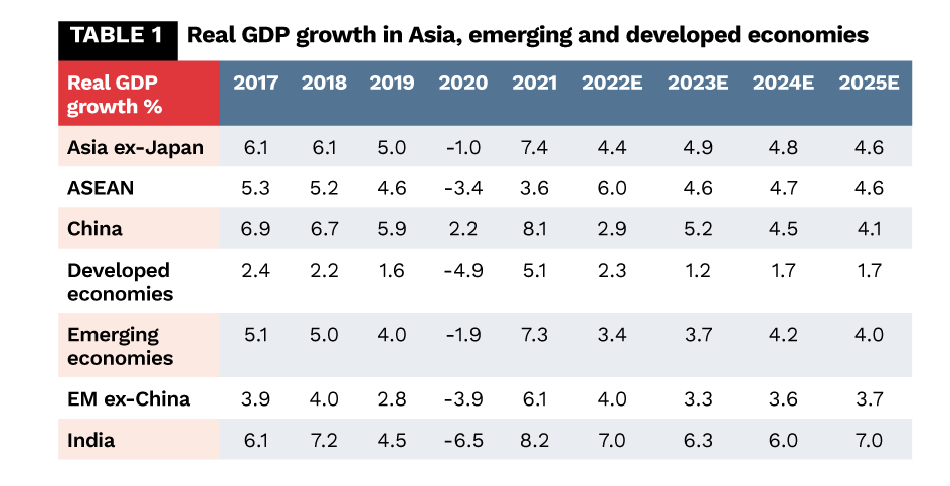
Asian countries are now the fastest-growing economies in the world, thanks to rising growth and booming exports. From 2017 to 2021, the five-year average of real GDP growth for Asia was 4.2 percent, compared to 1.4 percent in the developed markets and 3.9 percent in emerging markets (see table 1). In 2018, China and India were the highest-growth economies, with 6.7 percent and 7.3 percent respectively. (Goldman Sachs, 2022)
Source: file:///C:/Users/Sky/Desktop/How%20Asia%20transformed%20from%20the%20poorest%20continent%20in%20the%20world%20into%20a%20global.htmlSource: https://www.oecd.org/economic-outlook/november-2022/Source: Goldman Sachs Global Investment Research, August 2022. Notes: E = estimated data.
This fast-growing GDP can be partly explained by the rapid accumulation of wealth in Asia. (Mahbubani, 2008; 2011) By 2025, wealth in Asia excluding Japan could outstrip the US, while China’s share in the region has moved up to almost 46 percent. Chinese consumers are especially becoming more affluent, and their focus is increasing towards better products and services. In China, the urbanisation ratio has increased to 64.7 percent in 2021 from 26 percent thirty years ago, according to data, although this is still lower than developed economies of around 80 percent.
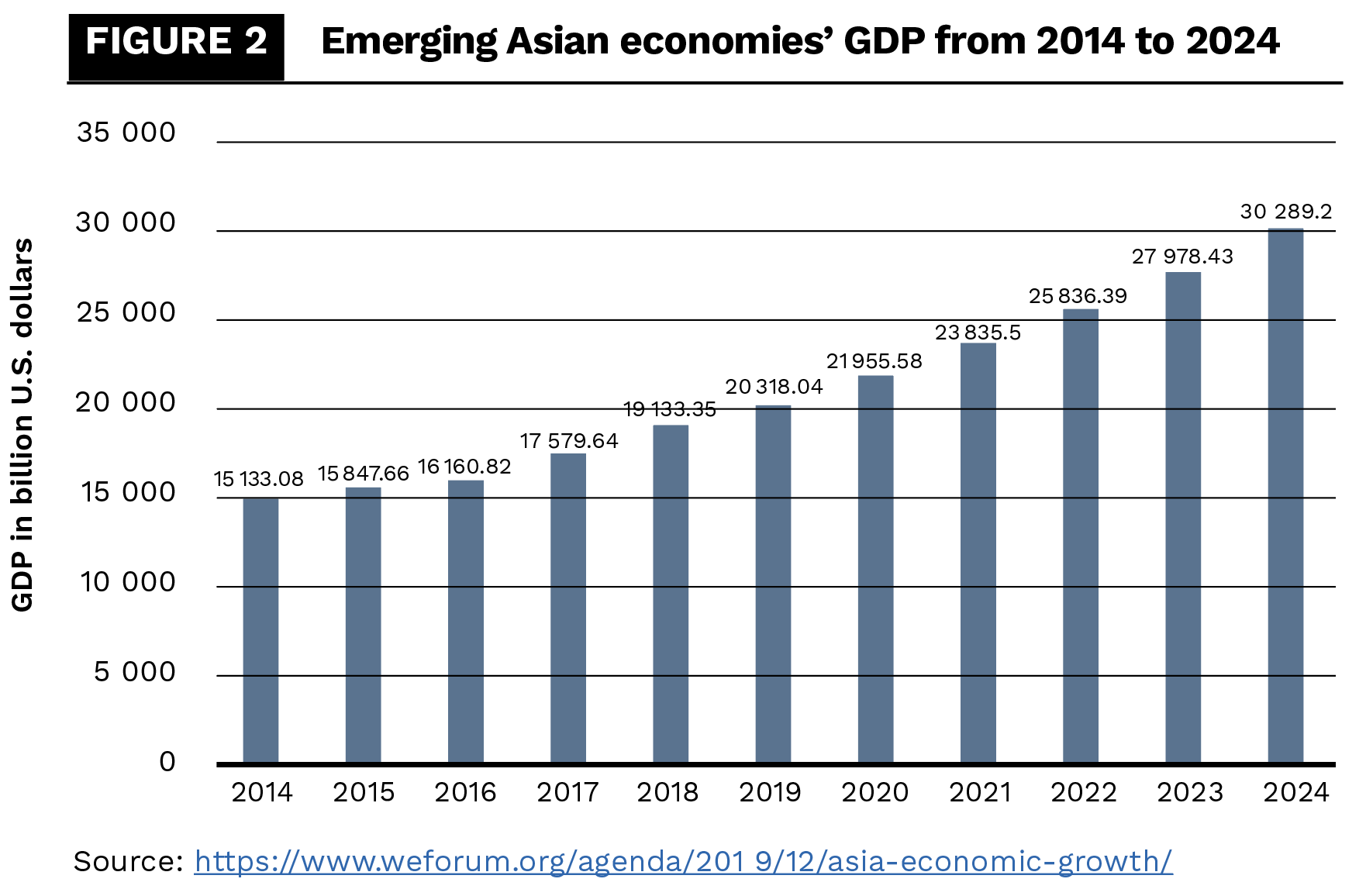
Meanwhile, booming exports have helped contribute to economic growth. Output from Chinese factories is high, improving employment opportunities for many. The country exports more than it imports and in 2021 posted record trade surplus figures of US$670 billion. India is set to have the strongest growth out of all the large economies and has been the second engine of growth for Asia. The country is heading for an average of 7 percent growth over 2022-3 and is expected to contribute 28 percent and 22 percent to Asian and global growth (see figure 2).
Asia is in the middle of a historic transformation. It is projected that by 2050, Asia’s per capita income will increase sixfold in purchasing power parity (PPP) terms to reach EU levels today. This means that about 3 billion Asians will see a rise in their incomes and the region will double its share of global GDP to 52 per cent by 2050. It is said that Asia would regain the world’s dominant economic position it held before colonisation and the rise of Europe since the mid-eighteenth century. It assumes that Asian economies can continue to grow at the same rate for the next four decades and would successfully build comparative advantages. Asia’s GDP (at the market exchange rate) is expected to increase from US$17 trillion in 2010 to US$174 trillion in 2050, i.e. half of the global GDP, similar to its population.
Seven Asian countries have the largest economies (China, India, Japan, Indonesia, South Korea, Malaysia, and Thailand). These seven countries have a combined population of 3.2 billion, which is nearly 78 per cent of the total Asian population, with a GDP of US$15.1 trillion in 2017. It is expected that their GDP will increase to the levels it had three centuries ago (prior to the colonial period). See figure 3.
However, in the late 1960s, Asia was the poorest in the world in terms of income and living conditions. Its social indicators of development were among the worst anywhere, which epitomised its underdevelopment. The deep pessimism about Asia’s economic prospects was narrated by the Swedish economist Gunnar Myrdal in his book Asian Drama. (Siddiqui, 2018a)
For the last five decades, Asia has witnessed a profound transformation in terms of economic development and living conditions. By 2018, the data shows that it accounted for 30 per cent of world income, 40 percent of world manufacturing, and over one-third of world trade. The expansion of manufacturing, and rising investment and savings rates combined with the spread of education were the underlying factors. In short, Asian economic growth was driven by rapid industrialisation, rising investment, and productivity, often led by exports and linked with changes in the composition of output and employment. (Siddiqui, 2021a; 2021b)
Output from Chinese factories is high, improving employment opportunities for many. The country exports more than it imports and in 2021 posted record trade surplus figures of US$670 billion.
Rising per capita incomes transformed social indicators of development, as literacy rates and life expectancy rose everywhere in Asia. There was also a massive reduction in absolute poverty. But the scale of absolute poverty that persists, despite unprecedented growth, is just as striking as the sharp reduction in poverty that happened in recent decades. The poverty reduction could have been much greater but for the rising inequality. Inequality between people within countries rose almost everywhere, except South Korea and Taiwan. Yet the gap between the richest and poorest countries in Asia remains awesome and the ratio of GDP per capita in the richest and poorest countries in Asia was more than 100:1 in both 1970 and 2018.
The developmental states in South Korea, Taiwan, and Singapore coordinated policies across sectors over time in pursuit of national development objectives, using carrot-and-stick policy to implement their agenda, and were able to become industrialised nations in just 50 years. China emulated these developmental states with much success, and Vietnam followed on the same path two decades later, as both countries have strong institutions and one-party communist governments that could coordinate and implement policies.
It is not possible to replicate these states elsewhere in Asia. But other countries, such as India, Indonesia, Malaysia, Thailand, Bangladesh, and Turkey, did manage to evolve some institutional arrangements, even if less effective, that were conducive to industrialisation and development. In some of these countries, the checks and balances of political democracies were crucial to making governments more orientated towards development and the well-being of the poor.
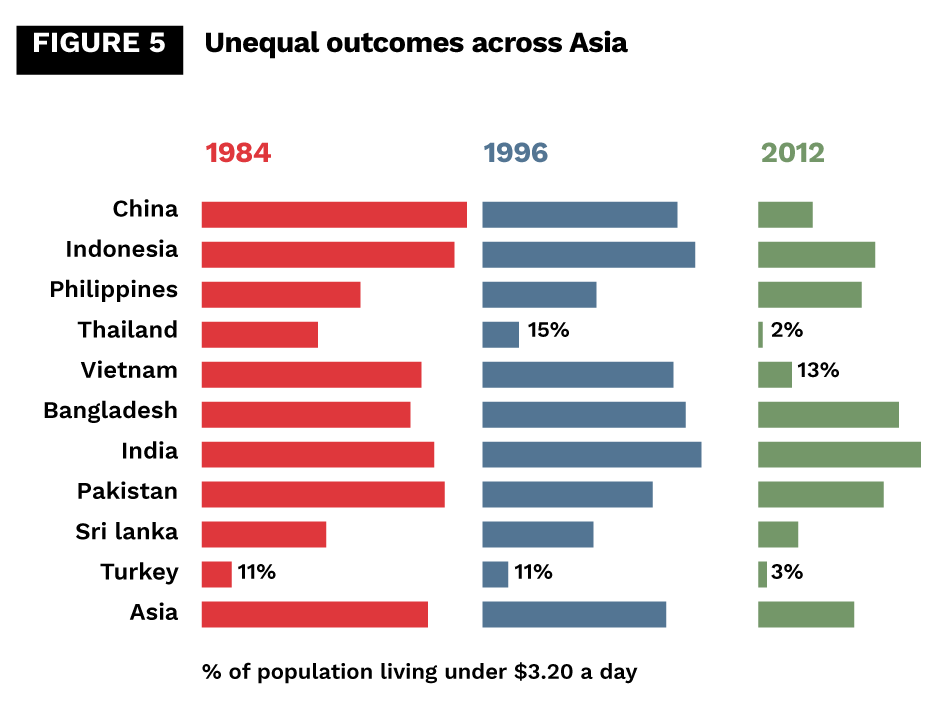
These transformations were unequal across countries and between people (see figure 5). Asia’s economic transformation in this short time span is almost unprecedented in history. It is essential to recognise the diversity of Asia. There have been marked differences between countries in geographical size, embedded histories, colonial legacies, nationalist movements, initial conditions, natural resource endowments, population size, income levels, and political systems. The reliance on markets, government intervention, and the degree of openness of economies has varied greatly across countries and over time.
The Decline of the Supremacy of the US Dollar
The central banks of different countries also hold dollar reserves. The decisions of others, such as private and public dollar holders, depend on expectations about the price of dollars vis-à-vis both other currencies and also commodities. The central banks’ decisions are influenced by an additional factor: since the dollar is the medium of transaction in much of world trade, they carry dollar reserves for settling accounts. At present, the sanctions against Russia have encouraged bilateral payment arrangements between Russia and other countries. The US dollar simply does not enter as the medium of the transaction in such trade. In a bilateral arrangement between Russia and India, for instance, the exchange rate between the two currencies is fixed, and the balance of trade is simply held as a claim by one country upon the other. Such arrangements, therefore, eliminate the demand for US dollars as a reserve currency, replacing it with the rouble and other currencies. (Siddiqui, 2021c)
Moreover, much of the world’s trade is still carried on with the dollar as the medium of transaction. Interest rates in the US had been close to zero since the 2008 global financial crisis, but are now being raised as a means of controlling inflation. This has the effect of sucking in money from all over the world, especially from developing countries, back to the US, causing a depreciation of their currencies vis-à-vis the dollar.
The rising Asian economies and the war in Ukraine are challenging US global hegemony. In fact, the Ukraine-Russian war is part of this challenge; a crucial point is in the transition from a so-called “unipolar world” to a “multipolar world”. (Siddiqui, 2020c; 2020d)
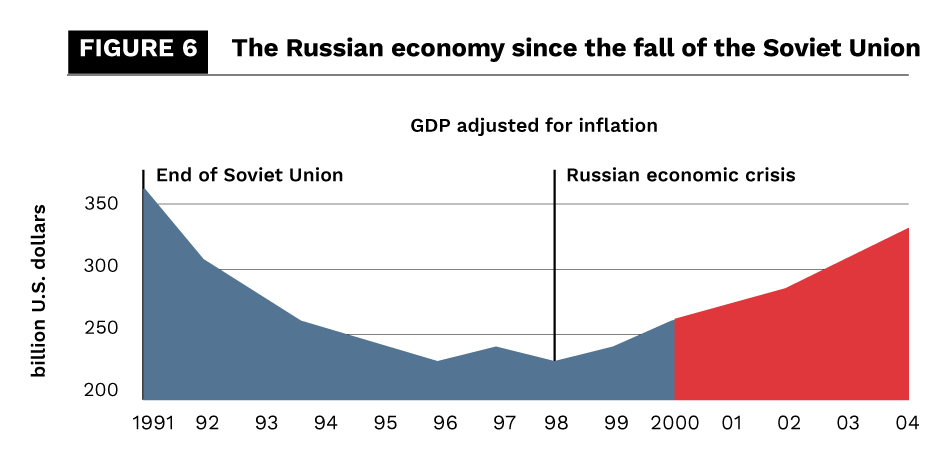
Although Russia still largely relies on exporting natural resources, its economy has improved in recent years. Russia’s economy went into a sharp decline after the break-up of the Soviet Union in 1991. The state-owned industries were privatised to private investors at giveaway prices, while workers’ wages fell sharply, and they faced a sharp drop in their standard of living. The low point was 1998 when an economic crisis led to a big devaluation of the rouble. However, in recent years, soaring oil revenues have boosted state revenues and led to an economic recovery, with Russia paying off its international debts.
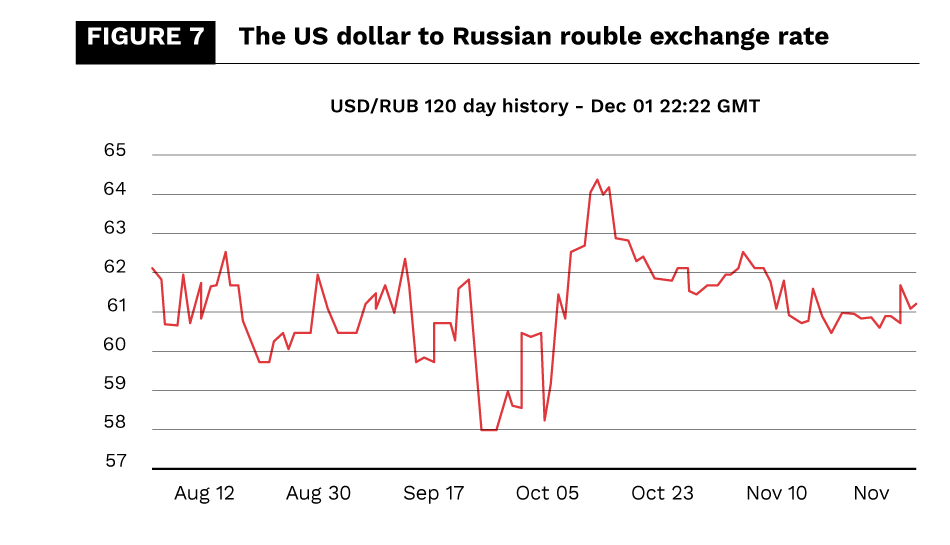
However, the Russian economy is still much smaller than other G8 countries and, measured by income per capita, income is less than one-tenth of G8 levels (see figure 6). The supremacy of the US dollar is being challenged, because of the sanctions it has imposed on Russia following the Ukraine war (Siddiqui, 2022a; 2020e), and because of the closure of industries due to the non-availability of cheap energy from Russia. The US sanctions were imposed to cripple the rouble and to bring Russia to its knees. The US and EU financial sanctions expected to reduce the US dollars Russia earned through its exports, which meant a dollar shortage in Russia that pushed up the price of the dollar against the rouble. From a price of around 77 roubles in mid-February 2022, the dollar rose to 136 roubles in April 2022. However, the rouble strengthened against the US dollar in November 2022, at 60 roubles to the dollar (see figure 7).
China is the world’s largest energy consumer, and the country consumes 13 percent of the world’s total oil and gas consumption in 2019, which was 400 million tons.
In fact, after the US sanctions, Russia began selling oil against rouble payments, and embarked on speculative activity to increase oil prices in the world market. Because of the rise in the dollar price of oil in the world market, Russia’s export earnings have increased, despite lower export volumes. The higher oil price is also a major contributor to the acceleration of the inflation rate in the US and EU countries, leading to the threat of recession. (Siddiqui, 2022b)
The US miscalculated and hoped that most countries of the world would fall in line with the US diktat, but the fact is that not only China, but many others including India, Bangladesh, Iran, Indonesia, and South Africa, have carried on trade with Russia despite the US and EU sanctions. And also on the oil production front, the major oil producers had offset the measures by raising production and increasing oil exports. Saudi Arabia, despite being a close ally of the US, declined to raise its output, citing various logistical reasons. As a result, sanctions against Russia have lowered overall oil output, raised prices, and contributed to a global economic recession. (Siddiqui, 2022b)
Conclusion
The rise of Asia represents the beginnings of a shift in the balance of economic power in the world and a decline in the political dominance of the West. The future will be shaped partly by how Asia exploits the opportunities and meets the challenges and partly by how the difficult economic and political conjuncture in the world unfolds. Yet it’s plausible to suggest that by around 2050, a century after the end of colonial rule, Asia will account for more than a half of world income and will be home to more than half of the people on earth. It will have an economic and political significance in the world that would have been difficult to imagine 50 years ago, even if it was the reality in 1820.
The transformation of Asia is reflected in its demographic transition, rising productivity, and skills, and living conditions have been phenomenal. From 1970-2018, the economic growth in GDP and per capita GDP in Asia was much higher than in other regions. For instance, Asia’s share of world GDP rose from less than one-tenth, while its income per capita converged towards the world average.
Due to various factors, in recent years China has emerged from being a high-tech recipient to become an innovator of high-tech.
On industrial production, its share sharply rose from merely 4 per cent to more than 40 per cent. This unprecedented development indicates a sharp contrast with the dramatic decline of Asia’s manufacturing during colonial rule. (Siddiqui, 1989; 1985) Their independence, leading to economic sovereignty, and the global tension and Cold War between 1945 and 1990 resulted in rapid transformation and economic development. However, there were great variations in economic development between the Asian countries, so that East Asia has done much better than South Asia, while within the East Asia region, Southeast Asia is in the middle. | The study concludes that the SCO’s economic and trade cooperation will further strengthen multilateral cooperation in the region. In 2019, China exported more than US$2.6 trillion in goods and services, slightly ahead of the US figure of US$2.5 trillion. It seems that not only have the US and EU lost economic ground to Asia, in terms of volumes of trade, investment, and economic growth, but the capacity to guide and influence political developments, serve as a moral yardstick, and ultimately its use of military power to influence events has been severely eroded.
However, environmental problems are rising across Asia. The impact of climate change is much more visible across Asia, such as rising sea levels, changing weather patterns, and rising temperatures. Transparent governance is crucial to benefit the vulnerable sections of the population and governments also need to address rising inequalities in income and wealth. The governments must spend more on safeguarding public health and education and providing social welfare.
This article was originally published on March 2, 2023.
Dr. Kalim Siddiqui is an economist specialising in International Political Economy, Development Economics, International Trade, and International Economics. His work, which combines elements of international political economy and development economics, economic policy, economic history and international trade, often challenges prevailing orthodoxy about which policies promote overall development in less-developed countries. Kalim teaches international economics at the Department of Accounting, Finance and Economics, University of Huddersfield, UK. He has taught economics since 1989 at various universities in Norway and the UK.
References
Acemoglu, D. and Robinson J. (2014) Why Nations Fail – The Origin of Power, Prosperity and Poverty, Crown Publishers, New York.
Acharya, A. (2001) Constructing a Security Community in Southeast Asia: ASEAN and the problem of regional order, London: Routledge.
Aris, S. (2009) “A new model of Asian regionalism: does the Shanghai Cooperation Organisation have more potential than ASEAN?”, Cambridge Review of International Affairs, 22(3):451-67.
Chao, W.C. (2022) “The Political Economy of China’s Rising Role in the Shanghai Cooperation Organization: Leading with Balance”, Chinese Economy, 55(4): 293-304.
Mahbubani, K. (2008) The New Asian Hemisphere: The Irresistible Shift of Global Power to the East, New York: Public Affairs, 133–4.
Mahbubani, K. (2011) “Asia Has Had Enough of Excusing the West,” Financial Times, 25 January.
Nakao, T. (2022) The Riser of Asia Perspective and Beyond, Manila: Asian Development Bank.
Siddiqui, K. (2022a) “Ukraine-Russia War and the Impact on the Global Economy”, The World Financial Review, November/December, pp. 22-35.
Siddiqui, K. (2022b) “Is a Global Economic Recession Looming,The World Financial Review, September-October, pp. 17-26.
Siddiqui, K. (2022c) “Comparing the East Asian and Latin American Countries: The Role of Agricultural Reforms in the Economic Transformation”, The World Financial Review, July-August, pp. 7-18.
Siddiqui, K. (2021a). “Can 21st Century be an Asian Century?”, Asian Profile, 49(1):1-19, March.
Siddiqui, K. (2021b) “The Import Substitution Policy in the Post-Colonial Countries”, The World Financial Review, November-December, pp. 76-84.
Siddiqui, K. (2021c) “The Bilateral Swap Agreements and the Demise of US Dollar”, The World Financial Review, September-October, pp. 56-64.
Siddiqui, K. (2021d) “The Importance of Industrialisation in Developing Countries”, The World Financial Review, January-February, pp. 60-73.
Siddiqui, K. (2021e). “The Political Economy of Industrial Policy”, The World Financial Review, May-June, pp. 58-66.
Siddiqui, K. (2020a) “Can Global Imbalances Continue? The State of the United States Economy”, Argumenta Oeconomica Cracoviensia, 23(2):11-32.
Siddiqui, K. (2020b) “The Rise of the Chinese Economy and Growing Concerns in the United States”, World Financial Review, September-October, pp. 40-9.
Siddiqui, K. (2020c) “Prospects of a Multipolar World and the Role of Emerging Economies”, The World Financial Review, November/December, pp. 65-77.
Siddiqui, K. (2020c) “Globalisation, International Trade and the Developing Countries”, The European Financial Review, August-September, pp. 60-71.
Siddiqui, K. (2020d). “The US Dollar and the World Economy: A critical review”, Athens Journal of Economics and Business. 6(1):21-44.
Siddiqui, K. (2019a). “Economic Transformation of China and India: A Comparative Political Economy Perspective”, Asian Profile, 47(3):243-59.
Siddiqui, K. (2019b). “One Belt and One Road, China’s Massive Infrastructure Project to Boost Trade and Economy: An Overview”, International Critical Thought. 9(2):214-35.
Siddiqui, K. (2018a). “The Political Economy of India’s Economic Changes since the last Century” Argumenta Oeconomica Cracoviensia, 19:103-32.
Siddiqui, K. (2018b). “US-China Trade War: The Reasons Behind and its Impact on the Global Economy”, The World Financial Review, November-December, pp. 62-8.
Siddiqui, K. (2016a). “Will the Growth of the BRICs Cause a Shift in the Global Balance of Economic Power in the 21st Century?”, International Journal of Political Economy 45(4):315-38.
Siddiqui, K. (2016b). “International Trade, WTO and Economic Development”, World Review of Political Economy, 7(4):424-50, winter.
Siddiqui, K. (2015). “Political Economy of Japan’s Decades Long Economic Stagnation”, Equilibrium Quarterly Journal of Economics and Economic Policy 10(4):9-39.
Siddiqui, K. (2012). “Malaysia’s Socio-Economic Transformation in Historical Perspective”, International Journal of Business and General Management, 1(2):1-50.
Siddiqui, K. (2010). “The Political Economy of Development in Singapore”, Research in Applied Economics 2(2):1-31.
Siddiqui, K. (1989). “Political Economy of Underdevelopment in South Asia”, Klassekampen (in Norwegian), 14 & 15 March, Oslo, Norway.
Siddiqui, K. (1985). “South-South Economic Co-operation and its Future Prospects”, Bergens Tidende, 4 October, Norway.
Zhao, H. (2006) “The Shanghai Cooperation Organisation at 5: achievements and challenges ahead”, China and Eurasia Forum Quarterly, 4(3): 105-23.
Warehouse operations are on the cusp of a transformational shift, driven by the rapid development of technology and advanced management strategies. This sea change is being led by innovative companies like Gowhsehub solutions for warehouse operations, enabling a wave of efficiency and precision unseen in traditional warehousing models. Bridging the Gap with Technology
Technology has the potential to address several traditional warehousing challenges, particularly when integrated with robust management strategies. From inventory management to logistics, every process can be streamlined and optimized with the application of the right technology. This transition from manual to automated processes not only enhances efficiency but also significantly reduces errors, leading to improved customer satisfaction and a healthier bottom line.
Key Technological Innovations Shaping Warehousing
Robotics and Automation: Automation technology, including robotic process automation (RPA), has the potential to handle repetitive tasks with greater speed and accuracy, freeing up human workers for more strategic responsibilities.
Internet of Things (IoT): IoT devices and sensors can provide real-time data and insights, leading to more efficient inventory management and operation schedules.
Artificial Intelligence and Machine Learning: AI and ML algorithms can analyze vast amounts of data to make predictive analyses, optimizing stock levels and reducing wastage.
Operational Efficiency Through Technological Integration
The implementation of these technological advancements is reshaping the warehouse operational landscape. Warehousing tasks are now executed with heightened accuracy and speed, leading to increased productivity. Additionally, such tech-integration is paving the way for a safer work environment. Through automating potentially hazardous tasks, warehouses are mitigating risks, ensuring the well-being of their employees.
Big Data: With the proliferation of IoT devices, there’s a surge in the generation of data which can be harnessed to make data-driven decisions.
Augmented Reality (AR): AR technologies aid in enhancing the speed and accuracy of order picking and placement processes.
Blockchain Technology: Blockchain can provide heightened security and transparency to supply chain operations, enhancing trust and accountability.
Cloud Technology: The scalability, cost-efficiency, and real-time access provided by cloud-based solutions are making them a staple in modern warehouse operations.
The Future of Warehouse Management
As we peer into the crystal ball of warehouse operations, the predominant narrative is overwhelmingly digital. Technology is no longer a peripheral component but is increasingly becoming the nucleus of warehouse management strategies. Autonomous robots are streamlining processes with their ability to work round-the-clock, removing the constraints of human-centric schedules and leading to significantly higher throughput. Moreover, the rise of AI-powered predictive systems, as discussed in areport by Deloitte, is enabling the forecasting of future trends, making just-in-time inventory management a reality and reducing the costs associated with overstocking and stock-outs.
Additionally, the advent of self-operating vehicles for internal material movement and even delivery presents a host of opportunities for reducing costs and improving efficiencies. Not only do these technologies offer the promise of safer operations by reducing accidents, but they also herald unprecedented levels of productivity and efficiency.
But the future of warehouse management isn’t just about technology—it’s about how these technologies are integrated within innovative management strategies. Warehouse operations of the future will need to be adaptive, able to pivot quickly in response to changing market trends or supply chain disruptions. They’ll need to be resilient, with systems in place to maintain operations in the face of challenges. And they’ll need to be agile, capable of scaling up or down to meet fluctuating demand levels. In essence, the warehouses of the future will be smart, tech-infused spaces, guided by data-driven decisions and optimized through the power of automation and artificial intelligence.
The Tech-Driven Transformation
The metamorphosis of warehouse operations through technology is not just an emerging trend—it’s a groundbreaking paradigm shift. Pioneers such as Gowhsehub are at the forefront, demonstrating how their solutions for warehouse operations can significantly enhance performance. The undeniable benefits—streamlined operations, improved accuracy, and cost savings—are revolutionizing the industry, ushering in a new era of digital warehousing.
In today’s digitally-driven era, online casinos are scaling new heights. While privacy and anonymity were once the keystones of online gambling, the tides are changing. An increasingly prominent concept, Know Your Customer (KYC), is shifting this landscape. So, what does it mean when we talk about a KYC casino, and how is it shaping the world of online casinos?
What’s KYC, and How Does it Operate in an Online Casino?
The acronym KYC stands for ‘Know Your Customer.’ It is becoming standard practice in the world of online gambling. KYC casinos necessitate their customers to verify their identity by providing necessary documents, such as:
Passport.
Driving License.
Utility bills.
The process kicks in when a new player registers and before their first withdrawal. While it may appear cumbersome, remember, these steps are to ensure safety and security in the virtual gambling space.
The Need for KYC in Online Casinos
“Why this added layer?”, you might question. Online casinos are indeed designed for convenience, but they’re also targets for cybercrime and fraud. Here’s why KYC is vital:
It provides a safety barrier by ensuring every user’s identity, mitigating risks of fraudulent activities.
Regulatory authorities globally mandate KYC compliance. Non-adherence could lead to severe penalties, including loss of licenses.
How KYC Influences Player Experience
KYC might initially seem like a hindrance, given the perceived freedom and instant access the internet provides. But consider this:
KYC is a safety protocol designed to protect you and your money.
KYC compliance discourages unlawful activities, allowing genuine players to enjoy a secure gaming environment.
FAQs
Q: What documents do I need for KYC at an online casino?
A: Commonly required documents include a passport, driving license, and utility bills.
Q: Does KYC slow down my withdrawal process at an online casino?
A: While KYC can add a few steps to your withdrawal process, it’s designed to protect your funds from fraudulent activities.
Q: Is KYC compliance legally required for online casinos?
A: Yes, global regulatory authorities, like the UK Gambling Commission, require online casinos to adhere to KYC procedures.
Conclusion
As we embrace the digital age, the relevance of KYC in online casinos can’t be overemphasized. This process safeguards not just the online casino operators, but also the players, ensuring a secure and enjoyable gaming experience. Remember, a KYC casino isn’t just about satisfying regulators, it’s about prioritizing player safety.
By Terence Tse
CFOs are evolving into AI-driven transformation orchestrators, balancing finance, technology, and strategy while upskilling teams, managing risks, and driving measurable business value.
A key insight from this year’s AI for CFOs event, organized...
The World Financial Review uses cookies to improve site functionality, provide you with a better browsing experience, and to enable our partners to advertise to you. Detailed information on the use of cookies on this Site, and how you can decline them, is provided in our Privacy Policy and Terms and Conditions. By clicking on the accept button and using this Site, you consent to our Privacy Policy and Terms and Conditions. ACCEPT
Privacy & Cookies Policy
Privacy Overview
This website uses cookies to improve your experience while you navigate through the website. Out of these cookies, the cookies that are categorized as necessary are stored on your browser as they are essential for the working of basic functionalities of the website. We also use third-party cookies that help us analyze and understand how you use this website. These cookies will be stored in your browser only with your consent. You also have the option to opt-out of these cookies. But opting out of some of these cookies may have an effect on your browsing experience.
Necessary cookies are absolutely essential for the website to function properly. This category only includes cookies that ensures basic functionalities and security features of the website. These cookies do not store any personal information.
Any cookies that may not be particularly necessary for the website to function and is used specifically to collect user personal data via analytics, ads, other embedded contents are termed as non-necessary cookies. It is mandatory to procure user consent prior to running these cookies on your website.