Home Blog Page 332

How To Utilise Cryptocurrency as an Enterprise Business

Cryptocurrency is a rapidly growing form of digital currency that is revolutionising the way businesses and individuals conduct transactions – and it shows no signs of slowing down.

In recent years, the use of cryptocurrency has skyrocketed due to its convenience and security features, and with the increasing popularity of cryptocurrencies such as Bitcoin, Ethereum, and Litecoin, businesses have begun to explore ways they can utilise this technology to their advantage.

What Is Cryptocurrency?

Let’s start with the basics: just what is cryptocurrency? In short, cryptocurrency is a type of digital currency built on “cryptography”,  a concept that uses complex mathematical algorithms to secure transactions. Transactions are recorded in a public ledger known as the blockchain, ensuring that all users have access to the same information and preventing fraudulent activity.

What Is An Enterprise Business?

An enterprise business is any organisation engaged in large-scale operations with a global reach. Enterprise businesses typically have long-term strategies focused on creating value and growth. Typical enterprise businesses include banks, airlines, telecommunications companies, and technology firms.

Benefits Of Using Cryptocurrency As An Enterprise Business

There are several key benefits that may encourage enterprise businesses to switch to using cryptocurrency, and these include: 

  • Lower Transaction Costs

As a rule, cryptocurrency transactions typically have lower transaction costs than traditional payment methods such as credit cards and bank transfers. This can be especially beneficial for businesses that deal with high volumes of transactions, as these fees can quickly add up – crypto can save considerable costs.

  • Increased Security

As mentioned above, cryptocurrency is built on highly secure cryptography, which makes it resistant to fraud and tampering. This can help to protect your business from potential data breaches and other security threats.

  • Faster Processing Times

Cryptocurrency transactions are almost instantaneous, meaning businesses don’t have to wait for days or weeks for payments to be processed. This can help streamline operations and improve customer satisfaction by allowing customers to receive their purchases much faster.

  • Global Reach

Cryptocurrency can also provide businesses with global reach. Transactions can be conducted in any currency, from anywhere in the world. This allows businesses to easily expand into new markets and increase their customer base.

  • Increased Transparency

One of the main appeals of cryptocurrency transactions is their transparency – all parties involved have access to the same information, and this increases trust between businesses and customers, as well as providing more data for businesses to make informed decisions about their operations.

  • Automation

Many of the processes associated with cryptocurrency transactions can be automated with the help of smart contracts. This can save businesses time and money, as well as free up resources for other tasks.

  • Accessibility

 Cryptocurrency is accessible to anyone with an Internet connection, meaning businesses can reach a much wider audience than they would with traditional payment methods. This also allows businesses to accept payments from customers in any currency.

What Are The Main Types Of Cryptocurrency?

There are many different types of cryptocurrency available from various sources, such as the New Age Crypto Exchange

The most popular and widely used cryptocurrencies include Bitcoin, Ethereum, Litecoin and Ripple, and each of these currencies has its own unique features and benefits. So, it is important to do plenty of research before deciding which type of cryptocurrency is best for your business.

Some of the most popular types of cryptocurrency include:

  • Bitcoin

Perhaps the best-known and most widely used cryptocurrency, Bitcoin was the first digital currency to be developed in 2009. It is a decentralised form of digital cash that is secured using cryptography and can be used to make peer-to-peer payments without the need for third parties.

  • Ethereum

Ethereum is another popular option; this blockchain platform enables users to create and run distributed applications (dApps), and has become particularly popular among enterprise businesses due to its ability to run smart contracts. These are automated agreements between two or more parties that can be used for a variety of business applications, making them a popular choice.

  • Litecoin

Litecoin is a peer-to-peer cryptocurrency that was first launched in 2011 as an alternative to Bitcoin. It uses open-source code and has faster transaction times than Bitcoin, making it ideal for small and large payments – this makes it a great choice for businesses that need variety and flexibility.

  • Ripple

Ripple is another popular cryptocurrency that was first launched in 2012. It is a real-time gross settlement system (RTGS) that enables users to make instant payments with low transaction fees. It has become increasingly popular among enterprise businesses for its speed and scalability.

Final Thoughts

Cryptocurrency can be a powerful tool for enterprise businesses, allowing them to take advantage of increased security, faster processing times, global reach and more. As with any new technology, it is important to do your research before getting started – this will help to ensure you select the right cryptocurrency for your business needs and that you continue to enjoy the benefits crypto has to offer.

Mastering ROI: How To Optimize Your Medical Marketing Budget For Maximum Returns

In today’s rapidly evolving digital world, one of the greatest challenges faced by healthcare professionals is getting the most out of their marketing budget. Every dollar invested needs to generate returns, both in terms of brand recognition and actual revenue. With an array of platforms and strategies available, which ones should you consider? And how do you ensure maximum ROI?

In this post, we’ll delve into strategies to help you optimize your medical marketing budget. Whether you’re a large hospital or a solo practitioner, these tips will guide you towards making better marketing decisions that translate into tangible results.

Embrace Trusted Marketing Strategies

The 12 best medical marketing strategies for 2023 include aspects that will help you see a ROI, like the following:

  • Video Content: 2023 is the age of visual content, and videos lead the charge. With platforms like YouTube experiencing exponential growth, healthcare providers can benefit by crafting informative, patient-centric videos. These can range from patient testimonials to how-to guides on medical procedures or preventive care.
  • Telehealth Optimization: With telehealth becoming more prevalent, optimize your website and services for online consultations. Ensure that the booking process is seamless, and emphasize security and privacy features to build trust among patients.
  • Chatbots and AI-driven Customer Support: Provide instant responses to common queries using chatbots. It improves user experience, ensures round-the-clock support, and saves costs in the long run.

Understand Your Audience

It’s crucial to know your audience’s demographics, psychographics, and behavioral trends. This can involve segmenting your market into specific niches – for instance, pediatrics, geriatrics, or general medicine – and tailoring your marketing strategies accordingly. Use data analytics tools to gain insights and refine your strategy.

Set Clear Objectives And KPIs

Before diving into any marketing effort, outline what you aim to achieve. Whether it’s increasing patient bookings, enhancing online presence, or boosting brand awareness, having clear objectives will guide your strategies. Furthermore, establish key performance indicators (KPIs) to measure the effectiveness of each tactic.

Leverage Data Analytics

Use tools like Google Analytics to understand user behavior on your website. See which pages get the most visits, how long users stay, and what content resonates most. These insights will help you refine your marketing strategies and allocate your budget more efficiently.

Engage In Continuous Learning

The digital landscape is continually evolving. Dedicate time and resources to learn about the latest trends, tools, and best practices. Regularly attending webinars, workshops, or even online courses can provide a competitive edge.

Invest In Relationship Building

While digital marketing is vital, don’t underestimate the power of relationship building. Engage in local community events, offer free health check-ups or seminars, and foster relationships with other medical professionals for referrals.

Encourage Reviews And Testimonials

Word-of-mouth remains a powerful tool in the medical industry. Encourage satisfied patients to leave positive reviews on Google, Yelp, and other platforms. Address negative reviews professionally, showing potential patients that you value feedback and are committed to improvement.

Track And Adjust

One of the biggest mistakes is to set a marketing strategy and then forget about it. Regularly monitor the effectiveness of each strategy and be ready to make necessary adjustments. Maybe one platform isn’t delivering the expected ROI, or perhaps a new opportunity arises; being flexible can maximize your returns.

Prioritize Patient Experience

At the end of the day, if patients aren’t satisfied with their experience, no amount of marketing will help. Invest in training your staff, streamlining the appointment process, and ensuring a comfortable environment for patients. Word of mouth, fueled by exceptional patient experiences, can be the most potent marketing tool.

Collaborate And Network

Building networks with other healthcare professionals can be a valuable source of referrals. Consider partnering with complementary service providers for combined packages or collaborative marketing campaigns.

Conclusion

Optimizing your medical marketing budget isn’t just about pouring money into digital ads or the latest trends. It’s a holistic approach that involves understanding your target audience, setting clear objectives, leveraging analytics, and consistently delivering exceptional patient experiences.

By embracing the best medical marketing strategies and combining them with tried and tested techniques, you can achieve a robust ROI. Remember, the medical industry is about trust and care. Your marketing strategies should reflect this ethos to genuinely resonate with your audience. The journey to mastering ROI is ongoing, but with commitment and adaptability, it’s a goal well within reach.

Investing in Logistics: The Financial Impact of Online Freight Forwarding on Business Growth

Online shopping is now second nature for billions of consumers. In 2023, over 20% of all retail purchases are expected to take place in the digital world (via eCommerce platforms). No big shock there. However, this online shopping explosion is sending tidal waves through supply chains worldwide.

Businesses are scrambling to ship products to customer doors spread across countless zip codes and countries. Doing this efficiently and affordably is tough. And with the increasing volume of digital retail sales, the old way of coordinating logistics with manual brokers and phone calls doesn’t cut it anymore.

Modern companies need agile, transparent, and affordable shipping options – and they need it now. This urgency is fueling the rapid adoption of online freight forwarding platforms. 

These digital platforms are connecting shippers and carriers globally. You can get instant price quotes, book shipments with one click, and have end-to-end tracking. Streamlining the entire process this way cuts out all the communication overhead with traditional methods. 

In this post, we’ll explore how online freight forwarding works, its key benefits, and the financial impact it can have on your business growth. Read on to learn how digitized shipping can cut costs, improve margins, and help you scale faster.

What is Online Freight Forwarding?

Online freight forwarding replaces all the analog and manual processes of traditional shipping with digital platforms. Instead of playing phone tag with brokers or managing piles of paperwork, everything is handled seamlessly online. These platforms use algorithms, AI, and auction models to automatically match shippers with carriers. This allows for better optimization of routes, transit times, and rates compared to human brokers. Loads can be posted and bid on in real time.

By consolidating all the shipping tasks into a single digital hub, online freight forwarding removes so much of the hassle and overhead costs. There’s no need to juggle spreadsheets or constantly monitor emails and phone calls. You get end-to-end visibility and automation for domestic and international shipments.

5 Benefits of Online Freight Forwarding

Ditching old-school brokers for online platforms offers big bottom-line advantages:

  1. Increased Efficiency and Scalability – No more phone calls or faxes back and forth with opaque pricing. Online platforms provide instant freight quotes, booking, and tracking. The automated process provides higher efficiency and scales seamlessly.
  2. Access to Wider Carrier Networks – Top online freight platforms have relationships with huge carrier networks. This means you can easily find the best solution for any shipping route. The platforms aggregate carriers and provide a single point of access to every mode of transport whether sea, air, or road.
  3. Better Rates Through Auction Platforms – Online rate auctions drive competitive bidding between carriers. This pushes down rates and saves you money. The auction model creates a spot market pricing dynamic that levels the playing field. Carriers bid against each other, driving down costs for shippers.
  4. Enhanced Shipment Tracking and Transparency – End-to-end tracking provides full visibility over order status and location. Gain data-driven insights to optimize logistics. Detailed tracking events and notifications allow you to monitor shipments in real-time. This enhances transparency and helps you stay on top of potential delays or exceptions.
  5. Lower Operational Costs – Cut out the middleman broker fees. Automation and digitization drive significant cost savings in managing global shipments. Online platforms eliminate manual work, phone calls, and reliance on broker relationships. This removes layers of cost and overhead from the traditional process.

The Financial Impact of Online Freight Forwarding

Implementing online freight forwarding can significantly benefit your company’s bottom line in multiple ways. Let’s look at some of the major financial impacts.

Access New Markets and Customers

Online shipping makes it affordable to transport products to new geographic territories. Opening up additional markets in such a way provides more potential customers and revenue opportunities. Furthermore, with digital platforms finding the optimal carrier and routing for a given lane, you can economically reach territories that were previously unfeasible. More markets mean a larger total addressable market. This ability to scale globally on-demand can rapidly grow your customer base.

Boost Profit Margins

Transitioning to online shipping cuts out many legacy costs associated with brokers and manual processes. Reducing these logistics overheads means more profit margin per order.

If shipping eats up 5% of an order value instead of 15%, that 10% savings goes directly to your bottom line. Compounding these higher margins across all orders can significantly impact net profit.

Increase Customer Lifetime Value

Delivery speed is critical for customer satisfaction and retention. 90% of consumers cited delivery should take fewer than 5 business days. On top of this, a whopping 56% of all abandoned carts are due to shipping-related concerns during checkout.

Fast, reliable delivery is now a make-or-break factor for many online purchases. Customers have high expectations around shipping times. According to the 2022 State of Shipping Report, 90% of consumers said delivery should take 5 days or less. Nearly half consider delivery speed to be the most important factor when making a purchase decision. 

It’s clear that meeting demands for speedy, transparent delivery is mission-critical. Brands who consistently delight customers with on-time arrivals will earn loyalty and repeat business. Those who miss the mark get abandoned carts and negative reviews. The financial impacts swing wildly between the two extremes.

Supply Chain Analytics Unlock Savings

Comprehensive data analytics offered by digital platforms provide valuable insights into shipping patterns, costs, and performance. This intelligence identifies opportunities to fine-tune and optimize your supply chain. You can adjust inventory levels, batch order fulfillment, negotiate better contracts with carriers, or shift transportation modes. The analytics give you an information advantage to reduce waste and costs.

Other Financial Benefits

Additional bottom-line boosts from implementing online freight forwarding include:

  • Reduced administrative overhead and staff costs
  • Improved cash flow from faster order delivery
  • Inventory optimization to lower waste
  • Higher quality customer service at lower cost
  • Easy scalability to support growth
  • More sustainable shipping supports branding

Final Word

The verdict is clear. Online freight forwarding is creating seismic shifts in global supply chains. Businesses that make strategic investments in this area now can gain long-term competitive advantage. As such, the financial and operational benefits of digitized shipping are simply too big to ignore. This technology is rapidly becoming mandatory to compete in the world of ecommerce and delivery.

Embracing the Digital Age: A Comprehensive Guide to Online Money Transfers

There’s a quiet revolution happening across the world of business. It’s called the online money transfer – these are cash transactions that take place securely without involving a bank: amazing! Technology has given us the ability to conduct our businesses from virtually anywhere, it’s well worth having a good understanding of how money transfers work and how to use them.

Introduction to Online Money Transfers

Basically, an online money transfer is what we call the process of sending money from one account to another using the internet. This is usually done via a bank of course, but now it can also be achieved using ‘non-banking’ financial companies (fintechs). Whether you’re making payments to suppliers or transferring wages to employees, online money transfers have become an essential tool for modern businesses.

Exploring Online Payment Options

Thanks to pretty impressive, fast moving technology, there’s a big array of online payment options available now. Traditional bank transfers, credit and debit card payments, mobile wallets, and even cryptocurrency transactions are now all mainstream. These options offer convenience, quick processing times, and often reduced fees compared to traditional bank transfers.

Let’s Understand Online Card Payments

Online card payments are a popular way of making online transactions. This includes both debit cards (they draw money directly from your bank account), and credit cards (allow you to borrow money up to a certain limit). Once you’ve added your card details on a secure payment gateway, the money is transferred directly to the recipient’s account. This process is fast and efficient, and helps to keep your business running smoothly.

Your Step-by-Step Guide to Online Money Transfers

  1.  Select a service: Do a bit of research and choose an online money transfer service that really suits your business needs. This could be your bank’s own service but you may find better options and features with an alternative.
  2. Register or log in: If you’re not using your own bank or if you’ve chosen to go with an alternative financial services provider, you’ll need to create an account with them first.
  3. Enter details: Now you’ll add the bank account details of the person you want to send money to and the amount you want to send.
  4. Review and confirm: Always double-check all the details you’ve added before confirming a transfer.
  5. Keep a record: Most services will provide a confirmation receipt or reference number for your transaction. Keep this safe for future reference – you never know!

Maximising the Benefits of Online Money Transfer Services

Here are some tips for making the most out of online money transfers:

  • Compare fees and exchange rates: It’s important to check what you’ll be paying first because these costs can vary a lot between different services.
  • Understand the security measures: Super important! Check that your chosen provider uses a secure server and encryption technology.
  • Know the limits: Before you start the transfer, understand how much you can transfer at once and any restrictions that may apply.

FAQs About Online Money Transfers

1. How does an online money transfer actually work?

Simply put, an online money transfer works by electronically moving funds from one account to another, either within the same institution or across different ones.

2. What are the advantages of transferring money online?

Transferring money online offers convenience, speed, and often reduced fees. You can send money anywhere, anytime, right from your computer or from your smartphone.

3. Are online payment options secure?

Yes, online payment options are generally secure, provided you use a reputable service that uses encryption technology.

4. What types of online card payments are available?

You can make online card payments using debit or credit cards. Some platforms also accept prepaid cards.

5. How much can I transfer online at once?

It depends on the service provider you’re using. Some may limit daily or monthly transfers, so check with your chosen service.

6. Can I transfer money internationally using online methods?

Yes, most online money transfer services allow for international transfers.

7. How long does it typically take for an online money transfer to complete? 

There’s a lot of variety here! It can range from a few minutes to a few days, it really depends on the service you use and the kind of transfer you’re making.

8. What are some popular online money transfer services?

Services like PayPal, Wise (formerly TransferWise), Western Union, wamo.io payment solutions and many banks offer online money transfer services.

9. Are there any restrictions or limitations when it comes to online money transfers?

Restrictions can include transfer limits, both in terms of amount and frequency, as well as the countries to which you can send money.

Online money transfers are transforming the way we do business, providing greater efficiency, speed, and convenience. Whether you’re a small local retailer or a multinational enterprise, embracing this digital revolution is not just an option – it’s a must for staying ahead in today’s fast-paced commercial landscape.

Prototyping Solutions: Transforming Ideas into Reality

In the domain of development and critical thinking, the most common way of prototyping has arisen as a crucial device for transforming dynamic ideas into unmistakable arrangements. Prototyping is the craft of making fundamental models of items, frameworks, or cycles to test and refine thoughts prior to resolving to full-scale creation. This iterative methodology permits makers, fashioners, and architects to distinguish imperfections, approve suspicions, and refine their plans. In this blog, we will dive into the universe of prototyping arrangements, investigating their significance, strategies, advantages, and certifiable applications.

The Significance of Prototyping

Prototyping serves as an urgent scaffold for ideation and execution. It gives an involved way to deal with conceptualizing arrangements and mitigates gambles related to making something completely new. Here’s the reason prototyping is so significant:

Visualizing Concepts

Prototypes allow creators to visualize and share their ideas with stakeholders. This tangible representation helps in conveying the vision more effectively and gathering feedback early in the development process. To take this a step further, platforms like Asia.arrk.com offer a seamless way to collaborate on prototyping projects, enabling teams to create, iterate, and refine their concepts in a digital environment. This integration of technology enhances communication and accelerates the prototyping journey, ultimately leading to more robust and successful solutions.

Iterative Refinement

Through multiple iterations, prototyping allows for continuous improvement. Every emphasis integrates examples gained from the past one, prompting a more refined and compelling arrangement.

Risk Reduction

Every emphasis integrates examples gained from the past one, prompting a more refined and compelling arrangement.

Methods of Prototyping

Different strategies and procedures can be utilized to make models, contingent upon the intricacy of the venture and the ideal result. Some common prototyping methods include:

Paper Prototyping

This low-fidelity method involves sketching out ideas on paper to simulate the user interface of a digital product. It’s quick, inexpensive, and helps in early usability testing.

3D Printing

For physical product development, 3D printing allows designers to create tangible models and test their form, fit, and function. It’s particularly useful for rapid iteration and validation.

Digital Prototyping

Using specialized software, designers can create interactive digital prototypes of software applications or websites. This method allows for testing user flows and functionalities.

Proof of Concept (PoC)

A PoC prototype demonstrates the feasibility of a new technology or concept. It’s often used to secure funding or garner support for a project.

Benefits of Prototyping Solutions

Prototyping offers a plethora of benefits that contribute to successful solution development:

Enhanced Creativity

Prototyping encourages experimentation and out-of-the-box thinking, as creators have the freedom to explore various possibilities.

Effective Communication

Prototypes serve as a universal language that can bridge communication gaps between designers, developers, and stakeholders.

User-Centered Design

User feedback gained from testing prototypes helps in designing products that meet user needs and expectations.

Time and Cost Savings

 Early identification of flaws and improvements reduces the need for costly revisions during later stages of development.

Real-World Applications

Prototyping arrangements track down applications in many enterprises and areas:

Product Design

From shopper gadgets to clinical gadgets, prototyping guarantees that items are ergonomic, practical, and easy to use.

Software Development

Prototyping in software enables user validation, resulting in improved customer experiences along with more intuitive interfaces.

Automotive Industry

Prototyping is essential in the design and testing of new vehicle models to ensure that security and efficiency standards are satisfied.

Architecture and Construction

Prototypes are used by architects and engineers to visualize and modify building designs, maximizing space utilization and structural integrity.

Conclusion

Prototyping solutions empower creators and innovators to turn ideas into reality. Through a structured iterative process, prototypes help in refining designs, gathering valuable feedback, and mitigating risks. Prototyping, whether for an actual product that is an electronic application, or a complicated system, provides a deliberate approach to solving issues that encourages innovation, collaboration, and efficiency. Prototyping will continue to be a crucial tool in the armory of anybody attempting to bring useful ideas to life as technology advances.

Investment Property Financing : Options and Strategies

As the real estate market continues to experience its cyclical trends, more and more investors are looking towards investment properties as a lucrative source of income. However, the biggest challenge most investors face is how to finance these properties.

 Whether you are an experienced investor or just starting out, finding the right financing options can make the difference between a successful investment and a costly mistake. Fortunately, there are a variety of financing options and strategies that can help you achieve your investment goals.

Here, we will explore the various options available to investors for financing investment properties. From traditional bank loans and lines of credit to creative strategies such as seller financing and hard money lending, we will provide a comprehensive overview of the pros and cons of each option. 

We will also discuss the importance of having a solid investment strategy in place and how that can impact your financing decisions. 

Assessing your financing needs

Assessing your financing needs is the first step towards securing an investment property. Before you start looking for financing options, you must determine how much money you need to borrow. Consider consulting a professional property advisor on buying property on the Gold Coast so that you can have a discussion on the overall cost of the property, including the purchase price, closing costs, renovation expenses, and any other associated costs.

 It is also essential to evaluate your credit score, income, and debt-to-income ratio to determine your creditworthiness. This will help you understand the type of financing options available to you and the interest rates you may be eligible for. 

Taking the time to assess your financing needs will give you a clear idea of how much you can afford to borrow and help you make informed decisions when selecting a financing option.

Traditional mortgage loans versus alternatives

When it comes to investment property financing, traditional mortgage loans are often the first option that comes to mind. However, there are a variety of alternatives that investors should consider. Traditional mortgage loans typically require a substantial down payment and may have stricter credit score and income requirements. 

Additionally, the application process can be time-consuming and complicated. Alternative financing options, such as hard money loans or private lending, may offer more flexibility in terms of down payment and credit requirements. These options often have faster approval processes and can be useful for investors who need to act quickly on a property. 

property investment

Ultimately, the best financing option will depend on the individual investor’s financial situation and investment strategy. Understanding the differences between traditional mortgage loans and alternative financing options can help investors make informed decisions and achieve their investment goals.

Evaluating cash flow potential

Evaluating cash flow potential is a crucial step in investment property financing. This process involves assessing the property’s income and expenses to determine whether it will generate positive cash flow and provide a sound return on investment. 

To evaluate cash flow potential, investors must consider both short-term and long-term factors, such as rental rates, vacancy rates, operating expenses, and market trends. It is important to conduct a thorough analysis to ensure that the property’s cash flow can cover all expenses, including mortgage payments, property taxes, insurance, maintenance, and repairs.

Investors should also consider the potential for future rental income growth and property appreciation when evaluating cash flow potential. By carefully evaluating cash flow potential, investors can make informed decisions about investment property financing and minimize the risk of financial loss.

Determining the best strategy

Determining the best strategy for investment property financing is crucial for all real estate investors. There are a variety of options available, so it is essential to assess each option to find the best fit for your needs. Investors can choose to finance their investment property through traditional mortgages, private loans, hard money loans, or commercial loans. 

Each option has its own set of pros and cons, and it is important to understand the nuances of each strategy to make an informed decision. Additionally, factors such as credit score, income, and debt-to-income ratio play a critical role in determining which strategy will offer the most advantageous terms and rates.

As such, investors must carefully consider their financial situation and investment goals to determine the best financing strategy.

Working with a financial advisor

When it comes to investment property financing, working with a financial advisor can be a wise decision. A financial advisor can help you evaluate your options, determine the best financing strategy for your investment property, and guide you through the entire financing process. 

They will help you navigate the complex financial landscape, and ensure that you make informed financial decisions that are aligned with your investment goals. A financial advisor can also provide you with valuable insights and advice on how to mitigate risks, maximize returns, and optimize your investment property portfolio.

By working with a financial advisor, you can leverage their expertise and experience to make well-informed financial decisions that will help you achieve your investment goals.

Overall, investment property financing is a complex topic that requires careful consideration and planning. Understanding the various options and strategies available can help you make informed decisions and secure the best financing for your investment property. 

It is important to work with a qualified and experienced lender who can guide you through the process and help you navigate any challenges that may arise. With the right approach and financing in place, you can achieve your investment goals and build a successful portfolio of real estate assets.

Future of Human Leadership in the AI age

By Srinath Sridharan

The future of human leadership in the AI age is marked by uncertainties and opportunities. Human leadership involves managing the social and economic implications of AI automation and developing AI-ready skills. Adapting to change, technological literacy, strategic vision, ethical mindset, emotional intelligence, collaboration, lifelong learning, and critical thinking are crucial attributes for human leaders in the AI age.

Artificial Intelligence (AI) has rapidly emerged as a transformative force in various aspects of our lives, from industries to everyday tasks. As AI technologies continue to advance, there are increasing concerns about the role of humans in a world increasingly driven by machines. However, it is essential to recognise that human leadership remains indispensable in navigating the complexities of the world, as much as the disruption that will be caused by, and the ethical and other challenges presented by AI. As we stand on the threshold of a new era dominated by artificial intelligence (AI), one question looms large: Are human leaders ready for the disruptions ahead?

The rapid advancements in AI technology have undoubtedly sparked both excitement and concern. However, rather than fearing the rise of machines, it is crucial to recognise the immense potential for human intelligence to work hand in hand with the human-machine interface, forging a path towards a future of unprecedented possibilities.

First and foremost, human leadership brings a unique set of qualities and capabilities that cannot be replicated by AI systems. While AI excels in processing vast amounts of data and performing specific tasks with speed and accuracy, it lacks the essential elements of empathy, creativity, intuition, and ethical decision-making that are inherent to human leaders. These qualities are vital in addressing complex societal challenges, making value-based judgments, and understanding the broader implications of AI applications on individuals and communities.

Rather than fearing the rise of machines, it is crucial to recognise the immense potential for human intelligence to work hand in hand with the human-machine interface, forging a path towards a future of unprecedented possibilities.

Human leaders have the ability to envision a future that aligns with human values and aspirations. They can set a vision, define a strategic direction, and inspire teams and organisations towards achieving common goals. In the context of AI, human leaders play a crucial role in defining the ethical boundaries, ensuring responsible AI deployment, and safeguarding against biases and unintended consequences. They can shape AI technologies to serve the collective good and ensure that AI systems do not compromise human dignity, privacy, or social justice.

Furthermore, human leadership can foster collaboration and inclusivity. AI technologies can amplify existing inequalities if left unchecked. Human leaders have the power to promote diversity and inclusion in AI development and deployment processes. By embracing a diverse range of perspectives, they can challenge biases and prejudices that may be embedded in AI algorithms. Human leaders can actively engage stakeholders from different backgrounds, including marginalised communities, to ensure that AI technologies are designed to address their needs and uplift society as a whole.

Another crucial aspect of human leadership is cultivating critical thinking and ethical decision-making skills. As AI systems become more autonomous and capable of making decisions, human leaders need to possess the ability to analyse, question, and evaluate the outputs and recommendations provided by AI systems. They should possess a deep understanding of the strengths, limitations, and biases inherent in AI technologies. By exercising critical thinking, human leaders can prevent the blind acceptance of AI-generated outcomes and make informed decisions that align with human values and priorities.

Additionally, human leadership plays a vital role in managing the social and economic implications of AI-driven automation. As AI technologies automate routine tasks, human leaders have the responsibility to prepare workforces for the changing job landscape. They can facilitate re-skilling and up-skilling initiatives to enable workers to transition into new roles that require uniquely human skills. Human leaders must also ensure that the benefits derived from AI-driven productivity gains are equitably distributed to avoid exacerbating income inequalities.

AI age

As we stand on the cusp of the AI age, we find ourselves grappling with the uncertainties it brings, particularly in terms of job displacement and the evolving landscape of human skills. While AI undoubtedly presents opportunities for increased efficiency and innovation, we must also address the challenges it poses to human leadership. To navigate this shifting paradigm, we must focus on skills development, adaptability, and harnessing the unique capabilities of human thinking, motor skills, and cognitive abilities.

The rapid advancement of Artificial Intelligence and its integration into various sectors has sparked discussions about the future of leadership. As AI technologies continue to evolve, it is crucial to examine how leaders can effectively navigate this changing landscape and harness the potential of AI to drive innovation, productivity, and sustainable growth. What will be the emerging role of leaders in leveraging AI, the challenges they face, and the strategies required to foster successful human-machine collaboration in businesses?

AI is transforming industries across the globe, creating both opportunities and challenges for leaders. On one hand, AI-powered tools and systems have the potential to automate routine tasks, enhance decision-making capabilities, and optimise operations. On the other hand, leaders must navigate ethical considerations, manage workforce dynamics, and ensure the responsible use of AI technologies. Understanding these dynamics is essential for leaders to effectively adapt to the AI revolution.

Uncertainty of Jobs in the Future

job uncertainty

The rise of AI has sparked apprehension about the future of work, with concerns about job displacement and the erosion of traditional roles. It is important to acknowledge that while some jobs may be automated, new opportunities will arise that require uniquely human skills. Rather than viewing AI as a threat, we should see it as a catalyst for redefining and reshaping work. This uncertain landscape calls for the development of a growth mindset, continuous learning, and an emphasis on skills that complement AI rather than compete with it.

To thrive in the AI age, we must proactively cultivate skills that leverage our human strengths. Such skills include critical and creative thinking, complex problem-solving, emotional intelligence, adaptability, and interdisciplinary collaboration. The ability to navigate ambiguity and make ethical decisions will also become increasingly valuable. Educational institutions and employers must adapt curricula and training programs to foster these skills from an early age, ensuring that individuals are equipped to face the demands of the AI-driven workplace.

The Evolution of Human Thinking and Motor Skills

The integration of AI into various aspects of our lives will undoubtedly reshape the way we think and interact with the world. While there may be concerns about diminishing human cognitive abilities, it is important to recognise the potential for cognitive evolution. As AI takes over repetitive and mundane tasks, humans will have more opportunities to engage in higher-order thinking, creativity, and complex problem-solving. This cognitive shift can lead to a more innovative and adaptable workforce.

Similarly, advancements in motor skills, particularly in fields such as robotics and virtual reality, will enable humans to interact with AI systems more intuitively and seamlessly. The symbiotic relationship between human cognition and motor skills, coupled with AI’s ability to augment and enhance these capabilities, opens up new possibilities for collaboration and productivity.

Embracing the Ethical Imperative

The Evolution of Human Thinking

As AI becomes increasingly embedded in our lives, we must emphasise the ethical dimensions of its development and deployment. Human leaders will play a critical role in ensuring that AI systems are designed and used responsibly, considering the impact on individuals, communities, and society as a whole. Cultivating a strong ethical framework, along with the ability to critically evaluate and guide AI systems, is paramount in harnessing the potential of AI for the collective benefit of humanity.

Responsible AI leadership entails not only focusing on maximising AI’s benefits but also addressing its ethical implications. Leaders must prioritise transparency, fairness, and accountability in AI deployments, ensuring that biases are minimised, privacy is protected, and the impacts on employees and society are carefully considered. By establishing ethical guidelines and governance frameworks, leaders can build trust and credibility while mitigating the risks associated with AI adoption.

Developing AI-Ready Leadership Skills

As AI becomes more integrated into business processes, leaders must acquire and hone certain skills to effectively harness its potential. These skills include a strong understanding of AI technologies, the ability to identify AI use-cases, data-driven decision-making capabilities, adaptability to technological change, and a proactive approach to upskilling and reskilling the workforce. Leaders must also foster a culture of continuous learning and innovation to keep pace with AI advancements.

Effective human-machine collaboration is crucial for leveraging AI’s potential fully. Leaders need to create a work environment that fosters collaboration between humans and AI systems. This involves defining clear roles and responsibilities, promoting cross-functional teams, and encouraging open communication between employees and AI tools. Leaders should emphasise the augmentation rather than replacement of human capabilities, focusing on leveraging AI to enhance productivity, creativity, and innovation.

Leaders in businesses face unique challenges in the AI era, including skill gaps, data availability, infrastructure limitations, and regulatory frameworks. To overcome these challenges, leaders must collaborate with policymakers, educational institutions, and technology providers to facilitate AI adoption and create an ecosystem conducive to AI-driven innovation. By addressing these hurdles and embracing AI as a strategic enabler, businesses can gain a competitive advantage in the global landscape.

The rise of AI has sparked apprehension about the future of work, with concerns about job displacement and the erosion of traditional roles.

Conventional management training primarily focuses on developing skills related to strategy, decision-making, communication, and organisational management. While these skills are important, they may not fully equip leaders to address the unique demands of AI leadership. AI introduces novel challenges such as ethical considerations, human-machine collaboration, and the need for continuous learning. Thus, leaders need a broader set of competencies and perspectives to effectively embrace AI-driven transformation.

Leadership attributes

Critical Thinking and Judgment

In the era of AI where machines are advancing rapidly towards singularity, human leaders require certain key attributes to navigate this changing landscape effectively. Here are some crucial attributes for human leadership:

Adaptability: Human leaders need to be adaptable and open to change. They should be willing to learn about AI technologies, understand their implications, and adjust their leadership styles and strategies accordingly. Being flexible and embracing new ideas and approaches is essential in a rapidly evolving AI landscape.

Technological Literacy

While leaders don’t need to become AI experts themselves, having a fundamental understanding of AI concepts and technologies is important. This knowledge enables leaders to have informed discussions, make informed decisions, and effectively collaborate with technologists and AI experts.

Strategic Vision

Human leaders must have a clear strategic vision for their organisations in the context of AI. They need to envision how AI can be leveraged to achieve business objectives, drive innovation, and deliver value. A strong strategic vision enables leaders to make informed decisions regarding AI investments and initiatives.

Ethical and Responsible Mindset

Leaders must prioritise ethical considerations and responsible use of AI. This includes understanding the potential biases and risks associated with AI systems, ensuring transparency and accountability in AI decision-making, and addressing societal concerns. An ethical and responsible mindset is crucial for building trust and fostering positive human-AI interactions.

Emotional Intelligence

Emotional intelligence remains essential in the AI era. Leaders need to understand and empathise with the impact AI may have on employees, customers, and society. They should effectively communicate AI-related changes, address concerns, and inspire confidence and trust among stakeholders.

Collaboration and Team Building

Collaboration skills become increasingly important as humans and AI systems work together. Leaders should foster an environment of collaboration, encourage cross-functional teams, and promote effective communication between humans and AI technologies. Building diverse teams with complementary skills can help leverage the strengths of both humans and machines.

Lifelong Learning

In a rapidly evolving AI landscape, human leaders must embrace lifelong learning. They should stay updated on the latest AI advancements, industry trends, and best practices. Continuously seeking new knowledge and skills ensures leaders remain relevant and can make informed decisions regarding AI integration and strategy.

Critical Thinking and Judgment

While AI can provide insights and recommendations, human leaders must exercise critical thinking and judgment in decision-making. They need to assess the reliability and limitations of AI-generated information, consider broader organisational and societal impacts, and make strategic choices that align with their vision and values.

These attributes will empower human leaders to effectively navigate the era of AI, leveraging the potential of AI technologies while ensuring responsible and ethical integration. By embracing these attributes, leaders can harness the benefits of AI and guide their organisations towards success in an AI-driven world. The fusion of human intelligence and AI holds transformative power across various sectors, from healthcare and finance to transportation and education. It is through this collaboration that we can harness the capabilities of AI to augment our own problem-solving skills, enhance efficiency, and unlock new realms of innovation.

Rather than fearing the impact of AI on our thinking, motor skills, and cognitive abilities, we should harness its potential to unlock new levels of creativity, innovation, and collaboration.

While AI excels in processing vast amounts of data and making predictions based on patterns, human intelligence brings invaluable qualities to the table—creativity, empathy, critical thinking, and ethical judgment. These human attributes, coupled with the analytical capabilities of AI, create a powerful synergy that can address complex challenges and drive progress. Leaders of today need to embrace this synergy and guide their organisations through the ever-changing landscape. They must foster a culture that encourages curiosity, continuous learning, and adaptability, allowing employees to explore the potential of AI and become proficient in its application. By investing in AI literacy and training, organisations can empower their workforce to leverage AI technologies as tools for growth and efficiency.

Additionally, human leaders must prioritise the ethical and responsible deployment of AI systems. They should actively participate in shaping regulations and guidelines that ensure AI technologies are used for the betterment of society. Ethical considerations, fairness, and transparency must be woven into the fabric of AI development and deployment, with a focus on preserving human values and safeguarding against biases.

The human-machine interface also offers immense potential for social progress. From healthcare advancements that enable early disease detection and personalised treatment to smart cities that optimise resource allocation and enhance citizens’ quality of life, the possibilities are vast. However, these developments should be driven by a human-centric approach, where the ultimate goal is to serve and uplift humanity. While AI undoubtedly brings disruptions, it also presents us with a unique opportunity to redefine our roles as human leaders. Rather than fearing the replacement of human intelligence, we should embrace the collaboration between humans and machines. Through our ingenuity, intuition, and emotional intelligence, we can direct AI’s capabilities towards the greater good, solving problems, creating value, and shaping a brighter future.

The era of AI disruption calls for leaders who are visionary, adaptable, and open to change. Those who embrace the possibilities of human-machine collaboration will be at the forefront of innovation, driving progress and shaping a future that benefits us all. The future of human leadership in the AI age is marked by both uncertainties and opportunities. By embracing the need for continuous skills development, adapting to evolving work dynamics, and nurturing our unique human capabilities, we can navigate this era with confidence and purpose. Rather than fearing the impact of AI on our thinking, motor skills, and cognitive abilities, we should harness its potential to unlock new levels of creativity, innovation, and collaboration. With a proactive mindset and a commitment to ethical leadership, we can shape the AI age to ensure a harmonious partnership between humans and intelligent machines, working together for a better future. Human leadership should not be underrated, yet.

About the Author

Srinath SridharanDr. Srinath Sridharan – Author, Policy Researcher & Corporate Advisor. Strategic counsel for over 27 years leading corporates across diverse sectors. Mentors and coaches Founders and CXOs. Works with Boards and leaders in transformation efforts. Published author and media columnist. Works in the intersection of finance, digital, consumerism, Urban studies, GEMZ (Gig Economy, Millennials, gen Z), ESG, Green & Blue economy. Blogs in https://srinath.blog. Twitter: @ssmumbai

Macau Gambling Market Scale Remains Largely Unknown in Europe 

Europe has world-renowned gambling meccas such as Monte Carlo, Deauville, and of course, London and Paris. Still, not much is known about Macau, despite it being the largest gambling market globally and the second home to some of the world’s biggest gambling brands, including The Venetian, MGM and Sands.

History of Macau and the development of the gambling industry

Macau is a Chinese Island and ex-Portuguese colony; it’s only 33 sq km and has a population of 682,300. It’s also a gambling heaven for Chinese and International tourists, with millions of players visiting the territory and spending billions yearly. Gambling has existed in Macau since the 16th century, but the current gambling regime has been present since 2001-02.

According to the Centre for Gaming Research, games of chance were first legalised by the colonial government of Macau in 1847. Later in the 1930s, the colonial government awarded the monopoly concession for operating all forms of sanctioned casino games, awarding it to the Hou Heng Company, with games of chance like baccarat making their first debut. In 1962 the government then awarded the monopoly to Sociedade de Turismo e Diversões de Macau (STDM), which would retain control of the market for 40 years until 2001/02, when the term expired.

In 1999, the status of Macau changed, and the territory’s sovereignty was ceded to China. Hence, it became a Special Administrative Region, using the one country, two systems policy, with gambling remaining legal in Macau but not in China. In 2001, the Chinese government broke the casino monopoly, splitting it between SJM (a subsidiary of STEM), Wynn Resorts, and a Galaxy Entertainment and Las Vegas Sands partnership (these were later allowed to divide).

Today, Macau has over 40 casinos regulated and licensed by the Gaming Inspection and Coordination Bureau of Macau. The tax rate for operators is 40%, and regulated gambling accounts for 80% of Macau’s total tax revenue. In terms of revenue, the Macau casino industry was thriving pre-pandemic, far outpacing Las Vegas in revenue and more than earning its title as the “Las Vegas of the East”. In 2019, despite having only one-tenth of the land space of Las Vegas, it generated 5.5 times the USA’s gambling capital pre-pandemic at $36billion vs Vegas’ $6.5billion.

Macau vs Monte Carlo 

Rather than comparing Macau to Las Vegas, as is often the case, let’s turn to a more European example – Monte Carlo. Monte Carlo is a world-renowned gambling location; despite being smaller than Macau, with a land size of 0.28 square kilometres, it’s home to four casinos.

Gambling was legalised in 1856 when Monaco’s Prince Charles III granted permission for the city’s most popular casino, Casino De Monte Carlo, to be built, and it opened its doors in 1865. This casino is so iconic it has been the backdrop for 007 movies. Like Macau, Monte Carlo’s casino industry is driven by tourism, and it also draws high rollers, with players opting for Roulette over other games. Although slot games also account for a fair share of the revenue. 

Monaco’s Casino Tourism Market is estimated at $4,282m in 2022, with a projected growth rate of 8.5% until 2032. In 2019, 365,000 tourists visited Monaco, compared to Macau’s 39 million, making Macau the larger gambling market both by visitors and spending. 

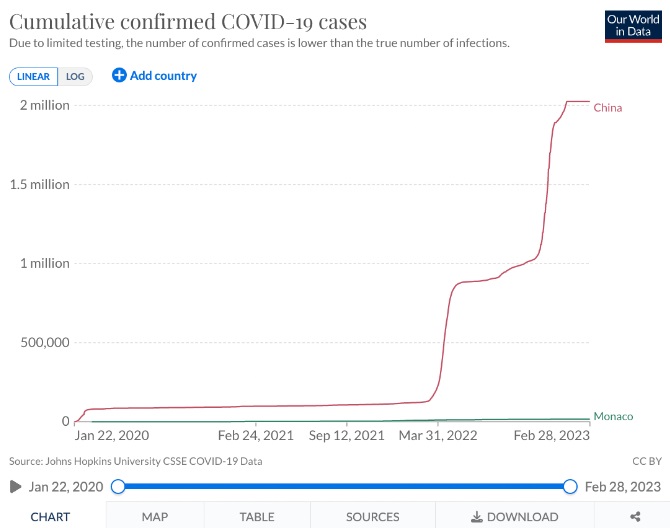
However, unlike Macau, Monte-Carlo’s industry was not affected similarly by COVID restrictions, as local lockdowns and border closures were shorter in duration. Additionally, the ongoing COVID situations in the two countries were vastly different (see the graph below), creating different attitudes and policies regarding sharing public spaces, like casino halls, contributing to differing speeds of industry recovery.differing speeds of industry recovery

Macau’s gambling industry post-pandemic

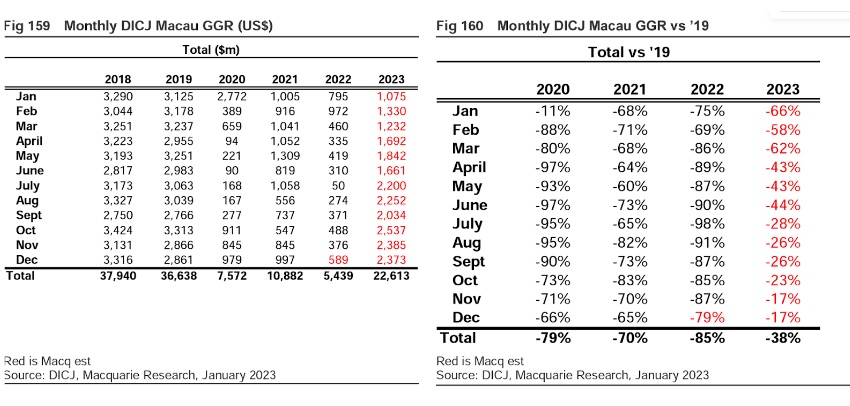
Since 2020, the casino industry has suffered dramatically in Macau. China’s zero COVID policy led to three years of continually bottoming-out revenue figures, from which Macau’s casinos are still recovering. Estimated revenue for this year is expected to be down as much as 38% on 2019’s figures, while 2022 was the worst year, with total revenue down 85%. with total revenue down 85%

With the Chinese borders closed during pandemic restrictions, visitors to Macau plummeted from 39 million in 2019 to below 6 million for the following three years, with local operators describing it as “an empty shell of what it used to be”.an empty shell of what it used to be

Source: https://www.tandfonline.com/doi/full/10.1080/1528008X.2021.1897920

Since the sudden u-turn on lockdowns and zero COVID policy in relation to nationwide protests from November to December 2022, Macau’s casinos began to benefit from returning customers and increased footfall. Still, at a far slower pace, as the return of consumers brought with it concerns over COVID spreading and the risk of mass infections. Three years of zero COVID policy, internal focus, and critical international media attention have damaged the country’s international reputation affecting the return of international casino tourism.

While the Macau industry is struggling to return to its former days, the Chinese government has also implemented new reforms that have halved the duration of casino licenses from 20 to 10 years and increased the tax rate from 39 to 40%, further hitting the newly recovering industry. 

How does Macau relate to online gambling?

In other gambling jurisdictions, online gambling participation grew when COVID restrictions caused land-based gambling establishments to close. However, online casino is illegal across most of Asia and in China, and it’s unlikely that this will change anytime soon.

Like most areas where online gambling is illegal, the illegal market is present, and the lack of legal gaming doesn’t stop numerous offshore gambling sites from targeting and accepting Chinese players (even so, there are significant issues with payment processing and legal clampdowns). 

While it’s more challenging to find data regarding online gambling in China due to its illicit nature, we can look at the Asian-Pacific region as a whole, which includes China, Japan, South Korea, Malaysia, Singapore, Vietnam and Cambodia. This region has been publicised as one of the fastest-growing gambling markets currently, with IMARC Group charting the size of the online gambling market in the region at $19.5bn in 2022 with a projected growth rate of 11.39% between 2023-2028.

Many Asian affiliates use social media platforms to refer players to offshore gambling operators, such as Weibo or WeChat (China’s most extensive social network) or messaging apps like Tencent/QQ. This contrasts with the operations of traditional gambling affiliates such as Slot Gods, where players are referred to operators licensed in the players’ home country. Secure referrals to licensed gambling sites ensure legitimacy in online gambling regimes as well as increased player safety. Sports advertising also plays a significant role in directing traffic, with Asian English Premier League sponsorship deals securing greater exposure for gambling brands when EPL games are aired in Asia. 

Data on the types of games and revenue per game for the online casino industry servicing Chinese clientele is also not readily available. Extrapolating from land-based trends, gamblers in Macau tend to be high rollers who focus on table games, like baccarat and roulette, and VIP gamers account for 43% of revenue. This differs from European online gambling jurisdictions, where online slot games are the most popular type of casino game and generate the most revenue at around 42%.

A slower recovery?

Despite garnering less attention than Monte Carlo, Paris or London, Macau is still the largest casino gambling jurisdiction in the world. While COVID policies have depleted Macau’s gambling industry, there is hope, and it is expected to recover. Still, due to the Chinese government’s attempts to rain in the sector while diversifying the economy, as well as the territory’s reliance on tourism, it might not be as quick as gambling operators would like. 

Building a Strong Financial Future: Making Informed Choices with the Best Gold IRA Companies

In today’s ever-changing economic landscape, securing a strong financial future has become more crucial than ever. With uncertainties in traditional investment avenues, more individuals are turning to alternative options such as Gold Individual Retirement Accounts (IRAs) to safeguard their retirement funds. 

Gold, known for its stability and long-term value retention, has garnered attention as a reliable asset to include in retirement portfolios. However, navigating the realm of Gold IRA investments requires careful consideration and choosing the right company to partner with. This article delves into the significance of Gold IRAs and provides insights into selecting the best Gold IRA companies to ensure a robust financial future.

Understanding Gold IRAs

A Gold IRA is a specialized retirement account that allows investors to include physical gold and other precious metals within their portfolio. 

This type of IRA provides diversification, safeguarding retirement savings from the volatility often associated with traditional investment vehicles like stocks and bonds. Precious metals, particularly gold, have historically acted as a hedge against inflation and economic downturns, making them an attractive option for long-term wealth preservation.

Why Gold IRAs Matter

  • Diversification: A well-diversified portfolio is key to managing risk. Gold IRAs offer a unique avenue for diversification, as gold often moves inversely to the stock market. This means that when equities are underperforming, gold tends to hold its value or even appreciate, helping to stabilize overall portfolio performance.
  • Inflation Hedge: Gold’s value has shown resilience during periods of high inflation. As central banks increase money supply, the value of paper currency can decrease. In such scenarios, the value of gold typically rises, providing a hedge against the eroding purchasing power of money.
  • Long-Term Store of Value: Throughout history, gold has maintained its value over the long term. Unlike paper assets that can become worthless, gold’s intrinsic worth is widely recognized, making it a reliable store of value for future generations.
  • Portfolio Insurance: Gold serves as a form of insurance within a portfolio. In times of economic uncertainty or geopolitical turmoil, the demand for gold tends to surge, potentially benefiting Gold IRA holders.

Selecting the Best Gold IRA Companies

Choosing the right Gold IRA company is a critical step toward building a strong financial future. You can see a list of top-tier Gold IRA companies, complete with their distinctive features and pricing details, let’s check out this link: https://www.wishtv.com/sponsored/best-gold-ira-companies/ 

Here are essential factors to consider when evaluating potential companies:

  • Reputation and Trustworthiness: Research the company’s reputation within the industry. Look for established companies with a history of serving clients well and adhering to ethical business practices. Online reviews, ratings, and independent assessments can provide insights into a company’s reputation.
  • Experience and Expertise: Opt for companies with experience in the precious metals and retirement account sectors. A knowledgeable company can guide you through the process, answer your questions, and provide valuable advice based on market trends.
  • Transparency: A trustworthy Gold IRA company should provide clear and transparent information about fees, processes, and the types of assets they offer. Hidden fees or complex terms can lead to unexpected costs and complications down the line.
  • Storage Options: Physical gold needs secure storage. Ensure the company offers secure storage options, such as insured and segregated storage facilities, to safeguard your precious metals investments.
  • Customer Service: Excellent customer service is vital, especially in the world of finance. A reputable company should be responsive to your inquiries and provide clear communication throughout the investment process.
  • Flexibility: Look for companies that offer a range of precious metals options beyond just gold, such as silver, platinum, and palladium. Diversification within precious metals can further enhance your portfolio’s stability.

Conclusion

As individuals seek to build a strong financial future, Gold IRAs have emerged as a compelling option for preserving wealth and mitigating investment risks. With their historical value retention and inflation-hedging capabilities, precious metals like gold can play a crucial role in diversifying retirement portfolios. However, selecting the right Gold IRA company is paramount to ensure a smooth and successful investment journey.

By prioritizing factors such as reputation, experience, transparency, storage options, customer service, and flexibility, investors can make informed choices about the best Gold IRA companies to partner with. With the right guidance and prudent decision-making, individuals can leverage the stability and potential growth offered by Gold IRAs to secure a solid financial foundation for their retirement years.

Driving Digital Excellence Unleashing Automotive Expertise in the Digital Realm

The automotive industry is undergoing a major transformation, driven by the rise of digital technologies. In order to stay ahead of the curve, automotive companies need to embrace digital transformation and unleash their automotive expertise in the digital realm.The future of the automotive industry lies in the hands of those who are capable of driving, and it is essential that automotive expertise is unleashed in the digital realm.

Digital technology has revolutionised the way we live, work, and do business. From smartphones to social media platforms, the digital world has changed the way we connect, communicate, and consume information.

The automotive industry is no stranger to digital technology, and as vehicles become increasingly connected and autonomous, the industry is poised to undergo a major transformation. Automotive professionals who are able to navigate this change and embrace digital technology will be well-positioned to succeed in the industry of the future.

In this post, we will explore the role of digital technology in the:

Automotive industry digital transformation strategies

The automotive industry is rapidly undergoing a digital transformation, with many companies looking to implement strategies to stay competitive and meet the changing needs of consumers. 

These strategies often involve leveraging digital technologies to optimize operations, enhance customer experiences, and develop new business models. By embracing digital tools and technologies, automotive companies can improve their agility, responsiveness, and efficiency, while also gaining new insights into customer behavior and preferences.

Adopting a customer-centric approach

It is essential for driving digital excellence in the automotive industry. In today’s digital age, customers have more power than ever before. They have access to information about products and services, and they can quickly compare prices and read reviews before making a purchase. 

By adopting a customer-centric approach, automotive companies can tailor their products and services to meet their customers’ needs, resulting in increased customer satisfaction and loyalty. Ultimately, this leads to a more successful and profitable business in the digital realm.

Building agile digital solutions

Digital transformation is reshaping the automotive industry, and companies that fail to adapt will be left behind. Building agile digital solutions is essential for staying competitive in this rapidly changing landscape and there is digital marketing for car dealers also that proves of immense help. By adopting agile methodologies, automotive companies can quickly respond to market changes, and deliver innovative products and services. 

Agile teams work collaboratively, breaking down silos and promoting cross-functional communication to develop flexible and adaptable solutions. This approach promotes continuous improvement, enabling companies to continuously iterate and refine their digital products and services to meet evolving customer needs.

Leveraging data analytics tools

To stay ahead of the competition, companies must leverage data analytics tools to gain valuable insights into customer behaviors, preferences, and market trends. With the right tools and expertise, businesses can gain a competitive edge by making data-driven decisions that improve operational efficiencies, enhance customer experiences, and drive revenue growth. From predictive analytics to machine learning, there are a variety of data analytics tools available to automotive businesses. 

By embracing digital transformation, automotive companies can unleash their automotive expertise in the digital realm and stay ahead of the curve in the rapidly changing automotive industry.Here are some specific examples of how automotive companies are using digital technologies to drive innovation:

  • Volkswagen is using 3D printing to create prototypes of new vehicles more quickly and easily. This allows Volkswagen to test new designs and iterate more quickly, which can lead to better products.
  • Tesla is using artificial intelligence to improve the performance of its self-driving cars. Tesla’s self-driving cars use AI to constantly learn and improve, which makes them safer and more efficient.
  • BMW is using big data to optimize its manufacturing processes. BMW collects data from its factories and uses it to identify areas where it can improve efficiency. This has led to significant cost savings for BMW.
  • Mercedes-Benz is using social media to engage with customers. Mercedes-Benz has a large following on social media, and it uses this platform to connect with customers, share news and updates, and get feedback.
  • Ford is using telematics to monitor vehicle health. Ford’s telematics system allows the company to monitor the health of its vehicles and provide remote diagnostics. This can help Ford to identify and fix problems before they cause major damage.

These are just a few examples of how automotive companies are using digital technologies to drive innovation. As the automotive industry continues to evolve, we can expect to see even more innovative uses of digital technologies in the years to come. 

Automotive companies must invest in the right technologies, build digital talent and capabilities, and create a culture of innovation and collaboration. Only by doing so can they unlock the full potential of digital and stay ahead of the curve in the years to come.

EDITOR'S PICK OF THE WEEK

CFO's new mandate. CFO explaining the presentation

The Performance and Transformation Orchestrator: The CFO’s New Mandate in the Age of AI

By Terence Tse CFOs are evolving into AI-driven transformation orchestrators, balancing finance, technology, and strategy while upskilling teams, managing risks, and driving measurable business value. A key insight from this year’s AI for CFOs event, organized...

WISE DECISION MAKER GUIDE

POWER INFLUENCERS

Emerging Trends

The Future of Global Trade