People seek intelligent online trading options to monitor investments anytime, anywhere. Online trading helps increase the scope for investors to control their portfolios. Royal Liston Group is one of the best platforms if someone wants to be involved in convenient online trading. This platform’s resolving strategy fascinates the development of accessible attributes for managing online trading. The user-friendly approach of this platform allows users to get a smoother experience.
The meaningful reasons to choose Royal Liston Group
Online trading allows users to be involved in buying and selling financial products through a platform. This online selling of financial products is now becoming a trend for users. When following trends, the users want to connect with a reliable platform. Royal Liston Group is a dependable platform that supports giving a fantastic experience. The endless customized trading options support every style of trading.
Easy access: Royal Liston Group offers many users easy access to tools. They have a convenient web trading platform that helps to connect devices in laptops, smartphones, tablets, and desktops. The intuitive features enable users to enjoy quick and effective trading. The web trading platform avoids browsing software. This way, it eliminates the complex features of trading.
One-stop solutions to access diverse trading options: Royal Liston Group offers users to enjoy diverse options. For instance, traders can be involved in currency pair trading, cryptocurrencies, metal trading, goods, etc. The experts are always ready to guide users to choose options as per their styles and convenience. This way, by helping dedicated teams, the users achieve a breathtaking experience.
An impressive trading environment: This online platform helps traders execute trading efficiently with convenient features. The platform is highly featured with safety options. The traders are assured regarding their investment. The safety features help to protect users’ accounts. For depositing money, the users can use debit, credit, and any kind of electronic card. Besides, the easy-drawn options allow to provide more flexibility. This way, the user can withdraw money anytime. Before withdrawing money, the accounts are verified by using safety features.
Using the most advanced data and tools: Royal Liston Group has a special research team. It crafts detailed research on the investment market. This research provides the latest data, and this real-time data guides users to make smart decisions for managing smarter online trading. The data also help users to be aware of the competitive market and make the right decision.
Offers education resources: Royal Liston Group is committed to offering educational resources to the users. The educational content includes trading guides, webinars, and video tutorials. The video content helps to understand the market well. It helps to enhance the trading skills of users. This helps them to make informed decisions to gain maximum profit.
The bottom line
Royal Liston Group offers diverse options to traders. The advanced security features provide a safe environment for trading. Besides, the tools and research help get real-time data that creates user awareness. The educational content and video tutorials of this platform improve trading skills. The dedicated team always supports users to enjoy hassle-free trading.
Assume you are looking for a powerful web-based exchange platform that offers everything a trader expects for a safe exchange. All things considered, you need to use the Dalsson Trust Group Forex exchange site. It is one of the quickest-growing sites and could revolutionize web-based trade sites. It provides all the features required for web-based trading.
Aside from its elements and advantages, in this article, we will look at how Dalsson Trust Group forestalls money laundering in web-based exchange.
What Are the Steps Dalsson Trust Group Takes to Avoid Money Laundering?
Underneath referenced are all the measures the Dalsson Trust Group trading platform implements to avoid money laundering:
Multiple Layers of Security
Concerning web-based exchange sites, numerous layers of safety are required. From transferring cash to making withdrawals, the Dalsson Trust Group trading platform has proactively considered everything regarding safe exchanging.
The site follows global anti-money laundering and anti-terrorism guidelines, so they can add an additional layer of safety for every one of their members on their site. It is a crucial step taken by the platform to avoid money laundering.
Stringent Guidelines and Regulations
Dalsson Trust Group additionally doesn’t allow its members to move cash between firms or exchange accounts that exclude the name of the original trader. Likewise, the stage doesn’t permit members to move cash from their exchange account to the funds of the firm they own.
Assume the first exchange account isn’t open any more. The same individual can move assets to an alternate account in the same country and currency from which the original account was made, provided the user has a check duplicate or some other proprietorship document of the new account.
Dalsson Trust Group Robust Verification Process
Concerning money laundering, Dalsson Trust Group likewise has a stringent KYC process for each individual who signs up on their official platform. This action is taken to confirm the identity of each of its members.
During the onboarding stage, each member should give every one of the legitimate documents for ID, address verification, and other significant information. This step assists with staying away from money laundering. It ensures that only leading certifiable traders approach their site.
Dalsson Trust Group takes each member’s security and well-being into serious thought. The platform keeps a guideline that avoids money laundering concerning Forex web-based exchange. Stringent regulatory principles, compliances, EDD processes, strong KYC, detailing cycles, and exchange checking make it a strong web-based Forex exchanging platform.
Assembling every one of the crucial information and documents from each member is fundamental to deciding whether the broker’s personality is authentic. Dalsson Trust Group follows all the safe practices and adheres to anti-money laundering laws and regulations.
Closure
In case you are new to Forex exchanging, it is suggested that you just trade into one or two pairs. Before exchanging currency pairs, research and dive deeper into Forex exchanging so you can exchange with the right resources. Dalsson Trust Group assists members with essential data and insights.
The website is straightforward to explore, and when you make an account, you can begin exchanging on the web. You don’t need to stress over well-being and security while using the Dalsson Trust Group exchanging stage because the webpage complies with all the guidelines and rules required for online Forex exchanging.
Parents constantly seek the best options for their little ones in today’s fast-paced world. Many parents are turning to European baby formulas for their high quality and stringent safety standards regarding infant nutrition. However, European baby formulas can sometimes come with a hefty price tag. But fear not, savvy parents! You can still provide your bundle of joy with top-notch nutrition without breaking the bank. This article explores practical tips for buying European baby formula on a budget, ensuring your baby gets the best without straining your finances.
Understanding European Baby Formula
Before diving into budget-saving tips, let’s understand what separates European baby formula. Organic baby formulas from Europe often adhere to stricter regulations than those in the United States, prioritizing organic ingredients, fewer additives, and higher quality standards.
Why Choose European Baby Formula
Discover the compelling reasons why European baby formula might be the right choice for your baby’s nutritional needs.
Setting Your Budget
Begin with the basics: establishing a budget that suits your financial situation while ensuring your baby’s nutrition.
Buy in Bulk
Learn the advantages of buying in bulk and how it can significantly reduce baby formula expenses.
Subscribe and Save Programs
Explore the convenience and cost-effectiveness of subscription programs for consistent formula supply.
Price Comparison Websites
Find out how online tools can help you find the best deals on European baby formulas across different retailers.
Store Brands vs. Name Brands
Evaluate the pros and cons of choosing store-brand formulas over well-known name brands.
Consider Liquid vs. Powder Formula
Uncover the cost differences between liquid and powder formulas and which one might better fit your budget.
Check for Coupons and Discounts
Discover various ways to find coupons and discounts that can significantly reduce your formula costs.
Join Parenting Forums for Deals
Learn how parenting forums and communities can be goldmines for discovering budget-friendly formula options.
Expiration Dates Matter
Understand the importance of checking expiration dates to ensure the safety and efficacy of the formula.
Consider Generic European Brands
Explore lesser-known European baby formula brands that offer quality nutrition at a lower cost.
Consult Your Pediatrician
Understand why it’s crucial to consult your pediatrician before changing your baby’s diet.
Import Directly
Explore the option of importing European baby formula directly to your doorstep for potential savings.
Making the Right Choice
Sum up the key takeaways and tips for successfully purchasing European baby formula on a budget.
Now, let’s delve into each of these points in more detail.
Understanding European Baby Formula
European baby formula is highly regarded for its stringent quality standards. These formulas often contain fewer additives and are made from high-quality ingredients. While they may cost more than domestic alternatives, their benefits are undeniable.
Why Choose European Baby Formula
European baby formula is renowned for its commitment to organic ingredients, strict manufacturing standards, and advanced nutrition research. Many parents opt for European formulas to give their babies the best start, avoiding toxic ingredients that some nonorganic formulas contain.
Setting Your Budget
Before you start shopping, setting a budget that aligns with your financial situation is crucial. Factor in your monthly expenses and allocate a reasonable amount for baby formula.
Buy in Bulk
Buying in bulk is an effective way to save on European baby formula. Retailers often offer discounts on larger quantities, significantly reducing the cost per unit.
Subscribe and Save Programs
Several online retailers offer subscription programs for baby formula. Signing up for these programs can provide you with consistent access to formula while offering discounts and convenient doorstep delivery.
Price Comparison Websites
Use price comparison websites to find the best deals on European baby formula across different online retailers. These websites can help you identify discounts and special offers quickly.
Store Brands vs. Name Brands
Consider store-brand European baby formulas as an alternative to well-known name brands. Store brands can be more budget-friendly while still providing quality nutrition.
Consider Liquid vs. Powder Formula
Compare the prices of liquid and powder European baby formulas. Sometimes, you might find that one form is more cost-effective than the other.
Check for Coupons and Discounts
Search for coupons and discounts online or in parenting magazines. These can significantly reduce the cost of European baby formula.
Join Parenting Forums for Deals
Online parenting forums and communities are great places to find exclusive deals and discounts on baby formula. Fellow parents often share their money-saving tips and experiences.
Expiration Dates Matter
Always check the expiration dates on baby formula products. Using expired formula can harm your baby’s health and is not worth the risk.
Consider Generic European Brands
Explore generic European baby formula brands that can offer comparable quality at a lower price point. Don’t be swayed by brand names alone.
Consult Your Pediatrician
Before making any changes to your baby’s diet, consult your pediatrician. They can provide valuable guidance on selecting the right formula for your baby’s unique needs.
Import Directly
If you’re open to international shipping, consider importing European baby formula directly. This can sometimes be more cost-effective than purchasing from local retailers.
Making the Right Choice
In conclusion, buying European baby formula on a budget is achievable with careful planning and research. Prioritize your baby’s nutrition without straining your finances by implementing these tips. Remember that your baby’s health and well-being come first, so make informed choices that align with your budget and their needs.
Diverse cultures, captivating histories, and spectacular sights attract countless travelers annually, turning some regions into veritable gold mines for property investors. As tourism continues its relentless growth, seizing the perfect investment opportunity in these hotspots can become a game changer. Dive into this guide to unveil seven tourist destinations that present profitable vistas for those willing to venture into the property market.
Nassau, Bahamas: A Caribbean Jewel
Nassau, the capital city of the Bahamas, teems with azure waters, vibrant culture, and opportunities for property investments. Visitors flock to this tropical paradise year-round, ensuring a steady stream of potential renters for savvy investors. Nestled amongst these sandy beaches are enticing homes for sale in Nassau Bahamas that beckon investors with their promise of returns. These properties offer financial benefits for property investors by providing a slice of the serene Caribbean life to tourists. A sound strategy here would involve purchasing a waterfront property, which tends to appreciate in value and holds unmatched allure for tourists.
Bali, Indonesia: Asia’s Enchanting Retreat
Bali’s allure lies in its idyllic beaches, rich culture, and spiritual sanctuaries. Property investors here enjoy the perks of strong tourism inflows and a comparatively lower investment entry point. Beyond its famed beachfront villas, the inland Ubud area has also surged in popularity, offering tranquil retreats amidst lush greenery. Given Indonesia’s recent easing of foreign property ownership laws, now may be the opportune moment to consider investing.
Barcelona, Spain: Europe’s Architectural Marvel
Famed for Gaudi’s architectural masterpieces and its animated streets, Barcelona attracts millions annually. The city’s unique blend of history and modernity ensures a steady demand for rentals, particularly in the bustling Gothic Quarter and the beach-lined Barceloneta. Investing here could see consistent returns, especially if one targets the bustling summer months when tourism peaks.
Marrakech, Morocco: Africa’s Gateway to Culture and History
The “Red City” of Marrakech, with its kaleidoscope of colors and bustling souks, stands as a testament to Africa’s rich history. Investing in traditional riads, especially those around the famed Jardin Majorelle or the Medina, can be a profitable venture. As travelers increasingly seek authentic experiences, these properties often find favor as boutique accommodations, merging historic charm with modern luxury.
Cartagena, Colombia: South America’s Colonial Gem
Boasting a rich colonial history and sun-kissed beaches, Cartagena remains South America’s prized jewel. The historic Walled City is particularly in demand, with its charming cobblestone streets and colonial mansions. Purchasing property in this UNESCO World Heritage site, and transforming it into boutique hotels or luxury rentals, can offer significant returns on investment.
Quebec City, Canada: North America’s Old-World Charmer
This French-speaking enclave in Canada offers a slice of Europe in North America. Its historic Old Town, a UNESCO World Heritage site, captivates with its cobbled streets and fairy-tale charm. Investing in properties around this area, especially those with views of the majestic Château Frontenac, ensures a year-round influx of tourists seeking a European experience without crossing the Atlantic.
Queenstown, New Zealand: Oceania’s Adventure Capital
Renowned for its adrenaline-pumping activities and breathtaking landscapes, Queenstown promises more than just fleeting thrills. The town witnesses a steady influx of both adventure junkies and serenity seekers, making it ripe for property investment. Opting for lakeside properties can be a prudent decision, as they promise enchanting views and higher rental incomes.
Dubrovnik, often referred to as the “Pearl of the Adriatic,” is a mesmerizing blend of history, culture, and unparalleled natural beauty. With its pristine beaches and majestic medieval walls, this Croatian city has caught the world’s attention, further amplified by its role as a filming location for the famed series “Game of Thrones.” Property in the historic Old Town, with its terracotta-roofed buildings and ancient stone streets, offers immense appeal. Investing in properties with panoramic views of the Adriatic ensures a steady influx of tourists, especially those eager to experience the rich history that Dubrovnik effortlessly melds with contemporary comforts. Furthermore, the increasing number of direct international flights and the city’s reputation as a top European destination solidify its investment potential for the discerning investor.
Final Analysis
The world is replete with locales that promise not only captivating experiences but also lucrative investment opportunities. Whether it’s the tranquil shores of the Bahamas or the bustling streets of Barcelona, each destination offers a unique blend of cultural richness and investment potential. As with all ventures, thorough research, understanding local property laws, and consulting with local experts can be the difference between a fruitful investment and a costly mistake. Here’s to finding that perfect property in the heart of these global tourist hotspots!
Situated in the core of Alberta, Calgary has consistently been a focal point for real estate endeavors within Canada. Nevertheless, just like numerous cities around the globe, the real estate market in Calgary underwent substantial transformations amid the COVID-19 crisis. As we progress into the post-pandemic period, grasping the alterations within the market and anticipating what lies ahead in Calgary’s real estate sector is crucial.
The Pandemic Impact
The onset of the COVID-19 pandemic in early 2020 brought uncertainty to real estate markets globally, and Calgary was no exception. The initial months saw a decline in real estate transactions as buyers and sellers adopted a wait-and-see approach. Social distancing measures, lockdowns, and remote work arrangements changed the way people perceived their living spaces, causing shifts in housing preferences.
Market Resilience
Despite initial challenges, Calgary’s real estate market demonstrated resilience. The city’s diversified economy, which includes sectors like energy, technology, and healthcare, played a crucial role in maintaining stability. As remote work became the norm, some Calgarians began reevaluating their living situations, seeking larger homes, or exploring suburbs and more affordable neighborhoods.
Shifts in Housing Preferences
One notable trend that emerged during the pandemic was the increasing demand for larger homes and properties with dedicated office spaces. With remote work likely to remain prevalent, many Calgarians sought homes that catered to their evolving needs. This trend led to a surge in suburban and outlying area real estate markets, as well as a renewed interest in spacious properties.
Real Estate Pricing
The Calgary real estate market experienced fluctuations in property prices during the pandemic. While there were brief periods of price adjustments, the market maintained overall stability. Factors such as low-interest rates, government stimulus packages, and pent-up demand played a role in stabilizing prices.
The Impact of Low-Interest Rates
The Bank of Canada’s decision to keep interest rates at historic lows had a significant impact on Calgary’s real estate market. Low borrowing costs made homeownership more accessible for many Calgarians, leading to an increase in demand for residential properties. This demand, coupled with limited housing supply in some areas, contributed to price growth.
The Rental Market
The rental market in Calgary saw its own set of challenges during the pandemic. With many individuals experiencing job losses or income reductions, the demand for rental properties decreased initially. However, as the economy gradually recovered, rental demand started to rebound.
Investor Opportunities
The post-pandemic era has created unique opportunities for real estate investors in Calgary. With lower interest rates and stable property prices, investors have been searching for Calgary houses for sale and exploring different strategies, such as purchasing rental properties, short-term rentals, and flipping houses. The appeal of Calgary’s real estate market lies in its potential for long-term growth and income generation.
Looking Ahead
In the post-pandemic era, Calgary’s real estate market will be influenced by several crucial factors, such as the city’s economic recovery, closely linked to the energy sector and the growth in technology and healthcare industries. Additionally, the enduring remote work trend will shape housing preferences, with a focus on homes featuring office spaces and properties located in suburban areas. Furthermore, changes in government policies related to real estate and potential updates to mortgage regulations will also impact the market. Finally, the trajectory of interest rates will play a significant role in shaping homebuying decisions by affecting affordability and demand.
Calgary’s real estate market has shown remarkable resilience throughout the COVID-19 pandemic. As we enter the post-pandemic era, the market is poised for continued growth and stability. Factors such as economic recovery, remote work trends, government policies, and interest rates will continue to shape the landscape. Whether you are a homeowner, buyer, seller, or investor, staying informed about these trends and adapting to the evolving market conditions will be crucial for making informed real estate decisions in Calgary.
Veteran Affairs (VA) loans are a boon to the heroes of our nation. If you’re a qualifying veteran, service member, or spouse, these loans can be a godsend, offering competitive interest rates, no down payment requirements, and even no private mortgage insurance. But like every financial endeavor, applying for a VA loan requires preparation and strategy.
Here are the most effective financial tips you should implement when you’re applying for a VA loan.
1. Shop Around For The Best Lenders And Rates
Just because VA loans come with plenty of benefits doesn’t mean all lenders will offer you the same terms. Always make it a point to shop around. Different lenders have different offerings, interest rates, and fees. Research and compare what’s out there. Companies such as 1st United Mortgage have a reputation for their commitment to veterans and their needs. By looking into different lenders, you can find the best fit for your financial situation, ensuring a smooth and stress-free loan process.
2. Understand Your Credit Score
Your credit score is still crucial when applying for a VA loan. Most lenders have a minimum credit score requirement, even though the VA itself doesn’t set a specific score. Regularly check your credit report for any discrepancies or inaccuracies. By ensuring your credit score is in the best shape possible, you can secure favorable interest rates and save thousands over the life of your loan.
3. Budget for All Costs Involved
It’s a myth that VA loans have no costs. While you might save on down payments and private mortgage insurance, there are still closing costs and potentially a VA funding fee. It’s essential to budget for these costs in advance to avoid any last-minute surprises. Ask your lender for a detailed estimate to get a clearer picture.
4. Save For An Emergency Fund
An emergency fund is always a good idea, but it becomes even more essential when you’re about to take on a large financial commitment. Having 3-6 months’ worth of expenses saved can give you a cushion in case of unexpected events, ensuring you can always make your mortgage payments on time.
5. Educate Yourself About The VA Loan Limit
The VA doesn’t set a cap on how much you can borrow, but there is a limit to how much they will guarantee. This is known as the VA loan limit. If you decide to buy a home that exceeds this amount, you may need to make a down payment. Understanding this limit can help you set realistic expectations and budget accordingly.
6. Consider A Joint Loan
If you’re married or planning to buy a house with someone else, consider a joint loan. When two eligible VA users are involved, the available entitlements can be combined, potentially allowing for a larger loan without a down payment. Additionally, exploring options like Monzi personal loans could provide further financial flexibility and support in your home buying journey.
7. Opt For Pre-Approval
Pre-approval doesn’t just give you an edge in a competitive housing market. It also gives you a clear picture of what you can afford. By getting pre-approved, you can confidently look for homes within your price range and make serious offers that sellers will consider.
8. Factor In Future Financial Goals
When determining how much home you can afford, think long-term. Do you plan to send your kids to college? Are there any major vacations or big purchases in the pipeline? Make sure that your home payment, even with the excellent terms of a VA loan, doesn’t hinder your other financial goals.
9. Seek Assistance If Needed
The VA loan process, like any mortgage process, can be complex. Don’t hesitate to ask for help or seek advice. Whether it’s a trusted financial advisor or a VA loan specialist, there’s no shame in ensuring you’re making the best decisions for your future.
10. Stay Informed On VA Loan Updates
The policies and specifics of VA loans can change. It’s always wise to stay informed about any changes or updates in the VA loan program. Whether it’s changes in funding fees, loan limits, or eligibility requirements, being in the know can save you both time and money.
Conclusion
VA loans are one of the significant benefits offered to our nation’s heroes. When used wisely, they can lead to homeownership with unmatched terms and benefits. Implementing these financial tips will not only help you navigate the VA loan process smoothly but also ensure your financial stability in the long run.
So, as you embark on this exciting journey towards homeownership, equip yourself with knowledge and strategy for a brighter, financially secure future. Researching and comparing VA mortgage rates is essential to secure the best deal on home financing.
Investing in gold has always been a popular choice for many people. After all, it’s shiny, valuable, and has stood the test of time. But have you ever considered investing in a gold IRA? It’s an intriguing option that allows you to include gold in your retirement portfolio. However, just like any investment, there are both potential risks and rewards involved. So let’s take a closer look at what they are.
The Golden Rewards
If you’re considering investing in a gold IRA, it’s essential to understand the potential rewards that come with this decision. One of the most significant benefits is the long-term stability that gold offers. While other investments fluctuate with market trends and economic changes, gold tends to hold its value over time. This is especially true during times of economic uncertainty when investors flock to the safety and security of precious metals.
Furthermore, gold can act as a hedge against inflation. As more money is printed by central banks around the world, the value of fiat currencies may diminish over time. In contrast, gold retains its purchasing power because its supply remains relatively limited.
Additionally, investing in a gold IRA offers tax advantages compared to traditional IRAs or 401(k)s. By transferring or rolling over funds from these accounts into a gold IRA, you can potentially defer taxes until you start making withdrawals after retirement. Just be sure to read reviews of gold IRA companies to find a trusted provider.
The Gleaming Risks
While there are enticing rewards associated with investing in a gold IRA, it’s equally important to consider potential risks before diving headfirst into this investment strategy.
One significant risk is the volatility of precious metals prices. Unlike stocks or bonds that generate dividends or interest income, gold does not produce any cash flow on its own. Its value primarily depends on supply and demand factors driven by investor sentiment and geopolitical events.
Additionally, storage costs should be taken into account when investing in physical gold within an IRA structure. Storing valuable items securely involves fees that could impact your overall returns. Furthermore, there is always the risk of theft or loss when it comes to physical assets.
Furthermore, while gold may offer stability during times of economic turmoil, its long-term appreciation has historically been slower compared to stocks or other high-growth investments. If you’re seeking rapid wealth accumulation, a gold IRA may not be the vehicle you’re looking for.
Striking a Balance
As with any investment decision, finding the right balance between risks and rewards is crucial. Diversification plays a significant role in mitigating potential drawbacks of gold investments. By diversifying your portfolio across various asset classes such as stocks, bonds, and real estate alongside your gold IRA, you can spread both risk and reward.
Additionally, consulting with a trusted financial advisor who specializes in retirement planning and precious metals can provide valuable insights tailored to your unique financial goals and risk tolerance.
Common Gold IRA Scams That You Should Know About
When it comes to investing in a gold IRA, it’s essential to be aware of potential scams that could jeopardize your hard-earned money. While the vast majority of gold investment companies are reputable and trustworthy, there are some common scams you should watch out for. Let’s delve into a few of them:
Unscrupulous Dealers
One common scam involves unscrupulous dealers who overcharge for gold coins or bullion. They may use high-pressure tactics, promising guaranteed returns or exclusive deals to lure unsuspecting investors. It’s crucial to always research and choose reputable dealers with a solid track record before making any purchases.
Self-Directed IRA Promoters
Another prevalent scam involves self-directed IRA promoters who claim they can set up a gold IRA without any custodial fees or paperwork hassles. These promoters often charge exorbitant gold IRA fees and provide misleading information about the process. Remember, establishing a legitimate gold IRA requires working with an IRS-approved custodian.
Counterfeit Coins and Bars
The risk of purchasing counterfeit gold is ever-present, especially when dealing with unknown sellers or online platforms that lack proper certifications or reviews. Counterfeit coins and bars can be convincingly crafted, making it difficult for even seasoned investors to detect the fraud. To avoid falling victim to this scam, always purchase from trusted sources and conduct thorough due diligence.
Ponzi Schemes
Be cautious of Ponzi schemes masquerading as legitimate gold IRAs promising outrageous returns in a short period. These schemes rely on new investor funds to pay returns to earlier investors, creating an unsustainable cycle that eventually collapses. Always remember that genuine investments come with risks, and if something sounds too good to be true, it probably is.
Protecting Yourself
To protect yourself from potential scams when investing in a gold IRA, it’s vital to follow these guidelines:
Research before you invest: Take the time to thoroughly research any company or dealer before doing business with them. Look for reviews, certifications, and any red flags that may indicate fraudulent activity.
Verify credentials: Make sure the individual or company you’re dealing with is properly accredited and registered with the relevant regulatory bodies. Don’t hesitate to ask for proof of their credentials.
Seek independent advice: Consult with a trusted financial advisor who has expertise in retirement planning and precious metals investments. They can provide valuable insights and help you navigate through potential scams.
Insist on physical delivery: If you choose to purchase physical gold, insist on taking physical possession or storing it securely in an IRS-approved depository that offers audit protocols.
Remember, being proactive and knowledgeable about potential scams is crucial when investing in a gold IRA. By staying informed, conducting due diligence, and seeking professional advice, you can protect yourself against fraudulent schemes and make informed investment decisions that align with your retirement goals.
Conclusion
In conclusion, investing in a gold IRA certainly has its potential risks and rewards. Educate yourself about the pros and cons of gold IRAs. While gold offers stability and protection against inflation over the long term, it also carries the uncertainty of price volatility and storage costs.
By carefully weighing these factors and maintaining a diversified portfolio approach guided by expert advice, you can potentially make informed decisions that align with your retirement goals. So go ahead — explore the golden possibilities!
For most people monthly utility costs are the second greatest expense only to the mortgage. By finding ways to reduce energy consumption, you’ll not only make the most eco-conscious investment but help to bring your household within a reasonable budget.
The prices have grown exponentially for electricity, with the costs ranging from roughly $1500 annually for an average household only five years ago. Cutting these prices would relieve a financial burden that makes affording monthly expenditures difficult.
You can cut electric use in the home using two concepts:
Energy efficiency: Making improvements around the house that makes it unnecessary to rely so heavily on energy for comfortability. Efficiency would involve installing a programmable thermostat for automatic temperature adjustment or upgrading the HVAC system to require less energy to maintain the household at the same comfort level.
Conserving Energy: Avoiding unnecessary use of energy including keeping lights off when no one is in the room, unplugging electronics not being used, limiting standard usage like keeping the heat low at night in favor of more blankets.
Efficiency is more involved and expensive compared to conserving, but these are long-term and result in increased property value. Some efficient methods are simple and inexpensive like switching out lightbulbs to those with greater efficiency. Large or small, there’s much you can do to save on energy costs.
How Can You Save On Your Electricity Costs
You can either make improvements to your home in an effort to cut back electrical costs or conserve the amount you use. The most effective, longest lasting and greatest savings will come from energy efficiency.
This can be as expensive as installing new windows to ensure a great seal, adequate insulation, and no loss of heat or cold through the windows or changing out incandescent bulbs in favor of LED energy-efficient options.
The switch can be cost-efficient to suit a tight budget, but it will make an impact no matter how small the change. Here are some tips to get you started with how to save electricity or hvordan spare strøm in your home. These will help you save considerably on annual charges.
Do an energy assessment
When reaching out to an electricity professional with the utility company, the representative will go through the house with you to do an “energy audit, a complimentary service.” This will tell you the amount of energy you use and reveal your efficiency.
While going through the house, the utility representative will offer guidance on areas where you can make changes to conserve energy, leading to greater efficiency. They could offer suggestions on projects within the house you could consider to make the home more energy efficient.
You don’t need to jump on each suggestion straight away, but these are ideas to ponder and perhaps take steps to do one thing at a time.
Phantom or vampire energy should be cut
Phantom or vampire energy is used when you’re not even present or using the electronic or appliance emitting the energy. In fact, a large percentage of energy burned in a home is caused by electronics that are shut off.
A small appliance can run as much as “876 watts of energy” when it’s on, but if you turn it off and unplug it will produce zero energy.
However, the other kitchen appliances, internet routers, TVs, and laptops will continue to increase the electric bill. That’s because they work constantly even when not in use. A suggestion to cut the bill drastically is to employ power strips and turn these off when electronics are not functioning.
Dimming the lights is a solution
Another good way to decrease electricity use and cost is to use dimmer switches. The indication is that these will restart after two minutes which is something not visible with the naked eye.
Unless you’re reading or engaging in an activity that requires full light, you can save considerable energy and expenses by dimming those in the room you’re in. You should also make sure to shut off the lights in the rooms not currently occupied.
Do you really need the dryer
Some people prefer to air dry their clothes. It can save shrinkage, stretching, fading the color, and so many other things that a dryer can do to clothing. Plus, a dryer is flat-out an “energy hog.” If you can cut it out as much as possible from your laundry, you’ll save considerably on electricity costs.
It’s indicated that a dryer on its own can consume as much as “5000 watts for each load of laundry.” Instead of loading up the dryer, use a house rack or install a line outside and air dry the linens. They’ll smell awesome and the expense will be so much less.
Load up the fridge and freezer
Everyone is aware the freezer and fridge doors should remain closed at all times; otherwise, the cool air will escape. That means the appliance needs to work that much harder to achieve the desired temperature again.
With some people opening and closing a refrigerator multiple times is a habit, but this behavior can result in roughly 7 percent of household energy use.
Another way to keep a fridge/freezer functioning with lower electricity output is to ensure it’s loaded full of food and drinks. These serve as insulation preventing the appliance from working as hard to keep things cool.
Final Thought
This is far from an exhaustive list of electricity saving costs. You can do many more things to efficiently reduce your electricity use. Not all of them will save a considerable amount but by incorporating a few measures, you can make a significant difference in your expenses.
The idea is to start with easy, less invasive projects and work to the next level until you get to the larger tasks. Once your home has become energy efficient, have another energy audit to see where you stand with energy usage to see if you can make any other improvements. Visit this link to see how Norway hydro plants are taken measure to be more energy conscious.
None of us will ever be perfect but if you can cut your costs in half, that’s an achievement.
It is excellent that you are thinking of starting a finance company. It is not easy, but after reading our article, you will have better chances to start your business.
The finance company urges you to create a better sense of responsibility and do your best to reach your goal of building your finance company.
If you are an expert in the financial field, starting this company and having the best achievements will be easier.
Read this article to understand the most critical steps and whether you have time and can dedicate enough time for it.
Table of Contents
Why Start a Finance Company?
Market Research and Industry Analysis
Determining Your Niche and Target Audience
Creating a New Business Model
Setting Clear Financial Goals
Securing Funds and Funding For Finance Company
Wrapping Up
Why Start a Finance Company?
Starting a finance company can be an appealing business choice for several reasons.
Let’s now dive deep into 3 most important reasons and find definitions.
The finance industry plays a vital economic role, serving individuals and businesses. By founding a finance company, you can contribute to economic growth.
Finance offers various options, letting you focus on what interests you most, whether it’s lending, investments, financial advice, or insurance.
The potential for profitability in finance is powerful, provided you manage risks and build a stable client base effectively.
As financial needs change, starting a finance company enables you to stay innovative and help people and businesses with their economic challenges, significantly impacting their lives. From the very beginning you need to develop a business plan and be professional even when starting your finance company. Cayenne Consulting can prepare a compelling business plan for you and you will be ready to start your company easily.
Market Research and Industry Analysis
When starting a finance company, beginning with market research and industry analysis is crucial. Market research means collecting and studying data about the financial landscape, like understanding what competitors are doing and what customers need. Industry analysis involves examining more significant factors affecting your company, such as laws and economic trends. This way, you will know all the steps to follow the company’s directions and be on track. To have better knowledge on marketing research and budgeting, it is recommended to take Finance and accounting courses, which will allow you to be more educated and make better decisions.
These steps help you make intelligent choices about your niche, target audience, and how to compete effectively. By doing this research early on, you set the stage for a strong and successful finance business that meets market needs and can grow in the future.
Determining Your Niche and Target Audience
When starting a finance company, it’s essential to figure out what area you want to specialize in, also called your niche, and who your primary customers will be, which is your target audience.
You need to understand what your niche is before founding your company. Try your best to find out both the slot and the audience. They are different but, at the same time, have many similarities. You need to learn how to start a small business and start your company afterward. In this way, you will be more successful.
Your niche could be personal loans, investment advice, or insurance services. Your target audience is the specific people or businesses who benefit most from what you offer. Knowing your niche and target audience helps you concentrate your business strategy, market your services, and build a loyal customer base, which is critical to the success of your finance company. You niche is more important than you think, as it helps people to understand which financial issues you can solve and how they can approach you, therefore from the very beginning strove to find your niche and afterwards do your best to keep up with it, as you can have the best business of 21st century.
Creating a New Business Model
When starting a finance company, creating a clear plan for how your business will work is essential. This plan is called your business model.
It covers what financial services you’ll provide, how you’ll set your fees, how you’ll contact customers, and how you’ll make money. How will you manage your finances? Thus, from the beginning, you can manage your finances with Trafft, which will ease your work.
It’s like a roadmap that guides your company’s actions and helps you achieve your financial goals. A good business model ensures you’re ready to meet your mark of the customers’ needs and succeed in the finance industry.
Moreover, an essential aspect of any successful finance company is efficient customer relationship management (CRM). In the dynamic financial industry, leveraging a robust CRM system like Salesforce for finance can significantly enhance client engagement and service delivery. It offers customised solutions for managing client interactions, tracking sales, and providing comprehensive analytics. This specialized CRM platform ensures that your finance company stays connected with its clients’ evolving needs, offering personalized services that set you apart in the competitive financial market.
Securing Funds and Funding For Finance Company
When it comes to securing funds and funding for your finance company, consider these key points:
Business Plan: Develop a detailed business plan outlining your financial projections, income expectations, and how to use your secure funds. This plan will be crucial in tempting potential investors or lenders. You can use financial charts and graphs to create a more appealing and professional business plan.
Understand Your Financial Needs: Begin by setting your finance business’s startup and operational costs. Identify the capital needed to cover initial expenses and sustain your operations.
Research Funding Options: Research diverse funding sources, including personal savings, bank loans, crowdfunding, or some government grants. Each option has its advantages and references.
What Else?
Expert Guidance
Consider consulting with financial advisors or experts in your industry to help you navigate the budget process effectively.
Secure Funding
Once you’ve identified the most proper funding sources, take steps to secure the funds demanded to launch and operate your finance company.
Wrapping Up
We have discussed all the essential steps of starting your financial business. Now you are all set; you need to follow these steps, and you will have good results.
It is essential to remember that your motivation and enthusiasm are necessary to keep up with it. You need to try hard and not stop learning, as the financial niche requires people who are PRO in their work.
Europe is facing a global energy crisis. Many countries, Germany in particular, have become increasingly dependent on Russia’s gas supplies over the years instead of intensively investing in the production of renewable energies. This article will show if and how Germany could be able to be 100% self-sufficient in renewable energies. Germany works as a good example for the energy supply of the world.
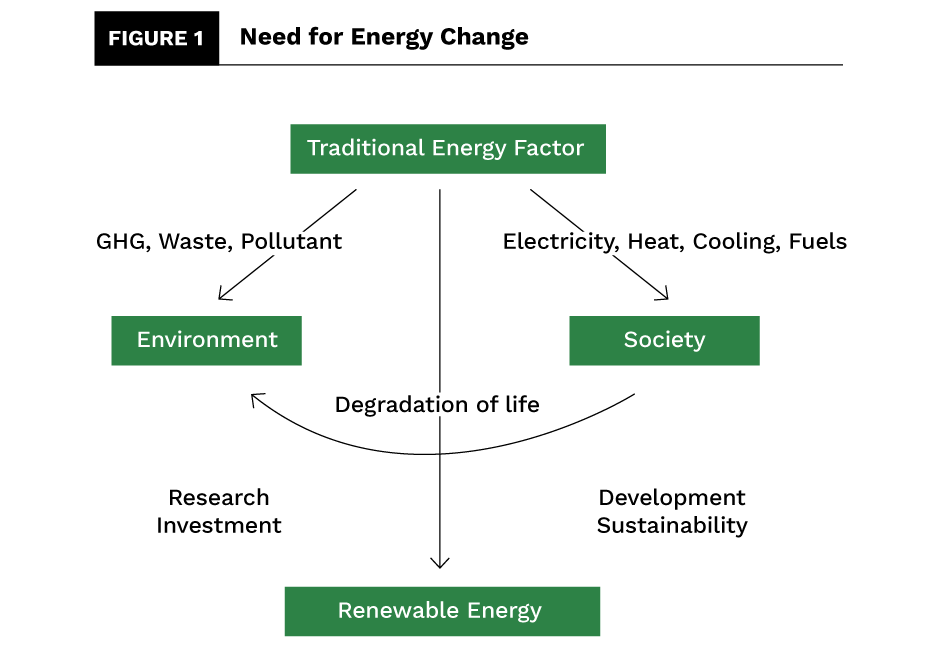
The Fossil fuel-based energy production leads to the degradation of the environment and daily life, see Figure 1.
With an electricity mix consisting of approximately 42% renewables, Germany is already in the top third of the global ranking1. Germany will not be able to achieve its climate goals within the required deadlines if climate protection policies and the expansion of renewable energies are not drastically improved. As you can see in the graph below (see Figure 2), the production of renewable energies in 2021 has decreased by about 4.7% compared to 2020.
From a sustainable point of view, using renewable energy sources is the most effective way to prevent climate change. They are unbeatable compared to fossil fuels.
Power generation from wind plants particularly decreased by 13.3%2. Two main reasons demonstrate the limits and disadvantages of renewable energies very well — especially for wind and solar energy. The first one is that less wind or sun hours per day result in these plants not producing enough energy. The second reason is that there are political and societal disagreements. One example is a new German law stating that windmills have to stand at least 1000 metres away from residential areas. All previously built windmills that are closer to residential areas had to be shut down3.
Germany has to become carbon neutral by 2045 and reduce CO2 emissions by about 65% by 20304. This led us to our research question: Does Germany have the potential and capacities to become self-sufficient and carbon-neutral and what social, economic and ecological challenges does this transmission entail? Figure 2 shows the renewable energy mix in Germany.
Economic Aspects
The transmission from fossil energy to a self-sufficient renewable energy system is one of the biggest challenges Germany has to deal with in order to become carbon neutral and achieve its climate goals 5. It is also very expensive. In the last two decades alone, since the implementation of the German renewable energy law in 2000, the government has subsidised 500 bn €.
Every renewable energy facility that was built in this period was subsidised by the government and will be paid off over a period of 20 years. One-third of the plants have already been paid off. The last one is expected to be paid off in 2037. While it is a big investment, it is a necessary one to jump-start a transformation of this scale and promote the development of renewable energies6. To put it in perspective: fossil fuels have been subsidised with up to 400 bn € and are still continuously being subsidised.
Future Projects Cost
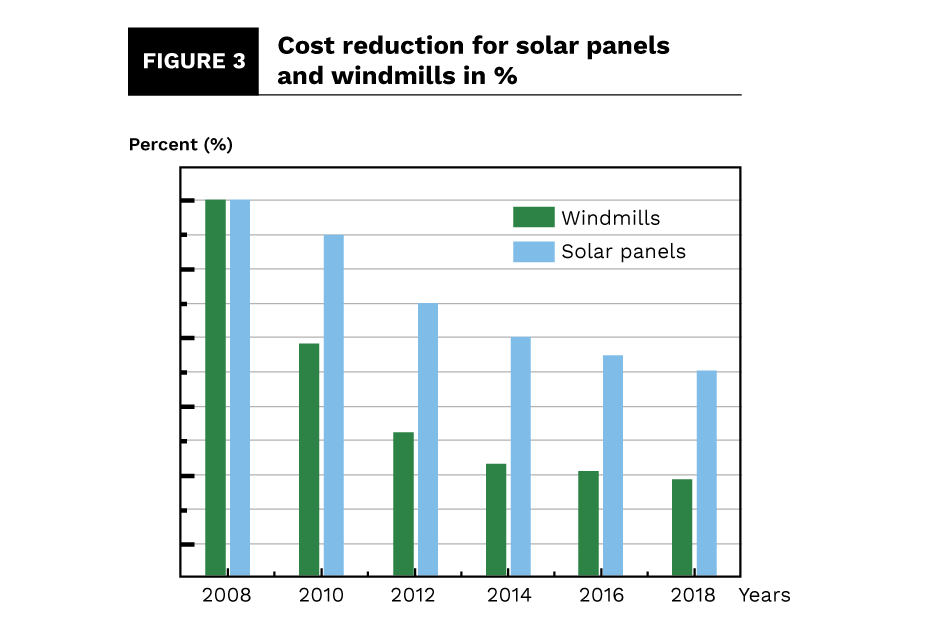
The previous investments for the expansion of new power plants and the research of new technologies have paved the way for a new industrial sector to grow. This has led to a drastic reduction in the costs of purchasing various production technologies for renewables. Figure 3 shows the cost reduction for wind and solar within ten years (2008-2018). The cost of windmills has halved and the price of photovoltaic technology has dropped by up to eighty percent, see Figure 3.
So how will future projects be financed? The government will not subsidise another 500 bn €. But the industry is now so well-established that it generates several billion euros in taxes each year7. About 57.1 bn € of energy taxes have been paid in 2020 alone, including electricity tax, oil tax, etc.
For additional income, a so-called CO2 tax was implemented in 2020. Companies and private households have to pay taxes if they are emitting a lot of CO2 emissions. In 2020 the government set a price of 25 € per ton of emitted CO2 and generated taxes totalling 12.5 bn €. In 2022 the price increased to 30 € and from 2025 onwards, one ton of CO2 emitted is going to cost 55 €.
In 2011, the German government implemented an energy and climate fund. Every year they provide money through this fund, starting with about 700 thousand € in 2011 and up to 4.5 bn € in 2019. All the money generated with the taxes previously mentioned is deposited there and can only be spent on renewable energy projects8.
Potential Capacities of Renewable Energies in Germany
Wind Energy
Wind energy has the most potential of all possible renewable energy variations in Germany. If Germany uses the maximum space that can be provided (13.4% of space and a distance of 600 metres from settlements), they can produce up to 2900 Terawatt hours (TWh) per year including 200 TWh per year from offshore facilities. Right now, Germany consumes about 517 TWh per year. Even with a minimum use of space (3.4%) and a settlement distance of 1200 metres, windmills (on and off-shore) could provide up to 600 TWh per year9.
Solar Energy
It is unlikely that Germany will expand solar systems in open spaces significantly. But the fact that systems can be installed on buildings and noise barriers means that solar energy has the potential to generate about 200 TWh per year9. The city of Hamburg for example has implemented a law stating that every public building built in 2023 or after has to have a certain number of photovoltaic cells installed on its roof10. If the federal government were to adopt the law and expand it to private buildings, the potential would be much higher.
Hydropower
While being a very effective way to produce green energy, hydropower also has the most impact on nature. Especially if barrages need to be built. The government has passed a law that limits production to 25 TWh per year. By optimising existing hydropower plants and building new pumped storage power plants, an output of 22 TWh per year can be realised10.
Biomass
It is difficult to give exact numbers because there are still too many unknown components, but a compilation of the results of several studies on the energy potential of biomass in Germany yields a total potential in the range of 235 to 315 TWh per year.
Advantages of Renewable Energy Sources
From a sustainable point of view, using renewable energy sources is the most effective way to prevent climate change. They are unbeatable compared to fossil fuels, see in Figure 411. The second advantage is more economic. Unlike fossil fuels, renewable energy production only requires the plants, storage stations and power grids to be built once and then never again. It is a one-time-investment, apart from maintenance. After that, there is no need for huge ships and trucks to transport, which also consume huge amounts of fuel and therefore emit CO2. The inspection and maintenance demand is relatively low. This would eliminate a major cost factor and save money and capacities for technological improvements in the long run, see Figure 412.
Social Aspects
Introduction to the Issues
As shown before, Germany theoretically has the potential to sustain itself on only renewable energies. To make it a reality, both the economic and social aspects have to be kept in mind. In the following sections, we will focus on those social aspects and look for what to consider in order to transform Germany into a state that is fully self-sufficient with its renewable energies.
Job Situation
A popular argument against the transformation to renewable energies is the potential loss of jobs in fossil industries such as coal and oil. In late 2021, around 25,000 people were working in the coal industry in Germany15. These are jobs that will inevitably be gone with the end of coal mining, making it a very real issue for the people impacted. Still, the transformation towards renewable energies has a way higher potential in creating jobs than in losing them, as a study shows16.
Nevertheless, efforts to create a legal framework at national and federal level have met with much criticism. Critics from economic sectors and institutions claim that the Renewable Energy Law (German: Erneuerbare-Energien-Gesetz, (EEG)) has no economic benefit.
While this is welcome news indeed, it is important to keep an eye on two things in particular. First, a lot of people need to be trained at a new job. Not only people who decide to enter this growing industry but also those who have previously worked in coal or oil and are now redirected to working in renewables. In Germany, a lot of new businesses and state departments are established in areas known to have a lot of coal workers. But those workers need to be schooled in what could be their new job. It’s not only important to have competent people in jobs but also to keep the public on board in a challenging transformation. To succeed in coal mining areas, offering good perspectives to people losing their jobs to the energy transition is crucial.
Nature and Politics
Wind energy parks can create problems for nature, especially for birds. According to Naturschutzbund Germany (NABU), a German nature conservancy association, about 100,000 birds die every year because of wind parks. But other animals are also affected. Making wind energy parks more wildlife-friendly must be a priority in future research and projects.
In Weingarten in Baden-Württemberg, there are huge areas that could potentially be used for wind parks. To protect the big frog populations thriving around Weingarten, the construction of further onshore wind parks is opposed by locals. The goal is for two percent of German land to be used for the production of wind energy by 2032 — that also counts for every state. So far only 0.8% are identified as potential areas and only 0.5% are actually in use17.
In Saxony, only 0.2% of the state’s area has been identified as potential areas until 2019. In 2021 Saxony built one wind turbine, in 2022 there were only five built. To meet the goals for 2032, Saxony would have to build 40 to 50 new wind turbines each year starting now. The difference between the states´ commitment to these goals is a major issue for the German government.
Since every state can make its own law on how much distance a wind turbine has to keep from residential areas, the potentials for wind energy are very different. While most state laws have agreed on distances between 400 and 1000 metres, Bavaria leaves the common ground with a minimum distance of 2000 metres. This slims the potential areas of use substantially.
That shows a huge challenge German politics are facing: compromising between state governments. And having the laws laid out so change can happen. What that means will be shown in the next section.
Legal Aspects
More and more, new directives and regulations of the European Union provide the 27 member states with a minimum standard for renewable energies, their expansion, and their enforcement. One of the EU’s current steps in the fight against climate change is the Green Deal. With the European Green Deal Regulation, a series of measures have been adopted which, among other things, provide for the energy supply through so-called clean energy in the coming years. In addition to ensuring affordable energy prices and digitising the EU energy market, this topic focuses on the development of the energy sector towards primarily renewable energy sources.
In addition, the member countries act with laws, regulations, and subsidies at the national level to promote a sustainable energy supply. Countries such as Sweden are far ahead when it comes to sustainability in a European comparison as you can see in the following figure.
Up until December 2019, the Federal Republic of Germany had not recorded a national climate protection law and thus climate protection targets and sector targets by law. According to the Federal Constitutional Court, the legislator did not fully comply with its obligations and declared the new law “incompatible with fundamental rights”, because there was no regulation on the continuation of the national reduction target for the period from 2031. In addition, there is still a lack of a concrete path for the expansion of renewable energies. It is questionable how such a mistake was not noticed during the legislative process.
Not only the federal government but also the federal states are making use of their legislative competence. Due to federalism, however, the climate protection laws of the federal states are not homogeneous. Hamburg, in particular, became active at the state level at an early stage for climate protection in the Free Hanseatic City. In 2020, the Hamburg Climate Protection Act (HmbKliSchG) came into force. The law lays down measures for the economical use of energy and obliges the city to save energy in public buildings and to take into account the energy consumption of systems or equipment in the context of procurement18.
Riverside Industrial Plant at the Port of Hamburg, Germany.
Nevertheless, efforts to create a legal framework at national and federal level have met with much criticism. Critics from economic sectors and institutions claim that the Renewable Energy Law (German: Erneuerbare-Energien-Gesetz, (EEG)) has no economic benefit. From the point of view of the critics, the costs for the promotion of renewable energies are disproportionately high and lead to a difficult-to-control expansion of further plants. They therefore call for the rates of remuneration to be awarded through a tendering system19. In addition, the support system is complicated and therefore also a deterrent for citizens.
Conclusion
The annual demand for renewable energy will continue increasing. That means that society hasn’t yet reached the point where energy savings through technical innovations outweigh rising consumption. Thus, the hypothetical goal being a 50 percent reduction of the current energy consumption in Germany can be divided into two factors: 70 percent of the reduction ideally happening due to the development and improvement of technical innovations and 30 percent thanks to a fundamental change in consumer behavior.
When it comes to the social aspects, it is clear that becoming self-sufficient with renewable energies and climate neutral is a huge task. For that to happen, political communication with the public must be extremely good. Renewable energies create more jobs than would be lost when ending the production of fossil fuels, but it is mandatory that advanced training is offered. People who work in fossil energies must get different types of support. The objective of two percent of land being dedicated to wind parks by 2032 is still far from reality. It is crucial that endangered species are protected while working towards this goal and to avoid ecological damage as much as possible. At the same time, it should not be used as an excuse for the continued use of fossil fuels.
The legislator has created a clear regulation but still needs to expand it. Indispensable regulations are the best way to lead Germany to climate neutrality and thus underline its importance. Renewable energies are regarded as generally environmentally friendly and an important instrument for climate and environmental protection.
Given the difficulties above can be eliminated in the future, Germany certainly has the potential to rely entirely on renewable energy.
Acknowledgement The authors would like to thank Prof. Dr. Mohamed El Sayed, Cairo University, Faculty of Engineering for the support of the above seminar series for many years.
Josephen Pomaah studied law at the College of Leuphana University Lüneburg in Germany. She completed her bachelor’s thesis this summer and is expected to continue her studies in law this October in order to graduate as a fully qualified lawyer.
Anton Burmester studies Cultural Sciences at the Leuphana University Lüneburg. He is now finishing his studies and writing his Bachelor´s thesis on techno music and Adornos cultural industry. He also works as a music and politics journalist for a German broadcasting station and organizes cultural events.
Giuseppe Petaroscia studies Business Engineering and Sustainability at Leuphana University Lüneburg, Germany. He is a qualified electrician and previously worked as a technician for logistics facilities. Alongside his studies, he is a working studen for a big intralogistics company and will continue to work there as a projectmanager for corporate sustainability projects
Michael Palocz-Andresen is a guest professor at BUAP Benemérita Universidad Autónoma de Puebla. From 2018-2021, he worked as a Herder-professor supported by the DAAD at the TEC de Monterrey in Mexico. He became a full professor at the University of West Hungary 2005-2017. Currently, he is a guest professor at the TU Budapest, the Leuphana University Lüneburg, and the Shanghai Jiao Tong University. He is a Humboldt scientist and instructor of the SAE International in the USA.
References
Ritchie, H., Roser, M., & Rosado, P.: CO₂ and Greenhouse Gas Emissions. Our World in Data. Oxford Martin School (2020).
Bunde, N., & Freuding, J.: Der Weg zur klimaneutralen Industrie–wie gelingt die Transformation?. ifo Schnelldienst, 75(01), 58-63 (2022)
Oei, P. Y., Hainsch, K., Löffler, K., von Hirschhausen, C. R., Holz, F., & Kemfert, C.: Neues Klima für Europa: Klimaschutzziele für 2030 sollten angehoben werden. DIW Wochenbericht, 86(41), 753-760 (2019)
Unnerstall, T.: Kohleausstieg. Springer, Berlin, Heidelberg (2018). ISBN: 978-3-662-57787-5 (2018)
Ringel, M.: Instrumente der staatlichen Umweltökonomie: Auflagen, Steuern, Zertifikate. In Umweltökonomie (pp. 55-84). ISBN 978-3-658-33074-3. Springer Gabler, Wiesbaden (2021)
Brauner, G.: Energiebedarf, Potenziale und Ressourcen. In Systemeffizienz bei regenerativer Stromerzeugung (pp. 13-35). ISBN 978-3-658-24853-6. Springer Vieweg, Wiesbaden (2019)
Sandeep Pai, Johannes Emmerling, Laurent Drouet, Hisham Zerriffi, Jessica Jewell (2021). Meeting well-below 2°C target would increase energy sector jobs globally in One Earth, Volume 4, Issue 7 (pp. 1026-1036)
Unnerstall, T.: Energiewende verstehen: Die Zukunft von Autoverkehr, Heizen und Strompreisen- ISBN Nr.: 978-3-662-57787-5, Springer-Verlag Berlin Heidelberg (2018)
By Terence Tse
CFOs are evolving into AI-driven transformation orchestrators, balancing finance, technology, and strategy while upskilling teams, managing risks, and driving measurable business value.
A key insight from this year’s AI for CFOs event, organized...
The World Financial Review uses cookies to improve site functionality, provide you with a better browsing experience, and to enable our partners to advertise to you. Detailed information on the use of cookies on this Site, and how you can decline them, is provided in our Privacy Policy and Terms and Conditions. By clicking on the accept button and using this Site, you consent to our Privacy Policy and Terms and Conditions. ACCEPT
Privacy & Cookies Policy
Privacy Overview
This website uses cookies to improve your experience while you navigate through the website. Out of these cookies, the cookies that are categorized as necessary are stored on your browser as they are essential for the working of basic functionalities of the website. We also use third-party cookies that help us analyze and understand how you use this website. These cookies will be stored in your browser only with your consent. You also have the option to opt-out of these cookies. But opting out of some of these cookies may have an effect on your browsing experience.
Necessary cookies are absolutely essential for the website to function properly. This category only includes cookies that ensures basic functionalities and security features of the website. These cookies do not store any personal information.
Any cookies that may not be particularly necessary for the website to function and is used specifically to collect user personal data via analytics, ads, other embedded contents are termed as non-necessary cookies. It is mandatory to procure user consent prior to running these cookies on your website.









 Anton Burmester studies Cultural Sciences at the Leuphana University Lüneburg. He is now