Home Blog Page 251

LMS for Companies: 4 Reasons Why an LMS is Essential for Business

Wondering what can keep your employees satisfied and your business processes running efficiently? The answer to this question is simple: training and development.

Training not only ensures your employees grow and learn but also helps them find better ways to do their work. In fact, 94% of the employees say they will stay longer with a company that invests in their careers. 

And what better than an LMS to ensure professional growth? From their humble beginnings to the cutting-edge present, Learning Management Systems (LMSs) today can streamline the training process, making it accessible, trackable, and tailored to individual needs. 

In this blog, we will take you through the essentials of LMS—who can use it, what is a corporate LMS, and reasons why your company needs an LMS.

Who Makes Use of an LMS?

Learning is all-pervasive. Whether you’re a child just entering school or a 40-year-old who has spent the last 15 years working, learning continues all our lives. So, it comes as no surprise that LMSs are used everywhere. From LMS for banking and finance to LMS for school, you can easily find one suitable for your industry.

Let us look at a few industries where LMSs are used:

Business of All Sizes

LMSs are useful for businesses of all sizes. It makes your training processes smoother, faster, and much more impactful. You can onboard new employees, set standardized training, and save significant time and money. With LMS, you can also easily update and reuse your content material.

Schools and Universities 

Schools and universities have also begun using LMS to streamline the learning process and offer interactive online courses. In traditional classrooms, instructors use it to offer more exciting learning experiences. 

Government Organizations

Similar to businesses, government organizations also use LMS to train their staff. They offer regular training, assessment, and feedback. With LMS, they can easily measure the impact of their training courses and use it to improve them further. 

What is a Corporate LMS?

Corporations use a corporate LMS to deliver online training to their employees. So, for example, if you are a banking company using an LMS for banking and finance to deliver training content, you’re using a corporate LMS. 

Corporate LMS has several features like user management, course management, progress tracking, and certification that make it easy for you to manage and deliver courses. It also offers benefits like mobile learning, single sign-on, and convenience to employees. 

What’s more, you can regularly update your content without any problems. So, if there are any regulatory changes, you can create and deliver updated content in minimal time and ensure quick compliance. Corporate LMSs also allow you to create content that caters to people with different abilities and learning styles. 

LMS for Companies: Essential Elements

It can be challenging to find the best LMS among a sea of LMS providers. So, here are the essential elements of a corporate LMS you should keep in mind during your search:

User Management

With user management, you can assign specific roles to different teams and their members. You can also add, edit, delete, or divide users based on your requirements. 

Course Management

Course management is nothing but the ability to create, manage, and deliver training to your employees. Many LMSs also offer built-in libraries that allow you to purchase new pre-made courses relevant to your business. 

Learning Path

The learning path includes a detailed view of your training program. It gives your learners a path to finish their training. You can add evaluation criteria and course deadlines and update the learning path whenever you want. 

Progress Tracking

Progress tracking helps you assess the learners’ comprehension and performance. You can determine the effectiveness of your programs and identify improvement areas. 

These are not the only elements your LMS should have. Some other key elements include third-party app integrations, customizable dashboards, mobile learning, interactive learning elements, notifications, and collaboration tools. 

4 Reasons in Favor of an LMS for Your Company

LMS has a multitude of benefits, including, but not limited to:

Improve Your Learning Experience

The more engaging your course is, the better your learners will learn. LMS allows you to make your courses interactive using videos, images, charts, and graphs. You can use real-life examples, provide live models, and so much more to engage your learners in the process. 

Save Your Costs and Time

Offline training events can easily cost an astronomical amount of time and money. LMS can help you save all this. You can easily share your training programs and update them when required. You can also set up a centralized hub for all your learning content. 

The best part is that you do not have to sacrifice the social aspect of training with LMS. Many LMSs offer collaboration and communication options that allow learners to interact with each other during training.

Facilitate Learning on the Go

Unlike offline training, where learners have to attend and learn no matter what their concerns and time constraints are, LMS allows them to learn at their convenience. They can take the training during their commute or whenever they feel ready to learn. This also maximizes retention. 

Track, Analyze, and Improve

With LMS, you can track learner progress, access advanced analytics, and use them to improve your courses. LMSs allow you to easily make adjustments to your courses. 

Conclusion 

The eLearning industry is rapidly growing, with more and more companies employing LMSs. From a better learning experience to affordability, the best learning management system can transform your training processes.

If you are also looking for a suitable LMS, remember to research all the features and company reviews well. 

Foundations of Commerce: Understanding the Essentials of Contract Law

By Roberts & Obradovic Law Firm

Since contract law is the foundation on which all commercial transactions are built, it’s vital that every businessperson should have an understanding of how it works. Here, we delve into the nuances of contract law, exploring some foundational ideas and concepts that all business owners should know.

What is a contractual agreement?

A contractual agreement1 is a fundamental component in the legal and commercial fields, serving as the framework through which parties voluntarily exchange promises and create binding obligations. A contract is established when there is a voluntary exchange of promises that leads to the formulation of obligations. If these obligations are defaulted on or not met, legal remedies and enforcement can be sought through the courts to address the breaches.

If negotiations are unproductive, the aggrieved party may seek legal remedies, primarily compensatory and consequential damages.

When individuals agree to the terms of a contract, they are essentially creating and defining their own rules and obligations, distinguishing contracts from other branches of law like torts, where obligations and rules are imposed externally. This self-formulated set of rules and commitments embedded in contracts allows for the anticipation and predictability of future relationships among the contracting parties. Each party involved is cognisant of the fact that they are legally bound to adhere to the agreed-upon terms, and any failure to do so will be subject to judicial scrutiny and enforcement.

The principle of freedom of contract

The principle of “freedom of contract” underpins contractual agreements, emphasising that parties generally face no restrictions on what they can agree upon initially. This means that individuals can formulate virtually any type of contractual agreement, provided that the agreement conforms to the requisites of common law. It is noteworthy that, while the genesis of contract law is primarily situated within common law, there exist specific areas, such as employment2 and partnerships, where legislative enactments may modify, restrict, or supersede common-law principles, thereby delineating the boundaries of contractual freedom.

Distinguishing between agreements and legally binding contracts

Contracts

While the terms “agreement” and “contract” are often used interchangeably, it is important to note that not every agreement qualifies as a legally binding contract. For an agreement to attain the status of a valid contract, it must fulfil several foundational elements:

  1. Consensus: To form a contract, the involved parties must reach a mutual agreement to bind themselves to a specific transaction. This agreement implies that parties have negotiated from equal bargaining positions. Typically, reaching consensus involves the process of making an offer and accepting it, but consensus can also be implied.
  2. Consideration: A valid contract requires a commitment from each party either to perform a certain act or to refrain from doing something. This consideration is essentially the price each party is willing to pay to enter the contract, reflecting their mutual obligations and responsibilities within the contractual relationship.
  3. Capacity: Parties entering a contract must possess the legal capacity to understand and commit to the agreement. Certain individuals and entities, such as infants, those who are mentally incapacitated or intoxicated, and, in Canada, non-Canadian citizens, corporations, and indigenous persons defined as “Indians” under the Indian Act, face limitations on their contracting capacity, meaning that their ability to enter into legally binding contracts is restricted.
  4. Legality: For a contract to be valid, both the object and consideration involved must be legal and not violate public policy. Any agreement involving illegal activities or going against societal norms and regulations cannot form a valid contract.
  5. Intention: The intention to create legal relations is pivotal in contract formation. Both parties must have a serious intention to make the agreement and must genuinely intend to create legal obligations and be bound by them.
    In the absence of any of these elements, an agreement cannot be deemed a valid contract, regardless of the mutual consensus between parties on the terms of the agreement. Understanding these fundamental components is essential, as it helps differentiate between casual, non-binding agreements and legally enforceable contracts, thus preventing potential legal disputes and ensuring the integrity of contractual relationships.

Breach of contract and remedies

A contract is deemed breached when one entity does not meet the stipulated obligations detailed within the contractual agreement, leading to a violation of the rights of the other entity involved. The resolution of such breaches employs various remedies aimed at correcting the violation and mitigating any consequential damage or loss. Contract breaches manifest in several forms, including:

  1. Material breach: This breach represents a grave contravention of a contractual clause, affecting the very core of the contract, which empowers the aggrieved party to pursue damages and, potentially, the annulment of the contract.
  2. Anticipatory breach: An anticipatory breach transpires when one party’s contravention is so egregious that it is perceived as “repudiating” the contract. For it to be classified as such, the breach must constitute a “significant failure of performance” or rob the aggrieved party of “essentially the entire benefit” agreed upon.
  3. Partial breach: This ensues when an entity falls short in fulfilling a segment of their contractual duties. Despite the breach being partial, the aggrieved party is usually eligible to claim damages correspondent to the breach’s extent.
    When a breach of contract occurs, the initial step is usually to attempt remediation of damages through negotiations between the involved parties, aiming for a mutually agreeable resolution and to preserve the underlying business3 relationship. If negotiations are unproductive, the aggrieved party may seek legal remedies, primarily compensatory and consequential damages, to cover direct and indirect losses stemming from the breach. In contract law, a “remedy” is a court-ordered compensation or resolution designed to place the non-breaching party back to the position they would have been in had the contract been fulfilled as agreed, ensuring fairness and justice while considering the nature and impact of the breach.

Final thoughts

Contracts

In conclusion, the intricate fabric of contract law is pivotal in shaping commercial relationships and transactions, acting as the backbone to the legal and commercial fields. Understanding contract law is essential, whether you’re experienced in business or just starting out, as it guides you through the complex world of business deals and provides a structured framework allowing parties to voluntarily define and create binding obligations.

About the Author

Roberts and Obradovic Law FirmRoberts & Obradovic Law Firm, a law firm focused on providing prompt expert legal advice and representation on various corporate, privacy, employment, and litigation matters for businesses and individuals. To contact a business lawyer, visit their website.

References

  1. Contract Lawyer Toronto. Roberts & Obradovic.https://robertsobradovic.com/service/contracts/
  2. Employment Lawyer Toronto. Roberts & Obradovic. https://robertsobradovic.com/employment-law/
  3. Business Lawyer Toronto. Roberts & Obradovic. https://robertsobradovic.com/business-law/

The Vampires Slot Comprehensive Review

Vampires have long been a captivating and enigmatic subject, weaving their way into various forms of entertainment, including literature, cinema, and, of course, the world of slot machines. In this in-depth exploration, we’ll not only uncover the fascinating history of vampire-themed slot games but also shine a spotlight on one of the prominent titles in this genre – The Vampires slot.

A Glimpse Into the History of Vampire-Themed Games

The allure of vampires in games can be traced back to the early days of slot machines. As mechanical slots gained popularity, developers sought themes that would resonate with players, and vampires emerged as a timeless and engaging motif. This trend only intensified with the rise of vampire-centric books and movies.

The Digital Transformation: With the transition to digital gaming and the advent of online casinos, the vampire theme underwent a renaissance. Game developers seized the opportunity to create visually stunning games with enhanced gameplay and exciting bonuses. The Vampires Slot and its counterparts became flag bearers of this evolution, combining a rich thematic experience with lucrative opportunities for players.

What Drives the Popularity of Vampire-Themed Games?

  • Dark Romance and Intrigue: Vampires are synonymous with dark romance, mystery, and intrigue. Players are drawn to the immersive worlds where incredible stories unfold, and emotions run high.
  • Thrilling Atmosphere: Vampire games masterfully craft an atmosphere of fear and anticipation. The element of thrill is a powerful magnet for players seeking an immersive and captivating experience.
  • Opportunities for Substantial Wins: Many vampire-themed games, including The Vampires Slot, offer significant winning potential. The promise of substantial rewards enhances the allure of these games.
  • Influence of Popular Culture: Blockbuster movies and best-selling books, such as Twilight, Dracula, and Blade, have contributed to the widespread fascination with vampires, further fueling interest in games centered around this theme.

Unveiling the Secrets of The Vampires Slot

Immersive Theme and Design

The Vampires slot stands out as a testament to the realization of the vampire theme in slot machines. Its success can be attributed to the meticulous attention to detail in creating a dark and atmospheric environment, ensuring that players are fully immersed in the gameplay.

Gameplay Mechanics and Features

  • Navigation: The gameplay in The Vampires is designed for simplicity and player convenience. Starting with selecting the bet size and the number of active paylines, players have easy control over their gaming experience.
  • Risk Round: A distinctive feature is the risk round, activated by the Gamble button. After a winning combination, players can choose to risk the entire win or half of it, with the chance to double or quadruple their prize.

Visual Design and Effects

The visual design of The Vampires slot draws inspiration from gothic aesthetics associated with vampire lore. The dark color scheme enhances the supernatural aura, while shades of crimson reflect the game’s chilling theme. The high-quality animation brings the symbols to life, contributing to the overall visual appeal. Despite its minimalistic soundtrack, the audio complements the tense atmosphere, enriching the gaming experience.

Symbolism and Special Features

  • Vampire Portrait: The most valuable standard symbol, the vampire portrait, can yield significant rewards, offering 500, 4000, and 10,000 coins in the minimum bet mode.
  • Diamond Eye Wild: Acting as the wild symbol, the Diamond Eye replaces all icons except the scatter, increasing the chances of forming winning combinations.
  • Rose Scatter: In addition to providing generous payouts, landing three or more Rose Scatter symbols triggers 7 free spins.
  • Card Symbols: Represented from A to 10, these symbols can result in winnings of up to 10 times the bet for five of a kind.

Return to Player (RTP) and Volatility

The Vampires slot by Amatic Industries maintains a flat RTP of 96%, aligning with industry standards and suggesting a decent probability of returns over an extended play period. Coupled with medium volatility, the game offers a balanced mix of risk and reward.

Free Spins Feature

One of the highlights of The Vampires slot is its exhilarating free spins feature. Landing three or more Rose Scatter symbols not only triggers 7 initial free spins but also randomly selects a standard symbol to serve as an extra wild. This unique twist enhances the potential for forming winning combinations during the bonus round.

Players can retrigger additional spins by landing three or more scatter symbols, adding an extra layer of excitement and the possibility of extended playtime and bigger wins.

Platform Compatibility

Adapting to the increasing trend of mobile gaming, The Vampires slot ensures seamless performance across various devices. Developed with HTML5 technology, the game retains all its features, including bonus rounds, on both desktop and mobile platforms. This cross-platform compatibility allows players to enjoy the game whenever and wherever they choose.

Playing Strategy

Formulating a strategic approach can optimize the gaming experience and potential winnings:

  • Bet Size Management: Starting with smaller bets and gradually increasing them can optimize the chances of triggering bonus features and landing substantial winnings.
  • Prudent Use of Risk Round: While tempting, the risk round should be used judiciously, especially with larger winnings, to avoid potential losses.
  • Understanding Paylines: With 50 adjustable paylines, activating as many as the budget allows maximizes potential winning combinations.

These strategies, while not foolproof, can enhance the potential for winnings and prolong gameplay. Responsible gaming practices, including setting a budget and enjoying the entertainment value, remain crucial.

Overview of The Vampires Slot

  • Game Name: The Vampires
  • Game Provider: Amatic Industries
  • Release Year: 2016
  • Theme: Horror
  • Volatility: Medium
  • RTP: 96%
  • Max Win: 1000 times the bet
  • Bet Level: $0.5 – $1000
  • Reels: 5
  • Rows: 4
  • Paylines: 50
  • Scatter Symbol: Yes
  • Wild Symbol: Yes
  • Bonus Game: No

Exploring the Demo Version

For both new and seasoned players, The Vampires offers a demo version, allowing risk-free exploration of the theme, mechanics, and bonus features. This hands-on experience is accessible across various platforms, providing an opportunity to experiment with different strategies and understand the game’s dynamics.

Transition to Real Money Play

Ready to elevate the stakes and experience the thrill of The Vampires for real money? Follow these simple steps:

  • Deposit Funds: Join a reputable online casino and make your first deposit using your preferred payment method, taking advantage of any available welcome packages.
  • Locate the Slot: Find The Vampires in the casino’s game library.
  • Place Your Bet: Choose your wager size and the number of paylines, then hit ‘Spin’ to let the captivating gameplay unfold.
  • Monitor Your Balance: Keep track of your currency balance to ensure you stay within your predetermined budget.

Conclusion

In conclusion, The Vampires slot stands as a captivating option for players seeking a perfect blend of mystical charm, engaging visuals, and rewarding gameplay. Its unique features keep players on the edge of their seats, whether drawn to the thrill of the vampire theme or enticed by the prospect of substantial earnings. Immerse yourself in the dark realm of vampires, where every spin holds the promise of thrilling adventures and potential riches!

Why Is Investment Management So Important in 2024?

Anyone who has ever invested in an asset class is aware of the term investment management. However, only a few investors truly understand the importance of it. With investment management, you can unlock a whole new world of wealth-building opportunities. Even though the practice typically involves managing funds or securities to fulfill certain financial goals (both short- and long-term), there is a lot more to it.

While there are several effective ways to manage your investments, here are six major reasons investment management is essential for you in 2024 and beyond.

1. Reach Your Goals More Easily

With custom investment management, you can easily achieve your financial goals. The right investment strategy will allow you to reduce your stress and gain an edge over the ever-changing stock market. You require in-depth knowledge and understanding of specific markets to invest in them. However, with multiple investment options, you can access various asset classes through mutual funds and ETFs. Such investment vehicles offer diversification with minimal effort from your end.

2. Gain More Control Over Your Finances

Effective investing includes developing a clear understanding of your goals and risk tolerance, choosing assets and securities that fulfill your specific needs, and actively monitoring your investment portfolio all the time. Since the market conditions are always changing, you need to stay in tune with those changes, adjust your strategies as per the situation, and ensure that you are reaching your long-term financial goals. With careful planning, you can prepare and retain financial control.

3. Understand Where Your Money Is Going

Investment management is not just about making money. You also need to have control and make the right decisions regarding your financial goals. Being aware of what investments fit into your financial goals is important to confirm that your investment choices benefit you and others. Research ahead of time and understand where your money is going and who it is helping. It will help you understand that your money is making the impact you want it to make.

4. Develop a Better Understanding of the Market

Investment management allows you to have a better understanding of the markets by breaking them into manageable components. In this process, you need to read research from trusted market analysts and experts and become familiar with various analysis tools and indicators to make informed decisions about your strategy. By studying records, you can practice analyzing market trends. As you develop such analytical skills, you can confidently manage your portfolio amidst volatility.

5. Make Better Financial Decisions

Every investor has a set of financial goals in mind for how they want to build wealth.  You should start by making decisions about where you should invest your resources. The process will include finding investment options that will offer high-impact returns for the long term, as well as the ones that will protect your resources from volatile market conditions. It is better to discuss these investment choices with a financial professional who can offer you advice and suggestions based on your investment goals.

6. Proper Risk Management

No matter how effective your wealth-building strategies may sound, they all come with a certain level of risk. The success of your investment strategy depends on how well you manage the risk. Proper risk management allows you to maximize investments and limit potential losses. One of the best ways to mitigate risks is to simply diversify your investments across different asset classes, including precious metals like gold. However, that should be done after conducting proper research, planning, and calculated decision-making.

Conclusion

Investment management is an art that boosts your potential to gain more control over your finances, helps you develop a better understanding of the market, and mitigates risks. In other words, investment management simplifies your wealth-building journey. It is recommended that you connect with a professional to conduct this financial practice effectively.

What are the Advantages of Multi Currency Bank Account?

In today’s world, operating with multiple currencies isn’t that surprising. After all, thanks to the internet, most people are already making international purchases, and businesses have extended their services on a global scale.

But how can you operate a business or receive money in other currencies?

Well, banks have come up with a rather simple solution to this problem. It is called a multi-currency bank account.

The name of this account is quite straightforward and explains its purpose. It is a bank account that allows you to store multiple currencies, instead of opening a new one for a different currency.

So, if you are someone who receives or pays money in a different currency, a multi-currency bank account is the perfect solution.

Why?

Well, if you use a regular checking account and you want to pay someone in a different currency, you have to exchange your money for that currency to make the payment. This means that you might lose a percentage due to frequent conversions and fees.

But what are the other benefits of a multi-currency bank account?

Let’s find out.

How Does a Multi-Currency Bank Account Work?

A multi-currency business account functions similarly to a typical online bank account, allowing you to send, receive, and withdraw funds as needed. They usually allow you to access your money through wire transfers, debit cards, and electronic payments. Customer service is available via phone or online, but typically there isn’t a physical branch.

The same goes for creating an online business account. Multi-currency account works similarly to a regular business account, you can only manage multiple currencies and get favorable exchange rates.

There may also be transaction fees attached to these accounts on occasion. This might take the form of a monthly account fee, a charge for deposits or withdrawals of certain currency notes, a charge for payments made to a specific client or in currencies exceeding a specified amount.

Benefits of Multi-Currency Accounts

Cut Down on Transaction Costs

Each bank may charge an operation fee for various accounts you maintain in different countries, and since the transaction chain is more complicated and sometimes opaque, there may be additional costs that you are unaware of.

Because payment is handled through a correspondent bank—the global banking network—you could be charged extra costs. You may store all the currencies that correspond to your supplier and customer bases in a single multi-currency account, and you just have to pay one account fee.

Lower Fees

Your business is losing money on foreign exchange fees for each international currency transaction if it only has one currency account (that is, an account that can only store your home currency and no other). Your bank will exchange money for your local currency each time you get it in a foreign currency. The bank must do this for each transaction as it must pay a high foreign exchange commission to convert the funds.

These expenses might add up quickly for a company that gets paid regularly in several currencies. The ability of a foreign currency account to store various currencies renders this conversion unnecessary, which is one of its main benefits. Thus, there is no longer a need to impose conversion costs.

Faster transactions

Your cash flow will be more efficiently managed the quicker you can turn things around. The slowness of cross-border payments is a known fact.

As a result of technically accessing local payment networks, your procedure will be faster and more efficient if you can complete transactions in local currencies. You may have instant access to your account from anywhere with a multi-currency business account that is utilized online or through an app.

Favorable Currency Exchanges

Another expense to consider is foreign exchange, or forex or FX. You can control forex volatility by using a multi-currency business account.

If the conversion rate is not favorable and you only have one account (let’s say that it can only accept foreign currencies when converted to British pounds), you might lose money. If you have clients in Europe, they can deposit money into your multi-currency account provided it supports euros. Likewise, you can pay all vendors in euros.

You may hold off on changing from one currency to another until you have a favorable exchange rate since a multi-currency account functions similarly to a holding account.

Additionally, if you have enough money, you may handle supplier payments by purchasing currency at a favorable exchange rate and keeping it in your account for later use. You may transfer money in the most economical manner with a multi-currency account, regardless of whether you’re buying or selling.

Easy Accessibility and Use

Operational effectiveness frequently makes the difference between a business’s success and failure. Furthermore, cash flow and management are essential when it comes to payments, which are the lifeblood of every organization; this is especially true when conducting business globally.

Improved Relationships With International Clients

Lastly, your international suppliers would appreciate it if you could pay them in their native currencies, just as employing local currencies can benefit your international clients. If you meet their demands, you could even be able to negotiate better rates.

Final Words

The use case of this bank account comes down to personal needs. There are certain types of bank accounts for everyday purchases, while others like multi-currency accounts are best if you have international transactions.

So, if you or your business operates on a global scale, make sure to check out some of your local banks that offer multi-currency accounts.

A Peep into Perps: Perpetual Futures Explained

In fast paced world of financial markets and digital revolution, new and innovative financial instruments are constantly emerging. One such instrument that has gained immense popularity is perpetual futures commonly known as “perps.” These financial instruments are derivatives that have become a cornerstone of crypto trading, offering a unique set of features that distinguish them from traditional futures contracts. This article will focus on the advantages, and dynamics, of financial market use cases in terms of perpetual contracts or perpetual futures.

What Are Perpetual Futures?

Perpetual Futures are a type of financial derivative that shares some of the similarities in traditional futures contracts but operates with distinct features. Contrary to the traditional futures that have a fixed expiration date, perpetual futures do not carry a predetermined period. Hence perpetual futures eliminate the need for contract rollovers and provides a seamless trading experience for investors. 

A defining feature of perpetual futures is its funding mechanism that is used to maintain the contract’s price as close to the spot market. This funding is exchanged between long and short positions periodically to prevent significant deviations from the underlying asset’s market price. This funding rate is calculated based on the difference between the contract price and its spot price, hence ensuring that the contract price stays in cohesion with the spot price of the asset. In case of making a comparison with the perpetual futures vs spot, there are couple of special benefits associated with this realm as spot takes the rightful ownership of the assets while perpetual futures are mere contracts deriving their value from the digital spot assets.

Advantages of Perpetual Futures

No Expiration Date

Perpetual Futures are perpetual in nature, and therefore offer a significant advantage for many traders. Traditional futures contracts have a determined or fixed expiry date that requires traders to end or close the deal at a certain date and then take physical delivery of goods. Perpetual contracts eliminate the hassle, providing continuous exposure to underlying assets, without the need for frequent adjustments. 

Leverage

Perpetual futures allow traders to use leverage to maximize their earning potential. This feature allows for a profit amplification tool. But it works as a double-edged sword. Just as it maximizes the chances of return, it also amplifies the chance of liquidation and losses. Moreover, with the help of leverage traders can enter and exit positions whenever they want to.

Liquidity

Perpetual futures often demonstrate high levels of liquidity, that makes it an attractive choice for both retailers and institutional investors. This continuous trading with absence of expiration dates contributes to more liquidity, thus allowing traders to enter and exit positions whenever they want to. 

Market Efficiency

This funding rate mechanism in perpetual futures ensures that the contract price is closely tracked to the spot market price. This alignment promotes market efficiency, thus reducing the chance of significant deviations between the two prices. Traders can have confidence that the perpetual futures market accurately reflects the broader market emotion.

Challenges and Risks

As perpetual futures offer various advantages, it is important to know that there are some risks and challenges associated with trading these instruments.

Funding Rate Risk

Funding rate is designed to keep the perpetual contract’s price in line with the spot market and introduces risk for traders. This depends on the trader’s position in relation to the capital they have invested as margin. Also, funding rate keeps on changing after a certain interval of time.

Leverage Risk

While leverage provides the potential for higher returns it also magnifies the impact of losses. Traders using high leverage without proper risk management may find it easier to have significant financial setbacks. It is therefore important to approach leverage with much precaution. 

Market Volatility

Perpetual futures, particularly cryptocurrencies, are associated with prominent levels of volatility. Rapid and unpredictable price movements can lead to substantial losses within a shorter time frame. Traders can be prepared for market volatility and have risk management strategies in place. 

Regulatory Uncertainty

The regulatory uncertainty surrounding the perpetual futures is still evolving. Traders and exchanges may face uncertainties and legal aspects related to perpetual futures. Hence staying informed about regulatory developments is a crucial step for market participants.

Impact on Financial Market

The introduction and widespread adoption of perpetual futures have profoundly impacted financial market players. Some of the key effects are:

Increased Trading Activity

Perpetual trading is contributing to the overall increase in trading activity for cryptocurrency markets. The perpetual nature of such contracts with presence of leverage contributes to the diverse array of positions and investments. Due to this many institutional investors are now showing interest in perpetual trading as well.

Market Maturity

The presence of perpetual futures adds a layer of sophistication for cryptocurrencies markets. This indicates towards a maturation of asset class. Institutional investors that were previously hesitant to be a part of perpetual trading are now showing much interest. And hence are more interested in trading activities.

Global Market Access

Perpetual trading allows traders to provide a seamless and standardized way to attain exposure to various assets. This global accessibility contributes to the integration of crypto market with traditional financial markets bolstering interconnectivity. 

Conclusion

Perpetual futures have emerged as a dynamic and innovative solution in shaping the financial instrumental landscape. With their perpetual nature, leverage opportunities and efficient market dynamics such contracts offer a versatile tool to seek more exposure in multiple assets. Therefore, it is important for market participants to seek a thorough combination of associated risks and cater challenges. As the financial industry flourishes perpetual futures remain a key player in shaping the future of derivative markets. 

About BITFLEX  

BITFLEX is a cryptocurrency exchange platform that offers traders a secure, easy-to-use, and convenient way to buy, sell and trade cryptocurrencies.  Our platform has been designed with investors of all levels in mind, whether they are just starting out or experienced traders. We offer various features and tools to help users make the best trading decisions possible, including advanced charting and analytics, real-time market data, and various customisable trading interfaces. At BITFLEX, we are dedicated to empowering our users and helping them reach their financial goals.               

Stay in the loop about our launches, trading pair announcements, contests and more by following us on Discord, Telegram, and Twitter.              

Website | Discord | Telegram | Twitter | LinkedIn  

Teaching in the Era of AI: A Personal Reflection Through Students’ Eyes

By Rafif Srour

The academic world remains divided about the use of generative AI in classrooms. In this article, Rafif Srour explores her students´ perspectives on the use of generative AI in their learning.

A year ago, ChatGPT 3.0 was released, marking a turning point in the academic landscape. This advanced AI technology, characterised by its ability to generate human-like content, brought a wave of change that rippled across classrooms1 worldwide. Academic institutions grappled with its implications, oscillating between outright bans and enthusiastic adoption.2 Professors, caught in this wave, faced a steep learning curve. Some embraced generative AI as a way to enhance their teaching methods, while others hesitated, only to soon be pleasantly surprised by its profound effect on student performance, notably among those learners who had previously struggled.

The impact3 of generative AI in academia has been a topic of discussion and analysis,4 with over 2000 articles published to date (number of articles published since 2023 on AI in education, according to Google Scholar5) that explore its influence on education,6 the evolving role of professors,7 and the complex debate surrounding its use in the classroom.8 However, in the middle of this chaotic discourse, the voice of a key group remains largely unheard: the students themselves. Their perspectives9 on AI’s role in their education are crucial yet often overlooked, leaving a gap in our understanding of this technological turbulence.

blended learning
This fall, I started teaching my Probability and Statistics class with a complex blend of enthusiasm, hopeful anticipation, and a touch of anxiety. This mixed sentiment was hardly surprising, considering that I dedicated the past year to immersing myself in the world of generative AI. I had exhaustively utilised every resource at my disposal to not only update and enhance my teaching materials but also to ensure that student engagement remained at the heart of my pedagogical approach. My commitment even led me to conceptualise a novel class format, one where students would interact with a GPT-powered robot as a teaching assistant. Although this idea didn’t materialise, it deepened my willingness to explore uncharted territories in educational technology.

As the semester progressed, I carefully observed student responses to the AI-assisted activities I had implemented, leading me to several key conclusions:

  1. It’s imperative to establish and communicate clear guidelines in every assignment, project, and activity about the permissible uses of AI tools. This clarity will ensure the proper and ethical use of AI in academic settings.
  2. Freshmen and sophomores often lack the necessary skills to critically evaluate AI-generated content. Emphasis should be on grounding them in fundamental concepts with minimal AI assistance.
  3. Professors are encouraged to use AI as a supplemental tool in teaching where it adds value, like in simple Python coding exercises. This approach not only aids learning but also frees up time for educators to foster critical thinking in the classroom.
  4. Regardless of the AI’s prevalence, students continue to value and seek guidance and mentorship from their professors. This was evident in activities where students used AI under my guidance and consistently sought my validation for the concepts they learned.
  5. Engaging students in discussions about the ethical use of AI tools is crucial. This should be approached not merely as a set of rules to follow but as a philosophical dialogue, encouraging students to reflect on the broader implications of their choices. This topic warrants further investigation.
  6. Students hold diverse and valuable views on the use and non-use of AI in their educational journey. These perspectives deserve attention and recognition in shaping future educational strategies.

AI’s role in their education are crucial yet often overlooked, leaving a gap in our understanding of this technological turbulence.

Building on these observations, I engaged in an informal discussion with my students to gauge their thoughts on the use of AI, particularly generative AI, in the classroom and as an integral part of their curriculum. To complement these discussions, I also conducted a survey, receiving responses from 14 out of 41 students. The survey asked questions related to the usage and perception of AI in education, the efficiency of AI tools, human-AI interactions along with impact of AI on their cognitive processes. It is true that the sample size on which I am basing my analysis is small, but it still reflects some trends in students’ perceptions that are definitely worth considering. The synthesis of their opinions is as follows:

AI Tool Usage

AI Tool Usage
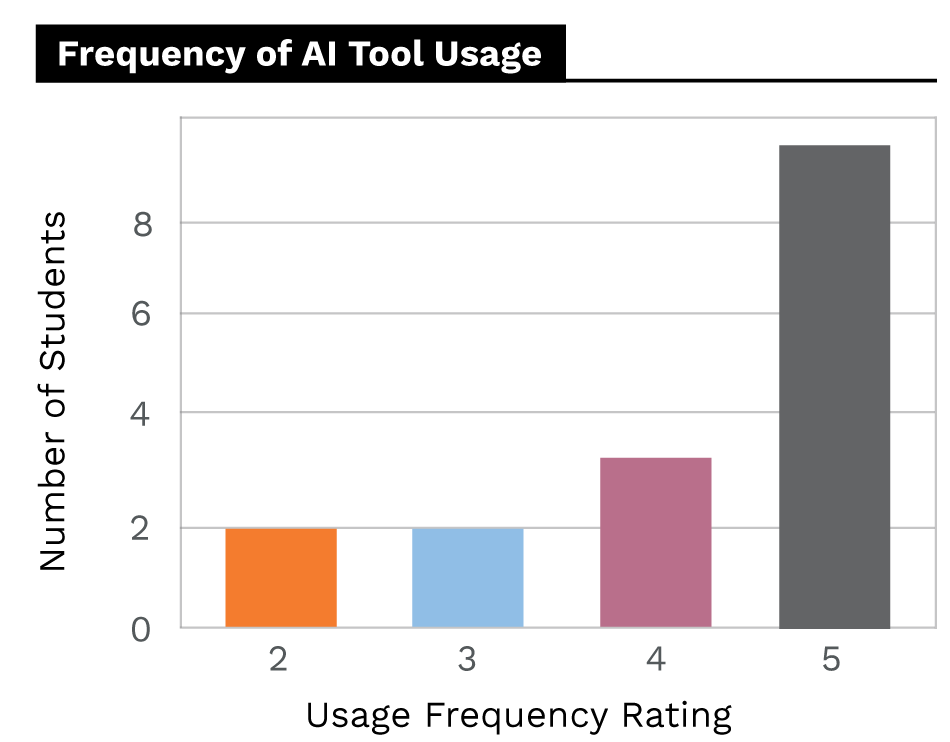
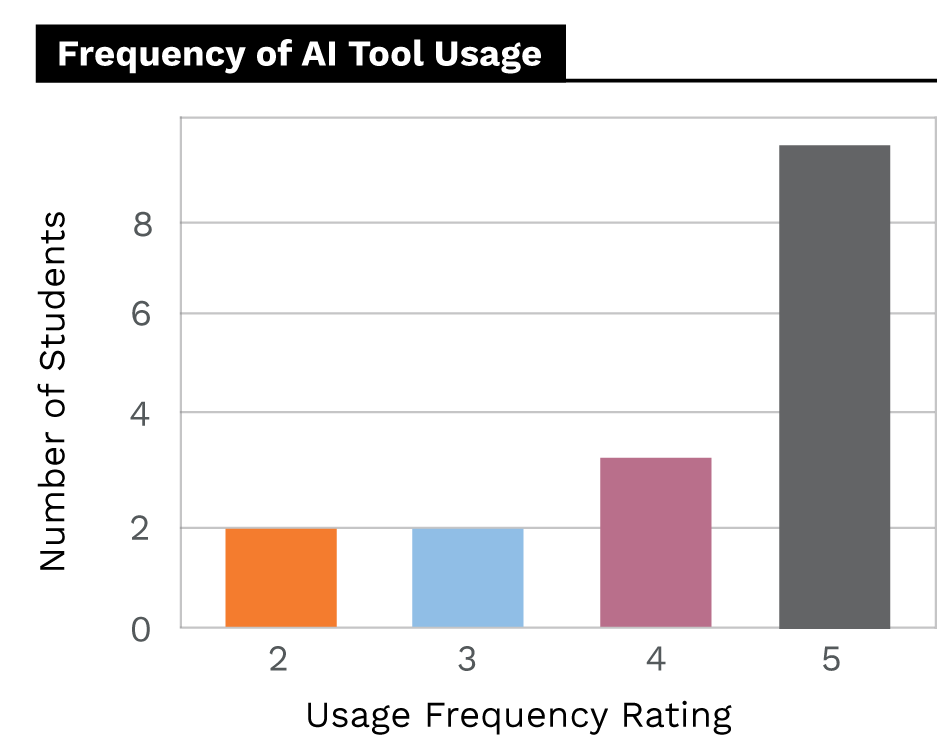
Graph 1. Student response to the frequency of using AI tools and its effectiveness in aiding their learning process (scale of 1 to 5, where 1 indicates “Never”/”Not Effective” and 5 indicates “All the Time and “Highly effective”).


  1. Students acknowledge that AI tools have made their academic work more efficient (graph 1), but they also expressed their concerns about their understanding of the processes involved, highlighting a gap between using AI and comprehending its working.
  2. While students find AI effective in their learning processes (71.43%), there is an underlying anxiety about the rapid evolution of AI and its implications for how useful their current learning is.
  3. There is a consistent preference for human instruction, stressing the irreplaceable value of personal connection and tailored teaching that AI cannot replicate.
  4. A unanimous resistance to using AI as a replacement for human teaching and a strong desire to retain human educators’ unique capabilities.

A year has passed since the release of ChatGPT 3.0, and my conviction has only strengthened that AI is the transformative force academia requires. As the landscape becomes more defined, it’s increasingly evident that AI should not be viewed as an end, but rather as a means that encourages both students and professors to deeply consider the essence of learning and teaching. This journey of reflection is not solely about finding answers but about the process of discovery. As a student eloquently inferred, “When we ask a question in class, what matters to us is not just the answer itself, but understanding the process you, as a professor, go through to arrive at that answer. It’s about that moment of clarity when a concept finally clicks.” This sentiment underscores the value of the educational experience, where the human element plays a pivotal role. Another student’s perspective reinforces this idea: “I don’t believe AI tools can replace human instructors. AI can provide information and assist in learning, but it lacks the personal connection and understanding that a human instructor offers. AI cannot understand student emotions or adapt to individual learning styles in the way a human can. The human element in teaching is irreplaceable.”

AI should not be viewed as an end, but rather as a means that encourages both students and professors to deeply consider the essence of learning and teaching.

These reflections solidify the consensus that, while AI can enhance the learning environment, the core of education remains deeply human. Both professors and students agree (at least for the moment) that technology, no matter its advancements, serves best as a complement to the irreplaceable human connection and insight at the heart of education.

This article is dedicated to my second-year Data and Business Analytics students. Your invaluable contributions, born out of thoughtful classroom discussions and your patient responses to my numerous surveys, have been the cornerstone of this article. Your engagement and insights have not only enriched this piece but have also deepened my understanding and appreciation of our shared learning journey. For this, I am endlessly grateful.

About the Author

Rafif SrourRafif Srour, an esteemed international academic, brings extensive expertise in teaching, analytical research, and data analysis. A lifelong learner and advocate for women in STEM, Srour has earned multiple Best Professor awards. Thriving in multicultural settings across Lebanon, the USA, and Spain, she actively promotes coaching and mentoring for academic improvement. Srour, a member of IE University’s Learning Innovation Hub, gained recognition in 2021 as one of the top 183 Leading Data Academics by CDO magazine and among 55 leading women in technology in Spain. Passionate about leveraging technology in higher education, Srour, with a background in Agricultural Engineering and a Ph.D. in Environmental Soil Chemistry, currently serves as the Executive Vice Dean of the Sci-Tech School, following roles as Academic Director and interim Dean.

References

  1. Artificial Intelligence in Education. 05 August 1976. Nature. https://www.nature.com/articles/262435a0
  2. Embracing Artificial Intelligence in the Classroom. 20 July 2023. Harvard Graduate School of Education. https://www.gse.harvard.edu/ideas/usable-knowledge/23/07/embracing-artificial-intelligence-classroom
  3. Engineering Education in the Era of ChatGPT: Promise and Pitfalls of Generative AI for Education. 22 May 2023. IEEE Xplore. https://ieeexplore.ieee.org/abstract/document/10125121
  4. 4. Impact of the Implementation of ChatGPT in Education: A Systematic Review. 29 July 2023. MDPI. https://www.mdpi.com/2073-431X/12/8/153#B5-computers-12-00153
  5. “AI in education”. 2023. Google Scholar. https://scholar.google.com/scholar?as_ylo=2023&q=%22AI+in+education%22&hl=en&as_sdt=0,5
  6. AI in Education. 2023. Education Next. https://www.educationnext.org/a-i-in-education-leap-into-new-era-machine-intelligence-carries-risks-challenges-promises/#:~:text=Using%20generative%20AI%2C%20school%20administrators,to%20identify%20patterns%20or%20needs
  7. Professors in the Age of AI. 21 March 2023. Insights. https://www.ie.edu/insights/articles/professors-in-the-age-of-ai/
  8. ChatGPT Has Entered the Classroom: How LLMs Could Transform Education. 15 November 2023. Nature. https://www.nature.com/articles/d41586-023-03507-3
  9. Student Perspectives on the Role of Artificial Intelligence in Education: A Survey-Based Analysis. July 2023. Research Gate. https://www.researchgate.net/publication/372551269_Student_Perspectives_on_the_Role_of_Artificial_Intelligence_in_Education_A_Survey-Based_Analysis

How Design Mastery Provides Sales Success

Design is like a mute salesman in the world of trade. Design moves beyond aesthetics to impact consumer behavior and influence sales. Every visual aspect of a package or a site serves the purpose of selling a product. Let’s walk through how design is an effective force that turns interest into action.

The Visual Appeal

Art communicates through design, which functions as a visual language for target people within society. This is not only about aesthetics but about arresting the attention right away and creating the first impression. In the huge digital space, every scroll shows numerous possibilities, and aesthetic appeal determines everything. For instance, free mockups like LS Graphics artfully compiled ones are very effective in this sphere. These act as previews of the look and feel of a particular brand image. Well-developed images become magnets, attracting possible consumers toward an inviting encounter. Because a first impression lasts for 0.1 seconds, a visually impressive design is not a doorway, but an invitation to investigate, capturing the eye and converting curiosity into desire.

Building Trust and Credibility

The value of trust is measured in commerce, while the authenticity of design serves as its guarantee. Think of a nice website or well-organized packaging—these are not only aesthetic considerations, but also elements of building trust. A polished and professional design shows dedication to quality and attention to detail which the potential buyer notices when encountering it. In particular, a consistent design language improves the ability to recognize the brand through multiple platforms and media. The touchpoints are the familiar font; the harmonious color palette; the properly aligned imagery. Hence in a marketplace characterized by wary and meticulous consumers, powerful visual branding is a symbol of credibility. It turns a simple browsing session into a transaction, thus converting a new customer into a repeat one.

User Experience (UX)

User experience determines a journey from a discovery process to conversion in the digital world, where kings and critics become one person. Design is more than simply pointing out that direction for a customer in a webpage or mobile application and telling a story. Positive UX results from how easy it is for the user to navigate through the system, how clear the information is, and how enjoyable the experience is as a whole. This process makes use of free mockups which act like prototypes These help designers pre-empt users’ expectations and design intuitive user interfaces for effortless interface navigation. A positive UX has a long-term effect on transactions. Happy customers turn into brand ambassadors who spread the word around utilizing word of mouth. In a landscape where digital communications predominate, every step in the consumer’s path should be a pleasant tale that results in instant sales as well as future renown and profitability for the company.1

Creating Emotional Connections

Good design can communicate feelings and build long-term relationships. Desire results from well-designed products and an emotional bond developed using design may become crucial for the decision to buy in. The emotional power associated with brands or products results from colors, textual information, and images. Design tells more than the story that goes above and beyond features or specifications that connect to consumers’ desires or feelings.

Conclusion

In a competitive world, with plenty of choice, design becomes a powerful new tool for marketing strategies. Design is involved in all steps from the consumers’ attraction right through to the final purchase. Subsection heading: Subsection Heading Businesses can use tools such as free mockups to polish their designs until all their visual elements are convincing players on the competent field. According to a popular saying, “A picture is worth a thousand words,” a good sales design is worth a thousand sales.

What Are the Environmental Impacts of Last-Mile Delivery, and How Can They Be Minimised?

Last-mile delivery (also known as final mile delivery) refers to the movement of goods from a transportation hub to their final destination, which is often at the customer’s doorstep. It’s the last step for deliveries, and it’s important to ensure businesses do this part right because this can be the difference between a delivery being made or not. There is evidence that suggests last minute delivery costs around 28% of the total delivery cost, so it’s a significant investment.

The industry is also changing the way they view last mile delivery, with many businesses up and down the country focusing on it as differentiation in their business. With more and more consumers turning to ecommerce for all their purchases, the need for last mile delivery services will continue to grow. According to the World Economic Forum, the number of delivery vehicles in the delivery sector will need to increase by 36% by 2030 to meet the demand. Therefore, it’s vital that the environmental impacts are minimised so the environment doesn’t suffer long term.

Keep on reading to find out some of the environmental impacts of last mile delivery, and how they can be minimised. 

The environmental impacts of last mile delivery

Last mile delivery is often associated with vehicle emissions and environmental damage. One of the main factors for this is the use of fossil fuel powered vehicles including trucks, vans, and cars. All these vehicles emit carbon dioxide and other toxic elements that over time can have a negative impact on human health and the Earth’s atmosphere. However, this can be said for most forms of travel. 

But what makes last mile delivery different? The delivery to consumers is often associated with populated urban areas full of houses, and business hubs. Drivers delivering parcels will often be backtracking on themselves quite often, taking the longer route to deliver parcels on time. This leads to more fuel and emissions being offset, as well as increased wear and tear on vehicles, leading to higher maintenance costs and lower fuel efficiency. These busy urban areas may lead to high levels of traffic congestion. 

How can they be minimised?

Use electric vehicles

One way to minimise the environmental impact of last mile delivery is to focus on using more electric vehicles for your fleet. Using electric vehicles will lead to a significant reduction in emissions and pollution being released into the environment, which will have a positive impact on air pollution. However, you need to ensure that the vehicles used have the capacity to complete the deliveries  or there are enough charging stations in the area where the deliveries will be made.  According to a study by the International Council on Clean Transportation, electric delivery vehicles emit 40% fewer greenhouse emissions. 

Plan your delivery route beforehand

Another way to reduce the environmental impacts of last mile delivery is through planning your delivery beforehand. This can be achieved by looking at the various destination points on the route, and seeing if a route can be altered to reduce the distance travelled. This will also cut the time it will take to make the delivery. .

If you are awaiting orders to come through, waiting until they have all come in before setting out on a delivery route can also lead to one trip, over two. 

Use carbon offsets

Carbon offsetting can neutralise the environmental footprint of a business. Companies can do this by tracking their use of fuel, energy and storage leading to an approximation of their carbon footprint. Then, businesses can take action so they can offset their own carbon footprint. 

For example, some businesses may plant trees, or use solar or wind energy.

The use of click and collect 

Promoting the use of click and collect services can lead to a reduction in the number of deliveries needed to consumers’ doorsteps. Instead, parcels can be kept at the post office or another designated location. As well as reducing the number of journeys needed to more doorsteps for delivery drivers, the use of click and collect leads to a reduction in journeys overall. Customers who need to collect their goods may decide to pick up their parcels on the way to work, or during the school run. 


Overall, we hope this article has been useful for you to understand how the environmental impacts of last mile delivery can be minimised. Perhaps you run your own business that conducts last mile deliveries, or you can take these tips on board to help reduce your own carbon footprint.

Forex Time: EUR/USD Pair in Focus

The EUR/USD currency pair serves as a barometer for the dynamic relationship between the two largest economies, Europe and the United States. The trading of the EUR/USD currency pair plays a vital role in the global economy, shaping stability, international trade, investment decisions, financial stability, and macroeconomic indicators. A comprehensive understanding of these impacts is essential for investors and economists to make informed decisions and manage risks in the dynamic global financial markets.

Alterations in the EUR/USD exchange rate directly affect the cost of goods and services to consumers, influencing import and export dynamics. A rise in the euro against the dollar can stimulate economic growth in the United States by reducing imports and increasing exports. Conversely, a decline in the euro can have the opposite effect.

The implications of trading in the EUR/USD pair extend to international investments, especially for large institutional investors. They utilize this currency pair in the foreign exchange market to manage risks and capitalize on exchange rate fluctuations. Techniques such as trading currency contracts, including forward contracts and currency futures, are employed to profit from future changes in exchange rates and mitigate potential losses.

Furthermore, active transactions in the foreign exchange market can impact financial stability, placing stress on financial institutions with substantial foreign currency positions. This may lead to financial losses and, in extreme cases, bankruptcy for banks and other financial entities.

It’s crucial to recognize that any changes in currency markets, not limited to specific pairs, influence macroeconomic indicators such as inflation, economic growth, unemployment, and interest rates. For instance, a rise in the euro can affect inflation in the United States by making goods and services more affordable for consumers. Conversely, a falling dollar may lead to increased inflation in Europe.

In terms of recent developments, certain key events in Europe and the United States can influence the exchange rate of the Euro-Dollar pair. These include changes in crude oil reserves in the United States and decisions by the Federal Reserve System and the European Central Bank on interest rates. Anticipation of these events suggests a potential upcoming growth in the exchange rate, as investors and traders have thoroughly assessed risks and studied relevant reports.

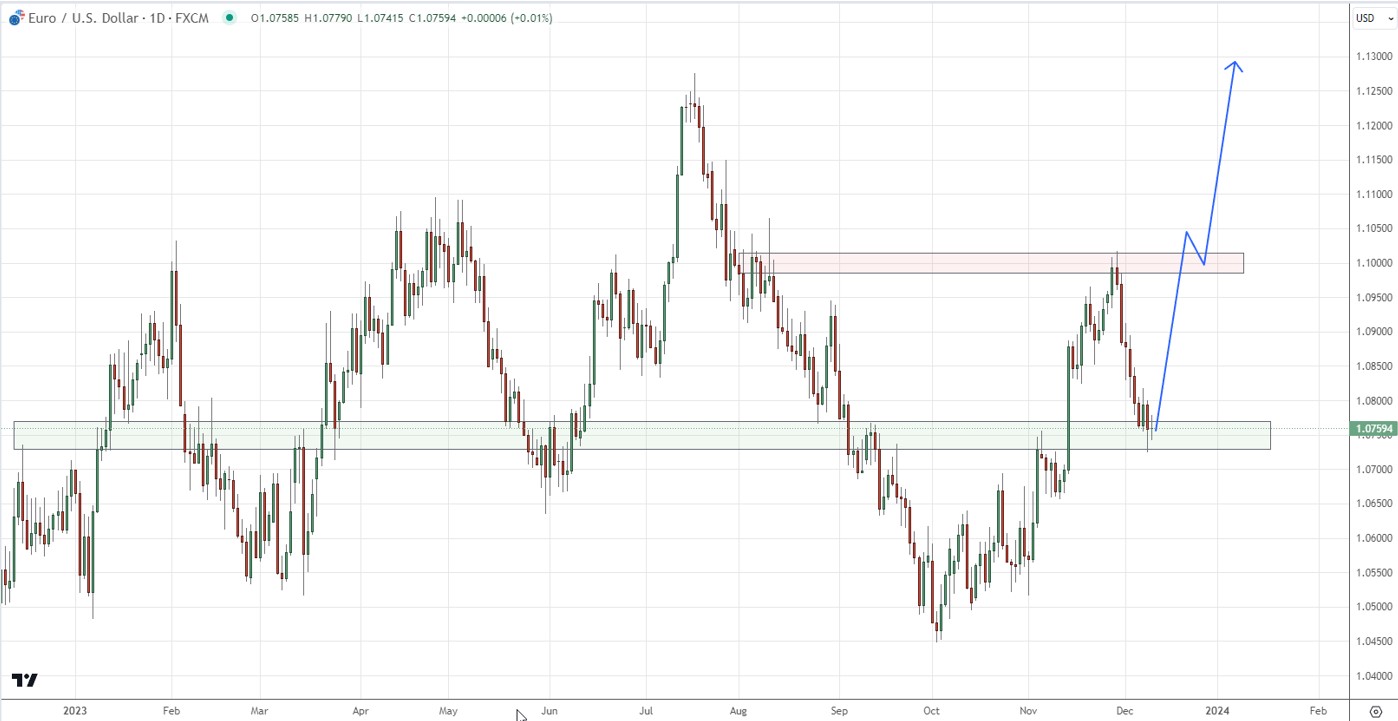
Moreover, the current price hovers around a critical support level of 1.0750, historically acting as both support and resistance. At the moment, it is imperative for significant buyers to safeguard this level and leverage it for sustained growth. The primary objective of such growth is to breach and update the November 29, 2023, maximum of 1.1000.

maximum of 1.1000

EDITOR'S PICK OF THE WEEK

CFO's new mandate. CFO explaining the presentation

The Performance and Transformation Orchestrator: The CFO’s New Mandate in the Age of AI

By Terence Tse CFOs are evolving into AI-driven transformation orchestrators, balancing finance, technology, and strategy while upskilling teams, managing risks, and driving measurable business value. A key insight from this year’s AI for CFOs event, organized...

WISE DECISION MAKER GUIDE

POWER INFLUENCERS

Emerging Trends

The Future of Global Trade