Home Blog Page 224

Navigating World of Nootropics: Insights and Advancements in Cognitive Enhancement

The exploration of nootropics, also known as cognitive enhancers, represents a cutting-edge field in neuroscience and psychology, offering promising avenues for enhancing mental capabilities. 

These substances, varying from natural supplements to synthetic compounds, have garnered significant attention for their potential in improving memory, focus, and overall cognitive function. This article delves into the scientific understanding of nootropics, their various types, potential benefits, and the latest advancements in this domain.

Understanding Nootropics: A Scientific Overview

Nootropics function by interacting with the brain’s neurochemistry, influencing cognitive processes such as memory, creativity, and motivation. They do so by modulating neurotransmitter levels, enhancing neuroplasticity, or improving blood flow to the brain.

  • Neurotransmitter Modulation: Many nootropics work by altering levels of neurotransmitters like acetylcholine, dopamine, and serotonin, which are pivotal in cognitive processes.
  • Neuroplasticity Enhancement: Some nootropics contribute to neuroplasticity, the brain’s ability to form and reorganize synaptic connections, essential for learning and memory.
  • Cerebral Blood Flow: Certain compounds enhance cerebral blood flow, thereby increasing oxygen and nutrient delivery to brain cells.

Types of Nootropics

Natural Nootropics

Natural nootropics, such as Ginkgo biloba, Bacopa monnieri, and Lion’s Mane mushroom, are derived from plants and fungi. They are often celebrated for their safety profile and long history of use in traditional medicine.

  • Ginkgo Biloba: Known for its potential to enhance memory and cognitive speed.
  • Bacopa Monnieri: Research suggests its efficacy in memory formation and stress reduction.
  • Lion’s Mane Mushroom: Studies indicate its role in nerve growth factor synthesis, crucial for brain health.

Synthetic Nootropics

Synthetic nootropics, like Piracetam, Modafinil, and Noopept, are laboratory-made compounds designed for more targeted cognitive enhancement.

  • Piracetam: Believed to improve memory and neuroprotection.
  • Modafinil: Known for promoting wakefulness and concentration.
  • Noopept: Potentially enhances memory, focus, and learning capacity.

For a more comprehensive review and in-depth analysis of specific nootropic products and their effects, consider reading this detailed review available at Outlook India. This resource offers insightful evaluations and expert perspectives on various nootropics, providing a valuable extension to the information presented here.

Advancements in Cognitive Enhancement

Research and Development

The field of nootropics is experiencing rapid advancements, with ongoing research into new compounds and their mechanisms of action. Emerging substances are being studied for their potential in treating conditions like Alzheimer’s disease, ADHD, and age-related cognitive decline.

  • Neuroprotective Properties: Research focuses on developing nootropics that can protect the brain from age-related damage.
  • Targeting Specific Cognitive Domains: Efforts are underway to create nootropics that specifically enhance particular cognitive functions, such as creativity or problem-solving.

Technological Integration

Technological advancements, such as AI and machine learning, are playing a pivotal role in the development of personalized nootropic regimens. These technologies help in understanding individual neurochemistry and creating tailored nootropic combinations.

  • Personalized Nootropic Regimens: AI algorithms analyze individual needs and recommend specific nootropics for optimal cognitive enhancement.
  • Enhanced Delivery Systems: Innovative delivery methods, such as nanotechnology, are being explored to improve the bioavailability and efficacy of nootropics.

The Future of Nootropics

Looking ahead, the future of nootropics appears both promising and complex. As research deepens our understanding of the brain, new nootropics are likely to emerge, offering more precise and potent cognitive enhancement.

  • Next-Generation Nootropics: Future developments may include compounds that target specific brain regions or cognitive processes with unprecedented precision.
  • Integrating Nootropics with Other Therapies: There’s potential for integrating nootropics with other cognitive enhancement therapies, such as brain stimulation techniques, for synergistic effects.

Safety and Ethical Considerations

While nootropics offer promising benefits, it’s crucial to approach their use with caution. Understanding the potential side effects, interactions with other medications, and long-term implications is essential. Ethical considerations also arise regarding their use in competitive environments like academics, sports, or professional settings.

  • Side Effects and Interactions: Users should be aware of possible side effects and consult healthcare professionals before starting any nootropic regimen.
  • Ethical Implications: The fairness and ethicality of nootropic use in competitive scenarios is a subject of ongoing debate.

Conclusion

Nootropics present a fascinating frontier in the quest for cognitive enhancement. With their diverse types, potential benefits, and evolving research, they hold promise for those seeking to optimize their mental performance. 

However, balancing this enthusiasm with a cautious approach is important, considering safety, ethical implications, and personalized needs. As research continues to unveil new insights and advancements, nootropics stand as a testament to the human pursuit of intellectual advancement and well-being.

How Solar Companies Can Tap Into Credit Reporting For Customers

The decision to install solar panels is a forward-thinking choice for homeowners seeking to reduce their electricity bills and contribute to environmental sustainability. Despite the long-term savings and ecological benefits, the initial financial barrier—the cost of purchasing and installing the solar system—remains a significant hurdle for many. This challenge necessitates innovative solutions to make solar energy accessible to a wider customer base. 

Soft credit checks emerge as a vital tool in this context, offering a way for solar companies to efficiently evaluate potential customers’ eligibility for financing options without negatively impacting their credit scores. This approach not only streamlines the process of obtaining solar financing but also opens the door for more homeowners to participate in the green energy movement, making it a win-win situation for both the companies offering solar solutions and the individuals eager to embrace renewable energy while managing their financial health.

What Is A Soft Credit Check?

A soft credit check, pivotal in financial assessments, serves as a non-intrusive peek into an individual’s credit history, ensuring that the customer’s credit score remains unaffected. This gentle inquiry provides businesses with essential credit information, such as credit scores and debt levels, without leaving a mark that could potentially lower the individual’s credit rating. For entities like solar companies, the ability to conduct soft credit checks is instrumental. It enables them to efficiently pre-qualify potential customers for various financing options, offering a glimpse into what terms a customer might expect without the formalities and impacts of a hard credit pull. This process is critical in industries where financial eligibility directly influences access to products or services, allowing companies to streamline the customer journey toward financing solutions that align with their creditworthiness.

Benefits For Solar Companies

Solar power companies can realize meaningful advantages by utilizing soft credit checks for customers. By taking a limited look at credit data without impacting scores, solar providers can pre-qualify leads, minimize financing fallout, and streamline the quote process. Let’s explore the top benefits soft credit checks offer solar companies looking to improve customer acquisition and retention.

  • Pre-Qualify Customers

Utilizing soft credit checks, solar installers gain a crucial early insight into a potential customer’s financial health. This process is instrumental in evaluating whether a customer stands a strong chance of securing financing. By understanding a customer’s creditworthiness upfront, solar companies can tailor their financing proposals accordingly, setting realistic expectations regarding loan terms and monthly payment amounts. For example, a solar installer might use this initial credit snapshot to determine that a customer qualifies for a zero-down solar loan with low interest rates, thereby streamlining the path to a signed contract. This approach significantly streamlines the sales process, ensuring that both the company and the customer can focus on realistic financing options from the outset, avoiding the disappointment and time loss associated with failed loan applications.

  • Offer Quick Quote

The ability to quickly offer ballpark quotes based on soft credit checks is a game-changer for solar companies. This capability not only enhances the customer experience by providing immediate feedback on potential costs and financing terms but also positions a company as responsive and customer-focused. For instance, after a soft credit check, a company might immediately offer a preliminary quote for a solar installation project, indicating monthly payments and interest rates, which can swiftly capture the customer’s interest and differentiate the company from competitors who may require more time to provide similar information. This swift quoting process can be particularly effective in competitive markets, where the speed of service can be as crucial as the quality of the product.

  • Reduce Financing Fallout

Financing fallout is a significant concern for solar companies, as it represents a loss of both time and resources. By implementing soft credit checks early in the customer journey, companies can better assess the likelihood of a successful financing process. This preemptive measure ensures that resources are allocated to customers with a higher likelihood of following through with their installation. For example, a solar company might avoid a scenario where they spend weeks processing an application, ordering equipment, and scheduling labor, only for the customer to back out upon receiving final loan terms. By minimizing these instances, solar companies can operate more efficiently, focusing their efforts on leads with a higher conversion probability.

People Discuss About Graphs and Rates
Photo by fauxels on Pexels

Benefits For Customers

Customers also stand to gain important benefits from solar companies’ use of soft credit checks. By avoiding hard inquiries, customers can explore financing options without damaging their credit scores. We’ll discuss how soft checks help customers maintain their credit, understand financing choices, and prevent unnecessary hard pulls.

  • Maintain Credit Score

For customers, the primary advantage of soft credit checks lies in their non-impactful nature on credit scores. Unlike hard inquiries, which can slightly lower a credit score and remain on a credit report for two years, soft checks provide a risk-free way for customers to explore financing options. This is particularly beneficial for those in the early stages of shopping for solar installations, as it allows them to gauge their eligibility without the fear of damaging their credit score. For instance, a homeowner considering solar panels can inquire about financing through multiple companies without the cumulative effect of hard inquiries from each, preserving their credit health for when they’re ready to make a decision.

  • Avoid Unnecessary Hard Inquiries

Hard inquiries triggered by full financing applications can accumulate and negatively impact a customer’s credit score if multiple applications are submitted within a short period. By utilizing soft credit checks, solar companies can pre-screen customers for financing eligibility, significantly reducing the need for hard inquiries that could lower their credit scores. This process benefits customers by preserving their credit rating, making them more likely to secure favorable loan terms when they decide to proceed. For example, a customer who is borderline eligible for solar financing can avoid the hard inquiry from a full application if a soft check indicates they might not qualify, saving their credit score for other financing opportunities where they have a stronger chance of approval.

  • Understand Financing Options

Soft credit checks play a pivotal role in setting clear expectations for customers regarding their financing options. By receiving an early estimate of potential costs and terms, customers can make more informed decisions about proceeding with solar panel installation. This transparency helps in building trust between the customer and the company, as customers appreciate knowing what to expect without the pressure of committing to hard credit inquiries. For example, a customer might be presented with a preliminary quote that outlines the expected monthly payment and interest rate for their solar project, allowing them to assess the financial feasibility of the project before moving forward with a more formal application process. This understanding fosters a more informed, confident decision-making process for prospective solar panel owners.

How Solar Companies Can Leverage Soft Credit Checks

Now that we’ve looked at the main benefits let’s examine best practices for how solar companies can fully leverage soft credit checks with customers.

  • Explain The Process

For solar companies, clarity about the credit check process is key to customer trust and satisfaction. It starts with a clear explanation of what a soft credit check entails and its implications. By informing customers that a soft credit check will not impact their credit scores, companies demystify the financing process and alleviate concerns about potential negative effects. This explanation should be straightforward, highlighting that the purpose of the soft credit check is to pre-qualify them for financing options quickly without any commitment. An example of putting this into practice could involve a simple guide or FAQ section on the company’s website detailing how soft credit checks work and why they’re used, ensuring customers feel informed and comfortable with the process from the start.

  • Obtain Customer Consent

Securing explicit consent from customers before conducting a soft credit check is not only a best practice but often a legal requirement. Solar companies should ensure that the process for obtaining consent is as clear and straightforward as possible, whether it’s through a digital form with a checkbox or a signed document. This step reinforces trust and respects customer privacy. For instance, during an initial consultation, a solar consultant can explain the benefits of a soft credit check and then present the customer with a simple consent form, either on paper or electronically, that clearly states what they are agreeing to. This approach ensures that customers are fully aware of what they’re consenting to, emphasizing transparency and ethical business practices.

  • Set Expectations

After conducting a soft credit check, it’s important for solar companies to use the information gathered to set realistic expectations about potential financing terms. This involves explaining to customers that the initial estimates are subject to change based on a more thorough review during the full application process. By doing so, companies prevent any potential surprises or misunderstandings down the line. For example, if a preliminary soft check suggests that a customer might qualify for a certain interest rate, the company should clarify that the final rate could vary. This honest and upfront communication helps manage expectations and fosters a trusting relationship between the company and the customer.

  • Offer Multiple Options

In cases where a soft credit check indicates that a customer might not qualify for the most favorable financing terms, it’s crucial for solar companies to present alternative financing solutions. This could involve discussing the possibility of solar leases or power purchase agreements (PPAs) as viable options for customers who may face challenges securing a loan. Providing multiple financing options ensures that customers feel supported in finding a path that works for them rather than facing a dead-end. For instance, a company might explain that while the customer might not qualify for a zero-down loan due to their credit profile, a solar lease could offer a no-upfront-cost solution to achieve their solar energy goals.

  • Follow Up Quickly

Timeliness in following up with customers after a soft credit check can significantly impact their decision to proceed. Quick, personalized follow-up communication that includes pre-qualification details and tailored system quotes can keep the customer engaged and interested in moving forward with the application process. This could be as simple as an email or phone call within 24 hours of the soft credit check, providing the customer with the next steps and answering any questions they may have. This prompt response demonstrates the company’s commitment to customer service and can help maintain the customer’s enthusiasm for the project.

  • Suggest Next Steps

Closing the loop by outlining clear next steps for customers is essential for moving them through the financing and installation process. After providing them with initial financing estimates and system quotes, solar companies should guide customers on what they need to do next, such as completing a full financing application, gathering necessary documents, or scheduling a consultation to discuss system design options. By giving customers a clear pathway forward, companies can streamline the process, reduce confusion, and enhance the overall customer experience. This proactive approach helps customers feel guided and supported throughout their solar journey, increasing the likelihood of successful project completion.

  • Leveraging Credit Reporting For Success

Soft credit checks are an invaluable tool for solar companies, enabling them to pre-qualify leads efficiently, streamline the application process, and set accurate financial expectations for customers. This strategic use of credit reporting can lead to higher close rates, minimized financing fallout, and increased customer satisfaction. Ultimately, by effectively leveraging soft credit checks, solar providers can facilitate more solar panel installations, contributing to their business growth and promoting sustainable energy solutions. The ability to provide customers with a clear, informed path to solar financing underscores the potential for mutually beneficial outcomes, shining a light on the future of the solar industry.

Conclusion

Soft credit checks offer significant benefits for both solar companies and potential customers. By pre-qualifying customers without impacting credit scores, companies can streamline the process of providing financing options and quotes. Customers receive the advantage of exploring their options in a low-risk way while avoiding unnecessary hard credit inquiries. Overall, solar companies that strategically leverage soft checks for credit reporting can improve customer service and expand installations. The result is a solar-powered win-win that brightens the future for sustainable energy.

Camp Lejeune Settlement News: Updates on Compensation and Legal Proceedings

For decades, a silent threat lurked beneath the surface at Camp Lejeune, a Marine Corps base in North Carolina. Contaminated water, laden with harmful chemicals, exposed residents to a toxic legacy with lasting consequences. Countless individuals suffered a range of serious health problems, from cancers and birth defects to neurological disorders. Now, a fight for justice unfolds, seeking compensation and accountability for those impacted by this historic exposure.

However, in recent years, significant strides have been made in the pursuit of justice for the base’s victims. Landmark settlements and legal victories have provided some semblance of solace to survivors and their families. Yet, amidst these triumphs, challenges persist.

In this article, we explore recent Camp Lejeune settlement news, covering compensation initiatives, legal proceedings, and justice efforts.

History of Camp Lejeune Water Contamination

The history of water contamination at Camp Lejeune is a harrowing tale of environmental negligence and its devastating human toll. For decades, from the 1950s to the 1980s, the Camp faced water contamination, exposing residents to harmful chemicals. Trichloroethylene (TCE), perchloroethylene (PCE), benzene, and carcinogens tainted the base’s water supply.

Contamination arose from improper disposal and leaks from on-base facilities, infiltrating the aquifer and providing water to the military, families, and workers.

According to Justia, Camp Lejeune’s Tarawa Terrace and Hadnot Point water treatment plants supplied water containing volatile organic compounds (VOCs). During the contamination period, Tarawa Terrace’s PCE and Hadnot Point’s TCE concentrations exceeded the EPA’s 5 ppb maximum contaminant level. Peak PCE levels reached 215 ppb in Tarawa Terrace’s water, while Hadnot Point’s water peaked at 1,400 ppb for TCE.

Despite the evidence, military authorities didn’t acknowledge the extent of contamination or adequately warn those exposed to health risks from water quality issues. Thousands ingested and bathed in contaminated water at the base, resulting in alarming rates of cancer. It also led to neurological disorders and other debilitating illnesses among residents.

TorHoerman Law outlines various health issues linked to Camp Lejeune water contamination, ranging from cancers to neurobehavioral effects. Associated conditions include birth defects and injury. The extensive list underscores the profound health impact on those exposed to the contaminated water.

Recent Developments in Compensation

The fight for compensation for victims of Camp Lejeune water contamination has seen significant progress in the last months.

Legal proceedings against the government continue as veterans and families file individual lawsuits seeking compensation for their cases. Although major settlements haven’t occurred, judges have requested settlement reports from the government, indicating progress toward potential future agreements. The ongoing litigation reflects the quest for justice and accountability in the water contamination case.

The Elective Option, launched in 2023, offers faster compensation for individuals with specific health conditions linked to contaminated water. According to Military.com, claimants may receive compensation ranging from $100,000 to $550,000 based on diagnosis and exposure duration.

This window signifies a positive start, also highlighting the vast number of claims needing processing.

Also, the Veterans Affairs (VA) provides disability benefits and healthcare to eligible veterans and family members exposed to the contaminated water. The Honoring Our Promise to Address Comprehensive Toxics (PACT) Act of 2022 broadened presumptive conditions for veterans, streamlining benefit acquisition. This demonstrates ongoing efforts to support and compensate those affected by the Camp Lejeune water contamination.

Legal Proceedings Update

Hundreds of thousands of lawsuits seek redress from the government for harm caused by exposure to contaminated water. However, the fight for justice extends beyond the sphere of compensation programs. Numerous legal proceedings are ongoing, aiming to hold the government accountable for the water contamination and its devastating consequences.

Plaintiffs in the Camp Lejeune lawsuit assert that the government negligently allowed water contamination by inadequately maintaining storage tanks and waste disposal. They argue that the government failed to warn residents of the health risks despite awareness of the contamination. Exposure to polluted water is associated with severe health issues, prompting the lawsuit to seek compensation for the resulting damages.

Recent legal proceedings have involved courts grappling with complex matters of liability, causation, and jurisdiction. These cases, ranging from class-action suits to individual claims, seek recompense for health consequences linked to toxic exposure. The legal arena serves as a forum for addressing the profound human suffering caused by contamination.

Also, legal advocacy groups and committed attorneys persist in advocating for the base victims, tirelessly pursuing justice and accountability. Through strategic litigation and negotiation, their endeavors have secured notable victories and facilitated comprehensive settlements. These efforts offer vital relief to those affected by the enduring crisis.

Key Issues and Concerns

Several key issues and concerns persist amid ongoing efforts to address the aftermath of Camp Lejeune’s water contamination. They significantly shape compensation and legal proceedings.

One pressing concern is the scope and adequacy of compensation packages available to the base’s victims. Settlement agreements and compensation programs provide financial relief, yet questions linger about sufficiency for long-term medical needs. Survivors and families worry about funding adequacy for medical expenses and other incurred costs.

Accessibility of compensation and healthcare for affected individuals, especially those facing bureaucratic barriers or lacking awareness, is critical. Ensuring equitable access to resources remains paramount in addressing the needs of the survivors. Ongoing efforts strive to bridge gaps and provide essential support services.

Also, processing claims for individual lawsuits is facing delays. According to Marine Corps Times, Veteran Affairs officials anticipate that successful lawsuits may take months or even years to conclude. The estimated timeline suggests that initial payouts under the new law may not occur until at least summer 2024. Payments are expected for cases with severe injuries attributable to the contaminated water and lacking clear explanations.

Future Outlook

The future outlook for Camp Lejeune survivors and the impacted community is fraught with challenges and opportunities. Evolving compensation and legal proceedings shape the trajectory of settlement news and justice pursuit. Stakeholders must navigate these factors to address the enduring effects of the water contamination crisis.

The future outlook hinges on implementing enhanced support systems and resources for the base’s survivors and their families. This encompasses expanded access to healthcare services, mental health counseling, and tailored financial assistance programs to address their unique challenges effectively. These efforts aim to foster healing and resilience within the affected community.

Also, continuing research and scientific studies are crucial for comprehending the enduring health impacts of toxic chemical exposure.

Towards Healing and Justice

The journey of the Camp, shadowed by water contamination, embodies resilience, advocacy, and justice pursuits. Reflecting on compensation and legal proceedings updates reveals significant strides in recognizing survivors’ and families’ hardships. These developments mark crucial steps towards addressing the challenges wrought by the contamination ordeal.

Navigating Camp Lejeune’s future demands vigilance in pursuing accountability and supporting those affected by contamination. Greater awareness, resource access, and advocacy efforts are vital for fostering healing and justice. Through these endeavors, we pave the path toward a brighter future for the Camp Lejeune community and beyond.

5 Reasons to Buy a Car with a Personal Loan

If you’re considering buying a car with financing, chances are your first inclination will be to apply for an auto loan. However, this is not the only type of loan that can give you the funding you need.

Many people don’t realize it, but you can also use a personal loan to buy a car. Here are five reasons why this could be a great and viable strategy.

1. No Collateral Required

With an auto loan, the vehicle serves as collateral. Collateral is something of value that the lender can seize if you default on your loan payments. In other words, if you can’t repay the borrowed money, the lender can legally take your car.

By contrast, an unsecured personal loan doesn’t require collateral. Instead, the creditor will review factors such as your:

  • Credit score
  • Credit history
  • Debt to income ratio
  • Employment history

If you default on a personal loan there are financial consequences but you won’t be putting ownership of the vehicle at immediate risk.

2. No Down Payment

With auto loans, lenders typically require a down payment. Down payments are a fairly common way for borrowers to demonstrate their interest in purchasing.

On the other hand, a personal loan doesn’t require a down payment because the borrower is applying for and expecting to receive 100% of the loan amount.

3. You Don’t Meet the Minimum Financing Amount

Some auto loan lenders have a minimum financing amount. For example, a lender may not approve a financing application for $10,000 or less. This affects people who are prepared to make a significant down payment and whose borrowing needs fall short of the lender’s minimum financing amount.

This is where an unsecured personal loan might help. Although some states and individual lenders have minimum loan values, you may want to consider taking out a personal loan.

4. Your Credit Score Doesn’t Qualify

Having a less-than-perfect credit score could pose challenges when seeking an auto loan. However, some lenders have more flexible eligibility criteria for personal loans, and approve those of various financial backgrounds. Collaborating with a lender that considers the applicant’s overall financial situation may enhance approval chances. It’s essential to note that applicants with lower creditworthiness may encounter higher Annual Percentage Rates (APRs) compared to their more creditworthy counterparts. 

5. Buy The Car You Want

Some auto loan lenders may have requirements when it come to the type of car a borrower can buy. For example, if it’s a used vehicle and more than ten years old, your loan application may be denied because the lender determined the collateral value of the car was too low.

On the other hand, the decision to offer you an unsecured personal loan does not take into consideration the age or condition of the vehicle. Because it’s an unsecured loan, the lender won’t ask you for information about the vehicle. That means you can buy the vehicle you want if you find a great deal.

The Bottom Line

Although most people think auto loans are the primary way to get financing when they need to buy a vehicle, there are other options. An unsecured personal loan can be a great way to borrow without pledging the vehicle as collateral or being subject to a lender’s restrictions as to what you can buy. Plus, if you’ve had any financial trouble, you may find it easier to get a unsecured personal loan from a lender that reviews an applicant’s full financial picture rather than merely focusing on the FICO score.

Notice: Information provided in this article is for information purposes only and does not necessarily reflect the views of [publisher] or its employees. Please be sure to consult your financial advisor about your financial circumstances and options. This site may receive compensation from advertisers for links to third-party websites.

No More Tax Headaches: Canada’s Efforts to Streamline Gambling Taxation!

In the world of online gaming, Canada stands as a unique landscape, where the regulations surrounding taxation on gambling winnings have often been a point of confusion and frustration for both players and operators alike. However, recent efforts by the Canadian government aim to streamline and clarify these regulations, providing much-needed clarity and relief to all involved parties. In this article, we’ll delve into Canada’s stance on taxing iGaming and explore the steps being taken to simplify the process, ensuring a smoother experience for all.

Understanding Canada’s Taxation on iGaming

Canada’s approach to taxing iGaming winnings has historically been complex, with rules varying depending on the type of game, the amount won, and even the province in which the player resides. Unlike some other countries, such as the United States, where gambling winnings are subject to federal income tax, Canada does not typically tax gambling winnings directly. Instead, the Canadian Revenue Agency (CRA) considers gambling winnings to be windfalls and generally does not tax them as long as they are not considered a source of income.

However, this does not mean that Canadian players are entirely exempt from taxes on their gambling winnings. In certain situations, such as when gambling is considered a profession rather than a hobby, or when winnings are generated from business activities, taxes may apply. Additionally, Canadian players who win large sums of money from international gambling websites may find themselves subject to taxation under certain circumstances.

The Role of Online Casinos in Canada

Amidst this regulatory landscape, online casinos in Canada play a significant role. With the popularity of online gambling on the rise, Canadian players have increasingly turned to online casinos as their preferred platform for gaming. These online casinos offer a wide range of games, including slots, table games, and live dealer games, providing players with endless entertainment options from the comfort of their own homes.

For Canadian players seeking the best online casinos in Canada, several factors come into play. These include the variety and quality of games offered, the reliability and security of the platform, and of course, the generosity of bonuses and promotions available. Fortunately, Canada boasts a plethora of reputable online casinos that cater specifically to Canadian players, ensuring a safe and enjoyable gaming experience for all.

Recent Developments in Taxation Policies

In recent years, the Canadian government has made efforts to clarify and streamline its taxation policies regarding iGaming winnings. One significant development came in 2019 when the CRA issued a statement clarifying that winnings from single-event sports betting are not subject to taxation, provided that they are not considered a source of income. This clarification brought much-needed relief to Canadian sports bettors, who had previously been uncertain about their tax obligations.

Furthermore, in response to the growing popularity of online gambling, several provinces in Canada have taken steps to regulate and legalize online casinos within their jurisdictions. This move not only provides players with a safer and more secure gaming environment but also allows provincial governments to collect tax revenue from online gambling activities. As a result, players can expect to see more transparent and consistent taxation policies across different provinces in the future.

The Future of Gambling Taxation in Canada

While Canada has made strides in simplifying its taxation policies regarding iGaming winnings, challenges still remain. The borderless nature of online gambling means that Canadian players often engage with international gambling websites, raising questions about taxation and regulatory jurisdiction. Additionally, the rapid evolution of technology and the gaming industry means that regulations must continually adapt to keep pace with new developments.

Looking ahead, it is clear that collaboration between government agencies, industry stakeholders, and players themselves will be crucial in shaping the future of gambling taxation in Canada. By working together to establish clear and consistent policies, Canada can ensure that its gaming industry continues to thrive while providing players with a fair and transparent gaming experience.

One important consideration in Canada’s efforts to streamline gambling taxation is the potential impact of emerging technologies, such as blockchain and cryptocurrencies, on the industry. As these technologies gain traction, they introduce new complexities regarding anonymity, cross-border transactions, and taxation enforcement. The Canadian government, along with regulatory bodies, must stay vigilant in understanding and adapting to these technological advancements to ensure that taxation policies remain relevant and effective in the rapidly evolving landscape of online gambling.

Conclusion

In conclusion, Canada’s efforts to streamline gambling taxation represent a positive step forward for the country’s gaming industry. By clarifying rules, embracing online casinos, and fostering collaboration, Canada is paving the way for a more transparent and player-friendly gaming environment. While challenges remain, the future looks bright for iGaming in Canada, offering players an exciting and rewarding gaming experience without the headache of uncertain taxation.

How Do Digital Nomads Make a Living While Travelling?

Imagine this: you’re at your desk, daydreaming about lounging on a beach in Thailand or trekking through the mountains in Patagonia. The allure of these exotic locations is irresistible, but reality kicks in—you have a stable job that pays the bills. The desire for both the freedom to work and the ability to travel intensifies, but you’re perplexed about how people make it happen. Well, here’s the scoop—it IS possible. 

There’s a vibrant community of digital nomads living the laptop lifestyle, and in this article, we’re going to unveil the secrets of how they sustain themselves financially while gallivanting across the globe. Brace yourself to learn about various remote jobs and side hustles that nomads leverage, such as freelancing, affiliate marketing, dropshipping, and more. 

Discover how people are earning a livelihood online without being tethered to a desk or sacrificing the thrill of adventure. If you’re eager to turn your travel dreams into reality, keep reading!

OnlyFans Content Creation

As a digital nomad, one popular way to make money while traveling is through OnlyFans. It’s a subscription-based platform where creators can earn from subscribers. People from around the world are raking in cash using this platform – for instance, some of the best Indian OnlyFans creators are making over $100,000 a month, offering exclusive photos, videos, live streams, and messaging services.

Here’s your quick guide to kickstarting your OnlyFans journey:

  1. Sign Up: Create an OnlyFans account and boost your subscriber base by promoting your page on other social media platforms like Instagram or Twitter. Engage with your followers, post teasers, and share behind-the-scenes content on other platforms to lure them to your OnlyFans page.
  2. Content is Key: Focus on consistently creating and posting photos and videos that your subscribers will crave. Whether you’re doing simple photo shoots in your hotel room, capturing content while exploring different locations, or getting creative with themed shoots, keep it coming.
  3. Consistency is Queen: Post new content 3-5 times a week to keep your subscribers engaged and returning. Respond to comments, message your top fans, and consider offering pay-per-view content, custom requests, or one-on-one video chats at a premium.

With time and consistency, your OnlyFans page can evolve into a reliable source of income as a digital nomad. The larger your subscriber base and the more content you produce, the more you can earn each month. If done right, you might even make enough to cover all your travel expenses and then some. A pretty sweet deal, wouldn’t you say?

Man hiking
Photo by Catarina Sousa on Pexels

Digital Marketing

To earn a living as a digital nomad, one of the most popular fields is digital marketing. This encompasses various avenues:

  • Social Media Management: Help businesses manage their social media profiles and content. This could involve creating posts, engaging with followers, running ads, and analyzing metrics.
  • Search Engine Optimization (SEO): Optimize websites to rank higher in search engines like Google. This includes technical fixes, content creation, link building, and keyword research.
  • Email Marketing: Design email newsletters, automate email sequences, and analyze email campaign performance. Some nomads even specialize in just email copywriting.
  • Affiliate Marketing: Earn commissions by promoting other companies’ products and services. Drive traffic to the merchant’s site through blogs, videos, social media, and more. When someone buys, you get paid.
  • Blogging: Create useful content for a blog and then monetize it through ads, sponsorships, affiliate links, or online courses. Travel blogging and location-independent blogging are popular niches for nomads.

Offer Virtual Assistance Services

As a digital nomad, one of the easiest ways to earn money while gallivanting around the globe is by offering virtual assistance services to businesses or individuals. Virtual assistants handle administrative tasks remotely for clients worldwide. Some of the services you can provide include:

  • Email Management: Handle email correspondence on behalf of clients. Respond to messages, filter spam and bulk mail, and forward important emails to your clients.
  • Calendar Management: Manage schedules, book meetings and travel, and keep clients on track of deadlines and events.
  • Transcription: Convert audio files into text documents. This is an in-demand service for many podcasters, journalists, authors, and businesses.
  • Research: Conduct online research for individuals or businesses on various topics. Find and organize information, statistics, examples, and data.
  • Writing: Ghostwrite blog posts, newsletters, social media updates, or other content on behalf of clients.

To get started as a virtual assistant, build a professional website to advertise your services, set your rates, and start searching for freelance job platforms like Fiverr, Upwork, or Flexjobs to find new clients. 

You’ll need a laptop, a high-speed internet connection, and a phone to communicate with clients. Many successful virtual assistants earn $25 to $50 per hour by providing a combination of these administrative support services to clients around the world.

Monetize Your Social Media Following

As a digital nomad, one of the best ways to generate income is by monetizing an engaged social media following. Individuals who love traveling and sharing photos/videos of destinations and experiences, as well as those with a particular skill or area of expertise, are well-positioned to build an audience and earn money from their content and influence.

Some popular ways to make money from your followers include:

  • Affiliate Marketing: Promote relevant products, services, or brands you genuinely use and recommend to your followers. You earn a commission for any sales or signups. Travel gear, camera equipment, and accommodation are popular niches for travel influencers.
  • Sponsored Posts: Get paid by brands to feature their products or services on your feed. Disclose any paid promotions to maintain transparency with your followers.
  • Online Courses: If you have a skill that would benefit others, consider creating an online video course to teach it. Promote the course to your followers and earn money from subscriptions or one-off purchases.
  • Consulting or Freelancing: Leverage your expertise and audience to land consulting gigs, speaking engagements, or freelance writing work. Some travel influencers get hired for tourism campaigns, for example.
  • Patreon or Buy Me a Coffee: These platforms allow your followers to support you financially through small monthly contributions. In exchange, you can offer exclusive content, community access, or behind-the-scenes updates.

Embracing the Digital Nomad Lifestyle: The Finale

So there you have it—a glimpse into the exciting and adventurous digital nomad lifestyle. With the rise of remote work and online freelancing, more people are embracing location independence and breaking free from the 9-to-5 grind. 

It takes hard work and determination, but with the right skills and mindset, you, too, could join the growing community of digital nomads exploring the world while earning a living. Just remember to stay organized, find a routine that works for you, and, above all, appreciate the rare opportunity you have to live and work from wherever your heart desires. The open road is calling—how will you respond?

Integration of Decentralized Finance (DeFi) in Wallet Development

The Role of DeFi in Wallet Development

DeFi (Decentralized finances) is a trend that is changing the way digital transactions are conducted. Statista’s latest report confirms the rising popularity of DeFi and predicts the revenue from the global DeFi market to reach US$26,170.0m by the end of 2024. DeFi is reshaping the digital payment systems and is becoming widely adopted in the development of digital wallets 

So what is DeFi, and what makes DeFi integration the future of wallet development? Look for the answer in this blog post.  

What is DeFi 

Decentralized finance or DeFi is an umbrella term used to describe financial services on public blockchains, primarily Ethereum. DeFi promotes democratized access to financial services – from lending and borrowing to asset trading. DeFi is reshaping the digital finance industry. It doesn’t need intermediaries like banks or financial institutions to conduct transactions, giving users a range of ultimate benefits. 

Benefits of DeFi Integration in Wallet Development

Why is DeFi important in wallet development? Let’s take a look at the 4 benefits that decentralized finance offers to crypto wallet development. 

Added Security

DeFi services provide the security and transparency of financial transactions. In traditional finance, transactions are performed with the involvement of third-party financial institutions, which makes it easier for hackers to gain authorized access to your financial data. 

Decentralized Finance, in its turn,  relies on a smart contracts program that makes transactions trackable but irreversible and anonymous. This reduces the likelihood of data breaches and promotes a secure transaction environment.

Interoperability

DeFi platforms are naturally interoperable due to the shared blockchain network on which they reside. This interoperability means that DeFi platforms can collaborate, leading to a more efficient financial system. In addition, this allows users to access various financial services (e.g. swapping or sale of tokens) and assets from different platforms within one wallet or cryptocurrency exchange platform

Lower Costs and High-Interest Rates

Because DeFi allows for direct transactions between parties, it can reduce the costs associated with financial services. First, there’s no need to pay interest to banks that in most cases take the role of financial intermediaries. Instead, DeFi uses blockchain technology to verify and execute finances using network fees or gas fees that are usually much lower than the fees charged by intermediaries, 

Third, decentralized services offer more competitive rates than traditional methods. They rely on decentralized protocols and algorithms to define the prices and match the order.

Global Accessibility and Inclusivity

In traditional finance, people in developing countries or low-income areas may struggle to access financial services, either due to a lack of infrastructure or high costs. DeFi is making financial services more accessible. Anyone with an internet connection and a connected wallet can join the DeFi ecosystem. No bank account, credit history, or identification documents are required to participate in DeFi.

To sum up, Decentralized finance focuses on the provision of seamless financial transactions and elimination of the barriers of traditional banking systems. With DeFi, you don’t need intermediaries to conduct financial operations. This decentralization, championed by S-Pro, leads to enhanced security, lower transaction cost, operability, making financial services accessible to people excluded from traditional finance services.

Revolutionize Your Investment Approach With Cutting-Edge Strategies

Revolutionizing your investment approach is not merely a tagline but a lucrative endeavor that could exceed common market expectations. 

In 2022, the average projected annual return on investment surged to approximately 11.4 percent, indicating investors’ increasing optimism and savvy. You need to delve into the latest trends and techniques shaping finance’s future to leverage this bullish outlook. 

Let’s explore how integrating new methodologies can propel your investment portfolio to unprecedented growth and resilience.

Understanding the Basics of Investment

Before we delve into the avant-garde, let’s revisit the bedrock principles of sound investment. These timeless concepts have underpinned the strategies of some of the most successful investors in history.

Foundations of investment strategies

Investment strategies are like architectural blueprints for potential wealth. They involve careful planning and a keen understanding of one’s financial goals and risk tolerance. Treating the investment process as an art form is the first step toward a robust financial structure.

Core investment principles

Managing risk, diversifying your portfolio, and carefully allocating assets are three pillars of investing. These principles are immutable even as the financial landscape transforms. They guide the formulation of your investment objectives and the selection of your investment instruments, focusing on stability and long-term growth.

Risk management

Understanding and quantifying risk are as important as the potential investment returns. Whether it’s market risk, credit risk, or volatility, astute investors acknowledge risk as an ever-present factor and seek to mitigate it through various techniques and instruments.

Portfolio diversification

Mixing your investments across different assets and sectors can significantly reduce risk. Not putting all your eggs in one basket minimizes the impact of adverse market movements on your overall investment.

Asset allocation

The art of asset allocation determines the mix of bonds, cash, stocks, and other investments in your portfolio. A well-balanced allocation can enhance returns for a given level of risk and is customized to your financial circumstances.

Cutting-Edge Investment Strategies

In today’s dynamic market, staying ahead often means adopting technologies and exploring instruments that were unconventional just a few years ago. Here, we explore two arenas: the infusion of technology in investment practices and the increasing popularity of unconventional assets.

Harnessing the power of technology in investments

Technological advancements have given birth to a new generation of investment strategies. These tools and platforms empower individual investors with capabilities that were once the sole purview of institutional players.

Algorithmic trading

Algorithmic trading, or algo-trading, incorporates complex algorithms to analyze and execute buy/sell decisions at frequencies and speeds impossible for a human trader to attain. The precision, swiftness, and resilience to emotional trading that algorithms provide can tilt the scale in your favor, even during the most volatile market conditions.

robot
Image by Mohamed Hassan from Pixabay

Utilizing robo-advisors

Robo-advisors are automated traders who use algorithms to create and manage investment portfolios. By leveraging data-driven insights, they offer tailored investment advice and asset management services at a fraction of the cost of traditional financial advisors.

The rise of alternative investments

As traditional markets become more crowded and competitive, savvy investors are turning to unique and unconventional asset classes that have the potential to yield higher returns.

Real estate crowdfunding

Real estate crowdfunding platforms democratize access to investments, traditionally the forte of those with high capital. Investors can now invest in specific properties or projects, spreading their real estate exposure without the burden of direct property ownership.

Cryptocurrencies and blockchain technology

Cryptocurrencies are a manifestation of the disruptive power of blockchain technology. They offer digital alternatives to traditional currencies and have captured the attention of investors worldwide with their impressive returns and future potential as decentralized assets.

Success Strategy Business royalty-free stock illustration
Image by ar130405 from Pixabay

Practical Application and Strategy Integration

Integrating new strategies is more than just adopting them in isolation; it’s about weaving them into a coherent fabric that aligns with your investment goals and reflects your risk profile.

Developing a personalized investment plan

A personalized investment plan should be the product of deep contemplation and comprehensive financial planning. It must encapsulate your short-term needs, long-term aspirations, and any other variables pertinent to your financial health.

Mastering CFDs: Advanced techniques for online trading

To trade CFDs online is to engage in a method where investors speculate on price movements without owning the underlying assets. Trading platforms facilitate quickly entering and exiting markets, offering flexibility to capitalize on rising and falling markets. This approach requires understanding leverage, which can magnify gains and losses.

Financial Foresight: Engineering Your Portfolio for the Next Revolution

The financial landscape is constantly evolving, and the trajectory of your investment journey should reflect this reality. Making informed choices today ensures that your portfolio is well-positioned for the opportunities and challenges of tomorrow.

As we ride the waves of innovation, it’s crucial to remember that investment fundamentals remain unchanged. Solid research, cautious judgment, and a long-term perspective are the keystones of any successful strategy, no matter how cutting-edge.

By embracing the new while grounding ourselves in the tried and true, we can revolutionize our investment approach and maximize our growth potential. The promise of double-digit returns is within reach, but the diligence and the strategic finesse of the investor will realize this potential.

Build on your knowledge, seek professional counsel when needed, and keep honing your skills. The journey to financial fulfillment is not a sprint but a marathon of education, adaptation, and strategic deployment. Your portfolio awaits the precision of a surgeon’s blade and the robustness of a bulwark. 

With calculated steps, you will intricately weave an investment masterpiece, a blueprint for a secure and prosperous future.

A Complete Guide To Choosing The Right Mix Of Business Insurance

As a business owner, you want to protect your company’s assets and operations. Purchasing the right insurance coverage is crucial to minimize any risks or losses your business may face. With many types of business insurance policies available, you need to understand what each covers to choose the optimal mix for your specific needs and budget. This comprehensive guide will walk you through the key factors to consider when selecting business insurance for your company.

Understanding The Main Types Of Business Insurance

When starting your search for business insurance, you first need to learn about the main policy types through providers like Alpine Castle Lake Insurance. The major categories include:

  • General Liability Insurance

General liability insurance is one of the most common and important policies for businesses. It provides protection against third-party bodily injury and property damage claims arising from your business operations and premises. For example, if a customer slips and falls in your store, general liability would cover their medical bills and any lawsuit against your business seeking damages. It also pays for legal defense costs if you’re sued and covers settlements or judgments up to the policy limit you select. Nearly all small businesses need general liability in case an accident or injury occurs on their property or as a result of their services. It’s crucial protection that can safeguard your hard-earned business assets.

  • Professional Liability Insurance

Also referred to as errors and omissions or E&O insurance, professional liability policies protect service provider businesses like consultants, accountants, architects, engineers, designers, and healthcare practitioners. It covers claims alleging your professional services caused a client financial loss due to an error or failure to perform. For instance, if an accounting firm is sued for providing incorrect tax advice, its E&O policy would pay legal fees and any covered judgments. For any business offering professional expertise and advice, this coverage is vital to guard against allegations of professional negligence. It can often be purchased as an optional add-on to a general liability policy.

  • Commercial Property Insurance

For companies operating out of a physical building or office, commercial property insurance is essential. It pays to repair or rebuild your business location and replace its contents like furniture, equipment, and inventory after covered events. Covered losses may include fire, lightning, windstorms, hail, explosions, theft, vandalism, smoke damage, and more, depending on your policy terms. For example, if your retail shop has a fire and the building, products, and inventory are destroyed, your commercial property insurance would pay the costs to restore your premises and replace your lost business assets. This coverage allows you to rebuild after a disaster. Make sure your limit adequately covers rebuilding costs.

  • Business Interruption Insurance

Also referred to as business income insurance, this coverage goes hand-in-hand with commercial property insurance. It pays for income you lose if your operations are suspended due to a covered loss like a fire. Business interruption insurance reimburses you for lost profits plus any continuing expenses like rent, utilities, and employee wages during the restoration period until you reopen. So if that retail shop fire forced your store to close for three months for repairs, your business interruption policy would help replace that lost revenue stream. Consider this critical coverage if your income would suffer during any downtime after an insured incident on your premises.

  • Cyber Liability Insurance

cyber liabilityIn our highly digital business environment, companies of all sizes need protection against cyber incidents that seem to grow daily. Cyber liability insurance covers damages and claims arising from data breaches, hacked systems, malware attacks, and other forms of cybercrime committed against your business or customers. If a hacker accesses your system and steals client credit card numbers, cyber insurance pays the costs of investigating the breach, notifying customers, providing credit monitoring services, defending against potential lawsuits by affected parties, and covering judgments if you’re deemed liable. It provides vital protection as cyber attacks pose one of the most significant risks for all modern businesses. Make sure to secure adequate limits, as costs following a breach can easily escalate into the millions.

  • Directors & Officers Liability Insurance

Commonly called D&O insurance, directors and officers policies pay legal defense costs and judgments if the directors or officers of your company are sued for their business decisions and actions. These individuals face personal liability risks simply by serving in leadership roles. Typical allegations include mismanagement, errors, omissions, or wrongful acts they committed that caused plaintiffs harm. D&O insurance protects their personal assets in these situations if the business entity itself cannot cover the liabilities. While smaller private firms may not need D&O coverage, it’s highly recommended for mid-size to larger companies to attract quality leadership talent.

  • Workers Compensation Insurance

In nearly every state, businesses with employees are legally required to carry workers’ compensation insurance. It pays medical expenses and lost wages for employees who suffer job-related illnesses or injuries. For instance, if an employee hurts their back, lifting heavy boxes on the job, workers comp pays for their medical treatment and reimburses lost pay while they recover. This insurance provides vital protection for your workers. Without it, you may be personally liable for substantial costs if an on-the-job accident occurs. You’ll face steep fines in most states for failing to carry a workers comp policy. Be sure to maintain compliant coverage any time you have W-2 employees.

Determining Your Specific Insurance Needs

With an overview of the common business insurance types, you can start evaluating your unique risks to choose appropriate policies. Consider these key factors as you assess your coverage needs:

  • Legal Requirements

Review your state and local laws to determine if certain insurance policies are required based on your location, industry, and number of employees. For example, workers’ compensation insurance is mandatory for nearly all employers in most states. If you have over 50 employees, you may need to provide disability insurance in some areas. Understand all compulsory insurance to stay legally compliant.

  • Your Industry

Some industries like medical, legal, real estate, and construction carry more inherent risks and regulations. Assess if your field requires any niche liability coverages. Lawyers need malpractice insurance, and contractors need builders’ risk policies for project sites. Consult business groups and advisors to learn if your sector has any specialized needs so you don’t overlook critical coverage.

  • Business Operations

Carefully think through your key business activities, services, products, and processes. What risks do your core operations expose you to? A manufacturer needs product liability, and a retailer needs theft insurance. A restaurant needs liquor liability coverage. Let your unique operations and exposures guide your insurance choices. Work with an agent to translate your activities into actionable policies.

  • Assets to Insure

Make an inventory of major business assets that you may need to insure. This includes buildings, production equipment, computers and electronics, valuable papers, finished goods, merchandise inventory, and data assets. If a loss occurred, what assets would need replacement? Estimate their full replacement cost to determine adequate coverage limits. Protecting your physical and intangible assets is a smart business practice.

  • Potential Liabilities

Take time to analyze the liabilities your business may realistically face based on your operations. Common examples include property damage, bodily injuries to customers, professional errors and omissions, employment practices issues, and cyber threats like hacking and data breaches. If you’re sued, what allegations would arise? Understanding your liability risks lets you select policies that address gaps.

  • Risk Tolerance

Consider your willingness to self-insure and absorb some losses out of pocket versus covering every potential risk. How much risk can you retain before needing to transfer it to an insurer? Higher risk tolerance suggests you can get by with leaner coverage. Lower tolerance means you need more comprehensive protection. Assess your budget, assets, and peace of mind to find your comfort level.

By diligently studying your unique business model and situation, you can identify the optimal mix of insurance for your company. Work closely with an independent insurance broker who will evaluate all aspects and angles of your business to surface any specialized risks you may overlook. Leverage their expertise so you protect every facet that could expose you to financial harm.

Choosing The Right Insurance Company

In addition to picking the optimal insurance types, you want to select a financially stable and reputable insurer. Look for these traits when evaluating providers:

  • Strong financial rating – Only consider insurers with an ‘A’ rating or higher from firms like A.M. Best or S&P Global Ratings. This indicates financial strength to pay claims.
  • Experience with your industry – Find a provider that thoroughly understands your business operations and risks. Their experience leads to relevant recommendations.
  • Positive reputation – Research reviews and complaints with the BBB and online to verify trustworthy service.
  • Recommendations – Consult trade associations, business peers, bankers, agents, and advisors to get referred to insurers they trust.
  • Full-service support – Look for holistic assistance with risk management, not just selling policies. The best carriers act like partners.

Reputable providers are highly experienced with all types of local businesses. They hold strong financial ratings and have earned a reputation for excellent service. They may be a valuable company for you to consider when choosing a business insurance provider. They recommend coverages tailored to each client’s operations and needs.

Comparing Policies And Costs

You’ll want to compare offerings and pricing from multiple insurance companies before purchasing coverage. Here’s how to perform an effective comparison:

  • Get quotes – Have three to five providers quote identical policies so limits and coverages align for a true comparison.
  • Review policy terms – Read all policy documents to confirm the same provisions, exclusions, and endorsements. Subtle differences matter.
  • Factor in deductibles – Note if deductible costs vary across quotes since higher deductibles usually equate to lower premiums.
  • Consider discounts – Many insurers offer discounts for security systems, safety practices, and trade memberships, for example.
  • Verify financial strength – Regardless of price, ensure you compare equal financial strength ratings among quoted insurers.
  • Calculate total cost – Look at both premiums and deductibles to determine the best overall value, not just the lowest premium.
  • Assess service reputation – Beyond pricing, consider provider reputations for claims handling and customer service.

While cost is important, don’t let it be the only factor. The insurer with the lowest premiums may not be the best choice if their claims handling is difficult or policies restrictive. Weigh all considerations. An independent insurance agent or broker can help you compare multiple policies to find the optimal match of coverage, cost, and carrier reputation.

Optimizing Insurance Spending

Business insurance represents a major operating expense. You want to buy adequate protection but not overspend. Keep these tips in mind to optimize your insurance dollars:

  • Buy bundled policies – Insurers usually offer discounts for purchasing multiple policies, like property and liability. Bundling can save up to 15%.
  • Raise deductibles – Choosing higher deductibles lowers premiums but increases your out-of-pocket costs in a claim. Evaluate your risk tolerance.
  • Limit unnecessary coverage – Don’t pay for redundant policies or limits you don’t need. But don’t skimp on necessary protection to save money.
  • Improve security and safety – Things like alarms, sprinklers, and safety protocols help avoid claims and earn premium discounts.
  • Monitor loss history – Minor yearly claims can lead carriers to hike premiums. Try sustaining a loss-free period to lower costs.
  • Review policies annually – Shop around periodically to ensure you have the best rates and coverage as your business evolves.
  • Maintain good credit – Insurers often check credit since studies show responsible credit correlates with lower claims. Keep your business credit score high.
  • Ask about discounts – Be sure to inquire about any special discounts you may qualify for based on your location, industry, or affiliations.

The goal is optimal coverage at a reasonable cost. Work closely with your insurance broker each renewal period to ensure your policies and costs realign with your current business status and risk profile.

Conclusion

Securing the right insurance coverage provides crucial protection for small business owners. As you navigate the wide range of policy options, focus first on your specific operations, assets, and risks. With an understanding of your coverage needs, compare insurers, leveraging all cost, service, and reputation factors—not just policy prices. Optimizing your insurance program takes research and guidance from an expert advisor. But the effort can pay dividends by minimizing your losses and defending your business. With smart planning, you can secure the ideal insurance mix to fully cover your business with confidence.

Caribbean: Economic Prospects and Impacts on Foreign Direct Investment

By Marcelo Fonseca

Brief economic analysis

The Caribbean is a region made up of several islands and is characterised by the diversity of its countries, due to economic, political, ethnic and social differences. Many of these islands are part of the overseas territory of other countries, and many are sovereign nations. In most cases, the Caribbean countries have political stability. However, each of these nations has specific economic characteristics, with disparities between them that are obvious, such as the levels of poverty observed in Haiti. The heterogeneous characteristics of the region and the impacts arising from recent events – the pandemic and the war in Ukraine – will shape future prospects for the inflow of resources from foreign direct investment.

The Caribbean is a region made up of several islands and is characterised by the diversity of its countries, due to economic, political, ethnic and social differences.

The region was hit hard by the COVID-19 pandemic, due to the drop in the tourism sector, as well as the abrupt slowdown in global economic activity. The number of tourists plummeted, hitting rock bottom in May 2020. There were signs of economic recovery in the first quarter of 2021, but the movement lost strength in the second quarter, due to the reappearance of COVID cases. The pandemic, and its effects on the economy, may have left economic scars that will make it difficult for many of the regionʼs nations to resume growth.

The war in Ukraine resulted in a scenario of global economic uncertainty, negatively impacting the region. Specifically, the Caribbean will be affected by the drop in global trade, as the regionʼs main trading partners (the United States, China and the European Union) will experience a decline in economic growth. Current account deficits are also expected to remain high, because of the fall in tourism revenue and the increase in the prices of imported products. Inflation is another factor putting pressure on world economic activity, leading central banks to raise their interest rates to contain the persistent rises in prices. The result of this policy will be the deterioration of public accounts of indebted countries and the deceleration of the economy in this region and globally. Nations that depend on tourism activity will have greater difficulties in facing the scenario in prospect. On the other hand, the crisis in energy prices resulting from the war in Ukraine brought good news for oil and gas producing countries (e.g., Guyana).

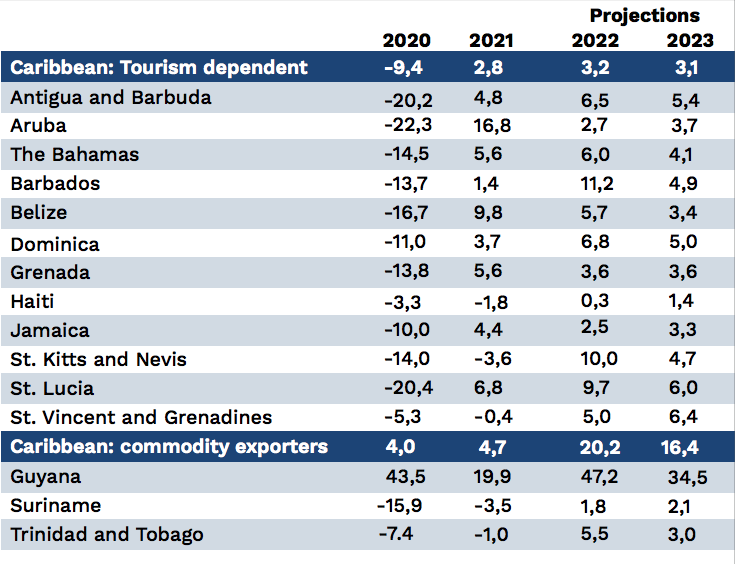
As a result of the global situation, the growth forecast for the region is as follows:

Table 1
Source: IMF – Internation Monetary Fund (Regional Economic Outlook for the Western Hemisphere, April 2022)

In the economic context, a subgroup of countries in the region, known as “small Caribbean states”, stands out: Antigua and Barbuda, Bahamas, Barbados, Belize, Dominica, Grenada, Guyana, Jamaica, Monserrat, Saint Kitts and Nevis, Saint Lucia, Saint Vincent and the Grenadines, Suriname, and Trinidad and Tobago.

An analysis of this group is representative of the regionʼs challenges in attracting foreign direct investment. A study by the Organisation for Economic Cooperation and Development (OECD)1, points out a series of structural problems of small Caribbean states: low growth, low export growth, high level of public debt in relation to gross domestic product, levels of poverty, high youth unemployment. These indicators reduce the competitiveness of these nations, impacting economic growth, setting the conditions for a vicious circle.

Overview of foreign direct investment

Recent events (the pandemic and the war in Ukraine) have brought structural changes to the world. These events, especially the most recent one, put the economic globalisation movement in check, forcing corporations and governments to reassess partnerships (e.g., economic blocs) and productive and logistical structures. The old world order is no longer reliable, demanding new geopolitical and business strategies.

It is in this context that the resumption of foreign investment in the Caribbean is manifests itself. For the Caribbean, the watchword is “diversification”. Some countries are seeking to attract capital through development in new sectors of the economy, as the high concentration in the tourism sector proved to be fragile in the face of the situation imposed by the pandemic. The declines in the tourism sector ranged from 57 to 84 per cent. Despite government aid programmes, it is expected that it will take years for the sector to return to pre-pandemic levels.

The table below shows the importance of this sector for local economies:

Table 2
Source: Investment Monitor (www.investmentmonitor.ai/)

Efforts to diversify the economy are being made in some countries, with government support. Nations like Belize, Guyana, Saint Lucia and the Cayman Islands, among others, are developing sectors such as renewable energy, agriculture, education, medical tourism, and business process solutions (BPS).

One factor that could contribute to the greater diversification of Caribbean economies is associated with the new world arrangement that is arising as a result of the contraction of the globalisation movement. In this regard, there would be some global retraction in relation to the trade liberalisation currently in force worldwide, which could contribute to generating the necessary incentives for the development of new economic activities in countries. This is obviously a hypothesis yet to be confirmed; however, some studies point to the existence of a negative correlation between economic openness and diversification of the economy.

Challenges to diversification range from problems with natural disasters to lack of resources and difficulties in obtaining public funding support, due to limited fiscal space. Lack of social reforms and low investment in education also contribute to explaining this situation.

Despite the difficulties that the Caribbean countries are experiencing, the flow of foreign investment is expected to grow in the region. War in Ukraine, which is pushing investment away from Russia, could benefit countries that are politically stable and that have relationships with trading blocs that will reshape global trade. Commercial insertion may bring the expected benefits in terms of foreign direct investment.


Below is some data on foreign direct investment in the region. Despite the largest volume being concentrated in tourism and the oil and gas industry, there are several projects in other sectors, which may suggest the regionʼs potential to receive investments.

Table 3
Source: Orbis Crossborder Investment

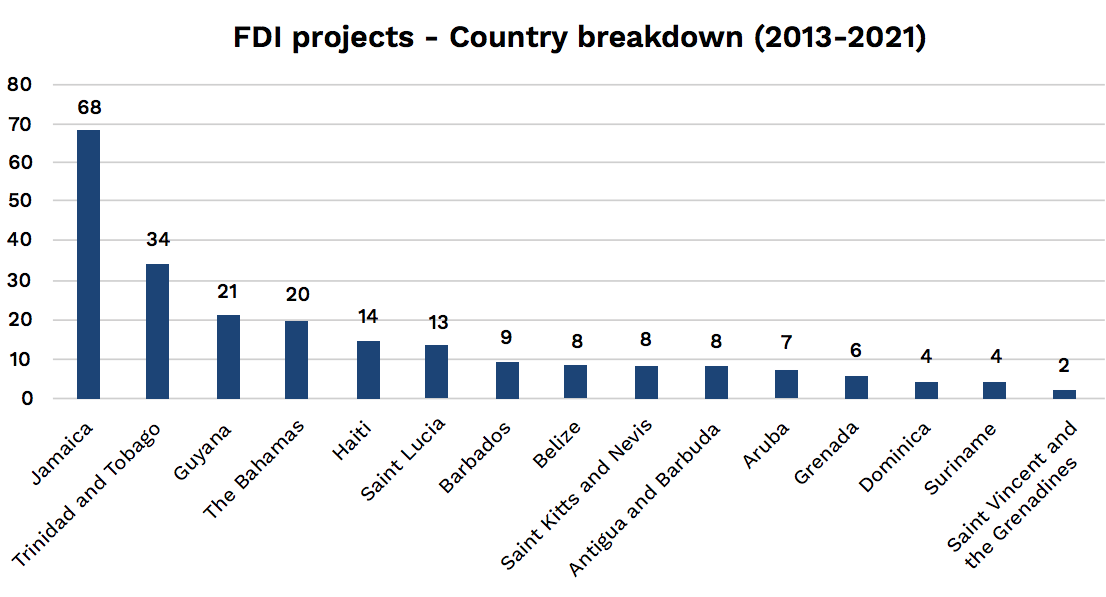
Analysing a longer period (2013–21) reveals the countries that received projects as follows:

table 4
Source: Orbis Crossborder Investment

This article does not aim to explain the reasons for the flow of capital to the countries shown above. However it is expected that hypotheses already explored in economic studies can explain the distribution2.

In order to analyse the countries that invest in the region, information was compiled on foreign investment projects that took place between 2017 and 2021. The importance of North America and China in the composition of investment projects is clear.

table-4-caribbean
Detailed data by country (2017–21):  Source: Orbis Crossborder Investment

table 3 caribbea

Conclusions

The Caribbean region is characterised by its heterogeneity. Despite the negative effects resulting from the pandemic and the war in Ukraine, the economy is expected to return to its pre-COVID-19 stage in a couple of years. Countries of the region are seeking to diversify their economies as a way of meeting the demands for better living conditions for their populations. The challenges remain the same; increasing the competitiveness of their economies will require investments in infrastructure and education. These are structural issues that need to be addressed amid the impact of the pandemic and the war.

A new geopolitical composition of world trade, represented by the contraction of “globalisation”, could provide a good opportunity to attract foreign investment. The resumption of the tourism sector and the increase in energy prices could drive new investments in some countries, opening space for them to focus on the development of new sectors.

This article was originally published on 11 August 2022.

About the Author

Marcelo FonsecaMarcelo Fonseca, MSc in Economics, with more than 25 years of experience in business management, and a focus on finance, economics and controllership, Marcelo Fonseca has professional experience abroad in relation to economic and financial feasibility studies of new ventures and implementation of new projects. With operations in the oil and gas sector, he also maintains knowledge in business development and relationships with government agencies.
In addition, he has experience in the academic environment with a focus on Introduction to Economics, Economic Theory, Macroeconomics and Brazilian Economics.

References

  1. Latin American Economic Outlook (https://www.oecd.org/dev/americas/).
    For an analysis of the reasons for the FDI, please refer to “Motives Underlying Foreign Direct
  2. Investments: A Primer”, Franco et. al., (http://www.pucsp.br/icim/portugues/downloads/pdf_proceedings_2008/31.pdf).

EDITOR'S PICK OF THE WEEK

CFO's new mandate. CFO explaining the presentation

The Performance and Transformation Orchestrator: The CFO’s New Mandate in the Age of AI

By Terence Tse CFOs are evolving into AI-driven transformation orchestrators, balancing finance, technology, and strategy while upskilling teams, managing risks, and driving measurable business value. A key insight from this year’s AI for CFOs event, organized...

WISE DECISION MAKER GUIDE

POWER INFLUENCERS

Emerging Trends

The Future of Global Trade