A solid credit score is essential for achieving financial stability and accessing favorable lending terms. However, life’s unexpected challenges, such as bankruptcy, foreclosure, or missed payments, can wreak havoc on your creditworthiness. Fortunately, with the right strategies and a commitment to financial health, it’s possible to rebuild your credit score and regain control of your financial future.
In this guide, we’ll explore practical tips and tailored strategies to help you improve your credit score after experiencing various financial setbacks.
Assessing the Damage: Understanding Your Credit Report
Before you can begin the process of rebuilding your credit, it’s crucial to assess the damage and understand where you stand. Obtain a copy of your credit report from each of the three major credit bureaus—Equifax, Experian, and TransUnion—and review it carefully for any errors or inaccuracies.
Identify any negative items, such as late payments, collections, or bankruptcies, that are dragging down your credit score. By understanding the factors contributing to your low credit score, you can develop a targeted plan to address them effectively.
Thoroughly examining your credit report is akin to conducting a comprehensive medical check-up – it provides invaluable insight into your financial health and pinpoints areas that require attention. Don’t overlook the importance of this critical first step, as it lays the foundation for a successful credit rebuilding journey.
Arm yourself with knowledge, as an informed approach will enable you to make strategic decisions and implement targeted strategies to restore your credit standing. Remember, a clear understanding of your current situation empowers you to take control and pave the way for future financial opportunities.
Tailored Strategies for Recovery: Overcoming Financial Setbacks
Recovering from financial setbacks requires a tailored approach that addresses the specific challenges you’re facing. Whether you’re dealing with bankruptcy, foreclosure, or a history of missed payments, there are steps you can take to rebuild your credit and regain your financial footing.
For individuals with a history of missed payments or delinquencies, focus on making timely payments and bringing past due accounts current. Set up automatic payments or reminders to ensure you never miss a due date again.
For those who have experienced bankruptcy, prioritize rebuilding your credit slowly and responsibly. Consider applying for a secured credit card or becoming an authorized user on someone else’s account to establish positive payment history. Additionally, focus on managing your finances prudently and keeping your credit utilization low to demonstrate responsible credit behavior.
For individuals who have faced foreclosure, focus on rebuilding your credit by establishing a history of on-time payments and demonstrating responsible financial behavior. Consider exploring alternative lending options, such as loans for 500 credit score, to rebuild your credit and access the financing you need.
One of the key factors influencing your credit score is your credit utilization ratio—the amount of credit you’re using compared to your total available credit. Aim to keep your credit utilization below 30% to demonstrate responsible credit management and avoid appearing overextended to lenders. If you’re carrying high balances on your credit cards, focus on paying down your debt strategically to lower your credit utilization and improve your credit score over time.
Patience and Persistence: The Road to Recovery
Rebuilding your credit after financial setbacks is not a quick fix—it requires patience, persistence, and a long-term commitment to financial health. Focus on making positive changes to your financial habits and behaviors, and don’t get discouraged by setbacks along the way. Celebrate small victories, such as paying off a credit card or disputing an error on your credit report and stay focused on your ultimate goal of achieving a healthier credit score and financial future.
Seeking Professional Assistance: Guidance for Complex Situations
If you’re struggling to navigate the process of rebuilding your credit on your own, don’t hesitate to seek professional assistance. Credit counseling agencies and financial advisors can provide personalized guidance and support tailored to your unique situation. They can help you develop a comprehensive plan for improving your credit score, negotiating with creditors, and managing your finances more effectively. With their expertise and support, you can overcome financial setbacks and build a brighter financial future.
Conclusion
Rebuilding your credit score after experiencing financial setbacks is a challenging but achievable goal. By assessing the damage, developing tailored strategies for recovery, managing debt strategically, and maintaining patience and persistence, you can improve your creditworthiness and regain control of your financial future.
In today’s globalized economy, businesses constantly seek ways to optimize their operations and reduce costs. Two strategies that have gained significant traction in this pursuit are offshoring and outsourcing. While both involve delegating tasks to external parties, they differ in several crucial aspects. In this comprehensive guide, we delve into the distinctions between offshoring VS outsourcing, helping you make informed decisions for your business.
Navigating the Landscape of Business Operations
In business operations, efficiency and cost-effectiveness are paramount. Offshoring and outsourcing have emerged as viable strategies to achieve these goals. However, understanding the nuances between these approaches is essential for making strategic decisions that align with organizational objectives.
Defining Offshoring and Outsourcing
Offshoring: Offshoring involves relocating business processes or services to another country, typically to leverage lower labor costs or access specialized expertise. This often entails setting up subsidiaries or branches in offshore locations.
Outsourcing: Outsourcing refers to contracting third-party vendors or service providers to perform specific tasks or functions on behalf of the company. These tasks can range from customer support and IT services to manufacturing and logistics.
Key Differences Between Offshoring and Outsourcing
Location of Operations:
Offshoring involves establishing operations in a different country, often where labor costs are lower.
Outsourcing entails hiring external vendors, which may operate locally or internationally, to handle specific tasks or functions.
Ownership and Control:
In offshoring, the company retains ownership and control over the offshore operations, often establishing subsidiaries or branches in foreign locations.
With outsourcing, the company delegates tasks to external vendors, relinquishing direct control over the execution of those tasks.
Risk and Responsibility:
Offshoring entails greater risk and responsibility for the company, as it must manage and oversee its offshore operations, including compliance with local regulations and cultural differences.
Outsourcing shifts some of the risk and responsibility to the external vendors, who are contracted to deliver specified services according to agreed-upon terms and conditions.
Cost Structure:
Offshoring is primarily driven by cost considerations, as companies seek to take advantage of lower labor costs or tax incentives in offshore locations.
Outsourcing can also offer cost savings, but the decision may be based on factors such as access to specialized skills, scalability, or flexibility in resource allocation.
Flexibility and Scalability:
Outsourcing often provides greater flexibility and scalability, as companies can easily adjust their level of engagement with external vendors based on changing business needs.
Offshoring may offer less flexibility in the short term, as it involves establishing physical operations in another country, but can provide long-term scalability and growth opportunities.
Benefits and Challenges of Offshoring and Outsourcing
Benefits of Offshoring:
Cost savings through lower labor costs and operational expenses.
Access to specialized expertise or resources available in offshore locations.
Potential for global expansion and market diversification.
Challenges of Offshoring:
Cultural and language barriers that can impact communication and collaboration.
Compliance with local regulations and legal frameworks.
Time zone differences that may affect workflow and coordination.
Benefits of Outsourcing:
Focus on core competencies by delegating non-core functions to external specialists.
Cost savings through economies of scale and reduced overhead.
Agility and scalability to adapt to changing business needs.
Challenges of Outsourcing:
Dependency on external vendors may introduce risks related to quality control and reliability.
Potential loss of intellectual property or sensitive information.
Management of vendor relationships and performance monitoring.
Making Informed Decisions: Factors to Consider
When deciding between offshoring and outsourcing, several factors should be taken into account:
Strategic Objectives: Consider how each approach aligns with your company’s long-term goals and growth strategy.
Cost Considerations: Evaluate the total cost of ownership, including not only labor costs but also associated expenses such as infrastructure, compliance, and risk management.
Risk Management: Assess the risks associated with each approach, including geopolitical, regulatory, and operational risks, and implement mitigation strategies accordingly.
Resource Requirements: Determine the level of control, expertise, and resources needed to manage offshore operations or engage with external vendors effectively.
Cultural Fit: To ensure seamless collaboration, consider cultural compatibility and communication dynamics when engaging with offshore teams or external vendors.
Conclusion: Charting Your Course in the Global Marketplace
The choices between offshoring and outsourcing can have far-reaching implications for your company’s success. By understanding the key differences, weighing the benefits and challenges, and considering relevant factors, you can make informed decisions that drive efficiency, innovation, and growth in the global marketplace. Whether you opt for offshoring, outsourcing, or both, strategic planning and careful execution are essential to capitalize on opportunities and navigate challenges effectively.
Outdoor advertising, also known as out-of-home (OOH) advertising, has been a vital part of the marketing mix for many decades. It encompasses various mediums, including billboards, transit ads, street furniture, and digital signage. The objective is to reach consumers when they are outside their homes, engaging them while they are on the move.
Despite the digital revolution, outdoor advertising remains one of the most effective forms of advertising. It’s a testament to its adaptability and impact that it continues to hold its ground in an increasingly digital world. As we delve deeper into the realm of outdoor advertising, we’ll explore its unique advantages, how it can revolutionize your marketing approach, and the strategies that make it effective.
Outdoor advertising offers a wealth of opportunities for businesses of all sizes. It’s not just for big corporations with deep pockets but also for small businesses looking to make an impact in their local community. With the right strategy, outdoor advertising can help you reach your target audience, build brand awareness, and drive sales.
The Revolutionary Role of Outdoor Advertising in Marketing
Outdoor advertising plays a revolutionary role in marketing. Unlike other forms of advertising that rely on people’s initiative to engage – like opening a newspaper, clicking on a digital ad, or tuning into a TV commercial – outdoor advertising is inescapable. It’s there on the streets, on billboards, bus shelters, and even in the sky, capturing the attention of people whether they want it or not.
In an era where consumers are bombarded with a plethora of digital ads, outdoor advertising offers a refreshing change. It stands out in the physical world, offering a tangible presence that can’t be ignored or clicked away. This ability to cut through the noise and capture attention gives outdoor advertising a unique advantage in today’s saturated advertising landscape.
Moreover, outdoor advertising provides a broad reach and high frequency. It’s on display 24/7, reaching out to people repeatedly throughout the day. This constant exposure enhances brand recall and increases the chances of your message being remembered. From billboards on busy highways to digital screens in bustling city centers, outdoor advertising makes a lasting impression on consumers’ minds.
Understanding the Principles of Effective Outdoor Advertising
Creating a successful outdoor advertising campaign requires understanding certain fundamental principles. The first is simplicity. Outdoor ads need to be simple and straightforward. You only have a few seconds to capture the attention of passersby, so your message must be clear and easily understood.
The second principle is visibility. Your ad needs to be big, bold, and eye-catching. It needs to stand out from its surroundings and make an immediate impact. This calls for creative design, compelling visuals, and an effective use of color.
The third principle is repetition. Outdoor ads are meant to be seen repeatedly. The more often people see your ad, the more likely they are to remember it. Hence, it’s essential to have your ads in locations where people frequently pass by.
The fourth principle is relevance. Your ad needs to be relevant to the people seeing it. This involves understanding your target audience, their interests, and their needs. A well-targeted ad that speaks directly to your audience’s needs will have a much greater impact than a generic one.
The Importance of Location in Outdoor Advertising
When it comes to outdoor advertising, location is everything. Placement can make or break your campaign. Your ad needs to be in the right place at the right time to reach your target audience effectively.
High-traffic areas are ideal for outdoor advertising. Highways, busy streets, shopping malls, and transit hubs are prime locations. These areas provide maximum visibility and frequency, increasing the chances of your ad being seen and remembered.
However, it’s not just about quantity but also quality. Your ad needs to be in a location that’s relevant to your target audience. For instance, if you’re advertising a fitness center, placing your ad near a health food store or a park where people go jogging could be effective. It’s about being where your audience is and speaking to them in a context that resonates with them.
Utilizing Color Schemes in Outdoor Advertising
Color plays a crucial role in outdoor advertising. It can grab attention, evoke emotions, and convey your brand personality. Hence, it’s essential to choose your color scheme carefully.
Colors have different psychological effects. For instance, red is associated with energy and passion, blue with trust and reliability, green with growth and health, and yellow with happiness and optimism. Understanding the psychology of colors can help you choose a color scheme that aligns with your brand and resonates with your audience.
Contrasting colors can make your ad more visible and readable. For example, a dark background with light text or vice versa can make your ad stand out and be easily read from a distance. Moreover, consistent use of brand colors can reinforce your brand identity and enhance brand recall.
The Power of LED Signs in Outdoor Advertising
LED signs are a game-changer in outdoor advertising. They offer bright, vibrant displays that can be seen both day and night. Their dynamic nature allows for motion graphics and changing messages, making them more engaging than static signs.
LED signs are also energy efficient and durable, making them a cost-effective solution for long-term outdoor advertising. They can withstand harsh weather conditions and require minimal maintenance, ensuring your message is always on display.
Moreover, LED signs offer flexibility. They can be programmed to display different messages at different times, allowing you to target different audiences throughout the day. For instance, a restaurant could advertise breakfast specials in the morning, lunch specials in the afternoon, and dinner specials in the evening.
The Resurgence of Neon Signs in Outdoor Advertising
Neon signs are making a comeback in outdoor advertising. With their retro charm and warm glow, they offer a unique aesthetic that can make your business stand out. They are especially popular in hospitality and entertainment businesses like bars, restaurants, and theaters.
Neon signs are not just about nostalgia. They are a testament to craftsmanship, each one handcrafted by skilled artisans. This adds a personal touch to your advertising, conveying a sense of authenticity and uniqueness. Find out how LED neon signs can enhance your outdoor advertising.
Moreover, neon signs are visible from a distance and can be seen in any weather condition, making them an effective advertising medium. They also offer endless customization options, allowing you to create a sign that truly embodies your brand.
Case Studies: Successful Outdoor Advertising Campaigns
Let’s look at some successful outdoor advertising campaigns for inspiration. Coca-Cola’s “Share a Coke” campaign is a perfect example. They replaced their logo on bottles with popular names, encouraging people to find a bottle with their name or a friend’s name. This personal touch turned the product into a billboard, creating a buzz and driving sales.
Another example is IKEA’s “Bookbook” campaign. They created a billboard that looked like a giant book, advertising their catalogue as a “bookbook” with no cables, eternal battery life, and touch interface. The campaign cleverly took a swipe at digital technology, positioning their catalogue as a superior alternative. The ad was simple, funny, and memorable, generating significant media coverage.
These cases illustrate the power of creativity in outdoor advertising. They show how outdoor advertising can create a buzz, engage consumers, and drive sales.
How to Integrate Outdoor Advertising into Your Marketing Mix
Integrating outdoor advertising into your marketing mix requires careful planning. Start by defining your objectives. Are you looking to build brand awareness, drive traffic, or promote a specific product or service? Your objectives will guide your strategy and help you measure your success.
Next, identify your target audience. Who are they, where are they, and what are their interests and needs? This will help you choose the right locations, messages, and formats for your outdoor advertising.
Design and message are crucial. Your ad needs to be eye-catching, memorable, and convey your message effectively. Consider hiring a professional designer to create your ad. They can help you choose the right color scheme, typography, and visuals to make your ad stand out.
Measure your success. Use tools like surveys, sales data, and website traffic to gauge the impact of your outdoor advertising. This will help you refine your strategy and maximize your return on investment.
Conclusion: Transform Your Marketing with Outdoor Advertising
In conclusion, outdoor advertising offers a powerful way to reach your target audience, build brand awareness, and drive sales. With its broad reach, high frequency, and tangible presence, it can revolutionize your marketing approach.
Whether it’s a billboard on a busy highway, an LED sign in a bustling city center, or a neon sign outside your business, outdoor advertising can make a lasting impression. But it requires understanding the principles of effective outdoor advertising, choosing the right locations, and using the right color schemes and signs.
So why wait? Transform your marketing with outdoor advertising today.
Japan, once the quintessential global economic success story, experienced a dramatic slowdown in growth in the last years of the 20th century and early 2000s. Kalim Siddiqui examines the whys and wherefores.
Between 1950 and 1990, Japan witnessed a remarkable economic and trade expansion and economic modernisation that allowed its economy not only to recover from disastrous war but also to catch up with the per capita income levels and living standards in the industrially advanced economies. Japan had transformed itself from a largely agricultural nation in 1950 to the world’s second-largest economy by 1980. Japan had figured out ways to make high-quality products cheaply, and these products found their way all over the world.
The country’s trade policy during the post-war years was focused on access to Western markets. The strategy was on the promotion of exports, while slow at liberalising imports in sectors where Japan had strong comparative disadvantages. To boost exports, it kept an undervalued yen, subsidised exports, and cheap credits were provided to the export sector, while imports were restricted to maintain trade surpluses. The Sony Walkman, Japanese cars, radios, and TV sets successfully competed and became popular consumer items in international markets. The Japanese management style was widely taught in Western universities, movies like Shogun dominated the box office, and corporate success manuals extolled the virtues of “Japan, Inc.” (Itoh, 1990).
This article aims to examine the key factors that helped Japan to experience rapid growth in GDP between 1950 and 1973 and slow down thereafter, i.e., 1974-90. Moreover, for the last three decades, the country has experienced stagnation, despite some short-lived recovery. I think revisiting the development of the Japanese economy is important because the country is still the world’s third-largest economy and its performance has a big impact on the global economy, more specifically on East Asian economies.
After US troops occupied Japan, they insisted on curtailing the power of feudal elites and others who had supported the war. The US initiated various socioeconomic reforms in Japan, including monarchy reform, a new constitution, and land reforms. The US concluded that breaking the rural landed aristocracy and land monopoly ownership would increase food production to reduce food shortages and the threat of famine. Land reform would increase incomes of small farmers, and this would increase the proportion of the middle class and would help to combat communism in Japan. It seems that land reform was the most effective in supporting and enhancing democracy in the countryside. Through the rural reforms, class relations in the rural areas underwent fundamental changes, with feudal parasitic landlords removed, tenants and small farmers gaining ownership of land and freeing themselves from the shackles of semi-feudal relations (Johnson, 1982).
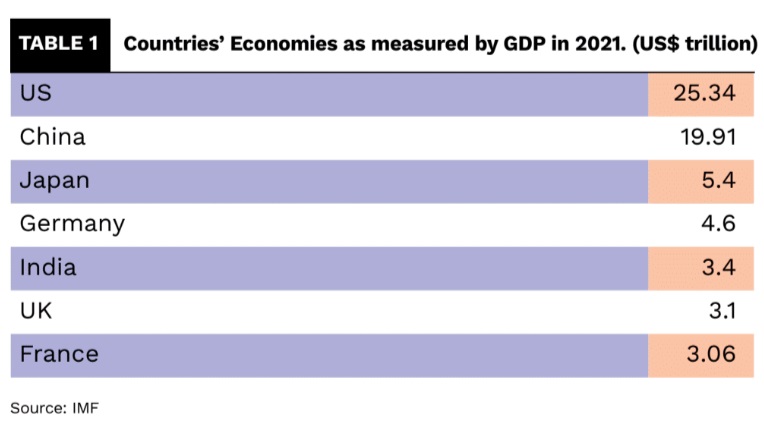
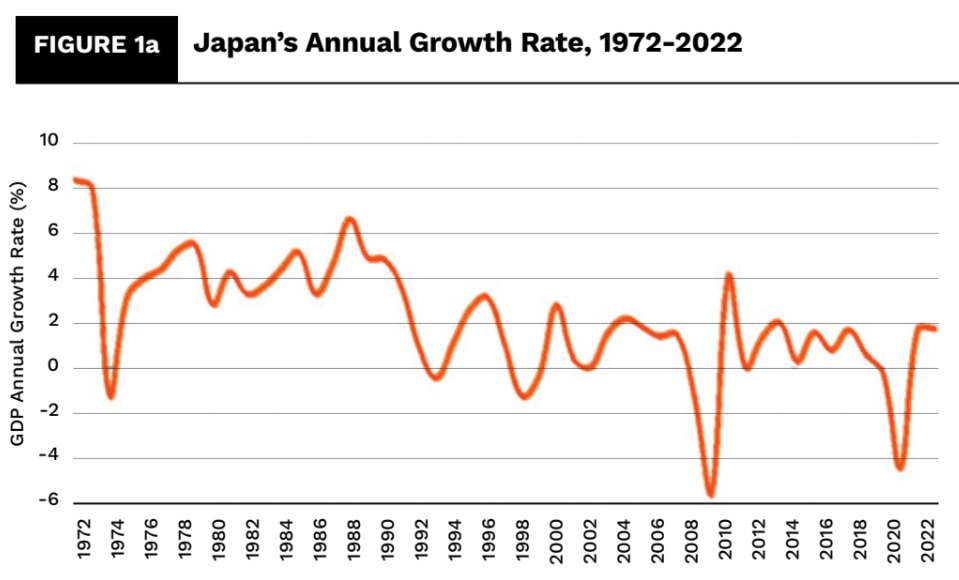
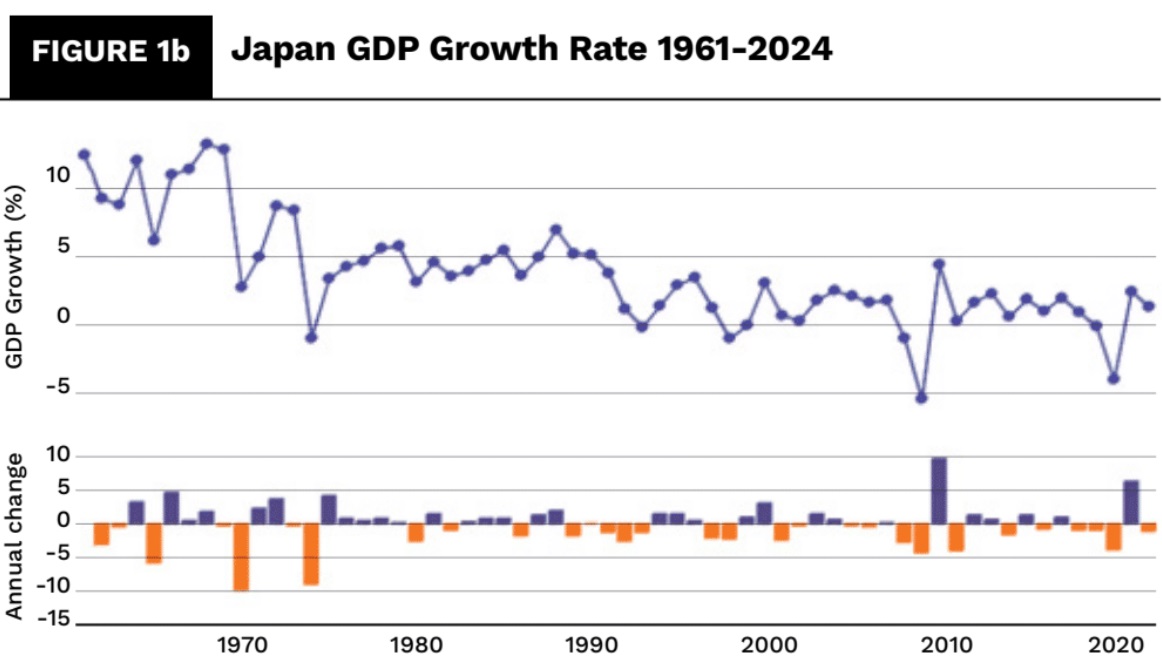
Japan’s businesses followed the traditional concept of the keiretsu, a close-knit network of business interests centred around the banks. These groups took majority shareholder interests in one another, instead of being financed through stocks or bonds and, as such, this “socially controlled” investment provided the perfect conditions to nurture. Japan has witnessed a slowdown in growth rates (see figure 1 and table 1) as all major advanced economies have faced since the 1980s, although Japan did not embrace neoliberal policies as the US and UK did. But still, the country moved towards increased economic liberalism by attacking labour unions’ rights and gradually introducing financial deregulation. This meant that the banking system was no longer the instrument of industrial policy as happened in previous decades (Itoh, 1990).
The nature of capitalist economies has driven changes in income distribution and economic policy, which are the root cause of stagnation and Keynesian policy was unable to explain the causes of stagnation. Under neoliberalism, financial deregulation has led to increased investment in speculative activities in the financial and real estate sectors. And by 1989, it reached such a critical point that the Bank of Japan (BoJ) had to raise interest rates to control inflation. As a result, the asset market threatened the financial system, although the BoJ was able to bail them out and minimise the adverse impact (Itoh, 1990).
However, during the 1980s, the Japanese economy was believed to be poised to overtake the US as the dominant economy, which was due to a dramatic rise in productivity, innovation, and economic organisation. According to Arrighi (1994: 332), Japan’s economic “catch-up” was not only sustained and spectacular but was more so than Germany’s. It had already displaced the US as the dynamic centre of processes of capital accumulation on a world scale. This remarkable economic transformation in Japan was not based on a “free market” policy as mainstream economists suggest, but active state intervention. Chalmers Johnson (1982) challenged the mainstream economists’ view and emphasised that the Japanese state focused on industrialisation and played an important role in the transformation towards a successful economic transformation. Policy intervention includes the promotion of exports, relative state autonomy, coordination between industries and government officials, industrial planning, and a state-directed industrial growth strategy (Johnson, 1982).
However, in 1985, after signing the Plaza Accord, which led to the overvaluation of the Japanese yen, Japan saw a massive shift of the domestic production of labour- intensive industries overseas into East Asian countries. The appreciated yen led to a rapid rise in foreign investment as capital exports became more profitable and the expansion of overseas production networks. The appreciation of the yen forced Japanese manufacturers to move abroad, by taking advantage of cheap labour, especially in textiles and consumer electronics companies (Siddiqui, 2009a).
Despite the deepening crisis and zero growth rates for decades, Japan’s economy, labour productivity, and the living conditions of people are still quite high, as The Economist notes: “Overall growth has remained sluggish, but growth per head has recently been comparable with others in the G7. Unemployment has been minimal, longevity has increased and inequality has stayed relatively low” (The Economist, 2021).
Japan’s Economic Stagnation
Beginning in the 1990s, Japanese capitalism moved into secular stagnation. This development has provoked debates among academics and policymakers. Japan’s secular stagnation has raised new questions about stagnation and almost zero growth rates, falling real wages, deteriorating working conditions, rising inequalities, and the deepening fiscal crisis of the state (Itoh, 2021; Johnson, 1994).
In the 1990s, in Japan, the development of information technology accompanied the process of restructuring and capital investment, and the business environment became tighter, short-term, and mobile, thus intensifying competition. Trade unions were weakened in the name of labour flexibility and the role of the state in the economy was gradually reduced (Siddiqui, 2009b).
Between 1991 and 2001, Japan’s once red-hot economy was in trouble. An asset bubble had formed in both its housing and stock markets, and when the BoJ implemented a series of steep rises in interest rates to control inflation, Japan’s stock market began to slow down and asset prices fell. Several big banks, due to high levels of speculative investments, faced difficulties and business slowed down, while unemployment rose. As a result, Japan’s economy entered a deep recession. The GDP growth declined and borrowers became insolvent. Big Japanese banks, including the Hokkaido Takushoku Bank and Nippon Credit Bank, experienced a fall in their profits. The days of easy credit from banking networks were long gone (Siddiqui, 2015).
Japan’s share of global exports fell from nearly 9 per cent in 1990 to 4 per cent in 2018. China’s share of global exports rose from around 2 per cent in 1990 to 13 per cent in 2018. Japan’s export sector was adversely affected after the global financial crisis (Siddiqui, 2019a).
Japan’s debt ratios are the highest among the major advanced capitalist countries.
The country ran large fiscal deficits from 1998 to 2005 and again following the global financial crisis from 2008 to 2017. Persistent fiscal deficits have resulted in elevated government debt ratios. Japan’s gross debt and net debt, as a share of GDP, have risen from 19 per cent and 64 per cent, respectively, in 1991, to 156 per cent, 238 per cent in 2018 and 250 percent in 2022. Japan’s debt ratios are the highest among the major advanced capitalist countries (as shown in Figure 2).
Productivity growth is important for a country’s future growth. In Japan, labour productivity growth has declined in recent decades. Since Japan’s labour force is shrinking, the country needs to attain high labour productivity growth that is sufficient to more than offset the decline in its labour force to ensure increased prosperity in the coming years.
The country, which once had guaranteed employment for life, now struggled with unemployment, which affected young job seekers most significantly. Consumer confidence plummeted and the economy went into deflation. The BoJ tried to help by keeping interest rates at zero, and kept them there for a few years but, still, the recession continued. Land prices dropped 15 per cent in some of Japan’s largest cities, which meant that homeowners owed more than their homes were worth.
During the 2000s, the government tried to improve business confidence through huge stimulus packages and invested in building infrastructure, such as roads and bridges, and jobs were created. These measures helped to boost the economy but were not powerful enough to pull the economy out of recession, while it simply increased debts and added to the country’s deficit in the long run. What finally helped was the quantitative easing programme which the BoJ started in 2001, lasting until 2006. By 2003, GDP reached a 2 per cent growth and exports grew once again, but this upswing in growth was short-lived.
The 2008 global financial crisis began with the asset bubble which was created by the US housing market. It was fuelled by toxic subprime mortgages. When the US Federal Reserve increased interest rates, many borrowers whose loans were tied to adjustable-rate mortgages quickly saw their monthly bills shoot up, and millions of homeowners defaulted.
Earlier, banks profited by pooling these loans into mortgage-backed securities, which were traded by investment banks globally. The deepening of the mortgage crisis had an adverse effect on the securities markets. The bank witnessed a credit crunch and investment banks such as Lehman Brothers declared insolvency. The crisis affected global financial markets and the global economy moved into deep recession. The US Federal Reserve reduced Fed funds rate to zero per cent from 2008 to 2014. It also implemented a series of quantitative easing measures. The US Congress approved a US$700 billion relief programme to provide emergency aid to banks as well as underwater borrowers (Siddiqui, 2022).
Productivity growth is important for a country’s future growth. In Japan, labour productivity growth has been very slow in recent decades compared to labour productivity growth in G7 countries. Since Japan’s labour force is shrinking, the country needs to attain high labour productivity growth that is sufficient to more than offset the decline in its labour force to ensure increased prosperity in the coming years.
During the stagnation, the country’s industrial production dropped considerably at the time of the global financial crisis as global demand for advanced manufacturing, particularly electronics and motor vehicles, fell sharply. Industrial production also fell in the aftermath of the Tohoku tsunami. More recently, industrial production began to gradually increase, but recovery in Japan has been weak for many reasons, including the shifting of production and increased competition from other Asian countries, including China.
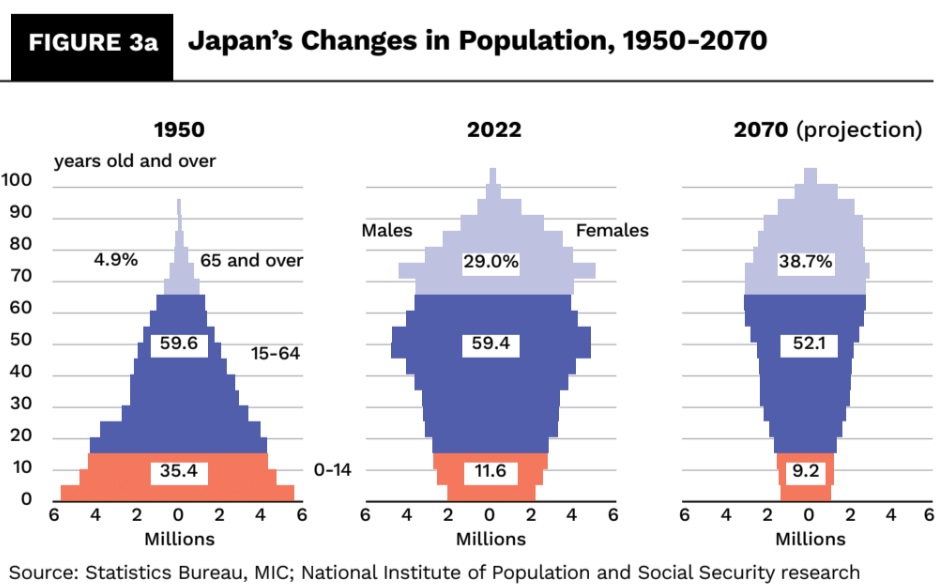
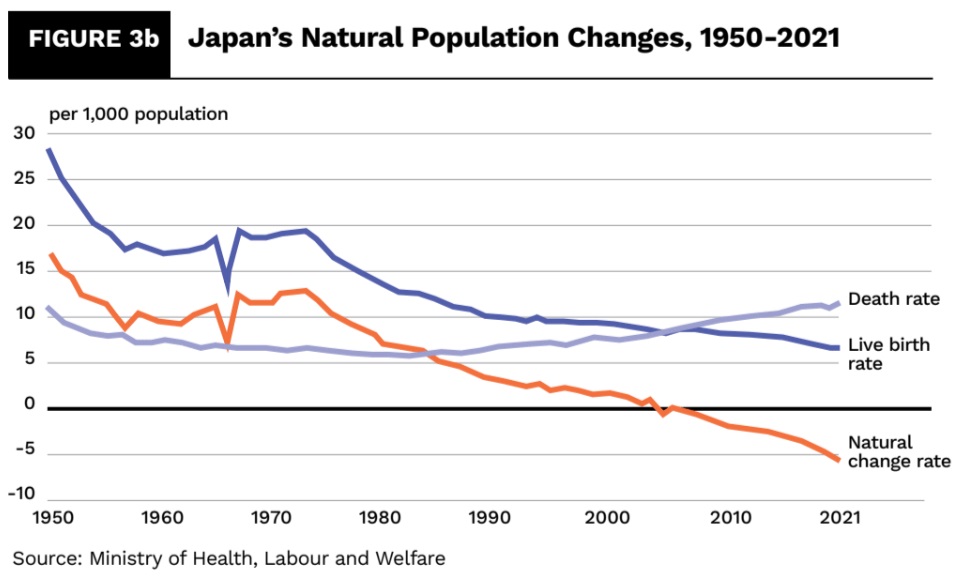
The demographic crisis of the falling population, which has formed an aging society with fewer children, has been deepened in Japan in recent decades.
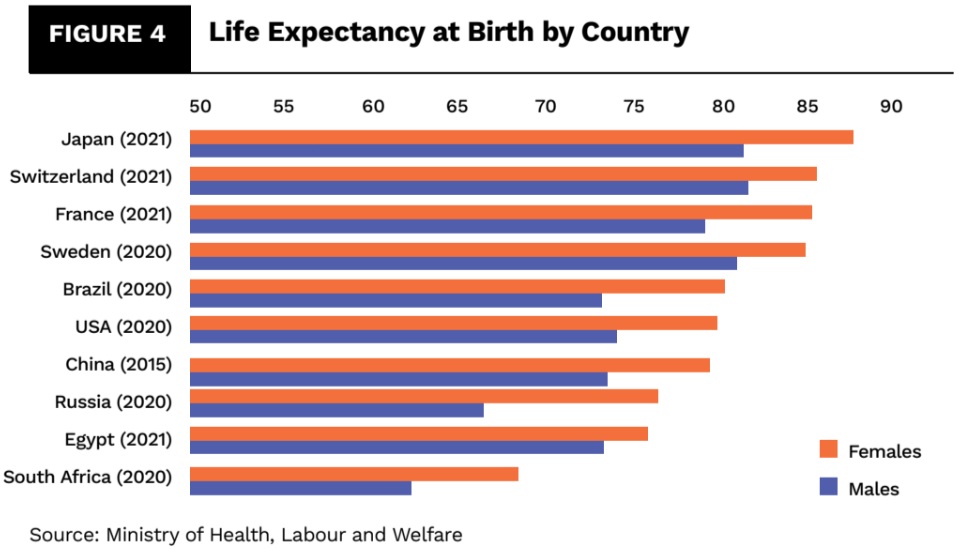
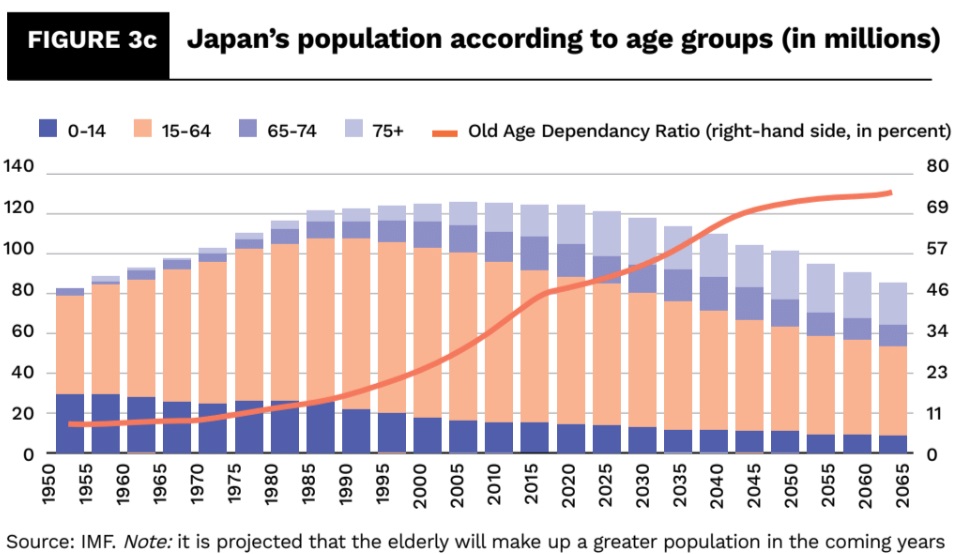
The other most important development is that the population of Japan is declining. At its peak in 2009, the country’s population was 127 million. It is projected that by 2050 Japan’s population will decline and reach 108 million (see figure 3). Moreover, life expectancy has risen sharply since 1950 and its population is also ageing rapidly (see figure 4). This is combined with low fertility rates, and recently Japan has opened limited immigration, which is due to increased demand for labour, especially in social services and care homes. With an ageing and declining population, the country’s working-age population is likely to decrease in the coming years. The fertility rate (i.e., births per woman) in Japan is one of the lowest among advanced countries. Japan’s fertility rate is less than 1.4 per woman as of 2018, whereas in the US the rate is around 1.8 and, in France, it is nearly 2.0. The number of foreign-born persons as a share of the country’s population is also very low, reflecting the lack of openness to immigration. Less than 2.0 per cent of the total population in Japan is foreign-born, whereas in the US it is about 14.5 per cent, and in Australia, it is much higher, at 28 per cent of the total population.
The demographic crisis of a falling population, which has formed an ageing society with fewer children, has deepened in Japan in recent decades. Japan’s ageing population is already affecting nearly every aspect of society (see figure 4). More than half of all municipalities are designated as depopulated districts, schools are closing, and more than 1.2 million small businesses have owners aged about 70 with no successor.
It signifies a crisis of the reproduction of human population as a basic foundation for socioeconomic life. As Itoh (2021) argues, “This crisis is paradoxically a historical result of the success of the capitalist market economy that has decomposed communal human relations more and more in mobilising both human labour power as an individual commodity, as well as individual consumers to expand and deepen markets. Especially under neoliberalism’s ICT automation systems, this trend has widely increased the irregular and unstable employment of younger generations and has also facilitated individual consumption styles. As a result, marriage and child-rearing have become delayed, with the resulting trend of increasing the number of single people among the younger generations. It thus represents another important contemporary appearance of the deepening contradiction of the commodification of labour power.” The number of retired people has risen sharply and has increased the burden of younger working generations to support social costs for both public medical care and pensions for retired senior generations. While 7.7 working people could be expected on average to support one senior retired person in 1975, 2.2 working people must do so by 2010, and less than two people must bear the social costs of one senior person after 2022. This perspective has deepened the sense of disenchantment among younger generations and has worked to promote this demographic crisis as an issue that has been difficult to solve in the present socioeconomic order (Itoh, 2021).
According to Desai (2022), the US-backed neoliberal financial capitalism was imposed globally from 1990 as the US came to a leading position in the unipolar world. Given the minimal state role under neoliberalism, the monetary policy option was left as the only instrument with which countries could try to restore growth. In 1996, the BoJ tried to keep interest rates low to stimulate the economy, as Desai notes: “Since 1996 short-term rates have been well under 1 per cent and have now slipped to a quarter of 1 per cent. Yet these extremely low rates were unable to prevent a slide into recession, let alone reverse the stagnation that has plagued the Japanese economy since 1992. … Japan is caught in a classic liquidity trap, where zero is not low enough” (Desai, 2022: 8). Desai argues that in the early period, competitive capitalism socialised labour between firms, but “later monopoly capitalism deepened the technical division of labour within them in vast productive apparatuses. Thereafter, rather than any vigorous virtues of competition it ever had, capitalism increasingly manifested the decadent and rentier vices of monopoly, diverting resources from production and suppressing competition” (Desai, 2022: 12). However, the declining power of trade unions and the development of monopolistic competition gave way to brand competition and in the rivalry of the market, expensive persuasion and advertising became an important tool, instead of price competition. These are factors that are seen as vital for expanding markets, rather than advancing in technical progress and increasing productivity.
Under competitive conditions, obsolete technologies were scrapped in industry but, under monopoly capitalism, firms postpone new investments in technology and firm expansion until the unprecedented value of the old machine is at least covered by the economies of new technologies. This means that progress will be slowed down (Desai, 2022).
According to Itoh (2021), with the sharp rise in primary commodities in the mid-1970s and again in the late 1980s, the advanced economies saw rising inflation, which led to higher wage demands in the process of deriving vicious inflation and also squeezed profit rates, which was a fundamental factor behind the crisis. The acute inflation was destructive in itself. It was, however, not caused just by oversupply of money and credit, but pushed up by sharp rises in wages and primary products due to over-accumulation of capital. Other Marxists on the crisis in capitalist economies point towards falling aggregate demand for commodity products, known as the underconsumption crisis theory.
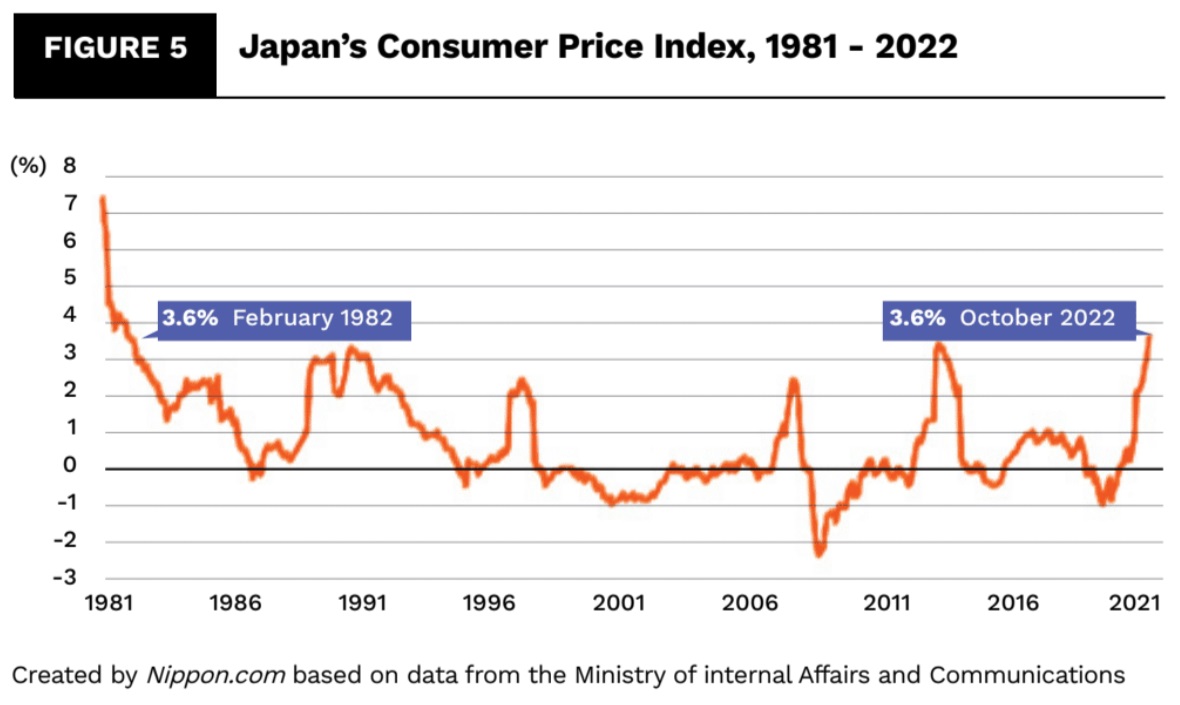
In the 1980s, Keynesian fiscal and monetary remedies proved ineffective against this inflationary crisis and “stagflation” (i.e., both stagnation and inflation). Then, neoliberalism became a new mantra, especially after Margaret Thatcher became prime minister in the UK in 1979. Neoliberalism is based on competitive market policy as means to realise the rational economic order by reducing government regulation (Siddiqui, 2019b). Japan’s inflation trends from 1990 to 2022 are shown in figure 5. In Japan, such neoliberal policies have been implemented widely since 1981 (Siddiqui, 1995). It promoted the restructuring of the capitalist system of accumulation especially to economise in wage costs using new technologies, to strengthen competitive power in the world market against the soaring yen in the late 1980s (Siddiqui, 2023a).
From the 1990s, the impact of information and communication technologies (ICT) in capitalist economies also promoted changes in the capitalist market. For example, especially as ICT automation spread broadly to factories, shops, and offices, flexibly adjustable forms of irregular employment, such as cheap part-timers, easily increased the mobilisation of more and more female workers, thus reforming the labour market into a competitive, individualistic market with reduced social protections. The trade unions’ social role of stabilising employment and improving working conditions was weakened. Neoliberal labour policies promoted such trends by removing restrictions to permit the widespread use of irregular employment in various types of jobs. The privatisation of three state-owned enterprises in 1985 — Japanese National Railways (JNR), Nippon Telegraph and Telephone (NTT), and Japan Tobacco and Salt — was a heavy blow to the traditionally militant trade unions.
The subprime crisis in 2007-2008, originating in the US, and the subsequent sovereign crisis in Europe, especially damaged the Japanese economy the most among the major advanced countries.
The prolonged stagnation could not be fully resolved even in the recovery phase of 2002-7. As the recovery in Japan depended mainly on increased exports induced by the consumption (and housing) boom in the United States and in other economies, Japanese growth rates remained at a low level of just 0.9 per cent from 1991 to 2019. The subprime crisis in 2007-8, originating in the US, and the subsequent sovereign crisis in Europe, especially damaged the Japanese economy among the major advanced countries. This was because the preceding feeble recovery in Japan tended to depend only on expanded demand from abroad, leaving the deflationary spiral in the domestic economy structurally unresolved with deteriorating working conditions. The lost decade of the Japanese economy continued to last three decades with zero growth. Under neoliberalism, Japan saw a rise in speculative investment in real estate, leading to the collapse of the stock market in 1990 and initiating the lost decades. During this prolonged stagnation, Japanese capitalism also exhibited a rise in inequality in the distribution of wealth and income since the 1980s, accompanied by deterioration of working conditions with lowered real wages and rising unemployment, combined with a weakened role of trade unions.
Moreover, the fiscal crisis of the state deepened, accompanied by neoliberal aims of privatising public enterprises, reducing state support for education, medical care, and pension schemes to reduce the public debt, although this was not achieved. Reductions in corporate tax, marginal rates of income tax, and inheritance tax favoured the rich. On the other hand, the costs of welfare policies to be paid for senior citizens had steadily increased. As a result, since neoliberalism, the outstanding amount of Japanese state bonds continued to increase and is estimated to have reached 932 trillion yen by the end of 2020. The total public debt in addition to this amount of state bonds, plus the public bonds of local governments of around 200 trillion yen, amounts to 237.6 per cent of the GDP (estimated by the IMF), thus reaching by far the highest level among advanced countries.
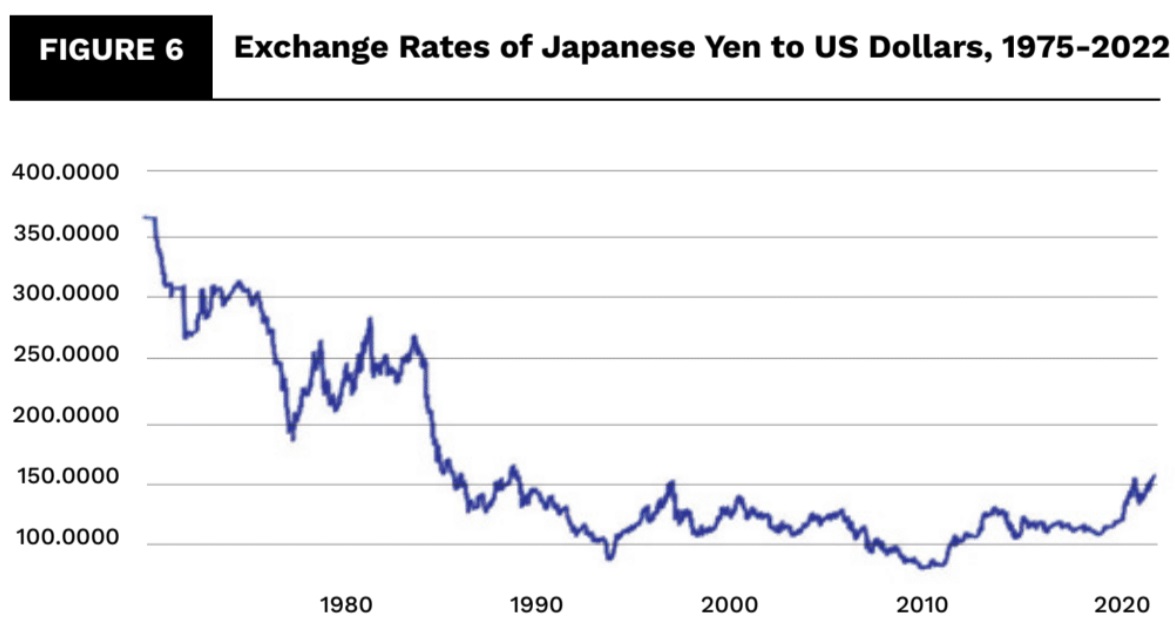
Japanese capitalism under neoliberal globalisation led to repetitive soaring yen exchange rates (as shown in figure 6) and reduced domestic manufacturing by relocating overseas, i.e., in Asia. As a result, workers in secondary industries such as manufacturing and construction, which used to form a central core industry of Japanese economic growth since the Meiji Restoration, peaked in 1992, and by 2019 it began to decrease widely by 6.28 million (28.6 per cent). Workers in services, including restaurants, hotels, transportation, medical services, and education steadily increased their proportion of total employment from less than 50 per cent in 1970 to more than 60 per cent in 1993, and since 2019, it has risen more than 70 per cent.
Conclusion
Real annual economic growth rates in Japanese capitalism have declined in the last three decades. In the period of high economic growth after the Second World War, in 1956-73, the Japanese average annual growth rate recorded 9.1 per cent. After this long and prosperous period, the Japanese economic growth rate fell to 4.2 per cent in the annual average between 1974 and 1990, which includes the first decade of neoliberalism. However, the decline of the growth rates was sharp but was still 1-2 per cent higher than in most of the other advanced economies in the 1980s, combined with the effect of a wide appreciation of the yen against the dollar, from 360 yen a dollar to around 150 yen a dollar in 1987.
Moreover, Japan has had the highest proportion of state debt against GDP among the major advanced economies. Changes in the Japanese government’s total debts for over 30 years are shown in figure 2. This puzzling paradox can be deciphered to a certain extent by observing two factors: the high savings rate of Japanese households, which has enabled Japan to absorb its cumulative state debt domestically; and the competitive strength of exporting industries, which has permitted Japan (thus far) to maintain a continuous trade surplus (Johnson, 1994).
Four decades of neoliberal capitalism in Japan have increased inequality in the distribution of wealth and income, namely by increasing unstable and lowly paid irregular workers beyond half among female wage workers, and over one-third of the total employees including male workers, all the while allowing capitalist firms to accumulate massive internal reserve funds (475 trillion yen in 2019) beyond the amount of the annual net national income as Itoh notes: “demographic stagnation, expanding economic inequality, globalisation and its effect on the suppression of real wages, rising costs of higher education, and the cumulative increase in public and private debts. A similar reduction of labour share in the process of increasing temporary and irregular workers seems to be the fundamental factor that has become common to advanced capitalist countries under neoliberalism, and that forms the trend of secular stagnation and decay.” He concludes, “Japanese capitalism, which was once regarded as a leading model for industrialising Asian countries in the flying geese theory until the 1980s, now seems to be presenting a rather reversed typical model for decaying advanced countries in the world” (Itoh, 2021: 311).
For short-term solutions, Japan needs to raise productivity and effort should be made to further increase the female participation rate and narrow the male-female wage gap.
The study concludes that the structural crises in the Japanese economy have deepened just like in other advanced capitalist economies. Factors that have contributed to the reversal in growth that has resulted from the fiscal crisis and that has affected states that were caught in the subprime crisis are the decline in the state bonds of some European countries, along with similar dangers for the US. Japan’s exporting industries are losing their competitive power and profits as a result of the huge appreciation of the yen to less than 76 yen against the dollar, a historically unprecedented high (Siddiqui, 2023b).
For short-term solutions, Japan needs to raise productivity and effort should be made to further increase the female participation rate and narrow the male-female wage gap. The country needs to open for immigrants and to accept more foreign-born workers through immigration and such policy would address shortages of workers, mitigate skill gaps, and boost labour supply. Moreover, increased investment in the environment and green technology would boost living conditions. Trade unions’ wage bargaining should be encouraged, leading to higher consumption and demands. Japan needs to reconstruct cooperative communities and organisations at the grassroots level.
Dr. Kalim Siddiqui is an economist specialising in International Political Economy, Development Economics, International Trade, and International Economics. His work, which combines elements of international political economy and development economics, economic policy, economic history and international trade, often challenges prevailing orthodoxy about which policies promote overall development in less-developed countries. Kalim teaches international economics at the Department of Accounting, Finance and Economics, University of Huddersfield, UK. He has taught economics since 1989 at various universities in Norway and the UK.
References
Desai, R. (2022) “Introduction: Japan’s Secular Stagnation and the American Mirror” Japanese Political Economy, 47(4): 281 – 302.
Itoh, M. (2021) “Japanese capitalism in multiple crises”, Japanese Political Economy, 47 (4): 303-324.
Itoh, M. (1990) The World Economic Crisis and Japanese Capitalism, London: Macmillan. Johnson, C. (1994) Japan Who Governs: The Rise of Developmental State, New York: W.W. Norton & Company.
Johnson, C. (1982) MITI and the Japanese Miracle: The Growth of Industrial Policy, 1925-1975, Stanford: University of Stanford Press.
Siddiqui, K. (2023a) “Marxian Analysis of Capitalism and Crises”, International Critical Thought, forthcoming.
Siddiqui, K. (2023b). “De-dollarisation, Currency Wars, and the End of US Dollar Hegemony” The World Financial Review, August-September, pp.2 – 14
Siddiqui, K. (2022) “Capitalism, Imperialism, and Crisis” The European Financial Review, June/July, pp.16 – 32.
Siddiqui, K. (2019a) “The US Economy, Global Imbalances under Capitalism: A Critical Review” Istanbul Journal of Economics 69(2): 175 – 205, December.
Siddiqui, K. (2019b). “Financialisation, Neoliberalism and Economic Crises in the Advanced Economies” The World Financial Review, May-June, pp.22-30.
Siddiqui, K. (2015) “Political Economy of Japan’s Decades-Long Economic Stagnation” Equilibrium Quarterly Journal of Economics and Economic Policy 10(4): 9-39.
Siddiqui, K. (2009) “Japan’s Economic Crisis”, Research in Applied Economics 1(1): 1 – 25.
Siddiqui, K. (2009) “Japan’s economic stagnation” Klassekampen (in Norwegian), November 3, Oslo, Norway.
Siddiqui, K. (1995) “Political Economy of Japan”, The Nation, January 20. The Economist (2021) “Japan’s Economy is Stronger than Many Realise”, December 11, London.
It is more than 75 years since the World Bank was founded at Bretton Woods. Clearly, today’s world is a different place, so is the World Bank still fit for purpose? Danny Leipziger is well placed to have a view on the subject.
The announcement by President Biden at the G20 Summit that the US would be willing to support $25 bn in new capital for the World Bank to help boost lending was an auspicious signal1. Not only did the Administration shame the previous Bank president into resigning, but it also placed a person with extensive private sector experience into the Bank’s top role. Apart from the question of how to increase the resources at the Bank, so that it might not only continue lending at its recent level of $35 bn in IBRD loans and an equal amount in IDA quasi-grants to the lowest-income countries, there is the more complicated issue of how to change the Bank’s lending policies in order to have greater impact.
The World Bank makes both project-specific loans as well as programmatic loans, most recently labelled ‘‘Development Policy Operations’’. The former involves careful project design, slow disbursement, and supervision, while the latter is based on a critical mass of policy reforms backed by “writing a cheque”. Many countries prefer the latter, since it fills balance-of-payments needs at borrowing rates and maturities better than what the market can offer. One recent complication is that major capital contributors, like the US, want the institution to mobilise greater sums for climate finance. While, for many developing countries, projects would be for climate adaptation and resilience purposes, some would involve mitigation as well.
Much of the new-found enthusiasm for the World Bank comes from the idea that it can finance global public goods (GPGs), such as those related to reducing emissions, but of course relations with China and the push to expand the BRICS can also be seen as triggers. The overarching question, however, is whether the current Bank model for lending and engagement with borrowers is still “fit for purpose”. We would argue that it isn’t and that major reforms are needed to accompany the so-called ‘‘Evolution Roadmap’’2. These changes involve shifts in strategy, instruments, and the internal “plumbing” of the Bank, namely its incentives, human resource policies, and ways of operating.
There are some core issues that the new leadership will want to address and, as usual, there are more- and less-ambitious approaches. The most recent organisational restructuring, orchestrated by Jim Kim, was poorly executed and it failed in the end. His successor, David Malpass, opted for the status quo, which was seen as part of the Bank’s inadequate response on the climate agenda. Put bluntly, however, for the Bank to have greater impact both for resilient and adaptive development strategies as well as to make a dent in the realm of GPGs, some fundamental changes are required. The first concerns what the Bank lends for and this may necessitate a move away from a totally demand-driven approach.
Without a doubt, borrowing countries need to be in the driver’s seat on borrowing, since it is they who are the ultimate signatories to loan agreements. However, being client-driven does not mean that every Bank Country Director (and there are 40 of them) should be the main arbiter of the Bank’s lending strategy. Thinking back to the 1970s and 80s, it was the Bank that promoted family planning programmes, policies aimed at poverty reduction, and then policy changes in response to global oil prices and new trade opportunities. Now the “nudging” needed is toward resilient infrastructure investment, agricultural adaptation to climate change, and energy diversification, just to name a few. These are sectors where additional expertise needs to be developed and where the Bank can increase its presence. These investments may need to come with a reduction in cheque-writing via DPOs. However, they should not come at the expense of the Bank’s most important contribution to development, namely institution-building and technical assistance.
Bank lending should be redirected away from balance-of-payments support and implicit debt relief to lending that crowds in markets.
One suggestion is to consider the “leverage factor” as a new major criterion for lending, that is whether, by undertaking certain sectoral investments it encourages the private sector to join in those investments. Of necessity, this will need to include the IFC, the Bank’s private-sector arm. However, this coordination inside the World Bank Group has bedevilled the institution for decades and is a hard nut to crack. That said, Bank lending should be redirected away from balance-of-payments support and implicit debt relief to lending that crowds in markets. This crowding-in can be promoted through policy understandings on sectoral and macroeconomic policy, but it also likely requires some risk mitigation or risk-sharing with the private sector. This will impact the Bank’s financial picture, and thus this must be carefully designed.
Now that the USG has forced the Bank to “sweat the balance sheet” to try and lend more with its current capitalisation, it is the moment to increase Bank capital so that it can help make a dent in the new challenges facing developing-country borrowers. Many of these borrowers are middle-income countries, those with capital market access, some of whom are reluctant to borrow, despite some financial advantages. They prefer capital markets that ask fewer questions, or perhaps Chinese loans that may at the outset seem to be beneficial but also carry many hidden costs3. To make loans more attractive to middle-income countries, those that contain GPG elements in the climate change area might be eligible for easier terms. Of course, a funding source for this implicit subsidy would need to be found, perhaps from major emitters.
One proposal worth investigating is to have essentially three lending windows at the World Bank. The first would be the traditional project window, but with a reformed process of determining lending priorities. Currently, Country Strategy documents are too general, too idiosyncratic, and largely irrelevant. Moreover, the IFC’s strategy for the country may differ in focus. In its place would be a strategy that identifies the binding constraints to growth and offers Bank lending to alleviate some of the major challenges. If policy reform is required, these would be undertaken along with the projects with modalities to be developed.
Now that the USG has forced the Bank to “sweat the balance sheet” to try and lend more with its current capitalisation, it is the moment to increase Bank capital so that it can help make a dent in the new challenges facing developing-country borrowers.
The second window would be for institution-building and would entail a large element of technical assistance and advisory undertakings. Standard reports would be limited in scope, but cooperation agreements between the Bank and borrowers would replace broad strategies and the provision of technical assistance would be more results-based. To be successful, both government commitment and metrics for judging the impact of advice might prove useful and progress on these institutional elements would be reported annually, so that private investors could note progress and governments would have incentives to see their performance metrics improve. Whether new products would be required or whether existing ones can be amended is an open question for implementation.
The third and newest window would one related to climate financing, by which the Bank should refer to limiting the damage from climate change, improving resilience, reducing emissions as commensurate with country circumstances, dealing with relocation issues for vulnerable groups, and protecting those elements of GDP that are at greatest risk. This window might have both programmatic and project components based on a systemic assessment. Currently, the CCDR, or Country Climate and Development Report, does much of what may be needed, although care needs to be exercised to stress adaptation concerns ahead of mitigation concerns for many Bank borrowers. Some projects, for example those dealing with energy conversion to clean sources, would be eligible for improved terms.
The upshot of these reforms, and others will need to follow, would be to improve the effectiveness and efficiency of the Bank and to enable its leadership to make a new and stronger case for a general capital increase (GCI). Having done all it can to increase its lending within the constraints of preserving its AAA bond rating, which seems sacrosanct, now is the time for the Bank’s major shareholders to improve its financial capacity5. Now is also the time to move from pronouncements to actual proposals, and the Bank can help itself by undertaking some fundamental reforms in the way it conducts its business. Alongside such a ‘‘reinvention’’, to use Secretary Yellen’s language, would come much-needed reforms in the human resource side of the Bank in order to help restore its world-class expertise. These actions might also require a review of the Bank’s aggressive decentralisation approach, as well as its mandate in conflict zones, so as to establish a clear set of priorities that shareholders understand and support.
The upshot of these reforms, and others will need to follow, would be to improve the effectiveness and efficiency of the Bank and to enable its leadership to make a new and stronger case for a general capital increase (GCI).
There is no dearth of external reports and advisory commissions on what should shape the Bank going forward. Frankly, however, many of the exercises are aspirational and do not adequately deal with the nuts and bolts of the Bank’s bureaucracy, the so-called ‘‘plumbing’’. Some innovative ideas may well prove useful to prod internal reforms, including those considered untouchable. In the end, it is the role of the new leadership to shape these new policy directions. That said, here are a few tough nuts to crack to fix the plumbing.
One such consideration is the degree of decentralisation of the institution. The current model is exceedingly costly, and one at odds with rebuilding centres of expertise and excellence6. While there are benefits of local offices, it is incorrect to think that one has to “touch the poor” in order to help them. A reset to a model of regional hubs would therefore make sense, with a retrenchment of personnel and a reduction in local staff positions. Second, in the marketplace for ideas, the World Bank established itself as the go-to source for policy advice based on extensive research and country experience; however, its position has eroded. This is a second area for leadership attention, that is, the re-establishment of excellence based on fundamental HR reform and reversal of some counterproductive past policies. Third, a thorough review of spans of control, effective management, and the degree of autonomy of senior technical staff is warranted. Too much time is spent on internal inclusiveness and too little in generating results in real time.
The World Bank, along with the IMF, was established more than 75 years ago at Bretton Woods, and it has undergone major structural changes over its history. It shifted from a rebuilder of Europe to a development leader. It moved from pure project financing to structural adjustment at the time oil price hikes diminished development prospects. It then became a driver of debt relief and a leader in measuring governance. It maintained its poverty focus and has been a source of major institutional support in high-growth, middle-income economies, as well as a major player in low-income countries. It is now being asked to place the climate change agenda front and centre. It can rise to this challenge and in return ask that its shareholders do the needful by increasing its resources. This will not be an easy task, but one thing is clear: the status quo won’t produce new capital for the Bank. Regaining a pivotal role will require new ideas, a shift in paradigm, and fundamental reforms.
Dr Danny Leipziger is Professor of International Business and International Affairs at George Washington University, where he is concurrently the Managing Director of the Growth Dialogue. Professor Leipziger has been a faculty member in the highly ranked International Business Department since 2009, where he has taught both undergraduate and graduate courses on macroeconomics, applied development, financial crises, and international economics, and he has taught in the GW/IFC/Milken Capital Markets Graduate Program for mid-career government officials since its inception. He has been an advisor to the governments of South Korea, Vietnam, Ivory Coast, Uzbekistan, Argentina, and South Africa, among others.
A former Vice President for Poverty Reduction and Economic Management at the World Bank (2004-9), he served three World Bank presidents and held senior management positions in the East Asia and Latin America Regions. While at the World Bank, he led the team preparing the emergency financial bailout loan to Korea in 1997. He was the World Bank’s Director for Finance, Private Sector and Infrastructure for Latin America (1998-2004). He served previously in the US Department of State and was a member of the Secretary’s Policy Planning Staff. Dr Leipziger was Vice Chair of the Spence Commission on Growth and Development and he served on the WEF Council on Economic Progress.
An economist with a PhD from Brown, he has published widely in development economics, finance and banking, and on East Asia and Latin America. He is the author of several books, including Lessons of East Asia (University of Michigan Press), Stuck in the Middle (Brookings Institution), and Globalization and Growth, and more than 50 refereed and published articles in journals and other outlets. He is a frequent contributor to VoxEU, Project Syndicate, and other media, and he has appeared on Bloomberg, BBC, CCTV, and Korean TV as an expert commentator.
References
See the G7 Hiroshima Leaders’ Communique, 20 May 2023, The White House, Washington, DC
See latest World Bank Roadmap, “Ending Poverty on a Livable Planet”, Annual Meetings, 28 September 2023
See many reports on the Belt and Road Initiative, e.g., Gelpern, A., Horn, S., Morris, S., Parks, B. and Trebesch, C., “How China Lends: A Rare Look into 100 Debt Contracts with Foreign Governments”, Peterson Institute, KIEL Institute, Center for Global Development and AidData at William and Mary, 31 March 2021.
It has long been argued that the Bank and IDA should not alter terms depending on the sector or nature of the project. However, there have already been exceptions. As part of a strenuous effort to increase the Bank’s capital, additional special capital could be provided by interested donors to bring down the cost of borrowing for MICS who agree to climate-related projects. Other risk-mitigation schemes may be considered to increase private-sector co-financing of projects, assuming that the Bank is ultimately responsible for procurement and supervision.
Many of the suggestions provided by the Capital Adequacy Taskforce have been either examined and/or implemented.
The Bank currently has almost 130 field offices of various sizes that employ half of its permanent staff and account for one-third of its total operational budget.
London, United Kingdom – CoinCoreX recognizes the importance of providing exceptional value to its community of users. With this in mind, the platform has developed an exclusive membership program tailored to meet the diverse needs of its members. By becoming a CoinCoreX Exclusive Member, individuals gain access to a host of exclusive benefits and privileges, carefully curated to enhance their financial journey.
Elevating to VIP Status
CoinCoreX Exclusive Memberships are designed to elevate users to VIP status, granting them access to a range of premium features and services. From personalized assistance to priority support, VIP members receive first-class treatment designed to streamline their experience on the platform. Whether accessing cutting-edge tools or participating in exclusive events, CoinCoreX VIP members enjoy a level of service that sets them apart.
Unparalleled Benefits and Privileges
As a CoinCoreX Exclusive Member, individuals gain access to a wide array of benefits and privileges designed to enhance their financial success. From preferential rates to exclusive promotions, members enjoy a range of perks designed to maximize their earning potential. Additionally, members have the opportunity to participate in exclusive competitions and giveaways, further enhancing their experience on the platform.
Priority Access to Premium Resources
In addition to personalized support, VIP members of CoinCoreX receive priority access to a range of premium resources aimed at empowering their transaction journey. From advanced analytics and market insights to exclusive educational materials and training sessions, VIP members enjoy access to tools and resources that enable them to make informed decisions and maximize their potential.
Exclusive Events and Networking Opportunities
Furthermore, VIP membership with CoinCoreX grants individuals access to exclusive events and networking opportunities within the financial industry. Whether attending industry conferences, participating in VIP-only webinars, or networking with fellow VIP members, individuals can expand their professional network and stay abreast of the latest developments in the financial world.
About CoinCoreX
CoinCoreX is a leading online platform that provides individuals with access to a diverse range of financial opportunities. Founded with a mission to empower users to achieve their financial goals, CoinCoreX offers a user-friendly interface and cutting-edge tools designed to streamline the investment process. With a focus on innovation and customer satisfaction, CoinCoreX is committed to providing its community of users with a secure and transparent platform to explore and capitalize on emerging financial trends.
Driven by a team of industry experts and professionals, CoinCoreX leverages advanced technology and market insights to deliver a seamless trading experience. With a dedication to customer service and continuous improvement, CoinCoreX remains at the forefront of the financial industry, offering individuals the opportunity to navigate the complexities of the market with confidence and ease.
Moving is never a simple task, especially when it involves covering long distances. The reasons for such a move are as varied as they are personal – be it the pursuit of new career opportunities, the desire for a change in lifestyle, or even educational pursuits. Sometimes, it’s the climate that nudges people towards relocation. For instance, the intense heat of Phoenix, Arizona, can be a compelling reason for residents to seek comfort in more temperate climates. Whatever the motivation, relocating offers a unique opportunity to not just start anew but also to reimagine and transform your living space into something that truly reflects the new phase in your life. In this blog, we will explore essential tips and strategies for upgrading your home after a move, turning it into a personal sanctuary that resonates with you. Plus, we’ll delve into insights on managing removalist prices in Perth to ensure a smooth transition without breaking the bank.
Carefully Assess Your New Space
Leaving a city like Phoenix—with its bustling streets and vibrant culture—can stir up feelings of nostalgia for your old home. However, it’s important to embrace your new city wholeheartedly. Before jumping into renovations and decor projects, take some time to familiarize yourself with your new living space. Spend a few days or weeks observing the flow of the house, the natural light patterns, and how each room feels at different times of the day. This initial period of getting to know your home can provide valuable insights on how to make the most of each area, ensuring that any changes you make complement the home’s unique characteristics and suit your lifestyle.
Prioritize Projects
With a fresh outlook on the potential of your new home, it’s time to prioritize your projects. Not everything has to be done all at once. Begin by listing all the changes you want to make, then organize them based on urgency, impact, and feasibility. Addressing high-priority upgrades first can significantly enhance your enjoyment and use of the space.
However, before diving into a new project, ensure that you’re not overwhelmed by the moving process. This challenge can be mitigated by seeking the assistance of professionals in Phoenix. Hiring movers who facilitate your transition can greatly simplify the settling-in process in your new city. You can search for Phoenix long distance moving companies online and discover a wide range of services available. Nonetheless, it’s wise to read reviews before making your final decision.
Choose the Right Help
Upgrading your home in a new city means finding the right professionals to bring your vision to life. Whether it’s contractors, interior designers, or specialty craftsmen, selecting the right team is crucial. Begin by researching local experts with strong reputations and portfolios that resonate with your style. Don’t hesitate to conduct interviews and ask for quotes to ensure their expertise aligns with your project needs.
Blend Old and New
Integrating pieces from your previous home with new finds is an art that can make your new space feel both fresh and familiar. This blending is not just about aesthetics but about weaving together the stories and memories that each item carries. Start with foundational pieces from your old home and gradually introduce new accents, textiles, or furniture that reflect the unique vibe of your new city. This approach allows your home to evolve organically, mirroring your transition into this new chapter of your life.
Update Lighting Fixtures
Lighting can dramatically transform the ambiance of a space. Evaluate the existing fixtures in your new home and consider how different lighting options could enhance the mood of each room. Upgrading to modern fixtures or adding layers of light with lamps and accent lighting can create a warm, inviting atmosphere. Consider the function of each room and select lighting that supports the activities that take place there, from bright, clear lights for workspaces to soft, dimmable options for relaxation areas.
Invest in Quality Furniture
Upgrading your home after a city move isn’t just about aesthetics; it’s about building a foundation of comfort and durability. Investing in quality furniture is key to this process. Choose pieces that not only complement your style but are also built to last, ensuring they can withstand the test of time and potentially multiple moves. High-quality furniture not only elevates the look of your home but also offers better comfort and functionality, making your living space truly inviting.
Personalize with Paint
One of the most effective ways to transform your new home is with a fresh coat of paint. Personalizing your space with paint allows you to infuse your personality into each room, creating a backdrop that reflects your tastes and preferences. Whether you opt for calming neutrals or bold accents, the colors you choose can dramatically alter the ambiance of your home, making it feel truly yours. Consider the mood you want to evoke in each room and select colors that support that feeling.
Optimize Storage Solutions
Moving to a new city often means adapting to a different living space, where the storage solutions that worked in your previous home may no longer be sufficient. Optimizing storage is crucial for maintaining an organized and clutter-free environment. Look for innovative storage solutions that maximize space without sacrificing style. From built-in shelves to multi-functional furniture, there are numerous ways to enhance storage capacity while keeping your home aesthetically pleasing.
Incorporate Smart Home Technology
In today’s digital age, incorporating smart home technology can significantly upgrade your living experience. From smart thermostats that optimize your home’s climate to voice-controlled lighting systems, the possibilities are endless. These technologies not only provide convenience and efficiency but can also contribute to energy savings and security, making your home more functional and adaptable to your lifestyle.
Focus on Energy Efficiency
Upgrading your home provides the perfect opportunity to focus on energy efficiency. Consider replacing old appliances with energy-efficient models, sealing windows and doors to prevent drafts, and adding insulation where needed. These upgrades can reduce your environmental footprint and lead to substantial savings on utility bills, making your home more comfortable and sustainable.
Add Personal Touches
Finally, adding personal touches throughout your home is what truly transforms it from a house to a sanctuary. Display personal items that have sentimental value, such as family photos, heirlooms, or collections. These touches not only personalize your space but also create a sense of comfort and belonging, making your new city feel like home.
Conclusion
Upgrading your home after moving cities is an exciting journey that allows you to tailor your living space to fit your unique needs and preferences. By investing in quality furniture, personalizing with paint, optimizing storage, enhancing outdoor living, incorporating smart technology, focusing on energy efficiency, and adding personal touches, you create a home that not only looks beautiful but also enriches your life.
Making a home in a new city is about more than just physical upgrades; it’s about creating a space where you can grow, relax, and make new memories. Use this opportunity to reflect your aspirations in the design of your home, and enjoy the process of making your new city feel like home.
Do you love to travel? Are you curious about other cultures and countries like those where women love American guys? Maybe you’re just intrigued by beautiful women and you want to experience love and dating on a global scale. Some American guys also feel a bit disillusioned with dating in America, and think a foreign woman would better meet their needs. Good news! There are countries that love American guys, and international dating sites to help you meet women all over the world.
Top 10 Countries That Love American Men
Let’s talk about countries that love American guys! These top ten countries are fascinated with American culture. They are full of beautiful women who would love the opportunity to date or even marry an American guy. They truly see America as the best country for men who are considered marriage material by countries where women love American. Even better, these are some amazing countries. The local women are beautiful, and there’s so much to see and do.
Popular International Dating Sites for American Men
Country
Why Choose Women From This Country
Best Dating Site
?? Ukraine
Ukrainian women are known for their strong values, beauty, and intelligence. Many are open to international relationships, valuing the qualities often found in American men.
Japanese women are admired for their elegance, education, and commitment to family values. Their interest in cross-cultural relationships is fueled by Western culture.
Polish women combine modern European elegance with traditional values, making them ideal partners. Interested in exploring relationships with foreigners, particularly Americans.
China has a significant number of women interested in cross-cultural relationships, particularly with Americans. The blend of traditional and modern values makes Chinese women appealing partners.
Australian women are known for their adventurous spirit, independence, and strong social values, making Australia one of the best countries for single American guys. Interested in meeting people from different cultures, Australia’s laid-back culture and love for the outdoors make it great for dynamic partnerships.
Mexican women are celebrated for their passion, warmth, and cultural richness. Very open to dating Americans, Mexico’s vibrant culture and deep family values make it an excellent place for genuine connections.
Filipina women are renowned for their hospitality, warmth, and strong family values. High interest in relationships with foreigners, offering a blend of traditional and modern perspectives.
South Korean women are admired for their intelligence, dedication, and innovative approach to life. Many are interested in international dating, drawn to cultural exchange.
Russian women possess a unique blend of beauty, resilience, and traditional values. Open to exploring relationships with foreigners, appreciating respect and understanding.
You may not be able to find a more resilient, proud country than Ukraine. This is a place where strong people have a great sense of community, and a fighting spirit. There’s also that undeniable beauty that women from Eastern Europe are known for.
Did you know that Ukrainian women love American men and are very interested in Western culture? It’s true! And, don’t buy into stereotypes either! Ukrainian women are diverse, complex, and intelligent. They aren’t golddiggers nor are they frumpy peasant types. There’s a reason why the women of Ukraine are so popular on international dating websites.
Top 10 Famous Places in Ukraine: Destinations Where Countries Adore American Guys
When American guys are fortunate enough to meet these beautiful foreign women, they won’t lack for things to do, especially in countries where women love Americans. If you ever travel to Ukraine for Romance, be sure to make a stop at these beautiful landmarks in this amazing country:
High Castle Park – A historical site offering panoramic views of the city. Ideal for couples looking for a scenic and tranquil spot.
Odessa Opera and Ballet Theater – Known for its stunning architecture and world-class performances, it’s a must-visit for culture and art lovers.
Rynok Square – Located in the heart of Lviv, this picturesque square is surrounded by historic buildings and charming cafes, perfect for a romantic stroll.
St. Sophia’s Cathedral, Kyiv – This architectural marvel, known for its beautiful frescoes and mosaics, offers a glimpse into Ukraine’s rich history.
Tunnel of Love – A natural tunnel formed by trees, this enchanting spot near Klevan is a popular destination for couples, promising a magical experience.
Carpathian Mountains – Offering breathtaking natural landscapes, the Carpathians are perfect for couples who love outdoor adventures and scenic beauty.
Lviv’s Historic Center – Known for its cobblestone streets and quaint architecture, Lviv’s historic center exudes romance and charm, ideal for those who enjoy leisurely walks and exploring cultural heritage.
Chernivtsi National University – Often referred to as the “Ukrainian Hogwarts,” its stunning architectural ensemble is a testament to the rich academic and cultural history, appealing to history buffs and architecture enthusiasts alike.
Kamianets-Podilskyi Castle – This medieval fortress, with its dramatic and imposing structure, offers a captivating backdrop for history lovers and those interested in exploring Ukraine’s medieval past.
Sofiyivka Park in Uman – A beautiful landscaped park that’s a masterpiece of gardening design from the 19th century. Its romantic waterfalls, lakes, and statues make it a perfect spot for a romantic outing.
Each of these landmarks provides a unique setting for romance, making them ideal stops on a journey through Ukraine.
There is so much to do in Ukraine, and the nightlife in this European country can’t be beaten, and you can’t miss the amazing food. Also, don’t forget its beautiful forests and mountains! There’s something for everybody here.
But, what if you want to meet a beautiful woman from Ukraine before you plan your trip? You can do that, right from the comfort of your own home! Just choose a popular international dating site like SofiaDate that specializes in matching American guys with women in the Ukraine. You’ll love the communication options and detailed profiles!
So many American guys can’t resist the charm and beauty ofThai brides. Did you know that the feeling is often mutual? Here, women love American men and their masculine aura. These are also some of the best foreign women for guys who tend to be a bit traditional. They are loyal, feminine, and have strong family values. It’s definitely worth a trip to Thailand to meet these stunning beauties who are graceful and kind.
While you are visiting Thailand you can enjoy beautiful sites such as Old City, in Chiang Mai, Ayutthaya historical park, The Grand Palace in Bangkok, and the famous Buddha in Phuket.
TOP 10 famous places in Thailand that American Guys should consider exploring:
Thailand is renowned for its diverse landscapes, rich history, and vibrant culture.
Railay Beach – Accessible only by boat, this stunning beach offers towering limestone cliffs, white sandy beaches, and clear blue waters, making it a paradise for beach lovers and climbers.
Similan Islands – Known for their crystal-clear waters and vibrant marine life, the Similan Islands are a diver’s dream, offering some of the best snorkeling and diving experiences in Thailand.
Chiang Rai’s White Temple (Wat Rong Khun) – This contemporary, unconventional, and intricately designed temple is a must-visit for its unique architecture and art.
Pai – A small town in the mountains of Northern Thailand, Pai is known for its relaxed atmosphere, natural beauty, and the Pai Canyon, offering stunning views and outdoor activities.
Khao Sok National Park – One of Thailand’s most beautiful wildlife reserves, this park features thick native rainforest, waterfalls, and majestic limestone karsts, as well as the man-made Cheow Lan Lake.
Phi Phi Islands – Famous for their appearance in the movie “The Beach,” the Phi Phi Islands offer breathtakingly beautiful beaches, clear waters, and excellent snorkeling and diving.
Sukhothai Historical Park – A UNESCO World Heritage site, this park houses the ruins of Sukhothai, the capital of the first Kingdom of Siam in the 13th and 14th centuries.
Erawan Falls – Located in Erawan National Park in Kanchanaburi Province, these stunning waterfalls are known for their emerald green ponds and serene natural setting.
Koh Tao – A small island known as a top diving destination, with vibrant coral reefs, a wide variety of marine life, and excellent dive schools for beginners and experienced divers alike.
Floating Markets near Bangkok – Visit the famous Damnoen Saduak, Amphawa, and Khlong Lat Mayom markets for a unique shopping experience on the water, offering a glimpse into traditional Thai life.
American men also love to hang on Thailand’s many beaches. Of course, you could never visit Thailand without checking out the markets or eating at the many fabulous restaurants. You can choose from several fine dining options, or immerse yourself into Thailand’s famous street food scene. When it gets dark, it isn’t bedtime yet. This is when you can get out there and enjoy that famous Thai nightlife. The female population is eagerly waiting for guys just like you!
If you’d like to meet some women before you head out of the country, try one of the manyBest Thai dating sites that specialize in ladies from Asia, including exotic Thai women. SakuraDate is easily the most popular with a focus on customer support, user-friendly interface, and plenty of beautiful women from Thailand.
So many Americans have a fascination with Japanese culture. For some it’s the healthy and delicious food. For others, it’s the country’s rich history. You certainly can’t deny the growing popularity of Japanese entertainment, such as Manga and anime, which makes Japan one of the countries where women really like American guys. However, for many American guys, it’s all about the Japanese girls, believing that American men are highly desirable.
It’s easy to go on and on about how beautiful these foreign women are, but there’s also an inner beauty that cannot be ignored. Japanese women are graceful, elegant, sweet-natured, and peaceful. They make amazing wives, and loyal family members. They can also be driven, career women who take great pride in contributing to their homes in many ways.
You can head to Japan to meet beautiful local girls who love strong American men. While you are there, enjoy a tea ceremony. Sing karaoke! Eat some of the most amazing food in the world. Don’t miss beautiful, meaningful sites such as temples, marketplaces, Osaka Castle, and the Hiroshima Peace Memorial Park. This is one of the best countries to visit in the spring too and it’s also popular among single American guys looking to find love. Go see the cherry blossoms, they are not to be missed!
TOP 10 famous places in Japan that American Guys should consider exploring:
Mount Fuji – Japan’s iconic, snow-capped symbol, Mount Fuji is a must-see for its breathtaking beauty and for those interested in hiking or capturing stunning photographs.
Kyoto’s Arashiyama Bamboo Grove – Walk through the towering bamboo paths in Arashiyama, which offer a serene and almost otherworldly experience, especially when the wind whispers through the bamboo.
Fushimi Inari Shrine, Kyoto – Famous for its thousands of vermilion torii gates, this shrine offers a picturesque hike with views over Kyoto and is a spiritual site dedicated to the Shinto god of rice.
Nara Park – Home to hundreds of freely roaming deer, ancient temples, and beautiful gardens, Nara Park is a peaceful retreat with rich historical significance.
Shibuya Crossing, Tokyo – Experience the organized chaos of the world’s busiest pedestrian crossing, symbolizing the modern and fast-paced urban life of Tokyo.
Gion District, Kyoto – Known as Kyoto’s geisha district, Gion is the perfect place to experience traditional wooden machiya houses, tea houses, and maybe even spot a geisha or maiko (apprentice geisha).
Hakone – Famous for its hot springs, natural beauty, and the view across Lake Ashinoko of Mount Fuji, Hakone is a popular destination for relaxation and outdoor activities.
The Snow Monkeys of Jigokudani Monkey Park – Witness the unique sight of wild monkeys bathing in natural hot springs in the snowy landscape of Nagano.
Todaiji Temple, Nara – Housing the world’s largest bronze statue of the Buddha Vairocana, Todaiji is an architectural marvel and a place of deep spiritual significance.
Okinawa Islands – a prime location in countries where women love American guys. Offering a different vibe from the mainland, the Okinawa Islands are known for their distinct culture, subtropical climate, beautiful beaches, and coral reefs, ideal for snorkeling and diving.
In addition to dating American guys, Japanese girls also love technology that helps them meet people and socialize. This is why SakuraDate is one of the most popular sites for Japanese women dating American guys. Try it, and you might meet the woman you’ve always dreamed of!
Poland is one of many countries that love American guys. If you haven’t thought about looking for foreign ladies there, you should definitely add this to your list of countries to visit. Folks in Poland are open and accepting. They are very curious about Western culture, and love the American aesthetic. Polish girls in particular love American guys. If you want to meet a foreign woman who has values very close to your own, you will love beautiful and loyal Polish women.
If you decide to pack your bags and head to Poland, you will find a beautiful place that bridges history with modern amenities. Enjoy touring sites like Malbork Castle, Krakow Cloth Hall, and Warsaw Old Market Place. You will find plenty of Polish women in these places.
TOP 10 famous places in Poland that American Guys should consider exploring:
Wawel Castle, Krakow – A symbol of national pride, Wawel Castle is a must-see for its architectural mix of medieval, renaissance, and baroque elements, situated on a hill overlooking the Vistula River.
Auschwitz-Birkenau Memorial and Museum – Located near Oswiecim, this former concentration camp is a powerful reminder of the horrors of the Holocaust and World War II.
Wieliczka Salt Mine – Just outside of Krakow, this UNESCO World Heritage site is famous for its deep underground mines, stunning salt sculptures, and chapels carved out of rock salt.
Bialowieza Forest – One of the last and largest remaining parts of the immense primeval forest that once stretched across the European Plain, home to the European bison.
Gdansk Old Town – Known for its colorful facades, medieval port crane, and rich maritime history, Gdansk’s Old Town is a vibrant and picturesque area with a unique atmosphere.
Zakopane and the Tatra Mountains – Popular for hiking in the summer and skiing in the winter, Zakopane is known as the “winter capital of Poland,” offering stunning mountain scenery.
Lazienki Park, Warsaw – The largest park in Warsaw, featuring palaces, an orangery, a amphitheater, and peacocks roaming freely, it’s a serene place for a leisurely walk or a picnic.
Torun Old Town – The birthplace of Nicolaus Copernicus, this medieval town is renowned for its preserved Gothic architecture and is a UNESCO World Heritage site.
Wroclaw’s Market Square – One of the largest market squares in Europe, surrounded by colorful buildings and home to the Gothic Old Town Hall, it’s a lively hub of activity and culture.
Tyniec Abbey – Situated on a cliff above the Vistula River just outside Krakow, this Benedictine abbey is a peaceful retreat with a history dating back to the 11th century.
Each of these destinations offers a glimpse into Poland’s diverse landscapes, rich history, and vibrant culture, making them essential stops for travelers looking to explore this captivating country.
You could also start your search for a Polish woman online at one of the best international dating sites for Eastern European romance – SofiaDate. They offer free credits for new users, many ways to communicate with women, and helpful customer support representatives.
There are well over a billion people living in China and many of them are single women. These stunning Chinese ladies are eager to meet American guys. In fact, this is a country that loves American culture overall.
Of course, men feel the same in return. American guys are left breathless by the beauty, grace, and charm of these gorgeous, Asian gals. They also know that these women are family-oriented, hardworking, and very loyal.
If you would love to meet lovely Chinese women, you aren’t alone! You can head across the Pacific on your next vacation to visit The Great Wall or Victoria Harbor, and spend time eating food that is absolutely delicious. There’s just so much to see and do. And, with a female population as large as China’s, you won’t have any trouble meeting women.
Of course, you always have the option of starting with a dating website that features women from China and other Asian countries including China. For that, we highly recommend SakuraDate. It is the premium platform for Asian women who are interested in dating foreigners.
6. Australia
There are western countries that love American guys too! One of these is the land down under, Australia. It’s full of fresh-faced women who love adventure and the outdoors. Why not head there to take in the Sydney Opera House and the Great Barrier Reef. Of course, it isn’t a trip to Australia without a beach BBQ!
This country loves American guys and you can start meeting Aussie girls right now from your phone or laptop. LaDate is the perfect dating website for connecting foreign men with Australian girls in a place that is safe, easy to use, and offers plenty of fun communication options.
7. Mexico
What words come to mind when you think about Mexican women? Are you thinking family, passion, love, loyalty, music, and beauty? You’re off to a great start! Now, add marriage to your list. On average, Mexican ladies are more marriage-minded than American women.
Mexico is also one of the closest places to the United States, making it a convenient place to meet and fall in love with foreign women. Head south of the border to meet beautiful Mexican women and enjoy beaches, resorts, natural wonders, and a foodie experience like no other! Mexico also has a proud and rich history that you can experience in its many museums, landmarks, and historical sites.
If you prefer, you can begin getting into contact with Mexico’s female population before you travel anywhere. Once again, LaDate is a top international platform for meeting Hispanic and Latina women in Mexico, Central America, and South America. You can easily create a profile and begin searching for single women in Latin America who have a serious jones for American men.
8. The Philippines
Maybe it’s the abundance of American men serving in the military who are stationed in the Philippines, but it is clear that women in the Philippines truly love American men. In fact, the female population of this small Asian nation are most likely to apply for a K 1 visa. This is the document that allows women have married American men to accompany their new husbands back to the United States.
It isn’t hard to see why American men love Filipino women right back! They are friendly, talkative, fun, and amazing cooks. The concept of family really means something to these beautiful ladies as well.
There are so many places to visit if you go to the Philippines to marry foreign ladies. You won’t have much competition from local guys either. Given the choice, many women will choose a handsome American man first. Meet women on Sangat Island, tour Coral Garden, or relax on White Beach.
Not ready to get your passport just yet? That’s okay! You can explore your options in the Philippines and other countries with the help of SakuraDate. This site attracts localbrides in Asian countries who love American guys. Try it out and receive free credits towards one-to-one conversation and virtual gift-giving!
9. South Korea
South Korean women are modern, fun, and fashionable. They love to go out and have a great time. Korean girls are also enamored with American men and Western culture. Most are very well-educated and have admirable career goals. At the same time, they are often more demure and supportive of their husbands than American ladies are. This is the ideal balance for American men who want a modern woman who still has some old-fashioned values.
The dating culture in South Korea is fun and friendly towards American guys. You’ll love the nightlife there. If you decide to pay South Korea a visit, don’t miss The N Seoul Tower, beaches in Busan, Jeju Island, or Lotte World. When you go, bring your best wardrobe, because Korean ladies are fashion-forward and really like American men!
South Korea and other Asian countries love American guys so much! You don’t even have to leave home to start meeting single Asian girls. Just create a free profile at SakuraDate and start reading about women who are interested in meeting and marrying American men just like you. You’ll be pleasantly surprised at their family values, kind natures, and love for all things American.
10. Russia
Russia is a large country with a very uneven balance between the single male and female population, placing it among the countries where women love American men. This is just one reason that so many Russian girls dream of marrying American men. They also see the American man as fun, free, and masculine. Many Russian women struggle with poverty and lack of opportunities, a stark contrast to the perception some have in the list of countries where women find American men attractive. They see life with an American man as a chance at financial stability. But, don’t think they are gold diggers. Russian women take great pride in earning their keep and taking good care of their husbands.
Do you want a woman who is beautiful, intelligent, and loves her family? Can you offer her loyalty, hard work, and confidence, traits highly valued by women in many countries that like American men? Head to Russia and visit the many palaces, cathedrals, and museums. Or, you can use SofiaDate. This top site for Eastern European singles seeking out American men has excellent features and is very easy to use.
Are There Other Countries That Love American Men?
Yes, there are many other countries that love American men! Did you know that French women love to flirt and have fun with American guys who come to Paris and other beautiful cities? So do British women! You could even brave the cold and head to a Scandinavian country to meet Swedish girls!
If you are among the many American men who love Hispanic and Latina women, you are in luck! Colombian women love American men too! So do Brazilian women. You can join LaDate and set your preferences to Colombian women, Brazilian girls, or both! Either way, these are both top countries that love American men.
We’ve covered Europe, South, and Central America! Let’s not forget about all of the beautiful countries in Asia. Plenty of women there would love to meet and get serious with an American man. So, who loves American men? Vietnamese women do! So do women in Malaysia and India. Even Lebanese girls fantasize about international relationships with American men.
What Does a Foreign Woman Love About American Men?
Sure, America is one of the best countries in the world, but what is it that gets foreign beauties so excited about dating, even marrying, an American man? There are several reasons that women just love American guys:
Looks! American men are tall and muscular to compared to men in many places in the world
Sexy bravado! Americans are seen as daring and independent – cowboys if you will!
Financial stability! If a woman falls for an American man she can move to the promised land
Modern sensibilities! Sometimes even old-fashioned American guys are less oppressive than men back home
Open-minded and adventurous! Women want to come to America and experience life with a sexy guy
There are women out there waiting to fall for you! All you have to do is take the first step!
Where Can You Meet Women in Countries Love American Men
You can certainly travel to foreign countries to meet women who want serious relationships with American men. Your future children will be happy that you were so ambitious. There’s just one problem! While the female population of these countries may be eager to settle down with American males, just how much vacation time do you really have? Also, how much money do you have to spend traveling the world to meet a foreign-born spouse?
If your time and funds are limited, that doesn’t mean you have to settle for American girls. You can still meet women in the best countries for cross-cultural relationships. So many foreign women genuinely love American men, and they are available on great dating sites likeSofiaDate,SakuraDate, andLaDate. Choose the country and women you love best, and use the site that works best for you. There are so many special deals, great features, and women who would love to fall for an American man like you!
Which country falls in love easily?
Cultural attitudes towards love can vary significantly, but countries known for their open and warm people, such as Italy, Spain, and France, are often romanticized as places where people fall in love easily.
What is the best country for an American to move to?
The best country for an American to move to depends on personal preferences, career opportunities, lifestyle choices, and other factors. Canada, Australia, and several countries in Europe, such as Germany and the Netherlands, frequently rank high for their quality of life, healthcare, and safety.
Countries that love American guys?
Countries in Eastern Europe, Latin America, and Southeast Asia are often mentioned in discussions about places where American men are particularly well-received.
Are you a gambling enthusiast in South Africa caught in the dilemma of choosing between the electric buzz of land-based casinos and the cutting-edge convenience of online platforms? Well, you’re in luck, as the South African gambling landscape offers the best of both worlds, each with its own unique allure and benefits. Whether you’re someone who relishes the glamour and social interaction of physical casinos, or you prefer the accessibility and innovation of online gaming, South Africa’s diverse gambling market has something tailor-made for you.
The Age-Old Charm of Land-Based Casinos Vs. The Digital Allure of Online Platforms
As of 2024, the land-based gambling market in South Africa continues to be a significant segment of the country’s entertainment industry. The nation is home to some of the most renowned casinos in the world, offering a diverse range of gaming options from traditional casino slot machines to various table games like poker, blackjack, and roulette.
These establishments are not just about gambling; they are complete entertainment destinations, often featuring luxury hotels, fine dining, and live entertainment. The National Gambling Board strictly regulates the sector, ensuring fair play and responsible gambling practices. While the market faces competition from the burgeoning online gambling sector, land-based casinos in South Africa continue to attract both local and international visitors, contributing significantly to the country’s tourism and economy. However, it’s important to note that the landscape of the gambling industry is ever-changing, influenced by technological advancements and shifting consumer preferences.
Online casinos bring unparalleled convenience, allowing players to indulge in their favourite games from the comfort of their homes. The absence of travel requirements and the 24/7 availability of online platforms are just a few reasons why digital gambling is gaining traction in the region.
The Unmatched Benefits of Online Gambling
The unmatched advantages of online gambling go well beyond the convenience of accessibility. Online casinos boast an extensive and diverse range of games, surpassing the limited variety in physical casinos. This vast selection caters to all gamblers, offering everything from traditional slot machines and table games to innovative themed games. Online platforms continuously update their game libraries with fresh and exciting titles, ensuring a dynamic gaming experience that keeps pace with player preferences and the latest trends.
Incorporating cutting-edge technology, online casinos have elevated the gambling experience. Live dealer games, conducted in real-time by professional dealers, bring the authentic atmosphere of a land-based casino into the digital realm, offering a blend of convenience and realism. The emergence of virtual reality (VR) in online gambling is a game-changer, creating immersive, 3D environments that mimic the experience of stepping into a physical casino. This technological advancement enhances the thrill of gambling and attracts a tech-savvy audience seeking interactive and engaging experiences.
Moreover, the allure of online casinos is significantly bolstered by their exclusive no deposit casino bonuses and promotions. These include welcome bonuses, free spins casinos, loyalty rewards, and more, offering added value and increased chances of winning for new and regular players. With options for various stake levels, online casino real money cater to a wide spectrum of financial preferences, from high rollers to casual players. The combination of privacy, a wide array of games, advanced technology, and enticing bonuses makes online gambling a highly appealing and continually evolving field for players globally.
Why Some Gamblers Might Still Prefer Land-Based Casinos
Some gamblers in South Africa might prefer land-based casinos over online options for several reasons. Firstly, the tangible experience of a physical casino, with its vibrant atmosphere, live entertainment, and the social aspect of interacting with other players and staff, can be more engaging and enjoyable for some. Land-based casinos often offer a sense of luxury and a unique ambiance that online platforms cannot replicate.
Secondly, there is a level of trust and security associated with physical transactions and seeing games played in real-time, which some players might find more reassuring than online gambling. Additionally, the immediate payout of winnings in a land-based casino can be more satisfying compared to the processing times of online withdrawals.
Finally, for some, visiting a casino is a special outing or a part of a larger entertainment experience, which includes dining, shows, and other amenities, adding to the overall appeal of land-based casinos in South Africa.
Luckily for South Africans, They Don’t Need to Choose
The choice between land-based and online casinos in South Africa ultimately boils down to personal preference, as both offer unique and compelling experiences. Land-based casinos provide the classic, tangible experience of gambling, complete with the exhilaration of live gameplay, the social aspect of interacting with others, and the luxury of resort-style amenities. They cater to those who appreciate the traditional aspects of gambling and the holistic experience of a night out at a casino.
On the other hand, online casinos appeal to those who value convenience, a wider variety of games, and the innovative features of digital technology. The ease of accessing a multitude of games from anywhere at any time, coupled with the advancements in live dealer games and virtual reality, makes online gambling a continuously evolving and exciting field. Additionally, the attractive bonuses and promotions available online add extra value to the player’s experience.
South Africans are fortunate to have access to high-quality options in both realms. Leading South African gambling portals such as SouthAfricanCasinos.co.za will help players find the type of gambling establishment they seek. Whether it’s an online casino that focuses on slot games, or a land-based casino offering night shows and a massive gambling floor – they have it all listed.
SouthAfricanCasinos.co.za stands as a leading online casino and gambling guide, meticulously tailored for South African players. Our platform is dedicated to offering thorough and unbiased reviews of top-tier online casinos, specifically focusing on those providing South African Rand (ZAR) banking options. We distinguish ourselves by securing exclusive bonus deals for ZAR Casino players, enhancing their gaming experience. Committed to quality and reliability, SouthAfricanCasinos.co.za is the definitive resource for players seeking trustworthy online casino options in South Africa.
The beauty industry is currently undergoing a significant transformation fuelled by entrepreneurship and innovation. Traditional salon models are making way for an increased demand for fresh concepts that offer beauty professionals greater independence, flexibility, and career empowerment to become a “salonpreneur”.
Empowering Entrepreneurial Freedom
A number of players exist in the beauty entrepreneur space. For instance, Phenix Salon Suites offers luxury salon suites for independent beauty professionals. The focus is on providing a high-end, boutique experience for both the salon professionals and their clients.
Salons by JC provides customisable salon suites for a variety of beauty service professionals. Salons by JC emphasises flexibility and personalisation in their salon set-ups, catering to a diverse range of beauty services.
My Salon Suite offers upscale, fully equipped salon suites, focusing on providing beauty professionals with a luxurious and professional environment. They emphasise privacy, comfort, and a high-end experience for both the salon owners and their clients.
Salon Plaza targets beauty professionals looking for a more intimate, personalised salon experience. Salon Plaza offers a variety of suite sizes and layouts to accommodate different types of beauty services.
Salon Lofts focuses on providing creative freedom to beauty professionals, with individual spaces that stylists can personalise to their taste. This brand emphasises the individuality and creativity of its stylists.
Salons by JC emphasises flexibility and personalisation in their salon set-ups, catering to a diverse range of beauty services.
One of the leaders in this movement is Sola Salons. I recently had the opportunity to speak with Jordan Levine, Chief Operating Officer of Sola Salons, about the company’s role in shaping the future of the industry and supporting independent beauty professionals to achieve their entrepreneurial dreams. With a growing franchise network of nearly 700 locations and a community of over 20,000 beauty professionals, Sola Salons serves as a blueprint for success in the evolving salon landscape.
As Levine explained, “Sola Salons led a paradigm shift in the salon industry by providing beauty professionals with the resources and support they need to become independent entrepreneurs.” The company’s innovative salon suite model offers beauty professionals access to a private studio to showcase their personal talent and style. Sola gives individuals the freedom to be their own boss by renting their own salon suite space, while also benefiting from working with an established brand. This includes marketing support, education, training, and a strong sense of community and mentorship.
This approach caters to the increasing number of beauty pros seeking autonomy and creative freedom. Sola franchisees play a vital role in this by providing the much-needed support for beauty professionals to thrive. “Our franchisees are deeply passionate about this mission, and they understand the economic opportunities,” said Levine. Beyond hair, Sola Salons is also seeing a surge in demand from beauty professionals specialising in non-hair services like nails, lashes, injectables, and more.
Building Community and Sharing Knowledge
Levine emphasised the importance of “connection, education and support” within the Sola network. The company partners with leading brands to develop customised educational and training content for their vast community of over 20,000 beauty pros. Sola’s annual three-day Sola Sessions event brings together hundreds of Sola professionals for impactful networking, skill-building, and industry education seminars. During this event, beauty pros from across the country come together to participate in breakout sessions with industry experts to learn about a spectrum of topics from artistic techniques to business strategies like crisis management, pricing strategies, marketing 101, and customer service.
“We recognise that staying at the forefront of industry trends and continuously refining one’s skills are paramount for success in the beauty industry,” said Levine. “These initiatives underscore Sola’s mission to empower while fostering meaningful relationships and idea exchange.” Mentorship is another integral aspect of Sola Salons’ educational approach, allowing experienced professionals within the community to guide and coach newer entrants or those transitioning into independent salon ownership.
Levine also emphasised technology as a growth and education catalyst. Sola equips beauty pros with digital tools and training like on-demand video tutorials, webinars, and interactive workshops to bolster their online presence. The company invests heavily in platforms that support beauty pros in managing their business and clients, such as their proprietary BookNow technology, which allows pros to enable booking for their customers.
Designed for Connection
Levine further emphasised that Sola’s physical salon spaces are thoughtfully designed to foster relationship-building and to balance independence with collaboration. Private salon suites allow for focus and are complemented by common areas that encourage spontaneous interactions and camaraderie. “Lounge spaces, break areas, and communal gathering spots provide opportunities for professionals to connect, share experiences, and build relationships,” explained Levine.
Digital platforms like the SolaPro app further link this national community, where beauty pros can access all of their educational materials, manage their websites, and learn about exclusive opportunities to engage with industry leaders. Levine shared, “This collaborative environment encourages a sense of community, where individuals can tap into the collective knowledge and experiences of their peers.”
Upholding Standards of Excellence and Propelling Growth
Strategic partnerships with leading brands and participation in prominent events like New York Fashion Week also allow Sola to lead in education and industry evolution.
Levine emphasised that maintaining brand integrity across Sola’s vast network is of utmost importance. Careful selection of beauty professionals and specialised, ongoing training come together to ensure that consistent quality and standards of excellence are maintained across salons. According to Levine, Sola Pros tend to hail from high-end salons, and bring with them a high level of artistic expertise, customer service, and salon hospitality.
Strategic partnerships with leading brands and participation in prominent events like New York Fashion Week also allow Sola to lead in education and industry evolution. “Our scale gives us access to brands that smaller concepts might not be able to reach,” said Levine. The brand’s BeautyHive e-commerce platform distributes backbar and wholesale retail exclusively to Sola professionals and carries all the industry essential lines, including Olaplex, Alterna, and Pureology.
Inclusive Leadership for Strategic Success
An essential aspect of effective leadership is the ability to recognise and mitigate cognitive biases. As leaders make strategic decisions, cognitive biases like confirmation bias or the halo effect can impair objectivity and lead to suboptimal outcomes if left unchecked. Levine explained that Sola Salons proactively seeks diverse perspectives from franchisees, beauty professionals, and customers to counteract potential biases. “We have a highly engaged Franchisee Advisory Board that contributes to our annual priorities, and they help us to engage the larger community in strategic initiatives through a robust programme of working groups,” said Levine.
By continually gathering input from different and diverse stakeholders, assumptions can be challenged and blind spots revealed. According to Levine, this collective approach “helps us to stay nimble and agile despite our size”. Consciously minimising bias enables objective assessments, allowing Sola Salons to evolve based on facts rather than beliefs skewed by bias.
Forging the Future with a Brand Mission
Sola Salons’ expansion is rooted in staying true to its core values, engaging franchisees, and embracing innovation. “We benefit from the collective experience of these franchise owners, who have a very close connection with their beauty professionals.” Looking ahead, Sola will continue pioneering internationally, with a keen focus on the Canadian market. Sola Salons’ attractiveness to prospective franchisees lies in its proven business model that offers a stable stream of recurring revenue and can be scaled with minimal operational overhead.
The company is also actively forming partnerships to empower the next generation of beauty professionals, including Beauty Changes Lives, a non-profit dedicated to making the beauty profession a first-choice career. According to Levine, “This partnership will continue to grow in 2024 and affirms Sola Salons’ commitment to building confidence in independent beauty professionals who aspire to further their careers in the industry. By upholding its mission of empowerment and evolving strategically, Sola Salons is well positioned to continue shaping the future of the industry.”
Shaping the Future of Beauty
Through innovative salon suite concepts, unwavering support for its diverse community of beauty professionals, and a commitment to continuous learning, Sola Salons has not just adapted to change but has become the driving force behind it. Jordan Levine’s leadership, coupled with a culture of inclusivity and bias mitigation, ensures that Sola Salons’ global expansion and partnerships signal a promising future where beauty professionals, guided by the legacy of Sola Salons, will continue to redefine the standards of success and excellence in this dynamic and evolving sector.
Dr. Gleb Tsipursky helps leaders use hybrid work to improve retention and productivity while cutting costs. He serves as the CEO of the boutique future-of-work consultancy Disaster Avoidance Experts. He is the best-selling author of 7 books, including the global best-sellers Never Go With Your Gut: How Pioneering Leaders Make the Best Decisions and Avoid Business Disasters and The Blindspots Between Us: How to Overcome Unconscious Cognitive Bias and Build Better Relationships. His newest book is Leading Hybrid and Remote Teams: A Manual on Benchmarking to Best Practices for Competitive Advantage. His cutting-edge thought leadership was featured in over 650 articles and 550 interviews in Harvard Business Review, Forbes, Inc. Magazine, USA Today, CBS News, Fox News, Time, Business Insider, Fortune, and elsewhere. His writing was translated into Chinese, Korean, German, Russian, Polish, Spanish, French, and other languages. His expertise comes from over 20 years of consulting, coaching, and speaking and training for Fortune 500 companies from Aflac to Xerox, and over 15 years in academia as a behavioural scientist at UNC-Chapel Hill and Ohio State. A proud Ukrainian American, Dr Gleb lives in Columbus, Ohio.
By Terence Tse
CFOs are evolving into AI-driven transformation orchestrators, balancing finance, technology, and strategy while upskilling teams, managing risks, and driving measurable business value.
A key insight from this year’s AI for CFOs event, organized...
The World Financial Review uses cookies to improve site functionality, provide you with a better browsing experience, and to enable our partners to advertise to you. Detailed information on the use of cookies on this Site, and how you can decline them, is provided in our Privacy Policy and Terms and Conditions. By clicking on the accept button and using this Site, you consent to our Privacy Policy and Terms and Conditions. ACCEPT
Privacy & Cookies Policy
Privacy Overview
This website uses cookies to improve your experience while you navigate through the website. Out of these cookies, the cookies that are categorized as necessary are stored on your browser as they are essential for the working of basic functionalities of the website. We also use third-party cookies that help us analyze and understand how you use this website. These cookies will be stored in your browser only with your consent. You also have the option to opt-out of these cookies. But opting out of some of these cookies may have an effect on your browsing experience.
Necessary cookies are absolutely essential for the website to function properly. This category only includes cookies that ensures basic functionalities and security features of the website. These cookies do not store any personal information.
Any cookies that may not be particularly necessary for the website to function and is used specifically to collect user personal data via analytics, ads, other embedded contents are termed as non-necessary cookies. It is mandatory to procure user consent prior to running these cookies on your website.