Over the last year, the emergence of deepfake technology has become a significant threat to businesses operating in today’s digital ecosystem. Deepfakes are AI-generated media that can convincingly manipulate audio, video, or images to present false information or make it appear as though someone said or did something they did not, A recent example of this is on the political stage where UK Home Secretary James Cleverly warned of UK election interference with the threat of rigging by Britain’s enemies using AI deepfakes.
If left undetected, these deceptive creations pose a significant threat to businesses, as they have the potential to erode consumer trust, consequently tarnishing the reputation that businesses have worked hard to establish.
Deepfakes can be used to facilitate various forms of fraud, including identity theft and financial scams. In some cases, fraudsters use deepfakes to impersonate an employee or executive at a company to trick others into divulging sensitive information or transferring personal funds, as we saw earlier this year when a finance worker in the US paid out $25 million after a video call with a deepfaked ‘chief financial officer’. Examples like this show just how sophisticated and dangerous deepfakes have become.
Businesses may inadvertently fall victim to these fraudulent activities, resulting in significant financial losses and legal liabilities. Recent scams such as deepfake impersonations of Taylor Swift inviting fans to enter a fraudulent competition for Le Creuset cookware pose a wider issue, negatively impacting the celebrity and product brands in addition to the consumer harm of the scam and the personal damage of having your image stolen.
To reduce these risks, companies must begin to take proactive steps. Early detection of deepfakes is critical to preventing fraud and minimising the damage to a company’s brand reputation. Businesses can start implementing specialised software that can detect deepfakes by analysing minute details such as facial expressions, speech patterns, and lighting. This technology can help to identify deepfakes before they can spread more widely and damage brands to an irreversible extent.
Ensuring regulatory compliance is also critical. Businesses must ensure that they are following regulations related to data privacy and security, which can differ between countries and certain jurisdictions, alongside this, implementing copyright laws is also important to the handling of unauthorised use of content. Enforcing personality rights laws and strengthening platform responses could offer another defence against the spread of deepfakes.
What happens if you or your business ‘deepf’
The current sophistication of deepfakes and how easily they can be produced is unsettling. Deepfakes have now gotten to a stage where even educated viewers may not immediately realise that the content isn’t authentic. Thanks to social media, the risk has gone up considerably; the quality and reach of a deepfake ‘campaign’ are now at levels where the images and videos can have a long-lasting impact, even when disproved.
As with many illegal scams and counterfeiting efforts, at this time there is currently no way to entirely avoid the problem. Platforms that host content have successfully defended in most cases that they are only platforms and therefore not the only ones responsible for the content they host. Most have taken important steps to identify offending posts and remove them as well as to provide steps for users to request the removal of content.
However, identifying deepfakes can take up a lot of time, as platforms are not equipped to deal with deepfakes. Confirming whether someone would have said or done what’s being shown is too complex for the current world of AI – in fact, human behaviour may still surprise people.
What are the first steps you should take if you fear it might have happened to your business?
If you or your brand falls victim to a deepfake, it’s important to take certain steps to disprove the fake version and prevent its spread. Since the internet has a long memory, it’s crucial to make it difficult for others to access and share the content. One way to do this is to request that search engines remove the content from their index. If the content is hard to find, it’s less likely to spread quickly.
The next step is to cut off access to the content. Major social media platforms also have search functions, which is where many people source their news. It’s important to request the removal of the content and any associated posts from these platforms. However, this can be challenging since users can post, share, and repost content even once the original post has been removed, which can multiply quickly. Therefore, it’s best to start by tackling the original post and then move on to the reposts.
The third step is to remove the sources of the content. Videos and pictures often find their way to websites that host this type of content, and these sites may link to posts on social media platforms. Removing such websites can have a broader impact since it leads users to the content. However, it can be difficult to remove content from such websites, and expert or legal advice should be sought in more complex cases.
Final Thoughts
Knowing how to detect and stop deepfakes is essential for maintaining brand integrity. With better tools and technology being introduced to the market at all times, businesses must continue to prioritise authenticity and transparency in the digital realm while also remaining vigilant and implementing effective detection systems to minimise the risks associated with deepfake manipulation.
By taking proactive measures and utilising specialised technology and expert brand protection professionals, businesses can reduce the likelihood of fraudulent activities and protect themselves against the rapidly mitigating risks, potential financial and legal consequences of deepfakes.
Jonah Ellin has nearly three decades of experience in product management and technology, and now holds the position of Senior Vice President of Product Management at Corsearch. Leading a team focused on delivering product vision, R&D, and leveraging AI for brand protection solutions, including the innovative Corsearch Zeal platform to combat online counterfeiting.
Indonesia hosted the 10th World Water Forum in Bali on May 18–25, 2024. This forum is the largest convening that invites prominent stakeholders in the water sector, including heads of state, international agencies, experts, scholars, entrepreneurs, and others.
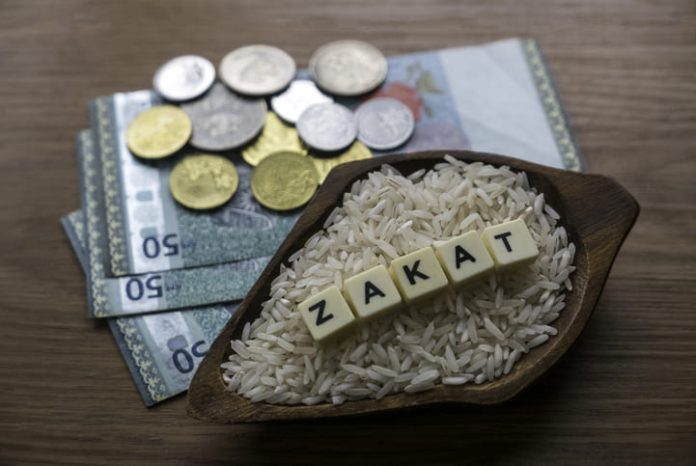
It is also important to note that in 2021, UN Water revealed that Asia Pacific, Sub-Saharan Africa, and the Arab Region, which are predominantly Muslim-populated, are the most susceptible areas for water availability. In this sense, Indonesia can play a significant role in leading the effort to achieve water for shared prosperity by showcasing zakat as an Islamic social finance instrument for alternative financing of water.
Islamic teachings highly promote hygiene and mindful water consumption. For instance, before ritual worship, Muslims are required to perform ablution to clean themselves physically and spiritually. In the Quran, there are more than 200 verses that use the word ‘water’ and elaborate on its usage and benefit for mankind.
The Prophet Muhammad SAW also taught Muslims how to behave toward water. He forbade defecating in stagnant water, under fruit-bearing trees, or in holes in the ground. This is because it can become a vector for spreading disease or disturbing other living creatures.
He also warned his companions not to use water excessively, even if they were in an abundant water area. The practice of zakat also reflects mindful water consumption. Islam penalizes a higher zakat rate for rain-fed agricultural activities than irrigated ones. This illustrates how Islam provides incentives for responsible water usage by charging lower rates.
The practice of zakat also reflects mindful water consumption. Islam penalizes a higher zakat rate for rain-fed agricultural activities than irrigated ones.
The head start of zakat utilization for water financing in Indonesia was the issuance of fatwa No. 001/MUNAS-IX/MUI/2015 by Majelis Ulama Indonesia. It allows zakat, infaq, and waqf to finance water and sanitation. The fatwa represents the spirit of achieving water for shared prosperity. In this sense, zakat redistributes the wealth excess to gain fair water access and proper sanitation for the poor.
The fatwa issuance was then followed by an agreement signed between the Ministry of Development Planning, UNICEF, BAZNAS, and BWI in 2017 to increase access to safe drinking water and reduce the open defecation rate. Since then, various projects have been kicked off to improve universal access to water and sanitation.
First, zakat is structured to finance community-based water provision projects. In this regard, zakat institutions involve the community in doing preliminary program assessments, building water provision facilities, and conducting capacity building to maintain the premises. BAZNAS has established community-based water provision facilities at more than 21 locations in Java, Sumatra, Sulawesi, and Nusa Tenggara by utilizing zakat funds.
Then, zakat plays an innovative financing instrument for reducing open defecation rates through sanitation programs. In 2017, Bappeda NTB and BAZNAS NTB started a collaboration to improve sanitation access in 10 regencies, namely Kota Mataram, Kota Bima, Bima, Dompu, Sumbawa, Sumbawa Barat, Lombok Timur, Lombok Barat, Lombok Utara, and Lombok Tengah. During the three years of project implementation, $920,000 (IDR 13.9 billion) has been allocated for this initiative. The program benefits 7,776 people in 36 villages in the form of 645 renovated houses and 888 latrines.
Zakat is also used to reduce the impact of severe droughts on underprivileged communities. For instance, Dompet Dhuafa uses zakat funds to help poor families access fresh water so that it can reduce their spending on obtaining water. Dompet Dhuafa Disaster Management Center stated in its El Nino mitigation report that in 2023 it distributed fresh water to 11,134 people in 11 locations covering areas in Java and Kalimantan.
Moreover, zakat and donations have also been used for water conservation. In 2015, the Zakat Organization Forum (FOZ) established 900 infiltration wells to increase water discharge in springs in Mojokerto. Through this program, it is estimated that around 392 million liters of water can be reserved back to the ground annually.
The Zakat Organization Forum (FOZ) established 900 infiltration wells to increase water discharge in springs in Mojokerto.
During the COVID-19 pandemic, zakat was widely used to provide handwashing facilities in public spaces and improve community awareness of good hygiene practices to inhibit the spread of the virus. This initiative has attracted the Islamic Development Bank to amplify the impact by donating their funds to establish handwashing drives in 78 schools, benefiting 19,000 students.
Furthermore, capacity building and training activities have been conducted to improve the quality of zakat distribution for clean water and sanitation programs. In 2020, BAZNAS collaborated with UNICEF and Bappenas to launch zakat distribution technical guidance for financing water and sanitation.
Moreover, BAZNAS published the BAZNAS Index for Sustainability of Clean Water and Sanitation (BI WAS). This is a standard measuring tool that calculates the progress and achievements of the zakat distribution program for clean water and sanitation. The main measurements in this index are measurement regarding water facilities, public toilet facilities, cleanliness, and behavior. This index helps zakat institutions conduct impact measurement beyond the physical aspect and also recognize community behavioral change aspects.
From the observed best practices above, zakat has three main advantages for becoming an alternative water financing instrument. First, the fatwa issuance on the permissibility to use zakat for water financing gives much more flexibility to zakat compared to the highly bureaucratic government budget. This flexibility becomes much more relevant in times of disaster when immediate help for safe water access and proper sanitation is needed. Second, zakat becomes much more impactful because it targets low-income families. This arrangement may complement the government’s program for poverty alleviation.
Thirdly, community involvement during the project implementation may increase the sense of belonging to the facilities. The recipients of the program will tend to preserve the facilities because the development of infrastructure acknowledges their voice and aspirations, not merely constructed by a third party that is outside of the community. In addition, it also increases transparency and trust, which can ignite more donations from the public to replicate the program.
Despite the progress that has been made, several improvements can be suggested. First, it is important to widen the fatwa socialization of zakat permissibility for water financing. Because there is quite a significant part of society that still believes that zakat can only be allocated for basic needs like staple food.
Second, it is necessary to improve the capacity of zakat institutions to disburse zakat on water and sanitation programs. They should have the capacity to run monitoring and evaluation programs as well as produce impact reporting to increase public trust in this initiative.
Lastly, embracing international collaboration is worth considering. In 2019, the World Zakat Forum endorsed each of its members to strengthen international collaboration with UNICEF and UNDP to achieve the SDGs. Now, as the host of the 10th World Water Forum, Indonesia should step forward to emphasize potential collaboration between zakat institutions and international agencies and entrepreneurs for water financing to achieve shared prosperity.
Randi Swandaru is a PhD candidate in Islamic finance at INCEIF University, Malaysia. Former Deputy Director at BAZNAS and INDEF School of Political Economy Alumni.
Following a year of slow economic growth, soaring inflation, surging energy costs and an ongoing precarious geopolitical landscape, Europe has just recorded its first decline in foreign direct investment (FDI) since the pandemic.
This perfect storm has created a climate of caution among investors, with the recent EY Europe Attractiveness Survey finding that European FDI dropped by 4% in 2023 compared with the previous year, with FDI levels now 11% lower than in 2019, just before the pandemic struck.
Looking at individual countries, France secured the most investment despite a 5% annual decline in the number of projects, the UK ranked second, bucking the overall downward trend with a 6% increase in FDI projects. Germany came third following a 12% fall in investment.
Given that foreign investment increased in other parts of the world during the same period, these figures should worry European policymakers. Foreign investment helps the economy by creating jobs, stimulating innovation and boosting exports. Policymakers and businesses must therefore urgently prioritize working together to create the conditions where investment can flourish and Europe thrives.
A mixed picture across sectors
The number of FDI projects in software and IT services and business and professional services — traditionally and still Europe’s largest sectors for investment — fell by 19% and 27% respectively. Both are suffering from the effects of purse-tightening on the part of their clients and a general decline in outsourcing.
Our survey did find some bright spots. Investment in tourism and culture, the 17th largest sector for investment, increased by 130% in 2023. The sector continues to rebound as consumers return to spending on leisure and travel, free from pandemic-induced restrictions.
Investment in manufacturing also proved resilient, declining 1%. Businesses maintained manufacturing investment to ensure they can meet future consumer demand, which is expected to rise. Ongoing efforts to reorganize supply chains and relocate production bases to Europe also helped maintain manufacturing investment levels.
Foreign investment could surge, but risks remain
Despite the challenges, there is cause for optimism about the future. The survey found that 72% of businesses plan to expand or establish operations in Europe within the next year, up from 67% in 2022. A similar proportion (75%) are optimistic about Europe’s prospects over the next three years. Europe clearly still matters in current and future business plans.
Expectations of recovery are partly driven by pent-up demand for projects after a long period of low investment and difficult economic conditions. Whether it’s the war in Ukraine, soaring inflation or difficult financing conditions, the past three years have been marked by shock after shock. These challenges have not gone away, but they have eased to the extent that organizations now feel ready to invest again.
However, serious risks remain, and they need to be addressed. Our survey identified the top three threats to Europe’s attractiveness over the next three years:
The increased regulatory burden: Europe has pioneered new regulatory initiatives in areas including carbon disclosure, supply chain due diligence, data protection and the safe use of artificial intelligence (AI). Regulation is important for helping build trust and accountability in business. But investors are worried that an expanding regulatory framework could stifle European business growth and agility.
Energy prices and supply issues: These represent the second biggest threats to Europe’s attractiveness, reflecting concerns about the energy crisis of the past two years.
Political instability in Europe: Executives are concerned about uncertainty in the run-up to the European elections and rising social tensions and political radicalism.
Securing the recovery
There is no room for complacency on any of these issues. The reality is that Europe is facing increasingly stiff competition from the US and Asia, so policymakers must take bold and decisive action now.
A change in public policies at the European and local level would encourage foreign investors to invest more. That means addressing a number of key questions, including how to harmonize regulation, restore confidence in the energy supply, alleviate the most immediate barriers to investment, facilitate access to capital and design long-term industrial policies.
European leaders must prioritize these questions and lean into the continent’s strengths to boost its FDI attractiveness and remain competitive in the years to come.
The views reflected in this article are the views of the author and do not necessarily reflect the views of the global EY organization or its member firms.
With nearly three decades of experience in professional services for international clients, Julie Linn Teigland‘s focus is on transformation processes, in particular on the challenges of digital transformation, and is committed to the sustainable development of capital markets and their framework conditions. Julie has served as lead partner for several Fortune 500 clients
Are you overwhelmed by the complexities of handling your business’s finances? You’re not alone.
In today’s fast-paced, digital world, many business owners are seeking smarter solutions to manage their accounting needs. Managed accounting services can be a game-changer, offering expertise, efficiency, and peace of mind.
This article will talk about how moving to outsourced bookkeeping services can help your business grow in the digital age, give you more time, and make you less stressed.
Cost Efficiency
You can save money with outsourcing accounting services for small business. By outsourcing your financial work, you don’t have to hire as many people, which saves you money on wages. Also, these services often come with high-tech tools that help you stay away from mistakes that cost a lot of money. Managed accounting services also give you correct information about your money. This accuracy helps you make smarter business choices, which can help you save even more money. There’s an easy way to make sure your money is in order.
Access to Expertise
You can access seasoned professionals through managed accounting services. These professionals know all about the newest rules and laws in accounting. They can make it easy for you to do difficult cash jobs. When you use controlled accounting services, you get advice from professionals that is specific to your business. This knowledge makes sure that your financial records are correct and up to code.
Scalability
Managed accounting services can grow with your business. As your business expands, these services can easily adjust to handle increased financial complexity. This flexibility ensures that your accounting needs are met at every stage of growth.
You won’t need to hire additional staff or invest in new systems. Managed accounting services can scale up seamlessly to support your business.
Data Security
Your data security is prioritized by Managed Accounting Services. The way they keep your banking information safe is through clever encryption. This keeps your private information safe from people who shouldn’t have access to it. Also, these services follow strict rules set by the government. High levels of security are kept up by doing regular checks and changes.
Efficiency and Automation
Managed accounting services use high-tech tools to do jobs automatically. This technology makes things like billing and payments go faster. It also makes mistakes less likely to happen. You can work on other important parts of your business when you automate many of your accounting chores. The business is now more productive and efficient. If your business seeks streamlined processes and automation to boost efficiency, consider this accountant in Missouri for tailored digital solutions.
Embrace the Future With Managed Accounting Services
In conclusion, managed accounting services offer numerous benefits that can transform your business operations. By embracing managed accounting services, you can focus on what truly matters-growing your business and achieving your goals in the digital age.
Don’t let the complexities of accounting hold you back. Make the smart choice today and see the difference it can make.
If you gained new insights from this article, be sure to explore our blog for more enlightening content.
With an extensive career operating in the fields of banking, finance, and strategic philanthropy, Kimberly Gire brings an impressive skill-set to the role of Board Member and Co-Chair for the Centre of Disaster Protection (the Centre). As part of the World Financial Review’s Power Influencer Series, Kimberly shares some valuable insights into how she carved out her impressive career and why she was inspired to join the Centre’s Board.
Kimberly Gire, Board Member and Co-Chair of the Centre for Disaster Protection, brings together a blend of experience in structured finance, risk management, and philanthropy. It’s not often you find someone with such diverse expertise, but Kimberly’s unique skill set has enabled her to contribute to developing financing solutions for global public goods on a significant scale.
From early on, Kimberly’s profession was centred within the global financing and banking sector, where she worked in the international capital markets with Citi, before holding several senior executive roles, including CFO for the retail, business and private banking divisions of Westpac Banking Corporation.
Kimberly’s true passion, however, lies in philanthropy, and in 2000, while on sabbatical in Hong Kong, she found herself available to seek out opportunities for undertaking charity work – the start of a journey that would not only enable her the space and opportunity to do something with more of a sense of purpose and community impact, but would enable her to choose her own path. Guided by her own experience in philanthropy in her youth, and as a mother, Kimberly explored opportunities with children’s charities, a route which led her into the education sector, and, more specifically, helping to raise corporate funding for charities supporting children at risk.
“Having worked in banking, structured finance, treasury, and risk management, I understood the tools of the trade, and importantly, the potential of corporate philanthropy; however, this particular not-for-profit children’s charity in Australia had few connections in this space,” Kimberly explained. “The key to success – as with many things in life – is about knowing the right people, and I knew the right people who were willing to connect with this children’s education charity. I was able to put my contacts and relationships to good use, to be that bridge between the different sectors. I was in a position where I could instigate what I call the “triangle of ask”, which is where you find that one person who you can trust, not only to become involved, guide and assist, but to sit alongside your organisation as a neutral actor. It was an empowering experience that yielded great results for children at risk.”
The key to success – as with many things in life – is about knowing the right people, and I knew the right people who were willing to connect with this children’s education charity.
Working with the children’s charity as a pro bono volunteer partner was not only a rewarding experience for Kimberly, but it opened up new opportunities to her within the humanitarian space – including a journey supporting the Australian Red Cross. Here, Kimberly founded and ran a highly impactful women’s giving circle, and as part of that journey she was able to explore women’s philanthropy with the International Committee of the Red Cross (ICRC) based in Geneva; a move which led her to discover more about the financial instruments the funding team were developing, and the subsequent lack of pro bono, impartial expertise that was available to guide them through a complex, first-time transaction.
“Having access to impartial expertise does not have to sit inside every humanitarian organisation – and nor should it; but when deciding on whether a certain tool is the right fit for an organisation, having someone impartially deliver that analysis and review of design is critical,” Kimberly explained. “Making sure that a tool can provide an effective solution is paramount.”
With her financial background and expertise, Kimberly leveraged her skills and connections to assist the International Committee of the Red Cross to complete the world’s first humanitarian impact bond.
“It wasn’t long after the funding and close of the humanitarian impact bond that I was introduced to Colin Bruce, now my Co-Chair at the Centre,” Kimberly said. “Together we began exploring how we could help call for a ‘trusted space’ of financial and risk expertise for humanitarian and development organisations. Before long, I met Daniel Clarke at a convening at Harvard University, and I became involved with the strategy for the Centre. Over the last 5 years, I have worked closely with Daniel and the Centre team, and it was a proud moment when I was invited to join their board in 2021.
A centre of trust
Combining her philanthropic and development-humanitarian experience with philanthropy, risk management, finance and banking know – how, means Kimberly understands financial systems and what effective product and systems design looks like. Her skills complement her fellow Board members, who each bring different skills to the table, such as lived experience in countries the Centre advises and supports. As Kimberly highlighted, such diversity of skills and experience is crucial for ensuring greater expertise, and importantly, lived perspective.
“It is all about building strong, complementary, partnerships between the Board members and the Co-chairs,” Kimberly said. “We are here to help drive growth, to broaden the expertise, the perspective. With our Board working closely with the Centre leadership,, and with the expertise of its team, the Centre is now at this stage.
Disasters are increasing in both frequency and impact, and the architecture of the current system is too fragmented and complex to deal with the impending consequences.
“The team here are highly motivated professionals, they are experts in their fields, and I love working with them,” Kimberly continued. “But what is important is that they are trusted; they know what they are talking about. Their deepest knowledge can be used to leverage decision-making, to bring management and country leadership along, to bring people together; they can get people on-board with the understanding of the potential of disaster risk finance as an effective and efficient means to help the most vulnerable people and communities around the world.”
As Kimberly pointed out, encouraging buy-in to tools and instruments around crisis and pre-arranged finance is no easy task; there is sometimes an initial wariness of working with the private sector, and perhaps an unawareness of the potential of alternative risk and financial instruments outside of insurance, risks leaving the sector shrouded in an “us versus them” mentality.
“Times, however, are changing,” Kimberly said. “The readiness to buy into this concept is growing, and there have been several successful, innovative transactions in recent times, but we all need to work together to accelerate change. Disasters are increasing in both frequency and impact, and the architecture of the current system is too fragmented and complex to deal with the impending consequences.
“This is where the Centre comes in,” Kimberly stated. “They have the right team of purpose-led experts, which combines both the technical and personal skills required to explain what can be complex concepts and advise organisations on new tools and instruments. The team is unique in that it has grown up from need; because of this they are able to hold the mirror up to the financial world and challenge the process, they can challenge the architecture of the current system, they can see what can be done, and what is possible. They can see what needs to be changed and have the heart and expertise to work with all stakeholders to make it happen..
“The Centre is poised to generate a real leverage effect,” Kimberly continued. “They have the right model in place, they are working from best practice, and they have learnt from past experience. It is a combination of all these different elements which means their expertise and advice can be trusted. That is why I am proud to dedicate my time to co-chair the Centre Board.”
Kimberly Gire – as a strategic philanthropist, Kimberly donates her professional skills and experience in capital markets, treasury, structured finance and philanthropy to support humanitarian, development and environmental organisations. She contributes to developing financing solutions for ‘global public goods’ at scale by collaborating with the leadership of humanitarian, development and environmental actors, multilaterals, philanthropists, and the private sector.
As well as being Co-Chair of the Centre for Disaster Protection, she is the Founder of Global Women Leaders Strategic Philanthropy, the Chair of the Centre for Global Equality at Cambridge, the C0-Chair of the Advisory Board for the Global Schools Forum, and a member of the Editorial Board for the Women’s Forum for the Economy & Society Global Meeting.
Her pro bono work has led her to taking on multiple humanitarian and development advisory roles, including Special Advisor to the EJS Presidential Centre for Women and Development, the International Committee of the Red Cross (ICRC), Swiss Cross Foundation, and as a member of the High-Level Steering Group for the Education Outcomes Fund hosted by UNICEF. She was also an Advisor to The World Bank’s collaborative Famine Action Mechanism, and a member of the B20 Saudi Arabia Advocacy Caucus.
To round off her impressive list of accolades, Kimberly is also a Member of the Australian Institute for Company Directors, has a Graduate Diploma in Japanese from Macquarie University in Sydney, and a Bachelor of Arts in Sociology, with a specialisation in Business Administration from the University of California,Los Angeles (UCLA).
Are you on the hunt for the best manufactured home loan rates? Finding the right loan can seem overwhelming, especially with so many options available.
In this guide, we’ll break down everything you need to know to secure the most favorable rates. Whether you’re a first-time buyer or looking to refinance, understanding the ins and outs of manufactured home loan rates will save you money and stress.
Let’s dive in and simplify the process of finding the perfect mobile home rent to own for you.
Improve Your Credit Score
Improving your credit score is an important step in securing the best manufactured home loan rates. Start by checking your credit report for errors and disputing any inaccuracies. Ensure that you pay all your bills on time, as payment history greatly impacts your credit score.
Reducing your overall debt also boosts your credit score. Focus on paying down high-interest credit cards and loans to lower your debt-to-income ratio.
Save for a Down Payment
Saving for a down payment is crucial for securing a good loan rate. Start by setting a clear savings goal and building a budget that allows you to set aside money regularly. Consider opening a separate savings account to keep your down payment funds secure and organized.
A larger down payment can lower your interest rate and reduce your monthly payments. This financial preparation can also strengthen your position as a borrower to lenders.
Compare Lenders
One important thing to do to find the best rates on a mobile home loan is to compare lenders. Do some online study on different lenders and read customer reviews to get an idea of how well-known they are.
Get a loan quote from each lender so you can easily compare the costs and advantages of each choice. By looking at a number of offers, you can discover which lender offers the best terms for your specific financial position.
Explore Government Programs
If you are looking for rates on prefab homes, government programs can be very helpful. Most of the time, these programs offer better terms and lower interest rates than standard lenders. The Federal Housing Administration (FHA) and the U.S. Department of Agriculture (USDA) both have schemes that could help you. The goal of FHA loans is to help people who have bad credit or no down payment. People who meet certain income requirements can get USDA loans to buy mobile homes in rural areas or suburbs.
Consider Manufactured Home-Specific Factors
When considering manufactured home-specific factors, it’s important to understand the differences between these homes and traditional homes. Manufactured homes are built in a factory and then transported to their final location, which can affect financing options.
Manufactured Home Mortgages may have different requirements and terms, so it’s essential to research these specifics before applying. Make sure to discuss these details with potential lenders to ensure you get the best mortgages for your situation.
Unlock Your Dream Home With Unbeatable Manufactured Home Loan Rates!
Finding the best manufactured home loan rates doesn’t have to be complicated. By taking steps such as improving your credit score, saving for a down payment, comparing lenders, exploring government programs, and considering manufactured home-specific factors, you can set yourself up for success.
Remember, preparation and research are key. With the right approach, you’ll be well on your way to unlocking your dream home with the most favorable rent to own mobile homes loan rates available.
If you gained new insights from this article, be sure to explore our blog for more enlightening content.
A bus accident can be a traumatic event, leaving survivors with both physical injuries and emotional scars.
An accident aftermath requires a comprehensive approach to healing and recovery. Understanding how to cope with injuries and trauma is crucial for victims and their families.
This article will explore the steps to take after a bus accident. It will focus on managing physical injuries. It will address emotional trauma. It will find cheap health insurance to cover medical expenses. Read on!
Seeking Medical Attention
The first step after a bus accident is to seek medical attention. Even if injuries seem minor, it’s crucial to get checked by a healthcare professional. Some injuries, like internal bleeding or concussions, may not be immediately apparent. A quick medical evaluation can prevent problems. It ensures all injuries are treated.
Documentation and Legal Steps
Documenting the accident is essential for both medical and legal purposes. Take photos of the scene. Get witness statements. Keep detailed records of medical care and costs. Contacting a lawyer can help with the complexities of insurance claims and possible lawsuits.
Follow Medical Advice
Following medical advice is key. It is crucial for recovering from injuries from a bus accident. Following prescribed treatments helps. So does attending follow-up appointments and finishing physical therapy. These things can greatly improve recovery.
Managing Pain and Discomfort
Pain management is a critical aspect of recovery. You can manage pain with over-the-counter medications and prescription pain relievers. You can also use alternative therapies like acupuncture or massage.
Rehabilitation and Physical Therapy
Rehabilitation and physical therapy play a crucial role in recovering from severe injuries. These treatments help restore mobility, strength, and function. They allow people to regain their independence. Consistency and dedication to the prescribed rehabilitation program are vital for successful recovery.
Recognizing Emotional Impact
The emotional aftermath of a bus accident can be just as debilitating as physical injuries. It’s essential to recognize signs of accident trauma. These signs include anxiety, depression, and PTSD. Acknowledging these feelings is the first step towards healing.
Seeking Professional Help
Professional counseling or therapy can provide invaluable support in dealing with emotional trauma. Therapists can offer coping strategies. They help process traumatic memories and guide people to emotional recovery. Support groups can also provide a sense of community and shared understanding.
Self-Care and Support Networks
Doing self-care activities, like exercise, meditation, or hobbies, can manage stress. They can also improve mental well-being. Leaning on support networks is key. These include family and friends. They provide emotional comfort and practical help during recovery.
Navigating Insurance Claims
Dealing with insurance claims can be a complex and frustrating process. You should understand health insurance coverage. You should explore more options if needed. For those seeking the most affordable health insurance, comparing plans and providers can help. It will help them find the best fit for their needs.
Managing Financial Strain
A bus accident can lead to significant financial strain due to medical bills and lost wages. You can explore options like financial aid, disability benefits, or community resources. They can help reduce this burden. Legal settlements from insurance claims or lawsuits may also provide financial relief.
Navigating Life After a Bus Accident
A bus accident can mess with someone’s body and mind. Getting medical help quickly is key. So is sticking with therapy and getting the right support. Plus, having affordable health insurance can ease the money stress of treatments. Overall, bus crash survivors can start piecing their lives together by tackling recovery from all angles.
Keep going! Feel free to delve into our wide array of articles covering various topics.
Account takeover fraud has become an increasingly prevalent issue in today’s digital landscape. With the rise of online transactions, hackers and fraudsters have found ways to gain unauthorized access to personal and financial accounts, causing significant financial losses for individuals and businesses alike. In fact, according to a report by Javelin Strategy and Research, account takeover fraud has cost consumers and businesses a staggering $16.9 billion in 2019 alone. As such, it has become imperative for organizations to implement robust fraud mitigation strategies to safeguard their customers’ accounts and protect their businesses from financial harm. Implementing multifactor authentication is crucial for effective account takeover fraud mitigation in today’s rapidly evolving digital landscape. In this comprehensive guide, we will delve into the world of account takeover fraud, exploring its various forms and the tactics used by fraudsters to gain access to sensitive information. We will also discuss the latest technologies and solutions that can help organizations prevent and detect account takeover fraud, ultimately minimizing the risk and impact of this type of fraud. From multi-factor authentication to artificial intelligence, this guide will provide a thorough understanding of the best practices and tools available to effectively mitigate the threat of account takeover fraud.
Preventing account takeover fraud effectively
In an increasingly digital world, where online transactions and interactions have become the norm, preventing account takeover fraud has become a crucial concern for businesses and individuals alike. Account takeover fraud occurs when unauthorized individuals gain access to someone else’s account, typically for malicious purposes such as financial gain or identity theft. To effectively mitigate this risk, organizations must adopt a multi-layered approach that combines robust security measures, proactive monitoring, and user education. Implementing strong authentication protocols, such as multi-factor authentication, can significantly reduce the vulnerability of user accounts. Additionally, continuous monitoring of user activities and behavior patterns can help identify suspicious activities and trigger timely alerts. Educating users about the importance of secure password practices, avoiding phishing attempts, and promptly reporting any suspicious activities can further strengthen the defense against account takeover fraud. By implementing these strategies and leveraging advanced technologies, businesses can enhance their security posture and safeguard their customers’ sensitive information from potential threats.
Authentication methods to safeguard accounts
To safeguard accounts from potential unauthorized access and mitigate the risk of account takeover fraud, organizations should employ various authentication methods. One commonly used method is the use of strong passwords that are unique and complex, discouraging hackers from easily guessing or cracking them. Additionally, implementing multi-factor authentication (MFA) adds an extra layer of security by requiring users to provide additional verification, such as a fingerprint scan or a one-time password, in addition to their password. Biometric authentication, using unique physical attributes like fingerprints or facial recognition, is also gaining popularity as an effective authentication method. Another approach is the use of security keys, which are physical devices that provide an additional level of protection by generating unique cryptographic codes for each login attempt. By combining these authentication methods, businesses can significantly enhance the security of user accounts and reduce the likelihood of successful account takeover attacks.
Proactive monitoring for suspicious activity
To complement these preventive measures, proactive monitoring for suspicious activity is crucial in detecting and responding to potential account takeover threats. Through continuous monitoring of user behavior patterns, organizations can establish a baseline of normal activity and quickly identify deviations that may indicate unauthorized access attempts or suspicious behavior. This can include unusual login locations, multiple failed login attempts, or irregular transaction patterns. By employing advanced analytics and machine learning algorithms, organizations can analyze vast amounts of data in real-time, enabling them to promptly detect and investigate any potential account takeover incidents. Proactive monitoring provides businesses with the ability to take immediate action to mitigate the risk of fraud, protecting both their customers and their reputation.
In today’s digital landscape, implementing multi-factor authentication techniques is a critical component of a comprehensive account takeover fraud mitigation strategy. By requiring users to provide multiple forms of verification, such as a password, a unique code sent to their mobile device, or a fingerprint scan, organizations can significantly enhance the security of their systems and protect against unauthorized access. Multi-factor authentication adds an extra layer of defense, making it more difficult for cybercriminals to gain control of user accounts even if they manage to obtain login credentials through phishing or other malicious tactics. Moreover, the use of biometric authentication methods, such as facial recognition or fingerprint scanning, can further enhance the accuracy and reliability of the authentication process, ensuring that only authorized individuals can access sensitive information or perform high-risk transactions. By integrating multi-factor authentication into their systems, businesses can greatly reduce the risk of account takeover and safeguard the trust and confidence of their users.
Utilizing advanced fraud detection technologies
To complement the implementation of multi-factor authentication, organizations should also utilize advanced fraud detection technologies as part of their account takeover fraud mitigation strategy. These technologies leverage sophisticated algorithms and machine learning capabilities to analyze vast amounts of data in real-time, identifying patterns and anomalies indicative of fraudulent activities. By continuously monitoring user behaviors, IP addresses, device information, and transaction patterns, these fraud detection systems can flag and alert organizations to any suspicious activities or potential account takeovers. Additionally, these technologies can adapt and evolve over time, learning from new fraud patterns and techniques to stay one step ahead of cybercriminals. With the ability to detect and mitigate account takeover fraud in real-time, organizations can significantly reduce the financial losses and reputational damage associated with such malicious activities.
Conclusion
It is crucial for businesses to prioritize account takeover fraud mitigation in order to protect their customers and maintain their reputation. By implementing strong security measures and staying vigilant against potential threats, companies can greatly reduce their risk of falling victim to this type of fraud. It is also important to regularly review and update these measures, as fraud tactics are constantly evolving. With a proactive and comprehensive approach, businesses can effectively combat account takeover fraud and maintain trust with their clients.
With technology constantly changing, mobile apps are now essential tools for companies looking to prosper in the digital era. But creating a good mobile app takes knowledge, effort, and money. In 2024, outsourcing mobile app development won’t only be about choosing a vendor; rather, it will also involve forming strategic alliances that promote innovation, quicken growth, and provide outstanding user experiences. This is the situation where developing mobile apps is outsourced.
By 2024, outsourcing will no longer only be a fad but also a calculated financial decision for many companies. A number of companies such as Briteside now offer such services. Let’s examine several practical ways for you to navigate this terrain.
Understanding the Landscape
It is imperative that you comprehend the current situation of the mobile app development market before committing to outsourcing. The need for creative mobile apps has increased dramatically as cutting-edge technologies like blockchain, AI, and AR become more widely used. This is why users have higher and higher expectations for performance, design, and functionality from their apps. Outsourcing provides a competitive advantage in such a changing environment by giving access to advanced technologies and specialized expertise.
Defining Your Requirements
Outsourcing success is largely dependent on how well your requirements are defined. Spend some time outlining your project’s goals, target audience, desired features, and financial limits before interacting with possible partners. A thorough project brief guarantees that the outsourcing partner fully comprehends your needs and aids in the effective communication of your vision.
Finding the Right Partner
The world is more connected than ever in 2024, providing a wide range of outsourcing choices worldwide. Keep cost-effectiveness as your top priority, but don’t skimp on knowledge or quality. Seek out outsourcing partners with a strong portfolio of completed projects, a track record of accomplishment, and relevant experience developing mobile apps. To promote successful collaboration, take into account variables like cultural compatibility, communication routes, and time zone disparities.
Embracing Agile Methodologies
The process of developing software has been completely transformed by agile approaches. This automatically applies to the creation of mobile apps too. The use of agile development methods such as Scrum and Kanban has become very common in 2024. They allow for rapid prototyping, iterative development, and ongoing feedback loops.
Kanban Approach: It is a system for project management that uses visual tasks to control workflows.
Scrum Approach: It is a framework for project management that organizes team culture and process to complete tasks on schedule.
Prioritize partners that use agile processes when outsourcing the development of mobile apps, as these approaches promote flexibility, transparency, and adaptation throughout the project lifecycle.
Data breaches and cyber threats are becoming more frequent than ever. This is why making sure your mobile app is secure is essential. Give preference to partners who follow industry standards and legal requirements like GDPR and HIPAA when outsourcing development. Use strong security measures to preserve sensitive data and user privacy, such as encryption, authentication, and frequent security audits.
Foster Collaboration
The foundation of a good outsourcing relationship is effective communication. Provide a clear communication route by setting up regular meetings, video conferences, and project management software. To guarantee alignment and reduce potential risks, promote open communication, foster openness, and give prompt feedback. Developing a solid connection with your outsourcing partner is the first step towards joint success as it promotes trust and improves teamwork.
Quality Assurance
When it comes to the competitive world of mobile apps, quality is non-negotiable. Throughout the development process, give thorough testing and quality assurance top priority. Use tools for automated testing, carry out thorough quality assurance inspections, and ask beta testers for input to find and fix problems early on. Dedicated QA teams from outsourcing partners may assist in making sure your mobile app satisfies the highest requirements for dependability, performance, and usability.
Scalability and Maintenance
Think about your mobile app’s long-term maintenance and scalability after the original creation stage. Select a technological stack that facilitates upgrades and enhancements with ease and enables scalability. In order to maintain your app competitive in the ever-changing market landscape, collaborate with outsourcing providers who provide continuous support, maintenance, and optimization services.
In 2024, while working through the challenges of developing mobile apps, outsourcing becomes an increasingly important tactic for companies trying to remain on top of trends. Leveraging IT managed services in this digital transformation era can enable your company to prosper in the future mobile-first environment. You may fully realize the benefits of outsourcing by keeping this guide in mind. Don’t fall behind, give your app the head start that it needs!
To understand war is to identify its roots in conflict. A war starts with one side or another rolling on odds of winning according to plan. Like chess, beginning with 20 possible distinct moves and getting exponentially more as it goes, the finales of war are unforeseeable. Yet statistical determinism tilts the odds of winning to the side of the most motivated force that builds, possesses, promotes, and sells the most and best weapons.
It should be talked about and written about, so as to bring to light the interests and the profits that move the puppet strings of war.
– Pope Francis, Urbi et Orbi message 2023.1
The it in the epigraph refers to arms dealing. And so, as arms production, sales, and trade rise to sustain many of the forty-two ongoing wars, I find myself writing about the people and companies that benefit from wars, the arms dealers, manufacturers, politicians, and public investors. There is a hidden truth about that, but you never hear about it: that wars happen partly because of the existence of a profitable weapons industry supported by powerful influence.
Though the number of global wars and war-related deaths has declined since the last world war, our wars are getting bloodier. Yet still, there are spikes from year to year, and to be clear, most current wars are internal civil wars or terrorist insurgencies, while inter-state wars between developed nations are rare.
More people have died from wars in the last century, including the two World Wars, than in all the wars of the past going back beyond the Peloponnesian Wars of the fifth century BC (431-404). Yes, I know the number of inhabitants, continents, borders, and weapons is much higher now than in history. Now, though, for some wars, according to a recent UN report on the war in Ukraine, “civilians account for nearly 90 percent of war-time casualties.”2 There is good reason for that. The new weapons, even those that are as precise as can be, are becoming more automated and astonishingly robotic. Future wars will increase the civilian/combatant ratio because those wars will involve fewer human fighters. More about that later.
Will there ever be a time of less wars?
Past and future wars tell us who we are as animals. We build and sell weapons to destroy enemies who could otherwise be our fellow friends and strangers enjoying a magnificent planet containing all the resources needed to build healthful, joyful lives for everyone. Just imagine what we could do with world friendship. Why do we have enemies, we ask? Some would say that having enemies is an animal hangover from primordial days when suspicion of outsiders was heightened by safety instincts. Others would say levels of greed come with who we are as individuals. When a country is determining whether to go to war, pacifications are hindered by the money that could be made from weapons sales. Nobody, other than revolutionaries, terrorists, a few totalitarian dictators with dreams of imperial conquest, and arms dealers, wants wars but the economics of winning or losing is not trivially ignored.
Past and future wars tell us who we are as animals. We build and sell weapons to destroy enemies who could otherwise be our fellow friends and strangers enjoying a magnificent planet containing all the resources needed to build healthful, joyful lives for everyone.
Eliminating unnecessary wars or even shortening them is against the interests of arms dealers, and elected government officials looking for expansions of resources to keep the military-industrial complex roaring and soaring the economy to yield high profits. Those same players are banking on how future wars will play out. At issue is the profit margin and the risk of public sentiment. Wars can and do go badly. Battlefield performance is a sales convention where weapons are on display.
If we hope to answer the daunting question of a time without or with fewer wars, we must first admit that some humans tend to need rivals and that some countries do too. Perhaps that’s why we relish in playing and watching those athletic sports that have us choose sides to satisfy our social temperaments. But craving nemeses calls for an over-challenging question about emotions that would be foolish for me to answer. Psychologists have been digging for answers for the last two centuries when the field began studying human mental processes and behavior. Before that, for millennia, those mind and behavior questions were naively answered by philosophers. And before, still, there is the foundational story of Cain and Abel. Of course, killing seems to be a primordial reaction to anger. By a common interpretation, Cain killed Abel out of jealousy and hence anger that his brother’s offering seemed more worthy.
There are wars between siblings, within families, and between political divides and related societies. Those wars are no different from those between states whose governments were formed to protect their populations from harm and to ensure survival through the security of available food, water, and clean air. But every war that has ever been fought—even those between far-off geographies—harms the populations of both the invaders and defenders. Noncombatant war casualties had been documented as far back as the 3rd century Punic Wars (264-146) between Rome and Carthage that lasted more than a hundred years. Same with the Crusades, and on and on, they continued to mount losses through more than two thousand years of warfare until now.
Wars start for many reasons: fear of the other, competition for resources, and, too often, geopolitical one-upmanship maneuverings—all from thinking-animal failures. For modern wars, count the field-testing of military tools for future weapons marketability. A defence buildup in one country frightens neighboring countries into an arms race. Defences might start under the foolhardy wisdom of benign protection; however, once a country has a military capability more advanced than its neighbors, the bully instinct of capable dominance becomes politically enticing, especially when the other’s intentions are not trusted.
Pragmatically, we must first understand why private arms sales are legal for federally licensed dealers. You can buy whatever you want, from tanks to rockets to planes and all the hardware needed for maintenance, delivered by corrupt officials in control of former Soviet Union weapons considered obsolete by advanced countries. How about an RPG Soviet anti-tank grenade launcher for about $2,000 from European suppliers in Bulgaria, Romania, or the Czech Republic? One of those could destroy a million-dollar tank. However, the world does have standards for trading conventional arms, thanks to a legally binding Arms Trade Treaty (ATT) negotiated through the United Nations. Yet, even with that international code of conduct for the transferring of armaments, we have 56 countries exporting arms from fighter jets to missiles.3 With almost 30 percent of the world’s countries trading arms, constant wars are inevitable, and we will see them growing in number for the foreseeable future.4
“Just as private military companies have a vested interest in the profit opportunities which armed conflict creates for them, so insurgents and guerrillas are able to feed off the aid and supplies provided to the indigenous victims of war.”5
And who are those unknown suppliers ranking number 29 in Table 2? They keep low profiles for personal security. One anonymous dealer told Anna Myroniuk, Head of Investigations for the Ukrainian newspaper, Kyiv Independent, “Some of the brokers told journalists that their colleagues had been threatened by the Russians. In Belgium and Norway, arms dealers claim to have been followed on their way home.”6 Some dealers are registered, Others are not. Who are those dealers supplying guerrilla organizations, revolutionary armed forces, or private armies for hire? Where there are wars, there are arms providers. When there are arms providers, there will be wars. And with more wars, there will be more dealers earning excessive profits eager to heat arms markets to inflate prices and keep those wars going. That is the obscure brilliance of arms dealing. To pick one example, from the time of Russia’s invasion of Ukraine till now, weapon suppliers to that war have quadrupled their prices.7
The Stockholm International Peace Research Institute (SIPRI) uses trend-indicator value (TIV) as a system to measure the volume of international transfers of conventional weapons based on size, weight, range payload, and age, not on cost. Small arms and light weapons, trucks, and artillery under 100-mm caliber ammunition transfers are not included in the database. Aircraft, air defence systems, anti-submarine warfare weapons, armored vehicles, artillery with a caliber over 100 mm, engines, missiles, unmanned air, and sea vehicles (drones), reconnaissance satellites, and ships are all part of the transfer database (see: Table 2).
Success with military equipment in warfare is a show for potential buyers. Wars are testing grounds for equipment, a roadshow sales convention where weapons are on display, so a poor showing leads to fewer purchases. Russia’s arms sales are now ranked in 3rd place after the United States and France.8 It will soon be in 10th, given its poor performance in its war with Ukraine.9 Russia’s revenues have dropped roughly 26 percent from last year to this, a consequence of badly losing at the start of its invasion.
With weapons, war will come. Nine of the top 10 weapon-producing countries have been at war for most of their independent existence. It appears there is a correlation between a country’s weapons revenue and war engagements. In one way, it seems that countries heavily manufacturing weapons will enter wars to show off their weapons. On the other hand, war itself encourages weapons manufacturing. Ranking 4th in TIVs and 7th in arms revenue, China is the only heavy arms-producing country in the top 10 that has not acted in any international wars for the last forty-four years. That is just one country in the story, so it doesn’t confirm either view.
Unregistered dealers buy weapons from one rebellious militia to sell to another or use corrupt officials to gain weapons and sell them to private armies. Those suppliers are part of the problem. Then there are the companies with yearly revenues in the tens of billions of dollars along with their lobbying powers of political manipulation. For example, Lockheed Martin’s annual revenue in 2023 was $67.6 billion. With that much money at stake, the pressure is heavily on, not just for producing weapons stockpiled for anticipation of use, but also for the momentum of continued wars. Used weapons need to be replaced. Five of the combined top US weapons manufacturers earned $189 billion in 2022, close to 3.8 percent of the $4.9 trillion of US federal revenues and 0.7 percent of the US GDP. Consider what those companies will do with their influence powers over public officials on the issue of weapon manufacturing and development.10
Will those few corporations accept conditions leading to fewer wars in the world with diminished arms sales? Will they so easily mothball their weapons plants to focus development on home appliances and commercial aircraft at just 31 percent of current revenue? Shareholders would protest when they see their shares steeply dropping in value. And what about the rest of the world? Besides the revenues from the five top US companies, the other 94 companies around the world reap annual arms revenue of over $408 billion. Sure, a few could go back to building more Airbuses and dishwashers, but their earnings would drop to almost 7 percent of their weapons profit.
The leaky pipeline of small arms traffic
“We cannot keep mopping up the damage while the pipeline keeps leaking.”12 On October 20, 2022, the UN General Assembly First Committee agreed that corruption is almost impossible to stop but that there are means of arms-control measures that can be made to prevent the trafficking of weapons.
Drug cartels in Colombia, Mexico, and Guatemala get their weapons either by stealing from manufacturing facilities or by illegally buying from underground supply chains of the black market. But those consortia are looking for small arms, transportable military weapons from automatic assault rifles to surface-to-air missiles. In Africa, armed groups and government forces in Burkina Faso, Cameroon, the Democratic Republic of the Congo, Ethiopia, Mali, Mozambique, Nigeria, Senegal, South Sudan, and Sudan are eagerly courting suppliers. Of those states, only Nigeria can manufacture arms through ProForce Limited, a state-based company that provides defence equipment for West Africa. Other countries’ weapons are not produced on the continent. So, who is selling to them?
Corruption is almost impossible to stop but there are means of arms-control measures that can be made to prevent diversion of weapons. What can export states do to curb illegal trafficking? Nothing, if it Is impossible to keep an electronic trail.
Before the war in Ukraine, Russia was the region’s largest arms exporter. With Western sanctions on Russia limiting parts supplies, the world is seeing its poor showing of outdated arms. African countries are looking elsewhere for arms supplies. It is impossible to know the channels that governments will tap for more war weapons; there are always underground markets involving corrupt officials who steal not-so-small arms. But revolutionary and mutineer groups, ready to overthrow their respective governments, also will be looking for corrupt officials who can divert weapons from other sources. Weapons used in African conflicts are mostly produced outside the continent and a large fraction of them are dispersed and acquired by illegitimate armed groups. That puts so much of Africa is the center of illicit small arms trade.
Corruption is almost impossible to stop but there are means of arms-control measures that can be made to prevent diversion of weapons. What can export states do to curb illegal trafficking? Nothing, if it is impossible to keep an electronic trail. So, our wars go on to make more. But we live in an age where electronic footprints are ubiquitous, and so why not track the paths of trafficking?
Gunrunning small arms
Small arms and rocket-propelled grenades found by Marines from Bravo Company, 1st Battalion 3rd Marine Regiment in a house in Fallujah. From left to right: AKM, Heckler & Koch G3, another AKM, stock removed, two Rocket Propelled Grenades and two RPG-7s. Public Domain.
Small arms, generally referring to guns from handguns to automatic machineguns and any incendiary devices or explosive munitions, are manufactured by either an arms-dealing company, defence department suppliers, illicit homegrown groups, or ex-combatant civilians who refurbish the arms they kept. Few gunrunners deal with heavy arms trading because the UN has adopted and ratified the Arms Trade Treaty to trace and prosecute anyone suspected of illegal trade, but the biggest non-governmental trades that keep small wars going are the small arms legal and illegal industries.13 Almost every country in the world,—small, large, peaceful, weak, and powerful—trades in small arms. All have a slim chance of being liable for firearm misuse that causes physical damage or the loss of human life. Manufacturers or dealers are not liable for their instruments of war when things go wrong. Gun manufacturers in the U.S. have the Protection of Lawful Commerce in Arms Act (PLCAA) on their side. That Act shields them from misuse of their firearms after sales. For the U.S. there are extremely rare exceptions in favor of plaintiffs; when a gun manufacturer violates state or federal law in marketing or sale, the PLCAA does not apply. The gun manufacturer, Smith & Wesson, was sued by survivors of the Highland Park, Illinois mass shooting that left seven dead. The Sandy Hook school shooting left twenty children and six adults dead. Their families settled a lawsuit against the gun manufacturer Remington for $73 million.
There are 663 gun and ammunition manufacturing businesses in the U.S., but in South Sudan, there is just one, the Military Industry Corporation, a state-run defence corporation that produces firearms, munitions, and artillery. South Sudan, a country with no large-scale weapons industry, has been at civil war against multiple internal and external forces for more than a decade. That begs the question: How do those two warring sides get their weapons? One source is the state-owned Chinese defence corporation Norinco, which sold 95,000 assault rifles and 20 million rounds of ammunition to the South Sudan government. Another was through Erik Prince, Chairman of the private security firm Frontier Services Group based in Houston, Texas. His company provided three Mi-24 Soviet-era-made large gunship attack helicopters with two Soviet-made L-39 Albatross light ground-attack jets for $43 million. Those sales were legal, as they came from UN-licensed arms traders.14 But how did the government acquire 30 T-55 Soviet-made battle tanks and 10 BM-21 Soviet self-propelled rocket launchers? They came from a company owned by a Serbian businessman, Slobodan Tesic, implicated in having connections to transnational organized crime.15 Most illicit conventional arms come from “government disposals of ‘surplus’ arms or thefts from insecure government stockpiles” paid for with either cash or “blood diamonds” with no paper trails.16
Just to be clear, many wars are.
Africa is just one continent with a trafficking problem, but not the only one. According to the United Nations Office for Disarmament Affairs, illicit arms dealing is “a worldwide scourge” of firearms markets in Europe and Africa presenting a serious threat to world security. With unknown high-tech rogue sellers and buyers, shippers, states, and some organized crime groups. including, of course, governments and private licensed manufacturers, any private group with enough cash or blood diamonds can supply a rebellion or militia with enough weapons to become a significant force.
In the U.S., arms trafficking is meticulously controlled, except when not. Many countries accept trafficking as just regular business. When the Soviet Union collapsed, the arms from Soviet-controlled countries were practically gifts to traders, so the businesses exploded in the late years of the twentieth century.
Running weapons from one country to another goes through an intelligence channel, but sometimes, in transferring, they are diverted by corrupt middlemen to unintended groups. When the legitimate arms trader Sarkis Soghanalian was interviewed by Frontline/World co-producer William Kistner in 2001, he talked about shipments getting into the wrong hands; he told a story about a delivery of 10,000 AK-47s that was to go to the Peruvian government but ended up in the hands of the Revolutionary Armed Forces of Colombia or was it “the Ecuadorians or drug dealers, we don’t know.”17
All countries need arms, and those that manufacture weapons are willing to sell. So, most countries look the other way, avoid prosecution of illegal brokers and traffickers, and even welcome some of the most notorious dealers profiting from illegal arms deals. One is Viktor Anatoliyevich Bout, believed to be the world’s biggest arms dealer, a Russian who admits having sold weapons to the Taliban in the late 1990s when his profits were close to $50 million. Another was Dale Stoffel, who contracted to sell 34 Russian missiles to Boeing to test American ship defence systems, though that sale was never completed. It’s hard to find current dealers because they live protected in a semi-mob incognito underworld. And there was Jean-Bernard Lasnaud, a French-born American citizen, who said he earned on-average, between $1M to $2.5M a year. You could have bought tanks, rocket launchers, Scud missiles, helicopters, small arms, fighter jets, field hospitals, and anti-aircraft missile launchers from Lasnaud before he became an Interpol wanted man who had disappeared.18
A vast majority of deaths attributed to wars are done with low-tech small arms and explosives. But many illegal weapons dealers can and will sell anything, including heavy arms to the highest bidder, be it a country, a revolutionary group, or a terrorist organisation.
By Witnessing Stories of Drone Advancement, Artificial Intelligence’s Future Weapons seems Unhindered by International Law.
In the last century, conventional weapons came from relatively few heavy-industry corporations tightly connected to the military wings of governments. There were always small arms manufacturers and some homemade gun assembly and ammunition creations made in garages and sold through black markets. In this century, arms innovations and supplies are coming from the tech sector and a much larger group of garage manufacturers who build smart lethal devices from information available on the Internet.
For another partial answer to whether there will ever be fewer wars, we explore AI tools of future warfare. Lethal drones are superseding conventional air and sea weapons. Millions are being manufactured, some are homemade and relatively cheap. A smart one might cost a few thousand dollars and, with remote human help, can attack an enemy target worth many millions. But the day will come, perhaps very soon, when they become equipped with enough sophisticated artificial intelligence to spot, identify, and attack enemy combatants autonomously. In 2017, Vladimir Putin, a leader of few scruples who shows little regard for international law, said, “The one who becomes the leader in this sphere [AI] will be the ruler of the world.”19 Elon Musk surprisingly rejoined Putin’s remark at that time, “AI is a fundamental risk to the existence of human civilization.” Russia, though, with its Lancet kamikaze drones showing little success on the battlefield through many misses and failed strikes, does not yet possess autonomous killer drones.20
Almost seven years have passed since Putin’s AI-ruler-of-the-world assertion, and so far, drones perform best with human piloting from distant control. But now, defence contractors everywhere, including military, academic, and private sector labs, are developing AI technologies to build autonomous armies and air forces as fighting machines.
Do we truly believe that military drones, those lightweight lethal helicopters, or jet ski drones are the digital future of weaponry? The U.S. Air Force has accelerated sights on AI-based mission control systems to be placed in F-16s so that heavy combat fighter jets could be in autonomous mode. Testing is currently underway, but evidence shows that the Air Force is not far from having a total autopilot dogfighting craft by 2030.21 Still, the future of warfare is impossible to predict, as many current four-star military officers, historians, and futurists will admit.22
The one big question, “Why are there so many wars?” becomes three:
How would future wars be fought?
Who would supply weapons in future wars?
Can international laws be strengthened to regulate future weapons?
As new generations of autonomous weapons systems become available, more combatants can fight from home. In February 2024, a Ukrainian special operations unit piloted from a laptop on the waterfront of the Black Sea six Magura V5 sea drones on jet skis, moving at 42 knots to sink the Russian guided-missile warship Ivanovets that was transporting ammunition. A month later, Ukraine Special Operations Group 13, using the same brand of sea drones, sunk Sergey Kotov, the newest Russian warship built for $65 million.23 The Magura V5 is relatively small, fast, and hard to see. Warships cannot easily target or out-maneuver such a nimble attack weapon.
While war data analytics and computational capabilities are powered now by advances of artificial intelligence that can mark prize targets, cybertechniques of economic, political, and informational warfare are progressively playing their parts in direct and indirect warfare. The weapons industry and its dealers are no longer just players in manufacturing and distributing hardware weapons, they have expanded into hybrid warfare activity. What was once a profit productiveness has become an even more powerful force.24
The fog of future warfare unknowability
We know future wars will be fought differently, eventually with inconceivable weapons. While futurists work on what now seems to be beyond the most fantastic visions, the world evolves by unnoticeable small and sometimes large changes distinguished by advances or regressions noticed only in thirty-year intervals. We have many examples, starting with the smartphone, the battery, or the drone. Weapons of war don’t usually become obsolete in thirty-year intervals; they improve in design, killing power, mobility, and automobility. But though the future of warfare is, has always been, and always will be unknowable, there could be a time when lethal arms will not be the weapons of choice in military conflicts. Even nuclear bombs can become obsolete. The whole idea of lethal arms in warfare could change in a paradigm shift through clever cyberarts that achieve the same results as present warfare without having to kill large numbers of innocent people.
We know future wars will be fought differently, eventually with inconceivable weapons. While futurists work on what now seems to be beyond the most fantastic visions, the world evolves by unnoticeable small and sometimes large changes distinguished by advances or regressions noticed only in thirty-year intervals.
From my partiality and naïve yet curious interest, I envision a time when non-lethal weapons will be more formidable than nuclear bombs. How is that possible? You ask. Suppose the new weapons are cyber in nature. Exploring that possibility directs the imagination toward military activities aimed at enemy computer infrastructure. Cyber power can bring a country to an economic slump of frightening levels. Cyber weapons can isolate countries from commerce. When the world goes more aggressively cyber, the effects could bring a few continents down to far more than just a combined temporary economic slump. Eventually, cyber power will be the most formidable weapon to supplant the nuclear ones. When that eventual time happens, there will be millions of cyber abusers willing to sell hacking services and methods to the highest bidders, and there will be no law-enforcement agencies able to stop them. An evolution of warfare techniques and weapon machinery is happening with lightning speed. If solar winds can mess with satellites, why can’t hackers in Vladivostok do the same to cause power outages, disrupt communications, knock out navigation systems, and even destroy satellites? Arms dealing becomes then hacker recruiting, an almost non-detectable job done from anywhere with reception. If that happens, the chances of having fewer wars diminish.
Such wars will be limited and handled as cyber retaliation, not necessarily by bombs. In 2010, Stuxnet, a computer worm that targets data systems, was smuggled into Iran to silently sabotage Natanz nuclear facility centrifuges by manipulating valves to increase pressure and damage enrichment processes. That worm uses an automated process that hijacks computers to control machinery and industrial processes and destroys equipment.25 It did what it was supposed to do in Iran, but it spread to Indonesia, Pakistan, India, and back to the U.S., where it most likely originated. In 2017, the Danish shipping giant Maersk, which holds a fifth of the world’s shipping industry, experienced a cyberattack that brought 800 of its ships to anchor.26 That economic destruction was part of a Russian military intelligence pattern using the NotPetya ransomware that enables remote access to change a target program’s internal code. The Russians used NotPetya, a highly advanced command, control, communications, and computer systems, against Estonia in 2007 and Ukraine a decade later.27 Those worms can do significant damage, but they are primitive compared to what future swarms of worms will do in moving conventional warfare to cyberspace battlefields.28
I am not advocating a release of worms to the cyber field to save lives on the conventional battlefield. Cyberwars are not directly brutal, but indirectly, a significant number of lives could be lost or damaged from wriggling twists of economic, health, and emotional fallout from forever-increasing hacking intelligence. However, comparing cyber warfare to the threats of nuclear annihilation that seem to be overtaking deterrent theory, the cyber idea may be our only hope for the planet because there is a sufficient expectation that it will eventually be controlled by international laws that are yet to be enacted. In these times, cyberwar dealers are ubiquitous, global, and covert. As blogged in “Humanitarian Law and Policy” by Dr. Tilman Rodenhäuser and Mauro Vignati, advisers to the International Committee of the Red Cross, “Sitting at some distance from physical hostilities, including outside the countries at war, civilians – including hacktivists, to cyber security professionals, ’white hat’, ’black hat’ and ’patriotic’ hackers – are conducting a range of cyber operations against their ’enemy’. Some have described civilians as ’first choice cyberwarriors’ because the ’vast majority of expertise in cyber (defence) lies with the private (or civilian) sector’”29
Cyber vigilantes
At issue, today, is smuggling, corruption, and dealing linked to weapon research and development for future wars when autonomous weaponry, cyberwars, and disinformation supplant conventional arms. You or I can buy a pocket-sized light weight silent drone and retrofit it with surveillance video apparatus, just like the US Army Black Hornet used to survey troop movements. It is too light to use it for offense in battle, but if you can find a corrupt dealer to bribe and are willing to pay a few million dollars, there is the U.S. Air Force Predator that can fly for twenty-four hours at a height 26,000 feet and be piloted from 7,500 miles. Don’t count on getting it armed with 500-pound precision bombs; that can be done only by the branches of the U.S. military. Predators were operated in the Afghanistan war by pilots living on army bases in the U.S.; As Gary Fabricius, a Predator squadron commander said, “You see Americans killed in front of your eyes and then have to go to a PTA meeting. You are going to war for 12 hours, shooting weapons at targets, directing kills on enemy combatants, and then you get in the car, drive home, and within 20 minutes you are sitting at the dinner table talking to your kids about their homework.”30 What will happen when civilians working from their home countries get involved in armed conflicts with other countries using digital technology? They may be concerned individuals, loyal refugees, patriotic hackers, or professional cyberwar dealers who can sabotage economies, vital hospital and power station equipment, government services and spread false information to confuse voters ready to cast their ballots in elections. “With many groups active in this field,” Rodenhäuser and Vignati tell us, “some of them having thousands of hackers in their coordination channels and providing automated tools to their members, the civilian involvement in digital operations during armed conflict has reached unprecedented proportions.”32,33
With thousands of hackers playing war sitting home miles from any conflict, are they considered civilians? Oddly, international humanitarian law says little about hacking or civilians conducting cyberwar against combatants in armed conflict. It does, however, hold many strict rules for the protection of civilians, with the most inhumane offenses being prosecutable as war crimes. Cybernetic space has the same international laws as the space we live in. Civilians and combatants are bound equitably by the laws of the country they operate in. Cyberspace is not a lawless space. Hackers might start as civilians, but with the first hack, they are considered illegal virtual arms dealers.
Future wars will follow a marked change in direction, from war plans designed to kill combatants with autonomously launched incendiary weapons to cyberart strategies that strike at the political bases and economic substructures of enemy states. Cyberwars rely on accelerating technical advances that will transform weaponry supporting military conflicts while being more accessible to hackers who profit from extremist attacks, criminal activity, and information dealing. If cyberwars between enemy states diminish the number of casualties, there still will be dealers itching for profits. Though the number of global war-related deaths has indeed been declining since the last world war ended, that number is far too high for a civilized world.34 There is a highly disturbing likelihood that future warfare tactics could involve takeovers of nuclear plants, power structures, or hospitals, raising the odds of there being more deaths; however, if a new world of cyberarts brings war evolution mechanics to new cyberbattle fields where lethal weapons are obsolete and where countermeasures are in place, then perhaps we will not continue to kill in such large numbers.
Or we can hope that future cyberarts of wars will model the brilliance of the Pig War, a military conflict between the U.S. and Britain (1859) “over a squabble of a pig” in which there were no human casualties on either side.35
Joseph Mazur is an Emeritus Professor of Mathematics at Emerson College’s Marlboro Institute for Liberal Arts & Interdisciplinary Studies. He is a recipient of fellowships from the Guggenheim, Bogliasco, and Rockefeller Foundations, and the author of eight acclaimed popular nonfiction books. His latest book is The Clock Mirage: Our Myth of Measured Time (Yale).
References 1. https://www.vatican.va/content/francesco/en/messages/urbi/documents/20231225-urbi-et-orbi-natale.html 2. https://documents-dds-ny.un.org/doc/UNDOC/GEN/N22/321/73/PDF/N2232173.pdf?OpenElement 3. https://armstrade.sipri.org/armstrade/page/toplist.php 4. https://hal.univ-grenoble-alpes.fr/hal-03609741/document 5. Hew Strachan and Sibylle Scheipers (Eds), The Changing Character of War (New York: Oxford University Press, 2011) 4. 6. https://kyivindependent.com/how-western-companies-make-fortune-on-brokering-arms-deals-for-ukraine/ 7. https://www.reuters.com/world/europe/inside-europes-drive-get-ammunition-ukraine-russia-advances-2024-03-06/?utm_source=Sailthru&utm_medium=Newsletter&utm_campaign=Daily-Briefing&utm_term=030624&user_email=bb759ff36f2ff61999abd346c905873915c01036c5a2b4978fb83f6b22e77fde 8. http://www.sipri.org/databases/armstransfers/sources-and-methods/ 9. https://armstrade.sipri.org/armstrade/html/export_toplist.php 10. Besides the revenues from the five top US companies, the world has an annual arms revenue of over $408 billion.. 11. https://www.sipri.org/visualizations/2023/sipri-top-100-arms-producing-and-military-services-companies-world-2022 12. https://press.un.org/en/2022/gadis3694.doc.htm 13. https://disarmament.unoda.org/ATT/ 14. Martell, Peter, First Raise a Flag: How South Sudan Won the Longest War but Lost the Peace (Oxford: Oxford University Press, 2019) 235. 15. https://home.treasury.gov/news/press-releases/jy16061
16. Greene, O. Examining international responses to illicit arms trafficking. Crime, Law and Social Change33, 151–190 (2000). https://doi.org/10.1023/A:1008398420612 17. https://www.pbs.org/frontlineworld/stories/sierraleone/soghanalian.html 18.https://www.pbs.org/frontlineworld/stories/sierraleone/lasnaud.html#:~:text=Then%2C%20in%20the%20spring%20of,a%20gated%20South%20Florida%20community. 19. https://hir.harvard.edu/artificial-intelligence-china-and-the-international-stage/ 20. https://www.forbes.com/sites/davidhambling/2022/12/01/russian-loitering-munition-racks-up-kills-but-shows-limitations/?sh=481ea20e5d58 21. https://www.eglin.af.mil/News/Article-Display/Article/3320435/eglin-steps-up-as-proving-ground-for-digital-modernization-effort/ 22. David Patraeus and Andrew Roberts, Conflict: The Evolution of Warfare from 1945 to Ukraine (New York: HarperCollins, 2023) 405. 23. The sinking of Sergey Kotov has not been independently confirmed at the time of this writing,. 24. Hew Strachan and Sibylle Scheipers, The Changing Character of War (Oxford, UK: Oxford University Press, 2011) 336. 25. https://www.zdnet.com/article/stuxnet-attackers-used-4-windows-zero-day-exploits/ 26. https://www.latimes.com/business/la-fi-maersk-cyberattack-20170817-story.html 27. Ibid, Patraeus and Roberts, 434 28. Mark Galeotti, The Weaponization of Everything: A Field Guide to The New Way of War (New Haven: Yale University Press, 2022) 113. 29. https://blogs.icrc.org/law-and-policy/2023/10/04/8-rules-civilian-hackers-war-4-obligations-states-restrain-them/#:~:text=Sitting%20at%20some%20distance%20from,operations%20against%20their%20’enemy’. 30. Peter Warreb Singer, Wired for War: The Robotics Revolution and Conflict in the 21st Century, (New York: Penguin, 2009) 347. 31. https://harvardnsj.org/volumes/vol1/schmitt/ 32. https://blogs.icrc.org/law-and-policy/2023/10/04/8-rules-civilian-hackers-war-4-obligations-states-restrain-them/#:~:text=Sitting%20at%20some%20distance%20from,operations%20against%20their%20’enemy’. 33. https://www.lawfaremedia.org/article/civilianization-digital-operations-risky-trend 34. https://www.un.org/en/un75/new-era-conflict-and-violence 35. https://web.archive.org/web/20080709060607/http://www.wahmee.com/pigwar.html
By Danny Leipziger
China cannot continue to rely on exports to drive its growth, but what are the alternatives?
China ran a $1.2 trillion trade surplus last year, and despite admonitions from the IMF to rely...
The World Financial Review uses cookies to improve site functionality, provide you with a better browsing experience, and to enable our partners to advertise to you. Detailed information on the use of cookies on this Site, and how you can decline them, is provided in our Privacy Policy and Terms and Conditions. By clicking on the accept button and using this Site, you consent to our Privacy Policy and Terms and Conditions. ACCEPT
Privacy & Cookies Policy
Privacy Overview
This website uses cookies to improve your experience while you navigate through the website. Out of these cookies, the cookies that are categorized as necessary are stored on your browser as they are essential for the working of basic functionalities of the website. We also use third-party cookies that help us analyze and understand how you use this website. These cookies will be stored in your browser only with your consent. You also have the option to opt-out of these cookies. But opting out of some of these cookies may have an effect on your browsing experience.
Necessary cookies are absolutely essential for the website to function properly. This category only includes cookies that ensures basic functionalities and security features of the website. These cookies do not store any personal information.
Any cookies that may not be particularly necessary for the website to function and is used specifically to collect user personal data via analytics, ads, other embedded contents are termed as non-necessary cookies. It is mandatory to procure user consent prior to running these cookies on your website.