Home Blog Page 139

AI Meets Business: The Practical Impact of Microsoft Copilot on Today’s Workforce

By Luca Collina 

I reunited with Taryn Nixon, copilot adoption lead in PROMPTAI and Change Manager practitioner, with whom we got PROSCI certification some years back.

She has extensive experience in change management using AI within the AI product Copilot framework. The interview below summarises where the product is at a high level while also sharing insights on how it is adopted.

In a Nutshell, What Is A Copilot? Think of Copilot as your AI-powered assistant sitting next to you on all Microsoft Office products. It helps out with various tasks across the suite, including those performed by Outlook and its email threads. For example, it could achieve shorter emails or summarise long presentation talks via the app.

It incorporates your data into standard Microsoft Graphs and leverages the capabilities of OpenAI GPT models for natural language understanding and generation.

What are the key functions and features that make it different from other AI tools? For instance, chat GPT differs from Copilot as it is embedded in your everyday productivity suite. The semantic indexing means that Copilot understands you and what you work on. For example, if you are running a marketing event and need ideas for the marketing plan, ask Copilot, who will create the first draft quickly.

High-Level Effective Support in Word, Excel, and PowerPoint 

Word: Summary of Important Documents, email and draft documents, key question answers search out with Copilot, making writing and editing easier for users. Copilot helps create professional presentations quickly, saving time during presentation creation and delivery.

Excel: Automate tasks like creating the basics, such as defining data tables or handling simple numerical calculations. You need to include conditional formatting, etc.; setup or reformat tables; write up formulas or functions within any cell stand; and do profiling work using basic data set profiling methods, too, including row/column sort and filter provision alongside conditional formatting plus advanced data analysis or insight delivery support, etc.

Teams Meetings: Summarize meetings with action points in under 30 seconds.

What value does it deliver to people working within a company? Employees at any workplace stand to gain a lot when they use Microsoft 365 Copilot in their day-to-day activities. This tool can come in handy for them in several ways.

  • Timesaving: Employing this tool may save around 200 minutes every week, translating into large sums of money if individuals base it on how much they earn every minute being online through such applications as those above-mentioned communication platforms (Microsoft Outlook or similar). For instance, taking 12,500 users, then such usage translated into a net present value of $82.5M after three years with an ROI of 857%, according to one business case analysis
  • Content Development: Involves using Copilot to help make client presentations from where presentations were made during a conversation about the client
  • Presentation Enhancement: In PowerPoint, Copilot assists in creating professional presentations by quickly generating output
  • Learning and Development: A learning tool helps Copilot unlock productivity and serve as creative inspiration
  • Accessibility: Assist in reducing cognitive load for people with disabilities through giving writing assistance, which improves efficiency and learning, too
  • Team collaboration and Project management: It increases efficiency amongst teams, freeing up time to be more effective in roles like project management. However, it’s essential to manage expectations and ensure employees have realistic views of what Copilot can and cannot do to maximise its value.

Are there any clear affirmative outcomes or case studies that could show how valuable copilot is for businesses? One such example is Bayer Innovation Journey with Microsoft Copilot.

Expectations and Reality vs. Hype:

Myths or misconceptions about MS Copilot

The program is like an autopilot that works instead of you, but it cannot be used to replace human beings completely in their jobs; the copilot only provides assistance while allowing the driver to carry out his or her responsibilities.

How can companies ensure their employees have realistic expectations about what Copilot can and cannot do?

A comprehensive user adoption plan is required to implement Copilot properly, as it has a steep learning curve. Therefore, people would have specified instructions on how to prompt them for benefit realisation.

This represents a significant shift in behaviour for someone else to know perfectly before all departments become proficient in using this innovation.

Organisations should implement measures that will enhance practical benefits from Copilot and support workplace needs practically:

  1. Define clear objectives Such as time savings with Copilot
  2. Integrate Copilot into Daily Workflows. Encourage employees to use Copilot
  3. Measure and Share Value Use research methodology to measure the value of Copilot1
  4. Promote Intelligent Adoption By adopting Copilot
  5. Provide Training and Support. Offer resources and support to help employees understand how to use Copilot effectively
  6. Gather Feedback and Iterate Collect user feedback and use it- as an organisation- to improve

All these steps will ensure organisations can use Copilot effectively and hence realise some tangible benefits to their staff.

About the Author

luca

Luca Collina is a transformational and AI Business consultant at TRANSFORAGE TCA LTD. York St John University awarded him the Business – Postgraduate Programme Prize and CMCE (Centre for Management Consulting Excellence-UK) for his paper in Technology and Consulting Research Prize. Author/External Collaborator of CMCE. 

Reference

  1. My notes: Time Tracking Tools Toggl: https://toggl.com/ | Clockify: https://clockify.me/ Project Management Tools  Trello: https://trello.com/ | Asana: https://asana.com/

Best Health Insurance Companies: A Guide to Affordable and Reliable Plans

Health insurance is a contract entered between an insurance company and an individual, which includes the medical and surgical expenses of an insured. It also includes reimbursement of expenses that are incurred due to illness or injury.There are multiple factors that determine the Top Health Insurance Companies in India, which are as mentioned below:

  • Claim Settlement Ratio
  • Salient Features
  • Advantages Provided
  • Customer Ratings 
  • Customer Support

Provided below is the list of some Top Health insurance Companies in India:

Star Health and Allied Insurance Company

  • It is one of the top standalone health insurance companies.
  • It provides a 360-degree wellness program when health insurance from Star Health Insurance is purchased.
  • A cashless claim settlement can be availed within 2 hours.
  • A benefit of AYUSH treatment, along with some other benefits, is also available.

Care Health Insurance Company

  • It was earlier known as Religare Health Insurance.
  • It is one of the Top Health Insurance Companies in India with 24800+ healthcare providers.
  • Get the best health insurance as well as micro-insurance products for rural and urban areas.
  • Avail of health care services at any of the network hospitals with more than 11400+ hospitals all across India.

HDFC Ergo Health Insurance

  • Get 100% coverage restored instantly after the first claim.
  • Get a free health check-up within 60 days of the policy’s renewal.
  • Get comprehensive coverage related to medical expenses.
  • Get 100% restoration benefit on the base insurance coverage in case the claim is raised in the same policy period.

ICICI Lombard Health Insurance

  • They provide comprehensive health insurance plans.
  • It provides coverage for up to 5 family members with the Family Floater Plan.
  • With the Super Top-Up Plan, get additional coverage for the whole family.
  • It provides insurance to more than 32.7 million policyholders.

Aditya Birla’s Health insurance 

  • It has a presence with more than 60 digital partners.
  • Their main agenda is to provide dedicated customer support.
  • Activ Health app supports and motivates to stay healthy.
  • Its several insurance plans cover children, women, senior citizens, adults, and patients with critical illness.

ManipalCigna Health Insurance

  • The cooling period for pre-existing diseases is 2 years.
  • Get an additional benefit from free health check-ups.
  • Get additional benefits while opting for employer-employee coverage.
  • Its products are recognised as Best Innovation in the year 2024.

Niva Bupa Health Insurance

  • It is one of the best and top-selling plans in India.
  • Get your claim processed within 30 minutes.
  • Get the ambulance charges, doctor consultations, organ donors, and daycare covered.
  • It covers people based in more than 190 countries.
  • It starts as low as INR 20 per day.

Conclusion

A decisive health policy is important to safeguard an individual’s financial well-being in case of unexpected medical expenses. You need to search a little more to choose the perfect one, which can be based on:

  • Benefits provided by the company
  • Premiums
  • Claim Settlement Ratio
  • Customer reviews
  • Customer Support

Vera Made it to the 2024 SMBTech 50 Listing!

The 2024 SMBTech 50 finally released their top 50 companies, and Vera was among them. Being their first time, the listing serves as an exceptional achievement of Vera’s commitment to offering administrative and AI-driven services to SMBs.

SMBTech 50 was formed by Notable Capital, the 25 venture firms, and Nasdaq to acknowledge the most innovative, venture-backed startups that transform small and medium-sized businesses (SMBs).

Vera admin services ensure that you can handle a majority of admin tasks automatically and in the background, including operations, from invoicing, tax compliance, scheduling meetings, and inbox management.

Why are Admin Services vital to SMBs

With businesses at the centre of the world’s economy, leveraging advanced AI will give your business a competitive edge.

With the adoption of AI services, your business will have gained a partner who understands your unique ops to deliver functional solutions at scale and great speeds. How cool is that!

For Small and Medium-sized Businesses (SMBs), finding the perfect admin and AI service providers can be challenging as resources are often limited. These factors eventually affect the overall working environment for these companies as they find it hard to focus on growth.

This is where companies like Vera come in. Vera offers AI-enhanced solutions that enhance productivity by automating routine tasks. With the help of these AI services, SMBs can focus on other important aspects of their business. 

Vera’s Approach to Admin and Ops Services

Back office services are crucial to any organization and especially to any startup company. Managing these services can be time consuming and exhausting to Small and Medium-sized Businesses (SMBs).

Based on these challenges, Vera’s primary focus is on helping SMBs manage their back-office operations. Vera will respond to urgent emails, engage in customer feedback, organize your calendar, schedule your meetings, and help you prioritize what you need to do.

Vera’s admin services and operational support (ops) are made to integrate with your existing systems seamlessly, including your PEO/HRIS and accounting software such as Gusto, Deel, ADP, TriNet, Justworks, QuickBooks, Xero, etc.

With Vera’s AI system, you won’t experience friction in its introduction, as it learns to adapt to your requirements and leave all the control in your hands.

Why Vera is recommended for All SMBs

We recommend for all SMBs to check out Vera, and here is why. 

Vera’s AI services heighten any business’s productivity, operations and advancement in its real-time work-flow. Vera handles admin tasks to a high degree (as much as 95%) including invoicing, tax compliance, scheduling meetings, and inbox management.

Vera handles admin exceptionally well by blending human expertise and artificial intelligence to transform businesses, streamline processes, and ultimately drive success. With the backload off your shoulders, you can focus on other aspects of your business. 

You can also enjoy the benefits of regulatory compliance with all pertinent laws and regulations, including those governed by the FTC, SEC, IRS, SBA, CPSC, etc.

Businesses that have used Vera have attested to how efficient its operations are. They acknowledge that their functionality was made easier as they did not have to worry about the back office operations and that the operations run smoothly and effectively.

The 2024 SMBTech 50 recognition is just the beginning for Vera. As the demand for AI-powered admin services grows, companies like Vera will be there to ensure that SMBs achieve their set goals and, most importantly, grow. 

If you have an SMB and are looking for a way to be competitive while managing the complexities of daily operations, now is the time to explore AI-driven admin solutions.

Hire Vera today, and you might unlock the key to exploring new levels of efficiency, reducing costs, and ensuring long-term success in a fast-changing business world.

Claudia Sheinbaum Makes History as Mexico’s First Female President

Claudia Sheinbaum made history on Tuesday as she took office as Mexico’s first female and Jewish president, marking a pivotal moment in the nation’s 200-year history. Addressing a packed crowd in Mexico City’s main square, Sheinbaum highlighted the significance of her leadership, emphasizing that her victory represents the arrival of all women.

The former mayor of Mexico City, Sheinbaum won the presidency with the largest margin since Mexico’s democratic transition. While she enters office with a strong mandate, she faces challenges including a budget deficit, security concerns, and complex party dynamics. Despite being closely aligned with her predecessor, Andrés Manuel López Obrador, Sheinbaum aims to blend his populist approach with her technocratic governance style.

Supporters like Licet Reséndiz Oropeza, who traveled for over 50 hours to witness the historic moment, expressed overwhelming pride and joy, calling Sheinbaum’s inauguration “historic.”

Related Readings:

US flag holding by a woman

Mitsubishi Electric Corporation

Financial Impact of Game Art Styles and Game Art Outsourcing Studios

In fact, visuals are one of the primary reasons why a video game brings in lots of cash. Despite the focus on play mechanics and narrative, graphic identity is one of the primary reasons consumers first pay attention to the game and is the factor that lets the title make itself noticed in the highly competitive crowd.

The designs of modern games are important in our society. Due to the constant addition of new experiences available on Steam, or new games in the mobile app stores, every day, there’s less and less that one game can stand out for, at least visually, without having amazing art and production design.

This is why large mainstream game studios risk so much on the visuals for their heavy-hitting main series. Franchises such as CoD, Battlefield, or Assassin’s Creed exist and thrive or fail on their ability to deliver the visuals and moments that appeal to player’s desire.

Independent developers eager to find another financial hit are put even more under pressure to create a visually striking experience for peanuts. The good news is that the opportunities such as game art outsourcing studio’s have the access to exquisite graphical production without having to overreach financially.

Now let’s look at why game visuals affect the revenue capacity so significantly and how art outsourcing helps indie game designers bring parity to the battleground. 

Psychology of good game art and its influence on increasing sales

In a bid to explain why artistic presentation is so influential to the commercial success of a game it is easier to think about people. When we are impressed by the eye catching images in the readily available media over the internet, specific chemistry in the brain is triggered making one likely to interact with displayed media.

Blinking and attracting light colors, an inspiring color range of characters who are easy to captivate the synthesis of dopamine and oxytocin. These chemicals help to give feelings of pleasure, joy, and interpersonal connection to the visual stimuli before us.

Company developers leverage this psychological reaction with graphical display and other promotional tools such as trailers. They engage consumer interest with unique styles, and show the title’s personality. The technique can make them unknowingly purchase the game.

Further, some players may be drawn in by conformity to some degree of cultural pre-set art expectations. For instance, thousands of indie platformer games apply a hand drawing technique that refers to Nintendo games such as Super Mario for gamers with nostalgic tendencies.

In total, games that have more contrasting colors or more popping colors literally pop out at the consumer just plain sell better because they appeal to their basic emotions. It is important now to look at how such artistic presentation translates into gains that are financial in nature. 

Measuring The Benefit and Extra Sales Due To Powerful Visuals

It only makes sense that where there is an emphasis on graphics, this signals increased sales and, by extension, revenues. Information obtained suggests that such titles are up to 3 or 4 times more effective than other games, when they boast of new graphics or a distinctive art work.

For instance, all entrants with significantly higher graphic quality than previous part of Call of Duty have 30 to 50% higher quantity of first month’s sales. Ubisoft, the developers of Assassin’s Creed also highlighted high revenue years where the series saw more graphical advancement compared to its previous version.

The same applies to some indie games revenue distribution that veers towards games that have better pixel art as opposed to cog terms more crude art. A similar study conducted in 2019 on more than 7000 Steam games put forward the fact revealing that games with above average graphics have almost doubled the gross than games with below average graphics.

Developers sometimes feel that investing in graphics may be to the detriment of the game play. The data does show that while better graphics promote direct sale, it also generates improved critical response and word of mouth.

The big picture is that while strong core mechanics are still a core element, begging the graphical question can potentially leave out some revenues during launching. This is even more relevant in such densely populated niches as battle royale and games similar to MOBA since here the primary looks do matter. 

How Outsourcing Helps to Find Triple-A Game Art Talent

Generating excellent construction visuals in the gaming facilities industry demands tremendous artistry and capital. While open ended companies would allocate dozens of the staff graphic artists to accomplish the goal, indie devs with low funding are left with no choice but to struggle with the issue.

Fortunately, getting art outsourcing services from overseas therefore enables the otherwise less endowed teams access highly competitive graphical artists without having to necessarily blow their development budget. By collaborating with specialized art teams developers enhance their in-house capabilities.

The primary reason for outsourcing game art is the reduction of expenses in the process. Presumably, the artists in such areas as Eastern Europe and South Asia can be paid as much as 60-80 % less per hour compared to the designers in the USA or Canada. This means scaling up graphical competency by a factor of ten for a small portion of the normal price.

Third, outsourcing has access to a pool to numerous designers worldwide rather than the designers available locally. This cultivates the linking together of specific art disciplines and artistic designs that fulfill the needs of unique games.

This is especially good news for developers who want to reach photorealism or triple-A standards with limited resources – outsourced 3D assets are a valuable asset. Character models, environment artwork, and animation are parts of a game and these building blocks can assist a game to convey the stand of such famous franchises in the industry.

On the other hand, if indie studios are to go for a 2D or retro art style, getting illustrators and animators who are outsourced are very helpful. These artists can then set up and sustain the graphical image which defines the appeal of the game in question. 

Outsourcing Risks and Specifically Identifying an Art Partner

Outsourced art can be an effective way for game developers to source visuals, but they should remember some of the concerns that come up when implementing art contracts. Based on these works of art, the following aspects can be said: Transmitting artistic concepts may be tricky in case this is made over the connection, and there may be some problems with communication while working in another country.

Probably most importantly, outsourcing art production shifts the quality control responsibilities to the developer rather than outsourcing partners. As a result, ensuring that asset deliveries fit the expectations as to the specifications, style, and timing reverts to the developer.

Fortunately, by partnering with the right outsourcing provider you can manage these risks with a proper collaboration framework. Professional studios are always very cautious when it comes to issues of portfolios, pipelines and how they work out their processes.

Ideally developers should search for outsourcing teams that are focused exclusively on the video game artwork and not the general creative services. These dedicated game art studios have a significantly better context of the necessary restrictions such as the technical limitations, assets optimization and the target platform.

Overall insights point out that when providers are selected wisely, feedback mechanisms established and project management actively managed risks related to graphic design outsourcing can be limited while developers profit from working with outside design teams.

Increasing Games Popularity And Sales Through Artistic Design

When development costs increase and competition in the market becomes even greater, opportunities that provide developers with a noticeable cost-effectiveness advantage such as graphical outsourcing. But even more importantly, shouldering art direction offers the most likelihood of a hit.

An abstract approach constitutes the initial barrier in trying to differentiate oneself from virtually limitless game choices competing for attention. Where large franchise companies depend on brand recognition and marketing expenses, new entrants that come from the indie camps often survive or fail on art direction alone getting consumers’ attention.

Graphics outsourced appear the most sustainable way for developers to create visually appealing and aesthetic and technically refined graphical spectacles without compromise on action core mechanics. Outsourced art studios take responsibility for increasing graphical intensity so the in-house team can focus on the game’s mechanics and usability.

In the end, for modern games which seek to achieve new levels of profits, it is through visuals that discovery is made, so as to allow for revenue generation.

With the help of capable art outsourcing partners, developers now have the tools to achieve colorful and unique art directions which were previously conceivable solely to major publishers. Deploying graphics unleash the eye and mind appeal in the short term but in the process feed long term brand equity necessary for sustainable market relevance in the future.

Investment Peak Review Enhancing Trading Success with Advanced Tools

The Investment Peak review provides an in-depth look at how this platform equips traders with advanced tools to maximize success. Offering access to over 300 trading instruments across six asset classes, Investment Peak allows users to trade Forex, Cryptocurrencies, Shares, Metals, and more. Designed to cater to the modern trader, the platform delivers real-time market updates and customizable trading features that help clients take advantage of market opportunities.

Investment Peak stands out by focusing on individualized service, ensuring every trader benefits from expert guidance and personalized strategies. The platform’s 100% deposit bonus, along with its competitive pricing and rapid withdrawal processes, adds further appeal. For traders looking for a streamlined experience backed by expert support, Investment Peak Review offers a valuable trading solution.

Start Trading

Stay Ahead with Real-Time Market Updates

Staying updated on real-time market information is crucial for making informed trading decisions. In the fast-moving world of Forex and CFDs, where prices can shift dramatically in a short time, having access to the latest data can be the difference between profit and loss. Real-time market updates allow traders to track price movements, economic news, and global events that may affect market conditions. These updates provide traders with the ability to act quickly and adjust their positions in response to significant changes.

Real-time updates are particularly valuable for traders who engage in day trading or other short-term strategies. For these traders, timing is everything. Access to up-to-the-minute data allows them to identify trends, take advantage of market opportunities, and manage risk more effectively. It also helps traders stay informed during periods of heightened market volatility, ensuring they can execute trades at the most opportune moments. The ability to stay connected to the markets around the clock is critical for anyone looking to maximize their trading potential.

Why Choose Investment Peak for Forex and CFDs

Diversify with 300+ Instruments

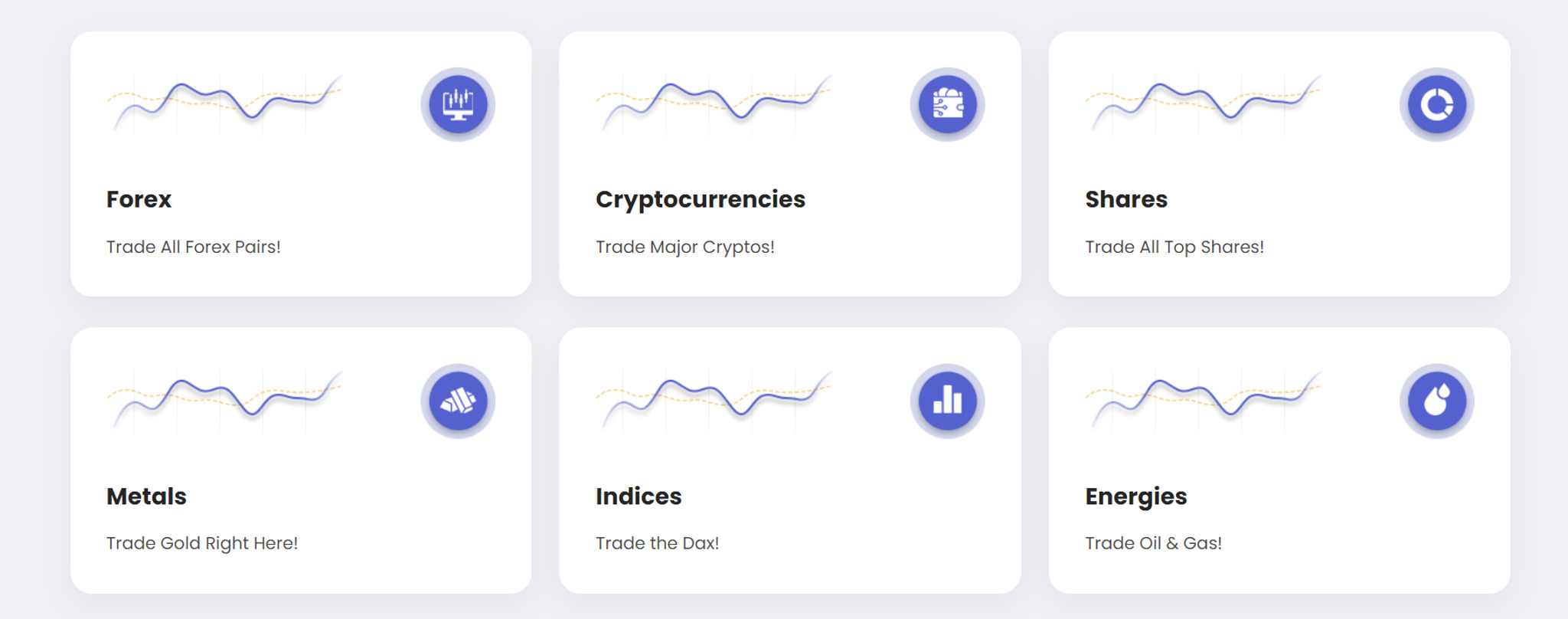
Diversification is one of the most effective ways to manage risk in trading. By spreading investments across different asset classes, traders can mitigate the impact of volatility in any one market. Access to over 300 trading instruments enables traders to build a diversified portfolio that includes Forex, Cryptocurrencies, Shares, Metals, Energies, and more. This variety allows traders to explore different markets and find opportunities in areas they may not have considered previously.

Diversifying into multiple markets also allows Investment Peak traders to balance risk and reward. For example, while currency markets might be volatile, commodities like Gold or Oil may offer more stability during certain economic conditions. By having the flexibility to trade across asset classes, traders can tailor their portfolios to suit their individual risk tolerance and investment objectives. Furthermore, the ability to trade a wide range of instruments provides more opportunities to profit from market movements, ensuring traders can always find a market that aligns with their strategy.

Boost Capital with a 100% Deposit Bonus

Increasing trading capital through a deposit bonus can significantly enhance a trader’s ability to take larger positions and potentially achieve greater returns. A 100% deposit bonus effectively doubles a trader’s initial investment, providing them with more resources to deploy in the market. This boost in capital is especially useful for traders who want to experiment with different strategies or explore new markets without risking too much of their own funds.

The process of obtaining the deposit bonus is straightforward, and once credited, traders can use the bonus to open larger positions, trade additional instruments, or diversify their portfolio further. However, it is important for traders to carefully read and understand the terms and conditions associated with the bonus. While the additional capital can be beneficial, traders must ensure they meet any requirements, such as trading volume thresholds, to fully take advantage of the bonus offer. With the right approach, this bonus can be a valuable tool for enhancing trading performance.

Customised Forex Training for Every Trader

Capitalize on Key Trading Hours

Understanding global trading hours is essential for traders looking to maximize their returns. Different markets have peak trading periods when activity and liquidity are at their highest. For example, the overlap between the London and New York sessions is known for increased market volatility and trading volume. During these times, prices tend to move more rapidly, presenting traders with opportunities for larger gains. Traders who are aware of these key trading hours can plan their trades to coincide with periods of increased activity.

Additionally, knowing the trading hours for various markets allows traders to diversify their strategies based on time zones. For instance, a trader may focus on the Asian markets during the Tokyo session and shift to European assets when the London session opens. By aligning their strategies with global trading hours, traders can optimize their positions and make the most of the market’s volatility during these peak periods.

Expert Guidance and Custom Tools for Success

Expert Investment Peak guidance, combined with a suite of custom trading tools, can greatly enhance a trader’s ability to succeed in the market. Custom tools, such as advanced charting systems, technical indicators, and automated trading options, provide traders with the resources they need to analyze market trends and execute trades effectively. These tools allow for a more strategic approach, helping traders identify potential opportunities and manage their risk more efficiently.

The value of expert guidance cannot be overstated. Traders who have access to experienced professionals can receive real-time advice and insights that are tailored to their specific trading style. This support helps traders refine their strategies, avoid common mistakes, and make more informed decisions. Expert guidance, paired with custom tools, ensures that traders are well-equipped to navigate the complexities of the market and achieve their trading objectives with confidence.

Forex Graph.

Conclusion of the Investment Peak Review

In conclusion, this Investment Peak review emphasizes the platform’s dedication to empowering traders with advanced tools, real-time market insights, and personalized guidance. By offering access to over 300 instruments across a variety of asset classes, traders have the flexibility to diversify their portfolios and seize opportunities in multiple markets. The platform’s attention to detail, including its real-time market updates and customizable trading tools, helps traders stay ahead of the curve and make more informed decisions.

As noted throughout this Investment Peak review, the platform also stands out for its commitment to client support, offering expert guidance and a range of tailored services to help traders at every stage of their journey. Whether you’re looking to boost your capital with a deposit bonus or optimize your trading strategies with expert advice, the platform provides the resources and support to enhance your trading success. Furthermore, the platform’s seamless integration of educational resources and expert-led guidance ensures that traders can continuously improve and adapt to the ever-changing market landscape.

This document is intended to convey information only, without implying any form of endorsement or recommendation. The author disclaims any responsibility for the company’s conduct or your trading results. Given that the information may not always be updated or accurate, the reader should proceed with caution and assume full responsibility for any financial decisions. This site expressly disclaims any liability for losses or damages incurred from such decisions.

Discover Modern Dining Chairs in Australia: Elevate Your Dining Room Style

When it comes to interior design, few elements have the power to redefine a space quite like furniture. And in the heart of every home—the dining room—chairs are essential, not just for comfort but for style. Modern dining chairs are more than just seating; they are pieces of art that bring both functionality and elegance to your home. Australia has embraced this trend with a wide range of choices that suit every taste and budget. Whether you’re looking to upgrade your dining area or complete a brand-new space, modern dining chairs are a brilliant way to make a statement.

A Perfect Blend of Comfort and Aesthetic

In any dining room, the chairs you select play a significant role in setting the tone. Modern dining chairs do more than simply provide a seat at the table. These designs are created to merge form with function, offering ergonomic comfort while enhancing your space with cutting-edge style.

Imagine sitting down for a meal where your chair perfectly complements your dining table, reflecting your personal aesthetic while providing an exceptional level of comfort. In Australia, the choices are as varied as they are beautiful—from sleek, minimalist designs to bold, vibrant statement pieces. The days of choosing between form or function are over. Now, you can have both.

Why Modern Dining Chairs are a Must-Have

One of the most significant benefits of choosing modern dining chairs for your home is their adaptability. These chairs are designed to fit in seamlessly with a variety of interior styles, whether you’re working with a Scandinavian minimalist look, a mid-century modern vibe, or an eclectic mix of aesthetics. This versatility allows them to elevate the appearance of any room they are placed in.

Moreover, Australian designers and brands have really embraced sustainable, eco-friendly materials, making modern dining chairs a conscientious choice. By opting for chairs made from responsibly sourced wood, recycled materials, or eco-conscious fabrics, you’re not only adding to your home’s beauty but also contributing to a greener future.

Choosing the Perfect Modern Dining Chairs

Selecting the right modern dining chairs can be a little overwhelming given the abundance of options available in Australia. To help narrow down your choices, consider the following factors:

Material Matters

From natural wood to metal and upholstered seats, the materials used for dining chairs set the tone of your space. Wooden chairs offer a timeless appeal and durability, while upholstered chairs provide extra comfort and luxury. Metal chairs, on the other hand, lend a modern, industrial edge to any room. Blending materials—such as a wooden frame with an upholstered seat—offers a sophisticated, layered look that many Australian homes are embracing.

Color and Finish

The color and finish of your modern dining chairs should complement your existing décor. Soft, neutral tones like beige, grey, and white work wonderfully in creating an understated, elegant look. However, if you’re feeling bold, rich hues like emerald green or navy blue can inject personality into your dining area. In fact, many Australian homes are now opting for colorful accent chairs to create contrast and visual interest around the table.

Size and Shape

Proportion is everything when it comes to choosing dining chairs. Make sure that the size and shape of your chairs match the scale of your dining table. Slim, sleek chairs can offer a refined and open feel, while larger, plush chairs provide a sense of grandeur. Also, consider whether you want armchairs for the ends of the table and armless chairs on the sides to create a dynamic seating arrangement.

The Impact of Modern Dining Chairs on Your Space

Never underestimate the impact that the right chairs can have on your dining room. While it’s easy to focus on the table as the central feature, the chairs are what pull the room together, inviting guests to sit and stay a while. By selecting modern dining chairs that suit your style and needs, you can instantly transform your dining area into a sophisticated and welcoming space.

From casual family meals to formal dinner parties, your dining chairs will see a lot of use. Therefore, they should be comfortable enough for long meals and sturdy enough to withstand everyday wear and tear. Many Australian homeowners are now leaning toward chairs with high-quality, easy-to-clean fabrics, ensuring both elegance and practicality.

Creating a Harmonious Dining Experience

To fully elevate your dining room, think of your chairs as part of a larger design narrative. Modern dining chairs are meant to complement the table, the room’s color palette, and even the lighting. A beautifully curated set of chairs can add depth and personality to an otherwise neutral space, making your dining room truly feel like an extension of your personal style.

Adding accessories such as cushions or throws can further enhance the look. In Australia, where outdoor dining is common, many homeowners also use modern dining chairs that can double as outdoor seating, extending their versatility and ensuring seamless transitions between indoor and outdoor spaces.

Final Thoughts

At the heart of every memorable meal is a setting that makes people feel at ease. Modern dining chairs are no longer just functional items—they are key elements in defining the style and ambiance of your dining room. In Australia, the market for these chairs is filled with innovative designs that cater to a range of tastes and preferences.

Whether you are furnishing a new home or refreshing your current setup, modern dining chairs offer an unbeatable combination of style, comfort, and practicality. Your dining room deserves chairs that are as inviting as the conversations shared around the table, and with the wealth of options available in Australia, finding the perfect set has never been easier.

The First Vice-Presidential Debate

By Jack Rasmus

Yesterday’s Vice Presidential debate between Republican J.D. Vance and Democrat Tim Walz might have been called the ‘First Presidential Debate of 2028’. Based on the reasonable debate performances by both, Vance and Walz are clearly now the front runners as presidential candidates for their parties in the next 2028 national election.

Of course, the bar for a reasonable debate was quite low in yesterday’ event, given the poor debate performances by their presidential partners earlier this summer and, for that matter, reaching back as far as the 2016 national elections. TV audiences watching must have been surprised that an actual debate occurred.

Vance and Walz were both reasonably well prepared. They spoke to a number of issues, even if not at a high debating skill level. Noticeably absent in the Walz-Vance debate were the vacuous generalities of presidential candidate Kamala Harris in the preceding presidential debate; or the too oft-repeated zingers and one-liners of Trump that were perhaps more appropriate for outdoor rally venues than one on one debates.

In the Vance-Walz debate factual errors were kept to a relative minimum, unlike the volley of fact-checkable claims made by Trump and Harris in the prior presidential debate, thrown at the viewing audience like a food fight in a high school cafeteria.

So how did each VP candidate perform? Had either succeeded in their objectives in the debate?   VP debates are not about convincing significant percentages of still undecided voters to decide to vote for their side.  In that they are quite unlike the presidential debates which are, theoretically at least, designed to sway last minute voters.

Vance’s objective in the debate was first and foremost to rehab and repackage Trump. And to reiterate the Republican team’s main themes and messages, perhaps backed up with some facts and figures this time instead of opinions and vague phrases. In both regards Vance’s performance can be said to have succeeded.

Walz’s main objective was to convince the audience that Harris, as current vice-president, had her own program that was not the Biden administration’s. In that goal he may have succeeded with regard to US domestic policy but clearly did not with regard to US foreign policy. Harris foreign policy remains clearly the same as Biden’s, especially with regard to policies toward Russia, China and currently escalating war in the middle east. 

Harris thus remains tied to Biden’s war policies and risks experiencing the ‘Hubert Humphrey Effect’ in the election. Lyndon Johnson’s VP during the 1960s and Vietnam War, Humphrey lost the 1968 presidential race by a narrow margin to Richard Nixon largely as a result, many political analysts argue, due to his continuing support for Johnson’s Vietnam war policy during the 1968 election.

Both Vance and Walz came across as actually prepared. Even with a few statistics in hand. Vance’s delivery was composed and his remarks to the point in most cases. He appeared personable—an important characteristic for a good many American voters who, unfortunately, decide based on appearance and personality. Walz was similarly prepared but seemed at times a little overly excitable.

Walz clearly stumbled when asked by moderators of his past trips to and views toward China. He confused travel dates and his reply was unconvincing. His concluding remark as to recent criticisms to his inconsistent explanations in his past views toward China was simply “I mis-spoke on this”.

Vance similarly stumbled when asked by moderators about his recent flip flop in his personal views before 2017 about Trump’s qualifications as president. His reply was he was misled by the mainstream US media, that he came to realize he was “wrong about Trump” and that he “changed his mind” after Trump’s first term accomplishments. Vance failed to raise the critique of Walz about his dates of military service which might have gained some points.

In the first half of the debate Vance prevailed on several points over Walz—on the economy, inflation, and immigration. In the second half, however, Walz appeared to have won points when topics of reproductive rights and housing crisis solutions were discussed. 

In his first reply of the night, Vance took his time answering the moderators’ first question by providing an introduction of himself in which he emphasized his working class roots and provided anecdotal examples of some of the typical hardships working class folks—single mom households in particular—have to deal with to make ends meet in 21st century USA. He established his class credentials, an important move perhaps in a campaign focusing on working class households in the key northern swing states of Wisconsin, Michigan, and Pennsylvania. Vance also alluded to his ‘southern’ Appalachia roots, no doubt plugging his southern pedigree to voters in other swing states like Georgia and North Carolina.

Walz attempted the same, claiming to have middle class roots, but did not develop that message as effectively and to the extent Vance did.

Foreign Policy

The first question posed by the moderators addressed foreign policy. And the way it was structured revealed much about the state of the mainstream media and the governing US elites’ biases and politics on foreign issues at present. The moderators posed the question to each candidate: “Would you support a pre-emptive strike against Iran?”

It was a query that might have been written for them by AIPAC itself. A less loaded inquiry might have been: “The conflict in the middle east is escalating toward a region wide war. What are your proposals for de-escalation and bringing peace to the region”? “And how specifically would your proposals differ from the current Biden administration’s to date”? The topic was possibly the most important raised given the extreme war escalation going on in the middle east as the debate took place.

As did their presidential partners, Trump and Harris, the two vice-president candidates competed with answers that challenged the other as to who was more supportive of Israel.

Walz accused Trump of being “fickle” and (ironically) of being “too old” at 80 to conduct a vigorous foreign policy in general and in defense of Israel in particular. In contrast, according to Walz, Harris represented “steady leadership”. But no mention here of any change in current Biden administration’s unqualified support for anything Israel might do.

Vance’s reply to the foreign policy question emphasized that no new war occurred while Trump was president in 2017-20 in contrast to multiple wars under Biden-Harris. He charged Democrats had given Iran $100B with which it has been arming its proxies. Vance added Republicans would not intervene in any way to interfere with whatever Israel decided to do.

Both Vance and Walz and Republicans and Democrats have essentially the same policy toward Israel. Both VP candidates ducked the issue of the current rapid escalation to a regional war in the middle east or the increasing likelihood of the US being sucked into the war in the region in support of Israel and against Iran, the latter of which now appears de facto supported by Russia and perhaps China as well.

Following their exchange on Israel and war in the middle east, not one question was asked by moderators—nor did either candidate say anything throughout the rest of the debate—about the war in Ukraine. Vance did not raise his past comments on the Ukraine war that declared Ukraine must agree to a compromise and negotiations with Russia to end the war; nor did Walz in any way raise a comment of that view. Neither VP candidate mentioned US preparation long term for war with China over Taiwan, or US Biden policy currently ramping up its economic war with that country.

Nor was there a whisper about the rapid rise and expansion of the BRICS and its soon to be announced global alternative financial structure that represents the most serious foreign policy development challenging US global economic interests. It’s as if the US elite and their media don’t have a clue about the crumbling US global economic hegemony now underway—a development that may prove as disastrous to US global dominance as any of the wars.

Climate Change

Both candidates seem to agree on the need to produce more fossil fuels while both advocated more alternative energy as well. Both said they were in favor of clean water and air in the USA.

Vance argued the Biden-Harris team allowed China to take the lead in alternative energy development. He and Trump would relocate that investment back to the US. Walz countered that Biden’s Inflation Reduction Act of 2022 was the biggest investment in alternative energy in the US in history and had already created 200,000 new jobs—a claim that at best might reflect a correlation but cannot be verified by any economic analysis as directly resulting from the IRA.

Both candidates competed in favor of more drilling of natural gas. However, Vance did not take full advantage of Harris’ flip flop on fracking policy as he might have.

Neither candidate replied with specifics to the moderators’ question what would they do to reverse the clearly accelerating trend in global warming. Neither had anything to say about the world having reached the tipping point of 1.5 degree centigrade rise in world temperature already, instead of 2040 as scientists previously forecasted.

Immigration 

The immigration issue was next debated. Vance predictably argued, like Trump, that 25 million illegal immigrants have entered the US—millions of whom were criminals, the result of which is a devastating effect on housing shortages and prices, availability of jobs, over-whelming of hospital services. The illegals were largely responsible for illegal drug flows and crime in cities across America, according to Vance. But not a word from Vance about immigrants eating cats in Ohio. Walz countered that Trump blocked the bipartisan immigration bill Congress had negotiated. Indirectly Walz suggested the passing of the bill was all that was needed to resolve the social impact of illegal immigrants.

Now it got more interesting. The moderators noted that now more than 50% of US public supported deportation, so how might they, the candidates in office, actually deport millions of them?  Vance ducked the question of the mechanics of deportation. His answer was Biden-Harris had reversed 94 Trump executive orders that had stopped the illegals inflow under Trump and Democrats halted building of Trump’s border wall. Trump policy, per Vance, would be to empower the US border patrol more. Walz’s remarks as to what a Harris policy might do to address the illegal immigrant inflow offered nothing new from Biden’s. Instead he emphasized the humanitarian treatment of immigrants was important. That of course was an indirect statement that Harris-Walz  policy might not offer any new solution to illegal immigration and its social impact, apart from passing the stalled immigration bill.

Inflation 

It was only well into the first hour of the debate that the moderators asked a question on the economy, a topic which just about every poll shows is has been, and continues to be, voters’ number one issue.

Vance dove into discussing economic issues by emphasizing the 20% plus rise in food prices and 60% rise in housing prices under Biden and how real take home pay (note he didn’t say wages) rose under Trump’s previous administration but barely, if at all, has risen under Biden-Harris.  Trump’s tariff proposals, he added, were designed to bring back jobs that have been offshored under Biden-Harris.

On direct economic issues Walz avoided any debate on inflation specifics or countered Vance’s take home pay claims and focused more on topics of housing affordability, child care, and corporate taxes. Instead of pinning him down ad keeping the discussion focused on inflation, however, Vance let him slide. Not once did Vance raise the favorite election debate phrase, invented by Reagan with great effect, ‘are you better off today than you were four years ago’?  But then, his team-mate Trump failed to do that as well. Both Vance and Trump too briefly mentioned, and consequently failed to drive home the message, the full negative effect of inflation on households, the #1 issue to voters.

They could have repeated the facts that inflation has plateaued at a level 25-35% above what it was in 2019, depending on sources. That monthly mortgage payments were up 114%. Gasoline at the pump 38%. And various food prices 20-37% over what they were four years ago. Walz did not go there either apart from admitting inflation was too high. Then offered little by way of bringing prices down apart from noting 10 prescription drugs prices would be modestly reduced two years from now as result of Biden-Harris recent negotiations with drug companies.

Jobs 

When it came to jobs both candidates seemed to agree on some points more than disagreed. The agreement on something, even if tenuous, was a welcome addition to the debate absent since 2016. Both VP candidates agreed on the need to bring jobs back to the US from offshore. In how to do that they differed.

Vance’s main point was Trump’s tariffs would force US companies to return jobs to the US. Walz’s argument was the Biden ‘Inflation Reduction Act’ was doing it already. Walz even claimed that the IRA had already created 250,000 jobs in just the 18 months since its passage—a very dubious claim that Vance did not rise up and challenge and the moderators also let slide.  Too often politicians allow correlations to pass as causations—a problem in the mainstream media as well.

Notably absent in the jobs discussion was any claim by Walz that the Biden administration had created 12 million jobs, which Harris had made and which was a gross misrepresentation of fact. Nine of the 12 million jobs Biden (and Harris) claims were created since 2020 were jobs workers simply returned to after the government mandated Covid shutdowns. Net new actual job creation is measurable only after the economy had fully reopened after 21, starting in 2022.

Vance could have rebutted claims of Biden-Harris job creation by noting most new jobs the past two years have been part time and gig work. Vance lost another opportunity to make a point in the debate by referencing the weak job creation this past summer as well as by noting the government’s corrected statistics showing nearly a million fewer jobs were created in 2023-24 than previously reported and claimed by the Democrats. It was interesting that neither candidate dwelled much on the job market situation which is, along with inflation, typically the number one economic issue for working class voters.

Housing Crisis

Both VP candidates did spend some time talking about housing although their comments focused on home owners and said nothing about renters.  Both candidates acknowledged the serious problem in America with housing availability…and affordability.

Walz addressed the housing affordability issue with Harris’s proposal to provide tax credits for first time homebuyers and a $25k help on closing costs for the same. But the housing issue impacts not just first time homebuyers. No mention was made about assistance for the millions who were not first time buyers. Nor how the $25k might be gamed by real estate manipulators who might just add the $25k to the price of the house sale.

Vance tied the problem of affordability to failure of Biden to control home prices which rose 60%, also like Walz saying nothing about renters.  If Vance had better economic advisers he might have also noted that the 60% rise in house prices was a low estimate of what households actually pay for shelter or from monthly budgets in general. What households actually pay for shelter is monthly mortgages which have risen 114% since 2019 not 60%. Unlike just house prices, mortgages include interest rates and other fees. But interest rates are not included in any government calculation of inflation which means both the CPI and PCE government inflation indexes are grossly underestimated. That goes for credit cards, auto, student and other loans as well, all of which have devastated household real incomes in the past two and a half years. So the housing affordability issue is in fact worse than officially reported, and worse than either candidate has noted.

The Federal Reserve central bank has been largely responsible for the sharp rise in interest rates across the board. But not a word from either VP candidate on the Fed and what might be their administrations’ monetary policies.

Vance’s answer to the lack of housing affordability was to argue the 25 million illegal immigrants were driving up housing costs—a not convincing argument that alleges somehow immigrant demand for home ownership is largely responsible for runaway home and mortgage prices. But illegal immigrants excess demand for home ownership is clearly not driving up shelter inflation.

Vance’s other solution to unaffordable home prices was to increase supply by opening up and selling federal lands—an even more unconvincing argument.  It’s true that in general prices are determined by supply as well as demand. But what builders would construct housing supply on federal lands, most of which are not located near population centers where most people who want a home or rent reside?  And if houses were constructed on federal lands in the hinterland, how would people make a living to pay for them there since there are few if any jobs on remote available federal lands.  Walz clearly missed an opportunity to debunk the Trump-Vance supply and demand theory of unaffordable housing costs.

The moderators even asked Vance where he would have the US government provide the lands but he ducked the question.  On the other hand, Walz-Harris proposal they would increase home supply (and thus lower prices) by creating 3 million new homes was hardly more convincing than Vance’s. Neither Harris or Walz has ever answered ‘how’, ‘where’ and at what ‘price’ 3 million new homes might be built. It’s just a vague claim posing as a program. Vance could have punctured that balloon easily but never challenged Walz to provide specifics about the 3 million.

Taxes

The debate on the tax question was more interesting—both for what was covered and what was omitted.

Trump’s 2017 tax cuts were addressed only briefly. Both candidates, as well as the moderators, referred to the cost of those cuts amounting to only $1.7 to $2 trillion. However, the actual cost was more than $4 trillion. Why? The politicians of both parties and mainstream media kept avoiding reference to the fact that the lower $1.7 trillion estimate was based on the assumption that the US economy would grow at an average of 3.5% in GDP terms every year starting in 2018 through 2027. Economic growth would reduce the $4.5T net tax revenue loss. Of course that never happened, starting with the 2020-21 US economic collapse. In addition, the $1.7 trillion low ball estimate excluded a full calculation of the tax cuts accrued by US multinational corporations’ offshore operations. That the Trump tax cuts were $4.5 trillion not $1.7 trillion is evidenced by the Congressional Budget Office research that estimates a continuation of Trump’s 2017 tax cuts for another decade, starting in 2025, will reduce US tax revenues by another $5 trillion.

The ignoring of the full impact of the Trump tax cuts by the candidates, VP and presidential alike, as well as the US media, suggests that neither party of the US elite is really interested in reducing the Trump tax cuts—then or in the future. Corporate campaign contributors to both parties like it as it is. Despite Biden-Harris promises in the 2020 election, the Dems did not reduce the Trump 2017 cuts despite having majorities in both houses of Congress for a period.

Deficits and National Debt 

Neither candidate, Vance or Walz, discussed the consequence of the massive tax cutting that has gone on for decades now for the chronic multi-trillion dollar annual US budget deficits. Studies show deficits are 60% due to insufficient tax revenues (due to cuts and/or slower than normal GDP growth). Another 20-30% is due to excess spending, of which $8 trillion has been due to war spending in recent decades. Another 10-20% due to recession bailouts in 2008-09 and 2020-21 and price gouging by health insurance companies driving up Medicare and other government health costs. Recently the Fed’s hike in rates has introduced yet another major cause of runaway budget deficits, now around $2 trillion annually. That’s interest payments to US Treasury bond holders due to rate increases since March 2022. That interest rate cost contribution to the annual $2 trillion now budget deficit and consequent $35 trillion US national debt is now more than $1 trillion a year as well.

So what did either VP candidate propose to address the emerging fiscal crisis of the US? Not a word was offered; nor even asked by the moderators.

Working Class Tax Cuts 

Perhaps as notably missing as discussion of deficits and debt in the debate was the candidates failure to mention the tax cut proposals that might actually benefit working class households.

Trump has raised during the campaign several interesting tax proposals benefitting workers and middle class households. But he didn’t discuss them in his first debate with Harris. Nor did Vance in his VP debate. Which makes one doubt perhaps the seriousness of the proposals in the first place. These tax initiatives include: eliminating taxes on workers’ tipped wages; on overtime pay, and on retirees social security monthly checks. Taxes on the latter was introduced only recently by Reagan, by the way. Conspicuously missing in Vance’s discussion all night was any reference to these obvious pro-worker household cuts. Nor did Walz bother to either mention or critique them.

Both did debate briefly the tax credits for child care, an important big assistance to middle and working class households.  But neither Vance or Walz bothered to critique the shortcomings in either of their respective proposals. Vance did reference the child care program could be paid out of Trump’s tariff revenue increase. Walz never explained how Harris’s child care program might be financed.

Walz mentioned Harris’s proposal for a $50k cost tax deduction for small business start ups, already receiving a $5k annual deduction. One wonders why no one has proposed a similar benefit for workers: perhaps a six month income or payroll tax suspension for workers trying to ‘start up’ after a long term period of unemployment?

Reproductive Rights 

When this topic came up late in the debate Walz clearly made points at Vance (and Trump’s) expense. This was a clear win.  Walz advocated restoring Roe v. Wade nationally as the solution to womens’ health needs. Vance echoed Trump’s view of leaving it to the states to decide. Walz successfully rebutted the negative consequences of that. Vance danced around the topic of a national abortion ban he allegedly had once supported, unconvincingly. Both he and Walz, in one of their agreements, supported IV birth assistance—which distanced Vance from some of the more extreme Republican advocacies.

Both candidates seemed to occupy a middle ground on gun control. Both said they were hunters, a perfunctory politician comment nowadays. Even Harris admits she owns guns. To say otherwise is like refusing to say the pledge of allegiance for politicians.

Another curious discussion also turned around the Affordable Care Act, or Obamacare. The candidates debated the ACA as if it was the 2016 election. Polls show health care and ACA are well down the list of voters’ concerned. Perhaps somewhere around 8th or 10th most important. Vance argued incredibly that Trump saved the ACA. While Walz successfully rebutted that claim. Both said they supported the idea of retaining ‘pre-existing conditions’ feature of the ACA.

Threats to Democracy 

The debate concluded around the question which was the greater threat to Democracy. Walz again parroted the Democrat theme that Trump’s behavior around the January 6 riot in the Capitol reflected his danger to democracy. This has been the Democrats main theme in the campaign to personalize and demonize Trump. It may have played a role in the 2020 election but it is questionable whether it will similarly fly today. Democrats are likely over playing their hand with this issue. Most polls show voters have more serious concerns.

Vance lost an opportunity to emphasize Democrats’ own roughshod treatment of Democracy: how they removed their own candidate by backroom maneuvers by party leaders; rigged their own primary elections; how Democrats have been spending millions to knock third parties off the ballots in numerous states; their agreements with big Tech social media company campaign contributors (META, Google, Instagram, etc.) to censor pro-Trump commentary on their networks; Democrats raising big corporate money at a rate 2 to 1 compared to the Republicans; their proposing to stack the Supreme Court and so on.

Vance did raise the recent proposals of some leading Democrats, John Kerry and others, to limit the right to free speech in the first amendment to the US Constitution. This issue is just arising, however, as Vance made reference to it. However, it is doubtful voters have any idea what it means. In general, Vance’s come back to Walz’s emphasizing of Trump and January 6 was not as effective as it might have been.

Closing Statements 

In their closing statements Walz reiterated the Harris theme of trying to inject a ‘politics of joy’ into the campaign. Given what’s happening in the US domestically, and the erupting and intensifying wars that risk increasingly worse consequences, trying to be ‘joyful’ seems absurd.

Walz said “we don’t need to be afraid”.

But yes, we do. Very much so.

In contrast, Vance closed with repeating how most middle class voters were experiencing great stress economically and many even socially in their neighborhoods. He noted there was ‘broken leadership’ in Washington, a theme with which many voters agree, according to polls.  And many no doubt relate to Vance’s comment: “We need change in Washington. We need a new direction”.

In summary, this writer would give Vance a slight advantage over Walz in the debate. His delivery and appearance was a plus. He brought the image of a stable personality to the Republican side and someone who was aware of the issues, domestic at least. He successfully rehabilitated Trump. Vance ‘won’ on pocket book issues and immigration. Walz ‘won’ on reproductive rights and housing crisis solutions. Neither impressed on climate change or the imminent US fiscal crisis.  And both left voters with a justifiable growing concern about both parties’ behavior which is undermining democracy in the country.

Most important, like their presidential partners, both VP candidates failed miserably to address the growing crisis in US foreign policy, the world’s drift toward more war and escalating military violence, and the BRICS’ existential challenge to the continuation of the US global economic empire.

In short, neither Vance nor Walz clearly won the debate. On the other hand neither lost it. Unfortunately, the same can’t be said for American voters, the working class, or for America in general as world events today appear a runaway train on track and accelerating toward a colossal wreck in the middle east and elsewhere.

About the Author

jack_rasmusJack Rasmus is author of the recently published book, ‘The Scourge of Neoliberalism: US Economic Policy from Reagan to Trump’, Clarity Press, 2020. He publishes at Predicting the Global Economic Crisis

Engagement Ring Shopping Guide – Advice for Men

An engagement resembles the communion of two love birds. It is the first promise for a forever. If you are getting engaged anytime soon, then the jittery and bubbly feelings must have already begun erupting. However, we also understand that it can be an intimidating process, especially choosing the engagement ring. If you are getting engaged and are looking for an engagement ring for the women of your dreams, then this blog is the place to be.

How to Choose an Engagement Ring for Your Fiance – A Guide for Men

Gauge Her Style

The first step at choosing the right engagement for your fiance is to know her personal style and preferences. An engagement ring is something that your future wife and to-be fiance would do everything. Hence, you must curate it to cater to her personal style. Does this sound difficult? Well, fret not, some easy steps can help.

Pay Attention to What She Wears

Firstly, take note of your fiance’s jewellery choices. Does she gravitate towards modern, minimalist designs, or does she prefer vintage and intricate pieces? Does she prefer gold, platinum, or silver tones? These few simple questions will make choosing an engagement ring super easy for you.

Talk to Her Friends and Family

If you are still unsure, why not talk to your fiance’s best friend or sister for a personalized suggestion and some tailored insights.

Consider Her Lifestyle

Thirdly, Engagement Rings should embody a person’s lifestyle. If your fiance has an active lifestyle and a lot of manual labor, then she deserves a ring that is more durable and probably low-profile yet beautiful.

Educate Yourself on the 4Cs

The 4Cs of engagement rings include cut, color, clarity and carat weight. They are crucial in determining the quality and price of an engagement ring. Let us understand them in more detail.

  • Cut – It is how well the diamond is shaped and faceted. A good cut bolsters the sparkle and glimmer of a diamond, and directly impacts its brilliance.
  • Colour – Diamond color is graded on a scale from D (colourness to Z (light yellow or brown). The closer a diamond is to colorless, the more precious it is. However, you might not notice subtle differences with your naked eye.

  • Carat Weight – Carat weight, as the name suggests, is the weight of the diamond. To the untrained eye, a bigger diamond might seem more impressive, but carat is just an aspect of the overall appearance of a diamond.
  • Clarity – Last but not least, clarity is a measure of the inclusions (internal flaws) or blemishes (external blemishes) on a diamond. The fewer the imperfections, the higher the clarity and more valuable the diamond.

Keep Your Options Open

It is essential to remember that diamond is not the only engagement ring that you can opt for. There are other choices, which are equally stunning and valuable. For instance, yellow gold engagement rings can be a fabulous choice if you are looking for something incredibly impactful and yet unique. Another contemporary option is rose gold. Of course, you must have heard of rose gold, as it is incredibly popular for its beauty and modern aesthetics. If your fiance is something who likes things to be trendy and modern, then a rose gold engagement ring is worth it. Lastly, if you want to take things a notch further, then a sapphire engagement ring embossed with your and her initials can be a fabulous idea.


Set Your Budget

The fourth element of choosing an engagement ring for your fiance is setting your budget. There is one-size-fits-all when it comes to a budget you set for your engagement ring. But, you should focus on choosing a ring that suits your pocket, while also making her happy. You can also choose a vintage engagement ring to elevate things further and yet remain under a budget. However, the most important thing is to opt for reliable jewelers, such as Sunshine Diamonds, that provide immaculate quality rings under all price points.

Choose the Right Ring Size

The fifth step is to choose the right ring size. If the ring does not fit your fiance properly, it can become too tight or fall off. The key to getting the ring size right is to subtly borrow a ring that she already wears on her ring finger, or ask her friends and family for advice. You can also use a ring sizer for help.

Key Takeaways – Get The Engagement Ring Of Your Dreams

Finding the dream engagement ring for your fiance should be rocket science. It should come from a place of love, and of course, carried forward with some research. The key is to know what your fiance likes, while choosing a reputed jeweler that specializes in engagement rings. These simple and easy steps are bound to make your journey of shopping for an engagement ring easy.

The Future of Work Depends on AI as Essential Team Members

By Dr. Gleb Tsipursky

In a rapidly evolving work environment, artificial intelligence, and especially generative artificial intelligence, is no longer a distant concept but an essential player in reshaping industries. Nick Smith, CEO and Founder of Sailes, emphasizes the importance of AI as a partner, not a replacement for human labor. His insights offer a glimpse into how human-AI collaboration is fundamentally transforming work—particularly in sales—and how other sectors are following suit. As organizations seek to leverage AI’s capabilities, the future of work appears to be a balance between AI’s computational power and the uniquely human elements of creativity, empathy, and relationship-building.

Human-AI Collaboration Drives Sales Productivity

AI’s influence on sales has been profound, yet Smith is clear that AI’s role is to enhance rather than replace human teams. “Sales will always be a human-driven profession,” he states. “AI isn’t replacing sales teams—it’s elevating them.” According to Sailes’ Digital Labor study, AI increases productivity dramatically, delivering “16x human equivalency per user.” This allows sales professionals to focus on tasks that require their human touch—like building client relationships—while AI handles repetitive tasks like prospect identification or mass emailing.

AI can analyze data at speeds no human can match, surfacing insights that inform salespeople about the best strategies to approach a client.

This collaboration marks a transition in sales from a transactional process to one focused on strategy and human interaction. For example, AI can analyze data at speeds no human can match, surfacing insights that inform salespeople about the best strategies to approach a client. By handling the backend grunt work, AI creates time and space for professionals to focus on connecting with clients in more meaningful ways, effectively making sales a more human-centered practice despite the integration of advanced technology.

AI as an Essential Team Member Across Industries

While the sales department may be the initial frontier for AI, Smith foresees AI becoming essential in sectors far beyond sales. In marketing, for instance, AI can analyze vast amounts of audience data, enabling hyper-targeted campaigns and optimizing advertising strategies that were previously reliant on manual efforts. “Marketing, customer service, engineering, even healthcare—AI is finding its place in these fields by processing data at incredible speeds, offering insights that could take humans months to uncover,” says Smith.

In healthcare, AI supports doctors by analyzing diagnostic data, which allows physicians to focus more on patient care. Similarly, in engineering, AI can identify coding issues, streamlining processes and enabling engineers to focus on solving complex problems rather than debugging code. Smith emphasizes the potential of AI to not just automate but to radically enhance the roles within these industries. By handling data processing and task management, AI becomes a true collaborator, freeing up professionals to exercise their creativity and expertise.

The Multiplier Effect: Efficiency, Innovation, and Employee Satisfaction

The integration of AI into the workforce provides employers with more than just increased productivity—it creates what Smith calls a “multiplier effect.” AI enhances efficiency by working continuously without breaks, performing analysis, automating tasks, and generating valuable insights. This, in turn, improves employee satisfaction as workers are freed from mundane tasks and can focus on higher-level work that taps into their full human potential.

Smith draws from personal experience when discussing this concept: “My best ideas don’t happen in the grind; they come during a quiet Saturday morning or in the shower—those moments when I have the mental space to think creatively.” By giving employees the mental bandwidth to explore new ideas and solve problems creatively, AI sparks innovation across teams. The ultimate goal, Smith argues, is to enable people to be more human at work—creating an environment where strategic thinking, problem-solving, and relationship-building become the focal points, while AI handles the background work.

Avoiding AI Pitfalls: Thinking Big, Not Small

Despite its potential, adopting AI is not without its challenges. One of the major pitfalls Smith identifies is the risk of treating AI as just another tool or point solution. “We’re already seeing companies fall into the trap of buying AI in Name Only (AINO) solutions,” he warns. Many businesses purchase AI platforms that automate a few tasks but fail to fundamentally transform their workflows. Instead of asking, “How can we add more AI?” Smith advocates for companies to approach AI adoption with imagination. “The procurement process shouldn’t start with ‘We need more AI.’ Instead, it should start with a question: ‘What if we could ____?'”

The real value of AI lies in reimagining what is possible, from reducing inefficiencies to unlocking new opportunities for human creativity and strategic thinking.

This mindset encourages organizations to be audacious in their AI plans. If AI is as revolutionary as the internet, Smith argues, businesses should set higher ambitions than automating call scripts or task workflows. The real value of AI lies in reimagining what is possible, from reducing inefficiencies to unlocking new opportunities for human creativity and strategic thinking.

The Human Element in AI: A Collaborative Future

As AI becomes more integrated into the workforce, concerns inevitably arise about whether it will replace jobs. Smith’s response to this is clear: AI should amplify, not replace, human roles. “AI can’t replicate the nuanced skills humans bring to the table—especially in roles that require emotional intelligence, creativity, and relationship-building,” he says. In industries like sales, where trust and personal connections are critical, AI frees up professionals to focus on the aspects of the job that only humans can do.

Smith predicts that while some companies might attempt to replace human labor with AI, they will quickly realize that it is not sustainable. The competitive edge will come from the organizations that use AI to enhance their human workforce, enabling deeper personalization, better service, and higher-quality outcomes. Customers today demand these attributes, which only humans, supported by AI, can deliver. The future of work, according to Smith, lies in a partnership between AI and humans, where AI acts as a powerful assistant, allowing professionals to perform their most impactful work.

Preparing for the AI-Enhanced Future

As AI continues to evolve, workers will need to adapt by developing new skills. Digital fluency—knowing how to use AI tools effectively—is a must. However, Smith stresses that soft skills, such as creativity, problem-solving, and communication, will be just as important. “With AI handling the repetitive, task-driven aspects of work, employees have the space to re-engage in more meaningful, creative interactions,” he says.

Smith highlights the need for trust in this collaboration. As AI becomes more prevalent, there must be transparency and consistency in how AI tools are used and how they make decisions. Trust will be key to the successful integration of AI into the workforce. Ultimately, Smith believes AI will evolve from a tool to a trusted partner, working alongside humans to amplify their strengths and enable a more fulfilling work experience.

A Synergistic Future of Work

Looking ahead, Smith foresees a significant shift in how AI and humans will collaborate. While AI will handle more operational and data-driven tasks, humans will continue to drive creativity, innovation, and strategic vision. “The most remarkable and satisfying contributions in the workplace—those that require creativity, empathy, and big-picture thinking—will remain in the hands of people,” he asserts.

AI’s role will be to enhance human potential, creating a synergistic work environment where AI amplifies what humans do best. The future of work, in Smith’s view, is one where AI acts as a catalyst, pushing organizations toward greater productivity, creativity, and fulfillment—without losing the human touch that makes work truly meaningful.

About the Author

Dr. Gleb Tsipursky

Dr. Gleb Tsipursky was named “Office Whisperer” by The New York Times for helping leaders overcome frustrations with hybrid work and Generative AI. He serves as the CEO of the future-of-work consultancy Disaster Avoidance Experts. Dr. Gleb wrote seven best-selling books, and his two most recent ones are Returning to the Office and Leading Hybrid and Remote Teams and ChatGPT for Thought Leaders and Content Creators: Unlocking the Potential of Generative AI for Innovative and Effective Content Creation. His cutting-edge thought leadership was featured in over 650 articles and 550 interviews in Harvard Business ReviewInc. MagazineUSA TodayCBS NewsFox NewsTimeBusiness InsiderFortuneThe New York Times, and elsewhere. His writing was translated into Chinese, Spanish, Russian, Polish, Korean, French, Vietnamese, German, and other languages. His expertise comes from over 20 years of consultingcoaching, and speaking and training for Fortune 500 companies from Aflac to Xerox. It also comes from over 15 years in academia as a behavioral scientist, with 8 years as a lecturer at UNC-Chapel Hill and 7 years as a professor at Ohio State. A proud Ukrainian American, Dr. Gleb lives in Columbus, Ohio.

EDITOR'S PICK OF THE WEEK

CFO's new mandate. CFO explaining the presentation

The Performance and Transformation Orchestrator: The CFO’s New Mandate in the Age of AI

By Terence Tse CFOs are evolving into AI-driven transformation orchestrators, balancing finance, technology, and strategy while upskilling teams, managing risks, and driving measurable business value. A key insight from this year’s AI for CFOs event, organized...

WISE DECISION MAKER GUIDE

POWER INFLUENCERS

Emerging Trends

The Future of Global Trade