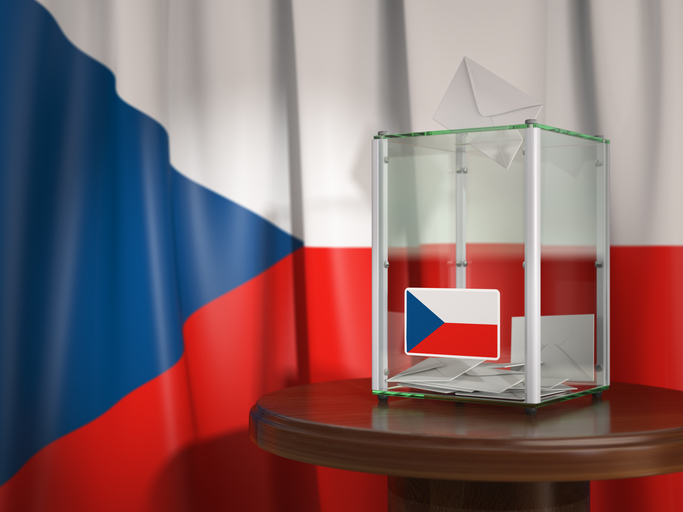
On October 3–4, 2025, the Czech Republic will elect a new parliament. Yet this is no ordinary vote: it comes at a time when Prague finds itself on the front line of hybrid threats that reach far beyond its borders. Over the past year, Russia has intensified its campaign of airspace violations, sabotage, submarine cable disruptions, cyberattacks, and wide-scale disinformation operations. These incidents underscore that safeguarding the Czech state is inseparable from Europe’s collective security.
Babiš and Pro-Russian Rhetoric
At the heart of the campaign stands Andrej Babiš, leader of the populist and Eurosceptic ANO movement. His past continues to cast a long shadow: documents revealed in the Pandora Papers and historical records connect him to cooperation with Czechoslovakia’s communist-era secret police, the StB, under the codename “Bureš.” While Czech lustration laws prohibit former collaborators from holding public office, gaps in archival evidence have allowed Babiš to sidestep restrictions. His premiership was also marked by allegations of misappropriating EU subsidies to benefit his conglomerate Agrofert—controversies that continue to shape public perception of his political orientation.
Security and Foreign Policy in Focus
Although Babiš has softened his rhetoric during the campaign, he has pledged to end Prague’s initiative to supply ammunition to Ukraine should he return to power. His ongoing scepticism toward the EU and NATO raises concerns over how Czech foreign policy might shift under his leadership. Analysts warn such positions could undermine European unity at a time of heightened Russian aggression.
Disinformation and Social Media Influence
Czech cybersecurity firm Online Risk Labs has uncovered a coordinated network of 300 TikTok accounts spreading pro-Russian narratives and amplifying right-wing parties including ANO, SPD, and Stačilo!. In the weeks leading up to the election, these accounts generated between five and nine million weekly views, outperforming the official communications of mainstream parties. In a country where one in four citizens uses TikTok, such campaigns represent a powerful tool for shaping public opinion.
Migration and Public Debate
Another central theme of the election is the status of Ukrainian refugees. Populist parties have sought to blame them for rising inflation and social burdens. Yet official data tells a different story: in the first half of 2025, Ukrainian refugees contributed 15 billion CZK in taxes and social payments, while state spending amounted to just 7.6 billion CZK. According to Labour Minister Marian Jurečka, since the third quarter of 2023, contributions have consistently outweighed costs.
Coalition Scenarios and Broader Implications
To secure a majority in the 200-seat parliament, ANO would need at least 101 seats—an outcome deemed unlikely by most polls. This means Babiš may be forced into coalition talks with parties such as SPD or Stačilo!, both of which favour distancing from EU and NATO commitments in favour of “pragmatic relations” with Russia, China, and Iran. By contrast, the current governing coalition Spolu has positioned itself firmly in favour of strong transatlantic ties and deeper European integration.
The result of the October elections will therefore not only determine Czechia’s domestic direction but will also act as a signal for Europe’s resilience against hybrid threats. Whether Prague remains a steadfast ally within EU and NATO, or shifts toward a more ambivalent stance, will carry lasting implications for Europe’s security architecture. Read more on WorldSignal