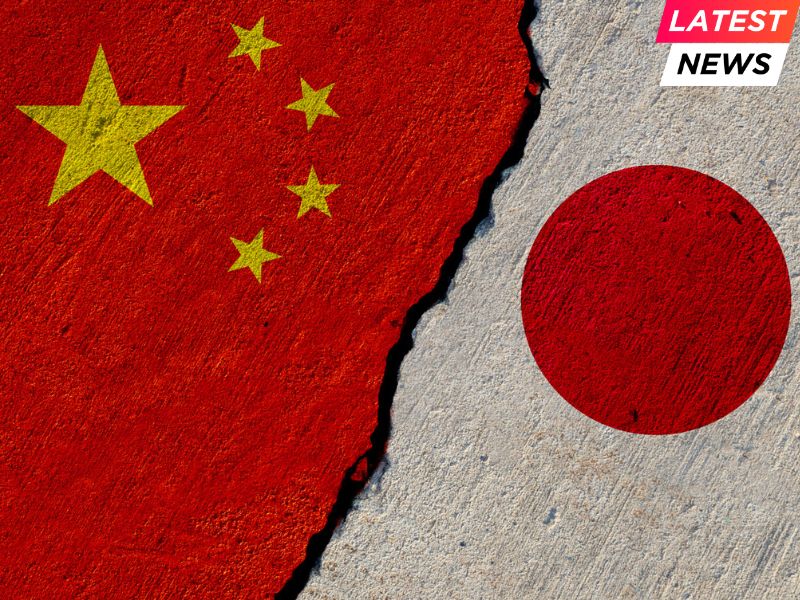
Japan’s already vulnerable economy faces fresh pressure after China urged its citizens to avoid travel to the country, a move that follows sharp diplomatic tensions triggered by Prime Minister Sanae Takaichi’s recent comments on Taiwan. The warning delivered on Friday sent tourism related Japanese stocks lower and raised concerns about long term fallout.
Mainland Chinese travelers have been the largest group of foreign visitors to Japan this year, totaling about 5.7 million, or nearly 23 percent of all inbound arrivals, according to the Japan National Tourism Organisation. Economists warn that a sharp drop in this flow could further strain an economy weakened by U.S. tariffs and a slump in property investment.
Takahide Kiuchi, executive economist at Nomura Research Institute, estimated that the tensions could wipe 1.79 trillion yen off Japan’s GDP over one year, a 0.29 percent hit. He noted that Chinese arrivals fell nearly 8 percent in 2013 during the dispute over the Senkaku, or Diaoyu, islands, and said a similar pattern could unfold again.
Travel spending remains a critical engine for growth. The Mastercard Economics Institute said inbound tourism added 0.4 percentage point to Japan’s 0.1 percent GDP expansion last year. Stefan Angrick, head of Japan at Moody’s Analytics, said that “a sharp drop in Chinese travel to Japan would sting.” He added that if Chinese visitor numbers were cut in half, GDP growth could slide by 0.2 percentage point. “Hardly catastrophic, but an unwelcome drag for an economy already struggling to find traction,” Angrick said.
Japan posted a 0.4 percent quarterly contraction from July to September, its first decline in six quarters. On an annualized basis, output shrank 1.8 percent.
The diplomatic rift began on Nov. 8 when Takaichi said a Chinese attempt to seize Taiwan by force would trigger a “survival-threatening situation” for Japan and potentially oblige Tokyo to aid U.S. warships in breaking a blockade. China’s consul general in Osaka, Xue Jian, fired back on X, saying “the dirty neck that sticks itself in must be cut off,” a comment later removed. Tokyo summoned China’s ambassador to protest the “extremely inappropriate” remark, and Beijing in turn summoned Japan’s envoy. China also issued travel advisories and stepped up maritime and drone activity near the Senkaku islands, prompting Japan to scramble fighter jets.
Chinese state media continued the criticism, with CCTV calling Takaichi’s remarks an “extremely egregious nature and impact” and a “gross interference in China’s internal affairs.” Beijing regards Taiwan as part of its territory and has not ruled out using force. Taiwan rejects Beijing’s claim and insists its people alone determine the island’s future.
Analysts say the tensions may persist for months. David Roche, president of Quantum Strategy, said the dispute will continue until Takaichi retreats from signaling possible Japanese military involvement over Taiwan. “This is a big red line for China,” he said, adding that Beijing sees the comments as a clear sign Japan may join efforts to deter China. He noted that even Washington maintains “strategic ambiguity” under the 1979 Taiwan Relations Act, which says the U.S. “would consider any effort to determine the future of Taiwan by other than peaceful means” a serious concern but does not commit to its defense.
Tobias Harris, founder of Japan Foresight, said neither government can easily back down. Taiwan’s importance to Beijing and Takaichi’s insistence that she did not shift policy leave little room for compromise. Harris said the Japanese leader may actually benefit politically from holding firm, with approval ratings at 69 percent as of Nov. 16, among the highest in modern Japanese history.
Experts warn the clash could evolve into a “THAAD-like episode,” referring to China’s retaliation against South Korea in 2016 after the deployment of the U.S. Terminal High Altitude Area Defense system. That episode included boycotts, blocked group tours, and a “soft ban” on K-pop, causing years of strain. Observers say the current dispute could inflict a similar chill on political ties, economic links, and people to people exchanges.
Related Readings: