


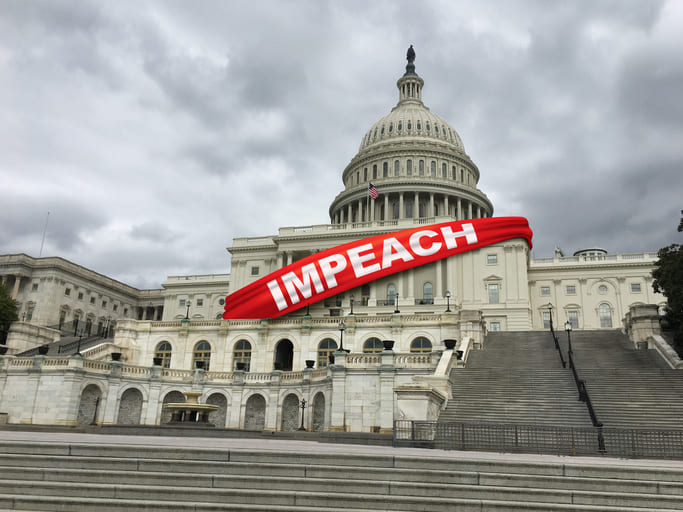
Recently, Dr Steinbock has responded to several journalistic questions regarding the impeachment issue of U.S. U.S. Defense Secretary Pete Hegseth. Here are some of the questions.
In November 2024, then-President-elect Trump named Hegseth as his nominee for his secretary of defense. In a Senate Committee on Armed Services hearing right before Trump’s second inauguration, Hegseth faced allegations of sexual misconduct, financial mismanagement, and excessive drinking. Yet, he was confirmed by the Senate that month, but only with the vice president, JD Vance, casting a tie-breaking vote.
Recently, Rep. Thomas Massie (R-Kentucky) introduced articles of impeachment alleging that the defense secretary “abused” his powers and “knowingly executed and implemented unlawful orders.”
On November 10, the U.S. House of Representatives voted 211 to 204 to block an impeachment push against Defense Secretary Pete Hegseth, effectively killing the resolution for now.
11 absent Democrats undermined Hegseth’s impeachment
Is this the end of the story?
No, the current Republican-controlled House sidelined the measure, but Democrats are set to take control of both chambers of Congress in January. Incoming Democratic leadership has signaled that Pentagon operations and Hegseth’s actions will face intense congressional investigations. So, impeachment or oversight efforts could be revisited next year.
Then again, if this not the end of the story, it should be the beginning of internal reflection in the Democratic Party.
What do you mean?
Rep. Thomas Massie was the sole Republican to vote against the referral, while several members—including 11 Democrats—missed the vote. Why did they miss it?
Every single one of the 203 Democrats who made it to the floor voted against the Republican motion to block the impeachment. Yet, several of the absent lawmakers blamed severe traffic (Reps. Melanie Stansbury, Jonathan Jackson, and Brittany Pettersen).
Since the final vote was tight (211-204), these absences effectively cost the party a push to advance the impeachment. They had a chance to protest an unconstitutional war, which has cost too many innocent lives, including those of fellow-Americans. So, bad traffic sounds like a lame excuse.
Interestingly, the absent Democrats included Nancy Pelosi, who was flying back to San Francisco to attend an annual Veterans Day event and accept an award. Presumably, it was more important to her than protesting the unconstitutional war and its victims. With the exception of progressive-leaning Jonathan Jackson, the list of the absent 11 largely comprised of mainstream, establishment Democrats, reliant on corporate and establishment PACs.
Perhaps bad traffic wasn’t the only motivation.
“Unwarranted, unconstitutional and illegal Iran war”
What do you think about Hegseth’s management style?
DS: Defense Secretary Hegseth’s term is likely to be seen as one of the most disastrous ones in the Pentagon’s history. The lack of personal integrity and even basic executive experience compounds an aggressive, ideologically overdriven campaign that has triggered a chilling effect, tanked military approval ratings and alienated America’s allies, partners and adversaries alike.
What kind of role did Hegseth play in Trump’s launching his war on Iran alongside Israelis?
DS: Hegseth made an unwarranted, unconstitutional and illegal war against Iran even worse, driving regular televised briefings to aggressively market the conflict to the public as a campaign of “maximum lethality” to disable Tehran’s nuclear ambitions. With his apocalyptic Christian-Zionist beliefs, he should have had absolutely no role in the Pentagon.
How successful has Hegseth been in his conduct against Iranians?
DS: While Hegseth claims “historic devastation” against Iranian capabilities, independent analysts view the grinding, nine-month conflict as a strategic disaster that has failed to control the Strait of Hormuz, depleted American munitions, and wreaked global economic havoc.
“Sympathy for war crimes and war criminals”
You have argued that Hegseth’s activities include war crimes. Why?
DS: Because he has contributed to or authorized actions amounting to war crimes center on several key military operations, institutional decisions, and formal accusations from lawmakers and military veterans.
First, Hegseth has a dark track record of past support and lobbying for service members accused or convicted of war crimes in past foreign conflicts whom he previously championed and lobbied to receive pardons. It is pattern of disregard for military justice and the moral authority of the laws of armed conflict.
Also, early in his tenure, Hegseth dismissed senior military lawyers (Judge Advocate General / JAG officers) for the Army, Navy, and Air Force, and reassigned hundreds of JAGs away from advising commanders on the laws of war to other duties. Sidelining or purging military legal advisors removes vital institutional checks designed to prevent war crimes and ensure battlefield compliance with international law. It set the stage for international crimes.
“Extrajudicial killings and waging war outside constitutional bounds”
These questionable activities also feature the war against Iran?
DS: Yes, during the U.S. military campaign in Iran, Hegseth was accused by members of Congress, like Representative Thomas Massie and Representative Seth Moulton, pushing an aggressive strategy that ignored laws and norms designed to minimize civilian casualties, including a deadly strike on an Iranian school.
Conducting strikes with high civilian death tolls without strict adherence to proportionality and distinction under the Geneva Conventions breaches the laws of armed conflict. This is why Massie introduced articles of impeachment charging Hegseth with extrajudicial killings and waging war outside constitutional bounds.
Then, there are the reports, including investigations published by the Washington Post, alleging that during military operations targeting suspected drug-smuggling vessels in the Caribbean and Eastern Pacific, a follow-on strike was ordered against survivors who were clinging to wreckage and no longer posed a threat.
Intentionally killing incapacitated or surviving combatants/non-combatants violates Customary International Humanitarian Law (specifically ICRC Rule 46 prohibiting the denial of “no quarter”) and constitutes extrajudicial murder or war crimes.
“Effort to politicize the military”
What do you think about his purge in the US military? Does it have a merit or it has been a bad idea from the very beginning?
DS: Hegseth’s military purge has no merit and it has been flawed from the beginning. He has forced out over two dozen decorated four-star commanders under the guise of removing “woke” leaders, in a disastrous attempt to turn the military into an at-will political playground while gutting combat readiness during active hostilities.
How does the military brass see his actions from the purge inside and his war on Iran outside?
DS: For months, Pentagon insiders have reported a toxic climate of “fear and paranoia.”Current and retired leaders warn that replacing irreplaceable warfighters with political “yes-men” has severely damaged strategic cohesion and compromised basic national security.
When ideology replaces military experience, unwarranted body bags follow.
“Wrong man, wrong place, wrong time”
Can Hegseth survive the US mid-term as the war on Iran sees no letup in the short-term?
DS: Following massive Republican midterm losses blamed largely on the deeply unpopular war, Hegseth faces imminent House articles of impeachment and behind-the-facade questioning from President Trump regarding his standing, leaving his political future in severe jeopardy.
Hegseth was precisely the wrong man in the wrong place in the wrong time.
This is an updated version of the original published by the Informed Comment (US) on November 11, 2026.
About the Author
 Dr Dan Steinbock is the founder of Difference Group and has served at the India, China and America Institute (US), Shanghai Institute for International Studies (China) and the EU Center (Singapore). For more, see https://www.differencegroup.net/ He is also the author of The Fall of Israel (2024), and The Obliteration Doctrine (2025)