This article investigates the role of education in the Global South, highlighting its economic, social, and political significance. Dr Kalim Siddiqui argues while higher education is promoted as a driver of growth, neoliberal policies and the expansion of foreign universities in the Global South often marginalize local needs, perpetuating neocolonial influence. The study contends that for strategic reforms that balance human capital development with social equity, cultural preservation, and local autonomy to address the ongoing education crisis.
I. Introduction
Education has long been recognized as one of the most powerful drivers of economic development, particularly in countries across the Global South (developing countries). Beyond its intrinsic value as a human right, education functions as a strategic public investment that enhances productivity, strengthens institutions, and promotes inclusive growth. By providing individuals with relevant knowledge, technical skills, and critical capacities, effective education systems can support economic diversification and enhance national competitiveness within an increasingly interconnected global economy.
This paper examines the contradictory role of education in the economic development of the Global South under the prevailing policy framework of neoliberal capitalism. While education is routinely celebrated as an engine of growth and poverty reduction, its restructuring under neoliberal imperatives has frequently exacerbated structural inequalities. International financial institutions, together with rich countries (Global North), have reconfigured educational systems to operate within market logics of privatization, competition, and economic efficiency.
The analysis proceeds in three stages. First, it critiques the theoretical foundations of neoliberal education policy, demonstrating how marketisation has distorted the traditional aims and public purpose of education. Second, it situates these transformations within the historical and structural conditions of the Global South, where colonial legacies, neocolonial dependencies, unsustainable debt, and corruption constrain the developmental potential of education and reinforce cycles of poverty (Siddiqui, 2024). Third, the paper argues that despite capital’s encroachment into this critical social institution, education remains a vital arena for resistance and for cultivating the critical consciousness necessary for democratic agency. The conclusion highlights the importance of strategic, equity-driven public investment in education as a pathway toward both economic transformation and emancipatory social change.
In many parts of the Global South, the developmental significance of education is especially pronounced. Countries continue to confront structural constraints rooted in colonial legacies, externally imposed economic policies, and persistent inequalities. Limited industrial capacity, high levels of unemployment, and unequal access to social services restrict opportunities for broad-based development. Education has the potential to mitigate these challenges by expanding human capital and enabling individuals to participate more effectively in both local and global labour markets. Empirical evidence repeatedly shows that higher levels of educational attainment correlate with faster economic growth, improved health outcomes, and greater resilience to economic shocks.
Yet this transformative potential is profoundly shaped—and often constrained—by the neoliberal restructuring of education systems over recent decades. Market-oriented reforms promoted by international financial institutions and imposed on developing countries have prioritized efficiency, privatization, and competition over equity and the public good. While access to education has expanded in some contexts, these reforms have frequently undermined quality, exacerbated disparities, and weakened the capacity of states to provide socially responsive education. Expanding enrolment without strengthening pedagogical standards, ensuring curricular relevance, or addressing the needs of marginalized communities yields uneven and often disappointing developmental outcomes.
Education also contributes to economic development through broader, indirect pathways. Higher levels of education tend to be associated with stronger civic participation, improved governance, and greater social cohesion—factors that create enabling environments for sustainable development. Moreover, education is supposed to promote innovation and entrepreneurship, providing a foundation for countries to transition away from dependence on primary commodities and toward knowledge-based economies. However, when educational provision is subordinated to market imperatives, its capacity to cultivate critical consciousness, support democratic engagement, and foster transformative social change is significantly diminished (Hickey and Hossain, 2019).
For countries in the Global South aspiring to long-term prosperity, reclaiming education as a public good rather than a market commodity is essential. Strategic, equity-driven public investment in robust education systems can unlock human potential, reduce poverty, and accelerate economic transformation. Such investments are also crucial for cultivating the analytical and critical capacities necessary for democratic participation and for challenging the structural constraints imposed by US imperialism.
Demographic transformations in the twenty-first century are reshaping the global political economy in ways that carry far-reaching consequences. Asia now accounts for roughly 60 percent of the world’s population, and its sustained economic expansion over recent decades has consolidated its position as a central driver of global growth. Africa is poised for an even more significant demographic ascent. By 2050, the continent is expected to hold around 25 percent of the world’s population, rising to nearly 40 percent by 2100. These demographic trends position Africa as a potential epicentre of global economic dynamism for the coming decades.
However, demographic potential alone does not automatically translate into development. The capacity of African states to convert demographic expansion into a genuine demographic dividend depends on the structural conditions under which their economies operate. Legacies of colonial extraction, unequal terms of trade, dependency on primary commodities, and externally imposed policy frameworks—particularly neoliberal reforms promoted by international financial institutions—have constrained the ability of many African countries to pursue long-term, state-led development strategies. As a result, Africa has not yet experienced the sustained, high-growth trajectories observed in East Asian economies (Siddiqui, 2022).
Nevertheless, the continent’s demographic momentum presents a historic opportunity for structural transformation—provided that African governments can reclaim policy space and invest strategically in human capital, technological capability, and institutional strength. Achieving growth rates in the range of 8–10 percent annually will require more than market-friendly reforms; it will require deliberate public investment in education systems, digital infrastructure, and state capacity. A young population can become a transformative force only when equipped with high-quality education, technical skills, and the critical capacities needed to participate meaningfully in a rapidly shifting global economy.
For African countries, the central task is not to imitate East Asian growth models uncritically, but to adapt their underlying principles to local histories, social conditions, and political realities. This includes strengthening public education, expanding vocational and technical training, and fostering digital literacy. It also entails enhancing institutional capacity, building resilient governance systems, and challenging the structural dependencies that continue to limit industrialization and diversification.
In an increasingly knowledge-driven global economy, education remains a decisive lever for development. Public investment in broad-based and inclusive education is essential not only for improving productivity and employment, but also for cultivating the critical consciousness necessary to challenge unequal global power relations and build more democratic, equitable futures. Africa’s demographic rise, if anchored in transformative educational and developmental strategies, has the potential not only to reshape the continent but to shift the centre of gravity in the global political economy.
The legacy of colonial rule in the Global South is characterized by a deliberate underdevelopment of human capital. While a limited number of educational institutions were established, but there was no consistent effort to foster mass literacy or develop modern technological skills among the indigenous populations or promote industrialisation or improve income and employment under colonial rule. The primary colonial objective was to structure the economies of the colonies around primary sector specialization, simultaneously utilizing them as captive markets for manufactured goods from the metropole. This policy is starkly illustrated by the case of India, where the literacy rate stood at a mere 7% at the time of independence in 1947 (Siddiqui, 2018).
In the post-independence era, many former colonies prioritized educational expansion through significant increases in public spending. This investment has been instrumental in fostering social mobility, particularly for individuals from impoverished backgrounds, and has contributed to economic development. The experience of East Asian countries, for instance, demonstrates how state-led investment in education can underpin rapid economic growth, especially within the manufacturing and export sectors (Amsden, 1989; Chang, 2006).
However, the process of decolonisation, while formally dismantling structures of direct political subjugation, has unfolded within a complex and often contradictory historical context. The subsequent ascendancy of global capitalism has effectively integrated post-colonial economies into a neoliberal international financial order (Siddiqui, 2025a). From this perspective, the transition is not a clean break from domination but a metamorphosis in its logic. Critics contend that this new system, by systematically displacing the dirigiste economic regimes of the early post-colonial era, has not merely revived but reconstituted the subjugation of petty producers. This process, they argue, constitutes a novel phase of global primitive accumulation, leading to the widespread dispossession of these populations from their means of subsistence and production.
The historical passage from formal colonialism to post-colonial independence did not inaugurate an era of genuine economic sovereignty for many nations. Instead, it marked a transition from an era of direct political extraction to one of indirect economic integration into a hegemonic global capitalist order. This integration, facilitated by structural adjustment programs, debt regimes, and neoliberal governance, has systematically dismantled the protective, state-centric economic models (dirigisme) that initially defined many post-colonial projects. The consequence is not merely unequal exchange but a pervasive process of dispossession—a contemporary manifestation of what Karl Marx termed “primitive accumulation”—that targets petty producers, undermining their autonomy and reproducing their subordinate position within the global economy.
The early post-colonial embrace of dirigiste economics—manifested in policies such as import-substitution industrialization (ISI), land reforms, and state-controlled economic boards—constituted a politically imperative project to dismantle the extractive structures of the colonial economy and assert genuine national sovereignty. This model sought to construct an autonomous national economy as a definitive buffer against the dependencies of the colonial past. However, these initiatives were often internally contradictory, oscillating between a rhetoric of populist protection and a practice of centralized, capital-intensive development. In nations like India and Brazil, dirigisme did establish, however fleetingly, an institutional framework that offered relative protection for petty commodity producers, including smallholder farmers and artisans. Yet, this protection was frequently incidental rather than fundamental, as the state’s primary allegiance increasingly lay with nurturing a domestic industrial bourgeoisie, thereby sowing the seeds for the very inequalities it purported to overcome.
The critique of global capitalism is not that it introduced inequality ex nihilo, but that it deliberately targeted and dismantled these protective structures. Institutions like the International Monetary Fund (IMF) and World Bank, through conditionalities, recast state intervention as inefficient “distortions,” compelling the privatization of commons, the removal of subsidies, and the opening of markets to global competition—a process that left petty producers acutely vulnerable.
II. Theoretical Framework
Classical economic theory posited the accumulation of physical and financial capital as the principal engine of economic growth. While Adam Smith (1776) acknowledged the significance of human capital and its organization, it was later economists who fully developed this concept.
Adam Smith’s An Inquiry into the Nature and Causes of the Wealth of Nations (1776) stands not merely as a treatise of economics but as a foundational argument for a new social and moral order emerging from the decline of mercantilism and feudalism. Its core analytical contribution lies in reconceptualizing national wealth not as a static hoard of specie (gold and silver), but as the dynamic flow of goods and services produced by a nation’s labour—the annual produce of industry. To explain the causes of this wealth, Smith constructed a powerful, interlocking theoretical framework centred on the division of labour, the mechanism of the market, and a minimalist theory of the state.
While operating on a different historical era, Smith’s framework provides a conceptual vocabulary for the transitions you previously described. The post-colonial dirigiste state can be seen as rejecting the Smithian “system of natural liberty” for strategic, sovereignty-building reasons. Conversely, the neoliberal turn of the late 20th century explicitly invoked Smithian ideas of market efficiency and the limitations of the state to justify dismantling those dirigiste structures, albeit often selectively ignoring Smith’s cautions about inequality and the power of concentrated capital. Thus, Adam Smith’s The Wealth of Nations remains a pivotal text, not as a fixed prescription, but as a perennial point of reference—and contention—in debates over the state, the market, and the nature of wealth itself.
The classical and neoclassical theories focus on physical capital accumulation was fundamentally challenged by mid-20th-century economists who placed human agency and knowledge at the center of development theory. Joseph Schumpeter, for instance, shifted the analytical lens from equilibrium to disruption, theorizing the innovative entrepreneur as the prime mover of “creative destruction” and economic evolution. This figure represented a nascent conceptualization of specialized human capital as the engine of growth. Building systematically on this foundation, Theodore Schultz (1972), in his seminal work, argued that in advanced economies, human resources—educated, skilled, and healthy populations—constitute a far more critical factor of production than natural resources or physical capital. Schultz’s formulation of human capital theory recast expenditures on education, training, and health not as mere consumption, but as strategic investments yielding high returns for both individuals and the aggregate economy.
Schultz (1972) established a seminal theoretical framework for human capital. He defined it as the stock of knowledge, skills, and competencies embodied in individuals, analogous to physical forms of capital like machinery. His core thesis was that education and training function as economic investments. These investments enhance worker productivity, which in turn leads to higher individual earnings and catalyses broader economic growth for society as a whole. The concept of human capital, as pioneered by Schultz, refers to the skills and capabilities inherent in workers, which are augmented through education and experience. This theoretical foundation has since been expanded to encompass other critical investments, such as health and on-the-job training.
This represents a paradigm shift. In classical models, labour was often a homogeneous, passive input subject to diminishing returns. Schultz, influenced by Schumpeter’s agent-centred dynamism, reconceived labour as a heterogeneous, malleable asset that could be improved through investment. This provided a powerful, optimistic theory for postwar development, suggesting that poverty was not a fixed condition but a remediable deficit of human capital.
Neoclassical economic theory emphasised that differences in labour, skills, and technical progress help explain the varying rates of economic growth and development across countries. During the 1980s and 1990s, the emergence of endogenous growth theory further highlighted the role of innovation and education as key drivers of sustained economic development. (Siddiqui, 2025b).
The ascendance of human capital theory in the mid-20th century was not ideologically neutral. It emerged in the context of the Cold War and decolonization, offering a technocratic, apolitical pathway to modernity that contrasted with both central planning and radical dependency theories. By framing development as a question of individual and state investment in skills, it diverted focus from contentious issues of international structural inequality, terms of trade, and the legacies of colonial resource extraction—themes central to your earlier discussion.
Therefore, from this theoretical perspective, public investment in human capital is not merely consumption but a strategic investment with demonstrable returns. Such investment enhances the skill base and productivity of the labour force, generating a dual benefit: it advances individual economic prospects while simultaneously stimulating aggregate economic performance.
Higher education has also become increasingly global in scope. The benefits of globalisation are considerable: knowledge production is becoming more internationalised, and the share of research produced through cross-border collaboration has risen significantly. Yet globalisation can also exacerbate inequalities, creating both winners and losers. For some, it represents progress; for others, it is associated with disadvantage and exclusion (Siddiqui, 2014).
The commodification of higher education carries two major implications. First, graduates’ risk being treated as marketable products, often with diminished social awareness—an effect that is particularly pronounced in “emerging” capitalist economies. Second, commodification extends to attempts to absorb and neutralise remaining forms of intellectual resistance to capitalism, thereby weakening their critical capacity.
It is analytically insufficient to view this as a mere revival of colonial subjugation. The current phase is a reconstitution under different juridical and economic terms. Colonialism operated through explicit racial hierarchies and political sovereignty. The new phase operates through the ostensibly neutral and universal logics of the market, creditworthiness, and comparative advantage—which nonetheless produce profoundly uneven outcomes that often map onto former colonial geographies.
This framing draws on David Harvey’s concept of “accumulation by dispossession” and post-colonial scholars like Partha Chatterjee, who highlight how global capital interacts with, and often reinforces, localized structures of power and difference. The agency of the post-colonial state is transformed from a potential guardian of development into a “managerial state” that enforces the rules of the global economic order upon its own populace.
Therefore, the trajectory of many post-colonial societies reveals a paradoxical dialectic: political decolonization created the conditions for a project of national economic defence, which was itself subsequently dismantled by the very global system into which these nations were forcibly integrated. The widespread dispossession of petty producers is not an unfortunate side-effect but a central outcome of this integration (Siddiqui, 2015). Analysing this process through the lens of ongoing primitive accumulation provides a critical framework for understanding continuity and change in the hierarchies of the global economy, challenging narratives of linear progress from colonialism to freedom. It underscores that for many, economic decolonization remains an unfinished, and in many ways besieged, project (Siddiqui, 2025b).
III. Neoliberalism and Political-Economy Dimensions
Since the 1980s, rising foreign debt, economic mismanagement, and widening inequality have deepened economic crises across many countries in the Global South. In response, governments increasingly turned to international financial institutions for loans to finance expanding budget and trade deficits (Siddiqui, 2025c). Institutions such as the IMF and the World Bank have played a central role in promoting neoliberal principles through structural adjustment programmes and loan conditionalities. A notable example is Ghana in 2008, when the IMF advised the government to freeze public-sector appointments, including university positions, as part of an effort to contain the wage bill. Such directives directly constrain a nation’s ability to strengthen its educational systems and state capacity, prioritising short-term fiscal discipline over long-term human capital development (Hickey and Hossain, 2019).
Ghana’s adherence to these conditionalities is revealing. In 2015, the country secured an Extended Credit Facility of US$918 million from the IMF, contingent upon “structural reforms to strengthen public finances and fiscal discipline,” including measures to control the public-sector payroll and streamline the civil service (IMF, 2015). While institutions like the IMF and World Bank frame these conditions as necessary to stimulate economic development, critics argue that they can produce the opposite effect—restricting growth and widening the inequality gap between developed and developing nations. This dynamic reinforces a cycle of dependency, evidenced by Ghana’s repeated returns to the IMF to stabilise its weakened public finances.
Human capital theory provides an important lens for analysing the educational experiences of Scheduled Caste (SC) students, also known as Dalits, in India, particularly regarding their attainment, retention, and achievement in both private and public higher education institutions under neoliberal reforms. This framework links classical economic understandings of wealth accumulation to the functioning of market-oriented economies, situating the experiences of marginalised students within broader structural transformations (Siddiqui, 2018).
Within the context of global neoliberalism, this research engages with debates on economic growth and sectoral development, with particular attention to the social sector. Despite aggregate national economic progress, SCs continue to display disproportionately low literacy rates (Census, 2011). The structural changes brought about by neo-liberalisation—and the challenges arising from them—have negatively affected SCs’ access to education.
The development of marginalised communities depends on inclusive policies that promote upward mobility and integrate vulnerable groups into social and economic structures. Educational inclusion remains a central barrier, with high repetition rates in secondary schooling—often driven by low academic performance—leading to increased household and public expenditure. These pressures compel countries such as India to weigh equity against efficiency by adopting cost-benefit strategies within tight resource constraints (UNESCO, 2005).
Since the 1990s, neoliberal reforms have contributed to the neglect of public education, while private provision—often inaccessible to low-income households—has expanded rapidly (Siddiqui, 2012a). In India and Nigeria, nearly 80 per cent of children now attend privately managed primary schools. From a Marxist perspective, neoliberal education policies that prioritise marketisation, privatisation, and global competitiveness reinforce class inequality and social reproduction. Critics argue that these policies commodify knowledge, weaken public education, and promote individualistic narratives that obscure structural disadvantages.
Human capital is a critical driver of economic growth, as skilled labour underpins technological advancement and productivity. In this context, education enhances both human resources and the broader knowledge economy. Although India’s economic growth has accelerated since the 1990s—with per capita GDP rising at over 6 per cent during the past decade—public investment in education has remained comparatively low. Expenditure increased only marginally from 2.8 per cent of GDP in 2014–2015 to 3.5 per cent in 2020–2021 (Economic Survey, 2021). The same Economic Survey highlights that rapid economic growth has not been accompanied by inclusive development; rising inequality has produced adverse outcomes in education, health, and life expectancy.
These national trends intersect with India’s hierarchical social structure, in which Scheduled Castes occupy the lowest socio-economic strata. Persistent caste-based discrimination has constrained their mobility and entrenched deprivation. In India, Scheduled Castes continue to experience disproportionately high poverty levels—34 per cent remain below the poverty line compared with 9 per cent among higher castes—and they hold only 7 per cent of national wealth, far below their population share. These conditions underscore the continued barriers faced by marginalised communities and the limitations of neoliberal educational and economic reforms in addressing structural inequality.
IV. Role of Education in the Modernisation of East Asian Economies
Japan’s Meiji Restoration of 1868 marked a decisive shift toward rapid modernisation, driven by the recognition that escaping economic backwardness required industrialisation and a strong developmental state. Central to this strategy was substantial public investment in education, which expanded the supply of skilled labour and supported technological and industrial advancement. This approach regained urgency after World War II, as Japan once again relied on state-led development and educational expansion to rebuild its economy and accelerate GDP growth (Siddiqui, 2016a).
Japan’s model subsequently influenced the “East Asian Tigers”—South Korea, Taiwan, Hong Kong, and Singapore—and later China. East Asia’s development trajectory reflects a structured continuum: Japan’s modernisation in the late nineteenth century, followed by the high-growth strategies of the Tigers, and eventually China’s post-1978 reforms. China adapted lessons from Japan and Singapore to build a globally competitive, technology-driven economy within a remarkably short period (Siddiqui, 2021a).
Across East Asia—including Japan, South Korea, Taiwan, Hong Kong, Singapore, Thailand, Malaysia, and Indonesia—rapid economic transformation has often been described as the “East Asian Miracle.” (Siddiqui, 2016b) Between 1965 and 1990, real per capita GDP in these economies grew at twice the rate of any other regional grouping. Even more notable was the simultaneous reduction of poverty and income inequality. While their success is frequently attributed to sound economic policies, scholars argue that these policies were effective largely because political leaders made them credible to both businesses and citizens, thereby sustaining broad social commitment to long-term development (Amsden, 1989; Chang, 2006).
The experiences of East Asian developmental states, including China, South Korea, and Singapore, illustrate the power of coordinated state action, long-term planning, and investment in human capital (Siddiqui, 2012b). These countries successfully leveraged their demographic structures by building robust education systems, nurturing technological innovation, and protecting domestic industries until they became globally competitive. Their trajectories challenge neoliberal orthodoxies that prescribe austerity, privatization, and deregulation for the Global South.
By contrast, India’s recent trajectory has been shaped by a mix of state planning legacies and neoliberal reform since the 1990s. While growth accelerated, public investment in education remained relatively low, public institutions were weakened through resource constraints and market-based reforms, and private provision expanded unevenly—often excluding the poorest. At the same time, deep social hierarchies (e.g., caste) and entrenched inequalities have limited the ability of marginalised groups to convert aggregate growth into upward mobility.
Comparing the two experiences highlights several actionable lessons for India, without glossing over important contextual differences. First, sustained public investment in universal, high-quality education—especially at secondary and tertiary levels—is a precondition for broad-based human capital development. Second, developmental credibility matters: predictable industrial and education policies, combined with transparent governance, encourage firms to invest in skills and long-term projects. Third, policy design must explicitly address inclusion: investments must be paired with measures that remove social and economic barriers facing disadvantaged groups (scholarships, targeted recruitment, affirmative action, and local capacity building). Fourth, coordination between education, industry, and labour markets is essential to ensure that skills development translates into employment and productivity gains.
However, this requires the careful adaptation of East Asian economic policies. India’s heterogeneous labour markets, and the legacy of colonial-era institutions mean that centralised command approaches are neither politically nor administratively identical to East Asian models. Moreover, social redistribution—land reform, rural development, and anti-discrimination enforcement—played different roles in various East Asian cases and would need amplification in India’s context to ensure inclusive outcomes.
In sum, India can draw on the East Asian example by reasserting public leadership in education and industrial coordination while tailoring policies to its democratic, plural, and socially stratified context. Prioritising credible, long-run investments in human capital that are explicitly pro-poor and pro-marginalised offers the most direct path to making economic growth more inclusive and sustainable.
In contrast to the mainstream economists’ view—which advocates for a limited state role focused primarily on education and health—critics argue that markets consistently fail to channel investment into the highest-growth industries. This latter group, including scholars like Alice Amsden (1989), contends that East Asian governments actively remedied this failure. They did so by deliberately “getting the prices wrong” to promote strategic sectors, prioritizing long-term technological learning and dynamic gains over short-term static efficiency.
Amsden’s model (1989) of late industrialization explains this approach. She argues that for latecomers like South Korea and Taiwan, rapid growth was achieved not through market liberalization but through strategic state intervention. Core elements of this state-led development included controlling rent-seeking, directing credit to priority industries, and fostering a disciplined private sector. This model of “governing the market” (Wade, 1990) involved diverse and flexible policy mixes, challenging neoclassical prescriptions of minimal state involvement. While this research has successfully demonstrated the extensive scope of state action in East Asia—showing it diverges fundamentally from the market-led model—the pivotal question of whether such interventions per se accelerated growth remains a subject of debate (Wade, 1990).
V. Public Spending in Education
Education is a fundamental driver of societal progress, underpinning both individual opportunity and broad economic advancement. It enhances workforce quality, boosts national competitiveness, and is strongly associated with higher levels of economic prosperity. For countries with large youth populations, investing strategically in education—especially higher education—is crucial for rapid economic growth, increased productivity, and future-proofing their economies. Ultimately, an educated society lays the foundation for sustainable, intergenerational development, shaping the growth, opportunities, and potential of future generations (Hickey and Hossain, 2019).
Education is universally recognized as a fundamental public good and a primary driver of sustainable development. Economist Joseph Stiglitz frames it as critical to closing the global “knowledge gap” and fostering a “learning society” essential for 21st-century economic growth. He argues that due to inherent market failures, robust government intervention is required to ensure equitable access and prevent the intergenerational transmission of advantage and disadvantage. This perspective aligns with the United Nations’ Sustainable Development Goal 4 (SDG 4), which aims to ensure inclusive, equitable quality education and promote lifelong learning for all by 2030 (United Nations, 2025).
Higher education spending in lower-income countries is a fraction of that in wealthy nations, with annual expenditure at about $55 per learner compared to $8,532 in high-income countries. This disparity stems from constrained government budgets, high sovereign debt, and a heavy reliance on household contributions—a burden that falls disproportionately on the poor. To meet educational goals, these countries require not only increased public investment but also greater efficiency in using existing funds, as higher spending alone does not guarantee improved learning outcomes (Siddiqui, 2014).
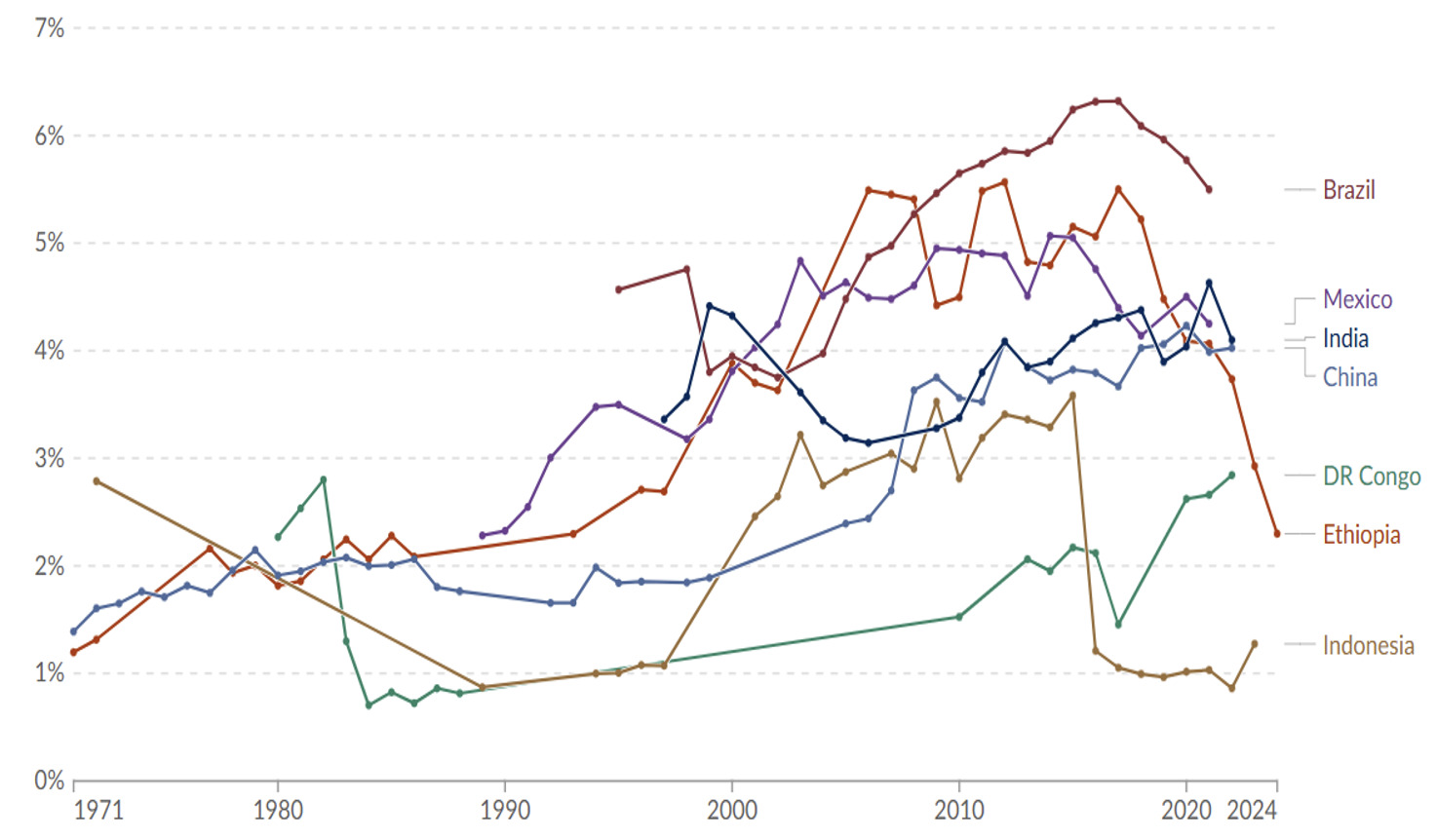
A comparative look at education investment reveals stark contrasts in both GDP share and per capita spending. Leading in GDP commitment, Singapore devoted 13.06% to education in 2021, significantly more than South Korea (5.2%) and Taiwan (~5%), which directed a third of its budget to higher education. China reported 4.13% of GDP in 2024 (See Figure 1). The gap widens further on a per capita basis: from just $254 in low-income economies (2019–2020) to over $6,000 in Europe and nearly $12,000 in North America (UNESCO, 2025).
Figure 1: Total Annual Government Spending on Education as a Share of GDP (%).
Despite this consensus and measurable progress—including rising enrolment, with 109 million more children and youth in school since 2015, and improving global completion rates—the world faces a profound and urgent learning crisis. A 2022 UN report indicates that in low- and middle-income countries, an estimated 70% of 10-year-olds cannot read a simple text, a sharp decline from 57% pre-pandemic. This crisis is fuelled by systemic challenges: chronic underfunding, deteriorating learning outcomes, and inadequate infrastructure, such as a lack of electricity and internet access.
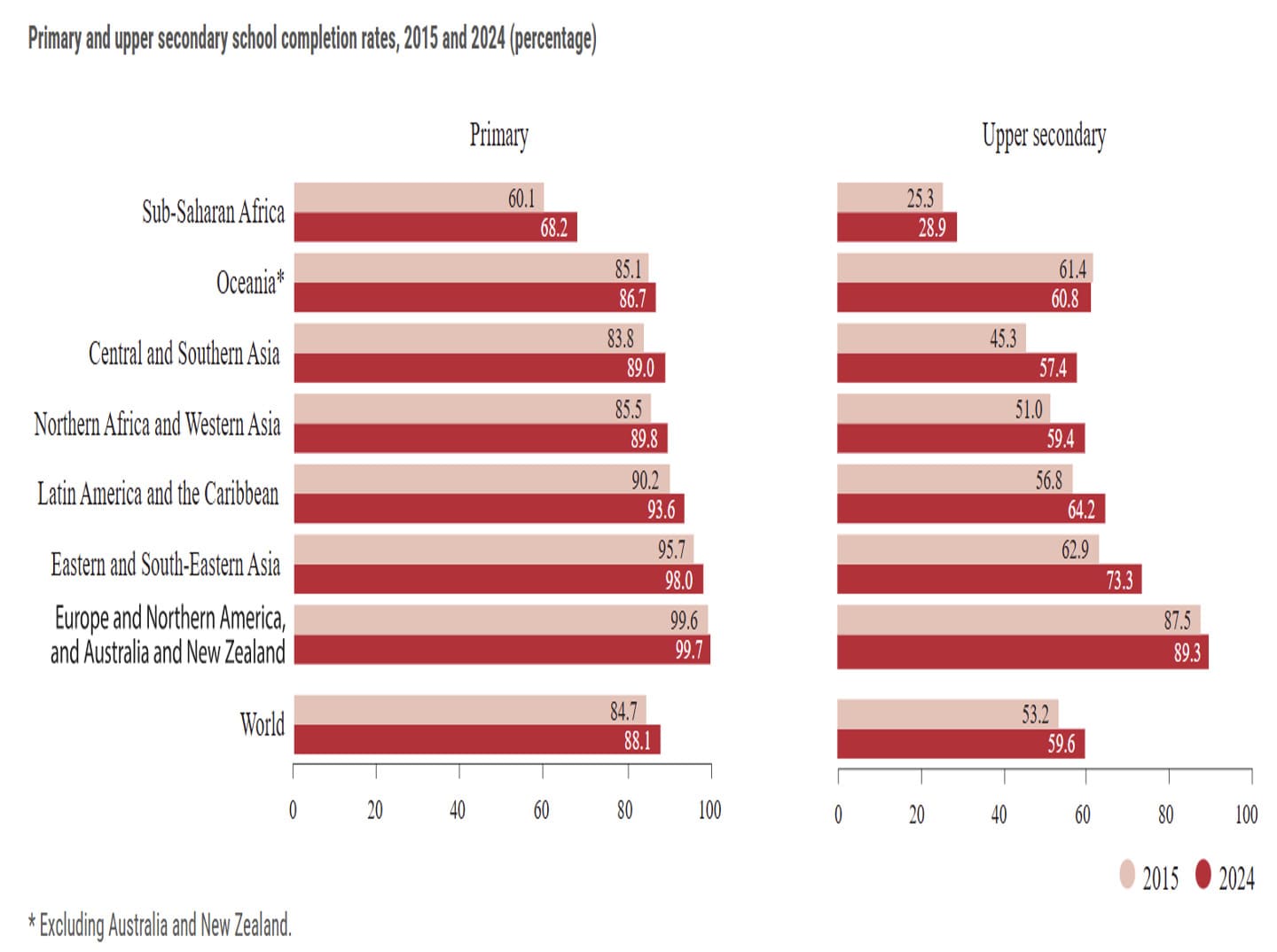
Progress has slowed considerably in many low-income countries since 2000s. The annual increase in upper secondary completion rates fell from 1.3 percentage points (2010–2015) to 0.8 points (2015–2024) (see Figure 2). Since 2015, the out-of-school population has grown by 3 per cent, reaching 272 million children and youth globally. Disparities remain severe: 36 per cent of school-aged children in low-income countries are out of school—compared to only 3 per cent in high-income countries—with over half residing in sub-Saharan Africa.
Learning outcomes are also a major concern. In 2019, only 58 per cent of primary students achieved minimum proficiency in reading and 44 per cent in mathematics. Between 2018 and 2022, proficiency at the end of lower secondary education declined across 81 upper-middle- and high-income countries—by 15 percentage points in mathematics and 10 points in reading.
Progress in early childhood education remains limited and uneven. Crucial for cognitive and social development, global participation has stalled at around 50 per cent since 2015, with just 40 per cent of children aged 3–5 enrolled in pre-primary education. Sub-Saharan Africa (27 per cent) and Northern Africa and Western Asia (30 per cent) trail well behind the global average. Data from 84 countries show two-thirds of children aged 24–59 months are developmentally on track, with no gender gap, but regional gaps are stark—from 54 per cent in sub-Saharan Africa to 83 per cent in Central and South-Eastern Asia.
Enrolment trends are mixed. While participation for children under age 3 has risen notably in Africa over the past decade, global enrolment one year before primary school has stagnated at about 75 per cent since 2015. Sub-Saharan Africa (48.6 per cent) and Northern Africa and Western Asia (51.4 per cent) continue to lag. Only one-third of countries make pre-primary education compulsory, and just half guarantee at least one year of free pre-primary education. Without these provisions, access remains financially out of reach for many low-income families, especially in regions where private providers dominate.
Figure 2: Primary and Secondary School Completion Rates, 2015 and 2024 (%).
Over the past two decades, global literacy rates have shown marked improvement, characterized by enhanced reading and writing competencies and a narrowing gender gap. Despite this progress, significant challenges persist: as of 2024, an estimated 754 million adults remain illiterate, with women comprising 63 percent of this total.
Youth literacy rates increased from 91 percent in 2014 to 93 percent in 2024. Notable regional advances were observed in Central and Southern Asia, where rates rose from 87 to 94 percent, and in sub-Saharan Africa, which saw an increase from 75 to 79 percent. In contrast, Oceania (excluding Australia and New Zealand) registered minimal change, remaining at 73 percent.
Similarly, adult literacy improved globally from 85 to 88 percent over the same period, led again by Central and Southern Asia, where rates climbed from 70 to 77 percent. Nevertheless, adult literacy remains notably low in Oceania (67 percent) and sub-Saharan Africa (69 percent). Europe and Northern America continue to exhibit the highest literacy levels, with youth literacy at 99 percent and adult literacy exceeding 98 percent.
Youth participation in organized learning has risen by more than 10 percentage points since 2000, with Central and Southern Asia nearly doubling its rate during this period. However, momentum has slowed considerably since 2015, with global gains amounting to less than three percentage points. Adult participation, conversely, has remained stagnant since 2000. Disparities also persist by gender: among youth, female participation rates continue to trail those of males by approximately two percentage points at the global level.
Simply increasing education spending is insufficient; funding must be deployed efficiently and equitably to improve learning outcomes. This is especially critical in low- and middle-income countries, where high rates of learning poverty—children unable to read and understand a simple text—highlight a pressing need for reform. To address this, governments must expand education budgets to a level that enables effective service delivery. Resources should be allocated more efficiently and with a strong equity focus to ensure funding reaches all students, particularly the most vulnerable.
In the Global South, organised learning—encompassing both formal education and non-formal programs such as adult literacy courses and work-based training—engaged approximately one in six individuals aged 15–64 worldwide in 2024. Participation, however, is heavily concentrated among younger age cohorts. While over half of youth aged 15–24 took part in learning activities globally—ranging from 45 percent in sub-Saharan Africa to 64 percent in Europe and Northern America—involvement declines sharply among older adults. Only 3 percent of those aged 25–54 and a mere 1 percent of those aged 55–64 reported recent engagement in education or training.
Therefore, the path forward requires a dual strategy. First, as both Stiglitz and UN study emphasize, national governments must significantly increase and strategically direct public investment. Funding must target not only expansion but also quality, focusing on early childhood programs, teacher training, and digital transformation. Second, resources must be deployed with a relentless focus on equity and efficiency to ensure they reach the most vulnerable learners and translate into real cognitive, social, and emotional development. Schools must be supported as nurturing environments that foster holistic growth. Without this committed, intelligent investment in human capital, the goals of equitable prosperity and sustainable development will remain out of reach.
In an increasingly globalised world, the removal of trade barriers and the resulting intensification of competition have heightened the importance of a well-educated and highly skilled workforce. Scholars have shown renewed interest in the role of human capital in driving economic growth. Numerous studies emphasise the contribution of education—particularly higher education—to economic performance and export capacity. Higher education is viewed as a critical factor because it generates a labour force capable of producing high-quality goods, adopting and applying new technologies more effectively, and enhancing productivity, all of which positively influence overall economic development (Siddiqui, 2014).
Human capital theory emerged as a dominant rationale for investment in education, often overshadowing other non-economic benefits such as social equality, justice, and democratic participation, which became largely irrelevant for policymakers. When the interests of policymakers, policy analysts, and elites involved in the educational sector at the macro level aligned with neoliberal values, those at the micro level—such as parents and teachers—began to embrace notions of individualism, marketisation, and competition.
There is broad consensus on the economic importance of education. Governments and international institutions have promoted the opening of national higher education sectors to foreign university campuses, particularly in developing countries, positioning these institutions alongside publicly funded universities. International universities have thus gained prominence while reducing the financial burden on the state.
However, the establishment of foreign university branches in developing countries carries significant implications. For instance, universities operating in India often deliver curricula designed by institutions in the Global North, rather than content rooted in the heritage, policy priorities, or socio-cultural realities of the host country. This approach prioritises the interests of metropolitan powers, effectively advancing a form of neocolonial influence. Such initiatives reinforce the social, political, and ideological dominance of the Global North, undermine local autonomy, and risk weakening the ongoing struggle for independence and self-determination in the Global South.
The education crisis in the Global South is multifaceted. Public investment remains inadequate, access to quality education is uneven, and curricula frequently reflect external priorities rather than local realities. The education crisis in the Global South is not merely one of access or funding—it is deeply structural. Curricula frequently reflect the priorities of the Global North rather than the histories, policies, and aspirations of host countries. The proliferation of foreign university branches, under the guise of capacity building, risks entrenching neocolonial influence, reinforcing metropolitan political and ideological dominance, and eroding local autonomy. As a result, education becomes a tool for perpetuating external interests rather than empowering communities in the Global South.
Moreover, economists typically assess the impact of education on growth using various indicators, including public expenditure on education (especially per-student spending at the tertiary level), enrolment rates at primary, secondary, and tertiary levels, and investments aimed at developing a skilled and educated workforce. Economic growth is also shaped by a country’s capacity to attract skilled labour from abroad and participate in the international diffusion of knowledge.
Within the classical Marxist framework, society is divided into two classes: capitalists, who own capital, save, invest, and hire workers for profit; and workers, who supply labour, earn wages, and do not save (Dutt and Veneziani, 2019). In this study, we extend the model by incorporating human capital accumulation through education. We assume the existence of three classes: capitalists, low-skilled workers, and high-skilled workers. Both categories of workers possess secondary education, but only high-skilled workers have completed higher education and acquired advanced skills. The two groups of workers are assumed to be non-substitutable. Furthermore, we posit that high-skilled workers, like capitalists, engage in saving and capital investment.
VI. Conclusion
The historical project of decolonization has proven profoundly complex, characterized by a series of incomplete transitions and resurgent hierarchies. While formal political sovereignty was achieved, the structures of knowledge and economy often remained tethered to colonial and neocolonial designs. Notably, the colonial education system was seldom radically dismantled; instead, it was frequently adapted to serve the new nation-state, often reproducing social hierarchies and epistemic frameworks aligned with the former metropole. Concurrently, the ascendancy of a neoliberal global capitalist order systematically integrated post-colonial economies into a new international financial regime.
Critics compellingly argue that this dual process—the persistence of a colonial educational logic and the economic integration into global capitalism—has had a doubly dispossessive effect. By displacing the interventionist, developmentalist (dirigiste) regimes of the early post-colonial era, the current system has not only revived forms of subjugation for petty producers but has also inaugurated a novel and expansive phase of primitive accumulation. This new phase operates through financialization, land commodification, and precarious integration into global value chains, leading to the widespread dispossession of these populations from their means of livelihood, thus perpetuating their subordination within a reconfigured, yet persistently unequal, global hierarchy.
Education is a fundamental driver of economic development, social justice, and democratic empowerment. Yet in the Global South, its transformative potential is increasingly compromised by systemic inequities, neoliberal agendas, and the expanding influence of foreign educational institutions. While higher education and skill development are essential for fostering competitive workforces and economic growth, current policies often prioritize market efficiency and global integration over local needs, social equity, and cultural preservation.
A central tenet of contemporary development strategy posits that state-prioritized investment in human capital—particularly through universal primary and secondary education—is essential for fostering social mobility, expanding job opportunities, and achieving sustainable economic growth. Human capital, defined as the aggregate stock of knowledge, skills, and health embodied in a workforce, is theorized to be a primary driver of modern economic competitiveness. Countries with robust human capital foundations are presumed to cultivate more innovative and adaptive workforces, thereby enhancing national productivity and the capacity to produce higher-value goods for global markets. Education is thus framed not merely as a social good, but as a fundamental economic input that equips individuals to participate productively in an increasingly knowledge-based global economy.
However, this formulation, while logically compelling, presents a critical and often overlooked dialectic: human capital accumulation is a necessary but insufficient condition for equitable development. Its transformative potential is contingent upon a complementary structure of economic opportunity. Education can equip individuals with capabilities, but it does not, in itself, generate the demand for those capabilities. Therefore, the long-term economic returns on educational investment—and its promised social mobility—are wholly dependent on the concurrent and sustained expansion of productive, skill-absorbing employment. This expansion must be supported by parallel investments in research and development, industrial policy, entrepreneurial ecosystems, (Siddiqui, 2021b) and infrastructure, all of which stimulate job creation—with primacy given to the growth of domestic enterprises, while strategic foreign direct investment and innovation-driven sectors also play important roles.
In short, education should promote national economic sovereignty, as this is crucial for strengthening domestic industries and supporting the broader interests of the national economy. Addressing the education crisis in the Global South requires a decisive and holistic approach: states must invest strategically in human capital, ensure equitable access to education at all levels, and reclaim curricular and institutional autonomy. Education must be reoriented to serve not only economic objectives but also social justice, cultural integrity, and political self-determination. Without such reforms, the promise of education in the Global South will remain unrealized, and the region’s developmental and emancipatory potential will continue to be subordinated to external interests.
About the Author
 Dr. Kalim Siddiqui is an economist specializing in International Political Economy, Development Economics, Trade and Economic Policy. Since 1989, he has been teaching economics at various universities in Norway and the UK. Dr. Siddiqui’s research interests encompass a wide range of topics, including political economy, international trade, and economic history, South Asia, and emerging economies. He has presented papers at international conferences across numerous countries, reflecting his global engagement in the field. His scholarly pursuits span six broad domains: Political Economy, Development Economics, Economic History, Economic Policy, Globalization, and International Trade. Dr. Siddiqui has made significant contributions to research in areas such as trade policy, globalization, and political economy. His work has been published in chapters of edited books and articles published in peer-reviewed journals. For inquiries, Dr. Siddiqui can be reached at: [email protected]
References
- Amsden, A. (1989) Asia’s Next Giant: South Korea and Late Industrialization, London: Oxford University Press.
- Chang, Ha-Joon (2006) The East Asian Development Experience: The Miracle, the Crisis and the Future, London: Zed Books.
- Dutt, A.K. and Veneziani, R. (2019) “Education and ‘Human capitalists’ in a classical-Marxian model of growth and distribution” Cambridge Journal of Economics, 43, 481-506.
- Hickey, S. and Hossain, N. (edit.) (2019) The Politics of Education in Developing Countries, Oxford: Oxford University Press.
- Siddiqui, K. (2025a) “Decolonisation and Economic Sovereignty: The Bandung Conference and the Making of the Global South” World Financial Review, June.
- Siddiqui, K. (2025b) “Ideas, Policies, and Power: A Political Economy Perspective on Development in the Global South” World Financial Review, November.
- Siddiqui, K. (2025c) “International Financial Institutions as Instruments of Western Hegemony Debt, Austerity, and Exploitation in the Global South” World Financial Review, August.
- Siddiqui, K. (2024) “Neo-colonialism: An analysis of international factors on the development of the Global South” World Financial Review, December/January.
- Siddiqui, K. (2022) “Comparing the Economic Performance of East Asian and Latin American Countries: The Role of Agricultural Reforms in the Economic Transformation” World Financial Review, July/August.
- Siddiqui, K. (2021a) “Can the 21st Century be an Asian Century?” Asian Profile, 49(1):1 – 19, March.
- Siddiqui, K. (2021b) “The Political Economy of Industrial Policy” World Financial Review, May/June.
- Siddiqui, K. (2018) “The Political Economy of India’s Post-Planning Economic Reform: A Critical Review” World Review of Political Economy 9(2):235-264.
- Siddiqui, K. (2016a) “Will the Growth of the BRICs Cause a Shift in the Global Balance of Economic Power in the 21st Century?” International Journal of Political Economy 45(4):315 – 338.
- Siddiqui, K. (2016b) “A Study of Singapore as a Developmental State” in (Edit) Young-Chan Kim, Chinese Global Production Networks in ASEAN, pp.157-188, London: Springer.
- Siddiqui, K. (2015) “Economic Policy: State versus Market Controversy” (Edit) Adam P. Balcerzak, Contemporary Issues in Economy: Market or Government, pp.39-63, Torun: Poland
- Siddiqui, K. (2014) “Higher Education in the Era of Globalisation”, International Journal of Humanities and Social Science 3(2):9 – 32.
- Siddiqui, K. (2012a) “Developing Countries’ Experience with Neoliberalism and Globalisation”, Research in Applied Economics 4(4): 2 – 37, December.
- Siddiqui, K. (2012b) “Malaysia’s Socio-Economic Transformation in Historical Perspective”, International Journal of Business and General Management, 1(2):1 – 50.
- Wade, R. (1990) Governing the Market: Economic Theory and the Role of Government in East Asian Industrialization, US: Princeton University Press.
- United Nations (UN) (2025) Ensure inclusive and equitable quality education and promote lifelong learning opportunities for all, New York: UN’s Department of Economic and Social Affairs.