Al-Biruni (973–1048) exemplified empirical rigor and intellectual versatility across astronomy, mathematics, cultures and comparative history. This study, by Dr. Kalim Siddiqui, analyses Kitab al-Hind, where Al-Biruni applied systematic observation, cross-cultural comparison, and reasoned analysis to Indian society. It concludes that he stands as a singular figure in the history of knowledge, integrating scientific method with ethical scholarship and offering a valuable lens for interpreting both ancient India and modern historical claims.
I. Introduction
Abu Rayhan Al-Biruni (973–1048 CE), a distinguished Central Asian polymath, made significant contributions to fields as diverse as philosophy, mathematics, astronomy, and ethnography. Born in Kath, Khwarazm (present-day Uzbekistan), his life was shaped by the conquests of Sultan Mahmud of Ghazni. Following Mahmud’s invasion of Khwarazm in 1017, the forty-four-year-old Al-Biruni was taken to the Sultan’s capital in Ghazni (present-day Afghanistan). His association with Sultan Mahmud’s court provided the opportunity to travel to the Indian subcontinent, where he lived for thirteen years (1017–1030 CE). This extended residence allowed him to engage deeply with Indian scholars, resulting in a profound body of work documenting the region’s intellectual, religious and cultural traditions.
During his stay in India, Al-Biruni learned local languages, including Sanskrit, which allowed him direct access to indigenous Hindu religious texts. He was already proficient in Greek, Arabic, Persian, and Turkish, and was well acquainted with the philosophical and scientific literature available in these languages. A scholar of extraordinary genius, he is credited with authoring approximately 180 works in Arabic and Persian, though only a fraction of these have survived. His writings spanned a wide range of disciplines, including history, philosophy, society, religion, culture, astronomy, mathematics, and geography, reflecting both the breadth and depth of his intellectual pursuits (Lawrence, 1976).
This article focuses on Al-Biruni’s study of India to counter a prevalent modern political narrative, often promoted by extremist right-wing Hindu organizations, which erroneously attributes the caste system’s inception to Muslim rule in India. This narrative frequently associates various social injustices exclusively with Muslim periods while overlooking the complexities of later British colonial history (Siddiqui, 2020). Al-Biruni’s scholarship, however, offers an empirical pre-colonial baseline. His research documents the existence of a rigid caste system and social practices like caste discrimination and Sati long before the period these narratives blame.
Therefore, this study has a dual purpose: first, to analyse Al-Biruni’s findings on Indian society based on reason and empirical evidence, and second, to examine the sophisticated methodology he employed. Al-Biruni is widely regarded as a pioneer of empirical research, characterized by systematic observation, cross-cultural comparison, and rigorous calculation. His scientific mindset and comparative approach, as demonstrated in Kitab al-Hind, provide a valuable historical lens through which to assess both ancient Indian society and modern claims about its history.
Al-Biruni’s intellectual range was remarkable, extending across astronomy, geography, mathematics, and the comparative study of history and civilizations. Among his most significant contributions was his innovative method for calculating the circumference of the Earth. He began by determining the height of a mountain through triangulation, measuring two angles from distinct points at its base separated by a known distance. From the mountain’s top, he then measured the angle of declination of the horizon, enabling him to construct a geometric model that yielded the Earth’s radius and, subsequently, its circumference. The accuracy of his result was striking for the eleventh century. Al-Biruni’s methodology exemplified his capacity to synthesize and advance knowledge: he combined elements of Greek observational techniques and Indian astronomical insights while introducing his own original refinements (Gafurov, 1974).
A central factor in Al-Biruni’s profound engagement with Indian civilization was his mastery of Sanskrit, a language long monopolized by the Brahmin ruling elite. Sanskrit was the sacred language of the Vedas (1500–500 BCE), preserved orally by Brahmins (Jha, 2002). At this stage, access was already restricted, since recitation and study were considered religious duties of the “twice-born” castes (Brahmins, Kshatriyas, and Vaishyas).
Later on, the Hindus holy books namely the Manusmriti (c. 200 BCE–200 CE) codified these restrictions more explicitly. It prescribed severe punishments for Shudras (servants) and “untouchables” who attempted to learn or recite Sanskrit. During the Gupta period onwards (4th–6th century CE), Sanskrit became the dominant language of elite scholarship, law, and religion, further entrenching Brahminical control. This exclusion was deeply institutionalised—Sanskrit remained the preserve of Brahmin scholars, while the majority of the population was denied access to it and to the knowledge it encoded (astronomy, philosophy, medicine, ritual, etc.).
Members of the lower castes and untouchables were formally prohibited from studying the language and, by extension, from entering the intellectual traditions it embodied. This exclusion meant that even many Indians themselves were denied access to Sanskrit knowledge, making Al-Biruni’s achievement as an outsider all the more remarkable. His rare linguistic competence allowed him not only to engage directly with Brahmin scholars and primary texts but also to observe critically the social consequences of such restrictions. Although his travels were largely confined to the northern and western territories under Sultan Mahmud’s control, his Kitab al-Hind (Book of India) stands as one of the most comprehensive ethnographic accounts of eleventh-century India. In this work, he meticulously documents the subcontinent’s social, political, religious, and economic structures, emphasizing the pervasive influence of tradition and ritual in shaping Indian society.
Al-Biruni expressed profound admiration for India’s intellectual achievements, particularly in astronomy, and mathematics, which he praised for their accuracy and sophistication. He noted an unparalleled respect for knowledge within Indian civilization, which led him to translate key Sanskrit texts on philosophy and astronomy into Arabic, thereby facilitating the transfer of this knowledge to the Islamic world (Sachau, 2000).
Al-Biruni’s empirical methodology extended to the field of geography. He made significant contributions by meticulously recording the locations of various places and the distances between them, often using the Persian unit of measurement, the farsakh. While many of these toponyms remain to be identified, his data provides invaluable historical insights. For instance, he noted the transfer of the capital of Madhya Desa (the Central Region) from Kanauj to Bari and offered definitive geographical descriptions that clearly distinguishing Prayaga from Pataliputra (Patna). His geographical purview was extensive, covering areas from Nepal and the frontiers of Tibet (Bhoteshar) in the north to Sri Lanka in the south, and included detailed lists of Indian rivers and mountains.
Other travellers to India provide important points of comparison with Al-Biruni. Among the earliest were Chinese Buddhist pilgrims like Faxian (c. 399–413 CE) and Xuanzang (629–645 CE), who journeyed to India during the first millennium to study Buddhist doctrine, collect manuscripts, and visit sacred sites. Their travelogues remain invaluable historical sources, offering insights into Buddhist rituals, monastic life, and the broader social and political landscape of the era.
Later, in the fourteenth century, the Moroccan scholar Ibn Battuta spent seven years in India, from 1334 to 1341, where he served as a Qadi (Judge) in the royal court of Sultan Muhammad bin Tughlaq. He arrived Delhi in 1334, he was welcomed at the court of Sultan Muhammad bin Tughluq, who appointed him as a judge. Ibn Battuta’s memoirs capture both the extravagance of court life—including elaborate hunting expeditions with elephants and vast retinues—and the hardships of farmers, debt, and serving a volatile ruler. His position grew increasingly complex due to his association with a Sufi holy man who defied the Sultan’s authority.
Another prominent figure, the Venetian merchant Marco Polo (1254–1324), encountered India from a different perspective. While returning from China in 1292, he spent months along India’s coast. His accounts focus on local customs, noting practices such as sati, the ritual veneration of cows, caste-based dietary rules, and the social stigma attached to seafaring.
This range of perspectives—the pilgrim, the merchant, and the courtier—highlights the singular achievement of Al-Biruni. While others recorded surface observations for religious, commercial, or administrative purposes, Al-Biruni, as a scientist and linguist, aimed deeper. His Kitab al-Hind was a scholarly endeavour to understand and analyse India’s intellectual traditions from the inside out.
II. Al-Biruni’s Empirical Methodology
Al-Biruni’s intellectual achievements can be fully appreciated only by examining the interplay between his personal capacities, methodological rigor, and the socio-political environment in which he operated. Al-Biruni emphasizes that knowledge requires active inquiry, observation, and verification; it cannot rely on passive acceptance or untested assumptions.
Al-Biruni’s empirical orientation was accompanied by a wide range of intellectual capacities that can be examined through Howard Gardner’s theory of multiple intelligences (1993). In his book Frames of Mind, Gardner (1993) challenges the idea of intelligence as a single, unified ability and instead proposes a set of distinct, relatively autonomous intelligences that individuals employ to solve problems and create products. The eight original intelligences are linguistic, logical–mathematical, spatial, musical, bodily–kinaesthetic, naturalistic, interpersonal, and intrapersonal, with later considerations such as existential intelligence. According to this framework, individuals possess these intelligences to varying degrees and draw on them in different ways to understand and navigate the world.
Moreover, Al-Biruni’s work illustrates this multidimensional model. His verbal–linguistic intelligence is evident in his command of Sanskrit, Arabic, and Persian, which enabled him to translate, interpret, and contextualize complex texts. His logical–mathematical intelligence is reflected in contributions to astronomy, trigonometry, and measurements of the Earth, while his visual–spatial intelligence is apparent in cartographic accuracy and the conceptualization of geographic phenomena. In addition, his writings and interactions demonstrate the use of intrapersonal and interpersonal intelligences, which supported his engagement across diverse cultural and religious contexts.
Although deeply influenced by Greek philosophy, particularly Aristotle, Al-Biruni prioritized empirical observation over pure speculation. His travels in India exemplify this: he meticulously documented geography, social structures, customs, and intellectual traditions, and applied experimental methods, such as measuring the angle of depression from a mountain to calculate the Earth’s circumference accurately. His astronomical and geographical works combined precise measurements, mathematical calculations, and trigonometric tools (Gafurov, 1974).
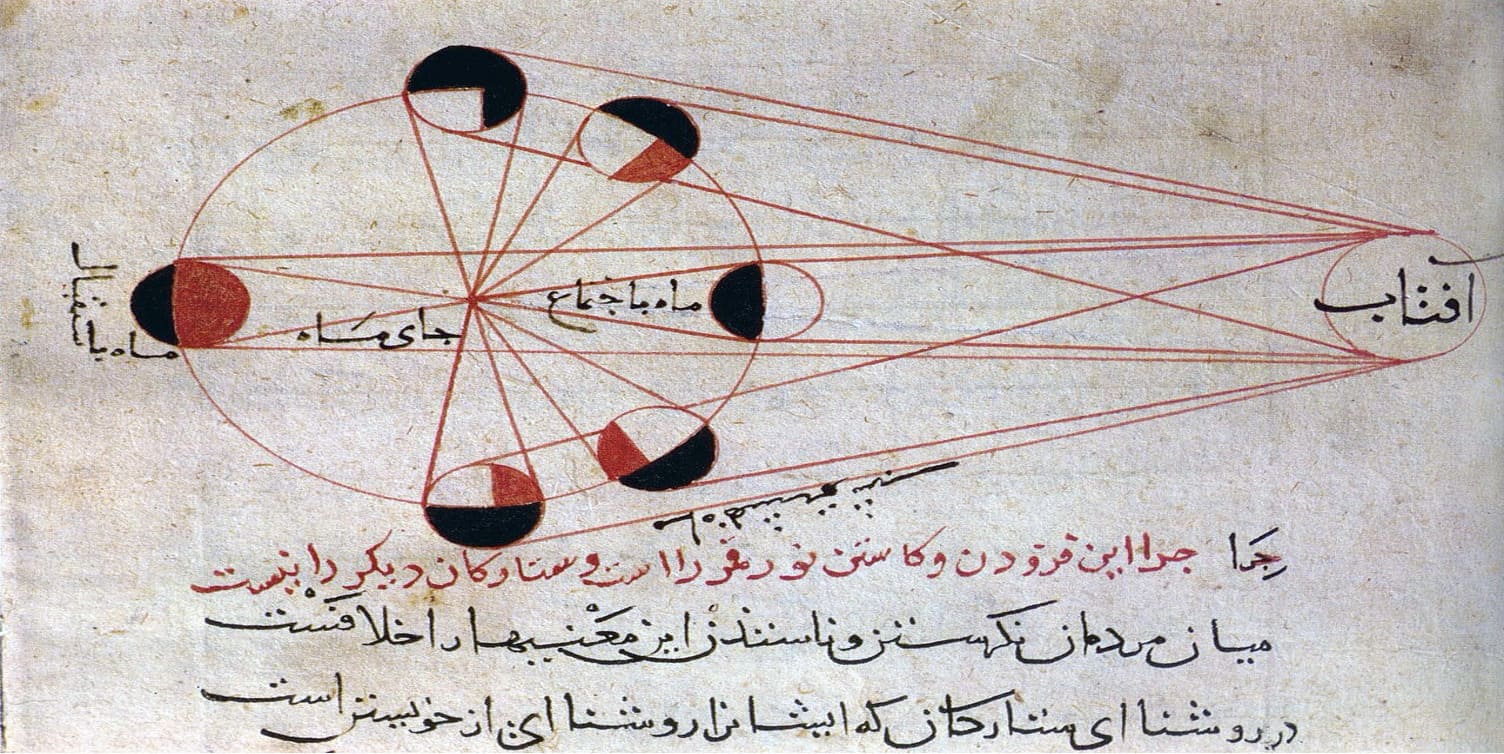
Al-Biruni’s methodology facilitated cross-cultural knowledge transfer. In India, he spent thirteen years translating and analysing twenty-seven Sanskrit texts, bridging Hindu and Arabic intellectual traditions while preserving fidelity to sources. By contextualizing foreign concepts for his audience, he enhanced understanding, minimized distortions, and anticipated modern theories of knowledge diffusion (Basham, 1997).
Al-Biruni distinguished historical from scientific methods, advocating comparative analysis. He critically evaluated multiple sources, rejected contradictions, and reconciled remaining accounts. While he regarded the Quran as truth, he treated human sources with careful scepticism. His systematic study of India earned him recognition as the founder of Indology and a pioneer in anthropology, blending admiration for Indian intellectual achievements with critical engagement of religious practices like idol worship and sati.
Intellectual exchanges with contemporaries like Ibn Sina further shaped his approach. Both integrated empirical observation with rational analysis: Ibn Sina’s Canon of Medicine applied systematic observation and experimentation, paralleling Al-Biruni’s empirical methods in history and anthropology. Together, they exemplify the Islamic Golden Age tradition of evidence-based, rational inquiry (Siddiqui, 2020).
Al-Biruni maintained objectivity despite operating within Sultan Mahmud of Ghazni’s politically and militarily charged context. His work demonstrates that rigorous scholarship can flourish under structural constraints. Al-Biruni’s scholarship exemplifies intellectual autonomy and ethical engagement, showing how knowledge creation and transfer can transcend social and political hierarchies (Siddiqui, 2025).
In sum, Al-Biruni integrated intelligence, empirical methodology, and ethical inquiry within his historical context. His contributions to mathematics, astronomy, anthropology, and philosophy reveal how cognitive abilities, methodological rigor, and environmental conditions combine to advance understanding. Studying his work alongside analyses of institutional power offers enduring lessons on the creation, diffusion, and sustainability of knowledge across cultures and eras.
III. Al-Biruni’s Ideas and Major Contributions
Al-Biruni stands as one of the most remarkable polymaths of the medieval world. He not only pioneered the fields of cultural anthropology and comparative sociology but also broadened the study of the history of science, hydrostatics, astronomy, and religion. His intellectual range was extraordinary: he wrote with equal authority on mathematics, pharmacology, mineralogy, and theology. Several modern scholars have argued that he was the first to systematically introduce Indian yoga philosophy to the Arab-Islamic world and, indirectly, to Europe. Others maintain that he articulated early notions of integrated world time and universal history, and that he anticipated the Renaissance achievements of European scholars by constructing a globe of the earth and developing a rudimentary theory of oceanography. What distinguished Al-Biruni’s approach was his ability to merge sophisticated mathematics and empirical observation with a deep appreciation for the role of language, religion, and cultural practice in shaping human societies (Sachau, 2000).
Al-Biruni’s sojourns in northern India were particularly formative. Following the campaigns of Mahmud of Ghazni, Al-Biruni lived among Indian scholars, learning Sanskrit with remarkable proficiency and immersing himself in the intellectual and religious life of the region. He translated seminal Sanskrit texts into Arabic, including works from the Sāṃkhya philosophical system and Patanjali’s Yoga Sūtras. He observed that Brahmins dominated scholarly life and the transmission of knowledge, while Buddhism—once a powerful intellectual and religious force in India—had already declined from much of the subcontinent, a process largely complete before the arrival of Sultan Mahmud’s armies. Consequently, Al-Biruni focused his documentation on Hindu traditions, customs, and philosophical ideas.
His writings reveal a sustained ethnographic curiosity. He introduced Arabic-speaking audiences to major Hindu texts, including portions of the Vedas, the Bhagavad Gita, the Puranas, and stories from the Mahabharata and Ramayana. He summarized and critiqued Indian astronomical and mathematical works, while also drawing comparisons with the intellectual traditions of the Greeks—especially Socrates, Pythagoras, Plato, and Aristotle—as well as Islamic mystical currents such as Sufism. In this way, Al-Biruni not only preserved and transmitted knowledge across cultural boundaries but also sought to place Indian thought into a broader, comparative intellectual framework (Gafurov, 1974).
Perhaps his most penetrating contributions lie in his social and cultural observations. The caste system, in particular, struck him as both rigid and exclusionary. He was perplexed and troubled by the reluctance of Brahmins and other learned Hindus to engage with foreigners (mlecchas) such as himself. He noted that this avoidance extended to daily practices of eating, drinking, and sitting together, as interaction with outsiders was perceived as ritually polluting. Such separations were not limited to foreigners but also applied across caste lines: members of one varna avoided social contact with others, and those labelled outcastes were relegated to the margins of society. Despite performing essential labour and services, these groups were forced to live outside the physical and symbolic boundaries of towns and villages, underscoring their exclusion (Sachau, 2000).
Al-Biruni’s writings also reveal sharp critiques of the exclusivity of Brahminical learning. He remarked that most Brahmins “recite the Veda without understanding its meaning.” Knowledge of the sacred texts, he observed, was carefully guarded: while Brahmins taught them to Kshatriyas, members of the Vaishya, Shudra, and outcaste communities were prohibited from hearing or reciting them. Al-Biruni recorded the harsh penalties that were said to await transgressors – “If such a thing can be proved against one of them, the Brahmins drag him before the magistrate, and he is punished by having his tongue cut off.” While such extreme punishments may have been rare in practice, their mere invocation reflected the severity of social hierarchies and the zeal with which Brahmins sought to maintain ritual and intellectual monopoly (Chandra, 2007).
In this way, Al-Biruni’s account is more than a catalogue of customs. It is a window into the lived realities of medieval Indian society, informed by his unique position as both an outsider and a scholar deeply invested in understanding the traditions of others. His observations reveal both admiration and critique: admiration for the intellectual sophistication of Indian philosophy and science, and critique of the rigid social boundaries and monopolization of knowledge that marked the society he studied. A millennium later, his work remains one of the most vivid and comprehensive cross-cultural encounters recorded in the premodern world.
IV. Al-Biruni on Hindu Society, Religion, and Science
Al-Biruni’s writings reveal a keen interest in the social structures, religious life, and scientific traditions of India. He offered one of the earliest systematic accounts of Hindu marriage customs, observing that child marriages were the norm. Marital regulations, he noted, were deeply intertwined with the caste (varna) system. A Hindu man could marry multiple wives according to his social rank: Brahmins were permitted four, Kshatriyas three, Vaishyas two, and Shudras only one. Marriage, however, was conceived as indissoluble. Al-Biruni remarked that “a husband and wife can only be separated by death, as the Hindus have no divorce.” Widowers could remarry, but widows were forbidden to do so. Deprived of inheritance rights, a widow faced stark choices: either remain dependent on the charity of male relatives or, in certain cases, immolate herself on her husband’s funeral pyre (sati). Al-Biruni observed that sati was especially associated with the Kshatriya class and, even there, not universal. Its relative rarity underscored the tension between prescriptive ideals and lived social practice.
His ethnography extended to the caste system more broadly. Al-Biruni was struck by its rigidity and its omnipresence in everyday life. He described it as a structure that shaped not only social identity but also access to knowledge, labour, and ritual. The four principal varnas—Brahmins, Kshatriyas, Vaishyas, and Shudras—were further fragmented into countless sub-castes (jatis), each associated with specific duties, privileges, and restrictions. For Al-Biruni, this stratification produced a society in which purity and pollution governed the most basic interactions. He noted with some discomfort that learned Hindus refused to eat, drink, or even sit with foreigners (mlecchas), fearing contamination through contact. These same restrictions applied across caste lines, creating a landscape of social segregation where even essential service providers—those who removed waste, tended animals, or worked with leather—were relegated to settlements outside the walls of towns and villages (Jha, 2002).
Al-Biruni was particularly interested in how caste intersected with knowledge and learning. He observed that Brahmins monopolized sacred and philosophical instruction, carefully guarding the Vedic texts. While they taught them to Kshatriyas, members of the Vaishya, Shudra, and outcaste communities were strictly forbidden from hearing or reciting them. He recorded the severe punishments prescribed for violations—such as the cutting out of a tongue—though he acknowledged that such measures were rarely enforced. Still, the very existence of these prohibitions revealed the intensity with which knowledge was tied to hierarchy and exclusion. In Al-Biruni’s analysis, this concentration of intellectual authority in the Brahmin class both sustained their social dominance and deepened the gulf between the “cultured” and the “common” people.
He also remarked upon the contrast between the philosophical beliefs of the elite and the ritual practices of the masses. Among Brahmins and other learned groups, Al-Biruni discerned currents of abstract monotheism, often framed in metaphysical terms. Among the majority, however, he saw devotion directed toward a plurality of deities, mediated by ritual, sacrifice, and pilgrimage. This duality reminded him of distinctions in other civilizations, such as the difference between Platonic philosophy and popular Greek religion, or between the speculative traditions of Sufi mystics and the more ritual-oriented practices of the broader Muslim community. By framing Hindu society in these comparative terms, Al-Biruni sought not merely to describe but also to interpret the cultural logics underpinning Indian life (Sachau, 2000).
Among the sacred places he described, Benares (modern Varanasi) occupied a unique position. Al-Biruni wrote that the city commanded among Hindus a veneration comparable to that which Mecca holds for Muslims. It was not only a site of pilgrimage but also a destination for the elderly, who often sought to spend their final days on the banks of the Ganges in the hope of spiritual merit and liberation after death. In this sense, Benares functioned both as a geographical space and as a symbolic threshold between life and afterlife. The city’s ritual significance was amplified by its location on the Ganges, whose waters were believed to possess purifying powers. Bathing in the river, especially at dawn, was considered a sacred act capable of absolving sin and securing a better destiny in the next life (Kosambi, 1956).
Yet Benares was more than a religious centre: it was also a thriving intellectual and commercial hub. The Ganges connected it eastward to Bengal and westward to Kannauj, the ancient imperial seat of governance, making it a crucial artery for trade and communication. Scholars, poets, and ascetics gathered in Benares, and the city’s temples and monasteries served as focal points of Hindu learning. By the eleventh century, it had become, in Al-Biruni’s words, the recognized heart of Hindu religion, scholarship, and cultural life. His description reflects the layered character of Benares—as a sacred geography, a seat of scholastic authority, and a nexus of commerce and governance.
Al-Biruni’s legacy, however, extends far beyond ethnography. He was also a pathbreaking scientist and mathematician. He is credited with founding astronomy and trigonometry as independent fields of inquiry and with advancing the study of spherical trigonometry. His experiments in hydrostatics led him to formulate the concept of specific gravity, and he developed methods for weighing minerals with a precision unsurpassed until modern times. In mathematics, he pioneered a calculus of finite differences centuries before its rediscovery in seventeenth-century Europe. His belief that mathematics could faithfully represent physical reality underpinned much of his work (Sachau, 2000).
Using instruments of his own design and innovative geometrical methods, Al-Biruni produced measurements of the diameters of the earth and moon that remained the most accurate available until the seventeenth century. In his Kitab al-Hind, he discussed the rotation of the Earth and offered calculations of its circumference. His geographical reasoning also led him to hypothesize the existence of undiscovered inhabited lands beyond the Atlantic—an anticipation, by several centuries, of the Americas.
Taken together, Al-Biruni’s observations on caste, marriage, pilgrimage, and learning, combined with his scientific innovations, exemplify his rare capacity to merge cultural anthropology with rigorous empirical science. He emerges not only as a mediator of civilizations but also as a thinker whose methods and insights anticipated intellectual developments that would not reappear in Europe until the early modern period (Basham, 1997).
V. Al-Biruni on Law, Social Order, and Knowledge
Al-Biruni’s ethnography of India extended into domains of law, taxation, inheritance, crime, and punishment. He observed that ordinary people often concealed the true extent of their property to avoid heavy taxation—a custom that, he wryly noted, appeared almost universal. He also recorded that prostitution was legally sanctioned, including the institution of the devadasis, women attached to temples who performed ritual service but were also engaged in sexual commerce. Al-Biruni, whose outlook was marked by moral conservatism and a strong sense of sexual propriety, disapproved of this practice. He censured rulers for exploiting prostitution as a source of revenue, remarking that kings made prostitutes “an attraction for their cities, a bait of pleasure for their subjects, for only financial reasons.” The taxes they paid, he suggested, were used to subsidize the costs of military campaigns, illustrating how commerce, sexuality, and statecraft were entangled in ways that offended his ethical sensibilities.
The legal privileges of the Brahmin class particularly drew his attention. Brahmins, he noted, were exempt from taxation and treated with leniency under the law. Even in cases of serious crime such as murder, they were required only to perform ritual atonement through fasting, prayer, and almsgiving. Members of other castes, however, faced far harsher penalties for the same transgressions. Strikingly, Brahmins were punished more severely for violations of caste purity than for violations of criminal law. Al-Biruni wrote that “if a Brahman eats in the house of a Shudra for sundry days, he is expelled from his caste and can never regain it.” Such observations underscored how deeply ritual hierarchy permeated the legal and moral order of the time.
Taken together, Al-Biruni’s account paints a picture of a society that was, on the eve of the Turko-Persian invasions, far from the idyllic image later nostalgia would construct. North Indian Brahminical culture, he suggested, was marked by orthodoxy, insularity, and social rigidity. While there were luminous exceptions, such as the philosopher Abhinavagupta in Kashmir, the broader intellectual culture of the urban centres appeared to him stagnant. Indian science, once at the forefront of innovation, seemed to have fallen behind. Brahminical elites appeared increasingly defensive, bound by caste, ritual, and superstition, and less open to creativity or rational inquiry. By the late first millennium, the growing influence of Brahminical orthodoxy and the devotional currents of the Bhakti movement were, in Al-Biruni’s estimation, crowding out the more rational and liberal strains of Indian spirituality. His account was so detailed and perceptive that modern scholars often describe him as the “first Indologist” (Lawrence, 1976).
Yet Al-Biruni’s work has also provoked critical reflection in recent scholarship. The critiques argue that his knowledge of India was not entirely disinterested but produced within the political context of Sultan Mahmud of Ghazni’s court, and thus potentially shaped by the needs of empire. Later readers, especially European Orientalists of the eighteenth and nineteenth centuries, interpreted Al-Biruni’s writings through frameworks that tended to essentialize India. From this perspective, his ethnography contributed, however indirectly, to the construction of a static and romanticized image of India that served imperial ideologies. Antonio Gramsci’s notion of cultural hegemony is useful here: the production of academic knowledge is rarely neutral but often tied to larger dynamics of power. In the Orientalist tradition critiqued by Edward Said, scholarship about the East was less concerned with accurately representing “the Orient” than with rendering it legible and non-threatening to Western audiences. When Al-Biruni’s nuanced and contextually situated observations were later appropriated within this discourse, they were sometimes stripped of complexity and reframed to reinforce ideas of Eastern stagnation and inferiority.
Professor Irfan Habib’s scholarship on medieval Indian culture makes a significant departure from conventional historiography, which often privileges dynastic narratives and religious institutions. In his work, Habib foregrounds the social, economic, and political structures of the period, thereby shifting the focus toward the lived experiences of peasants, artisans, and other marginalized groups. By employing a rigorous methodology rooted in reason and logical historiography, he undertakes a critical examination of primary sources and challenges uncritical reliance on court chronicles or religious texts. His analyses extend to themes that were traditionally overlooked in earlier surveys, such as agrarian relations, patterns of technological change, systems of exchange, and the gradual emergence of cultural forms shaped by material conditions. Through this approach, Habib enriches the understanding of medieval India as a dynamic and complex civilization rather than a static backdrop for political events. His extensive writings, along with his contributions to the People’s History of India series, continue to serve as indispensable resources for exploring the multifaceted character of India’s medieval past (Habib, 2008).
Thus, while Al-Biruni’s Kitab al-Hind remains a remarkable intellectual achievement, it also illustrates the layered and contested nature of cross-cultural knowledge. His work sits at the intersection of genuine ethnographic curiosity, the politics of imperial patronage, and the subsequent uses of scholarship in constructing cultural hierarchies. Recognizing these layers allows us to appreciate both his extraordinary contributions and the ways in which knowledge production, from the medieval period to the modern, has been entangled with structures of power.
VI. Al-Biruni’s Passion for Empiricism and Knowledge
Al-Biruni’s own intellectual career embodied this principle. He authored more than 180 works across at least twenty fields, including astronomy, mathematics, geography, chronology, mechanics, medicine, mineralogy, history, literature, religion, and philosophy. His Kitab al-Hind remains one of the most important accounts of Hindu culture and society ever produced, offering not only a meticulous survey of religious and philosophical traditions but also an invaluable record of social customs, scientific achievements, and intellectual life in early eleventh-century India.
Over the course of thirteen years in India, Al-Biruni mastered Sanskrit and translated at least twenty-seven classical texts into Arabic. These included philosophical, scientific, and religious works, which he compared with Greek, Roman, and Islamic traditions. His writings thus constitute a critical bridge in the transmission of knowledge between civilizations. Indeed, his accounts fill the chronological gap between the seventh-century observations of the Chinese pilgrim Xuanzang (Hieun Tsang) and the sixteenth-century descriptions of Abul Fazl’s Ain-i-Akbari under the Mughal emperor Akbar. For historians of science, this makes Al-Biruni a unique and indispensable witness to the intellectual history of the subcontinent.
Central to Al-Biruni’s approach was a profound commitment to empiricism. He consistently emphasized observation, verification, and the testing of claims—principles that set him apart as an early advocate of empiricism. His methodological outlook is well illustrated in a parable he included in his writings, known as the story of the four pupils.
As he recounted, a man was traveling with his pupils late at night when they encountered a strange object standing upright on the road, its nature obscured by the darkness. The master asked each pupil what it was. The first replied, “I do not know what it is.” The second said, “I do not know, and I have no means of learning what it is.” The third concluded, “It is useless to examine what it is, for daylight will reveal it.” Al-Biruni then analysed the shortcomings of these responses: the first reflected ignorance, the second incapacity, and the third indolence. Only the fourth pupil acted differently. He withheld judgment, approached the object, and examined it directly. Upon closer inspection, he discovered pumpkins entangled with debris. Reasoning that no living creature could remain motionless in such a posture, he tested his conclusion by striking the object with his foot, causing it to fall and thereby removing all doubt. He returned to his master with a precise account.
Through this parable, Al-Biruni emphasized that true knowledge cannot rest on ignorance, incapacity, or passive acceptance. Instead, it requires active inquiry, verification, and the willingness to test assumptions against evidence. His point was clear: empiricism, not speculation or complacency, is the pathway to truth.
Equally significant is his role in what might be termed premodern “knowledge flows.” Al-Biruni excelled in acquiring, systematizing, and transmitting knowledge across boundaries of distance, language, and culture—barriers that remain challenges even today. His corpus represents not only personal scholarship but also a form of communication technology: a medium through which ideas, texts, and methods circulated between the Hindu and Arab-Islamic worlds. Unlike modern scholars, Al-Biruni worked without incentives such as intellectual property rights or institutional rewards. He claimed no ownership of the knowledge he recorded, but rather presented himself as a mediator and transmitter.
From a modern perspective, his career can be analysed in terms of “knowledge assets” and “knowledge flows.” Studying the individual scholar, the intellectual environments in which he operated, and the dynamic links between them reveals how ideas were exchanged, adapted, and preserved across cultural frontiers. Revisiting Al-Biruni’s methods and epistemology underscores valuable lessons for the present: that knowledge advances through humility, cross-cultural engagement, critical examination and respect for debate and learning and above all, the willingness to test inherited claims through observation and reason.
For genuine development and socio-economic prosperity, open debate, critical inquiry, and rational, evidence-based research are not merely desirable but essential. By contrast, religious extremism, fascism, and other anti-democratic forces have consistently acted to suppress academic freedom, fearing the emancipatory power of knowledge. History demonstrates that these reactionary forces thrive by curbing intellectual autonomy and silencing dissent. In Europe, fascist regimes actively instrumentalized religious institutions to consolidate their rule, while in other contexts military dictatorships forged opportunistic alliances with religious authorities to legitimize authoritarian power and suppress democratic aspirations.
In a recent study on the impact of religious orthodoxy in Muslim-majority contexts, Ahmet Kuru (2019) identifies two interdependent factors as central to socio-economic underdevelopment: the ascendancy of religious orthodoxy and its alliance with coercive state power, a configuration he terms the “ulema–state alliance.” According to Kuru, this alliance, consolidated from the eleventh century onward, entrenched a system of political patronage that continues to shape governance today. Crucially, he interprets it as a historical construct rather than a “sacred and timeless” feature of Islam, thereby challenging essentialist explanations of Muslim societies’ developmental trajectories.
Kuru’s broader argument highlights the mutually reinforcing relationship between ideology and state power, in which each lends legitimacy and mystique to the other. He emphasizes that the interplay among religious, political, intellectual, and economic elites has been decisive in shaping both progress and decline—not only in Muslim societies but also in Western Europe. His comparative-historical approach, tracing Muslim and Christian civilizational trajectories from the eighth to the twentieth centuries, demonstrates that both traditions experienced periods of intellectual and material flourishing. Yet, his analysis goes beyond description. Islam, Authoritarianism, and Underdevelopment (2019) intervenes in two dominant explanatory models: it rejects essentialist accounts that attribute authoritarianism and economic stagnation to Islam itself, while also challenging interpretations that locate underdevelopment primarily in Western colonialism and imperialism. Instead, Kuru argues, internal crises predated and, in many ways, conditioned the impact of European dominance.
Nevertheless, Kuru’s explanatory framework raises critical questions. His focus on the “ulema–state alliance” as a central causal mechanism risks downplaying the diversity of intellectual and political experiences across the Muslim world. Moreover, by privileging the decline of legal pluralism and the entrenchment of state-sanctioned Sunni orthodoxy as primary inhibitors of creativity in science, medicine, and jurisprudence, he may understate the role of material, geopolitical, and global economic factors. Still, his argument about the stifling effects of a “literalist epistemological hierarchy” remains provocative, highlighting how the suppression of interpretive plurality curtailed the once-dynamic intellectual vitality of religious scholars—a trend that, he argues, continues to constrain modern intellectual life.
VII. Concluding Remarks
Al-Biruni stands as a singular figure in the history of knowledge, exemplifying the integration of empirical rigor, intellectual versatility, and ethical scholarship. His meticulous study of India, mastery of multiple disciplines, and commitment to cross-cultural understanding demonstrate how knowledge can transcend linguistic, religious, and political boundaries. Operating within the constraints of his historical context—including the military campaigns of Sultan Mahmud and the broader structures of religious authority—Al-Biruni nonetheless maintained critical objectivity, methodological innovation, and a universalist vision of learning.
Al-Biruni integrated intelligence, empirical methodology, and ethical inquiry within his historical context. His contributions to history, culture, astronomy, anthropology, and philosophy indicate how cognitive abilities, methodological rigor, and environmental conditions combine to advance understanding. During his more than a decade-long stay in India over a millennium ago, Al-Biruni conducted a detailed study of its social fabric. His empirical observations confirmed the prevalence of a complex and rigid caste system. He documented the four primary varnas—Brahmana, Kshatriya, Vaisya, and Sudra—and provided crucial ethnographic detail on the social groups existing outside this structure. He described the Antyaja, comprising eight occupational guilds (such as fullers, shoemakers, and sailors), who lived near but separate from the main villages and towns. Furthermore, he identified groups like the Hadi, Doma, and Candala, who were considered outside any caste or guild and were relegated to performing “dirty work” and manual services. This detailed account serves as a critical pre-colonial record of the caste system’s structure and social hierarchies.
Al-Biruni’s life and work offer enduring lessons for contemporary scholarship: that the creation and diffusion of knowledge require not only cognitive talent and methodological rigor but also ethical engagement and sensitivity to cultural context. By bridging diverse intellectual traditions and modelling the interplay between intelligence, wisdom, and empirical inquiry, Al-Biruni remains an instructive example of how rigorous scholarship can flourish even amid structural constraints, providing a timeless template for the responsible pursuit and transmission of knowledge.
In short, this study finds that Al-Biruni exemplifies the fusion of empirical rigor, intellectual versatility, and ethical scholarship. His studies bridged cultures, languages, and disciplines, demonstrating how knowledge can transcend political, religious, and social constraints. By combining critical observation with methodological innovation, he provides a lasting model for the creation and dissemination of knowledge. His work reminds us that rigorous scholarship thrives not only on intelligence and skill but also on ethical engagement and cross-cultural understanding.
About the Author
 Dr. Kalim Siddiqui is an economist specializing in International Political Economy, Development Economics, Trade and Economic Policy. Since 1989, he has been teaching economics at various universities in Norway and the UK. Dr. Siddiqui’s research interests encompass a wide range of topics, including political economy, international trade, and economic history, South Asia, and emerging economies. He has presented papers at international conferences across numerous countries, reflecting his global engagement in the field. His scholarly pursuits span six broad domains: Political Economy, Development Economics, Economic History, Economic Policy, Globalization, and International Trade. Dr. Siddiqui has made significant contributions to research in areas such as trade policy, globalization, and political economy. His work has been published in chapters of edited books and articles published in peer-reviewed journals. For inquiries, Dr. Siddiqui can be reached at: [email protected]
References
- Basham, A.L. (1997) A Cultural History of India, New Delhi: Oxford University Press.
- Chandra, S. (2007) History of Medieval India. New Delhi: Orient Blackswan.
- Gafurov, B., (1974) Al-Biruni, The UNESCO Courier, June.
- Gardner, H. (1993) Frames of Mind: The Theory of Multiple Intelligences, Harper Collins UK.
- Habib, I. (2008) Medieval India: The Study of a Civilization, New Delhi: National Book Trust.
- Jha, D.N. (Edi) (2002) Feudal Order: State, Society & Ideology in Early Medieval India, New Delhi: Manohar Publishers.
- Kosambi, D.D. (1956) An Introduction to the Study of Indian History, Bombay: Popular Book.
- Kuru, A. (2019) Islam, Authoritarianism, and Underdevelopment: A Global and Historical Comparison, Cambridge University Press.
- Lawrence, B.B. (1976) Al-Biruni’s Approach to the Comparative Study of Indian Culture, (E. Yarshter (Ed.) Al-Biruni Symposium.
- Sachau, E.C. (2000) Al-Biruni’s India: An account of the religion, philosophy, literature, geography, chronology, astronomy, customs, laws and astrology of India (Vol.1&2) Routledge.
- Siddiqui, K. (2025) “Ibn Khaldun and the Dynamics of Social and Economic Transformation” World Financial Review, September.
- Siddiqui, K. (2020) “The Study of Economic History and the Importance of Understanding the Past” World Financial Review, November/December.