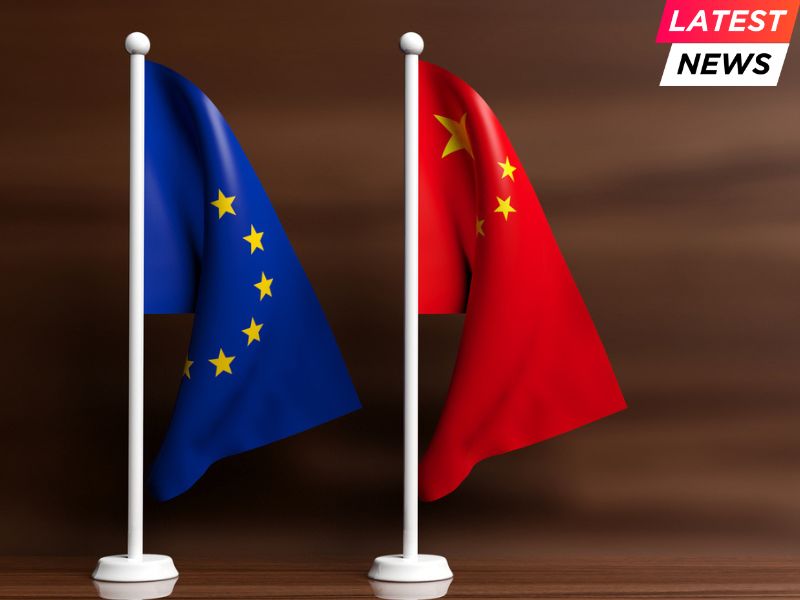
China and the European Union are set to hold a high-level meeting in Beijing on Thursday, as diplomatic and trade strains grow and U.S. involvement adds further complexity.
The summit, which marks 50 years of diplomatic ties and is the 25th between the two partners, was originally planned for two days in Brussels but was shortened and relocated to China — a sign analysts see as reflecting the strained nature of current relations.
Disputes between Brussels and Beijing have intensified over market access, technology policy, and national security. The EU recently restricted Chinese firms from bidding on public medical device contracts, prompting swift retaliation from Beijing.
Jörn Fleck, senior director at the Atlantic Council’s Europe Center, noted that “relations between Brussels and Beijing are particularly tense,” with little room for progress despite both sides recognizing the importance of continued dialogue.
The summit also unfolds under the shadow of U.S. President Donald Trump’s aggressive trade policies. Emre Peker of Eurasia Group said that “largely irreconcilable EU-China differences will severely constrain potential cooperation, despite mutual interest in countering some of President Trump’s policies.”
With Washington imposing a 30% tariff on most EU exports starting August 1, European officials face growing pressure. China, meanwhile, is expected to urge the EU not to align too closely with U.S. measures, according to Henrietta Levin of CSIS.
Trump’s stance toward both partners has further complicated the EU’s ability to resist Beijing’s economic influence, Levin added.
Despite modest hopes for breakthroughs, observers say the mere fact the summit is proceeding is meaningful. Fleck suggested the best-case outcome would be a commitment to continue talks on contentious issues like tariffs, subsidies, and trade barriers.
Chinese President Xi Jinping is expected to meet European Commission President Ursula von der Leyen and European Council President Antonio Costa, offering at least a symbolic sign of engagement.
Still, experts see limited room for significant progress. “The summit can hardly reset years of economic and geopolitical tensions,” said Lukas Fiala of LSE IDEAS, pointing to structural divisions and internal EU disagreements on China.
Fiala added that small shifts in language around export controls and electric vehicles may be worth watching, but no major changes are likely.
Related Readings: