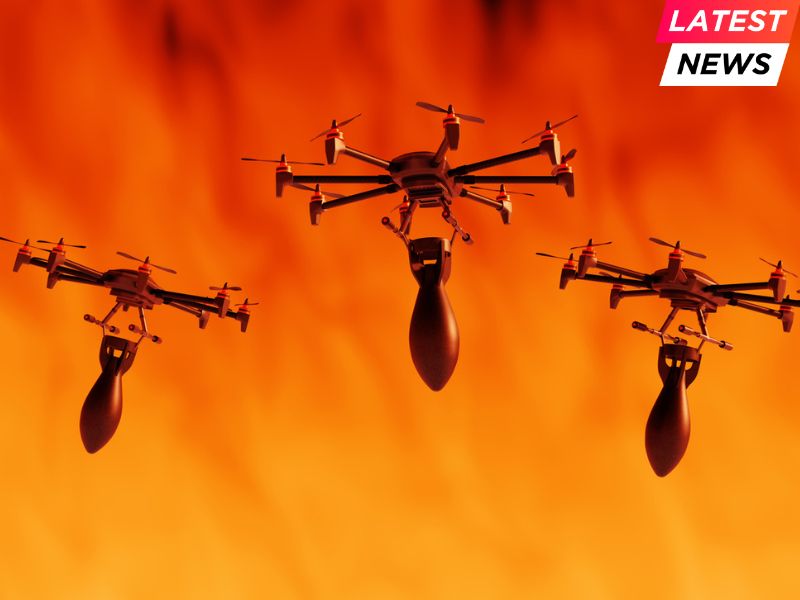
Ukraine has dealt a staggering blow to Russia’s long-range aviation fleet, launching a covert drone operation that targeted key airbases deep within Russian territory — some as far as 4,500 kilometers from the Ukrainian border.
The Ukrainian Security Service (SBU) said 41 aircraft were hit across multiple bases, including strategic bombers and surveillance planes Moscow has used to bombard Ukrainian cities. Though the extent of permanent damage is unclear, analysts say the operation has major implications for Russia’s ability to wage aerial warfare.
“This was a stunning success for Ukraine’s special services,” said Justin Bronk of the Royal United Services Institute. He noted that even partial confirmation of the SBU’s claims would severely limit Russia’s capacity for missile strikes and nuclear signaling missions.
Ukraine’s drones struck at least four airbases: Belaya in Irkutsk, Olenya near Murmansk, Diaghilev in Ryazan, and Ivanovo. A fifth base in Amur region was also reportedly targeted, though the outcome remains unknown. Satellite images previously showed aircraft at these sites parked in the open, suggesting Russia had grown complacent due to their distance from Ukraine.
What makes the attack remarkable is not just the distance covered, but how it was executed. Ukrainian operatives reportedly smuggled drones into Russia, hiding them inside mobile wooden sheds mounted on trucks. These vehicles were parked near airfields, where drones launched at low altitude, evading radar and anti-air defenses.
CNN verified several videos showing drones flying from trucks near Belaya, with one clip capturing the truck self-destructing in flames after launch. President Volodymyr Zelensky said the operation involved 117 drones and took over a year and a half to plan.
The SBU claimed that 34% of Russia’s strategic cruise missile carriers were damaged, estimating $7 billion in losses. Among the aircraft hit were multiple Tu-95s, Tu-160s, and a rare A-50 surveillance jet. These bombers are vital to Russia’s long-range strike capabilities and, in some cases, irreplaceable due to outdated production lines.
Russia’s Defense Ministry acknowledged the attacks but described them as “terrorist acts” and insisted damage was limited. However, even Russian military bloggers voiced alarm, with one calling the incident a “tragic loss” and a result of “criminal negligence.”
Ukraine’s security service said its agents were already back across the border by the time the drones were airborne. Control of the drones was likely handled remotely through local cell networks, according to sources familiar with the operation.
As Ukraine escalates its asymmetric warfare capabilities, the scale and precision of this attack marks a new chapter in its efforts to push back against Russia’s air dominance.
Related Readings: