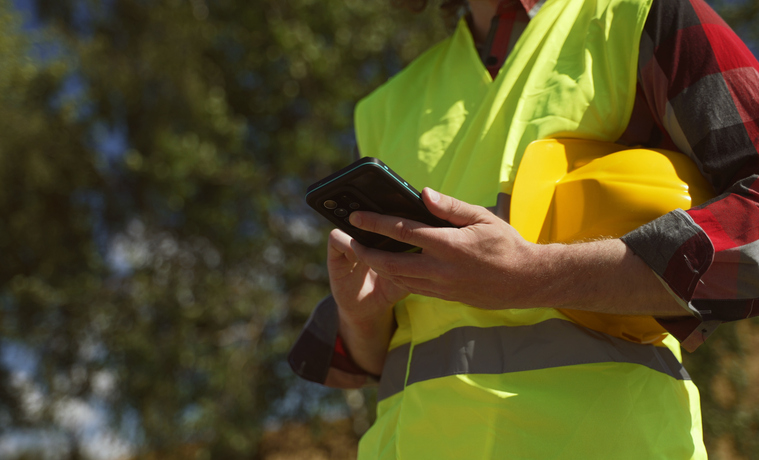
Lone workers and those in risky work environments require significantly more workplace health and safety procedures to ensure a safe workspace than those working in teams or less risky environments. Various policies and procedures can be put in place to assist lone workers, but due to the varied nature of lone-working roles, there is never a one-size-fits-all approach. What one company may implement for one worker may differ from what is needed in another business.
That being said, vital aids such as lone-worker apps can be embraced in all aspects of lone working and help improve worker safety and compliance with regulations.
In this blog, we take a look at the lone worker app, how it benefits employees and employers, and how it satisfies health and safety governing bodies.
What is a Lone Worker App?
A lone worker app is a tool installed on a smartphone that helps protect employees who either work alone or remotely. With features such as fall detection, GPS location tracking, and a discreet alarm, the app adds a degree of safety to a risky workplace.
Installed on an Android or Apple smartphone, the app provides the user with easy access to a suite of functions that ensure both the employer and employee are satisfied that safety remains of paramount importance.
Many apps allow workers to:
- Check in during shifts
- Send emergency alerts in case of injury or incidents
- Share their exact location
- Highlight inactivity or trips and falls
How Lone Worker Apps Improve Safety in High-Risk Industries
Many workplaces pose risks, but some are much higher risk than others. Construction workers, for example, find themselves in vastly different situations to bankers, and retail workers face considerably different scenarios to office workers. Perhaps surprisingly, though, both retail workers and construction workers share more similarities than you might think. Both groups work in areas where risk is prevalent. While theft, confrontation, and stock movement may be a concern for lone workers in retail, in construction, concerns relate to falls from height and injuries caused by equipment. As a result, both types of employees could benefit from a lone worker app to help them should something unfortunate occur.
We’ve highlighted just a sample of the ways lone worker apps help improve safety in high-risk industries.
Real-Time Location Tracking
A vital asset of any lone worker app is real-time GPS location tracking. In high-risk working environments, a quick response can save lives. With a lone worker app indicating danger, the alarm receiving centre can pinpoint the problem’s location and deploy the correct level of supervision or help quickly.
Man-Down Detection
Another valuable feature of lone worker apps is that they detect when an individual has fallen, shows a lack of movement, or appears in an unusual position. Using sensors in the worker’s smartphone, the app can detect when something doesn’t seem right and send an alert. If the alert is triggered in error, the user can reset the alarm, indicating to the alarm receiver that all is well.
This is particularly valuable in construction, transportation, or retail, where workers may be at height or in dangerous workspaces.
Panic Button
Many lone worker apps also feature a panic button. This can be used to raise the alarm should a situation escalate to a level where safety could be compromised. In many cases, the app has its own SOS button to ensure alarms can be raised discreetly. They can also be activated by simply shaking the phone or pressing the power button. This way, nobody else in the area will be aware that the alarm has been raised.
Once activated, an alert is sent to an alarm receiving centre or supervisor, who can then track the worker and, in some cases, listen to what is happening. This ensures a rapid response from the appropriate support.
Check-In Systems
Many lone workers, even though they work in risky environments, are perfectly safe. They use their experience to ensure risks are minimal and that they don’t put themselves in danger. However, the manager in the office hundreds of miles away may not know if all their team members are safe. Lone worker apps allow workers to check in and send an alert to provide updates on their well-being and progress.
In high-risk areas, this is a great asset, as it ensures each team member can report back at regular intervals, keeping the rest of the team informed of their safety.
Health and Safety Compliance
Many high-risk working environments are bound by strict H&S legislation. Employees must show that they are protecting their workers to the best level possible and comply with industry-specific regulations.
By adding a lone worker app to the range of tools provided to employees, compliance is vastly improved by:
- Providing digital records of check-ins, alerts, and incidents
- Offering proof of due diligence should investigations take place
- Ensuring compliance with local or national safety standards
Demonstrating a commitment to safety not only ensures a safer working environment but also reduces the risk of costly legal action being taken.
Why Every High-Risk Industry Needs a Lone Worker App
Investing in a lone worker app isn’t just box ticking – it’s about potentially saving lives and ensuring full compliance with the law. Offering a lone worker app to your team means they benefit from:
- Faster emergency response: With precise location tracking and calls handled by experts, appropriate assistance can be quickly deployed. Peoplesafe, for example, one of the leaders in the market, provides 100% service uptime, a 3-second pick-up time, and a 4-minute police response in threat-to-life situations.
- Enhanced worker protection: With features such as man-down alarms and emergency alerts, workers are kept safe and can trust an app to send an alert should something untoward happen.
- Regulatory compliance: With digital records of alerts and alarms, businesses can be confident that they comply with the health and safety standards expected of them.
- Cost-effectiveness: It should never be about money, but by introducing lone worker apps or devices into the workplace, the chances of costly lawsuits, downtime, or compensation claims are reduced.
- Peace of mind: Both lone workers and employers can feel much more at ease knowing safety is being monitored and managed at all times.
What High-Risk Industries Benefit from a Lone Worker App?
Pretty much any industry where employees work alone would benefit from the introduction of a lone worker app. With no need to add to the equipment being carried, the app is simply installed on a smartphone to provide round-the-clock coverage as the worker completes their job.
Common industries where these apps are found include:
- Construction
- Retail
- Hospitality
- Healthcare
- Transport
- Estate agency
- Delivery drivers
- Manufacturing
Putting it simply, if your workers spend time working by themselves in an environment where the risk to safety can be high, it is beneficial to arm them with a lone worker app. As you saw earlier, this simple application can be the difference between a safe resolution to an incident or a costly and damaging one.
Disclaimer: This article contains sponsored marketing content. It is intended for promotional purposes and should not be considered as an endorsement or recommendation by our website. Readers are encouraged to conduct their own research and exercise their own judgment before making any decisions based on the information provided in this article.